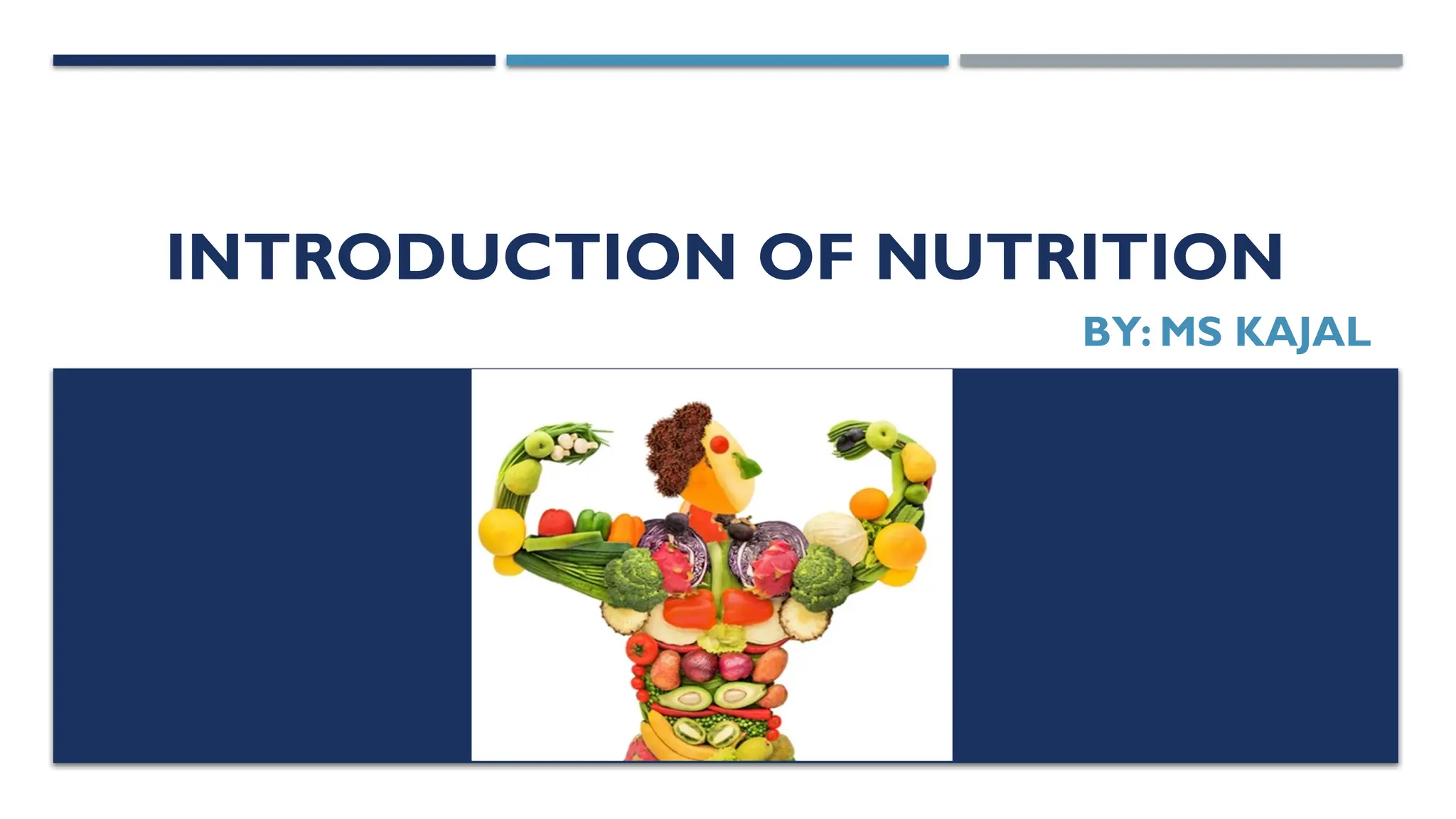
INTRODUCTION OF NUTRITION
BY: MS KAJAL
NUTRITION:
 Nutrition signifies a dynamic process I which the food that is
consumed is utilized for nourishing the body.
 Nutrition word is derived from “nutricus” means “to suckle”.
 Nutrition may be defined as the science of food and its
relationship to health.
TERMS:
 FOOD: food is a composite mixture of various substance.
 FOODSTUFF: anything which can be used as food.
 NUTREINT: food factor used for specific dietary constitution such as protein,
vitamins and minerals.
 DIETETICS: It is a practical application of the principles of nutrient. Include the
planning of meals for the well and the sick.
 FOOD FADS: Personal like and dislike in the selection of foods.
 DIETITIANS: are qualified and regulated health professionals that assess, diagnose and treat dietary
and nutritional problems at an individual and wider public-health level.
 DIET: is what a person habitually eats and drinks.Vegetarian diet
 A BALANCED DIET: is one that contains all of the essential elements/ Nutrients in right amount,
that the human body needs. Carbohydrates, lipids, vitamins, minerals, proteins
 ATHERAPEUTIC DIET: is a meal plan that controls/meet the special nutritional need of a
individual's during the treatment or management of certain diseases, illnesses or medical conditions.
KYB diet
 Energy Balance: is the difference between energy
intake, which can be metabolized, and total energy
expenditure.
 Nutrition screening: Is a quick look at a few
variables to identify individuals who are
malnourished or who are at risk for malnutrition,
e.g. screening a pregnant women
 KILOCALORIES: A kilocalories (Kcal) is the amount of heat required to raise
the temperature of 1 liter of water by 1 degree Celsius.
 1 kcal = 4184 joules or 4.184 kJ.
 1g CHO= 4kcal. (17kJ)
 1gm protein= 4kcal (17kJ)
 1gm Fats= 9Kcal (37kJ).
BMI (BODY MASS INDEX)
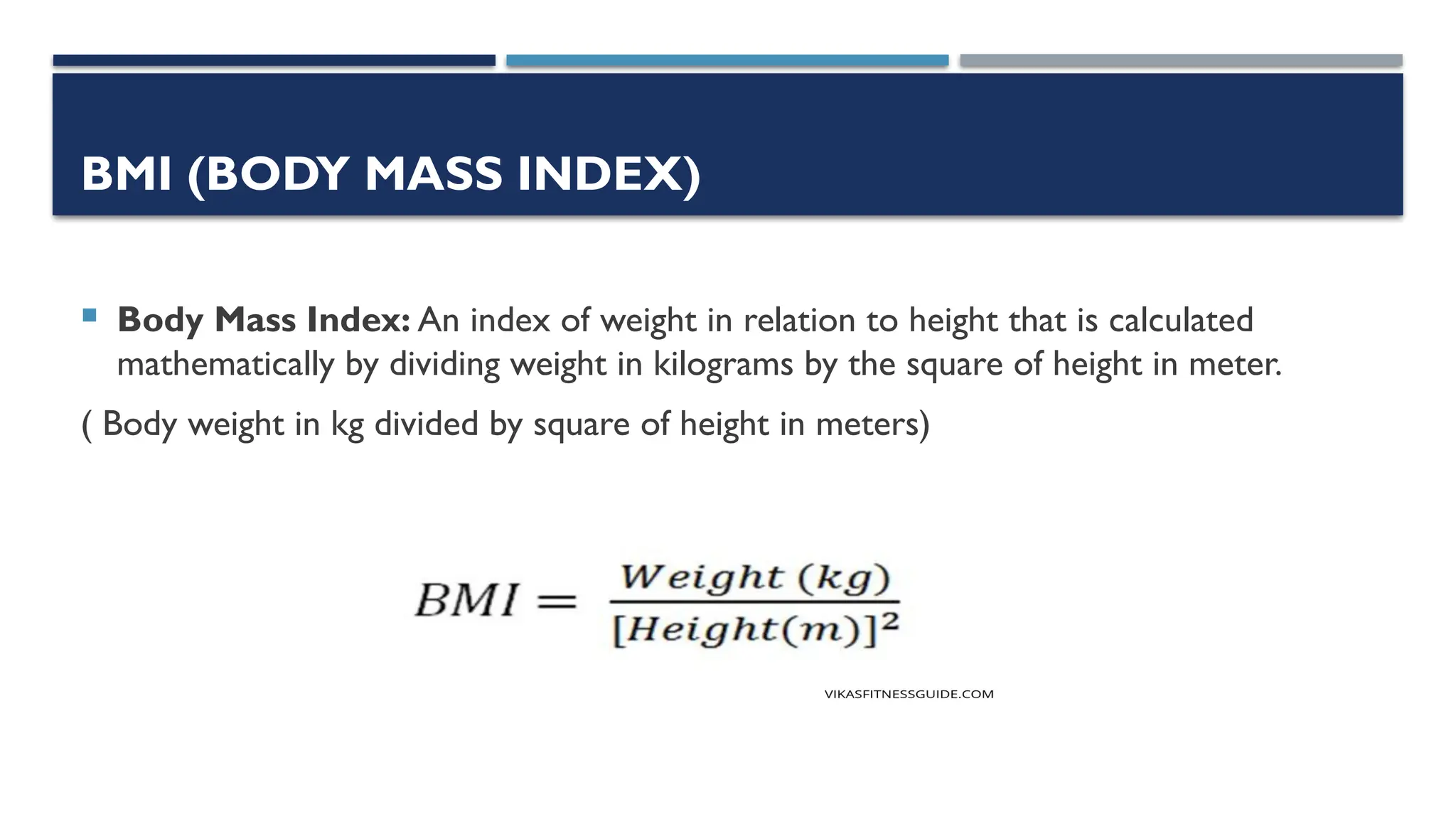
 Body Mass Index: An index of weight in relation to height that is calculated
mathematically by dividing weight in kilograms by the square of height in meter.
( Body weight in kg divided by square of height in meters)
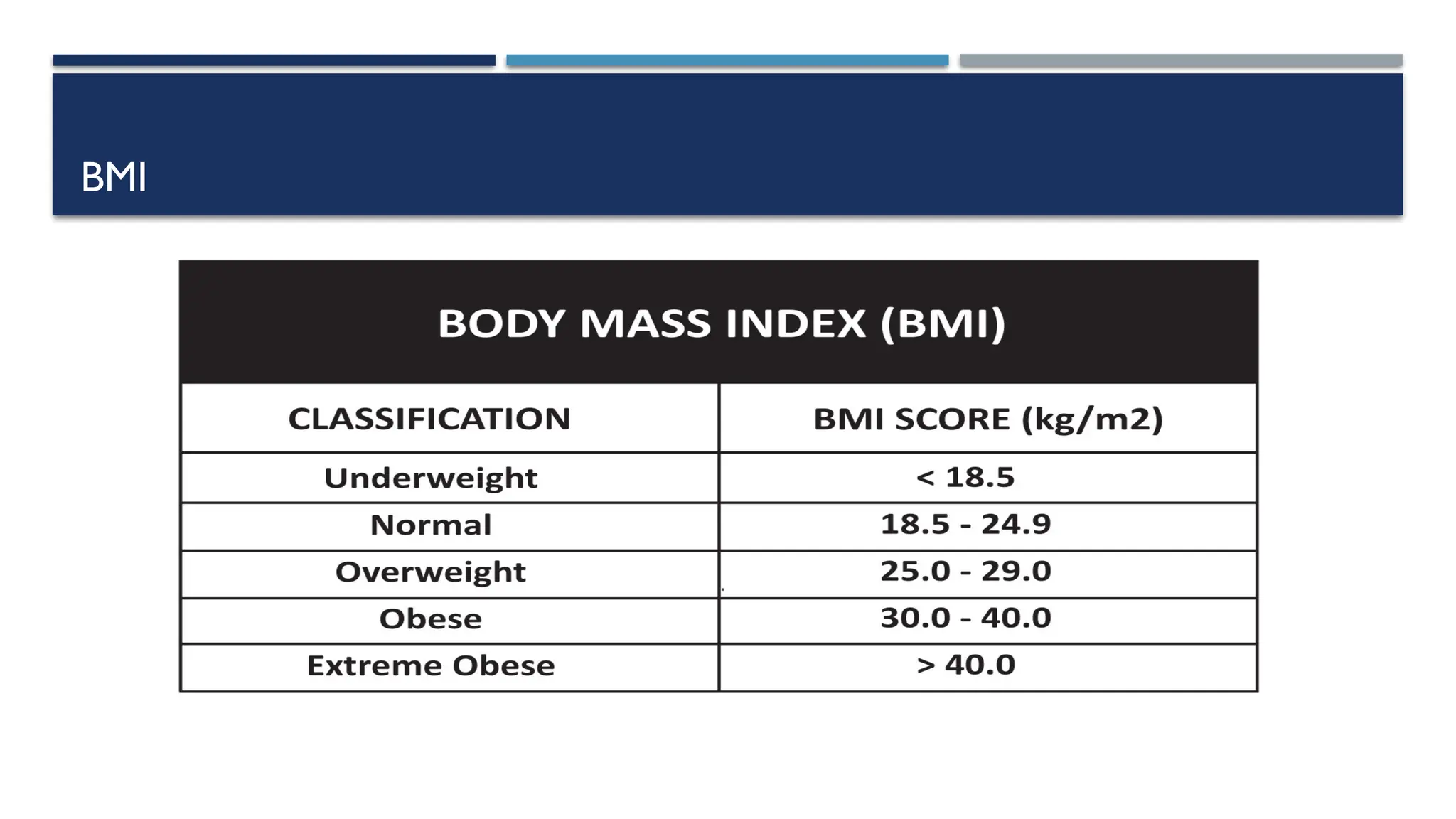
BMI
BASAL METABOLIC RATE (BMR)
 Basal metabolic rate is an estimate of the minimum number of calories a
person needs each day to maintain these functions at a resting state. Keep
reading for more information on what basal metabolic rate is, how it is
related to resting metabolic rate, and more OR
 Basal metabolic rate (BMR) is the minimum number of calories a person
needs to burn each day to sustain basic life functions at rest
RESPIRATORY QUOTIENT (RQ)
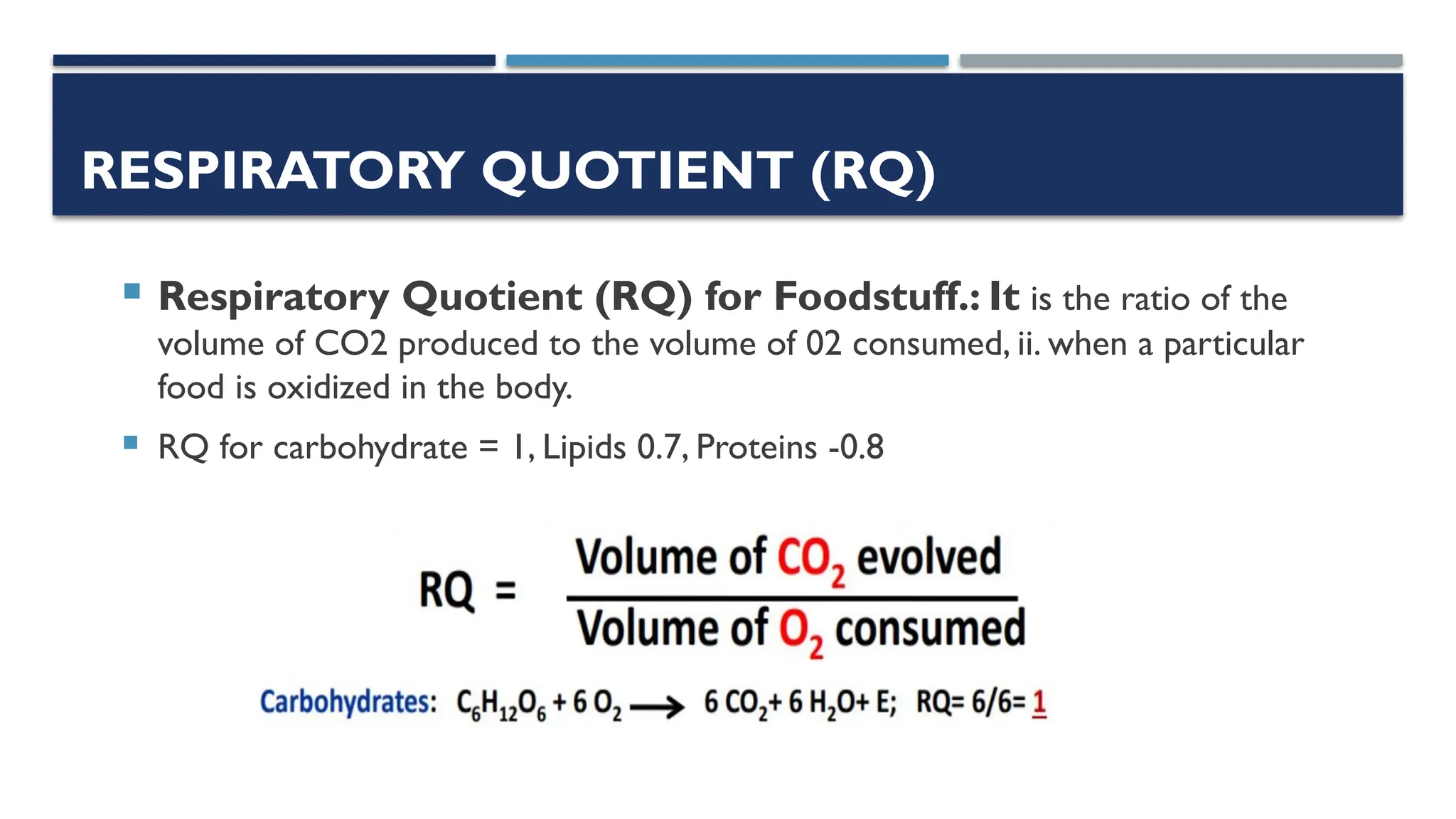
 Respiratory Quotient (RQ) for Foodstuff.: It is the ratio of the
volume of CO2 produced to the volume of 02 consumed, ii. when a particular
food is oxidized in the body.
 RQ for carbohydrate = 1, Lipids 0.7, Proteins -0.8
CONCEPT OF NUTRITION
1.Adequate nutrition is essential for good health.
2.The nutrients in our body are in dynamic equilibrium.
3.Dietary intake and nutrient needs should be individualized.
4.Human requirements for nutrients are known for some and have to be determined as
yet for others.
5.An adequate diet is the foundation of good nutrition and it should consist of a wide
variety of foods.
CONCEPT OF NUTRITION
6.The physiological functions of food are attributed to the roles of the nutrients.
7. Malnutrition is brought about by a faulty diet and/or by conditioning factors like
heredity, infections, ingestion of certain drugs, paradigm, to name a few.
8. Nutrition education, abundant food supply, and use of various resources are needed
to improve nutrition of a population.
9.The study of nutrition is interrelated with allied art and sciences.
MALNUTRITION
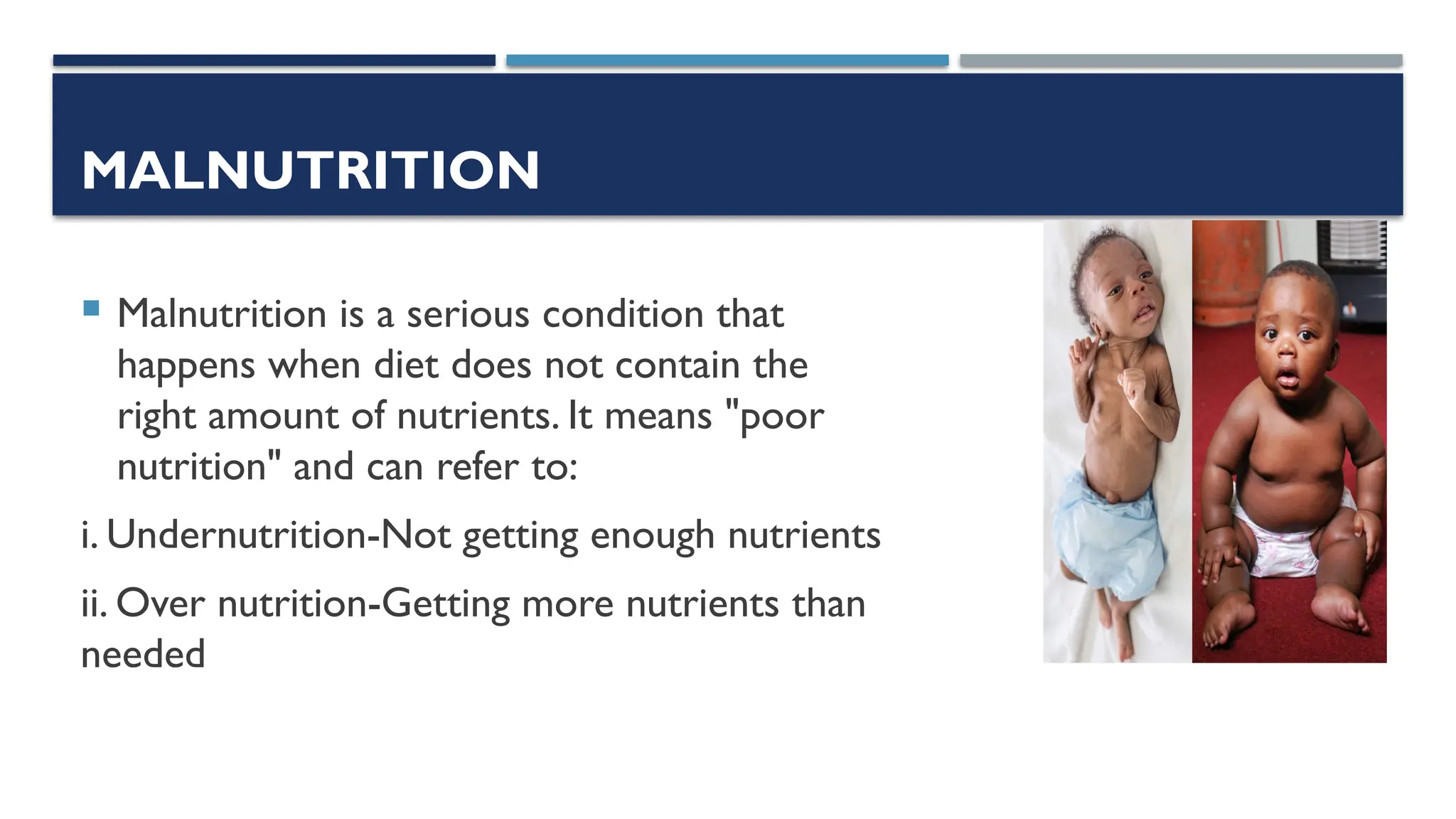
 Malnutrition is a serious condition that
happens when diet does not contain the
right amount of nutrients. It means "poor
nutrition" and can refer to:
i. Undernutrition-Not getting enough nutrients
ii. Over nutrition-Getting more nutrients than
needed
CLASSIFICATION OF NUTRIENTS
 Major nutrients (macronutrients): "Nutrients are the compounds in food that
provide us with energy that facilitates repair and growth and helps to carry out
different life processes.
Example: Carbohydrates, lipids, proteins and water.
 Minor nutrients (micronutrients); Micronutrients, which are. Required by the
body in small amounts.
Example:Vitamins and minerals.
CLASSIFICATION OF FOOD
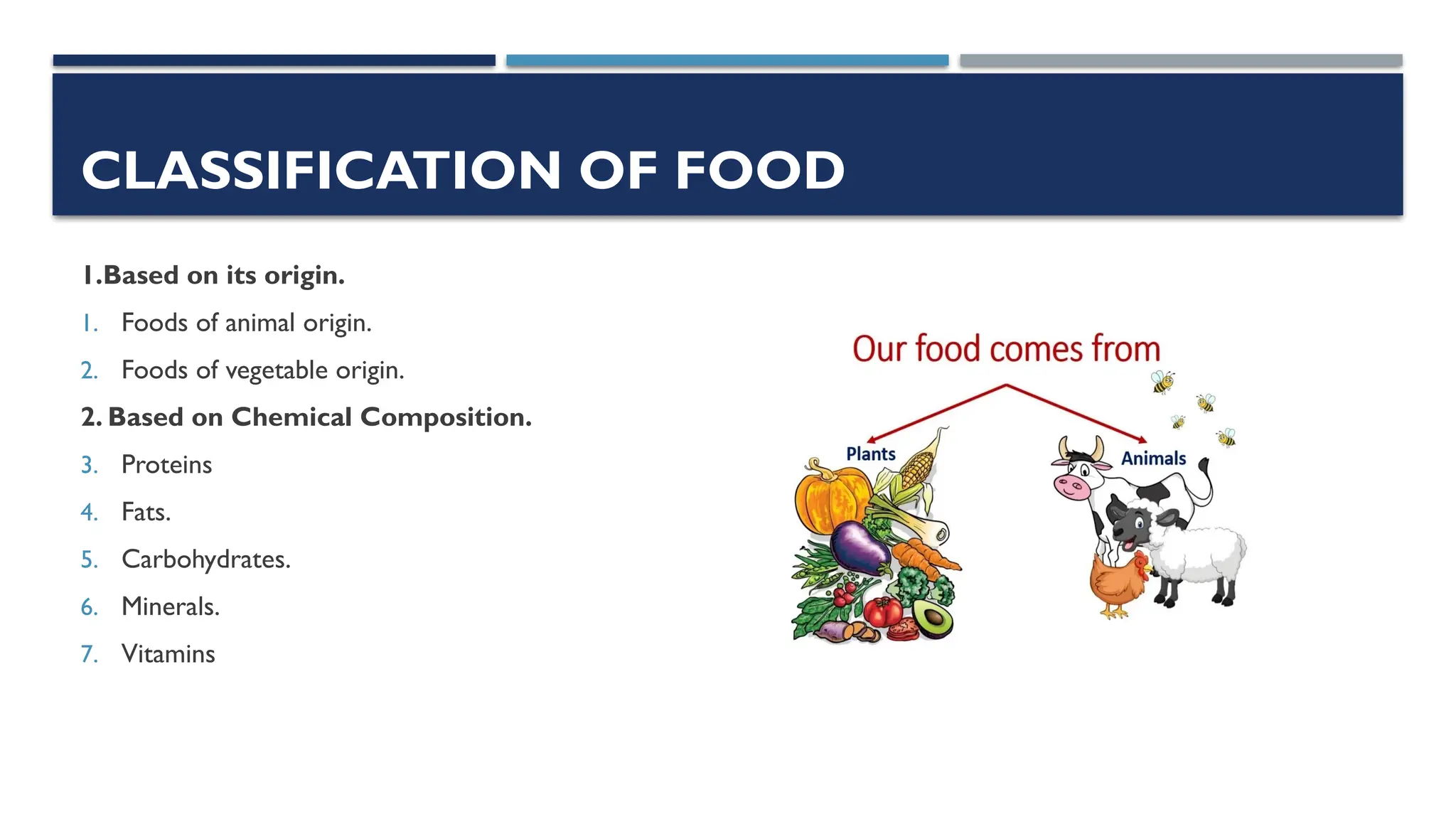
1.Based on its origin.
1. Foods of animal origin.
2. Foods of vegetable origin.
2. Based on Chemical Composition.
3. Proteins
4. Fats.
5. Carbohydrates.
6. Minerals.
7. Vitamins
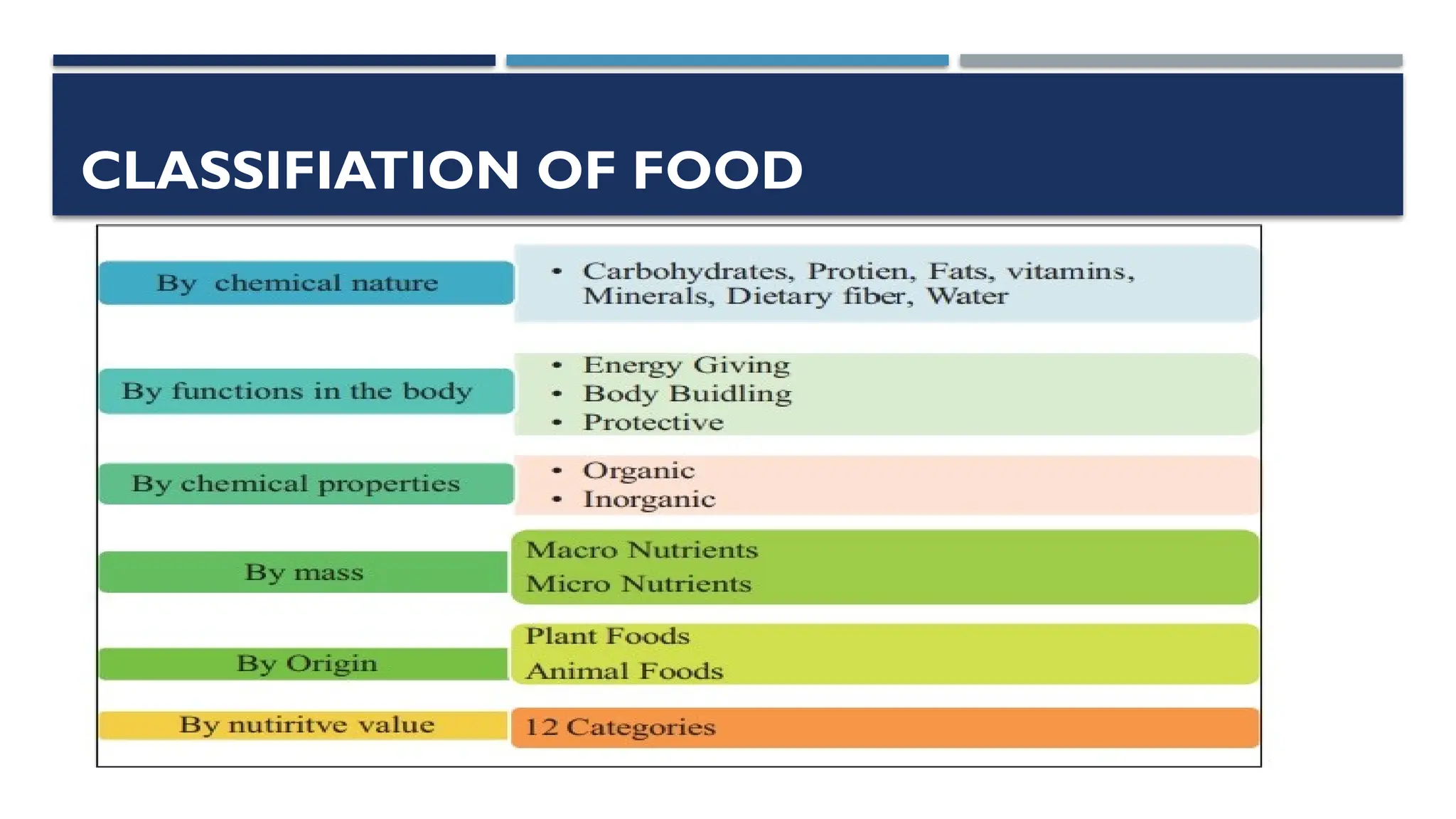
CLASSIFIATION OF FOOD
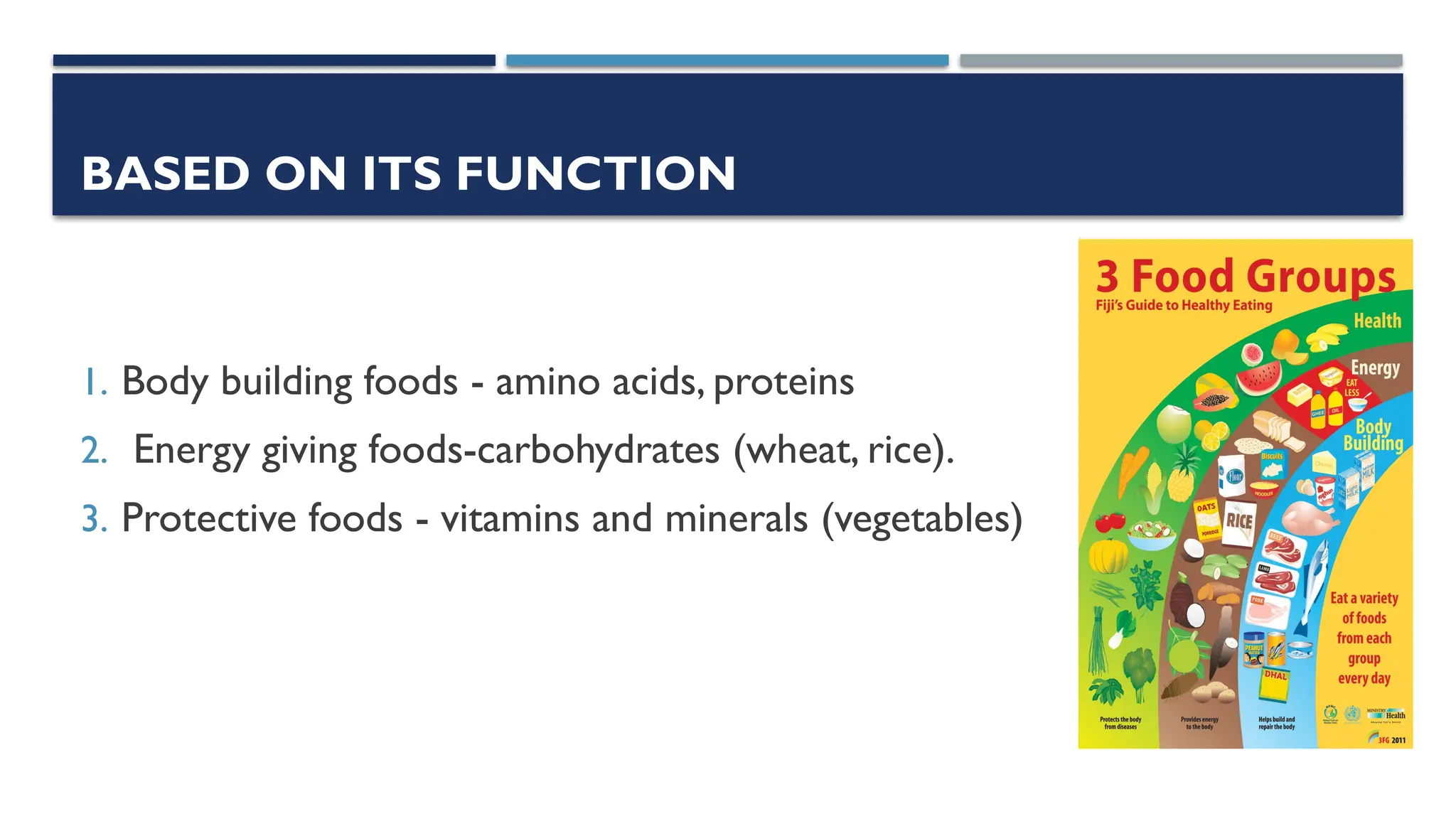
BASED ON ITS FUNCTION
1. Body building foods - amino acids, proteins
2. Energy giving foods-carbohydrates (wheat, rice).
3. Protective foods - vitamins and minerals (vegetables)
FUNCTIONS OF FOOD
1.Provide energy
2. Body building
3. Regulating the activities of the body including; Beating of the heart , Maintenance of body temperature,
Muscle contraction., Clotting of blood, Control of water balance, Elimination of the waste products of
the body
4. Provide resistance to diseases
5. Social function: Feasts are served on specific stages of life-birth, naming ceremonies, birth days,
marriages etc.
6. Psychological functions of food: Breastfeeding provides closeness and security to the child. Food also
satisfy some emotional needs like security, attention and friendship and acceptance
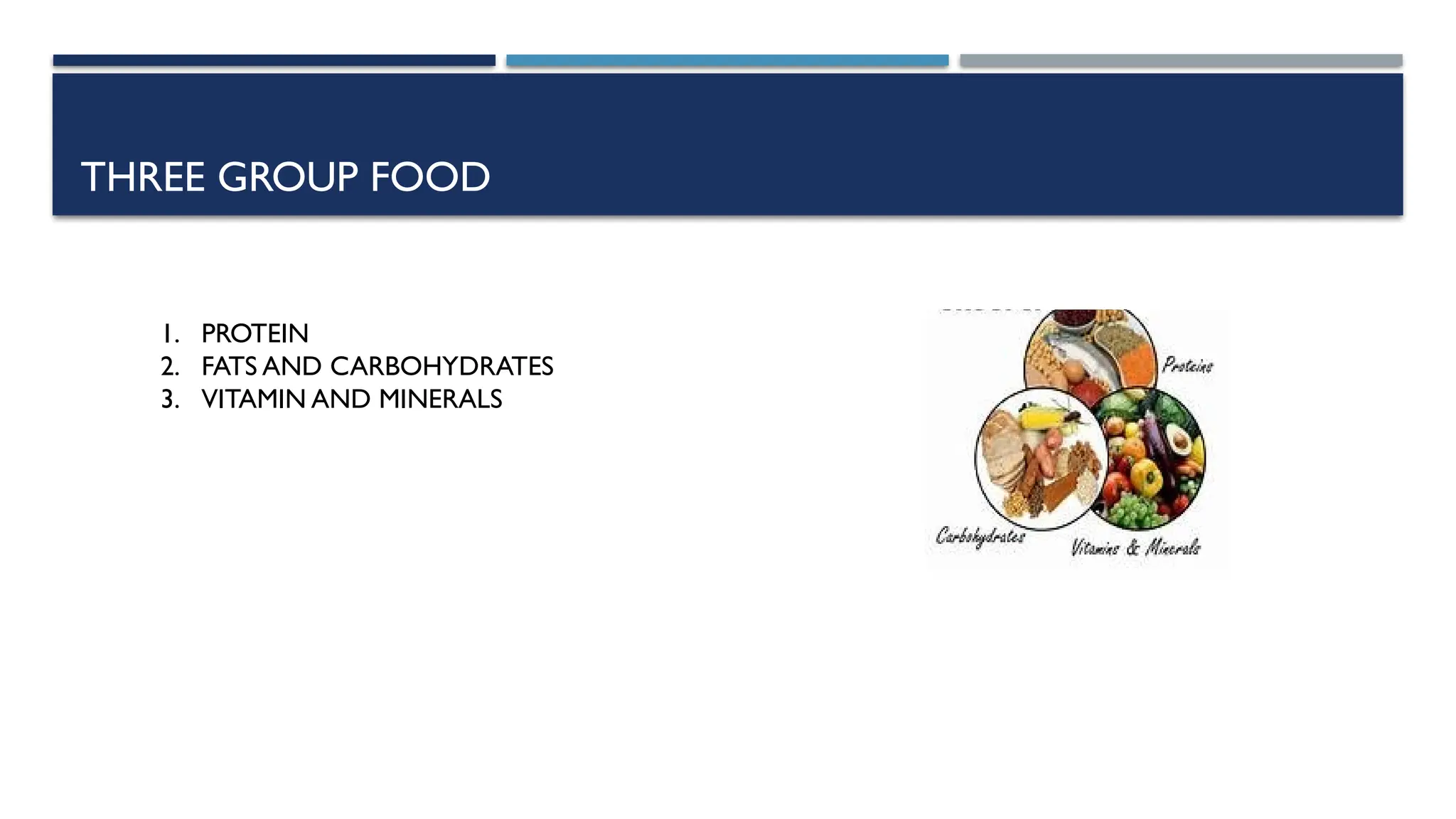
THREE GROUP FOOD
1. PROTEIN
2. FATS AND CARBOHYDRATES
3. VITAMIN AND MINERALS
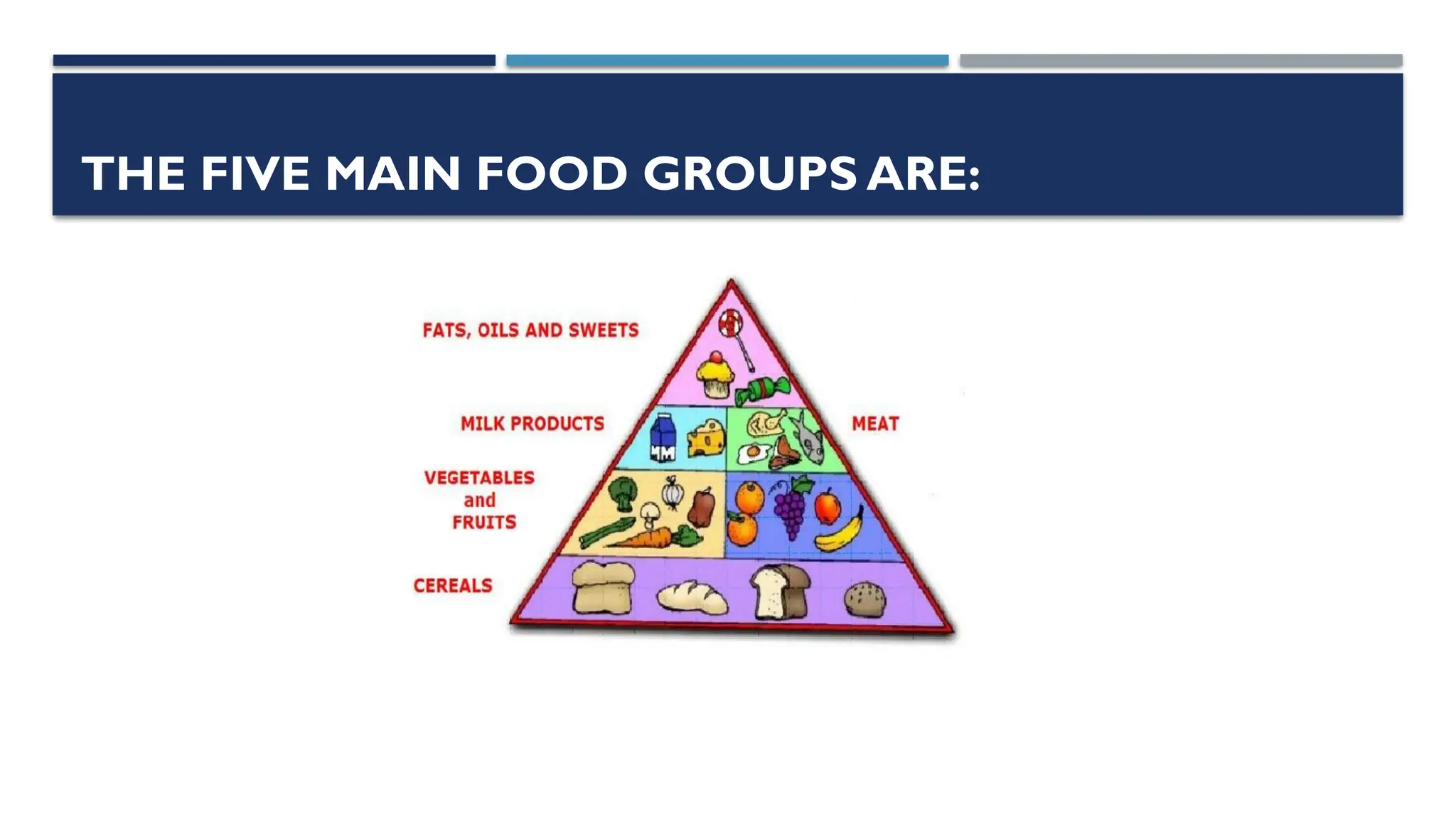
THE FIVE MAIN FOOD GROUPS ARE:
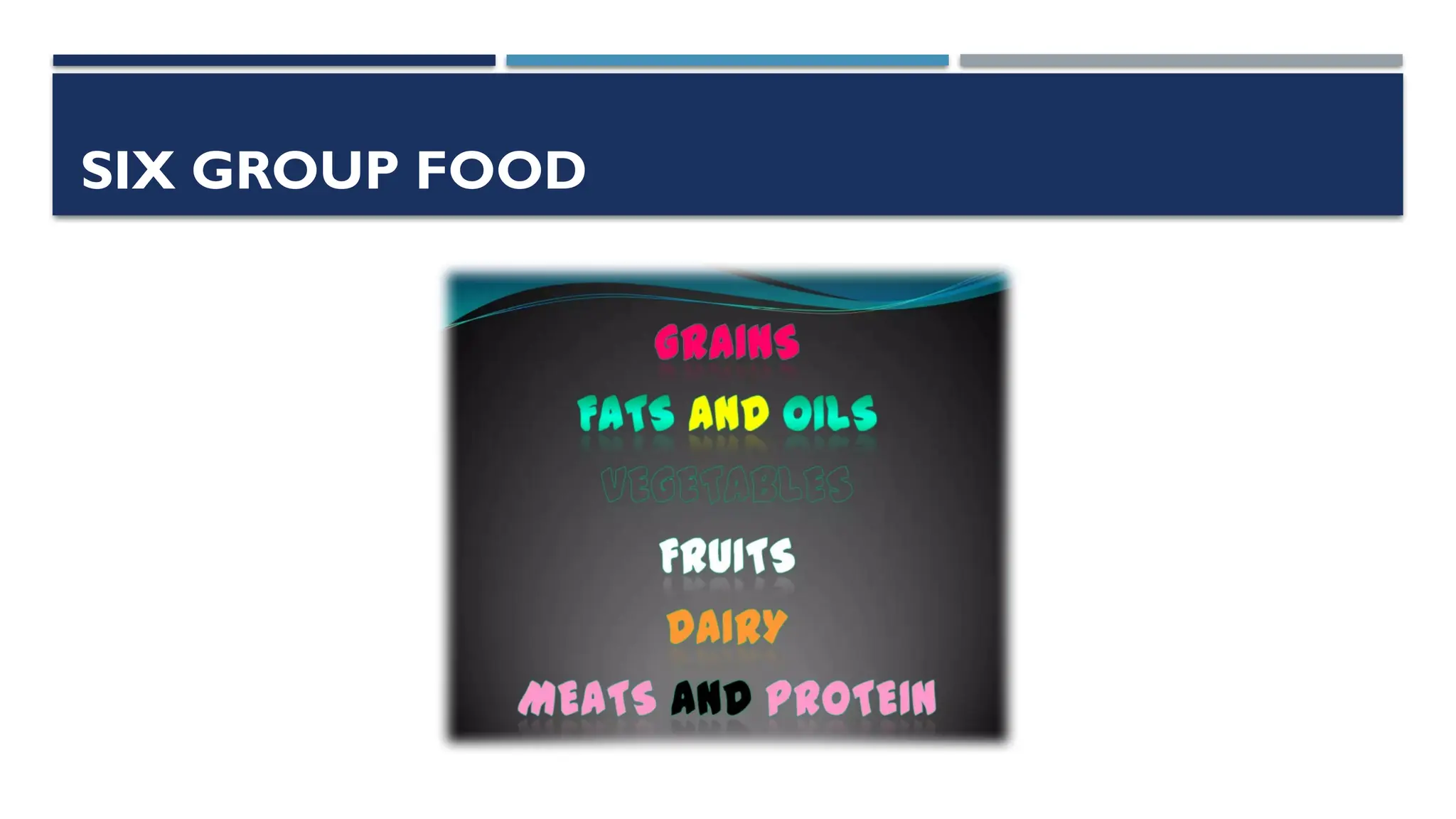
SIX GROUP FOOD
FACTORS AFFECTING FOOD AND NUTRITION
 AGE
 SEX
 FOOD HABITS
 CUSTIMS AND BELIEFS
 RELIGIONS
 COOKING PRACTICES
 HOOD AND COLD FOODS
 PICA
 SOCIO ECONOMIC FACTORS
 FOOD FACTS
 TECHNOLOGY
 PHSYIOLOGICAL CONDITION.
 CULTS
IMPORTANCE OF NUTRITION AND DIETETICS IN
NURSING
 Promotion of Nutrition and health.
 Growth and development: maintenance of optimal health.
 Prevention of nutritional deficiency diseases.
 Specific protection.
 Preparation of therapeutic diet for the patients.
 Reduce mortality and morbidity related to malnutrition by early diagnosis and treatment.
INTRODUCTION OF NUTRITION UNIT 1.pptx bsc nursing 2nd sem

INTRODUCTION OF NUTRITION UNIT 1.pptx bsc nursing 2nd sem

  • 1.
  • 2.
    NUTRITION:  Nutrition signifiesa dynamic process I which the food that is consumed is utilized for nourishing the body.  Nutrition word is derived from “nutricus” means “to suckle”.  Nutrition may be defined as the science of food and its relationship to health.
  • 3.
    TERMS:  FOOD: foodis a composite mixture of various substance.  FOODSTUFF: anything which can be used as food.  NUTREINT: food factor used for specific dietary constitution such as protein, vitamins and minerals.  DIETETICS: It is a practical application of the principles of nutrient. Include the planning of meals for the well and the sick.  FOOD FADS: Personal like and dislike in the selection of foods.
  • 4.
     DIETITIANS: arequalified and regulated health professionals that assess, diagnose and treat dietary and nutritional problems at an individual and wider public-health level.  DIET: is what a person habitually eats and drinks.Vegetarian diet  A BALANCED DIET: is one that contains all of the essential elements/ Nutrients in right amount, that the human body needs. Carbohydrates, lipids, vitamins, minerals, proteins  ATHERAPEUTIC DIET: is a meal plan that controls/meet the special nutritional need of a individual's during the treatment or management of certain diseases, illnesses or medical conditions. KYB diet
  • 5.
     Energy Balance:is the difference between energy intake, which can be metabolized, and total energy expenditure.  Nutrition screening: Is a quick look at a few variables to identify individuals who are malnourished or who are at risk for malnutrition, e.g. screening a pregnant women
  • 6.
     KILOCALORIES: Akilocalories (Kcal) is the amount of heat required to raise the temperature of 1 liter of water by 1 degree Celsius.  1 kcal = 4184 joules or 4.184 kJ.  1g CHO= 4kcal. (17kJ)  1gm protein= 4kcal (17kJ)  1gm Fats= 9Kcal (37kJ).
  • 7.
    BMI (BODY MASSINDEX)  Body Mass Index: An index of weight in relation to height that is calculated mathematically by dividing weight in kilograms by the square of height in meter. ( Body weight in kg divided by square of height in meters)
  • 8.
  • 9.
    BASAL METABOLIC RATE(BMR)  Basal metabolic rate is an estimate of the minimum number of calories a person needs each day to maintain these functions at a resting state. Keep reading for more information on what basal metabolic rate is, how it is related to resting metabolic rate, and more OR  Basal metabolic rate (BMR) is the minimum number of calories a person needs to burn each day to sustain basic life functions at rest
  • 10.
    RESPIRATORY QUOTIENT (RQ) Respiratory Quotient (RQ) for Foodstuff.: It is the ratio of the volume of CO2 produced to the volume of 02 consumed, ii. when a particular food is oxidized in the body.  RQ for carbohydrate = 1, Lipids 0.7, Proteins -0.8
  • 11.
    CONCEPT OF NUTRITION 1.Adequatenutrition is essential for good health. 2.The nutrients in our body are in dynamic equilibrium. 3.Dietary intake and nutrient needs should be individualized. 4.Human requirements for nutrients are known for some and have to be determined as yet for others. 5.An adequate diet is the foundation of good nutrition and it should consist of a wide variety of foods.
  • 12.
    CONCEPT OF NUTRITION 6.Thephysiological functions of food are attributed to the roles of the nutrients. 7. Malnutrition is brought about by a faulty diet and/or by conditioning factors like heredity, infections, ingestion of certain drugs, paradigm, to name a few. 8. Nutrition education, abundant food supply, and use of various resources are needed to improve nutrition of a population. 9.The study of nutrition is interrelated with allied art and sciences.
  • 13.
    MALNUTRITION  Malnutrition isa serious condition that happens when diet does not contain the right amount of nutrients. It means "poor nutrition" and can refer to: i. Undernutrition-Not getting enough nutrients ii. Over nutrition-Getting more nutrients than needed
  • 14.
    CLASSIFICATION OF NUTRIENTS Major nutrients (macronutrients): "Nutrients are the compounds in food that provide us with energy that facilitates repair and growth and helps to carry out different life processes. Example: Carbohydrates, lipids, proteins and water.  Minor nutrients (micronutrients); Micronutrients, which are. Required by the body in small amounts. Example:Vitamins and minerals.
  • 15.
    CLASSIFICATION OF FOOD 1.Basedon its origin. 1. Foods of animal origin. 2. Foods of vegetable origin. 2. Based on Chemical Composition. 3. Proteins 4. Fats. 5. Carbohydrates. 6. Minerals. 7. Vitamins
  • 16.
  • 17.
    BASED ON ITSFUNCTION 1. Body building foods - amino acids, proteins 2. Energy giving foods-carbohydrates (wheat, rice). 3. Protective foods - vitamins and minerals (vegetables)
  • 18.
    FUNCTIONS OF FOOD 1.Provideenergy 2. Body building 3. Regulating the activities of the body including; Beating of the heart , Maintenance of body temperature, Muscle contraction., Clotting of blood, Control of water balance, Elimination of the waste products of the body 4. Provide resistance to diseases 5. Social function: Feasts are served on specific stages of life-birth, naming ceremonies, birth days, marriages etc. 6. Psychological functions of food: Breastfeeding provides closeness and security to the child. Food also satisfy some emotional needs like security, attention and friendship and acceptance
  • 19.
    THREE GROUP FOOD 1.PROTEIN 2. FATS AND CARBOHYDRATES 3. VITAMIN AND MINERALS
  • 20.
    THE FIVE MAINFOOD GROUPS ARE:
  • 21.
  • 22.
    FACTORS AFFECTING FOODAND NUTRITION  AGE  SEX  FOOD HABITS  CUSTIMS AND BELIEFS  RELIGIONS  COOKING PRACTICES  HOOD AND COLD FOODS  PICA  SOCIO ECONOMIC FACTORS  FOOD FACTS  TECHNOLOGY  PHSYIOLOGICAL CONDITION.  CULTS
  • 23.
    IMPORTANCE OF NUTRITIONAND DIETETICS IN NURSING  Promotion of Nutrition and health.  Growth and development: maintenance of optimal health.  Prevention of nutritional deficiency diseases.  Specific protection.  Preparation of therapeutic diet for the patients.  Reduce mortality and morbidity related to malnutrition by early diagnosis and treatment.