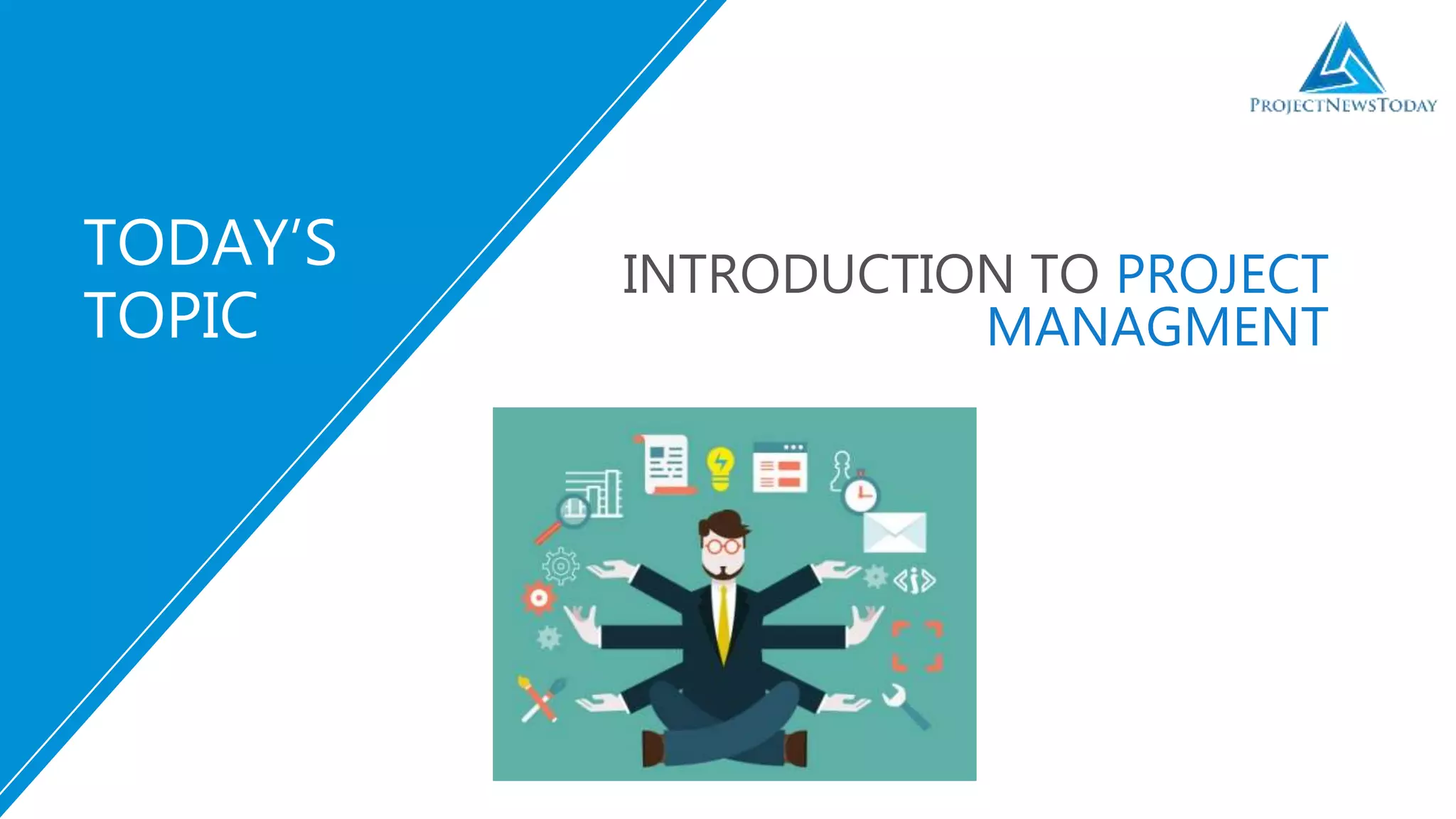
INTRODUCTION TO PROJECT
MANAGMENT
TODAY’S
TOPIC
THIS MESSAGE
BROUGHT TO YOU BY
THE LETTER
“P”
PROJECT
PROGRAMME
PORTFOLIO
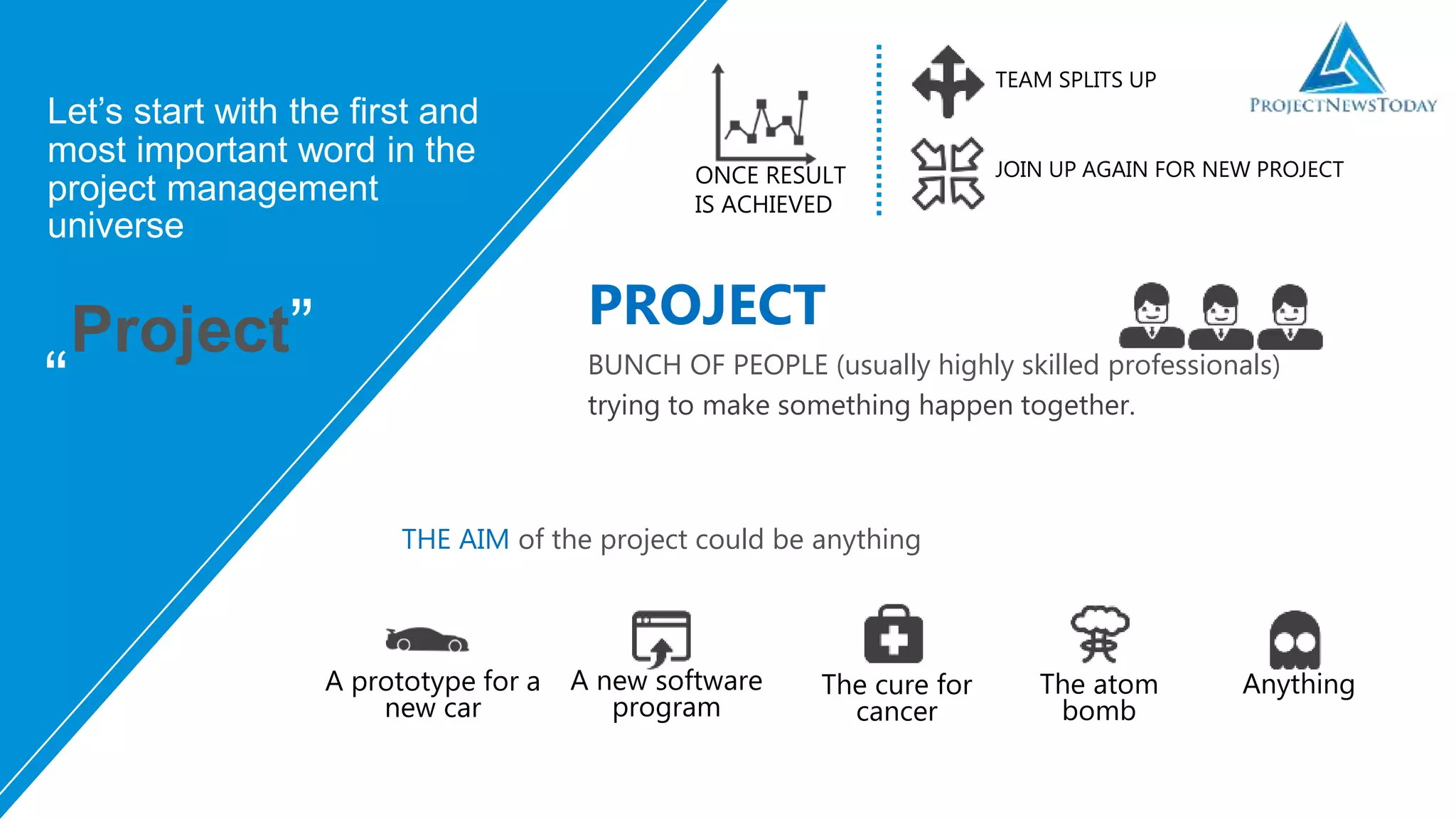
ONCE RESULT
IS ACHIEVED
TEAM SPLITS UP
JOIN UP AGAIN FOR NEW PROJECT
Let’s start with the first and
most important word in the
project management
universe
“
Anything
THE AIM of the project could be anything
A new software
program
A prototype for a
new car
The cure for
cancer
The atom
bomb
PROJECT
BUNCH OF PEOPLE (usually highly skilled professionals)
trying to make something happen together.
Project”
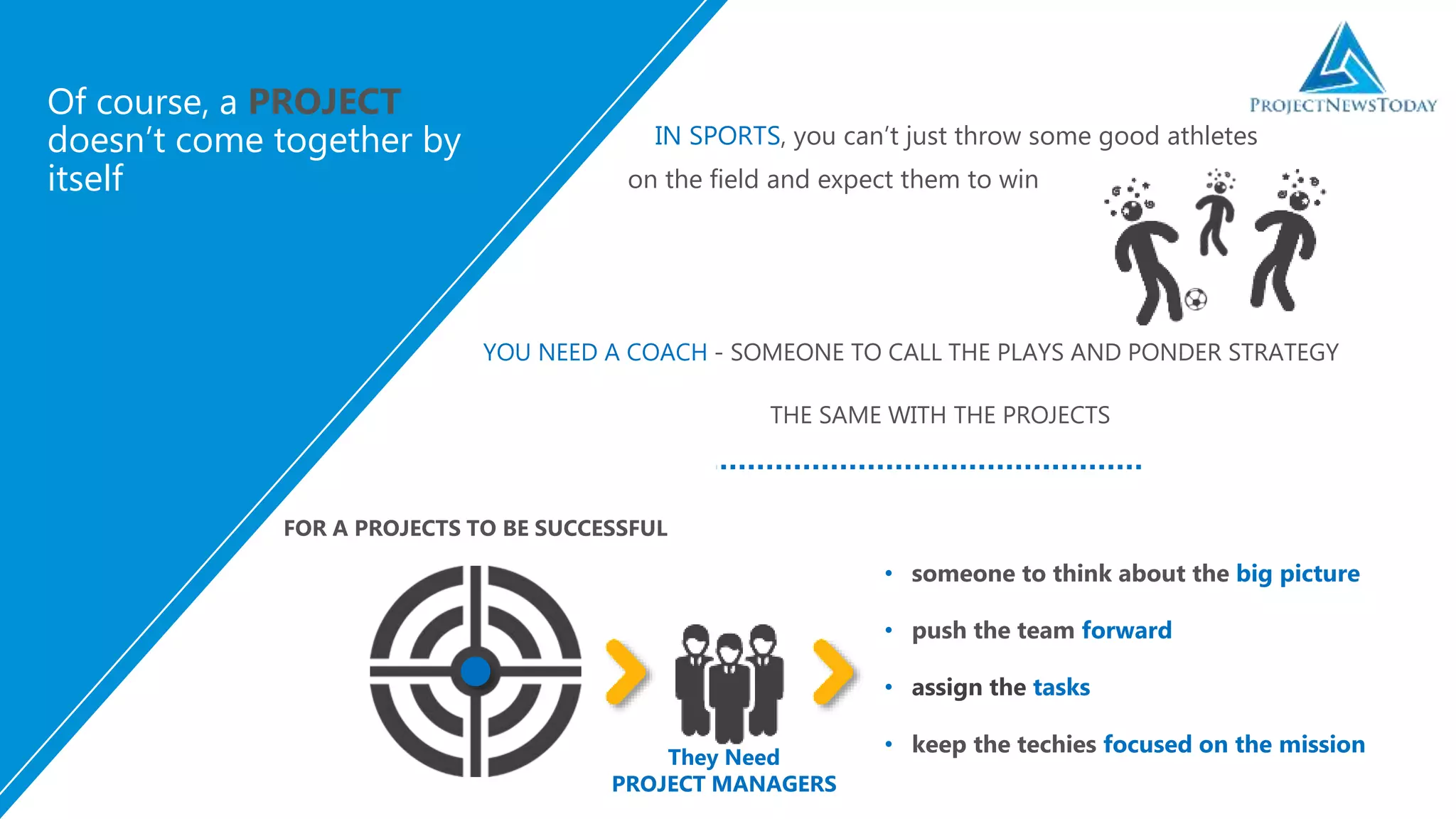
IN SPORTS, you can’t just throw some good athletes
on the field and expect them to win
Of course, a PROJECT
doesn’t come together by
itself
YOU NEED A COACH - SOMEONE TO CALL THE PLAYS AND PONDER STRATEGY
THE SAME WITH THE PROJECTS
FOR A PROJECTS TO BE SUCCESSFUL
• someone to think about the big picture
They Need
PROJECT MANAGERS
• push the team forward
• assign the tasks
• keep the techies focused on the mission
Let’s move on to the second
“P” word
“
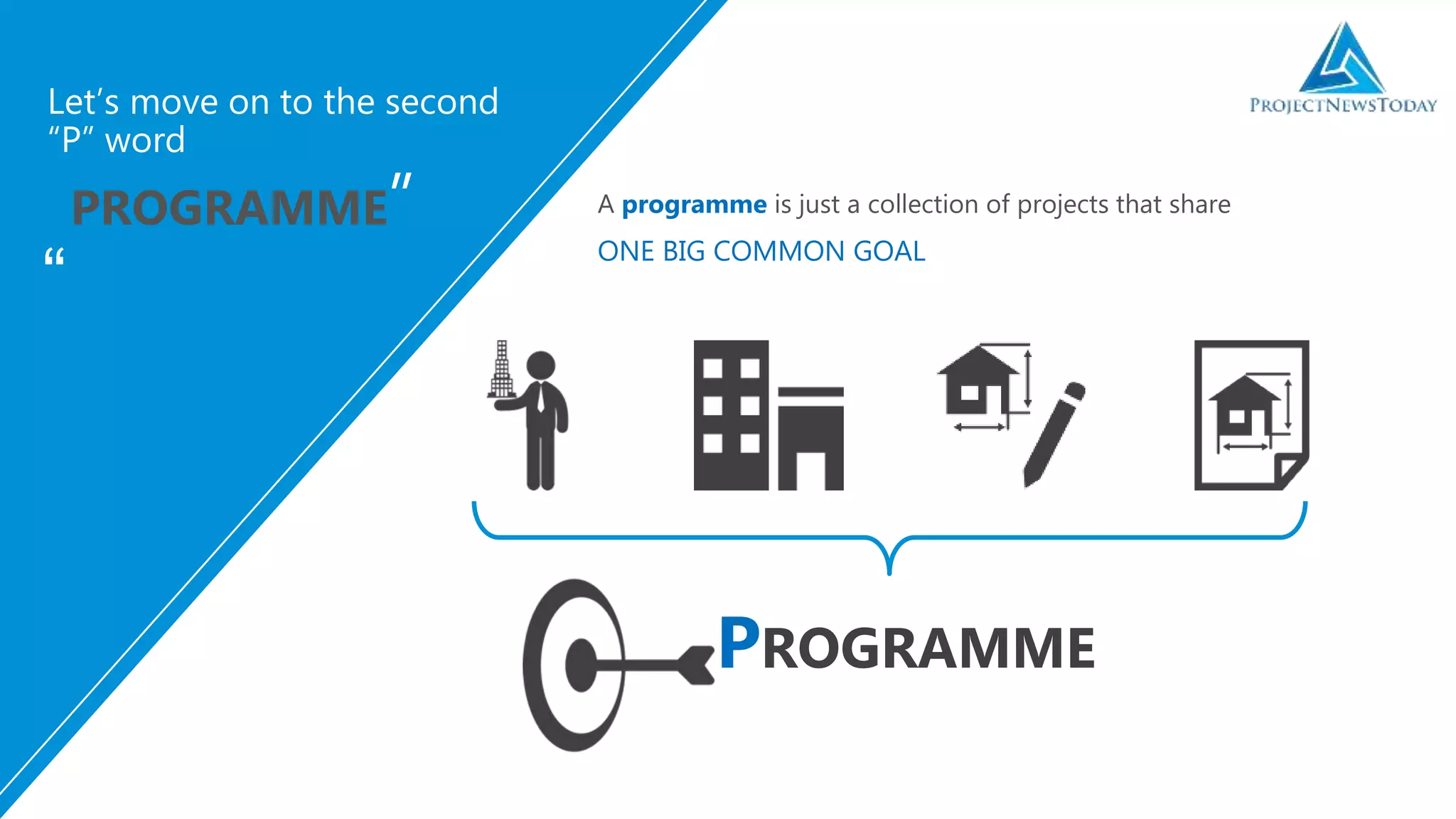
A programme is just a collection of projects that share
ONE BIG COMMON GOAL
PROGRAMME
PROGRAMME”
Next let’s look at the final
“P” word
“
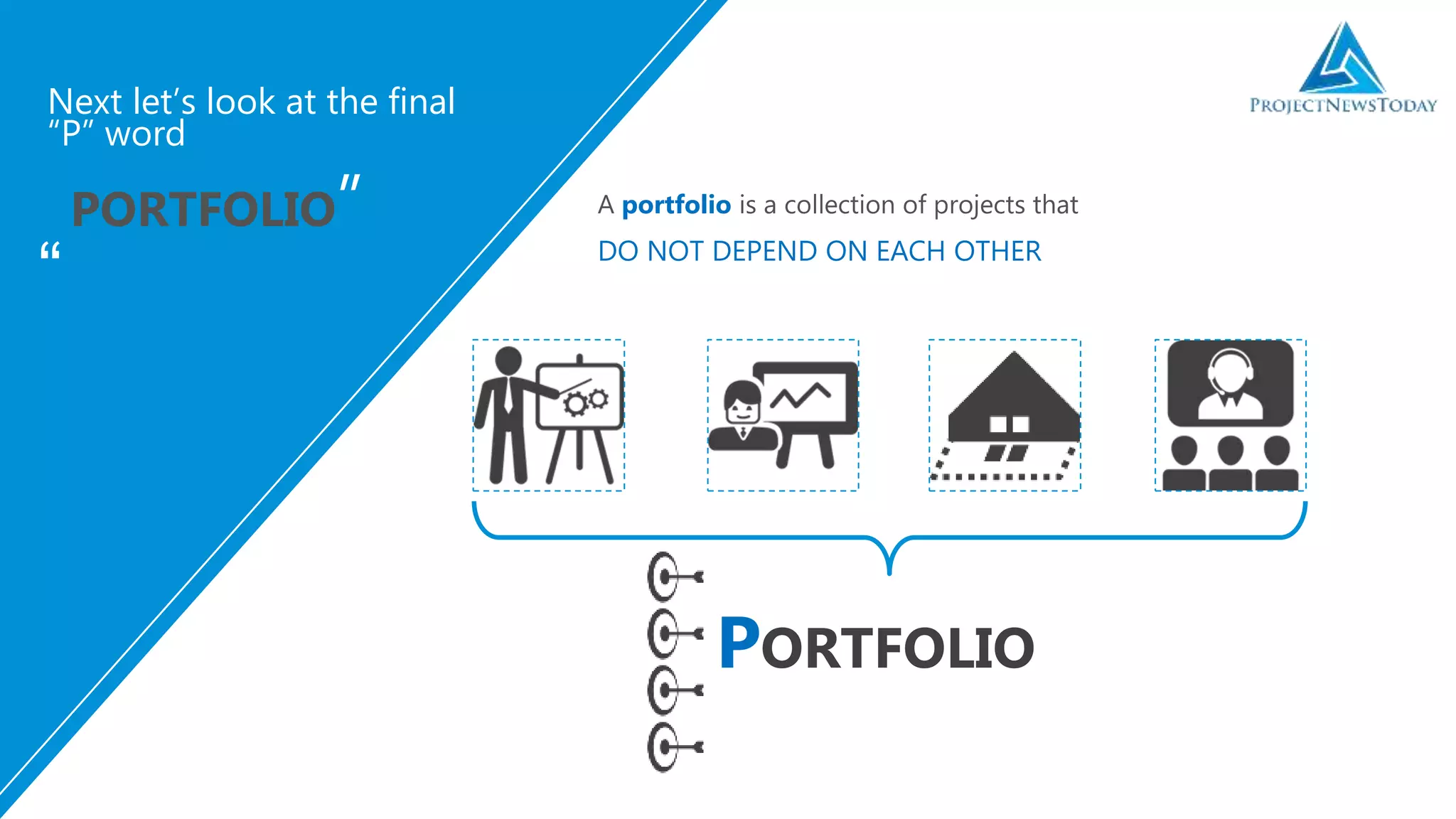
A portfolio is a collection of projects that
DO NOT DEPEND ON EACH OTHER
PORTFOLIO
PORTFOLIO”
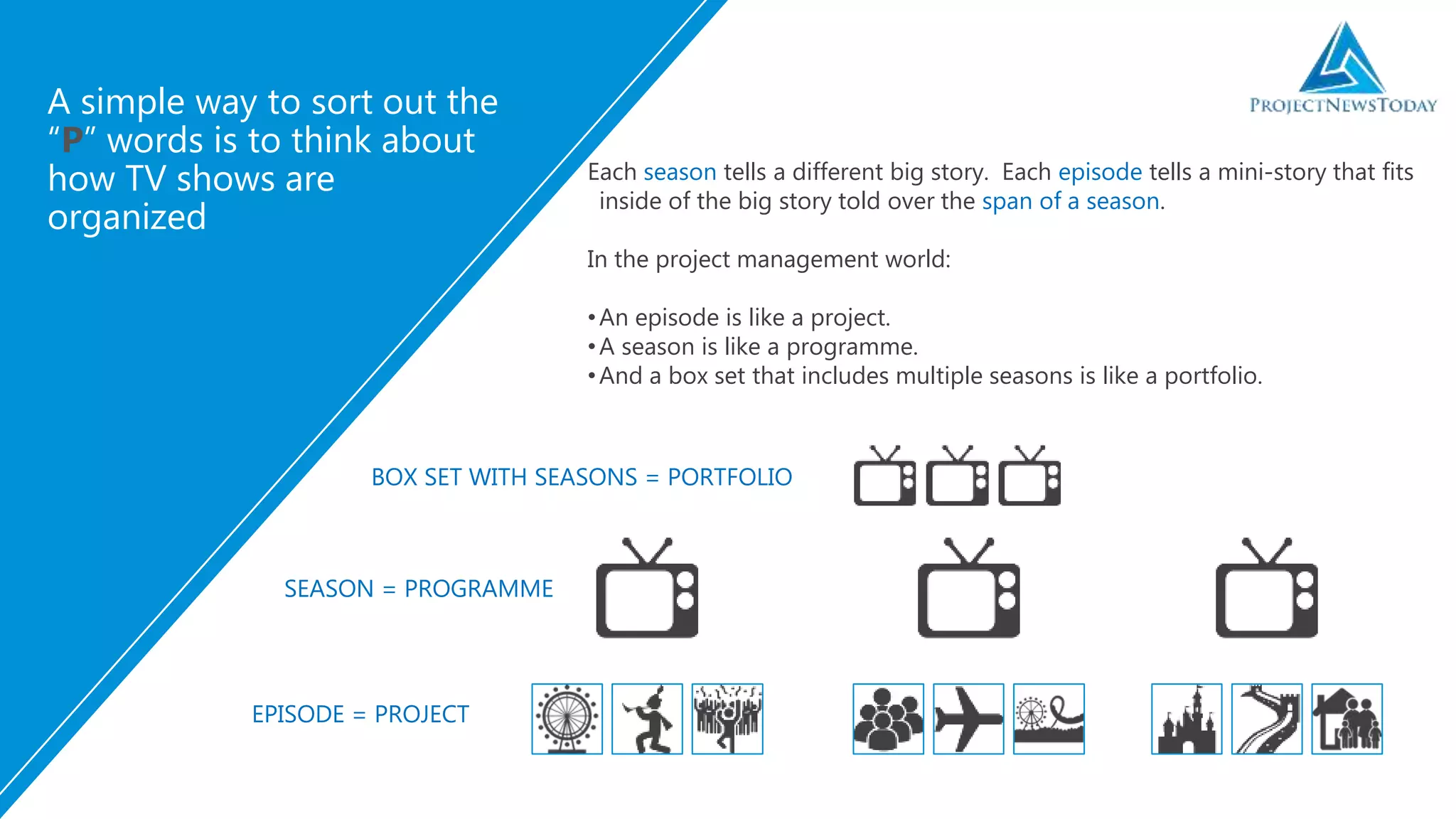
Each season tells a different big story. Each episode tells a mini-story that fits
inside of the big story told over the span of a season.
In the project management world:
•An episode is like a project.
•A season is like a programme.
•And a box set that includes multiple seasons is like a portfolio.
A simple way to sort out the
“P” words is to think about
how TV shows are
organized
EPISODE = PROJECT
SEASON = PROGRAMME
BOX SET WITH SEASONS = PORTFOLIO
Investing too much time in one area of the triangle could spell disaster
Now that you understand some
basic vocab words, let’s move
on to some of the cold hard
facts involved in managing a
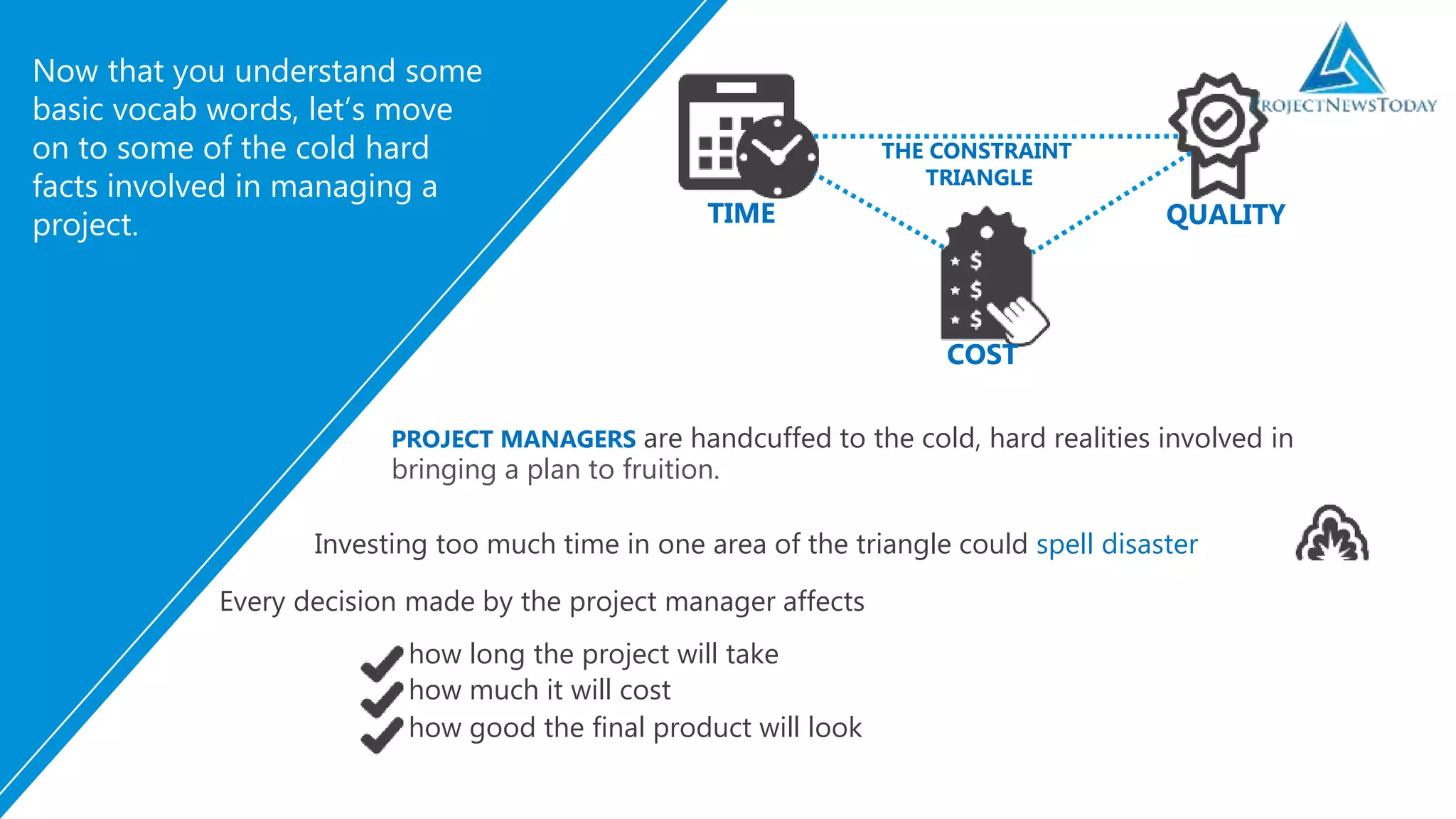
project. TIME
COST
QUALITY
THE CONSTRAINT
TRIANGLE
bringing a plan to fruition.
PROJECT MANAGERS are handcuffed to the cold, hard realities involved in
Every decision made by the project manager affects
how long the project will take
how much it will cost
how good the final product will look
There are two ways to go about
dealing with the demands of
the constraint triangle
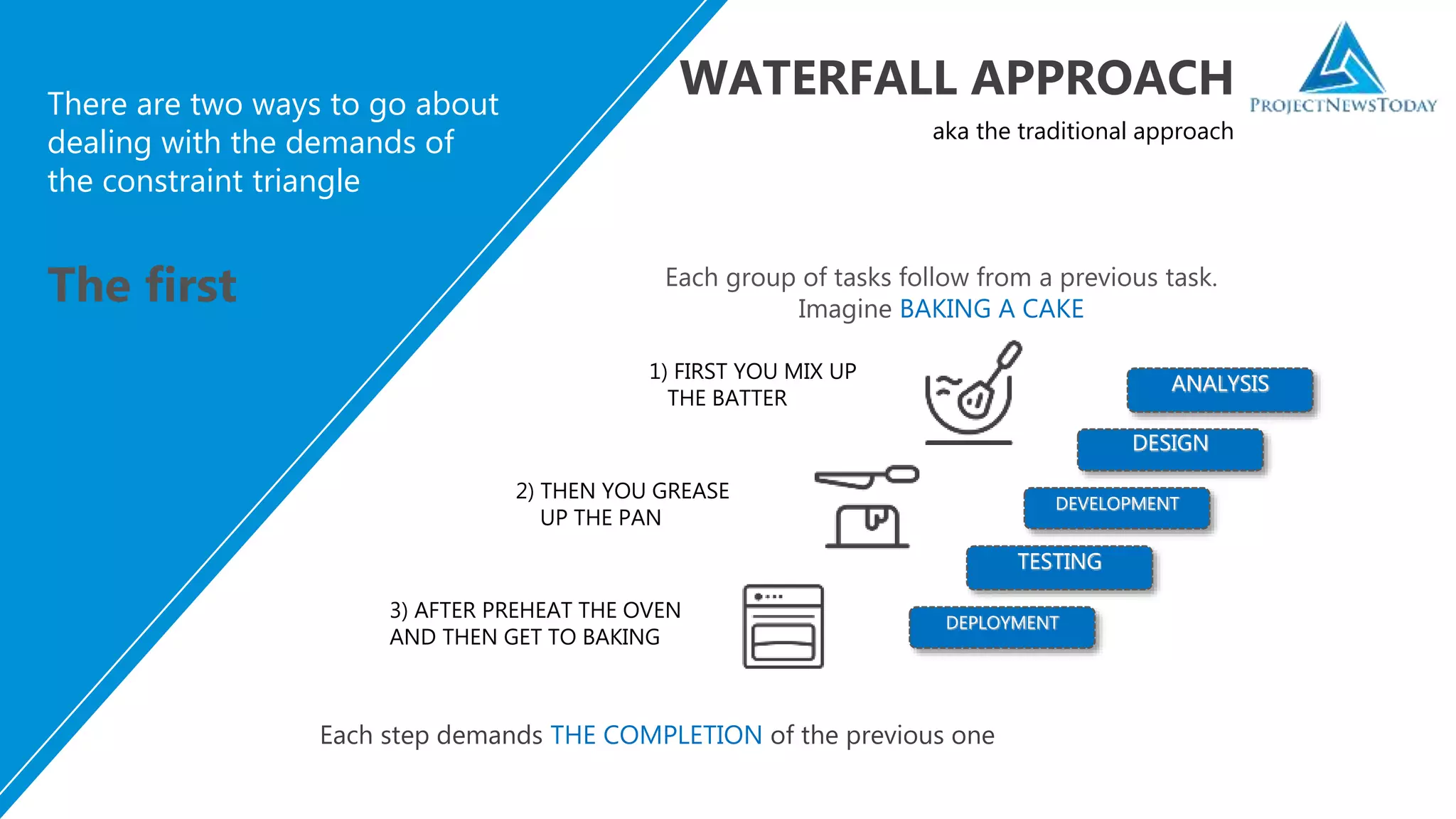
The first
WATERFALL APPROACH
aka the traditional approach
Each group of tasks follow from a previous task.
Imagine BAKING A CAKE
1) FIRST YOU MIX UP
THE BATTER
2) THEN YOU GREASE
UP THE PAN
3) AFTER PREHEAT THE OVEN
AND THEN GET TO BAKING
Each step demands THE COMPLETION of the previous one
ANALYSIS
DESIGN
DEVELOPMENT
TESTING
DEPLOYMENT
There are two ways to go about
dealing with the demands of
the constraint triangle
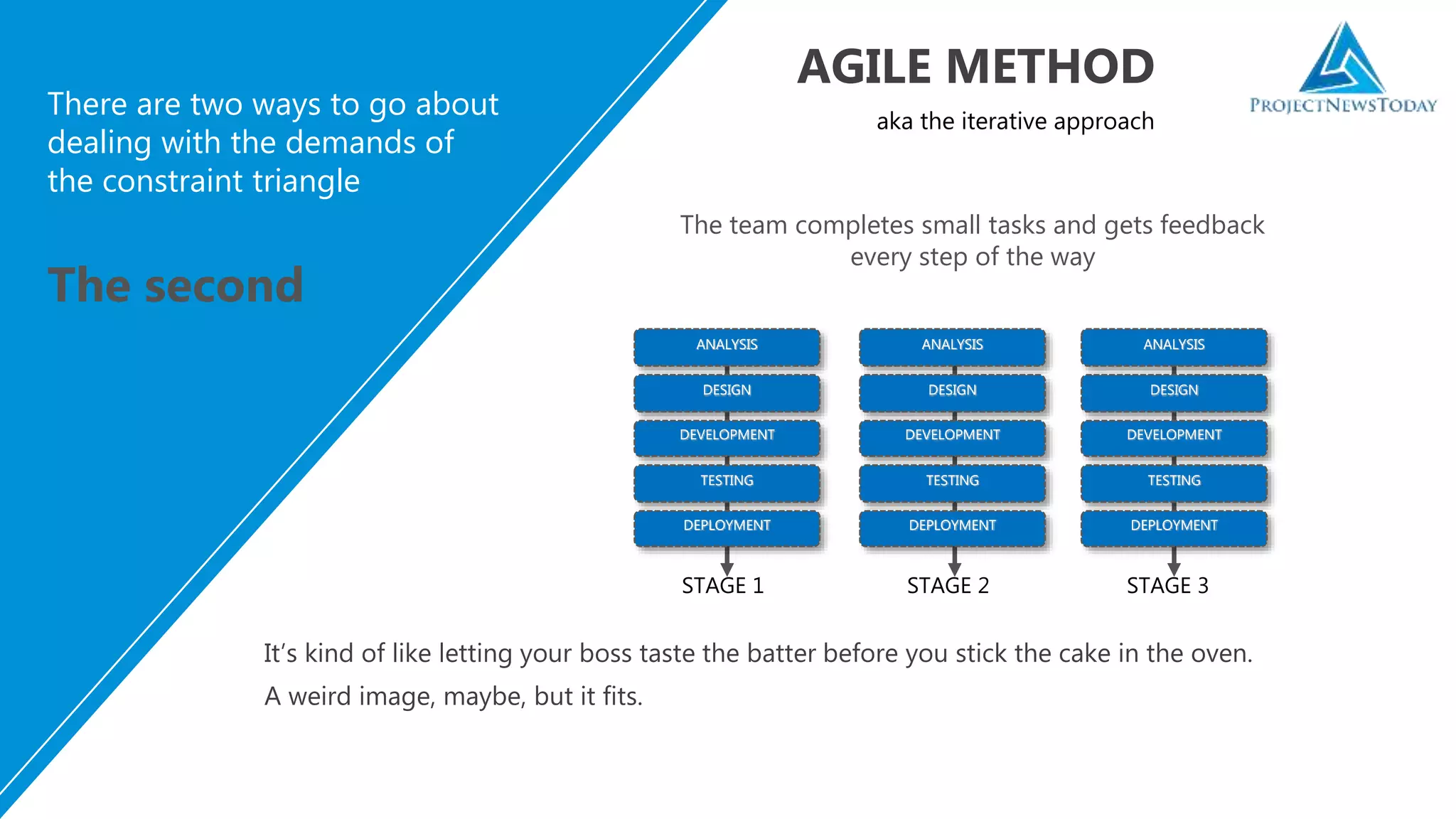
The second
ANALYSIS
DESIGN
DEVELOPMENT
TESTING
DEPLOYMENT
ANALYSIS
DESIGN
DEVELOPMENT
TESTING
DEPLOYMENT
ANALYSIS
DESIGN
DEVELOPMENT
TESTING
DEPLOYMENT
AGILE METHOD
aka the iterative approach
The team completes small tasks and gets feedback
every step of the way
STAGE 1 STAGE 2 STAGE 3
A weird image, maybe, but it fits.
It’s kind of like letting your boss taste the batter before you stick the cake in the oven.
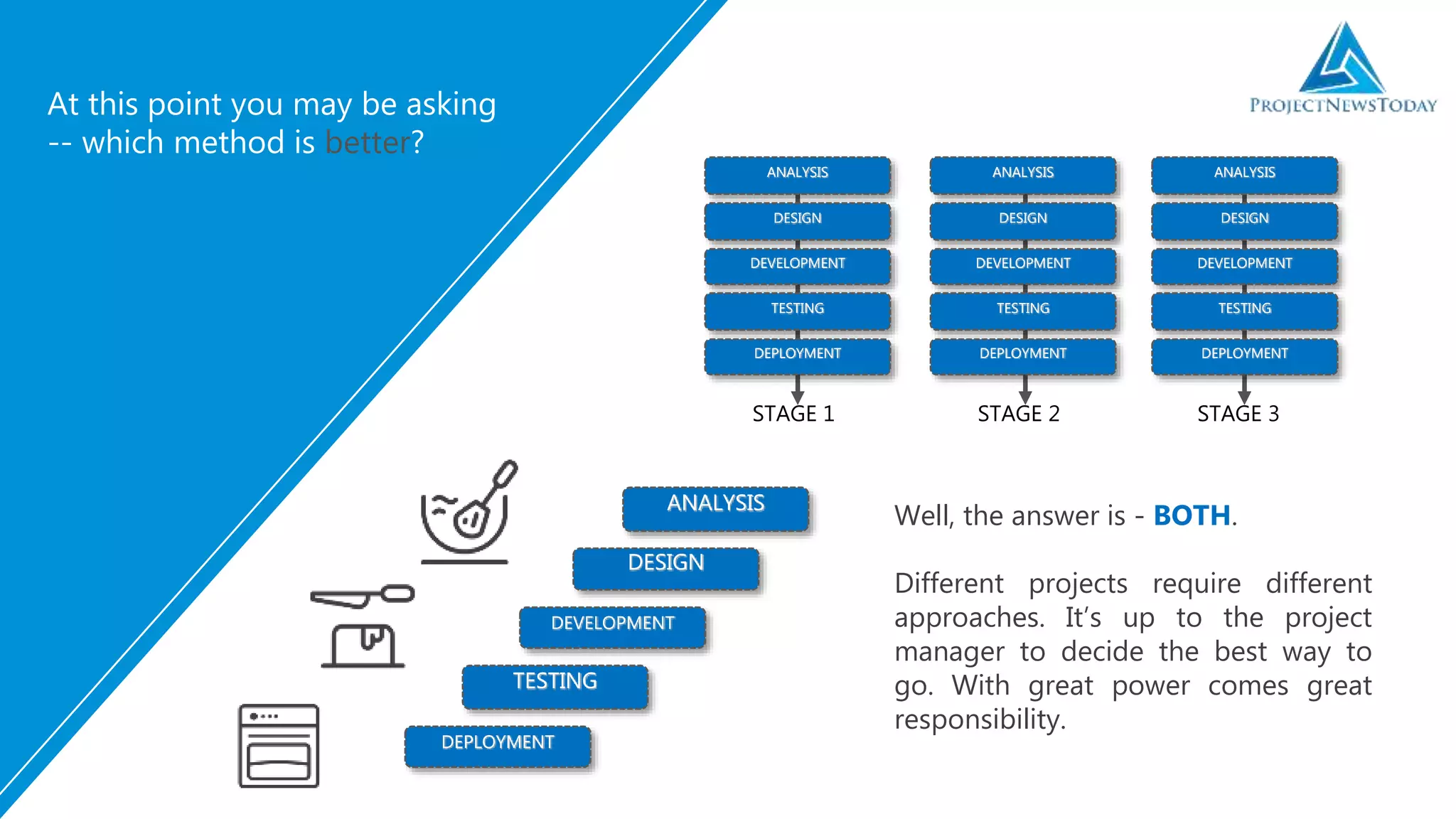
At this point you may be asking
-- which method is better?
Well, the answer is - BOTH.
Different projects require different
approaches. It’s up to the project
manager to decide the best way to
go. With great power comes great
responsibility.
ANALYSIS
DESIGN
DEVELOPMENT
TESTING
DEPLOYMENT
ANALYSIS
DESIGN
DEVELOPMENT
TESTING
DEPLOYMENT
ANALYSIS
DESIGN
DEVELOPMENT
TESTING
DEPLOYMENT
ANALYSIS
DESIGN
DEVELOPMENT
TESTING
DEPLOYMENT
STAGE 1 STAGE 2 STAGE 3
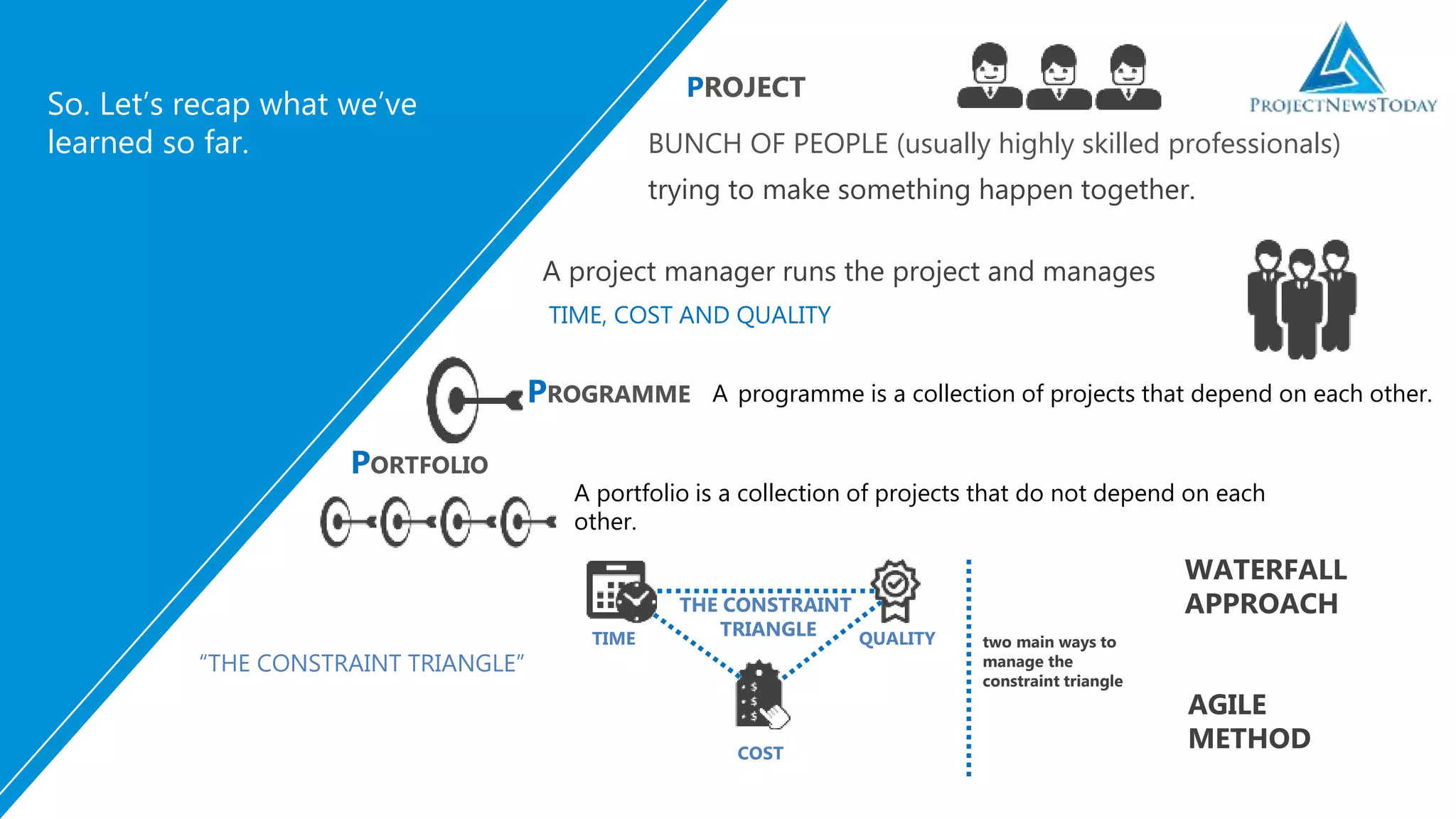
So. Let’s recap what we’ve
learned so far.
PROJECT
BUNCH OF PEOPLE (usually highly skilled professionals)
trying to make something happen together.
A project manager runs the project and manages
TIME, COST AND QUALITY
TIME
COST
QUALITY
THE CONSTRAINT
TRIANGLE
“THE CONSTRAINT TRIANGLE”
PROGRAMME
PORTFOLIO
A programme is a collection of projects that depend on each other.
A portfolio is a collection of projects that do not depend on each
other.
two main ways to
manage the
constraint triangle
AGILE
METHOD
WATERFALL
APPROACH
I HOPE YOU FOUND THESE SLIDES USEFUL
FOR MORE GREAT INFO ON PROJECT MANAGEMENT, CHECK OUT
PROJECTNEWSTODAY.COM

Introduction to Project Management

  • 1.
  • 2.
    THIS MESSAGE BROUGHT TOYOU BY THE LETTER “P” PROJECT PROGRAMME PORTFOLIO
  • 3.
    ONCE RESULT IS ACHIEVED TEAMSPLITS UP JOIN UP AGAIN FOR NEW PROJECT Let’s start with the first and most important word in the project management universe “ Anything THE AIM of the project could be anything A new software program A prototype for a new car The cure for cancer The atom bomb PROJECT BUNCH OF PEOPLE (usually highly skilled professionals) trying to make something happen together. Project”
  • 4.
    IN SPORTS, youcan’t just throw some good athletes on the field and expect them to win Of course, a PROJECT doesn’t come together by itself YOU NEED A COACH - SOMEONE TO CALL THE PLAYS AND PONDER STRATEGY THE SAME WITH THE PROJECTS FOR A PROJECTS TO BE SUCCESSFUL • someone to think about the big picture They Need PROJECT MANAGERS • push the team forward • assign the tasks • keep the techies focused on the mission
  • 5.
    Let’s move onto the second “P” word “ A programme is just a collection of projects that share ONE BIG COMMON GOAL PROGRAMME PROGRAMME”
  • 6.
    Next let’s lookat the final “P” word “ A portfolio is a collection of projects that DO NOT DEPEND ON EACH OTHER PORTFOLIO PORTFOLIO”
  • 7.
    Each season tellsa different big story. Each episode tells a mini-story that fits inside of the big story told over the span of a season. In the project management world: •An episode is like a project. •A season is like a programme. •And a box set that includes multiple seasons is like a portfolio. A simple way to sort out the “P” words is to think about how TV shows are organized EPISODE = PROJECT SEASON = PROGRAMME BOX SET WITH SEASONS = PORTFOLIO
  • 8.
    Investing too muchtime in one area of the triangle could spell disaster Now that you understand some basic vocab words, let’s move on to some of the cold hard facts involved in managing a project. TIME COST QUALITY THE CONSTRAINT TRIANGLE bringing a plan to fruition. PROJECT MANAGERS are handcuffed to the cold, hard realities involved in Every decision made by the project manager affects how long the project will take how much it will cost how good the final product will look
  • 9.
    There are twoways to go about dealing with the demands of the constraint triangle The first WATERFALL APPROACH aka the traditional approach Each group of tasks follow from a previous task. Imagine BAKING A CAKE 1) FIRST YOU MIX UP THE BATTER 2) THEN YOU GREASE UP THE PAN 3) AFTER PREHEAT THE OVEN AND THEN GET TO BAKING Each step demands THE COMPLETION of the previous one ANALYSIS DESIGN DEVELOPMENT TESTING DEPLOYMENT
  • 10.
    There are twoways to go about dealing with the demands of the constraint triangle The second ANALYSIS DESIGN DEVELOPMENT TESTING DEPLOYMENT ANALYSIS DESIGN DEVELOPMENT TESTING DEPLOYMENT ANALYSIS DESIGN DEVELOPMENT TESTING DEPLOYMENT AGILE METHOD aka the iterative approach The team completes small tasks and gets feedback every step of the way STAGE 1 STAGE 2 STAGE 3 A weird image, maybe, but it fits. It’s kind of like letting your boss taste the batter before you stick the cake in the oven.
  • 11.
    At this pointyou may be asking -- which method is better? Well, the answer is - BOTH. Different projects require different approaches. It’s up to the project manager to decide the best way to go. With great power comes great responsibility. ANALYSIS DESIGN DEVELOPMENT TESTING DEPLOYMENT ANALYSIS DESIGN DEVELOPMENT TESTING DEPLOYMENT ANALYSIS DESIGN DEVELOPMENT TESTING DEPLOYMENT ANALYSIS DESIGN DEVELOPMENT TESTING DEPLOYMENT STAGE 1 STAGE 2 STAGE 3
  • 12.
    So. Let’s recapwhat we’ve learned so far. PROJECT BUNCH OF PEOPLE (usually highly skilled professionals) trying to make something happen together. A project manager runs the project and manages TIME, COST AND QUALITY TIME COST QUALITY THE CONSTRAINT TRIANGLE “THE CONSTRAINT TRIANGLE” PROGRAMME PORTFOLIO A programme is a collection of projects that depend on each other. A portfolio is a collection of projects that do not depend on each other. two main ways to manage the constraint triangle AGILE METHOD WATERFALL APPROACH
  • 13.
    I HOPE YOUFOUND THESE SLIDES USEFUL FOR MORE GREAT INFO ON PROJECT MANAGEMENT, CHECK OUT PROJECTNEWSTODAY.COM