
A presentation on prefabricated structures in
emergency conditions
By
Sainath Haridas Panchal
Final Year(CIVIL) B.TECH
Roll No : 02
Department of Civil Engineering
MGM’S College of Engineering
Near Airport, Nanded- 431605, India
Mentor : M. P. Kulkarni Madam
Contents
• Definition
• Need for Prefabrication
• Advantages & Disadvantages
• Limitations
• Uses
• Principles of Prefabrication
• Methods of Prefabrication
• Classification
• Standardization
• Production system
• Prefabrication process
• Manufacturing
• Stacking
• Handling
• Transporting
• Erection
• Machines for hoisting
Prefabrication
Prefabrication is the practice of assembling
components of a structure in a factory or other
manufacturing site and transporting all
assemblies or sub-assemblies to construction
site where the structure is to be located.
Need for Prefabrication
Speedy Construction - No curing
period
Effect Economy
Improve quality
Durable structure with less
maintenance
Aesthetic finish
Further expanses easy
Advantages
Construction time is reduced.
 Quality control is easy.
Time exposed in Bad weather and
hazardous is minimized.
Lesswastage -or wastage / scrap can
be recycled
On site congestion can be minimized
Moulds can be reused.
Do not need formwork, shuttering,
scaffolding.
Disadvantages
Very Skilled crew
Careful handling of components
Leakages at joints
Heavy duty cranes and
precision measurement to place in
position
Very costly when the factory is very
far away from the site.
Limitations of Prefabrication
Very Costly
Uneconomical for smaller projects
Transportation difficulties
Safety of Crane and other support system
has to carefully considered.
Difficulties in transportation of vary
large components
Waterproofing joints
Uses
The following are the uses of introducing the prefabrication system:
Prefabricated components speed up construction time, resulting in lower labor
costs;
Prefabrication allows for year-round construction;
Work is not affected by weather delays (related to excessive cold, heat, rain,
snow, etc.);
The mechanization used in prefabricated construction ensures precise
conformity to building code standards and greater quality assurance;
There are less wasted materials than in site-built construction;
There is less theft of material/equipment (and less property damage due to
vandalism);
Materials are protected from exposure to the elements during construction;
Worker safety and comfort level are higher than in site-built construction;
Computerization of the production process permits a high degree of
customization, at an affordable cost;
Quality control and factory sealing and design can ensure high energy
efficiency; and
Cost savings through prefabrication can reduce the income required to qualify
for a high ratio mortgage by up to one third compared to a conventionally built
home of the same size
Prefabrication principles
 To give safety in structural system
 To designthe building as an aesthetic one
 To effect economy in cost
To improve in quality as the components can
be manufactured under controlled
conditions.
 To speed up construction since no curing is
necessary.
To use locally available materials with
required characteristics.
To use the materials which possess their innate
characteristics like light weight, easy workability,
thermal insulation and combustibility etc
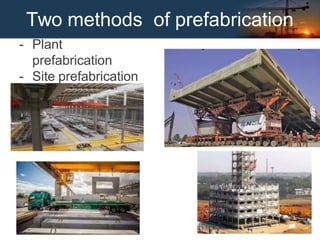
Two methods of prefabrication
- Plant
prefabrication
- Site prefabrication
Classification of prefabrication
Small prefabrication
Medium prefabrication
Large prefabrication
Partial prefabrication
Open system
prefabrication
Closed system
prefabrication
Total prefabrication
Cast –in-site
prefabrication
Off- site prefabrication
Standardization
Standardization is the repeated production of standard
sizes and or layouts of components or structures which
may occur on site or off site.
Example
Modular Bathroom, Standard kitchen cabinet, prison cell
etc.
Advantages
Advantages of standardizing prefabricated components are
under:
Easier in design as it eliminates unwanted choices
Easier in manufacture as there are limited number of
variants.
Makes repeated use of specialized equipment in
erection and compilation easier and quicker.
Prefabricated systems
Major systems are:
•Large panel system
- Longitudinal wall system
- Cross wall system
- Combined system.
•Structural Frame system
•Lift panel system ( Column slab
system)
•Mixed system.
It can also be categorized as
- Open prefabricate
system
- Closed prefabricate
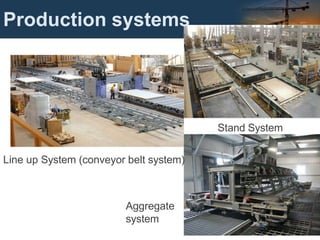
Aggregate
system
Stand System
Line up System (conveyor belt system)
Production systems
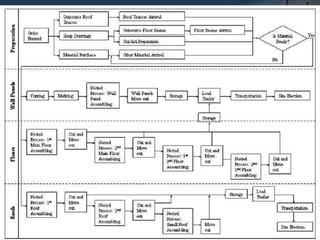
Prefabricated Structures - Process
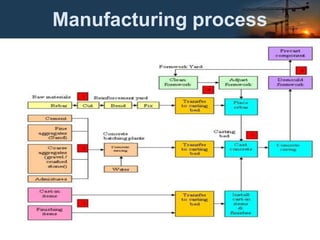
Manufacturing
process (on the
production site)
Stacking the components before
shipping
Transportation
(to the construction site)
Erection (on the construction
site)
Manufacturing process
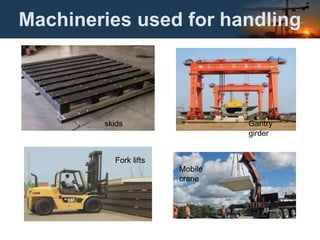
Machineries used for handling
skids Gantry
girder
Fork lifts
Mobile
crane
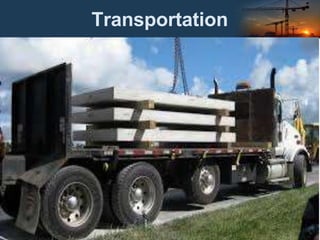
Transportation
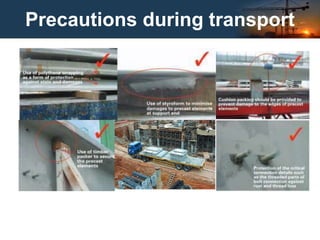
Precautions during transport
Erection
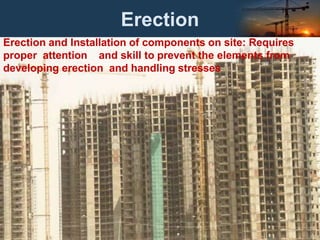
Erection and Installation of components on site: Requires
proper attention and skill to prevent the elements from
developing erection and handling stresses
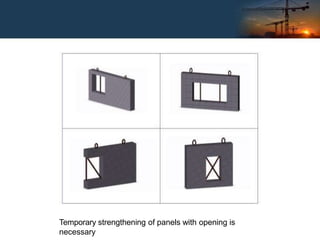
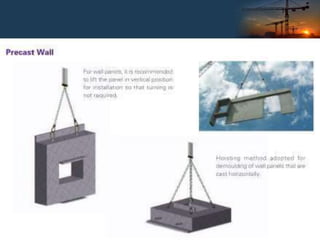
Temporary strengthening of panels with opening is
necessary
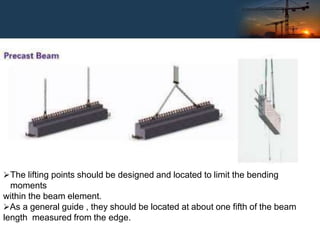
The lifting points should be designed and located to limit the bending
moments
within the beam element.
As a general guide , they should be located at about one fifth of the beam
length measured from the edge.
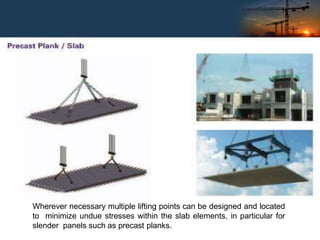
Wherever necessary multiple lifting points can be designed and located
to minimize undue stresses within the slab elements, in particular for
slender panels such as precast planks.
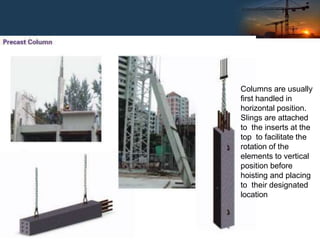
Columns are usually
first handled in
horizontal position.
Slings are attached
to the inserts at the
top to facilitate the
rotation of the
elements to vertical
position before
hoisting and placing
to their designated
location
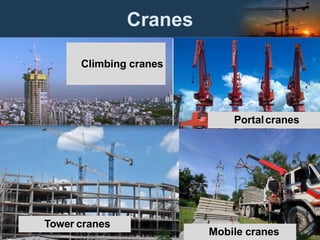
Cranes
Climbing cranes
Portalcranes
Tower cranes
Mobile cranes
Any Queries?

Introduction to prefabricated structures

  • 1.
    A presentation onprefabricated structures in emergency conditions By Sainath Haridas Panchal Final Year(CIVIL) B.TECH Roll No : 02 Department of Civil Engineering MGM’S College of Engineering Near Airport, Nanded- 431605, India Mentor : M. P. Kulkarni Madam
  • 2.
    Contents • Definition • Needfor Prefabrication • Advantages & Disadvantages • Limitations • Uses • Principles of Prefabrication • Methods of Prefabrication • Classification • Standardization • Production system • Prefabrication process • Manufacturing • Stacking • Handling • Transporting • Erection • Machines for hoisting
  • 3.
    Prefabrication Prefabrication is thepractice of assembling components of a structure in a factory or other manufacturing site and transporting all assemblies or sub-assemblies to construction site where the structure is to be located.
  • 4.
    Need for Prefabrication SpeedyConstruction - No curing period Effect Economy Improve quality Durable structure with less maintenance Aesthetic finish Further expanses easy
  • 5.
    Advantages Construction time isreduced.  Quality control is easy. Time exposed in Bad weather and hazardous is minimized. Lesswastage -or wastage / scrap can be recycled On site congestion can be minimized Moulds can be reused. Do not need formwork, shuttering, scaffolding.
  • 6.
    Disadvantages Very Skilled crew Carefulhandling of components Leakages at joints Heavy duty cranes and precision measurement to place in position Very costly when the factory is very far away from the site.
  • 7.
    Limitations of Prefabrication VeryCostly Uneconomical for smaller projects Transportation difficulties Safety of Crane and other support system has to carefully considered. Difficulties in transportation of vary large components Waterproofing joints
  • 8.
    Uses The following arethe uses of introducing the prefabrication system: Prefabricated components speed up construction time, resulting in lower labor costs; Prefabrication allows for year-round construction; Work is not affected by weather delays (related to excessive cold, heat, rain, snow, etc.); The mechanization used in prefabricated construction ensures precise conformity to building code standards and greater quality assurance; There are less wasted materials than in site-built construction; There is less theft of material/equipment (and less property damage due to vandalism); Materials are protected from exposure to the elements during construction; Worker safety and comfort level are higher than in site-built construction; Computerization of the production process permits a high degree of customization, at an affordable cost; Quality control and factory sealing and design can ensure high energy efficiency; and Cost savings through prefabrication can reduce the income required to qualify for a high ratio mortgage by up to one third compared to a conventionally built home of the same size
  • 9.
    Prefabrication principles  Togive safety in structural system  To designthe building as an aesthetic one  To effect economy in cost To improve in quality as the components can be manufactured under controlled conditions.  To speed up construction since no curing is necessary. To use locally available materials with required characteristics. To use the materials which possess their innate characteristics like light weight, easy workability, thermal insulation and combustibility etc
  • 10.
    Two methods ofprefabrication - Plant prefabrication - Site prefabrication
  • 11.
    Classification of prefabrication Smallprefabrication Medium prefabrication Large prefabrication Partial prefabrication Open system prefabrication Closed system prefabrication Total prefabrication Cast –in-site prefabrication Off- site prefabrication
  • 12.
    Standardization Standardization is therepeated production of standard sizes and or layouts of components or structures which may occur on site or off site. Example Modular Bathroom, Standard kitchen cabinet, prison cell etc.
  • 13.
    Advantages Advantages of standardizingprefabricated components are under: Easier in design as it eliminates unwanted choices Easier in manufacture as there are limited number of variants. Makes repeated use of specialized equipment in erection and compilation easier and quicker.
  • 14.
    Prefabricated systems Major systemsare: •Large panel system - Longitudinal wall system - Cross wall system - Combined system. •Structural Frame system •Lift panel system ( Column slab system) •Mixed system. It can also be categorized as - Open prefabricate system - Closed prefabricate
  • 15.
    Aggregate system Stand System Line upSystem (conveyor belt system) Production systems
  • 16.
    Prefabricated Structures -Process Manufacturing process (on the production site) Stacking the components before shipping Transportation (to the construction site) Erection (on the construction site)
  • 17.
  • 19.
    Machineries used forhandling skids Gantry girder Fork lifts Mobile crane
  • 21.
  • 22.
  • 23.
    Erection Erection and Installationof components on site: Requires proper attention and skill to prevent the elements from developing erection and handling stresses
  • 24.
    Temporary strengthening ofpanels with opening is necessary
  • 25.
    The lifting pointsshould be designed and located to limit the bending moments within the beam element. As a general guide , they should be located at about one fifth of the beam length measured from the edge.
  • 27.
    Wherever necessary multiplelifting points can be designed and located to minimize undue stresses within the slab elements, in particular for slender panels such as precast planks.
  • 28.
    Columns are usually firsthandled in horizontal position. Slings are attached to the inserts at the top to facilitate the rotation of the elements to vertical position before hoisting and placing to their designated location
  • 29.
  • 30.