

MICROPROCESSOR
Sridari Iyer
St. Francis Inst. of
Tech.
Borivali (W), Mumbai.
SMARTPHONE
SPECIFICATIONS
Processor: Snapdragon 835, 1.9GHz
octacore
RAM: 4GB
Memory:128GB
Camera: 13MP
Battery: 3040mAh
Display: 5.71”
OS: Android 6.0 Marshmallow
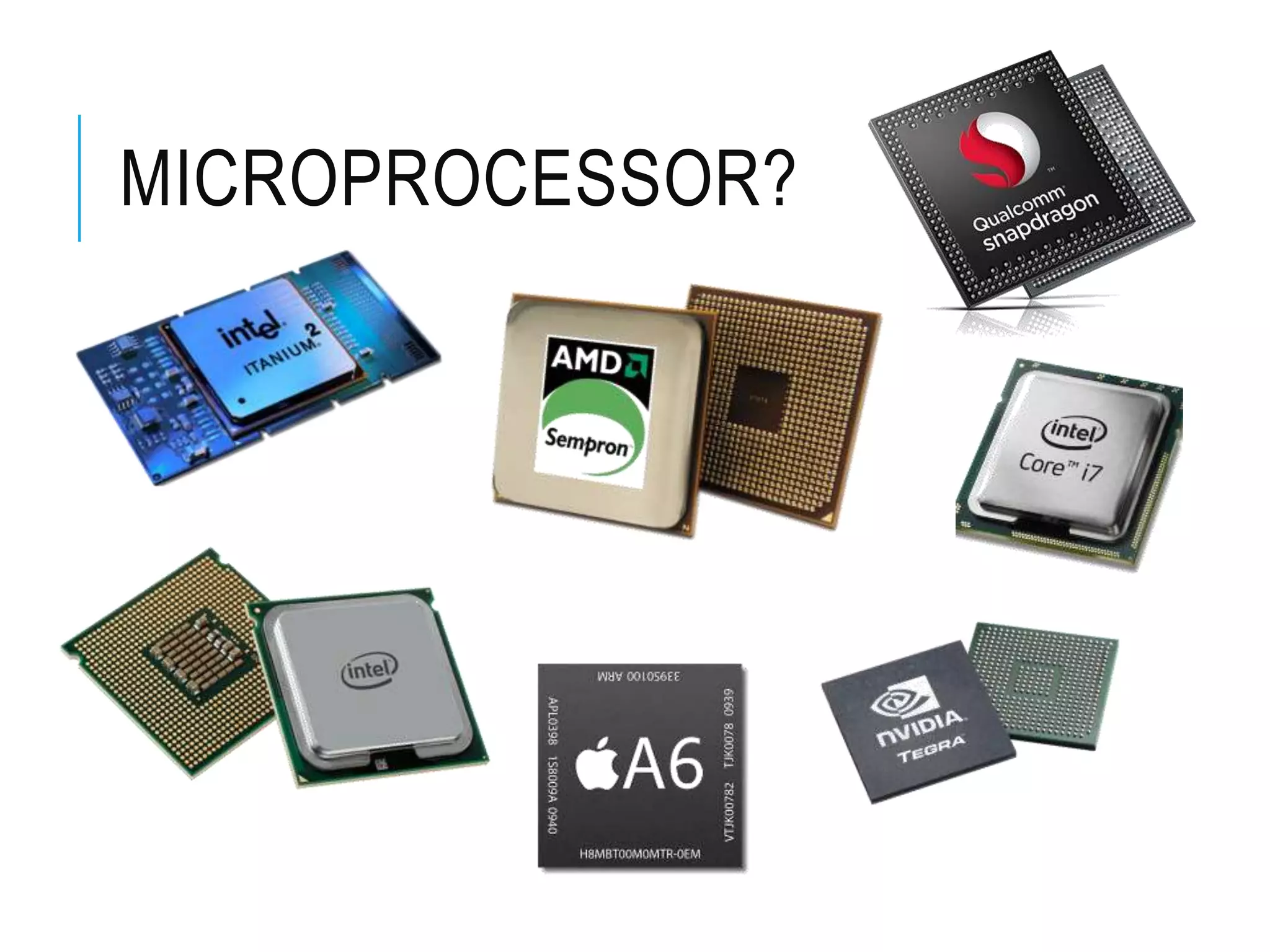
MICROPROCESSOR?
WHAT IS A
MICROPROCESSOR?
Millions of transistors (tiny electronic devices that
carry electric charge) are integrated on a single
chip, called the microprocessor.
Each transistor can be in “OFF” or “ON” state i.e.,
welcome to the world of 0s and 1s
With perfect circuitry combinations and
programming logic used, these transistors states
can be changed, for what?
perform arithmetic and logical operations
Are all the operations we perform on our
computer and phones just arithmetic and logical
operations?
HOW DOES THIS
MICROPROCESSOR WORK?
On electricity, of course!
You can play around by
giving power to a transistor, set to the ON state
or shutting off power to it, reset to the OFF state
When a user gives an instruction, e.g.,
press “a” on the keyboard
1. The system recognizes a key is pressed
2. Which key is pressed (ASCII value noted)
3. Where should this input go to? (MS Word, browser
search or error)
4. What is its purpose? (type “a”, select all “ctrl+a”, etc)
5. Perform the necessary action
And all these steps are a sequence of 0s
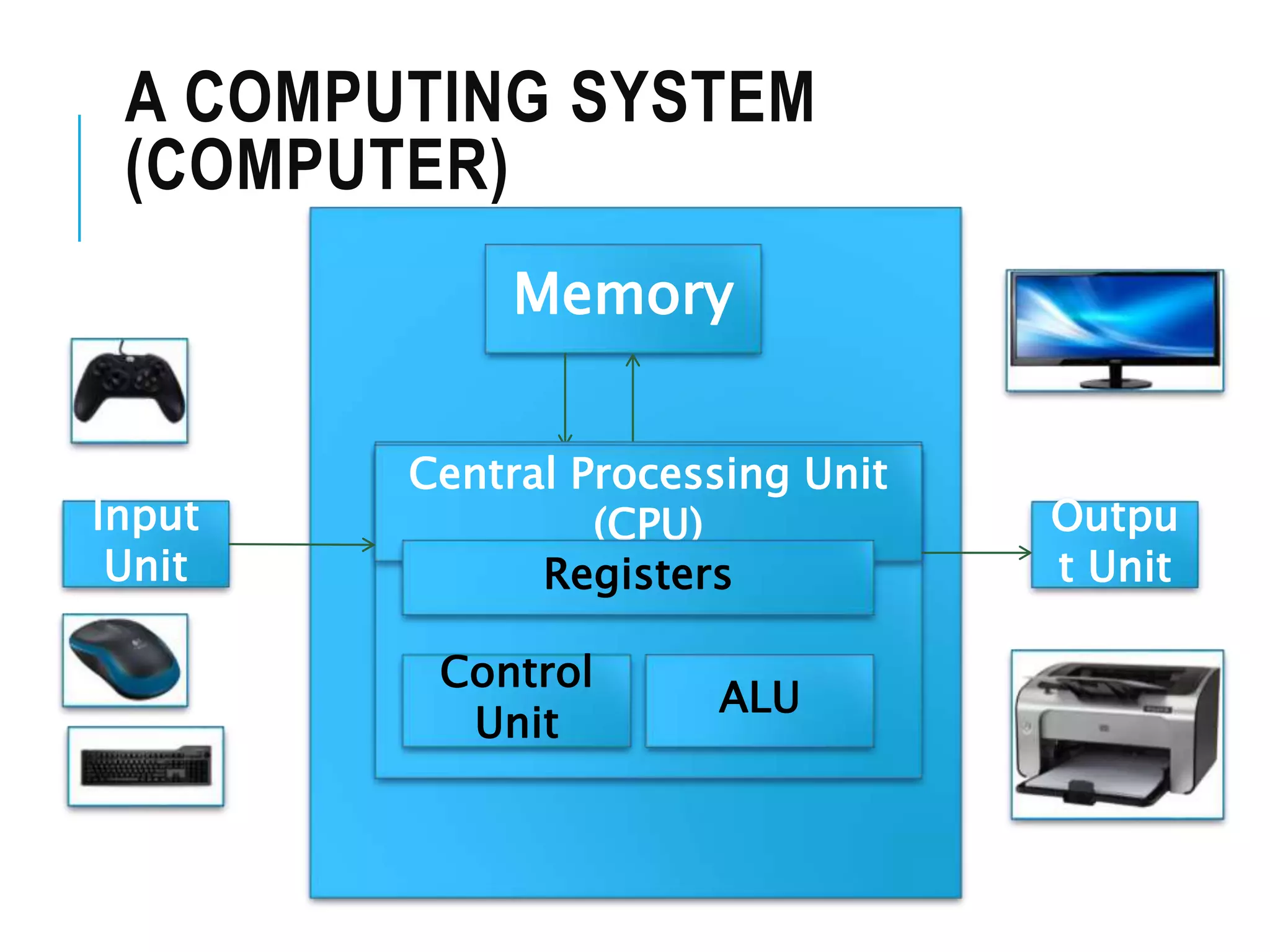
Memory
Central Processing Unit
(CPU)
Registers
Control
Unit
ALU
Input
Unit
Outpu
t Unit
A COMPUTING SYSTEM
(COMPUTER)
THEN, CPU =
MICROPROCESSOR?
NO. The CPU is a Microprocessor, but not the
only microprocessor in your system!
The Central Processing Unit of a computing
device is embedded on a single chip, often
called as a microprocessor.
But a microprocessor need not always be the
CPU of that device!
A microprocessor can be used for other
purposes too, such as NPU (Network
Processing Unit), GPU (Graphics Processing
Unit), APU (Audio Processing Unit), etc.
The quadcore microprocessor has four CPUs
WHERE ALL ARE THESE
MICROPROCESSORS USED?
Computers – Desktops, laptops, tablets,
calculators
All mobile phones – smartphones and basic
phones too!
Home Appliances – washing machine,
microwave oven, AC, smart TV, DVD players,
home automation systems, children toys, etc.
Instrumentation – frequency counters, signal
generators, synthesizers, etc.
Others – Traffic light control, game
machines, industry controllers,
communication systems, flight control
MICROPROCESSOR V/S
MICROCONTROLLER
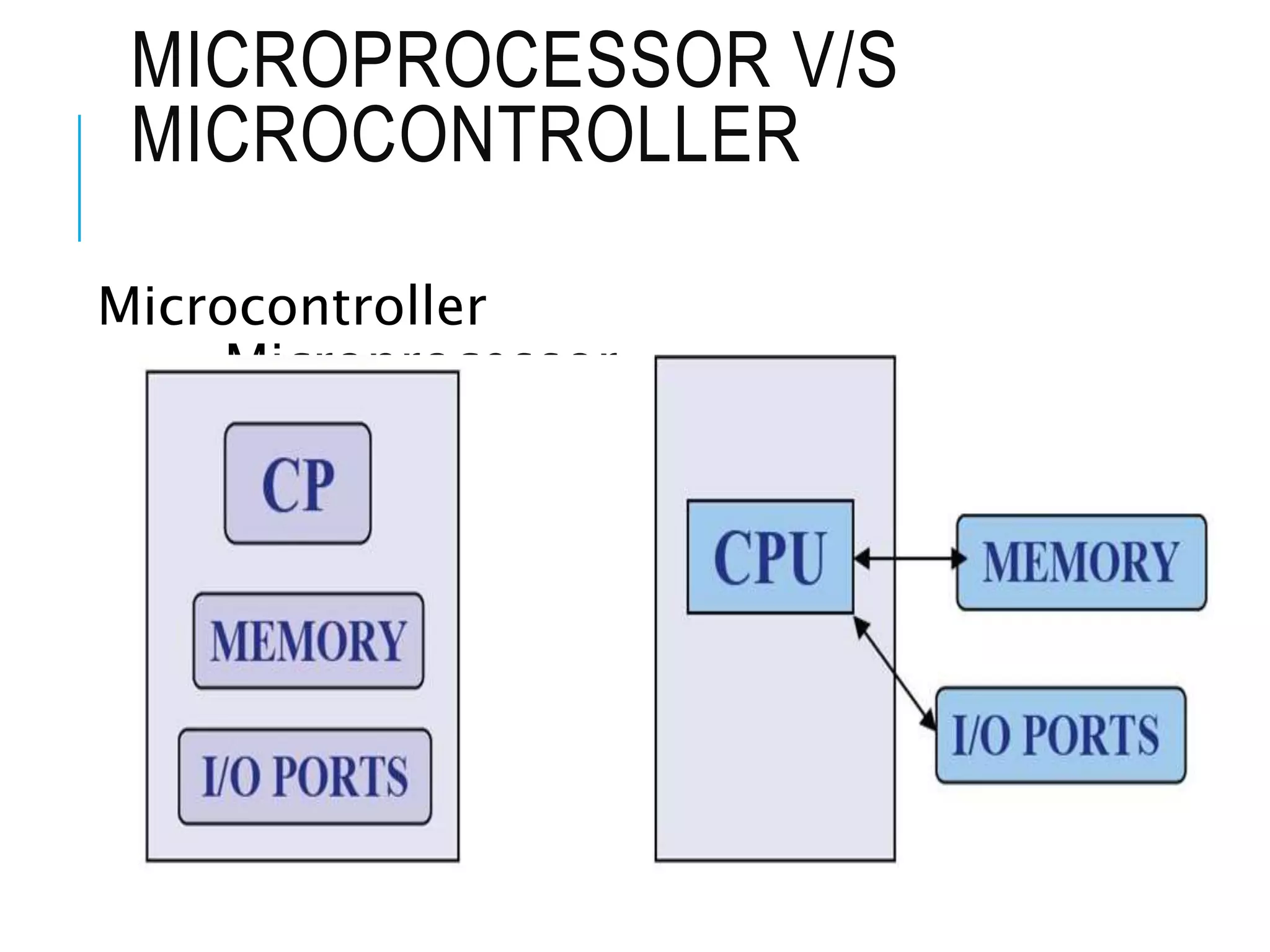
The entire CPU on a single chip =
Microprocessor
The entire computer on a single chip =
Microcontroller!
Microprocessors are general purpose
processors while microcontrollers are
designed for a specific purpose.
Microcontroller
Microprocessor
MICROPROCESSOR V/S
MICROCONTROLLER
BEFORE
MICROPROCESSORS, CPUs
WERE
1st Gen (1940-56): Vacuum tubes and
magnetic drums
2nd Gen(1956-63): Transistors
3rd Gen (1964-71): Integrated Circuits
4th Gen (1971-present): single chip
Microprocessors
5th Gen (present-future): Multicore/ Parallel
processing
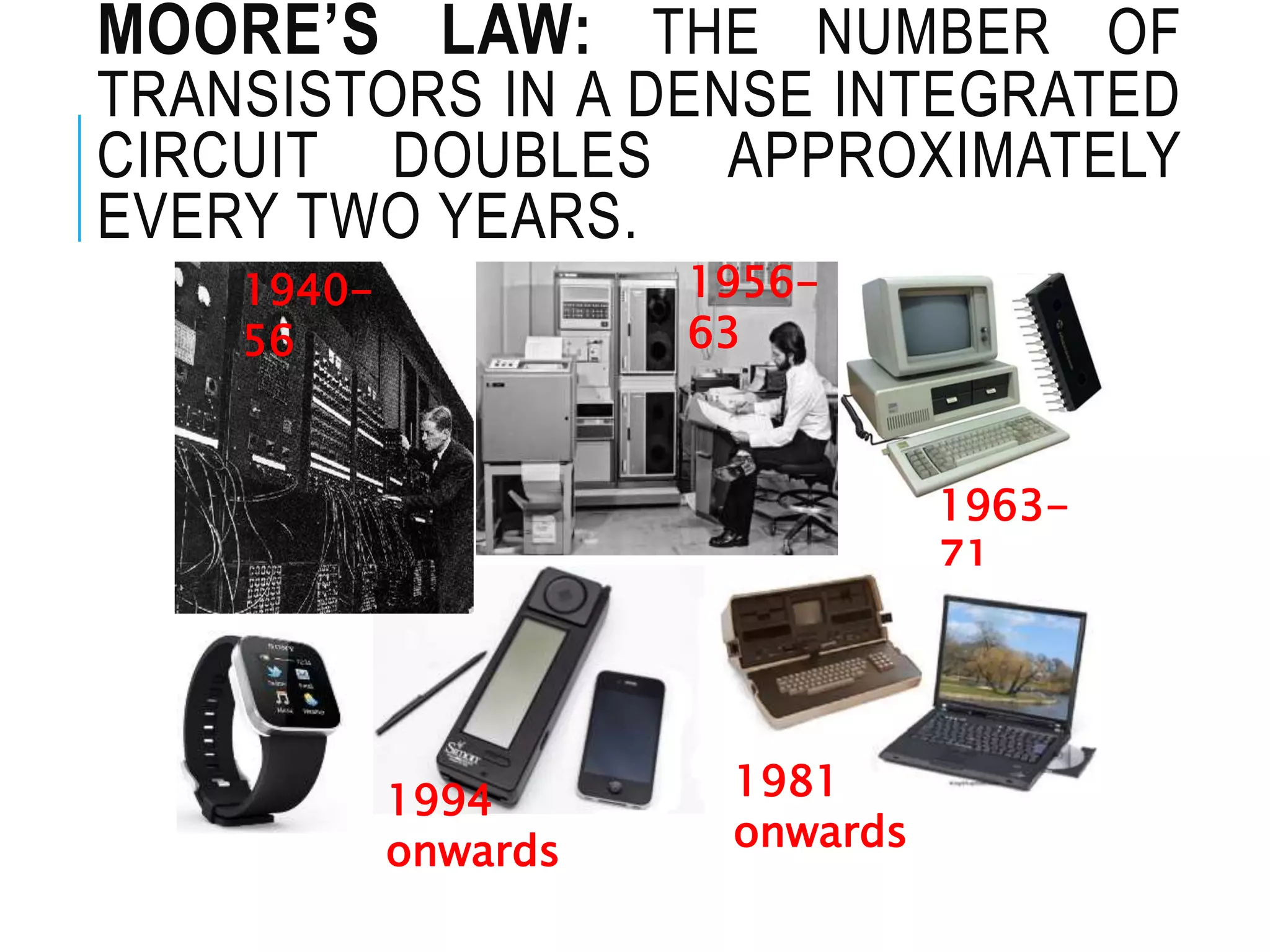
MOORE’S LAW: THE NUMBER OF
TRANSISTORS IN A DENSE INTEGRATED
CIRCUIT DOUBLES APPROXIMATELY
EVERY TWO YEARS.
1956-
63
1963-
71
1981
onwards
1994
onwards
1940-
56
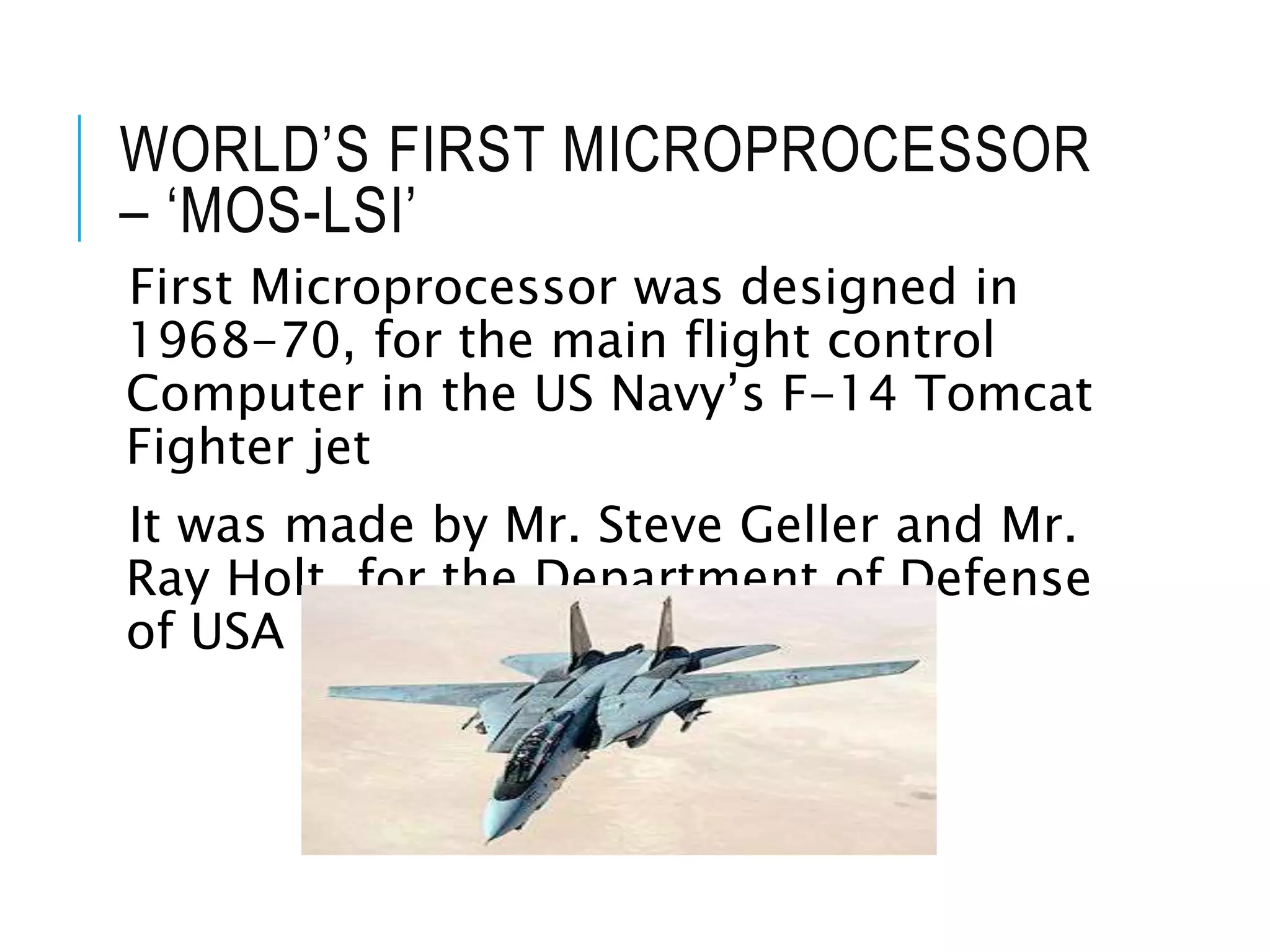
WORLD’S FIRST MICROPROCESSOR
– ‘MOS-LSI’
First Microprocessor was designed in
1968-70, for the main flight control
Computer in the US Navy’s F-14 Tomcat
Fighter jet
It was made by Mr. Steve Geller and Mr.
Ray Holt for the Department of Defense
of USA
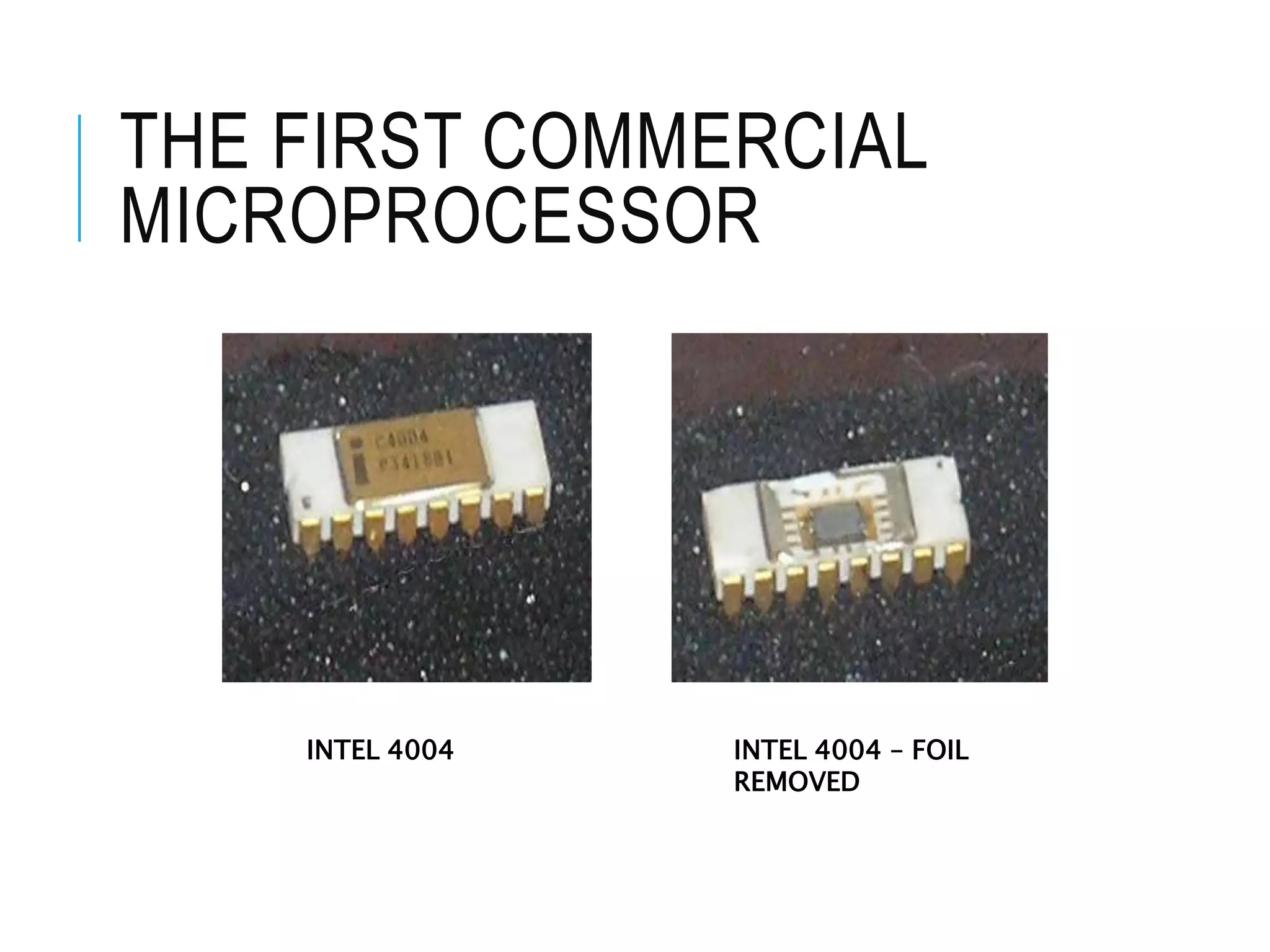
THE FIRST COMMERCIAL
MICROPROCESSOR
INTEL 4004 INTEL 4004 – FOIL
REMOVED
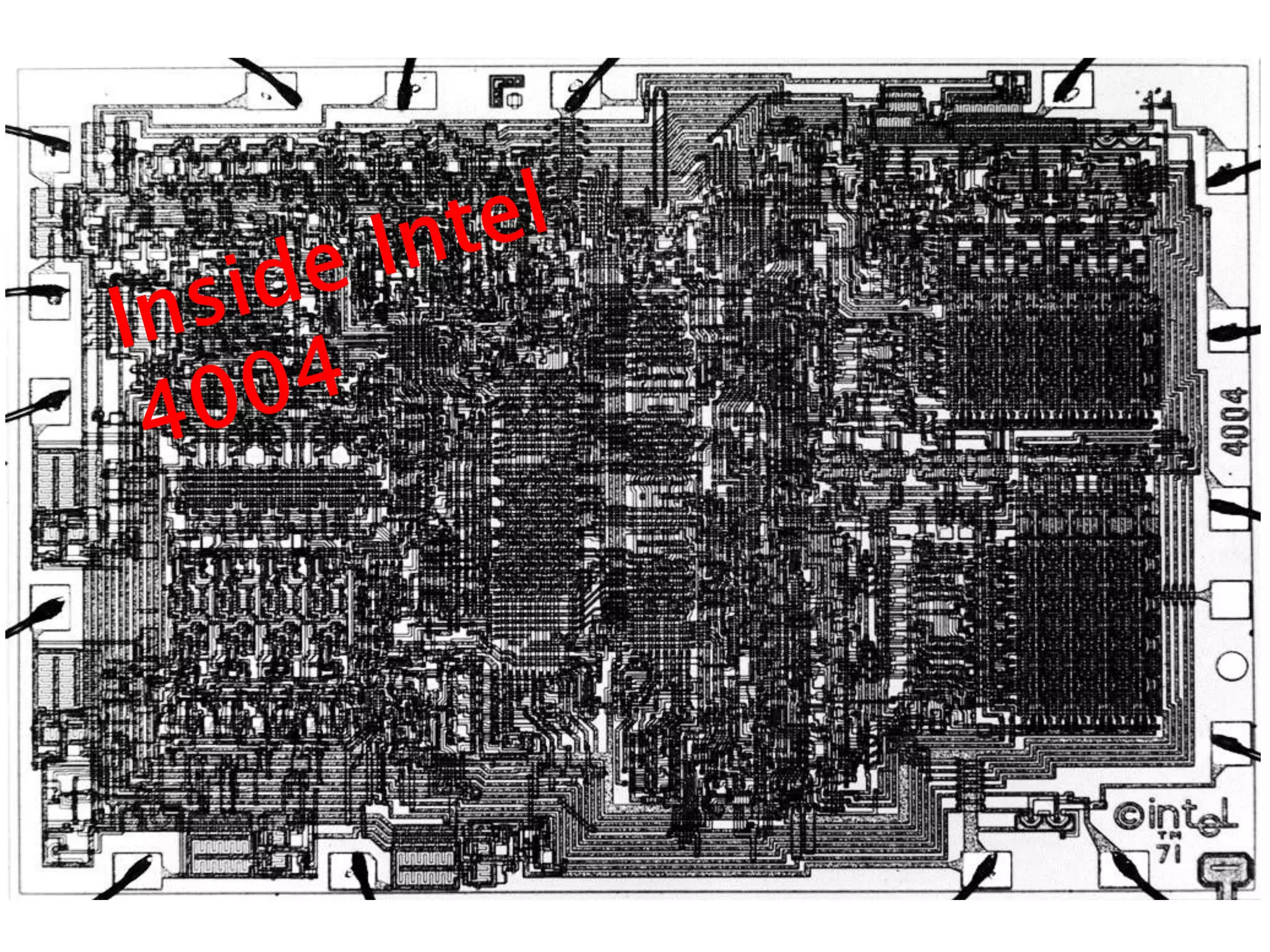
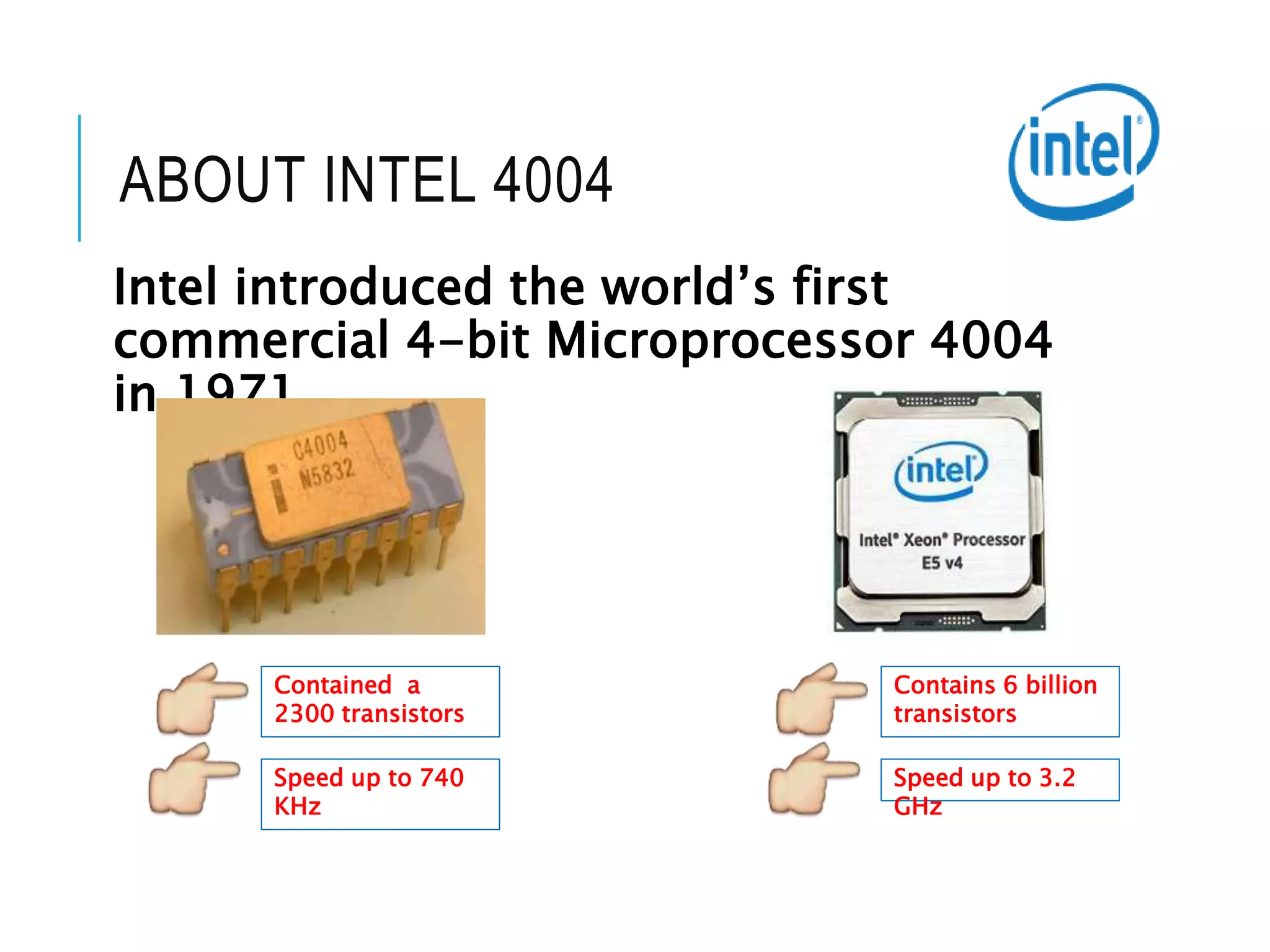
ABOUT INTEL 4004
Intel introduced the world’s first
commercial 4-bit Microprocessor 4004
in 1971.
Contained a
2300 transistors
Speed up to 740
KHz
Contains 6 billion
transistors
Speed up to 3.2
GHz
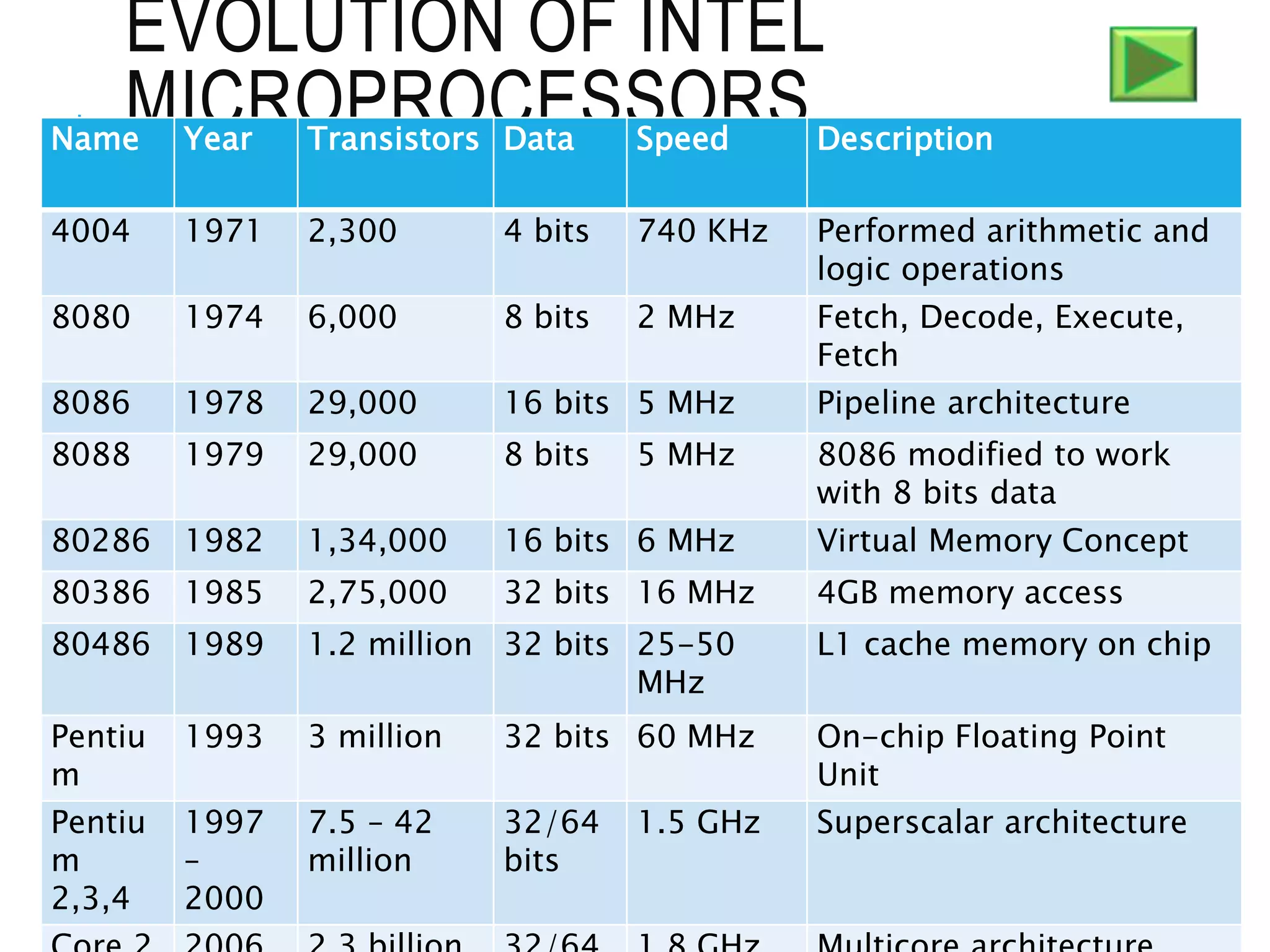
EVOLUTION OF INTEL
MICROPROCESSORSName Year Transistors Data Speed Description
4004 1971 2,300 4 bits 740 KHz Performed arithmetic and
logic operations
8080 1974 6,000 8 bits 2 MHz Fetch, Decode, Execute,
Fetch
8086 1978 29,000 16 bits 5 MHz Pipeline architecture
8088 1979 29,000 8 bits 5 MHz 8086 modified to work
with 8 bits data
80286 1982 1,34,000 16 bits 6 MHz Virtual Memory Concept
80386 1985 2,75,000 32 bits 16 MHz 4GB memory access
80486 1989 1.2 million 32 bits 25-50
MHz
L1 cache memory on chip
Pentiu
m
1993 3 million 32 bits 60 MHz On-chip Floating Point
Unit
Pentiu
m
2,3,4
1997
–
2000
7.5 – 42
million
32/64
bits
1.5 GHz Superscalar architecture
WHY STUDY ABOUT
MICROPROCESSORS?
Course Outcomes
1.I know how my phone and
computer work!
2.I know how almost all computing
devices work!
3.I can reprogram a computing
device to my fancy!
4.I can build an intelligent appliance
or a robot all by myself!
WHY DON’T YOU ALREADY
KNOW ALL THESE THINGS?
Languag
e
Barrier!
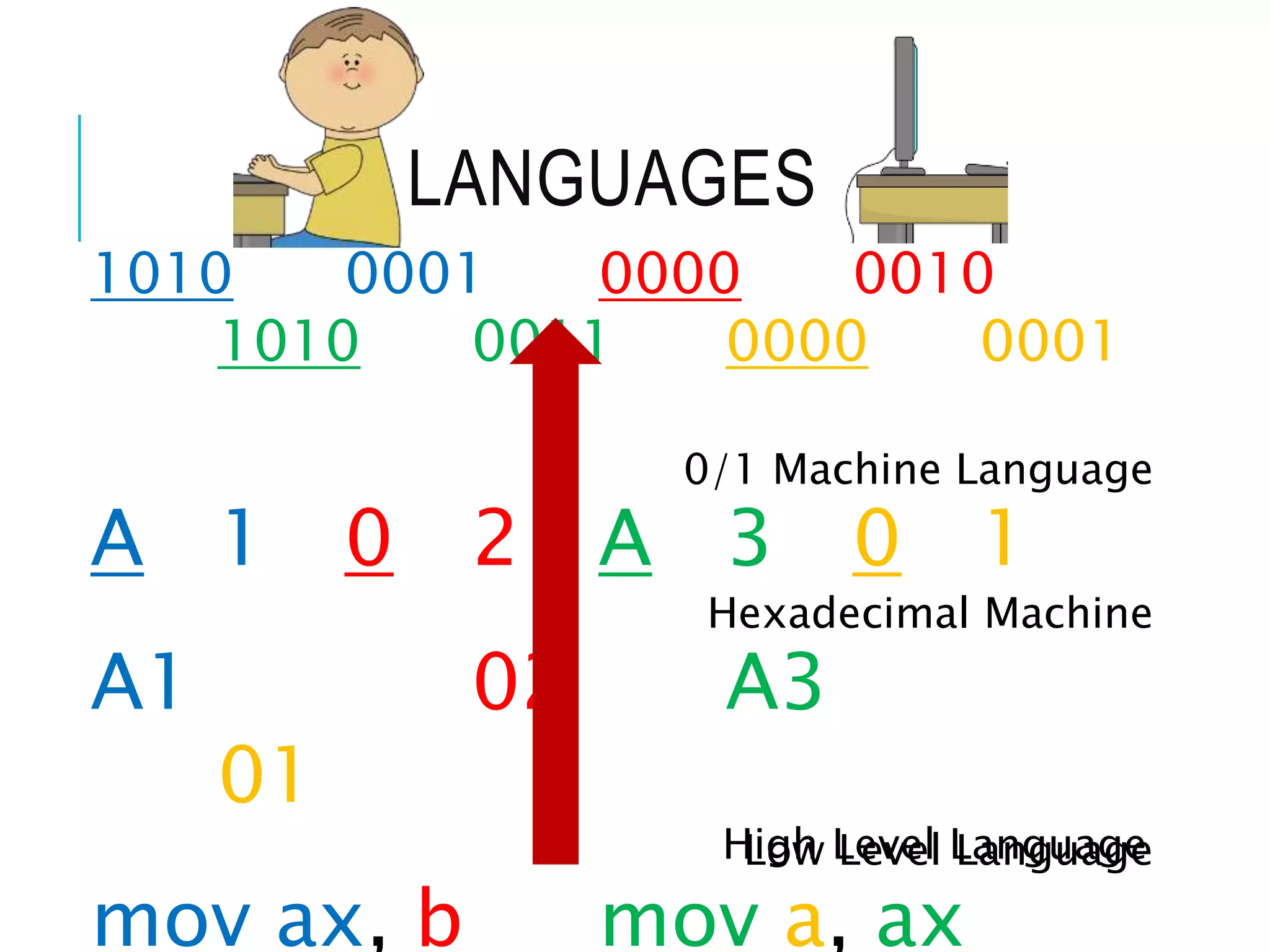
LANGUAGES
1010 0001 0000 0010
1010 0011 0000 0001
0/1 Machine Language
A 1 0 2 A 3 0 1
Hexadecimal Machine
A1 02 A3
01
Low Level Language
mov ax, b mov a, ax
High Level Language
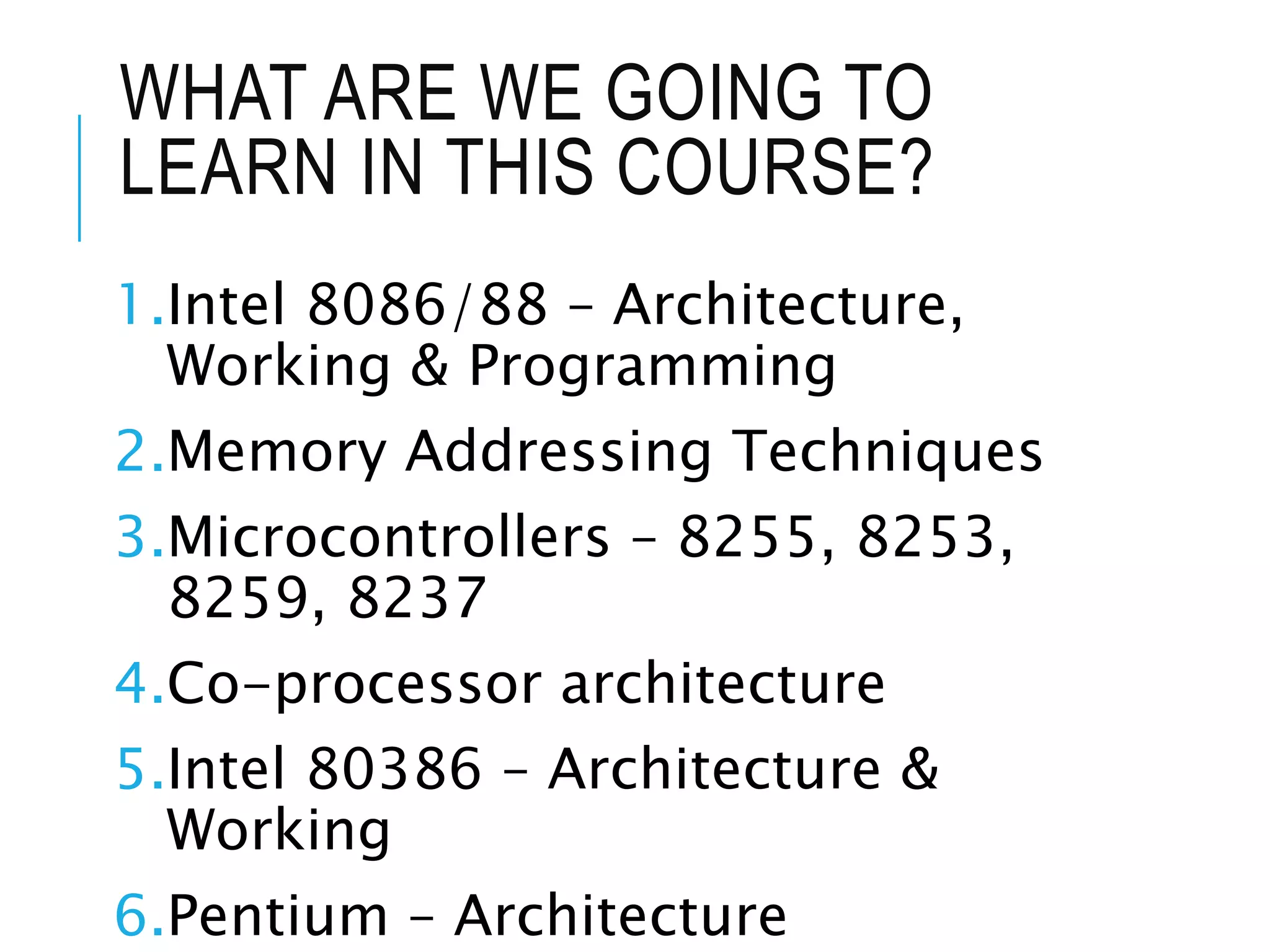
WHAT ARE WE GOING TO
LEARN IN THIS COURSE?
1.Intel 8086/88 – Architecture,
Working & Programming
2.Memory Addressing Techniques
3.Microcontrollers – 8255, 8253,
8259, 8237
4.Co-processor architecture
5.Intel 80386 – Architecture &
Working
6.Pentium – Architecture
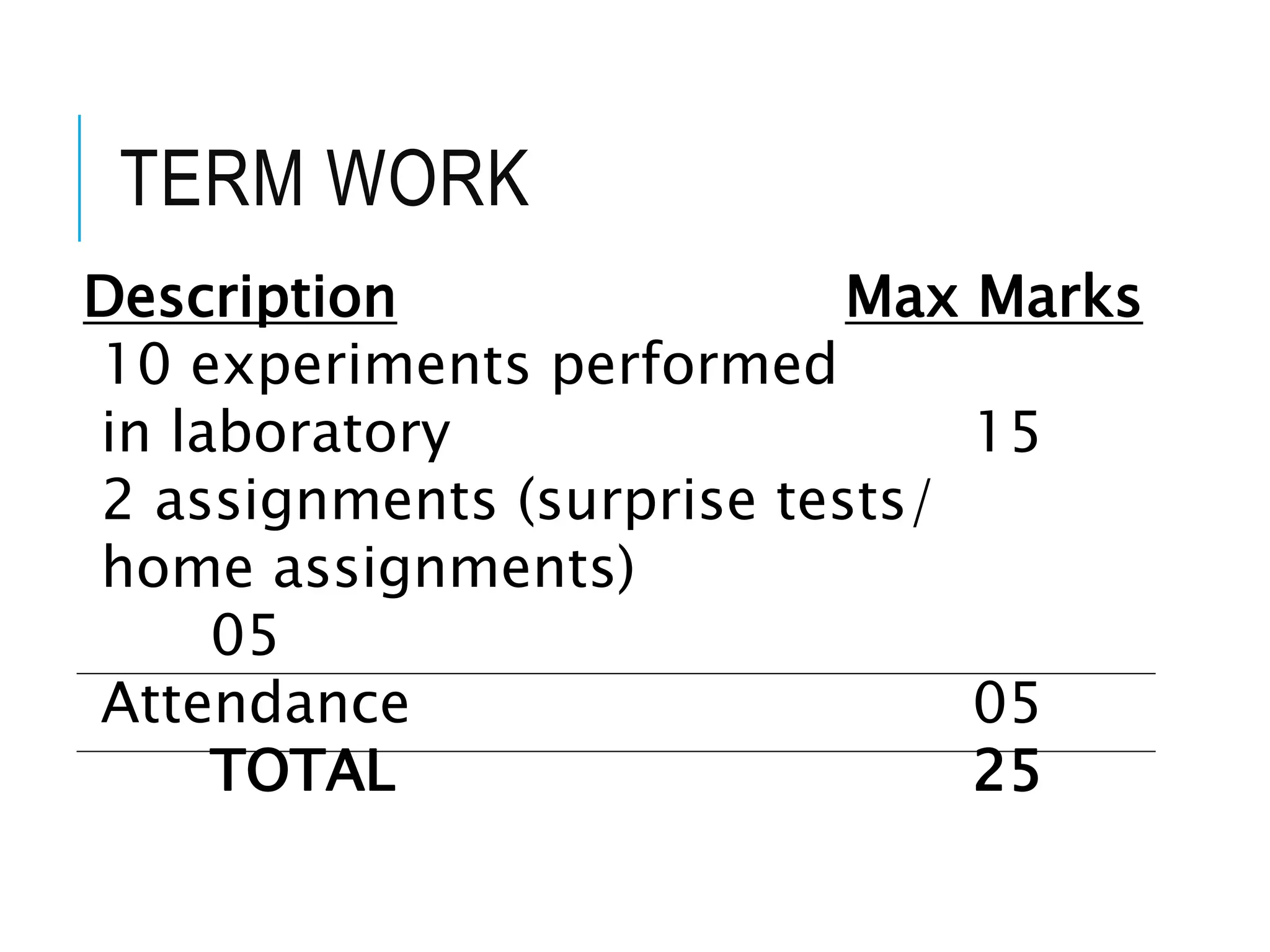
TERM WORK
Description Max Marks
10 experiments performed
in laboratory 15
2 assignments (surprise tests/
home assignments)
05
Attendance 05
TOTAL 25
Introduction to Microprocessors

Introduction to Microprocessors

  • 1.
    MICROPROCESSOR Sridari Iyer St. FrancisInst. of Tech. Borivali (W), Mumbai.
  • 2.
    SMARTPHONE SPECIFICATIONS Processor: Snapdragon 835,1.9GHz octacore RAM: 4GB Memory:128GB Camera: 13MP Battery: 3040mAh Display: 5.71” OS: Android 6.0 Marshmallow
  • 3.
  • 4.
    WHAT IS A MICROPROCESSOR? Millionsof transistors (tiny electronic devices that carry electric charge) are integrated on a single chip, called the microprocessor. Each transistor can be in “OFF” or “ON” state i.e., welcome to the world of 0s and 1s With perfect circuitry combinations and programming logic used, these transistors states can be changed, for what? perform arithmetic and logical operations Are all the operations we perform on our computer and phones just arithmetic and logical operations?
  • 5.
    HOW DOES THIS MICROPROCESSORWORK? On electricity, of course! You can play around by giving power to a transistor, set to the ON state or shutting off power to it, reset to the OFF state When a user gives an instruction, e.g., press “a” on the keyboard 1. The system recognizes a key is pressed 2. Which key is pressed (ASCII value noted) 3. Where should this input go to? (MS Word, browser search or error) 4. What is its purpose? (type “a”, select all “ctrl+a”, etc) 5. Perform the necessary action And all these steps are a sequence of 0s
  • 6.
  • 7.
    THEN, CPU = MICROPROCESSOR? NO.The CPU is a Microprocessor, but not the only microprocessor in your system! The Central Processing Unit of a computing device is embedded on a single chip, often called as a microprocessor. But a microprocessor need not always be the CPU of that device! A microprocessor can be used for other purposes too, such as NPU (Network Processing Unit), GPU (Graphics Processing Unit), APU (Audio Processing Unit), etc. The quadcore microprocessor has four CPUs
  • 8.
    WHERE ALL ARETHESE MICROPROCESSORS USED? Computers – Desktops, laptops, tablets, calculators All mobile phones – smartphones and basic phones too! Home Appliances – washing machine, microwave oven, AC, smart TV, DVD players, home automation systems, children toys, etc. Instrumentation – frequency counters, signal generators, synthesizers, etc. Others – Traffic light control, game machines, industry controllers, communication systems, flight control
  • 9.
    MICROPROCESSOR V/S MICROCONTROLLER The entireCPU on a single chip = Microprocessor The entire computer on a single chip = Microcontroller! Microprocessors are general purpose processors while microcontrollers are designed for a specific purpose.
  • 10.
  • 11.
    BEFORE MICROPROCESSORS, CPUs WERE 1st Gen(1940-56): Vacuum tubes and magnetic drums 2nd Gen(1956-63): Transistors 3rd Gen (1964-71): Integrated Circuits 4th Gen (1971-present): single chip Microprocessors 5th Gen (present-future): Multicore/ Parallel processing
  • 12.
    MOORE’S LAW: THENUMBER OF TRANSISTORS IN A DENSE INTEGRATED CIRCUIT DOUBLES APPROXIMATELY EVERY TWO YEARS. 1956- 63 1963- 71 1981 onwards 1994 onwards 1940- 56
  • 13.
    WORLD’S FIRST MICROPROCESSOR –‘MOS-LSI’ First Microprocessor was designed in 1968-70, for the main flight control Computer in the US Navy’s F-14 Tomcat Fighter jet It was made by Mr. Steve Geller and Mr. Ray Holt for the Department of Defense of USA
  • 14.
    THE FIRST COMMERCIAL MICROPROCESSOR INTEL4004 INTEL 4004 – FOIL REMOVED
  • 16.
    ABOUT INTEL 4004 Intelintroduced the world’s first commercial 4-bit Microprocessor 4004 in 1971. Contained a 2300 transistors Speed up to 740 KHz Contains 6 billion transistors Speed up to 3.2 GHz
  • 17.
    EVOLUTION OF INTEL MICROPROCESSORSNameYear Transistors Data Speed Description 4004 1971 2,300 4 bits 740 KHz Performed arithmetic and logic operations 8080 1974 6,000 8 bits 2 MHz Fetch, Decode, Execute, Fetch 8086 1978 29,000 16 bits 5 MHz Pipeline architecture 8088 1979 29,000 8 bits 5 MHz 8086 modified to work with 8 bits data 80286 1982 1,34,000 16 bits 6 MHz Virtual Memory Concept 80386 1985 2,75,000 32 bits 16 MHz 4GB memory access 80486 1989 1.2 million 32 bits 25-50 MHz L1 cache memory on chip Pentiu m 1993 3 million 32 bits 60 MHz On-chip Floating Point Unit Pentiu m 2,3,4 1997 – 2000 7.5 – 42 million 32/64 bits 1.5 GHz Superscalar architecture
  • 18.
    WHY STUDY ABOUT MICROPROCESSORS? CourseOutcomes 1.I know how my phone and computer work! 2.I know how almost all computing devices work! 3.I can reprogram a computing device to my fancy! 4.I can build an intelligent appliance or a robot all by myself!
  • 19.
    WHY DON’T YOUALREADY KNOW ALL THESE THINGS? Languag e Barrier!
  • 20.
    LANGUAGES 1010 0001 00000010 1010 0011 0000 0001 0/1 Machine Language A 1 0 2 A 3 0 1 Hexadecimal Machine A1 02 A3 01 Low Level Language mov ax, b mov a, ax High Level Language
  • 21.
    WHAT ARE WEGOING TO LEARN IN THIS COURSE? 1.Intel 8086/88 – Architecture, Working & Programming 2.Memory Addressing Techniques 3.Microcontrollers – 8255, 8253, 8259, 8237 4.Co-processor architecture 5.Intel 80386 – Architecture & Working 6.Pentium – Architecture
  • 22.
    TERM WORK Description MaxMarks 10 experiments performed in laboratory 15 2 assignments (surprise tests/ home assignments) 05 Attendance 05 TOTAL 25