WELCOME TO 
FINAL 
INDIVIDUAL 
PROJECT 
COURSE CODE: 
LB616 
Final Project Coordinator: Rob 
Greens 
Module tutors: Rob Greens 
Lance Dann 
2014-15
40 Credit Weighted Module 
This is a 40-credit module which runs over two 
semesters. 
It is double the weight of the standard modules 
that you have been studying. 
As such, it is an extremely important element 
of your degree, which could make a real 
difference to the classification of degree that you 
are awarded (i.e. a 2.2, 2:1 or a 1st).
Teaching and Learning 
Strategies 
 Taught lessons 
 Practical workshops 
 Supervisions 
 Independent Study 
The student will work individually under the 
supervision of a member of the academic staff, 
including regular meetings. 
There will also be a compulsory weekly class-based 
workshop throughout the year.
Overview 
 in-depth research in an area or ‘field’ that is of 
interest and importance to you. 
 the student independently produces and project 
manage their own individual work 
 you coordinate the input of others who are 
contributing to the project.
Learning Outcomes 
The students will be able to: 
1. Locate, select and use critically information from a number 
of sources 
2. Creatively execute ideas based on a research question 
and theoretical work in a practical production 
3. Demonstrate advanced production skills; 
4. Critically evaluate in detail aspects of television, radio, 
multimedia, film principles, practice, standards and 
techniques 
5. Communicate ideas accurately, persuasively and 
succinctly in writing 
6. Conduct extensive research and apply findings from a 
practical production to support a critical 
explanation/interpretation of theoretical work.
Transferable Skills 
 Increased knowledgeable on a subject; 
 Critical awareness; 
 Time-management; 
 Project Management; 
 Research Skills; 
 Advance production and technical skills; 
 Self-management; 
 Working with others; 
 Analytical and valuation techniques in relation to the research 
sources that they site, their own work, and the work of their 
peers.
What can you research about? 
 An aspect of Television, Radio or Film 
principles, practice, standards and techniques; 
 Be succinct – don’t be too broad! Common 
error is to try to cover too much in 5,000 
words.
You drive this project forward 
 you will only get out what you put in 
 you need to demonstrate commitment and 
dedication to the project. 
 select a topic that 
drives you, motivates 
you and impassions 
you.
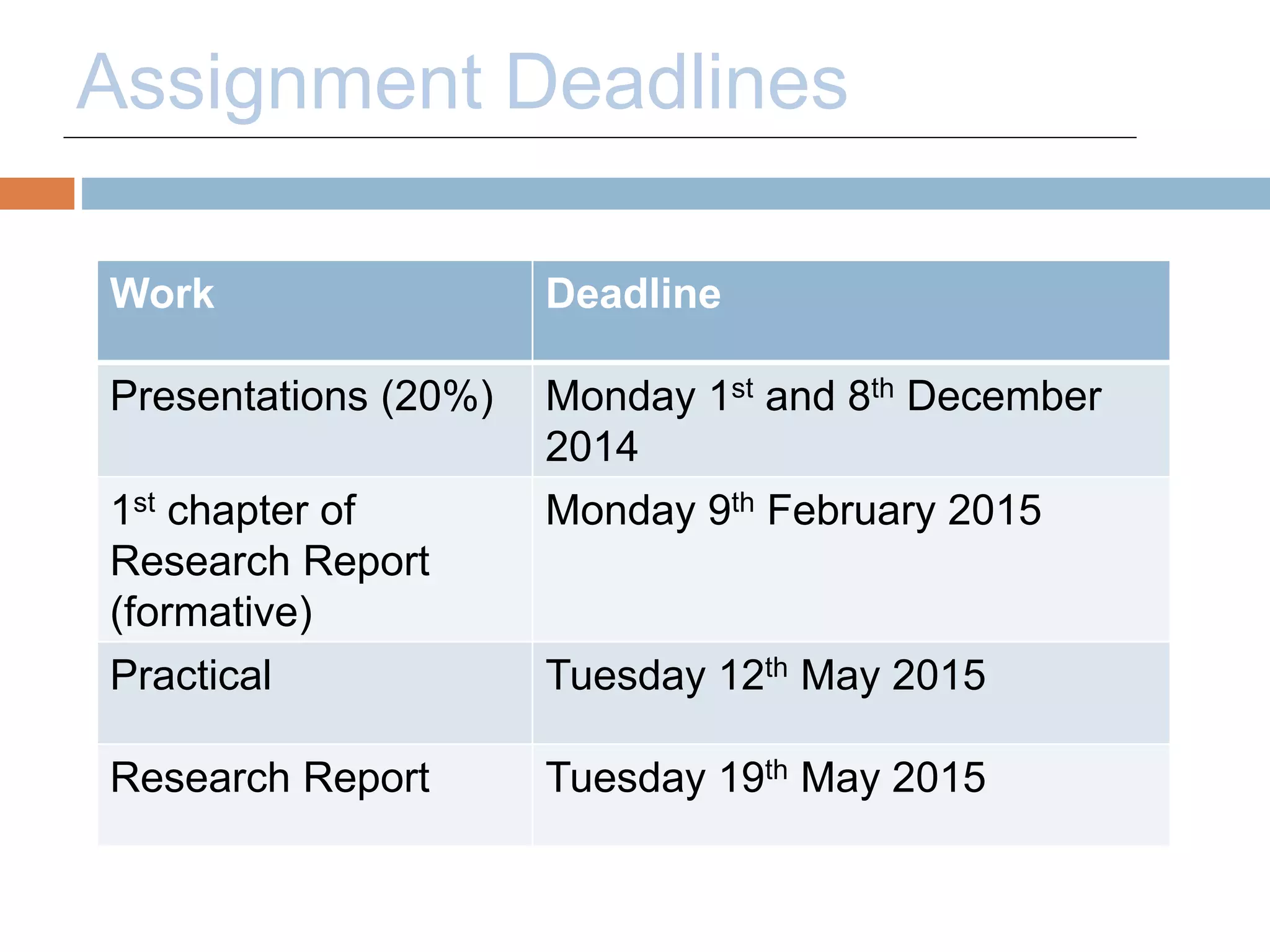
Assignment Deadlines 
Work Deadline 
Presentations (20%) Monday 1st and 8th December 
2014 
1st chapter of 
Research Report 
(formative) 
Monday 9th February 2015 
Practical Tuesday 12th May 2015 
Research Report Tuesday 19th May 2015
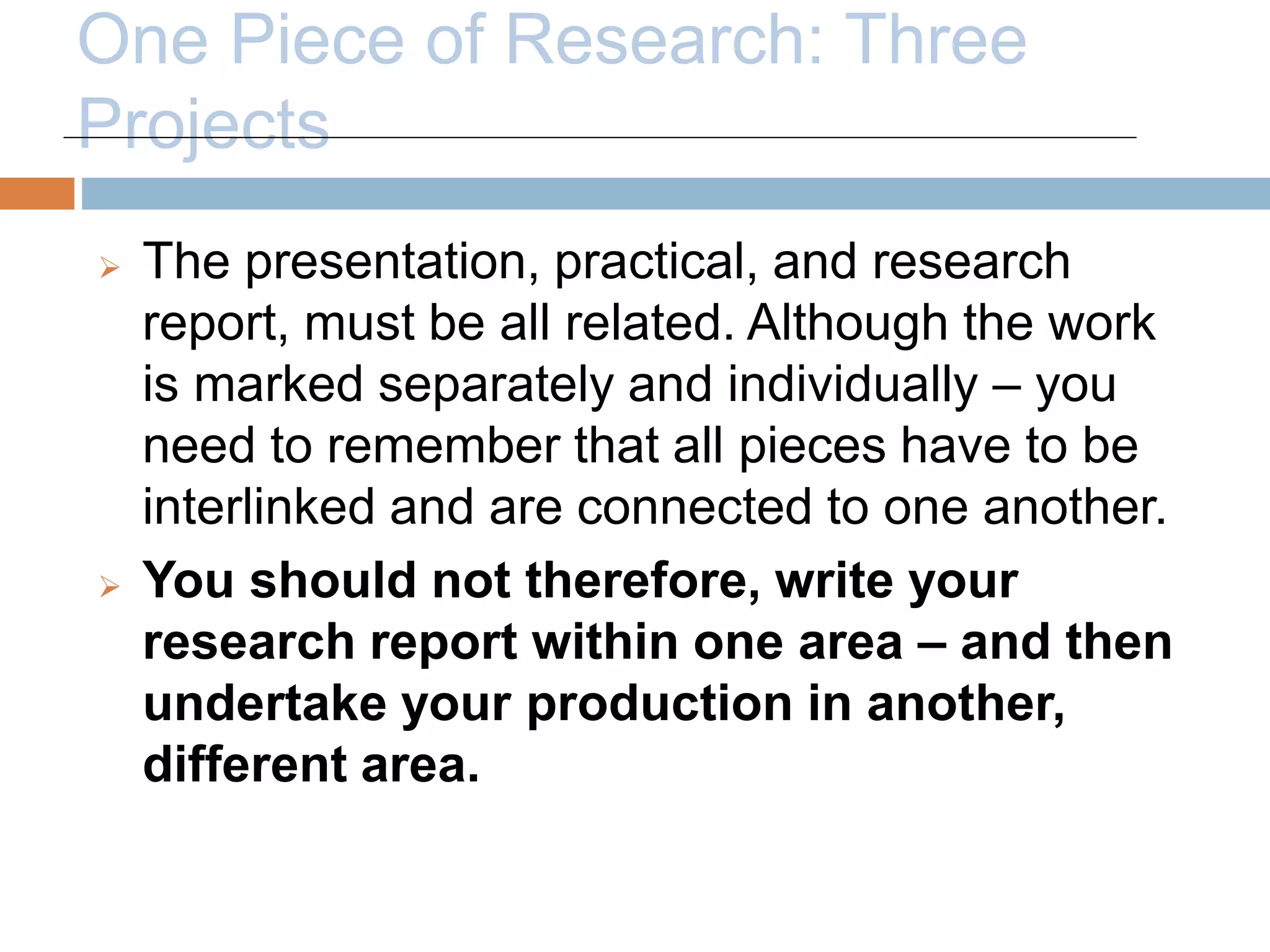
One Piece of Research: Three 
Projects 
 The presentation, practical, and research 
report, must be all related. Although the work 
is marked separately and individually – you 
need to remember that all pieces have to be 
interlinked and are connected to one another. 
 You should not therefore, write your 
research report within one area – and then 
undertake your production in another, 
different area.
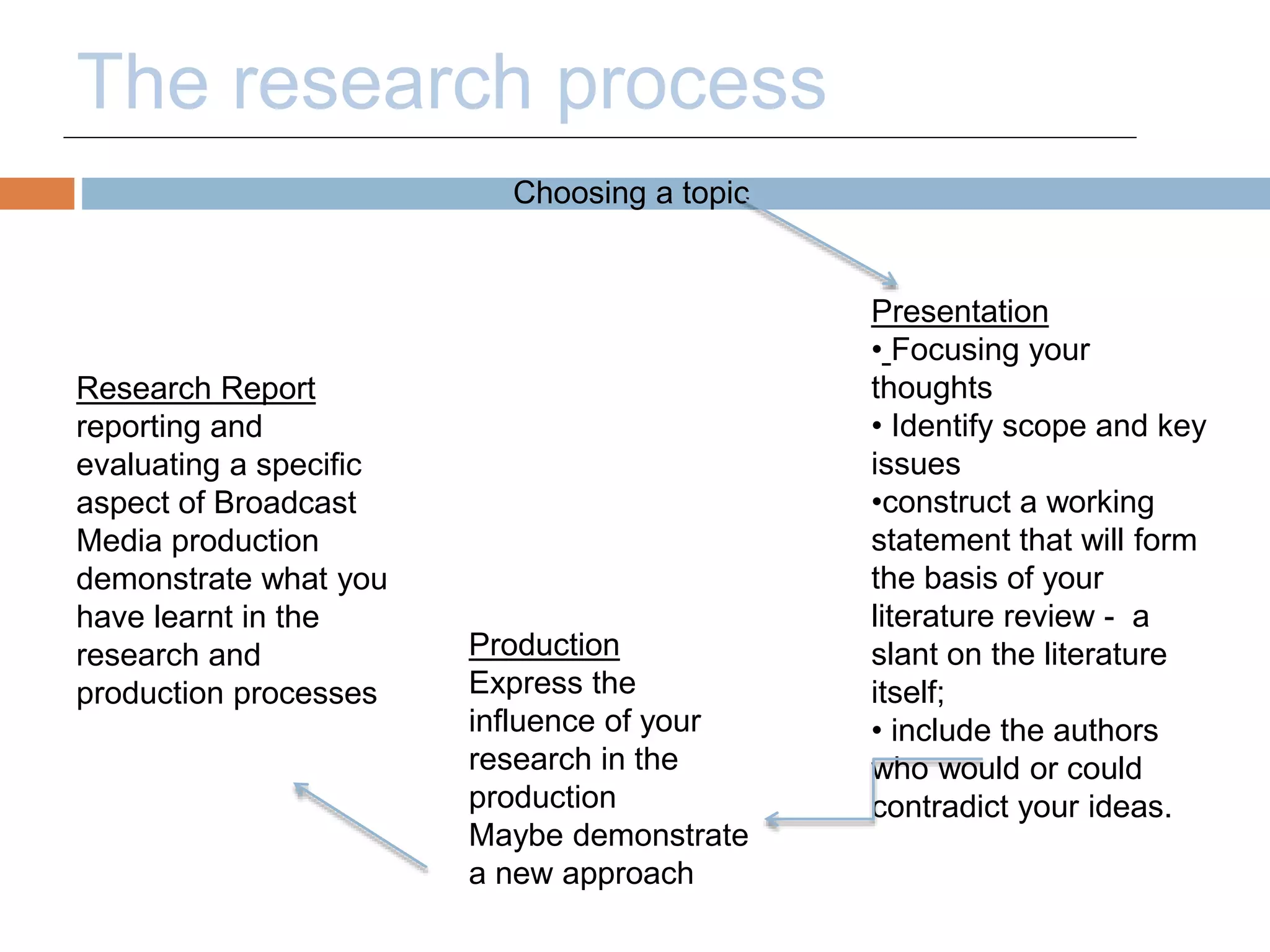
The research process 
Choosing a topic 
Presentation 
• Focusing your 
thoughts 
• Identify scope and key 
issues 
•construct a working 
statement that will form 
the basis of your 
literature review - a 
slant on the literature 
itself; 
• include the authors 
who would or could 
contradict your ideas. 
Research Report 
reporting and 
evaluating a specific 
aspect of Broadcast 
Media production 
demonstrate what you 
have learnt in the 
research and 
production processes 
Production 
Express the 
influence of your 
research in the 
production 
Maybe demonstrate 
a new approach
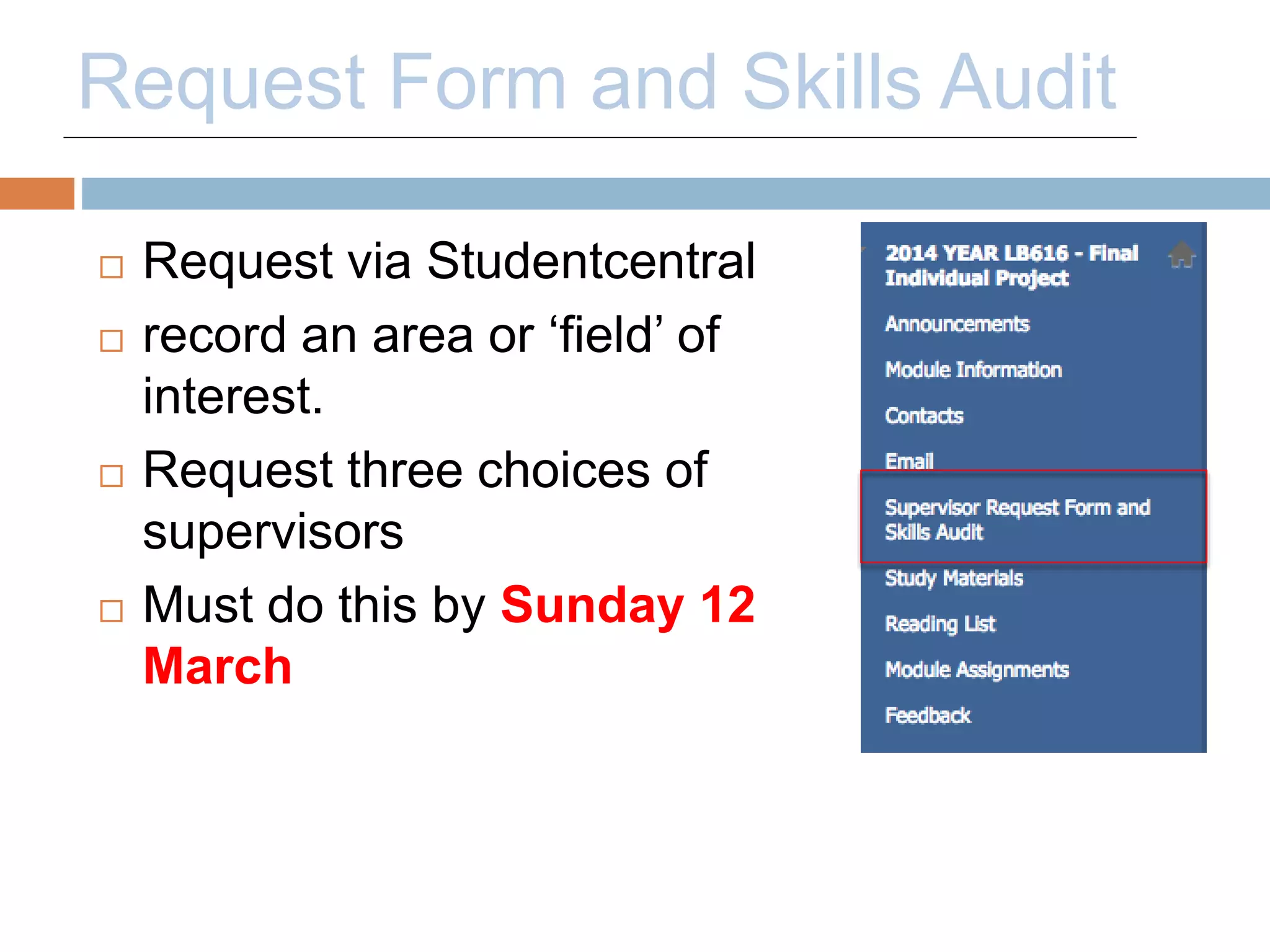
Request Form and Skills Audit 
 Request via Studentcentral 
 record an area or ‘field’ of 
interest. 
 Request three choices of 
supervisors 
 Must do this by Sunday 12 
March
Supervisors interests 
and areas of research* 
*these are not comprehensive. All staff cover a variety of areas to support a wide range 
of dissertations.
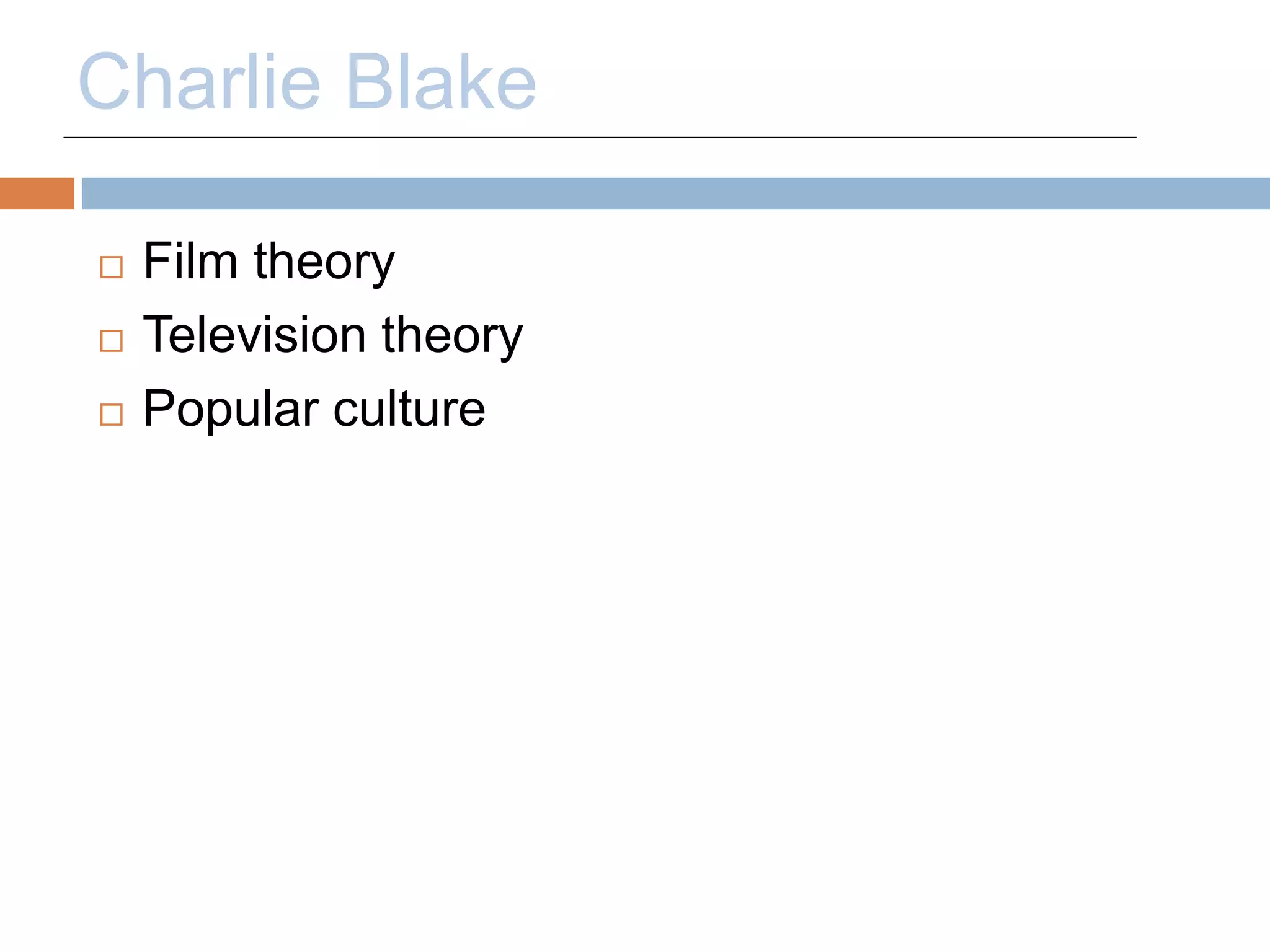
Charlie Blake 
 Film theory 
 Television theory 
 Popular culture
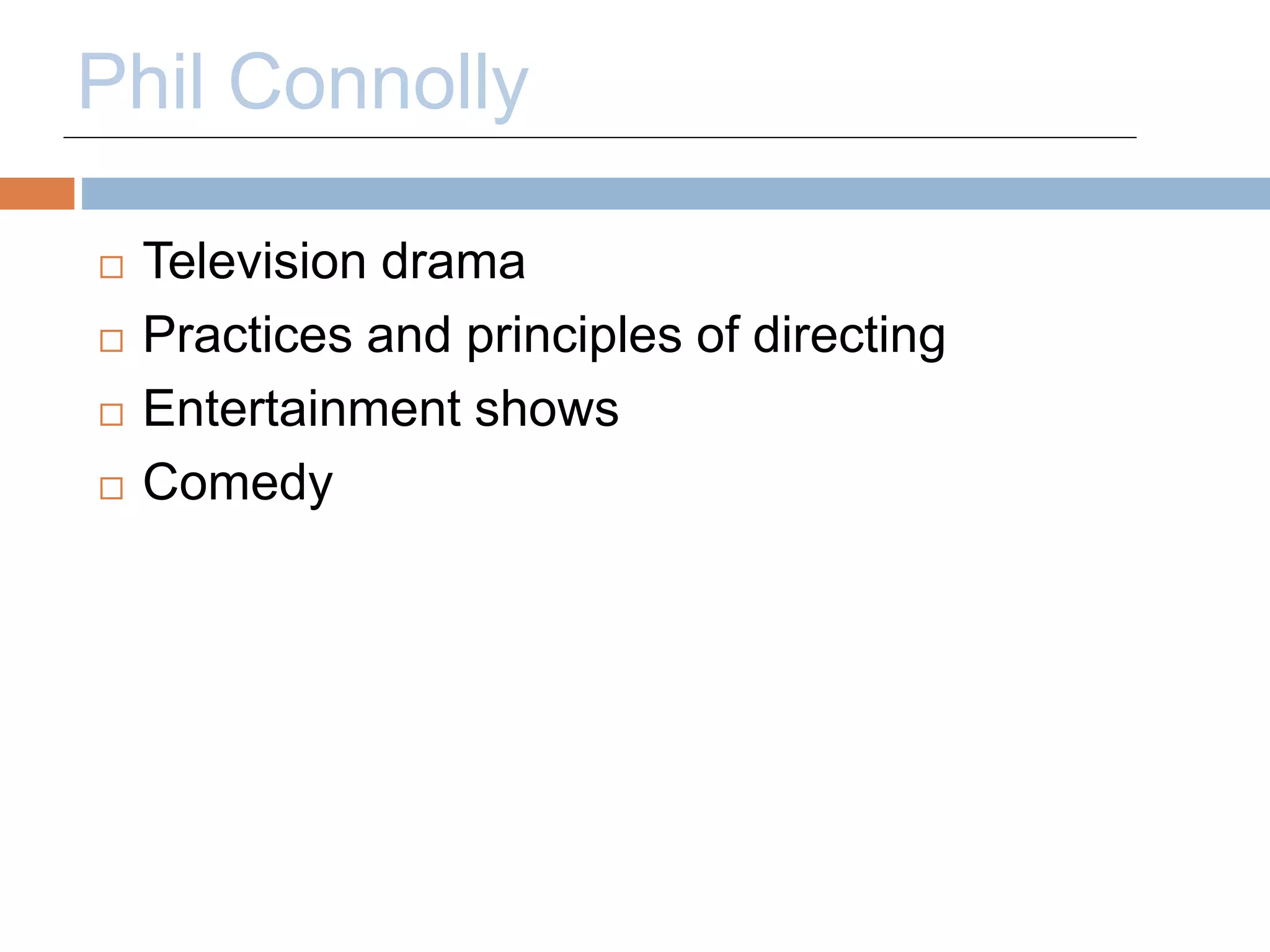
Phil Connolly 
 Television drama 
 Practices and principles of directing 
 Entertainment shows 
 Comedy
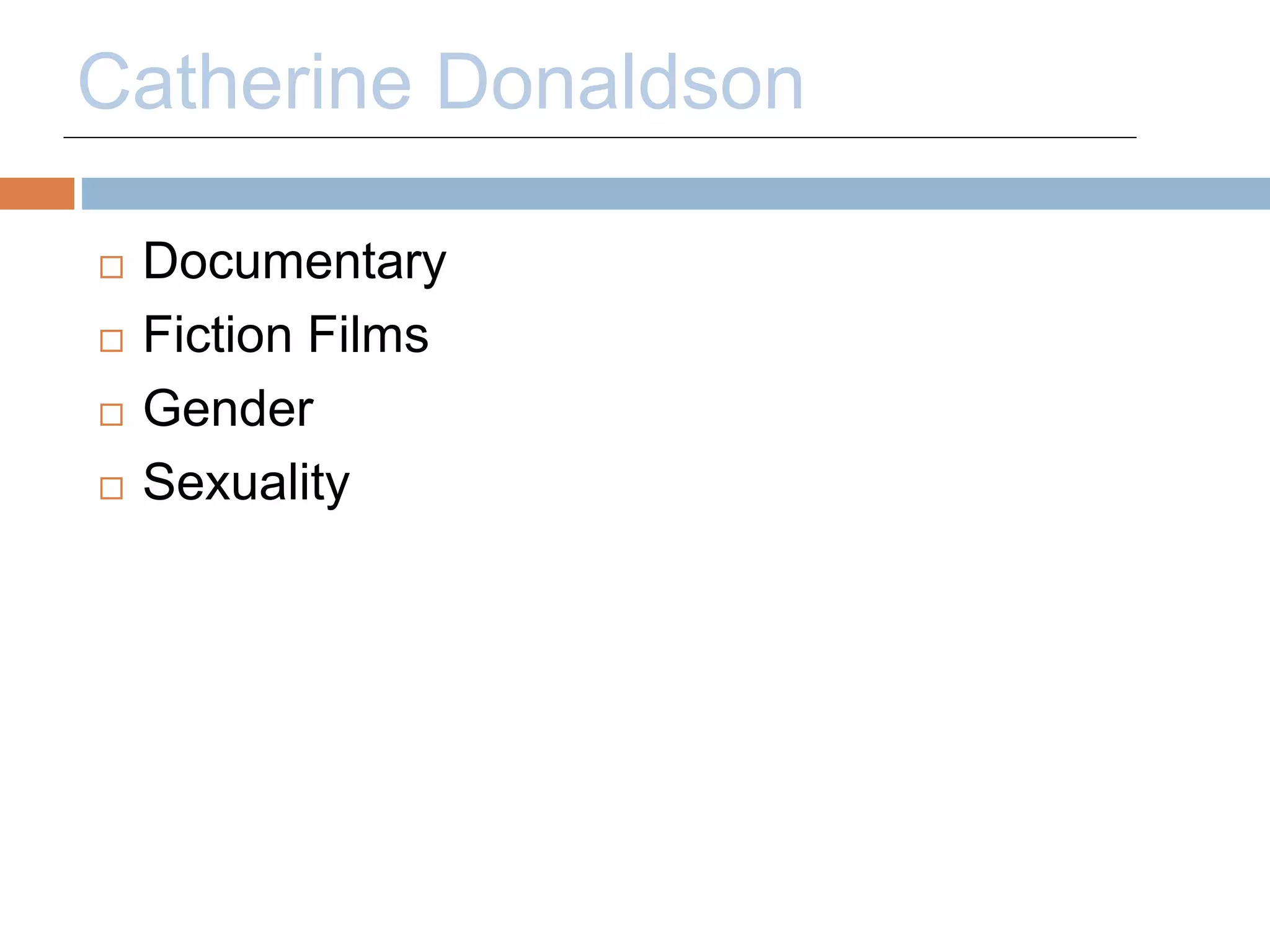
Catherine Donaldson 
 Documentary 
 Fiction Films 
 Gender 
 Sexuality
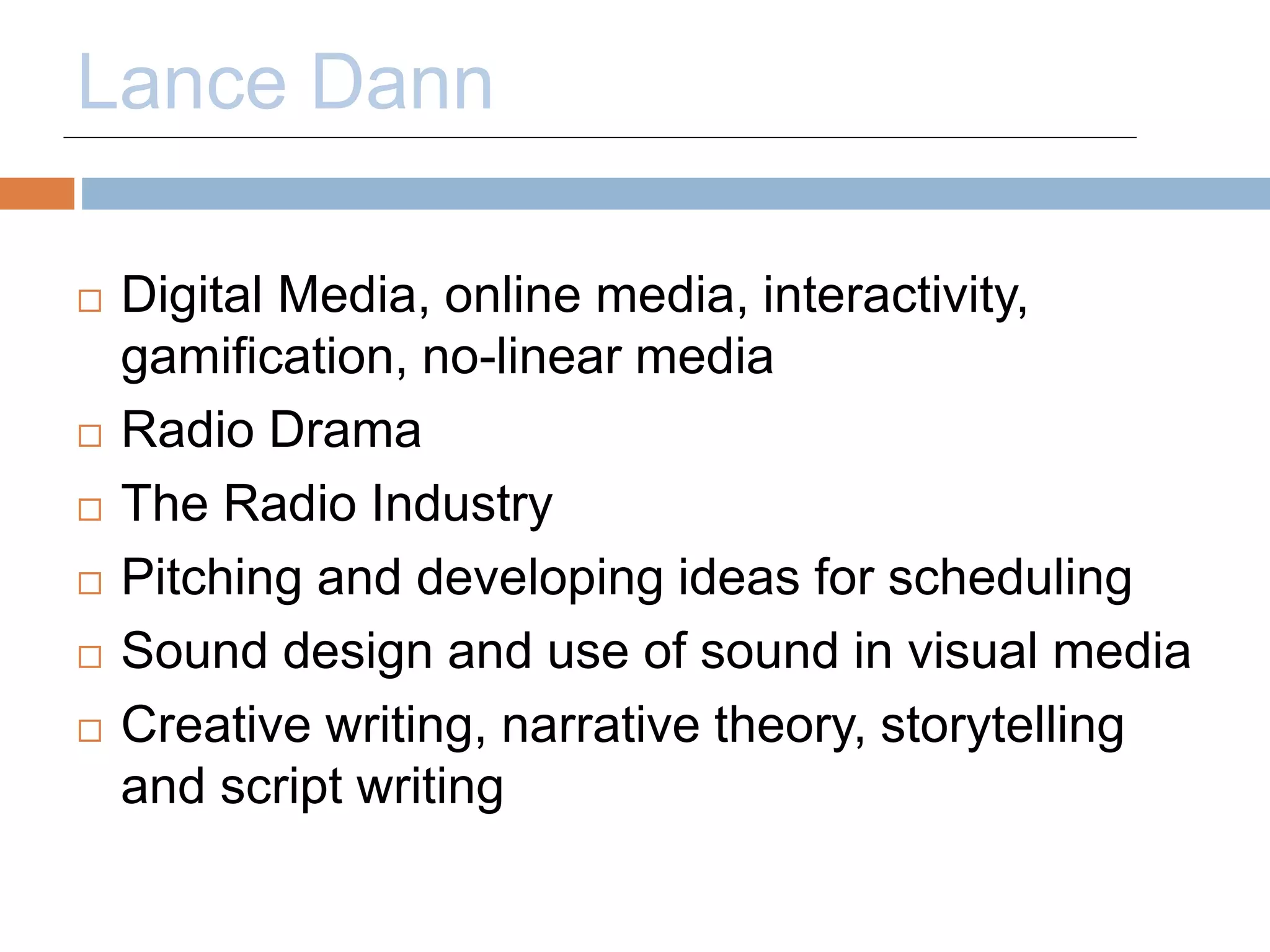
Lance Dann 
 Digital Media, online media, interactivity, 
gamification, no-linear media 
 Radio Drama 
 The Radio Industry 
 Pitching and developing ideas for scheduling 
 Sound design and use of sound in visual media 
 Creative writing, narrative theory, storytelling 
and script writing
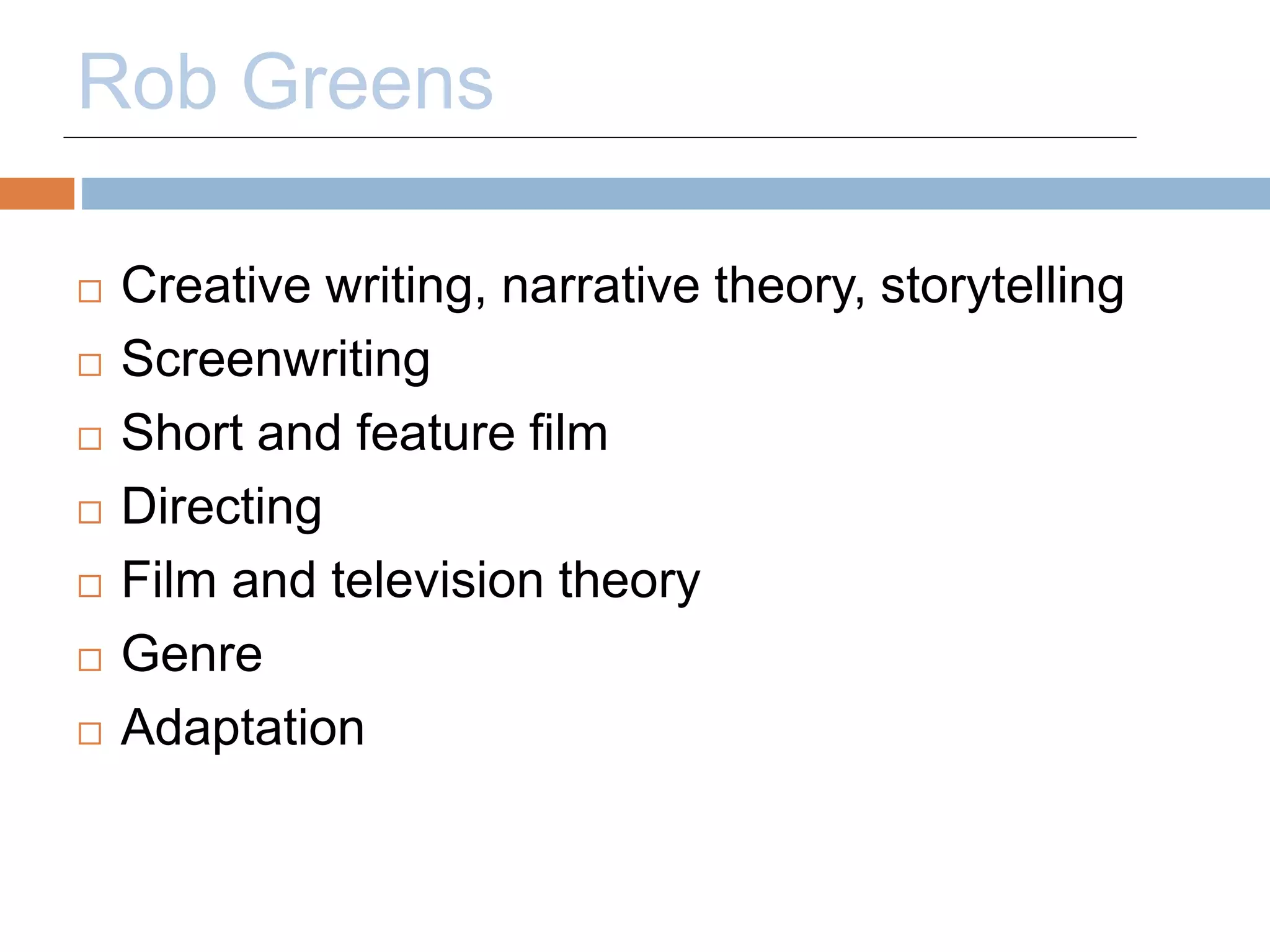
Rob Greens 
 Creative writing, narrative theory, storytelling 
 Screenwriting 
 Short and feature film 
 Directing 
 Film and television theory 
 Genre 
 Adaptation
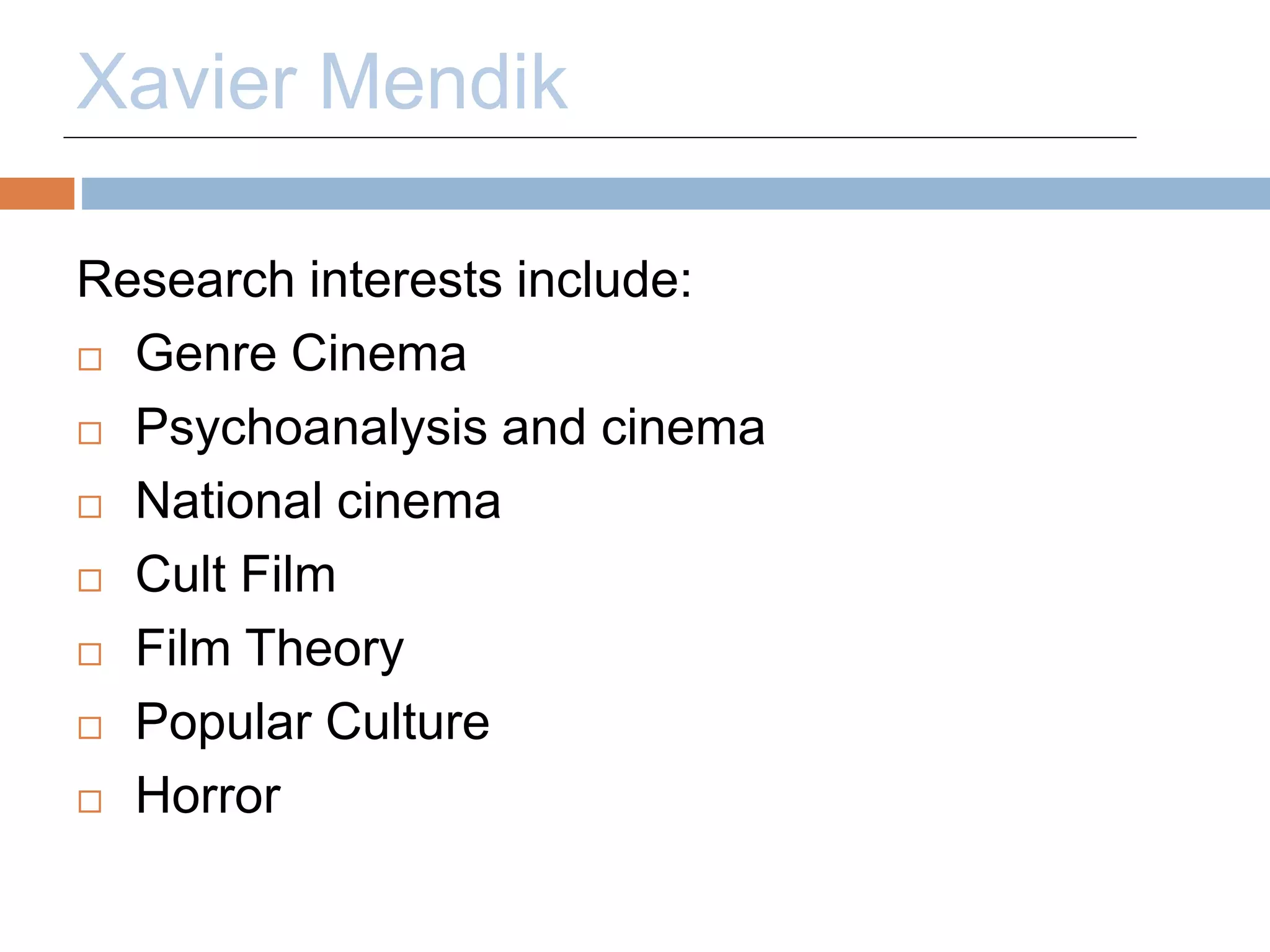
Xavier Mendik 
Research interests include: 
 Genre Cinema 
 Psychoanalysis and cinema 
 National cinema 
 Cult Film 
 Film Theory 
 Popular Culture 
 Horror
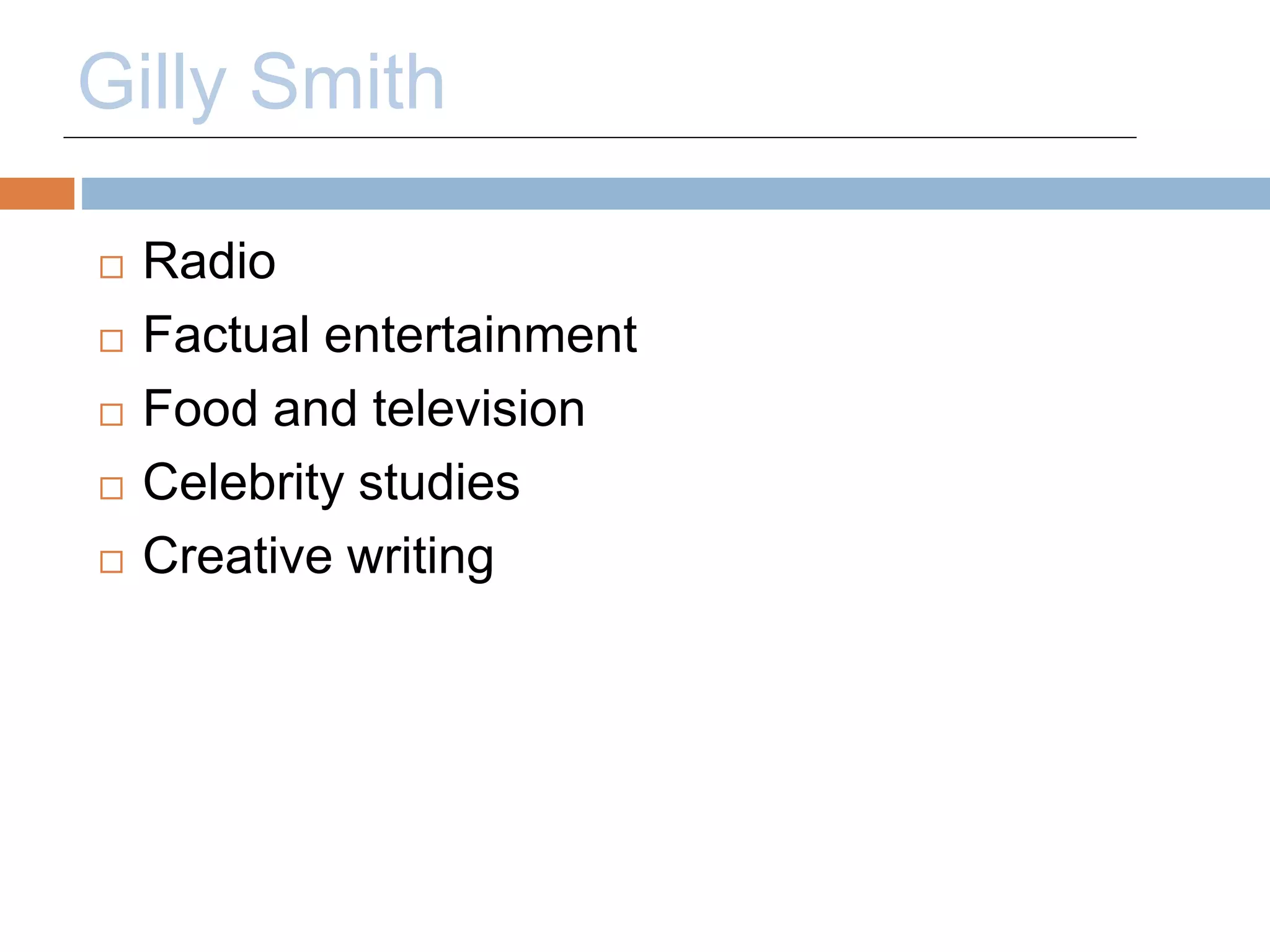
Gilly Smith 
 Radio 
 Factual entertainment 
 Food and television 
 Celebrity studies 
 Creative writing
Mark Soye 
 Experimental cinema 
 Editing 
 Colour and film
Supervisor/Student Meetings 
 You are entitled to a 20-minute tutorial every 
other week over a 24-week period; 
 You may not necessarily need/use all of this 
allocation up – but this is the maximum time; 
 You must always book these tutorials in 
advance with your supervisor; 
 You must make contact with your supervisor 
this week in order to schedule your first 
meeting.
Meeting Format 
 You need to provide your supervisor with some 
work that you have carried out for your project 
prior to the meeting; 
 This needs to be within a pre-agreed time 
frame with your tutor; 
 For example – for Rob’s students who he’ll 
usually meet on a Wednesday – you will need 
to email me the work before 11am on Monday; 
 If there is no evidence of some form of 
work/notes/planning, the tutorial time could be 
wasted.
Ground Rules 
 If you miss a tutorial or are late for a tutorial, 
you lose that time; 
 You must notify your supervisor in these 
instances; 
 Do not send materials through to be read after 
the pre-agreed time/at the last minute.

Introduction to lb616 presentation (2014-15)

  • 1.
    WELCOME TO FINAL INDIVIDUAL PROJECT COURSE CODE: LB616 Final Project Coordinator: Rob Greens Module tutors: Rob Greens Lance Dann 2014-15
  • 2.
    40 Credit WeightedModule This is a 40-credit module which runs over two semesters. It is double the weight of the standard modules that you have been studying. As such, it is an extremely important element of your degree, which could make a real difference to the classification of degree that you are awarded (i.e. a 2.2, 2:1 or a 1st).
  • 3.
    Teaching and Learning Strategies  Taught lessons  Practical workshops  Supervisions  Independent Study The student will work individually under the supervision of a member of the academic staff, including regular meetings. There will also be a compulsory weekly class-based workshop throughout the year.
  • 4.
    Overview  in-depthresearch in an area or ‘field’ that is of interest and importance to you.  the student independently produces and project manage their own individual work  you coordinate the input of others who are contributing to the project.
  • 5.
    Learning Outcomes Thestudents will be able to: 1. Locate, select and use critically information from a number of sources 2. Creatively execute ideas based on a research question and theoretical work in a practical production 3. Demonstrate advanced production skills; 4. Critically evaluate in detail aspects of television, radio, multimedia, film principles, practice, standards and techniques 5. Communicate ideas accurately, persuasively and succinctly in writing 6. Conduct extensive research and apply findings from a practical production to support a critical explanation/interpretation of theoretical work.
  • 6.
    Transferable Skills Increased knowledgeable on a subject;  Critical awareness;  Time-management;  Project Management;  Research Skills;  Advance production and technical skills;  Self-management;  Working with others;  Analytical and valuation techniques in relation to the research sources that they site, their own work, and the work of their peers.
  • 7.
    What can youresearch about?  An aspect of Television, Radio or Film principles, practice, standards and techniques;  Be succinct – don’t be too broad! Common error is to try to cover too much in 5,000 words.
  • 8.
    You drive thisproject forward  you will only get out what you put in  you need to demonstrate commitment and dedication to the project.  select a topic that drives you, motivates you and impassions you.
  • 9.
    Assignment Deadlines WorkDeadline Presentations (20%) Monday 1st and 8th December 2014 1st chapter of Research Report (formative) Monday 9th February 2015 Practical Tuesday 12th May 2015 Research Report Tuesday 19th May 2015
  • 10.
    One Piece ofResearch: Three Projects  The presentation, practical, and research report, must be all related. Although the work is marked separately and individually – you need to remember that all pieces have to be interlinked and are connected to one another.  You should not therefore, write your research report within one area – and then undertake your production in another, different area.
  • 11.
    The research process Choosing a topic Presentation • Focusing your thoughts • Identify scope and key issues •construct a working statement that will form the basis of your literature review - a slant on the literature itself; • include the authors who would or could contradict your ideas. Research Report reporting and evaluating a specific aspect of Broadcast Media production demonstrate what you have learnt in the research and production processes Production Express the influence of your research in the production Maybe demonstrate a new approach
  • 12.
    Request Form andSkills Audit  Request via Studentcentral  record an area or ‘field’ of interest.  Request three choices of supervisors  Must do this by Sunday 12 March
  • 13.
    Supervisors interests andareas of research* *these are not comprehensive. All staff cover a variety of areas to support a wide range of dissertations.
  • 14.
    Charlie Blake Film theory  Television theory  Popular culture
  • 15.
    Phil Connolly Television drama  Practices and principles of directing  Entertainment shows  Comedy
  • 16.
    Catherine Donaldson Documentary  Fiction Films  Gender  Sexuality
  • 17.
    Lance Dann Digital Media, online media, interactivity, gamification, no-linear media  Radio Drama  The Radio Industry  Pitching and developing ideas for scheduling  Sound design and use of sound in visual media  Creative writing, narrative theory, storytelling and script writing
  • 18.
    Rob Greens Creative writing, narrative theory, storytelling  Screenwriting  Short and feature film  Directing  Film and television theory  Genre  Adaptation
  • 19.
    Xavier Mendik Researchinterests include:  Genre Cinema  Psychoanalysis and cinema  National cinema  Cult Film  Film Theory  Popular Culture  Horror
  • 20.
    Gilly Smith Radio  Factual entertainment  Food and television  Celebrity studies  Creative writing
  • 21.
    Mark Soye Experimental cinema  Editing  Colour and film
  • 22.
    Supervisor/Student Meetings You are entitled to a 20-minute tutorial every other week over a 24-week period;  You may not necessarily need/use all of this allocation up – but this is the maximum time;  You must always book these tutorials in advance with your supervisor;  You must make contact with your supervisor this week in order to schedule your first meeting.
  • 23.
    Meeting Format You need to provide your supervisor with some work that you have carried out for your project prior to the meeting;  This needs to be within a pre-agreed time frame with your tutor;  For example – for Rob’s students who he’ll usually meet on a Wednesday – you will need to email me the work before 11am on Monday;  If there is no evidence of some form of work/notes/planning, the tutorial time could be wasted.
  • 24.
    Ground Rules If you miss a tutorial or are late for a tutorial, you lose that time;  You must notify your supervisor in these instances;  Do not send materials through to be read after the pre-agreed time/at the last minute.

Editor's Notes

  • #5 The module gives you a unique opportunity to carry out in-depth research and practice-based work into an area or ‘field’ that is of interest and importance to you. It also allows the student to independently produce and project manage their own individual work which they will have devised and conceived themselves. This involves coordinating the input of others who are contributing to the project. The student is to oversee the preproduction, production and postproduction phases.
  • #9 You need to be aware that you will only get out what you put in. As an independent learner, the onus is on you to drive this project forward. We will help and assist you all we can, but you need to demonstrate commitment and dedication to the project. It is therefore really important that you select a topic that drives you, motivates you and impassions you. Set your own deadlines; Don’t leave things to the last minute; Revise your plan when you need to; Supervisors won’t give you the answers; Supervisors can provide some support or supervisions by skype or email (if agreed) but there cannot be a stream of emails.
  • #10 You might seek motivation in one of the following ways: Choose something you are interested in; Focus on the skills you will develop through undertaking the research than the output; By incorporating within the research some knowledge acquisition of relevance to you; By seeing the research project as part of a larger activity, which will have a knock-on benefit for your work and/or career Promise yourself a reward when it is successfully completed
  • #13 Your research question will be more defined after the literature review and in discussion with your supervisor. We need to allocate you a supervisor asap so you can meet them asap. We only have a set amount of students we can supervisor. Rob will do you best to give you who you want but it is helpful to give a second and third choice.
  • #24 Don’t panic – f f you are stuck make an appointment Supervisions can be