
Introduction
To
CNC Machine
Presentation By
Mohammed Tayeeb
 Introduction
 Meaning of CNC Machines
 Why Use CNC Machines
 Parts of CNC Machines
 Advantages
 Disadvantages
 Applications
1. In Industry it is not efficient or profitable to make
everyday products by hand.
2. On a CNC machine it is possible to make hundreds or
even thousands of the same items in a day.
3. First a design is drawn using design software, and
then it is processed by the computer and
manufactured using the CNC machine.
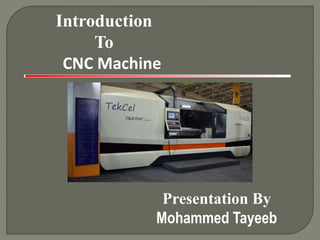
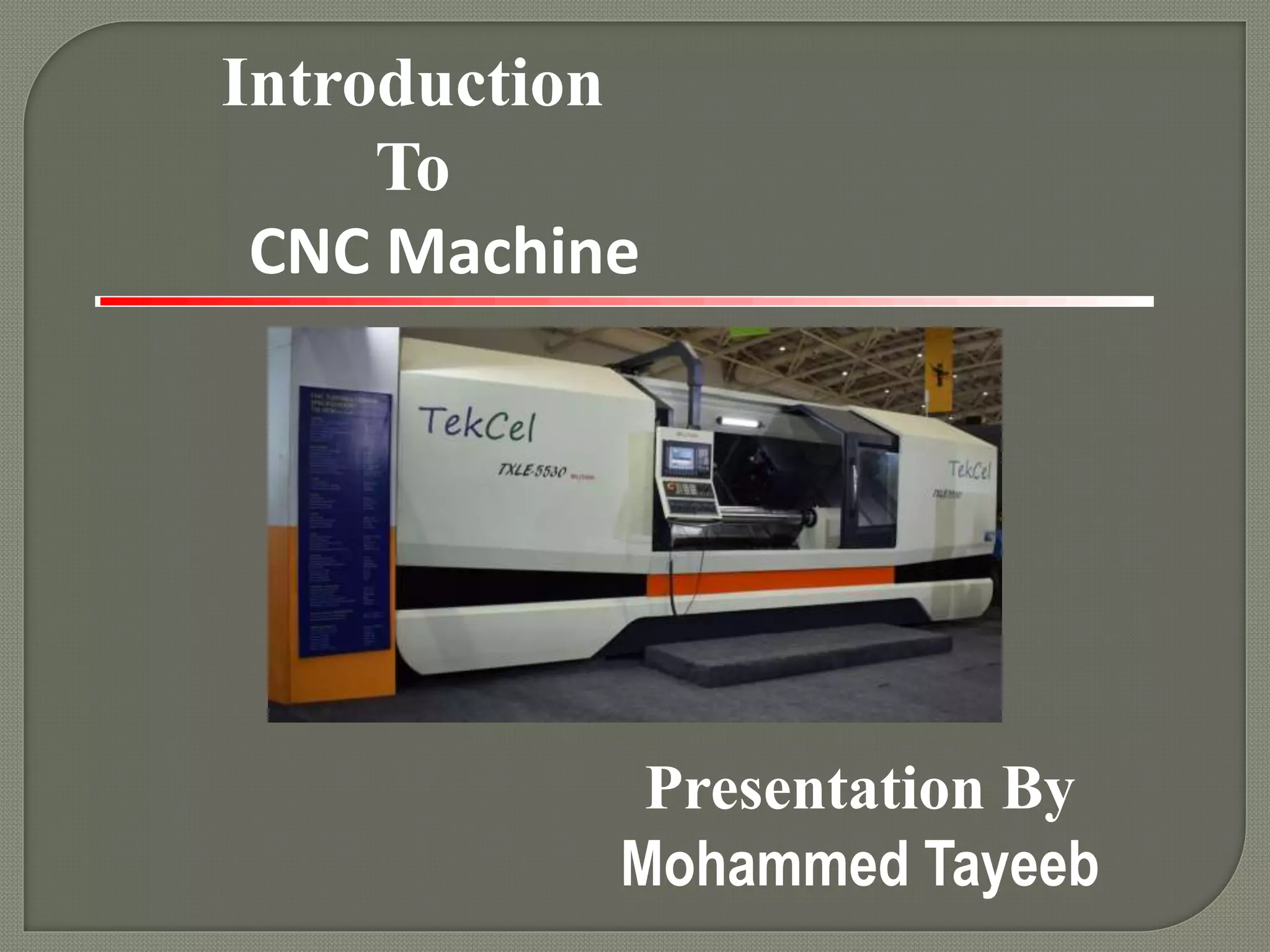
4. This is a small CNC machine and can be used to
machine woods, plastics and aluminum. In industry,
CNC machines can be extremely large.
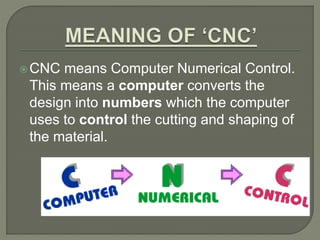
CNC means Computer Numerical Control.
This means a computer converts the
design into numbers which the computer
uses to control the cutting and shaping of
the material.
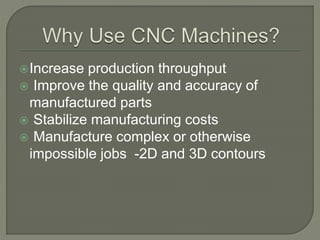
Increase production throughput
 Improve the quality and accuracy of
manufactured parts
 Stabilize manufacturing costs
 Manufacture complex or otherwise
impossible jobs -2D and 3D contours
 CNC machines can be used continuously 24 hours a day, 365
days a year and only need to be switched off for occasional
maintenance.
 CNC machines are programmed with a design which can then
be manufactured hundreds or even thousands of times. Each
manufactured product will be exactly the same.
 Less skilled/trained people can operate CNC’s unlike manual
lathes / milling machines etc... Which need skilled engineers?
 CNC machines can be updated by improving the software
used to drive the machines
 Reduce waste as errors allows minimize wasted material
CNC machines are more expensive than
manually operated machines, although
costs are slowly coming down.
The CNC machine operator only needs
basic training and skills, enough to
supervise several machines.
Automotive industry
Aerospace industry
Machinery industry’
Instrumentation industry
Introduction  To     CNC Machine

Introduction To   CNC Machine

  • 1.
  • 2.
     Introduction  Meaningof CNC Machines  Why Use CNC Machines  Parts of CNC Machines  Advantages  Disadvantages  Applications
  • 3.
    1. In Industryit is not efficient or profitable to make everyday products by hand. 2. On a CNC machine it is possible to make hundreds or even thousands of the same items in a day. 3. First a design is drawn using design software, and then it is processed by the computer and manufactured using the CNC machine. 4. This is a small CNC machine and can be used to machine woods, plastics and aluminum. In industry, CNC machines can be extremely large.
  • 4.
    CNC means ComputerNumerical Control. This means a computer converts the design into numbers which the computer uses to control the cutting and shaping of the material.
  • 7.
    Increase production throughput Improve the quality and accuracy of manufactured parts  Stabilize manufacturing costs  Manufacture complex or otherwise impossible jobs -2D and 3D contours
  • 8.
     CNC machinescan be used continuously 24 hours a day, 365 days a year and only need to be switched off for occasional maintenance.  CNC machines are programmed with a design which can then be manufactured hundreds or even thousands of times. Each manufactured product will be exactly the same.  Less skilled/trained people can operate CNC’s unlike manual lathes / milling machines etc... Which need skilled engineers?  CNC machines can be updated by improving the software used to drive the machines  Reduce waste as errors allows minimize wasted material
  • 9.
    CNC machines aremore expensive than manually operated machines, although costs are slowly coming down. The CNC machine operator only needs basic training and skills, enough to supervise several machines.
  • 10.
    Automotive industry Aerospace industry Machineryindustry’ Instrumentation industry

Editor's Notes