ORIGIN OF BANKING
THE EARLY PHASE OF BANKING IN INDIA – UP TO 1947: 
Beginning of Banking in India 
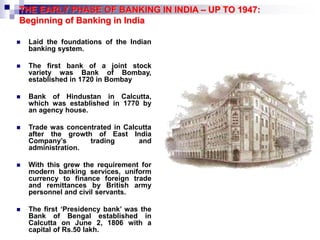
 Laid the foundations of the Indian 
banking system. 
 The first bank of a joint stock 
variety was Bank of Bombay, 
established in 1720 in Bombay 
 Bank of Hindustan in Calcutta, 
which was established in 1770 by 
an agency house. 
 Trade was concentrated in Calcutta 
after the growth of East India 
Company’s trading and 
administration. 
 With this grew the requirement for 
modern banking services, uniform 
currency to finance foreign trade 
and remittances by British army 
personnel and civil servants. 
 The first ‘Presidency bank’ was the 
Bank of Bengal established in 
Calcutta on June 2, 1806 with a 
capital of Rs.50 lakh.
The Bank of Bombay was the second Presidency bank set up in 1840 with a 
capital of Rs.52 lakh. 
Bank of Madras the third Presidency bank established in July 1843 with a 
capital of Rs.30lakh. 
They were known as Presidency banks as they were set up in the three 
Presidencies that were the units of administrative jurisdiction in the country 
for the East India Company. 
The Presidency banks were governed by Royal Charters. 
The first Indian owned bank was the Allahabad Bank set up in Allahabad in 
1865, 
The second, Punjab National Bank was set up in 1895 in Lahore, and 
The third, Bank of India was set up in 1906 in Mumbai. 
All these banks were founded under private ownership.
Contd.. 
 The presidency banks were 
amalgamated into a single 
bank, the Imperial Bank of India, 
in 1921. 
 The Imperial Bank of India also 
functioned as a central bank 
prior to the establishment of the 
Reserve Bank in 1935. 
 The Reserve Bank of India Act 
1934 was enacted paving the 
way for the setting up of the 
Reserve Bank of India. 
 The issue of bank failures and 
the need for catering to the 
requirements of agriculture 
were the two prime reasons for 
the establishment of the 
Reserve Bank. 
 The banking sector came under 
the purview of the Reserve 
Bank in 1935.
•The Reserve Bank of India Act, 1934 gave the Reserve Bank powers to 
regulate issue of bank notes, the custody of the commercial banks’ cash 
reserves and the discretion of granting them accommodation. 
The Reserve Bank’s main functions could be classified into the following 
broad categories 
(a) to act as a banker to the Government 
(b) to issue notes 
(c) to act as a banker to other banks and 
(d) to maintain the exchange ratio.
BANKING IN THE EARLY YEARS OF INDEPENDENT INDIA - 1947 
TO 1967 
When the country attained independence, Indian banking was entirely in 
the private sector. 
In addition to the Imperial Bank, there were five big banks, each holding 
public deposits aggregating Rs.100 crore and more,viz. Central Bank 
of India Ltd., Punjab National Bank Ltd., Bank of India Ltd., Bank of 
Baroda Ltd. and United Commercial Bank Ltd. 
A major development during this period was the enactment of the 
Banking Regulation Act and supervise the banking sector. 
empowering the Reserve Bank to regulate 
In 1955, the Imperial Bank of India was nationalized and was given the 
name “State Bank of India”. 
It was established under State Bank of India Act, 1955.
SOCIAL CONTROL OVER BANKS - 1967 TO 1991 
The main objectives of social control was 
 to achieve a wider spread of bank credit 
 prevent its misuse, direct a larger volume of credit flow to 
priority sectors and 
 make it more effective instrument of economic development. 
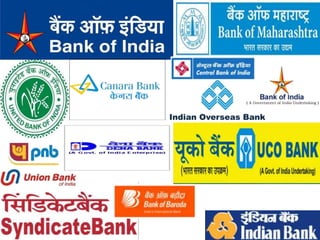
On July 19, 1969, 14 major banks were nationalized.
First Phase of Reforms: 1991-92 to 1997-98 
The main issues faced at the beginning of this sub-phase (1991-92 to 
1997-98) were 
 the poor financial performance, 
 low asset quality, weak capital position of banks and 
 the absence of adequate competition. 
 Several measures, therefore, were initiated by the Government, the 
Reserve Bank and the banks themselves to improve their profitability, 
financial health and capital position. 
Major measures initiated included 
 introduction of objective prudential norms, 
 reduction in statutory pre-emptions and operational flexibility and 
 functional autonomy to public sector banks.
Origin of banking

Origin of banking

  • 1.
  • 2.
    THE EARLY PHASEOF BANKING IN INDIA – UP TO 1947: Beginning of Banking in India  Laid the foundations of the Indian banking system.  The first bank of a joint stock variety was Bank of Bombay, established in 1720 in Bombay  Bank of Hindustan in Calcutta, which was established in 1770 by an agency house.  Trade was concentrated in Calcutta after the growth of East India Company’s trading and administration.  With this grew the requirement for modern banking services, uniform currency to finance foreign trade and remittances by British army personnel and civil servants.  The first ‘Presidency bank’ was the Bank of Bengal established in Calcutta on June 2, 1806 with a capital of Rs.50 lakh.
  • 3.
    The Bank ofBombay was the second Presidency bank set up in 1840 with a capital of Rs.52 lakh. Bank of Madras the third Presidency bank established in July 1843 with a capital of Rs.30lakh. They were known as Presidency banks as they were set up in the three Presidencies that were the units of administrative jurisdiction in the country for the East India Company. The Presidency banks were governed by Royal Charters. The first Indian owned bank was the Allahabad Bank set up in Allahabad in 1865, The second, Punjab National Bank was set up in 1895 in Lahore, and The third, Bank of India was set up in 1906 in Mumbai. All these banks were founded under private ownership.
  • 4.
    Contd..  Thepresidency banks were amalgamated into a single bank, the Imperial Bank of India, in 1921.  The Imperial Bank of India also functioned as a central bank prior to the establishment of the Reserve Bank in 1935.  The Reserve Bank of India Act 1934 was enacted paving the way for the setting up of the Reserve Bank of India.  The issue of bank failures and the need for catering to the requirements of agriculture were the two prime reasons for the establishment of the Reserve Bank.  The banking sector came under the purview of the Reserve Bank in 1935.
  • 5.
    •The Reserve Bankof India Act, 1934 gave the Reserve Bank powers to regulate issue of bank notes, the custody of the commercial banks’ cash reserves and the discretion of granting them accommodation. The Reserve Bank’s main functions could be classified into the following broad categories (a) to act as a banker to the Government (b) to issue notes (c) to act as a banker to other banks and (d) to maintain the exchange ratio.
  • 6.
    BANKING IN THEEARLY YEARS OF INDEPENDENT INDIA - 1947 TO 1967 When the country attained independence, Indian banking was entirely in the private sector. In addition to the Imperial Bank, there were five big banks, each holding public deposits aggregating Rs.100 crore and more,viz. Central Bank of India Ltd., Punjab National Bank Ltd., Bank of India Ltd., Bank of Baroda Ltd. and United Commercial Bank Ltd. A major development during this period was the enactment of the Banking Regulation Act and supervise the banking sector. empowering the Reserve Bank to regulate In 1955, the Imperial Bank of India was nationalized and was given the name “State Bank of India”. It was established under State Bank of India Act, 1955.
  • 7.
    SOCIAL CONTROL OVERBANKS - 1967 TO 1991 The main objectives of social control was  to achieve a wider spread of bank credit  prevent its misuse, direct a larger volume of credit flow to priority sectors and  make it more effective instrument of economic development. On July 19, 1969, 14 major banks were nationalized.
  • 9.
    First Phase ofReforms: 1991-92 to 1997-98 The main issues faced at the beginning of this sub-phase (1991-92 to 1997-98) were  the poor financial performance,  low asset quality, weak capital position of banks and  the absence of adequate competition.  Several measures, therefore, were initiated by the Government, the Reserve Bank and the banks themselves to improve their profitability, financial health and capital position. Major measures initiated included  introduction of objective prudential norms,  reduction in statutory pre-emptions and operational flexibility and  functional autonomy to public sector banks.