!
Basic Anatomy Course
in Acupuncture
Ryan Em C. Dalman, MD-MBA
!
Afternoon Topics
" Basic Anatomy
! Biological Organization
! Vessels (Artery, Vein, Nerve)
" Basic Physiology
" Relevance in Acupuncture
! Bone, Ligament, Tendon, Cartilage, Fascia, Muscle
! Skin, hair and nails
" TCM principles
! Recall Activity
Outline
!
Biological Organization
!
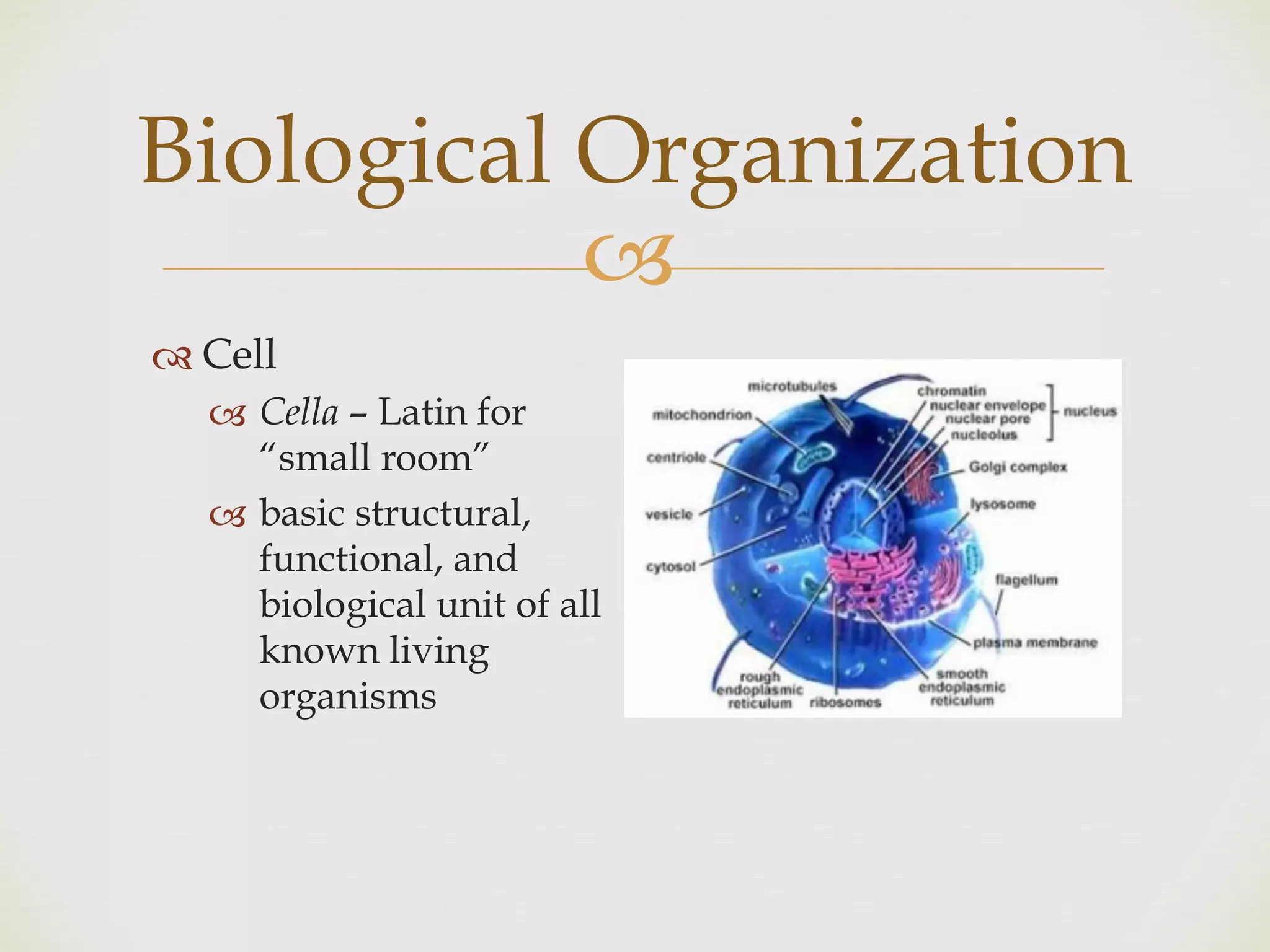
" Cell
! Cella – Latin for
“small room”
! basic structural,
functional, and
biological unit of all
known living
organisms
Biological Organization
!
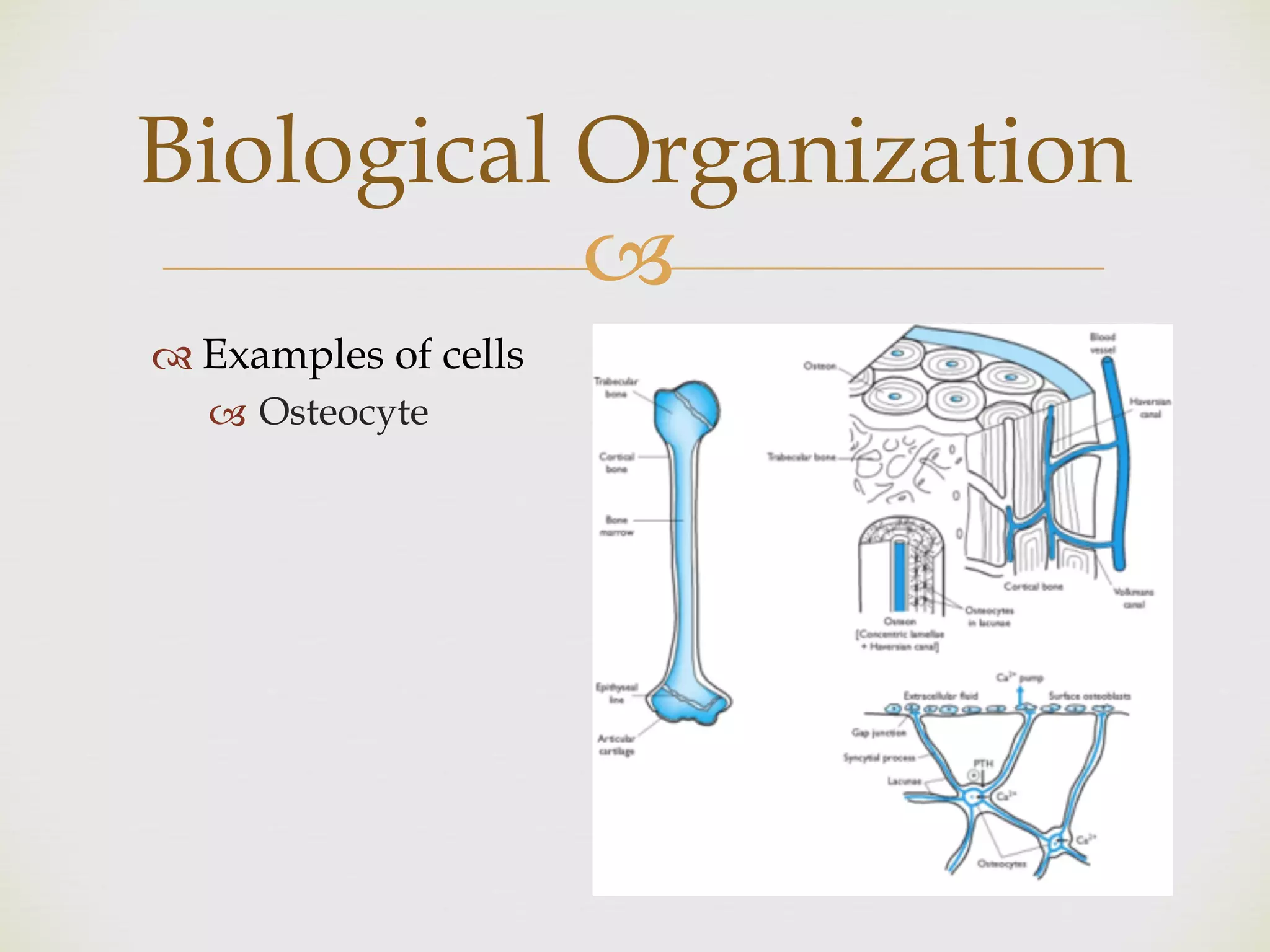
" Examples of cells
! Osteocyte
Biological Organization
!
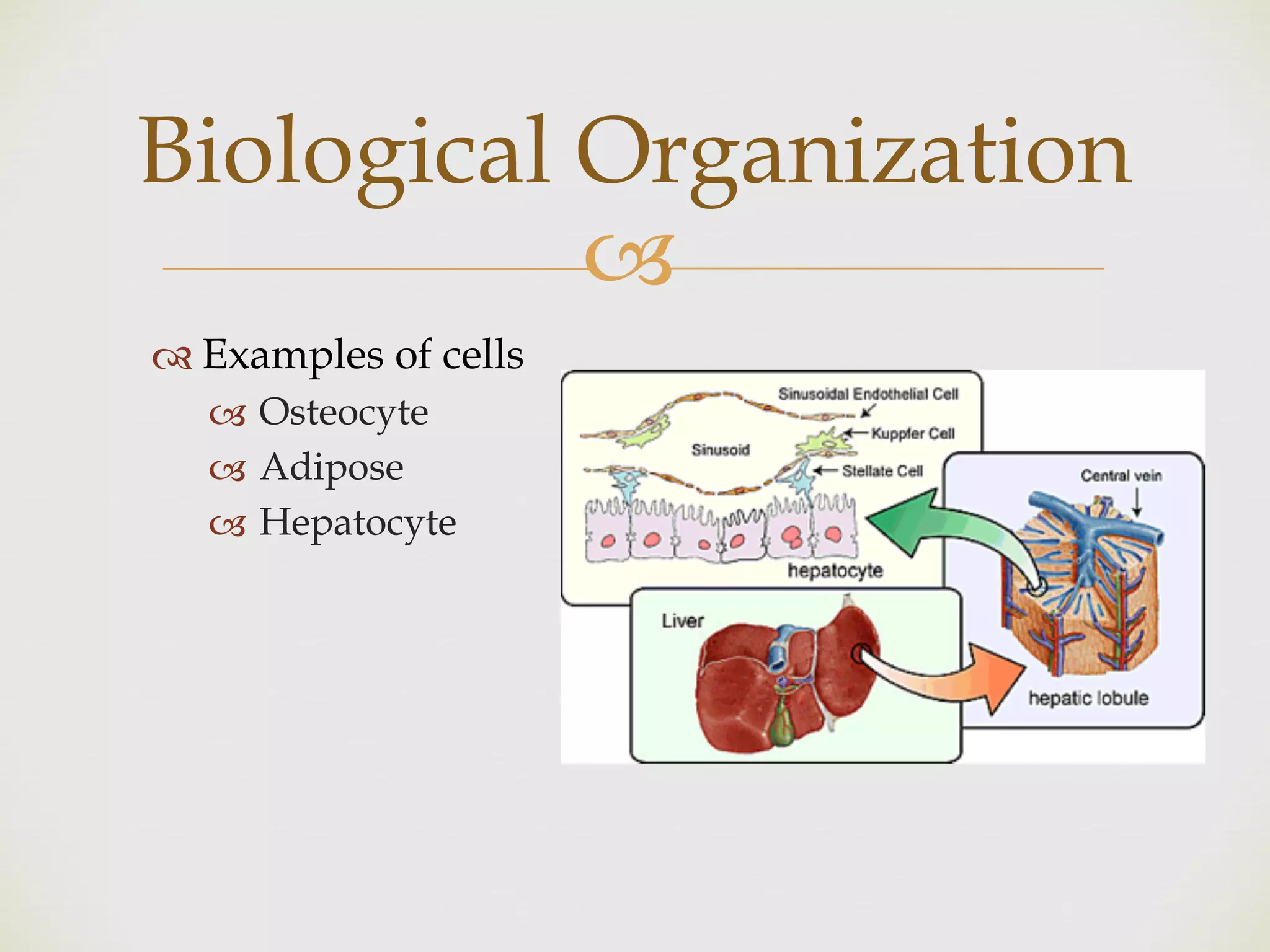
" Examples of cells
! Osteocyte
! Adipose
Biological Organization
!
" Examples of cells
! Osteocyte
! Adipose
! Hepatocyte
Biological Organization
!
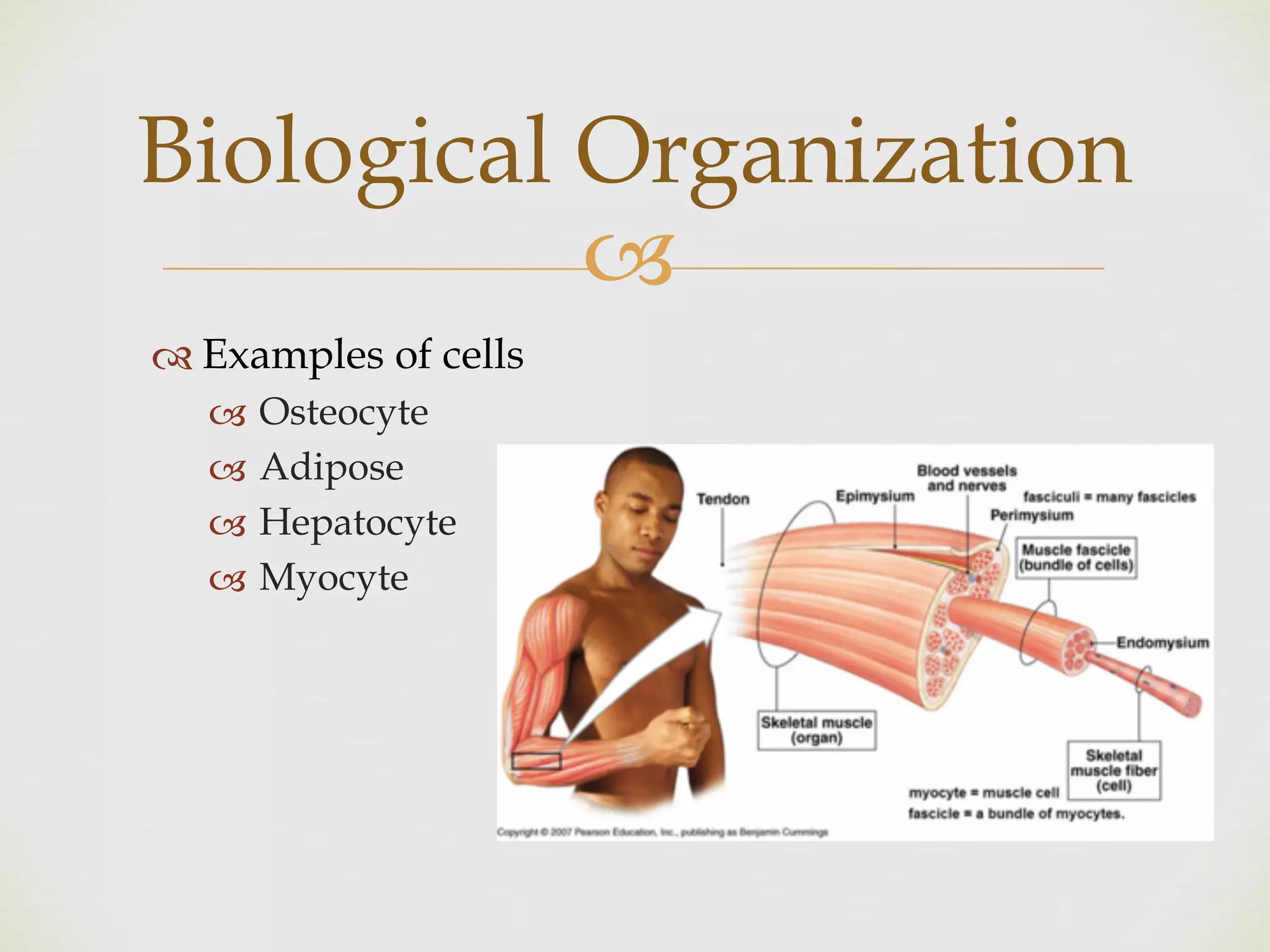
" Examples of cells
! Osteocyte
! Adipose
! Hepatocyte
! Myocyte
Biological Organization
!
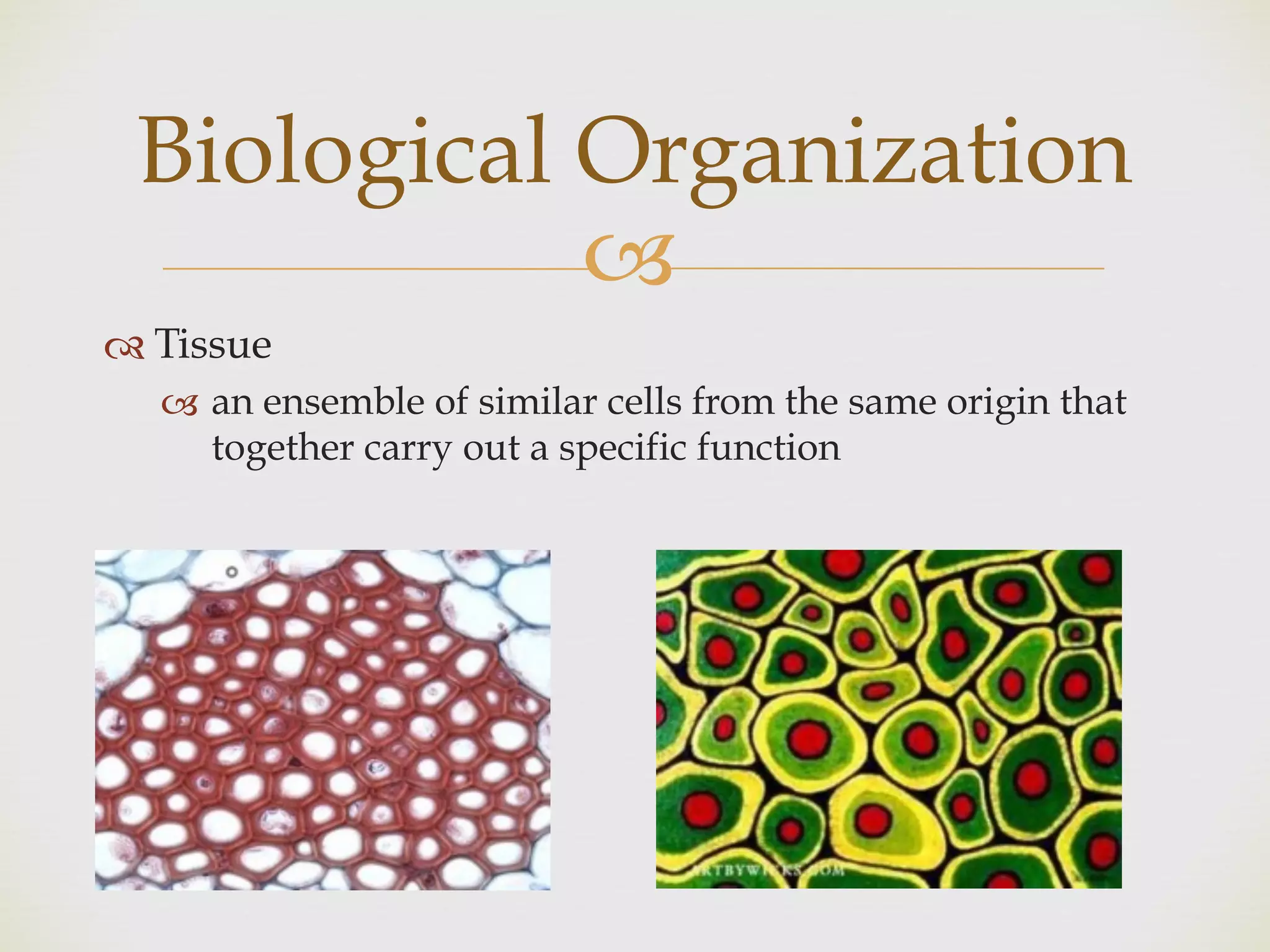
" Tissue
! an ensemble of similar cells from the same origin that
together carry out a specific function
Biological Organization
!
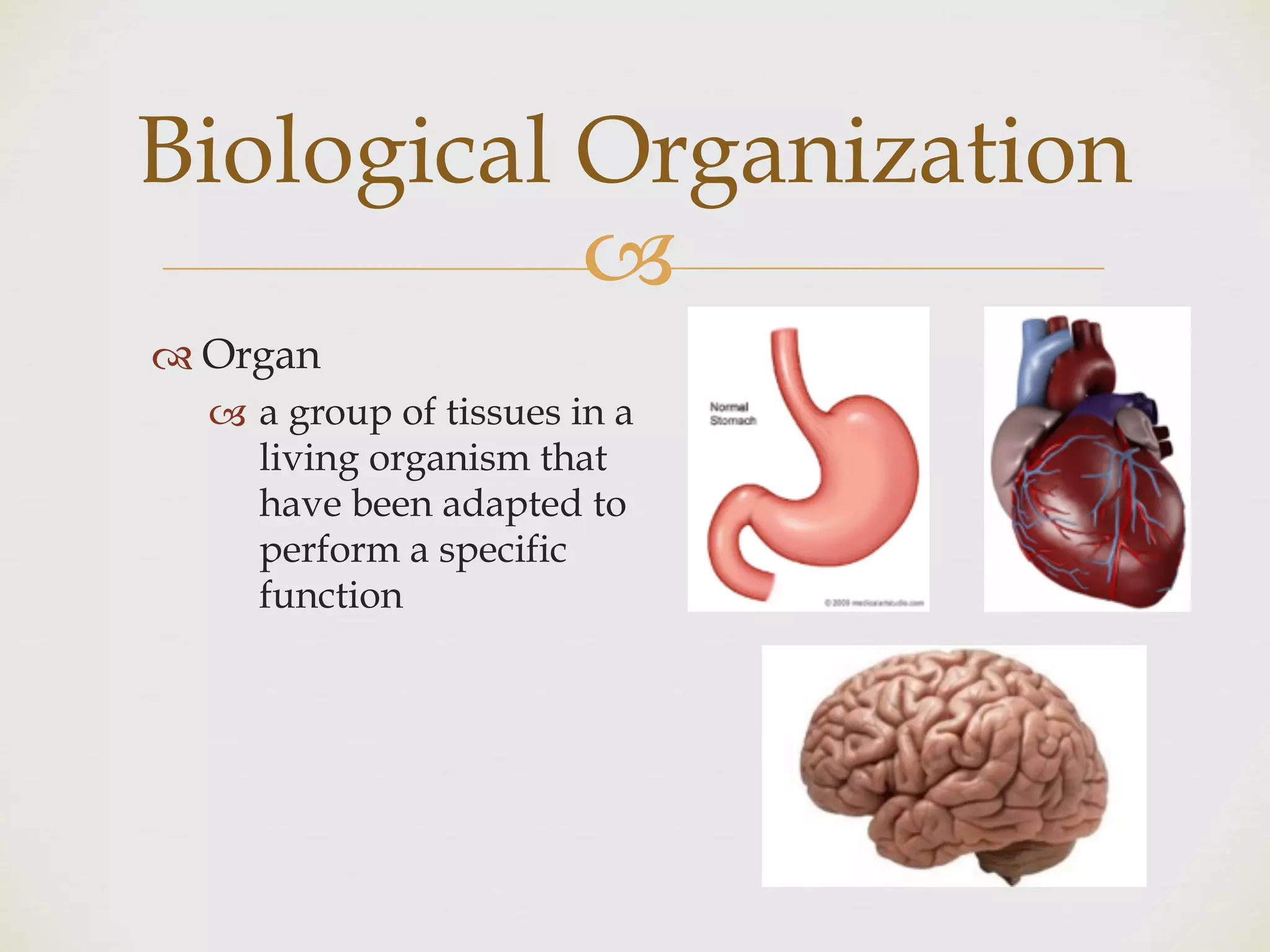
" Organ
! a group of tissues in a
living organism that
have been adapted to
perform a specific
function
Biological Organization
!
" Organ Systems
! a group of organs that work together to perform one or
more functions
Biological Organization
!
Biological Organization
!
Nerve, Artery, Vein
!
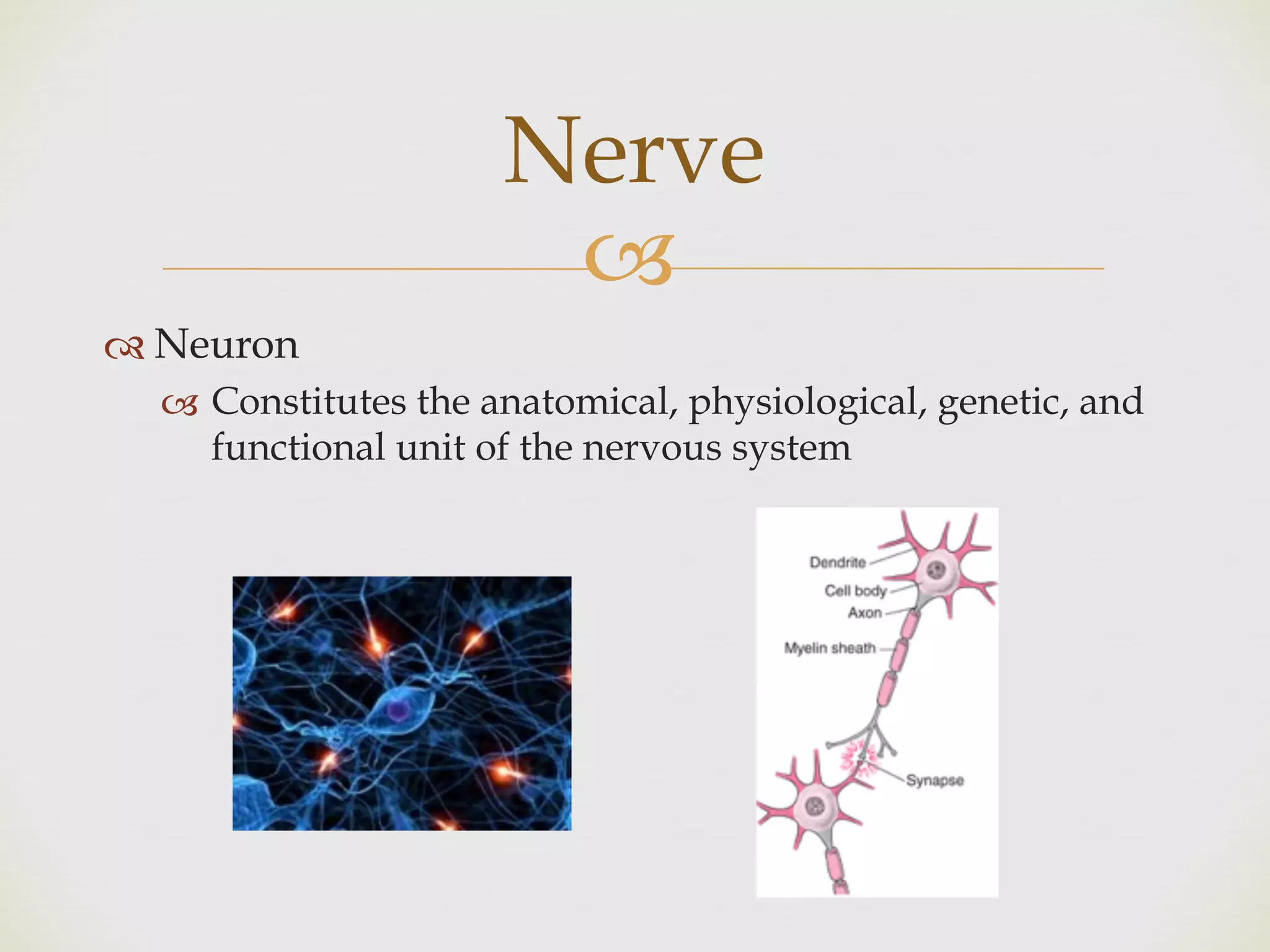
" Neuron
! Constitutes the anatomical, physiological, genetic, and
functional unit of the nervous system
Nerve
!
" Nervous Tissue
! Group of neurons formed together to perform
functions mainly as a Communications System from the
Brain to the target organs (and vice versa)
Nerve
!
" Functions
! Allows a person to experience sensations such as:
" Sight
" Smell
" Touch
" Taste
" Hearing
! Movement of both voluntary and involuntary muscles
Nerve
!
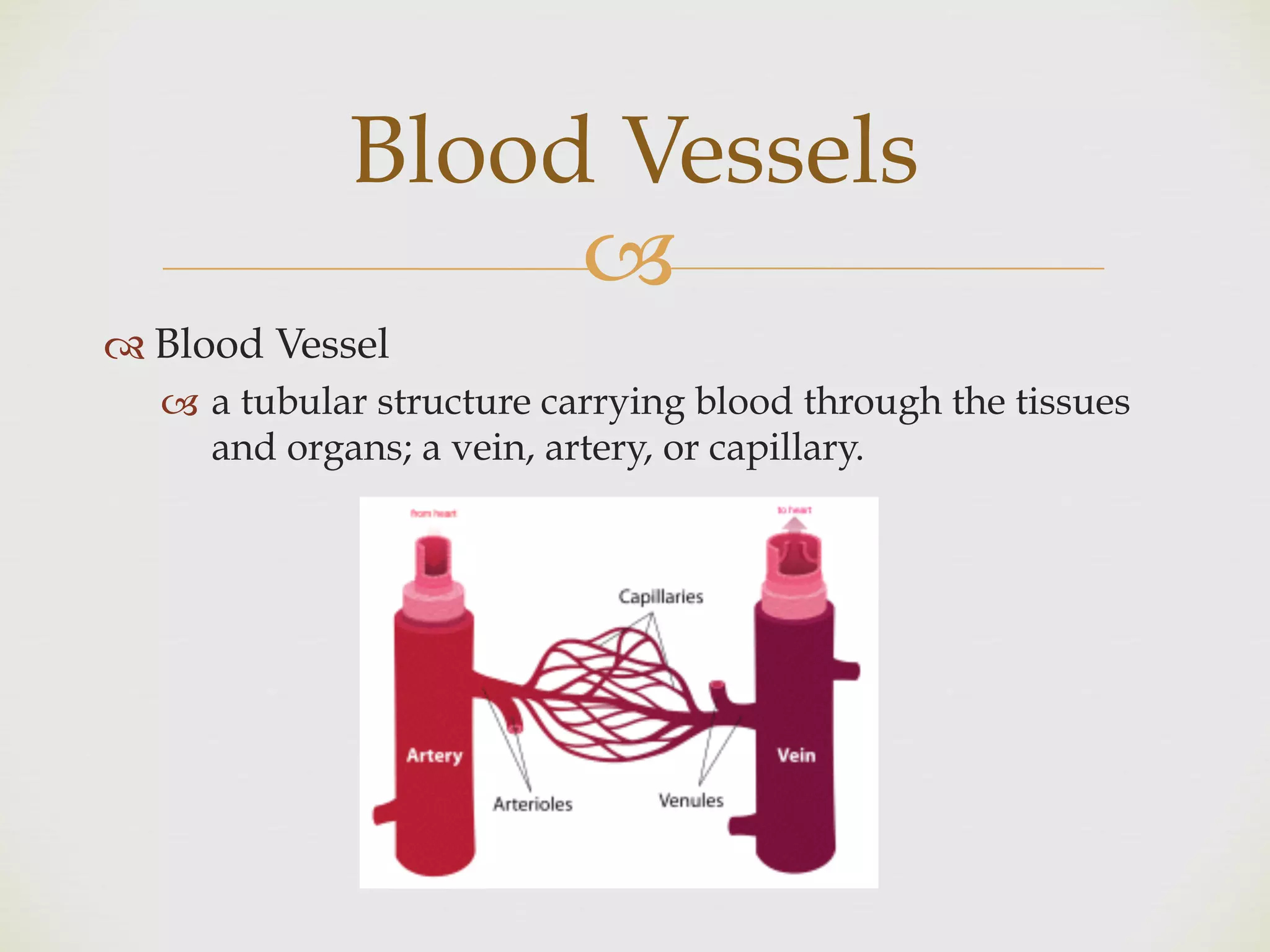
" Blood Vessel
! a tubular structure carrying blood through the tissues
and organs; a vein, artery, or capillary.
Blood Vessels
!
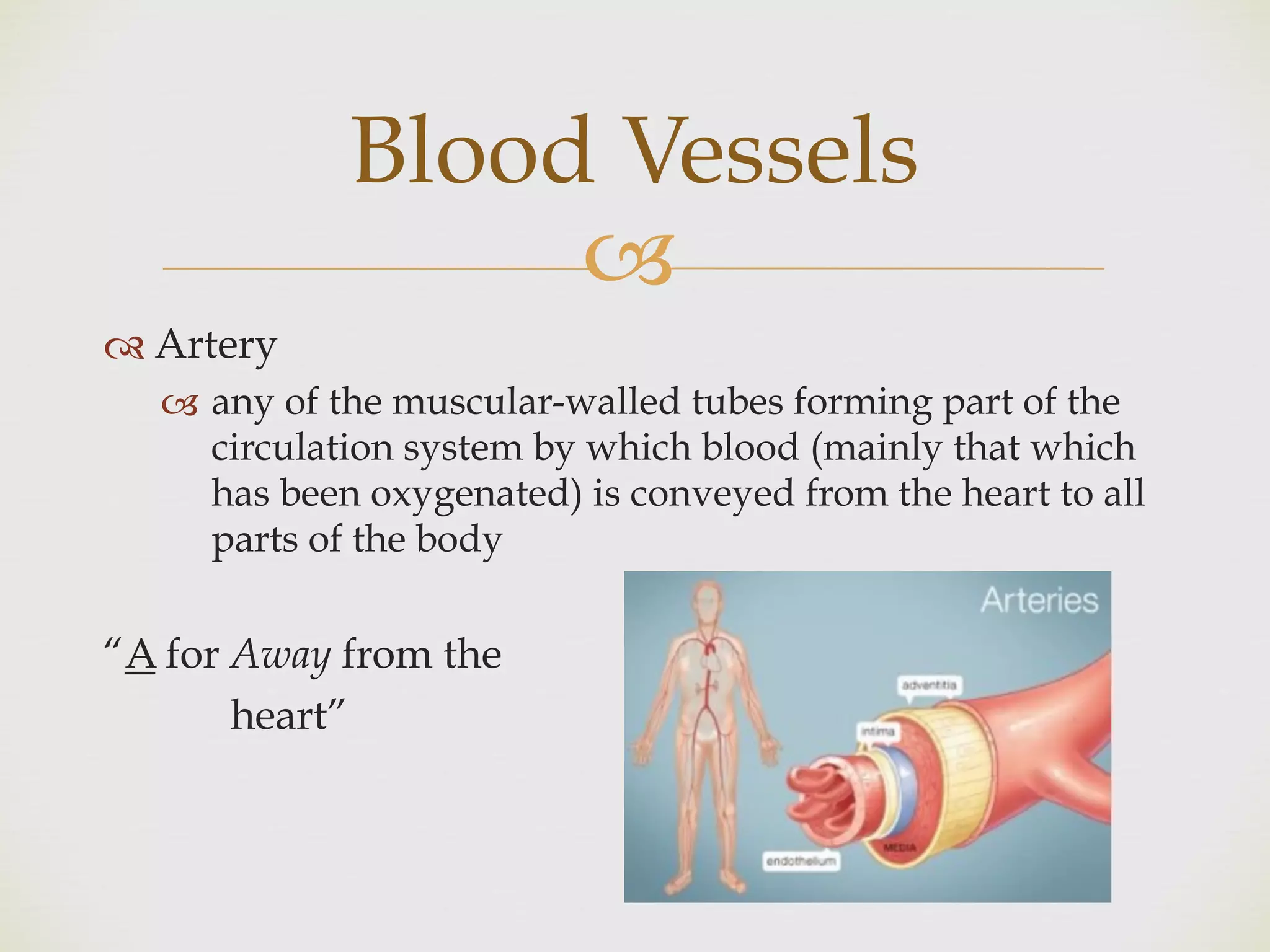
" Artery
! any of the muscular-walled tubes forming part of the
circulation system by which blood (mainly that which
has been oxygenated) is conveyed from the heart to all
parts of the body
“A for Away from the
heart”
Blood Vessels
!
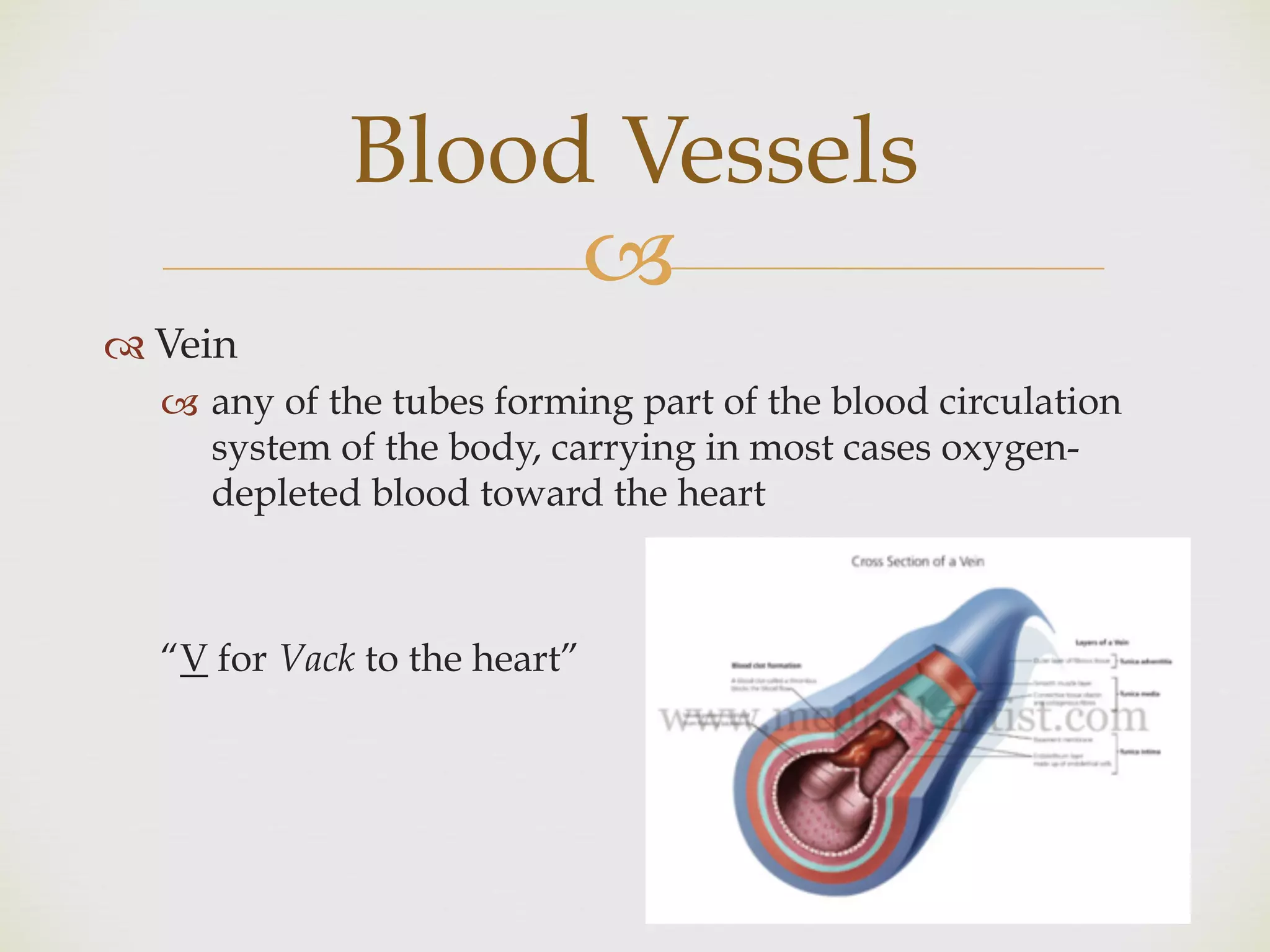
" Vein
! any of the tubes forming part of the blood circulation
system of the body, carrying in most cases oxygen-
depleted blood toward the heart
“V for Vack to the heart”
Blood Vessels
!
Cardiovascular System
!
" Puncturing a…
! Nerve: Electric Shock
! Vein: Slight bleeding
! Artery: Sharp pain with stronger bleeding/hematoma
formation
Relevance in Acupuncture
!
Relevance in Acupuncture
!
Relevance in Acupuncture
!
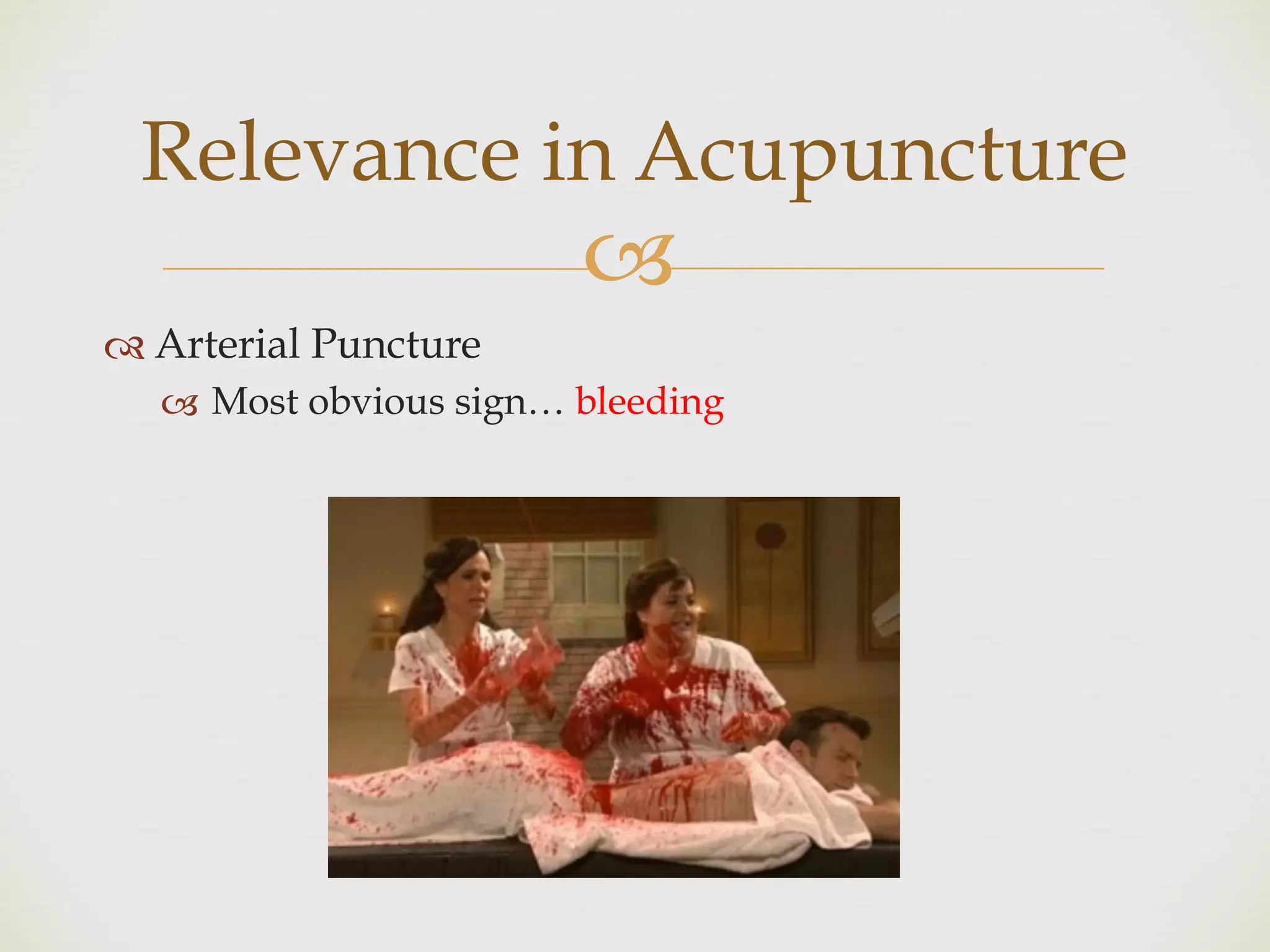
" Arterial Puncture
! Most obvious sign… bleeding
Relevance in Acupuncture
!
" Prevention of Arterial Puncture
! Investigate for bleeding problems and regular intake of
anticoagulants (aspirin, clopidogrel, etc)
Relevance in Acupuncture
!
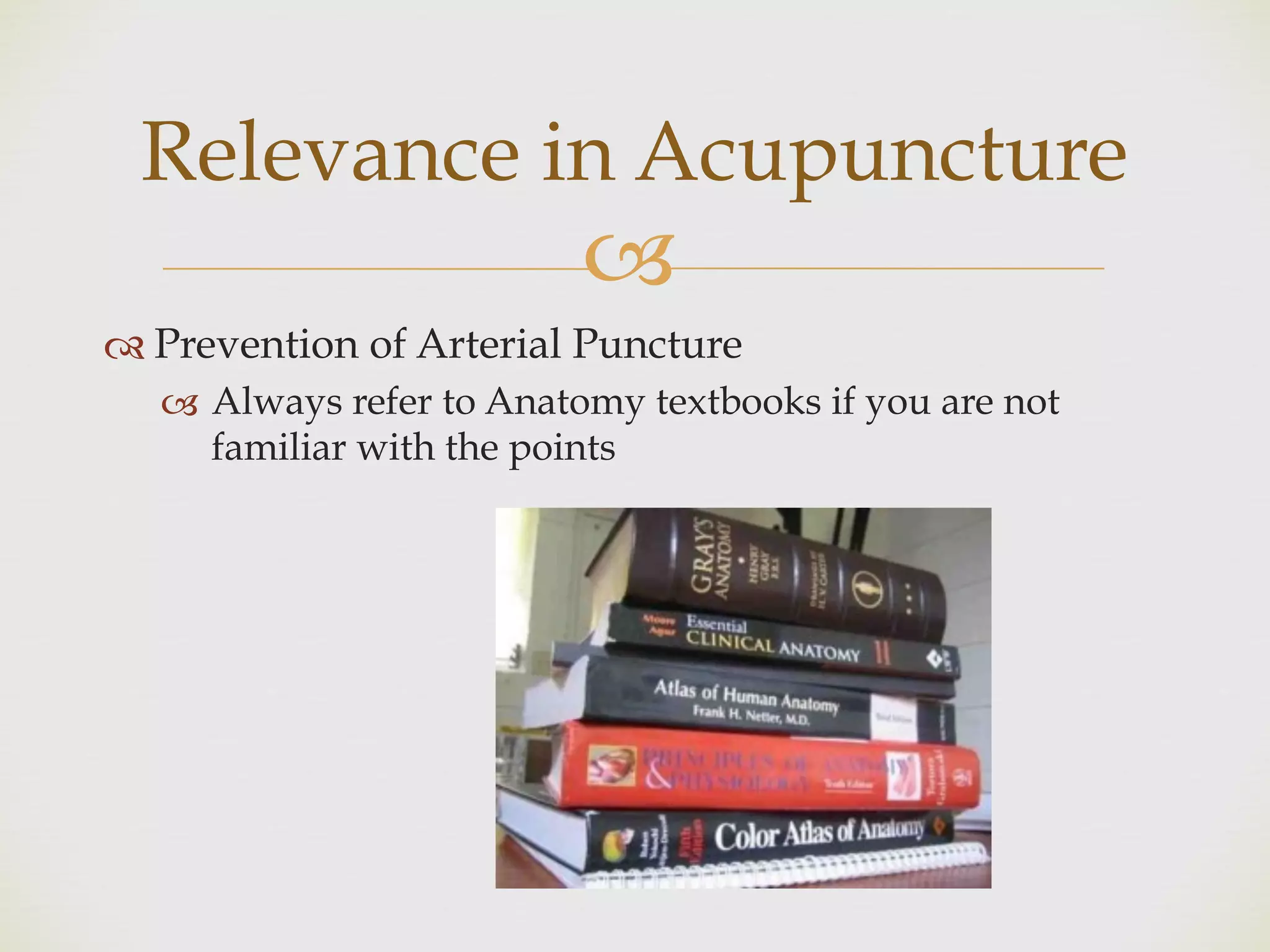
" Prevention of Arterial Puncture
! Always refer to Anatomy textbooks if you are not
familiar with the points
Relevance in Acupuncture
!
Relevance in Acupuncture
" Prevention of Arterial
Puncture
! Retract needle if it is
pulsating
!
" Severe complications of Arterial Punctures:
! Traumatic Aneurysm
! Hemothorax
! Hemorrhagic peritonitis
Relevance in Acupuncture
!
" Aneurysm
! Bulge in the wall of an artery
Relevance in Acupuncture
!
" Traumatic Aneurysm
Relevance in Acupuncture
!
" Symptoms of Traumatic Aneurysm
! Progressively growing, pulsating tender lump
! What to do??? Refer to a physician
Relevance in Acupuncture
!
" Prevention of traumatic aneurysm
! Look and feel for arteries before needling
! Press point using your thumb, using the nail to shield
the vessels
Relevance in Acupuncture
!
" Prevention of traumatic aneurysm
! Refer to anatomy books if you are not familiar with the
area
! In removing needles near arteries, press the area using
a cotton ball for 30-60 seconds
! For patients with bleeding disorders, choose fewer
points and reduce depth in needling
Relevance in Acupuncture
!
Relevance in Acupuncture
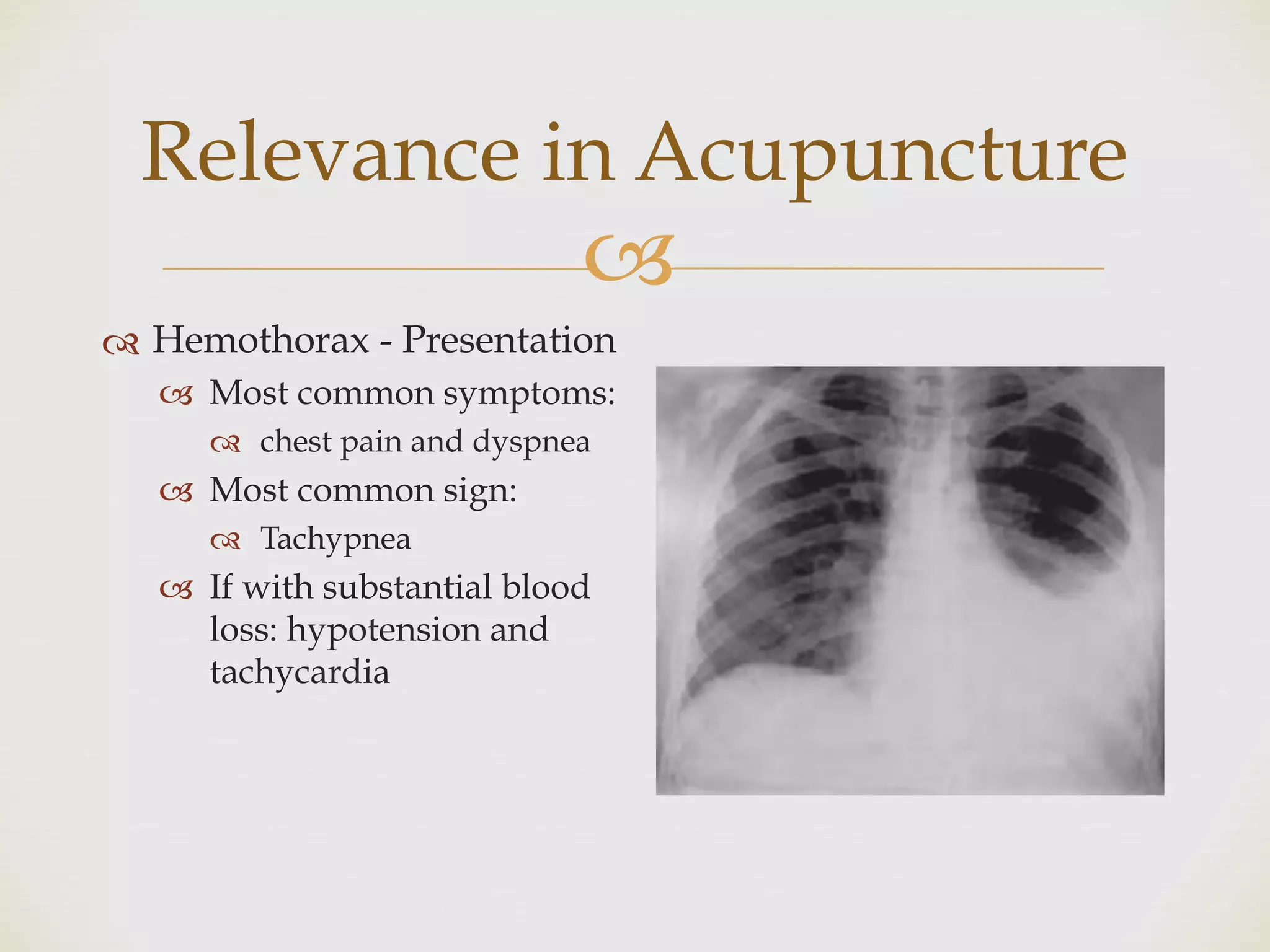
" Hemothorax
! Presence of blood in
the pleural space
! source of blood:
" chest wall, lung
parenchyma, heart, or
great vessels
!
Relevance in Acupuncture
" Hemothorax - Presentation
! Most common symptoms:
" chest pain and dyspnea
! Most common sign:
" Tachypnea
! If with substantial blood
loss: hypotension and
tachycardia
!
Relevance in Acupuncture
Hemorrhagic Peritonitis
" Peritonitis
! Inflammation of the
inner lining of the
abdominal cavity
!
Relevance in Acupuncture
Hemorrhagic Peritonitis
" Symptoms
! Fever, chills, abdominal
pain/dyscomfort
" Sign
! Temp – 38o C
! Tachycardia
! Oliguric/anuric
! Abdominal tenderness
!
Bone, Ligament, Tendon,
Cartilage, Fascia, Muscle
!
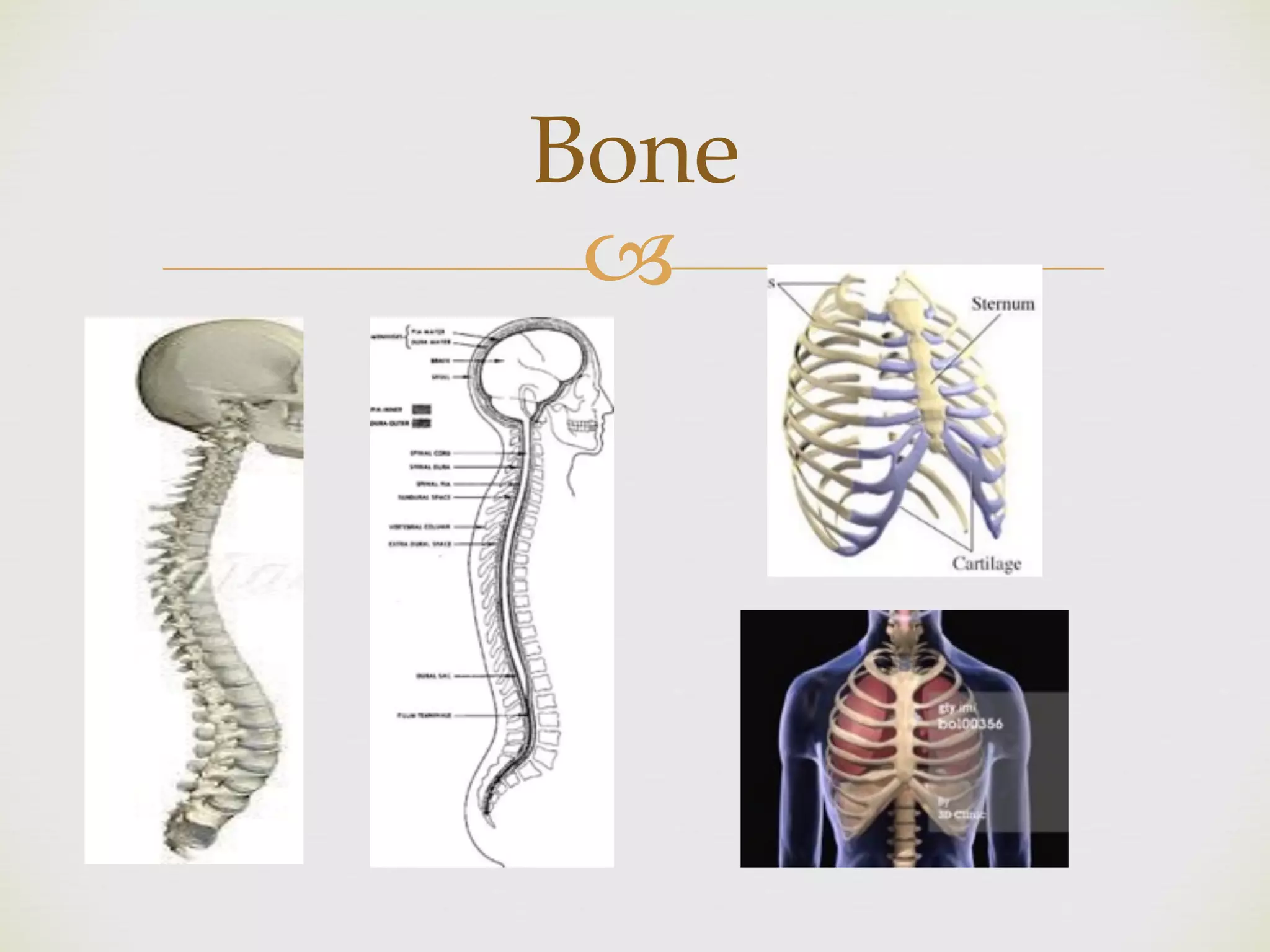
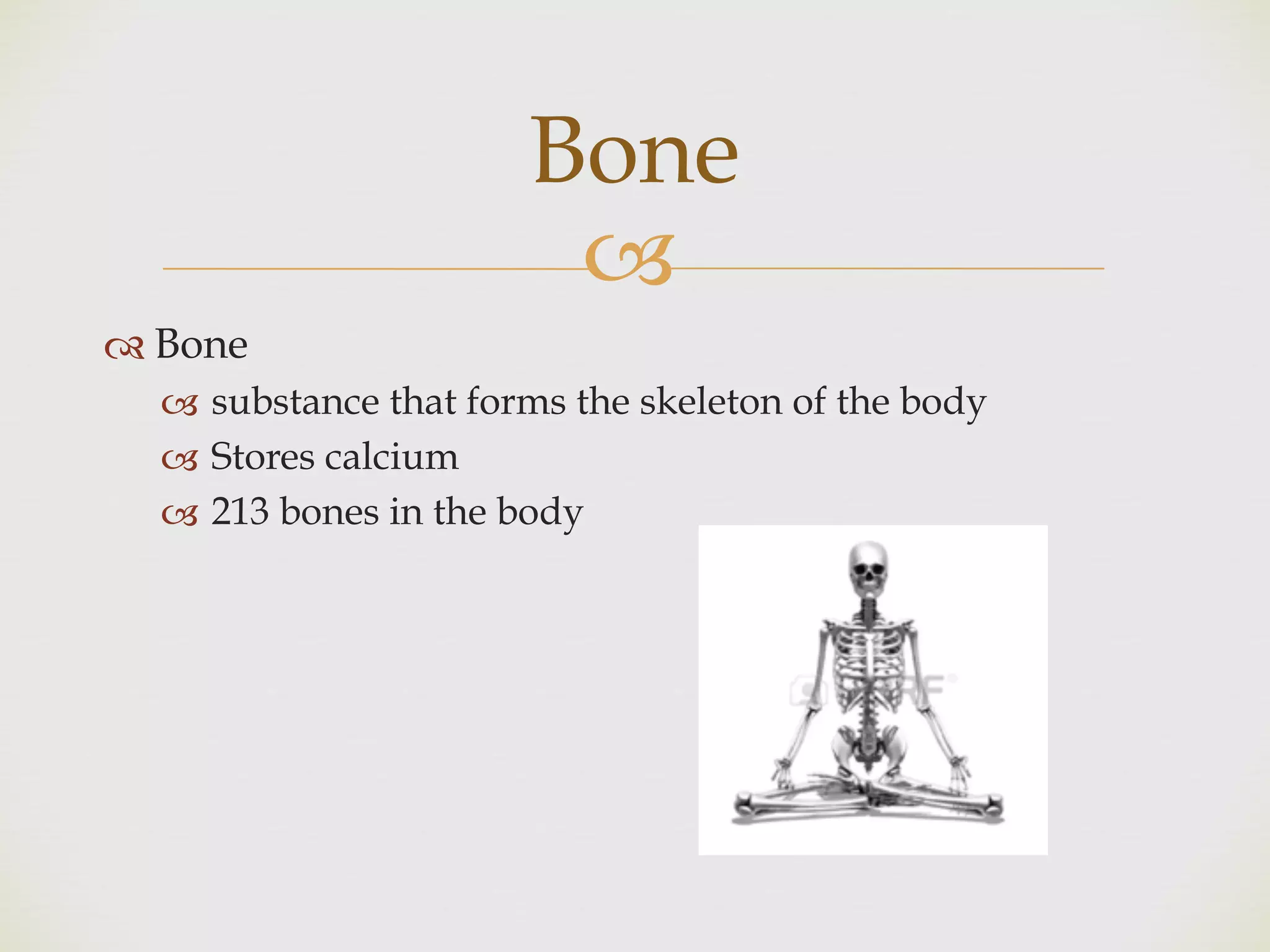
" Bone
! substance that forms the skeleton of the body
! Stores calcium
! 213 bones in the body
Bone
!
" 4 types
! Long, short, flat, and irregular
Bone
!
" Function
! Structural support
! Permits movement and locomotion
! Protects vital organs
! Provides an environment for blood production
! Etc.
Bone
!
Bone
!
Bone
!
" Composed of 50-70% minerals, 20-40% organic
matrix, 5-10% water, <3% lipids
" VERY HARD!
" Devoid of Nerves
Bone
!
" TCM Principles
! Kidney: Dominating the bone
" Stores essence which produces marrow found in bone
and spine. This nourishes the bone
Bone
!
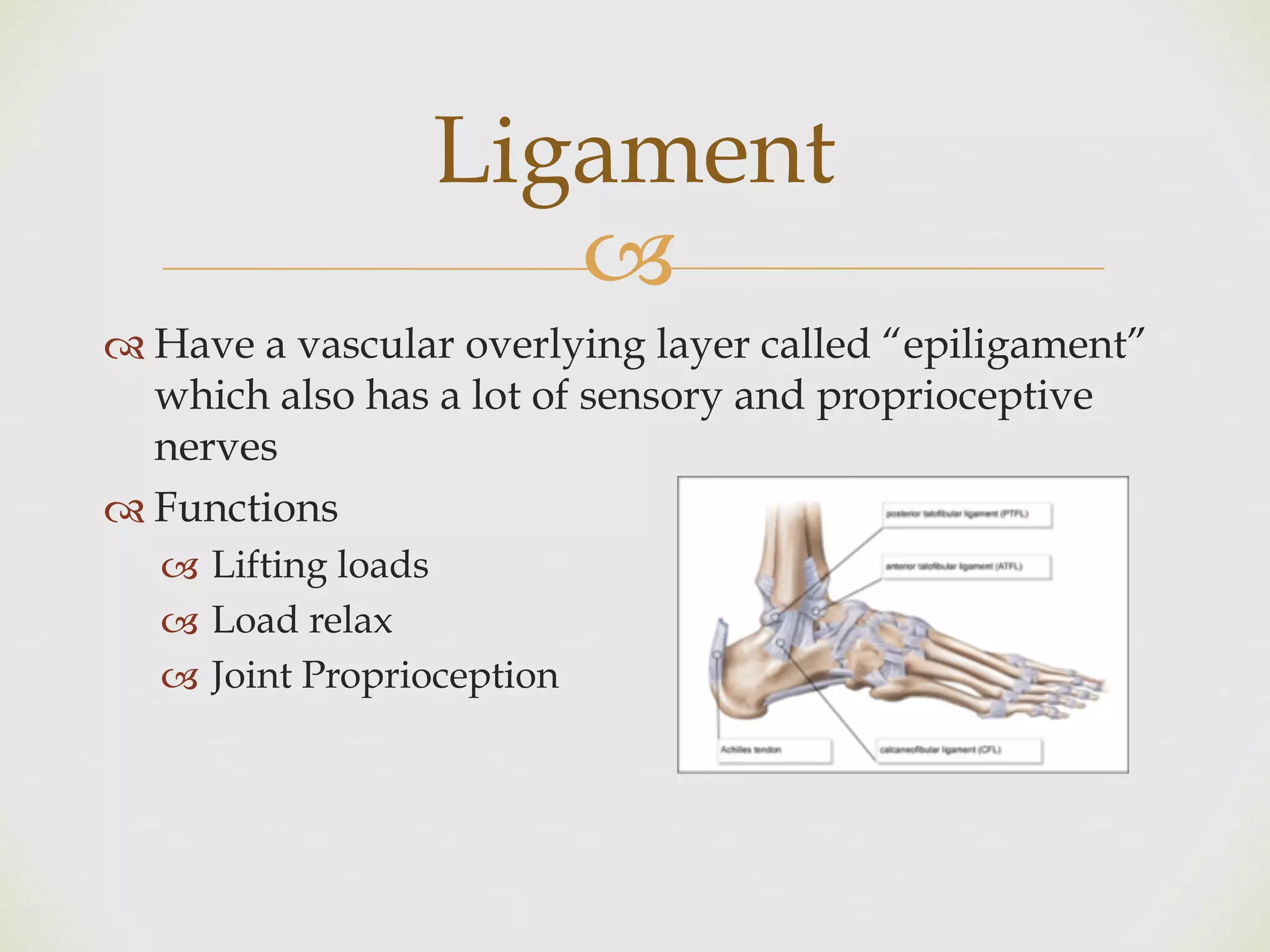
" A fibrous tissue that connects bones to other bones
and serves to support internal organs
" A.k.a articular ligament, articular larua, fibrous
ligament, or true ligament
Ligament
!
" Have a vascular overlying layer called “epiligament”
which also has a lot of sensory and proprioceptive
nerves
" Functions
! Lifting loads
! Load relax
! Joint Proprioception
Ligament
!
" Specialized connective tissue that connects muscles to
bones
" Relatively inelastic
" Has cells and neurovascular supply
Tendon
!
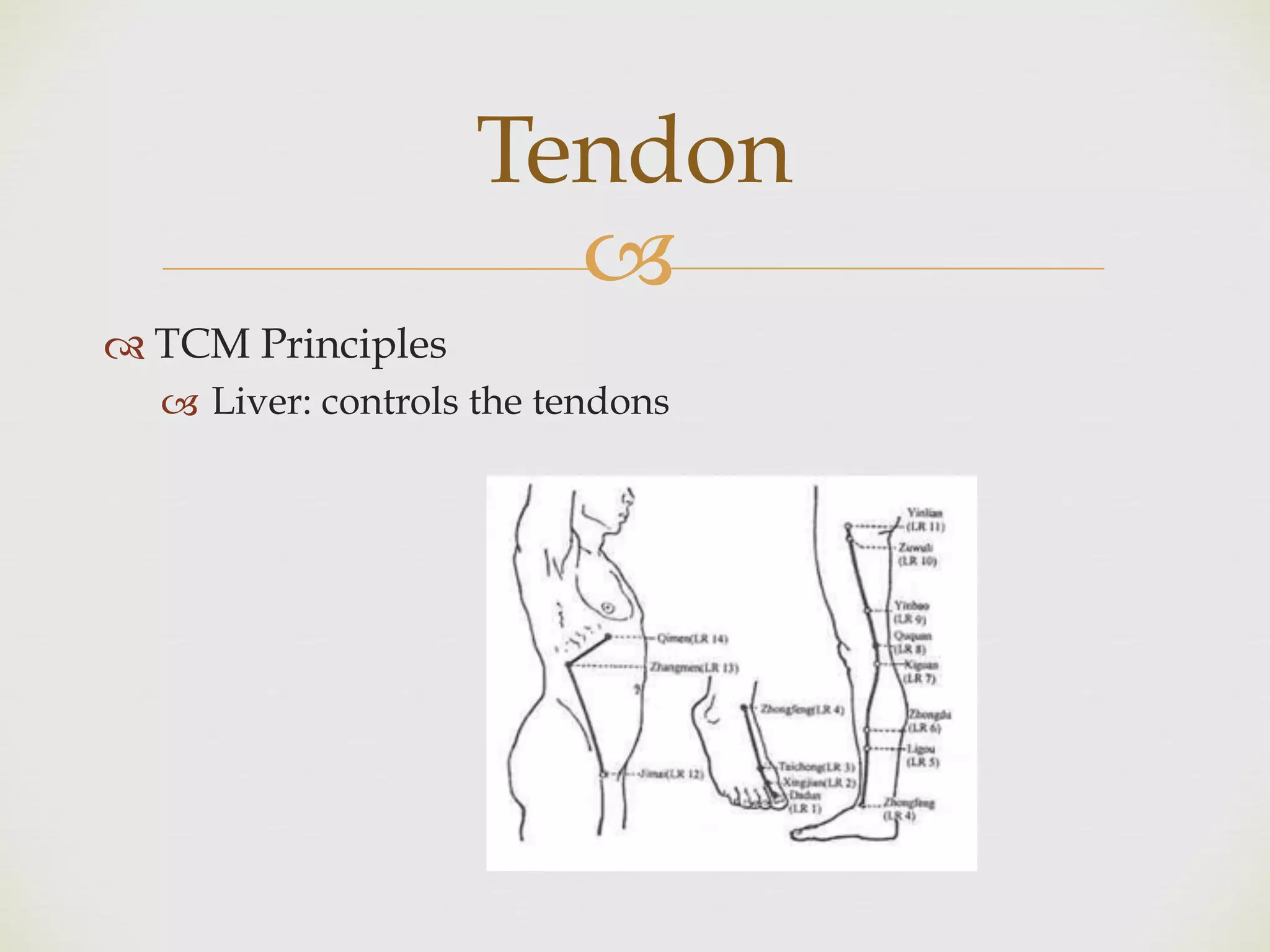
" TCM Principles
! Liver: controls the tendons
Tendon
!
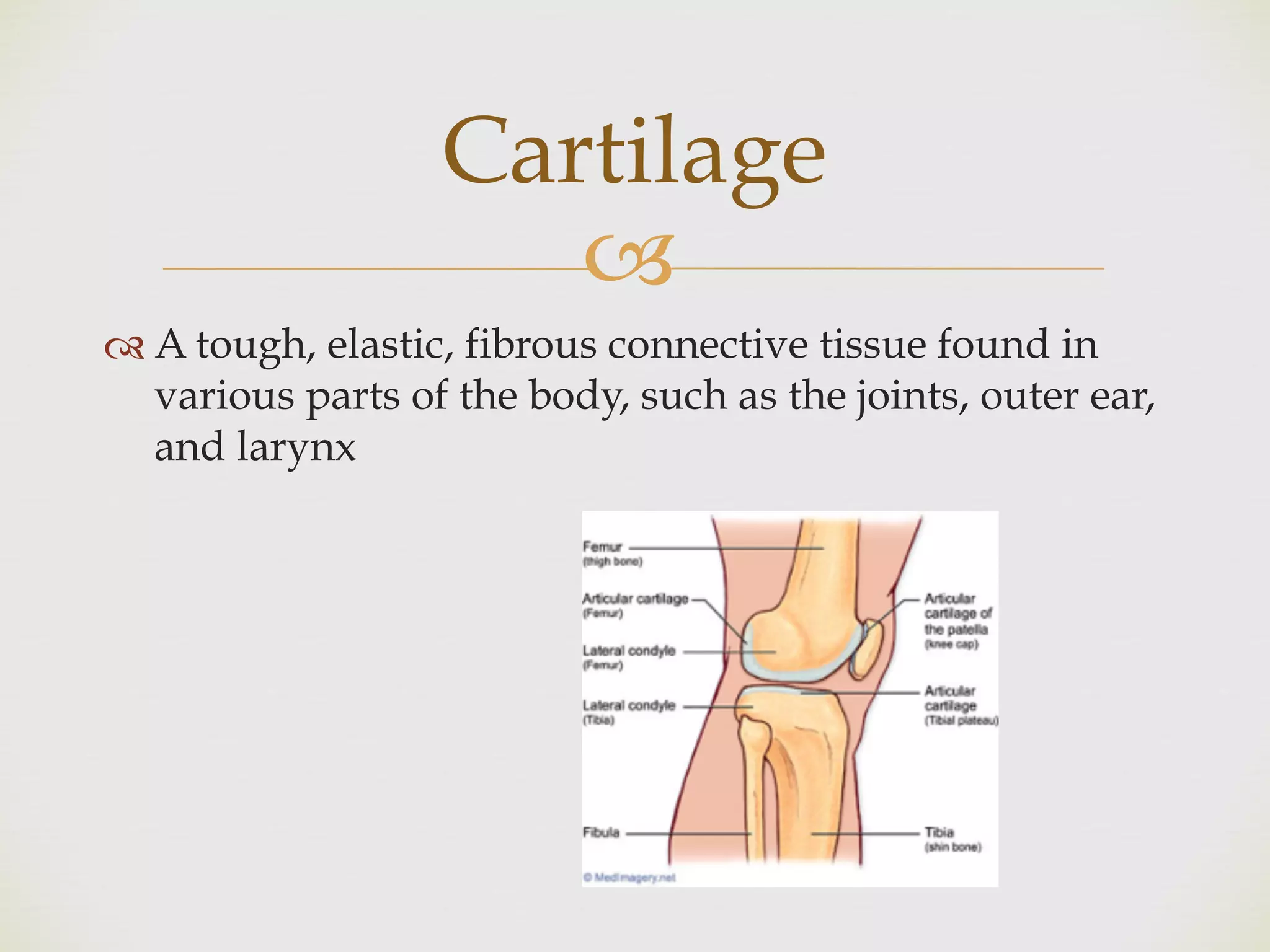
" A tough, elastic, fibrous connective tissue found in
various parts of the body, such as the joints, outer ear,
and larynx
Cartilage
!
" 3 types
Cartilage
!
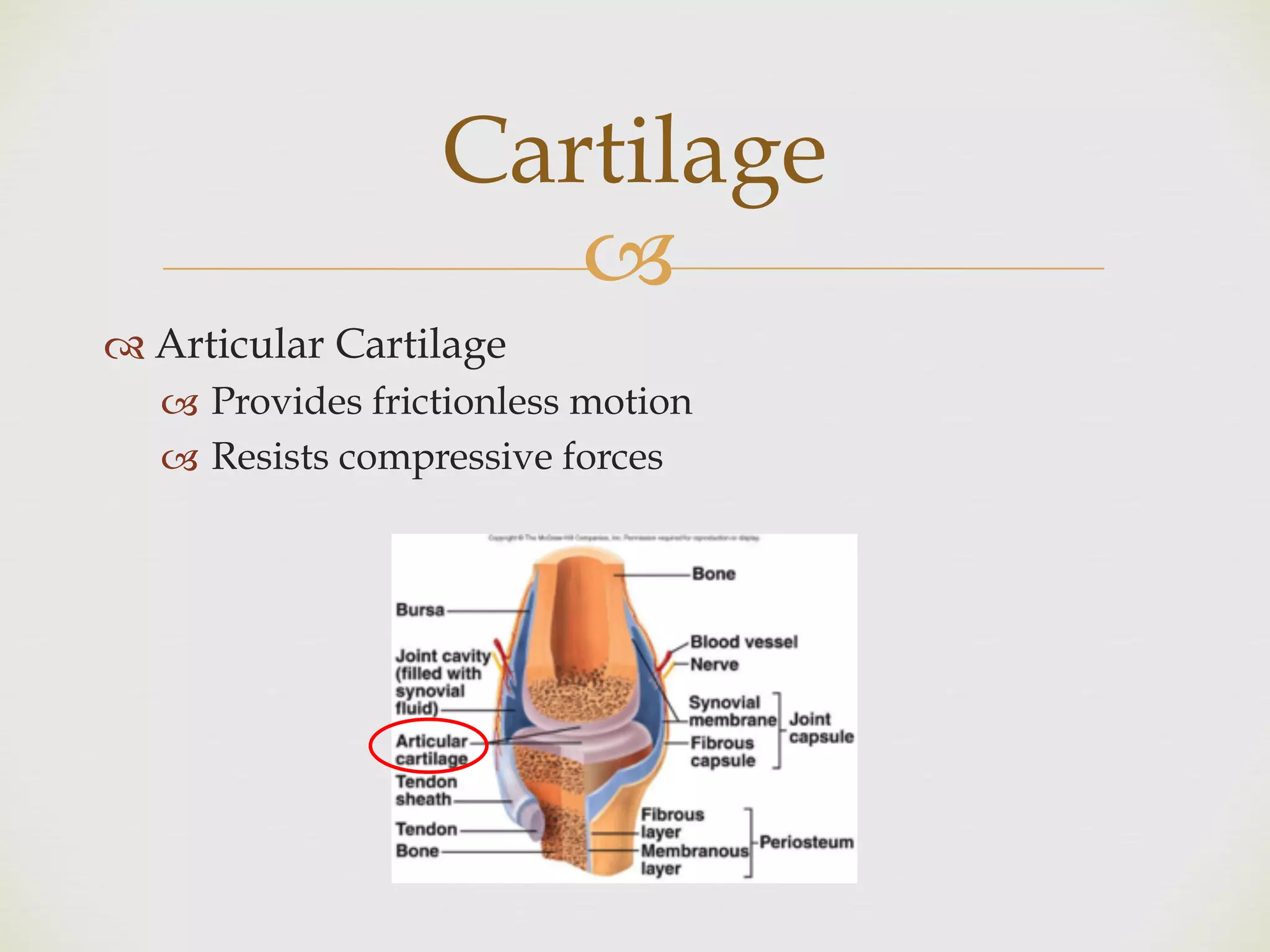
" Articular Cartilage
! Provides frictionless motion
! Resists compressive forces
Cartilage
!
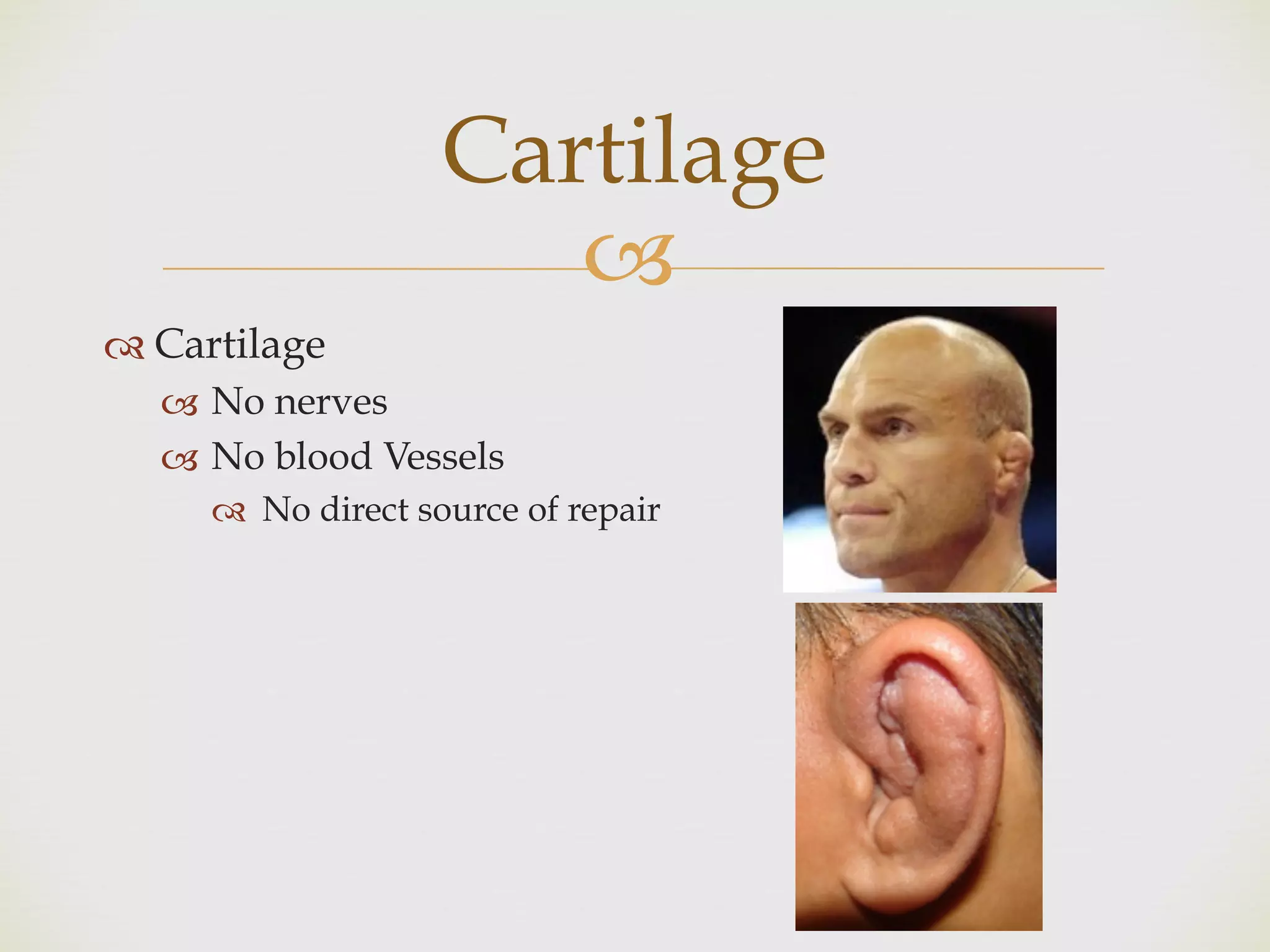
" Cartilage
! No nerves
! No blood Vessels
" No direct source of repair
Cartilage
!
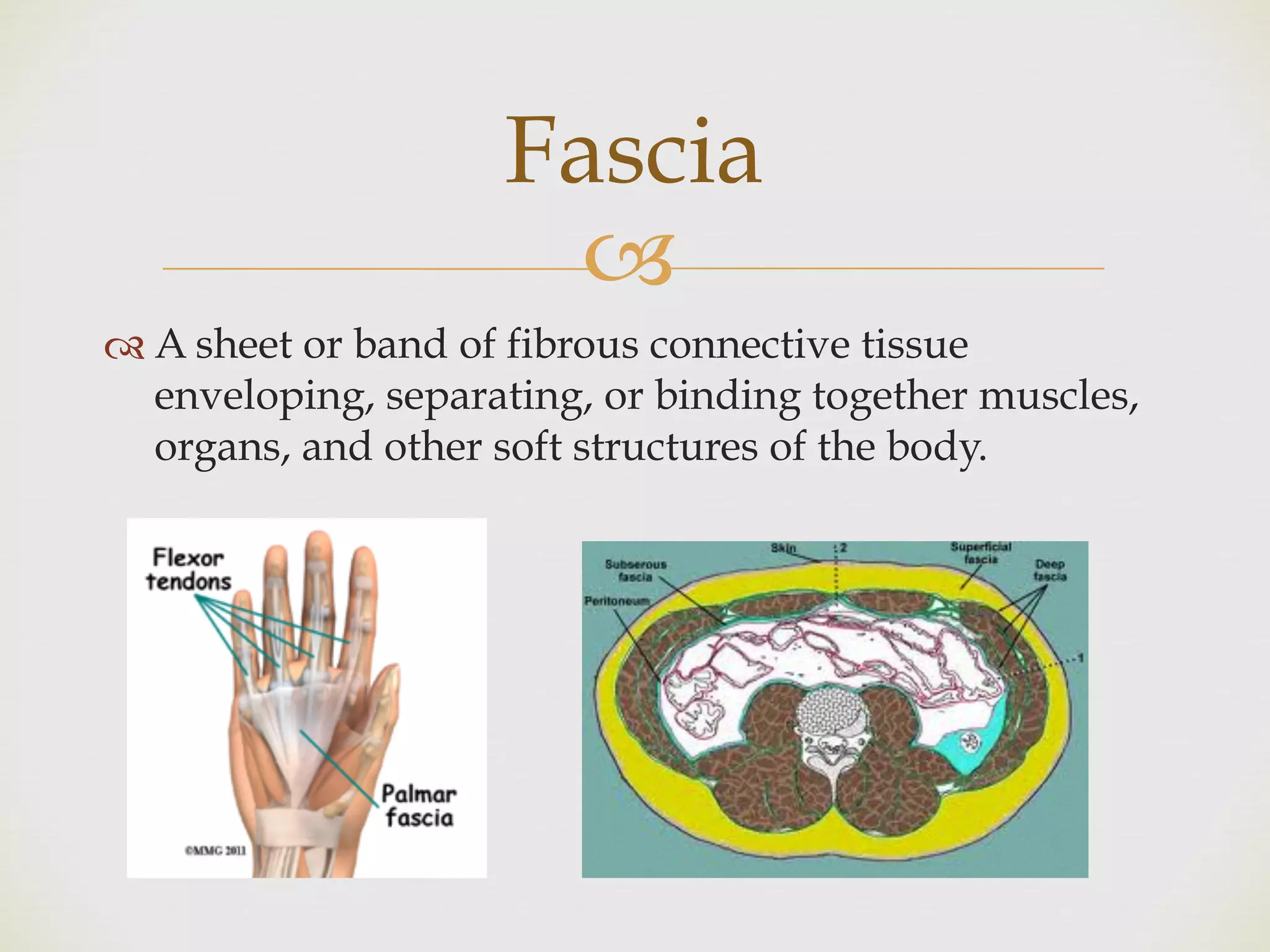
" A sheet or band of fibrous connective tissue
enveloping, separating, or binding together muscles,
organs, and other soft structures of the body.
Fascia
!
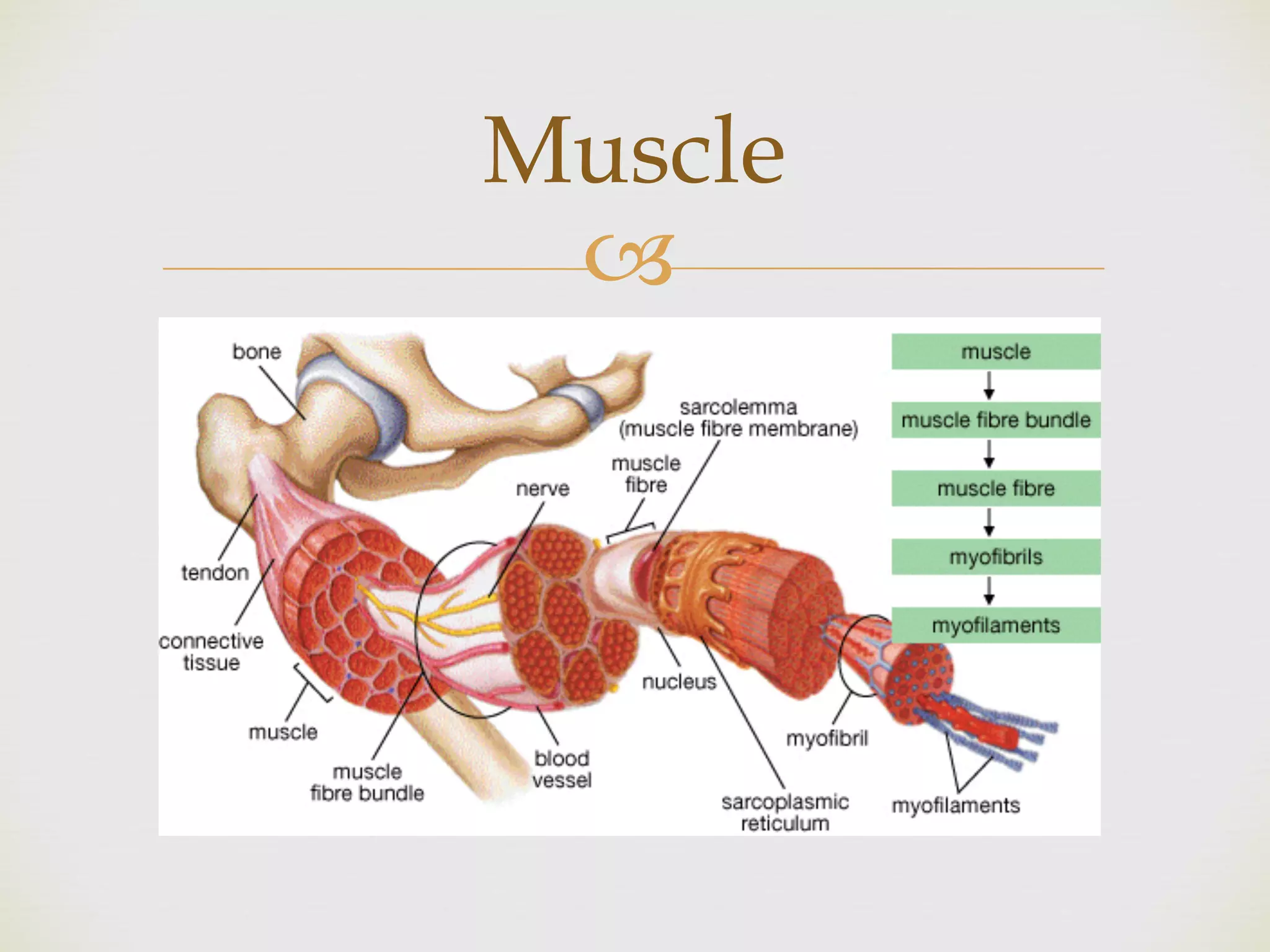
" Group of soft tissue fibers that contain protein
filaments that produces contraction that changes the
shape and length of the cell
Muscle
!
" 3 types
! Skeletal Muscle
! Cardiac Muscle
! Smooth Muscles
Muscle
!
Skeletal Muscles
!
Muscle
!
" TCM Principles
! Spleen: Dominating the muscles and four limbs
! Lung: Dominates dispersing
Muscle
!
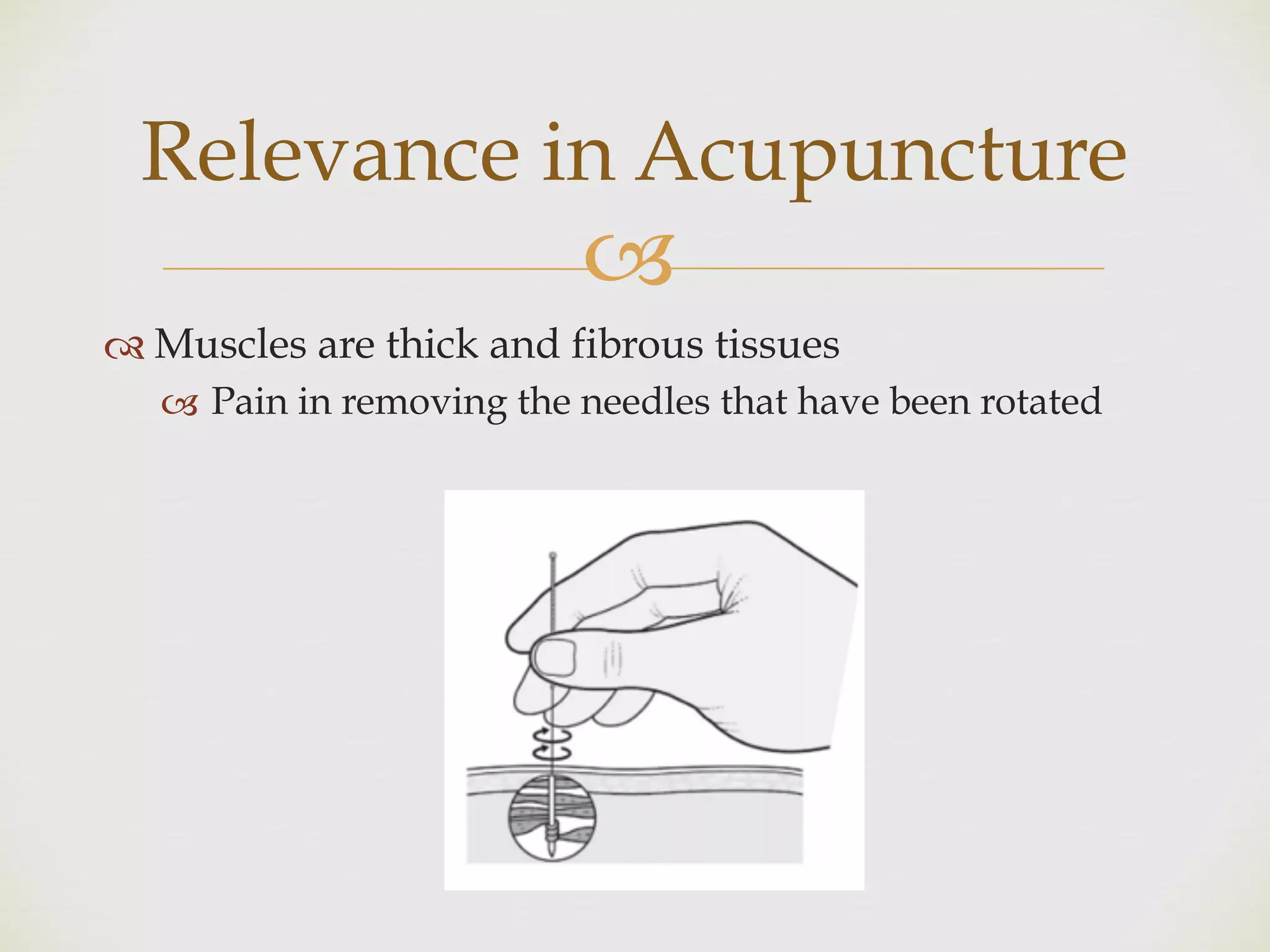
" Muscles are thick and fibrous tissues
! Pain in removing the needles that have been rotated
Relevance in Acupuncture
!
Skin, Hair, Nail
!
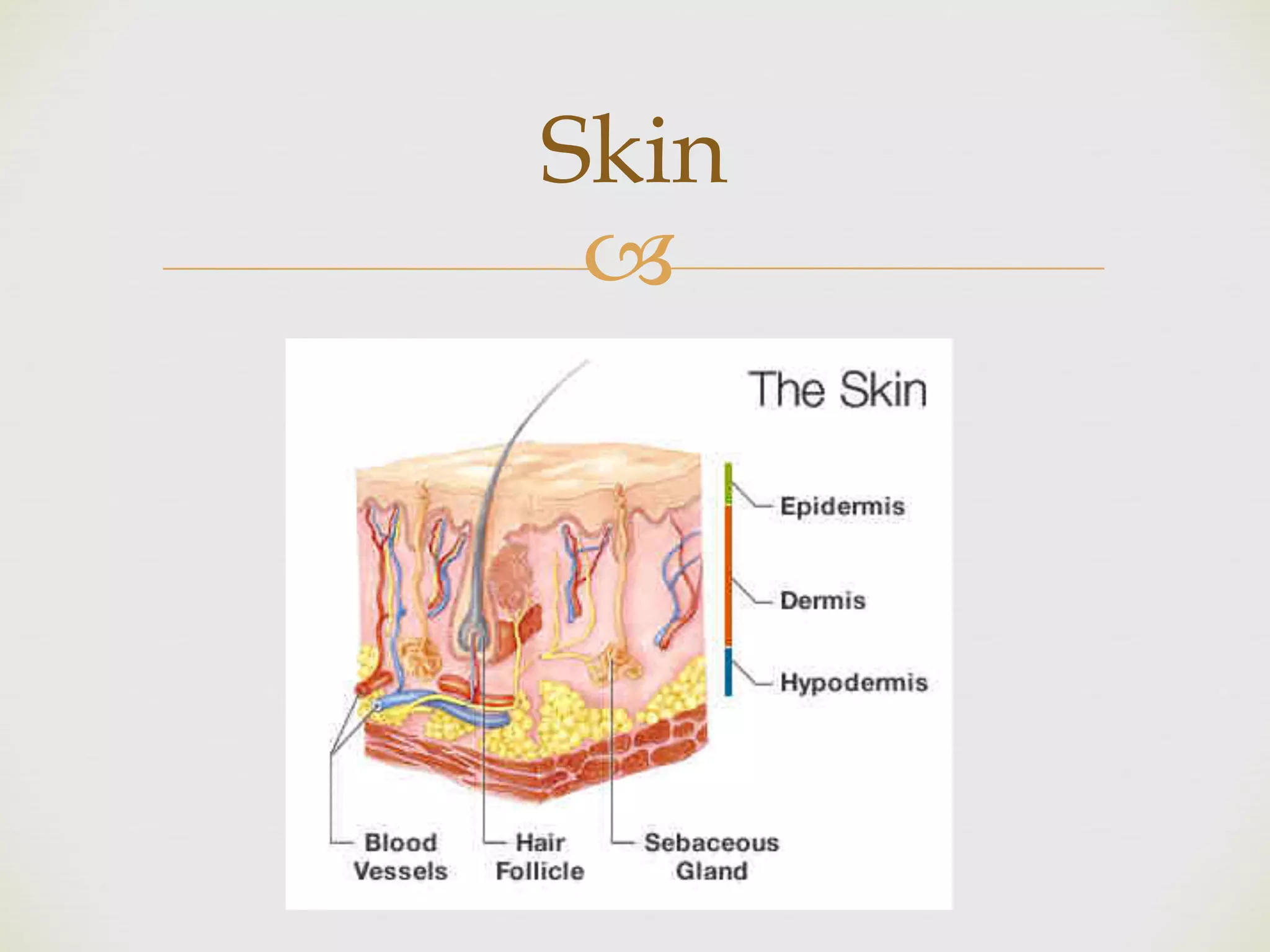
" Largest organ in the body
" Most important function: Barrier!
Skin
!
Skin
!
Skin
!
" TCM Principles
! Heart: Dominating the blood and vessels, manifesting
on the face
" Heart Qi – reflected in changes in both pulse and
complexion
! Lung: Dispersing
" Pores are the gates of Qi
Skin
!
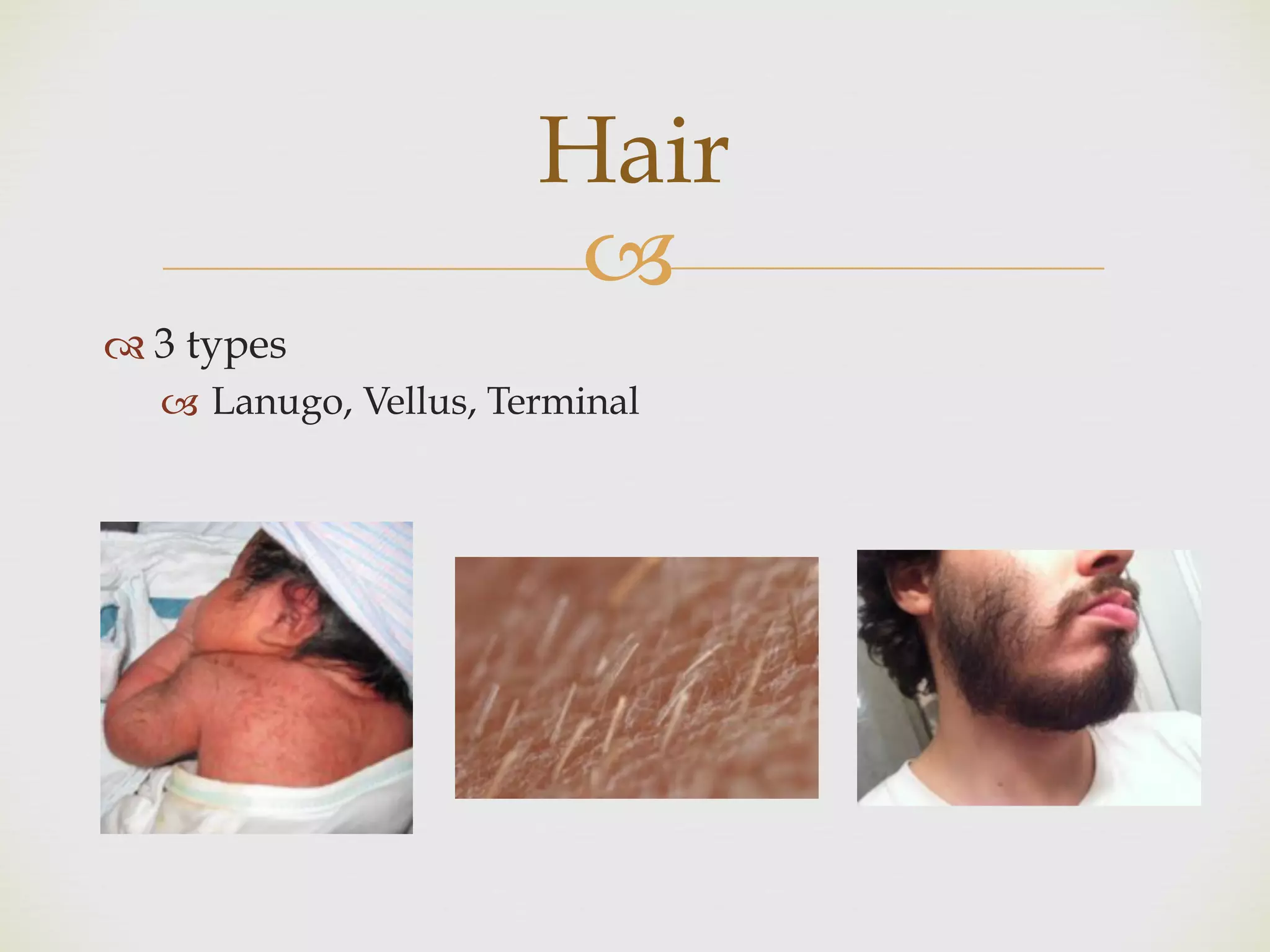
Hair
" Derivative of skin
" Found all over the body
except: palms, soles, etc.
!
" 3 types
! Lanugo, Vellus, Terminal
Hair
!
Hair
!
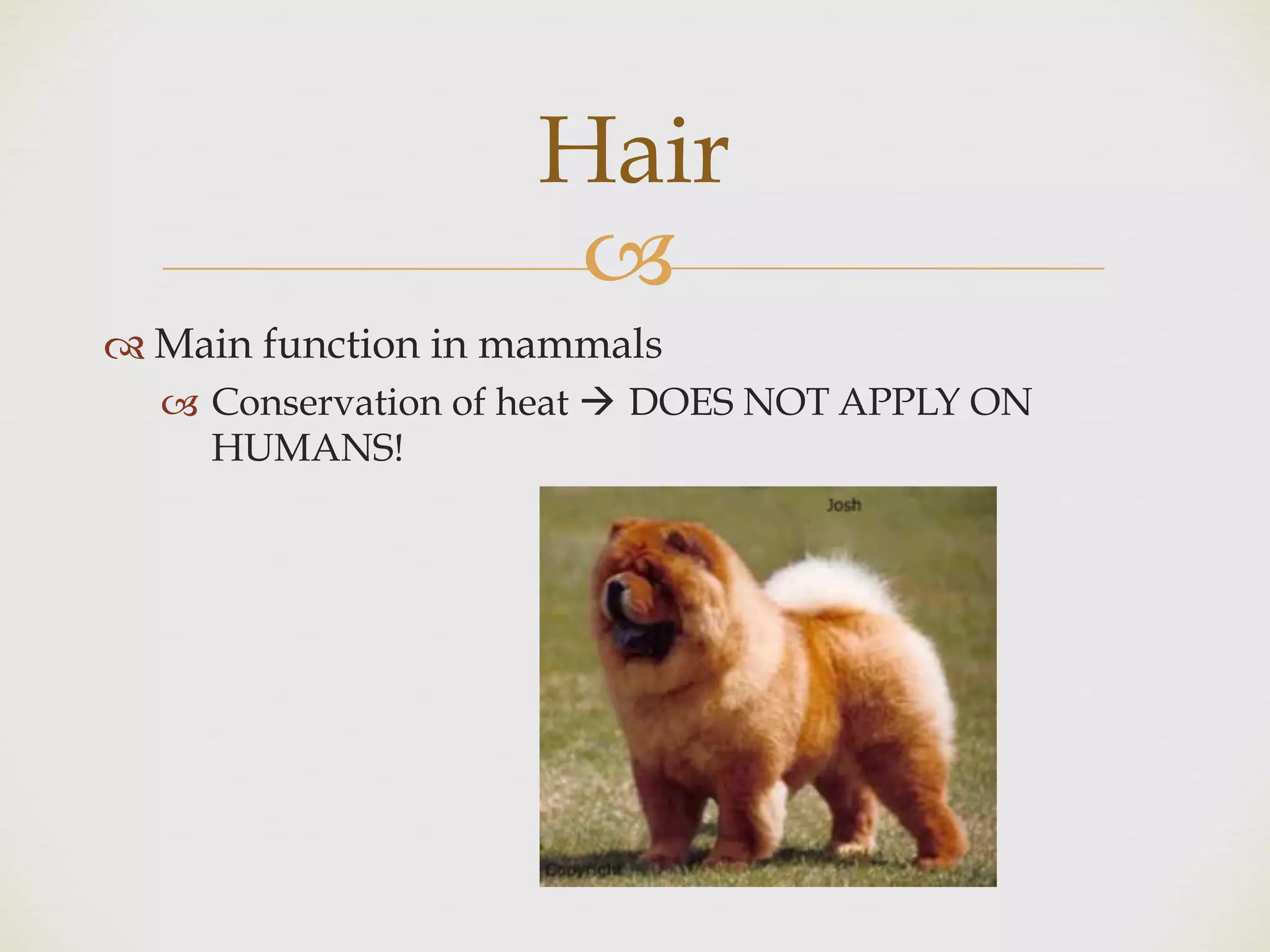
" Main function in mammals
! Conservation of heat # DOES NOT APPLY ON
HUMANS!
Hair
!
" Main function in humans…
! Sexual attraction
Hair
!
" TCM Principles
! Kidney: manifesting in the hair
" Hair is both the surplus of blood and the outward
manifestation of the Kidney
Hair
!
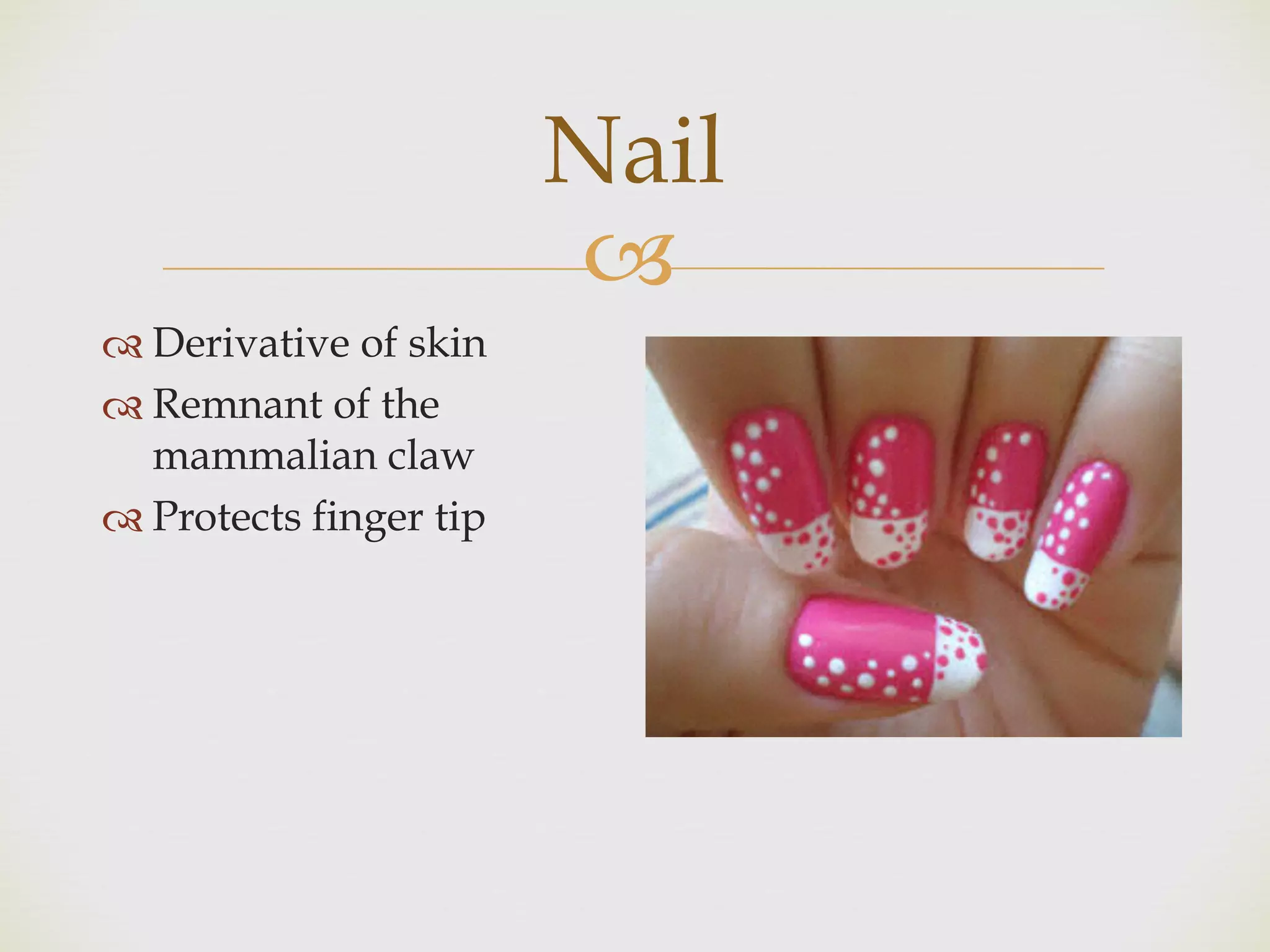
Nail
" Derivative of skin
" Remnant of the
mammalian claw
" Protects finger tip
!
Nail
!
" TCM Principles
! Liver: manifests in the nails
Nail
!
Relevance in Acupuncture
" Puncturing a Hair
Follicle – can be very
painful!
" Remove and replace
needle immediately
!
Recall!
!
" Which of the following allows you to feel different
sensations?
a) Artery
b) Vein
c) Nerve
d) Tendon
Recall!
!
" Which of the following brings oxygenated blood from
the heart to the target organs?
a) Artery
b) Vein
c) Nerve
d) Tendon
Recall!
!
" Which of the following will cause a punctured needle
to pulsate?
a) Artery
b) Vein
c) Nerve
d) Tendon
Recall!
!
" Which of the following connects muscles to bones?
a) Ligament
b) Fascia
c) Cartilage
d) Tendon
e) Bone
Recall!
!
" Which of the following connects bones to bones?
a) Ligament
b) Fascia
c) Cartilage
d) Tendon
e) Bone
Recall!
!
" Which of the following is devoid of nerves and has no
direct blood supply?
a) Ligament
b) Fascia
c) Cartilage
d) Tendon
e) Bone
Recall!
!
" Arrange the steps in the Biological Organization in
sequence:
a) Organ Systems
b) Tissue
c) Cell
d) Organ
Recall!
!
Recall!
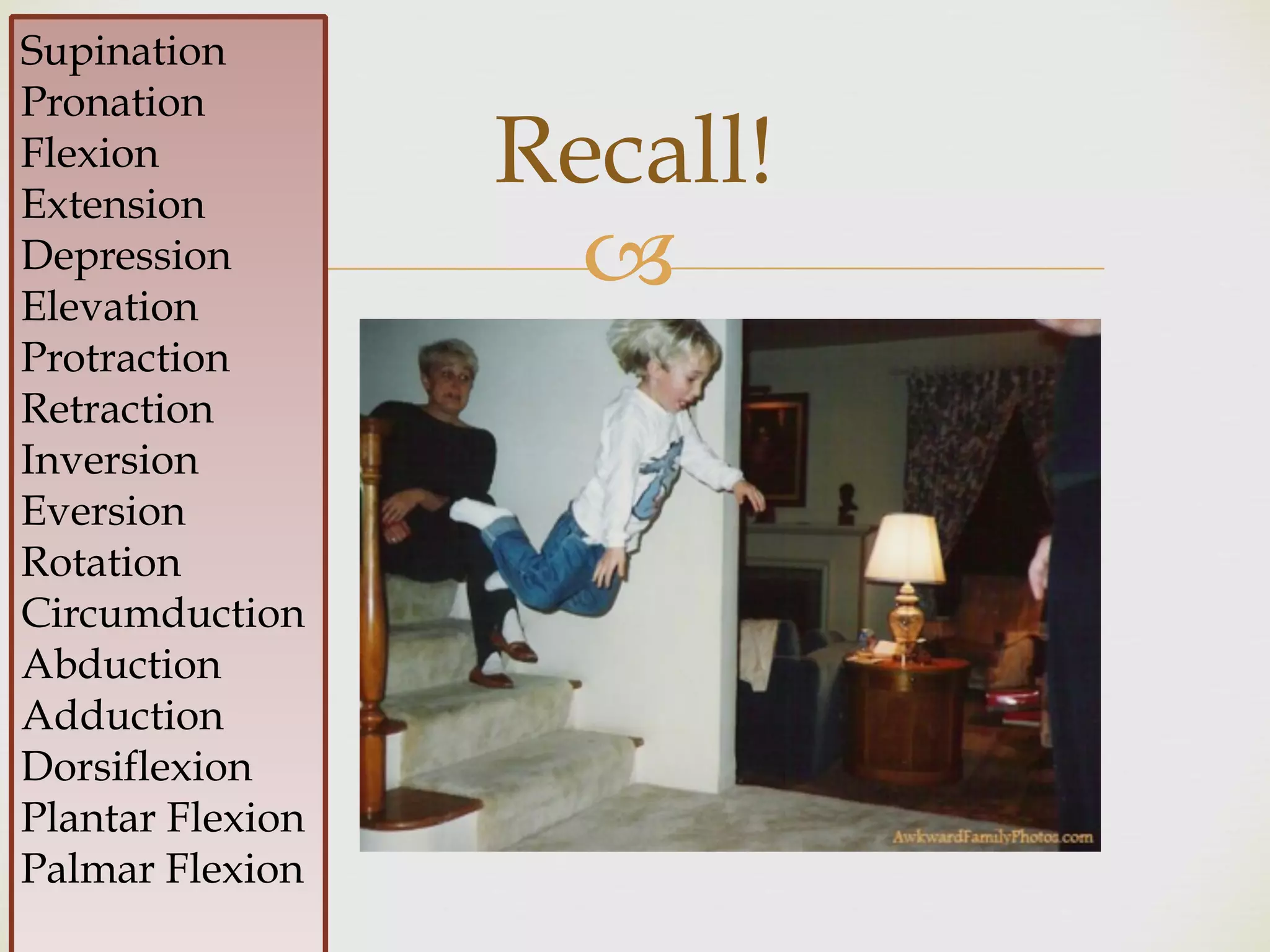
Supination
Pronation
Flexion
Extension
Depression
Elevation
Protraction
Retraction
Inversion
Eversion
Rotation
Circumduction
Abduction
Adduction
Dorsiflexion
Plantar Flexion
Palmar Flexion
!
Recall!
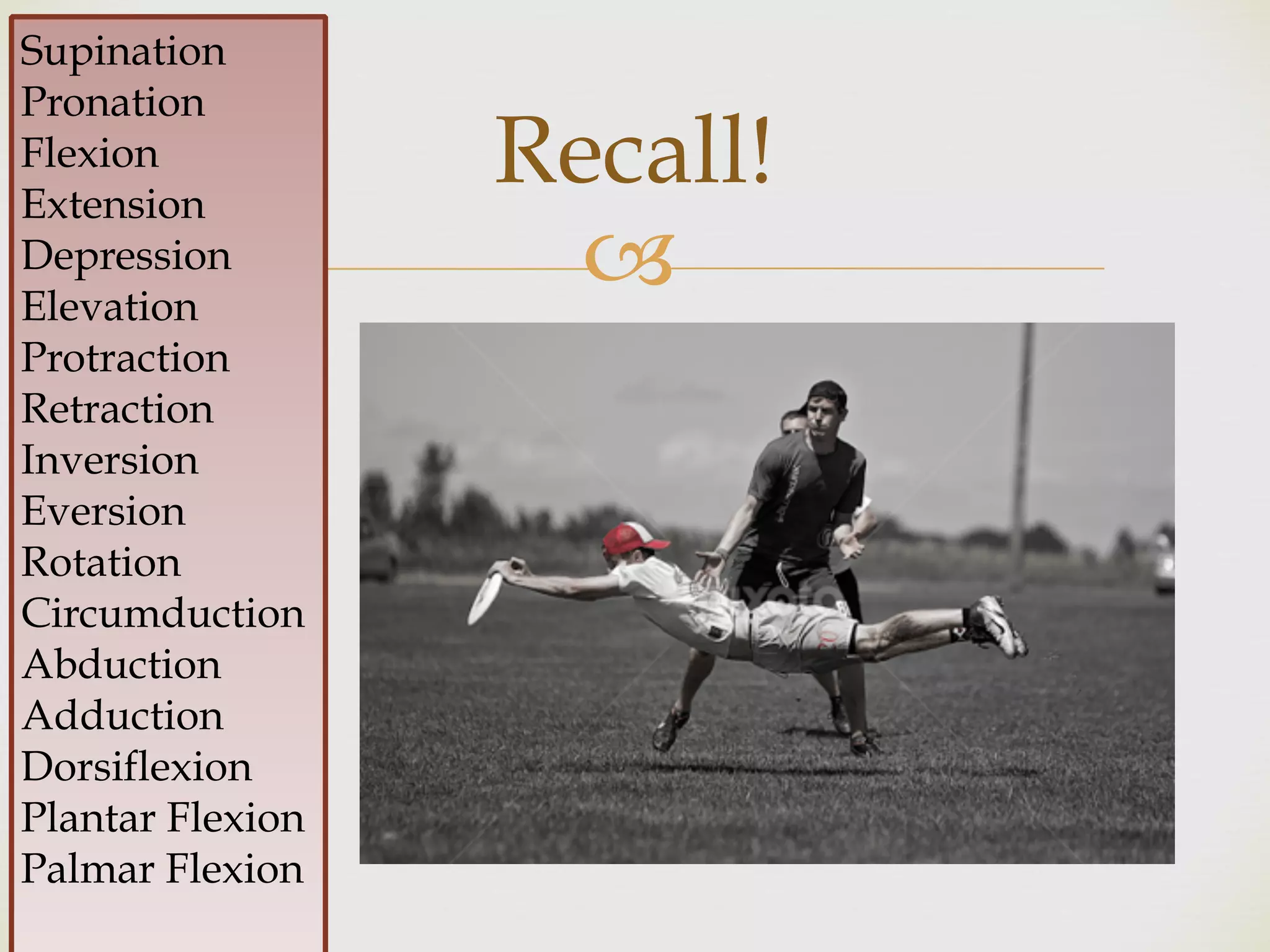
Supination
Pronation
Flexion
Extension
Depression
Elevation
Protraction
Retraction
Inversion
Eversion
Rotation
Circumduction
Abduction
Adduction
Dorsiflexion
Plantar Flexion
Palmar Flexion
!
Recall!
Supination
Pronation
Flexion
Extension
Depression
Elevation
Protraction
Retraction
Inversion
Eversion
Rotation
Circumduction
Abduction
Adduction
Dorsiflexion
Plantar Flexion
Palmar Flexion
!
Recall!
Supination
Pronation
Flexion
Extension
Depression
Elevation
Protraction
Retraction
Inversion
Eversion
Rotation
Circumduction
Abduction
Adduction
Dorsiflexion
Plantar Flexion
Palmar Flexion
!
Recall!
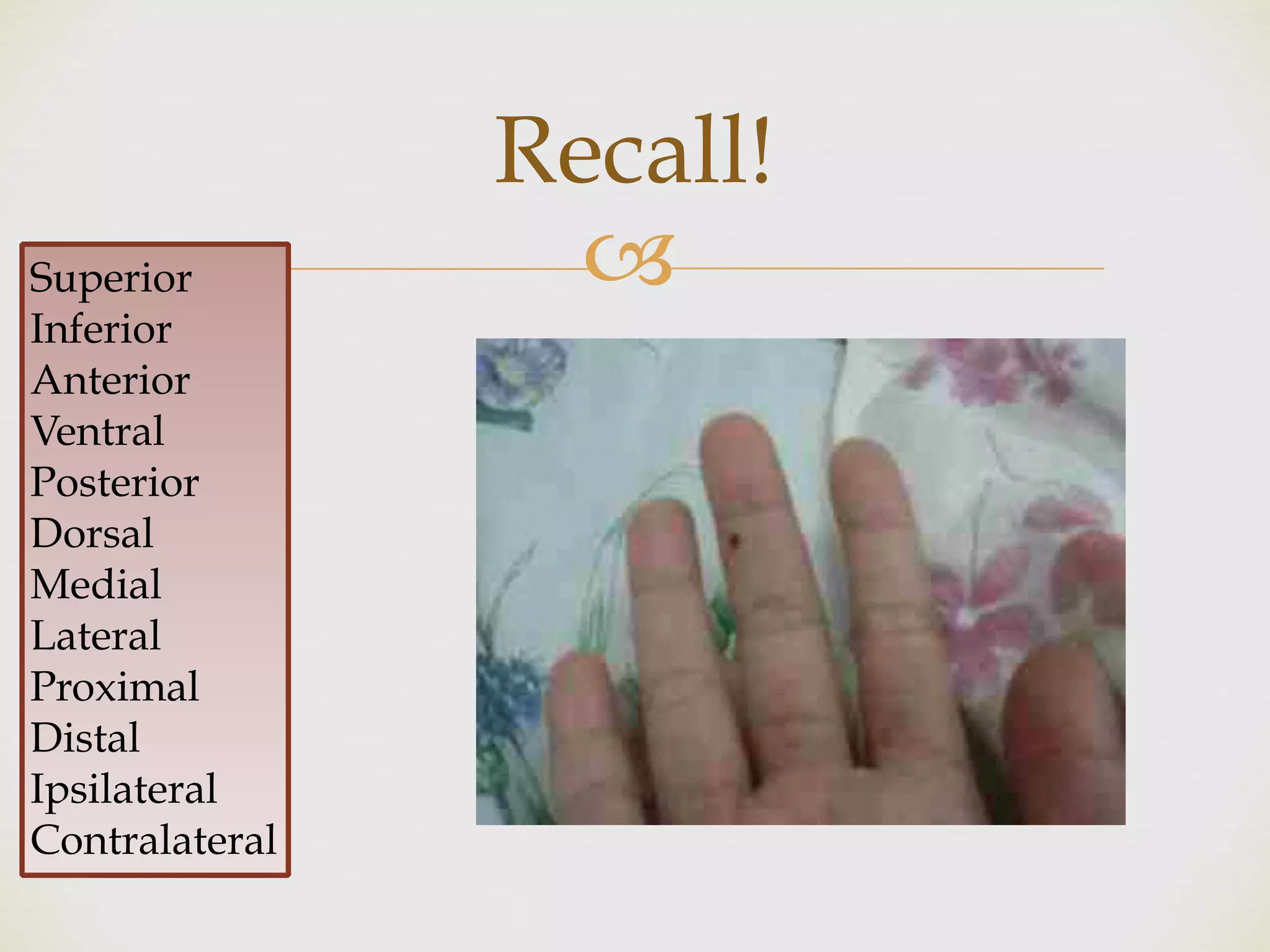
Superior
Inferior
Anterior
Ventral
Posterior
Dorsal
Medial
Lateral
Proximal
Distal
Ipsilateral
Contralateral
!
Recall!
Superior
Inferior
Anterior
Ventral
Posterior
Dorsal
Medial
Lateral
Proximal
Distal
Ipsilateral
Contralateral
!
Recall!
Superior
Inferior
Anterior
Ventral
Posterior
Dorsal
Medial
Lateral
Proximal
Distal
Ipsilateral
Contralateral
!
Recall!
A
B
Superior
Inferior
Anterior
Ventral
Posterior
Dorsal
Medial
Lateral
Proximal
Distal
Ipsilateral
Contralateral
!
Recall!
Superior
Inferior
Anterior
Ventral
Posterior
Dorsal
Medial
Lateral
Proximal
Distal
Ipsilateral
Contralateral
!
" www.yinyanghouse.com
" Gawkrodger, David (2002). Dermatology: An
Illustrated Colour Text, 3rd Ed.
" Zhu, Hong Zhen (2006). Running a Safe and
Successful Acupuncture Clinic.
References

Introduction to anatomy 2