SCADA (Supervisory Control and Data Acquisition) systems are central control systems that coordinate critical infrastructure elements like electricity generation and distribution. They acquire data from programmable logic controllers and remote terminal units to monitor infrastructure components. Failures or attacks on SCADA systems can disable wide areas of infrastructure by causing equipment to malfunction or shut down. SCADA has evolved from isolated first generation systems to modern third generation systems that are networked and internet-connected, introducing vulnerabilities. SCADA performs key functions of data acquisition, control, communications, and presentation to operate infrastructure systems.
Introdocing Scada, 2013Slide 2
Recap
• As I discussed in previous video, individual elements
of an infrastructure are controlled by PLCs which
drive the actuators associated with these elements.
• May also include Remote Terminal Units (RTUs) to
collect information from sensors
• These are connected to SCADA system, which is the
central control system for the PLC and RTU network
3.
Introdocing Scada, 2013Slide 3
SCADA
• SCADA – Supervisory Control and Data
Acquisition
• SCADA is the name for a class of
industrial control systems
4.
Introdocing Scada, 2013Slide 4
Why is SCADA important
• SCADA systems are the control
systems of our critical infrastructure that
are responsible for coordinating the
control and management of critical
infrastructure elements
• They are essential for its correct and
safe operation
5.
Introdocing Scada, 2013Slide 5
Why is SCADA important?
• Failures or damage to a central SCADA
control system can disable critical
infrastructure across a wide geographic
area
– Incorrect control signals can cause equipment to
malfunction
– Lack of control signals may mean that equipment
automatically shuts down for safety reasons
6.
Introdocing Scada, 2013Slide 6
What is SCADA?
• An architectural pattern for industrial control systems with
many components that are often distributed over a wide
area
– Programmable logic units control infrastructure components
– Data acquisition by remote terminal or remote telemetry units
(RTUs)
– Data sent to control centre, running the SCADA system
– Control Centre monitors the system, displays system status and
issues commands
• Originally based on standard industrial communication
protocols NOT Internet protocols
7.
Introdocing Scada, 2013Slide 7
SCADA application areas
• SCADA control systems are available from
various manufacturers for different types of
equipment
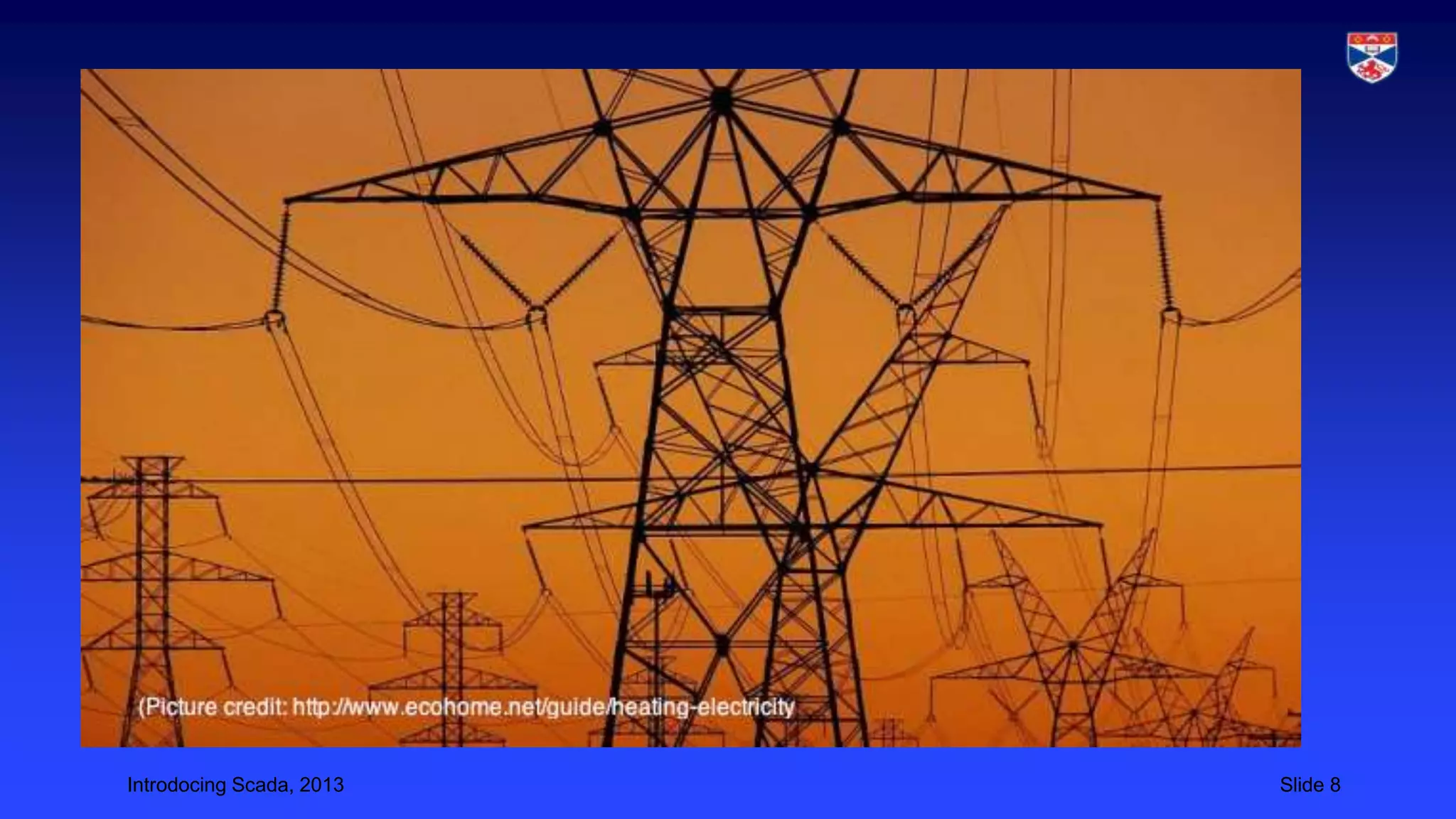
– Electric power generation, transmission and distribution
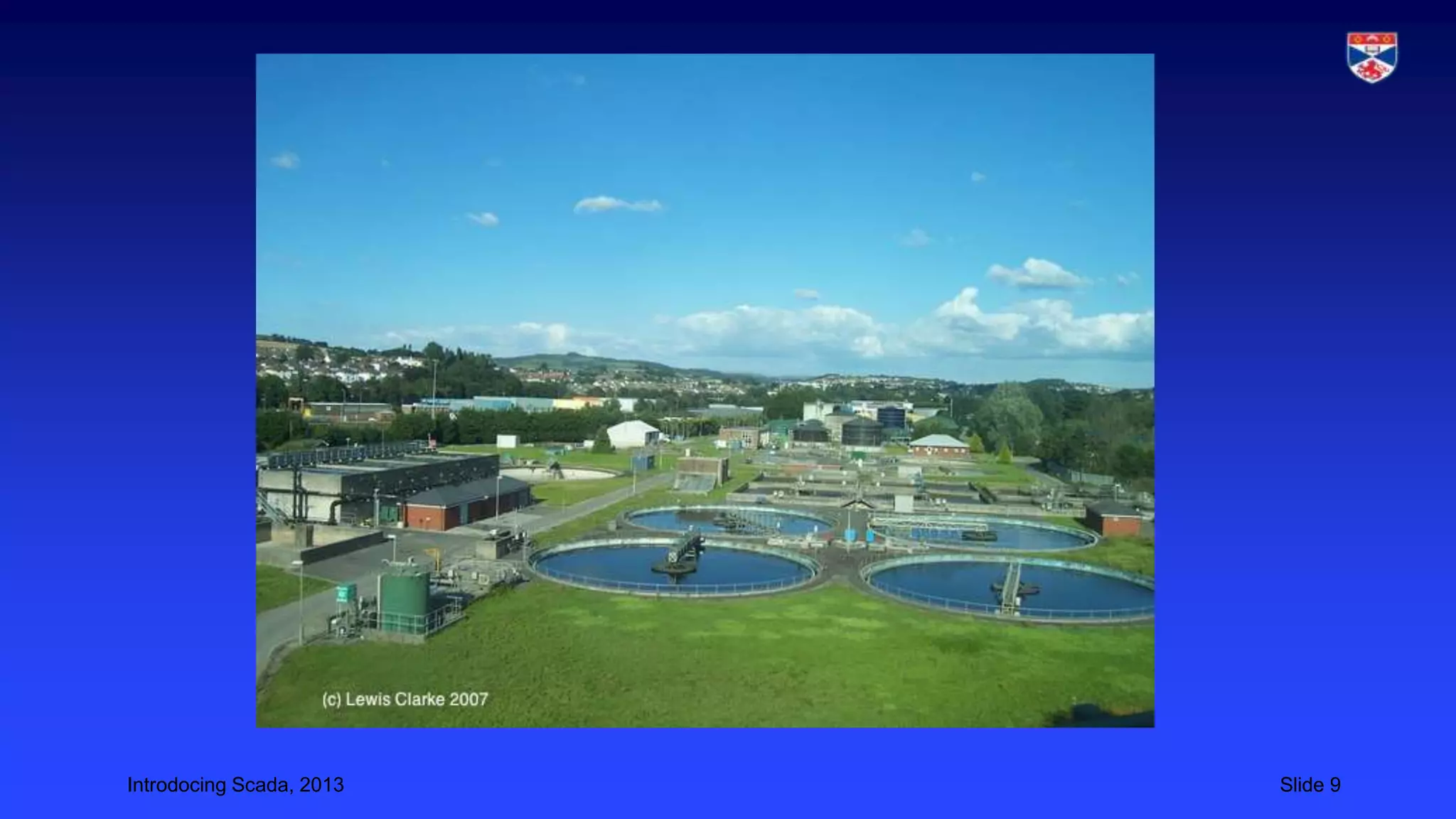
– Water and sewage
– Buildings, facilities and environments
– Manufacturing
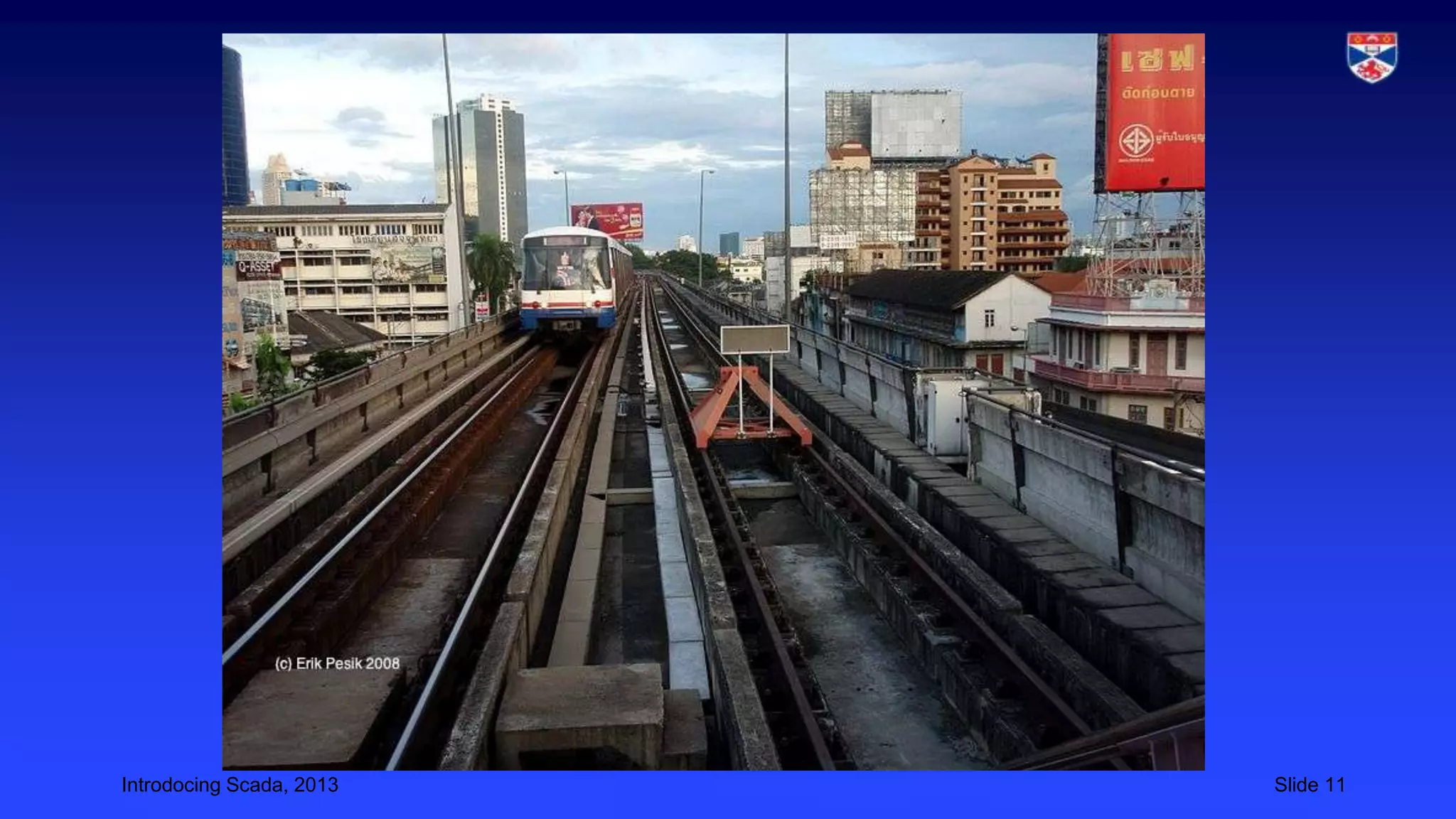
– Mass transit
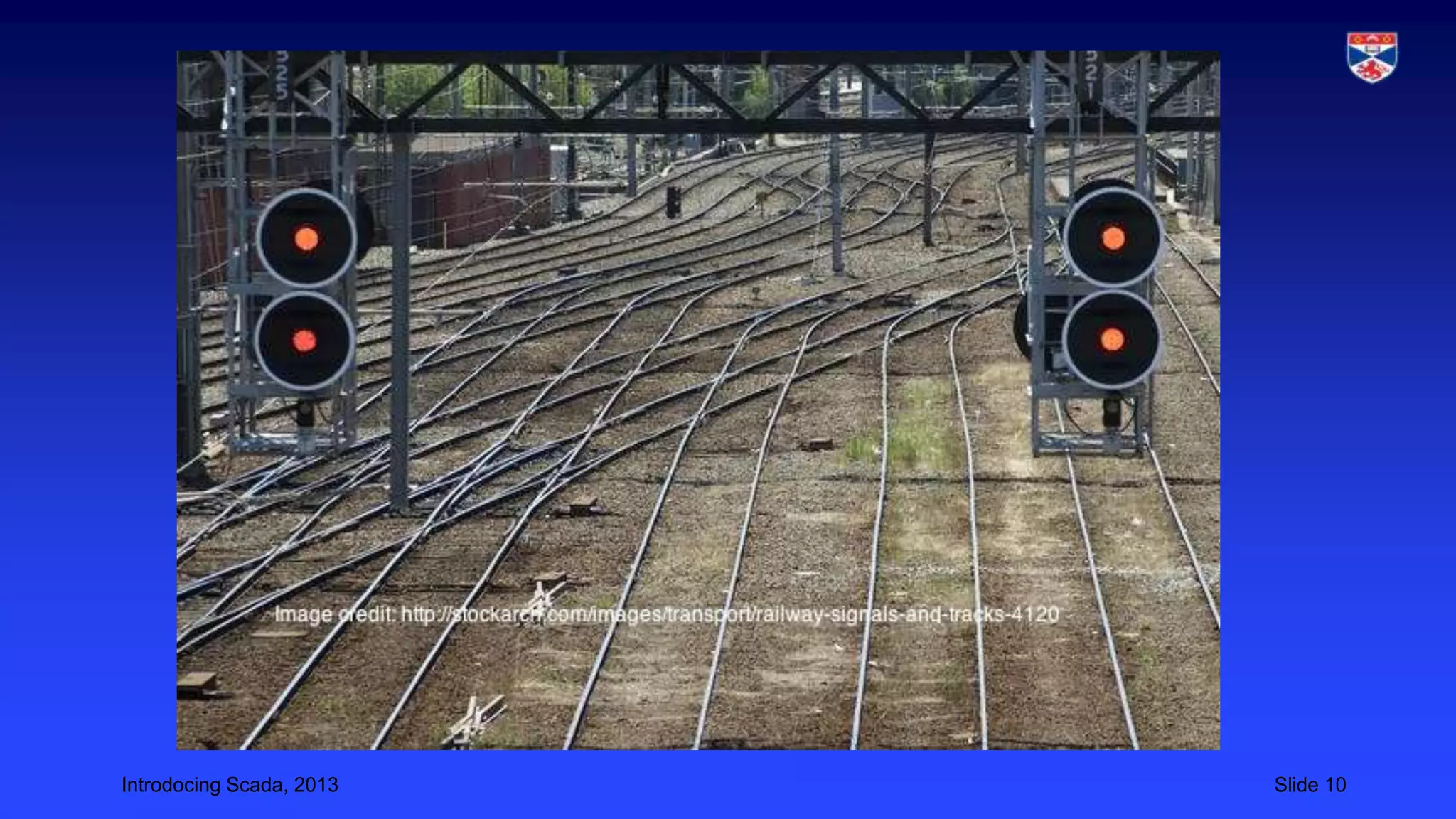
– Traffic signals
Introdocing Scada, 2013Slide 12
SCADA generations
• 1st generation (1970s). Co-located
control
– Controlled units were on the same site as
the controlling computer with hard-wired
connections between them
– No network so no potential for external
attack. Very limited chance of insider attack
because operation by teams rather than
13.
Introdocing Scada, 2013Slide 13
SCADA generations
• 2nd generation (1980s/90s) Distributed
control
– SCADA systems networked with devices
using special-purpose protocols
– No external network connection
– Vulnerable to insider attacks because of
distributed sites
14.
Introdocing Scada, 2013Slide 14
SCADA generations
• 3rd generation (2000s). Networked systems
– SCADA systems no longer isolated but connected to external
networks
– External connection through computers (particularly PCs) that
are directly connected to the Internet
– May also interface with other Internet-connected systems such
as manufacturing control systems
– More use of standard protocols such as TCP/IP for
communications
– Remote system monitoring and upgrades from providers
requires network connection
15.
Introdocing Scada, 2013Slide 15
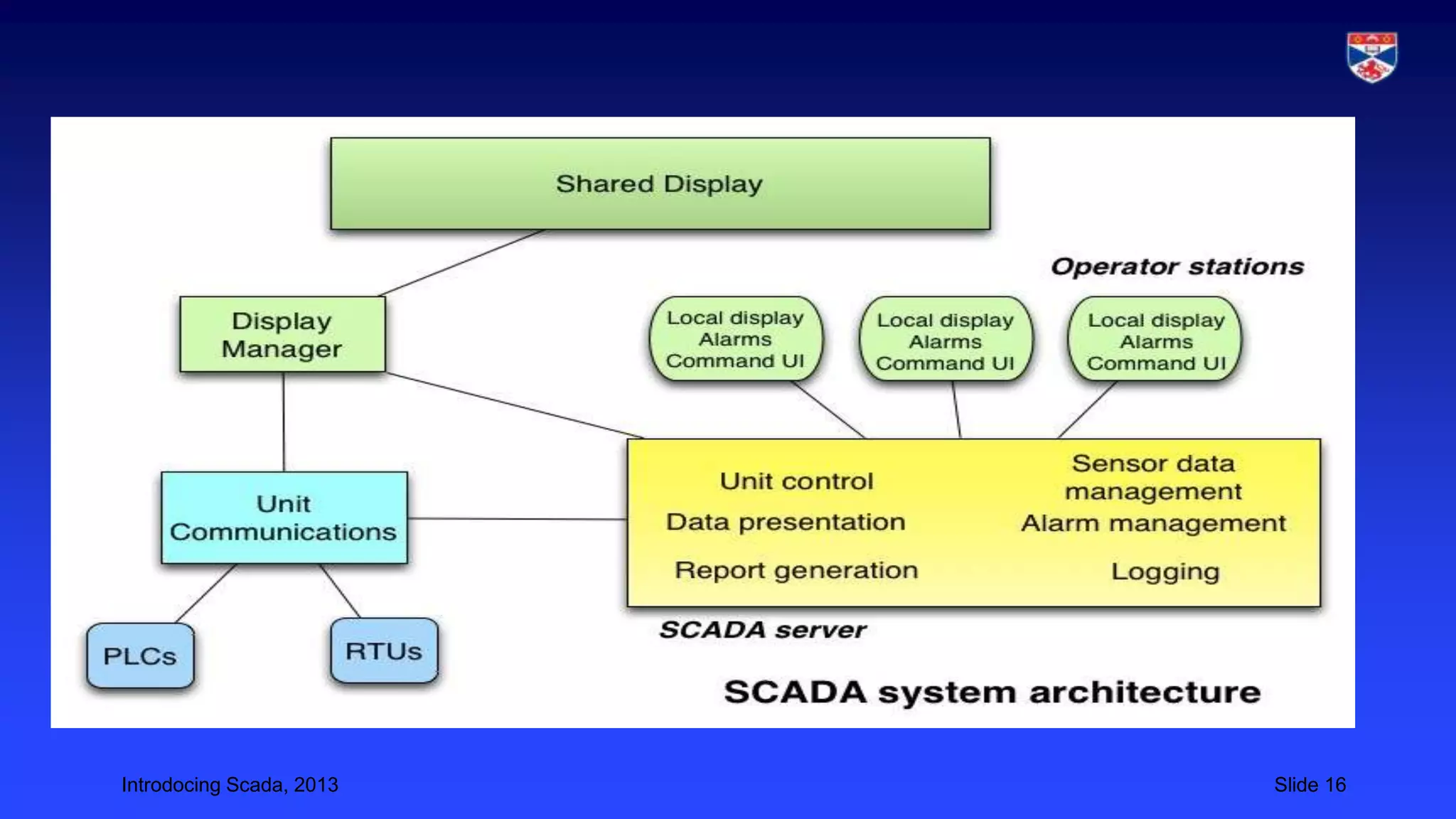
SCADA functionality
• A SCADA system performs four key
functions:
– Data acquisition from PLCs and RTUs
– Unit control
– Networked data communications with
PLCs and other systems
– Data presentation for system operation
Introdocing Scada, 2013Slide 17
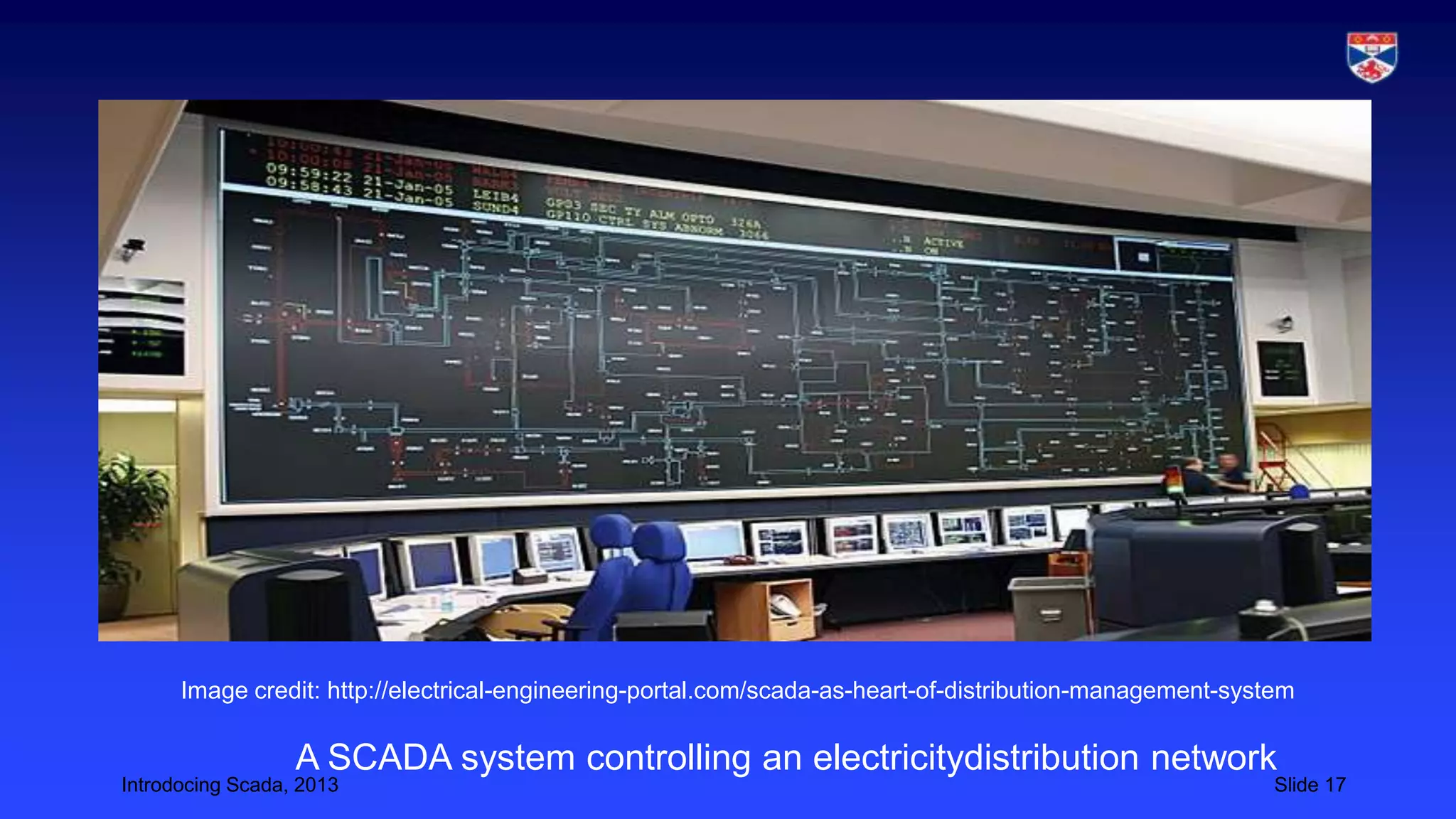
Image credit: http://electrical-engineering-portal.com/scada-as-heart-of-distribution-management-system
A SCADA system controlling an electricitydistribution network
18.
Introdocing Scada, 2013Slide 18
Summary
• SCADA systems are the control systems for
our critical infrastructure
• Maintaining their reliability and security is
essential for infrastructure dependability and
resilience
• I’ll talk about SCADA security in the next
video