INTRODUCING
FINANCIALANALYSIS
T.VENKATARAMANAN.
FICWA.FCS.
Executive Overview
WHY?
Why bother with financial analysis ?
what tools and techniques ?
How it helps decision making?
A Practical Example.
The Three uses
1.Is the project going to make money?
2. Demonstrating Additionality
3.The choice: The structuring of the project
Profit & loss plan & revenue plans
Beware of little expenses ; a small leak
will sink a great ship
Projects cost money- outflow
Projects generate inflows
The differencebetween profit flow and
cash flow.
Arrive at net cash flow
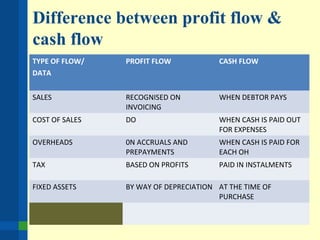
Difference between profit flow &
cash flow
TYPE OF FLOW/
DATA
PROFIT FLOW CASH FLOW
SALES RECOGNISED ON
INVOICING
WHEN DEBTOR PAYS
COST OF SALES DO WHEN CASH IS PAID OUT
FOR EXPENSES
OVERHEADS 0N ACCRUALS AND
PREPAYMENTS
WHEN CASH IS PAID FOR
EACH OH
TAX BASED ON PROFITS PAID IN INSTALMENTS
FIXED ASSETS BY WAY OF DEPRECIATION AT THE TIME OF
PURCHASE
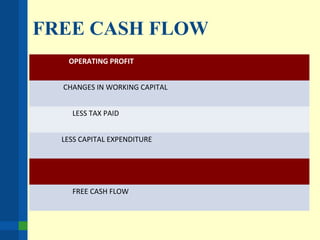
FREE CASH FLOW
OPERATING PROFIT
CHANGES IN WORKING CAPITAL
LESS TAX PAID
LESS CAPITAL EXPENDITURE
FREE CASH FLOW
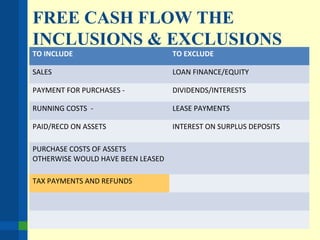
FREE CASH FLOW THE
INCLUSIONS & EXCLUSIONS
TO INCLUDE TO EXCLUDE
SALES LOAN FINANCE/EQUITY
PAYMENT FOR PURCHASES - DIVIDENDS/INTERESTS
RUNNING COSTS - LEASE PAYMENTS
PAID/RECD ON ASSETS INTEREST ON SURPLUS DEPOSITS
PURCHASE COSTS OF ASSETS
OTHERWISE WOULD HAVE BEEN LEASED
TAX PAYMENTS AND REFUNDS
The Next step :demonstrating /the
best alternative
In the earlier stage we would have
considered a myriad of alternatives
which might have resulted in same or
different net cash flows
therefore it becomes necessary to make
comparative analysis of the various
options available.
the appropriate indicators
choose an appropriate indicator to evaluate
the alternatives.
The generally selected indicators are IRR ,
NPV, CBA, etc.
It may also be neccessary to calculate pay
back periods and B.E.Pointsto make proper
assessments
compare the above results with bench mark
values internally or externallyROI etc.
Pay back Period
It is the length of time taken by the inflows of cash, to match
the original investment.
It measures the length of time it takes for the project to pay
back the original investment or capital cost
If the cost of a m/c is Rs 20,000/= and the annual net cash
flow per annum is Rs 10,000/= the pay back period is 2
years .
the pay back period acts as a proxy for Risk.The lesser the
pay back period the lesser is the Risk
Informal thresholds are typically employed 3-5 years for
Britain. For countries like Iraq it is 6 months
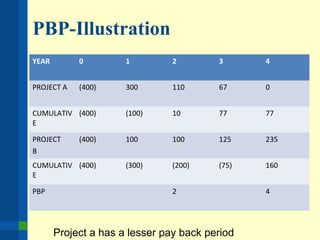
PBP-Illustration
YEAR 0 1 2 3 4
PROJECT A (400) 300 110 67 0
CUMULATIV
E
(400) (100) 10 77 77
PROJECT
B
(400) 100 100 125 235
CUMULATIV
E
(400) (300) (200) (75) 160
PBP 2 4
Project a has a lesser pay back period
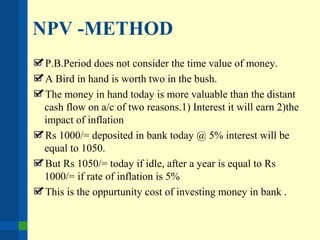
NPV -METHOD
P.B.Period does not consider the time value of money.
A Bird in hand is worth two in the bush.
The money in hand today is more valuable than the distant
cash flow on a/c of two reasons.1) Interest it will earn 2)the
impact of inflation
Rs 1000/= deposited in bank today @ 5% interest will be
equal to 1050.
But Rs 1050/= today if idle, after a year is equal to Rs
1000/= if rate of inflation is 5%
This is the oppurtunity cost of investing money in bank .
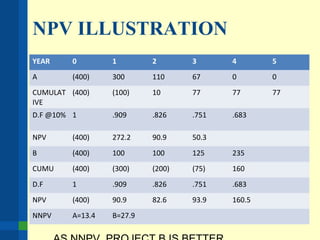
NPV ILLUSTRATION
YEAR 0 1 2 3 4 5
A (400) 300 110 67 0 0
CUMULAT
IVE
(400) (100) 10 77 77 77
D.F @10% 1 .909 .826 .751 .683
NPV (400) 272.2 90.9 50.3
B (400) 100 100 125 235
CUMU (400) (300) (200) (75) 160
D.F 1 .909 .826 .751 .683
NPV (400) 90.9 82.6 93.9 160.5
NNPV A=13.4 B=27.9
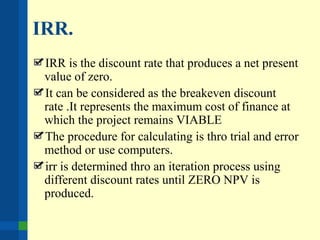
IRR.
IRR is the discount rate that produces a net present
value of zero.
It can be considered as the breakeven discount
rate .It represents the maximum cost of finance at
which the project remains VIABLE
The procedure for calculating is thro trial and error
method or use computers.
irr is determined thro an iteration process using
different discount rates until ZERO NPV is
produced.
Hurdle rate
Once IRR is calculated it is compared with
the companys'preset threshold investment
rate,which is called hurdle rate.
Hurdle rate is company's oppurtunity cost of
capital.Alternatively the WACC
IRR Decision rule : IRR > HR ACCEPT
IRR < HR REJECT
IRR Provides the simplest tool for decision
making by managers
BCR
When confronted with 2 or more NPV
positive projects and capital rationing is
there BCR provides a means to identify
the better ones.
BCR = PV of Future cash flows//value
of Initial capital invested
The project with the highiest BCR
represents the most attractive The
typical BCR bench mark is 1.3
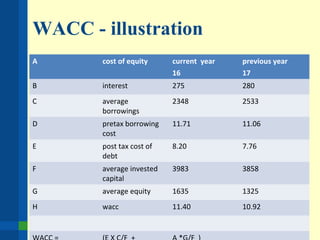
WACC - illustration
A cost of equity current year
16
previous year
17
B interest 275 280
C average
borrowings
2348 2533
D pretax borrowing
cost
11.71 11.06
E post tax cost of
debt
8.20 7.76
F average invested
capital
3983 3858
G average equity 1635 1325
H wacc 11.40 10.92
Company Objectives
List your company objectives
Define these objectives in detail
Defining Terms
Define any terms or vocabulary you need to
discuss in your presentation while your audience
may be unfamiliar with.
First item
•Definition
Second item
•Definition
Third item
•Definition
Current Situation
Explain the current situation and issues that face your
company, and explain their implications.
Background to Recommend a
Strategy
The original strategy fails to catch up with the
current changes
New problems/needs/issues
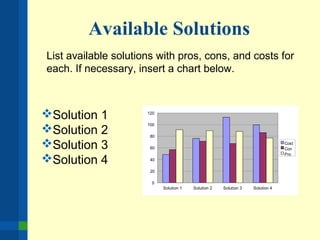
Available Solutions
List available solutions with pros, cons, and costs for
each. If necessary, insert a chart below.
0
20
40
60
80
100
120
Solution 1 Solution 2 Solution 3 Solution 4
Cost
Con
Pro
Solution 1
Solution 2
Solution 3
Solution 4
Recommend a Strategy
Recommend one solution that you think is best suited
to the situation.
Benefits of My Recommendation
Benefit 1
Benefit 2
Benefit 3
Benefit 4
Costs of Rejecting this Solution
List the costs of not using this solution
Questions and Answers
Prepared questions
Questions from the audience
Thank You for Coming!

Introducing financial analysis

  • 1.
  • 2.
    Executive Overview WHY? Why botherwith financial analysis ? what tools and techniques ? How it helps decision making? A Practical Example.
  • 3.
    The Three uses 1.Isthe project going to make money? 2. Demonstrating Additionality 3.The choice: The structuring of the project
  • 4.
    Profit & lossplan & revenue plans Beware of little expenses ; a small leak will sink a great ship Projects cost money- outflow Projects generate inflows The differencebetween profit flow and cash flow. Arrive at net cash flow
  • 5.
    Difference between profitflow & cash flow TYPE OF FLOW/ DATA PROFIT FLOW CASH FLOW SALES RECOGNISED ON INVOICING WHEN DEBTOR PAYS COST OF SALES DO WHEN CASH IS PAID OUT FOR EXPENSES OVERHEADS 0N ACCRUALS AND PREPAYMENTS WHEN CASH IS PAID FOR EACH OH TAX BASED ON PROFITS PAID IN INSTALMENTS FIXED ASSETS BY WAY OF DEPRECIATION AT THE TIME OF PURCHASE
  • 6.
    FREE CASH FLOW OPERATINGPROFIT CHANGES IN WORKING CAPITAL LESS TAX PAID LESS CAPITAL EXPENDITURE FREE CASH FLOW
  • 7.
    FREE CASH FLOWTHE INCLUSIONS & EXCLUSIONS TO INCLUDE TO EXCLUDE SALES LOAN FINANCE/EQUITY PAYMENT FOR PURCHASES - DIVIDENDS/INTERESTS RUNNING COSTS - LEASE PAYMENTS PAID/RECD ON ASSETS INTEREST ON SURPLUS DEPOSITS PURCHASE COSTS OF ASSETS OTHERWISE WOULD HAVE BEEN LEASED TAX PAYMENTS AND REFUNDS
  • 8.
    The Next step:demonstrating /the best alternative In the earlier stage we would have considered a myriad of alternatives which might have resulted in same or different net cash flows therefore it becomes necessary to make comparative analysis of the various options available.
  • 9.
    the appropriate indicators choosean appropriate indicator to evaluate the alternatives. The generally selected indicators are IRR , NPV, CBA, etc. It may also be neccessary to calculate pay back periods and B.E.Pointsto make proper assessments compare the above results with bench mark values internally or externallyROI etc.
  • 10.
    Pay back Period Itis the length of time taken by the inflows of cash, to match the original investment. It measures the length of time it takes for the project to pay back the original investment or capital cost If the cost of a m/c is Rs 20,000/= and the annual net cash flow per annum is Rs 10,000/= the pay back period is 2 years . the pay back period acts as a proxy for Risk.The lesser the pay back period the lesser is the Risk Informal thresholds are typically employed 3-5 years for Britain. For countries like Iraq it is 6 months
  • 11.
    PBP-Illustration YEAR 0 12 3 4 PROJECT A (400) 300 110 67 0 CUMULATIV E (400) (100) 10 77 77 PROJECT B (400) 100 100 125 235 CUMULATIV E (400) (300) (200) (75) 160 PBP 2 4 Project a has a lesser pay back period
  • 12.
    NPV -METHOD P.B.Period doesnot consider the time value of money. A Bird in hand is worth two in the bush. The money in hand today is more valuable than the distant cash flow on a/c of two reasons.1) Interest it will earn 2)the impact of inflation Rs 1000/= deposited in bank today @ 5% interest will be equal to 1050. But Rs 1050/= today if idle, after a year is equal to Rs 1000/= if rate of inflation is 5% This is the oppurtunity cost of investing money in bank .
  • 13.
    NPV ILLUSTRATION YEAR 01 2 3 4 5 A (400) 300 110 67 0 0 CUMULAT IVE (400) (100) 10 77 77 77 D.F @10% 1 .909 .826 .751 .683 NPV (400) 272.2 90.9 50.3 B (400) 100 100 125 235 CUMU (400) (300) (200) (75) 160 D.F 1 .909 .826 .751 .683 NPV (400) 90.9 82.6 93.9 160.5 NNPV A=13.4 B=27.9
  • 14.
    IRR. IRR is thediscount rate that produces a net present value of zero. It can be considered as the breakeven discount rate .It represents the maximum cost of finance at which the project remains VIABLE The procedure for calculating is thro trial and error method or use computers. irr is determined thro an iteration process using different discount rates until ZERO NPV is produced.
  • 15.
    Hurdle rate Once IRRis calculated it is compared with the companys'preset threshold investment rate,which is called hurdle rate. Hurdle rate is company's oppurtunity cost of capital.Alternatively the WACC IRR Decision rule : IRR > HR ACCEPT IRR < HR REJECT IRR Provides the simplest tool for decision making by managers
  • 16.
    BCR When confronted with2 or more NPV positive projects and capital rationing is there BCR provides a means to identify the better ones. BCR = PV of Future cash flows//value of Initial capital invested The project with the highiest BCR represents the most attractive The typical BCR bench mark is 1.3
  • 17.
    WACC - illustration Acost of equity current year 16 previous year 17 B interest 275 280 C average borrowings 2348 2533 D pretax borrowing cost 11.71 11.06 E post tax cost of debt 8.20 7.76 F average invested capital 3983 3858 G average equity 1635 1325 H wacc 11.40 10.92
  • 18.
    Company Objectives List yourcompany objectives Define these objectives in detail
  • 19.
    Defining Terms Define anyterms or vocabulary you need to discuss in your presentation while your audience may be unfamiliar with. First item •Definition Second item •Definition Third item •Definition
  • 20.
    Current Situation Explain thecurrent situation and issues that face your company, and explain their implications.
  • 21.
    Background to Recommenda Strategy The original strategy fails to catch up with the current changes New problems/needs/issues
  • 22.
    Available Solutions List availablesolutions with pros, cons, and costs for each. If necessary, insert a chart below. 0 20 40 60 80 100 120 Solution 1 Solution 2 Solution 3 Solution 4 Cost Con Pro Solution 1 Solution 2 Solution 3 Solution 4
  • 23.
    Recommend a Strategy Recommendone solution that you think is best suited to the situation.
  • 24.
    Benefits of MyRecommendation Benefit 1 Benefit 2 Benefit 3 Benefit 4
  • 25.
    Costs of Rejectingthis Solution List the costs of not using this solution
  • 26.
    Questions and Answers Preparedquestions Questions from the audience
  • 27.