LEGAL ASPECTS OF SUPPLY CHAIN
                 MANAGEMENT
INTRODUCTION TO MERCANTILE
AND     COMMERCIAL LAWS
Supply Chain is the entire process of
accepting a Customer order through to the
delivery of the product to the Customer
inclusive of supply ,procurement and
production of the product. A supply chain is a
collective of inter-dependent steps, when
thoroughly followed gives rise to a certain
objective as meeting customer
requirements.SCM is a generic term,
encompassing i-The coordination of order
generation ,ii- order taking ,iii- order fulfillment 
distribution of products , services or
Business Law is that branch of civil law
dealing with rights and obligations of
business persons arising out of business
transactions in respect of business property
1-Framework within which business
activities shall be carried out.
2-A business person can resort to judicial
and quasi-judicial authorities
3-Laws are made to facilitate business
process
4-Business Law has social objectives.
5-Business Law aim to prevent
concentration of economic power.
1-English Mercantile Law-Constitutes the
foundation
2-The Statue Law-When a bill is passed by
Parliament and signed by President
3-Case Law-Judicial decisions are usually
referred to precedents
4-Customes & Usages-guides the Court in
deciding disputes
5-Justice,Equity and good conscience-
The Indian Contracts Act 1872-Enforces
people to legally conduct business
The Indian Sale of Goods Act 1930-
Governs the law of salepurchase
The Contract of Partnership Act 1932-The
law relating to partnership
The Negotiable Instruments Act 1881-
Money transferred by negotiation
The Companies Act 1956-Controls all
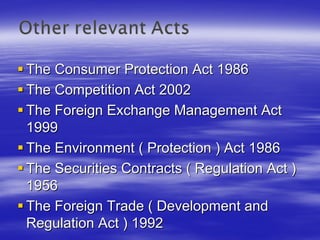
The Consumer Protection Act 1986
The Competition Act 2002
The Foreign Exchange Management Act
1999
The Environment ( Protection ) Act 1986
The Securities Contracts ( Regulation Act )
1956
The Foreign Trade ( Development and
Regulation Act ) 1992
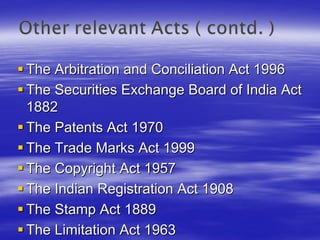
The Arbitration and Conciliation Act 1996
The Securities Exchange Board of India Act
1882
The Patents Act 1970
The Trade Marks Act 1999
The Copyright Act 1957
The Indian Registration Act 1908
The Stamp Act 1889
The Limitation Act 1963
“Like” us on Facebook: 
   p //                 /
http://www.facebook.com/welearnindia 

“Follow” us on Twitter:
http://twitter.com/WeLearnIndia
http://twitter com/WeLearnIndia

Watch informative videos on Youtube: 
http://www.youtube.com/WelingkarDLP

Introduction to Mercantile and Commercial Laws

  • 1.
    LEGAL ASPECTS OFSUPPLY CHAIN MANAGEMENT
  • 2.
  • 3.
    Supply Chain isthe entire process of accepting a Customer order through to the delivery of the product to the Customer inclusive of supply ,procurement and production of the product. A supply chain is a collective of inter-dependent steps, when thoroughly followed gives rise to a certain objective as meeting customer requirements.SCM is a generic term, encompassing i-The coordination of order generation ,ii- order taking ,iii- order fulfillment distribution of products , services or
  • 4.
    Business Law isthat branch of civil law dealing with rights and obligations of business persons arising out of business transactions in respect of business property
  • 5.
    1-Framework within whichbusiness activities shall be carried out. 2-A business person can resort to judicial and quasi-judicial authorities 3-Laws are made to facilitate business process 4-Business Law has social objectives. 5-Business Law aim to prevent concentration of economic power.
  • 6.
    1-English Mercantile Law-Constitutesthe foundation 2-The Statue Law-When a bill is passed by Parliament and signed by President 3-Case Law-Judicial decisions are usually referred to precedents 4-Customes & Usages-guides the Court in deciding disputes 5-Justice,Equity and good conscience-
  • 7.
    The Indian ContractsAct 1872-Enforces people to legally conduct business The Indian Sale of Goods Act 1930- Governs the law of salepurchase The Contract of Partnership Act 1932-The law relating to partnership The Negotiable Instruments Act 1881- Money transferred by negotiation The Companies Act 1956-Controls all
  • 8.
    The Consumer ProtectionAct 1986 The Competition Act 2002 The Foreign Exchange Management Act 1999 The Environment ( Protection ) Act 1986 The Securities Contracts ( Regulation Act ) 1956 The Foreign Trade ( Development and Regulation Act ) 1992
  • 9.
    The Arbitration andConciliation Act 1996 The Securities Exchange Board of India Act 1882 The Patents Act 1970 The Trade Marks Act 1999 The Copyright Act 1957 The Indian Registration Act 1908 The Stamp Act 1889 The Limitation Act 1963
  • 10.
    “Like” us on Facebook:  p // / http://www.facebook.com/welearnindia  “Follow” us on Twitter: http://twitter.com/WeLearnIndia http://twitter com/WeLearnIndia Watch informative videos on Youtube:  http://www.youtube.com/WelingkarDLP