Energy and Cellular RespirationChapter 7
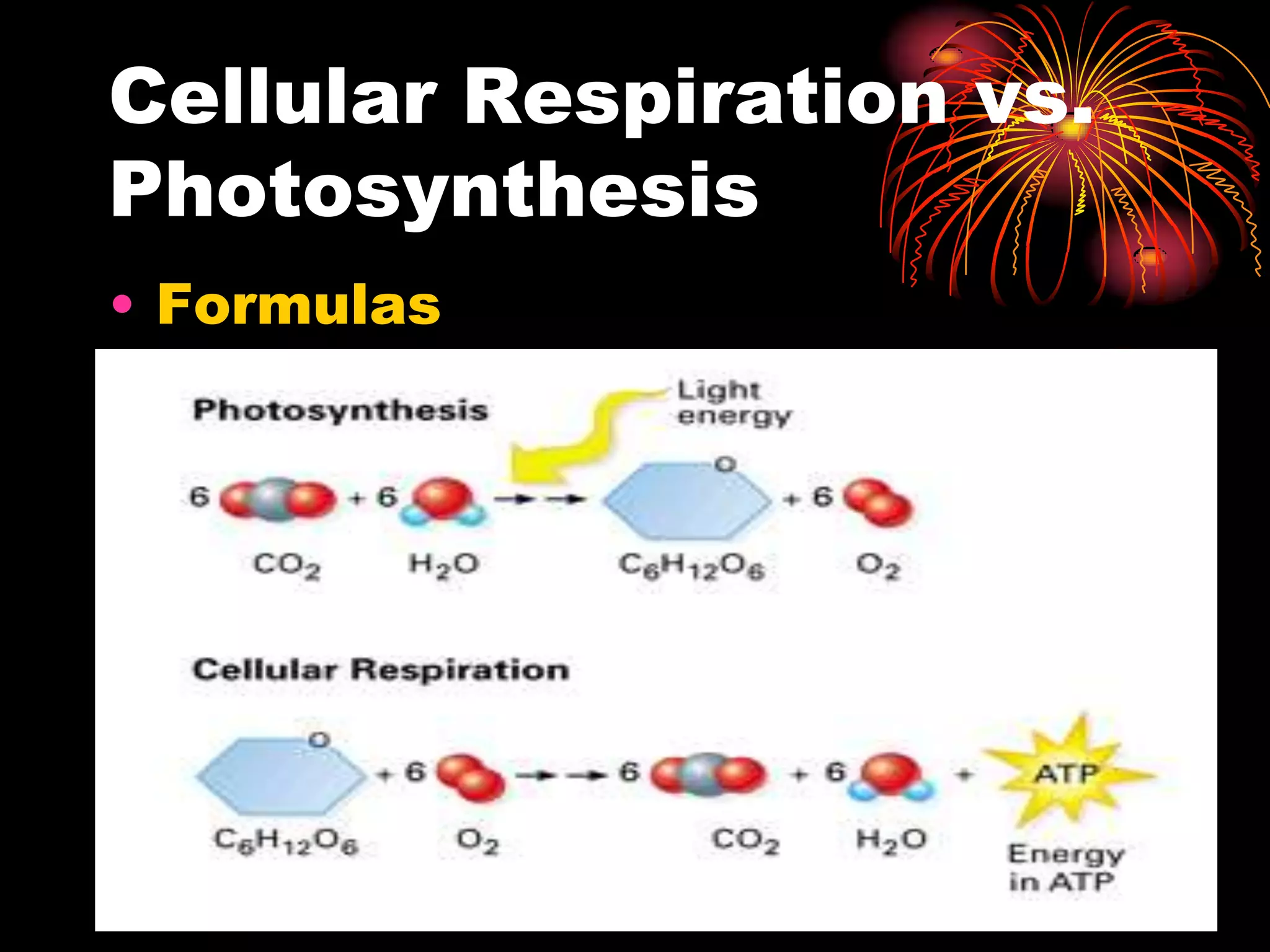
Cellular Respiration vs. PhotosynthesisFormulas
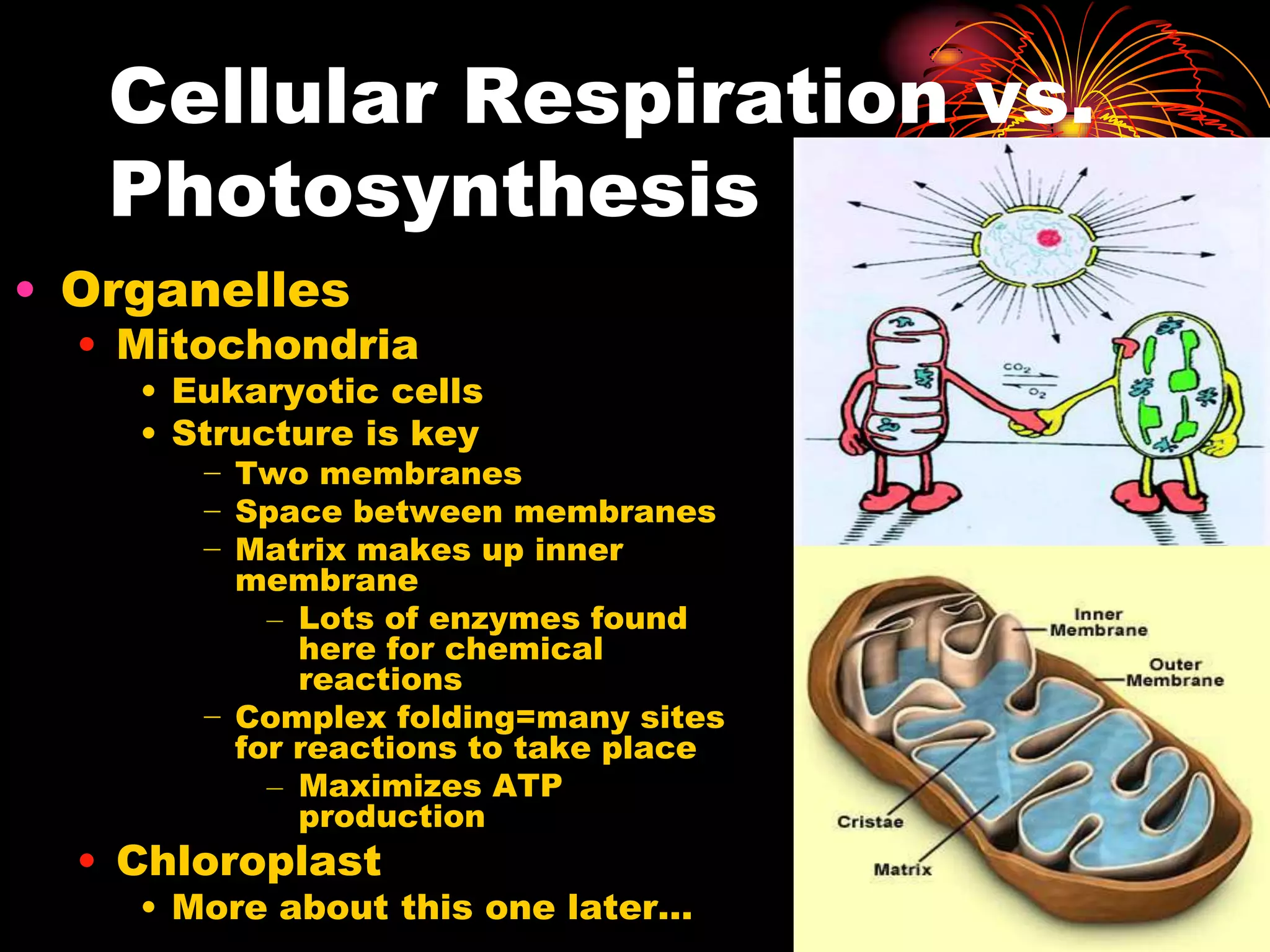
Cellular Respiration vs. PhotosynthesisOrganellesMitochondriaEukaryotic cellsStructure is keyTwo membranesSpace between membranesMatrix makes up inner membraneLots of enzymes found here for chemical reactionsComplex folding=many sites for reactions to take placeMaximizes ATP productionChloroplastMore about this one later…
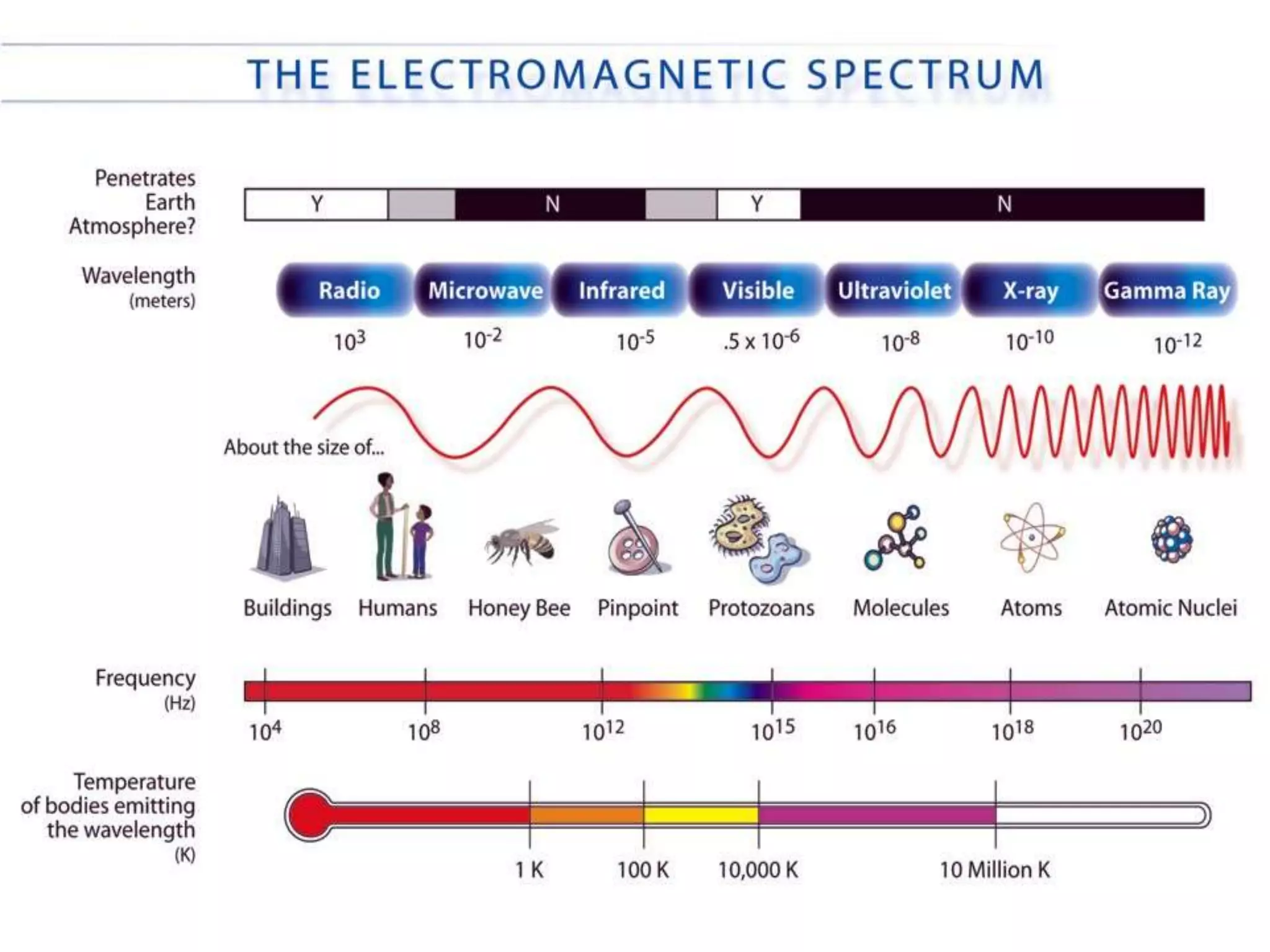
EnergyHeat (thermal)Light (solar)ElectricalWhat carries energy?Electrons (little energy packets)Negatively charged particleInvolved in making bonds between atomsElectromagnetic spectrum
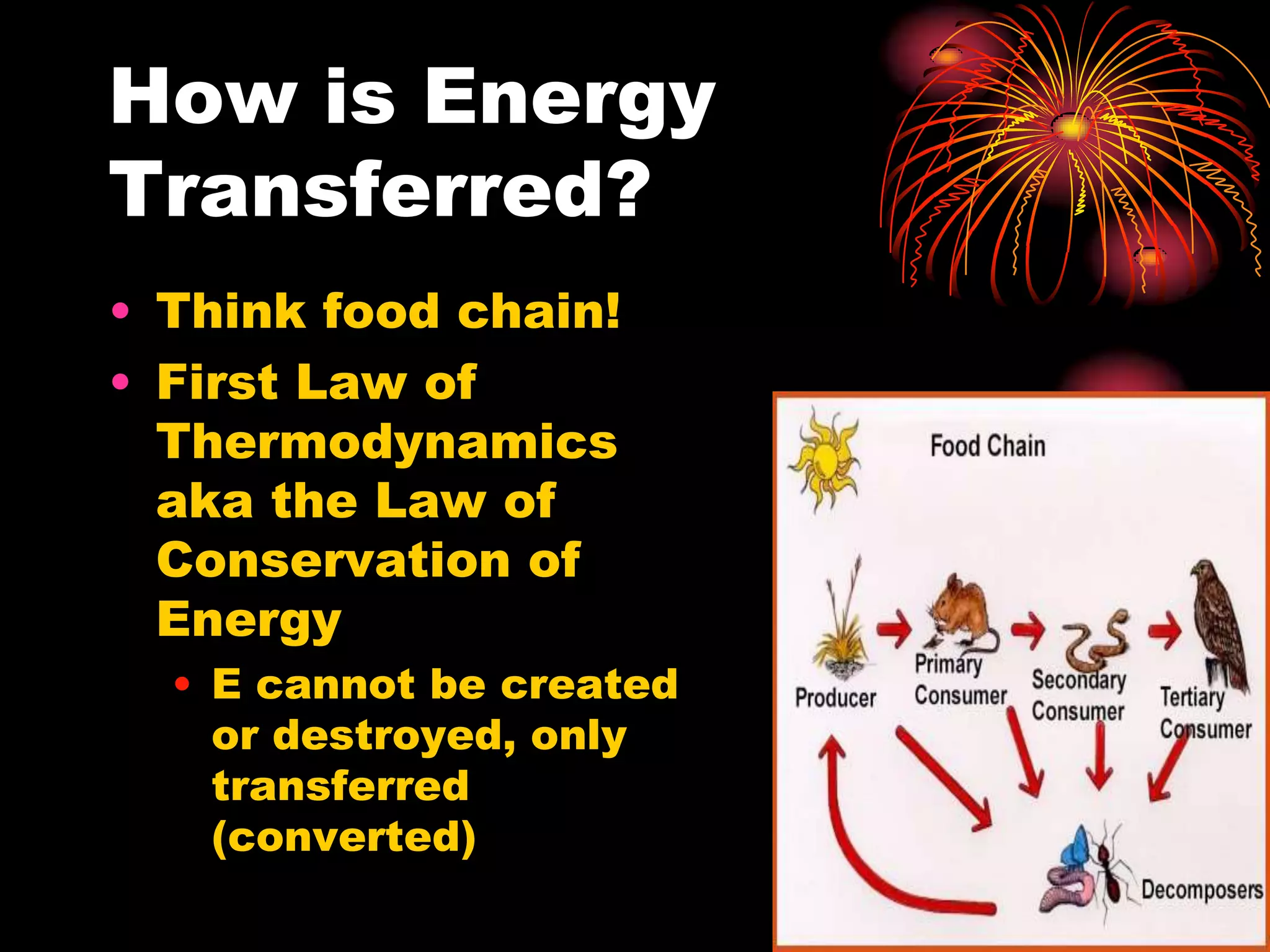
How is Energy Transferred?Think food chain!First Law of Thermodynamics aka the Law of Conservation of EnergyE cannot be created or destroyed, only transferred (converted)
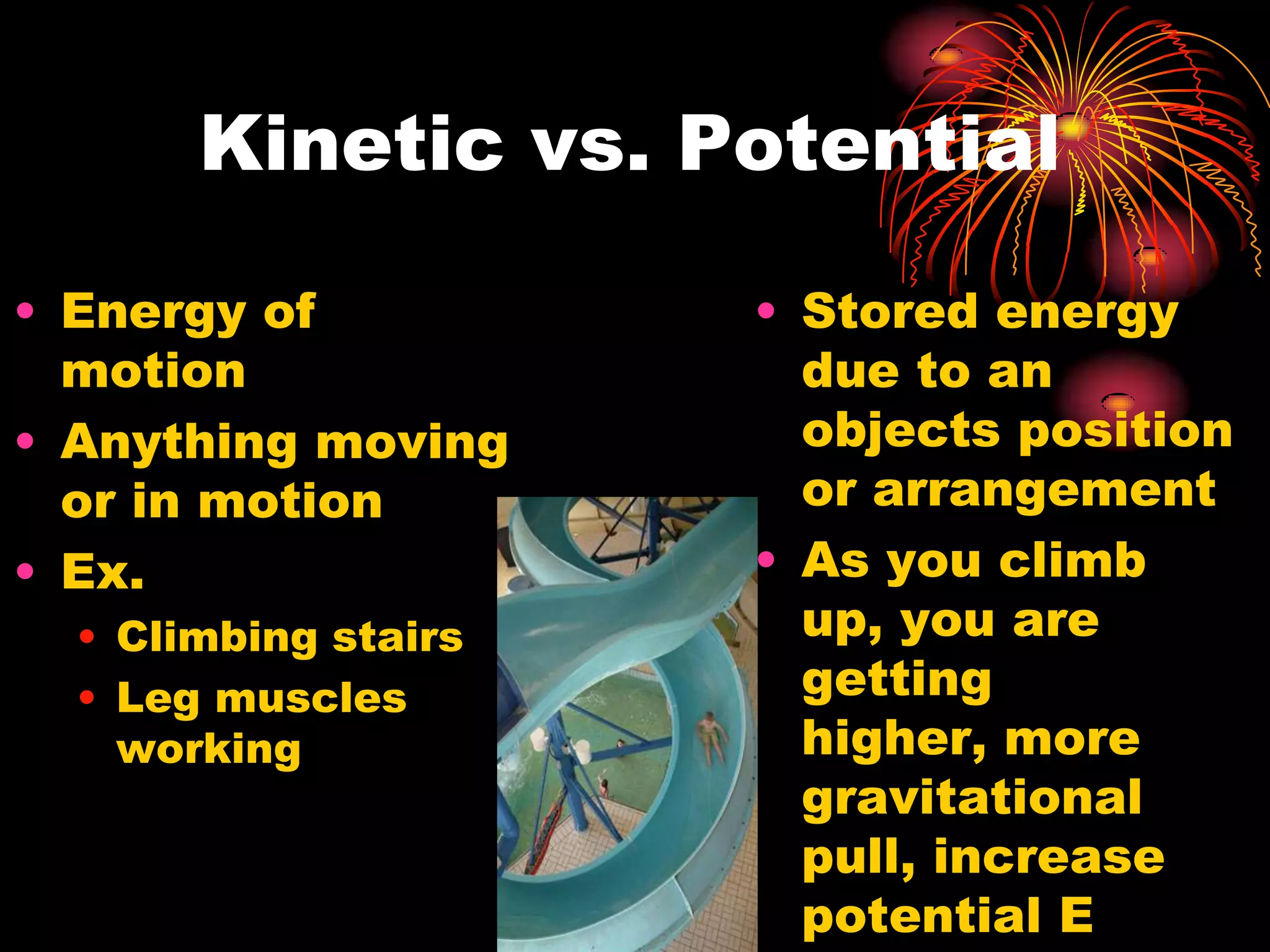
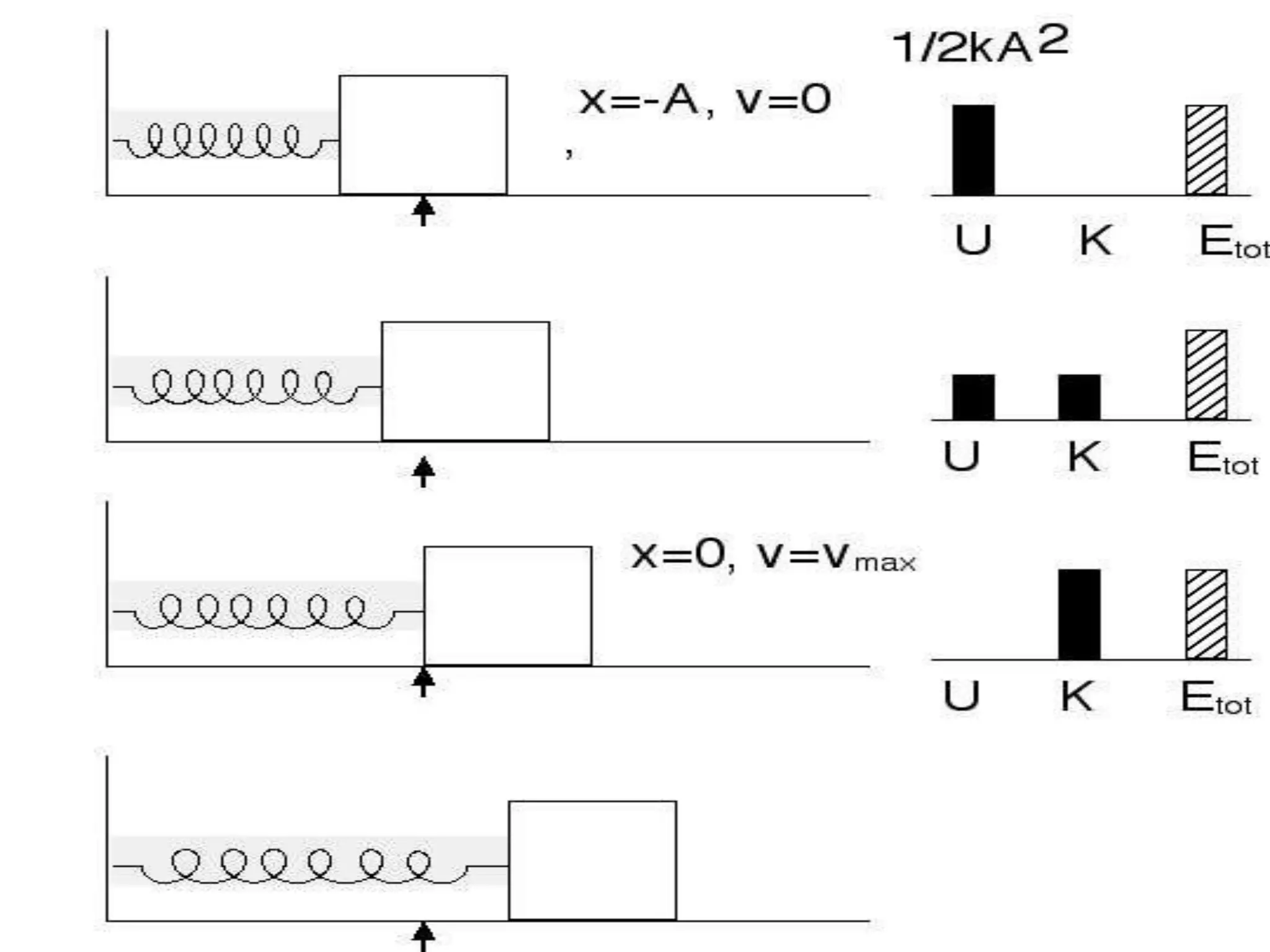
Kinetic vs. PotentialEnergy of motionAnything moving or in motionEx.Climbing stairsLeg muscles workingStored energy due to an objects position or arrangementAs you climb up, you are getting higher, more gravitational pull, increase potential E
Two Types of Kinetic EnergyDirected kinetic energyEx. Your body as it moves down slideRandom kinetic energy of molecular motionThermal energyEx. When your body collides with water. Air and water molecules are forced to move and collide at random, transferring energy
Thermal EnergyCreated from Random molecular motion“Heat” is thermal energy that is transferred from warmer object to cooler object
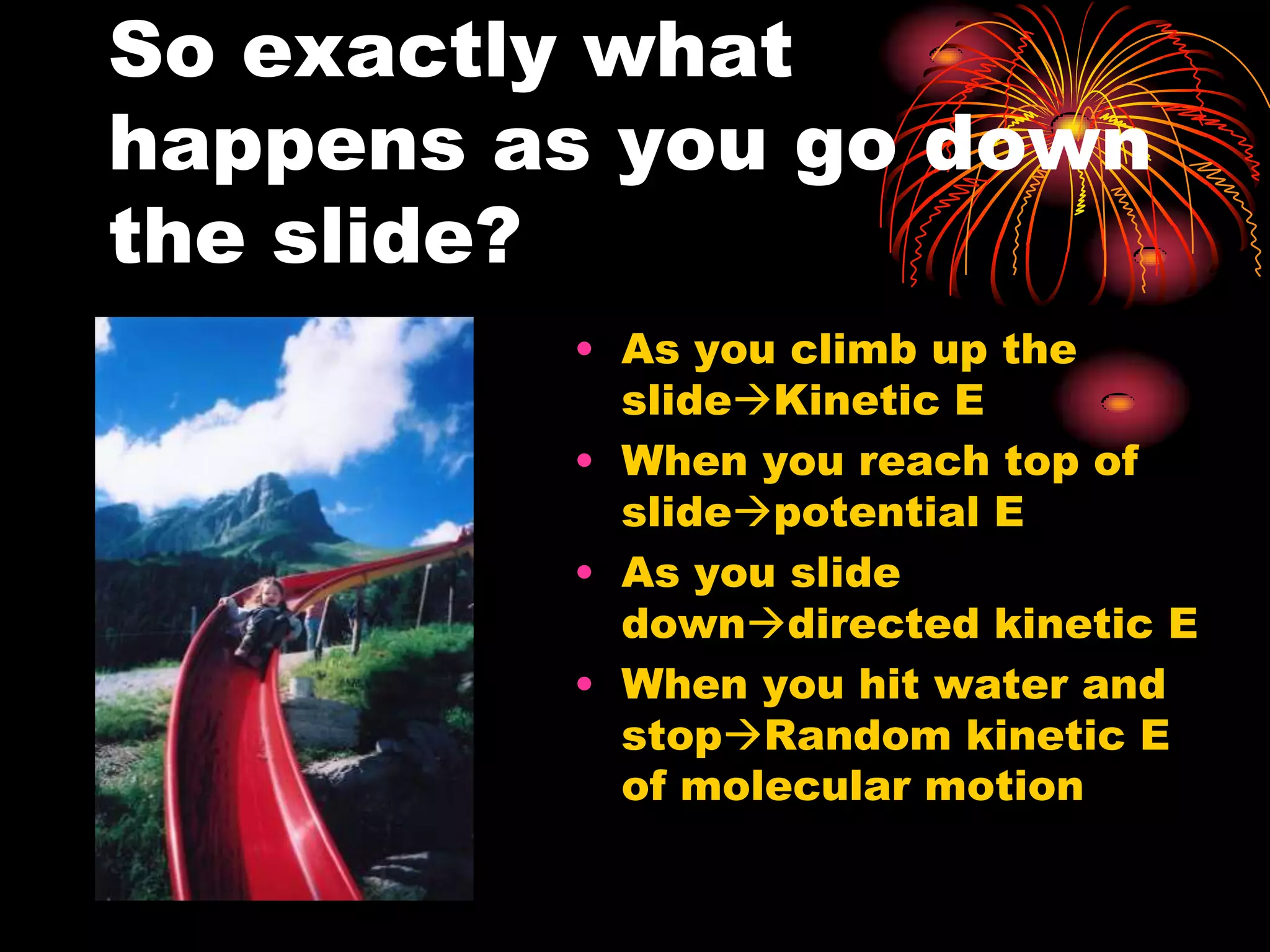
So exactly what happens as you go down the slide?As you climb up the slideKinetic EWhen you reach top of slidepotential EAs you slide downdirected kinetic EWhen you hit water and stopRandom kinetic E of molecular motion
You cannot retrieve thermal energy, so you must get new source of energy to climb back up the slideWhat do you do?
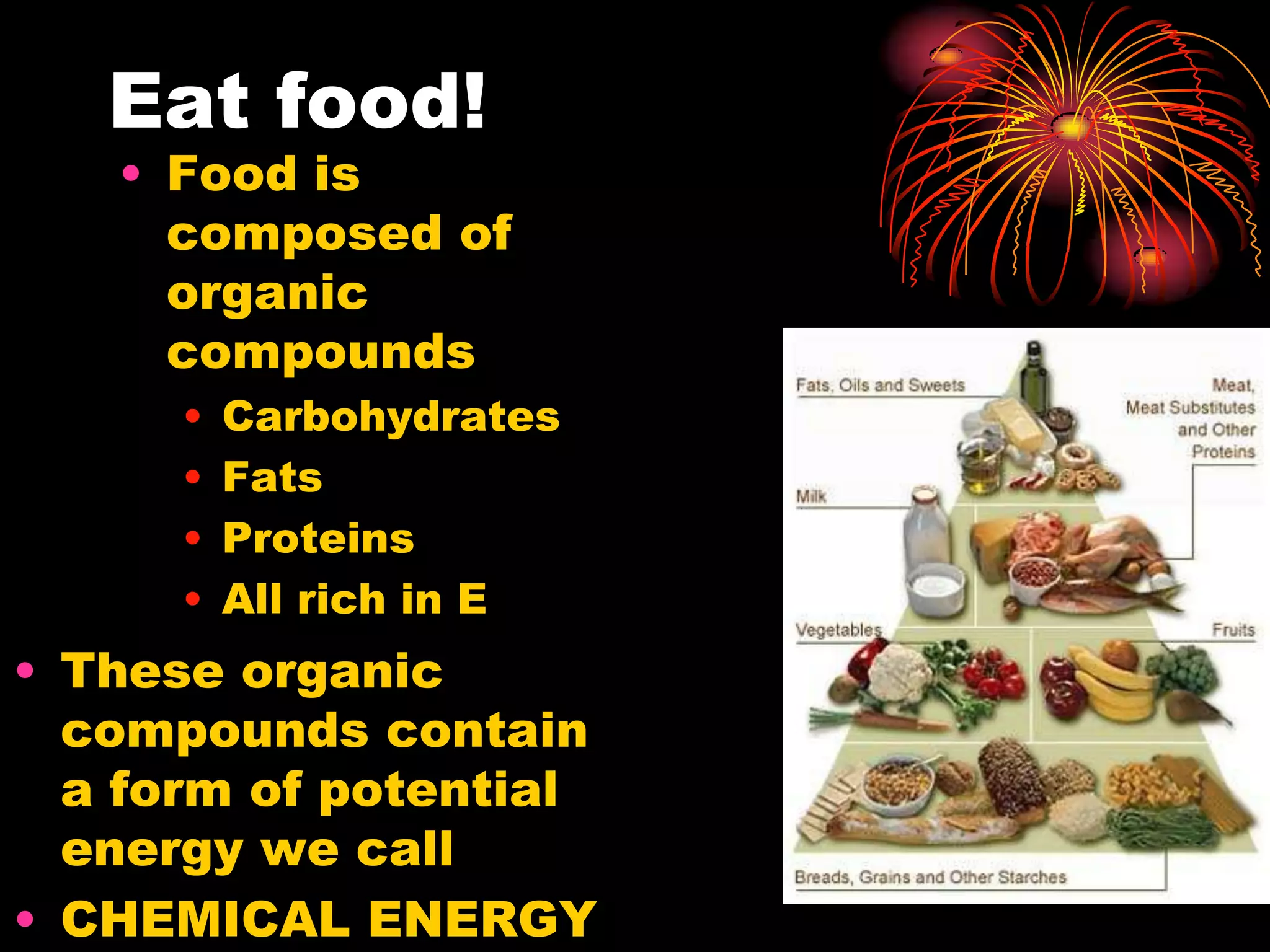
Eat food!Food is composed of organic compoundsCarbohydratesFats ProteinsAll rich in EThese organic compounds contain a form of potential energy we callCHEMICAL ENERGY
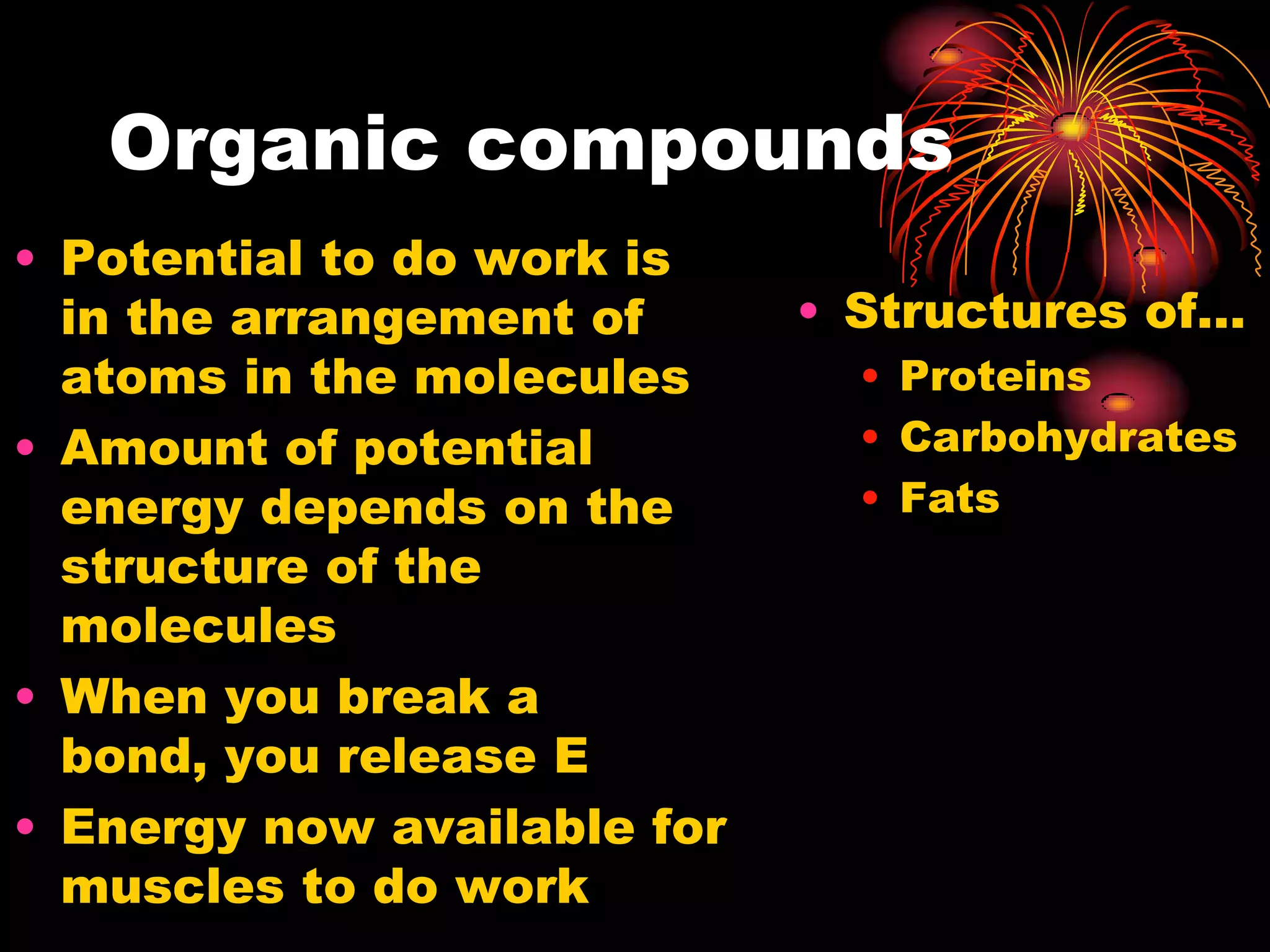
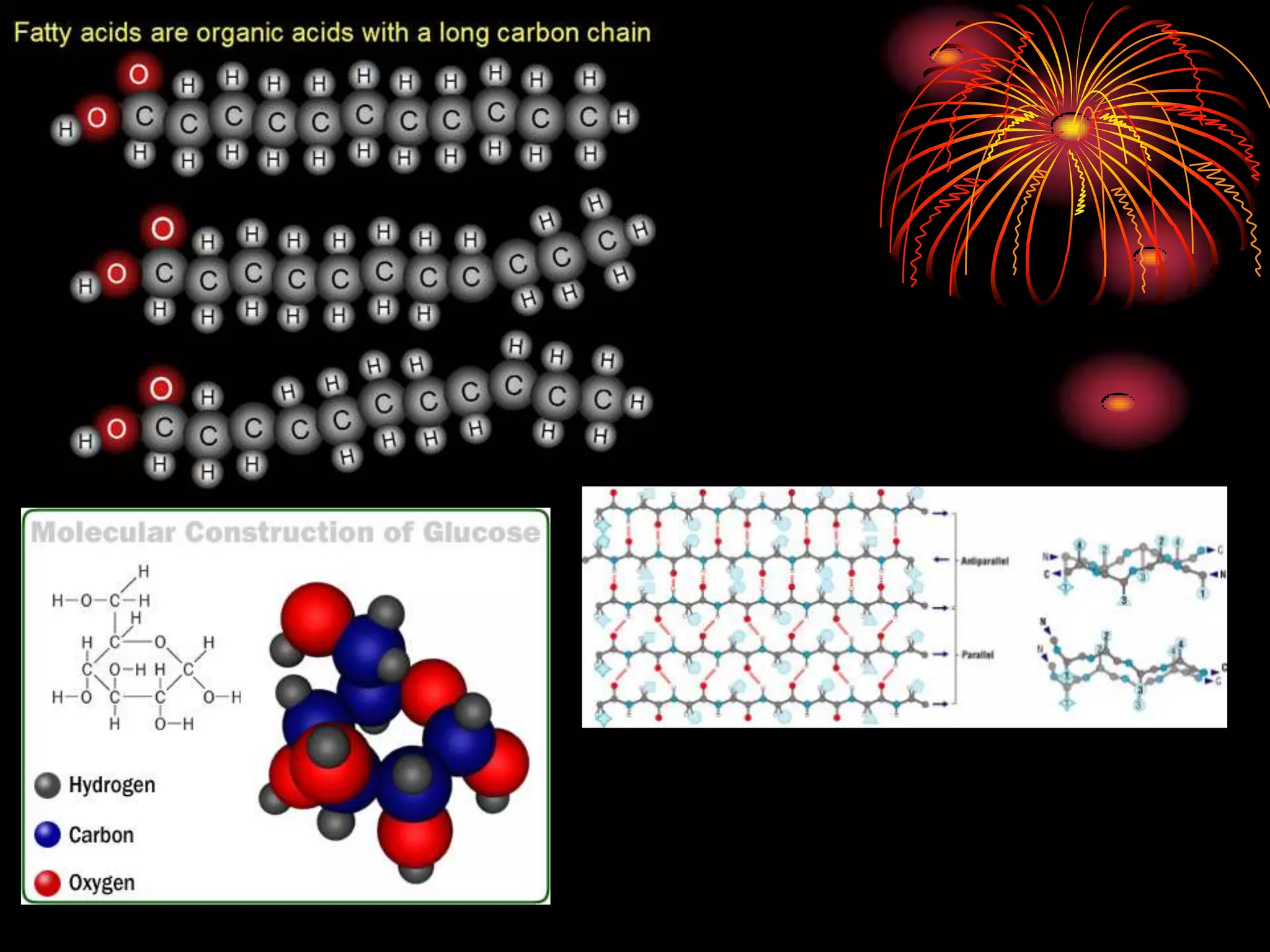
Organic compoundsPotential to do work is in the arrangement of atoms in the moleculesAmount of potential energy depends on the structure of the moleculesWhen you break a bond, you release EEnergy now available for muscles to do workStructures of…ProteinsCarbohydratesFats
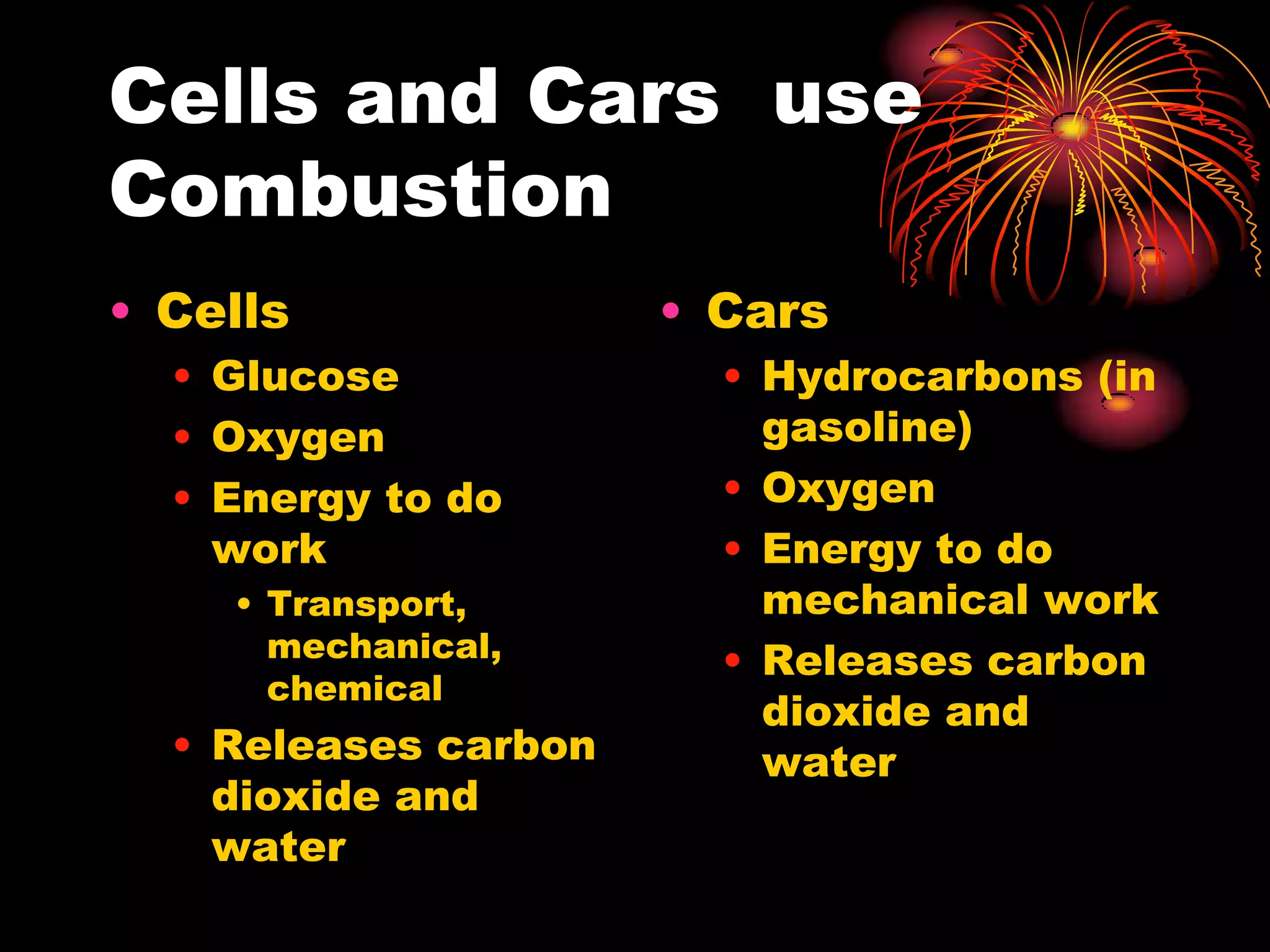
Cells and Cars  use CombustionCellsGlucoseOxygenEnergy to do workTransport, mechanical, chemicalReleases carbon dioxide and waterCarsHydrocarbons (in gasoline)OxygenEnergy to do mechanical workReleases carbon dioxide and water
calorie Amount of energy required to raise the temperature of 1 g of water 1*CVery tinyNot practical to measure energy in foodExpress in kilocalories (kcal), or Calories, what is on the nutrition labelKHDmdcm
Burning food…Changes chemical energy to thermal energy (releases heat)Measure increase of water temperature and definition of calorie to find out how much chemical energy is in food
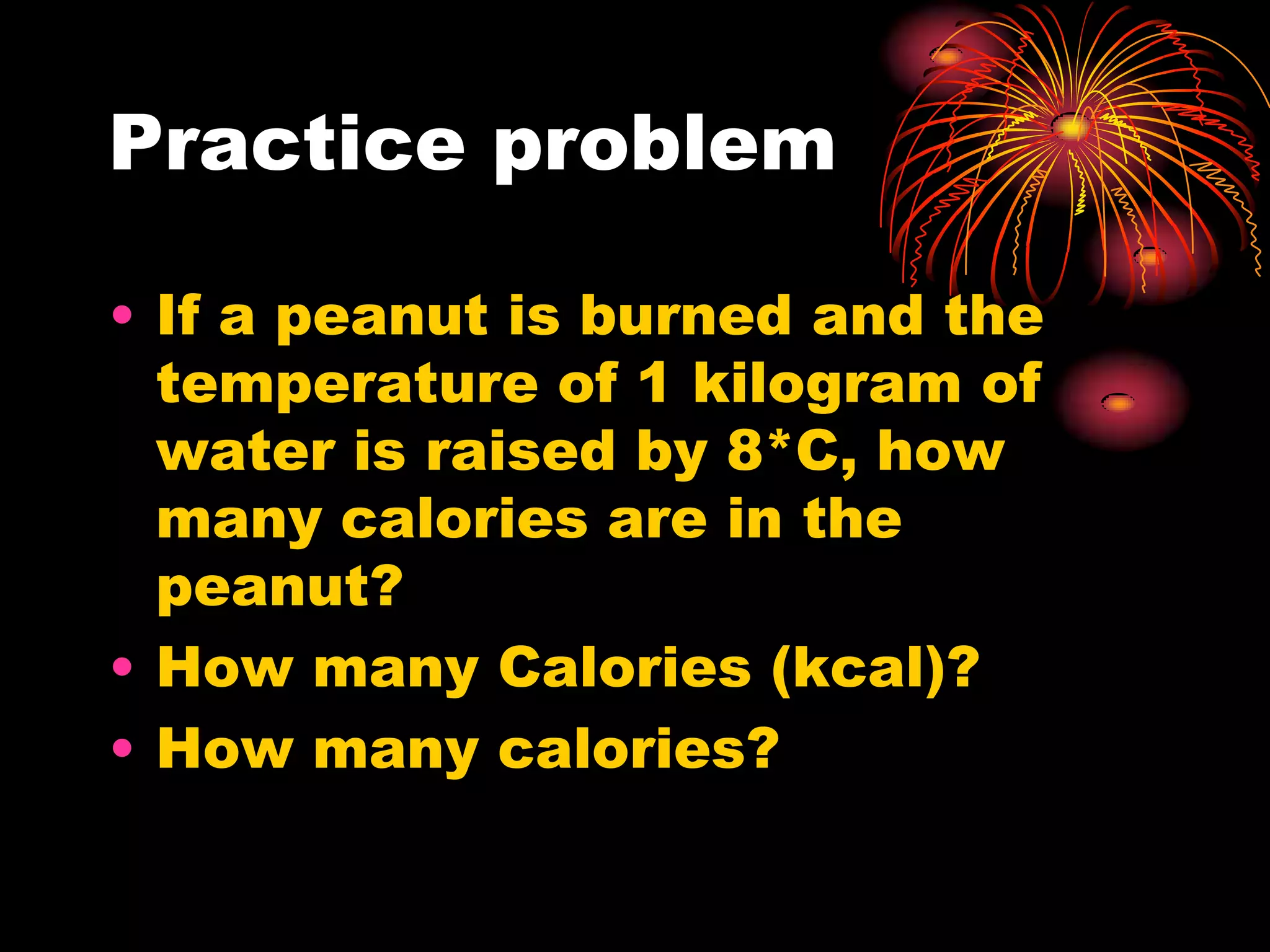
Practice problemIf a peanut is burned and the temperature of 1 kilogram of water is raised by 8*C, how many calories are in the peanut?How many Calories (kcal)?How many calories?
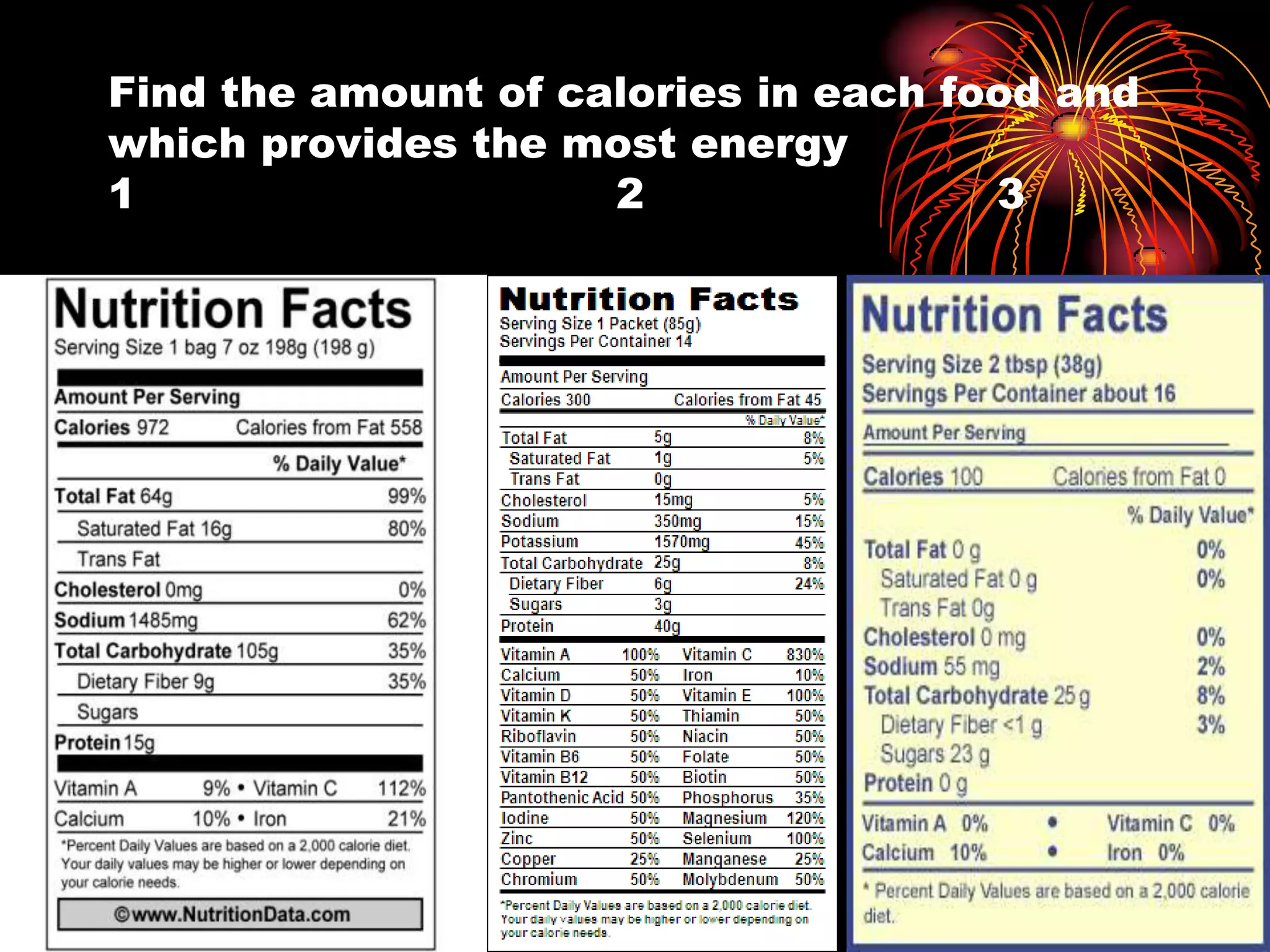
Find the amount of calories in each food and which provides the most energy1				2			3

Intro to cellular resp

  • 1.
    Energy and CellularRespirationChapter 7
  • 2.
    Cellular Respiration vs.PhotosynthesisFormulas
  • 3.
    Cellular Respiration vs.PhotosynthesisOrganellesMitochondriaEukaryotic cellsStructure is keyTwo membranesSpace between membranesMatrix makes up inner membraneLots of enzymes found here for chemical reactionsComplex folding=many sites for reactions to take placeMaximizes ATP productionChloroplastMore about this one later…
  • 4.
    EnergyHeat (thermal)Light (solar)ElectricalWhatcarries energy?Electrons (little energy packets)Negatively charged particleInvolved in making bonds between atomsElectromagnetic spectrum
  • 6.
    How is EnergyTransferred?Think food chain!First Law of Thermodynamics aka the Law of Conservation of EnergyE cannot be created or destroyed, only transferred (converted)
  • 7.
    Kinetic vs. PotentialEnergyof motionAnything moving or in motionEx.Climbing stairsLeg muscles workingStored energy due to an objects position or arrangementAs you climb up, you are getting higher, more gravitational pull, increase potential E
  • 8.
    Two Types ofKinetic EnergyDirected kinetic energyEx. Your body as it moves down slideRandom kinetic energy of molecular motionThermal energyEx. When your body collides with water. Air and water molecules are forced to move and collide at random, transferring energy
  • 9.
    Thermal EnergyCreated fromRandom molecular motion“Heat” is thermal energy that is transferred from warmer object to cooler object
  • 10.
    So exactly whathappens as you go down the slide?As you climb up the slideKinetic EWhen you reach top of slidepotential EAs you slide downdirected kinetic EWhen you hit water and stopRandom kinetic E of molecular motion
  • 11.
    You cannot retrievethermal energy, so you must get new source of energy to climb back up the slideWhat do you do?
  • 12.
    Eat food!Food iscomposed of organic compoundsCarbohydratesFats ProteinsAll rich in EThese organic compounds contain a form of potential energy we callCHEMICAL ENERGY
  • 13.
    Organic compoundsPotential todo work is in the arrangement of atoms in the moleculesAmount of potential energy depends on the structure of the moleculesWhen you break a bond, you release EEnergy now available for muscles to do workStructures of…ProteinsCarbohydratesFats
  • 15.
    Cells and Cars use CombustionCellsGlucoseOxygenEnergy to do workTransport, mechanical, chemicalReleases carbon dioxide and waterCarsHydrocarbons (in gasoline)OxygenEnergy to do mechanical workReleases carbon dioxide and water
  • 17.
    calorie Amount ofenergy required to raise the temperature of 1 g of water 1*CVery tinyNot practical to measure energy in foodExpress in kilocalories (kcal), or Calories, what is on the nutrition labelKHDmdcm
  • 18.
    Burning food…Changes chemicalenergy to thermal energy (releases heat)Measure increase of water temperature and definition of calorie to find out how much chemical energy is in food
  • 19.
    Practice problemIf apeanut is burned and the temperature of 1 kilogram of water is raised by 8*C, how many calories are in the peanut?How many Calories (kcal)?How many calories?
  • 20.
    Find the amountof calories in each food and which provides the most energy1 2 3