Life Skills
Life skills encompass a range of abilities that enable
effective functioning in academic, professional, and
personal settings.
These skills are crucial for success in the workplace
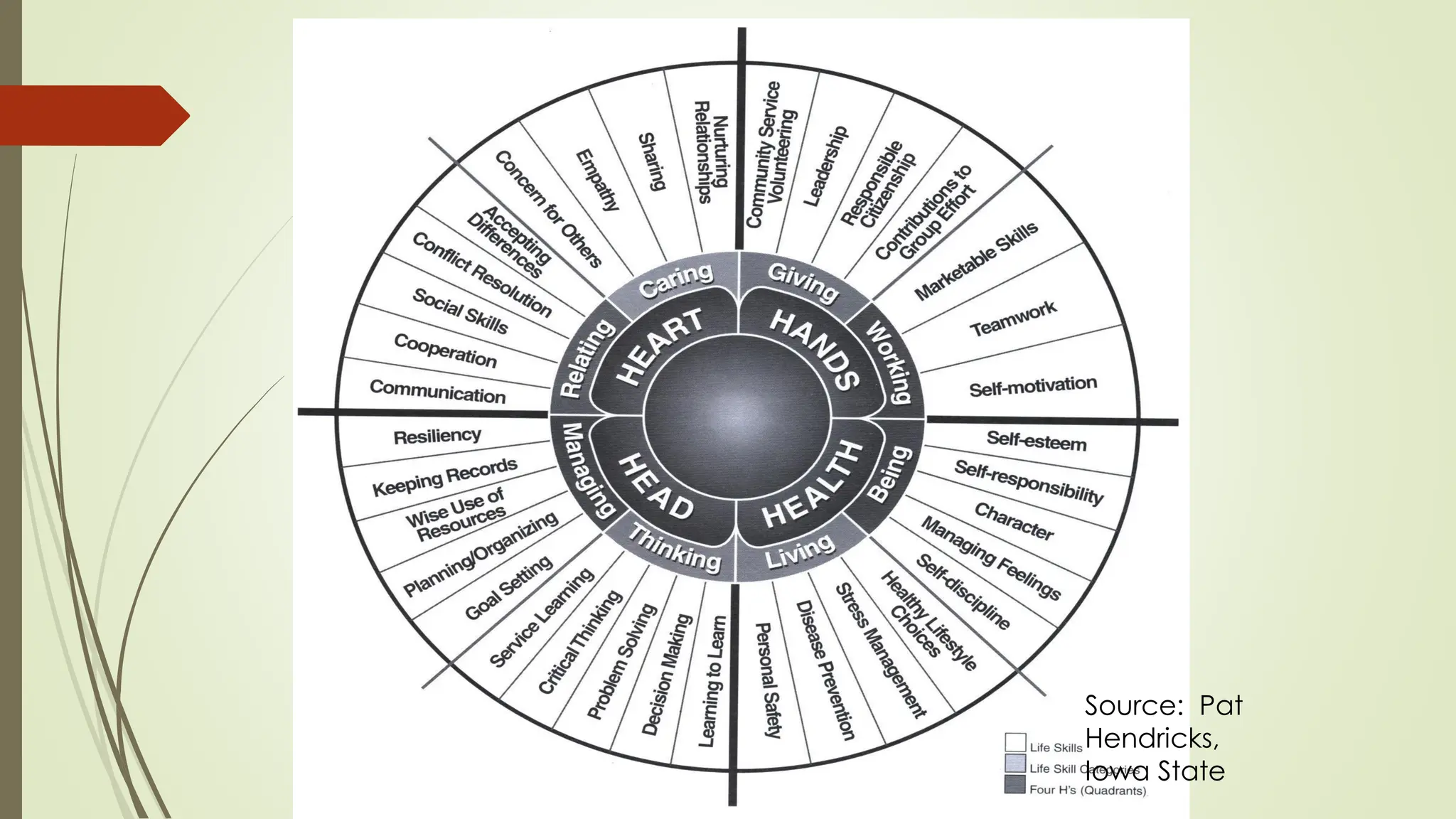
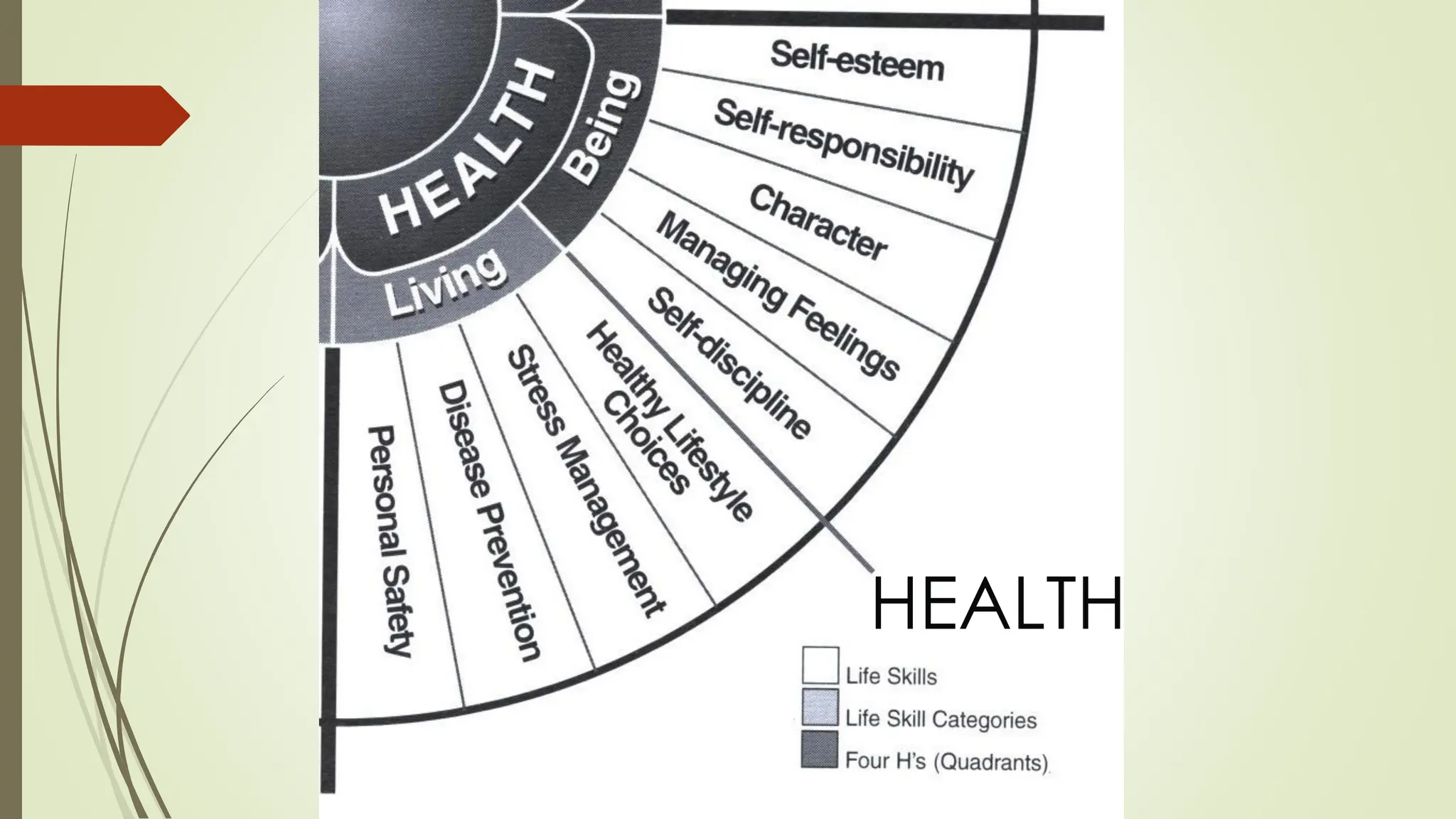
Targeting Life Skills Model
Source: Pat
Hendricks,
Iowa State
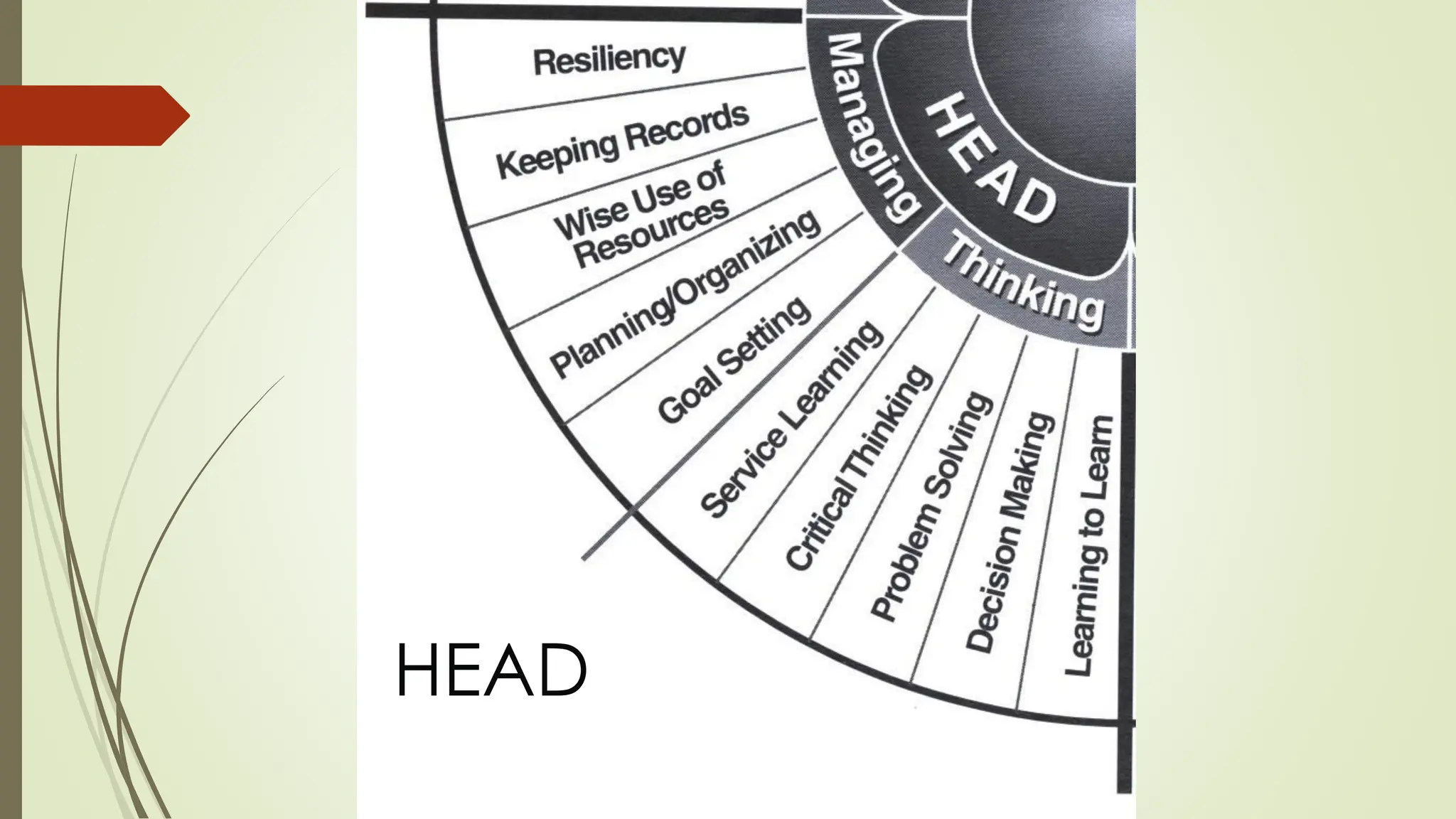
HEAD
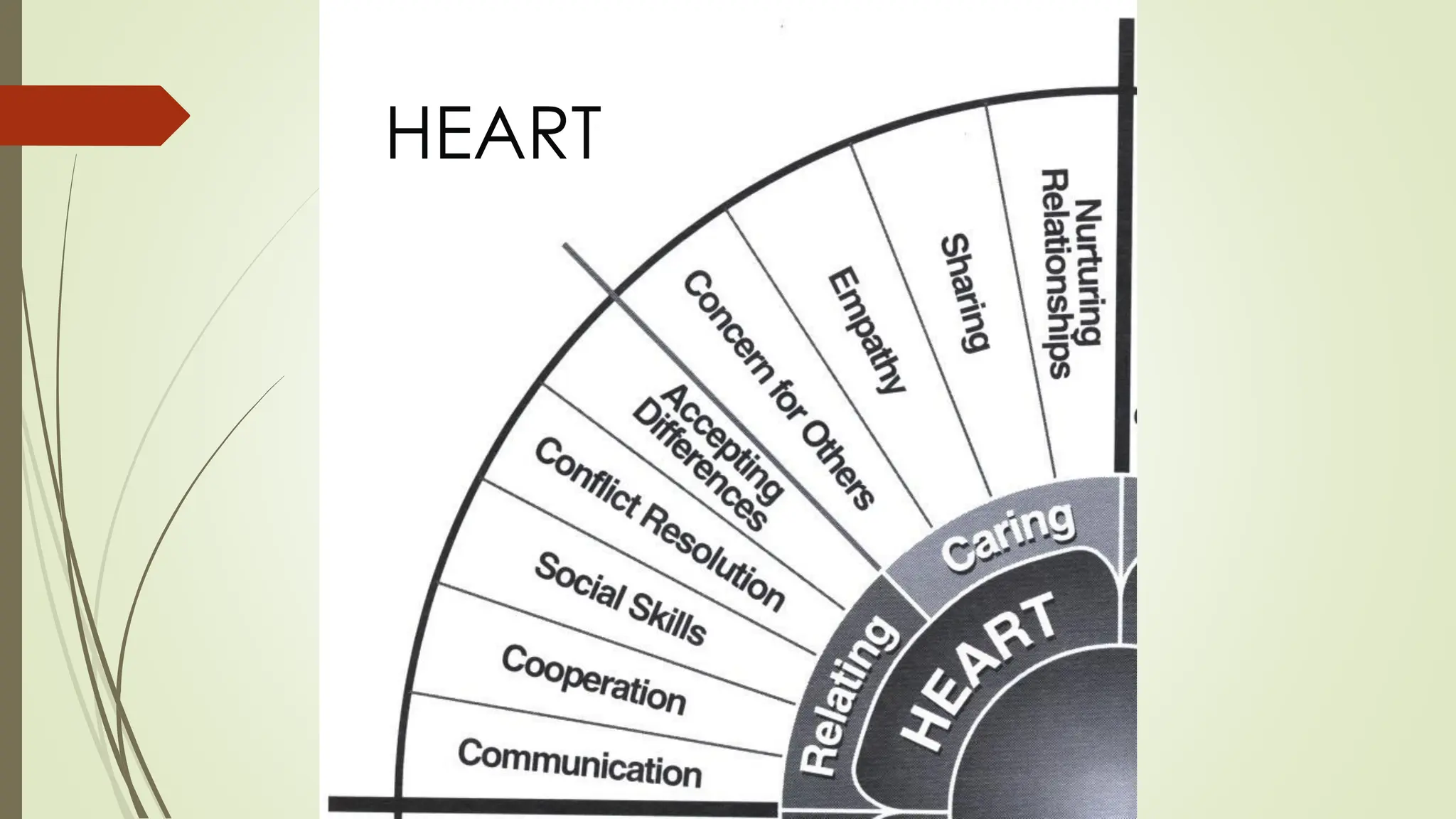
HEART
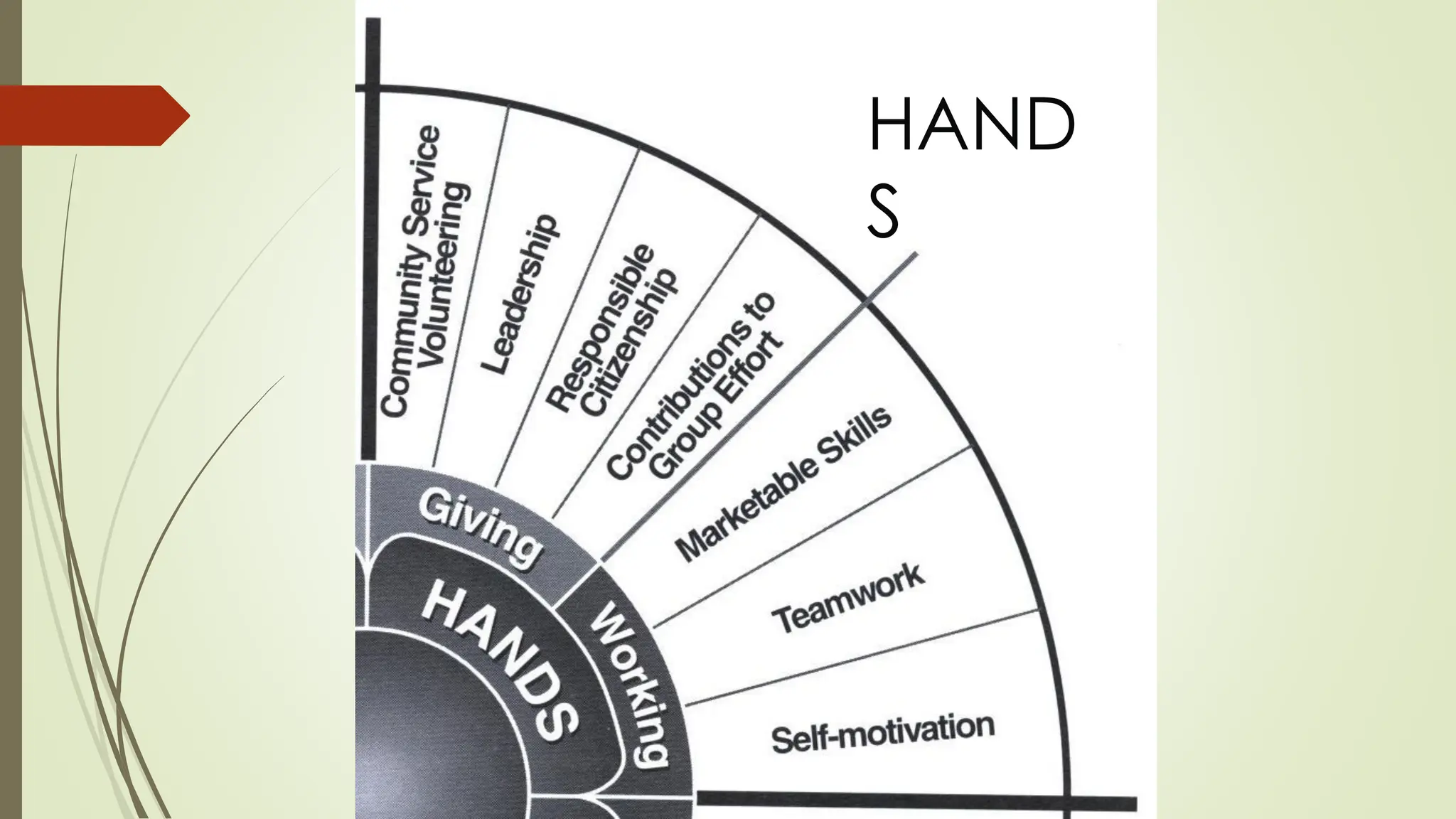
HAND
S
HEALTH
Self Awareness
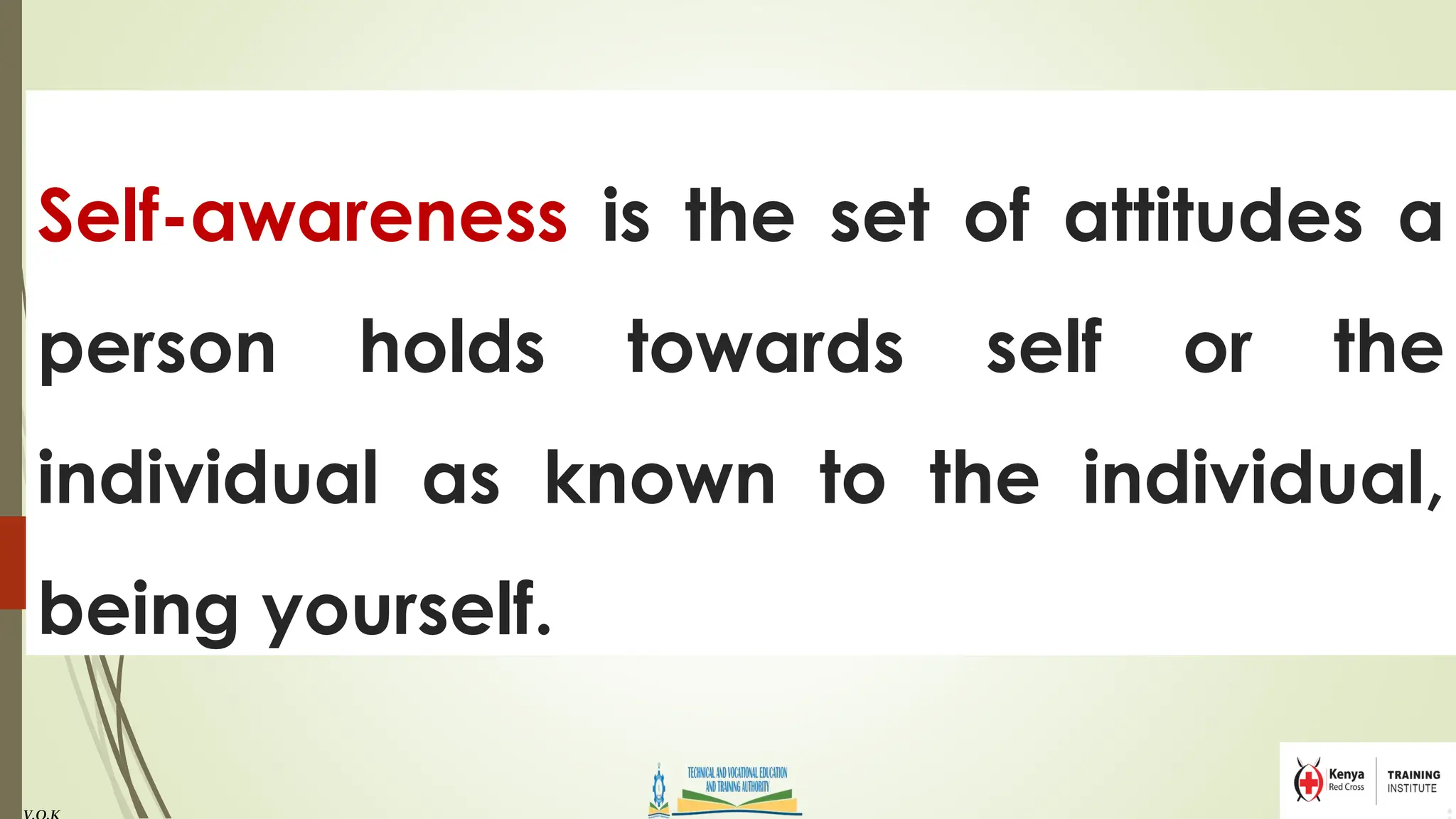
Self-awareness is the set of attitudes a
person holds towards self or the
individual as known to the individual,
being yourself.
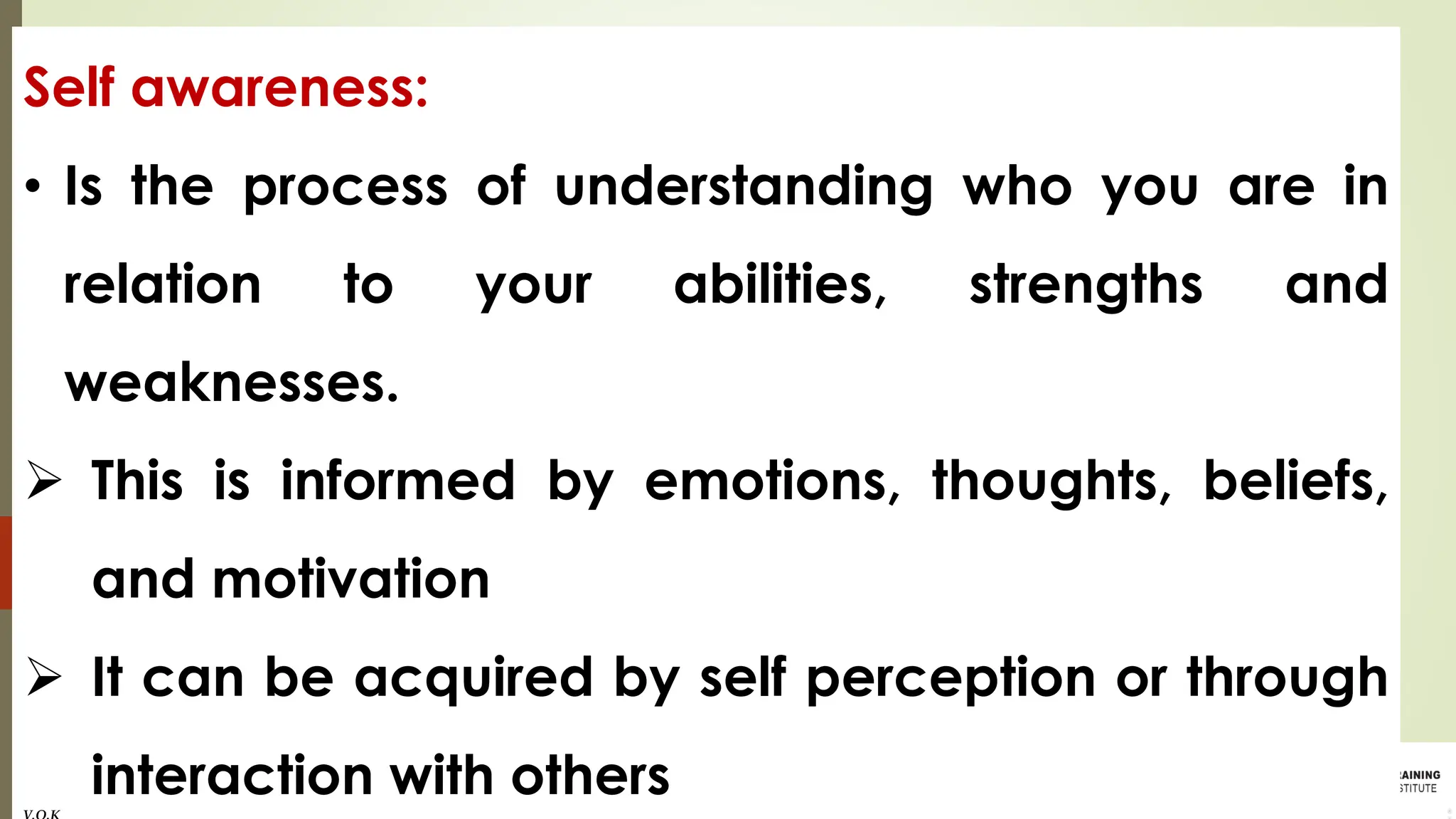
Self awareness:
• Is the process of understanding who you are in
relation to your abilities, strengths and
weaknesses.
➢ This is informed by emotions, thoughts, beliefs,
and motivation
➢ It can be acquired by self perception or through
interaction with others
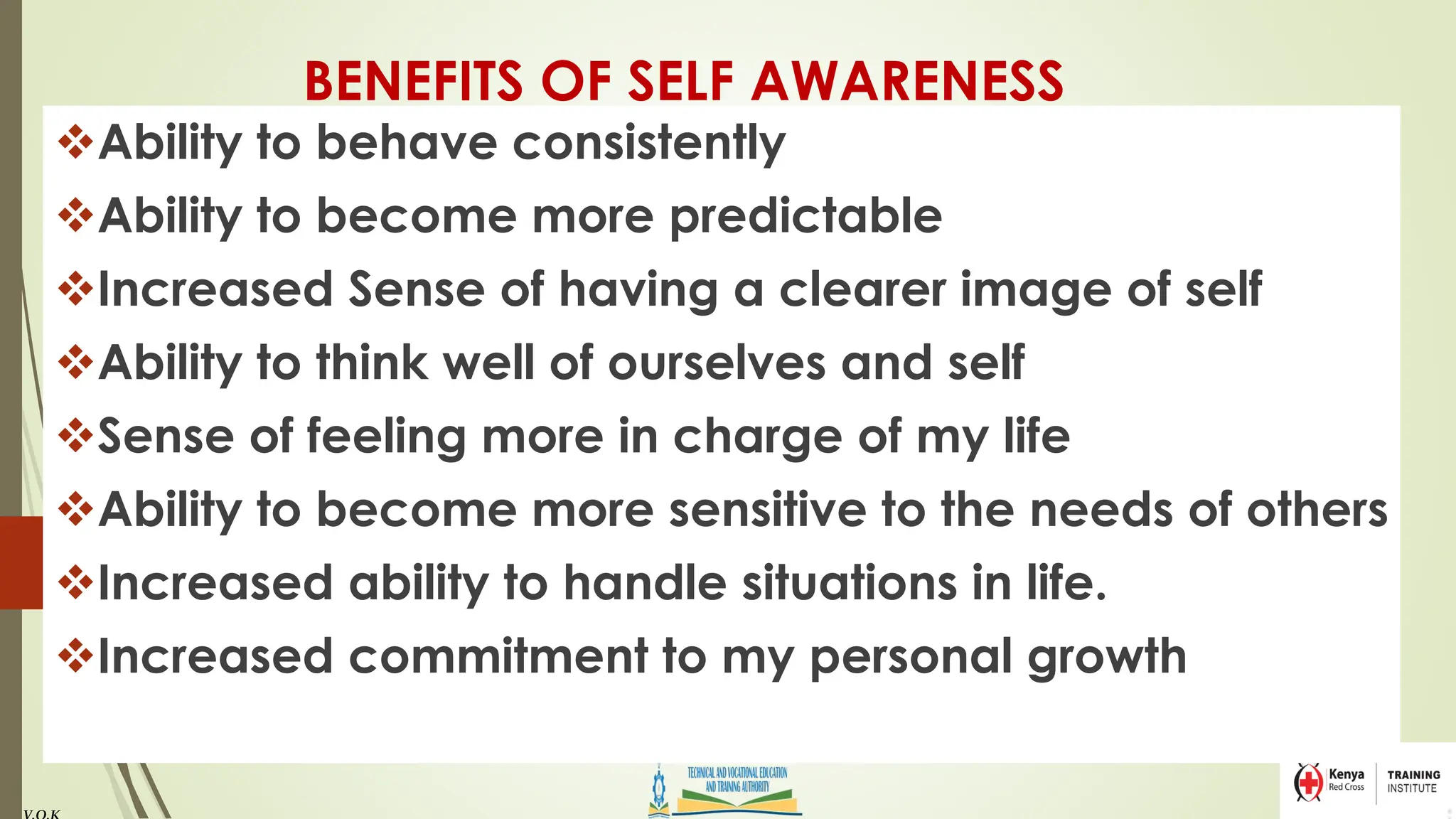
BENEFITS OF SELF AWARENESS
❖Ability to behave consistently
❖Ability to become more predictable
❖Increased Sense of having a clearer image of self
❖Ability to think well of ourselves and self
❖Sense of feeling more in charge of my life
❖Ability to become more sensitive to the needs of others
❖Increased ability to handle situations in life.
❖Increased commitment to my personal growth
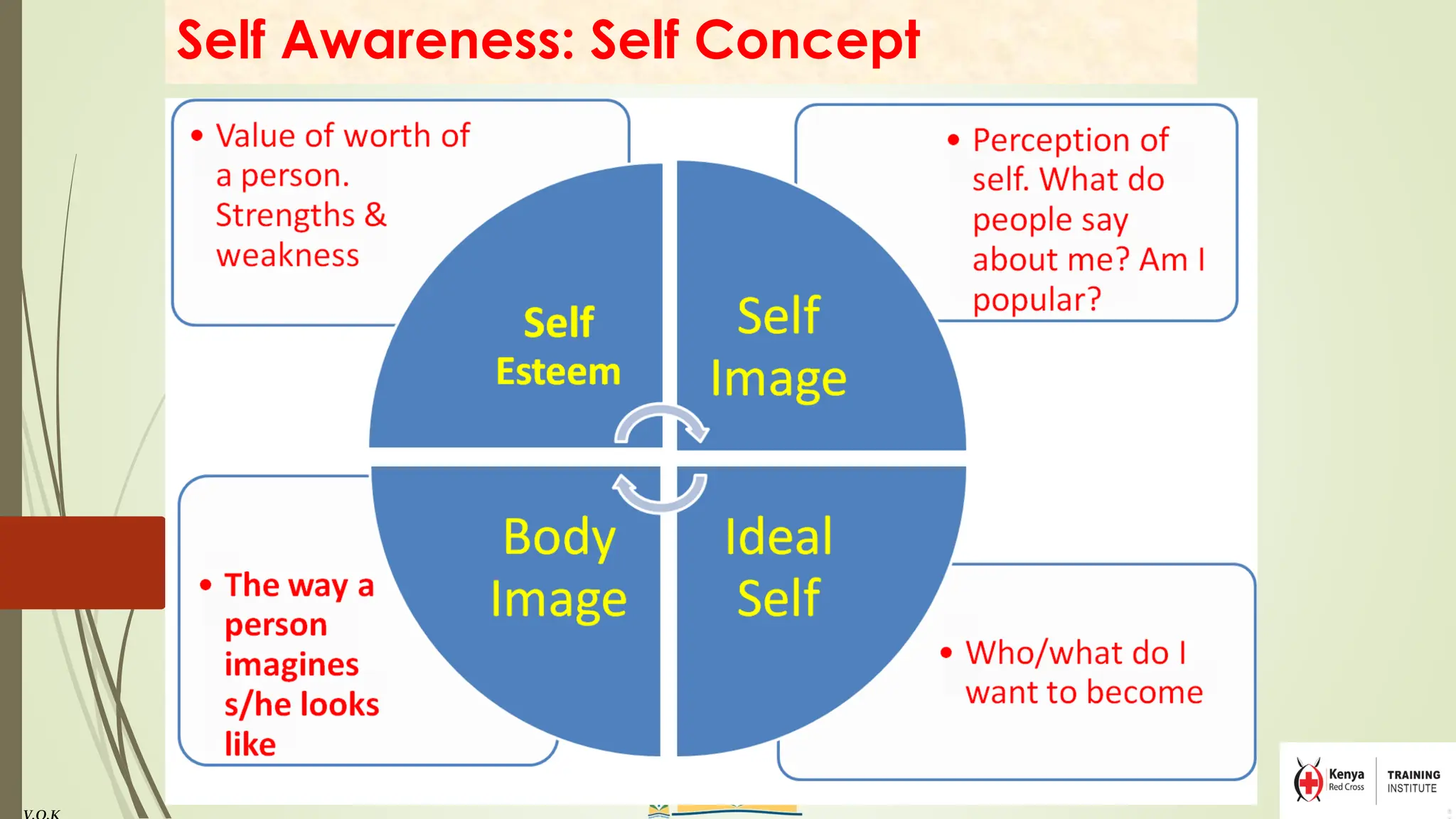
Self Awareness: Self Concept
Johari
Window
d
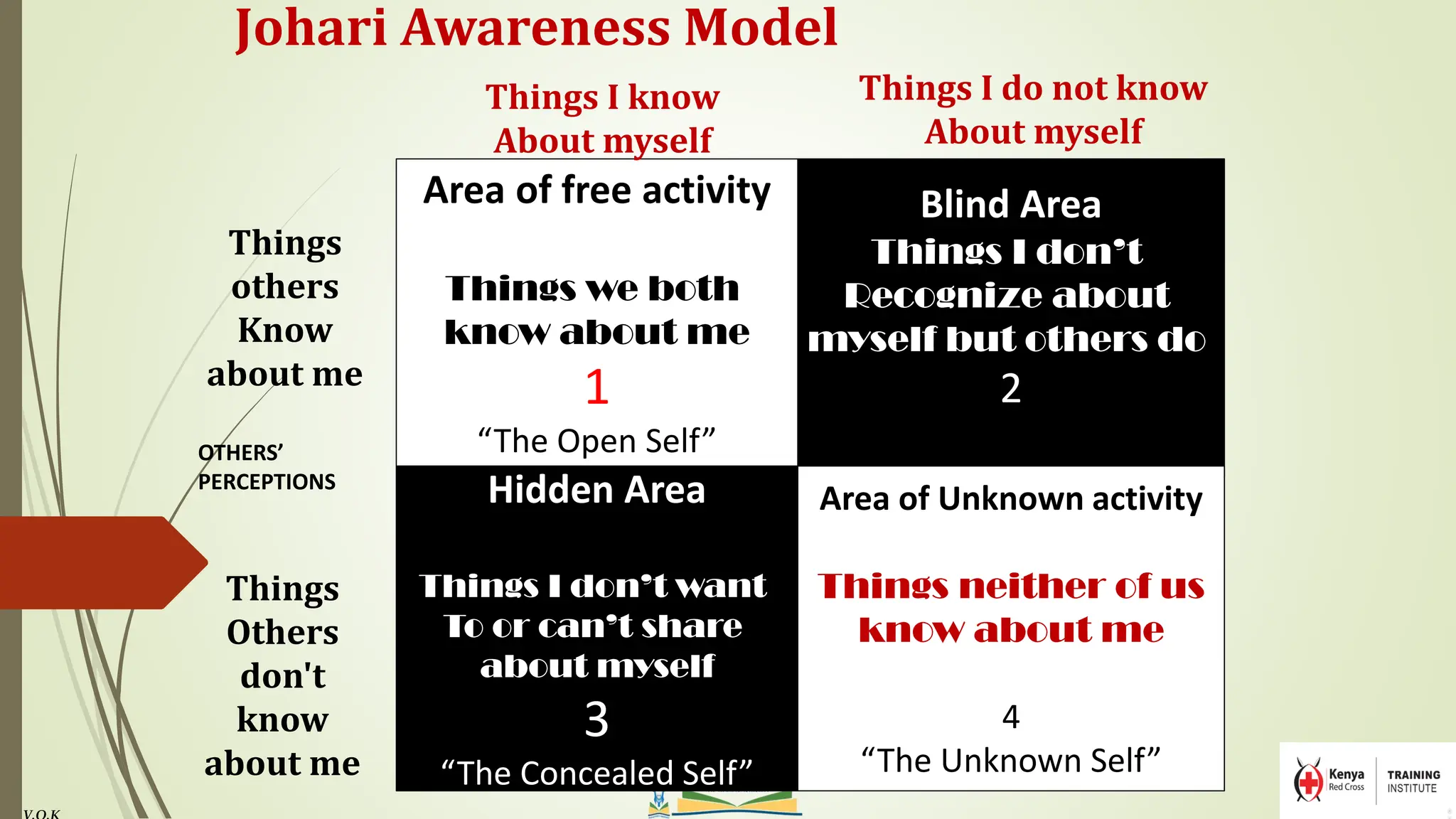
Johari Awareness Model
Area of free activity
Things we both
know about me
1
“The Open Self”
Blind Area
Things I don’t
Recognize about
myself but others do
2
“The Blind Self”
Hidden Area
Things I don’t want
To or can’t share
about myself
3
“The Concealed Self”
Area of Unknown activity
Things neither of us
know about me
4
“The Unknown Self”
Things I do not know
About myself
Things I know
About myself
Things
Others
don't
know
about me
OTHERS’
PERCEPTIONS
Things
others
Know
about me
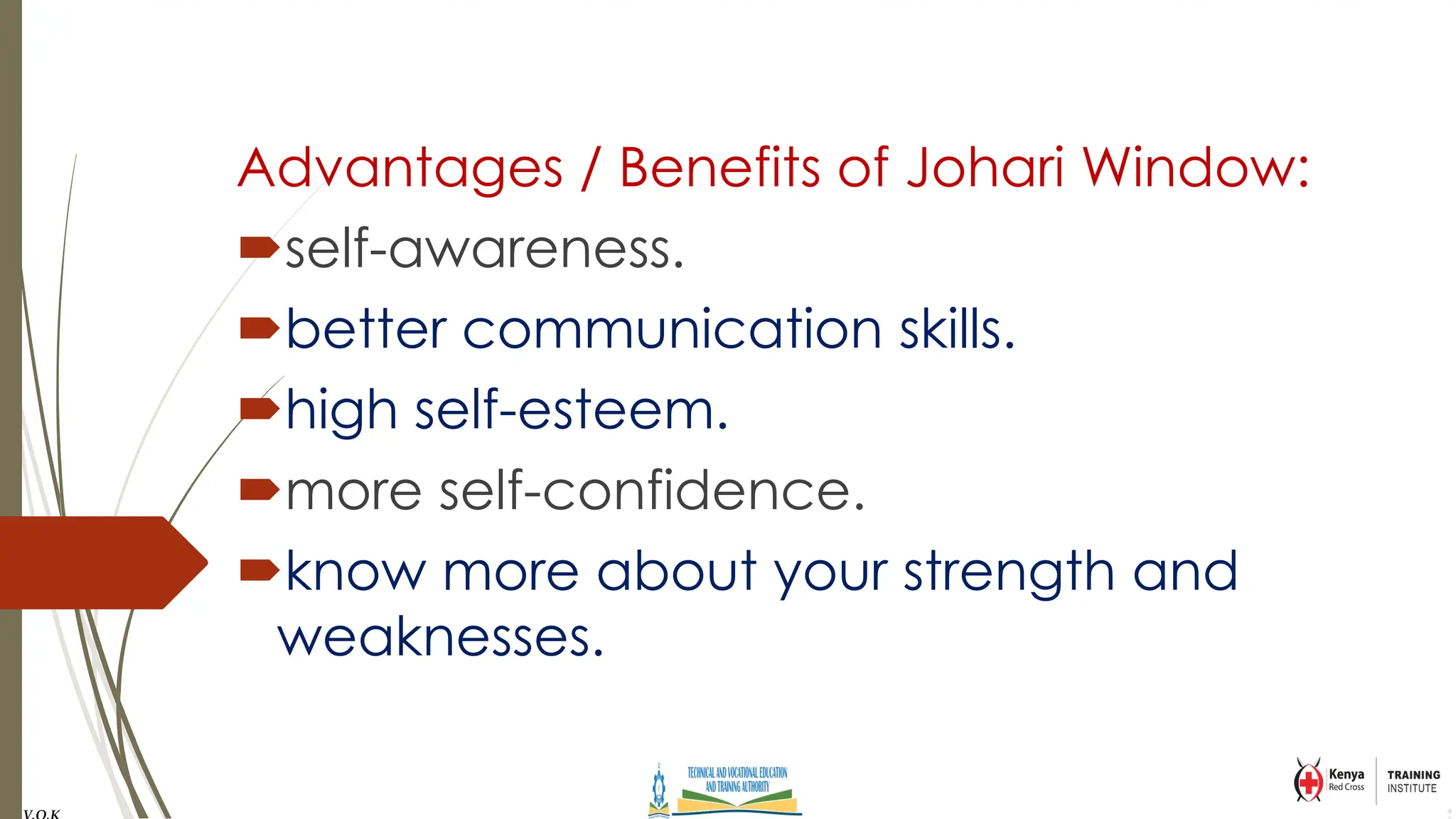
Advantages / Benefits of Johari Window:
self-awareness.
better communication skills.
high self-esteem.
more self-confidence.
know more about your strength and
weaknesses.
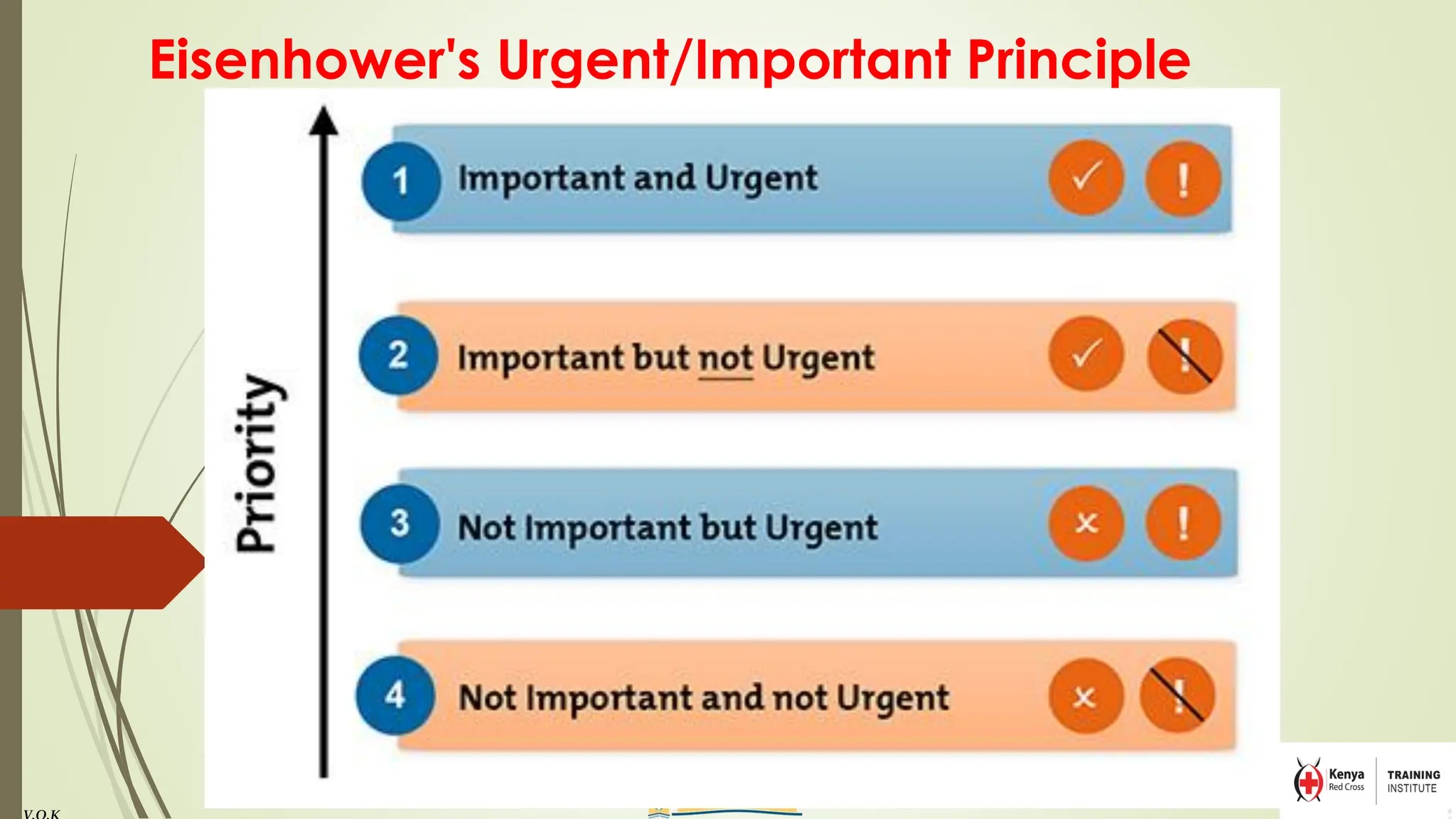
Eisenhower's Urgent/Important Principle
A) Important: These are those tasks that contribute to our long-term
goals, mission, and values. When we react to important matters, they
often make us operate on a responsive mode which helps us to remain
calm, rational, and open to new opportunities.
B) Urgent: Means that the task requires immediate attention. They usually
put us in a reactive mode and therefore may make us become defensive,
negative, hurried, and narrow-minded.
NOTE: We often fall into the trap of believing that all urgent matters are
important.
Important vs urgent…
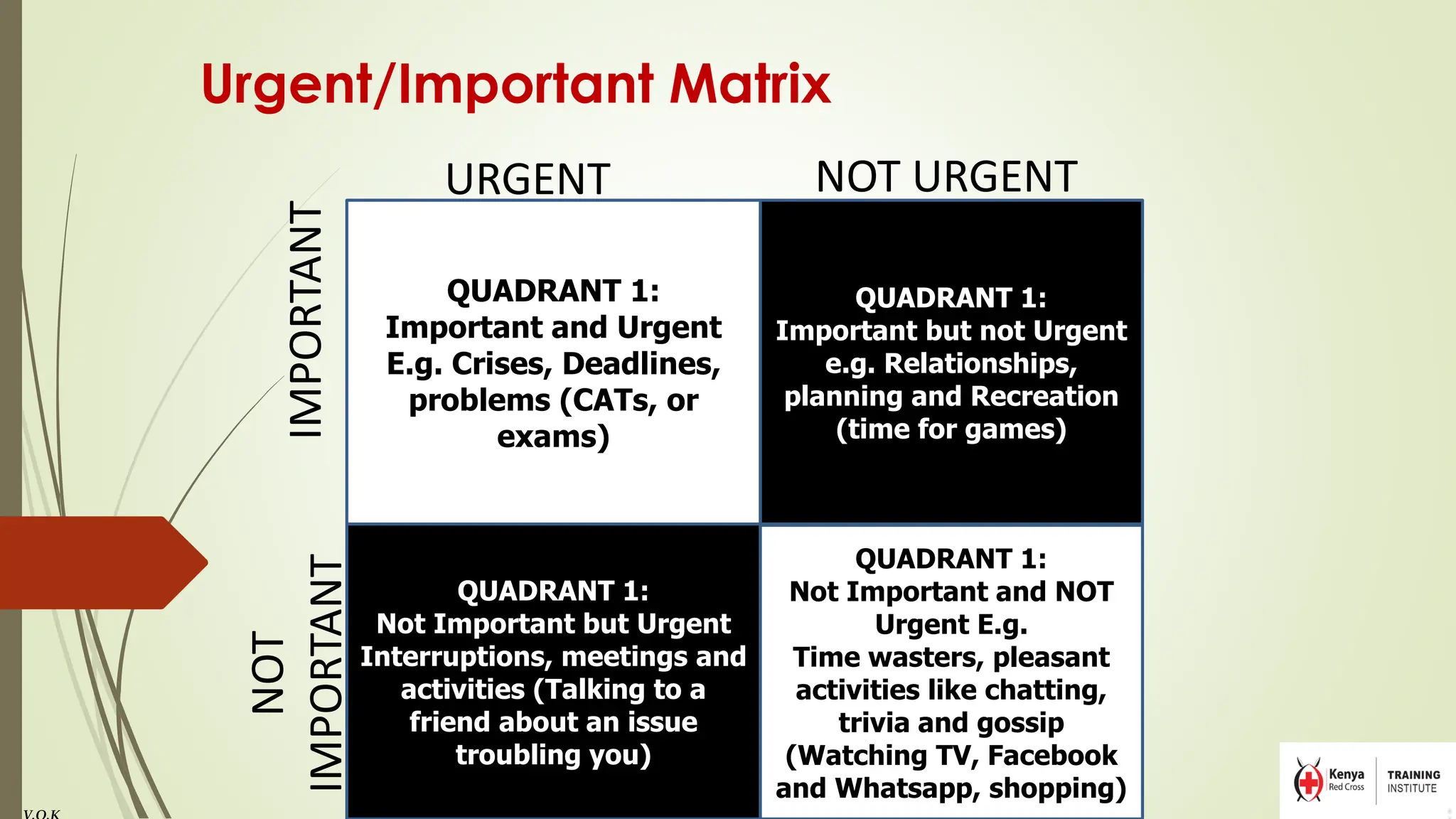
Urgent/Important Matrix
QUADRANT 1:
Not Important and NOT
Urgent E.g.
Time wasters, pleasant
activities like chatting,
trivia and gossip
(Watching TV, Facebook
and Whatsapp, shopping)
QUADRANT 1:
Not Important but Urgent
Interruptions, meetings and
activities (Talking to a
friend about an issue
troubling you)
QUADRANT 1:
Important but not Urgent
e.g. Relationships,
planning and Recreation
(time for games)
QUADRANT 1:
Important and Urgent
E.g. Crises, Deadlines,
problems (CATs, or
exams)
URGENT NOT URGENT
IMPORTANT
NOT
IMPORTANT
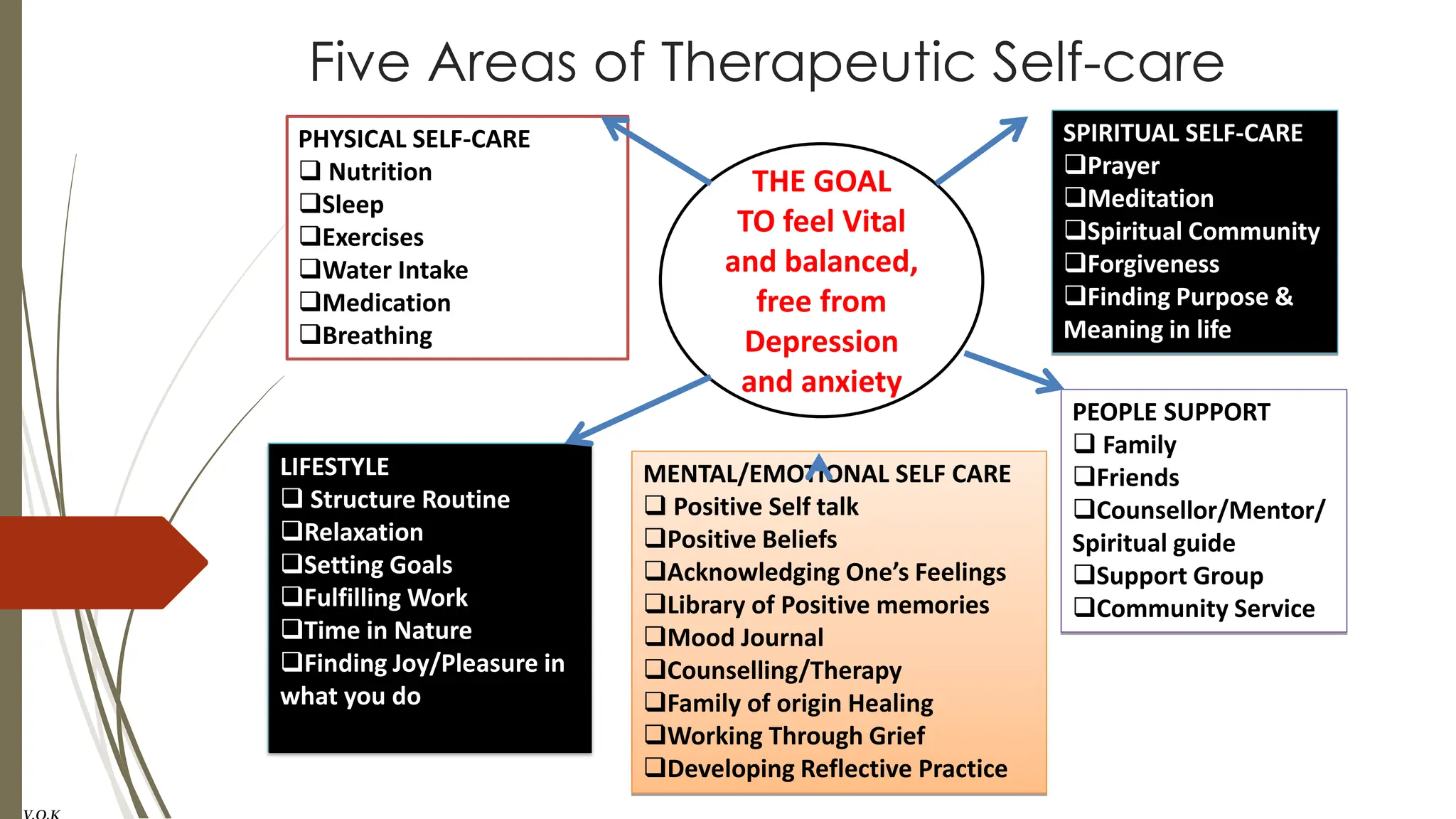
Five Areas of Therapeutic Self-care
THE GOAL
TO feel Vital
and balanced,
free from
Depression
and anxiety
SPIRITUAL SELF-CARE
❑Prayer
❑Meditation
❑Spiritual Community
❑Forgiveness
❑Finding Purpose &
Meaning in life
PEOPLE SUPPORT
❑ Family
❑Friends
❑Counsellor/Mentor/
Spiritual guide
❑Support Group
❑Community Service
MENTAL/EMOTIONAL SELF CARE
❑ Positive Self talk
❑Positive Beliefs
❑Acknowledging One’s Feelings
❑Library of Positive memories
❑Mood Journal
❑Counselling/Therapy
❑Family of origin Healing
❑Working Through Grief
❑Developing Reflective Practice
LIFESTYLE
❑ Structure Routine
❑Relaxation
❑Setting Goals
❑Fulfilling Work
❑Time in Nature
❑Finding Joy/Pleasure in
what you do
PHYSICAL SELF-CARE
❑ Nutrition
❑Sleep
❑Exercises
❑Water Intake
❑Medication
❑Breathing
Self Awareness for classes on life skills for college students and professors.

  • 1.
  • 2.
    Life skills encompassa range of abilities that enable effective functioning in academic, professional, and personal settings. These skills are crucial for success in the workplace
  • 3.
    Targeting Life SkillsModel Source: Pat Hendricks, Iowa State
  • 4.
  • 5.
  • 6.
  • 7.
  • 8.
  • 9.
    Self-awareness is theset of attitudes a person holds towards self or the individual as known to the individual, being yourself.
  • 10.
    Self awareness: • Isthe process of understanding who you are in relation to your abilities, strengths and weaknesses. ➢ This is informed by emotions, thoughts, beliefs, and motivation ➢ It can be acquired by self perception or through interaction with others
  • 11.
    BENEFITS OF SELFAWARENESS ❖Ability to behave consistently ❖Ability to become more predictable ❖Increased Sense of having a clearer image of self ❖Ability to think well of ourselves and self ❖Sense of feeling more in charge of my life ❖Ability to become more sensitive to the needs of others ❖Increased ability to handle situations in life. ❖Increased commitment to my personal growth
  • 12.
  • 13.
  • 14.
    Johari Awareness Model Areaof free activity Things we both know about me 1 “The Open Self” Blind Area Things I don’t Recognize about myself but others do 2 “The Blind Self” Hidden Area Things I don’t want To or can’t share about myself 3 “The Concealed Self” Area of Unknown activity Things neither of us know about me 4 “The Unknown Self” Things I do not know About myself Things I know About myself Things Others don't know about me OTHERS’ PERCEPTIONS Things others Know about me
  • 15.
    Advantages / Benefitsof Johari Window: self-awareness. better communication skills. high self-esteem. more self-confidence. know more about your strength and weaknesses.
  • 16.
  • 17.
    A) Important: Theseare those tasks that contribute to our long-term goals, mission, and values. When we react to important matters, they often make us operate on a responsive mode which helps us to remain calm, rational, and open to new opportunities. B) Urgent: Means that the task requires immediate attention. They usually put us in a reactive mode and therefore may make us become defensive, negative, hurried, and narrow-minded. NOTE: We often fall into the trap of believing that all urgent matters are important. Important vs urgent…
  • 18.
    Urgent/Important Matrix QUADRANT 1: NotImportant and NOT Urgent E.g. Time wasters, pleasant activities like chatting, trivia and gossip (Watching TV, Facebook and Whatsapp, shopping) QUADRANT 1: Not Important but Urgent Interruptions, meetings and activities (Talking to a friend about an issue troubling you) QUADRANT 1: Important but not Urgent e.g. Relationships, planning and Recreation (time for games) QUADRANT 1: Important and Urgent E.g. Crises, Deadlines, problems (CATs, or exams) URGENT NOT URGENT IMPORTANT NOT IMPORTANT
  • 19.
    Five Areas ofTherapeutic Self-care THE GOAL TO feel Vital and balanced, free from Depression and anxiety SPIRITUAL SELF-CARE ❑Prayer ❑Meditation ❑Spiritual Community ❑Forgiveness ❑Finding Purpose & Meaning in life PEOPLE SUPPORT ❑ Family ❑Friends ❑Counsellor/Mentor/ Spiritual guide ❑Support Group ❑Community Service MENTAL/EMOTIONAL SELF CARE ❑ Positive Self talk ❑Positive Beliefs ❑Acknowledging One’s Feelings ❑Library of Positive memories ❑Mood Journal ❑Counselling/Therapy ❑Family of origin Healing ❑Working Through Grief ❑Developing Reflective Practice LIFESTYLE ❑ Structure Routine ❑Relaxation ❑Setting Goals ❑Fulfilling Work ❑Time in Nature ❑Finding Joy/Pleasure in what you do PHYSICAL SELF-CARE ❑ Nutrition ❑Sleep ❑Exercises ❑Water Intake ❑Medication ❑Breathing