










Internet Noise (1.1.1.0/24 and 1.0.0.0/24)
Tom Paseka
Adapted from Louis Poinsignon’s RIPE76 Presentation
Introduction to Cloudflare
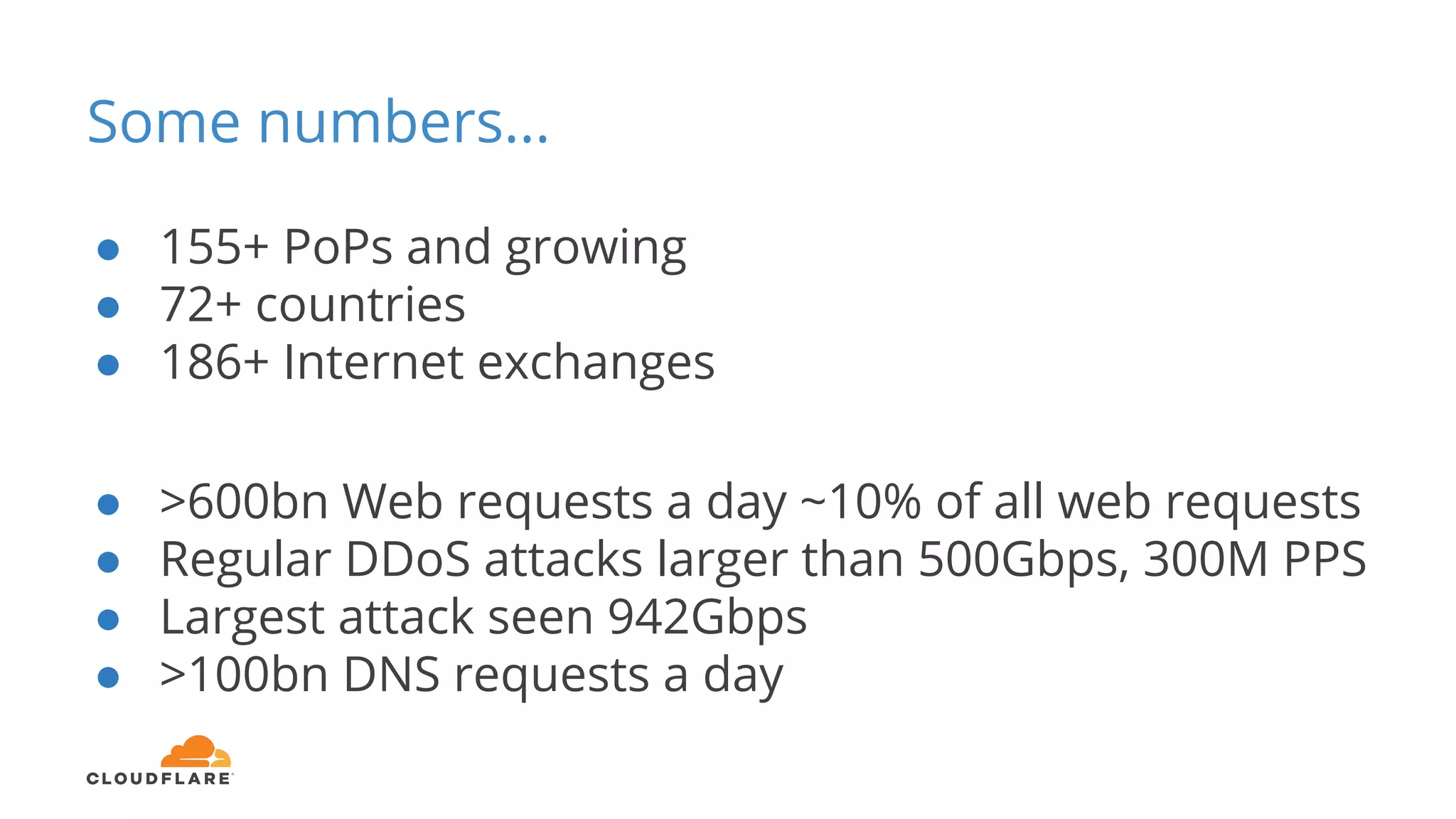
Some numbers...
● 155+ PoPs and growing
● 72+ countries
● 186+ Internet exchanges
● >600bn Web requests a day ~10% of all web requests
● Regular DDoS attacks larger than 500Gbps, 300M PPS
● Largest attack seen 942Gbps
● >100bn DNS requests a day
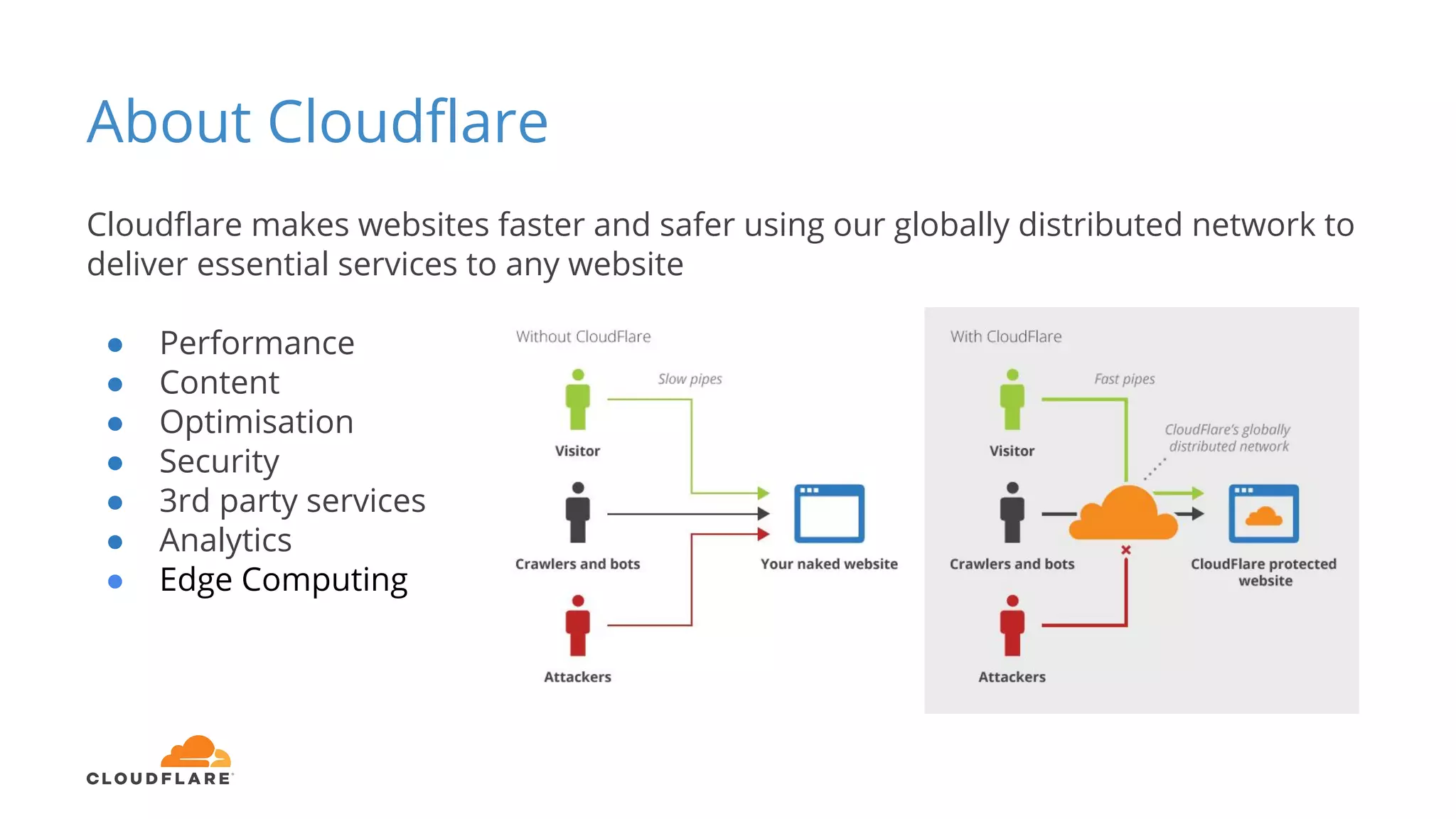
About Cloudflare
Cloudflare makes websites faster and safer using our globally distributed network to
deliver essential services to any website
● Performance
● Content
● Optimisation
● Security
● 3rd party services
● Analytics
● Edge Computing
Who am I
Who am I?
● Tom Paseka
● Network Strategy @ Cloudflare
● Built huge amount of Cloudflare’s network.
● Worked in APAC/Australian ISPs for some time
● Thinking about the next generation of Cloudflare’s
network
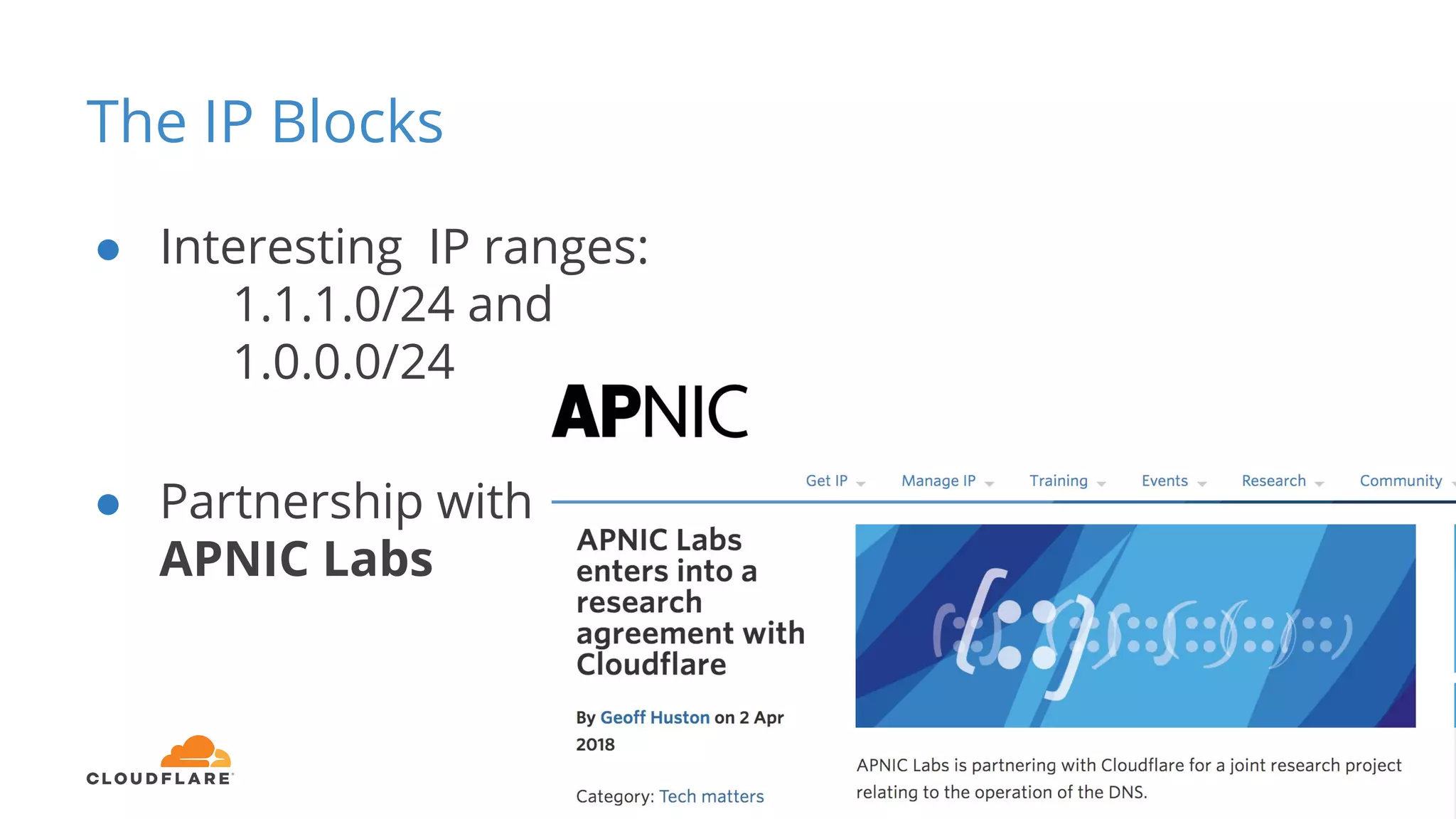
The IP Blocks
The IP Blocks
● Interesting IP ranges:
1.1.1.0/24 and
1.0.0.0/24
● Partnership with
APNIC Labs
The IP Blocks
Let’s talk about Internet noise.
Known to receive unwanted traffic:
● Misconfigurations
● Misuse
○ Proxy
○ Internal use
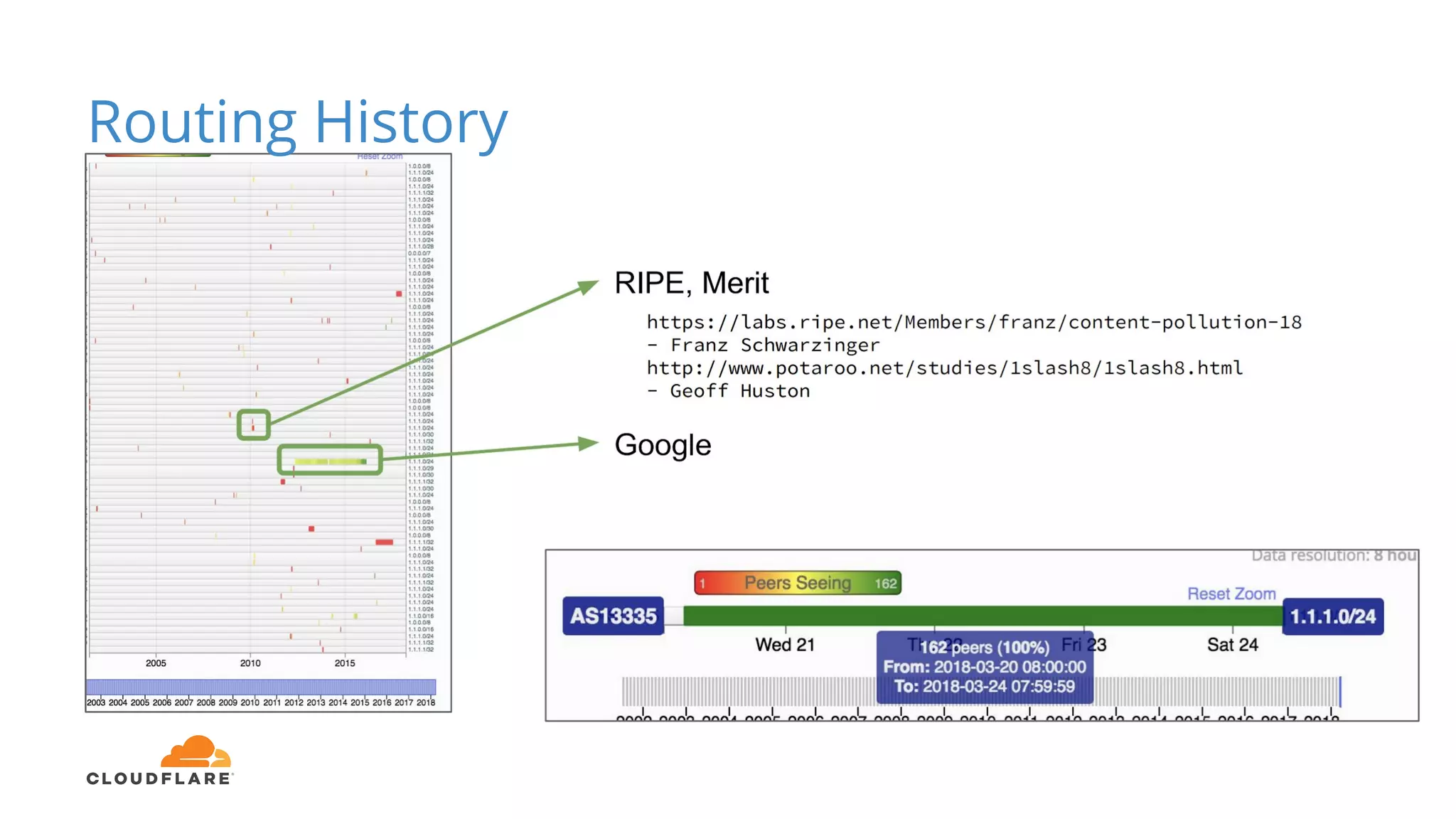
Routing History
What’s the Noise / Junk?
Traffic Levels
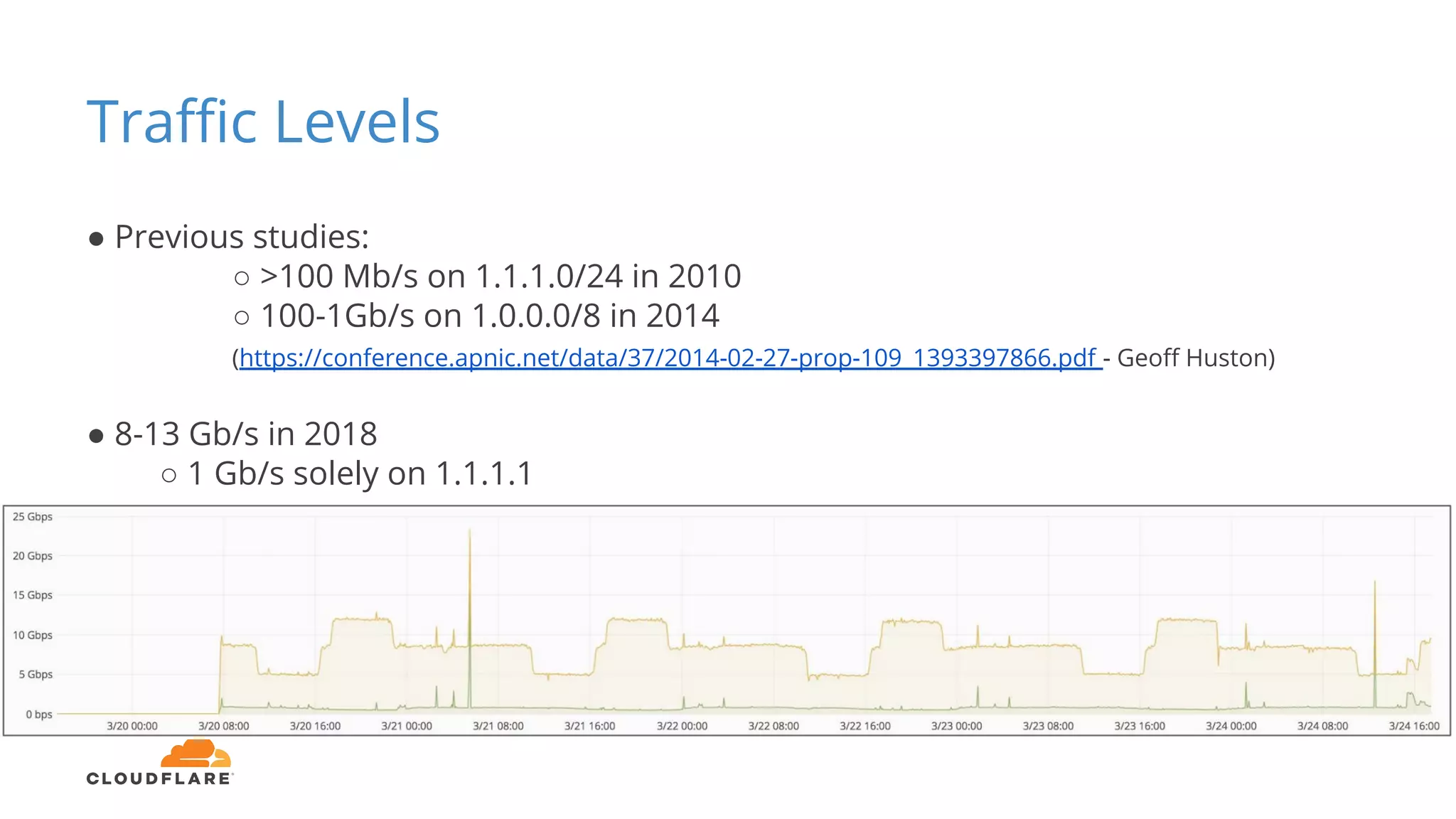
● Previous studies:
○ >100 Mb/s on 1.1.1.0/24 in 2010
○ 100-1Gb/s on 1.0.0.0/8 in 2014
(https://conference.apnic.net/data/37/2014-02-27-prop-109_1393397866.pdf - Geoff Huston)
● 8-13 Gb/s in 2018
○ 1 Gb/s solely on 1.1.1.1
Traffic Levels
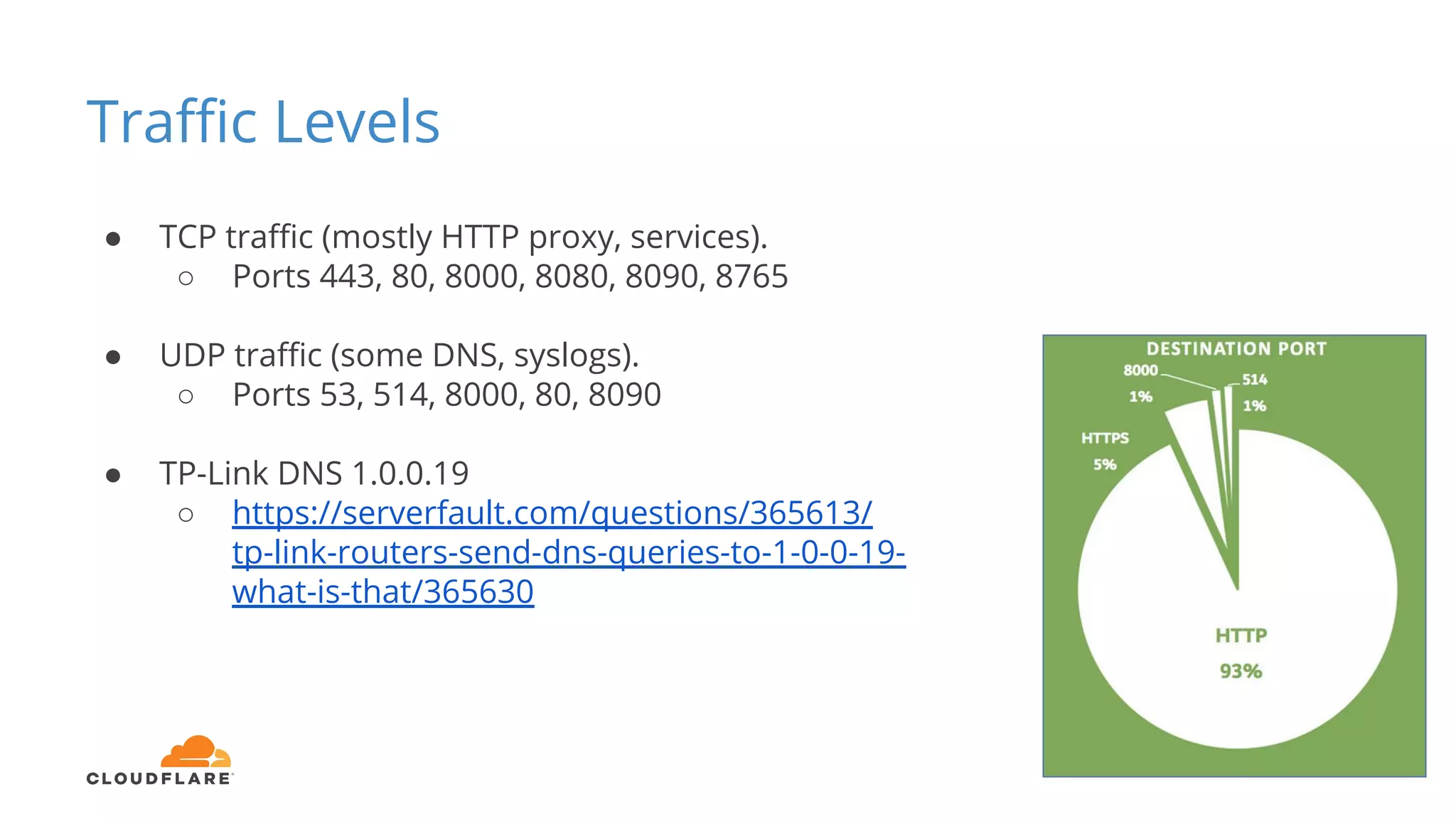
● TCP traffic (mostly HTTP proxy, services).
○ Ports 443, 80, 8000, 8080, 8090, 8765
● UDP traffic (some DNS, syslogs).
○ Ports 53, 514, 8000, 80, 8090
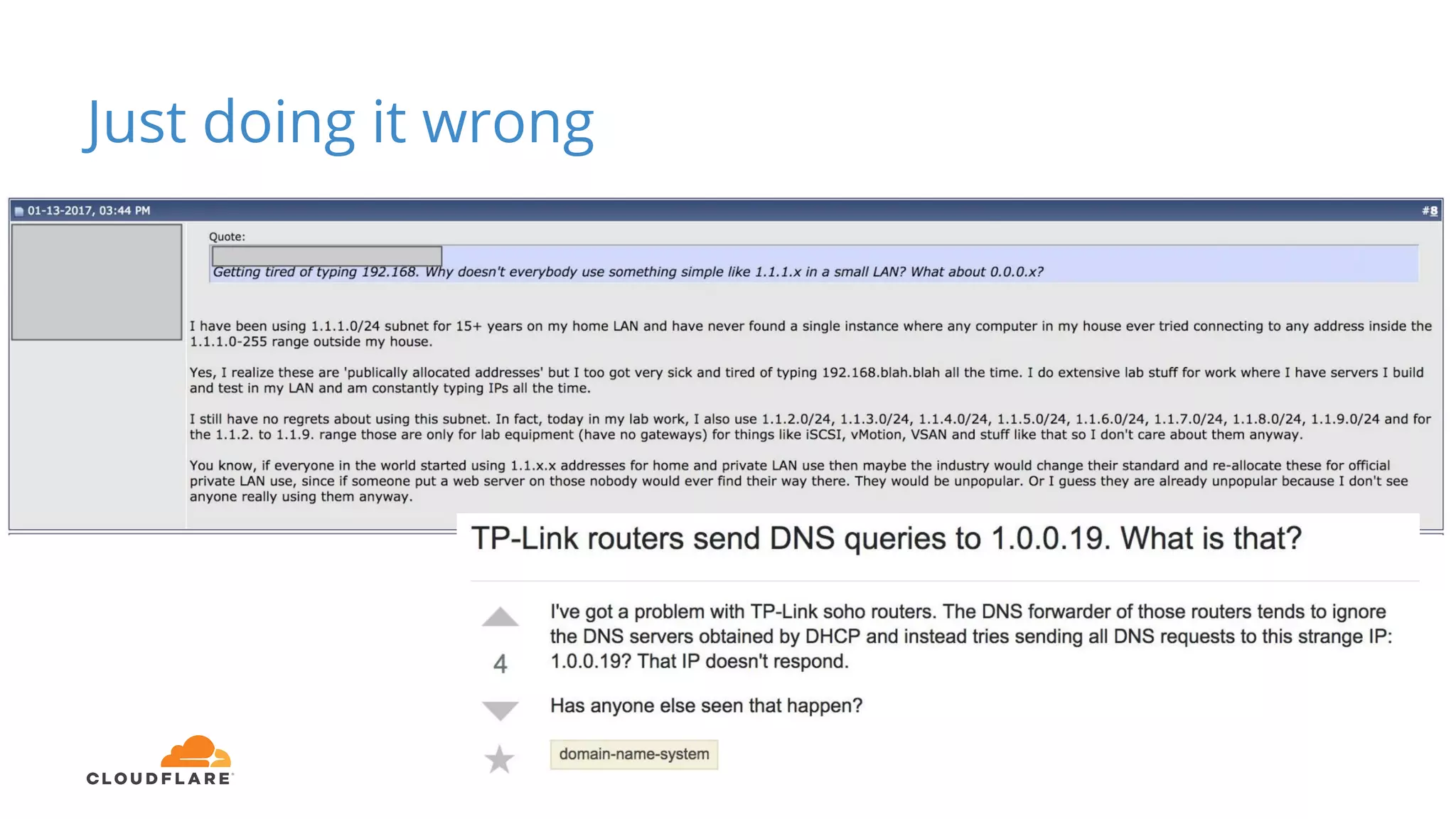
● TP-Link DNS 1.0.0.19
○ https://serverfault.com/questions/365613/
tp-link-routers-send-dns-queries-to-1-0-0-19-
what-is-that/365630
Traffic source
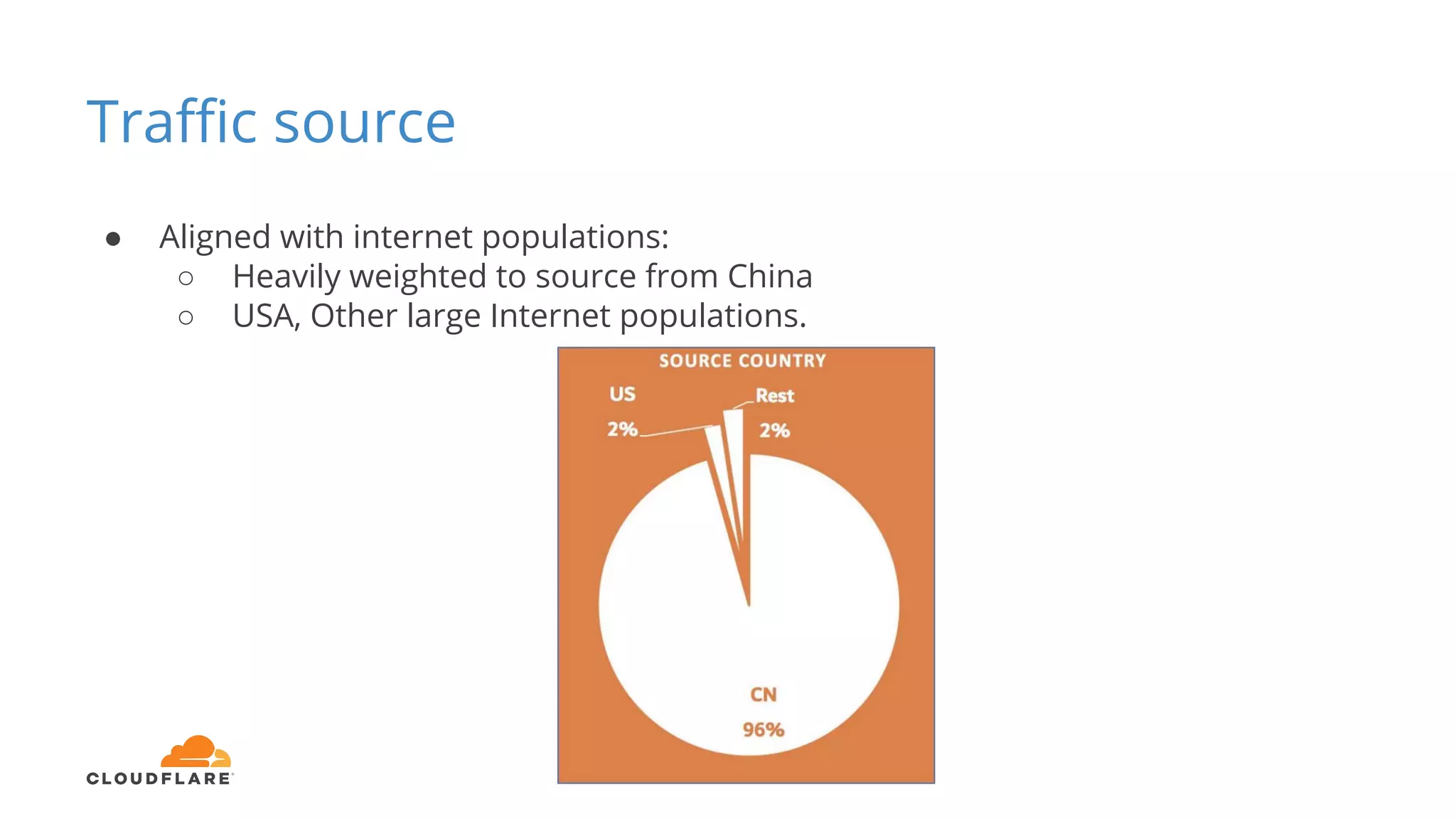
● Aligned with internet populations:
○ Heavily weighted to source from China
○ USA, Other large Internet populations.
Bursts and patterns
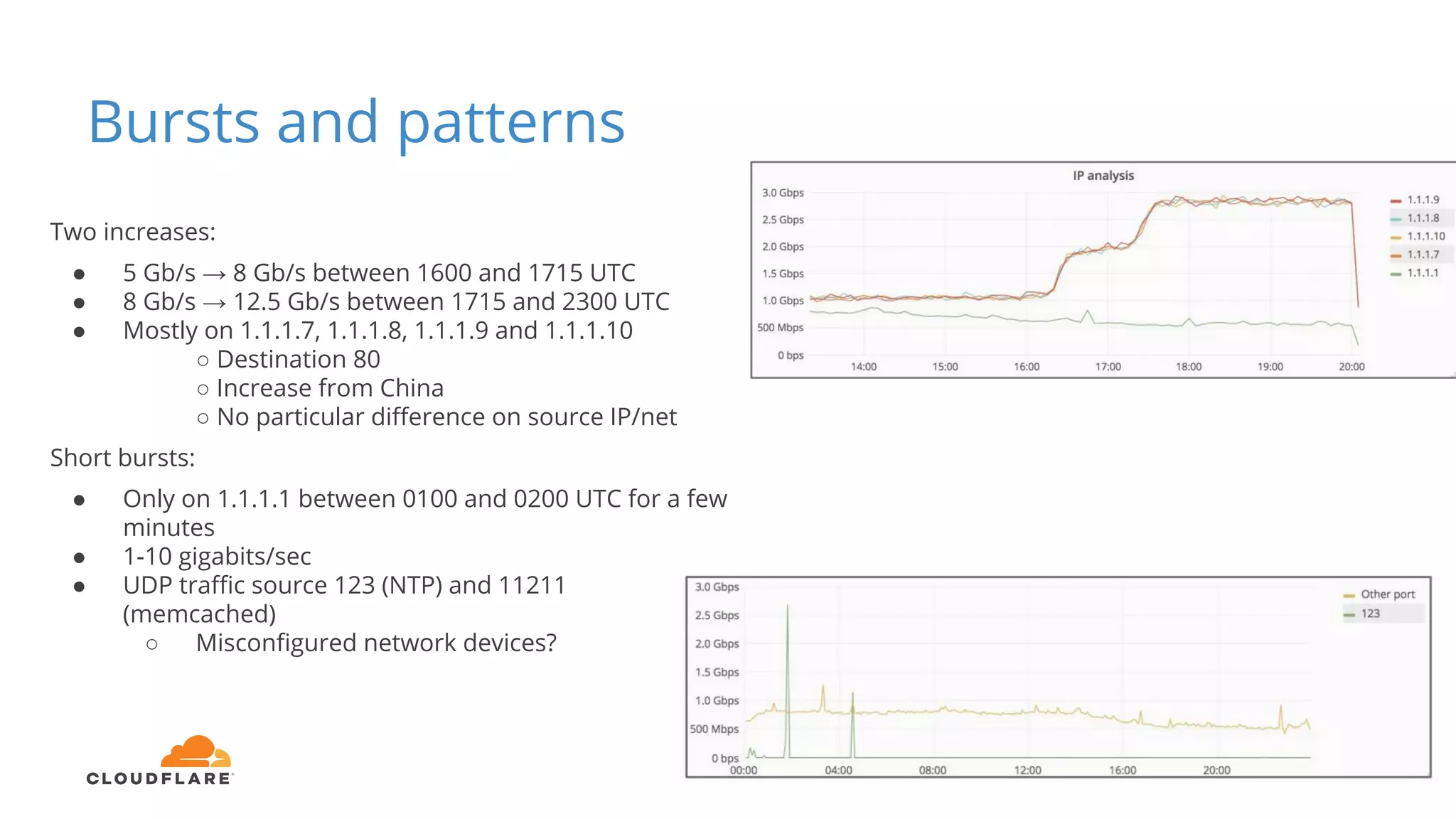
Two increases:
● 5 Gb/s → 8 Gb/s between 1600 and 1715 UTC
● 8 Gb/s → 12.5 Gb/s between 1715 and 2300 UTC
● Mostly on 1.1.1.7, 1.1.1.8, 1.1.1.9 and 1.1.1.10
○ Destination 80
○ Increase from China
○ No particular difference on source IP/net
Short bursts:
● Only on 1.1.1.1 between 0100 and 0200 UTC for a few
minutes
● 1-10 gigabits/sec
● UDP traffic source 123 (NTP) and 11211
(memcached)
○ Misconfigured network devices?
Bursts and patterns
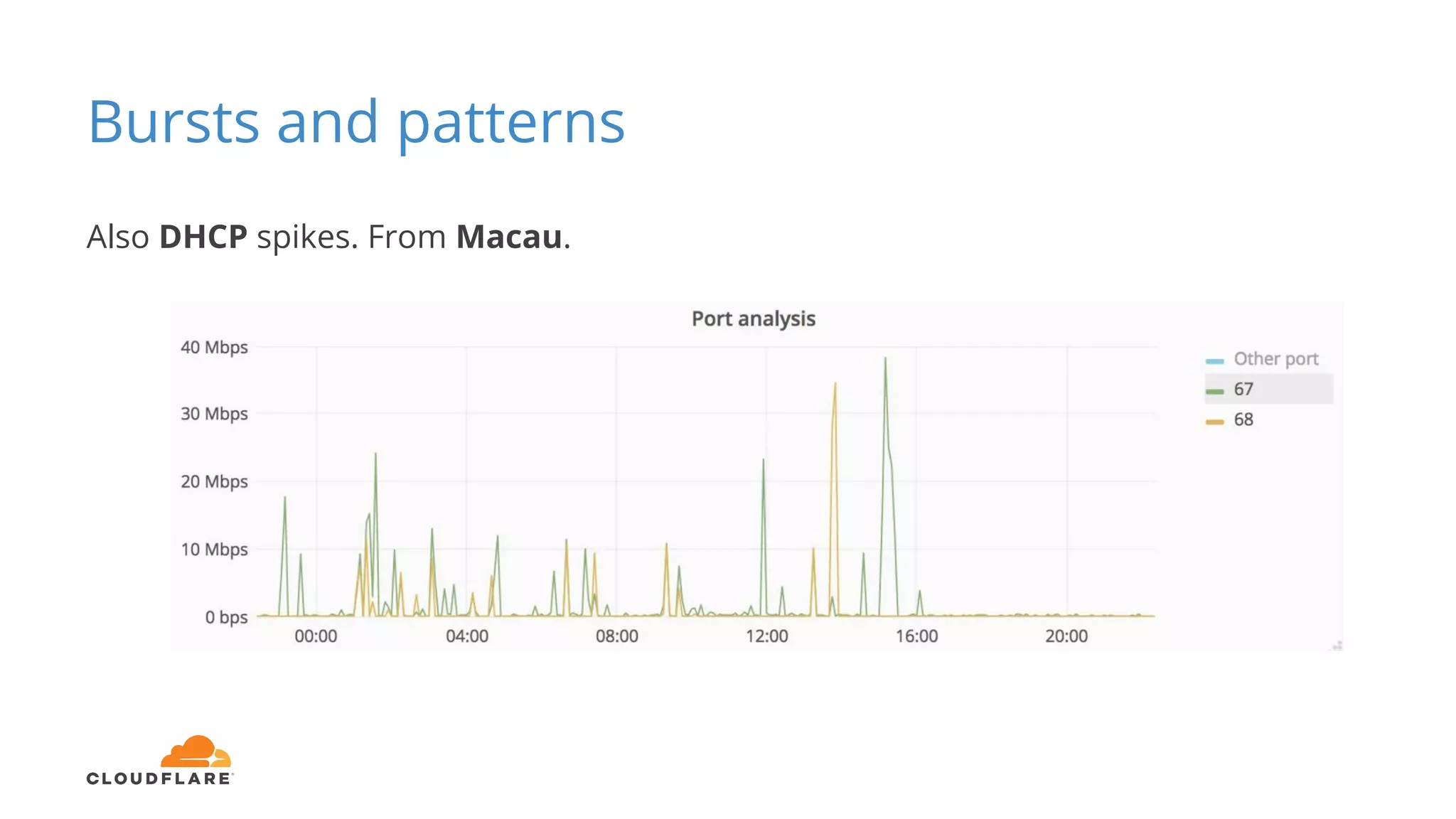
Also DHCP spikes. From Macau.
Legitimate Traffic?
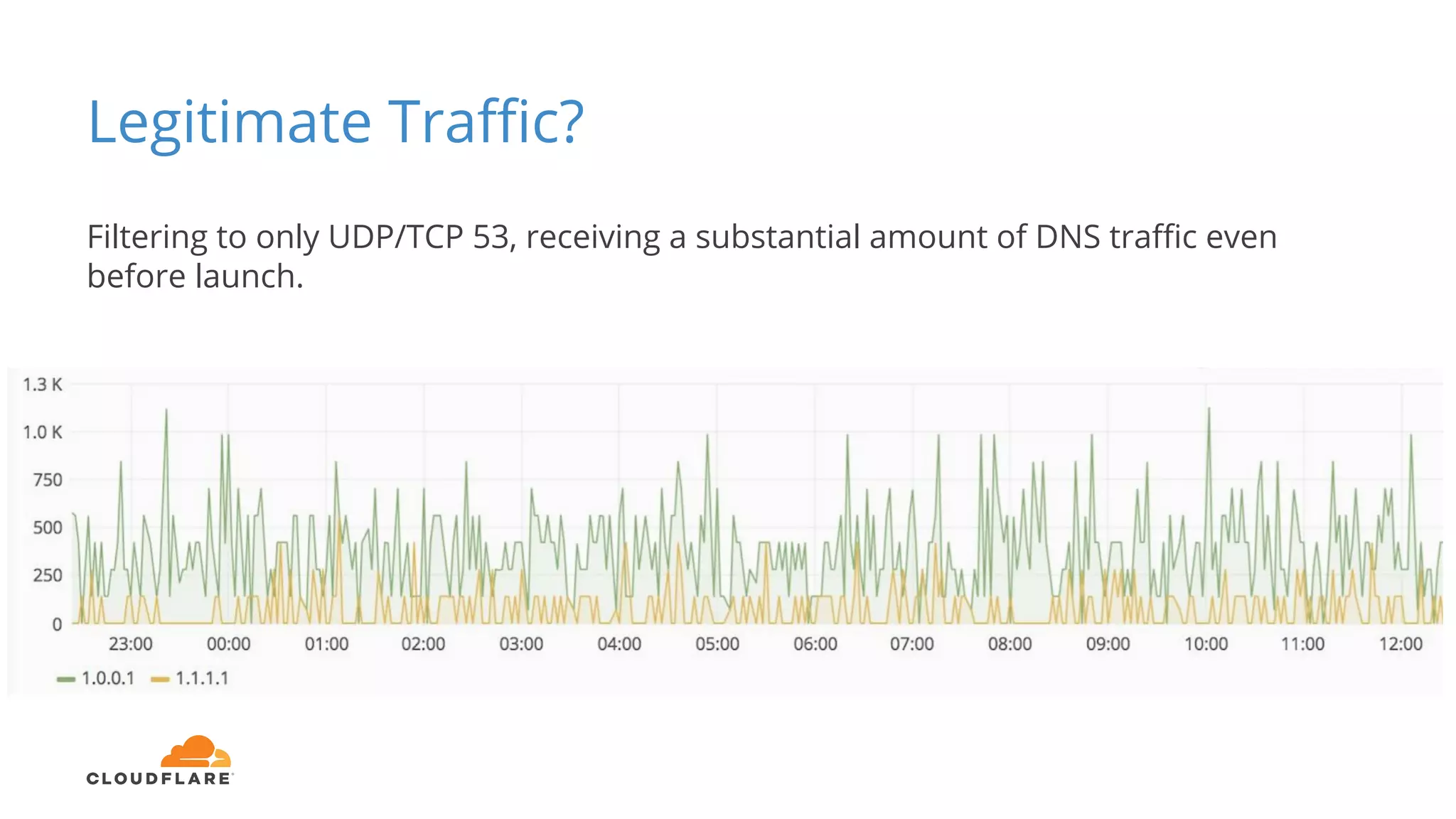
Filtering to only UDP/TCP 53, receiving a substantial amount of DNS traffic even
before launch.
What’s Changed?
What’s Changed?
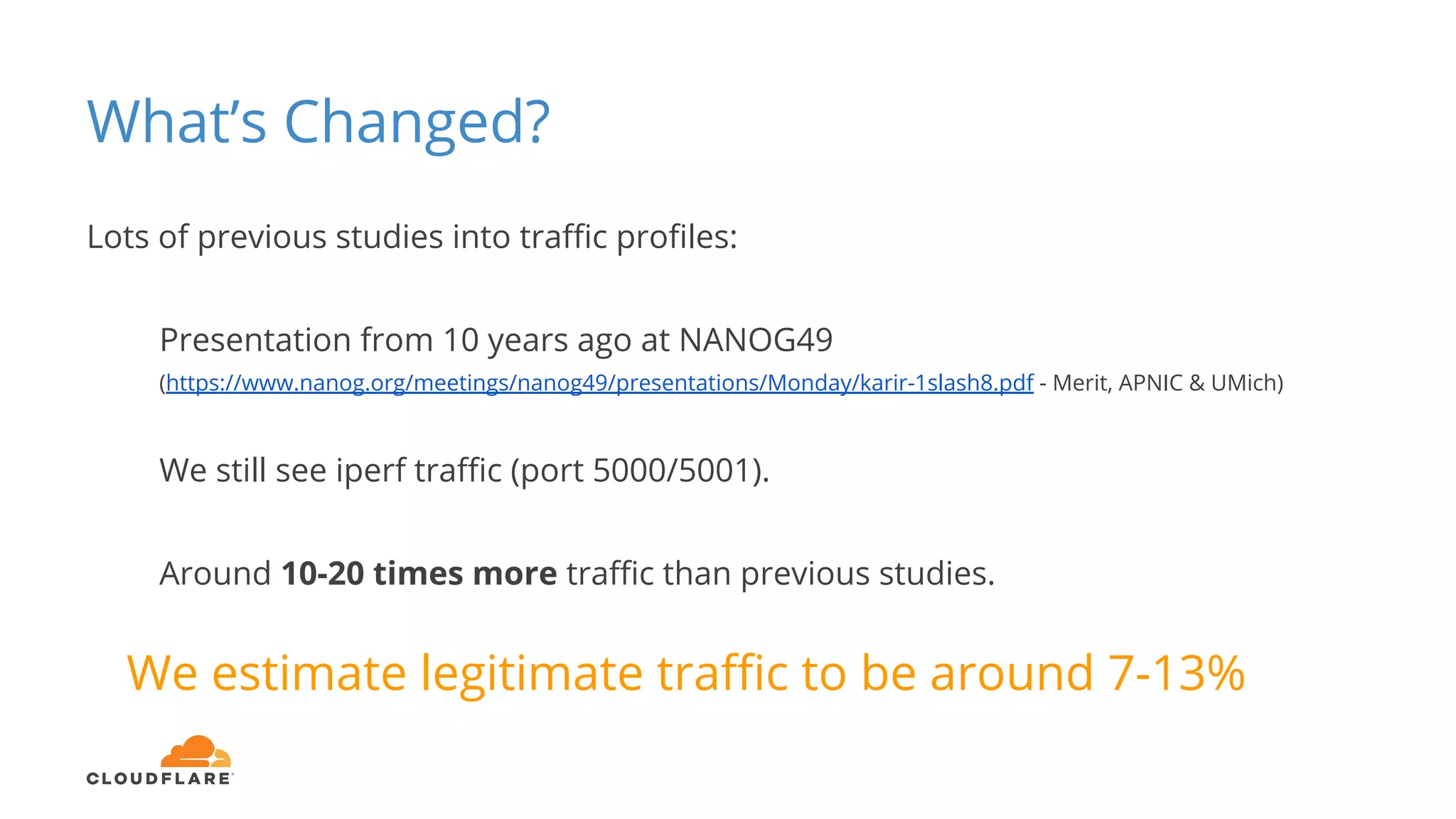
Lots of previous studies into traffic profiles:
Presentation from 10 years ago at NANOG49
(https://www.nanog.org/meetings/nanog49/presentations/Monday/karir-1slash8.pdf - Merit, APNIC & UMich)
We still see iperf traffic (port 5000/5001).
Around 10-20 times more traffic than previous studies.
We estimate legitimate traffic to be around 7-13%
Availability?
Availability
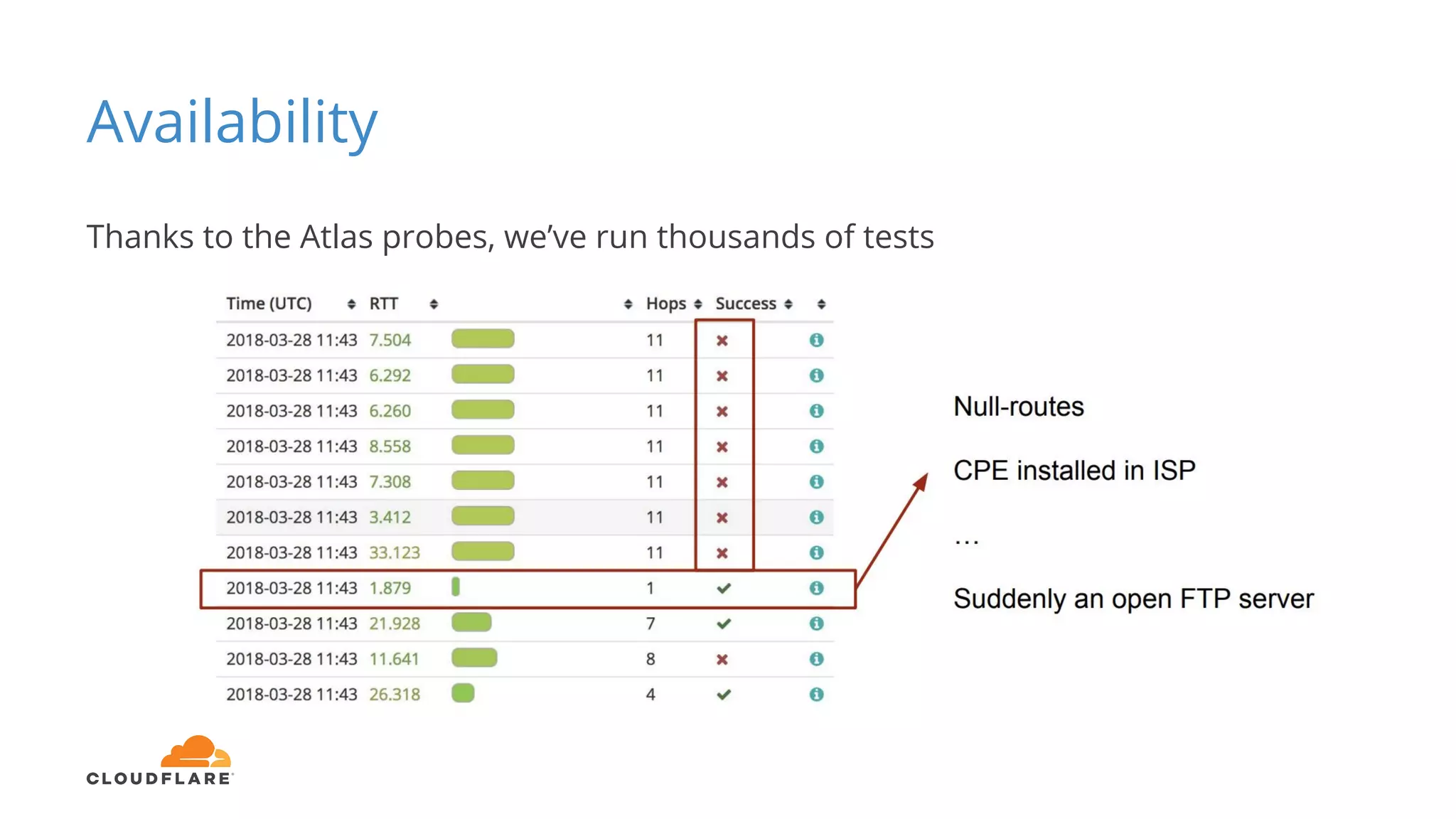
Thanks to the Atlas probes, we’ve run thousands of tests
Availability
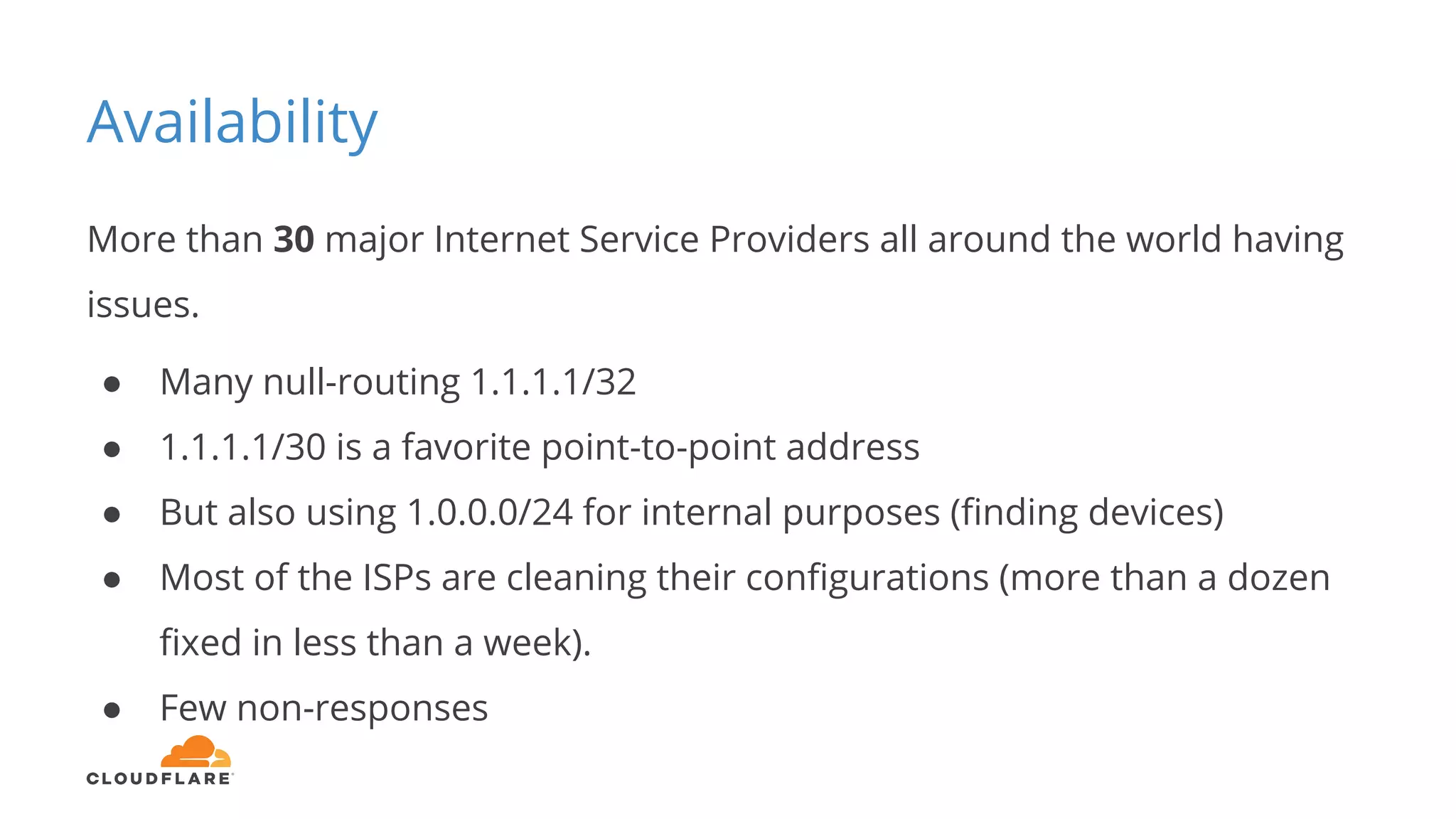
More than 30 major Internet Service Providers all around the world having
issues.
● Many null-routing 1.1.1.1/32
● 1.1.1.1/30 is a favorite point-to-point address
● But also using 1.0.0.0/24 for internal purposes (finding devices)
● Most of the ISPs are cleaning their configurations (more than a dozen
fixed in less than a week).
● Few non-responses
Documentation
Documentation
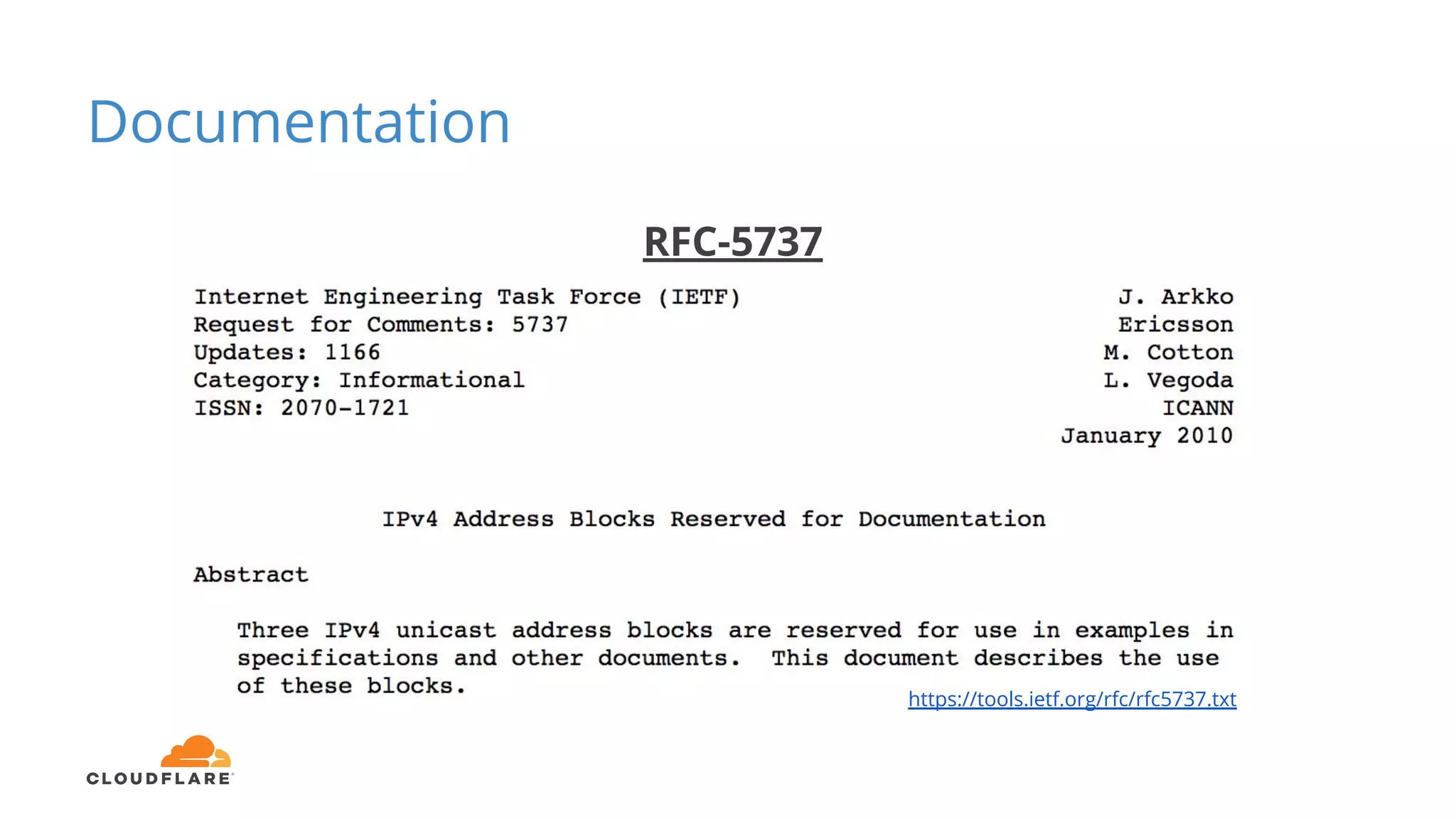
RFC-5737
https://tools.ietf.org/rfc/rfc5737.txt
Documentation
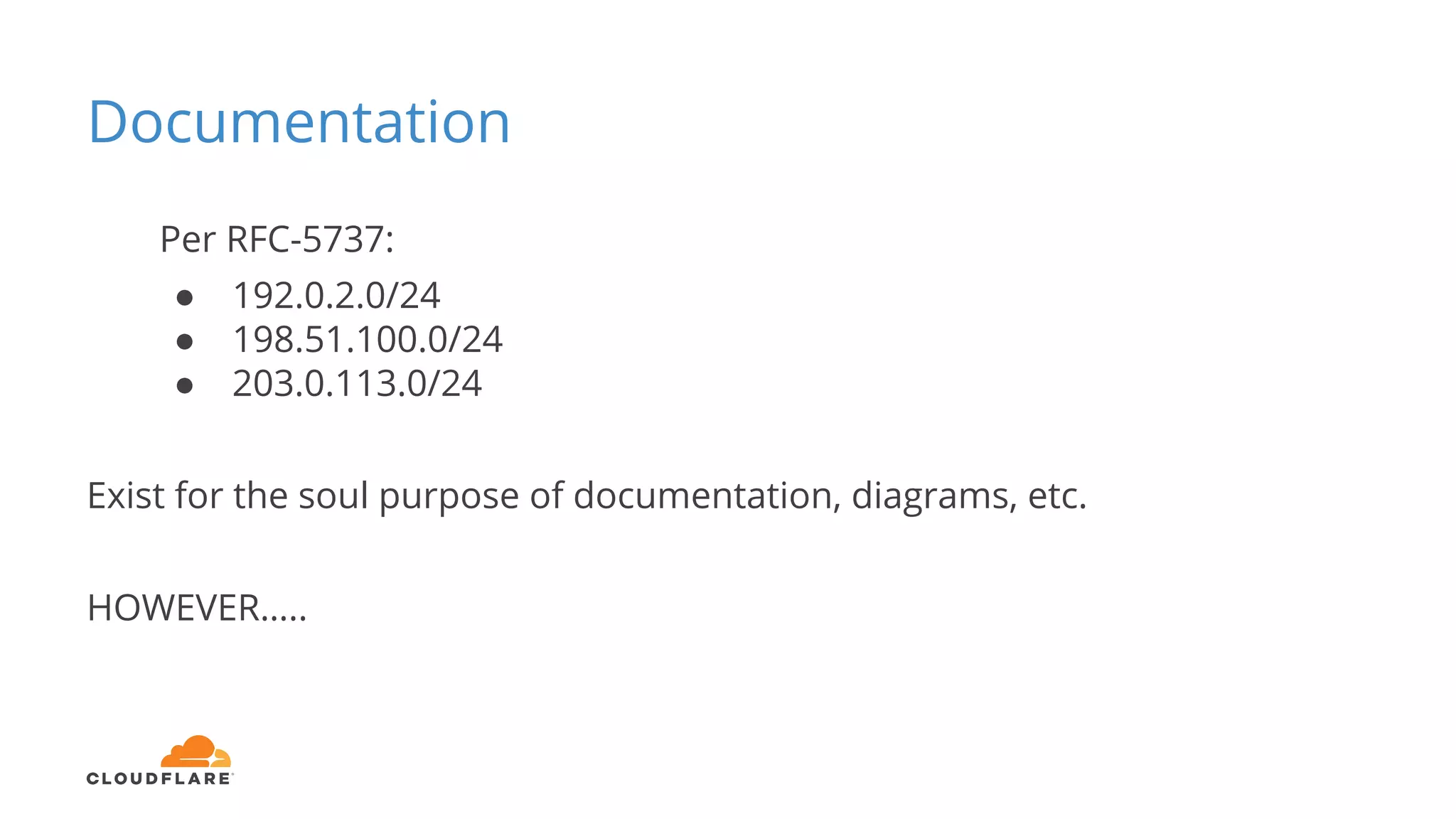
Per RFC-5737:
● 192.0.2.0/24
● 198.51.100.0/24
● 203.0.113.0/24
Exist for the soul purpose of documentation, diagrams, etc.
HOWEVER…..
Documentation
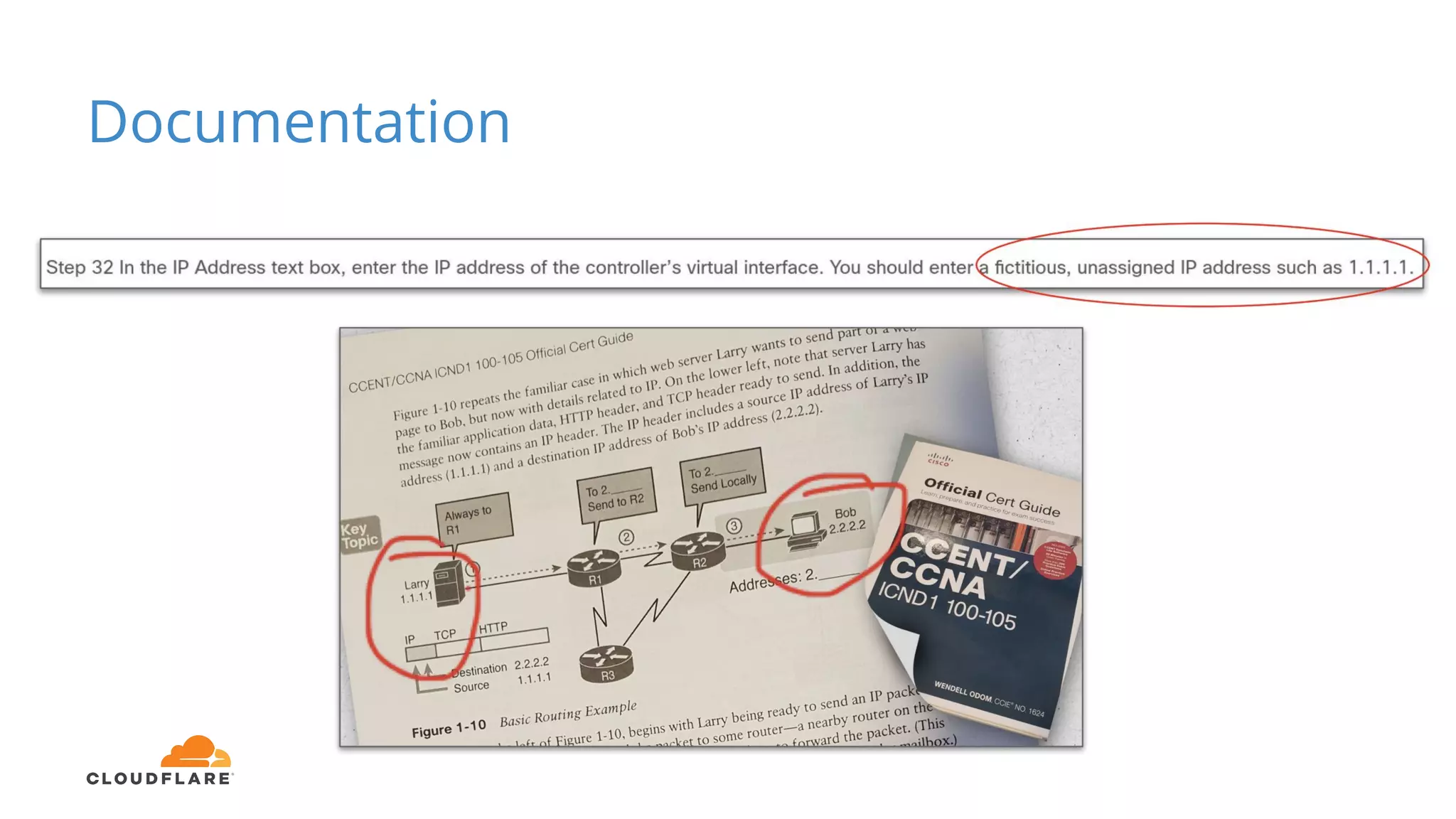
Just doing it wrong
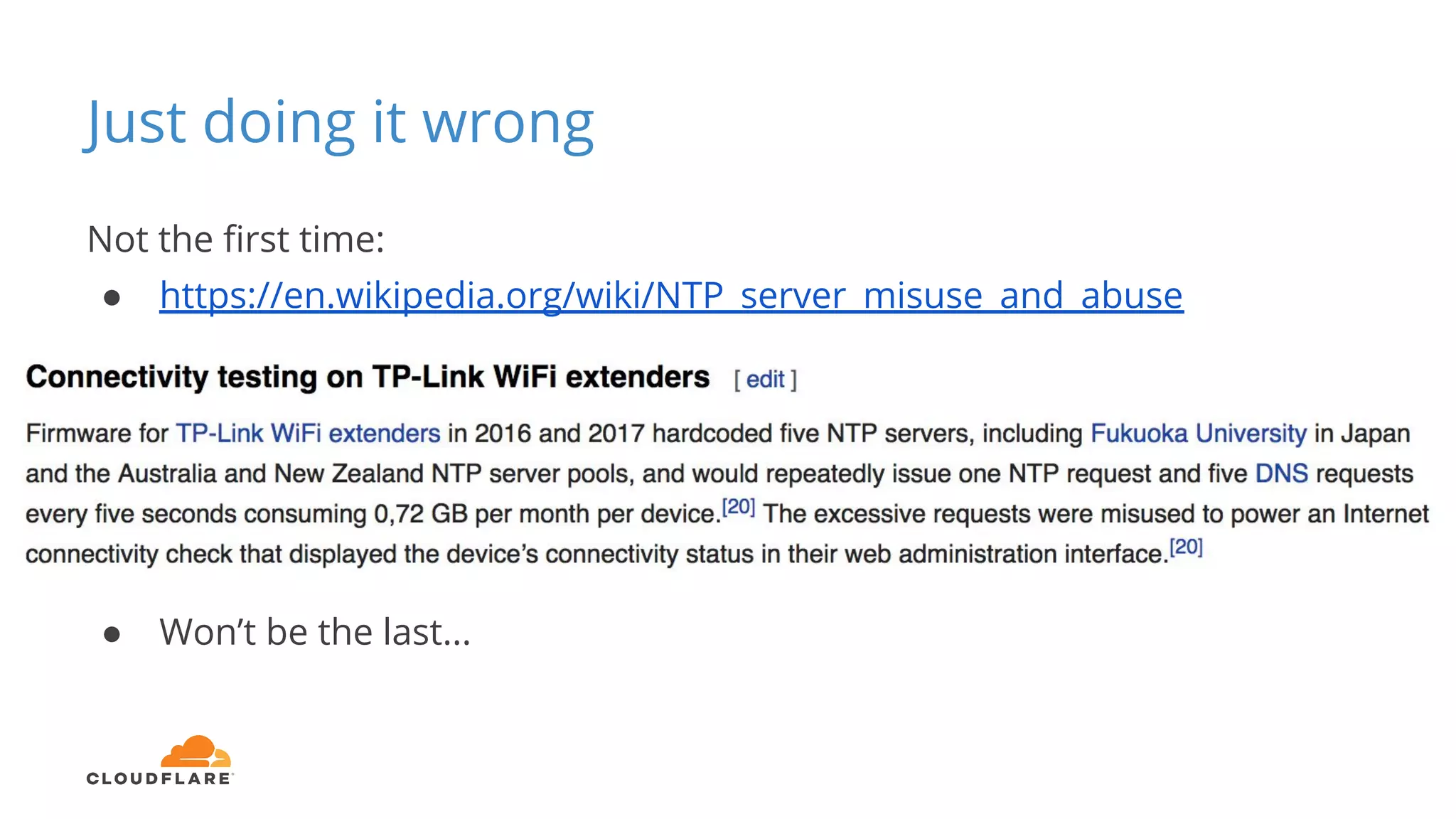
Just doing it wrong
Not the first time:
● https://en.wikipedia.org/wiki/NTP_server_misuse_and_abuse
● Won’t be the last...
Conclusions
Conclusions
Many different types of misconfiguration
Companies possibly leak their private data:
● Syslog
● DHCP data
● Other unknown
We throw away all data, maintain privacy, but not everyone else is nice.
Be vigilant about your own network and follow the best common practices.
Questions?
Thank you!

Internet Noise (A Story About Two Little Subnets - Tom Paseka

  • 1.
    Internet Noise (1.1.1.0/24and 1.0.0.0/24) Tom Paseka Adapted from Louis Poinsignon’s RIPE76 Presentation
  • 2.
  • 3.
    Some numbers... ● 155+PoPs and growing ● 72+ countries ● 186+ Internet exchanges ● >600bn Web requests a day ~10% of all web requests ● Regular DDoS attacks larger than 500Gbps, 300M PPS ● Largest attack seen 942Gbps ● >100bn DNS requests a day
  • 5.
    About Cloudflare Cloudflare makeswebsites faster and safer using our globally distributed network to deliver essential services to any website ● Performance ● Content ● Optimisation ● Security ● 3rd party services ● Analytics ● Edge Computing
  • 7.
  • 8.
    Who am I? ●Tom Paseka ● Network Strategy @ Cloudflare ● Built huge amount of Cloudflare’s network. ● Worked in APAC/Australian ISPs for some time ● Thinking about the next generation of Cloudflare’s network
  • 9.
  • 10.
    The IP Blocks ●Interesting IP ranges: 1.1.1.0/24 and 1.0.0.0/24 ● Partnership with APNIC Labs
  • 11.
    The IP Blocks Let’stalk about Internet noise. Known to receive unwanted traffic: ● Misconfigurations ● Misuse ○ Proxy ○ Internal use
  • 12.
  • 13.
  • 14.
    Traffic Levels ● Previousstudies: ○ >100 Mb/s on 1.1.1.0/24 in 2010 ○ 100-1Gb/s on 1.0.0.0/8 in 2014 (https://conference.apnic.net/data/37/2014-02-27-prop-109_1393397866.pdf - Geoff Huston) ● 8-13 Gb/s in 2018 ○ 1 Gb/s solely on 1.1.1.1
  • 15.
    Traffic Levels ● TCPtraffic (mostly HTTP proxy, services). ○ Ports 443, 80, 8000, 8080, 8090, 8765 ● UDP traffic (some DNS, syslogs). ○ Ports 53, 514, 8000, 80, 8090 ● TP-Link DNS 1.0.0.19 ○ https://serverfault.com/questions/365613/ tp-link-routers-send-dns-queries-to-1-0-0-19- what-is-that/365630
  • 16.
    Traffic source ● Alignedwith internet populations: ○ Heavily weighted to source from China ○ USA, Other large Internet populations.
  • 17.
    Bursts and patterns Twoincreases: ● 5 Gb/s → 8 Gb/s between 1600 and 1715 UTC ● 8 Gb/s → 12.5 Gb/s between 1715 and 2300 UTC ● Mostly on 1.1.1.7, 1.1.1.8, 1.1.1.9 and 1.1.1.10 ○ Destination 80 ○ Increase from China ○ No particular difference on source IP/net Short bursts: ● Only on 1.1.1.1 between 0100 and 0200 UTC for a few minutes ● 1-10 gigabits/sec ● UDP traffic source 123 (NTP) and 11211 (memcached) ○ Misconfigured network devices?
  • 18.
    Bursts and patterns AlsoDHCP spikes. From Macau.
  • 19.
    Legitimate Traffic? Filtering toonly UDP/TCP 53, receiving a substantial amount of DNS traffic even before launch.
  • 20.
  • 21.
    What’s Changed? Lots ofprevious studies into traffic profiles: Presentation from 10 years ago at NANOG49 (https://www.nanog.org/meetings/nanog49/presentations/Monday/karir-1slash8.pdf - Merit, APNIC & UMich) We still see iperf traffic (port 5000/5001). Around 10-20 times more traffic than previous studies. We estimate legitimate traffic to be around 7-13%
  • 22.
  • 23.
    Availability Thanks to theAtlas probes, we’ve run thousands of tests
  • 24.
    Availability More than 30major Internet Service Providers all around the world having issues. ● Many null-routing 1.1.1.1/32 ● 1.1.1.1/30 is a favorite point-to-point address ● But also using 1.0.0.0/24 for internal purposes (finding devices) ● Most of the ISPs are cleaning their configurations (more than a dozen fixed in less than a week). ● Few non-responses
  • 25.
  • 26.
  • 27.
    Documentation Per RFC-5737: ● 192.0.2.0/24 ●198.51.100.0/24 ● 203.0.113.0/24 Exist for the soul purpose of documentation, diagrams, etc. HOWEVER…..
  • 28.
  • 29.
  • 30.
    Just doing itwrong Not the first time: ● https://en.wikipedia.org/wiki/NTP_server_misuse_and_abuse ● Won’t be the last...
  • 31.
  • 32.
    Conclusions Many different typesof misconfiguration Companies possibly leak their private data: ● Syslog ● DHCP data ● Other unknown We throw away all data, maintain privacy, but not everyone else is nice. Be vigilant about your own network and follow the best common practices.
  • 33.
  • 34.