Internet Development

            Daniela Del Rio
             Lara Gómez
            Pedro Echeverri

     Colegio Británico de Cartagena

                  11B

               Computer
Contents
•   Introduction
•   Objective
•    Web 2.0
•   Wikis
•   Media Uploading Sites
•   Podcasts
•   Social Networks
•   Conclusion
•   References
Introduction
• As the years passes by humans had been
  working on internet developments. Since
  then, so many web pages been made, for
  information, recreation, blogs and news. Now a
  days in seconds, people from different
  continents can get news or messages. Thanks to
  the social networks people can get
  together, share pictures, information and news.
Objectives
•   - show the latest human creations in the internet
•   - talk about the six most important creations:
•   - web 2.0
•   -blogs
•   -wikis
•   -podcast
•   -social networks
•   -media uploading sites
Web 2.0
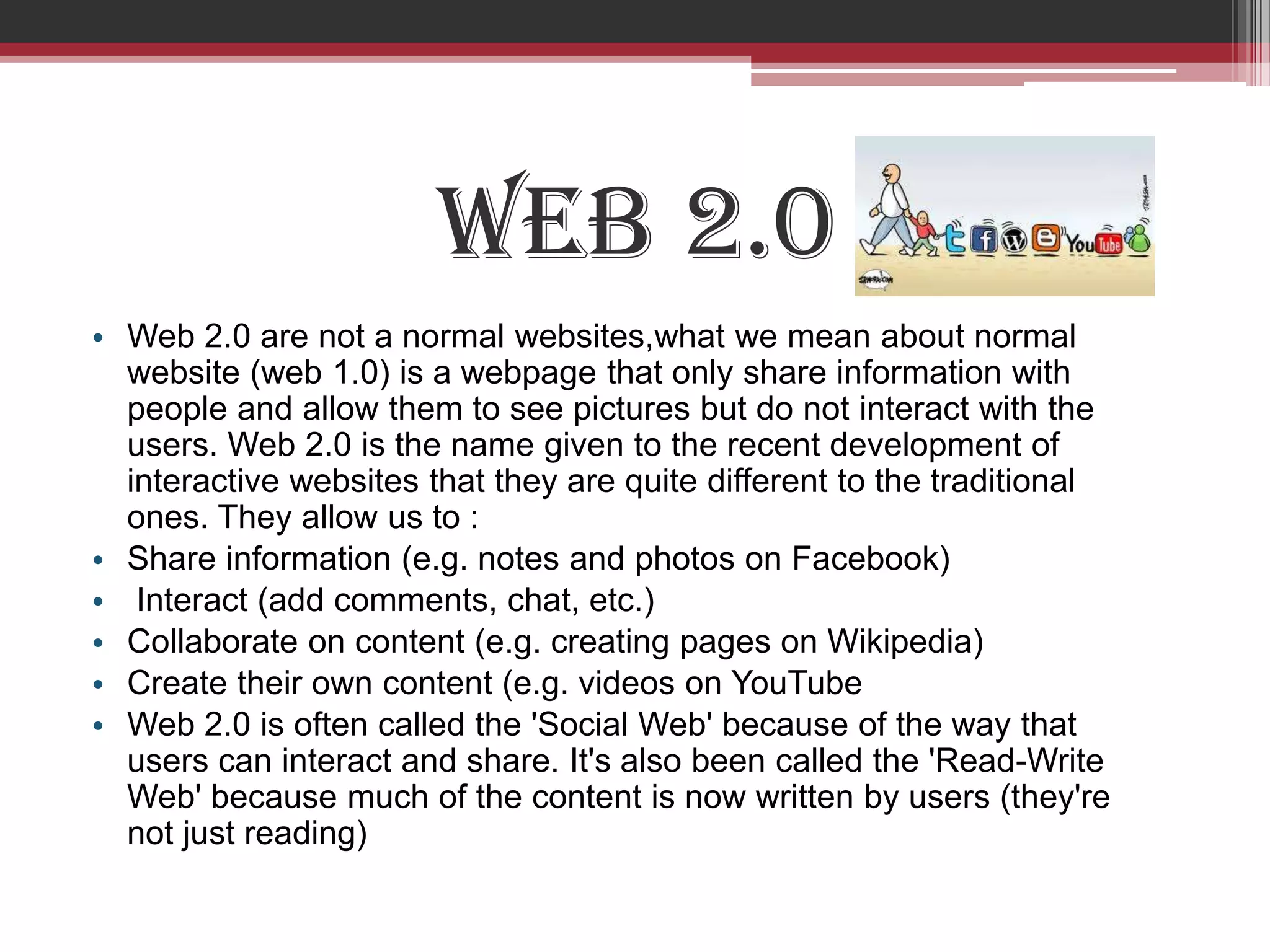
• Web 2.0 are not a normal websites,what we mean about normal
  website (web 1.0) is a webpage that only share information with
  people and allow them to see pictures but do not interact with the
  users. Web 2.0 is the name given to the recent development of
  interactive websites that they are quite different to the traditional
  ones. They allow us to :
• Share information (e.g. notes and photos on Facebook)
• Interact (add comments, chat, etc.)
• Collaborate on content (e.g. creating pages on Wikipedia)
• Create their own content (e.g. videos on YouTube
• Web 2.0 is often called the 'Social Web' because of the way that
  users can interact and share. It's also been called the 'Read-Write
  Web' because much of the content is now written by users (they're
  not just reading)
Blogs
• A blog is a website where anyone but mostly writers,writes about a
  topic.
• Blogs can be personal (someone writing about their own life, or their
  personal views), based on an interest (e.g. football), or some
  businesses also use blogs to write about new products, etc.
• A blog allows someone to be a writer and publisher on the Web with
  very little effort or cost. A blog can be setup with just a few
  clicks, whereas a few years ago you'd need a lot of technical
  knowledge to create your own website.
  Many blogs have systems that allow readers to leave comments
  and begin discussions connected with the blog posts.
• Blogging (the act of writing a blog) has become very popular over
  the past decade or so (there are well over 200 million unique blogs).
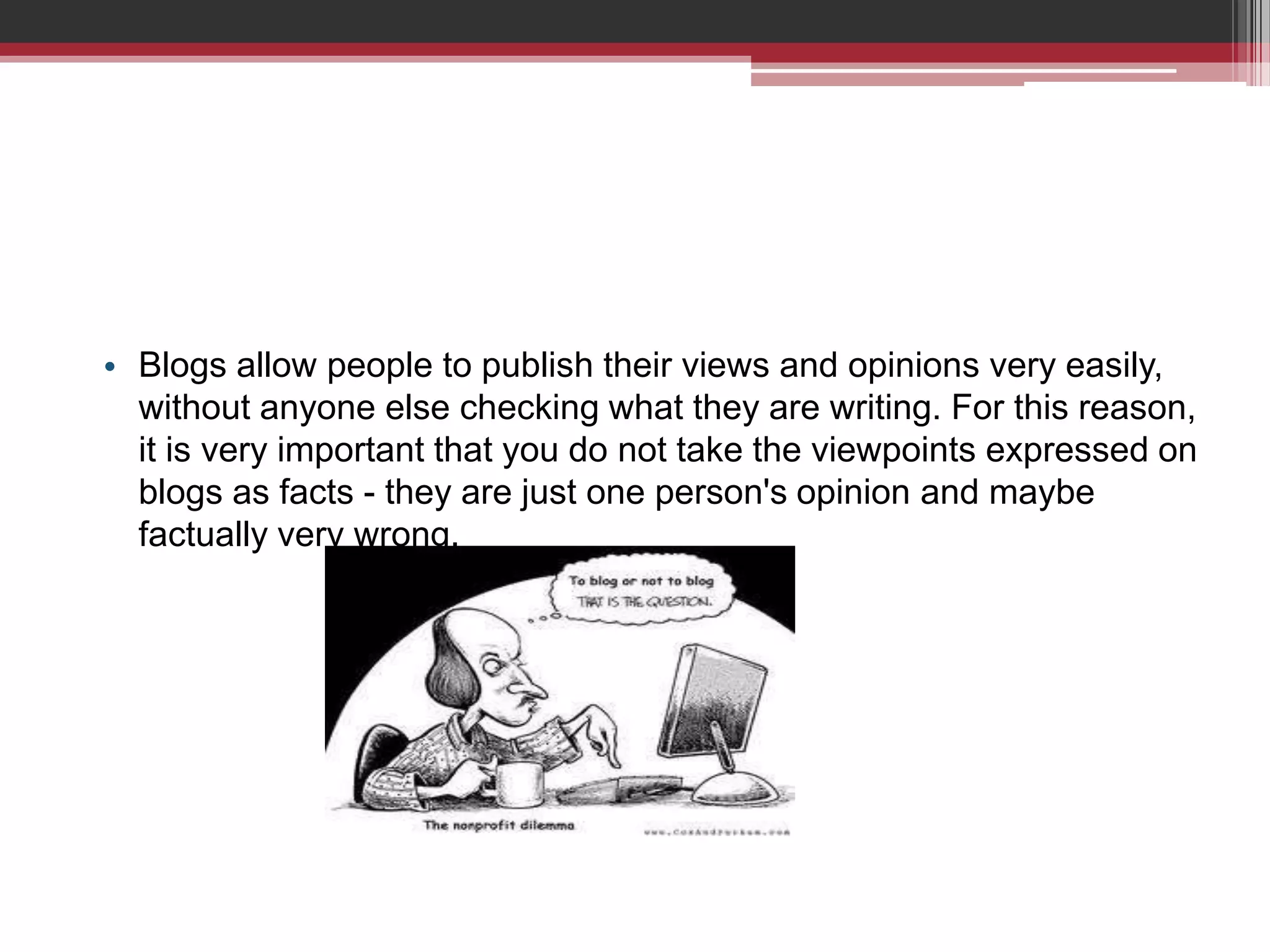
• Blogs allow people to publish their views and opinions very easily,
  without anyone else checking what they are writing. For this reason,
  it is very important that you do not take the viewpoints expressed on
  blogs as facts - they are just one person's opinion and maybe
  factually very wrong.
Wikis
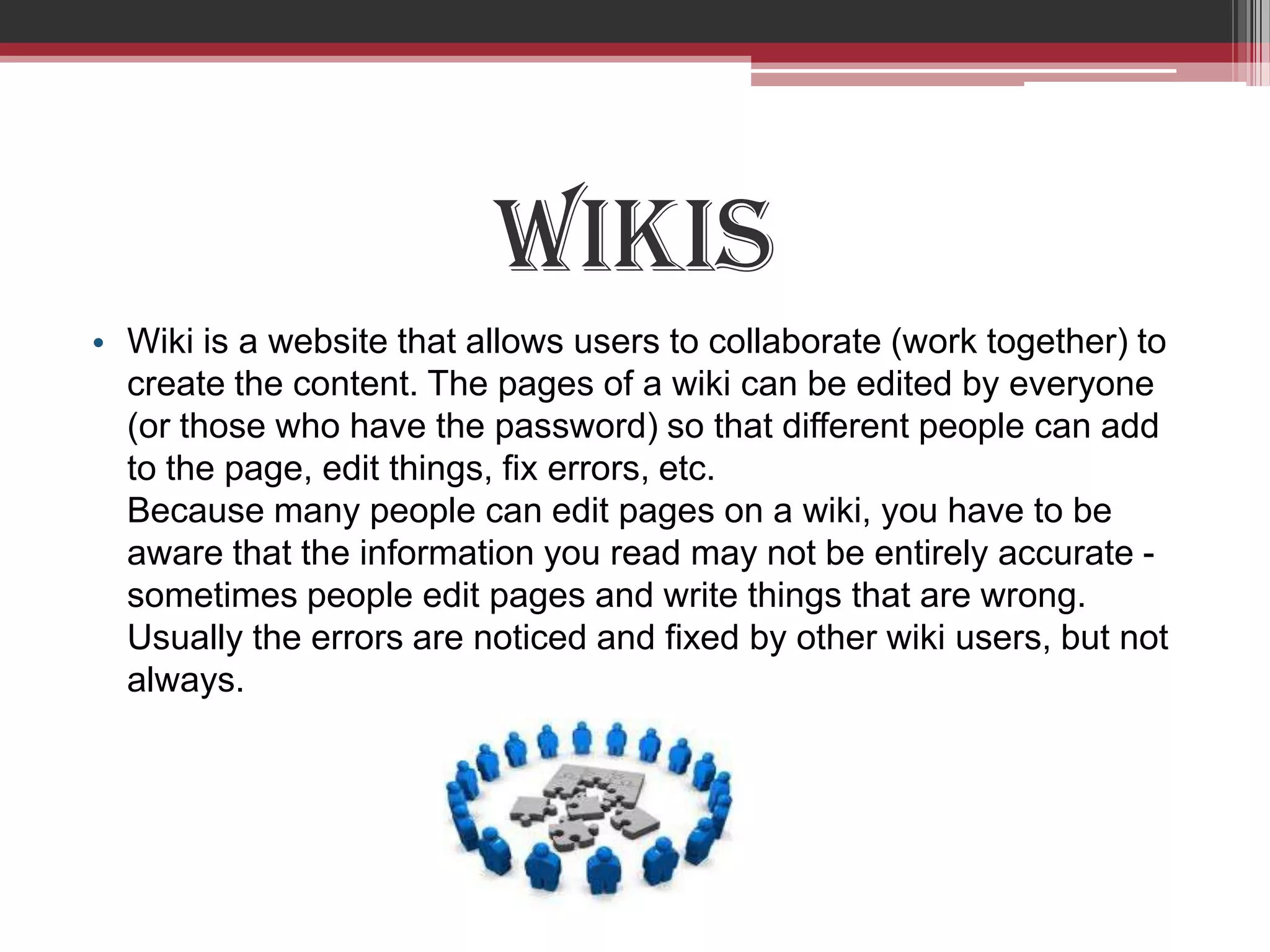
• Wiki is a website that allows users to collaborate (work together) to
  create the content. The pages of a wiki can be edited by everyone
  (or those who have the password) so that different people can add
  to the page, edit things, fix errors, etc.
  Because many people can edit pages on a wiki, you have to be
  aware that the information you read may not be entirely accurate -
  sometimes people edit pages and write things that are wrong.
  Usually the errors are noticed and fixed by other wiki users, but not
  always.
Media uploading sites
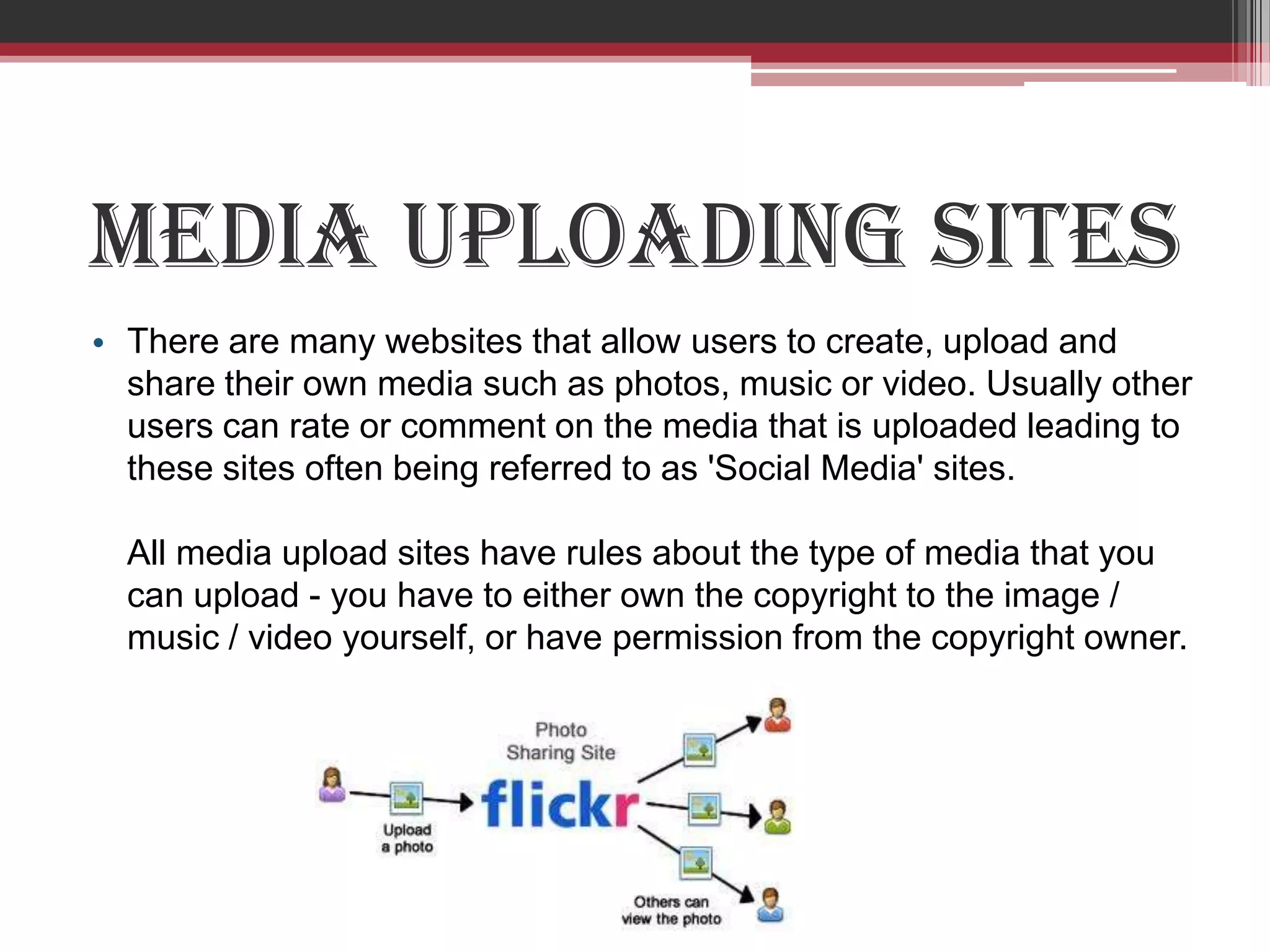
• There are many websites that allow users to create, upload and
  share their own media such as photos, music or video. Usually other
  users can rate or comment on the media that is uploaded leading to
  these sites often being referred to as 'Social Media' sites.

  All media upload sites have rules about the type of media that you
  can upload - you have to either own the copyright to the image /
  music / video yourself, or have permission from the copyright owner.
Podcast
• A podcast is a type of digital media consisting of an episodic series
  of files (either audio or video) subscribed to and downloaded
  through web syndication.
• A list of all the audio or video files currently associated with a given
  series is maintained centrally on the distributor's server as a web
  feed, and the listener or viewer employs special client application
  software known as a podcatcher that can access this web feed,
  check it for updates, and download any new files in the series.
Social Networks
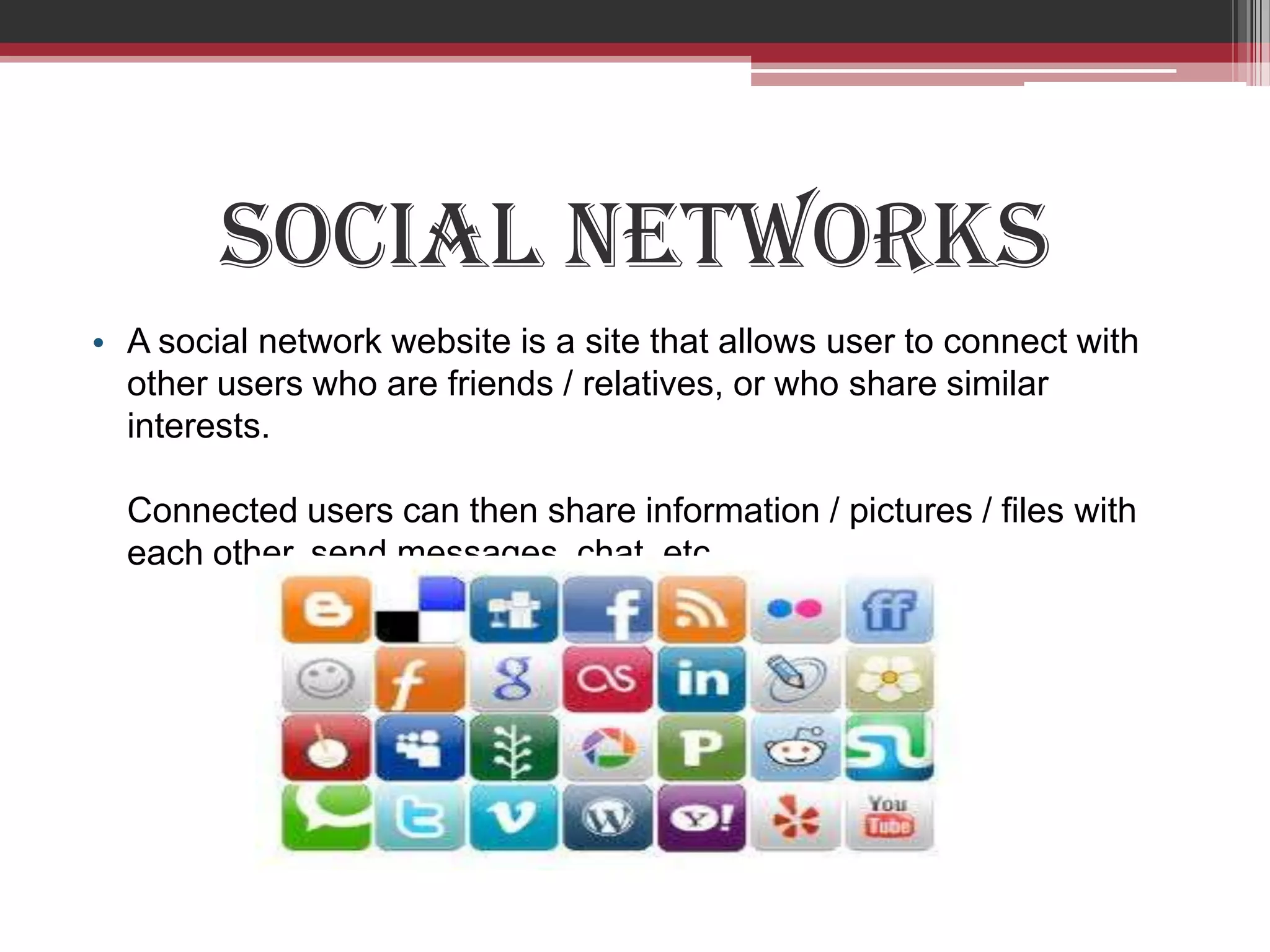
• A social network website is a site that allows user to connect with
  other users who are friends / relatives, or who share similar
  interests.

  Connected users can then share information / pictures / files with
  each other, send messages, chat, etc.
Conclusion
• All the things above had been helping human
  being to be connected with each other, to be part
  of someone else's life, to express themselves to
  the world. All because of the blogs, media
  uploading sites, wikis, web 2.0, social
  network, people can be part of the internet and
  made their own attribution to it. It may be in the
  life's of someone they know or to the entire
  world. This is the new way of communicating
  our feelings into the world upon us.
References
• http://www.google.com.co/search?q=blogs&oe=utf-8&rls=org.mozilla:es-
  ES:official&client=firefox-a&channel=np&um=1&ie=UTF-
  8&hl=es&tbm=isch&source=og&sa=N&tab=wi&ei=NIloT77RA8mztwfjn42PCQ&biw
  =1024&bih=677&sei=RYloT8-rJZOEtgeatPiRCQ

• http://www.igcseict.info/theory/6/internet/index.html

Internet development

  • 1.
    Internet Development Daniela Del Rio Lara Gómez Pedro Echeverri Colegio Británico de Cartagena 11B Computer
  • 2.
    Contents • Introduction • Objective • Web 2.0 • Wikis • Media Uploading Sites • Podcasts • Social Networks • Conclusion • References
  • 3.
    Introduction • As theyears passes by humans had been working on internet developments. Since then, so many web pages been made, for information, recreation, blogs and news. Now a days in seconds, people from different continents can get news or messages. Thanks to the social networks people can get together, share pictures, information and news.
  • 4.
    Objectives • - show the latest human creations in the internet • - talk about the six most important creations: • - web 2.0 • -blogs • -wikis • -podcast • -social networks • -media uploading sites
  • 5.
    Web 2.0 • Web2.0 are not a normal websites,what we mean about normal website (web 1.0) is a webpage that only share information with people and allow them to see pictures but do not interact with the users. Web 2.0 is the name given to the recent development of interactive websites that they are quite different to the traditional ones. They allow us to : • Share information (e.g. notes and photos on Facebook) • Interact (add comments, chat, etc.) • Collaborate on content (e.g. creating pages on Wikipedia) • Create their own content (e.g. videos on YouTube • Web 2.0 is often called the 'Social Web' because of the way that users can interact and share. It's also been called the 'Read-Write Web' because much of the content is now written by users (they're not just reading)
  • 6.
    Blogs • A blogis a website where anyone but mostly writers,writes about a topic. • Blogs can be personal (someone writing about their own life, or their personal views), based on an interest (e.g. football), or some businesses also use blogs to write about new products, etc. • A blog allows someone to be a writer and publisher on the Web with very little effort or cost. A blog can be setup with just a few clicks, whereas a few years ago you'd need a lot of technical knowledge to create your own website. Many blogs have systems that allow readers to leave comments and begin discussions connected with the blog posts. • Blogging (the act of writing a blog) has become very popular over the past decade or so (there are well over 200 million unique blogs).
  • 7.
    • Blogs allowpeople to publish their views and opinions very easily, without anyone else checking what they are writing. For this reason, it is very important that you do not take the viewpoints expressed on blogs as facts - they are just one person's opinion and maybe factually very wrong.
  • 8.
    Wikis • Wiki isa website that allows users to collaborate (work together) to create the content. The pages of a wiki can be edited by everyone (or those who have the password) so that different people can add to the page, edit things, fix errors, etc. Because many people can edit pages on a wiki, you have to be aware that the information you read may not be entirely accurate - sometimes people edit pages and write things that are wrong. Usually the errors are noticed and fixed by other wiki users, but not always.
  • 9.
    Media uploading sites •There are many websites that allow users to create, upload and share their own media such as photos, music or video. Usually other users can rate or comment on the media that is uploaded leading to these sites often being referred to as 'Social Media' sites. All media upload sites have rules about the type of media that you can upload - you have to either own the copyright to the image / music / video yourself, or have permission from the copyright owner.
  • 10.
    Podcast • A podcastis a type of digital media consisting of an episodic series of files (either audio or video) subscribed to and downloaded through web syndication. • A list of all the audio or video files currently associated with a given series is maintained centrally on the distributor's server as a web feed, and the listener or viewer employs special client application software known as a podcatcher that can access this web feed, check it for updates, and download any new files in the series.
  • 11.
    Social Networks • Asocial network website is a site that allows user to connect with other users who are friends / relatives, or who share similar interests. Connected users can then share information / pictures / files with each other, send messages, chat, etc.
  • 12.
    Conclusion • All thethings above had been helping human being to be connected with each other, to be part of someone else's life, to express themselves to the world. All because of the blogs, media uploading sites, wikis, web 2.0, social network, people can be part of the internet and made their own attribution to it. It may be in the life's of someone they know or to the entire world. This is the new way of communicating our feelings into the world upon us.
  • 13.
    References • http://www.google.com.co/search?q=blogs&oe=utf-8&rls=org.mozilla:es- ES:official&client=firefox-a&channel=np&um=1&ie=UTF- 8&hl=es&tbm=isch&source=og&sa=N&tab=wi&ei=NIloT77RA8mztwfjn42PCQ&biw =1024&bih=677&sei=RYloT8-rJZOEtgeatPiRCQ • http://www.igcseict.info/theory/6/internet/index.html