Selection of
                                Channels


A Sales & Distribution Presentation
Presented By


Arti
Channel Management


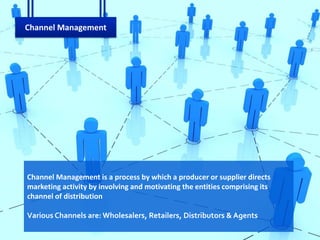
Channel Management is a process by which a producer or supplier directs
marketing activity by involving and motivating the entities comprising its
channel of distribution

Various Channels are: Wholesalers, Retailers, Distributors & Agents
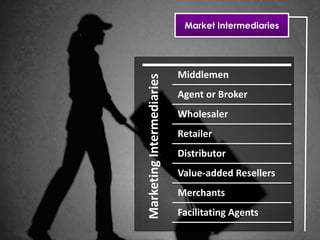
Market Intermediaries


                           Middlemen


Marketing Intermediaries
                           Agent or Broker
                           Wholesaler
                           Retailer
                           Distributor
                           Value-added Resellers
                           Merchants
                           Facilitating Agents
Need for
  Distribution Channels
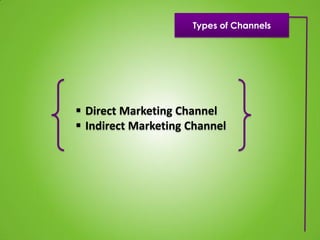
Types of Channels


 Direct Marketing Channel
 Indirect Marketing Channel
Direct Marketing Channel


Direct Marketing Channel (or Zero Level)
This type of channel has no intermediaries. In this distribution system, the goods
go from the producer directly to the consumer, e.g., Amway, Eureka Forbes.
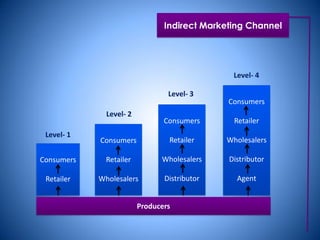
Indirect Marketing Channel


                                               Level- 4

                                 Level- 3
                                              Consumers
              Level- 2
                                Consumers       Retailer
 Level- 1
            Consumers            Retailer     Wholesalers

Consumers     Retailer         Wholesalers    Distributor

 Retailer   Wholesalers         Distributor     Agent


                         Producers
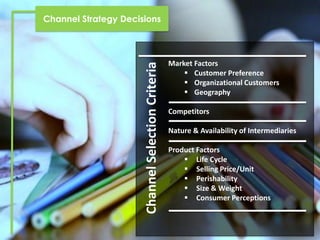
Channel Strategy Decisions


                                                   Market Factors


                      Channel Selection Criteria
                                                        Customer Preference
                                                        Organizational Customers
                                                        Geography

                                                   Competitors

                                                   Nature & Availability of Intermediaries

                                                   Product Factors
                                                        Life Cycle
                                                        Selling Price/Unit
                                                        Perishability
                                                        Size & Weight
                                                        Consumer Perceptions
Key Issues in Determining Channel Requirement


  While a manufacturer faces an agenda of issues related to finance, marketing and industrial
  relations, attention is focused on selected topics that directly impact marketing channel
  arrangements. The key issues related to this are:
   Product proliferation and dynamics; and
   Total-quality initiatives.
  These two issues are significant drives for a typical firm in determining how channel
  requirements will be delineated.
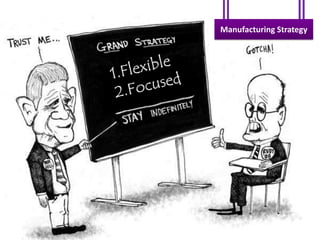
Manufacturing Strategy
Wholesalers


Wholesale trade is defined as “all establishments or places of business primarily
engaged in selling merchandise to retailers; to industrial, commercial,
institutional or professional users or to other wholesalers; or acting as agent in
buying merchandise for or selling merchandise to such persons or companies”.

     1. Merchant Wholesalers
     2. Agent Wholesalers
     3. Manufacturers’ Sales branches and offices
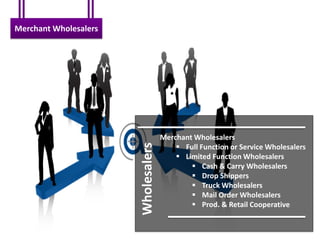
Merchant Wholesalers


                                     Merchant Wholesalers
                       Wholesalers        Full Function or Service Wholesalers
                                          Limited Function Wholesalers
                                              Cash & Carry Wholesalers
                                              Drop Shippers
                                              Truck Wholesalers
                                              Mail Order Wholesalers
                                              Prod. & Retail Cooperative
Agent Wholesalers


               Agent Wholesalers
                    Manufacturers’ Agent
Wholesalers


                    Brokers
                    Commission Merchant
                    Selling Agents
                    Commercial Auction Companies

               Manufacturer’s Sales Branches and Sales Offices
Selecting Wholesalers


A wholesaler is generally selected on the basis of his performance
evaluation. Before selecting wholesalers, manufacturers’ analyze a
wholesaler on the basis of the following questions:
     How can a wholesaler serve a supplier?
     How can a wholesaler serve a retailer?
     How can a wholesaler serve business users?
Strategic Management of Wholesalers


                         Wholesalers
                                       Strategic Management of Wholesalers
                                             Effectiveness
                                             Profitability
                                             Niche Marketing
                                             Proprietary Brand
                                             New Technology
Introduction to Retailing


   Retailing
   It include all activities incidental to selling to ultimate consumer.

   According to ‘William.J.Stanton’, “A retailer or a retail store is a business
   enterprise which sells primarily to ultimate consumers for non business use.”
Function of Retailing


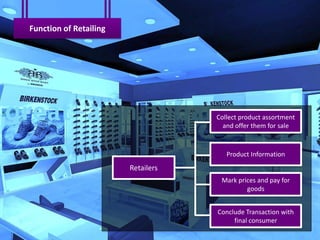
                                    Collect product assortment
                                      and offer them for sale


                                       Product Information
                        Retailers
                                     Mark prices and pay for
                                             goods


                                    Conclude Transaction with
                                         final consumer
Relation Between Retailers & Suppliers


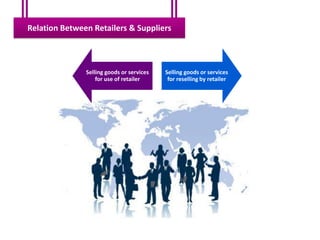
               Selling goods or services   Selling goods or services
                   for use of retailer      for reselling by retailer
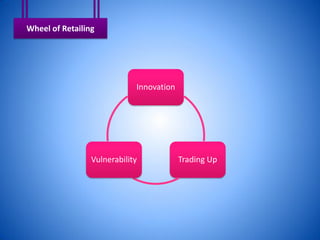
Wheel of Retailing


                             Innovation


                 Vulnerability            Trading Up
Thank You

Channel selection

  • 1.
    Selection of Channels A Sales & Distribution Presentation
  • 2.
  • 3.
    Channel Management Channel Managementis a process by which a producer or supplier directs marketing activity by involving and motivating the entities comprising its channel of distribution Various Channels are: Wholesalers, Retailers, Distributors & Agents
  • 4.
    Market Intermediaries Middlemen Marketing Intermediaries Agent or Broker Wholesaler Retailer Distributor Value-added Resellers Merchants Facilitating Agents
  • 5.
    Need for Distribution Channels
  • 6.
    Types of Channels Direct Marketing Channel  Indirect Marketing Channel
  • 7.
    Direct Marketing Channel DirectMarketing Channel (or Zero Level) This type of channel has no intermediaries. In this distribution system, the goods go from the producer directly to the consumer, e.g., Amway, Eureka Forbes.
  • 8.
    Indirect Marketing Channel Level- 4 Level- 3 Consumers Level- 2 Consumers Retailer Level- 1 Consumers Retailer Wholesalers Consumers Retailer Wholesalers Distributor Retailer Wholesalers Distributor Agent Producers
  • 9.
    Channel Strategy Decisions Market Factors Channel Selection Criteria  Customer Preference  Organizational Customers  Geography Competitors Nature & Availability of Intermediaries Product Factors  Life Cycle  Selling Price/Unit  Perishability  Size & Weight  Consumer Perceptions
  • 10.
    Key Issues inDetermining Channel Requirement While a manufacturer faces an agenda of issues related to finance, marketing and industrial relations, attention is focused on selected topics that directly impact marketing channel arrangements. The key issues related to this are:  Product proliferation and dynamics; and  Total-quality initiatives. These two issues are significant drives for a typical firm in determining how channel requirements will be delineated.
  • 11.
  • 12.
    Wholesalers Wholesale trade isdefined as “all establishments or places of business primarily engaged in selling merchandise to retailers; to industrial, commercial, institutional or professional users or to other wholesalers; or acting as agent in buying merchandise for or selling merchandise to such persons or companies”. 1. Merchant Wholesalers 2. Agent Wholesalers 3. Manufacturers’ Sales branches and offices
  • 13.
    Merchant Wholesalers Merchant Wholesalers Wholesalers  Full Function or Service Wholesalers  Limited Function Wholesalers  Cash & Carry Wholesalers  Drop Shippers  Truck Wholesalers  Mail Order Wholesalers  Prod. & Retail Cooperative
  • 14.
    Agent Wholesalers Agent Wholesalers  Manufacturers’ Agent Wholesalers  Brokers  Commission Merchant  Selling Agents  Commercial Auction Companies Manufacturer’s Sales Branches and Sales Offices
  • 15.
    Selecting Wholesalers A wholesaleris generally selected on the basis of his performance evaluation. Before selecting wholesalers, manufacturers’ analyze a wholesaler on the basis of the following questions:  How can a wholesaler serve a supplier?  How can a wholesaler serve a retailer?  How can a wholesaler serve business users?
  • 16.
    Strategic Management ofWholesalers Wholesalers Strategic Management of Wholesalers  Effectiveness  Profitability  Niche Marketing  Proprietary Brand  New Technology
  • 17.
    Introduction to Retailing Retailing It include all activities incidental to selling to ultimate consumer. According to ‘William.J.Stanton’, “A retailer or a retail store is a business enterprise which sells primarily to ultimate consumers for non business use.”
  • 18.
    Function of Retailing Collect product assortment and offer them for sale Product Information Retailers Mark prices and pay for goods Conclude Transaction with final consumer
  • 19.
    Relation Between Retailers& Suppliers Selling goods or services Selling goods or services for use of retailer for reselling by retailer
  • 20.
    Wheel of Retailing Innovation Vulnerability Trading Up
  • 21.