Dr Mohammad Al
Akeely
Associate professor& consultant
general surgeon
UPPER & Lower
GI Bleeding
REFERENC
E:
• MacLeod's clinical examination 12th edition
• Davidson’s principle and practice of
medicine th21 edition
• Oxford handbook of emergency medicine
• Upper GIT bleeding
http://www.patient.co.uk/doctor
• www.medscape.com
Definition
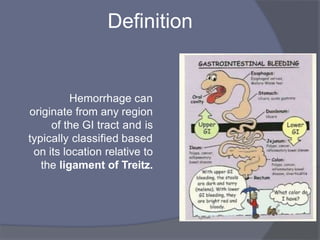
Hemorrhage can
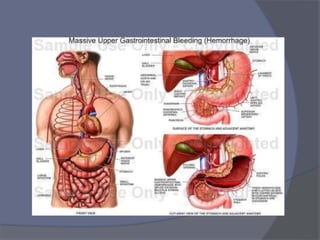
originate from any region
of the GI tract and is
typically classified based
on its location relative to
the ligament of Treitz.
INTRODUCTION
 Acute gastrointestinal bleeding is a potentially life-threatening abdominal
emergency that remains a common cause of hospitalization.
 Upper gastrointestinal bleeding (UGIB) is defined as bleeding derived
from a source proximal to the ligament of Treitz.
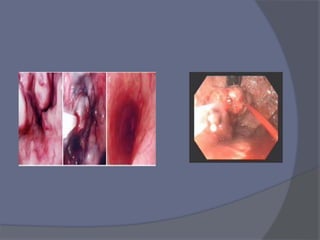
Can be categorized as either variceal or non-variceal. Variceal is usually
acomplication of liver cirrhosis or fibrosis
While non variceal bleeding is usually associated with peptic ulcer disease
or other causes of UGIB

UGIB is more common than lower GIT, with a higher incidence in male.
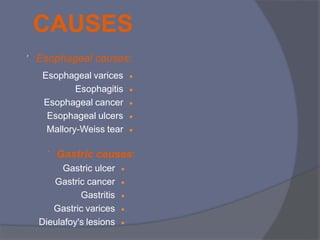
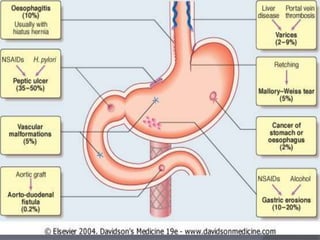
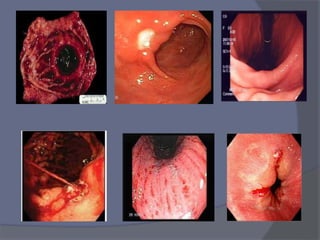
CAUSES
 Esophageal causes:

Esophageal varices

Esophagitis

Esophageal cancer

Esophageal ulcers

Mallory-Weiss tear
 Gastric causes:

Gastric ulcer

Gastric cancer

Gastritis

Gastric varices

Dieulafoy's lesions
 Duodenal causes:
 Duodenal ulcer
 Vascular malformation including
aorto-enteric fistulae
 Hematobilia, or bleeding from the
biliary tree
:PRESENTATION
• Hematemesis: vomiting of blood in the stomach.
coffee-ground emesis that indicate slower rate of bleeding or
fresh bright red blood (may be with clots) that indicates faster
rate of bleeding.
• Melena: stool consisting of partially digested blood (black
tarry, semi solid, shiny and has a distinctive odor, when its
present it indicates that blood has been present in the GI
tract for at least 14 h. The more proximal the bleeding site,
the more likely melena will occur.
• Hematochezia usually represents a lower GI source of
bleeding, although an upper GI lesion may bleed so briskly
that blood does not remain in the bowel long enough for
melena to develop.
:SIGNS AND SYMPTOMS











Hematemesis
Melena
Hematochezia
Syncope
Dyspepsia
Epigastric pain
Heartburn
Diffuse abdominal pain
Dysphagia
Weight loss
Jaundice
APPROACH:

History:
• Abdominal pain
• Haematemsis
• Haematochezia
• Melaena
• Features of blood loss: shock, syncope, anemia
• Features of underlying cause: dyspepsia, jaundice,
weight loss
•History of epistaxis or hemoptysis to rule out
the GI source of bleeding.
• Past medical: previous episodes of upper gastrointestinal
bleeding, diabetes mellitus; coronary artery disease; chronic
renal or liver disease; or chronic obstructive pulmonary disease.
•Past surgical: previous abdominal surgery

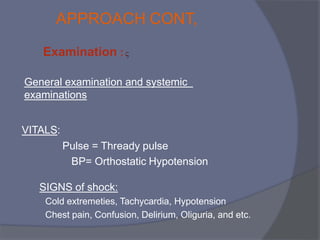
Examination :
General examination and systemic
examinations
VITALS:
Pulse = Thready pulse
BP= Orthostatic Hypotension
SIGNS of shock:
Cold extremeties, Tachycardia, Hypotension
Chest pain, Confusion, Delirium, Oliguria, and etc.
APPROACH CONT,
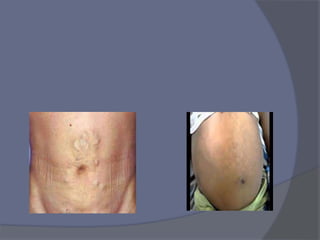
• SKIN changes:
Cirrhosis – Palmer erythema, spider nevi
Bleeding disorders – Purpura /Echymosis
Coagulation disorders – Haemarthrosis, Muscle
hematoma.
• Signs of dehydration:
dry mucosa, sunken eyes, skin turgor reduce.
• Signs of a tumour may be present :
( nodular liver, abdominal
mass, lymphadenopathy, and etc(.
• fresh blood, occult blood, bloody diarrhea:
Respiratory, CVS, CNS for comorbid diseases
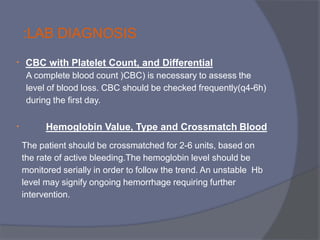
• CBC with Platelet Count, and Differential
A complete blood count (CBC) is necessary to assess the
level of blood loss. CBC should be checked frequently(q4-6h)
during the first day.
• Hemoglobin Value, Type and Crossmatch Blood
The patient should be crossmatched for 2-6 units, based on
the rate of active bleeding.The hemoglobin level should be
monitored serially in order to follow the trend. An unstable Hb
level may signify ongoing hemorrhage requiring further
intervention.
:LAB DIAGNOSIS
•
• RFT- to detect underlying renal disease
• Calcium level- to detect hyperparathyroidism
and in monitoring calcium in patients receiving
multiple transfusions of citrated blood
• Gastrin level
•
gastrointestinal bleeding (UGIB). A ratio of greater than 36
in a patient without renal insufficiency is suggestive of
UGIB .High serum ammonia may lead to
encephalopathy in cirrhotic patients.
• The patient's prothrombin time (PT), activated partial
thromboplastin time)PTT),and International Normalized
Ratio (INR) should be checked to document the presence
of a coagulopathy.
•
1.5 may indicate moderate liver impairment.
• A fibrinogen level of less than 100 mg/dL also indicates
advanced liver disease with extremely poor synthetic
function
• Initial diagnostic examination for all patients
presumed to have UGIB
•
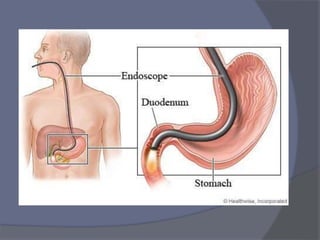
:ENDOSCOPY
Endoscopy should be performed
immediately after hemodynamic
stabilization, and adequate monitoring
• CHEST X-RAY-Chest radiographs should be
ordered to exclude aspiration pneumonia, effusion,
and esophageal perforation.
• Abdominal X-RAY- erect and supine films should be
ordered to exclude perforated viscous and ileus.
:IMAGING
• Computed tomography (CT) scanning and
ultrasonography may be indicated for the
evaluation of liver disease with cirrhosis, tumours,
aortoenteric fistula, and other unusual causes of
upper GI hemorrhage.
• Nuclear medicine scans may be useful in
determining the area of active hemorrhage
 Angiography may be useful if bleeding
persists and endoscopy fails to identify
a bleeding site.
 Angiography along with transcatheter arterial
embolization (TAE) should be considered for all
patients with a known source of arterial UGIB
that does not respond to endoscopic
management, with active bleeding and a
negative endoscopy.
 In cases of aortoenteric fistula, angiography
requires active bleeding (1 mL/min) to be
diagnostic.
ANGIOGRAPHY:
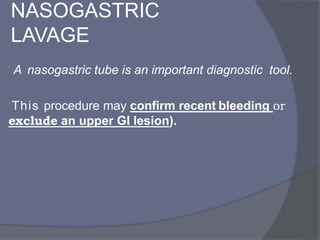
NASOGASTRIC
LAVAGE
 A nasogastric tube is an important diagnostic tool.
This procedure may confirm recent bleeding or
exclude an upper GI lesion(.
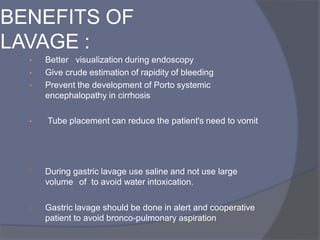
• Better visualization during endoscopy
• Give crude estimation of rapidity of bleeding
• Prevent the development of Porto systemic
encephalopathy in cirrhosis
• Tube placement can reduce the patient's need to vomit
 During gastric lavage use saline and not use large
volume of to avoid water intoxication.
 Gastric lavage should be done in alert and cooperative
patient to avoid bronco-pulmonary aspiration
BENEFITS OF
LAVAGE :
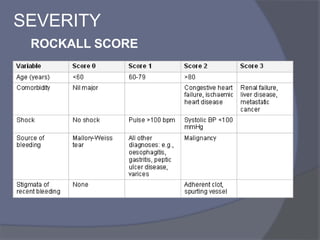
SEVERITY
ROCKALL SCORE
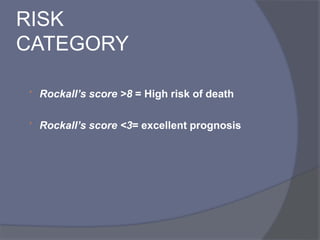
RISK
CATEGORY
 Rockall’s score >8 = High risk of death
 Rockall’s score <3= excellent prognosis
MANAGEMEN
T
•Priorities are:
• Stabilize the patient: protect airway, restore
circulation.
• Identify the source of bleeding.
• Definitive treatment of the cause.
•Resuscitation and initial management
• Protect airway: position the patient on side
• IV access: use 1-2 large bore cannula
• Take blood for: Hb, PCV, PT and cross match
 Restore the circulation: if pts
haemodynamically stable give N.S. infusion, if not
give colloid 500ml/1hr and then crystalloid and
continue until blood is available.
o
Transfuse blood for:
o
o
o
Obvious massive blood loss
Hematocrit < 25% with active bleeding
Symptoms due to low hematocrit and hemoglobin
o Platelet transfusions should be offered to patients
who are actively bleeding and have a platelet count
less than 50000
o Fresh frozen plasma should be used for patients
who have either a fibrinogen level of less than 1
g/litre, or (INR) greater than 1.5 times normal.
o Over-transfusion may be as damaging as under-
transfusion.
• Monitor urine output.
• Watch for signs of fluid overload (raised JVP, pul.
edema, peripheral edema)
• Commence IV PPI, omeprazole 80 mg iv followed
by 8mg/hr for 72 hrs.
• Keep the pt nill by mouth for the endoscopy
TREATMENT OF VARICEAL
BLEEDING
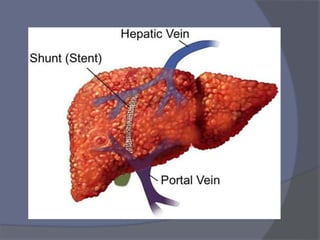
 Terlipressin, Prophylactic antibiotic therapy
•Endoscopic banding
•Stent insertion is effective for
selected patients
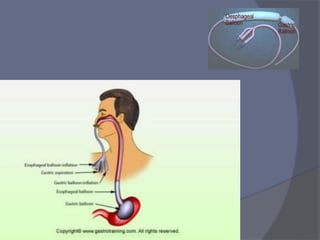
•  Balloon tamponade should be
considered as a temporary salvage treatment
for uncontrolled variceal haemorrhage
•  TIPS should be offered if bleeding from
gastric varices is not controlled by endoscopic
injection of N-butyl-2- cyanoacrylate
TREATMENT OF NON-VARICEAL
BLEEDING
•  Endoscopy is now the method of choice for controlling active
peptic-ulcer related UGIB.
•  Endoscopic therapy should only be delivered to actively
bleeding lesions, non-bleeding visible vessels and, when
technically possible, to ulcers with an adherent blood clot.
•  Black or red spots or a clean ulcer base with oozing do
not merit endoscopic intervention since these lesions have
an excellent prognosis without intervention.
•  A n endoscopic dual therapy( rather than adrenaline
monotherapy is preferred for treatment of non-variceal UGIB
For the endoscopic treatment of non-variceal UGIB, one of the
following should be used:
• A mechanical method(clips) with or without adrenaline
(epinephrine(
• Thermal coagulation with adrenaline (epinephrine(
• Fibrin or thrombin with adrenaline (epinephrin(
•  Interventional radiology should be offered to unstable
patients who re-bleed after endoscopic treatment. Refer
urgently for surgery if interventional radiology is not
immediately available.
SURGERY INDICATIONS:
• Persistent hypotension
• Failure of medical treatment or endoscopic
homeostasis
• Coexisting condition ( perforation, obstruction,
malignancy(
• Transfusion requirement ) 4 units in 24 hr(
• Recurrent hospitalizations
TYPES OF
OPERATIONS:
The choice of operation depends on the site and the
bleeding lesions:
Duodenal ulcers are treated by under-running
with or without pyloro-plasty.
Gastric ulcers treated by under-running (take a
biopsy to exclude carcinoma(.
Local excision or partial gastrectomy will be
required for tumours.
COMPLICATION
S
• Can arise from treatments administered for
example:
• Endoscopy:
• Aspiration pneumonia
• Perforation
• Complications from coagulation, laser
treatments
• Surgery:
• Ileus
• Sepsis
• Wound problems
PREVENTION
 The most important factor to consider is
treatment for H. pylori infection.
 1st line therapy:
PPI )omeprazole, lansoprazole,
pantoprazole) + two of these three AB
) clarithromycin, amoxicillin, metronidazole(
 2nd line therapy:
- PPT
- bismuth
- metronidazole
- tetracycline
LOWER GI BLEED
Upto 80% of acute GI bleed occurs in Upper GIT,
of which Peptic Ulcer Disease & Variceal
Haemorrhage are most common causes.
Obscure bleeding - hemorrhage that persists or
recurs after normal endoscopy
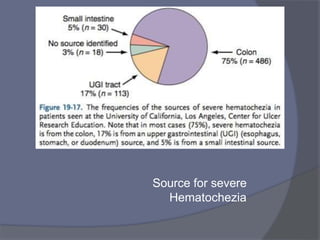
The Lower GI bleed occurs mostly from COLON
(95%) of which Diverticula and Angiodysplasias
are most common causes.
Occult bleeding - not apparent to patients until they
present with symptoms related to anaemia.
• Incidence of LGI-Bleed, increases with Age,
slightly more common in women, with an
overall mortality of <5%
• Intussusception in most common in paediatric
age group, while Meckel’s diverticulum must
be considered in a young adult.
• Vascular lesions and Diverticular disease
affects all age groups, with increased
incidence in middle aged & older adults
DIAGNOSIS
Classical Signs & Symptoms
• Hematochezia (usually painless)
• Malena (mostly UGI-B)
• Occult blood in stool
• Anaemia
• Nasogastric aspirate usually clear
Source for severe
Hematochezia
•
Aspirin use, more than 2 comorbid illnesses,
heart rate > 100bpm, non-tender abdominal
examination, rectal bleeding within first 4 hrs
of evaluation, syncope, systolic BP <
115mmHg
RISK FACTORS
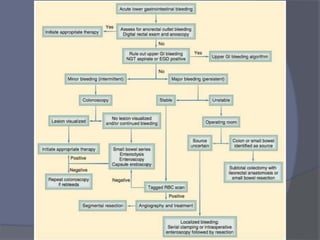
• Resuscitate
• PR, Anoscopy or Sigmoidoscopy
• NGT aspirate & UGI-Endoscopy
•
Colonoscopy
•
Radionucleotide Scanning
•
Mesenteric Angiography (selective(
•
Diagnostic Intervensions
Emergency operative interventions
Algoritm for diagnosis and mng of LGI-B
•
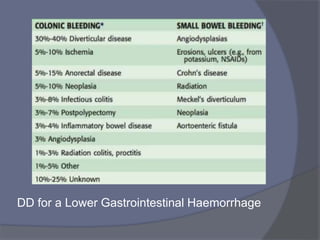
DD for a Lower Gastrointestinal Haemorrhage
Brief on Investigations
before going to
specific diseases
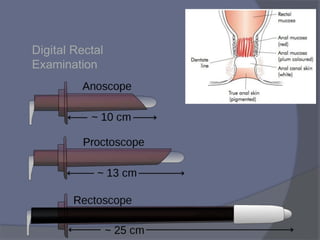
Digital Rectal
Examination
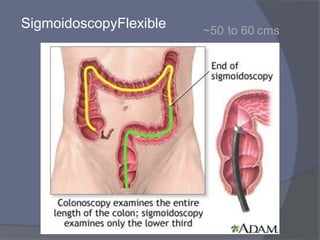
Flexible
Sigmoidoscopy ~50 to 60 cms
Colonoscopy
• Most appropriate in the
setting of mild to
moderate bleeding, with
patient in stable condition
• Preparation with
Polyethylene Glycol
(PEG) orally or via NG
tube[4-8L] for 4-6 hrs,
with metaclopramide IV
improves visualisation
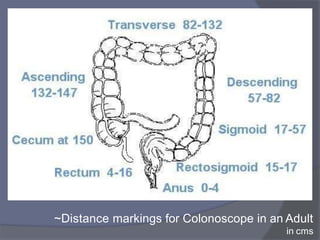
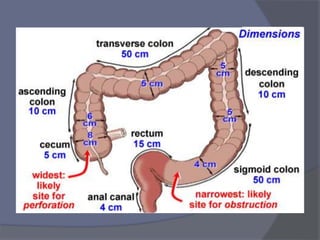
~Distance markings for Colonoscope in an Adult
in cms
•
Findings may include an actively bleeding
site, clot adherence to a focus of mucosa or
diverticular orifice, other than Polyps, Cancers
and Inflammatory conditions.
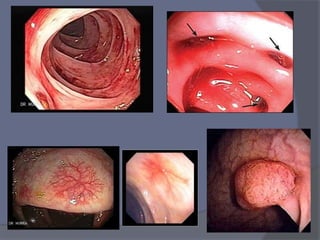
• Angiodysplasias are difficult to visualise,
specially in unstable patients with
mesenteric vascular constriction.
• Some studies reported that Colonoscopy is
successful in identifying the bleeding source in
95% of cases, mostly secondary to Diverticuli
or Angiodysplasias
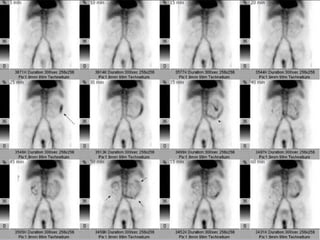
Radionuclide Scanning
• Technician-99m [ 99mTc-labelled RBC ]
Most sensitive, but least accurate for localising
bleed
• Patients own blood is labelled and reinjected, which
is extravasated into GI tract lumen, creating a focus
that can be detected scintigraphically, Initially
images obtained serially, then at 4 hour intervals,
upto 24hrs.
• can detect bleed as slow as
0.1mL/min
• Unfortunately, spatial resolution is low with
reported accuracy of 40 - 60 %
Mesenteric Angiography
• Selective angiography, using SMA / IMA can
detect haemorrhage upto 0.5 to 1.0 mL/min
• Used in diagnosis of ongoing haemorrhage,
particularly in identifying vascular patterns
of Angiodysplasias
•
•
Therapeutic capabilities like Embolisation &
Catheter- directed vasopressin infusion to provide
temporary control of bleeding. (50% rebelled when
it is discontinued)-Bridging(temporary) procedure
Complications include hematoma, arterial
thrombosis, contrast reaction and ARF.
Small Bowel Endoscopy
• PUSH endoscopy
( 40% success rate)
• Performed in hemodynamically stable patients,
usually with a paediatric colonoscope, which
can reach upto 50-70cms past the lig of trietz.
• SONDE PULL endoscopy - enteroscope that
passes passively into very distal small bowel with
a balloon at its end which is moved down by
peristalsis. mucosa visualised as scope is
removed
• Double-Balloon endoscopy
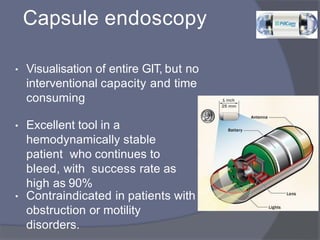
Capsule endoscopy
• Visualisation of entire GIT, but no
interventional capacity and time
consuming
• Excellent tool in a
hemodynamically stable
patient who continues to
bleed, with success rate as
high as 90%
• Contraindicated in patients with
obstruction or motility
disorders.
Specific causes for
Colonic Bleeding
Diverticular Disease
• responsible for upto 55% of cases of LGI-B
• affects more than two-thirds of western population in their
80’s and can be rarely seen in patients younger than 40yrs
• Only 3-15% individuals with diverticulosis experience
bleeding
• In bleeding diverticuli, More than 75% stop spontaneously, of
which about 10% will rebelled in an year and almost 50%
within 10yrs.
• Although diverticular disease is more common on left side,
right sided disease is responsible for more than 50% of
bleed.
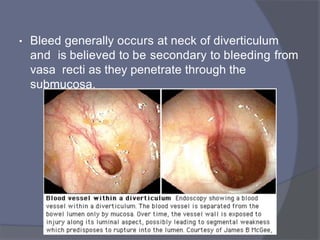
• Bleed generally occurs at neck of diverticulum
and is believed to be secondary to bleeding from
vasa recti as they penetrate through the
submucosa.
• COLONOSCOPY - Best method of diagnosis and treatment
(limited in severe bleed)
• Bleeding diverticulum can be controlled by Epinephrine injection,
use of Electrocautery, and with Endoscopic clips.
• Angiography with Superselective embolisation can be
considered if all the above fail, with high success rates(>90%),
but with risk of ischemic complications
• Lastly, Surgical intervention with colonic resection, or blind
hemicolectomy done in unsure patients (50%)
• Subtotal colectomy does not eliminate risk of recurrent hemorrhage
compared to segmental resection, and is accompanied by
significant increase in morbidity, particularly older patients in whom
rectum never adapts.
Mortality is almost 30% in the Emergent subtotal colectomy for bleed
Angiodysplasia
• Some reports state vascular lesions account upto 40% of LGI-B,
However, recent reports state much low incidence
• also called Arteriovenous Malformations [AVM’(]
• They are acquired degenerative lesions secondary to
progressive dilatation of normal blood vessels within the
submucosa of the intestine
• Age of incidence > 50 yrs with M=F, usually associated with
aortic stenosis and renal failure, esp in older patients
• Haemorrhage tends to arise from right side of colon, with
CECUM being most common location
COLONOSCOPY:
Red stellate lesions with a surrounding rim of
pale mucosa, can be treated by sclerotherapy
or electrocautery
ANGIOGRAPHY:
dilated, slowly emptying veins, and
sometimes early venous filling
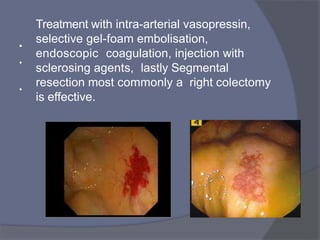
•
Treatment with intra-arterial vasopressin,
selective gel-foam embolisation,
endoscopic coagulation, injection with
sclerosing agents, lastly Segmental
resection most commonly a right colectomy
is effective.
•
•
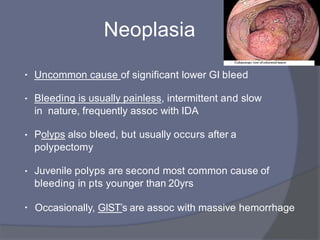
Neoplasia
• Uncommon cause of significant lower GI bleed
• Bleeding is usually painless, intermittent and slow
in nature, frequently assoc with IDA
• Polyps also bleed, but usually occurs after a
polypectomy
• Juvenile polyps are second most common cause of
bleeding in pts younger than 20yrs
• Occasionally, GIST’s are assoc with massive hemorrhage
COLITIS
• Inflammation of the Colon is caused by number
of disease processes, including..
Inflammatory bowel disease (Crohn’s
disease, UC, indeterminate colitis)
Infectious colitis (E coli, CMV, salmonella,
shigella, campylobacter spp. & Clostridium
difficale)
Radiation proctitis and Ischemia.
ULCERATIVE COLITIS :
• mucosal disease starting at distal rectum and
progress proximally to involve the entire colon.
• Pts present with upto 20 bloody bowel
movements daily, accompanied by crampy
abdominal pain & tenesmus
•
Diagnosis by careful history and colonoscopic biopsy
• Medical treatment with steroids, 5-aminosalicylic acid
(ASA), immunomodulatory agents and supportive
care
• Surgery is rarely indicated
Crohn’s Disease :
• assoc with guaiac-positive diarrhoea and
mucus filled bowel movements, but not
with bright red colour
• Characterised by skip lesions,
transmural thickening of bowel wall and
granuloma formation. Can affect entire
GIT
• Diagnosed with Endoscopy and
Contrast studies
• Medical management consists of
steroids, antibiotics, immunomodulators
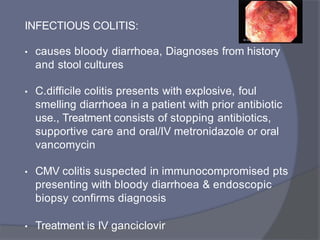
INFECTIOUS COLITIS:
• causes bloody diarrhoea, Diagnoses from history
and stool cultures
• C.difficile colitis presents with explosive, foul
smelling diarrhoea in a patient with prior antibiotic
use., Treatment consists of stopping antibiotics,
supportive care and oral/IV metronidazole or oral
vancomycin
• CMV colitis suspected in immunocompromised pts
presenting with bloody diarrhoea & endoscopic
biopsy confirms diagnosis
• Treatment is IV ganciclovir
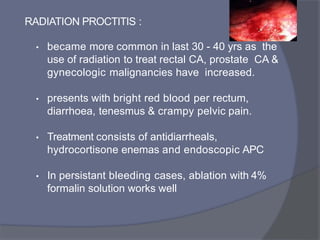
RADIATION PROCTITIS :
• became more common in last 30 - 40 yrs as the
use of radiation to treat rectal CA, prostate CA &
gynecologic malignancies have increased.
• presents with bright red blood per rectum,
diarrhoea, tenesmus & crampy pelvic pain.
• Treatment consists of antidiarrheals,
hydrocortisone enemas and endoscopic APC
• In persistant bleeding cases, ablation with 4%
formalin solution works well
Anorectal Disease
• Internal haemorrhoids, Anal fissures and
Colorectal neoplasia
• account for 5-10% of all acute lower GI bleeding
• Most hemorrhoidal bleed occurs from internal
haemorrhoids, which are painless and accompanied
by prolapsed tissue that reduces by itself or has to be
reduced manually.
• Internal haemorrhoids should be treated with
bulking agents, increased dietary fibre, adequate
hydration.
•
Office-based interventions, including rubber
band ligation, injectable sclerosing agents and
infrared coagulation can be done, Surgical
hemorrhoidectomy as a last resort
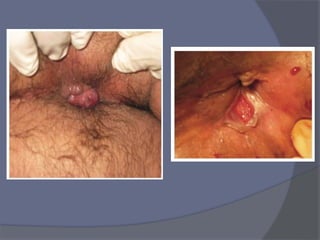
• Anal fissure, produces painful bleeding after a
bowel most, with bleeding as their main symptom
• Treated medically by stool-bulking agents
(psyllium), increased water intake, stool softeners
and topical nitroglycerin ointment or diltiazem to
relieve sphincter spasm and promote healing.
Mesenteric Ischemia
• Secondary to acute or chronic arterial or venous
insufficiency
• Presents with Abdominal pain & bloody diarrhoea
• Predisposing factors - Cardiovascular disease, recent
abdominal vascular surgery, hyper coagulable states,
medications (vasopressin, digoxin) and vasculitis
• Acute Colonic Ischemia - most common form, occurring
in watershed areas of splenic flexure and rectosigmoin
junction, but can be right sided in upto 40% of cases
•
CT shows a thickened bowel wall and diagnosis
confirmed with flexible endoscopy, which reveals
edema, hemorrhage and demarcation between
normal and abnormal mucosa
• Treatment - bowel rest, IV antibiotics, CVS support
& correction of the low flow state.
• In 85% cases schema resolves by itself, occasionally
causing colonic stricture. In rest 15% cases, Surgery
is indicated due to progressive ischemia and
gangrene.
• Marked leucocytosis, fever, fluid requirement,
tachycardia, acidosis, peritonitis - require Sx, in
which resection of the ischemic intestine and
creation of an end ostomy is indicated.
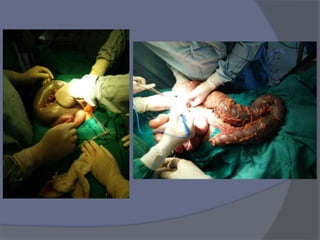
Specific causes of
Small Bowel Bleeding
Angiodyspalsias
• Small Intestinal Vascular Ectasias
• Most common cause of small intestinal bleed
with upto 40% cases in older patients and 10%
in younger patients
• common site : Jejunum > Ileum > Duodenum
• Enteroscopy or Capsule endoscopy for diagnosis
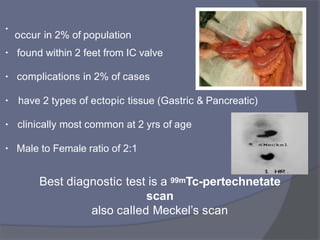
Meckel’s Diverticulum
Bleeding is usually from an ulcerative lesion
on the ideal wall opposite the diverticulum,
resulting from the acid production by
ectopic gastric mucosa
• True diverticulum, which is a congenital remnant
of the omphalomesentric duct [2% of ppl]
•
• Surgical management includes Segmental
resection to incorporate the opposing ill
mucosa, which is typically the site for bleeding.
•
occur in 2% of population
• found within 2 feet from IC valve
• complications in 2% of cases
• have 2 types of ectopic tissue (Gastric & Pancreatic)
• clinically most common at 2 yrs of age
• Male to Female ratio of 2:1
Best diagnostic test is a 99mTc-pertechnetate
scan
also called Meckel’s scan
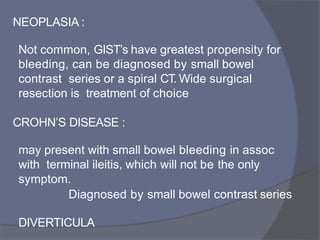
NEOPLASIA :
Not common, GIST’s have greatest propensity for
bleeding, can be diagnosed by small bowel
contrast series or a spiral CT. Wide surgical
resection is treatment of choice
CROHN’S DISEASE :
may present with small bowel bleeding in assoc
with terminal ileitis, which will not be the only
symptom.
Diagnosed by small bowel contrast series
DIVERTICULA
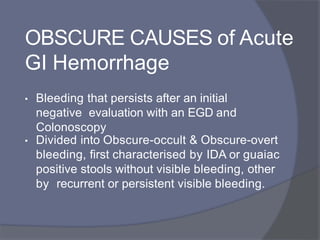
OBSCURE CAUSES of Acute
GI Hemorrhage
• Bleeding that persists after an initial
negative evaluation with an EGD and
Colonoscopy
• Divided into Obscure-occult & Obscure-overt
bleeding, first characterised by IDA or guaiac
positive stools without visible bleeding, other
by recurrent or persistent visible bleeding.
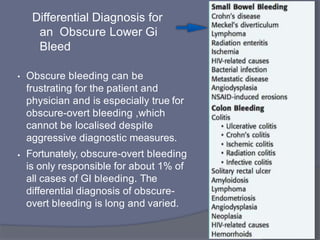
Differential Diagnosis for
an Obscure Lower Gi
Bleed
•
•
Obscure bleeding can be
frustrating for the patient and
physician and is especially true for
obscure-overt bleeding ,which
cannot be localised despite
aggressive diagnostic measures.
Fortunately, obscure-overt bleeding
is only responsible for about 1% of
all cases of GI bleeding. The
differential diagnosis of obscure-
overt bleeding is long and varied.
Internal Medicine, GI bleeding simple.pptx

Internal Medicine, GI bleeding simple.pptx

  • 1.
    Dr Mohammad Al Akeely Associateprofessor& consultant general surgeon UPPER & Lower GI Bleeding
  • 2.
    REFERENC E: • MacLeod's clinicalexamination 12th edition • Davidson’s principle and practice of medicine th21 edition • Oxford handbook of emergency medicine • Upper GIT bleeding http://www.patient.co.uk/doctor • www.medscape.com
  • 3.
    Definition Hemorrhage can originate fromany region of the GI tract and is typically classified based on its location relative to the ligament of Treitz.
  • 4.
    INTRODUCTION  Acute gastrointestinalbleeding is a potentially life-threatening abdominal emergency that remains a common cause of hospitalization.  Upper gastrointestinal bleeding (UGIB) is defined as bleeding derived from a source proximal to the ligament of Treitz. Can be categorized as either variceal or non-variceal. Variceal is usually acomplication of liver cirrhosis or fibrosis While non variceal bleeding is usually associated with peptic ulcer disease or other causes of UGIB  UGIB is more common than lower GIT, with a higher incidence in male.
  • 6.
    CAUSES  Esophageal causes:  Esophagealvarices  Esophagitis  Esophageal cancer  Esophageal ulcers  Mallory-Weiss tear  Gastric causes:  Gastric ulcer  Gastric cancer  Gastritis  Gastric varices  Dieulafoy's lesions
  • 7.
     Duodenal causes: Duodenal ulcer  Vascular malformation including aorto-enteric fistulae  Hematobilia, or bleeding from the biliary tree
  • 9.
    :PRESENTATION • Hematemesis: vomitingof blood in the stomach. coffee-ground emesis that indicate slower rate of bleeding or fresh bright red blood (may be with clots) that indicates faster rate of bleeding. • Melena: stool consisting of partially digested blood (black tarry, semi solid, shiny and has a distinctive odor, when its present it indicates that blood has been present in the GI tract for at least 14 h. The more proximal the bleeding site, the more likely melena will occur. • Hematochezia usually represents a lower GI source of bleeding, although an upper GI lesion may bleed so briskly that blood does not remain in the bowel long enough for melena to develop.
  • 10.
  • 11.
    APPROACH:  History: • Abdominal pain •Haematemsis • Haematochezia • Melaena • Features of blood loss: shock, syncope, anemia • Features of underlying cause: dyspepsia, jaundice, weight loss
  • 12.
    •History of epistaxisor hemoptysis to rule out the GI source of bleeding. • Past medical: previous episodes of upper gastrointestinal bleeding, diabetes mellitus; coronary artery disease; chronic renal or liver disease; or chronic obstructive pulmonary disease. •Past surgical: previous abdominal surgery
  • 13.
     Examination : General examinationand systemic examinations VITALS: Pulse = Thready pulse BP= Orthostatic Hypotension SIGNS of shock: Cold extremeties, Tachycardia, Hypotension Chest pain, Confusion, Delirium, Oliguria, and etc. APPROACH CONT,
  • 14.
    • SKIN changes: Cirrhosis– Palmer erythema, spider nevi Bleeding disorders – Purpura /Echymosis Coagulation disorders – Haemarthrosis, Muscle hematoma. • Signs of dehydration: dry mucosa, sunken eyes, skin turgor reduce. • Signs of a tumour may be present : ( nodular liver, abdominal mass, lymphadenopathy, and etc(. • fresh blood, occult blood, bloody diarrhea: Respiratory, CVS, CNS for comorbid diseases
  • 16.
    • CBC withPlatelet Count, and Differential A complete blood count (CBC) is necessary to assess the level of blood loss. CBC should be checked frequently(q4-6h) during the first day. • Hemoglobin Value, Type and Crossmatch Blood The patient should be crossmatched for 2-6 units, based on the rate of active bleeding.The hemoglobin level should be monitored serially in order to follow the trend. An unstable Hb level may signify ongoing hemorrhage requiring further intervention. :LAB DIAGNOSIS
  • 17.
    • • RFT- todetect underlying renal disease • Calcium level- to detect hyperparathyroidism and in monitoring calcium in patients receiving multiple transfusions of citrated blood • Gastrin level
  • 18.
    • gastrointestinal bleeding (UGIB).A ratio of greater than 36 in a patient without renal insufficiency is suggestive of UGIB .High serum ammonia may lead to encephalopathy in cirrhotic patients. • The patient's prothrombin time (PT), activated partial thromboplastin time)PTT),and International Normalized Ratio (INR) should be checked to document the presence of a coagulopathy.
  • 19.
    • 1.5 may indicatemoderate liver impairment. • A fibrinogen level of less than 100 mg/dL also indicates advanced liver disease with extremely poor synthetic function
  • 20.
    • Initial diagnosticexamination for all patients presumed to have UGIB • :ENDOSCOPY Endoscopy should be performed immediately after hemodynamic stabilization, and adequate monitoring
  • 23.
    • CHEST X-RAY-Chestradiographs should be ordered to exclude aspiration pneumonia, effusion, and esophageal perforation. • Abdominal X-RAY- erect and supine films should be ordered to exclude perforated viscous and ileus. :IMAGING
  • 24.
    • Computed tomography(CT) scanning and ultrasonography may be indicated for the evaluation of liver disease with cirrhosis, tumours, aortoenteric fistula, and other unusual causes of upper GI hemorrhage. • Nuclear medicine scans may be useful in determining the area of active hemorrhage
  • 25.
     Angiography maybe useful if bleeding persists and endoscopy fails to identify a bleeding site.  Angiography along with transcatheter arterial embolization (TAE) should be considered for all patients with a known source of arterial UGIB that does not respond to endoscopic management, with active bleeding and a negative endoscopy.  In cases of aortoenteric fistula, angiography requires active bleeding (1 mL/min) to be diagnostic. ANGIOGRAPHY:
  • 26.
    NASOGASTRIC LAVAGE  A nasogastrictube is an important diagnostic tool. This procedure may confirm recent bleeding or exclude an upper GI lesion(.
  • 27.
    • Better visualizationduring endoscopy • Give crude estimation of rapidity of bleeding • Prevent the development of Porto systemic encephalopathy in cirrhosis • Tube placement can reduce the patient's need to vomit  During gastric lavage use saline and not use large volume of to avoid water intoxication.  Gastric lavage should be done in alert and cooperative patient to avoid bronco-pulmonary aspiration BENEFITS OF LAVAGE :
  • 28.
  • 29.
    RISK CATEGORY  Rockall’s score>8 = High risk of death  Rockall’s score <3= excellent prognosis
  • 30.
    MANAGEMEN T •Priorities are: • Stabilizethe patient: protect airway, restore circulation. • Identify the source of bleeding. • Definitive treatment of the cause. •Resuscitation and initial management • Protect airway: position the patient on side • IV access: use 1-2 large bore cannula • Take blood for: Hb, PCV, PT and cross match  Restore the circulation: if pts haemodynamically stable give N.S. infusion, if not give colloid 500ml/1hr and then crystalloid and continue until blood is available.
  • 31.
    o Transfuse blood for: o o o Obviousmassive blood loss Hematocrit < 25% with active bleeding Symptoms due to low hematocrit and hemoglobin o Platelet transfusions should be offered to patients who are actively bleeding and have a platelet count less than 50000 o Fresh frozen plasma should be used for patients who have either a fibrinogen level of less than 1 g/litre, or (INR) greater than 1.5 times normal. o Over-transfusion may be as damaging as under- transfusion.
  • 32.
    • Monitor urineoutput. • Watch for signs of fluid overload (raised JVP, pul. edema, peripheral edema) • Commence IV PPI, omeprazole 80 mg iv followed by 8mg/hr for 72 hrs. • Keep the pt nill by mouth for the endoscopy
  • 33.
    TREATMENT OF VARICEAL BLEEDING Terlipressin, Prophylactic antibiotic therapy •Endoscopic banding •Stent insertion is effective for selected patients •  Balloon tamponade should be considered as a temporary salvage treatment for uncontrolled variceal haemorrhage •  TIPS should be offered if bleeding from gastric varices is not controlled by endoscopic injection of N-butyl-2- cyanoacrylate
  • 37.
    TREATMENT OF NON-VARICEAL BLEEDING • Endoscopy is now the method of choice for controlling active peptic-ulcer related UGIB. •  Endoscopic therapy should only be delivered to actively bleeding lesions, non-bleeding visible vessels and, when technically possible, to ulcers with an adherent blood clot. •  Black or red spots or a clean ulcer base with oozing do not merit endoscopic intervention since these lesions have an excellent prognosis without intervention. •  A n endoscopic dual therapy( rather than adrenaline monotherapy is preferred for treatment of non-variceal UGIB
  • 38.
    For the endoscopictreatment of non-variceal UGIB, one of the following should be used: • A mechanical method(clips) with or without adrenaline (epinephrine( • Thermal coagulation with adrenaline (epinephrine( • Fibrin or thrombin with adrenaline (epinephrin( •  Interventional radiology should be offered to unstable patients who re-bleed after endoscopic treatment. Refer urgently for surgery if interventional radiology is not immediately available.
  • 40.
    SURGERY INDICATIONS: • Persistenthypotension • Failure of medical treatment or endoscopic homeostasis • Coexisting condition ( perforation, obstruction, malignancy( • Transfusion requirement ) 4 units in 24 hr( • Recurrent hospitalizations
  • 41.
    TYPES OF OPERATIONS: The choiceof operation depends on the site and the bleeding lesions: Duodenal ulcers are treated by under-running with or without pyloro-plasty. Gastric ulcers treated by under-running (take a biopsy to exclude carcinoma(. Local excision or partial gastrectomy will be required for tumours.
  • 42.
    COMPLICATION S • Can arisefrom treatments administered for example: • Endoscopy: • Aspiration pneumonia • Perforation • Complications from coagulation, laser treatments • Surgery: • Ileus • Sepsis • Wound problems
  • 43.
    PREVENTION  The mostimportant factor to consider is treatment for H. pylori infection.  1st line therapy: PPI )omeprazole, lansoprazole, pantoprazole) + two of these three AB ) clarithromycin, amoxicillin, metronidazole(  2nd line therapy: - PPT - bismuth - metronidazole - tetracycline
  • 44.
  • 45.
    Upto 80% ofacute GI bleed occurs in Upper GIT, of which Peptic Ulcer Disease & Variceal Haemorrhage are most common causes. Obscure bleeding - hemorrhage that persists or recurs after normal endoscopy The Lower GI bleed occurs mostly from COLON (95%) of which Diverticula and Angiodysplasias are most common causes. Occult bleeding - not apparent to patients until they present with symptoms related to anaemia.
  • 46.
    • Incidence ofLGI-Bleed, increases with Age, slightly more common in women, with an overall mortality of <5% • Intussusception in most common in paediatric age group, while Meckel’s diverticulum must be considered in a young adult. • Vascular lesions and Diverticular disease affects all age groups, with increased incidence in middle aged & older adults
  • 47.
    DIAGNOSIS Classical Signs &Symptoms • Hematochezia (usually painless) • Malena (mostly UGI-B) • Occult blood in stool • Anaemia • Nasogastric aspirate usually clear
  • 48.
  • 49.
    • Aspirin use, morethan 2 comorbid illnesses, heart rate > 100bpm, non-tender abdominal examination, rectal bleeding within first 4 hrs of evaluation, syncope, systolic BP < 115mmHg RISK FACTORS
  • 50.
    • Resuscitate • PR,Anoscopy or Sigmoidoscopy • NGT aspirate & UGI-Endoscopy • Colonoscopy • Radionucleotide Scanning • Mesenteric Angiography (selective( • Diagnostic Intervensions Emergency operative interventions Algoritm for diagnosis and mng of LGI-B •
  • 52.
    DD for aLower Gastrointestinal Haemorrhage
  • 53.
    Brief on Investigations beforegoing to specific diseases
  • 54.
  • 55.
  • 56.
    Colonoscopy • Most appropriatein the setting of mild to moderate bleeding, with patient in stable condition • Preparation with Polyethylene Glycol (PEG) orally or via NG tube[4-8L] for 4-6 hrs, with metaclopramide IV improves visualisation
  • 57.
    ~Distance markings forColonoscope in an Adult in cms
  • 59.
    • Findings may includean actively bleeding site, clot adherence to a focus of mucosa or diverticular orifice, other than Polyps, Cancers and Inflammatory conditions. • Angiodysplasias are difficult to visualise, specially in unstable patients with mesenteric vascular constriction. • Some studies reported that Colonoscopy is successful in identifying the bleeding source in 95% of cases, mostly secondary to Diverticuli or Angiodysplasias
  • 61.
    Radionuclide Scanning • Technician-99m[ 99mTc-labelled RBC ] Most sensitive, but least accurate for localising bleed • Patients own blood is labelled and reinjected, which is extravasated into GI tract lumen, creating a focus that can be detected scintigraphically, Initially images obtained serially, then at 4 hour intervals, upto 24hrs. • can detect bleed as slow as 0.1mL/min • Unfortunately, spatial resolution is low with reported accuracy of 40 - 60 %
  • 63.
    Mesenteric Angiography • Selectiveangiography, using SMA / IMA can detect haemorrhage upto 0.5 to 1.0 mL/min • Used in diagnosis of ongoing haemorrhage, particularly in identifying vascular patterns of Angiodysplasias • • Therapeutic capabilities like Embolisation & Catheter- directed vasopressin infusion to provide temporary control of bleeding. (50% rebelled when it is discontinued)-Bridging(temporary) procedure Complications include hematoma, arterial thrombosis, contrast reaction and ARF.
  • 64.
    Small Bowel Endoscopy •PUSH endoscopy ( 40% success rate) • Performed in hemodynamically stable patients, usually with a paediatric colonoscope, which can reach upto 50-70cms past the lig of trietz. • SONDE PULL endoscopy - enteroscope that passes passively into very distal small bowel with a balloon at its end which is moved down by peristalsis. mucosa visualised as scope is removed • Double-Balloon endoscopy
  • 65.
    Capsule endoscopy • Visualisationof entire GIT, but no interventional capacity and time consuming • Excellent tool in a hemodynamically stable patient who continues to bleed, with success rate as high as 90% • Contraindicated in patients with obstruction or motility disorders.
  • 66.
  • 67.
    Diverticular Disease • responsiblefor upto 55% of cases of LGI-B • affects more than two-thirds of western population in their 80’s and can be rarely seen in patients younger than 40yrs • Only 3-15% individuals with diverticulosis experience bleeding • In bleeding diverticuli, More than 75% stop spontaneously, of which about 10% will rebelled in an year and almost 50% within 10yrs. • Although diverticular disease is more common on left side, right sided disease is responsible for more than 50% of bleed.
  • 68.
    • Bleed generallyoccurs at neck of diverticulum and is believed to be secondary to bleeding from vasa recti as they penetrate through the submucosa.
  • 69.
    • COLONOSCOPY -Best method of diagnosis and treatment (limited in severe bleed) • Bleeding diverticulum can be controlled by Epinephrine injection, use of Electrocautery, and with Endoscopic clips. • Angiography with Superselective embolisation can be considered if all the above fail, with high success rates(>90%), but with risk of ischemic complications • Lastly, Surgical intervention with colonic resection, or blind hemicolectomy done in unsure patients (50%) • Subtotal colectomy does not eliminate risk of recurrent hemorrhage compared to segmental resection, and is accompanied by significant increase in morbidity, particularly older patients in whom rectum never adapts. Mortality is almost 30% in the Emergent subtotal colectomy for bleed
  • 70.
    Angiodysplasia • Some reportsstate vascular lesions account upto 40% of LGI-B, However, recent reports state much low incidence • also called Arteriovenous Malformations [AVM’(] • They are acquired degenerative lesions secondary to progressive dilatation of normal blood vessels within the submucosa of the intestine • Age of incidence > 50 yrs with M=F, usually associated with aortic stenosis and renal failure, esp in older patients • Haemorrhage tends to arise from right side of colon, with CECUM being most common location
  • 71.
    COLONOSCOPY: Red stellate lesionswith a surrounding rim of pale mucosa, can be treated by sclerotherapy or electrocautery ANGIOGRAPHY: dilated, slowly emptying veins, and sometimes early venous filling
  • 72.
    • Treatment with intra-arterialvasopressin, selective gel-foam embolisation, endoscopic coagulation, injection with sclerosing agents, lastly Segmental resection most commonly a right colectomy is effective. • •
  • 73.
    Neoplasia • Uncommon causeof significant lower GI bleed • Bleeding is usually painless, intermittent and slow in nature, frequently assoc with IDA • Polyps also bleed, but usually occurs after a polypectomy • Juvenile polyps are second most common cause of bleeding in pts younger than 20yrs • Occasionally, GIST’s are assoc with massive hemorrhage
  • 74.
    COLITIS • Inflammation ofthe Colon is caused by number of disease processes, including.. Inflammatory bowel disease (Crohn’s disease, UC, indeterminate colitis) Infectious colitis (E coli, CMV, salmonella, shigella, campylobacter spp. & Clostridium difficale) Radiation proctitis and Ischemia.
  • 75.
    ULCERATIVE COLITIS : •mucosal disease starting at distal rectum and progress proximally to involve the entire colon. • Pts present with upto 20 bloody bowel movements daily, accompanied by crampy abdominal pain & tenesmus • Diagnosis by careful history and colonoscopic biopsy • Medical treatment with steroids, 5-aminosalicylic acid (ASA), immunomodulatory agents and supportive care • Surgery is rarely indicated
  • 76.
    Crohn’s Disease : •assoc with guaiac-positive diarrhoea and mucus filled bowel movements, but not with bright red colour • Characterised by skip lesions, transmural thickening of bowel wall and granuloma formation. Can affect entire GIT • Diagnosed with Endoscopy and Contrast studies • Medical management consists of steroids, antibiotics, immunomodulators
  • 77.
    INFECTIOUS COLITIS: • causesbloody diarrhoea, Diagnoses from history and stool cultures • C.difficile colitis presents with explosive, foul smelling diarrhoea in a patient with prior antibiotic use., Treatment consists of stopping antibiotics, supportive care and oral/IV metronidazole or oral vancomycin • CMV colitis suspected in immunocompromised pts presenting with bloody diarrhoea & endoscopic biopsy confirms diagnosis • Treatment is IV ganciclovir
  • 78.
    RADIATION PROCTITIS : •became more common in last 30 - 40 yrs as the use of radiation to treat rectal CA, prostate CA & gynecologic malignancies have increased. • presents with bright red blood per rectum, diarrhoea, tenesmus & crampy pelvic pain. • Treatment consists of antidiarrheals, hydrocortisone enemas and endoscopic APC • In persistant bleeding cases, ablation with 4% formalin solution works well
  • 79.
    Anorectal Disease • Internalhaemorrhoids, Anal fissures and Colorectal neoplasia • account for 5-10% of all acute lower GI bleeding • Most hemorrhoidal bleed occurs from internal haemorrhoids, which are painless and accompanied by prolapsed tissue that reduces by itself or has to be reduced manually. • Internal haemorrhoids should be treated with bulking agents, increased dietary fibre, adequate hydration.
  • 80.
    • Office-based interventions, includingrubber band ligation, injectable sclerosing agents and infrared coagulation can be done, Surgical hemorrhoidectomy as a last resort • Anal fissure, produces painful bleeding after a bowel most, with bleeding as their main symptom • Treated medically by stool-bulking agents (psyllium), increased water intake, stool softeners and topical nitroglycerin ointment or diltiazem to relieve sphincter spasm and promote healing.
  • 82.
    Mesenteric Ischemia • Secondaryto acute or chronic arterial or venous insufficiency • Presents with Abdominal pain & bloody diarrhoea • Predisposing factors - Cardiovascular disease, recent abdominal vascular surgery, hyper coagulable states, medications (vasopressin, digoxin) and vasculitis • Acute Colonic Ischemia - most common form, occurring in watershed areas of splenic flexure and rectosigmoin junction, but can be right sided in upto 40% of cases
  • 83.
    • CT shows athickened bowel wall and diagnosis confirmed with flexible endoscopy, which reveals edema, hemorrhage and demarcation between normal and abnormal mucosa • Treatment - bowel rest, IV antibiotics, CVS support & correction of the low flow state. • In 85% cases schema resolves by itself, occasionally causing colonic stricture. In rest 15% cases, Surgery is indicated due to progressive ischemia and gangrene. • Marked leucocytosis, fever, fluid requirement, tachycardia, acidosis, peritonitis - require Sx, in which resection of the ischemic intestine and creation of an end ostomy is indicated.
  • 85.
  • 86.
    Angiodyspalsias • Small IntestinalVascular Ectasias • Most common cause of small intestinal bleed with upto 40% cases in older patients and 10% in younger patients • common site : Jejunum > Ileum > Duodenum • Enteroscopy or Capsule endoscopy for diagnosis
  • 87.
    Meckel’s Diverticulum Bleeding isusually from an ulcerative lesion on the ideal wall opposite the diverticulum, resulting from the acid production by ectopic gastric mucosa • True diverticulum, which is a congenital remnant of the omphalomesentric duct [2% of ppl] • • Surgical management includes Segmental resection to incorporate the opposing ill mucosa, which is typically the site for bleeding.
  • 88.
    • occur in 2%of population • found within 2 feet from IC valve • complications in 2% of cases • have 2 types of ectopic tissue (Gastric & Pancreatic) • clinically most common at 2 yrs of age • Male to Female ratio of 2:1 Best diagnostic test is a 99mTc-pertechnetate scan also called Meckel’s scan
  • 89.
    NEOPLASIA : Not common,GIST’s have greatest propensity for bleeding, can be diagnosed by small bowel contrast series or a spiral CT. Wide surgical resection is treatment of choice CROHN’S DISEASE : may present with small bowel bleeding in assoc with terminal ileitis, which will not be the only symptom. Diagnosed by small bowel contrast series DIVERTICULA
  • 90.
    OBSCURE CAUSES ofAcute GI Hemorrhage • Bleeding that persists after an initial negative evaluation with an EGD and Colonoscopy • Divided into Obscure-occult & Obscure-overt bleeding, first characterised by IDA or guaiac positive stools without visible bleeding, other by recurrent or persistent visible bleeding.
  • 91.
    Differential Diagnosis for anObscure Lower Gi Bleed • • Obscure bleeding can be frustrating for the patient and physician and is especially true for obscure-overt bleeding ,which cannot be localised despite aggressive diagnostic measures. Fortunately, obscure-overt bleeding is only responsible for about 1% of all cases of GI bleeding. The differential diagnosis of obscure- overt bleeding is long and varied.