Gastrointestinal Bleeding
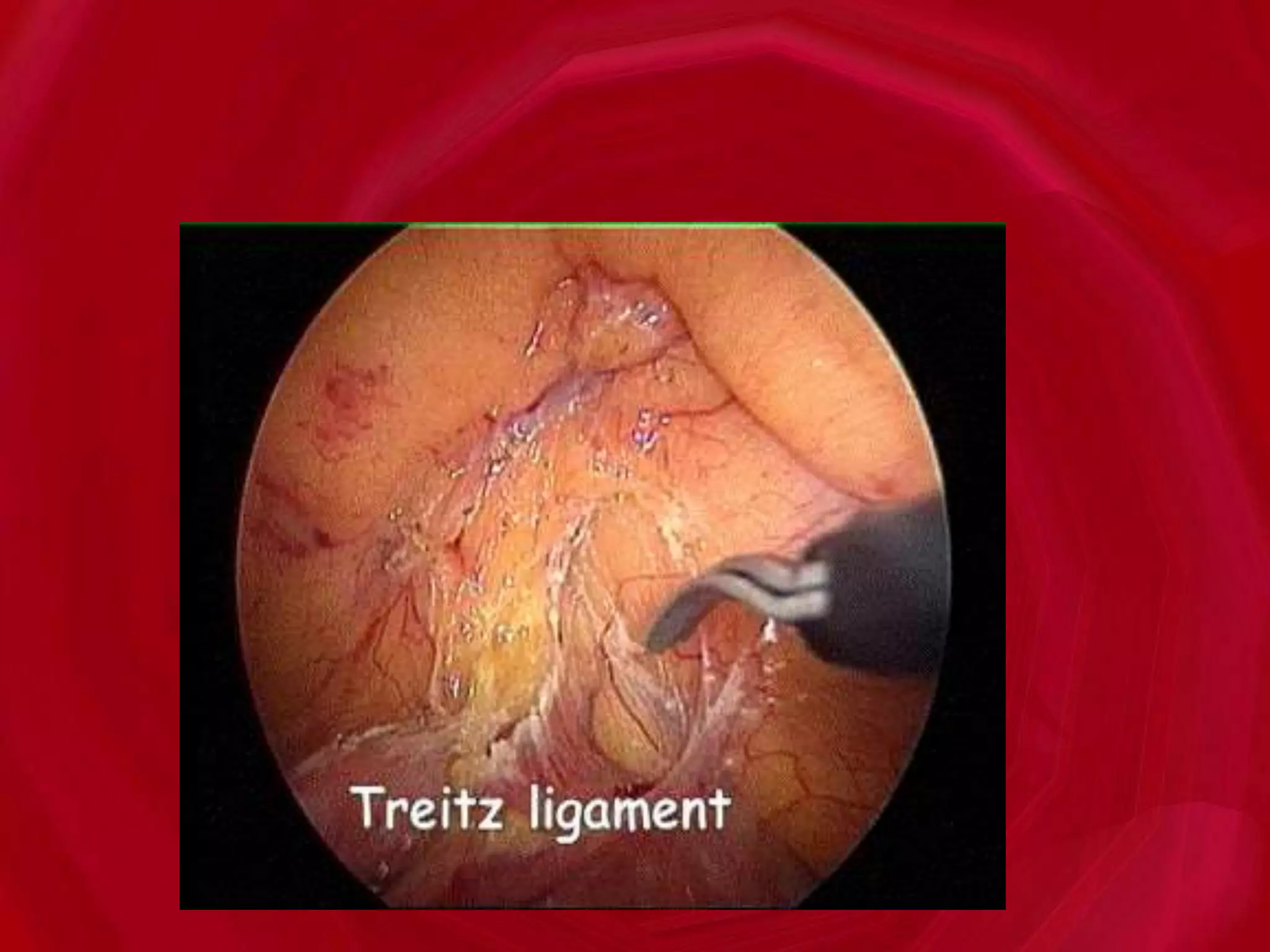
• UGIB : Any blood loss from a gastrointestinal
source above the ligament of Treitz.
• LGIB:Any bleeding that occurs distal to the
ligament of Treitz .
Gastrointestinal Bleeding
• Etiopathogenesis
• Clinical Presentation
• Approach to Management
Gastrointestinal Bleeding
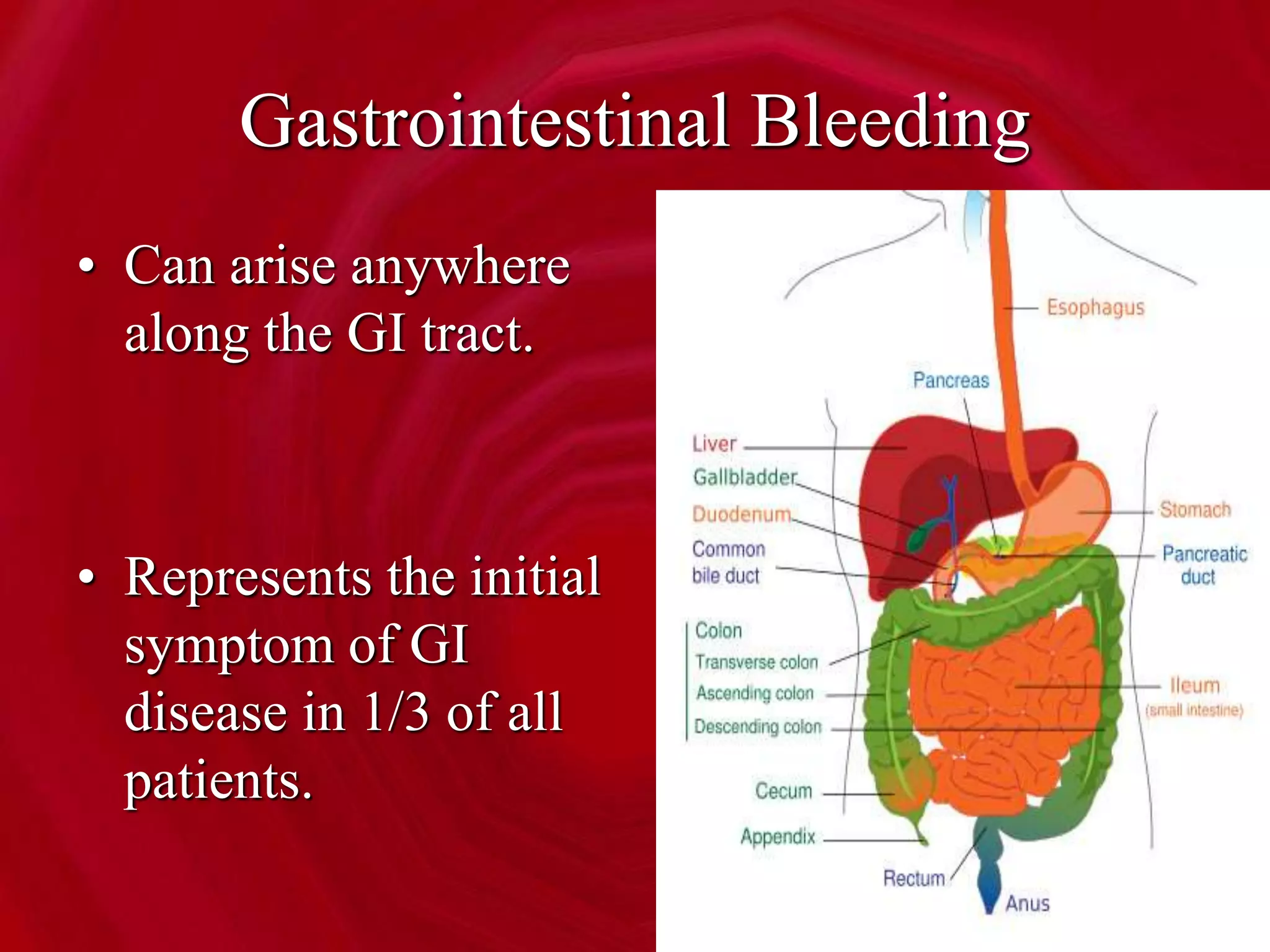
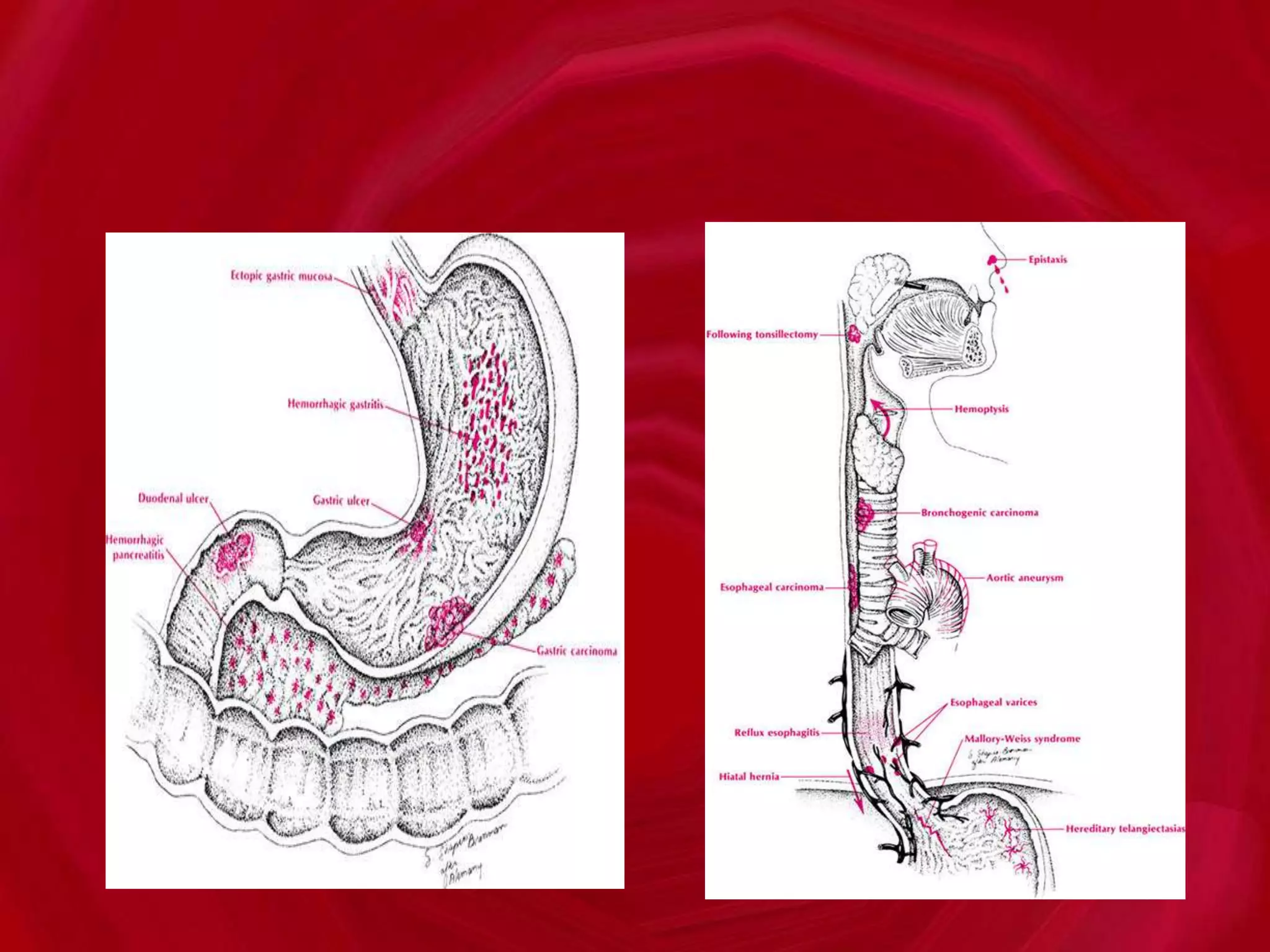
• Can arise anywhere
along the GI tract.
• Represents the initial
symptom of GI
disease in 1/3 of all
patients.
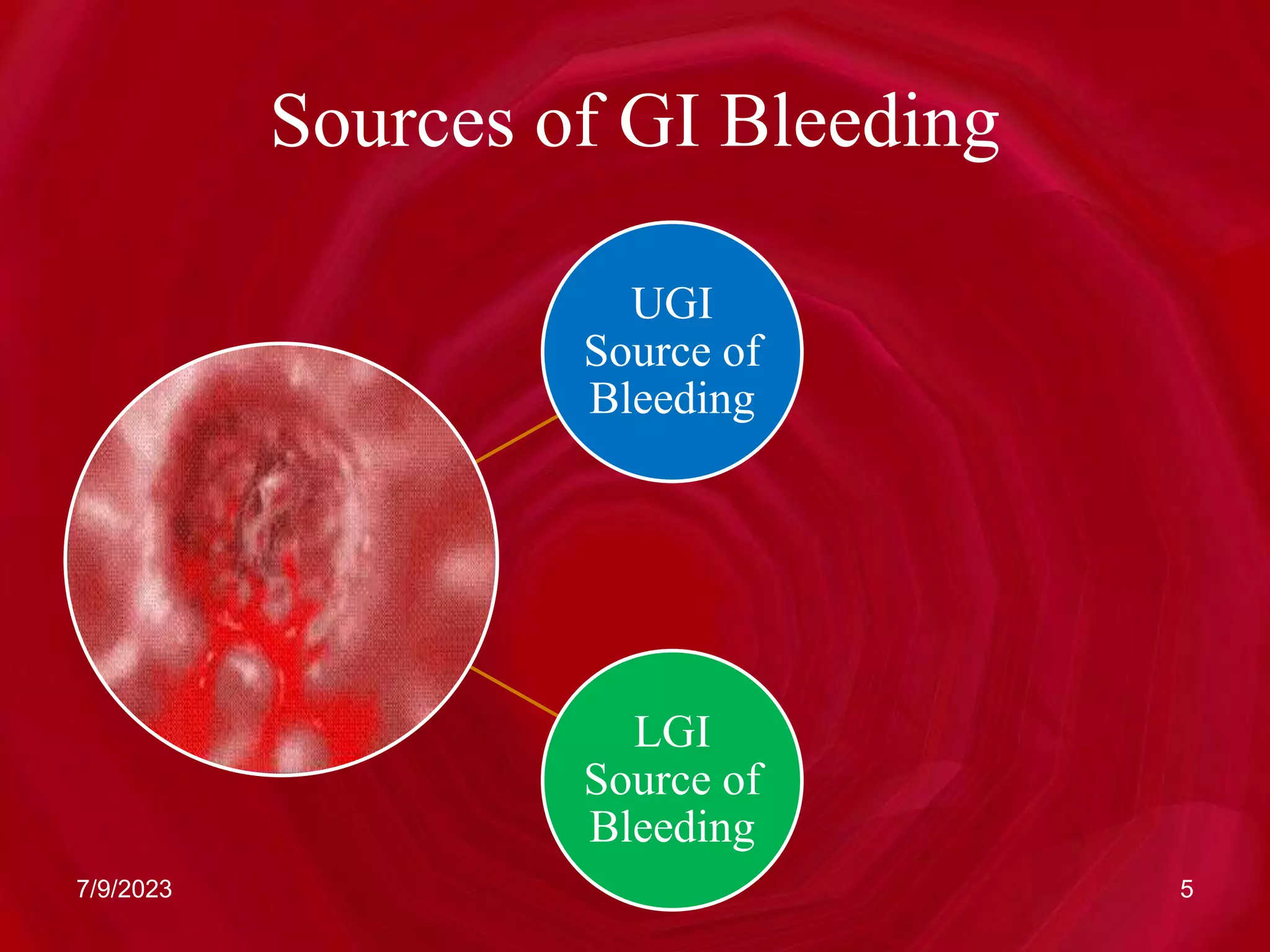
Sources of GI Bleeding
UGI
Source of
Bleeding
LGI
Source of
Bleeding
7/9/2023 5
Clinical Presentation:5 ways
1. Hematemesis
2. Melena
3. Hematochezia
4. Occult GI bleeding
5. Symptoms of blood loss or Anemia
7/9/2023 6
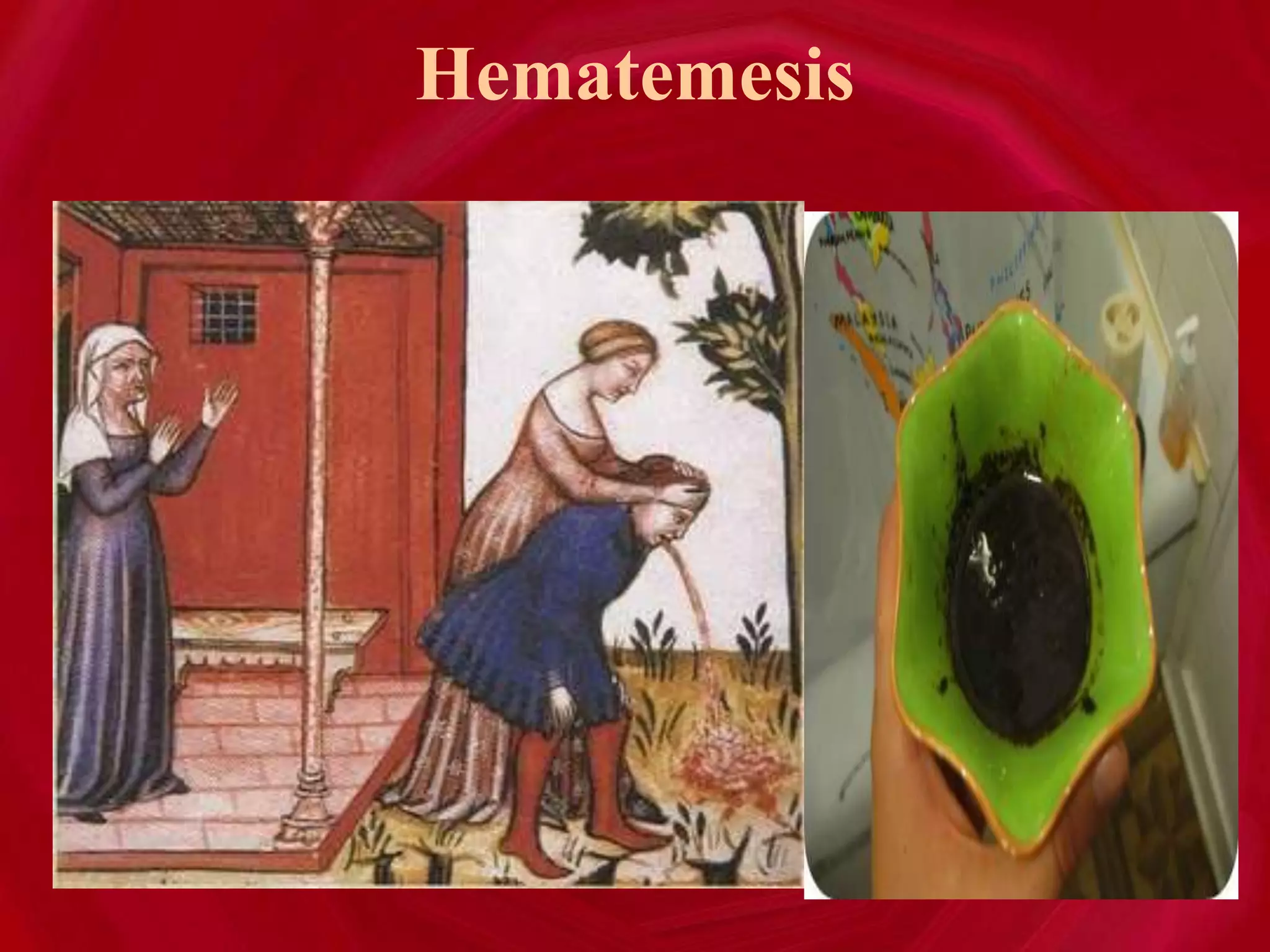
Hematemesis
Clinical Presentation:5 ways
• Hematemesis: Vomiting of blood.
• Can be either gross blood & blood clots
(Rapid bleeding )
• “Coffee-ground” emesis (Chronic
bleeding.)
• Bleeding from the oropharynx to the
ligament of Treitz.
Clinical Presentation:5 ways
 Melena: Passage of black ,tarry ,Foul smelling
stool caused by digested blood
 Usually the result of severe upper GI bleeding.
 Melena without hematemesis is caused by
severe bleeding distal to the ligament of Treitz.
Gastrointestinal Bleeding
 50-60 mL of blood in the GI tract produces
melena.
 Melena can persist from 5-7 days
 Positive fecal occult blood test up to 3
weeks.
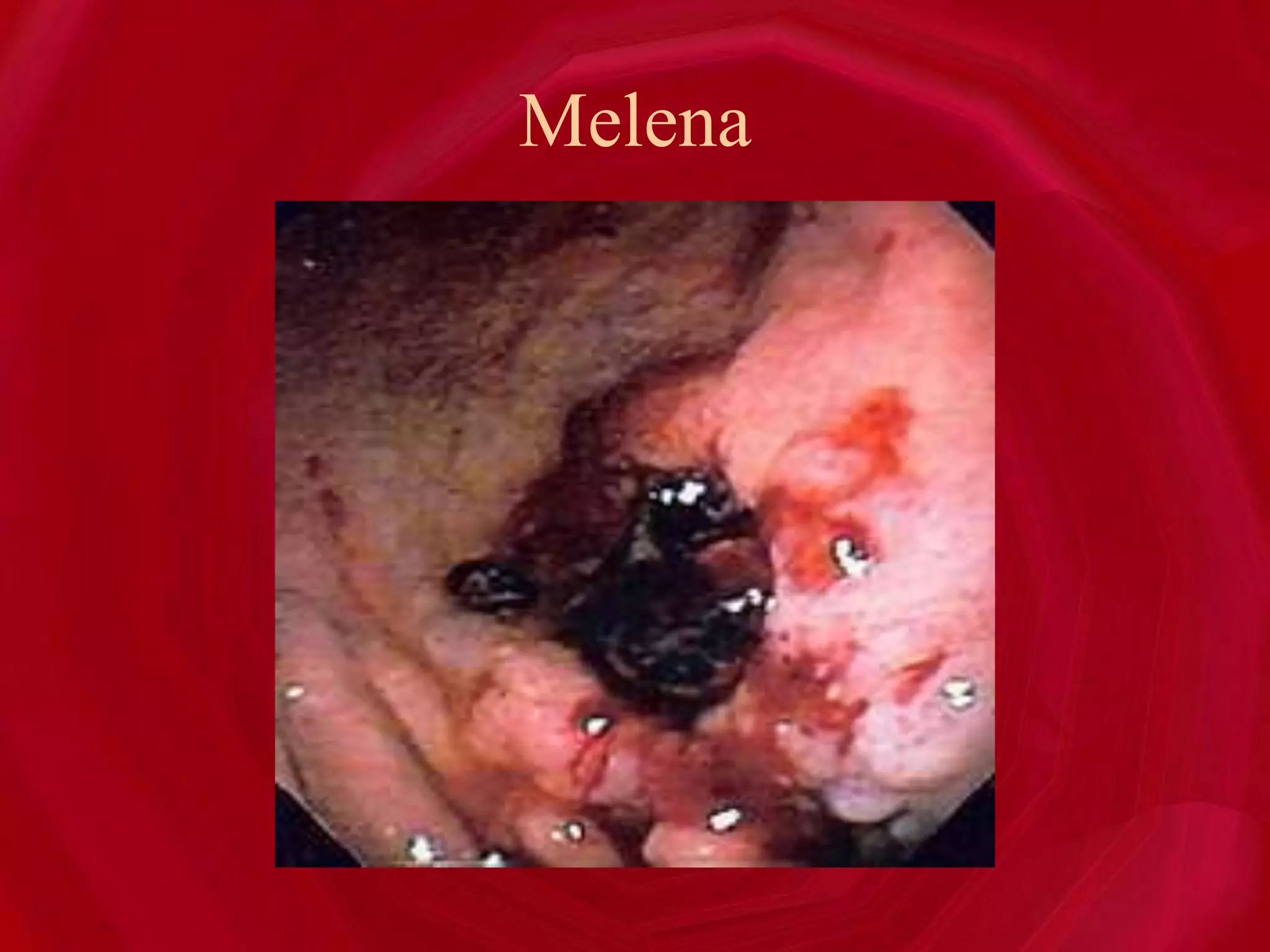
Melena
Clinical Presentation:5 ways
 With upper GI blood loss blood urea nitrogen
levels may be elevated to 30-50 mg/dL.
 BUN: Creatinine ratio greater than 36:1 likely
represents blood loss from an upper GI source.
Clinical Presentation:5 ways
Hematochezia:
Passage of bright red or maroon blood
from rectum
7/9/2023 13
Clinical Presentation:5 ways
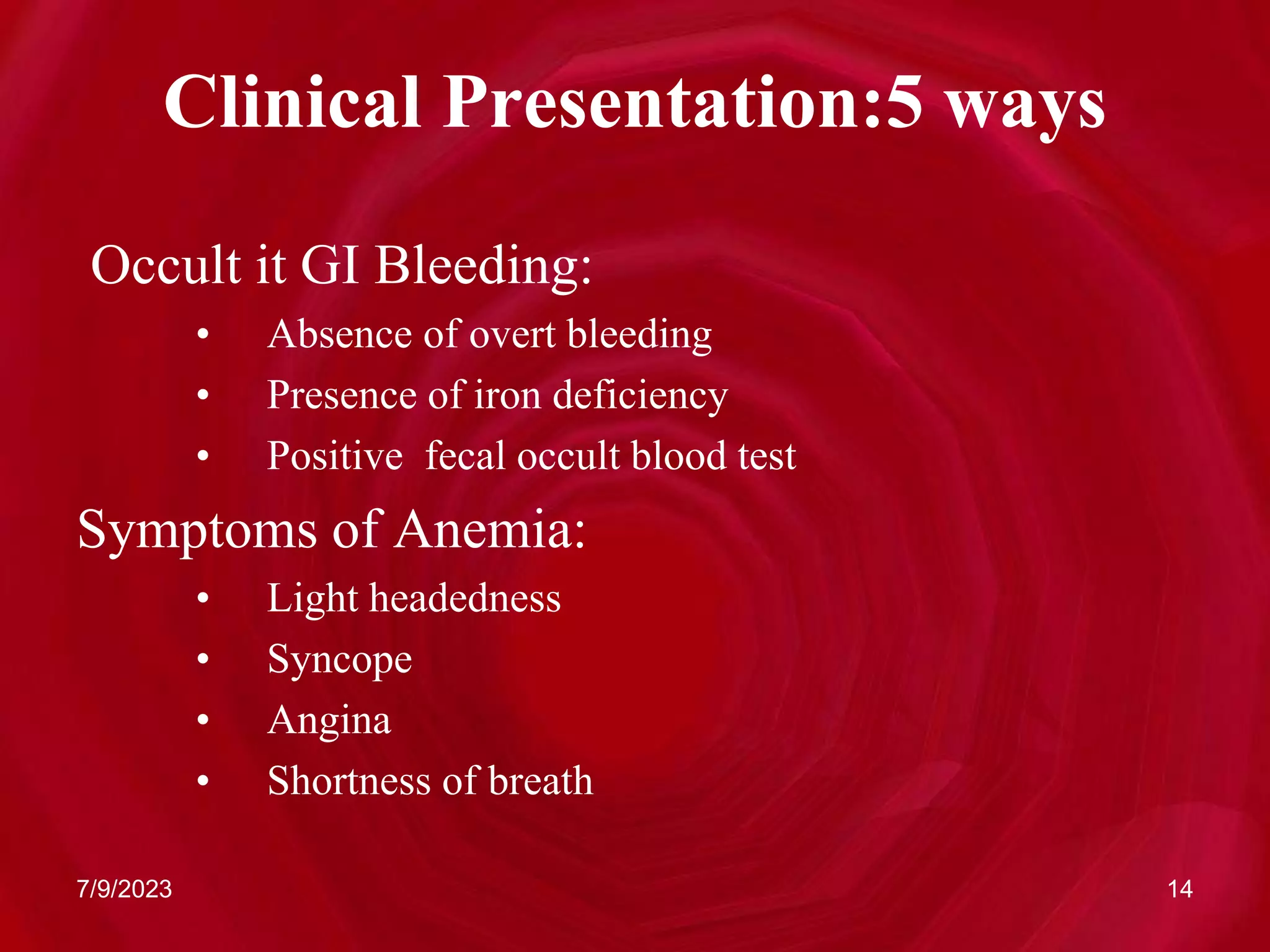
Occult it GI Bleeding:
• Absence of overt bleeding
• Presence of iron deficiency
• Positive fecal occult blood test
Symptoms of Anemia:
• Light headedness
• Syncope
• Angina
• Shortness of breath
7/9/2023 14
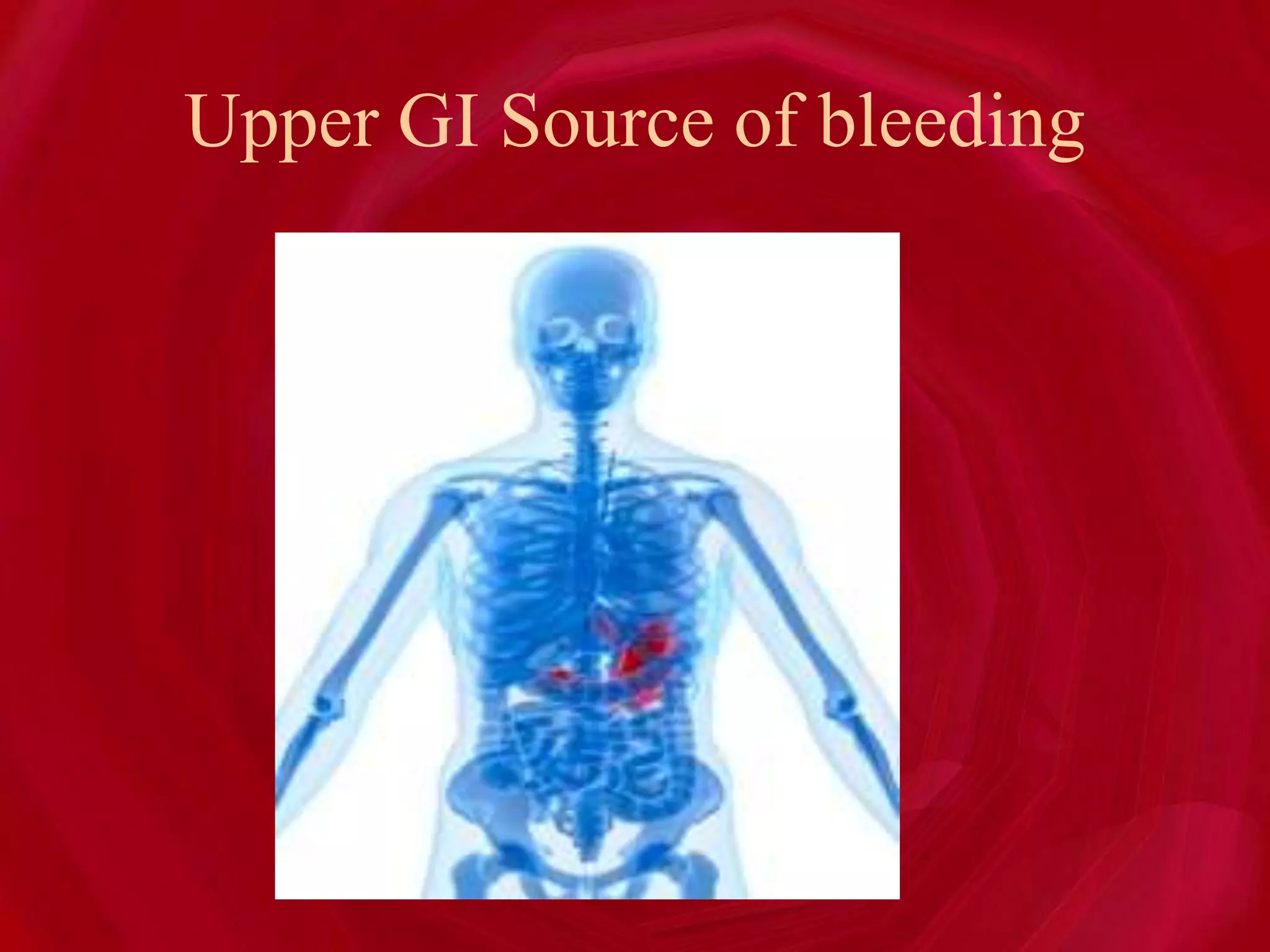
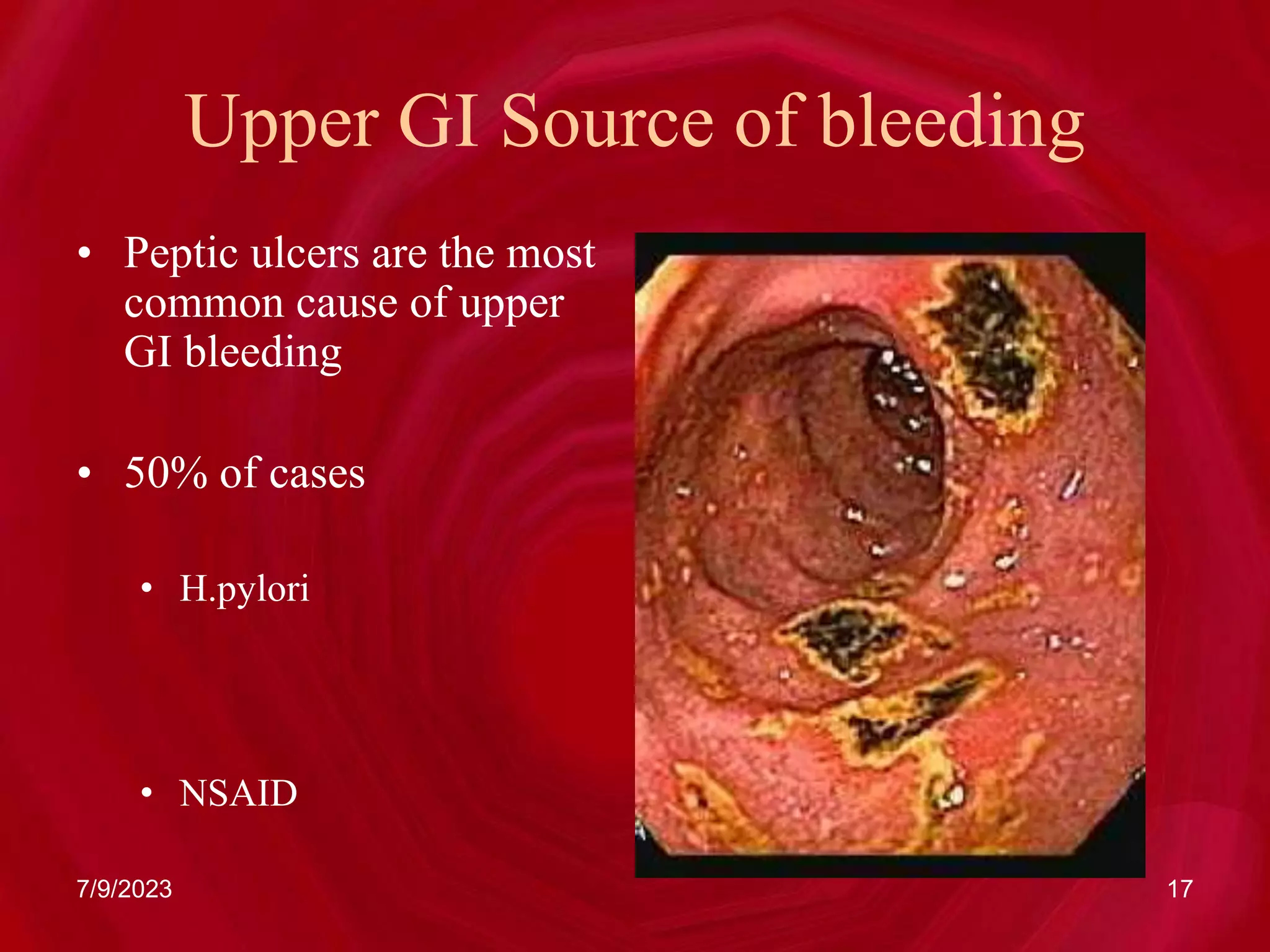
Upper GI Source of bleeding
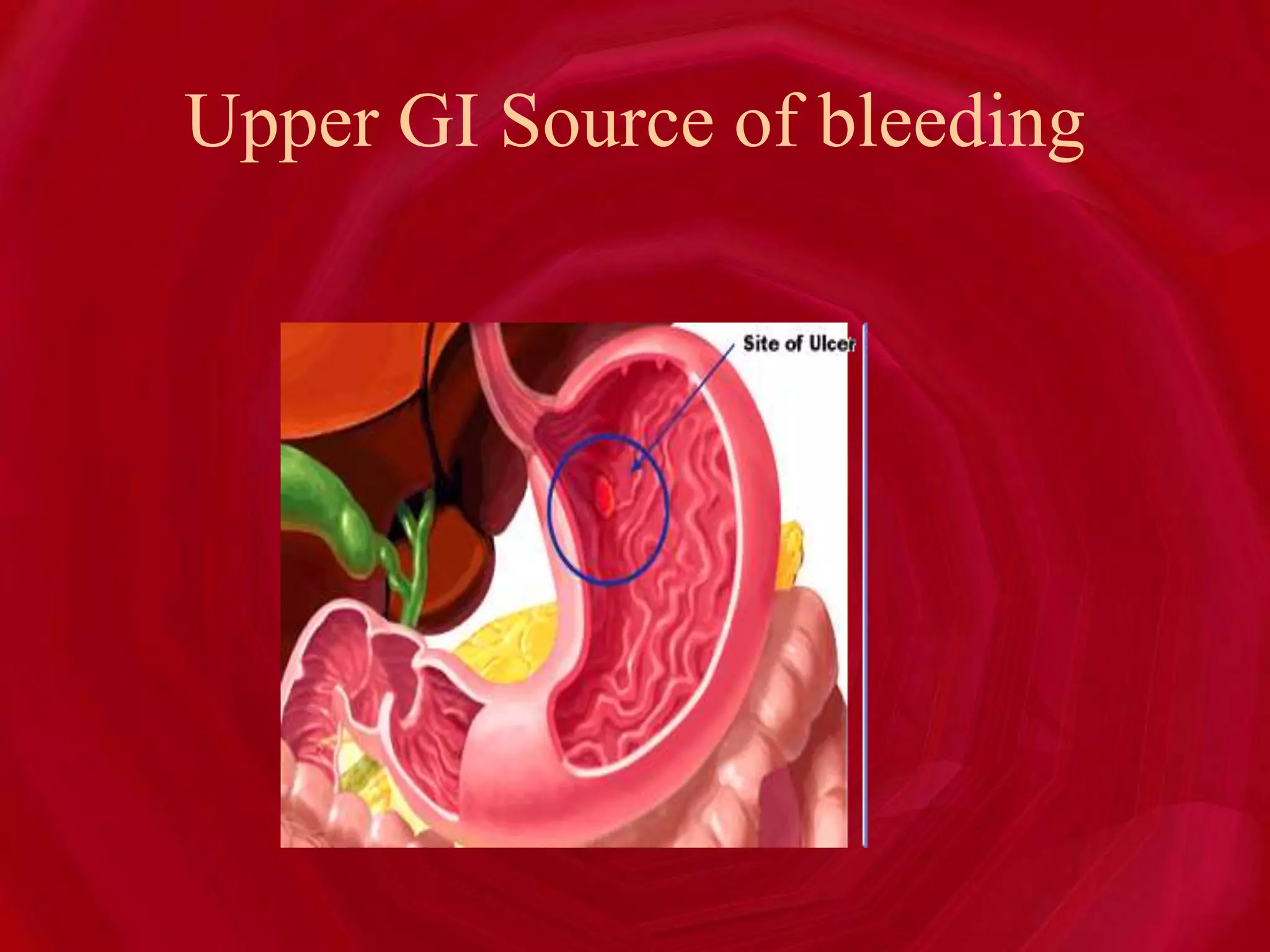
• Peptic ulcers are the most
common cause of upper
GI bleeding
• 50% of cases
• H.pylori
• NSAID
7/9/2023 17
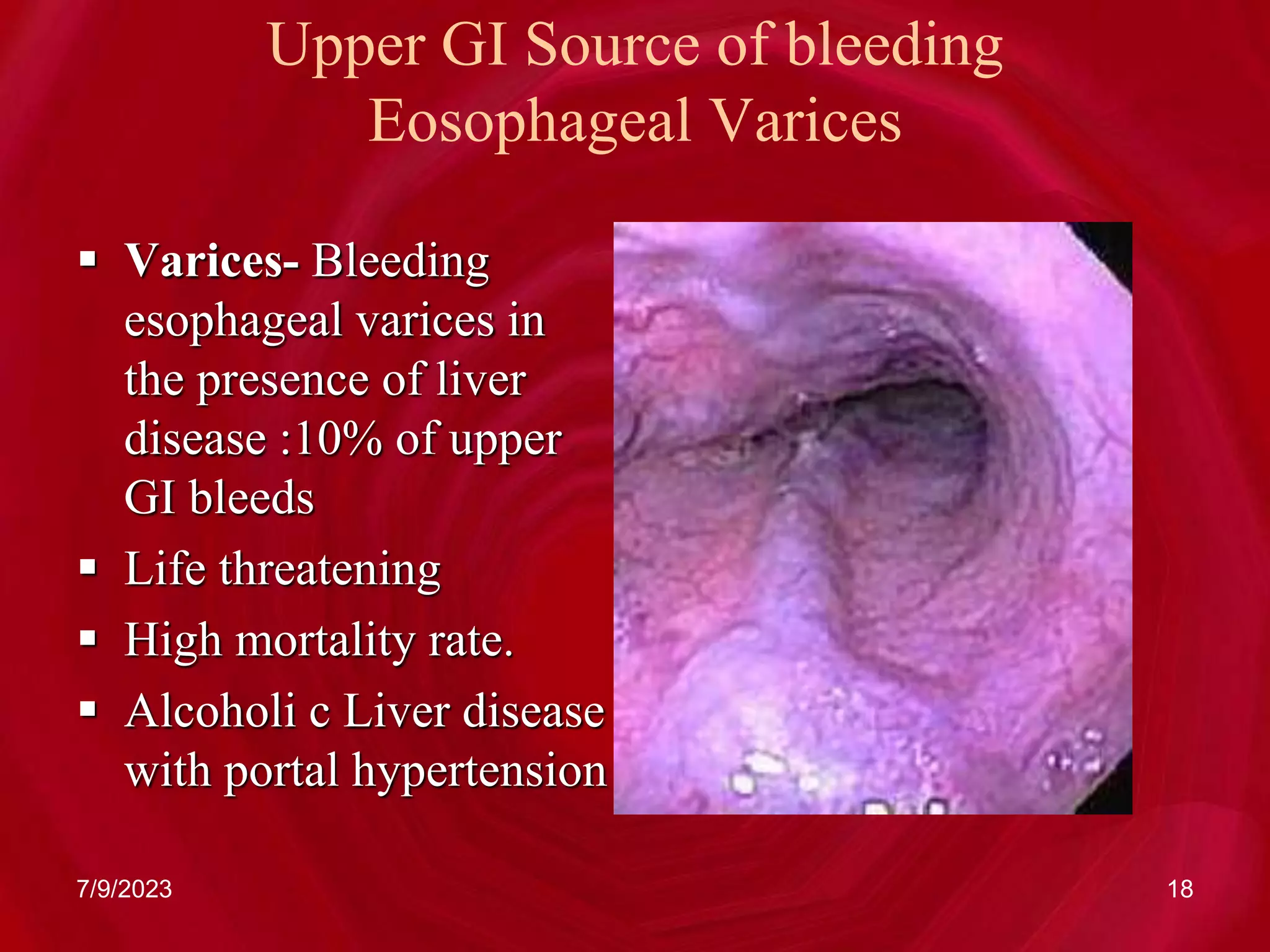
Upper GI Source of bleeding
Eosophageal Varices
 Varices- Bleeding
esophageal varices in
the presence of liver
disease :10% of upper
GI bleeds
 Life threatening
 High mortality rate.
 Alcoholi c Liver disease
with portal hypertension
7/9/2023 18
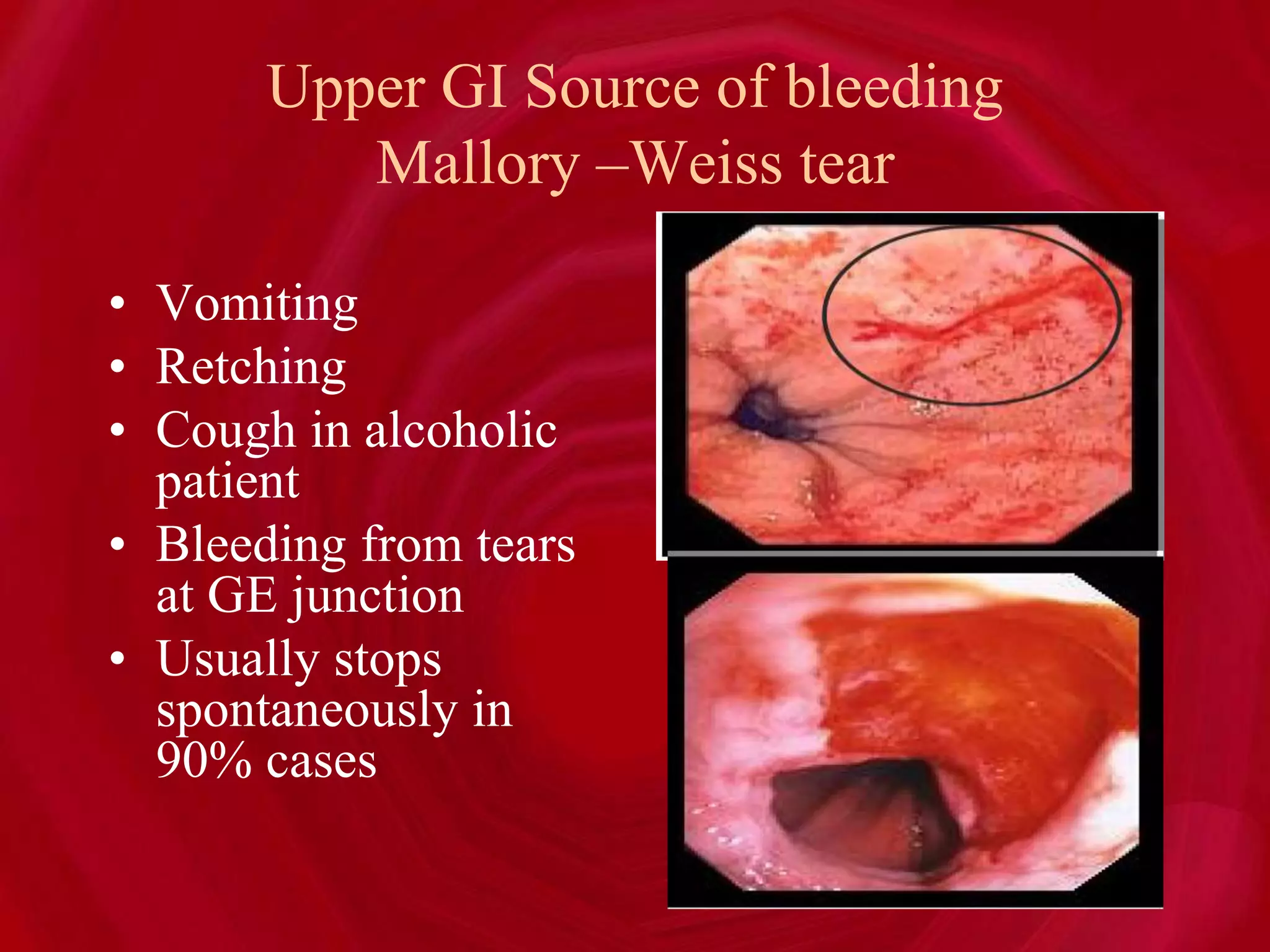
Upper GI Source of bleeding
Mallory –Weiss tear
• Vomiting
• Retching
• Cough in alcoholic
patient
• Bleeding from tears
at GE junction
• Usually stops
spontaneously in
90% cases
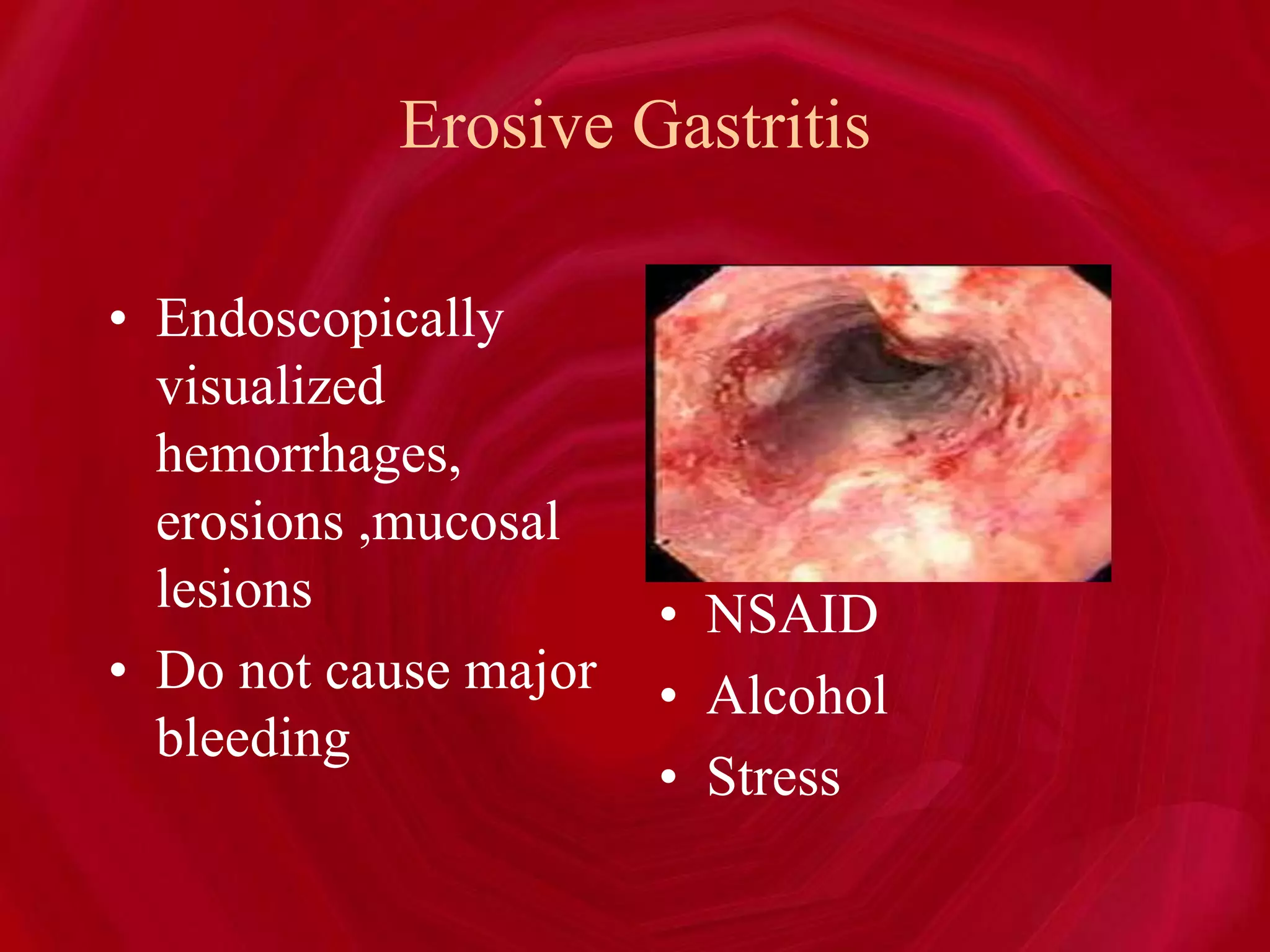
Erosive Gastritis
• Endoscopically
visualized
hemorrhages,
erosions ,mucosal
lesions
• Do not cause major
bleeding
• NSAID
• Alcohol
• Stress
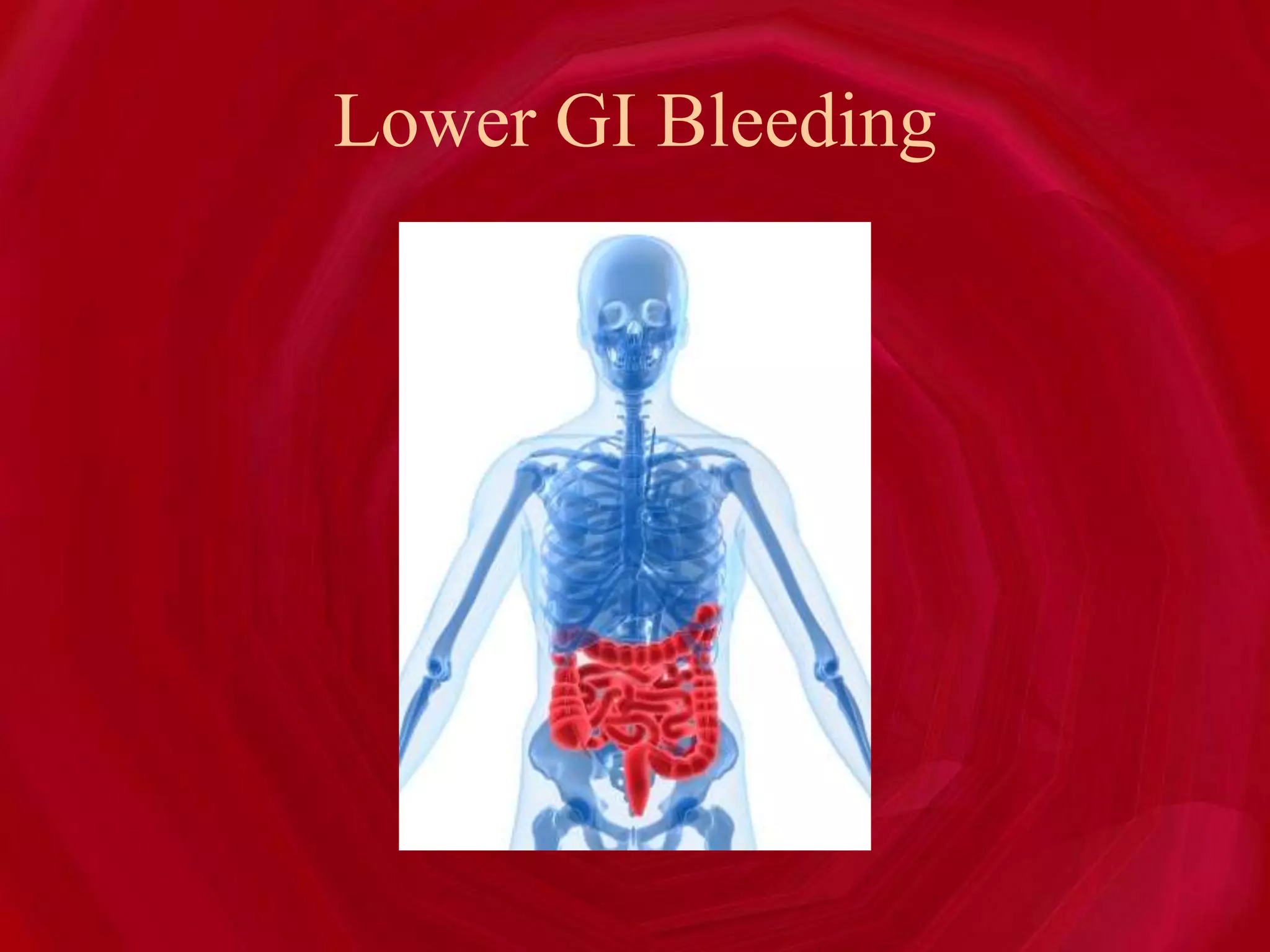
Lower GI Bleeding
Lower Gastrointestinal Bleeding
 Small bowel :10-15% of all lower GI
bleeds.
 Usually a diagnosis of exclusion.
 Meckel’s diverticulum
 Crohn’s disease
 Intussusception
 Neoplasm
 Vascular malformation
 Polyps
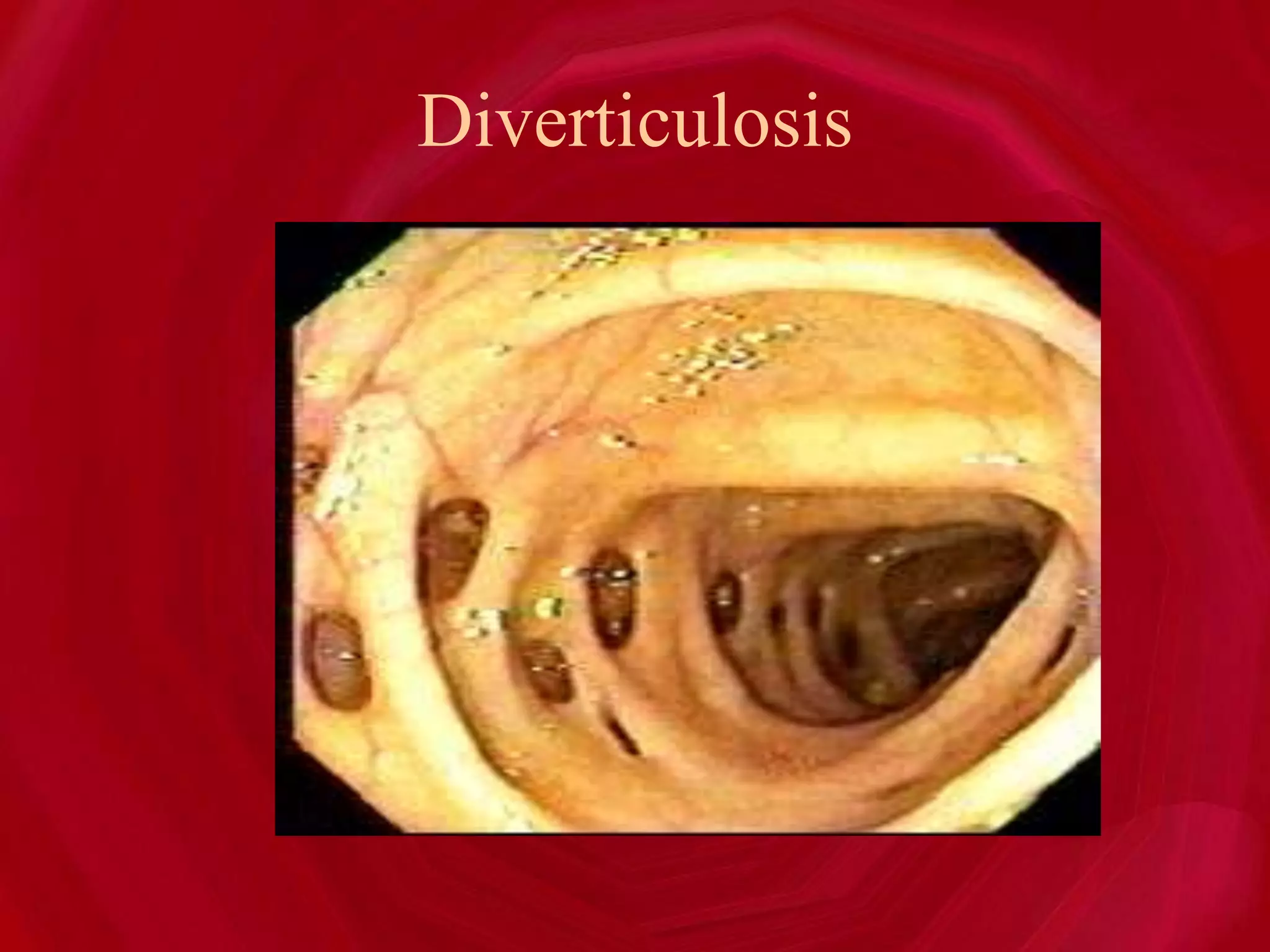
Diverticulosis
Lower Gastrointestinal Bleeding
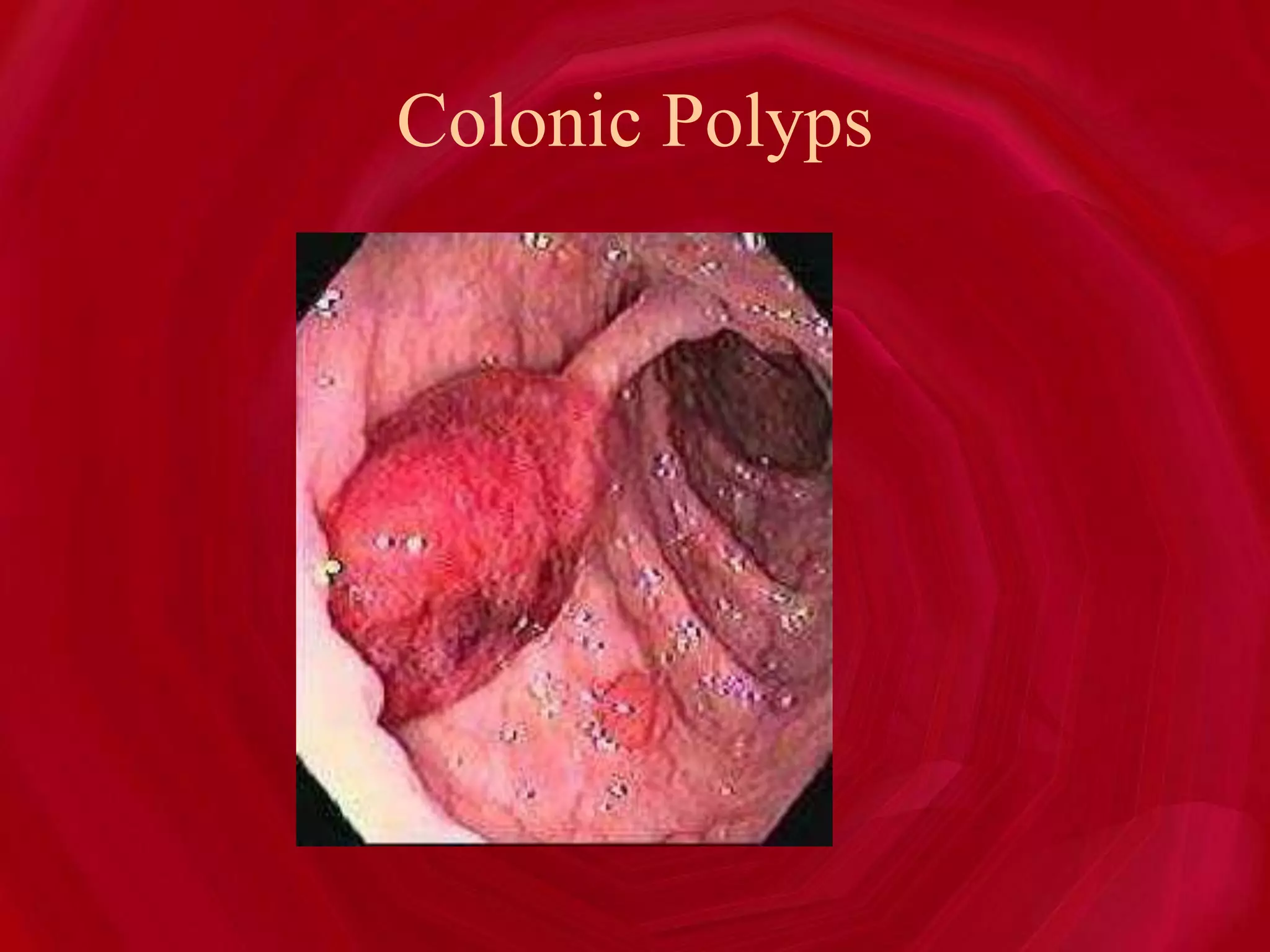
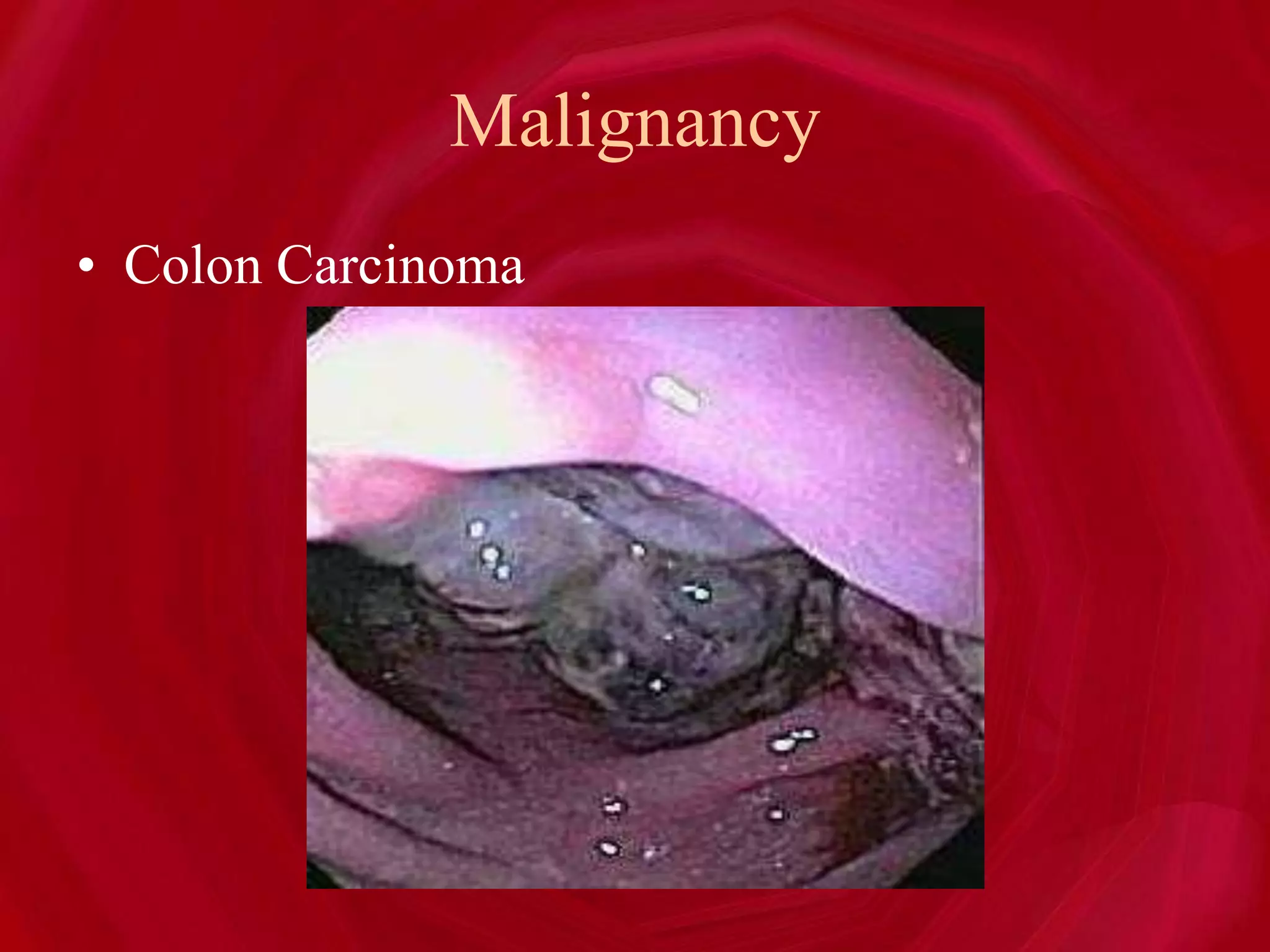
 Colon:
 Polyps or Neoplastic disease
 Larger bleeds:
 Diverticuli orAngiodysplastic lesions
 Ulcerative colitis- Usually cause chronic
bloody diarrhea, but massive bleeds can occur
Colonic Polyps
Malignancy
• Colon Carcinoma
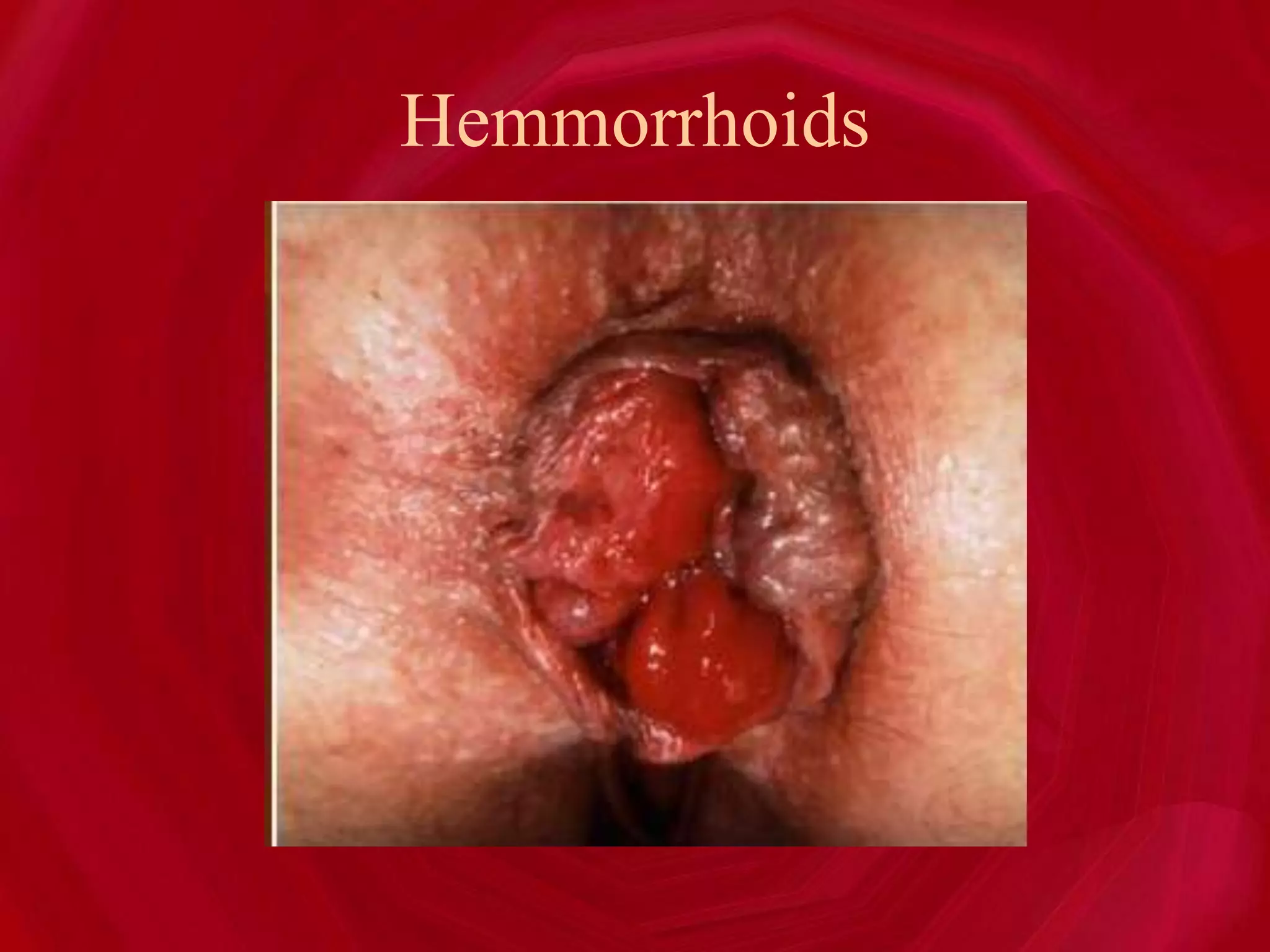
Rectal and Anal Bleeding
 Fresh red blood on the exterior of stool
• Hemorrhoids
• Fissures
• Proctitis.
 Bleeding that drops into the toilet water
is most likely the result of fissures or
hemorrhoids.
Hemmorrhoids
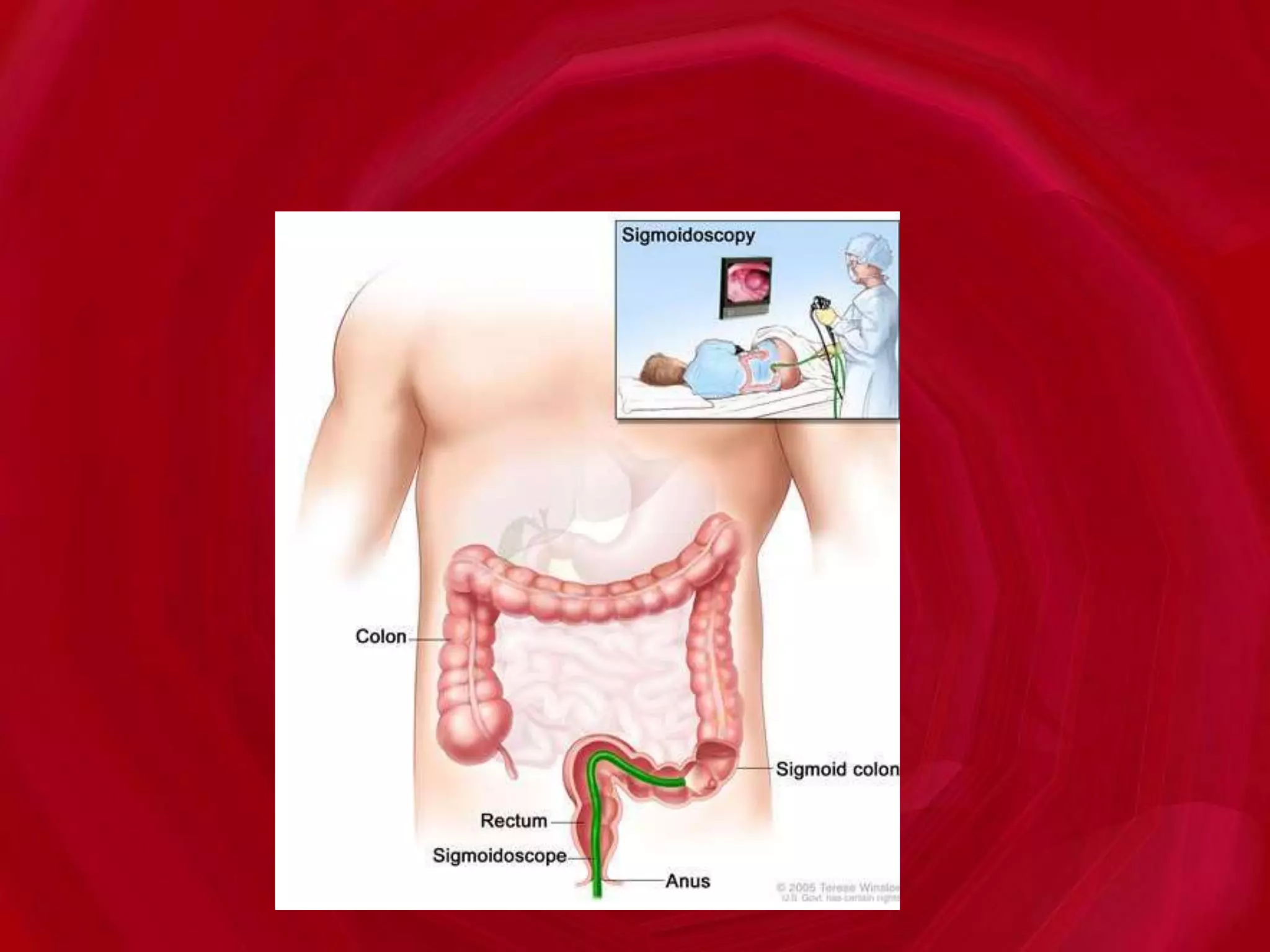
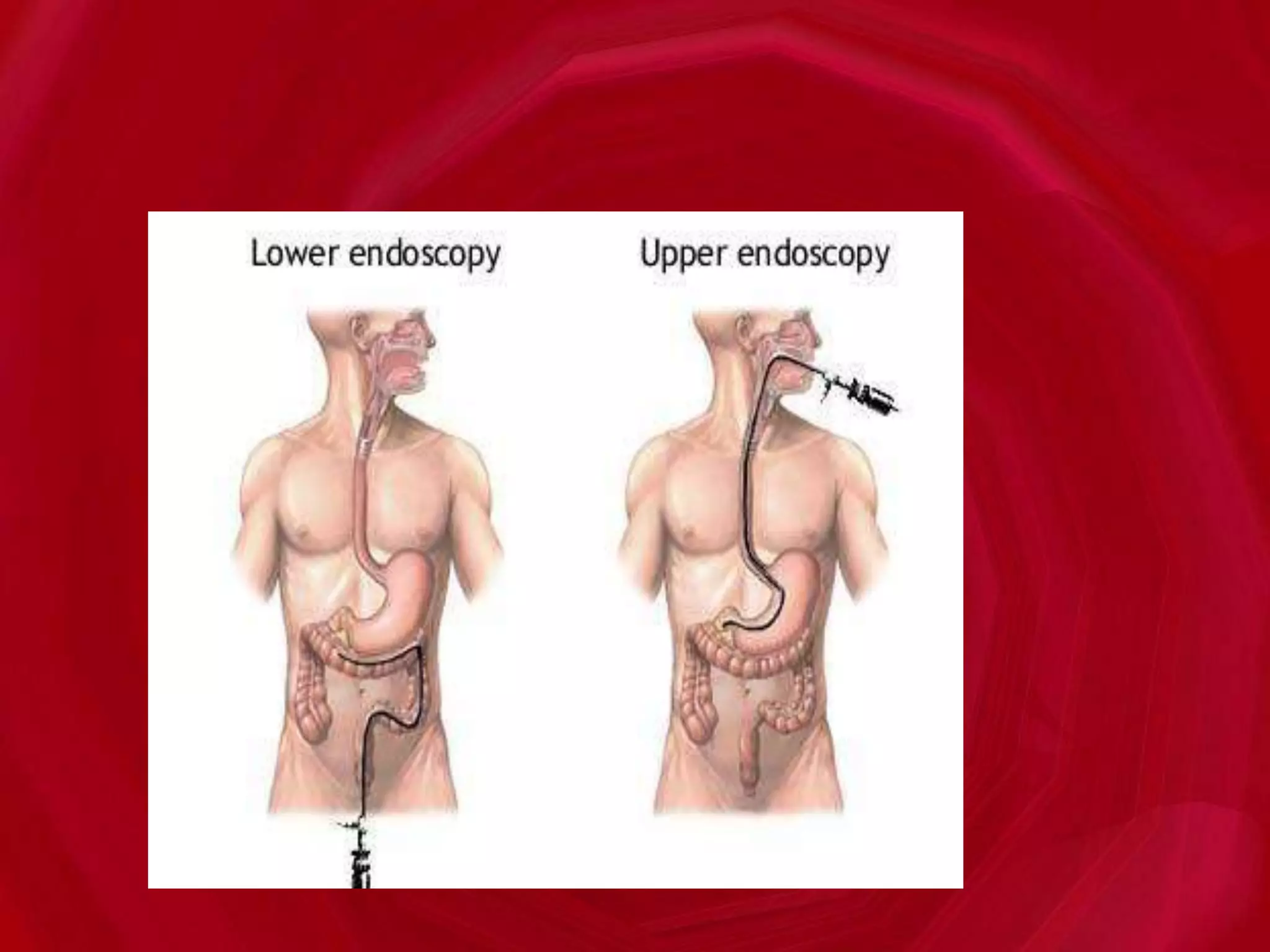
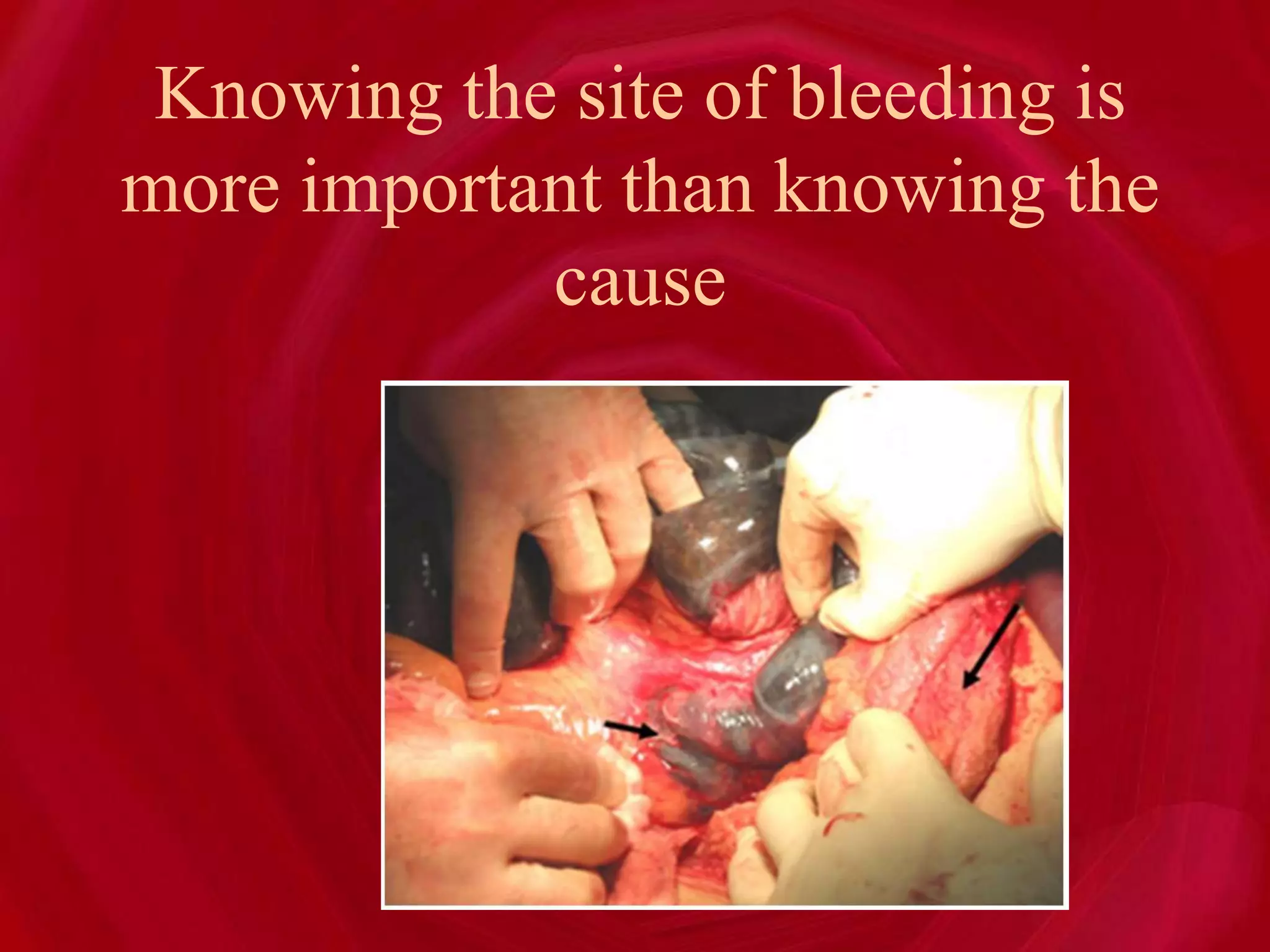
Approach to the patient
Knowing the site of bleeding is
more important than knowing the
cause
Blood in Gastrointestinal tract ?????
• Goals of Bedside Evaluation:
• HematemesisVs Hemoptysis
• UGI from LGI bleed
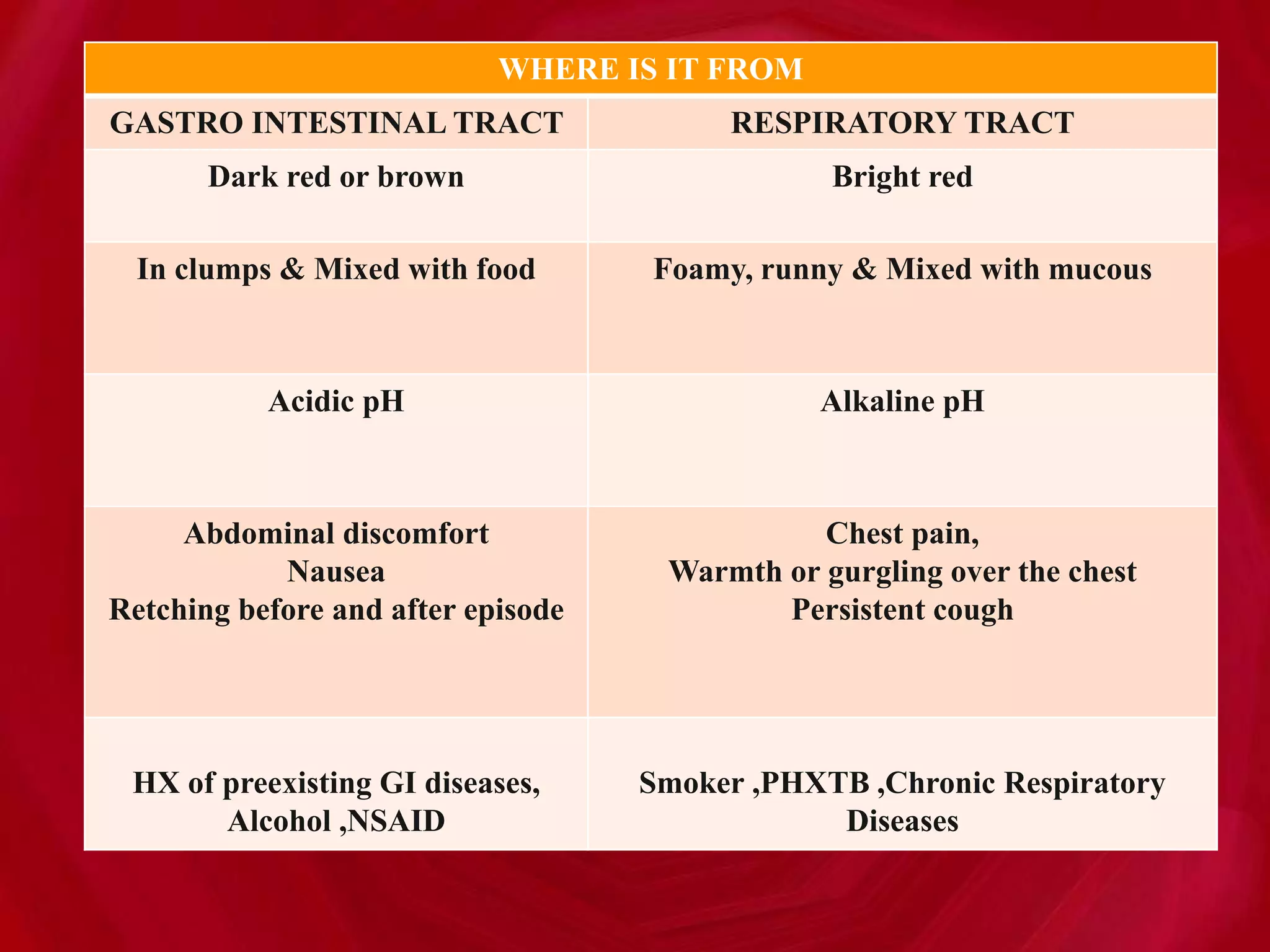
WHERE IS IT FROM
GASTRO INTESTINAL TRACT RESPIRATORY TRACT
Dark red or brown Bright red
In clumps & Mixed with food Foamy, runny & Mixed with mucous
Acidic pH Alkaline pH
Abdominal discomfort
Nausea
Retching before and after episode
Chest pain,
Warmth or gurgling over the chest
Persistent cough
HX of preexisting GI diseases,
Alcohol ,NSAID
Smoker ,PHXTB ,Chronic Respiratory
Diseases
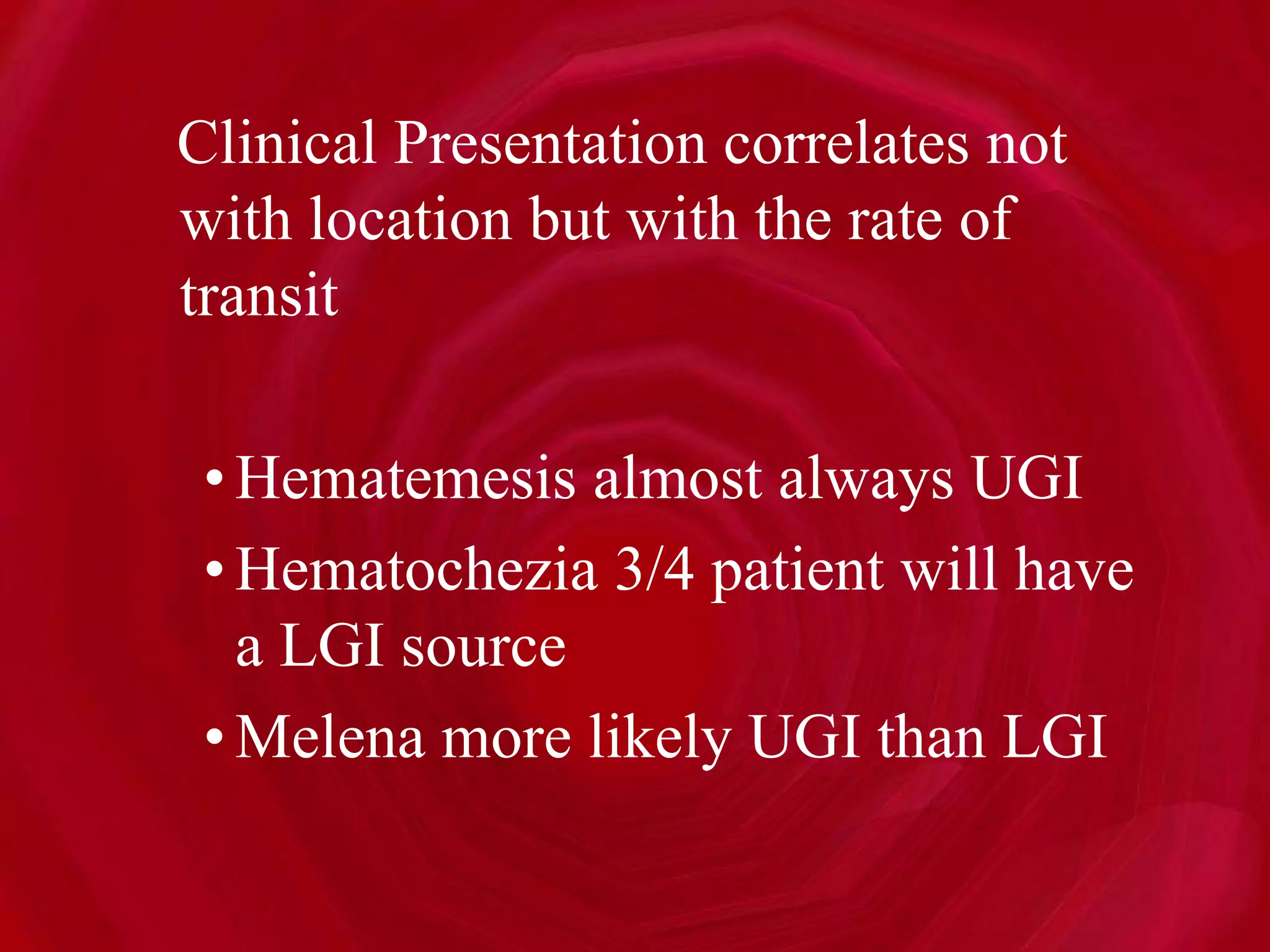
Clinical Presentation correlates not
with location but with the rate of
transit
•Hematemesis almost always UGI
•Hematochezia 3/4 patient will have
a LGI source
•Melena more likely UGI than LGI
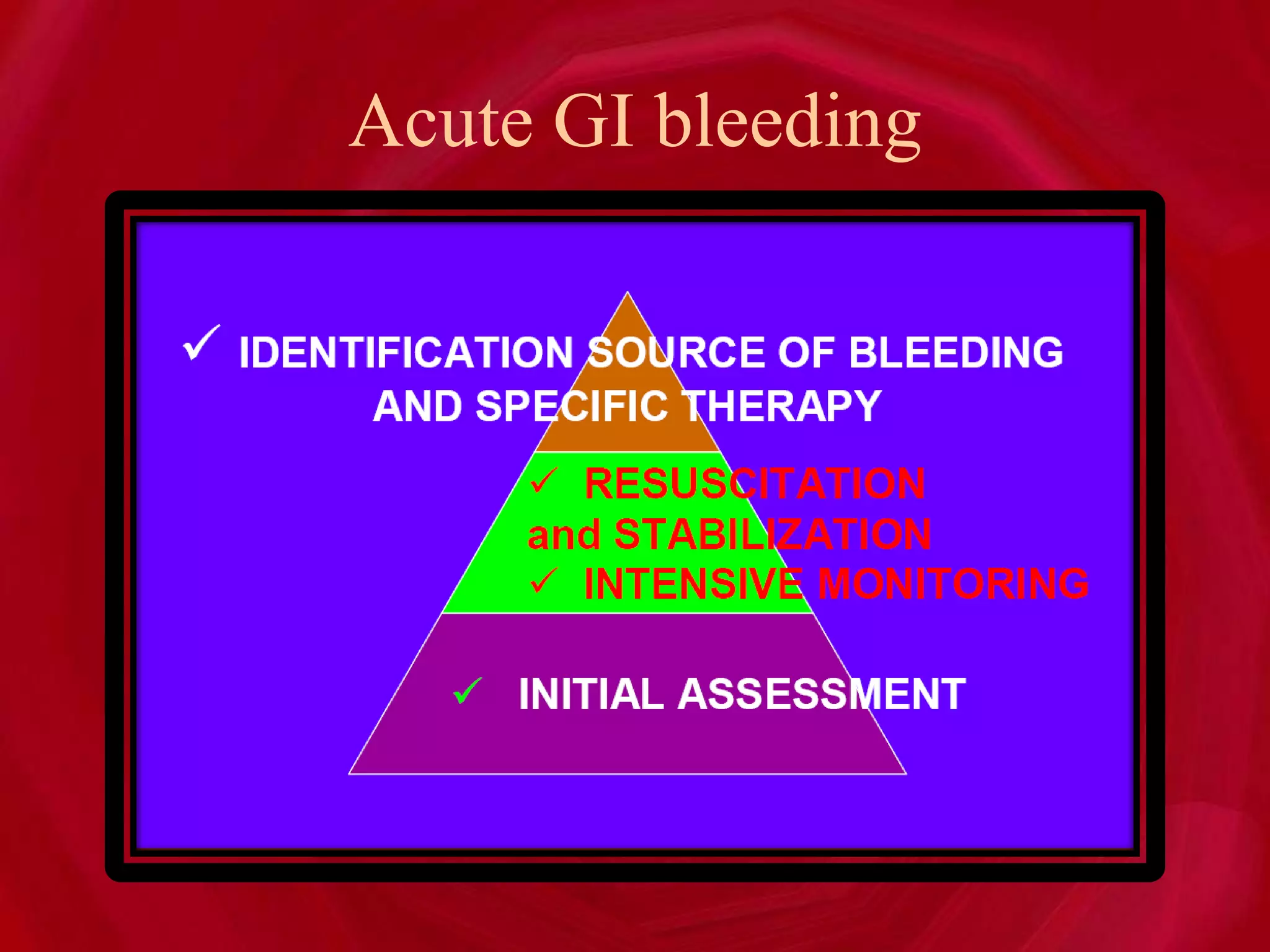
Acute GI bleeding
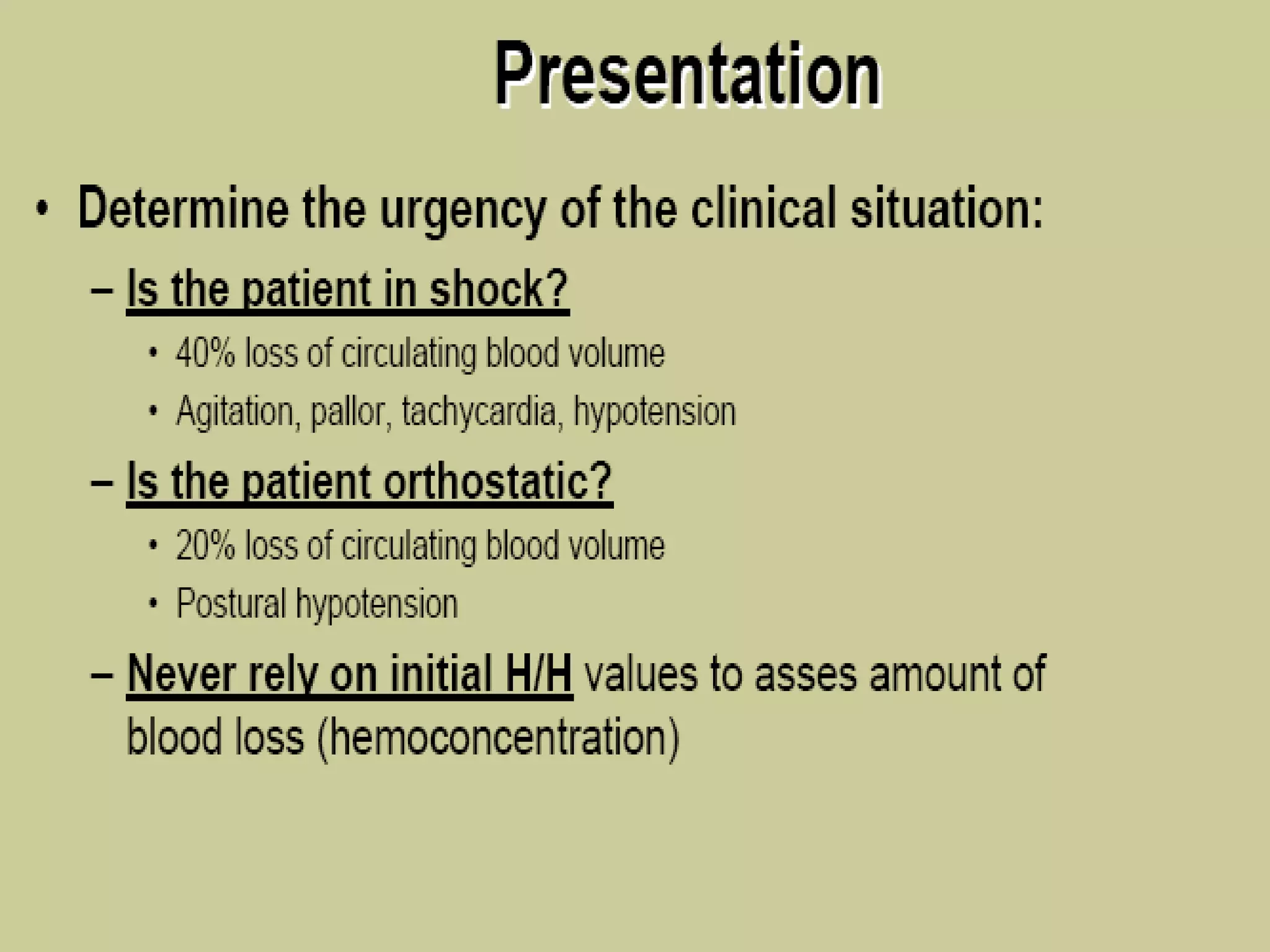
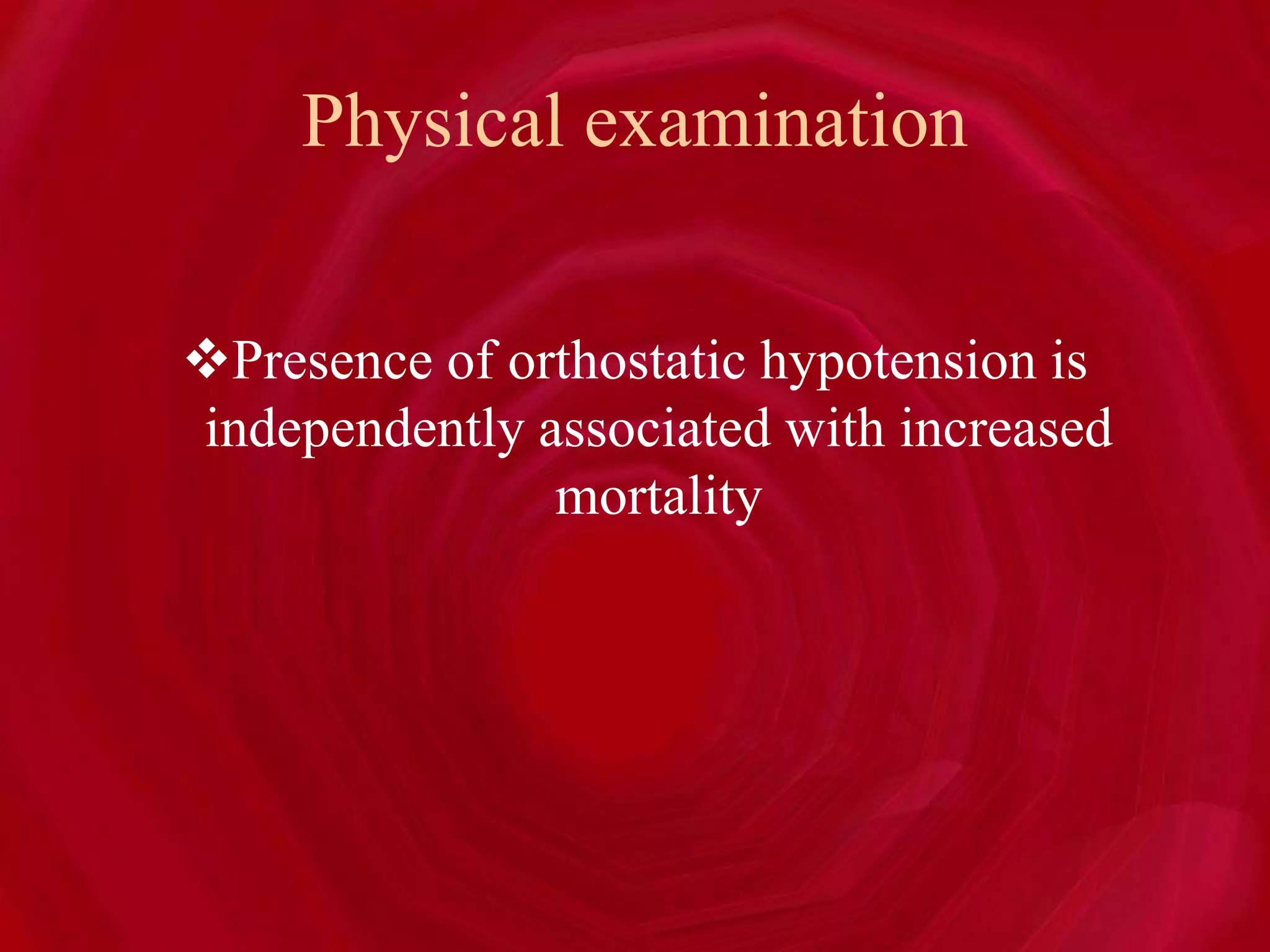
Physical examination
Presence of orthostatic hypotension is
independently associated with increased
mortality
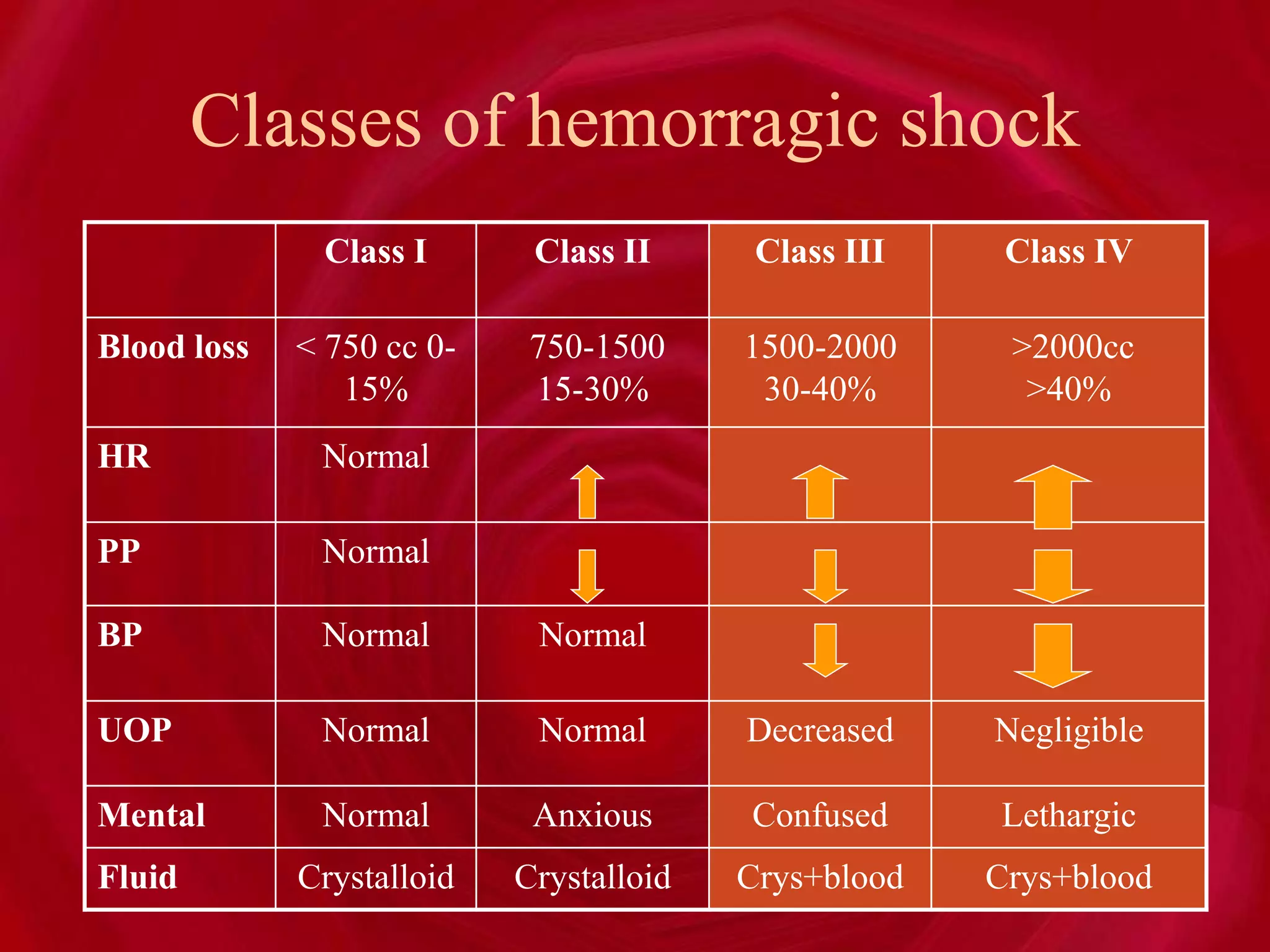
Classes of hemorragic shock
Class I Class II Class III Class IV
Blood loss < 750 cc 0-
15%
750-1500
15-30%
1500-2000
30-40%
>2000cc
>40%
HR Normal
PP Normal
BP Normal Normal
UOP Normal Normal Decreased Negligible
Mental Normal Anxious Confused Lethargic
Fluid Crystalloid Crystalloid Crys+blood Crys+blood
….Best friend …..
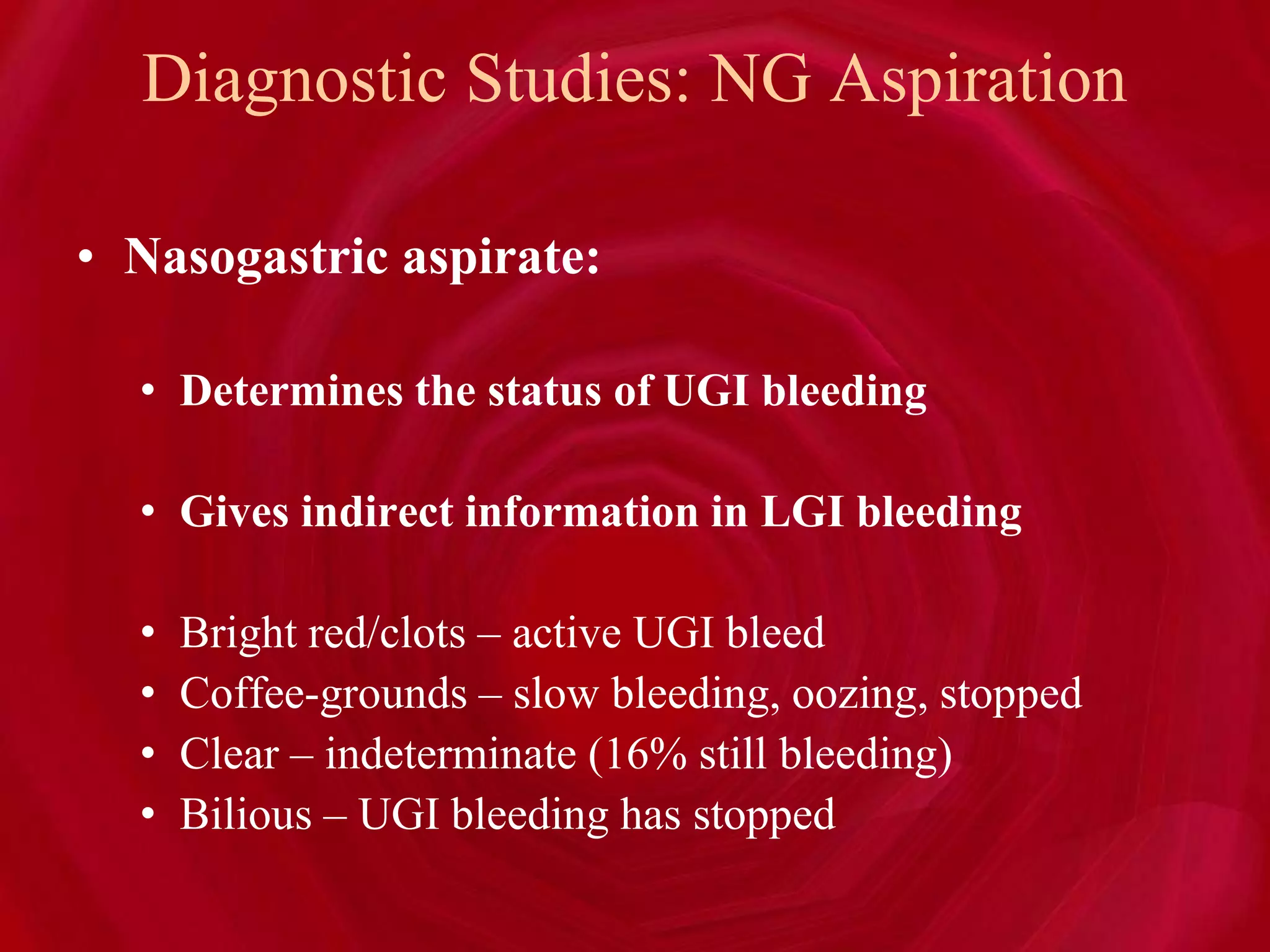
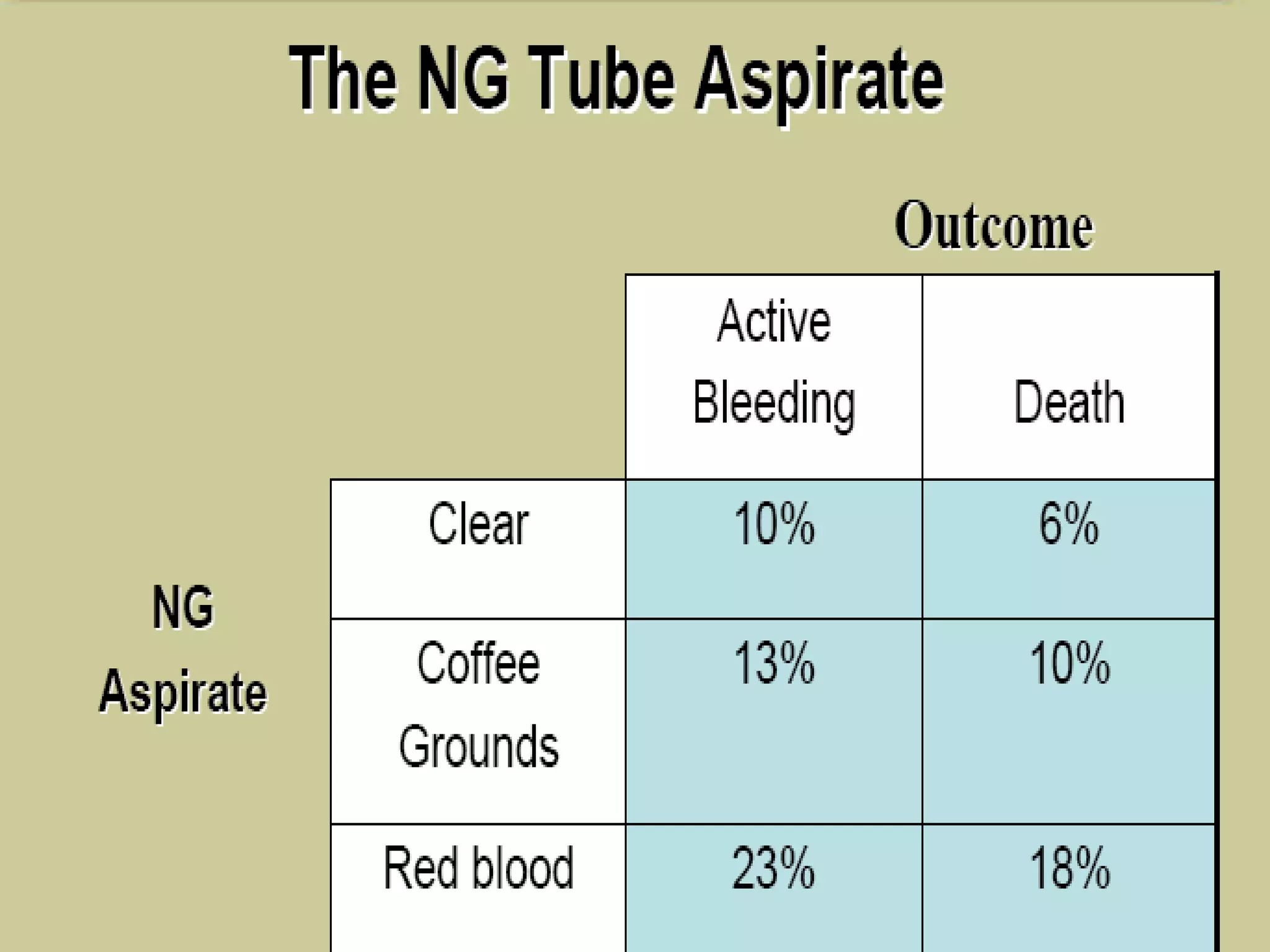
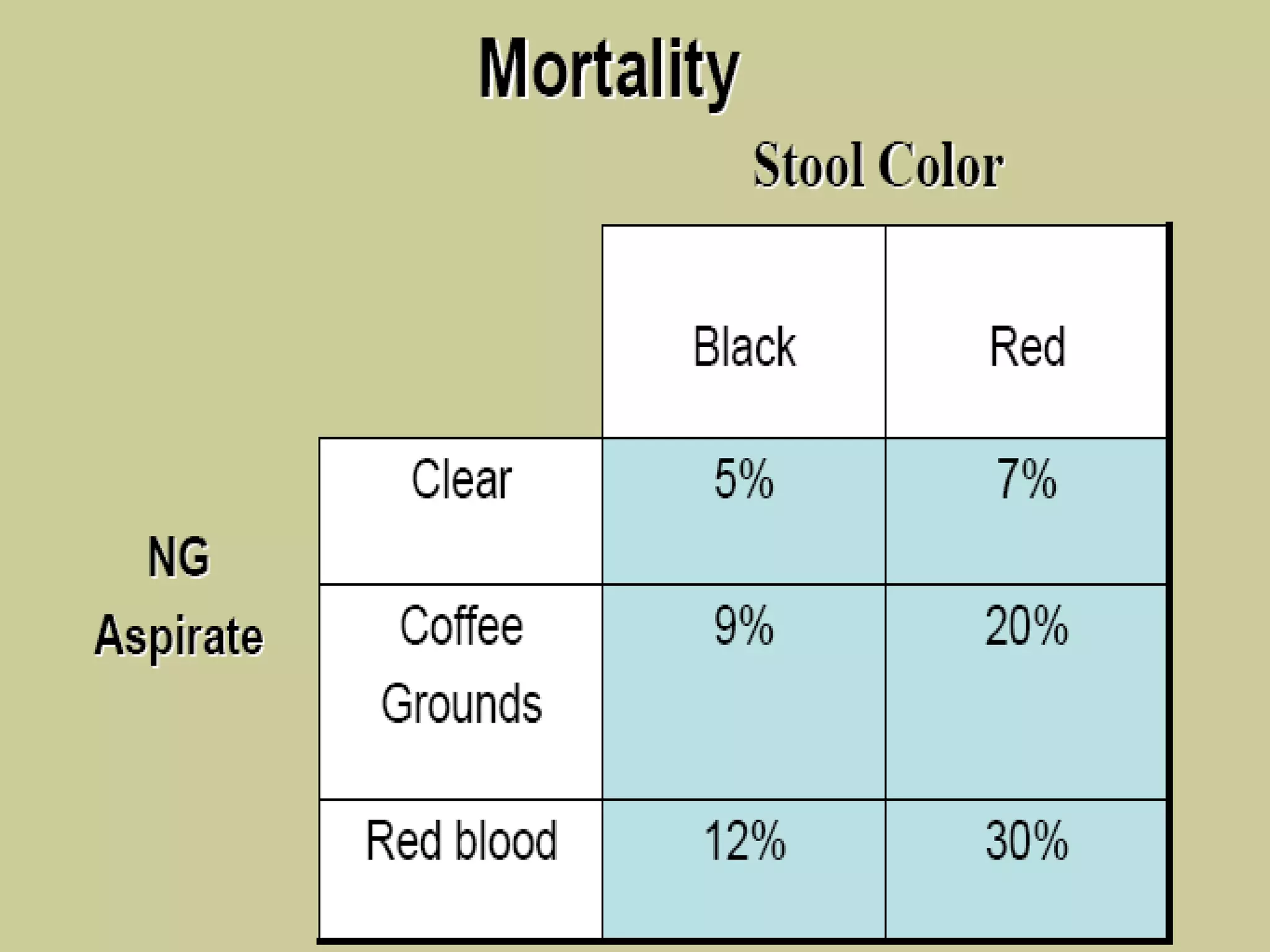
NG Aspiration
Diagnostic Studies: NG Aspiration
• Nasogastric aspirate:
• Determines the status of UGI bleeding
• Gives indirect information in LGI bleeding
• Bright red/clots – active UGI bleed
• Coffee-grounds – slow bleeding, oozing, stopped
• Clear – indeterminate (16% still bleeding)
• Bilious – UGI bleeding has stopped
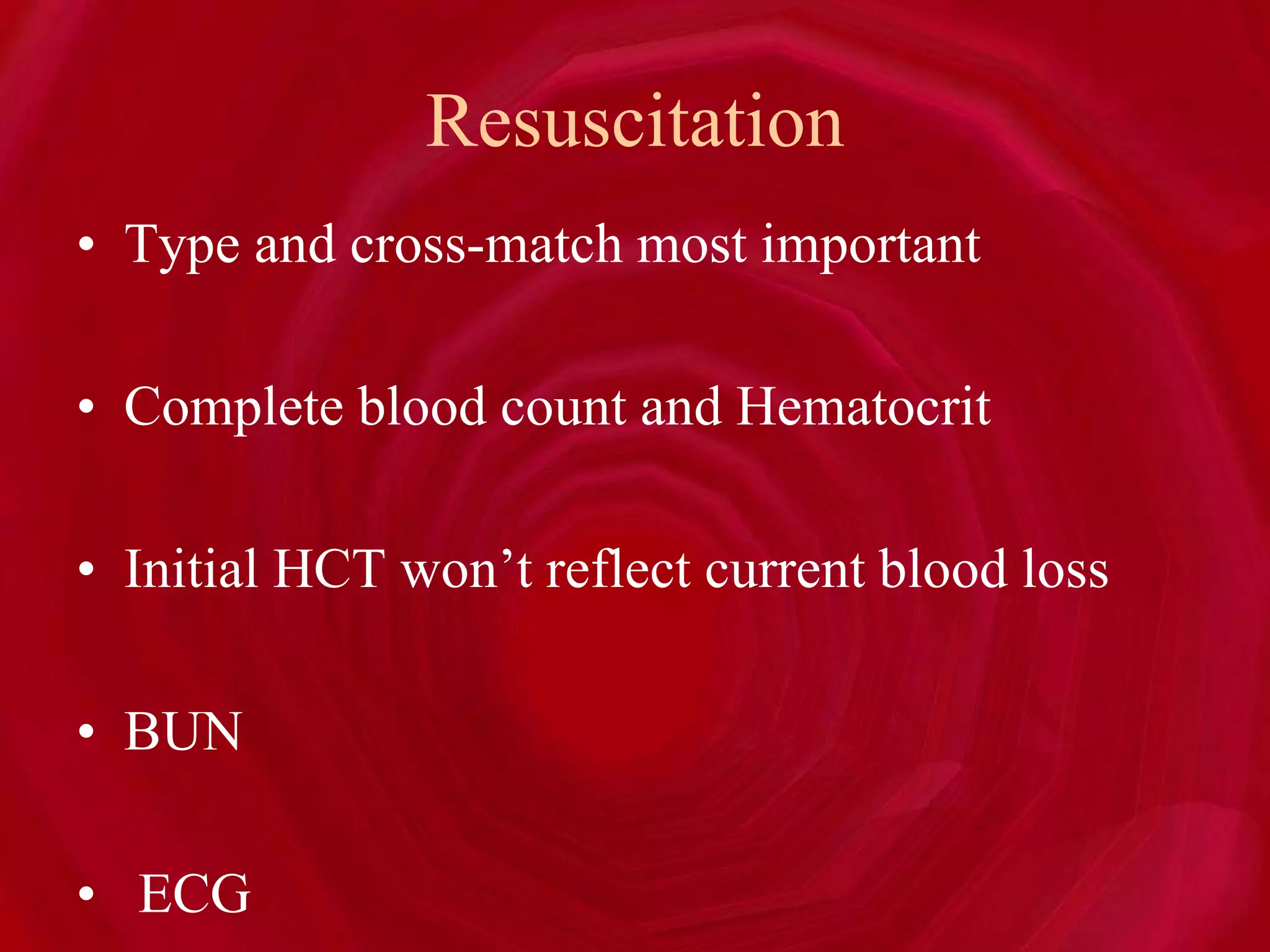
Resuscitation
• Type and cross-match most important
• Complete blood count and Hematocrit
• Initial HCT won’t reflect current blood loss
• BUN
• ECG
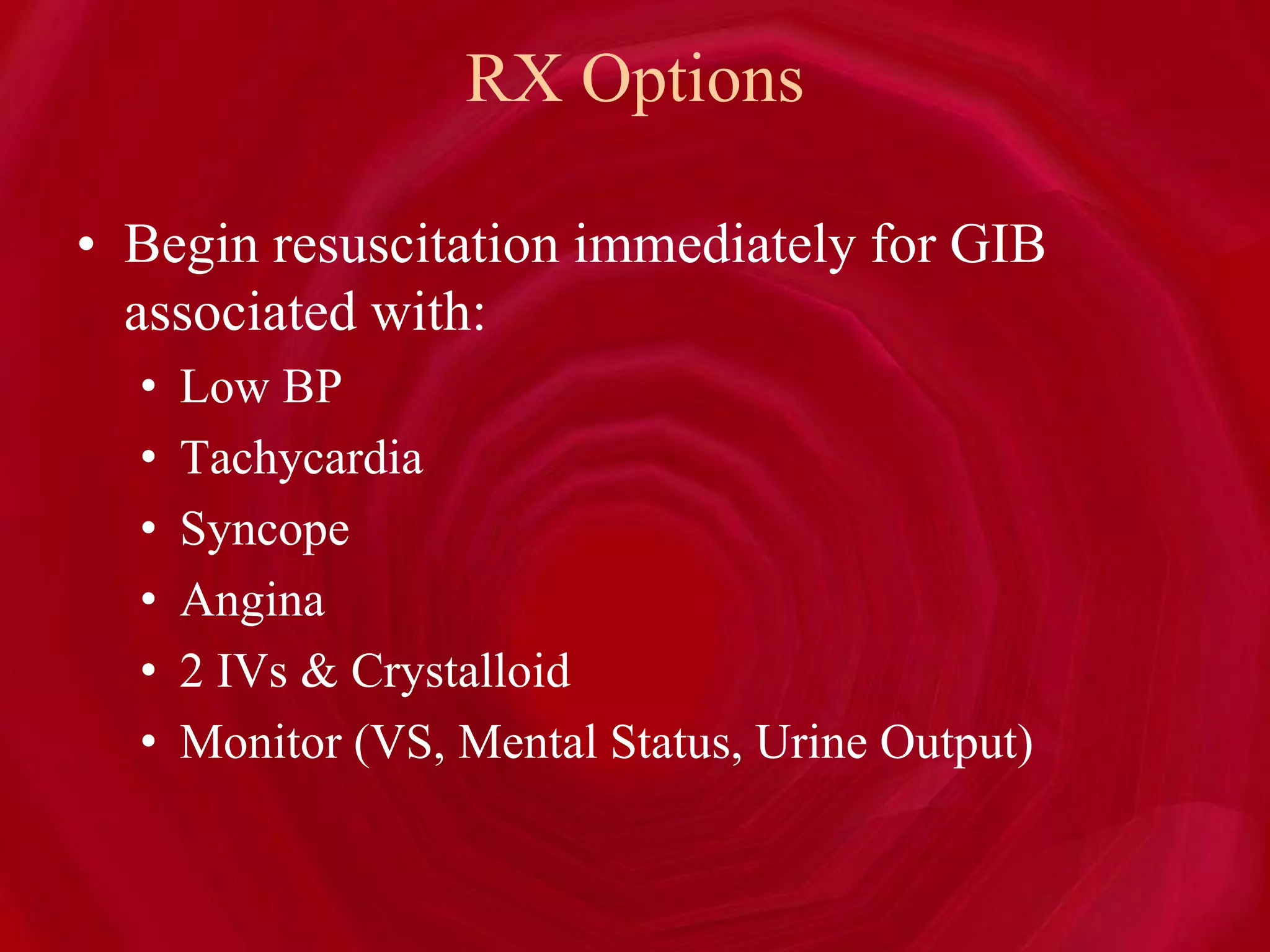
RX Options
• Begin resuscitation immediately for GIB
associated with:
• Low BP
• Tachycardia
• Syncope
• Angina
• 2 IVs & Crystalloid
• Monitor (VS, Mental Status, Urine Output)
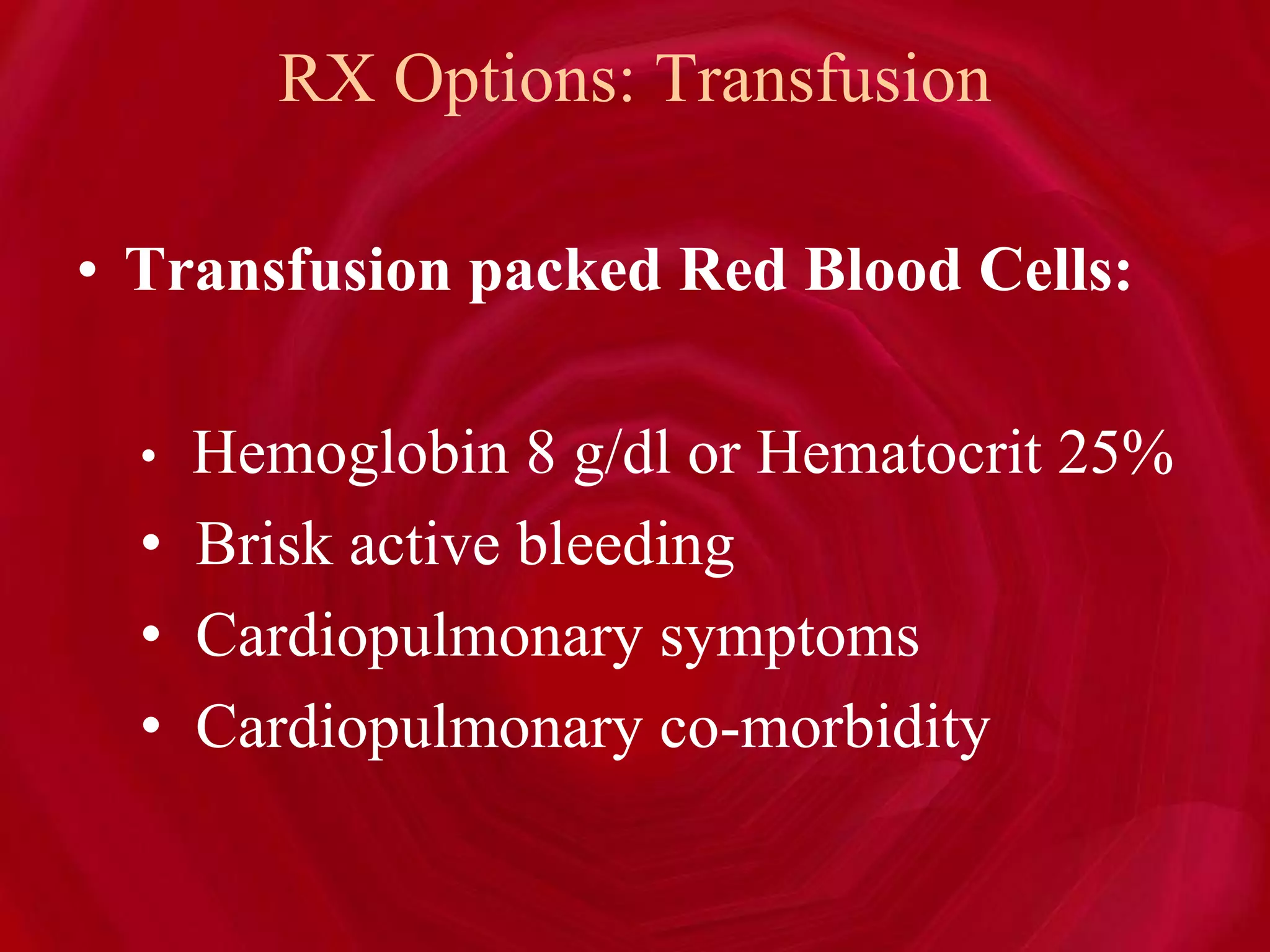
RX Options: Transfusion
• Transfusion packed Red Blood Cells:
• Hemoglobin 8 g/dl or Hematocrit 25%
• Brisk active bleeding
• Cardiopulmonary symptoms
• Cardiopulmonary co-morbidity
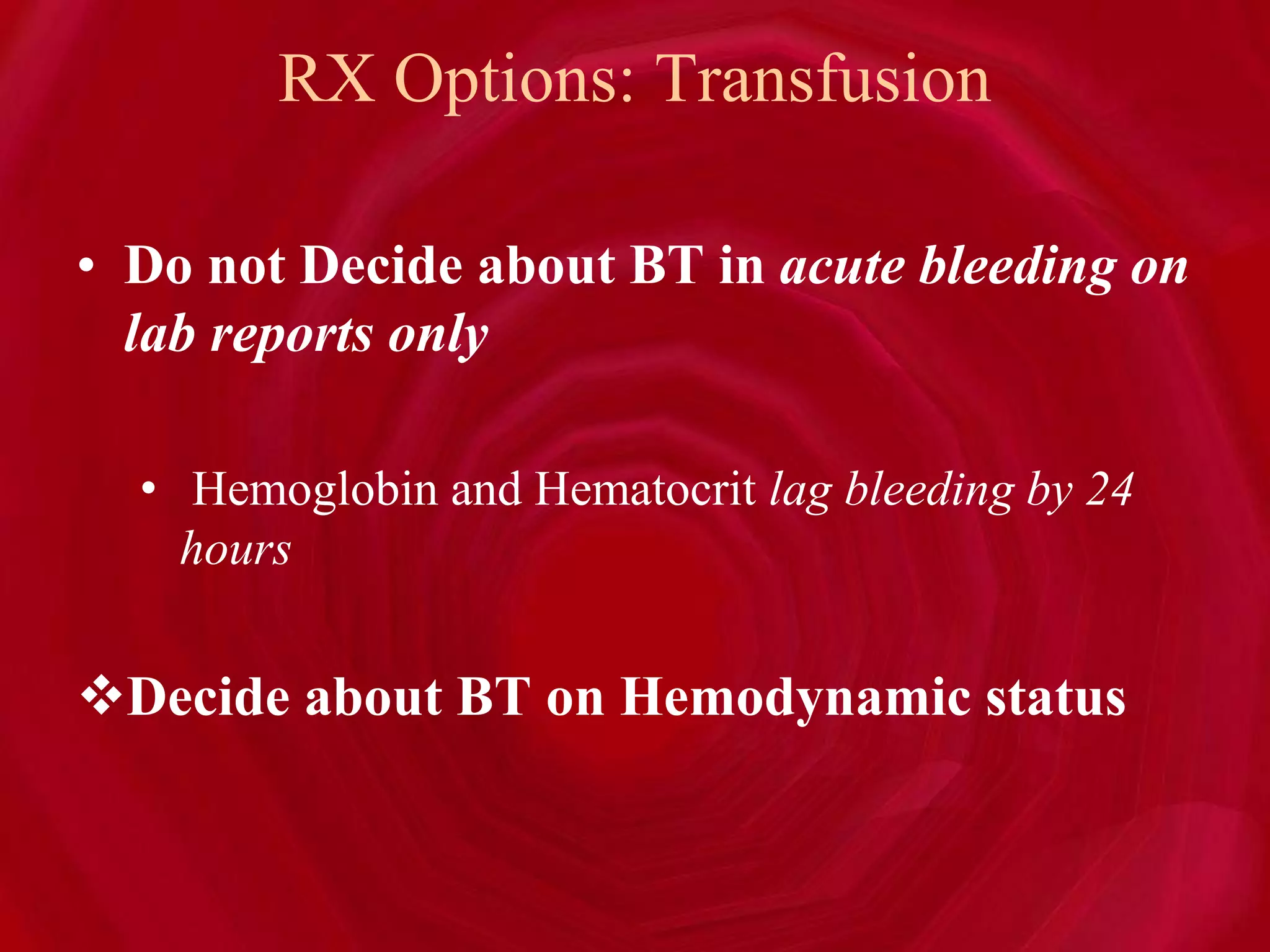
RX Options: Transfusion
• Do not Decide about BT in acute bleeding on
lab reports only
• Hemoglobin and Hematocrit lag bleeding by 24
hours
Decide about BT on Hemodynamic status
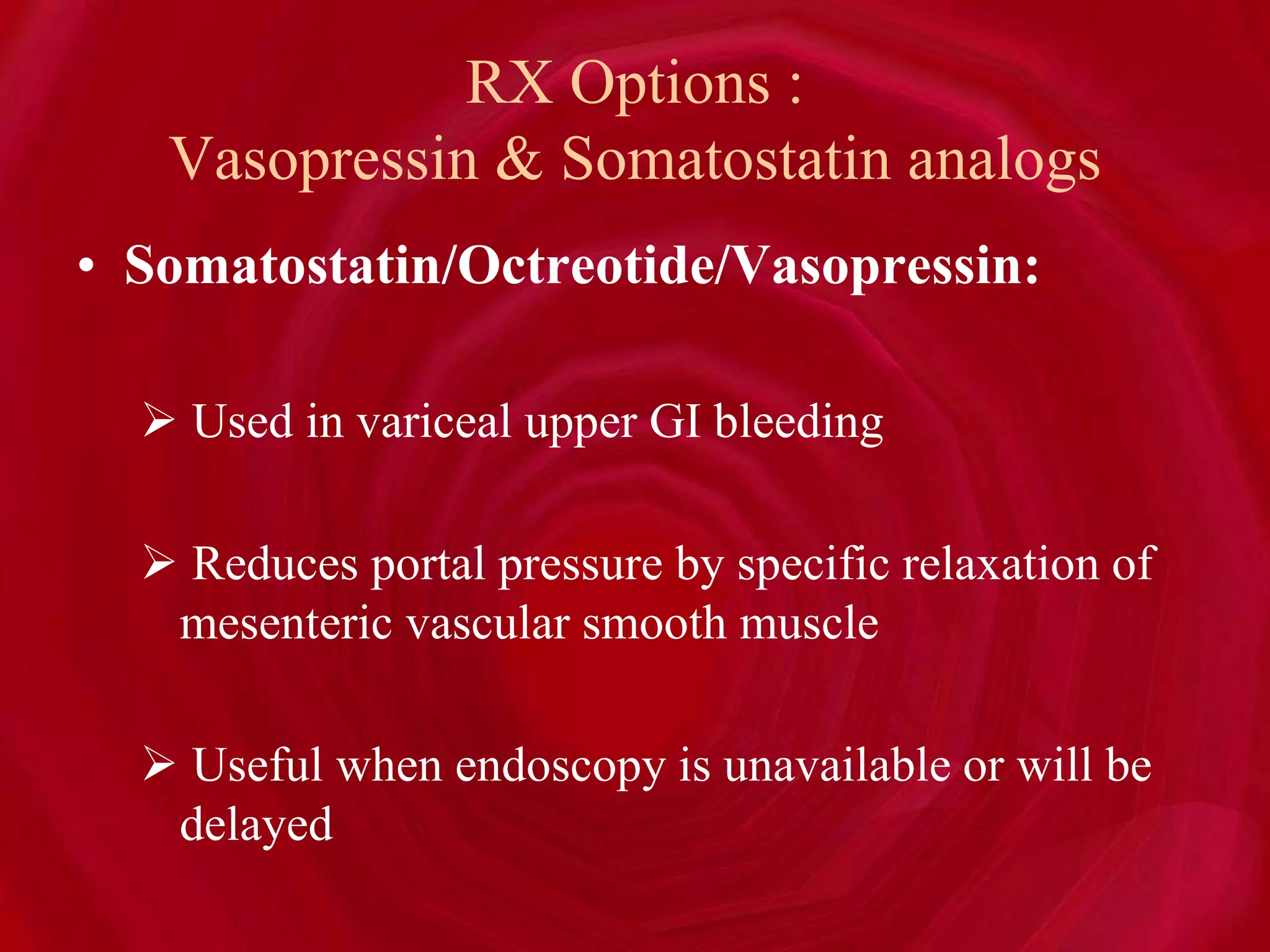
RX Options :
Vasopressin & Somatostatin analogs
• Somatostatin/Octreotide/Vasopressin:
 Used in variceal upper GI bleeding
 Reduces portal pressure by specific relaxation of
mesenteric vascular smooth muscle
 Useful when endoscopy is unavailable or will be
delayed
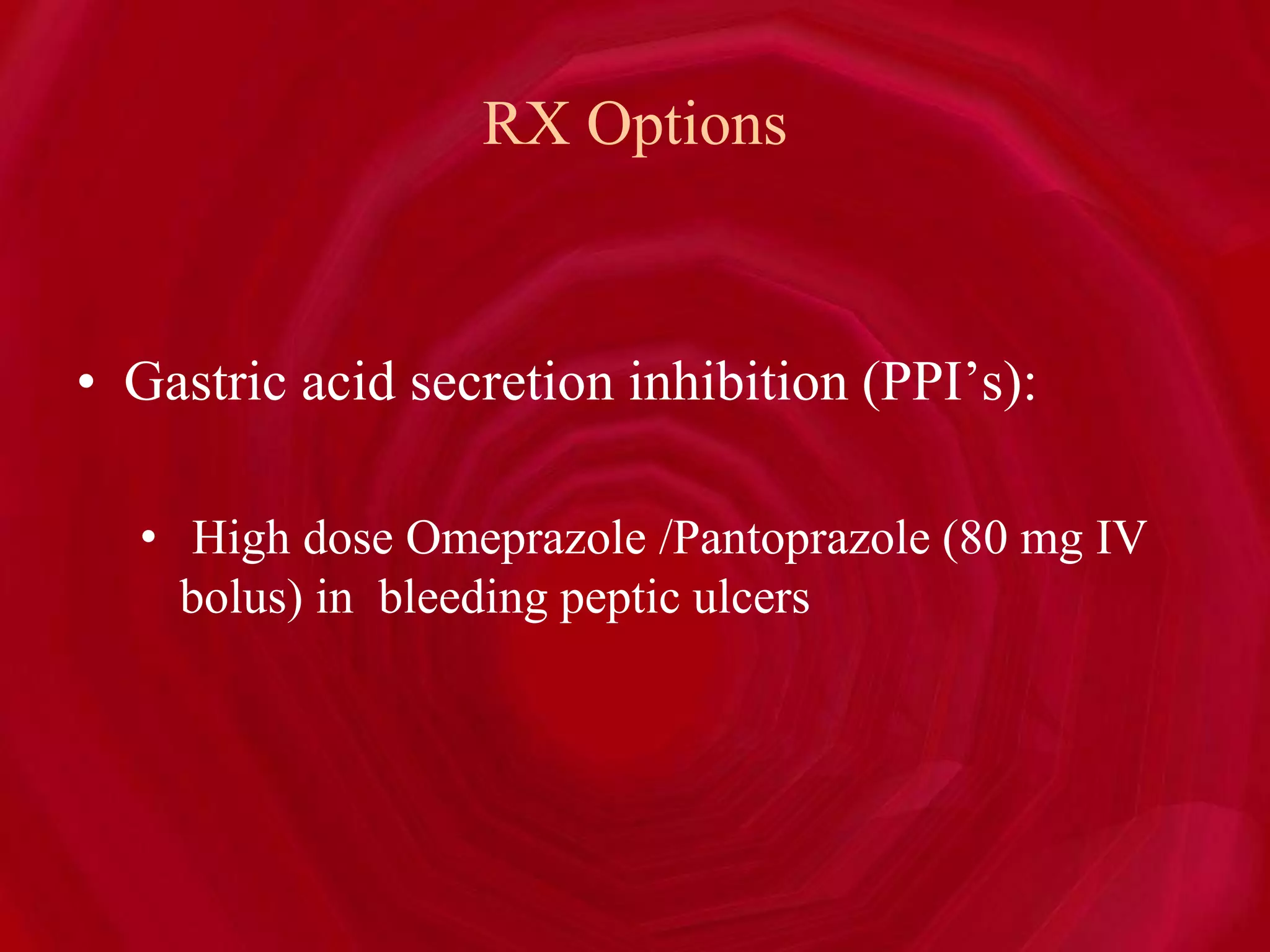
RX Options
• Gastric acid secretion inhibition (PPI’s):
• High dose Omeprazole /Pantoprazole (80 mg IV
bolus) in bleeding peptic ulcers
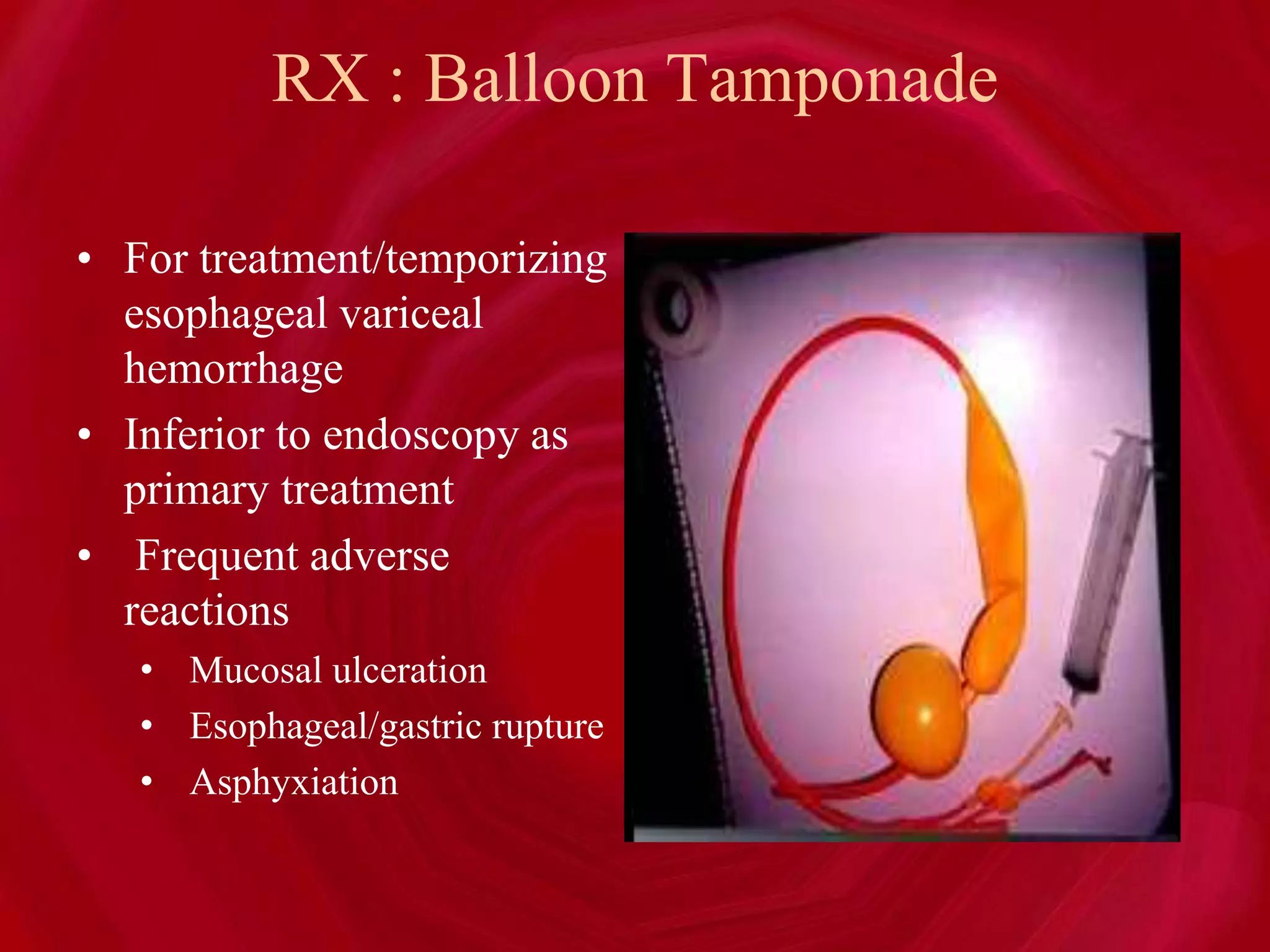
RX : Balloon Tamponade
• For treatment/temporizing
esophageal variceal
hemorrhage
• Inferior to endoscopy as
primary treatment
• Frequent adverse
reactions
• Mucosal ulceration
• Esophageal/gastric rupture
• Asphyxiation
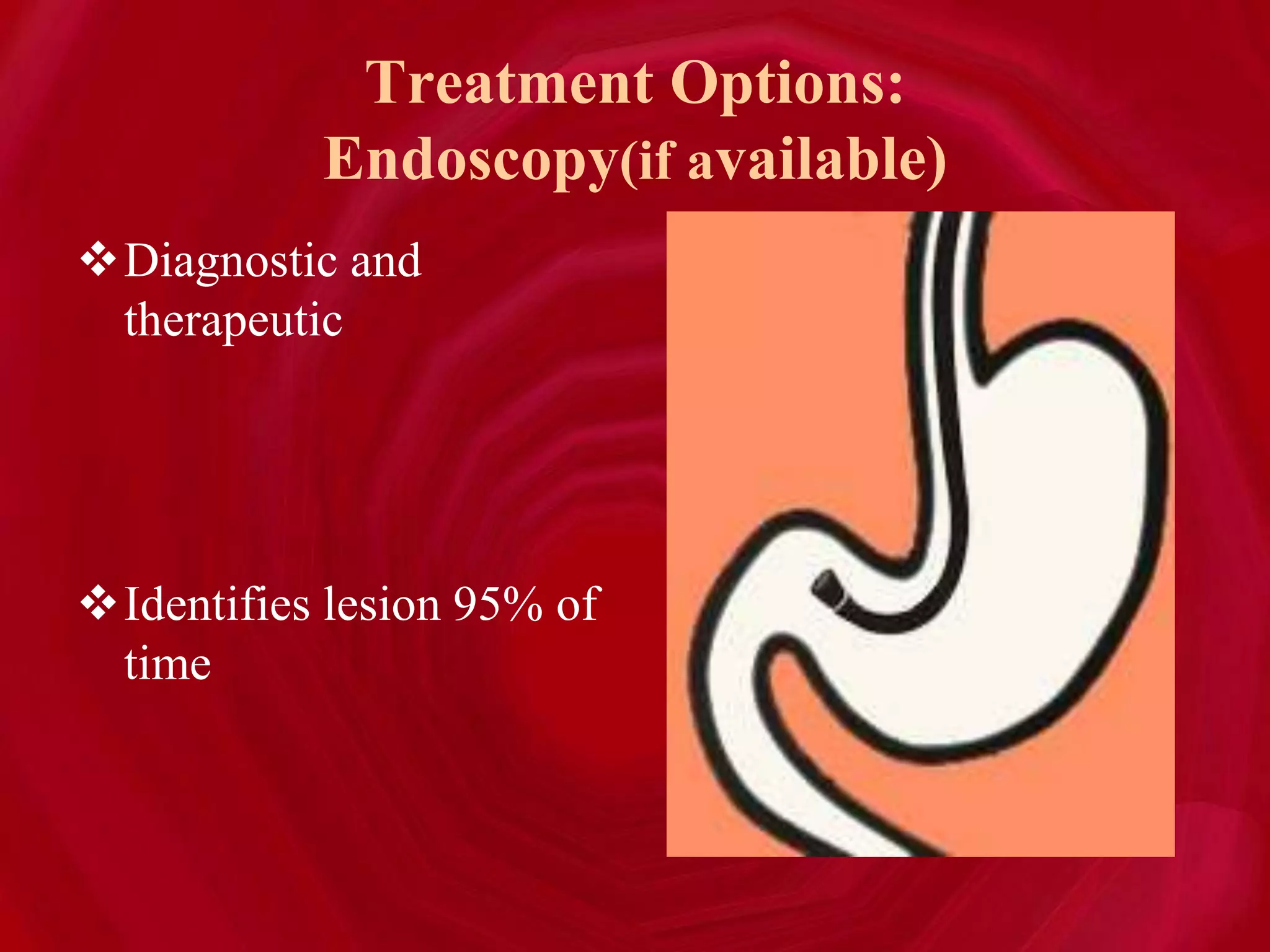
Treatment Options:
Endoscopy(if available)
Diagnostic and
therapeutic
Identifies lesion 95% of
time
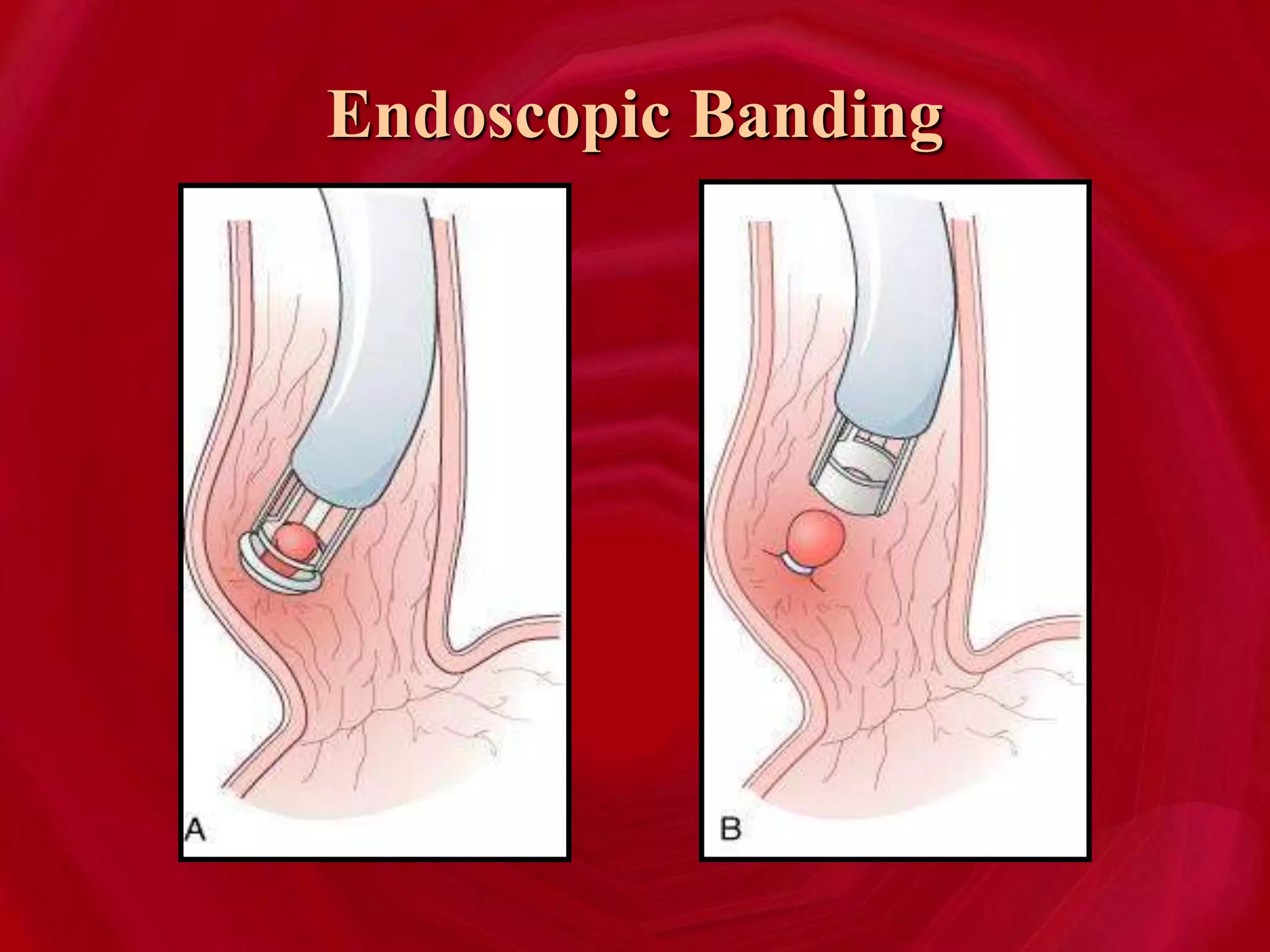
Endoscopic Banding
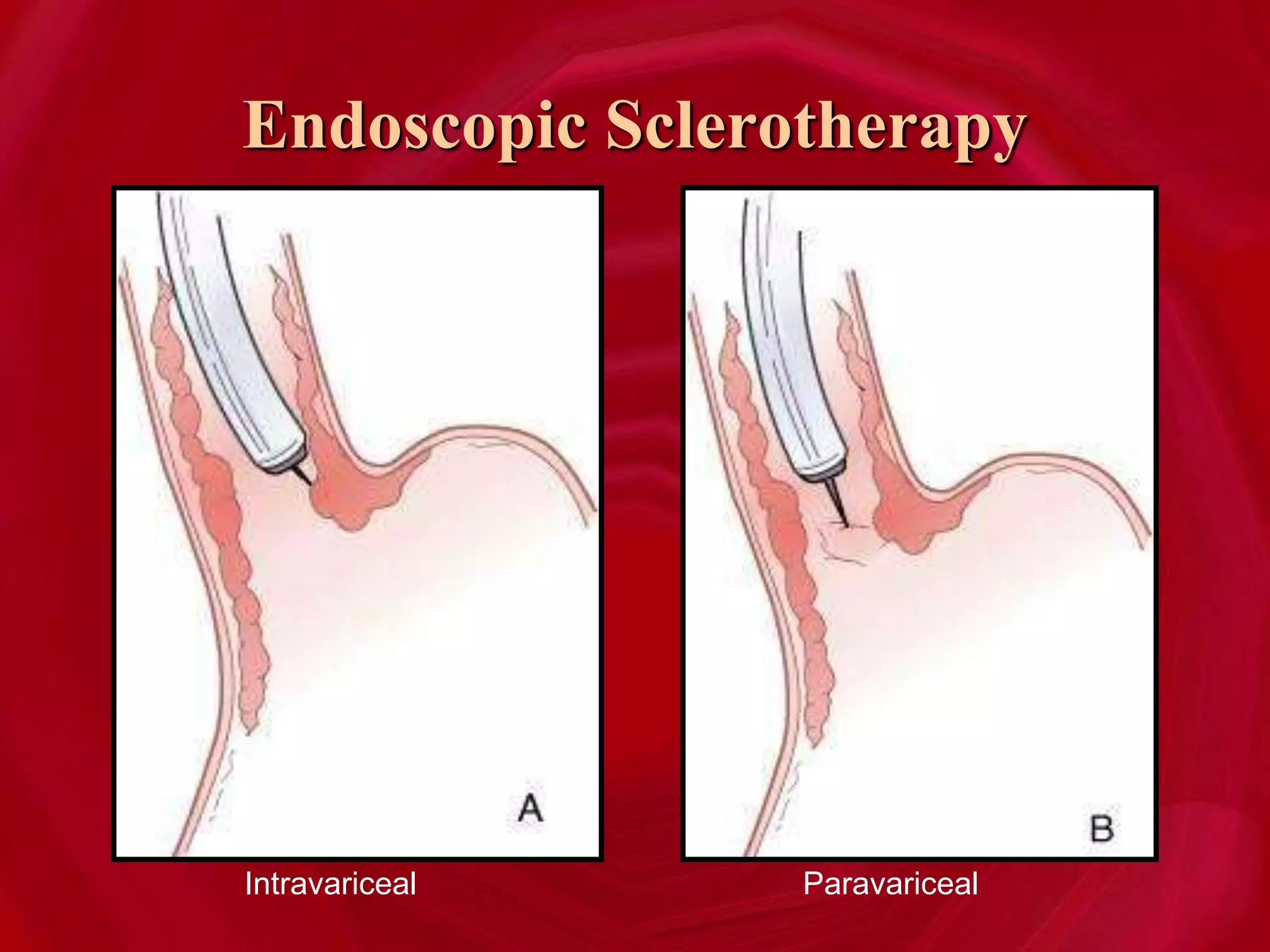
Endoscopic Sclerotherapy
Intravariceal Paravariceal
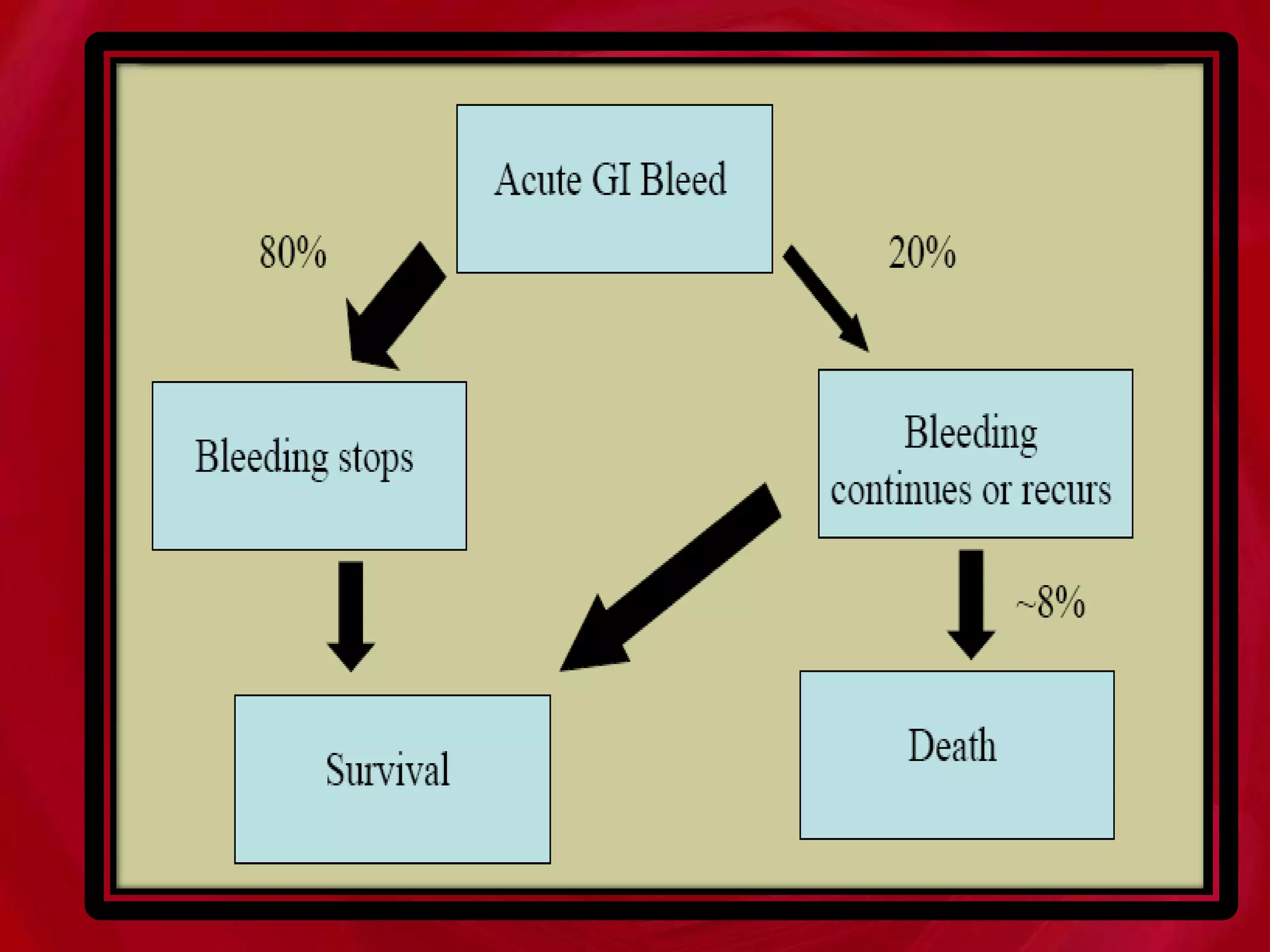
Treatment for LGIB
• 85% stop spontaneously
• Mortality is lower than with UGIB (< 5%).
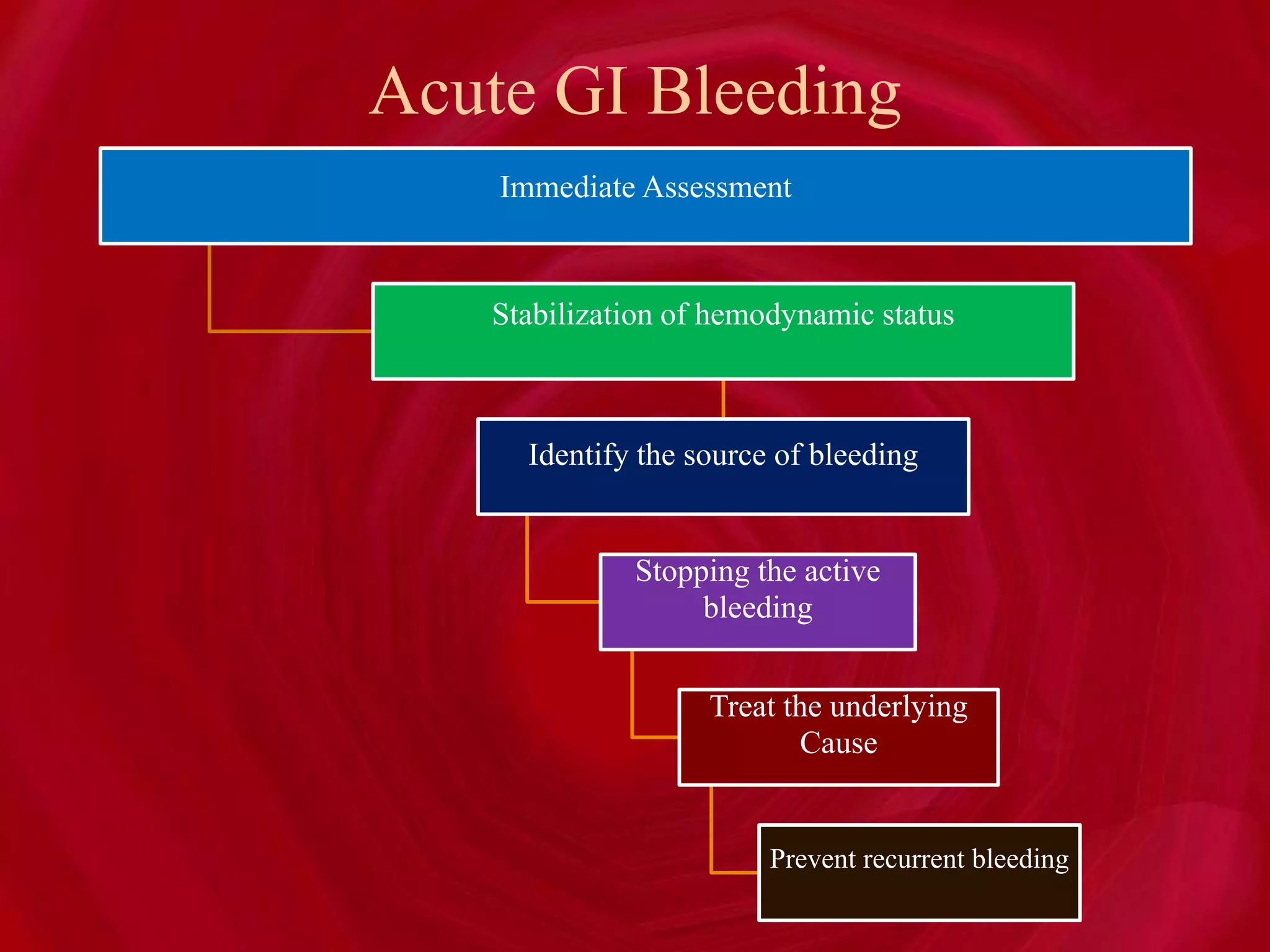
Acute GI Bleeding
Immediate Assessment
Stabilization of hemodynamic status
Identify the source of bleeding
Stopping the active
bleeding
Treat the underlying
Cause
Prevent recurrent bleeding
…..Wishing you all a very happy
New Year Ahead ……..
• …..Success in life
depends upon
maintaining
delicate balance
between is attitude
and aptitude…. !

Bleeding git.ppt

  • 1.
  • 2.
    • UGIB :Any blood loss from a gastrointestinal source above the ligament of Treitz. • LGIB:Any bleeding that occurs distal to the ligament of Treitz .
  • 3.
    Gastrointestinal Bleeding • Etiopathogenesis •Clinical Presentation • Approach to Management
  • 4.
    Gastrointestinal Bleeding • Canarise anywhere along the GI tract. • Represents the initial symptom of GI disease in 1/3 of all patients.
  • 5.
    Sources of GIBleeding UGI Source of Bleeding LGI Source of Bleeding 7/9/2023 5
  • 6.
    Clinical Presentation:5 ways 1.Hematemesis 2. Melena 3. Hematochezia 4. Occult GI bleeding 5. Symptoms of blood loss or Anemia 7/9/2023 6
  • 7.
  • 8.
    Clinical Presentation:5 ways •Hematemesis: Vomiting of blood. • Can be either gross blood & blood clots (Rapid bleeding ) • “Coffee-ground” emesis (Chronic bleeding.) • Bleeding from the oropharynx to the ligament of Treitz.
  • 9.
    Clinical Presentation:5 ways Melena: Passage of black ,tarry ,Foul smelling stool caused by digested blood  Usually the result of severe upper GI bleeding.  Melena without hematemesis is caused by severe bleeding distal to the ligament of Treitz.
  • 10.
    Gastrointestinal Bleeding  50-60mL of blood in the GI tract produces melena.  Melena can persist from 5-7 days  Positive fecal occult blood test up to 3 weeks.
  • 11.
  • 12.
    Clinical Presentation:5 ways With upper GI blood loss blood urea nitrogen levels may be elevated to 30-50 mg/dL.  BUN: Creatinine ratio greater than 36:1 likely represents blood loss from an upper GI source.
  • 13.
    Clinical Presentation:5 ways Hematochezia: Passageof bright red or maroon blood from rectum 7/9/2023 13
  • 14.
    Clinical Presentation:5 ways Occultit GI Bleeding: • Absence of overt bleeding • Presence of iron deficiency • Positive fecal occult blood test Symptoms of Anemia: • Light headedness • Syncope • Angina • Shortness of breath 7/9/2023 14
  • 15.
    Upper GI Sourceof bleeding
  • 16.
    Upper GI Sourceof bleeding
  • 17.
    Upper GI Sourceof bleeding • Peptic ulcers are the most common cause of upper GI bleeding • 50% of cases • H.pylori • NSAID 7/9/2023 17
  • 18.
    Upper GI Sourceof bleeding Eosophageal Varices  Varices- Bleeding esophageal varices in the presence of liver disease :10% of upper GI bleeds  Life threatening  High mortality rate.  Alcoholi c Liver disease with portal hypertension 7/9/2023 18
  • 19.
    Upper GI Sourceof bleeding Mallory –Weiss tear • Vomiting • Retching • Cough in alcoholic patient • Bleeding from tears at GE junction • Usually stops spontaneously in 90% cases
  • 20.
    Erosive Gastritis • Endoscopically visualized hemorrhages, erosions,mucosal lesions • Do not cause major bleeding • NSAID • Alcohol • Stress
  • 21.
  • 22.
    Lower Gastrointestinal Bleeding Small bowel :10-15% of all lower GI bleeds.  Usually a diagnosis of exclusion.  Meckel’s diverticulum  Crohn’s disease  Intussusception  Neoplasm  Vascular malformation  Polyps
  • 23.
  • 24.
    Lower Gastrointestinal Bleeding Colon:  Polyps or Neoplastic disease  Larger bleeds:  Diverticuli orAngiodysplastic lesions  Ulcerative colitis- Usually cause chronic bloody diarrhea, but massive bleeds can occur
  • 25.
  • 26.
  • 27.
    Rectal and AnalBleeding  Fresh red blood on the exterior of stool • Hemorrhoids • Fissures • Proctitis.  Bleeding that drops into the toilet water is most likely the result of fissures or hemorrhoids.
  • 28.
  • 29.
  • 30.
    Knowing the siteof bleeding is more important than knowing the cause
  • 34.
    Blood in Gastrointestinaltract ????? • Goals of Bedside Evaluation: • HematemesisVs Hemoptysis • UGI from LGI bleed
  • 36.
    WHERE IS ITFROM GASTRO INTESTINAL TRACT RESPIRATORY TRACT Dark red or brown Bright red In clumps & Mixed with food Foamy, runny & Mixed with mucous Acidic pH Alkaline pH Abdominal discomfort Nausea Retching before and after episode Chest pain, Warmth or gurgling over the chest Persistent cough HX of preexisting GI diseases, Alcohol ,NSAID Smoker ,PHXTB ,Chronic Respiratory Diseases
  • 37.
    Clinical Presentation correlatesnot with location but with the rate of transit •Hematemesis almost always UGI •Hematochezia 3/4 patient will have a LGI source •Melena more likely UGI than LGI
  • 38.
  • 40.
    Physical examination Presence oforthostatic hypotension is independently associated with increased mortality
  • 41.
    Classes of hemorragicshock Class I Class II Class III Class IV Blood loss < 750 cc 0- 15% 750-1500 15-30% 1500-2000 30-40% >2000cc >40% HR Normal PP Normal BP Normal Normal UOP Normal Normal Decreased Negligible Mental Normal Anxious Confused Lethargic Fluid Crystalloid Crystalloid Crys+blood Crys+blood
  • 42.
  • 43.
    Diagnostic Studies: NGAspiration • Nasogastric aspirate: • Determines the status of UGI bleeding • Gives indirect information in LGI bleeding • Bright red/clots – active UGI bleed • Coffee-grounds – slow bleeding, oozing, stopped • Clear – indeterminate (16% still bleeding) • Bilious – UGI bleeding has stopped
  • 46.
    Resuscitation • Type andcross-match most important • Complete blood count and Hematocrit • Initial HCT won’t reflect current blood loss • BUN • ECG
  • 47.
    RX Options • Beginresuscitation immediately for GIB associated with: • Low BP • Tachycardia • Syncope • Angina • 2 IVs & Crystalloid • Monitor (VS, Mental Status, Urine Output)
  • 48.
    RX Options: Transfusion •Transfusion packed Red Blood Cells: • Hemoglobin 8 g/dl or Hematocrit 25% • Brisk active bleeding • Cardiopulmonary symptoms • Cardiopulmonary co-morbidity
  • 49.
    RX Options: Transfusion •Do not Decide about BT in acute bleeding on lab reports only • Hemoglobin and Hematocrit lag bleeding by 24 hours Decide about BT on Hemodynamic status
  • 50.
    RX Options : Vasopressin& Somatostatin analogs • Somatostatin/Octreotide/Vasopressin:  Used in variceal upper GI bleeding  Reduces portal pressure by specific relaxation of mesenteric vascular smooth muscle  Useful when endoscopy is unavailable or will be delayed
  • 51.
    RX Options • Gastricacid secretion inhibition (PPI’s): • High dose Omeprazole /Pantoprazole (80 mg IV bolus) in bleeding peptic ulcers
  • 52.
    RX : BalloonTamponade • For treatment/temporizing esophageal variceal hemorrhage • Inferior to endoscopy as primary treatment • Frequent adverse reactions • Mucosal ulceration • Esophageal/gastric rupture • Asphyxiation
  • 53.
    Treatment Options: Endoscopy(if available) Diagnosticand therapeutic Identifies lesion 95% of time
  • 54.
  • 55.
  • 56.
    Treatment for LGIB •85% stop spontaneously • Mortality is lower than with UGIB (< 5%).
  • 58.
    Acute GI Bleeding ImmediateAssessment Stabilization of hemodynamic status Identify the source of bleeding Stopping the active bleeding Treat the underlying Cause Prevent recurrent bleeding
  • 59.
    …..Wishing you alla very happy New Year Ahead …….. • …..Success in life depends upon maintaining delicate balance between is attitude and aptitude…. !