09/03/2024 MENINGITIS 1
Meningitis
BY: BERHANE G/HER (MD,PED.Y3R)
LECTURE SLIDES FOR C1 MEDICAL STUDENTS OF ADIGRAT UNIVERSITY
2015
09/03/2024 MENINGITIS 2
Objectives of the lecture
At the end of this lecture,you are expected to:
1. Elaborate the different causes of meningitis
2. Describe clinical manifestations of bacterial meningitis beyond neonatal age
3. Interprete findings of CSF analysis
4. Outline management of bacterial meningitis
5. Describe complications of meningitis
6. Outline the prognosis and prevention
09/03/2024 MENINGITIS 3
Outline of presentation
1. Basic anatomy
2. Introduction
3. Bacterial meningitis
4. Predisposing factors
5. Mode of transmission
6. Pathogenesis
7. Pathology
8.Clinical manifestations
9.Diagnosis
10.Differential diagnosis
11. Treatment
14.Complications
15.Prognosis
16.Prevention
17. References
09/03/2024 MENINGITIS 4
1.Basic anatomy
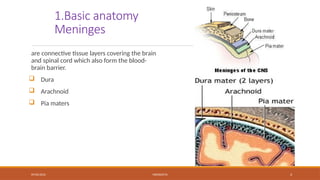
Meninges
are connective tissue layers covering the brain
and spinal cord which also form the blood-
brain barrier.
 Dura
 Arachnoid
 Pia maters
09/03/2024 MENINGITIS 5
2. introduction
Definition
Meningitis - Infection of Arachnoid Mater and CSF
◦ Subarachnoid Space
◦ Cerebral ventricles
Encephalitis - indicates brain parenchymal involvement.
Meningoencephalitis
These are examples of diffuse infection of the CNS.
09/03/2024 MENINGITIS 6
Cont…
Epidemiology
1.2 million cases worldwide.
135,000 deaths per year worldwide.
One of the top 10 most common infections.
Can affect all age groups but some are at higher risk. (young age)
Male = Female
09/03/2024 MENINGITIS 7
Cont…
Etiology
varies with different age groups and other predisposing factors.
o Bacterial Infections
o Viral Infections
o Fungal Infections(Cryptococcus neoformans)
o Inflammatory diseases (SLE)
o Chemicals (pb, Hg)
o Protozoans
o Rickettsial
o Malignancies
In general, viral causes > bacterial > fungal & parasitic.
09/03/2024 MENINGITIS 8
3. Bacterial meningitis
Etiology
Causative organisms vary with patient age, while three bacteria accounting for
over three-quarters of all cases:
◦ Neisseria meningitidis (meningococcus)
◦ Haemophilus influenzae (if very young and unvaccinated)
◦ Streptococcus pneumoniae ( pneumococcus)
09/03/2024 MENINGITIS 9
Cont…
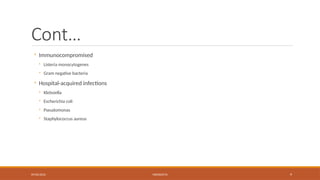
◦ Immunocompromised
◦ Listeria monocytogenes
◦ Gram negative bacteria
◦ Hospital-acquired infections
◦ Klebsiella
◦ Escherichia coli
◦ Pseudomonas
◦ Staphylococcus aureus
09/03/2024 MENINGITIS 10
Cont…
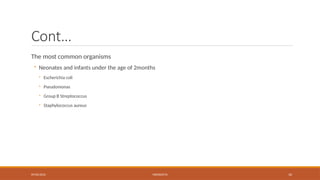
The most common organisms
◦ Neonates and infants under the age of 2months
◦ Escherichia coli
◦ Pseudomonas
◦ Group B Streptococcus
◦ Staphylococcus aureus
09/03/2024 MENINGITIS 11
Cont…
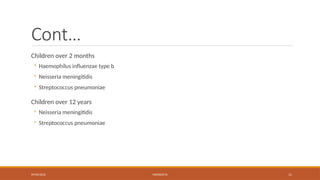
Children over 2 months
◦ Haemophilus influenzae type b
◦ Neisseria meningitidis
◦ Streptococcus pneumoniae
Children over 12 years
◦ Neisseria meningitidis
◦ Streptococcus pneumoniae
09/03/2024 MENINGITIS 12
4.Predisposing Factors
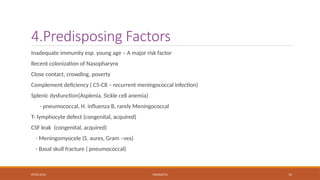
Inadequate immunity esp. young age – A major risk factor
Recent colonization of Nasopharynx
Close contact, crowding, poverty
Complement deficiency ( C5-C8 – recurrent meningococcal infection)
Splenic dysfunction(Asplenia, Sickle cell anemia)
- pneumococcal, H. influenza B, rarely Meningococcal
T- lymphocyte defect (congenital, acquired)
CSF leak (congenital, acquired)
- Meningomyocele (S. aures, Gram –ves)
- Basal skull fracture ( pneumococcal)
09/03/2024 MENINGITIS 13
Cont…
Lack of immunizations
Contagious focus – rarely become a source
 Otitis media
 Mastoditis
 Orbital cellulitis
 Cranial / vertebral osteomyelitis
 etc
09/03/2024 MENINGITIS 14
Cont…
STREPTOCOCCUS PNEUMONIAE
Children with anatomic or functional asplenia
Infection with HIV - 20- to 100-fold higher risk
Otitis media
Sinusitis
Pneumonia
CSF otorrhea or rhinorrhea,
The presence of a cochlear implant, and chronic graft versus host disease following bone
marrow transplantation.
09/03/2024 MENINGITIS 15
Cont…
NEISSERIA MENINGITIDIS
Five serogroups of meningococcus:
A, B, C, Y, and W-135
May be sporadic or may occur in epidemics.
Epidemic disease, especially in developing countries, is usually caused by serogroup A.
Most infections - contact in a daycare facility, a colonized adult family member, or an ill
patient with meningococcal disease.
Children younger than 5 yr have the highest rates of meningococcal infection.
A 2nd peak in incidence occurs in persons between 15 and 24 yr of age.
09/03/2024 MENINGITIS 16
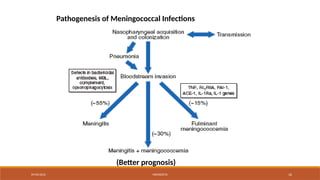
Pathogenesis of Meningococcal Infections
(Better prognosis)
09/03/2024 MENINGITIS 17
Cont…
HAEMOPHILUS INFLUENZAE TYPE B
Invasive infections occurs primarily in infants 2 mo–2 yr of age
peak incidence is at 6–9 mo of age, and
50% of cases occurs in the 1st yr of life.
Incompletely vaccinated children, and
Blunted immunologic responses to vaccine (children with HIV
infection)
09/03/2024 MENINGITIS 18
5.Mode of transmission
Person to person contact via respiratory secretions or droplets
Maternal flora – during the first months of life
09/03/2024 MENINGITIS 19
6.PATHOGENESIS
Most commonly results from hematogenous dissemination of
microorganisms from a distant site of infection.
Bacteremia usually precedes meningitis or occurs concomitantly.
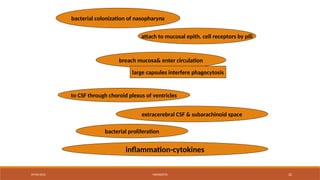
Bacterial colonization of the nasopharynx with a potentially
pathogenic microorganism is the usual source of the bacteremia.
Uncommonly - meningitis occurs by direct extension from nearby
focus
09/03/2024 MENINGITIS 20
Cont…
Attachment of pathogenes to mucosal epithelial cell through their pilli
Penetrate the mucosa and enter into the circulation
Bacterial survival in blood stream enhanced by capsules (interfer opsonic phagocytosis)
Opsonic phagocytosis may be impaired
o In young infant – lack of preformed IgM or Ig G
o In immunodeficient and with complement defect
09/03/2024 MENINGITIS 21
Cont…
Bacteria enter CSF through choroid plexus of the lateral ventricle and meninges
Complement and antibody concentration in the CSF is inadequate:
 Rapid multiplication
09/03/2024 MENINGITIS 22
bacterial colonization of nasopharynx
attach to mucosal epith. cell receptors by pili
breach mucosa& enter circulation
to CSF through choroid plexus of ventricles
extracerebral CSF & subarachinoid space
bacterial proliferation
inflammation-cytokines
large capsules interfere phagocytosis
09/03/2024 MENINGITIS 23
Cont…
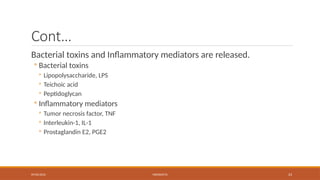
Bacterial toxins and Inflammatory mediators are released.
◦ Bacterial toxins
◦ Lipopolysaccharide, LPS
◦ Teichoic acid
◦ Peptidoglycan
◦ Inflammatory mediators
◦ Tumor necrosis factor, TNF
◦ Interleukin-1, IL-1
◦ Prostaglandin E2, PGE2
09/03/2024 MENINGITIS 24
Cont…
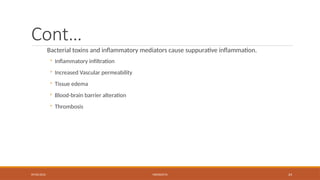
Bacterial toxins and inflammatory mediators cause suppurative inflammation.
◦ Inflammatory infiltration
◦ Increased Vascular permeability
◦ Tissue edema
◦ Blood-brain barrier alteration
◦ Thrombosis
09/03/2024 MENINGITIS 25
7.PATHOLOGY
Meningeal exudates in different part of the brain
Ventriculitis (purulent material within the ventricles)
Infiltrates extending to the subintimal region of the small arteries
and veins
= Vasculitis
= Thrombosis of small cortical veins
09/03/2024 MENINGITIS 26
Cont…
Cerebral infarction - microscopic / entire hemisphere
Inflammation of spinal nerves and roots
Inflammation of the cranial nerves
Increased ICP
cytotoxic cerebral edema
vasogenic cerebral edema
interstitial cerebral edema
The SIADH secretion may produce excessive water retention and
potentially increase the risk of elevated ICP
09/03/2024 MENINGITIS 27
Cont…
Hydrocephalus is a common complication of meningitis.
◦ Communicating hydrocephalus , most often
◦ Obstructive hydrocephalus
Raised CSF protein level
– due to increased vascular permeability of the blood-brain barrier and the loss of albumin-rich fluid
from the capillaries and veins
- subdural effusion
Hypoglycorrhachia (reduced CSF glucose levels) - is due to decreased glucose transport by the cerebral
tissue.
09/03/2024 MENINGITIS 28
Cont…
Inflammatory process may result in cerebral edema and damage of
the cerebral cortex.
◦ Conscious disturbance
◦ Convulsion
◦ Motor disturbance
◦ Sensory disturbance and
◦ later psychomotor retardation
09/03/2024 MENINGITIS 29
8.Clinical manifestation
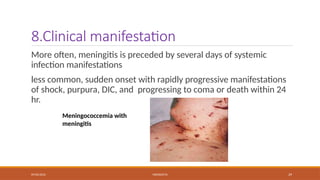
More often, meningitis is preceded by several days of systemic
infection manifestations
less common, sudden onset with rapidly progressive manifestations
of shock, purpura, DIC, and progressing to coma or death within 24
hr.
Meningococcemia with
meningitis
09/03/2024 MENINGITIS 30
Cont…
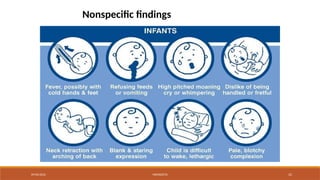
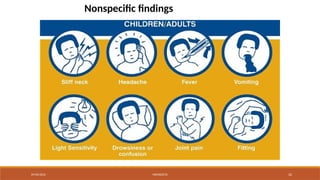
The signs and symptoms of meningitis are related to:
 Nonspecific findings of systemic infection and
 Manifestations of meningeal irritation.
09/03/2024 MENINGITIS 31
Nonspecific findings
09/03/2024 MENINGITIS 32
Nonspecific findings
09/03/2024 MENINGITIS 33
Cont…
Meningeal irritation sign
◦ is found because the spinal nerve root is irritated.
◦ Neck stiffness
◦ Positive Kernig’s sign
◦ Positive Brudzinski’s sign
◦ in those younger than 12–18 mo, Kernig and Brudzinski signs are not consistently
present.
09/03/2024 MENINGITIS 34
Cont…
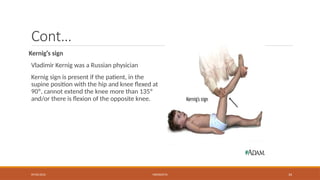
Kernig’s sign
Vladimir Kernig was a Russian physician
Kernig sign is present if the patient, in the
supine position with the hip and knee flexed at
90º, cannot extend the knee more than 135º
and/or there is flexion of the opposite knee.
09/03/2024 MENINGITIS 35
Cont…
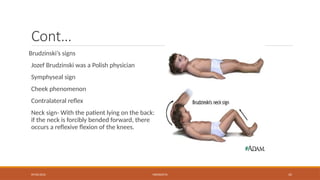
Brudzinski’s signs
Jozef Brudzinski was a Polish physician
Symphyseal sign
Cheek phenomenon
Contralateral reflex
Neck sign- With the patient lying on the back:
if the neck is forcibly bended forward, there
occurs a reflexive flexion of the knees.
09/03/2024 MENINGITIS 36
Cont…
Increased intracranial pressure
Headache, Projectile vomiting
Hypertension ,Bradycardia
Bulging fontanel
Cranial sutures diastasis
Coma ,Decerebrate rigidity
Cerebral hernia
Cranial nerve palsy Oculomotor nerve
Abducen nerve - usually the first nerve to be compressed
focal neurologic signs occur in 10-20%- ↑to 30% in pneumococcal
meningitis
09/03/2024 MENINGITIS 37
Cont…
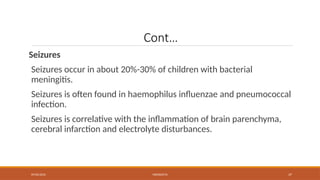
Seizures
Seizures occur in about 20%-30% of children with bacterial
meningitis.
Seizures is often found in haemophilus influenzae and pneumococcal
infection.
Seizures is correlative with the inflammation of brain parenchyma,
cerebral infarction and electrolyte disturbances.
09/03/2024 MENINGITIS 38
Cont…
-In some children, particularly young infants under the age of 3 months, symptom and signs
of meningeal inflammation may be minimal.
◦ Fever is generally present, but its absence or hypothermia in a infant with meningeal
inflammation is common.
◦ Only irritability, restlessness, dullness, vomiting, poor feeding, cyanosis, dyspnea,
jaundice, seizures, shock and coma may be noted.
◦ Bulging fontanel may be found, but there is not meningeal irritation sign.
09/03/2024 MENINGITIS 39
9.DIAGNOSIS
Confirmed by CSF analysis – lumbar puncture
Contraindications for an immediate LP include:
(1) Evidence of increased ICP (other than a bulging fontanel)
(2) Severe cardiopulmonary compromise requiring prompt resuscitative
measures for shock or in patients in whom positioning for the LP
would further compromise cardiopulmonary function; and
(3) Infection of the skin overlying the site of the LP.
(4) Thrombocytopenia is a relative contraindication for LP.
09/03/2024 MENINGITIS 40
Cont…
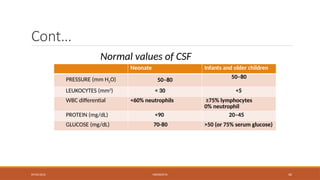
Neonate Infants and older children
PRESSURE (mm H2O) 50–80
50–80
LEUKOCYTES (mm3
) < 30 <5
WBC differential <60% neutrophils ≥75% lymphocytes
0% neutrophil
PROTEIN (mg/dL) <90 20–45
GLUCOSE (mg/dL) 70-80 >50 (or 75% serum glucose)
Normal values of CSF
09/03/2024 MENINGITIS 41
Cont…
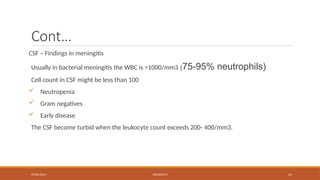
CSF – Findings in meningitis
Usually in bacterial meningitis the WBC is >1000/mm3 (75-95% neutrophils)
Cell count in CSF might be less than 100
 Neutropenia
 Gram negatives
 Early disease
The CSF become turbid when the leukocyte count exceeds 200- 400/mm3.
09/03/2024 MENINGITIS 42
Cont…
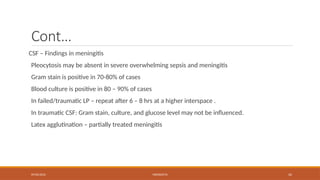
CSF – Findings in meningitis
Pleocytosis may be absent in severe overwhelming sepsis and meningitis
Gram stain is positive in 70-80% of cases
Blood culture is positive in 80 – 90% of cases
In failed/traumatic LP – repeat after 6 – 8 hrs at a higher interspace .
In traumatic CSF: Gram stain, culture, and glucose level may not be influenced.
Latex agglutination – partially treated meningitis
09/03/2024 MENINGITIS 43
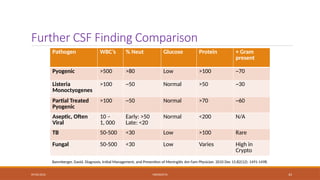
Further CSF Finding Comparison
Pathogen WBC’s % Neut Glucose Protein + Gram
present
Pyogenic >500 >80 Low >100 ~70
Listeria
Monoctyogenes
>100 ~50 Normal >50 ~30
Partial Treated
Pyogenic
>100 ~50 Normal >70 ~60
Aseptic, Often
Viral
10 –
1, 000
Early: >50
Late: <20
Normal <200 N/A
TB 50-500 <30 Low >100 Rare
Fungal 50-500 <30 Low Varies High in
Crypto
Banmberger, David, Diagnosis, Initial Management, and Prevention of Meningitis Am Fam Physician. 2010 Dec 15;82(12): 1491-1498.
09/03/2024 MENINGITIS 44
Cont…
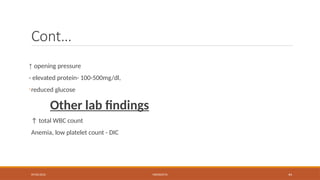
↑ opening pressure
- elevated protein- 100-500mg/dl,
-reduced glucose
Other lab findings
↑ total WBC count
Anemia, low platelet count - DIC
09/03/2024 MENINGITIS 45
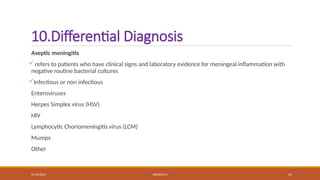
10.Differential Diagnosis
Aseptic meningitis
 refers to patients who have clinical signs and laboratory evidence for meningeal inflammation with
negative routine bacterial cultures
Infectious or non infectious
Enteroviruses
Herpes Simplex virus (HSV)
HIV
Lymphocytic Choriomeningitis virus (LCM)
Mumps
Other
09/03/2024 MENINGITIS 46
Cont…
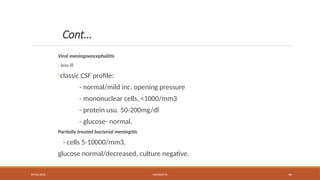
Viral meningoencephalitis
- less ill
-classic CSF profile:
- normal/mild inc. opening pressure
- mononuclear cells, <1000/mm3
- protein usu. 50-200mg/dl
- glucose- normal.
Partially treated bacterial meningitis
- cells 5-10000/mm3,
glucose normal/decreased, culture negative.
09/03/2024 MENINGITIS 47
Cont…
Enteroviral Meningitis
Enteroviruses are thought to be the most common cause of viral meningitis
Are a diverse group of RNA viruses including Coxsackie A & B, Echoviruses, and
polioviruses.
Account for >50% of cases and approximately 90% of cases in which a specific
etiologic agent is identified.
Majority of cases are in children or adolescents, but patients of any age can be
affected.
Transmitted primarily by fecal-oral route, but can also be spread by contact with
infected respiratory secretions.
09/03/2024 MENINGITIS 48
Cont…
Tuberculous meningitis
Usually occurs early, 2 – 6 months after the infection
Suspected in :
Fever persisting for 14 days and above
Fever persisting for more than 7 days and there is a family member with tuberculosis
A chest x ray suggests tuberculosis
The patient remains unconscious
Children with known or suspected HIV infection (cryptococcal meningitis also – Indian ink)
CSF continue to have <500 cells/ml,mostly lymphocytes, elevated proteins (0.8-4g/l) and low glucose
(<40mg/dl)
09/03/2024 MENINGITIS 49
11.Treatment
Immediate treatment of associated multiple organ system failure ,
shock, and acute respiratory distress syndrome is also indicated.
Drugs administered IV throughout the course of treatment
Dose should be antimeningeal
Reinstall the antibiotic based on culture and drug sensitivity
Until the culture result arrives – emperical Rx
If there are signs of increased ICP or focal neurologic findings,
antibiotics should be given without performing an LP
09/03/2024 MENINGITIS 50
Cont…
Initial Antibiotic Therapy
Crystalline penicillin= loading dose of 250,000 IU/kg IV stat followed by 500,000IU/Kg/24hrs IV
divided in 8 doses PLUS
Chloramphenicol = 50mg/Kg IV stat followed by 100mg/Kg/day IV Q 6 hourly
L.monocytogenes –
ampicillin (200 mg/kg/24 hr) given every 6 hr.
Immunocompromised and gram-negative meningitis
ceftazidime or an aminoglycoside
09/03/2024 MENINGITIS 51
Cont…
Duration Of Antibiotic Therapy
Depends on the etiology but in general course of treatment ranges between 10 – 14 days
S.pneumoniae- penicillin (400,000 U/kg/24 hr) 10-14 days
N.meningitidis- penicillin (400,000 U/kg/24 hr) 5-7 days
HIB-chloramphenicol 7-10 days
Gram negatives - 3 wk or for at least 2 wk after CSF sterilization
09/03/2024 MENINGITIS 52
Cont…
Supportive care
Control fever
Maintain a clear airway
Turn the child every 2 hours
Fluid management
Half to 2/3 rd of the maintainance
Management of increased ICP
Hyperventilation
Mannitol/lasix
Seizure should be treated with IV diazepam or phenytoin (if not controled)
Strict follow up – esp. during the first 72 hours
09/03/2024 MENINGITIS 53
Cont…
Corticosteroids
Rapid killing of bacteria releases toxic cell products. →
cytokine mediated infl. Response, edema & neutrophilic
response.
- This will lead to additional neurologic injury with
worsening of CNS Sx:
- Dexamethasone- 0.15mg/kg/dose q6hr-2days (benefit
max if given 1-2 hr before antibiotics)
- Decreases permanent auditory nerve damage.
- H. influenzae +/- pneumococcus
09/03/2024 MENINGITIS 54
12.Complications
Acute
-Seizure
-↑ ICP
-CN palsies,
-cerebral & cerebellar herniation;
-Subdural effusion- in 10-30%,
(asymptomatic in 85-90% of cases, esp in infants)
symptoms- bulging fontanel,enlarging HC, emesis, Sz, fever, cranial
transillumination
aspiration indicated in ↑ ICP/decreased LOC
09/03/2024 MENINGITIS 55
Cont…
SIADH (Cerebral hyponatremia)
◦ Restriction of fluid
◦ supplement of serum sodium
◦ Diuretic
Pericarditis, arthritis- due to bacterial dissemination, or immune
complex deposition.
DIC
09/03/2024 MENINGITIS 56
Cont…
Chronic complications
◦ Mental retardation
◦ Spasticity and/or paresis
◦ Seizures
09/03/2024 MENINGITIS 57
13.Prognosis
-MR- <10%- highest in pneumococcal
-severe neurodevelopmental abn.-in 10-20%
-Poor prognosis in:
. < 6mo of age
. >1mill.CFU bact./ml
. Seizure for >4 days into Rx
. Coma/ focal neurologic sign at admission
. Absence of pleocytosis
. Pneumococcal meningitis
09/03/2024 MENINGITIS 58
14.Prevention
Vaccination and chemoprophylaxis
N.meningitidis-
Rifampin 10mg/kg/dose q12 hr for 2 days –for all close contacts of patients with meningococcal
meningitis,
Quadrivalent vaccine - A,C,Y,W135 for high risk children >2yr
HIB-
 Rifampin 20mg/kg/day,once, 4 days for all household contacts
Conjugate vaccine (Pentavalent)- from 2mo of age
09/03/2024 MENINGITIS 59
Cont…
S.pneumoniae
PCV 10 – from 2mo of age
No chemoprophylaxis
09/03/2024 MENINGITIS 60
15.References
1. Nelson text book of pediatrics,19th
ed.
2. Nelson essentials of pediatrics, 5th
ed.
3. Current Pediatric diagnosis and treatment,18th
ed.
4. Rudolph’s pediatrics, 21st
ed

Meningitis, pediatrics meningitis ,,,,,,

  • 1.
    09/03/2024 MENINGITIS 1 Meningitis BY:BERHANE G/HER (MD,PED.Y3R) LECTURE SLIDES FOR C1 MEDICAL STUDENTS OF ADIGRAT UNIVERSITY 2015
  • 2.
    09/03/2024 MENINGITIS 2 Objectivesof the lecture At the end of this lecture,you are expected to: 1. Elaborate the different causes of meningitis 2. Describe clinical manifestations of bacterial meningitis beyond neonatal age 3. Interprete findings of CSF analysis 4. Outline management of bacterial meningitis 5. Describe complications of meningitis 6. Outline the prognosis and prevention
  • 3.
    09/03/2024 MENINGITIS 3 Outlineof presentation 1. Basic anatomy 2. Introduction 3. Bacterial meningitis 4. Predisposing factors 5. Mode of transmission 6. Pathogenesis 7. Pathology 8.Clinical manifestations 9.Diagnosis 10.Differential diagnosis 11. Treatment 14.Complications 15.Prognosis 16.Prevention 17. References
  • 4.
    09/03/2024 MENINGITIS 4 1.Basicanatomy Meninges are connective tissue layers covering the brain and spinal cord which also form the blood- brain barrier.  Dura  Arachnoid  Pia maters
  • 5.
    09/03/2024 MENINGITIS 5 2.introduction Definition Meningitis - Infection of Arachnoid Mater and CSF ◦ Subarachnoid Space ◦ Cerebral ventricles Encephalitis - indicates brain parenchymal involvement. Meningoencephalitis These are examples of diffuse infection of the CNS.
  • 6.
    09/03/2024 MENINGITIS 6 Cont… Epidemiology 1.2million cases worldwide. 135,000 deaths per year worldwide. One of the top 10 most common infections. Can affect all age groups but some are at higher risk. (young age) Male = Female
  • 7.
    09/03/2024 MENINGITIS 7 Cont… Etiology varieswith different age groups and other predisposing factors. o Bacterial Infections o Viral Infections o Fungal Infections(Cryptococcus neoformans) o Inflammatory diseases (SLE) o Chemicals (pb, Hg) o Protozoans o Rickettsial o Malignancies In general, viral causes > bacterial > fungal & parasitic.
  • 8.
    09/03/2024 MENINGITIS 8 3.Bacterial meningitis Etiology Causative organisms vary with patient age, while three bacteria accounting for over three-quarters of all cases: ◦ Neisseria meningitidis (meningococcus) ◦ Haemophilus influenzae (if very young and unvaccinated) ◦ Streptococcus pneumoniae ( pneumococcus)
  • 9.
    09/03/2024 MENINGITIS 9 Cont… ◦Immunocompromised ◦ Listeria monocytogenes ◦ Gram negative bacteria ◦ Hospital-acquired infections ◦ Klebsiella ◦ Escherichia coli ◦ Pseudomonas ◦ Staphylococcus aureus
  • 10.
    09/03/2024 MENINGITIS 10 Cont… Themost common organisms ◦ Neonates and infants under the age of 2months ◦ Escherichia coli ◦ Pseudomonas ◦ Group B Streptococcus ◦ Staphylococcus aureus
  • 11.
    09/03/2024 MENINGITIS 11 Cont… Childrenover 2 months ◦ Haemophilus influenzae type b ◦ Neisseria meningitidis ◦ Streptococcus pneumoniae Children over 12 years ◦ Neisseria meningitidis ◦ Streptococcus pneumoniae
  • 12.
    09/03/2024 MENINGITIS 12 4.PredisposingFactors Inadequate immunity esp. young age – A major risk factor Recent colonization of Nasopharynx Close contact, crowding, poverty Complement deficiency ( C5-C8 – recurrent meningococcal infection) Splenic dysfunction(Asplenia, Sickle cell anemia) - pneumococcal, H. influenza B, rarely Meningococcal T- lymphocyte defect (congenital, acquired) CSF leak (congenital, acquired) - Meningomyocele (S. aures, Gram –ves) - Basal skull fracture ( pneumococcal)
  • 13.
    09/03/2024 MENINGITIS 13 Cont… Lackof immunizations Contagious focus – rarely become a source  Otitis media  Mastoditis  Orbital cellulitis  Cranial / vertebral osteomyelitis  etc
  • 14.
    09/03/2024 MENINGITIS 14 Cont… STREPTOCOCCUSPNEUMONIAE Children with anatomic or functional asplenia Infection with HIV - 20- to 100-fold higher risk Otitis media Sinusitis Pneumonia CSF otorrhea or rhinorrhea, The presence of a cochlear implant, and chronic graft versus host disease following bone marrow transplantation.
  • 15.
    09/03/2024 MENINGITIS 15 Cont… NEISSERIAMENINGITIDIS Five serogroups of meningococcus: A, B, C, Y, and W-135 May be sporadic or may occur in epidemics. Epidemic disease, especially in developing countries, is usually caused by serogroup A. Most infections - contact in a daycare facility, a colonized adult family member, or an ill patient with meningococcal disease. Children younger than 5 yr have the highest rates of meningococcal infection. A 2nd peak in incidence occurs in persons between 15 and 24 yr of age.
  • 16.
    09/03/2024 MENINGITIS 16 Pathogenesisof Meningococcal Infections (Better prognosis)
  • 17.
    09/03/2024 MENINGITIS 17 Cont… HAEMOPHILUSINFLUENZAE TYPE B Invasive infections occurs primarily in infants 2 mo–2 yr of age peak incidence is at 6–9 mo of age, and 50% of cases occurs in the 1st yr of life. Incompletely vaccinated children, and Blunted immunologic responses to vaccine (children with HIV infection)
  • 18.
    09/03/2024 MENINGITIS 18 5.Modeof transmission Person to person contact via respiratory secretions or droplets Maternal flora – during the first months of life
  • 19.
    09/03/2024 MENINGITIS 19 6.PATHOGENESIS Mostcommonly results from hematogenous dissemination of microorganisms from a distant site of infection. Bacteremia usually precedes meningitis or occurs concomitantly. Bacterial colonization of the nasopharynx with a potentially pathogenic microorganism is the usual source of the bacteremia. Uncommonly - meningitis occurs by direct extension from nearby focus
  • 20.
    09/03/2024 MENINGITIS 20 Cont… Attachmentof pathogenes to mucosal epithelial cell through their pilli Penetrate the mucosa and enter into the circulation Bacterial survival in blood stream enhanced by capsules (interfer opsonic phagocytosis) Opsonic phagocytosis may be impaired o In young infant – lack of preformed IgM or Ig G o In immunodeficient and with complement defect
  • 21.
    09/03/2024 MENINGITIS 21 Cont… Bacteriaenter CSF through choroid plexus of the lateral ventricle and meninges Complement and antibody concentration in the CSF is inadequate:  Rapid multiplication
  • 22.
    09/03/2024 MENINGITIS 22 bacterialcolonization of nasopharynx attach to mucosal epith. cell receptors by pili breach mucosa& enter circulation to CSF through choroid plexus of ventricles extracerebral CSF & subarachinoid space bacterial proliferation inflammation-cytokines large capsules interfere phagocytosis
  • 23.
    09/03/2024 MENINGITIS 23 Cont… Bacterialtoxins and Inflammatory mediators are released. ◦ Bacterial toxins ◦ Lipopolysaccharide, LPS ◦ Teichoic acid ◦ Peptidoglycan ◦ Inflammatory mediators ◦ Tumor necrosis factor, TNF ◦ Interleukin-1, IL-1 ◦ Prostaglandin E2, PGE2
  • 24.
    09/03/2024 MENINGITIS 24 Cont… Bacterialtoxins and inflammatory mediators cause suppurative inflammation. ◦ Inflammatory infiltration ◦ Increased Vascular permeability ◦ Tissue edema ◦ Blood-brain barrier alteration ◦ Thrombosis
  • 25.
    09/03/2024 MENINGITIS 25 7.PATHOLOGY Meningealexudates in different part of the brain Ventriculitis (purulent material within the ventricles) Infiltrates extending to the subintimal region of the small arteries and veins = Vasculitis = Thrombosis of small cortical veins
  • 26.
    09/03/2024 MENINGITIS 26 Cont… Cerebralinfarction - microscopic / entire hemisphere Inflammation of spinal nerves and roots Inflammation of the cranial nerves Increased ICP cytotoxic cerebral edema vasogenic cerebral edema interstitial cerebral edema The SIADH secretion may produce excessive water retention and potentially increase the risk of elevated ICP
  • 27.
    09/03/2024 MENINGITIS 27 Cont… Hydrocephalusis a common complication of meningitis. ◦ Communicating hydrocephalus , most often ◦ Obstructive hydrocephalus Raised CSF protein level – due to increased vascular permeability of the blood-brain barrier and the loss of albumin-rich fluid from the capillaries and veins - subdural effusion Hypoglycorrhachia (reduced CSF glucose levels) - is due to decreased glucose transport by the cerebral tissue.
  • 28.
    09/03/2024 MENINGITIS 28 Cont… Inflammatoryprocess may result in cerebral edema and damage of the cerebral cortex. ◦ Conscious disturbance ◦ Convulsion ◦ Motor disturbance ◦ Sensory disturbance and ◦ later psychomotor retardation
  • 29.
    09/03/2024 MENINGITIS 29 8.Clinicalmanifestation More often, meningitis is preceded by several days of systemic infection manifestations less common, sudden onset with rapidly progressive manifestations of shock, purpura, DIC, and progressing to coma or death within 24 hr. Meningococcemia with meningitis
  • 30.
    09/03/2024 MENINGITIS 30 Cont… Thesigns and symptoms of meningitis are related to:  Nonspecific findings of systemic infection and  Manifestations of meningeal irritation.
  • 31.
  • 32.
  • 33.
    09/03/2024 MENINGITIS 33 Cont… Meningealirritation sign ◦ is found because the spinal nerve root is irritated. ◦ Neck stiffness ◦ Positive Kernig’s sign ◦ Positive Brudzinski’s sign ◦ in those younger than 12–18 mo, Kernig and Brudzinski signs are not consistently present.
  • 34.
    09/03/2024 MENINGITIS 34 Cont… Kernig’ssign Vladimir Kernig was a Russian physician Kernig sign is present if the patient, in the supine position with the hip and knee flexed at 90º, cannot extend the knee more than 135º and/or there is flexion of the opposite knee.
  • 35.
    09/03/2024 MENINGITIS 35 Cont… Brudzinski’ssigns Jozef Brudzinski was a Polish physician Symphyseal sign Cheek phenomenon Contralateral reflex Neck sign- With the patient lying on the back: if the neck is forcibly bended forward, there occurs a reflexive flexion of the knees.
  • 36.
    09/03/2024 MENINGITIS 36 Cont… Increasedintracranial pressure Headache, Projectile vomiting Hypertension ,Bradycardia Bulging fontanel Cranial sutures diastasis Coma ,Decerebrate rigidity Cerebral hernia Cranial nerve palsy Oculomotor nerve Abducen nerve - usually the first nerve to be compressed focal neurologic signs occur in 10-20%- ↑to 30% in pneumococcal meningitis
  • 37.
    09/03/2024 MENINGITIS 37 Cont… Seizures Seizuresoccur in about 20%-30% of children with bacterial meningitis. Seizures is often found in haemophilus influenzae and pneumococcal infection. Seizures is correlative with the inflammation of brain parenchyma, cerebral infarction and electrolyte disturbances.
  • 38.
    09/03/2024 MENINGITIS 38 Cont… -Insome children, particularly young infants under the age of 3 months, symptom and signs of meningeal inflammation may be minimal. ◦ Fever is generally present, but its absence or hypothermia in a infant with meningeal inflammation is common. ◦ Only irritability, restlessness, dullness, vomiting, poor feeding, cyanosis, dyspnea, jaundice, seizures, shock and coma may be noted. ◦ Bulging fontanel may be found, but there is not meningeal irritation sign.
  • 39.
    09/03/2024 MENINGITIS 39 9.DIAGNOSIS Confirmedby CSF analysis – lumbar puncture Contraindications for an immediate LP include: (1) Evidence of increased ICP (other than a bulging fontanel) (2) Severe cardiopulmonary compromise requiring prompt resuscitative measures for shock or in patients in whom positioning for the LP would further compromise cardiopulmonary function; and (3) Infection of the skin overlying the site of the LP. (4) Thrombocytopenia is a relative contraindication for LP.
  • 40.
    09/03/2024 MENINGITIS 40 Cont… NeonateInfants and older children PRESSURE (mm H2O) 50–80 50–80 LEUKOCYTES (mm3 ) < 30 <5 WBC differential <60% neutrophils ≥75% lymphocytes 0% neutrophil PROTEIN (mg/dL) <90 20–45 GLUCOSE (mg/dL) 70-80 >50 (or 75% serum glucose) Normal values of CSF
  • 41.
    09/03/2024 MENINGITIS 41 Cont… CSF– Findings in meningitis Usually in bacterial meningitis the WBC is >1000/mm3 (75-95% neutrophils) Cell count in CSF might be less than 100  Neutropenia  Gram negatives  Early disease The CSF become turbid when the leukocyte count exceeds 200- 400/mm3.
  • 42.
    09/03/2024 MENINGITIS 42 Cont… CSF– Findings in meningitis Pleocytosis may be absent in severe overwhelming sepsis and meningitis Gram stain is positive in 70-80% of cases Blood culture is positive in 80 – 90% of cases In failed/traumatic LP – repeat after 6 – 8 hrs at a higher interspace . In traumatic CSF: Gram stain, culture, and glucose level may not be influenced. Latex agglutination – partially treated meningitis
  • 43.
    09/03/2024 MENINGITIS 43 FurtherCSF Finding Comparison Pathogen WBC’s % Neut Glucose Protein + Gram present Pyogenic >500 >80 Low >100 ~70 Listeria Monoctyogenes >100 ~50 Normal >50 ~30 Partial Treated Pyogenic >100 ~50 Normal >70 ~60 Aseptic, Often Viral 10 – 1, 000 Early: >50 Late: <20 Normal <200 N/A TB 50-500 <30 Low >100 Rare Fungal 50-500 <30 Low Varies High in Crypto Banmberger, David, Diagnosis, Initial Management, and Prevention of Meningitis Am Fam Physician. 2010 Dec 15;82(12): 1491-1498.
  • 44.
    09/03/2024 MENINGITIS 44 Cont… ↑opening pressure - elevated protein- 100-500mg/dl, -reduced glucose Other lab findings ↑ total WBC count Anemia, low platelet count - DIC
  • 45.
    09/03/2024 MENINGITIS 45 10.DifferentialDiagnosis Aseptic meningitis  refers to patients who have clinical signs and laboratory evidence for meningeal inflammation with negative routine bacterial cultures Infectious or non infectious Enteroviruses Herpes Simplex virus (HSV) HIV Lymphocytic Choriomeningitis virus (LCM) Mumps Other
  • 46.
    09/03/2024 MENINGITIS 46 Cont… Viralmeningoencephalitis - less ill -classic CSF profile: - normal/mild inc. opening pressure - mononuclear cells, <1000/mm3 - protein usu. 50-200mg/dl - glucose- normal. Partially treated bacterial meningitis - cells 5-10000/mm3, glucose normal/decreased, culture negative.
  • 47.
    09/03/2024 MENINGITIS 47 Cont… EnteroviralMeningitis Enteroviruses are thought to be the most common cause of viral meningitis Are a diverse group of RNA viruses including Coxsackie A & B, Echoviruses, and polioviruses. Account for >50% of cases and approximately 90% of cases in which a specific etiologic agent is identified. Majority of cases are in children or adolescents, but patients of any age can be affected. Transmitted primarily by fecal-oral route, but can also be spread by contact with infected respiratory secretions.
  • 48.
    09/03/2024 MENINGITIS 48 Cont… Tuberculousmeningitis Usually occurs early, 2 – 6 months after the infection Suspected in : Fever persisting for 14 days and above Fever persisting for more than 7 days and there is a family member with tuberculosis A chest x ray suggests tuberculosis The patient remains unconscious Children with known or suspected HIV infection (cryptococcal meningitis also – Indian ink) CSF continue to have <500 cells/ml,mostly lymphocytes, elevated proteins (0.8-4g/l) and low glucose (<40mg/dl)
  • 49.
    09/03/2024 MENINGITIS 49 11.Treatment Immediatetreatment of associated multiple organ system failure , shock, and acute respiratory distress syndrome is also indicated. Drugs administered IV throughout the course of treatment Dose should be antimeningeal Reinstall the antibiotic based on culture and drug sensitivity Until the culture result arrives – emperical Rx If there are signs of increased ICP or focal neurologic findings, antibiotics should be given without performing an LP
  • 50.
    09/03/2024 MENINGITIS 50 Cont… InitialAntibiotic Therapy Crystalline penicillin= loading dose of 250,000 IU/kg IV stat followed by 500,000IU/Kg/24hrs IV divided in 8 doses PLUS Chloramphenicol = 50mg/Kg IV stat followed by 100mg/Kg/day IV Q 6 hourly L.monocytogenes – ampicillin (200 mg/kg/24 hr) given every 6 hr. Immunocompromised and gram-negative meningitis ceftazidime or an aminoglycoside
  • 51.
    09/03/2024 MENINGITIS 51 Cont… DurationOf Antibiotic Therapy Depends on the etiology but in general course of treatment ranges between 10 – 14 days S.pneumoniae- penicillin (400,000 U/kg/24 hr) 10-14 days N.meningitidis- penicillin (400,000 U/kg/24 hr) 5-7 days HIB-chloramphenicol 7-10 days Gram negatives - 3 wk or for at least 2 wk after CSF sterilization
  • 52.
    09/03/2024 MENINGITIS 52 Cont… Supportivecare Control fever Maintain a clear airway Turn the child every 2 hours Fluid management Half to 2/3 rd of the maintainance Management of increased ICP Hyperventilation Mannitol/lasix Seizure should be treated with IV diazepam or phenytoin (if not controled) Strict follow up – esp. during the first 72 hours
  • 53.
    09/03/2024 MENINGITIS 53 Cont… Corticosteroids Rapidkilling of bacteria releases toxic cell products. → cytokine mediated infl. Response, edema & neutrophilic response. - This will lead to additional neurologic injury with worsening of CNS Sx: - Dexamethasone- 0.15mg/kg/dose q6hr-2days (benefit max if given 1-2 hr before antibiotics) - Decreases permanent auditory nerve damage. - H. influenzae +/- pneumococcus
  • 54.
    09/03/2024 MENINGITIS 54 12.Complications Acute -Seizure -↑ICP -CN palsies, -cerebral & cerebellar herniation; -Subdural effusion- in 10-30%, (asymptomatic in 85-90% of cases, esp in infants) symptoms- bulging fontanel,enlarging HC, emesis, Sz, fever, cranial transillumination aspiration indicated in ↑ ICP/decreased LOC
  • 55.
    09/03/2024 MENINGITIS 55 Cont… SIADH(Cerebral hyponatremia) ◦ Restriction of fluid ◦ supplement of serum sodium ◦ Diuretic Pericarditis, arthritis- due to bacterial dissemination, or immune complex deposition. DIC
  • 56.
    09/03/2024 MENINGITIS 56 Cont… Chroniccomplications ◦ Mental retardation ◦ Spasticity and/or paresis ◦ Seizures
  • 57.
    09/03/2024 MENINGITIS 57 13.Prognosis -MR-<10%- highest in pneumococcal -severe neurodevelopmental abn.-in 10-20% -Poor prognosis in: . < 6mo of age . >1mill.CFU bact./ml . Seizure for >4 days into Rx . Coma/ focal neurologic sign at admission . Absence of pleocytosis . Pneumococcal meningitis
  • 58.
    09/03/2024 MENINGITIS 58 14.Prevention Vaccinationand chemoprophylaxis N.meningitidis- Rifampin 10mg/kg/dose q12 hr for 2 days –for all close contacts of patients with meningococcal meningitis, Quadrivalent vaccine - A,C,Y,W135 for high risk children >2yr HIB-  Rifampin 20mg/kg/day,once, 4 days for all household contacts Conjugate vaccine (Pentavalent)- from 2mo of age
  • 59.
    09/03/2024 MENINGITIS 59 Cont… S.pneumoniae PCV10 – from 2mo of age No chemoprophylaxis
  • 60.
    09/03/2024 MENINGITIS 60 15.References 1.Nelson text book of pediatrics,19th ed. 2. Nelson essentials of pediatrics, 5th ed. 3. Current Pediatric diagnosis and treatment,18th ed. 4. Rudolph’s pediatrics, 21st ed

Editor's Notes

  • #5 Infection of the CNS may be diffuse or focal. Meningitis and encephalitis are examples of diffuse infection. Meningitis implies primary involvement of the meninges, whereas encephalitis indicates brain parenchymal involvement.
  • #6 Approximately 90 per cent of cases occur in children during the first 5 years of life.
  • #26 Cerebral infarction, resulting from vascular occlusion due to inflammation, vasospasm, and thrombosis, is a frequent sequela. Infarct size ranges from microscopic to involvement of an entire hemisphere. Increased ICP is due to cell death (cytotoxic cerebral edema), cytokine-induced increased capillary vascular permeability (vasogenic cerebral edema), and, possibly, increased hydrostatic pressure (interstitial cerebral edema) after obstructed reabsorption of CSF in the arachnoid villus or obstruction of the flow of fluid from the ventricles.
  • #36 oculomotor nerve palsy due to the presence of temporal lobe compression of the nerve during tentorial herniation. focal neurologic signs occur in 10-20%- ↑to 30% in pneumococcal meningitis because it stimulates vigorous inflammatory response