Internal Components

             Carl Todd
             Da Vinci 1
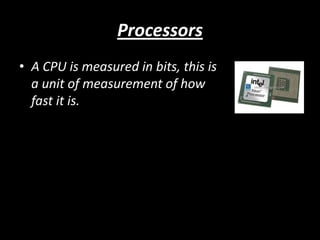
Processors
• A CPU is measured in bits, this is
  a unit of measurement of how
  fast it is.
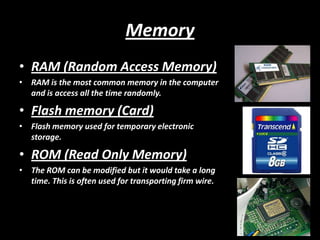
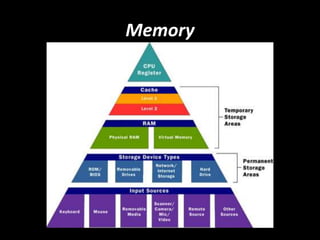
Memory
• RAM (Random Access Memory)
• RAM is the most common memory in the computer
  and is access all the time randomly.

• Flash memory (Card)
• Flash memory used for temporary electronic
  storage.

• ROM (Read Only Memory)
• The ROM can be modified but it would take a long
  time. This is often used for transporting firm wire.
Memory
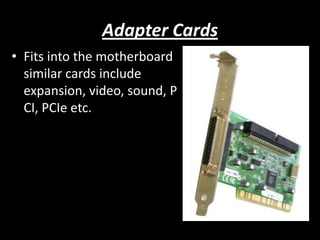
Adapter Cards
• Fits into the motherboard
  similar cards include
  expansion, video, sound, P
  CI, PCIe etc.
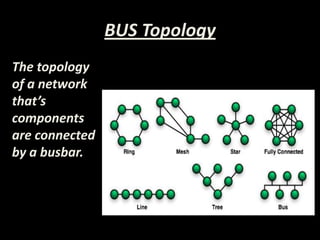
BUS Topology
The topology
of a network
that’s
components
are connected
by a busbar.
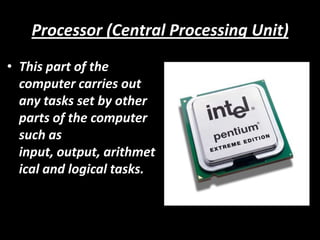
Processor (Central Processing Unit)
• This part of the
  computer carries out
  any tasks set by other
  parts of the computer
  such as
  input, output, arithmet
  ical and logical tasks.
Storage Devices
• This is used inside the computer to record
  and store information. This can be
  accomplished with nearly any type of
  energy.
Partitioning and Formatting
• Partitioning is a result of dividing a hard disk
  drive into separate storage units.
• Disk formatting is preparing your hard disk for
  being used, There are many different
  programs that have been produced for this
  job.
Input Output devices
Input:
• Keyboard, Mouse, Touch Screen, Scanner, Camera, Microphone, Light
   pen, optical mark reader, Barcode reader
Output:
• Printer, Monitor, Speakers, Projector, headphones


An input or output device is another information
processing system that’s normally plugged into the
computer or can be connected by bluetooth.
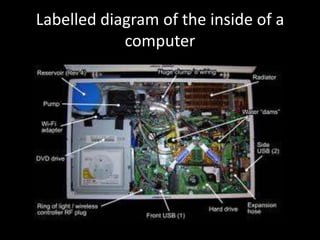
Labelled diagram of the inside of a
            computer

Internal components (Non-Technical)

  • 1.
    Internal Components Carl Todd Da Vinci 1
  • 2.
    Processors • A CPUis measured in bits, this is a unit of measurement of how fast it is.
  • 3.
    Memory • RAM (RandomAccess Memory) • RAM is the most common memory in the computer and is access all the time randomly. • Flash memory (Card) • Flash memory used for temporary electronic storage. • ROM (Read Only Memory) • The ROM can be modified but it would take a long time. This is often used for transporting firm wire.
  • 4.
  • 5.
    Adapter Cards • Fitsinto the motherboard similar cards include expansion, video, sound, P CI, PCIe etc.
  • 6.
    BUS Topology The topology ofa network that’s components are connected by a busbar.
  • 7.
    Processor (Central ProcessingUnit) • This part of the computer carries out any tasks set by other parts of the computer such as input, output, arithmet ical and logical tasks.
  • 8.
    Storage Devices • Thisis used inside the computer to record and store information. This can be accomplished with nearly any type of energy.
  • 9.
    Partitioning and Formatting •Partitioning is a result of dividing a hard disk drive into separate storage units. • Disk formatting is preparing your hard disk for being used, There are many different programs that have been produced for this job.
  • 10.
    Input Output devices Input: •Keyboard, Mouse, Touch Screen, Scanner, Camera, Microphone, Light pen, optical mark reader, Barcode reader Output: • Printer, Monitor, Speakers, Projector, headphones An input or output device is another information processing system that’s normally plugged into the computer or can be connected by bluetooth.
  • 11.
    Labelled diagram ofthe inside of a computer