int.ere.st: SCOT-based Tag Sharing Services Hak Lae Kim and John Breslin Blogtalk 2008 Cork, Ireland Social Software Group {haklae.kim, john.breslin}@deri.org
I will talk about Why Do We Need to Share Tags? Tag Tagging Tagcloud Folksonomies structure semantics data format SCOT mashups OpenTagging semantic web sharing social networks int.ere.st
Background
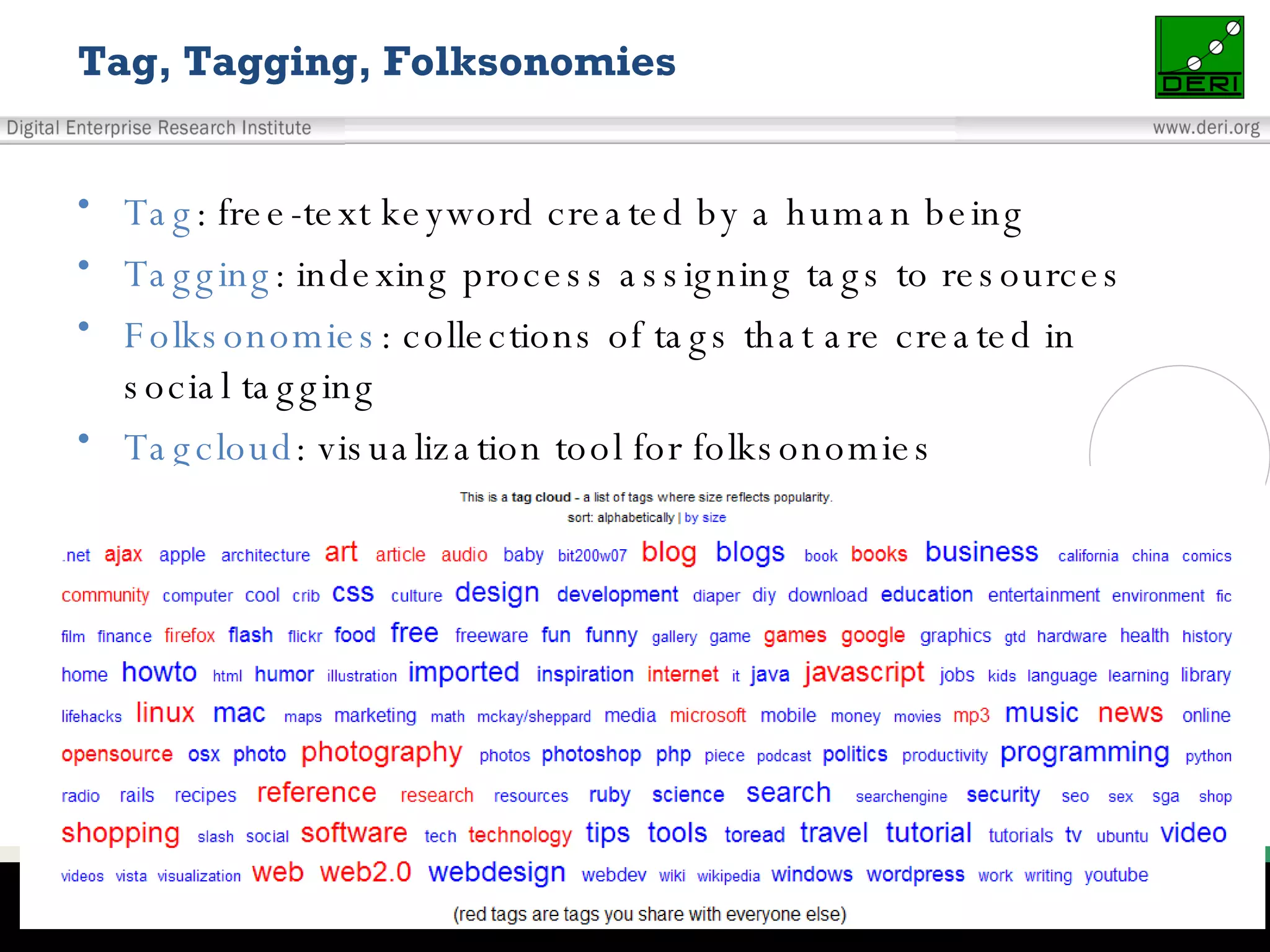
Tag : free-text keyword created by a human being Tagging : indexing process assigning tags to resources Folksonomies : collections of tags that are created in social tagging Tagcloud : visualization tool for folksonomies Tag, Tagging, Folksonomies
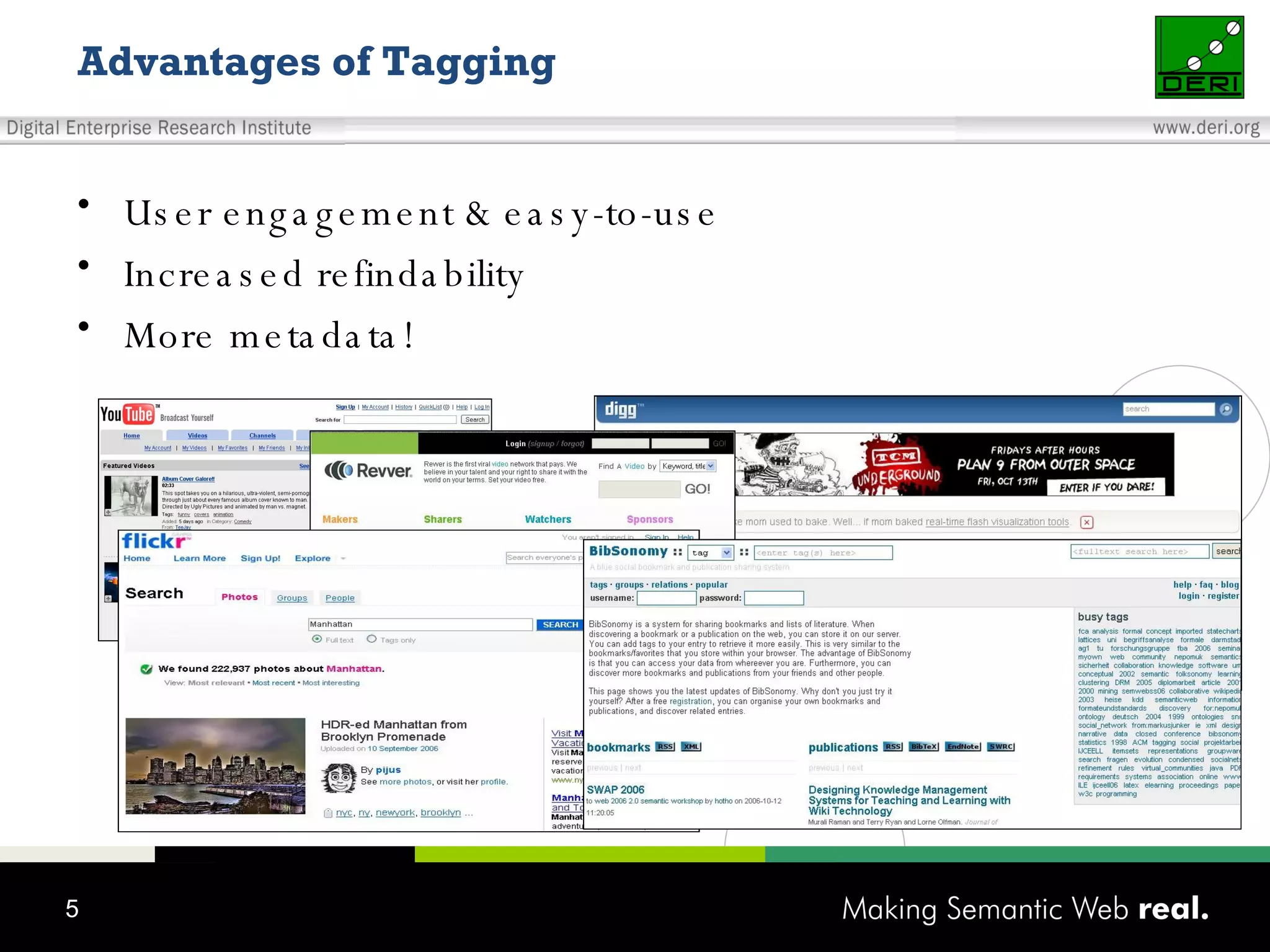
User engagement & easy-to-use Increased refindability More metadata! Advantages of Tagging
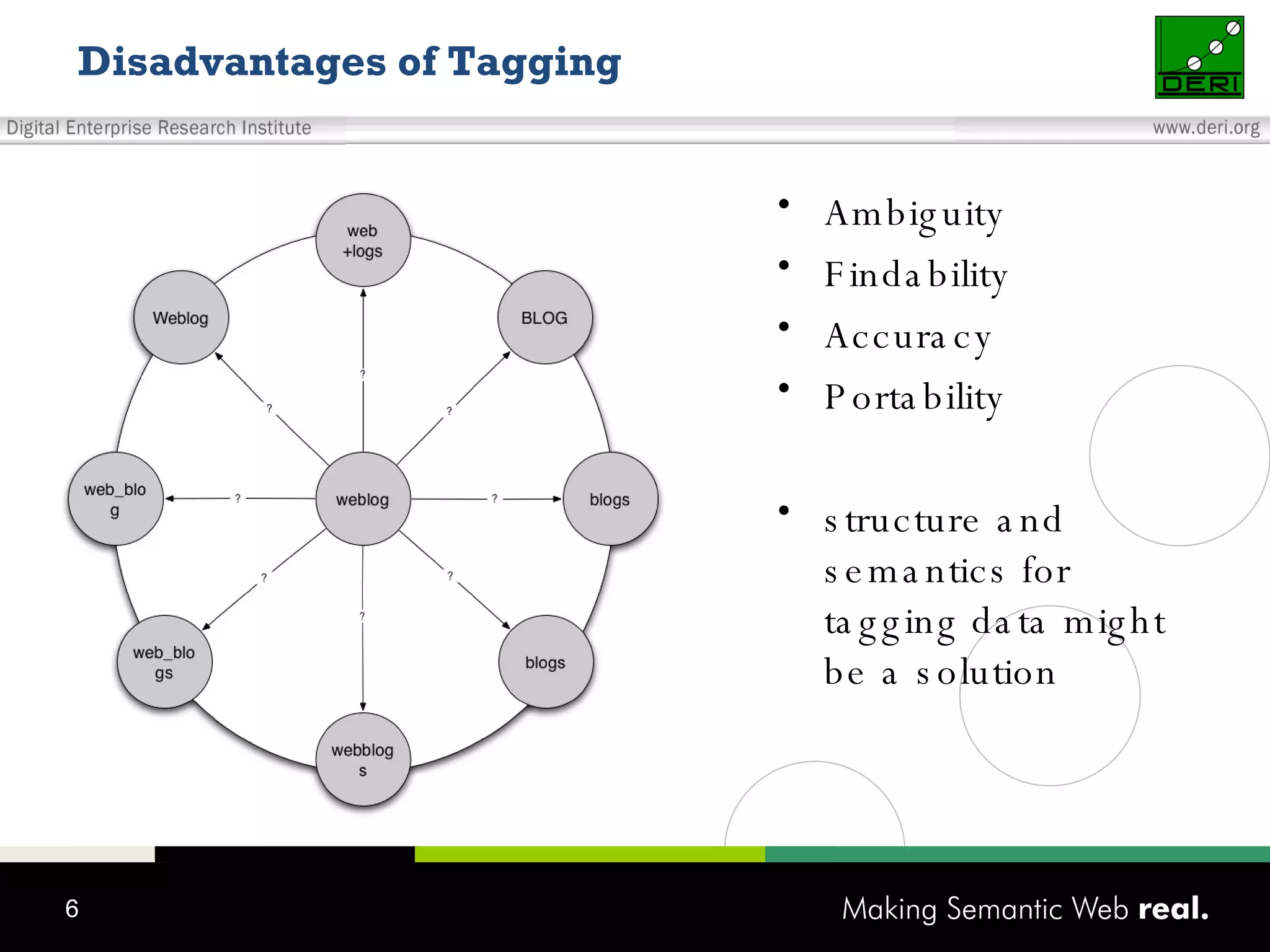
Disadvantages of Tagging Ambiguity Findability Accuracy Portability structure and semantics for tagging data might be a solution
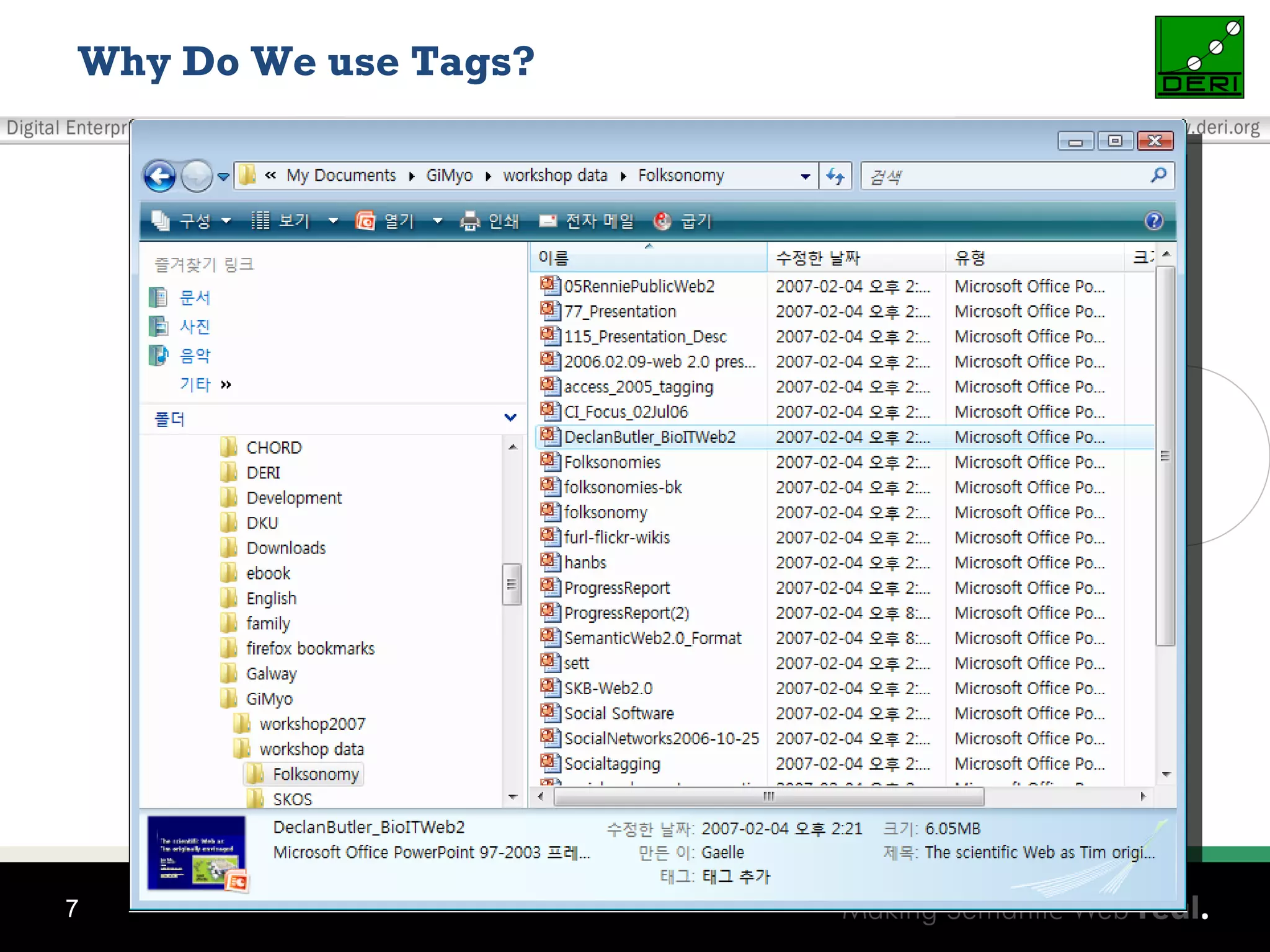
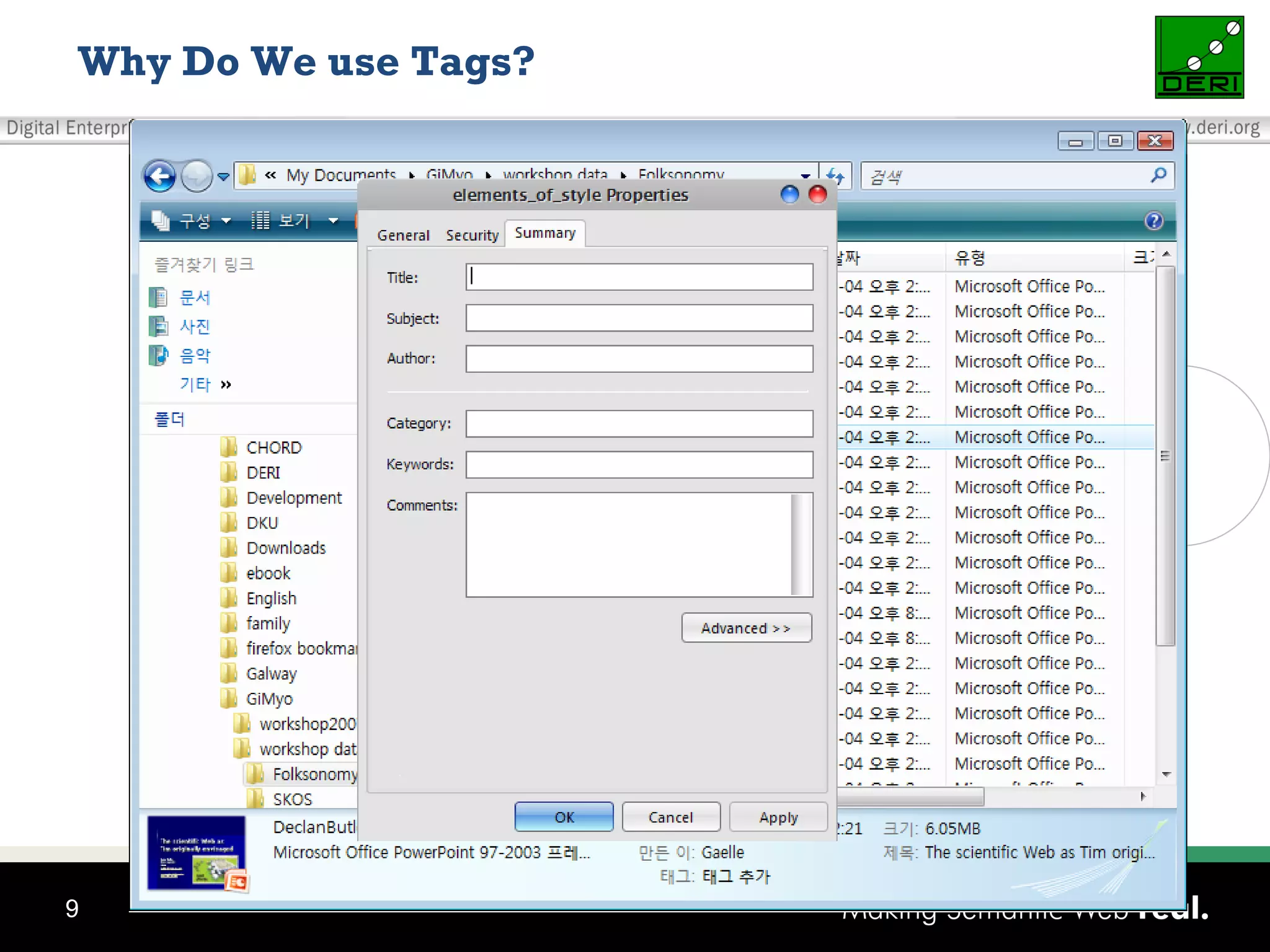
Why Do We use Tags?
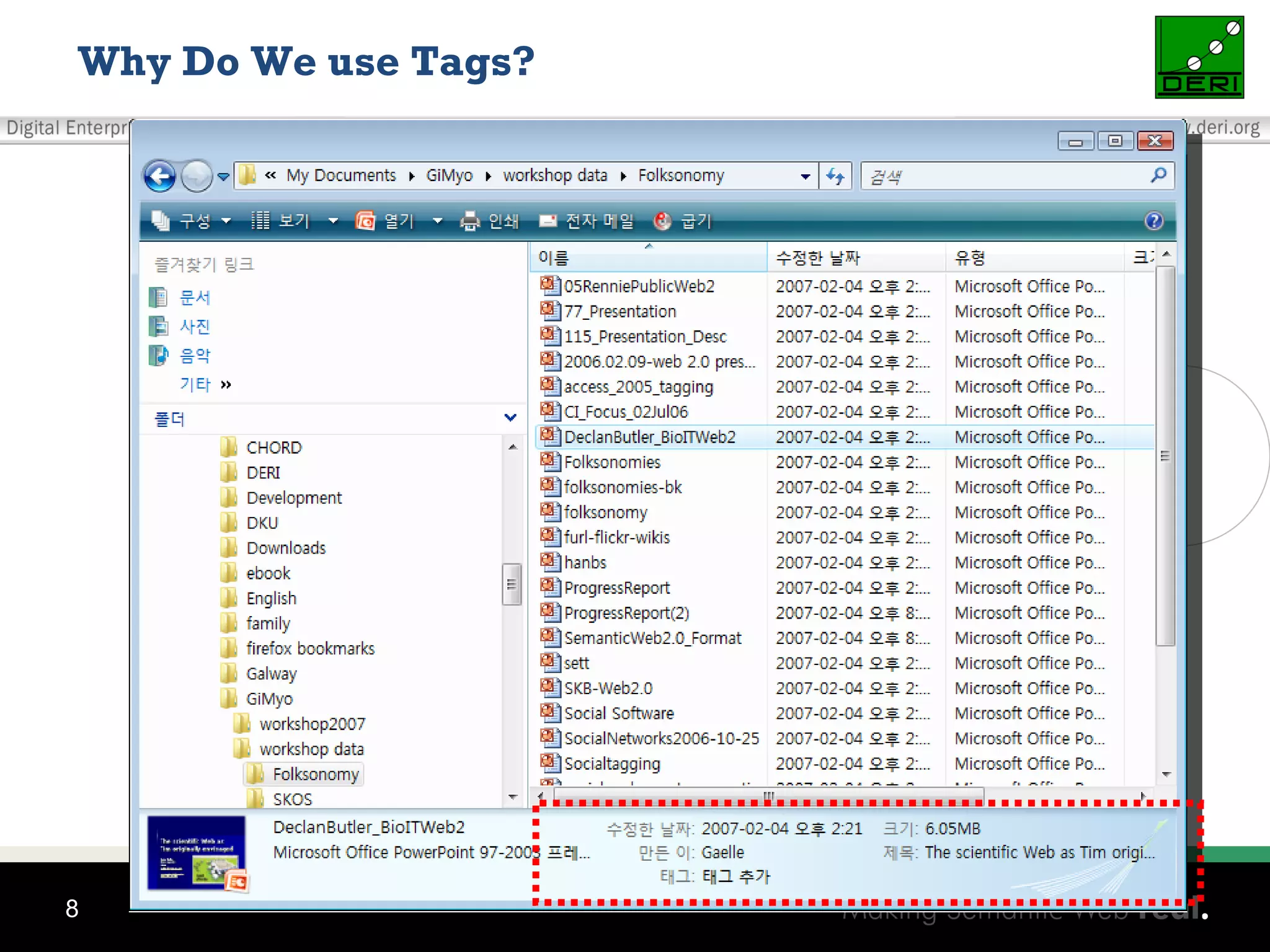
Why Do We use Tags?
Why Do We use Tags?
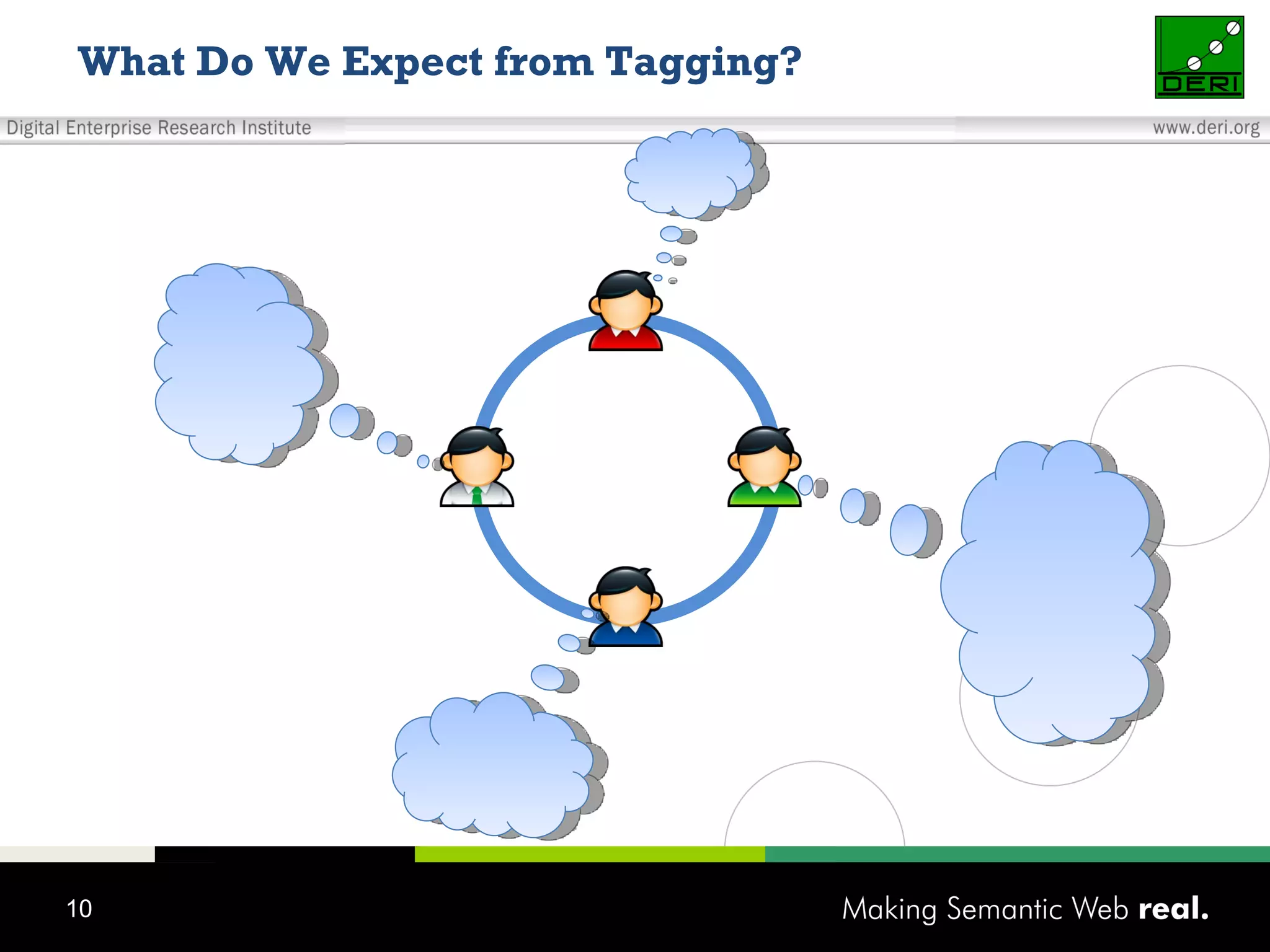
What Do We Expect from Tagging? Why Do We Need to Share Tags?
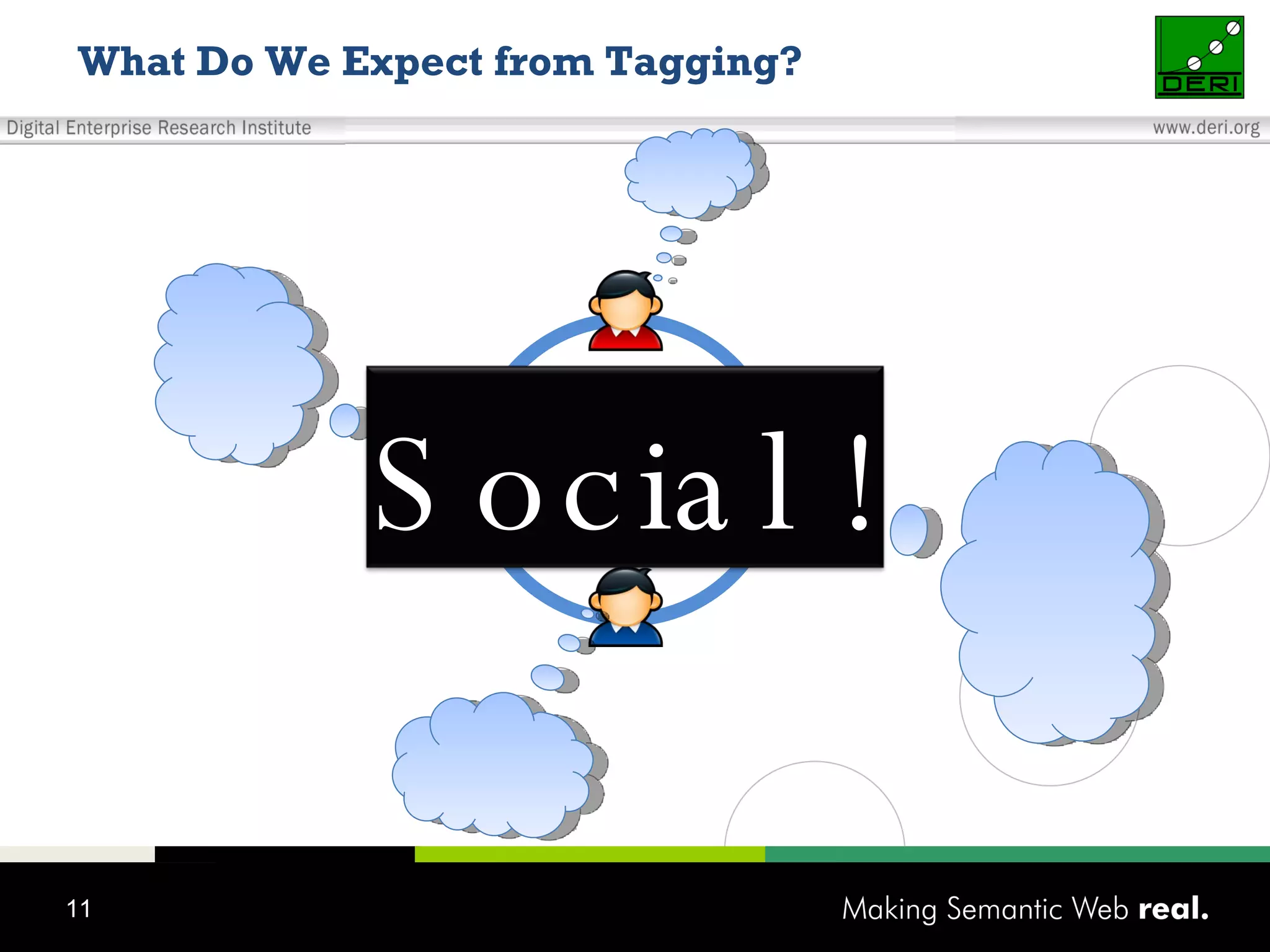
What Do We Expect from Tagging? Why Do We Need to Share Tags? Social !
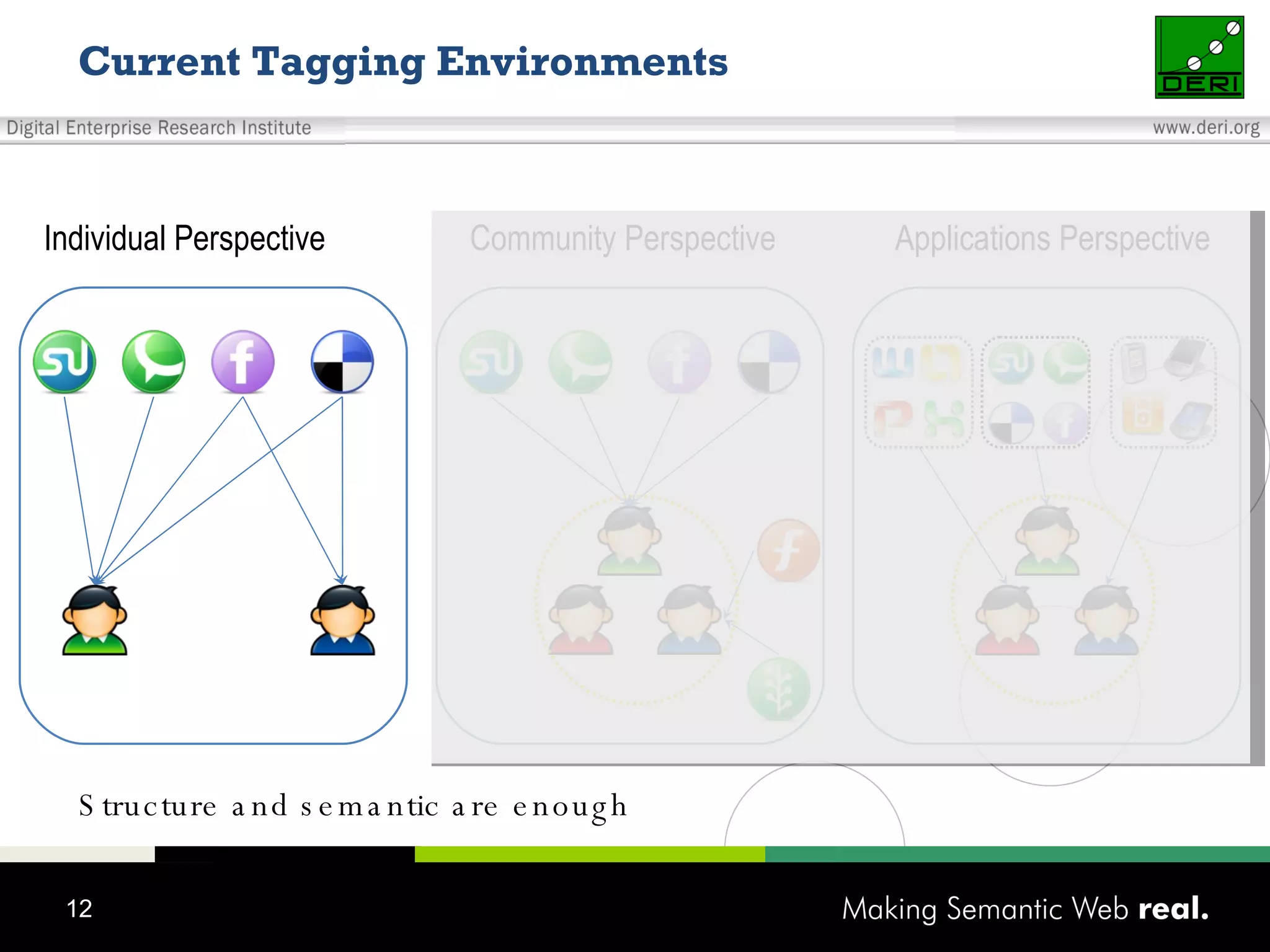
Current Tagging Environments Individual Perspective  Community Perspective  Applications Perspective  Structure and semantic are enough
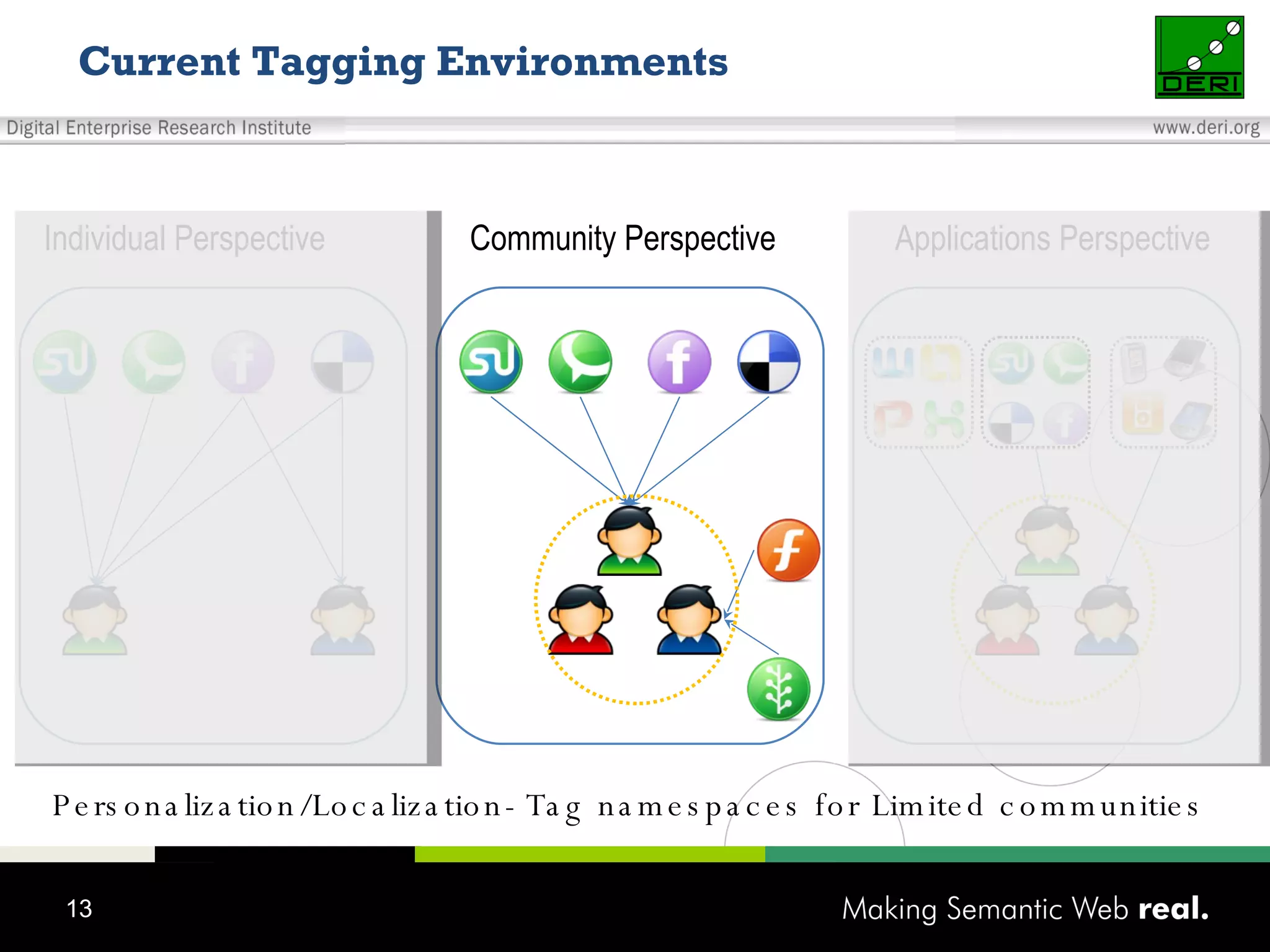
Current Tagging Environments Individual Perspective  Community Perspective  Applications Perspective  Personalization/Localization-Tag namespaces for Limited communities
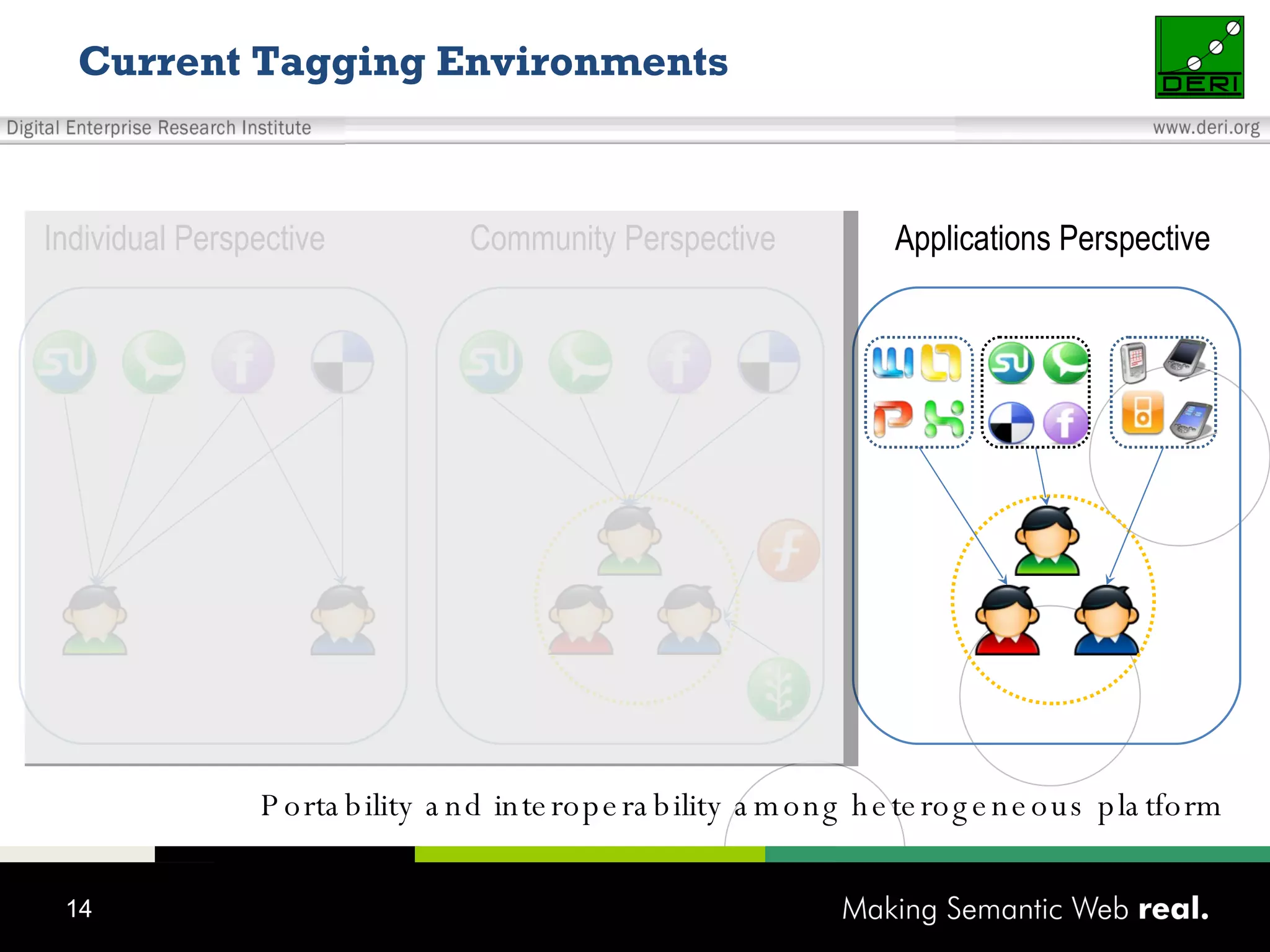
Current Tagging Environments Individual Perspective  Community Perspective  Applications Perspective  Portability and interoperability among heterogeneous platform
Where is “Your” Tag Clouds?
OpenTagging Platform
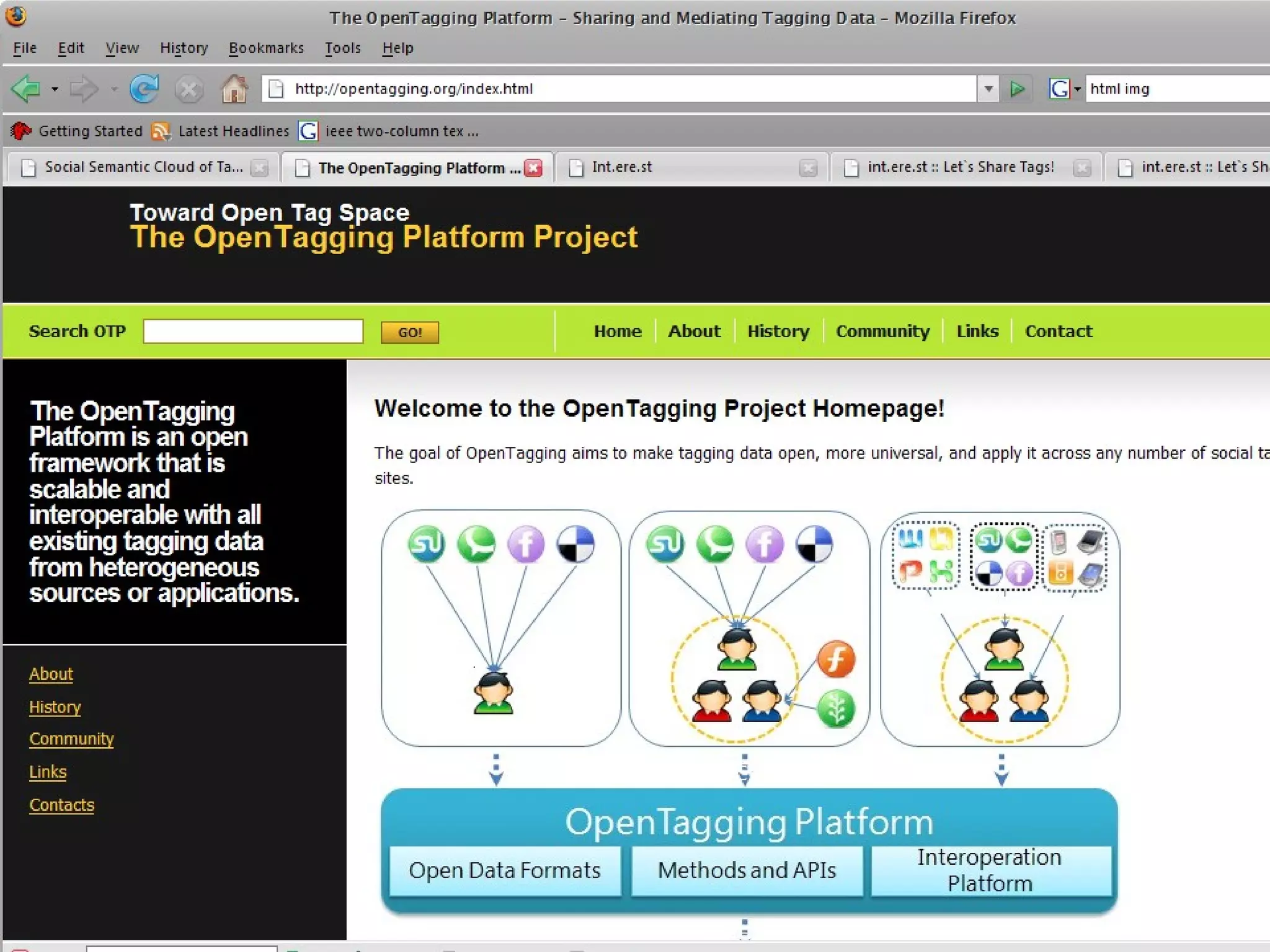
OpenTagging Platform an open framework that is scalable and interoperable with all existing tagging data from heterogeneous sources or applications http://opentagging.org Goals to make tagging data open, more universal, and apply it across any number of social tagging sites Through continuously user participations on the platform, users can make their customized folksonomies to organize their data by their needs and interests The interaction of diverse objects such as users, tags, and resources on the platform brings emergent semantics of tagging data and leverages social connections among participants
Open Data Format
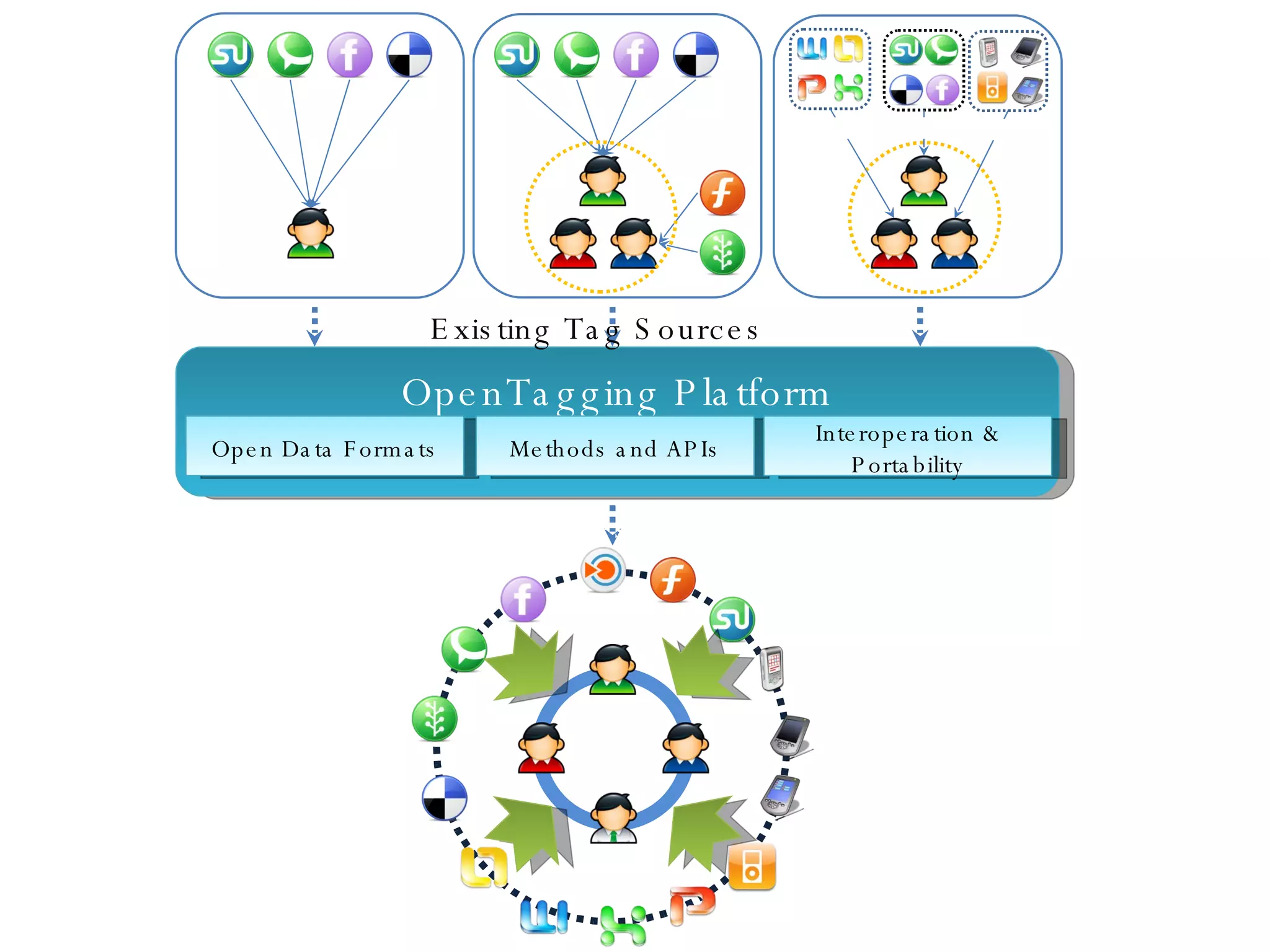
Goals OpenTagging Platform Open Data Formats Methods and APIs Interoperation & Portability social connections Existing Tag Sources OpenTagging Spaces Desktop Web Mobile
Three core components Open Data Format These aim for specifying tagging data in a formal way. The data formats for common conceptualization of tagging data can be represented by an ontology to make a minimal commitment. Methods and APIs aims to collect, share, or exchange tagging data, or create a bridge among heterogeneous social tagging sites, methods should implement by types of mashups Platform supports a social ecosystem that interlinks among diverse objects such as individual and individual, individual and communities, or individual and the tags themselves and leverages social connections based on tags.
Open Data Format
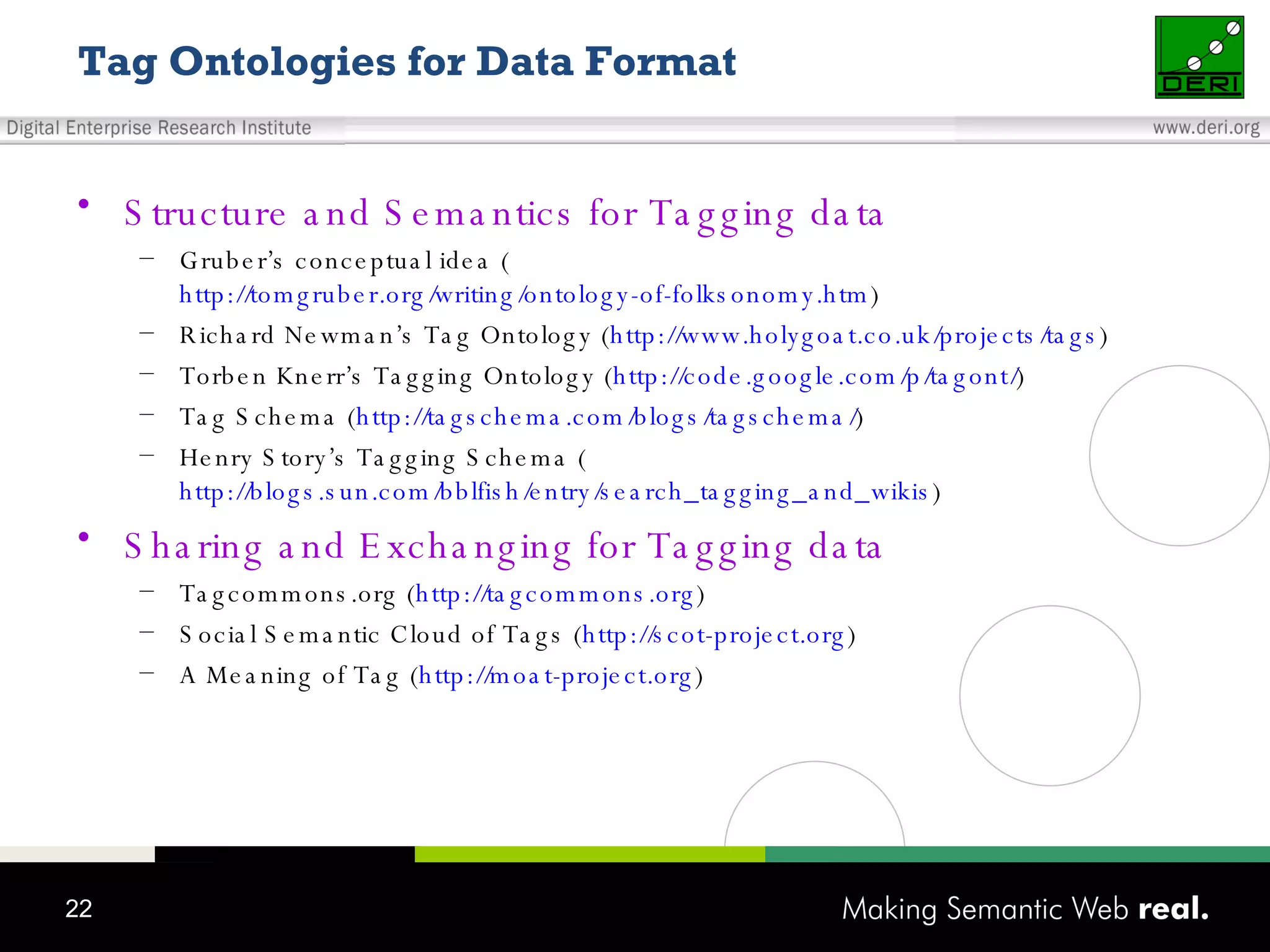
Tag Ontologies for Data Format Structure and Semantics for Tagging data Gruber’s conceptual idea ( http://tomgruber.org/writing/ontology-of-folksonomy.htm ) Richard Newman’s Tag Ontology ( http://www.holygoat.co.uk/projects/tags ) Torben Knerr’s Tagging Ontology ( http://code.google.com/p/tagont/ ) Tag Schema ( http://tagschema.com/blogs/tagschema/ ) Henry Story’s Tagging Schema ( http://blogs.sun.com/bblfish/entry/search_tagging_and_wikis ) Sharing and Exchanging for Tagging data Tagcommons.org ( http://tagcommons.org ) Social Semantic Cloud of Tags ( http://scot-project.org ) A Meaning of Tag ( http://moat-project.org )
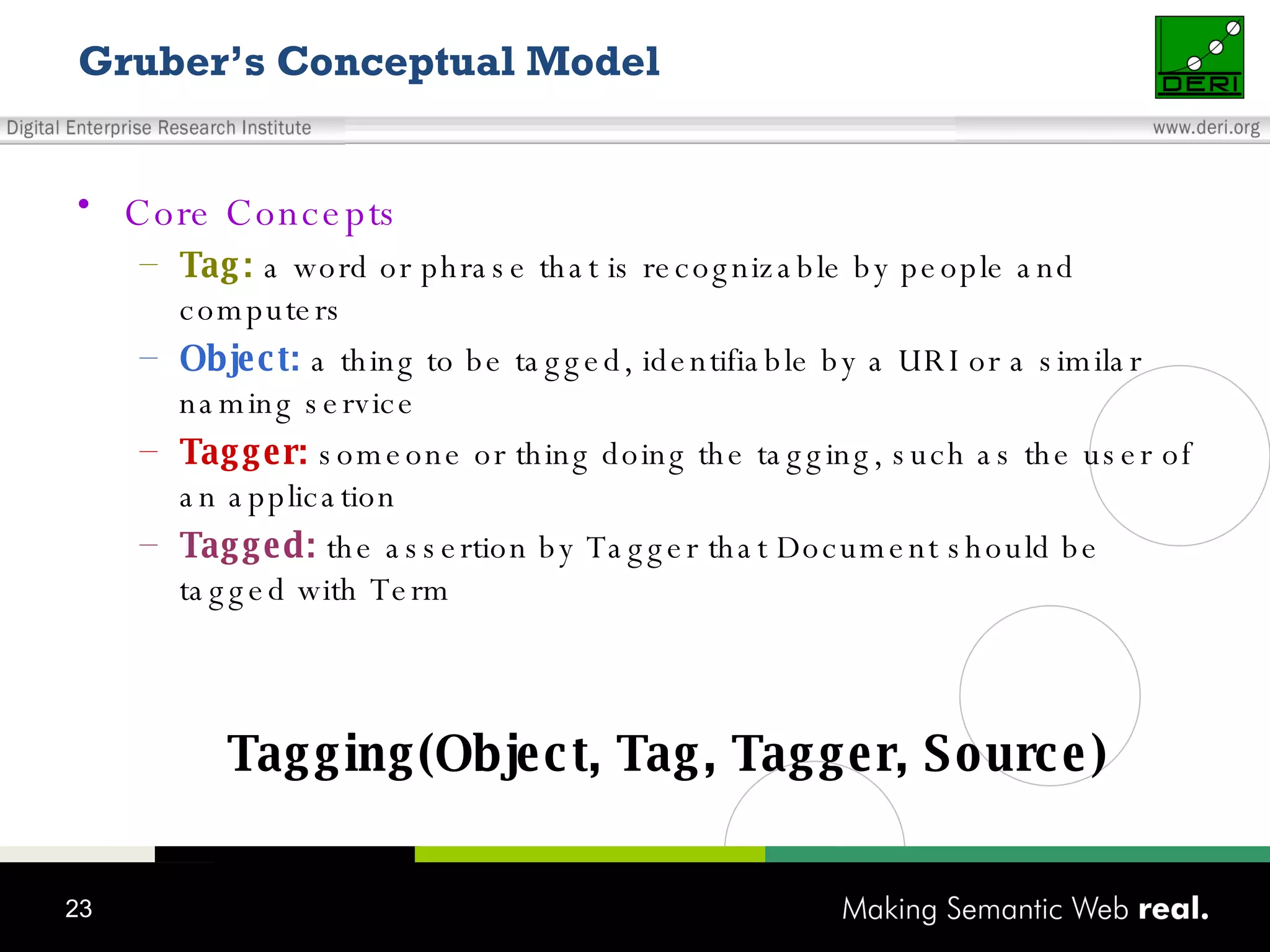
Gruber’s Conceptual Model Core Concepts Tag:  a word or phrase that is recognizable by people and computers Object:  a thing to be tagged, identifiable by a URI or a similar naming service Tagger:  someone or thing doing the tagging, such as the user of an application Tagged:  the assertion by Tagger that Document should be tagged with Term Tagging(Object, Tag, Tagger, Source)
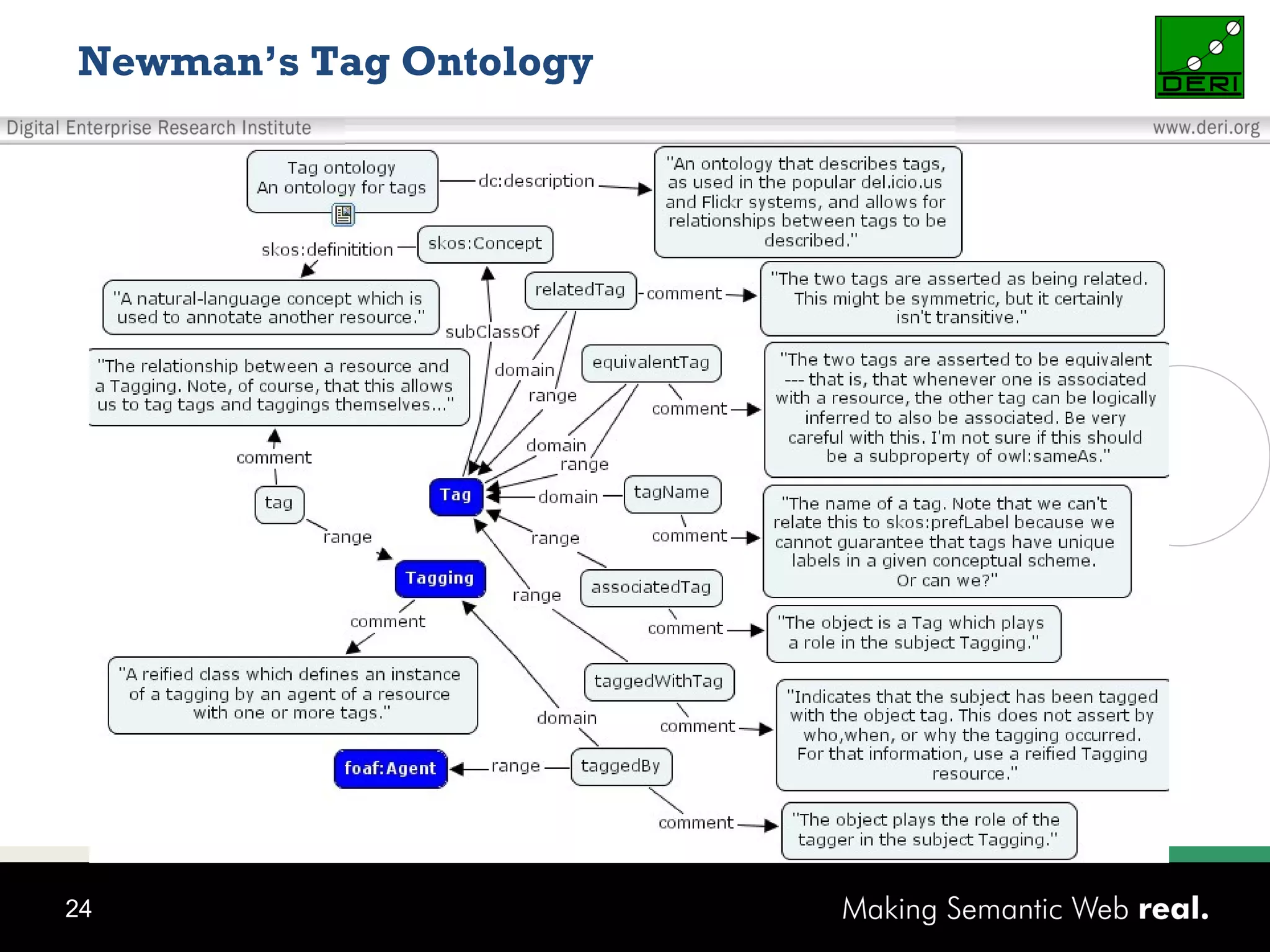
Newman’s Tag Ontology
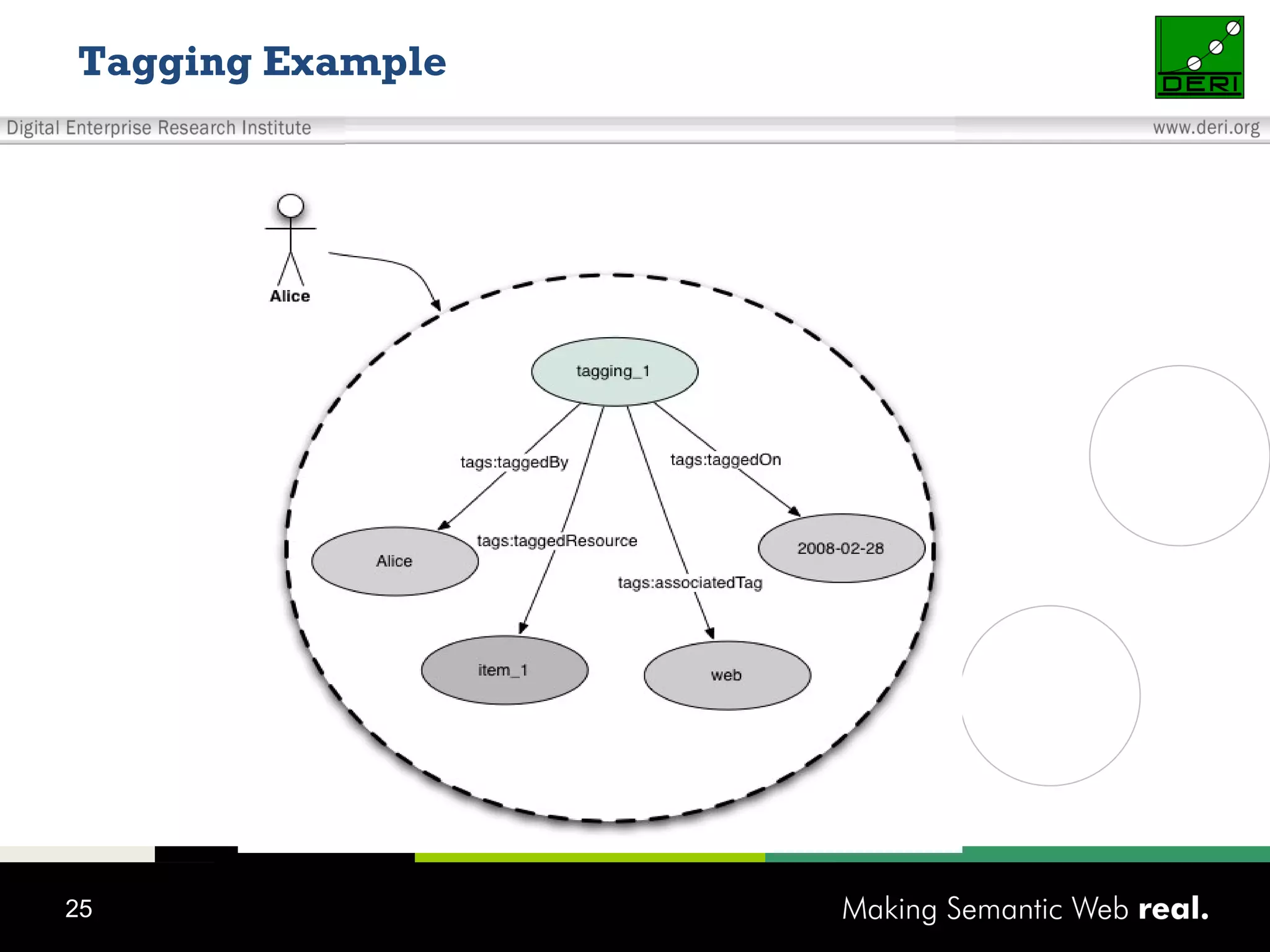
Tagging Example
Tagging Example
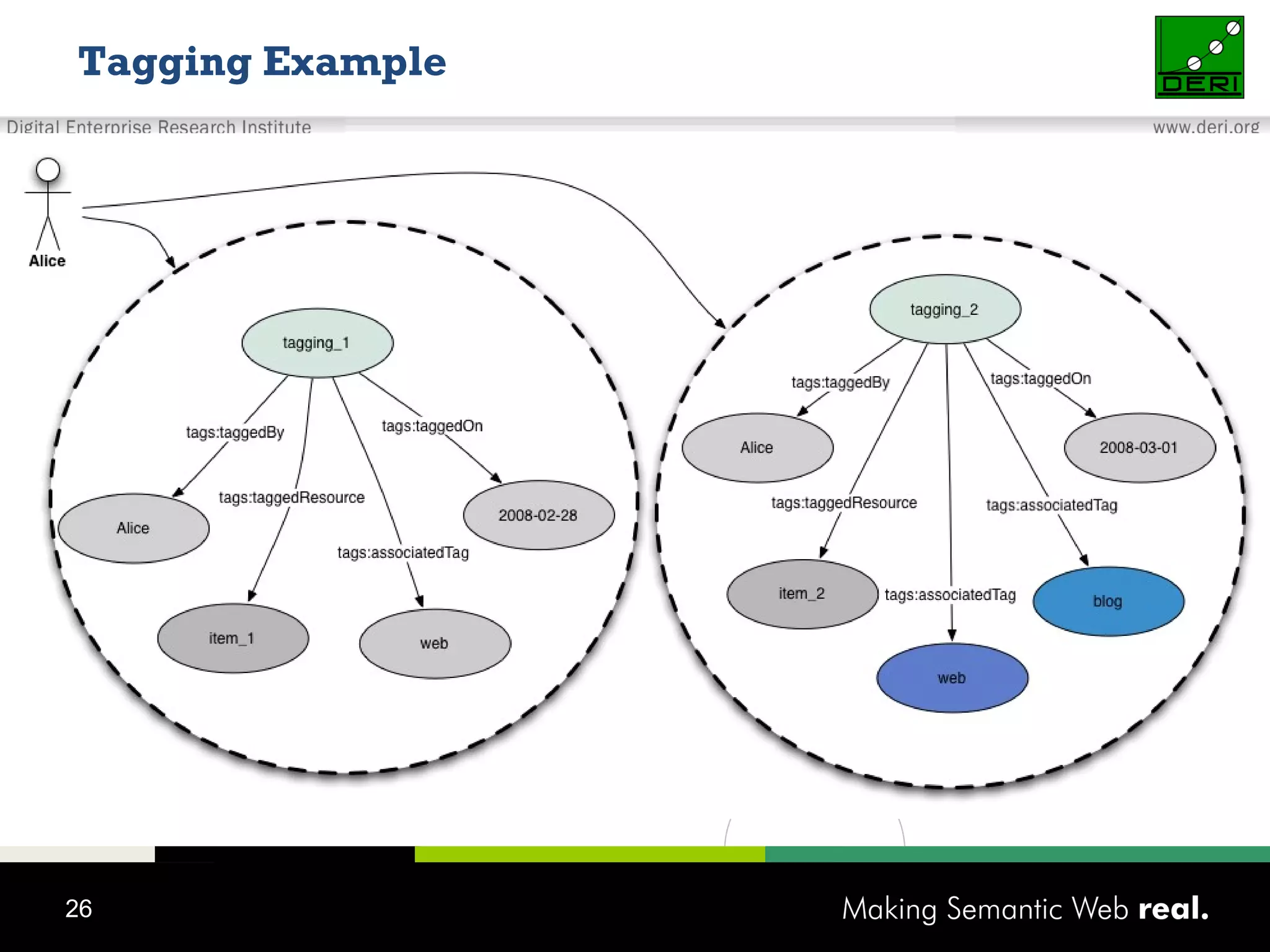
Tagging Example
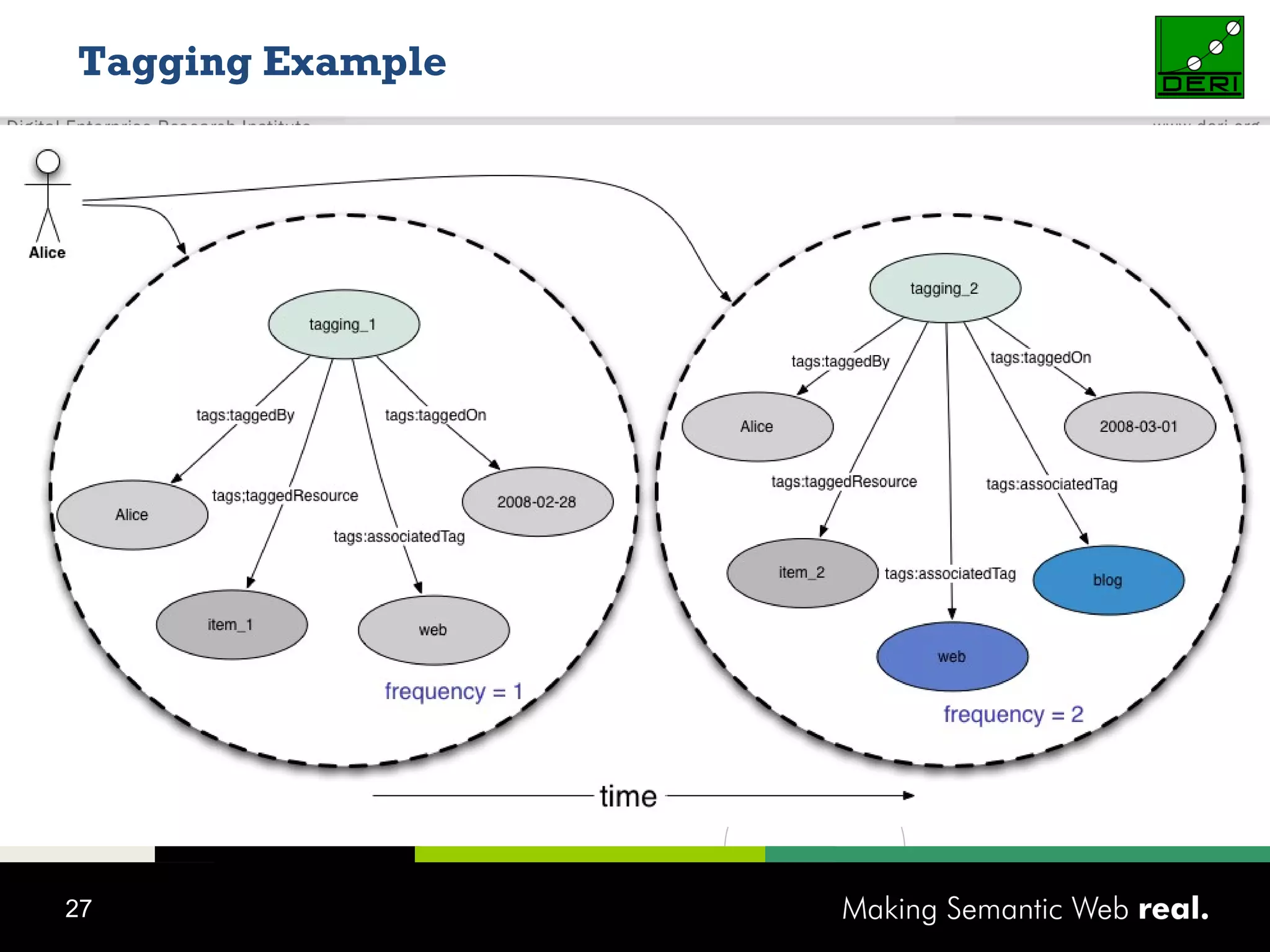
Tagging Example
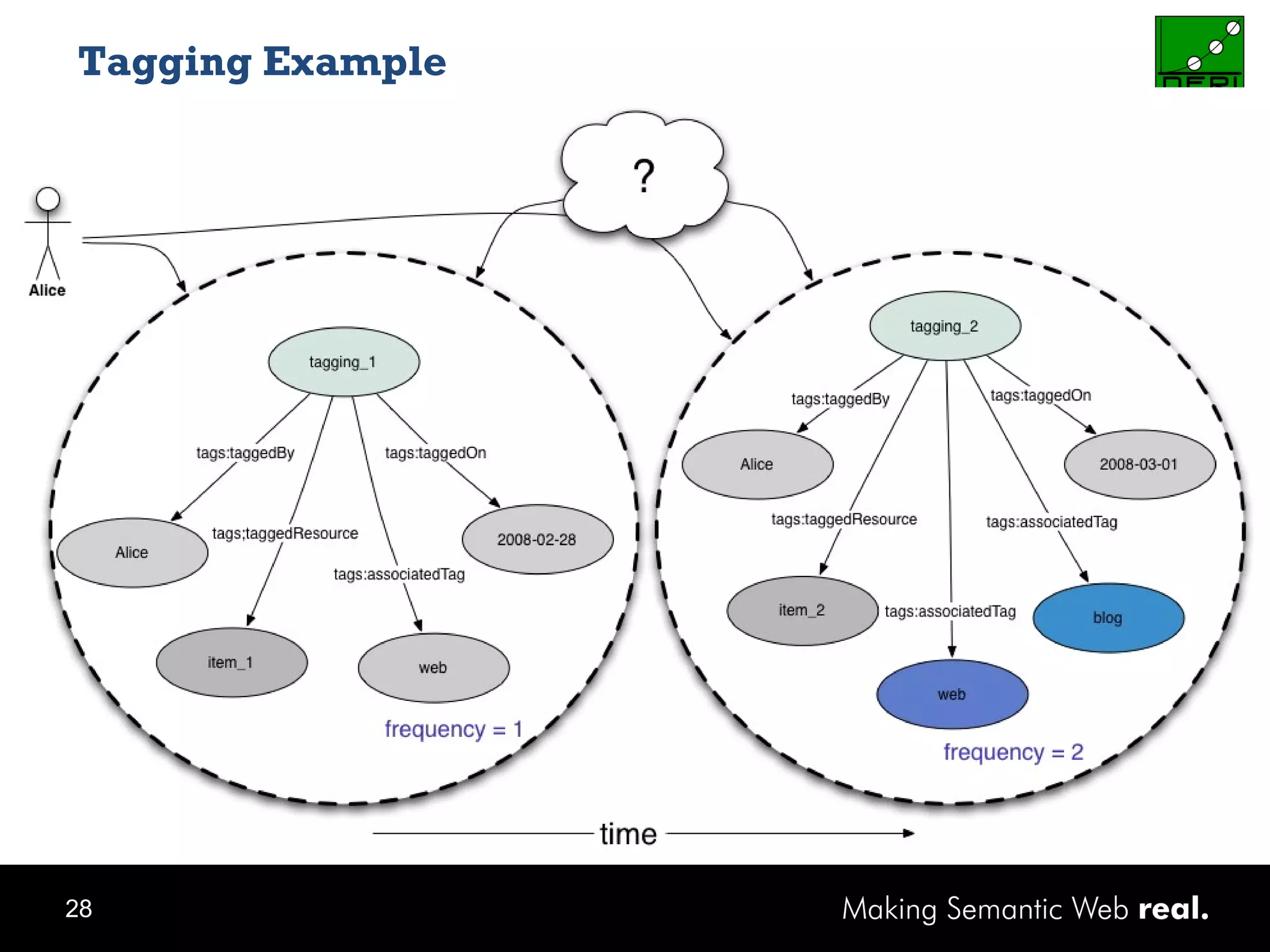
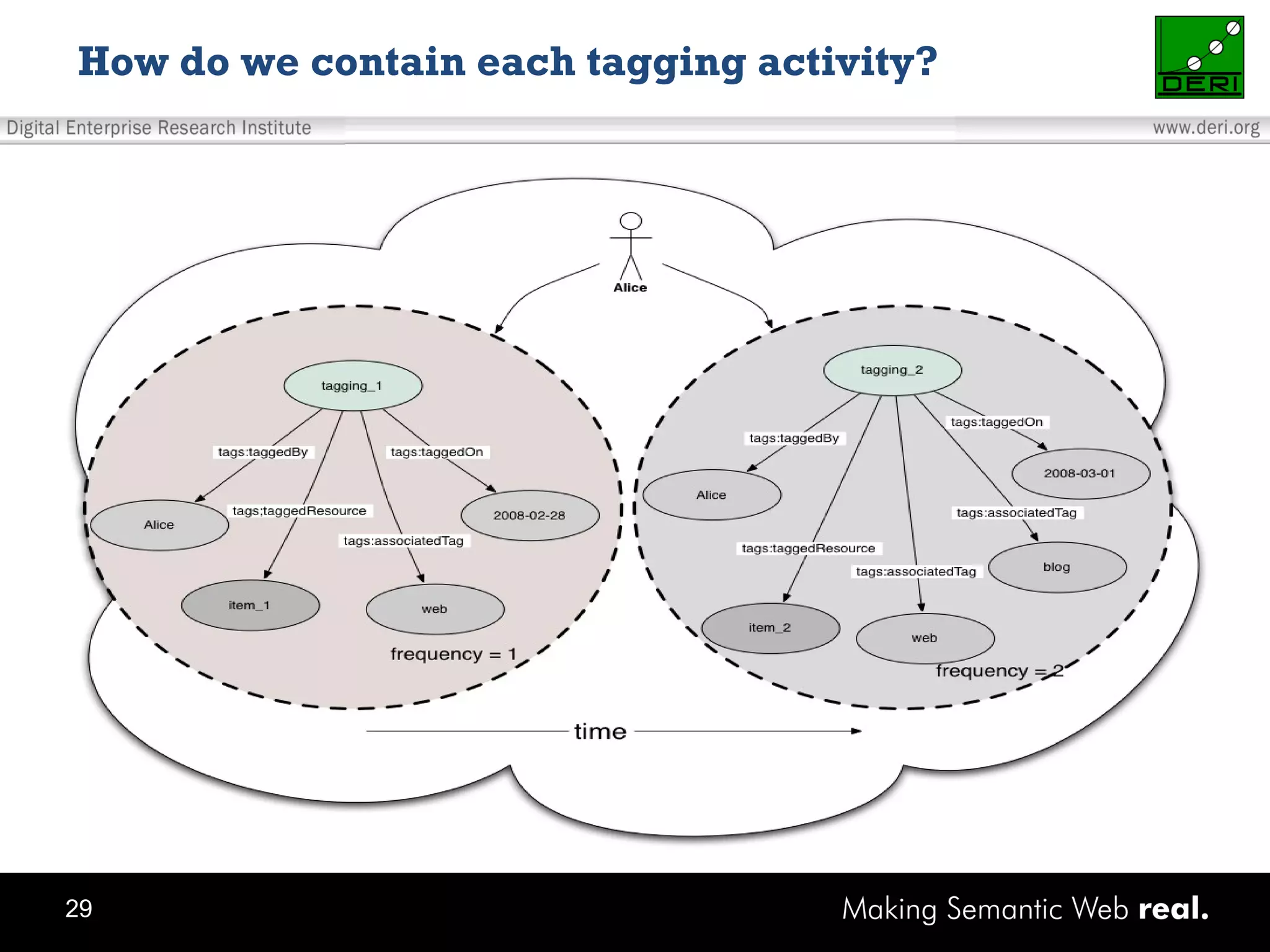
How do we contain each tagging activity?
Social Semantic Cloud of Tags
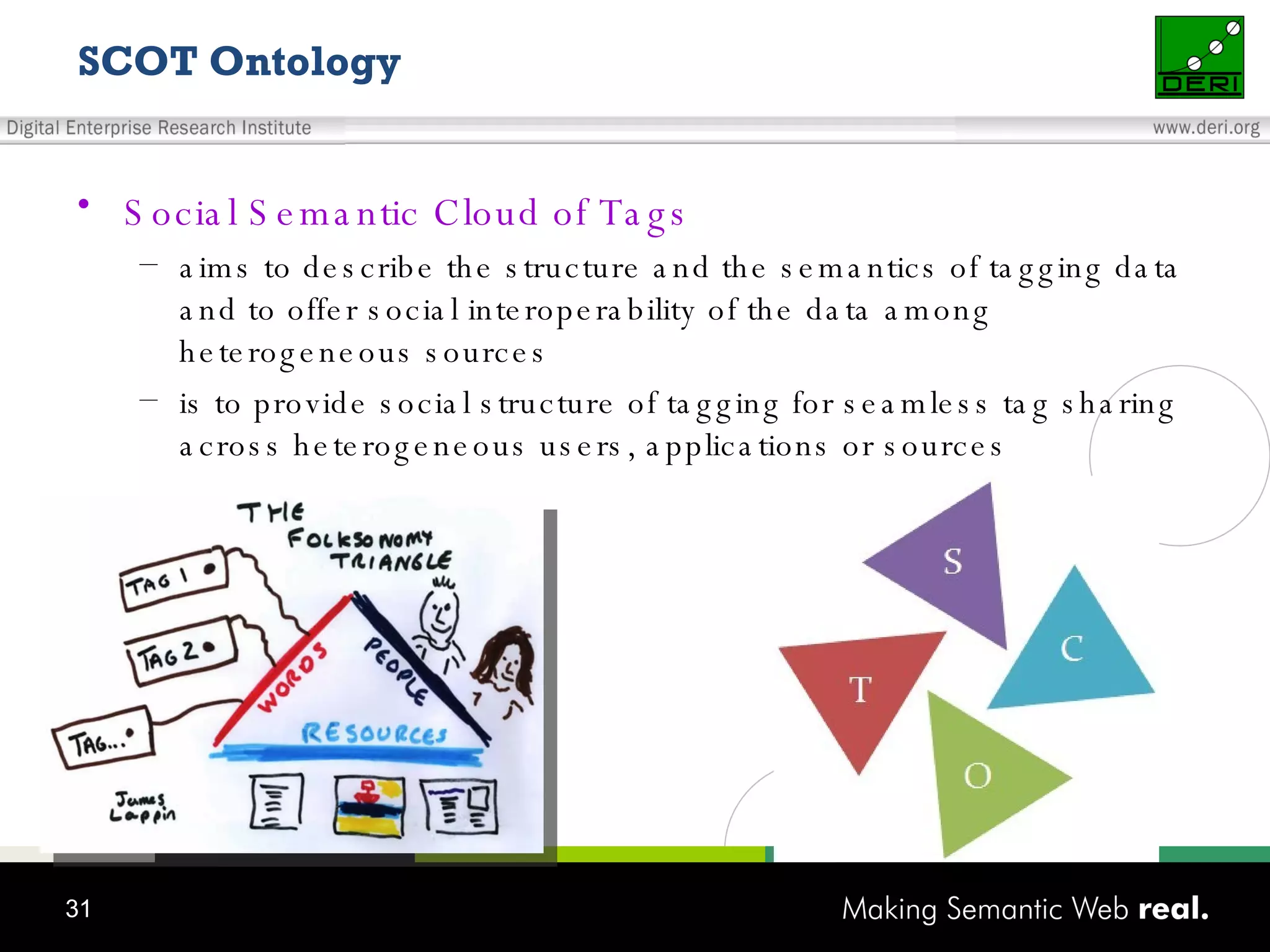
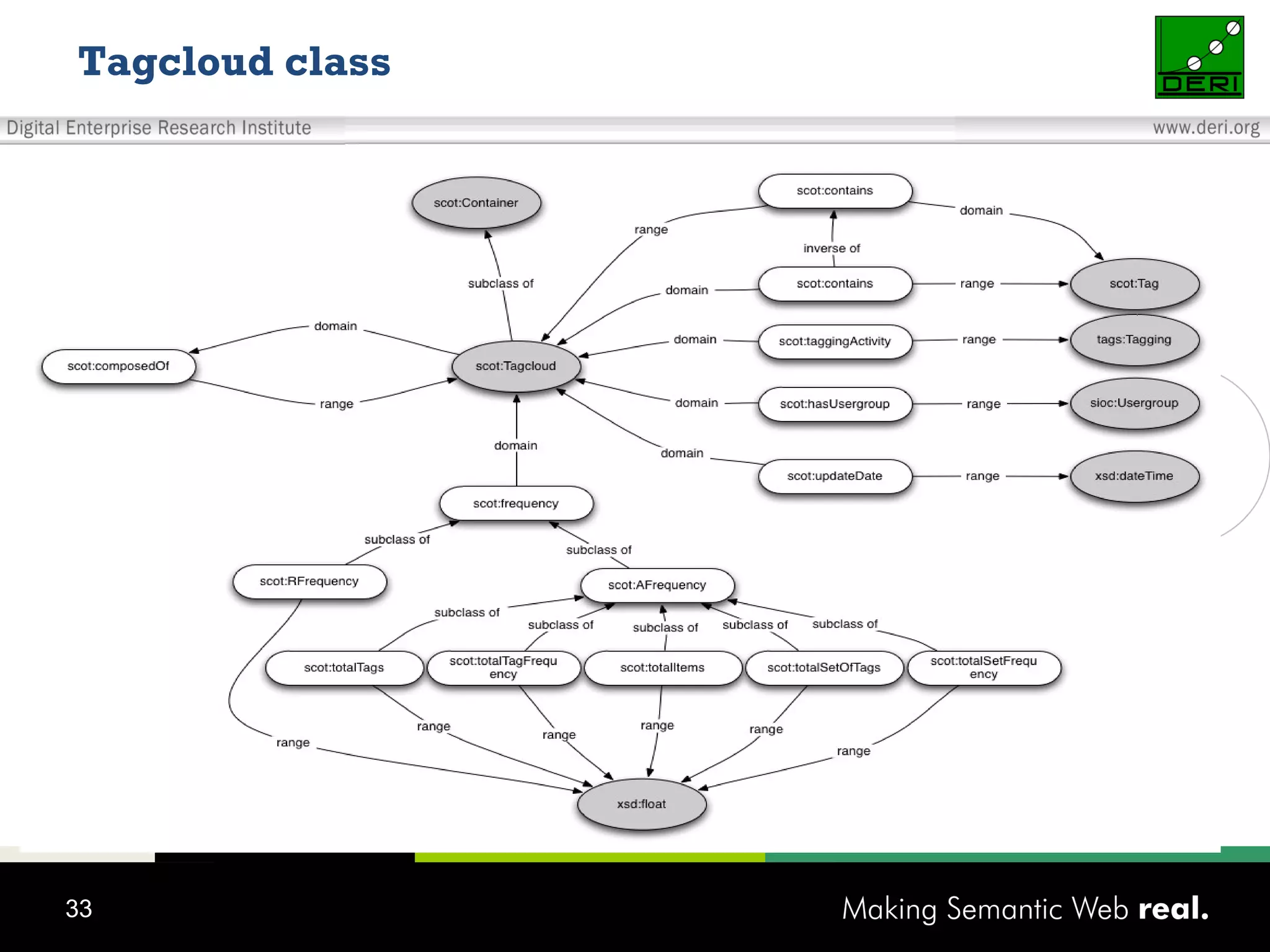
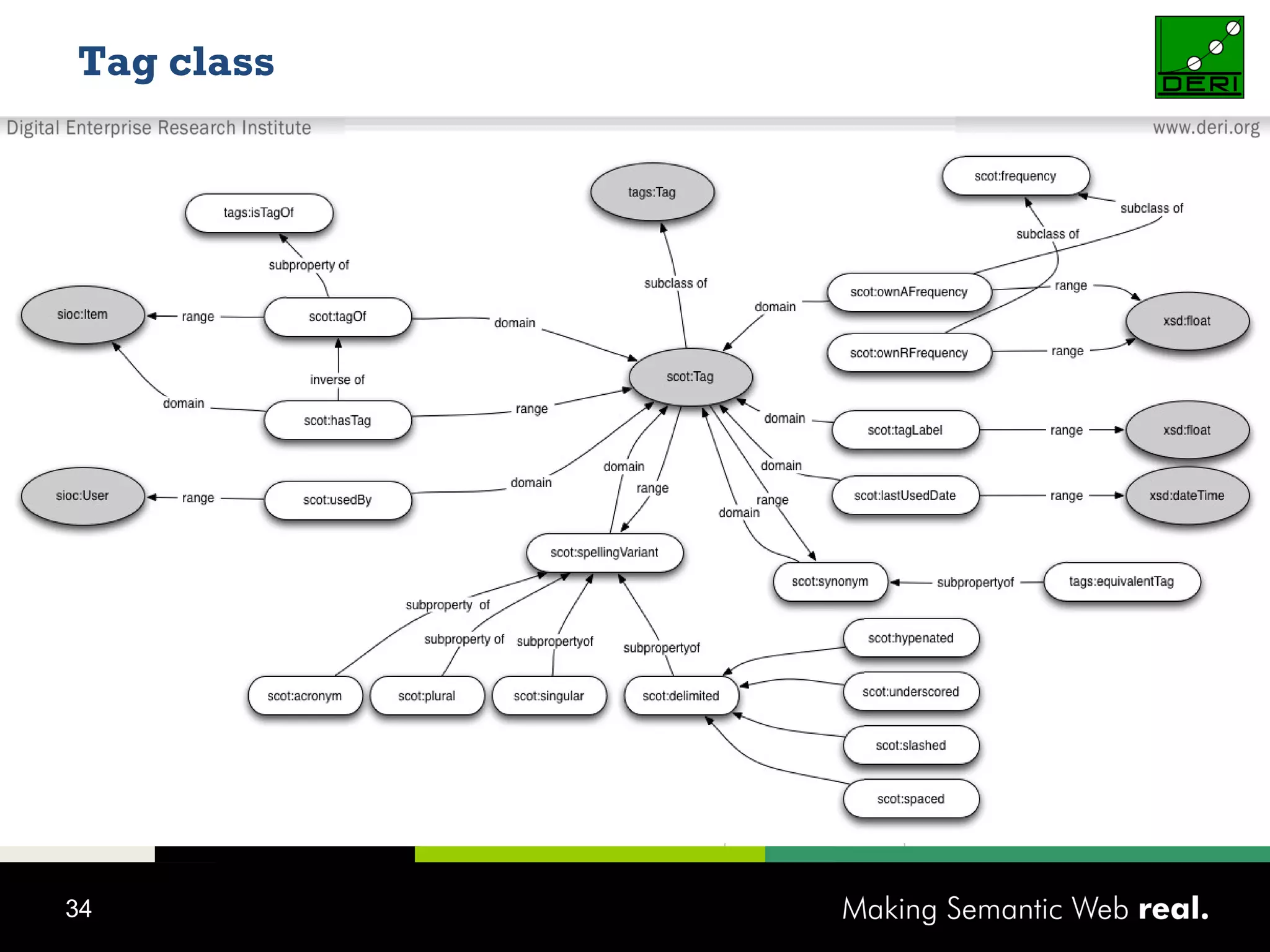
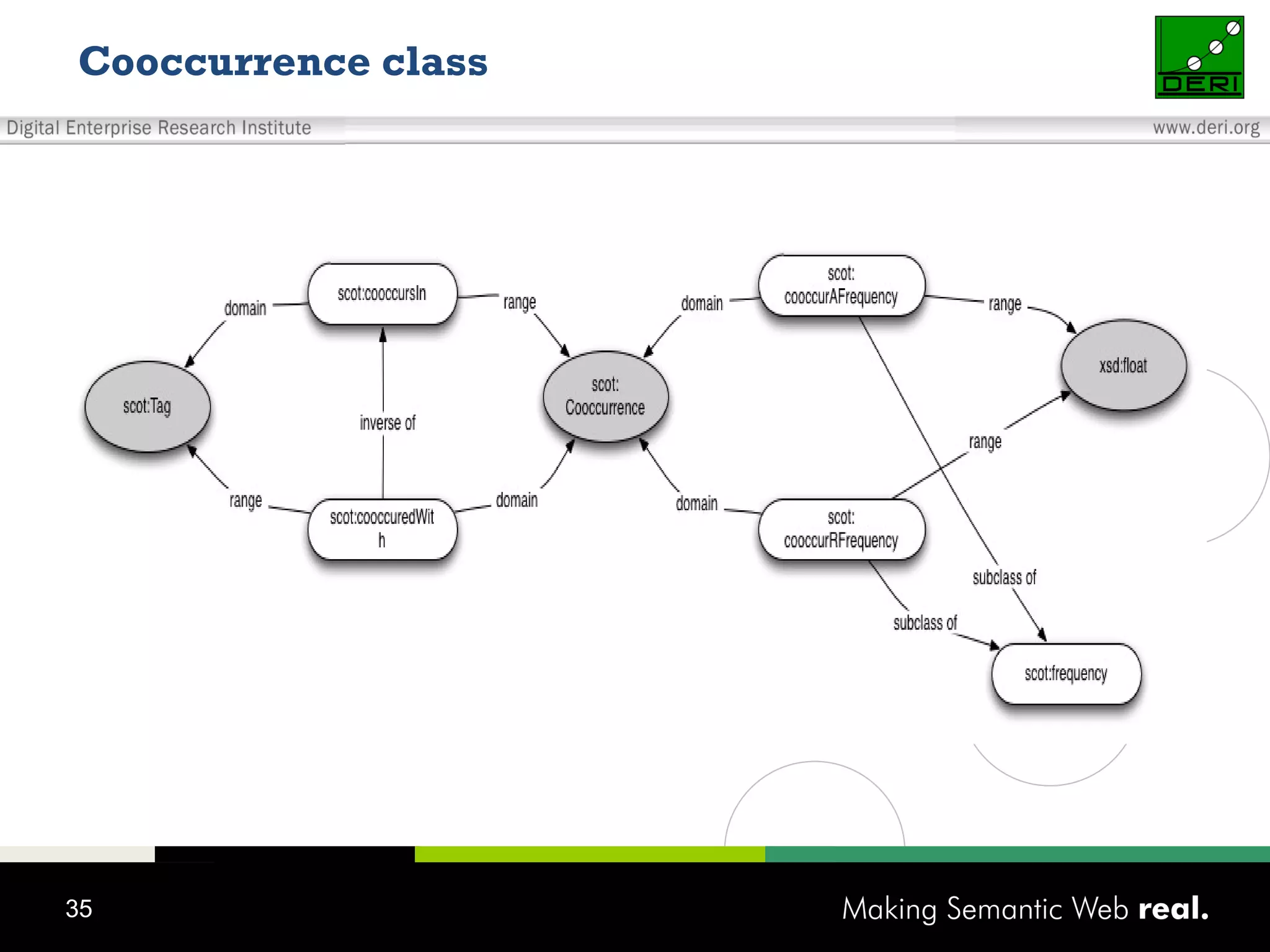
SCOT Ontology Social Semantic Cloud of Tags aims to describe the structure and the semantics of tagging data and to offer social interoperability of the data among heterogeneous sources is to provide social structure of tagging for seamless tag sharing across heterogeneous users, applications or sources
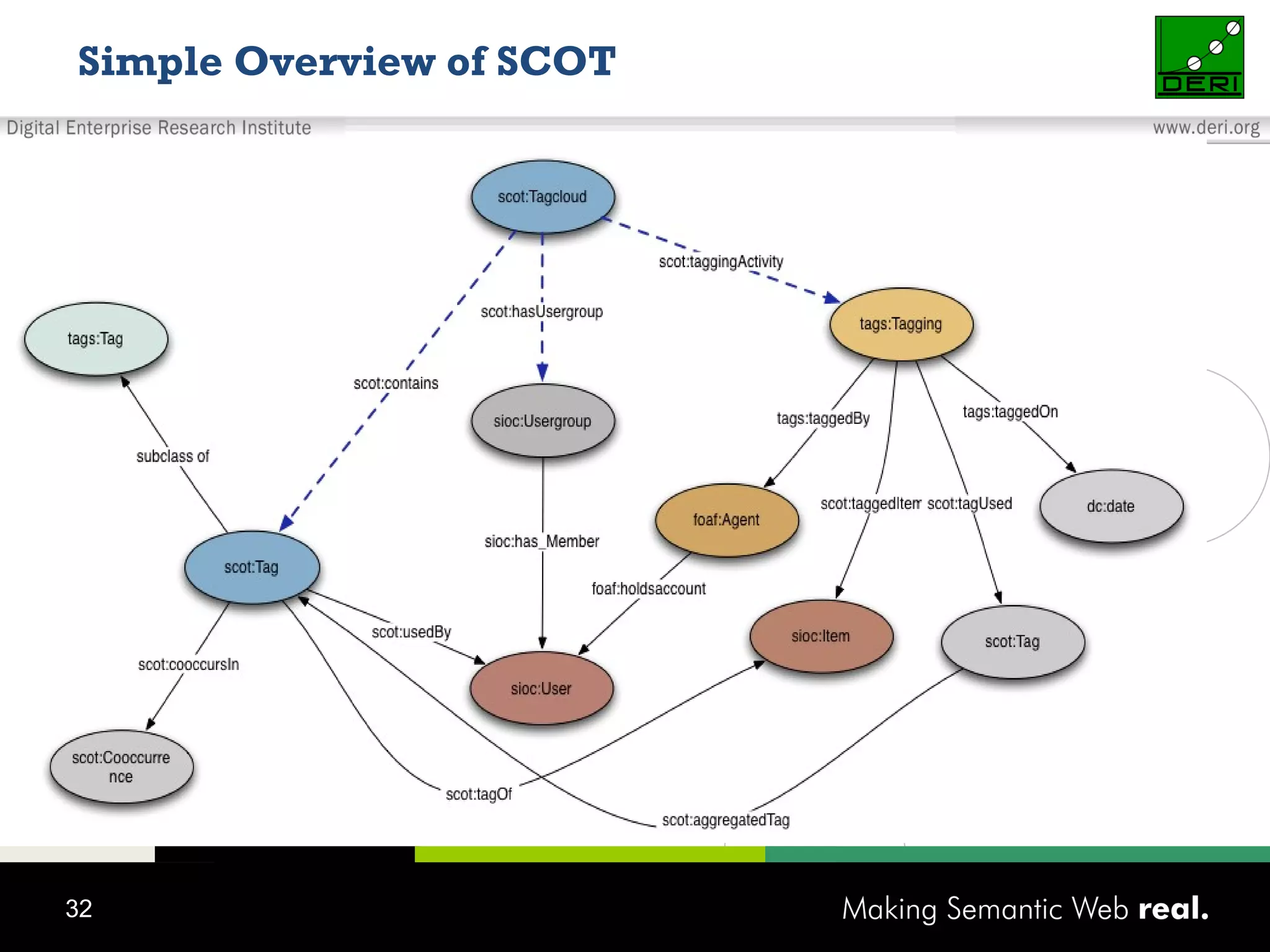
Simple Overview of SCOT
Tagcloud class
Tag class
Cooccurrence class
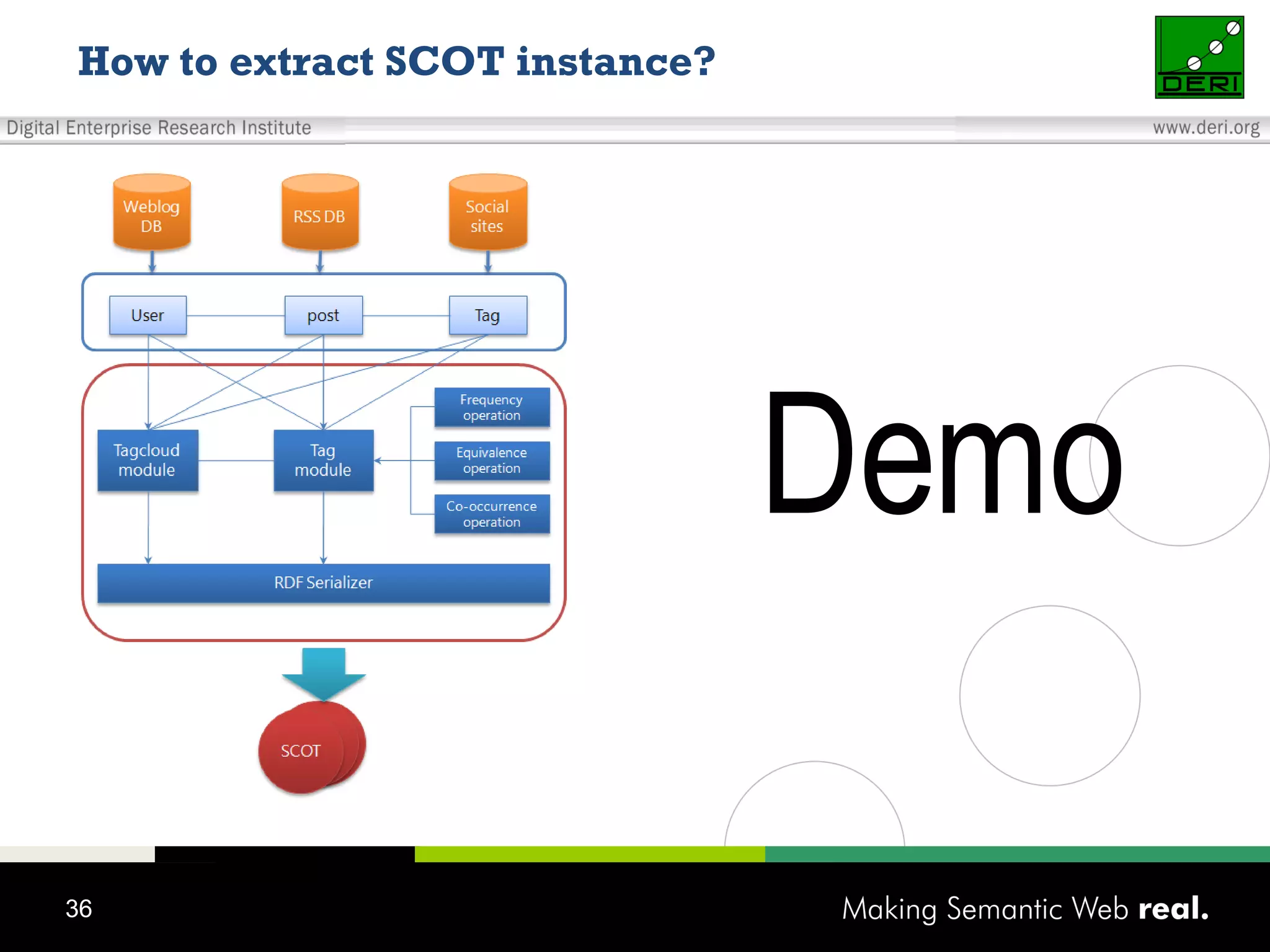
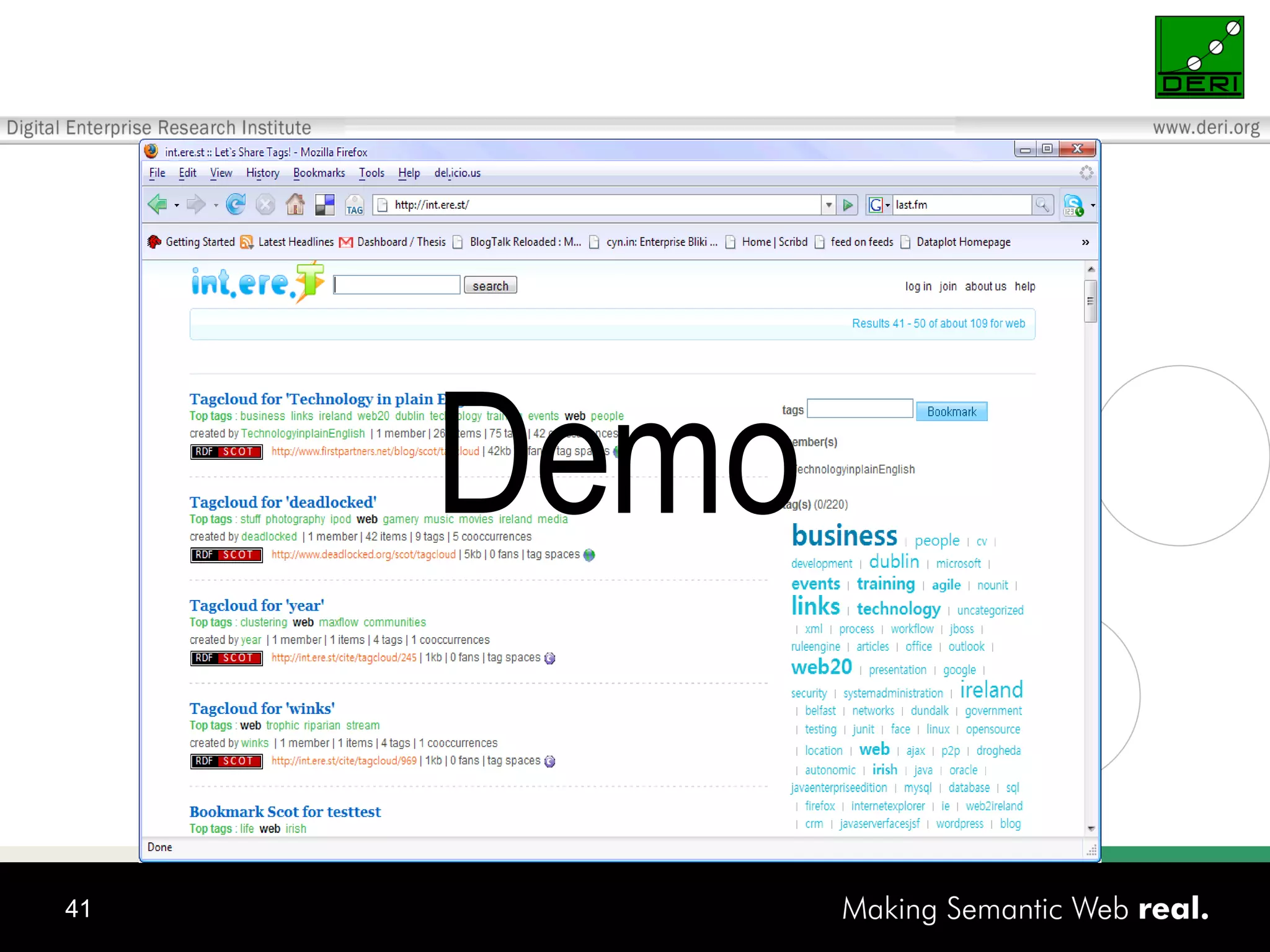
How to extract SCOT instance? Demo
int.ere.st Platform for OpenTagging
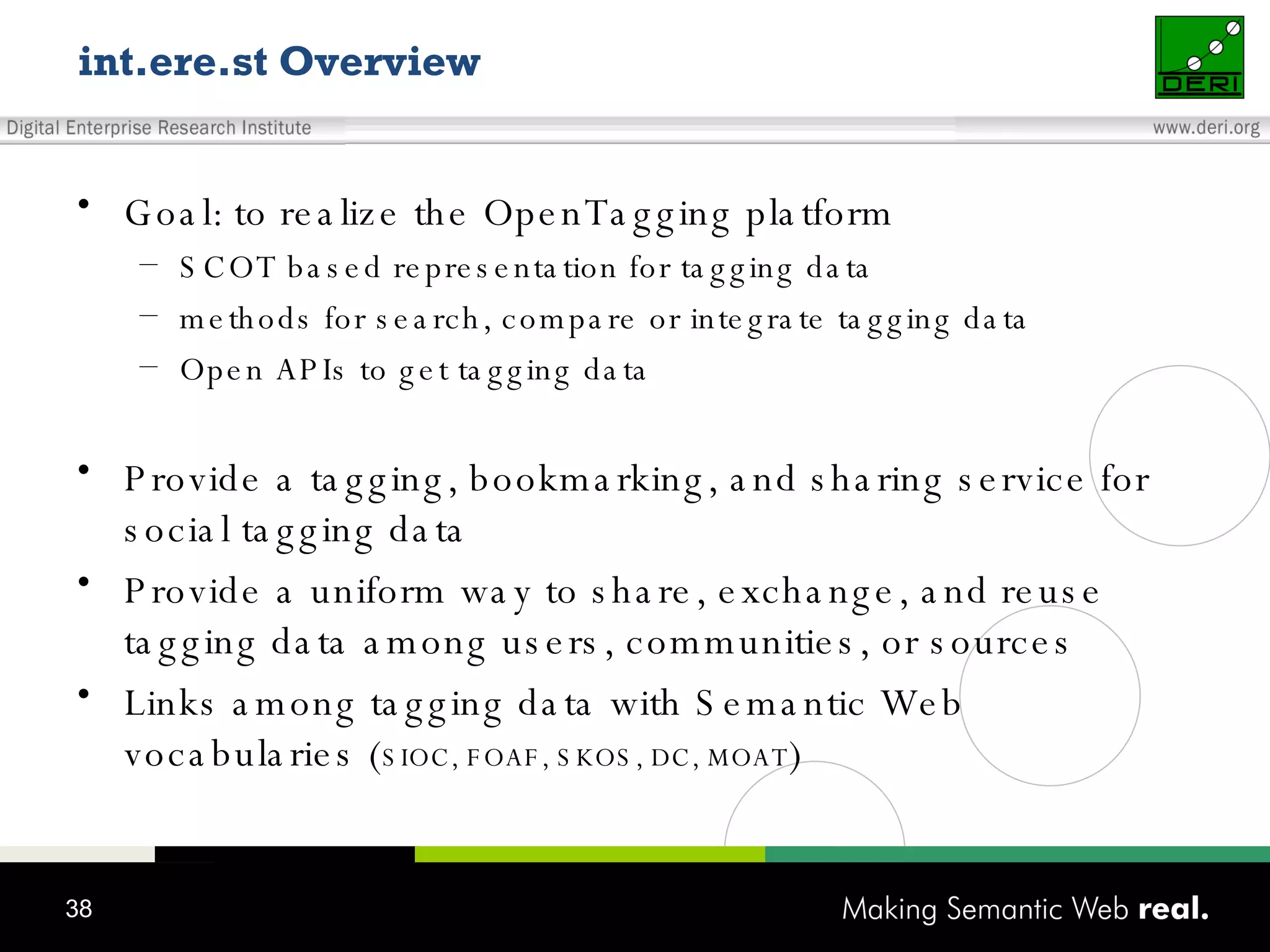
int.ere.st Overview Goal: to realize the OpenTagging platform SCOT based representation for tagging data methods for search, compare or integrate tagging data Open APIs to get tagging data Provide a tagging, bookmarking, and sharing service for social tagging data Provide a uniform way to share, exchange, and reuse tagging data among users, communities, or sources Links among tagging data with Semantic Web vocabularies ( SIOC, FOAF, SKOS, DC, MOAT )
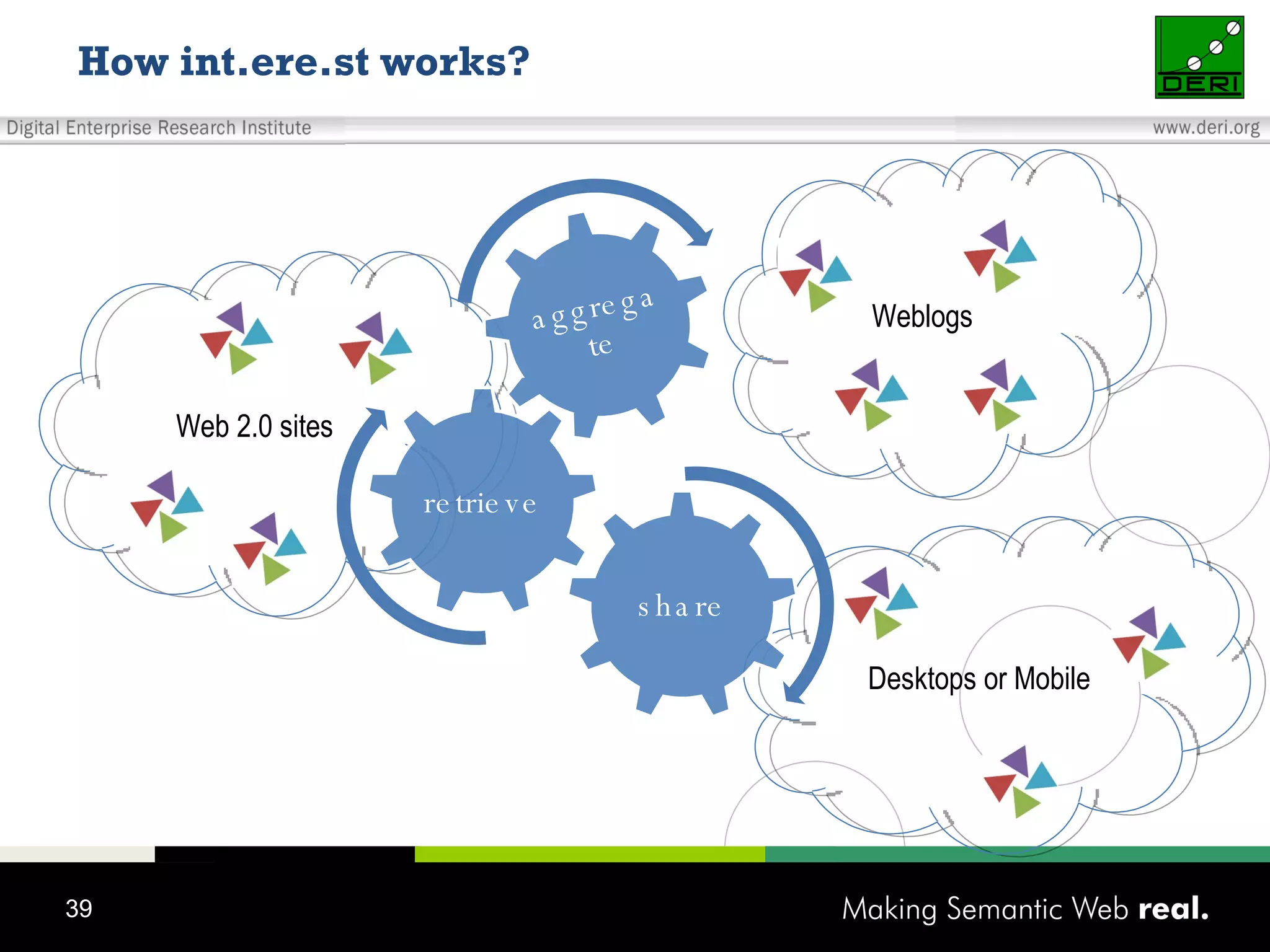
How int.ere.st works? Weblogs Web 2.0 sites Desktops or Mobile share retrieve aggregate
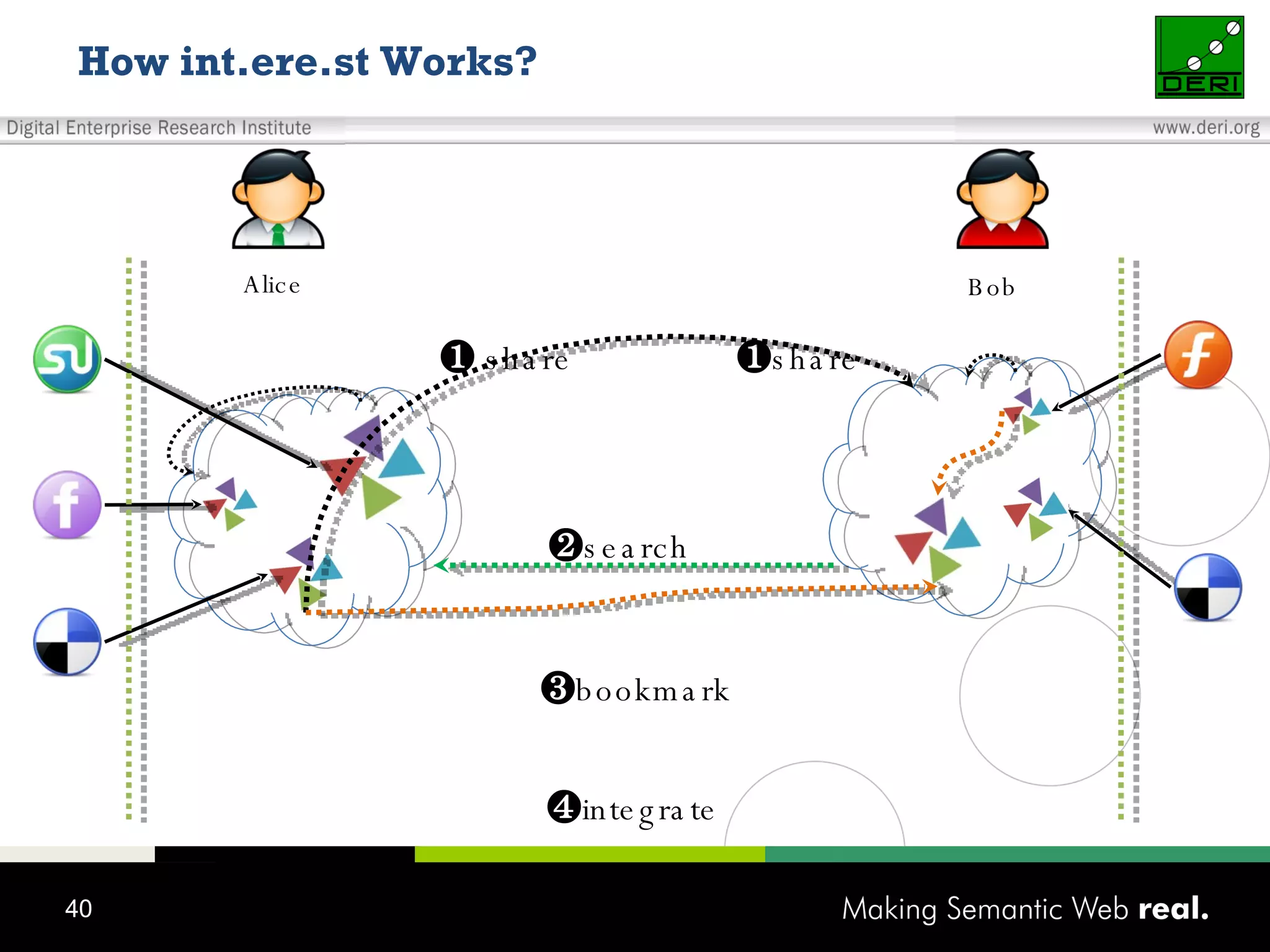
How int.ere.st Works? ❷ search ❸ bookmark ❶   share ❶ share ❹ integrate Alice Bob
Demo
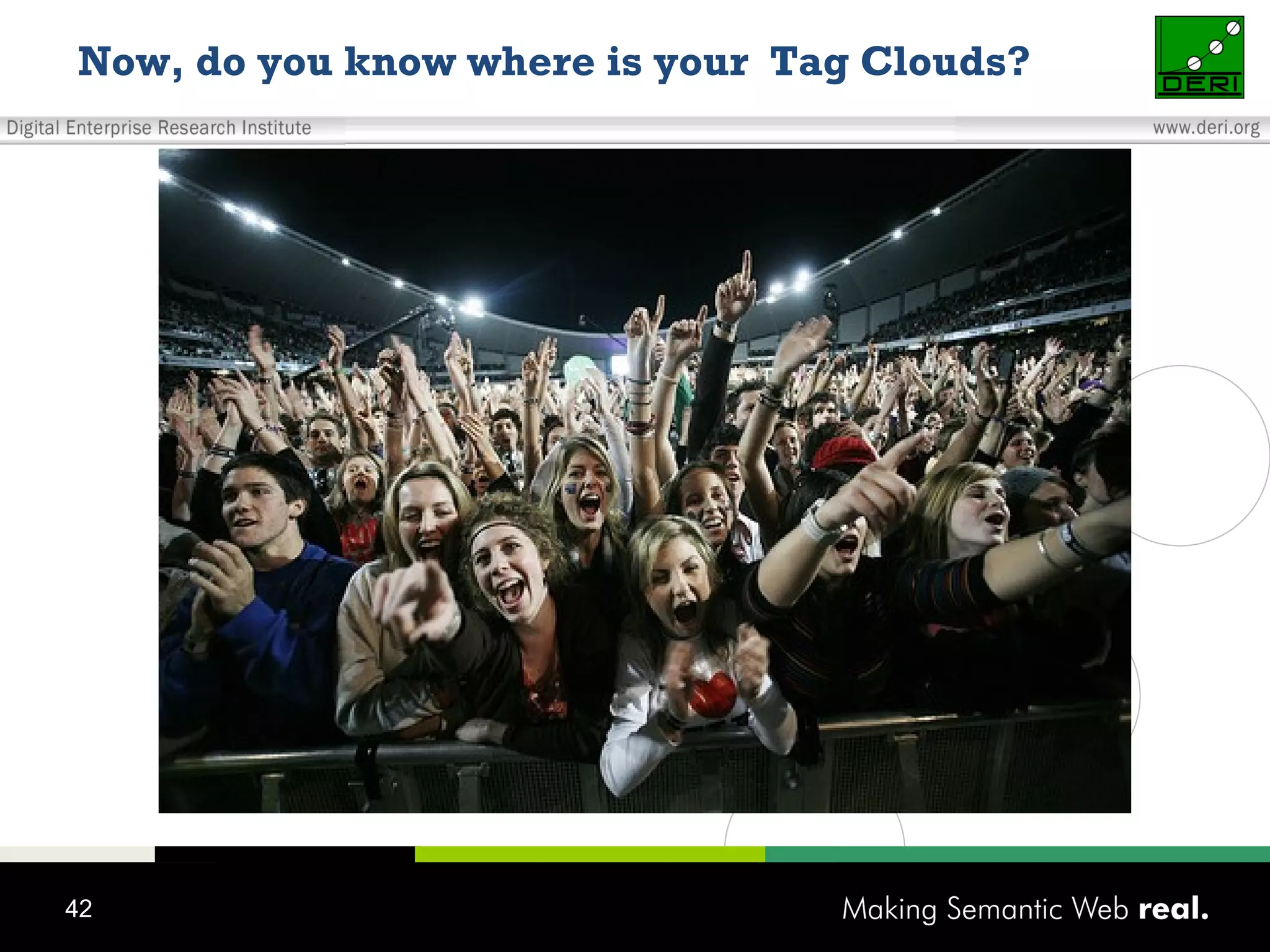
Now, do you know where is your  Tag Clouds?
Where is Your Tag Clouds? http://int.ere.st
Additional Information SCOT Project http://scot-project.org OpenTagging Platform http://opentagging.org

int.ere.st: SCOT-based Tag Sharing Services

  • 1.
    int.ere.st: SCOT-based TagSharing Services Hak Lae Kim and John Breslin Blogtalk 2008 Cork, Ireland Social Software Group {haklae.kim, john.breslin}@deri.org
  • 2.
    I will talkabout Why Do We Need to Share Tags? Tag Tagging Tagcloud Folksonomies structure semantics data format SCOT mashups OpenTagging semantic web sharing social networks int.ere.st
  • 3.
  • 4.
    Tag : free-textkeyword created by a human being Tagging : indexing process assigning tags to resources Folksonomies : collections of tags that are created in social tagging Tagcloud : visualization tool for folksonomies Tag, Tagging, Folksonomies
  • 5.
    User engagement &easy-to-use Increased refindability More metadata! Advantages of Tagging
  • 6.
    Disadvantages of TaggingAmbiguity Findability Accuracy Portability structure and semantics for tagging data might be a solution
  • 7.
    Why Do Weuse Tags?
  • 8.
    Why Do Weuse Tags?
  • 9.
    Why Do Weuse Tags?
  • 10.
    What Do WeExpect from Tagging? Why Do We Need to Share Tags?
  • 11.
    What Do WeExpect from Tagging? Why Do We Need to Share Tags? Social !
  • 12.
    Current Tagging EnvironmentsIndividual Perspective Community Perspective Applications Perspective Structure and semantic are enough
  • 13.
    Current Tagging EnvironmentsIndividual Perspective Community Perspective Applications Perspective Personalization/Localization-Tag namespaces for Limited communities
  • 14.
    Current Tagging EnvironmentsIndividual Perspective Community Perspective Applications Perspective Portability and interoperability among heterogeneous platform
  • 15.
  • 16.
  • 17.
    OpenTagging Platform anopen framework that is scalable and interoperable with all existing tagging data from heterogeneous sources or applications http://opentagging.org Goals to make tagging data open, more universal, and apply it across any number of social tagging sites Through continuously user participations on the platform, users can make their customized folksonomies to organize their data by their needs and interests The interaction of diverse objects such as users, tags, and resources on the platform brings emergent semantics of tagging data and leverages social connections among participants
  • 18.
  • 19.
    Goals OpenTagging PlatformOpen Data Formats Methods and APIs Interoperation & Portability social connections Existing Tag Sources OpenTagging Spaces Desktop Web Mobile
  • 20.
    Three core componentsOpen Data Format These aim for specifying tagging data in a formal way. The data formats for common conceptualization of tagging data can be represented by an ontology to make a minimal commitment. Methods and APIs aims to collect, share, or exchange tagging data, or create a bridge among heterogeneous social tagging sites, methods should implement by types of mashups Platform supports a social ecosystem that interlinks among diverse objects such as individual and individual, individual and communities, or individual and the tags themselves and leverages social connections based on tags.
  • 21.
  • 22.
    Tag Ontologies forData Format Structure and Semantics for Tagging data Gruber’s conceptual idea ( http://tomgruber.org/writing/ontology-of-folksonomy.htm ) Richard Newman’s Tag Ontology ( http://www.holygoat.co.uk/projects/tags ) Torben Knerr’s Tagging Ontology ( http://code.google.com/p/tagont/ ) Tag Schema ( http://tagschema.com/blogs/tagschema/ ) Henry Story’s Tagging Schema ( http://blogs.sun.com/bblfish/entry/search_tagging_and_wikis ) Sharing and Exchanging for Tagging data Tagcommons.org ( http://tagcommons.org ) Social Semantic Cloud of Tags ( http://scot-project.org ) A Meaning of Tag ( http://moat-project.org )
  • 23.
    Gruber’s Conceptual ModelCore Concepts Tag: a word or phrase that is recognizable by people and computers Object: a thing to be tagged, identifiable by a URI or a similar naming service Tagger: someone or thing doing the tagging, such as the user of an application Tagged: the assertion by Tagger that Document should be tagged with Term Tagging(Object, Tag, Tagger, Source)
  • 24.
  • 25.
  • 26.
  • 27.
  • 28.
  • 29.
    How do wecontain each tagging activity?
  • 30.
  • 31.
    SCOT Ontology SocialSemantic Cloud of Tags aims to describe the structure and the semantics of tagging data and to offer social interoperability of the data among heterogeneous sources is to provide social structure of tagging for seamless tag sharing across heterogeneous users, applications or sources
  • 32.
  • 33.
  • 34.
  • 35.
  • 36.
    How to extractSCOT instance? Demo
  • 37.
  • 38.
    int.ere.st Overview Goal:to realize the OpenTagging platform SCOT based representation for tagging data methods for search, compare or integrate tagging data Open APIs to get tagging data Provide a tagging, bookmarking, and sharing service for social tagging data Provide a uniform way to share, exchange, and reuse tagging data among users, communities, or sources Links among tagging data with Semantic Web vocabularies ( SIOC, FOAF, SKOS, DC, MOAT )
  • 39.
    How int.ere.st works?Weblogs Web 2.0 sites Desktops or Mobile share retrieve aggregate
  • 40.
    How int.ere.st Works?❷ search ❸ bookmark ❶ share ❶ share ❹ integrate Alice Bob
  • 41.
  • 42.
    Now, do youknow where is your Tag Clouds?
  • 43.
    Where is YourTag Clouds? http://int.ere.st
  • 44.
    Additional Information SCOTProject http://scot-project.org OpenTagging Platform http://opentagging.org