CENG04:  Microprocessor Systems Midterm Lecture 2 & 3
Introduction Intel µP Instruction Encoding and Decoding Machine Language It is the native binary code that the microprocessor understand. Assembler It is use to translate assembly instruction to a machine code. Opcode (Operation Code) Selects the operation performed by the microprocessor such as MOV, ADD, INC, JMP, & etc. It is either one or two byte in length for most machine language instruction. Encoding It is a processes representing entire assembly instruction as a binary value or hexadecimal format (human perspective) Decoding  It is the process of converting hexadecimal format   to assembly language (machine perspective)
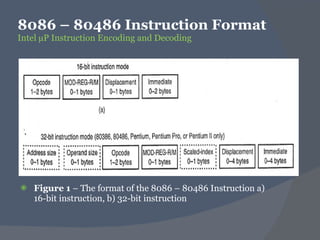
Figure 1  – The format of the 8086 – 80486 Instruction a) 16-bit instruction, b) 32-bit instruction  8086 – 80486 Instruction Format Intel µP Instruction Encoding and Decoding
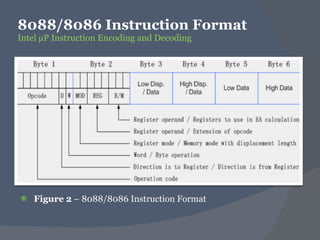
Figure 2  – 8088/8086 Instruction Format 8088/8086 Instruction Format Intel µP Instruction Encoding and Decoding
Instructions  consist of:  operation (opcode) e.g. MOV  operands (number depends on operation) Operands  specified using addressing modes  Addressing mode  may include addressing information  Registers Constant values Variable  Instruction Encoding Intel µP Instruction Encoding and Decoding
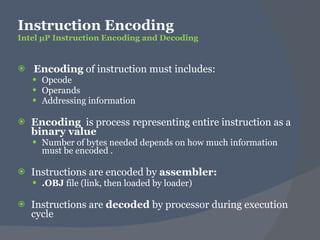
Encoding  of instruction must includes: Opcode Operands Addressing information  Encoding  is process   representing entire instruction as a  binary value  Number of bytes needed depends on how much information must be encoded . Instructions are encoded by  assembler:  .OBJ  file (link, then loaded by loader) Instructions are  decoded  by processor during execution cycle  Instruction Encoding Intel µP Instruction Encoding and Decoding
Override Prefixes It is the first 2 bytes of a 32-bit instruction format These bytes are not always used Divided in Two Parts: Address Size  – modifies the size of the address used the instruction and this byte is equal to  67h  if in used. If the 80386/80486 is operating as 16-bit instruction mode machine (real or protected mode) and 32-bit instruction, byte is equal to  67h If the 80386/80486 is operating as 32-bit instruction mode machine (real or protected mode) and 32-bit instruction, byte is removed. Instruction Encoding Intel µP Instruction Encoding and Decoding
Operand Size  -  modifies the size of the register. If the 80386/80486 is operating as 16-bit instruction mode machine (real or protected mode) and 32-bit instruction, byte is equal to  66h If the 80386/80486 is operating as 32-bit instruction mode machine (real or protected mode) and 32-bit instruction, byte is removed. These toggle the size of the register and operand address from 16-bit to 32-bit or vice versa. Instruction Encoding Intel µP Instruction Encoding and Decoding
First byte:  Opcode, Direction, & Word bits Opcode  – select the operation performed by the microprocessor (use the lists of opcodes) Direction (D)  – indicates the flow of data D = 1, data flow from (R/M) field to REG field D = 0, if data flow from REG field to R/M field.  Word (W)  – determine the size of data or register W = 1, 16- or 32-bit data width (word or dword) W = 0, 8-bit data width (byte) Note:  W bit appear in most of the instruction but D bit mainly appears with  MOV and some other instructions. Instruction Encoding Intel µP Instruction Encoding and Decoding
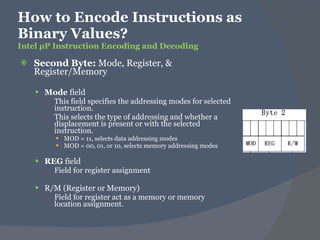
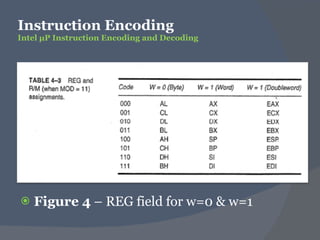
Second Byte:  Mode, Register, & Register/Memory Mode  field This field specifies the addressing modes for selected instruction. This selects the type of addressing and whether a displacement is present or with the selected instruction.  MOD = 11, selects data addressing modes MOD = 00, 01, or 10, selects memory addressing modes REG  field Field for register assignment R/M (Register or Memory) Field for register act as a memory or memory location assignment.  How to Encode Instructions as Binary Values?  Intel µP Instruction Encoding and Decoding
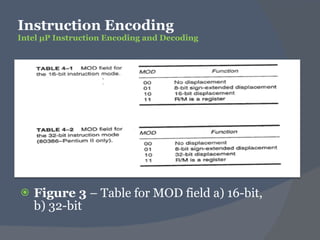
Figure 3  – Table for MOD field a) 16-bit, b) 32-bit Instruction Encoding Intel µP Instruction Encoding and Decoding
Figure 4  – REG field for w=0 & w=1 Instruction Encoding Intel µP Instruction Encoding and Decoding
Figure 5  – 16- and 32-bit R/M field, segment register field, and scaled factor. How to Encode Instructions as Binary Values?  Intel µP Instruction Encoding and Decoding
Register Addressing It uses the R/M field to specify a register instead of memory location Special addressing modes This addressing modes occurs whenever memory data are referenced by only the displacement mode of addressing for 16-bit instructions. MOV [1000h], DL MOV NUMB, DL MOD  = 00 and  R/M =110 Scaled-Index Byte Indicates the additional forms of scaled-index addressing. Occurs when R/M = 100 Instruction Encoding Intel µP Instruction Encoding and Decoding
Determine the equivalent machine code of the following assembly code: MOV DX, AX MOV DX, [BX + DI + 1234h] ADD AX, 1023 SUB DX, 1234h AND [BX + 12h], AX MOV EAX, [EBX + 4*ECX] MOV [5267h], DH MOV CS, AX MOV DS, AX MOV AX, [BX] Examples (Encoding) Intel µP Instruction Encoding and Decoding
Given the following machine code (hex code), determine the equivalent assembly instruction for each. 8B923412h 81C17856h 2C26h 8B163412h 20D8h Examples (Decoding) Intel µP Instruction Encoding and Decoding

Intel µp instruction encoding and decoding

  • 1.
    CENG04: MicroprocessorSystems Midterm Lecture 2 & 3
  • 2.
    Introduction Intel µPInstruction Encoding and Decoding Machine Language It is the native binary code that the microprocessor understand. Assembler It is use to translate assembly instruction to a machine code. Opcode (Operation Code) Selects the operation performed by the microprocessor such as MOV, ADD, INC, JMP, & etc. It is either one or two byte in length for most machine language instruction. Encoding It is a processes representing entire assembly instruction as a binary value or hexadecimal format (human perspective) Decoding It is the process of converting hexadecimal format to assembly language (machine perspective)
  • 3.
    Figure 1 – The format of the 8086 – 80486 Instruction a) 16-bit instruction, b) 32-bit instruction 8086 – 80486 Instruction Format Intel µP Instruction Encoding and Decoding
  • 4.
    Figure 2 – 8088/8086 Instruction Format 8088/8086 Instruction Format Intel µP Instruction Encoding and Decoding
  • 5.
    Instructions consistof: operation (opcode) e.g. MOV operands (number depends on operation) Operands specified using addressing modes Addressing mode may include addressing information Registers Constant values Variable Instruction Encoding Intel µP Instruction Encoding and Decoding
  • 6.
    Encoding ofinstruction must includes: Opcode Operands Addressing information Encoding is process representing entire instruction as a binary value Number of bytes needed depends on how much information must be encoded . Instructions are encoded by assembler: .OBJ file (link, then loaded by loader) Instructions are decoded by processor during execution cycle Instruction Encoding Intel µP Instruction Encoding and Decoding
  • 7.
    Override Prefixes Itis the first 2 bytes of a 32-bit instruction format These bytes are not always used Divided in Two Parts: Address Size – modifies the size of the address used the instruction and this byte is equal to 67h if in used. If the 80386/80486 is operating as 16-bit instruction mode machine (real or protected mode) and 32-bit instruction, byte is equal to 67h If the 80386/80486 is operating as 32-bit instruction mode machine (real or protected mode) and 32-bit instruction, byte is removed. Instruction Encoding Intel µP Instruction Encoding and Decoding
  • 8.
    Operand Size - modifies the size of the register. If the 80386/80486 is operating as 16-bit instruction mode machine (real or protected mode) and 32-bit instruction, byte is equal to 66h If the 80386/80486 is operating as 32-bit instruction mode machine (real or protected mode) and 32-bit instruction, byte is removed. These toggle the size of the register and operand address from 16-bit to 32-bit or vice versa. Instruction Encoding Intel µP Instruction Encoding and Decoding
  • 9.
    First byte: Opcode, Direction, & Word bits Opcode – select the operation performed by the microprocessor (use the lists of opcodes) Direction (D) – indicates the flow of data D = 1, data flow from (R/M) field to REG field D = 0, if data flow from REG field to R/M field. Word (W) – determine the size of data or register W = 1, 16- or 32-bit data width (word or dword) W = 0, 8-bit data width (byte) Note: W bit appear in most of the instruction but D bit mainly appears with MOV and some other instructions. Instruction Encoding Intel µP Instruction Encoding and Decoding
  • 10.
    Second Byte: Mode, Register, & Register/Memory Mode field This field specifies the addressing modes for selected instruction. This selects the type of addressing and whether a displacement is present or with the selected instruction. MOD = 11, selects data addressing modes MOD = 00, 01, or 10, selects memory addressing modes REG field Field for register assignment R/M (Register or Memory) Field for register act as a memory or memory location assignment. How to Encode Instructions as Binary Values? Intel µP Instruction Encoding and Decoding
  • 11.
    Figure 3 – Table for MOD field a) 16-bit, b) 32-bit Instruction Encoding Intel µP Instruction Encoding and Decoding
  • 12.
    Figure 4 – REG field for w=0 & w=1 Instruction Encoding Intel µP Instruction Encoding and Decoding
  • 13.
    Figure 5 – 16- and 32-bit R/M field, segment register field, and scaled factor. How to Encode Instructions as Binary Values? Intel µP Instruction Encoding and Decoding
  • 14.
    Register Addressing Ituses the R/M field to specify a register instead of memory location Special addressing modes This addressing modes occurs whenever memory data are referenced by only the displacement mode of addressing for 16-bit instructions. MOV [1000h], DL MOV NUMB, DL MOD = 00 and R/M =110 Scaled-Index Byte Indicates the additional forms of scaled-index addressing. Occurs when R/M = 100 Instruction Encoding Intel µP Instruction Encoding and Decoding
  • 15.
    Determine the equivalentmachine code of the following assembly code: MOV DX, AX MOV DX, [BX + DI + 1234h] ADD AX, 1023 SUB DX, 1234h AND [BX + 12h], AX MOV EAX, [EBX + 4*ECX] MOV [5267h], DH MOV CS, AX MOV DS, AX MOV AX, [BX] Examples (Encoding) Intel µP Instruction Encoding and Decoding
  • 16.
    Given the followingmachine code (hex code), determine the equivalent assembly instruction for each. 8B923412h 81C17856h 2C26h 8B163412h 20D8h Examples (Decoding) Intel µP Instruction Encoding and Decoding

Editor's Notes