Inspired Innovation…
That's Changing the World.
Case Study 1: Intel Corporation 1968-1997
Present Asst.Prof. Viput Ongsakul
National Institute of Development Administration
(Flexible MBA 1/2557)
Microeconomics of Competitiveness
Founded in 1968 By
- Robert Noyce, Gordon Moore, Andy Grove
Intel overview
“Leaders have to act more quickly today. The
pressure comes much faster.”
Andy Grove
Microprocessor Internet
1968s 1980s 1990s
DRAM
DRAM Business
Microprocessor Company
Personal computer aging
Customer & Supplier Relationship
Intel & The internet
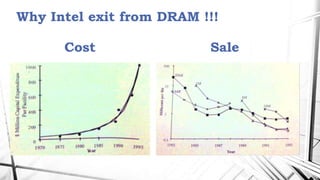
Why Intel exit from DRAM !!!
Cost Sale
Company Market Share (%)
1. Hitachi 15.1
2. NEC 13.0
3. TI 10.8
4. Fujitsu 7.8
5. Toshiba (tie) 7.1
5. Mostek (tie) 7.1
6. Motorola 6.1
7. Mitsubishi 4.0
8. Intel 3.4
9. National 1.1
• Invest heavily in Manufacturing
• Worked closely with equipment manufacturers
• Strength in manufacturing, yields were high as 80%,
where in us it was around 60%
• Much faster at developing process technology and
ramping up production capacity
Japan Strategy in DRAMs
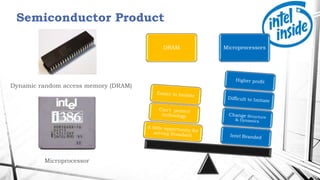
Semiconductor Product
DRAM Microprocessors
Dynamic random access memory (DRAM)
Microprocessor
Semiconductor Product Development
Intel in the
Internet
Personal Computer
Two basic function
Own data &
application
Sharing data
others
Third class of
in Internet
Sharing data and application center;
Network Computer (NC)
All competitors are taking advantage of the
opportunities provided by the internet,
What about our competition???
Business Environment
• Cooperation between industrial
sector such as IBM , Compaq
use intel processor.
• Accessing & transfer
technology to suppliers.
• Presence of high quality of
• –Information infrastructure.
• –Scientific and technological
infrastructure.
• The embedded product need
high performance.
semiconductor technology to
gain performance on their
system.
• Japan is also able to export
quality DRAM as heavy in
vestment in manufacturing.
•Intel has more resource to invest in
new technology.
•Intel inside.
•Design new and complex circuit for
semiconductor product.
Firm Strategy,
Structure and
Rivalry
Demand
Conditions
Related &
Supporting
industry
Factor Conditions
Demographic :Why Silicon Valley?
Silicon Valley
Silicon chip innovators
& manufacturers
High-tech
& Development
World's largest
Technology Corporations
American high-technology
economic sector
Stanford University
Perhaps even more importantly, a range of
new technologies -- the microprocessor, the
laser, fiber-optics, and satellite -- appeared
in the late 1990s to be making the
American economy significantly more
productive than economists had thought
possible
Federal Reserve Chairman Alan Greenspan
said in mid-1999
Drivers of competitiveness
Building & Upgrading
Semiconductor Industry
Research &
Development
Technology
Constrain
Processing
Machinery
Technology
Standard
High Education Level and Skill
Relationship
Creating and sustaining competitive
advantage in microprocessors
Value
Creation
• Creating
Value by
becoming
Standard
Value
Capture
• Capturing
value by
becoming a
proprietary
Standard
Sustaining
Value
• Sustaining
value by
countering
threats
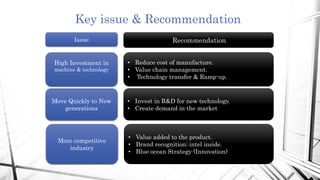
Key issue & Recommendation
High Investment in
machine & technology
• Reduce cost of manufacture.
• Value chain management.
• Technology transfer & Ramp-up.
Issue Recommendation
Move Quickly to New
generations
• Invest in R&D for new technology.
• Create demand in the market
More competitive
industry
• Value added to the product.
• Brand recognition; intel inside.
• Blue ocean Strategy (Innovation)
Inspired Innovation… That's Changing the World.
Team’s members
1. Kanruethai Boonyarit ID 5610224008
2. Chutikan Chaiyachart ID 5610224022
3. Julalak Jirasakpisarn ID 5610224024
4. Yodthorn Ratana anan ID 5610224033
5. Warunya Wongdanee ID 5610224039
6. Sowwaluk sangeamjit ID 5610224047
7. Wilailak Sangarreekul ID 5610224049
8. Thanakit Jarasboonpaisan ID 5610224077
9. Jakkraphon Siriphatthanakul ID 5610224081
10. Nuengruthai suksodkiew ID 5610224087

INTEL

  • 1.
    Inspired Innovation… That's Changingthe World. Case Study 1: Intel Corporation 1968-1997 Present Asst.Prof. Viput Ongsakul National Institute of Development Administration (Flexible MBA 1/2557) Microeconomics of Competitiveness
  • 2.
    Founded in 1968By - Robert Noyce, Gordon Moore, Andy Grove Intel overview “Leaders have to act more quickly today. The pressure comes much faster.” Andy Grove Microprocessor Internet 1968s 1980s 1990s DRAM DRAM Business Microprocessor Company Personal computer aging Customer & Supplier Relationship Intel & The internet
  • 3.
    Why Intel exitfrom DRAM !!! Cost Sale
  • 4.
    Company Market Share(%) 1. Hitachi 15.1 2. NEC 13.0 3. TI 10.8 4. Fujitsu 7.8 5. Toshiba (tie) 7.1 5. Mostek (tie) 7.1 6. Motorola 6.1 7. Mitsubishi 4.0 8. Intel 3.4 9. National 1.1 • Invest heavily in Manufacturing • Worked closely with equipment manufacturers • Strength in manufacturing, yields were high as 80%, where in us it was around 60% • Much faster at developing process technology and ramping up production capacity Japan Strategy in DRAMs
  • 5.
    Semiconductor Product DRAM Microprocessors Dynamicrandom access memory (DRAM) Microprocessor
  • 6.
  • 7.
    Intel in the Internet PersonalComputer Two basic function Own data & application Sharing data others Third class of in Internet Sharing data and application center; Network Computer (NC) All competitors are taking advantage of the opportunities provided by the internet, What about our competition???
  • 8.
    Business Environment • Cooperationbetween industrial sector such as IBM , Compaq use intel processor. • Accessing & transfer technology to suppliers. • Presence of high quality of • –Information infrastructure. • –Scientific and technological infrastructure. • The embedded product need high performance. semiconductor technology to gain performance on their system. • Japan is also able to export quality DRAM as heavy in vestment in manufacturing. •Intel has more resource to invest in new technology. •Intel inside. •Design new and complex circuit for semiconductor product. Firm Strategy, Structure and Rivalry Demand Conditions Related & Supporting industry Factor Conditions
  • 9.
    Demographic :Why SiliconValley? Silicon Valley Silicon chip innovators & manufacturers High-tech & Development World's largest Technology Corporations American high-technology economic sector Stanford University
  • 10.
    Perhaps even moreimportantly, a range of new technologies -- the microprocessor, the laser, fiber-optics, and satellite -- appeared in the late 1990s to be making the American economy significantly more productive than economists had thought possible Federal Reserve Chairman Alan Greenspan said in mid-1999 Drivers of competitiveness
  • 11.
    Building & Upgrading SemiconductorIndustry Research & Development Technology Constrain Processing Machinery Technology Standard High Education Level and Skill Relationship
  • 12.
    Creating and sustainingcompetitive advantage in microprocessors Value Creation • Creating Value by becoming Standard Value Capture • Capturing value by becoming a proprietary Standard Sustaining Value • Sustaining value by countering threats
  • 13.
    Key issue &Recommendation High Investment in machine & technology • Reduce cost of manufacture. • Value chain management. • Technology transfer & Ramp-up. Issue Recommendation Move Quickly to New generations • Invest in R&D for new technology. • Create demand in the market More competitive industry • Value added to the product. • Brand recognition; intel inside. • Blue ocean Strategy (Innovation)
  • 14.
    Inspired Innovation… That'sChanging the World.
  • 15.
    Team’s members 1. KanruethaiBoonyarit ID 5610224008 2. Chutikan Chaiyachart ID 5610224022 3. Julalak Jirasakpisarn ID 5610224024 4. Yodthorn Ratana anan ID 5610224033 5. Warunya Wongdanee ID 5610224039 6. Sowwaluk sangeamjit ID 5610224047 7. Wilailak Sangarreekul ID 5610224049 8. Thanakit Jarasboonpaisan ID 5610224077 9. Jakkraphon Siriphatthanakul ID 5610224081 10. Nuengruthai suksodkiew ID 5610224087