Henry Sichel, Angela de Michele
      Environment and development

     Wirtschaftuniversitaet - Wien
•   Binding international limits;

•   Carbon market;                                
•   Encouraged national strategies


•   + 25% CO2
•   Only 2.5 bll/$ invested in climate projects   
•   No real cooperation among countries
«We should reconsider trajectories of industrialization and unravel the ties that
                       bound development to carbon»


                     •    Equity;
       open issues   •    Climate;                              Trade off? Blocks
                     •    Social/economic development
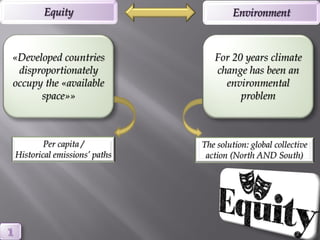
«Developed countries             For 20 years climate
 disproportionately              change has been an
occupy the «available              environmental
      space»»                          problem


        Per capita /          The solution: global collective
Historical emissions’ paths    action (North AND South)
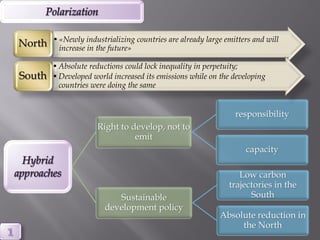
• «Newly industrializing countries are already large emitters and will
North     increase in the future»

        • Absolute reductions could lock inequality in perpetuity;
South   • Developed world increased its emissions while on the developing
          countries were doing the same


                                                                responsibility
                     Right to develop, not to
                               emit
                                                                   capacity
  Hybrid
approaches                                                       Low carbon
                                                              trajectories in the
                           Sustainable                              South
                        development policy
                                                           Absolute reduction in
                                                                the North
To make South believe
     that we are not
displacing responsibility
       onto them:


                            Early North’s action
    … hypotetical band
     of long-term per        Equity
    capita emissions?

                            Pluralism
Built on the
                                 Now implies
  assumption of                adjustment costs
costless carbon…


                   Opportunities


  • Institutions                   • Ozone
  • Markets                        • Acid rains
  • technologies
These opportunities are not matched
                         by concrete actions up to now
Not that
  easy
issue…!                                         Burden sharing in public
                        Free-riding
                        behaviours
                                                   Exploitation of
                                                opportunities in private


          Costituencies in a
          low-carbon future
                                         …but to start is
                                          important!
                          Process of
 Pull-effect           experimentation
Implications for
                 Global    Useful for
< 2 C°   - 50%                          developing countries
                  goal    commitment
                                           (implicit cap)
Economic
                                                           incentives
                                Formal rules
Development     Institutional   of the game       can      Institutional
    lens           inertia                       shape   transformation
                                Informal norms

                                                         Technological
                                                          innovations


         Development is a process of change, driven from below

          Path-dependence = common patterns not so useful

         This applies also to developed countries
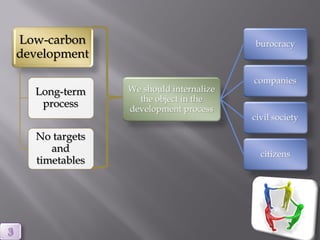
Low-carbon                             burocracy
development

                                       companies
  Long-term    We should internalize
                 the object in the
   process     development process
                                       civil society

  No targets
     and                                 citizens
  timetables
Short-term   • Implementation with

 policies      minimal adjustments
                                     No top – down
                                       planning


Long-term                            No prediction
             • Development through
processes      climate lenses
• Prioritize
                    predictability
                  • Setting of
         North      objectives for
Short-              2020 – 2030
 term             • To provide the
                    track
   +
Long-
 term            • Enjoy the «best
         South     practices»
                 • Energy saving (e.g.)
North   financing    South


How     How to      How to
much?   control?    monitor?
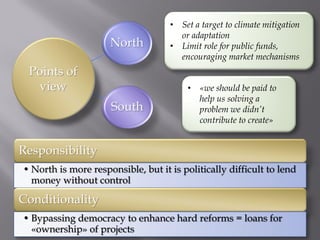
• Set a target to climate mitigation
                                      or adaptation
                     North          • Limit role for public funds,
                                      encouraging market mechanisms
 Points of
  view                                  • «we should be paid to
                                          help us solving a
                     South                problem we didn’t
                                          contribute to create»


Responsibility
• North is more responsible, but it is politically difficult to lend
  money without control

Conditionality
• Bypassing democracy to enhance hard reforms = loans for
  «ownership» of projects
From                            To

                       Organizing funds around a process
Implementing actions
                       to encourage the recipient-country
determined by donors
                           to develop its own agenda


      Low-carbon             Mitigation actions
      development            (e.g. energy saving)
The best hypotesis: different mitigation tracks

                                    Developing
   Developed countries
                                     countries

                                  Policy based actions,
    Fixed emission targets        centered on activities
                                  instead of emissions

                                    Policy spillovers:
  Certainty         Flexibility   e.g., increase in energy
                                         affordability
Cross-cutting
                  to disseminate
                   technologies

  Adaptation                        Accountability
assistence plan                       measures


                   The best
                   hypotesis


                          «Efficiency losses can be a
                        reasonable trade-off to achieve
                                participation»
Many developing                 Which indirectly undertake the
        countries                   purpose of emissions’ reductions


                       Developing
                        policies

Developing countries can contribute in a consistent way through their
development objectives

  Policies and plans tailored on internal facts and needs


  Multiplier of effects coming from the support of developed countries


Not binding targets
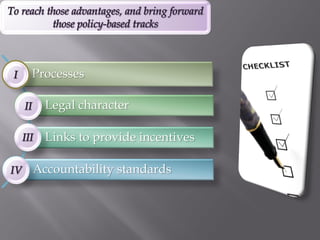
I   Processes

      Legal character

      Links to provide incentives

    Accountability standards
The importance of
   emphasizing our        Is this embedded in the
policies and make them             process?
        accepted


                            Indeed, this could
 Or an outcome of the     reduce every barrier in
    process itself?        negotiation between
                             North and South


 Tool-box of proposed
                          …with simulations of
policies for developing
                                impact
      countries…
«Nationally
                                  Developed
         appropriate mitigation   countries
          COMMITMENTS or
 Bali          actions»
Action
              «Nationally
 Plan    appropriate mitigation   Developing
                                   countries
               actions»
or
                                      • Initiate a
                                        review by a
• Actions         • A country           third designed
                    may indicate        body
                    it…
       Flow of                           To evaluate the
       support                           need of support


Robust EFFORTS can be obtained only
   with such international support
Only minimal
              Now
                       communications
   Bali:
Measurable,                             What actions should
Reportable,                               be measured?
 Verifiable
                       Rigorous         Who is performing
              Future                      verification?
                       approach

                                           What kind of
                                            metrics?
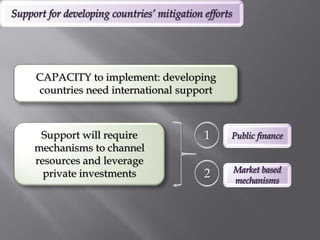
CAPACITY to implement: developing
countries need international support


 Support will require            1
mechanisms to channel
resources and leverage
  private investments            2
Unpredictable and
          Now        Pledging
                                          inadequate funds
 Public
finance


                    Loans/guarantees/access to
                                                   In all new
          Future   technologies and payment for
                                                     funds
                       intellectual property
Kyoto: CDM system, based on emission credits from individual
projects, but by this way excluding many other effective strategies
• to enhance resilience;

• to discourage high-emission
  investments
Long-term plans
                                                   to set risks
     Supportive comprehensive                        Needed
 I      national adaptation            NAPA         adaptation
             strategies                             capacities

                                                 National policies


                                              Guidance and help in
           Exchanging best practices
                                              accessing technologies

II
                    Support
            international/national/            Regional centers of
                                                   excellence
               regional systems
Donors

      Funds to help countries in implementing
III                                             CDM
               high-priority projects

                                                Taxes

Integrating development into the global climate regime

  • 1.
    Henry Sichel, Angelade Michele Environment and development Wirtschaftuniversitaet - Wien
  • 2.
    Binding international limits; • Carbon market;  • Encouraged national strategies • + 25% CO2 • Only 2.5 bll/$ invested in climate projects  • No real cooperation among countries
  • 3.
    «We should reconsidertrajectories of industrialization and unravel the ties that bound development to carbon» • Equity; open issues • Climate; Trade off? Blocks • Social/economic development
  • 4.
    «Developed countries For 20 years climate disproportionately change has been an occupy the «available environmental space»» problem Per capita / The solution: global collective Historical emissions’ paths action (North AND South)
  • 5.
    • «Newly industrializingcountries are already large emitters and will North increase in the future» • Absolute reductions could lock inequality in perpetuity; South • Developed world increased its emissions while on the developing countries were doing the same responsibility Right to develop, not to emit capacity Hybrid approaches Low carbon trajectories in the Sustainable South development policy Absolute reduction in the North
  • 6.
    To make Southbelieve that we are not displacing responsibility onto them: Early North’s action … hypotetical band of long-term per Equity capita emissions? Pluralism
  • 7.
    Built on the Now implies assumption of adjustment costs costless carbon… Opportunities • Institutions • Ozone • Markets • Acid rains • technologies
  • 8.
    These opportunities arenot matched by concrete actions up to now Not that easy issue…! Burden sharing in public Free-riding behaviours Exploitation of opportunities in private Costituencies in a low-carbon future …but to start is important! Process of Pull-effect experimentation
  • 9.
    Implications for Global Useful for < 2 C° - 50% developing countries goal commitment (implicit cap)
  • 10.
    Economic incentives Formal rules Development Institutional of the game can Institutional lens inertia shape transformation Informal norms Technological innovations Development is a process of change, driven from below Path-dependence = common patterns not so useful This applies also to developed countries
  • 11.
    Low-carbon burocracy development companies Long-term We should internalize the object in the process development process civil society No targets and citizens timetables
  • 12.
    Short-term • Implementation with policies minimal adjustments No top – down planning Long-term No prediction • Development through processes climate lenses
  • 13.
    • Prioritize predictability • Setting of North objectives for Short- 2020 – 2030 term • To provide the track + Long- term • Enjoy the «best South practices» • Energy saving (e.g.)
  • 15.
    North financing South How How to How to much? control? monitor?
  • 16.
    • Set atarget to climate mitigation or adaptation North • Limit role for public funds, encouraging market mechanisms Points of view • «we should be paid to help us solving a South problem we didn’t contribute to create» Responsibility • North is more responsible, but it is politically difficult to lend money without control Conditionality • Bypassing democracy to enhance hard reforms = loans for «ownership» of projects
  • 17.
    From To Organizing funds around a process Implementing actions to encourage the recipient-country determined by donors to develop its own agenda Low-carbon Mitigation actions development (e.g. energy saving)
  • 18.
    The best hypotesis:different mitigation tracks Developing Developed countries countries Policy based actions, Fixed emission targets centered on activities instead of emissions Policy spillovers: Certainty Flexibility e.g., increase in energy affordability
  • 19.
    Cross-cutting to disseminate technologies Adaptation Accountability assistence plan measures The best hypotesis «Efficiency losses can be a reasonable trade-off to achieve participation»
  • 20.
    Many developing Which indirectly undertake the countries purpose of emissions’ reductions Developing policies Developing countries can contribute in a consistent way through their development objectives Policies and plans tailored on internal facts and needs Multiplier of effects coming from the support of developed countries Not binding targets
  • 21.
    I Processes Legal character Links to provide incentives Accountability standards
  • 22.
    The importance of emphasizing our Is this embedded in the policies and make them process? accepted Indeed, this could Or an outcome of the reduce every barrier in process itself? negotiation between North and South Tool-box of proposed …with simulations of policies for developing impact countries…
  • 23.
    «Nationally Developed appropriate mitigation countries COMMITMENTS or Bali actions» Action «Nationally Plan appropriate mitigation Developing countries actions»
  • 24.
    or • Initiate a review by a • Actions • A country third designed may indicate body it… Flow of To evaluate the support need of support Robust EFFORTS can be obtained only with such international support
  • 25.
    Only minimal Now communications Bali: Measurable, What actions should Reportable, be measured? Verifiable Rigorous Who is performing Future verification? approach What kind of metrics?
  • 26.
    CAPACITY to implement:developing countries need international support Support will require 1 mechanisms to channel resources and leverage private investments 2
  • 27.
    Unpredictable and Now Pledging inadequate funds Public finance Loans/guarantees/access to In all new Future technologies and payment for funds intellectual property
  • 28.
    Kyoto: CDM system,based on emission credits from individual projects, but by this way excluding many other effective strategies
  • 29.
    • to enhanceresilience; • to discourage high-emission investments
  • 30.
    Long-term plans to set risks Supportive comprehensive Needed I national adaptation NAPA adaptation strategies capacities National policies Guidance and help in Exchanging best practices accessing technologies II Support international/national/ Regional centers of excellence regional systems
  • 31.
    Donors Funds to help countries in implementing III CDM high-priority projects Taxes