Sustainable Development Assessment: Towards Measurable Goals
Accelerating Bottom-up Approach on
Green Growth and Eco-Innovation


                                                          @ASEM ENV Forum
                                                               21 November 2012


                                                                Juhern Kim
Table of Contents


1. Introduction

2. MDGs and SDGs, why we are setting the Goals?

3. Accelerating Green Growth and Eco-Innovation
at the bottom-up level

4. Case studies in BOP market

5. Conclusion
1. Introduction
2. MDGs and SDGs ,
   why we are setting the goals?
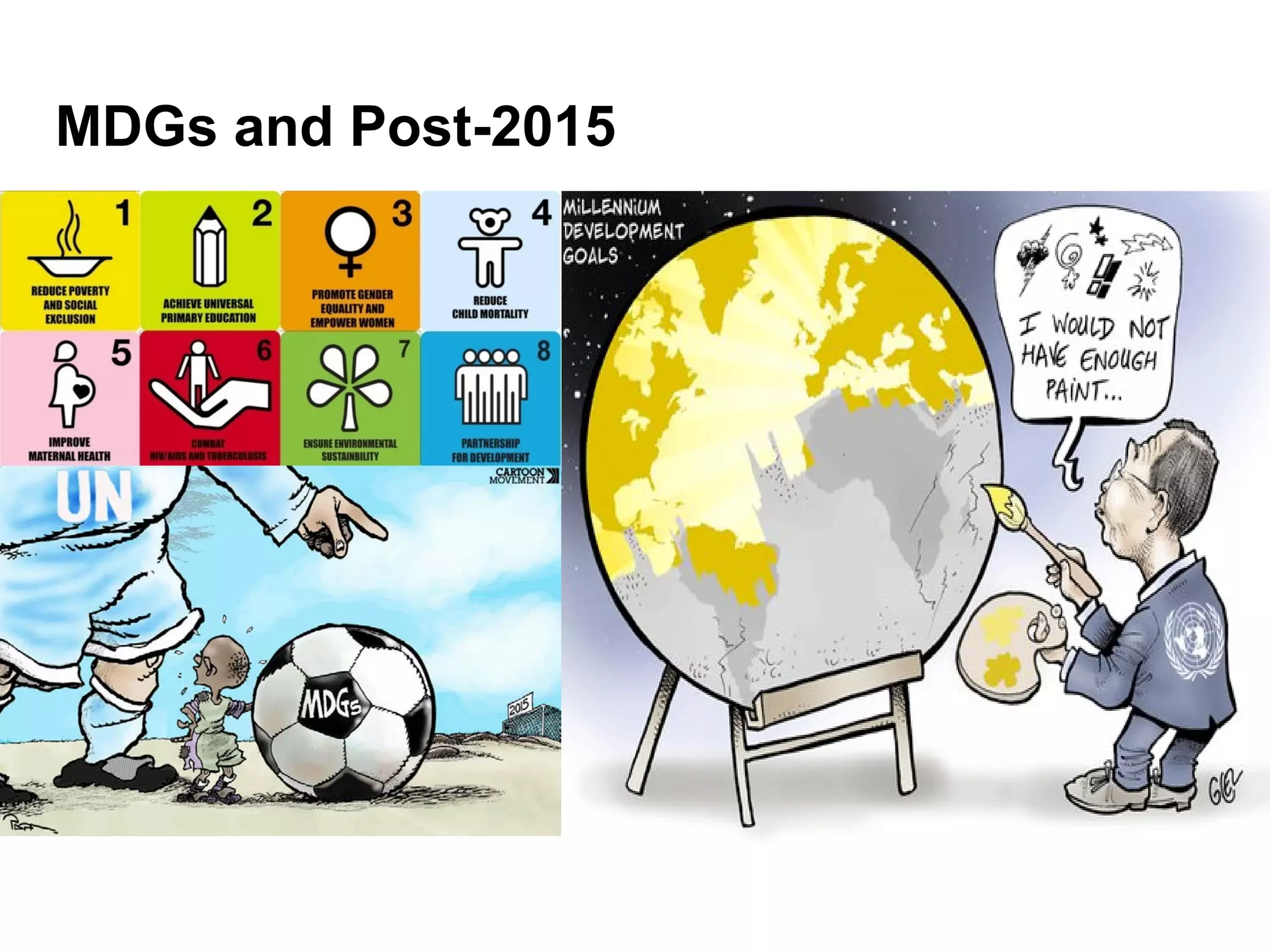
MDGs and Post-2015
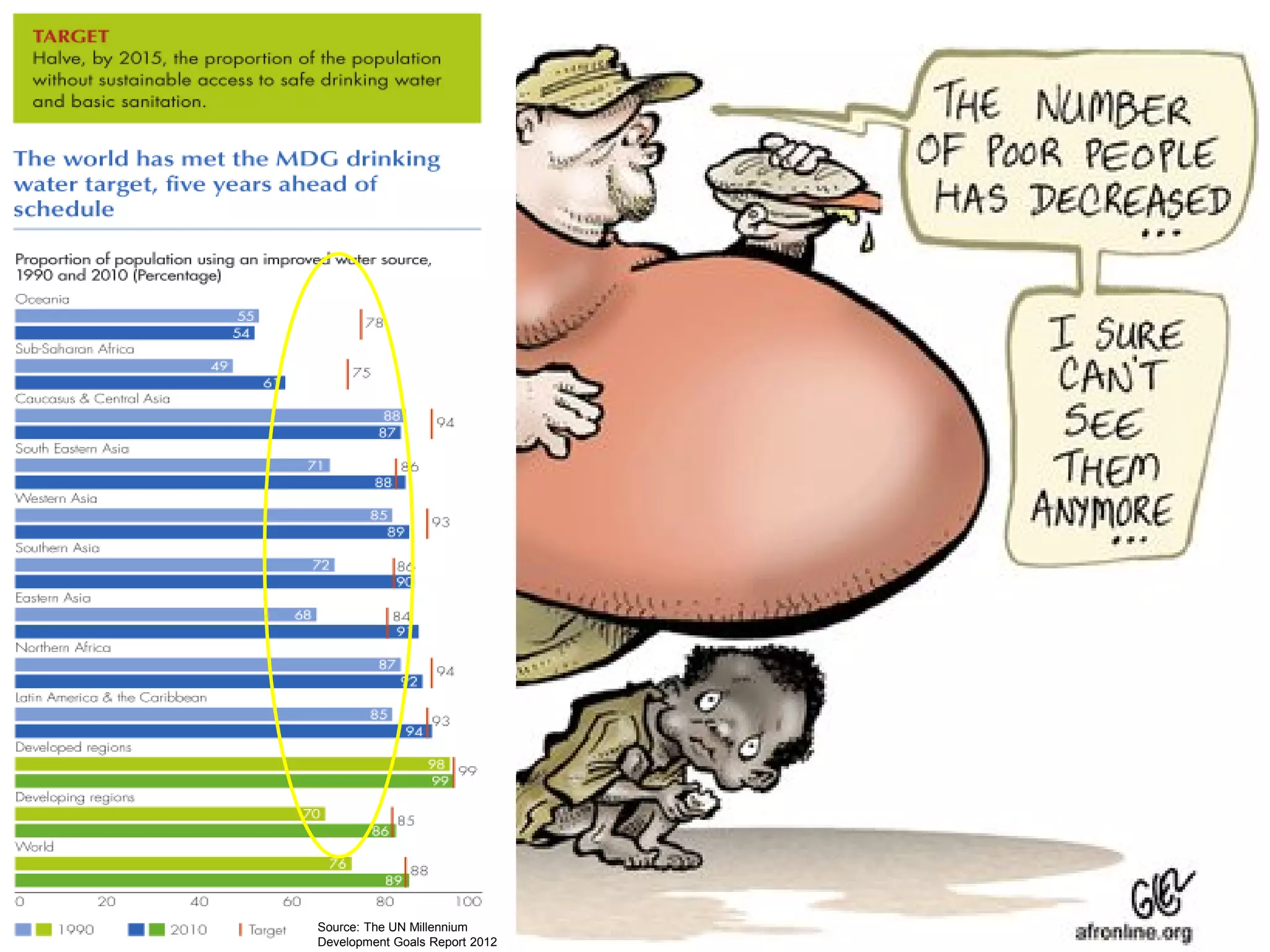
Source: The UN Millennium
Development Goals Report 2012
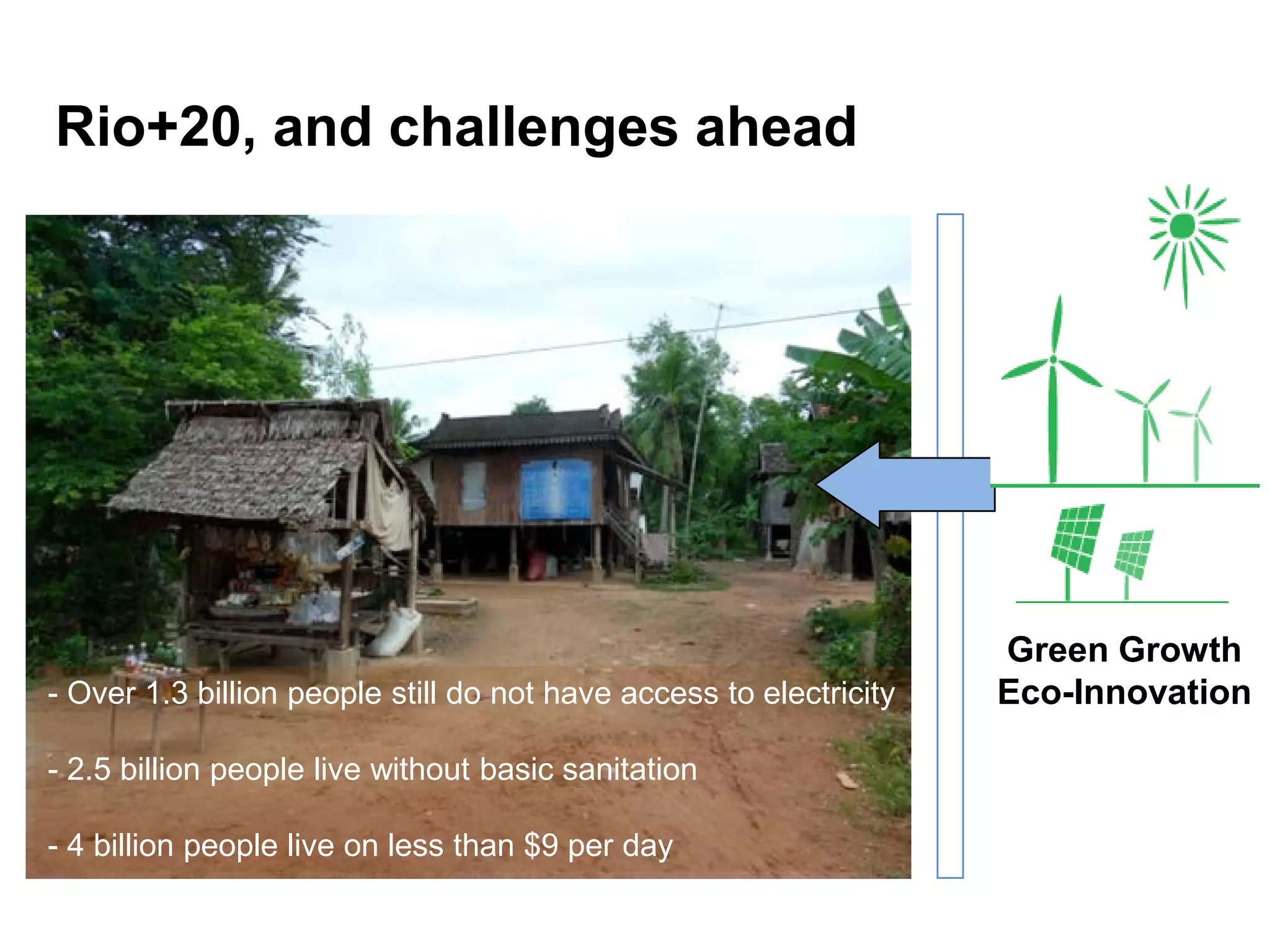
Rio+20, and challenges ahead


                                                                    Green Growth
- Over 1.3 billion people still do not have access to electricity   Eco-Innovation

- 2.5 billion people live without basic sanitation

- 4 billion people live on less than $9 per day
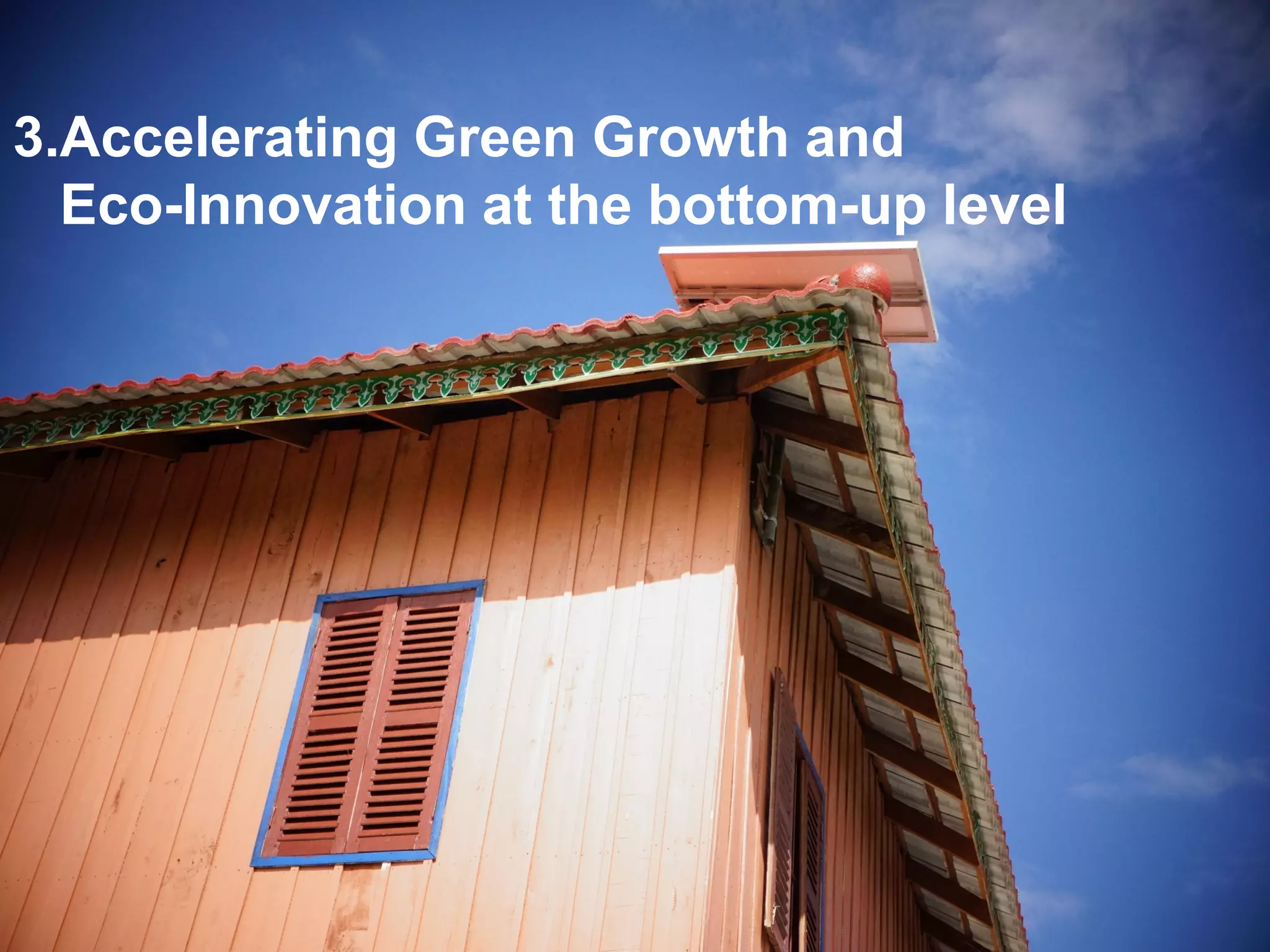
3.Accelerating Green Growth and
  Eco-Innovation at the bottom-up level
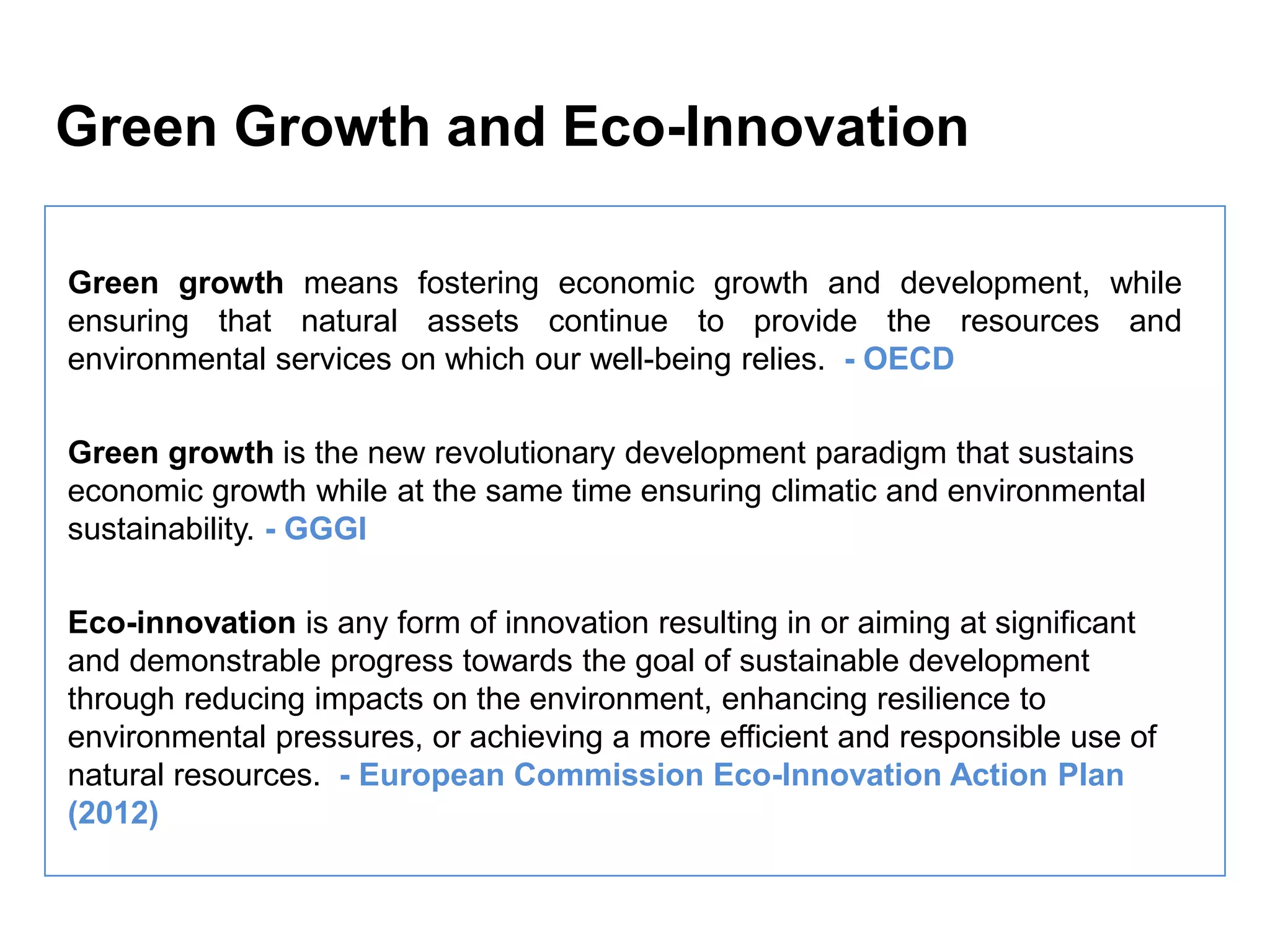
Green Growth and Eco-Innovation

Green growth means fostering economic growth and development, while
ensuring that natural assets continue to provide the resources and
environmental services on which our well-being relies. - OECD

Green growth is the new revolutionary development paradigm that sustains
economic growth while at the same time ensuring climatic and environmental
sustainability. - GGGI

Eco-innovation is any form of innovation resulting in or aiming at significant
and demonstrable progress towards the goal of sustainable development
through reducing impacts on the environment, enhancing resilience to
environmental pressures, or achieving a more efficient and responsible use of
natural resources. - European Commission Eco-Innovation Action Plan
(2012)
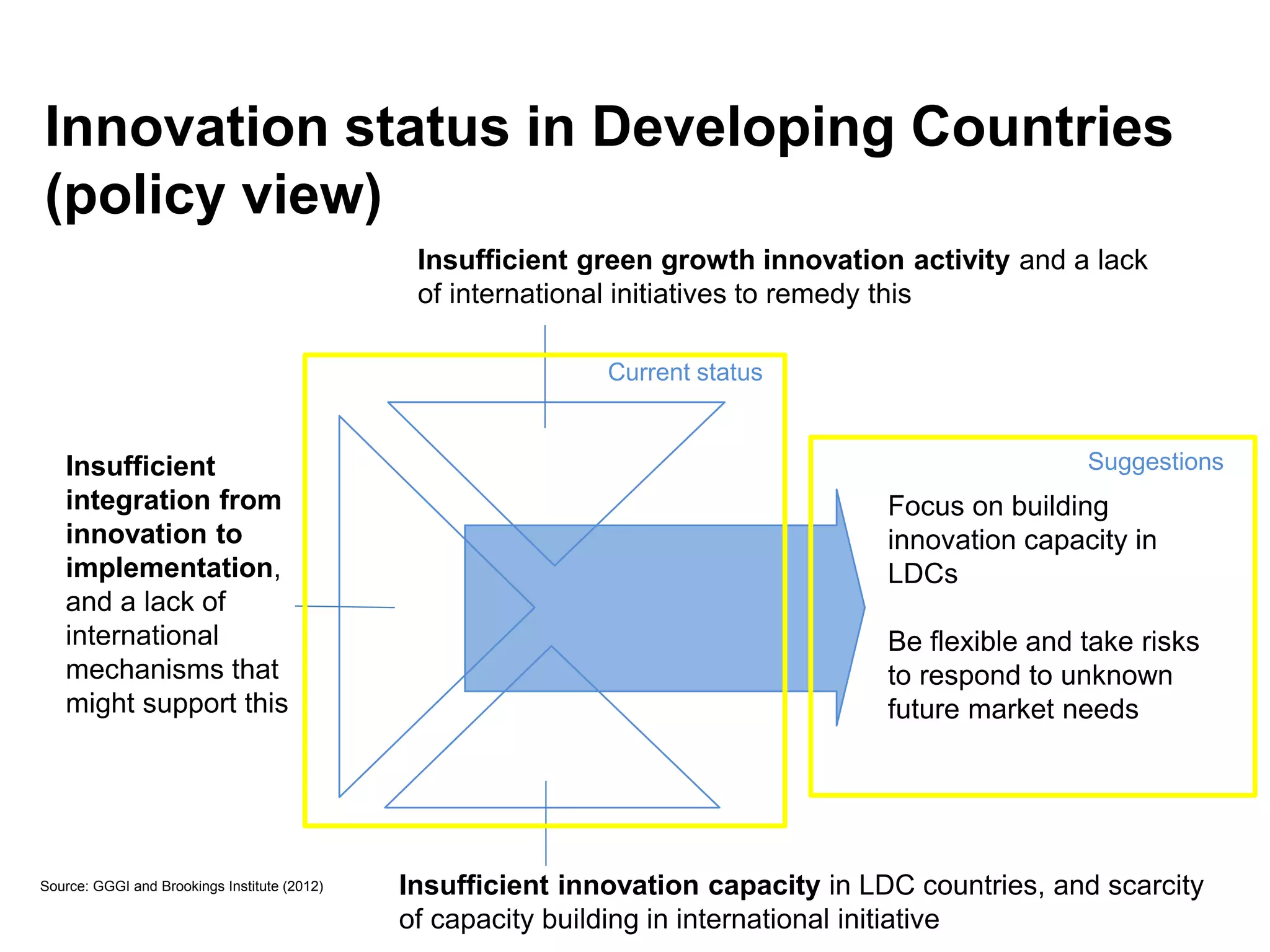
Innovation status in Developing Countries
(policy view)
                                               Insufficient green growth innovation activity and a lack
                                               of international initiatives to remedy this

                                                              Current status


   Insufficient                                                                                     Suggestions
   integration from                                                                 Focus on building
   innovation to                                                                    innovation capacity in
   implementation,                                                                  LDCs
   and a lack of
   international                                                                    Be flexible and take risks
   mechanisms that                                                                  to respond to unknown
   might support this                                                               future market needs


Source: GGGI and Brookings Institute (2012)   Insufficient innovation capacity in LDC countries, and scarcity
                                              of capacity building in international initiative
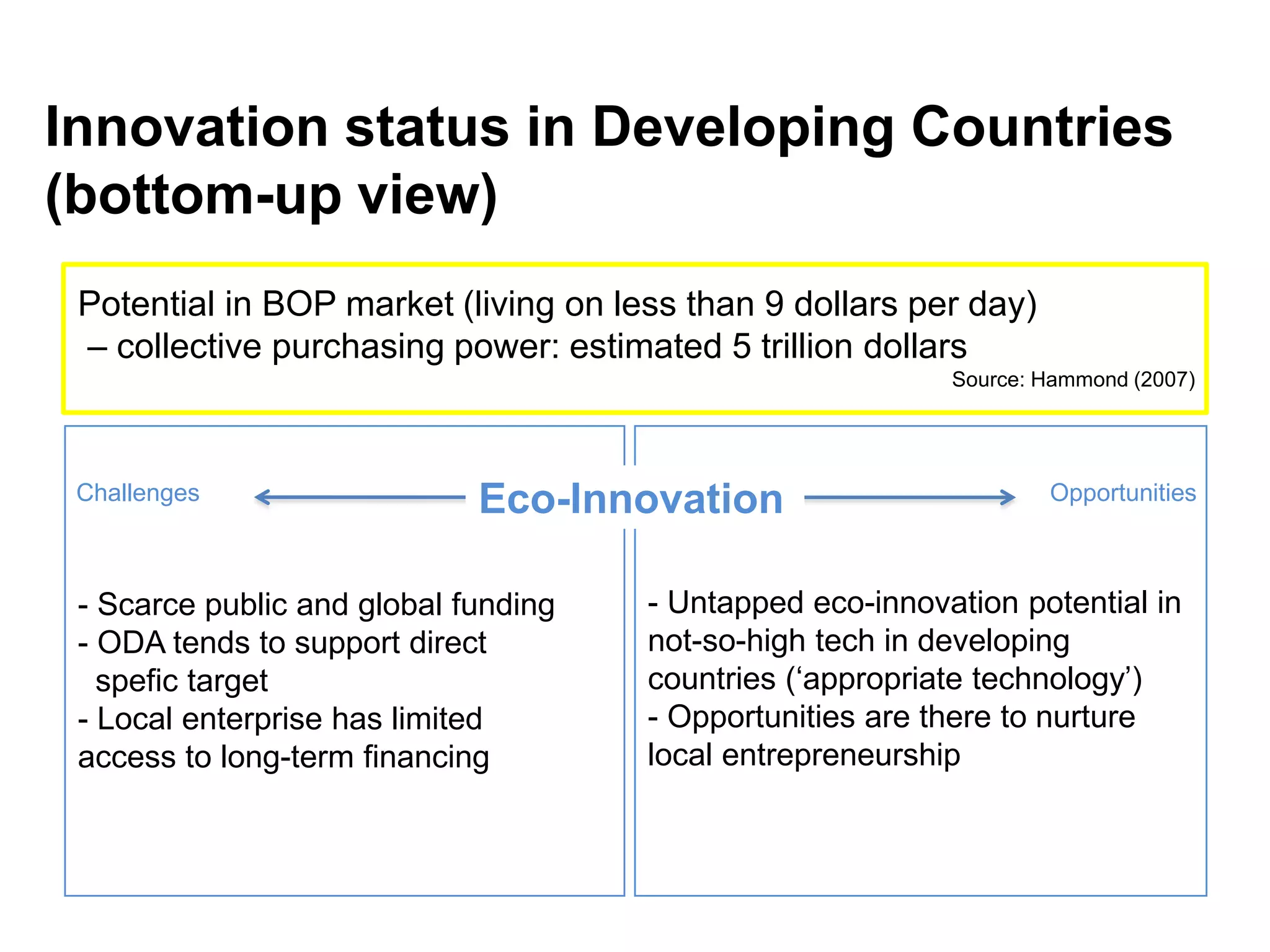
Innovation status in Developing Countries
(bottom-up view)
 Potential in BOP market (living on less than 9 dollars per day)
 – collective purchasing power: estimated 5 trillion dollars
                                                           Source: Hammond (2007)


 Challenges                  Eco-Innovation                        Opportunities


 - Scarce public and global funding   - Untapped eco-innovation potential in
 - ODA tends to support direct        not-so-high tech in developing
   spefic target                      countries (‘appropriate technology’)
 - Local enterprise has limited       - Opportunities are there to nurture
 access to long-term financing        local entrepreneurship
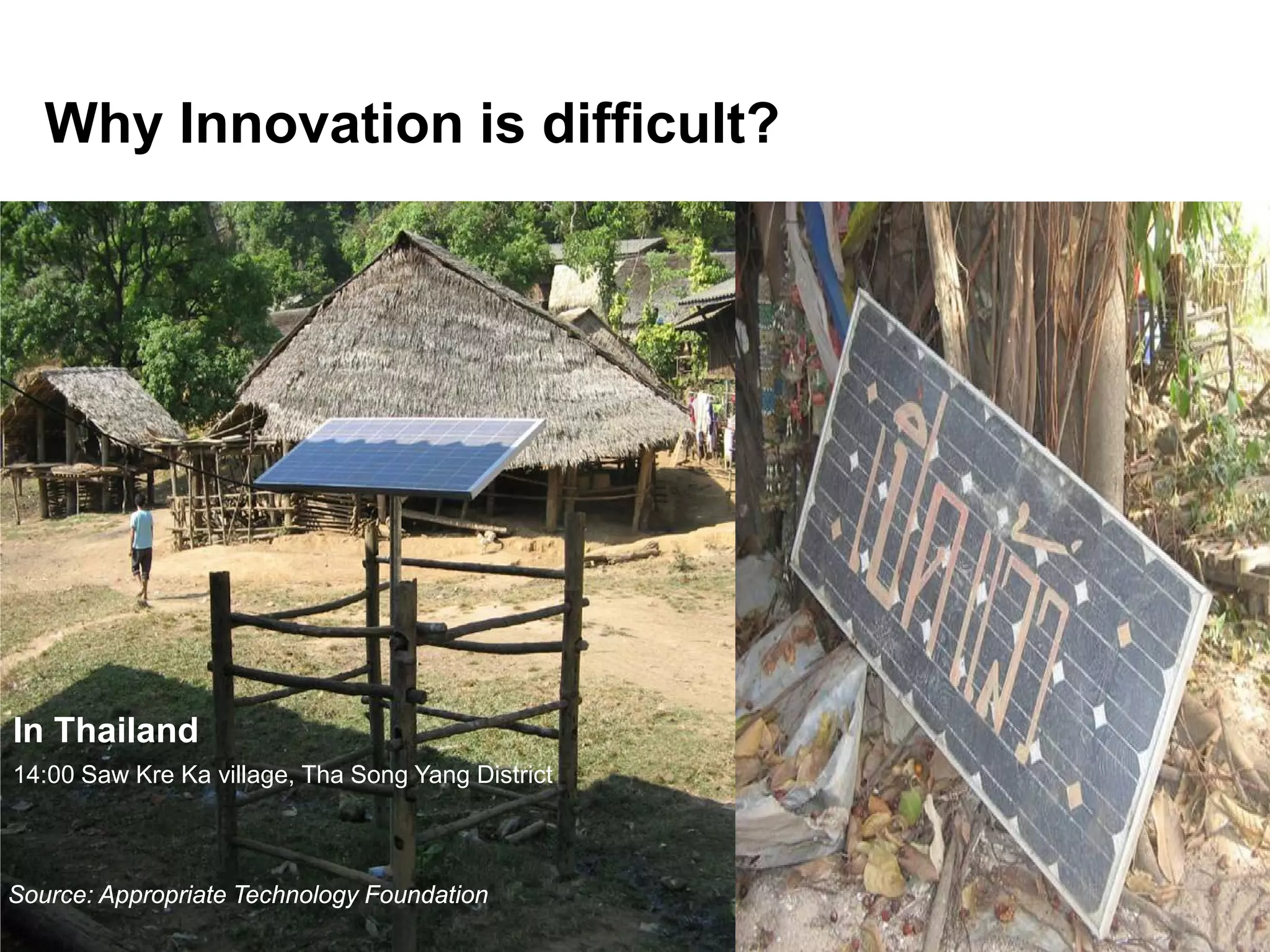
Why Innovation is difficult?


In Thailand
14:00 Saw Kre Ka village, Tha Song Yang District


Source: Appropriate Technology Foundation
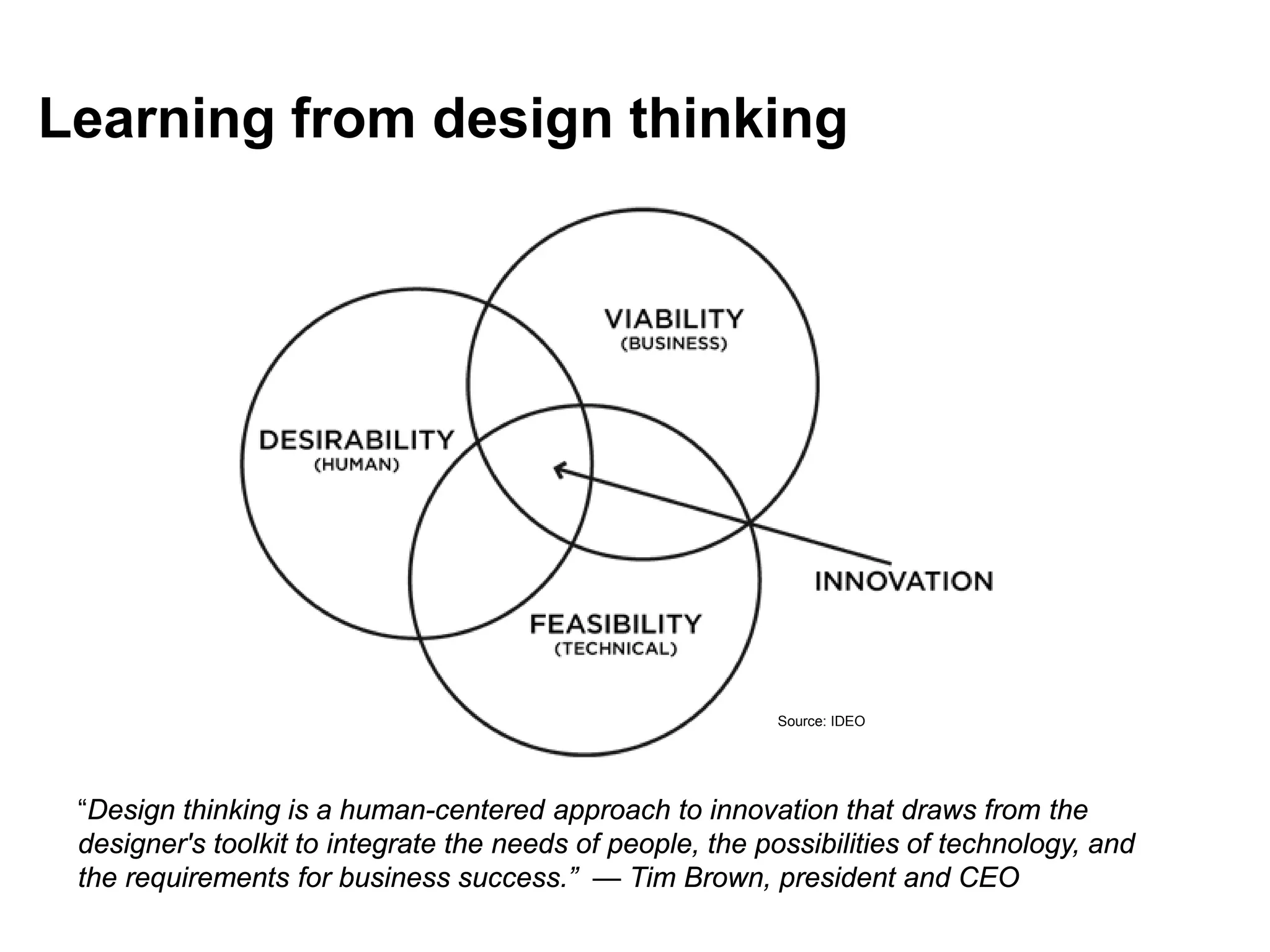
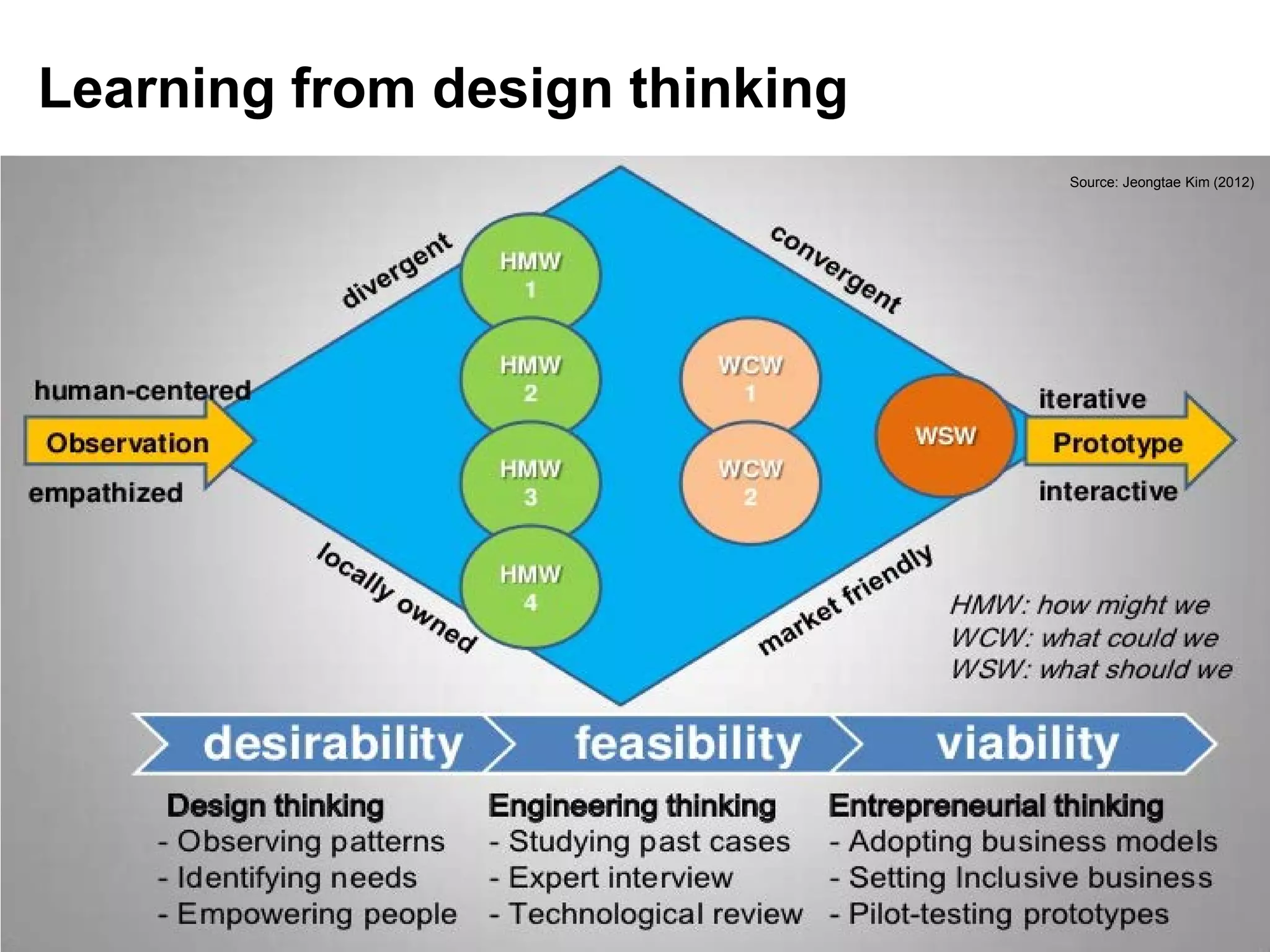
Learning from design thinking


                                                           Source: IDEO


 “Design thinking is a human-centered approach to innovation that draws from the
 designer's toolkit to integrate the needs of people, the possibilities of technology, and
 the requirements for business success.” — Tim Brown, president and CEO
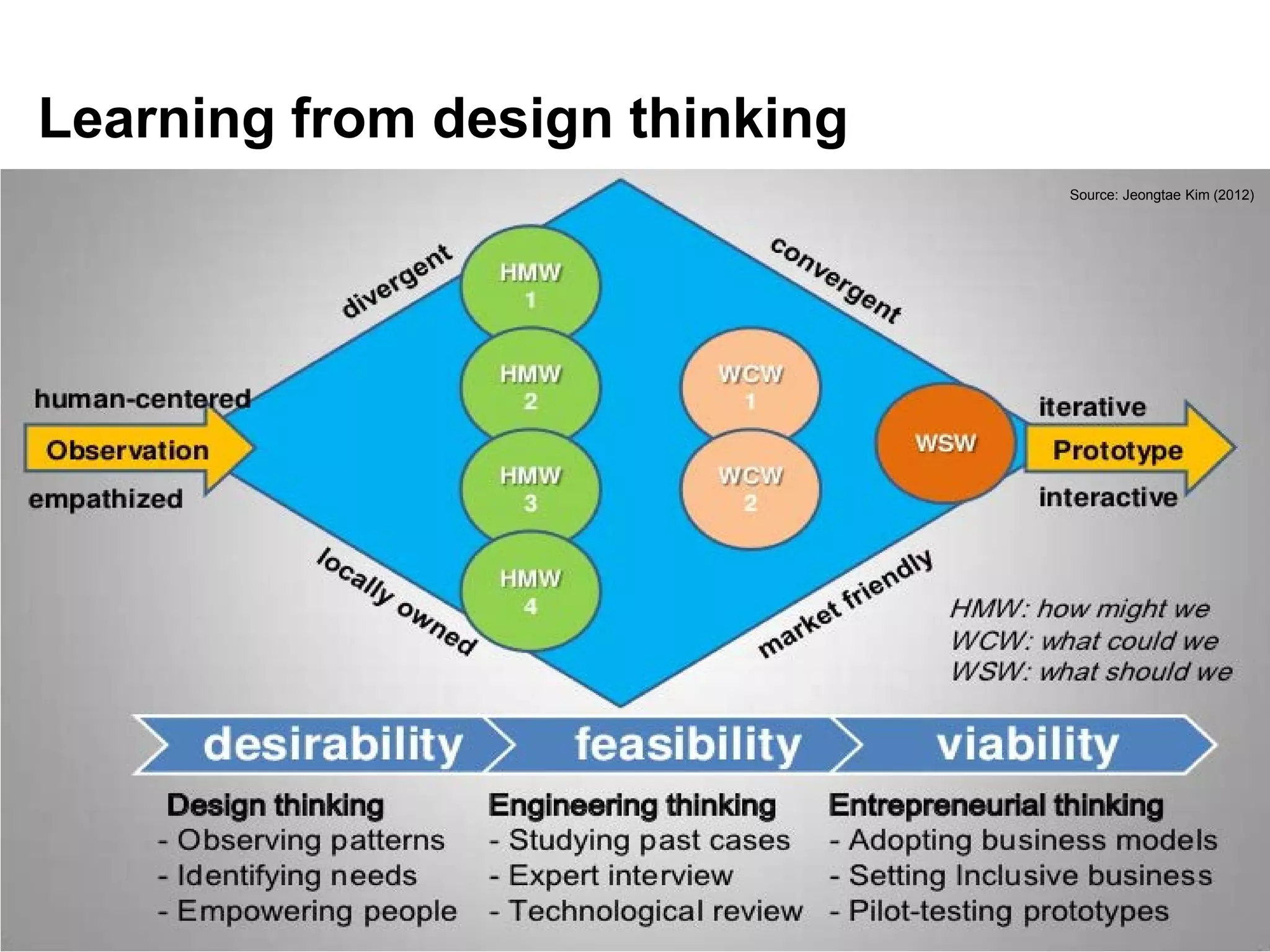
Learning from design thinking
                                Source: Jeongtae Kim (2012)
4.Case studies in BOP market
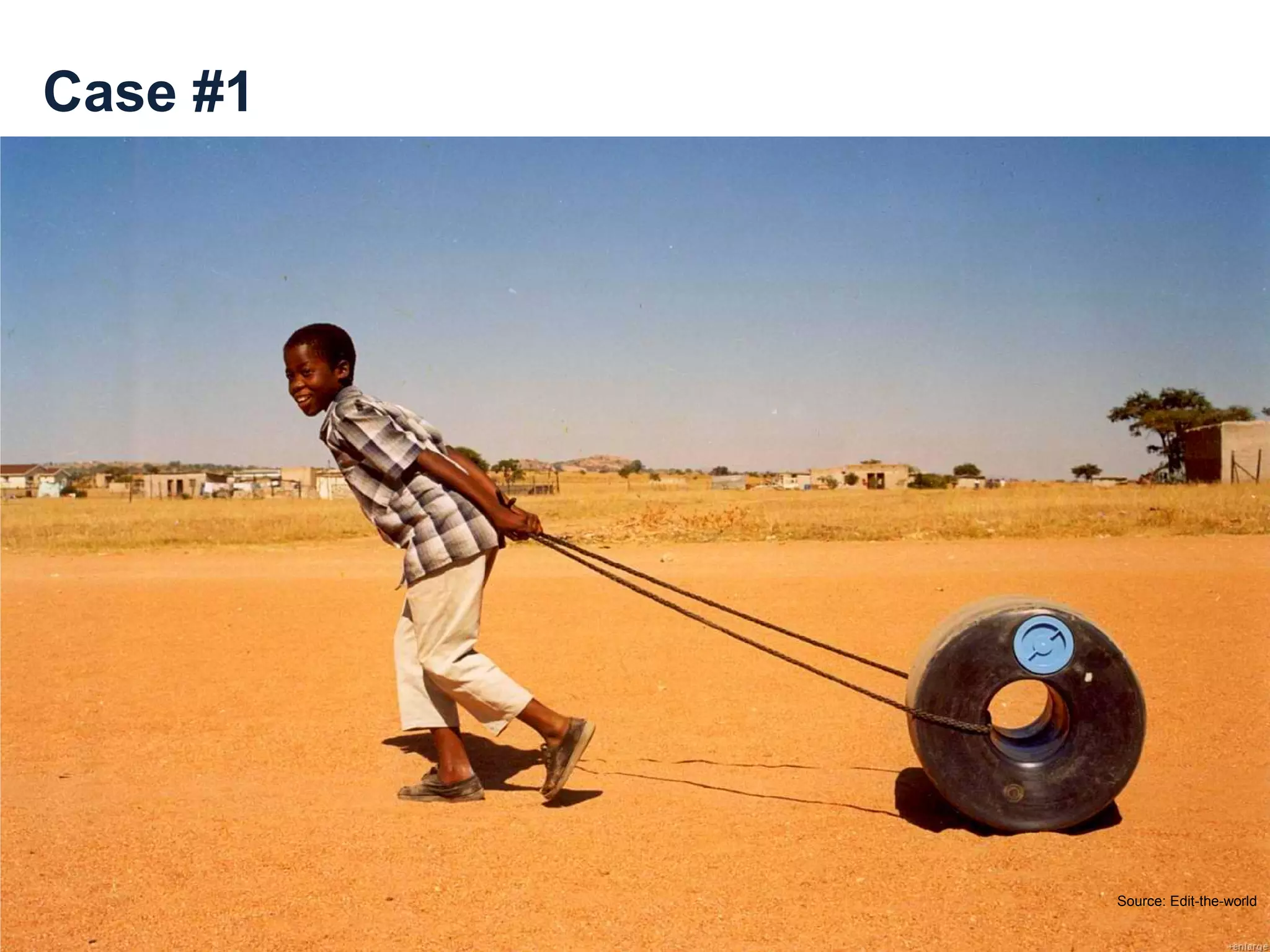
Case #1


          Source: Edit-the-world
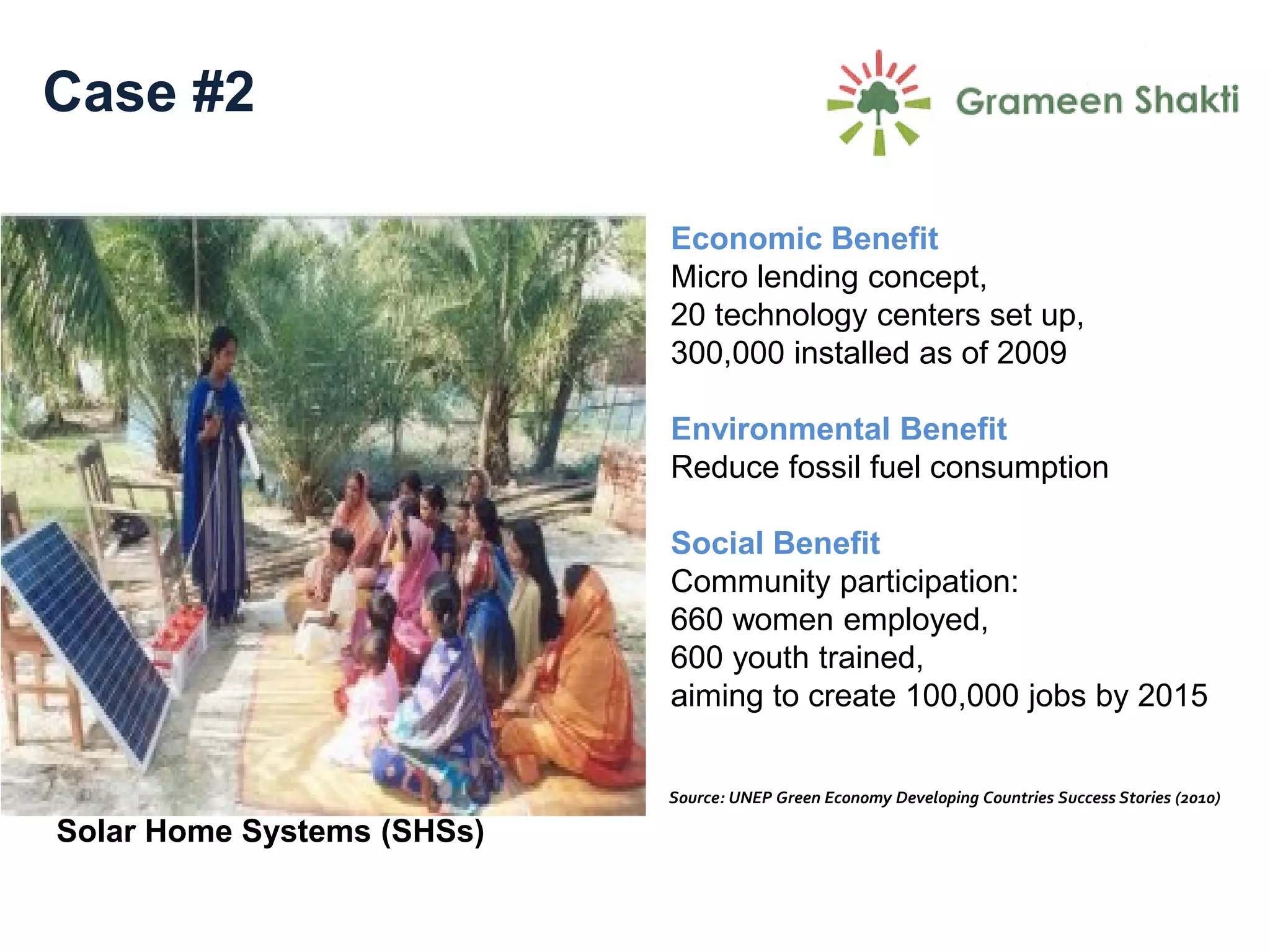
Case #2

                            Economic Benefit
                            Micro lending concept,
                            20 technology centers set up,
                            300,000 installed as of 2009

                            Environmental Benefit
                            Reduce fossil fuel consumption

                            Social Benefit
                            Community participation:
                            660 women employed,
                            600 youth trained,
                            aiming to create 100,000 jobs by 2015


                            Source: UNEP Green Economy Developing Countries Success Stories (2010)

Solar Home Systems (SHSs)
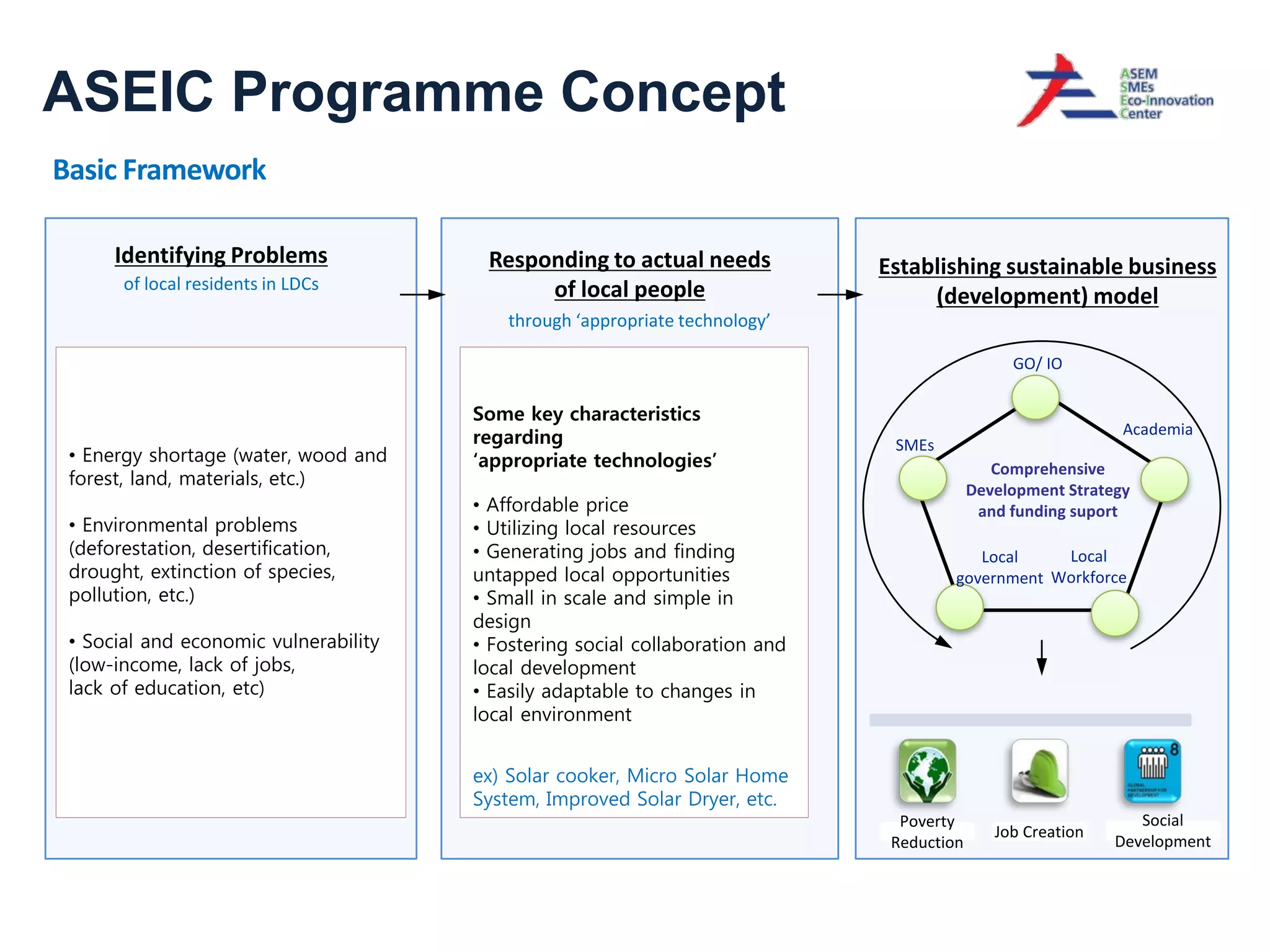
ASEIC Programme Concept
Basic Framework

      Identifying Problems              Responding to actual needs            Establishing sustainable business
       of local residents in LDCs            of local people                       (development) model
                                           through ‘appropriate technology’

                                                                                                GO/ IO

                                       Some key characteristics
                                                                                                              Academia
                                       regarding                               SMEs
 • Energy shortage (water, wood and    ‘appropriate technologies’                             Comprehensive
 forest, land, materials, etc.)
                                                                                           Development Strategy
                                       • Affordable price                                   and funding suport
 • Environmental problems              • Utilizing local resources
 (deforestation, desertification,      • Generating jobs and finding                      Local    Local
 drought, extinction of species,       untapped local opportunities                    government Workforce
 pollution, etc.)                      • Small in scale and simple in
                                       design
 • Social and economic vulnerability   • Fostering social collaboration and
 (low-income, lack of jobs,            local development
 lack of education, etc)               • Easily adaptable to changes in
                                       local environment


                                       ex) Solar cooker, Micro Solar Home
                                       System, Improved Solar Dryer, etc.
                                                                                Poverty                         Social
                                                                                              Job Creation
                                                                               Reduction                     Development
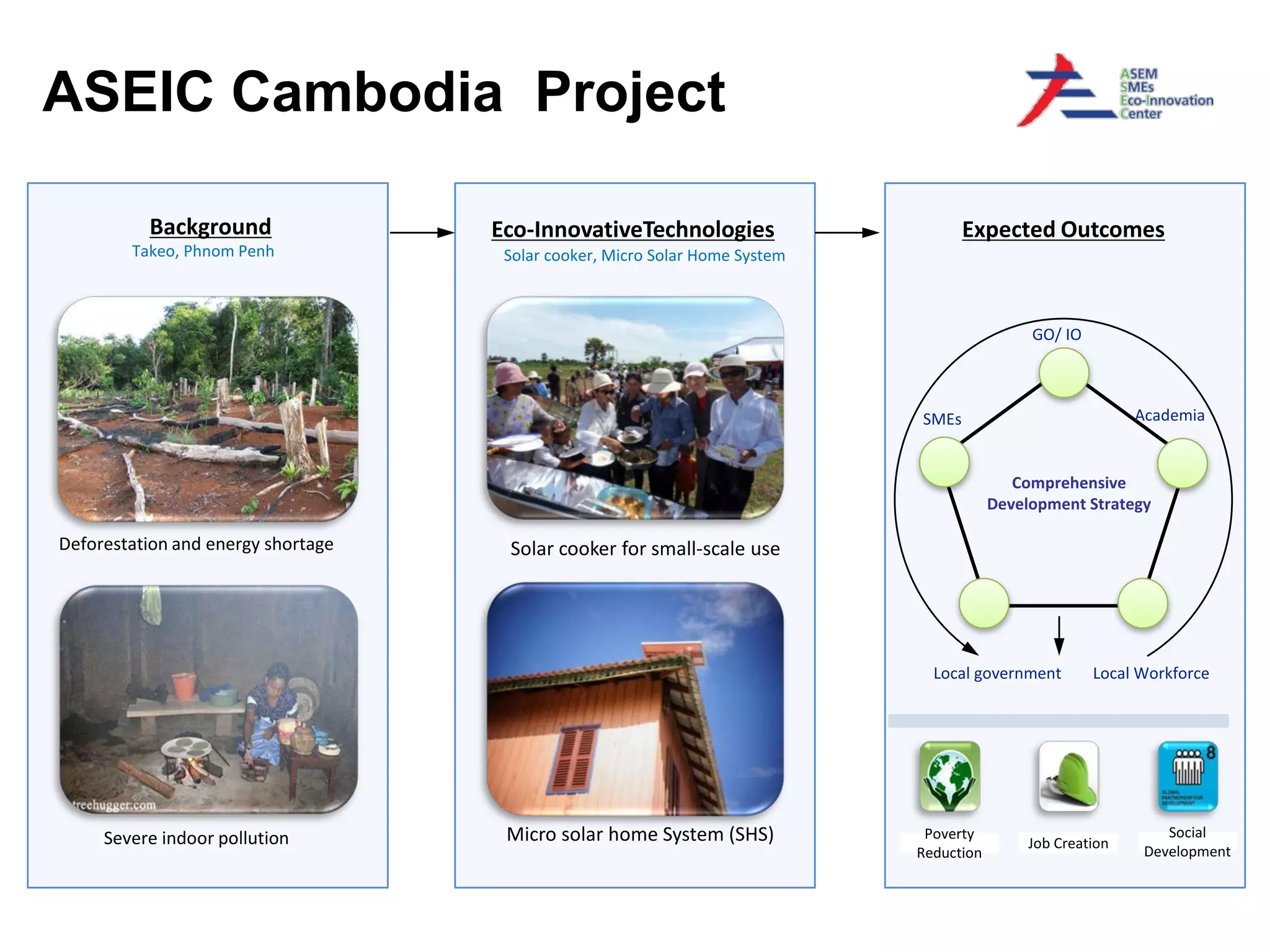
ASEIC Cambodia Project

          Background                Eco-InnovativeTechnologies                      Expected Outcomes
        Takeo, Phnom Penh            Solar cooker, Micro Solar Home System


                                                                                              GO/ IO


                                                                             SMEs                            Academia


                                                                                            Comprehensive
                                                                                         Development Strategy

Deforestation and energy shortage    Solar cooker for small-scale use


                                                                               Local government        Local Workforce


     Severe indoor pollution         Micro solar home System (SHS)            Poverty
                                                                                              Job Creation
                                                                                                                 Social
                                                                             Reduction                        Development
Learning from design thinking
                                Source: Jeongtae Kim (2012)
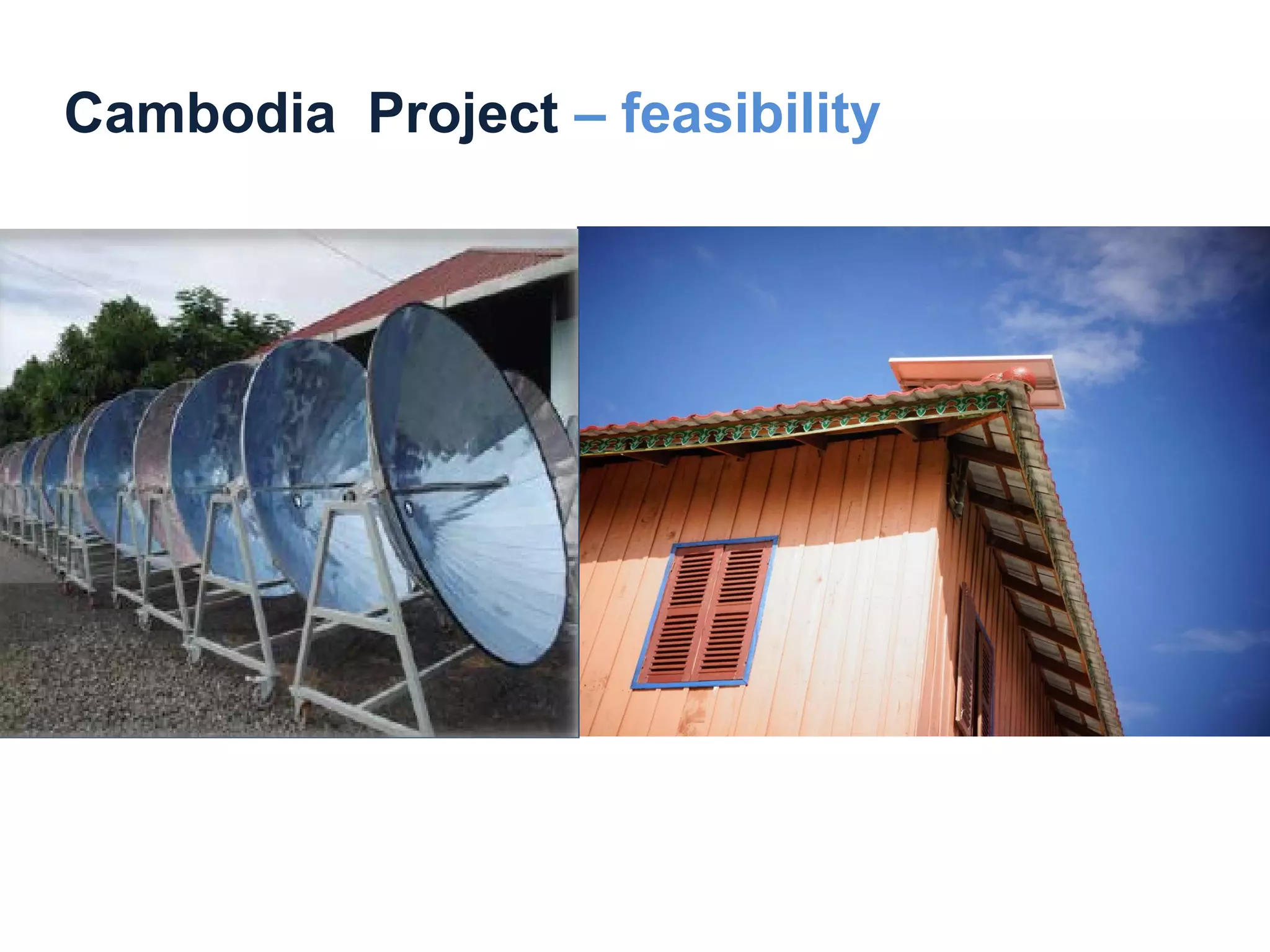
Feasibility Study – Solar Cooker case
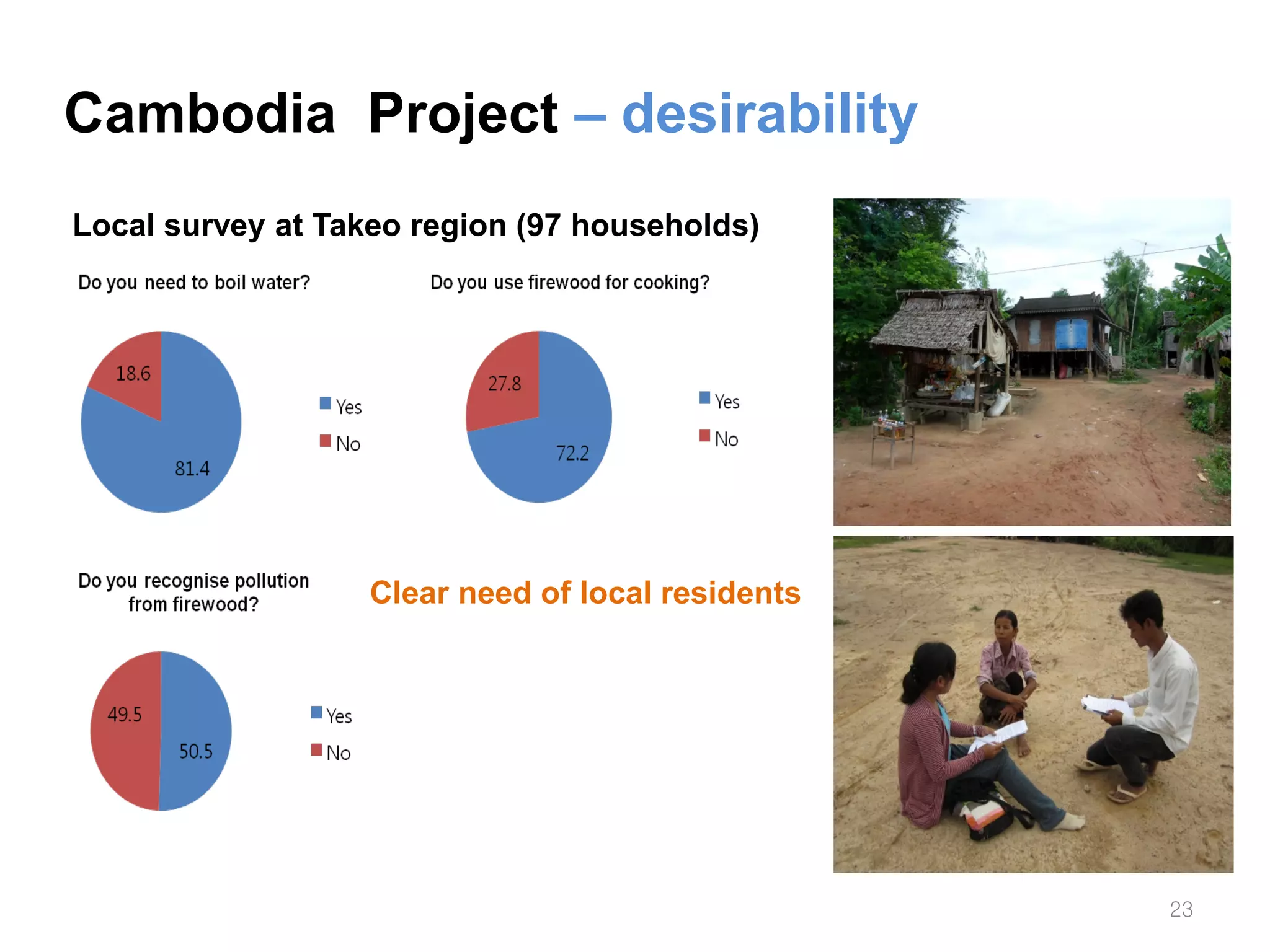
Cambodia Project – desirability
Local survey at Takeo region (97 households)


                   Clear need of local residents


                                                   23
Cambodia Project – feasibility
Cambodia Project – viability
 GGGI : Supports international cooperation with the Royal Government of Cambodia and international organizations,
        disseminates the project outcome to the international community, fund raising if necessary
      : Linked to the GGGI-Cambodia Green Growth Country Program
                                                              ASEIC : Manages project and provides funds as host
                                                                     organization/liaises with participating local/global agencies
                                                                                                                         Business Experts
                                                                               ASEIC Project Scope
  GGGI-Cambodia Country Program                                                                                           : Advises on a business
                                                                                                                          strategy
                                                                                                     Business             : find possible way to make
                                                                    ASEIC                            Experts
                                                                 (SMBA/SBC)                                              a local business sustainable ,
    Gov’t of
                          GGGI                                                                                           by applying shared
   Cambodia                               GGGI-ASEIC
                                            Project
                                                                                                                         technologies
                                         in Cambodia


                                                                                                         Local                         Local
                                                             Tech.         Local                                                      Business
                                                                                                       AT Center
                                                            Experts       Partners                                                     Model


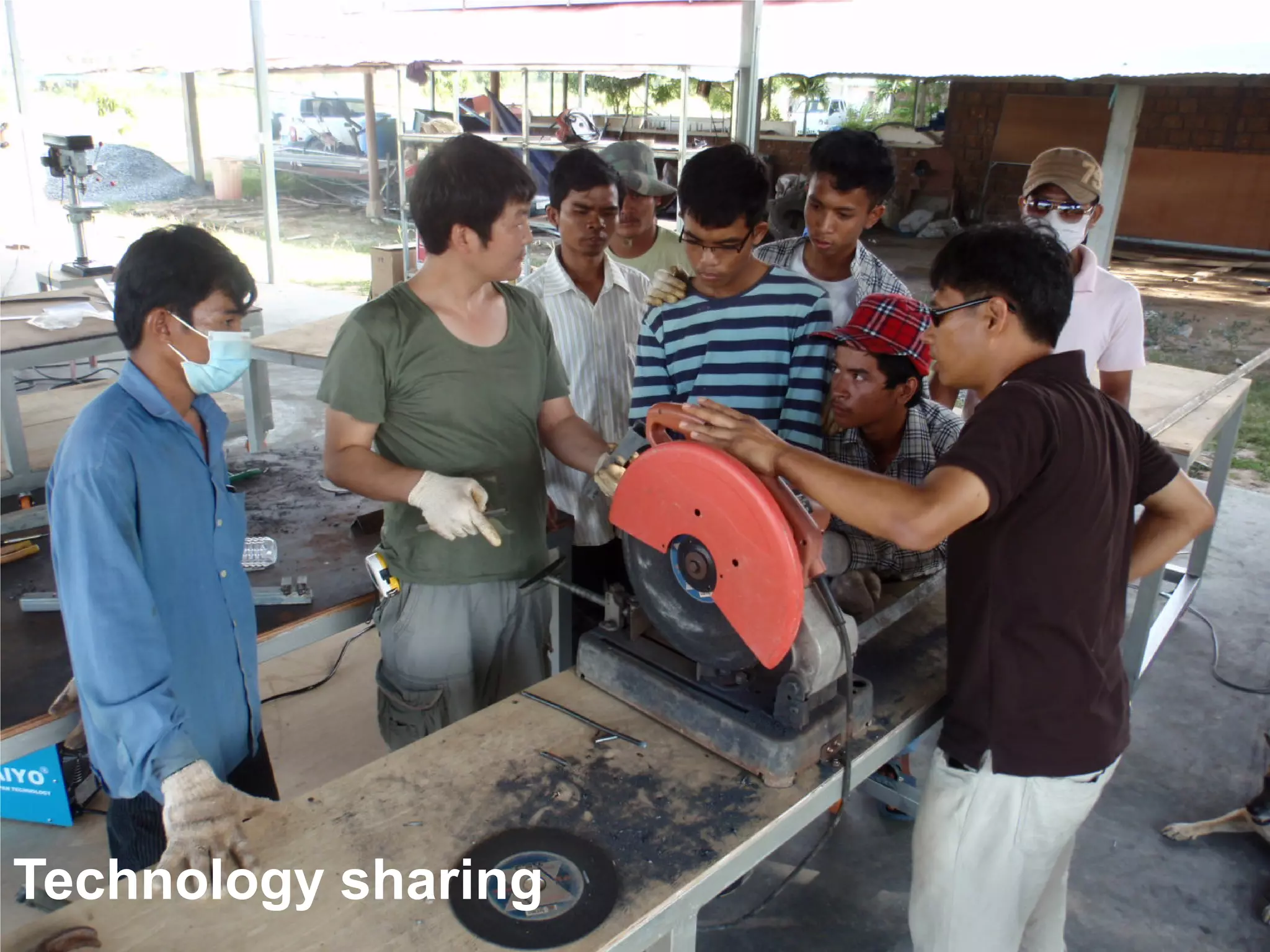
                                                       Tech. Experts and Local Partners : Produces solar cookers, improved solar dryer, etc.,
                                                                                          while sharing technologies with local community


       International                                                              International
                                            Government                                                                  Local Workforce
       Organization                                                              & Local Experts
Other information……


Technology sharing
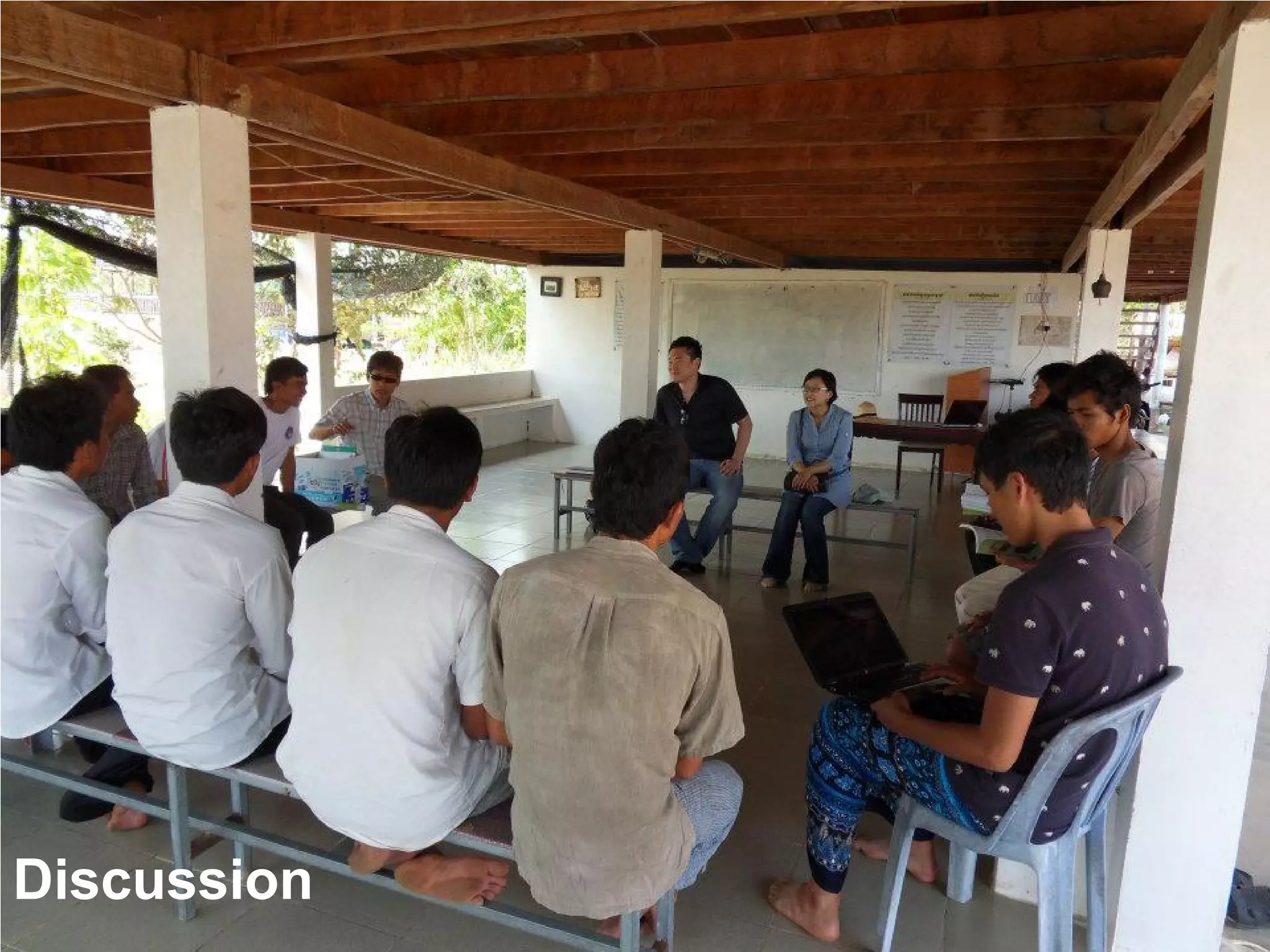
Discussion
Discussion
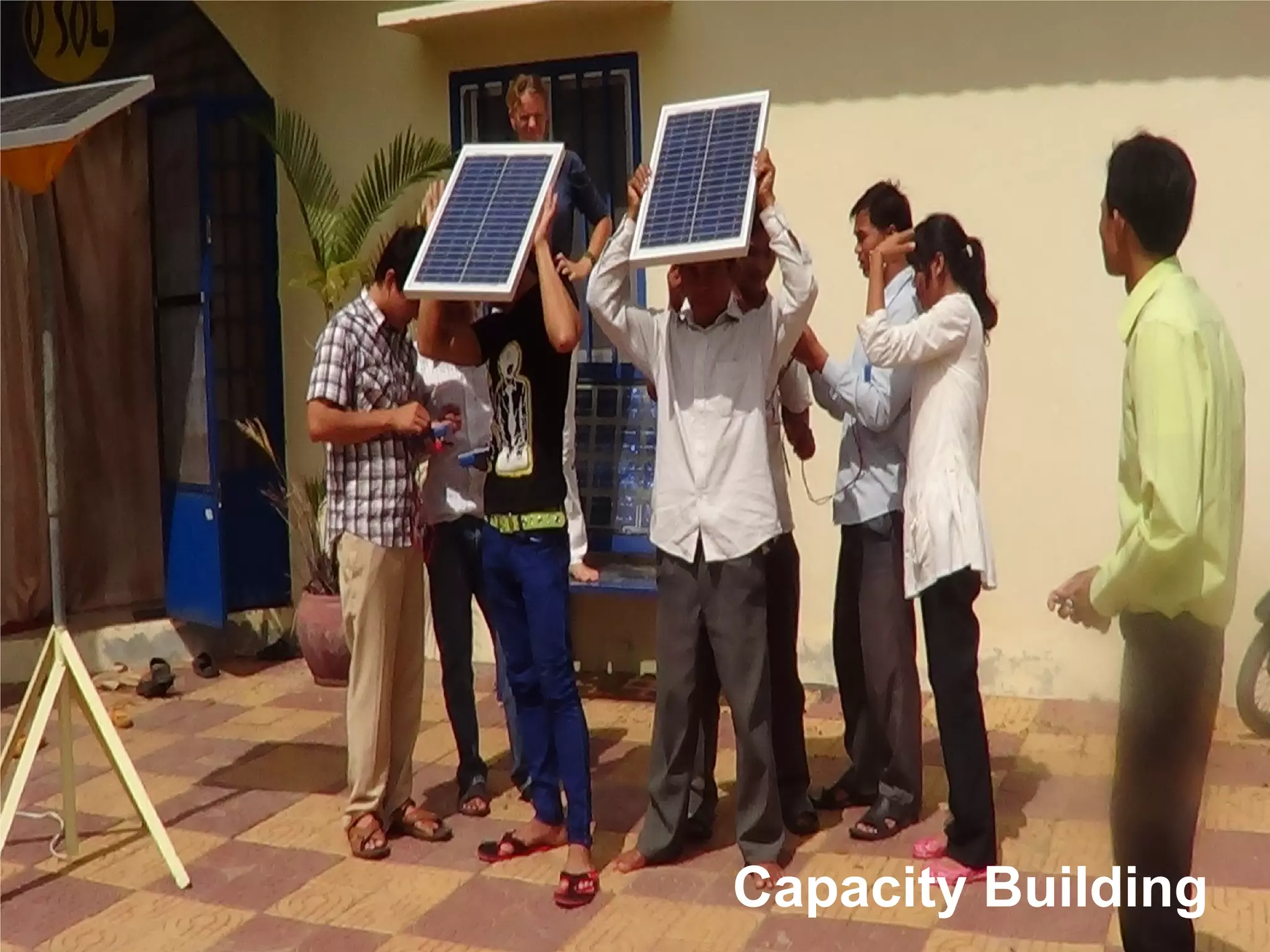
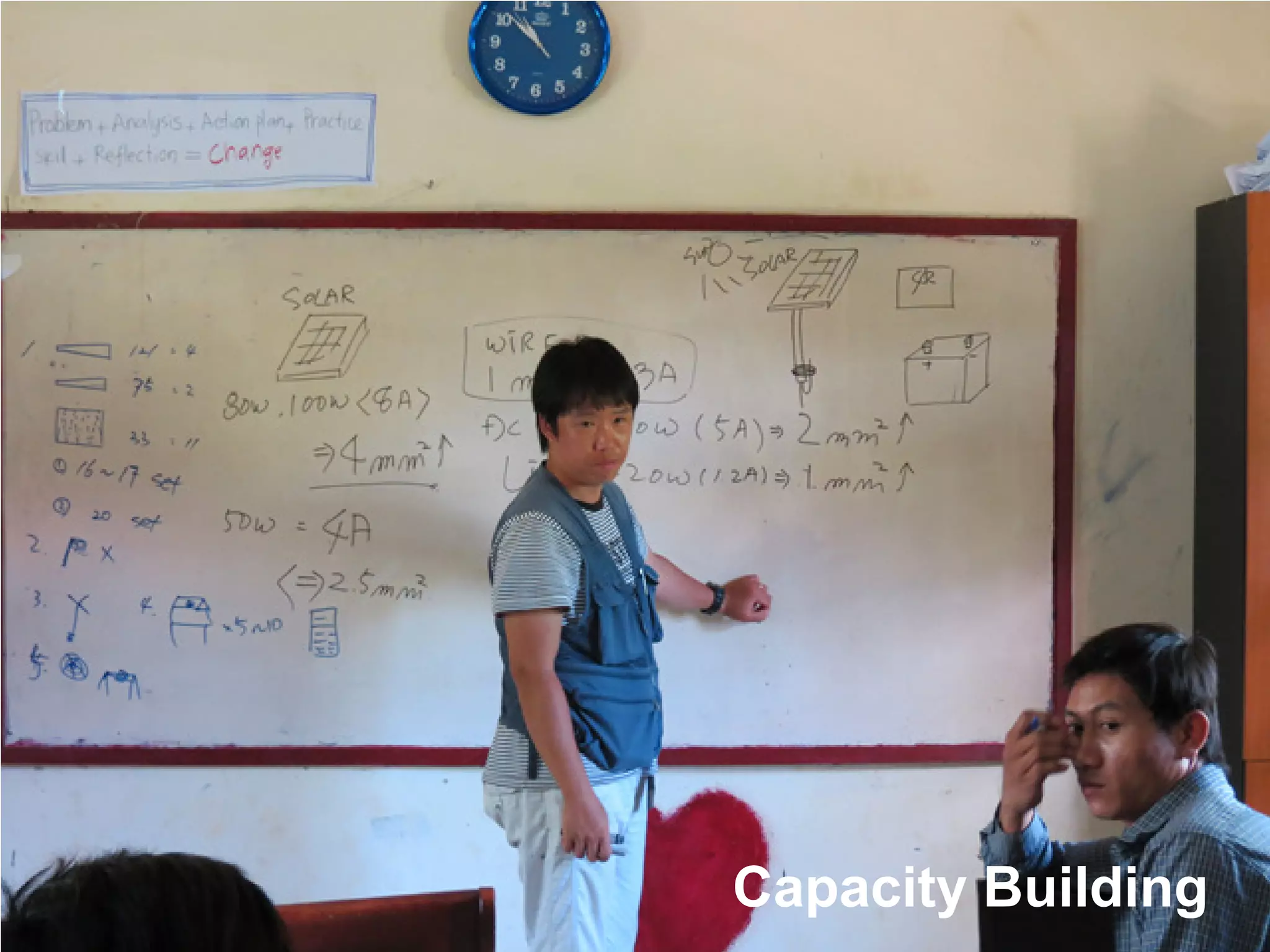
Capacity Building
Capacity Building
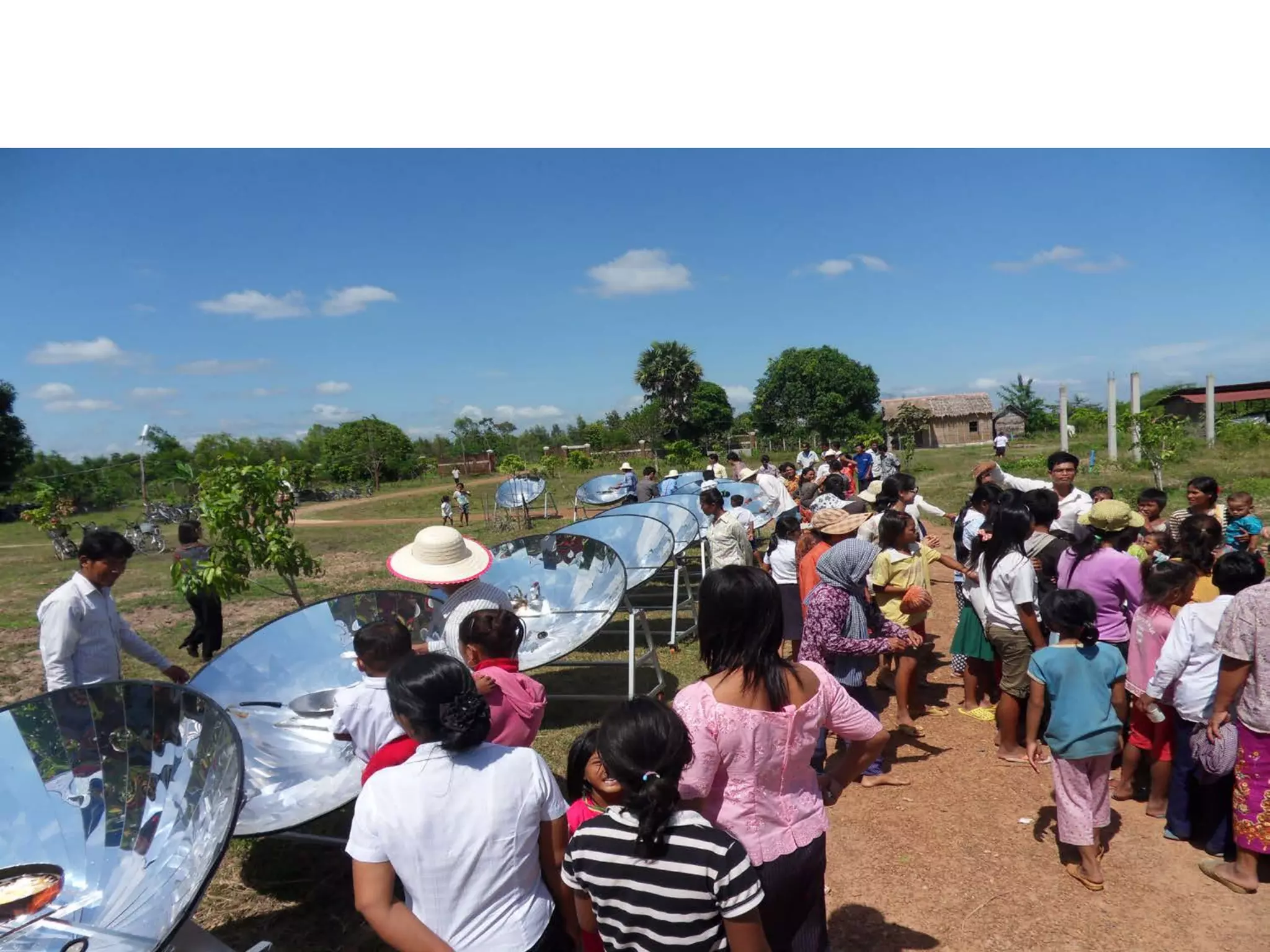
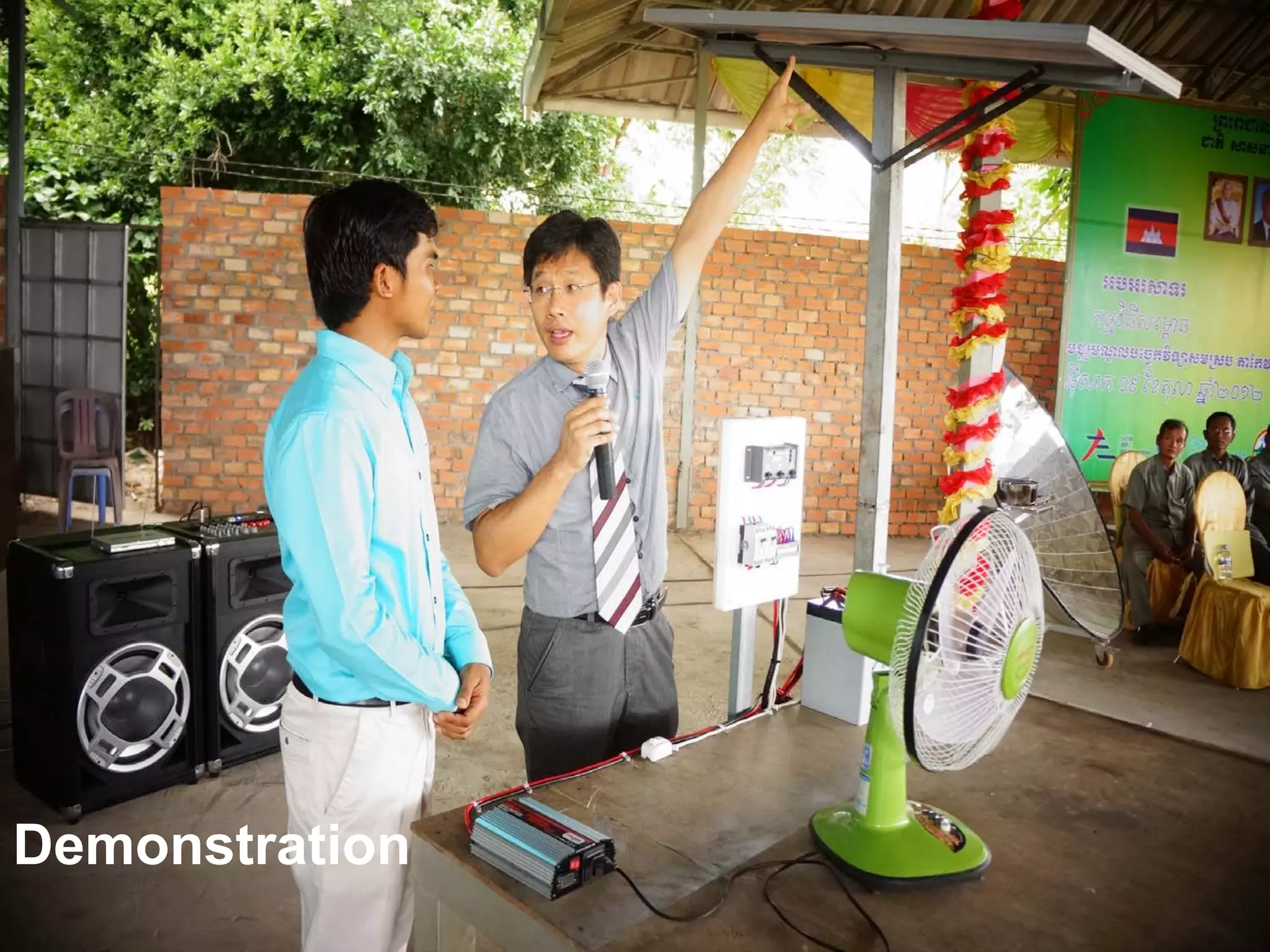
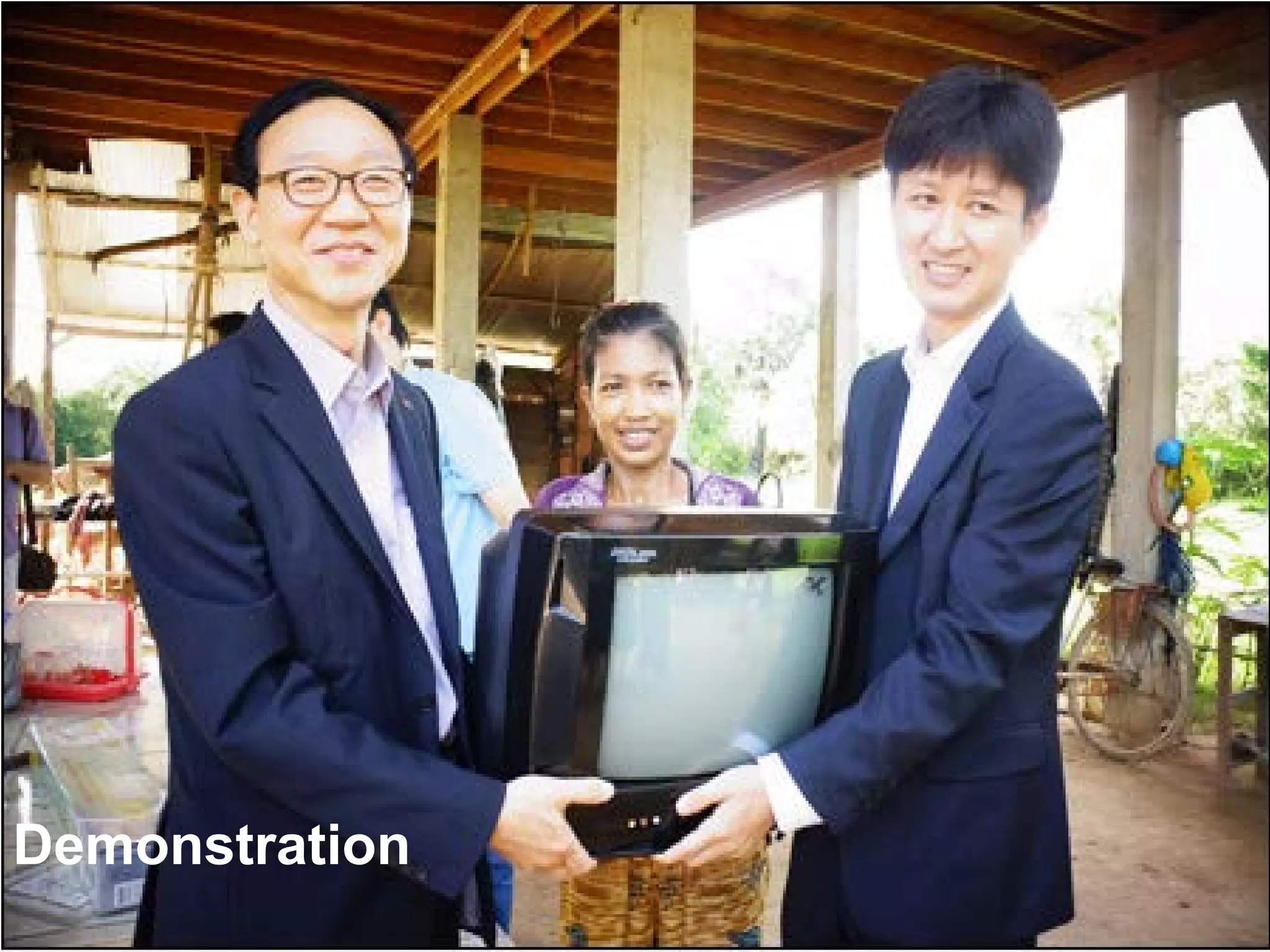
Demonstration
Demonstration
Demonstration
Demonstration
Demonstration
“This solar panel can change lives of Cambodians – both users and
manufacturers – and shows how foreign aid should be implemented.” –
The Korea Times, 15 October 2012
5. Conclusion
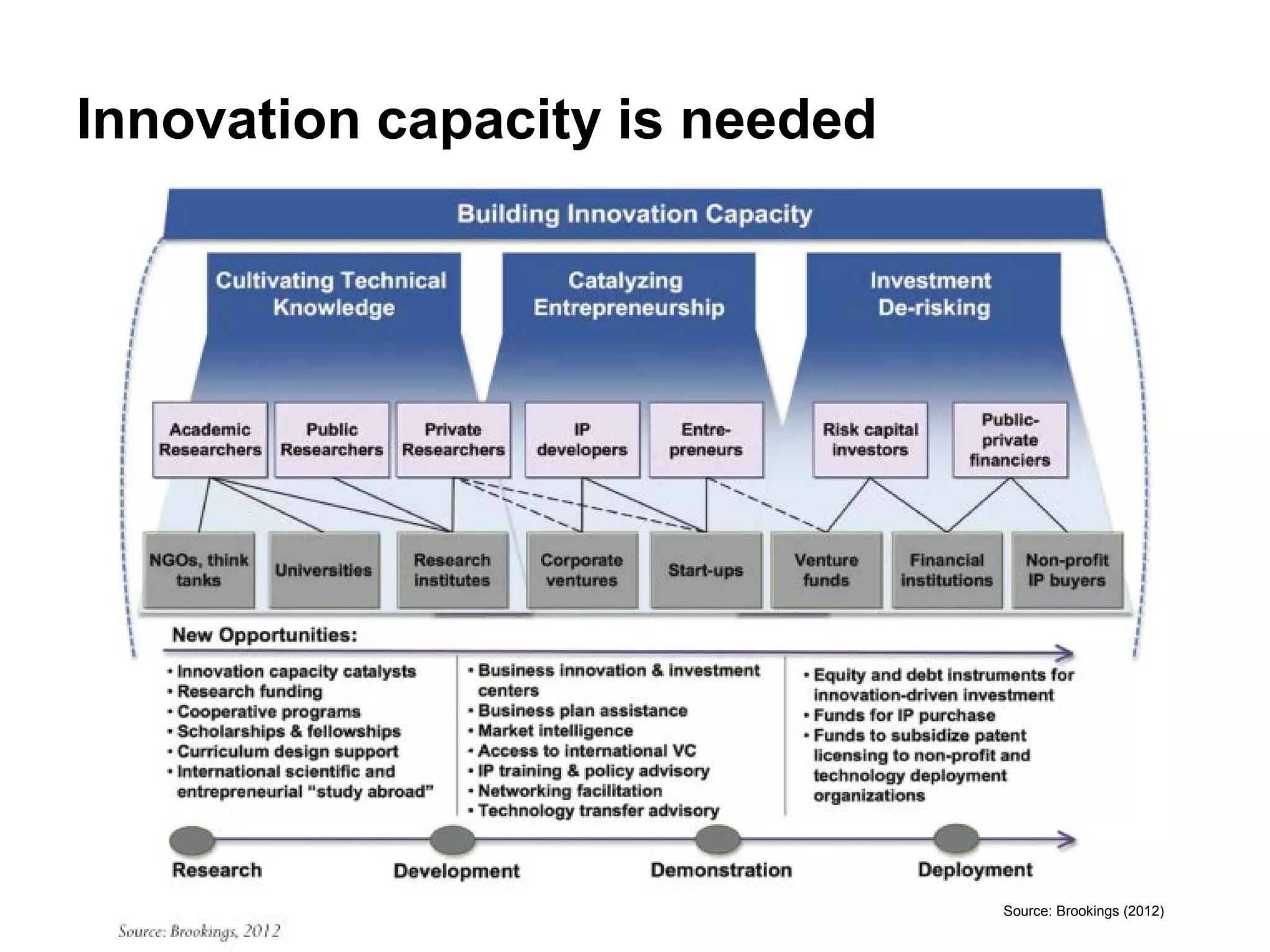
Innovation capacity is needed


                                Source: Brookings (2012)
Concluding remarks

-   Green Growth and Eco-Innovation can be regarded as key drivers
    towards sustainable development
-   Decoupling environmental degradation and resources consumption
    from economic growth requires innovative solutions from public and
    private sector, but developing and least developed countries has
    insufficient support and needs specially tailored approach
-   Dedicated funds to de-risk entrepreneurial investments and
    international program are needed to catalyze capacity building to
    develop innovation ecosystems in least developed countries
    …...
-   Measurable indicators for innovation activity and performance in
    developing countries needs to be developed to foster sustainability
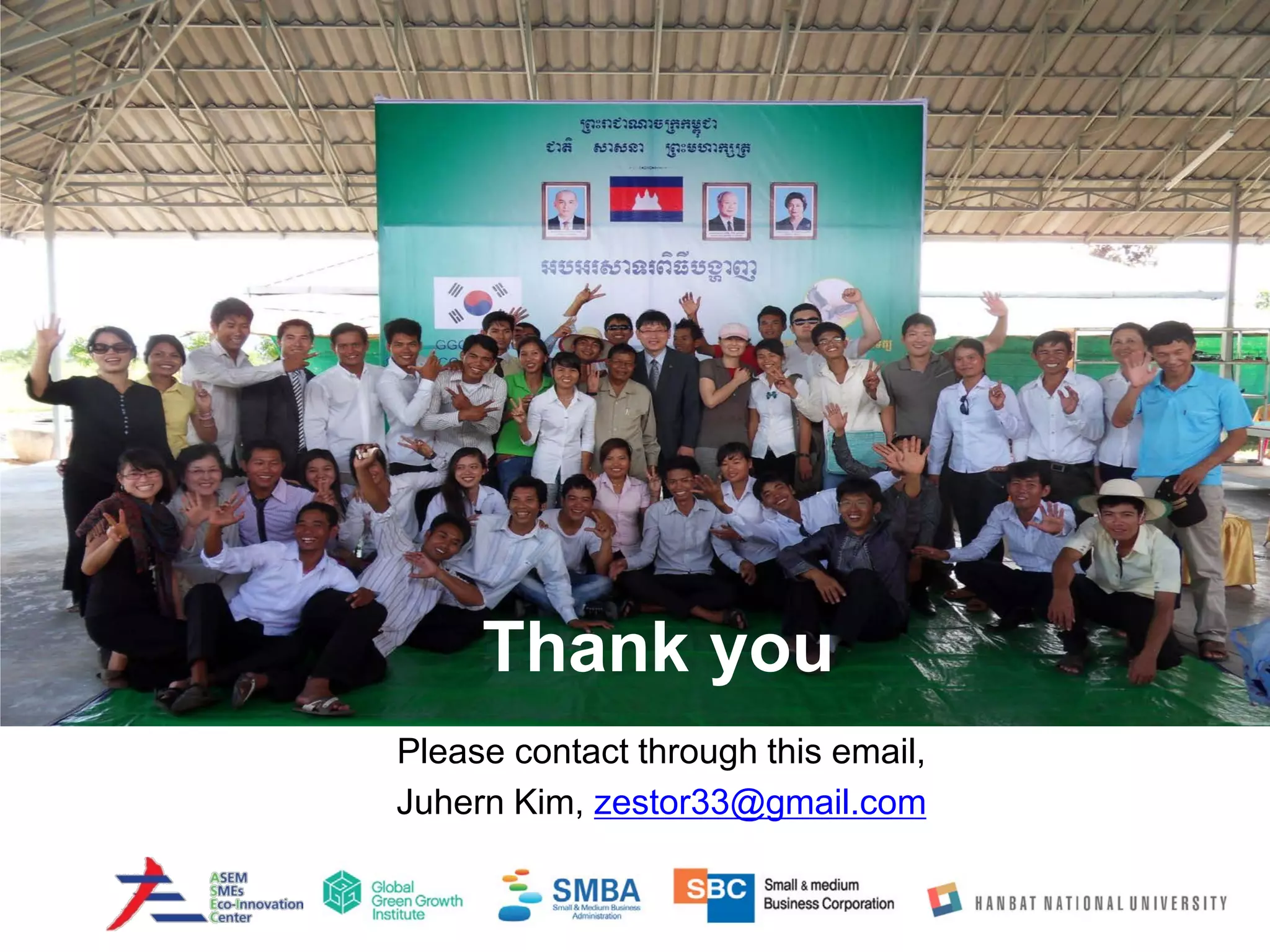
Thank you
Please contact through this email,
Juhern Kim, zestor33@gmail.com

05 juhern kim_asem env forum nov2012

  • 1.
    Sustainable Development Assessment:Towards Measurable Goals Accelerating Bottom-up Approach on Green Growth and Eco-Innovation @ASEM ENV Forum 21 November 2012 Juhern Kim
  • 2.
    Table of Contents 1.Introduction 2. MDGs and SDGs, why we are setting the Goals? 3. Accelerating Green Growth and Eco-Innovation at the bottom-up level 4. Case studies in BOP market 5. Conclusion
  • 3.
  • 5.
    2. MDGs andSDGs , why we are setting the goals?
  • 6.
  • 7.
    Source: The UNMillennium Development Goals Report 2012
  • 8.
    Rio+20, and challengesahead Green Growth - Over 1.3 billion people still do not have access to electricity Eco-Innovation - 2.5 billion people live without basic sanitation - 4 billion people live on less than $9 per day
  • 9.
    3.Accelerating Green Growthand Eco-Innovation at the bottom-up level
  • 10.
    Green Growth andEco-Innovation Green growth means fostering economic growth and development, while ensuring that natural assets continue to provide the resources and environmental services on which our well-being relies. - OECD Green growth is the new revolutionary development paradigm that sustains economic growth while at the same time ensuring climatic and environmental sustainability. - GGGI Eco-innovation is any form of innovation resulting in or aiming at significant and demonstrable progress towards the goal of sustainable development through reducing impacts on the environment, enhancing resilience to environmental pressures, or achieving a more efficient and responsible use of natural resources. - European Commission Eco-Innovation Action Plan (2012)
  • 11.
    Innovation status inDeveloping Countries (policy view) Insufficient green growth innovation activity and a lack of international initiatives to remedy this Current status Insufficient Suggestions integration from Focus on building innovation to innovation capacity in implementation, LDCs and a lack of international Be flexible and take risks mechanisms that to respond to unknown might support this future market needs Source: GGGI and Brookings Institute (2012) Insufficient innovation capacity in LDC countries, and scarcity of capacity building in international initiative
  • 12.
    Innovation status inDeveloping Countries (bottom-up view) Potential in BOP market (living on less than 9 dollars per day) – collective purchasing power: estimated 5 trillion dollars Source: Hammond (2007) Challenges Eco-Innovation Opportunities - Scarce public and global funding - Untapped eco-innovation potential in - ODA tends to support direct not-so-high tech in developing spefic target countries (‘appropriate technology’) - Local enterprise has limited - Opportunities are there to nurture access to long-term financing local entrepreneurship
  • 13.
    Why Innovation isdifficult? In Thailand 14:00 Saw Kre Ka village, Tha Song Yang District Source: Appropriate Technology Foundation
  • 14.
    Learning from designthinking Source: IDEO “Design thinking is a human-centered approach to innovation that draws from the designer's toolkit to integrate the needs of people, the possibilities of technology, and the requirements for business success.” — Tim Brown, president and CEO
  • 15.
    Learning from designthinking Source: Jeongtae Kim (2012)
  • 16.
  • 17.
    Case #1 Source: Edit-the-world
  • 18.
    Case #2 Economic Benefit Micro lending concept, 20 technology centers set up, 300,000 installed as of 2009 Environmental Benefit Reduce fossil fuel consumption Social Benefit Community participation: 660 women employed, 600 youth trained, aiming to create 100,000 jobs by 2015 Source: UNEP Green Economy Developing Countries Success Stories (2010) Solar Home Systems (SHSs)
  • 20.
    ASEIC Programme Concept BasicFramework Identifying Problems Responding to actual needs Establishing sustainable business of local residents in LDCs of local people (development) model through ‘appropriate technology’ GO/ IO Some key characteristics Academia regarding SMEs • Energy shortage (water, wood and ‘appropriate technologies’ Comprehensive forest, land, materials, etc.) Development Strategy • Affordable price and funding suport • Environmental problems • Utilizing local resources (deforestation, desertification, • Generating jobs and finding Local Local drought, extinction of species, untapped local opportunities government Workforce pollution, etc.) • Small in scale and simple in design • Social and economic vulnerability • Fostering social collaboration and (low-income, lack of jobs, local development lack of education, etc) • Easily adaptable to changes in local environment ex) Solar cooker, Micro Solar Home System, Improved Solar Dryer, etc. Poverty Social Job Creation Reduction Development
  • 21.
    ASEIC Cambodia Project Background Eco-InnovativeTechnologies Expected Outcomes Takeo, Phnom Penh Solar cooker, Micro Solar Home System GO/ IO SMEs Academia Comprehensive Development Strategy Deforestation and energy shortage Solar cooker for small-scale use Local government Local Workforce Severe indoor pollution Micro solar home System (SHS) Poverty Job Creation Social Reduction Development
  • 22.
    Learning from designthinking Source: Jeongtae Kim (2012)
  • 23.
    Feasibility Study –Solar Cooker case Cambodia Project – desirability Local survey at Takeo region (97 households) Clear need of local residents 23
  • 24.
  • 25.
    Cambodia Project –viability GGGI : Supports international cooperation with the Royal Government of Cambodia and international organizations, disseminates the project outcome to the international community, fund raising if necessary : Linked to the GGGI-Cambodia Green Growth Country Program ASEIC : Manages project and provides funds as host organization/liaises with participating local/global agencies Business Experts ASEIC Project Scope GGGI-Cambodia Country Program : Advises on a business strategy Business : find possible way to make ASEIC Experts (SMBA/SBC) a local business sustainable , Gov’t of GGGI by applying shared Cambodia GGGI-ASEIC Project technologies in Cambodia Local Local Tech. Local Business AT Center Experts Partners Model Tech. Experts and Local Partners : Produces solar cookers, improved solar dryer, etc., while sharing technologies with local community International International Government Local Workforce Organization & Local Experts
  • 26.
  • 27.
  • 28.
  • 29.
  • 30.
  • 31.
  • 32.
  • 33.
  • 34.
  • 35.
  • 36.
    “This solar panelcan change lives of Cambodians – both users and manufacturers – and shows how foreign aid should be implemented.” – The Korea Times, 15 October 2012
  • 37.
  • 38.
    Innovation capacity isneeded Source: Brookings (2012)
  • 39.
    Concluding remarks - Green Growth and Eco-Innovation can be regarded as key drivers towards sustainable development - Decoupling environmental degradation and resources consumption from economic growth requires innovative solutions from public and private sector, but developing and least developed countries has insufficient support and needs specially tailored approach - Dedicated funds to de-risk entrepreneurial investments and international program are needed to catalyze capacity building to develop innovation ecosystems in least developed countries …... - Measurable indicators for innovation activity and performance in developing countries needs to be developed to foster sustainability
  • 40.
    Thank you Please contactthrough this email, Juhern Kim, zestor33@gmail.com