Coordinating
Climate-Resilient
Development
Integrating Adaptation Considerations
into Sector Planning
NAP Global Network Session at NAP
Expo
Hayley Price-Kelly
July 11, 2016
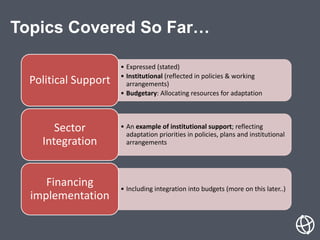
Topics Covered So Far…
• Expressed (stated)
• Institutional (reflected in policies & working
arrangements)
• Budgetary: Allocating resources for adaptation
Political Support
• An example of institutional support; reflecting
adaptation priorities in policies, plans and institutional
arrangements
Sector
Integration
• Including integration into budgets (more on this later..)
Financing
implementation
Why integration
matters
Integration is one of two objectives of the
NAP process:
 Reduce vulnerability
 Integrate climate change adaptation into new
and existing development planning
processes, across all relevant sectors and
levels
UNFCCC, 5/CP.17
Doing things differently because of climate
change:
 Systematically identifying significant risks
and opportunities for development
 Working with the range of stakeholders,
agencies and institutions to modify affected
policies, strategies, plans
 Implement them
What integration
means
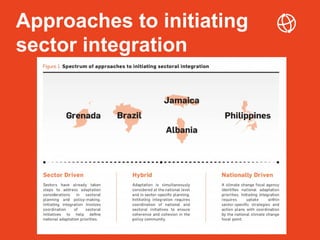
Approaches to initiating
sector integration
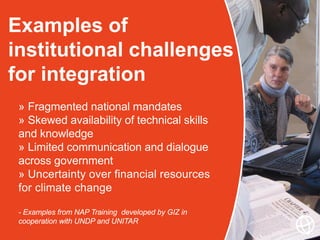
Examples of
institutional challenges
for integration
» Fragmented national mandates
» Skewed availability of technical skills
and knowledge
» Limited communication and dialogue
across government
» Uncertainty over financial resources
for climate change
- Examples from NAP Training developed by GIZ in
cooperation with UNDP and UNITAR
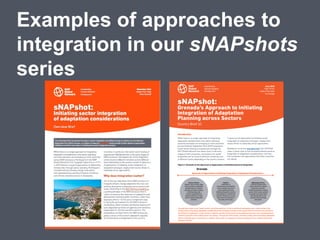
Examples of approaches to
integration in our sNAPshots
series
www.napglobalnetwork.org
info@napglobalnetwork.org
@NAP_Network
#NAPGN

Integrating Adaptation Considerations into Sector Planning

  • 1.
    Coordinating Climate-Resilient Development Integrating Adaptation Considerations intoSector Planning NAP Global Network Session at NAP Expo Hayley Price-Kelly July 11, 2016
  • 2.
    Topics Covered SoFar… • Expressed (stated) • Institutional (reflected in policies & working arrangements) • Budgetary: Allocating resources for adaptation Political Support • An example of institutional support; reflecting adaptation priorities in policies, plans and institutional arrangements Sector Integration • Including integration into budgets (more on this later..) Financing implementation
  • 3.
    Why integration matters Integration isone of two objectives of the NAP process:  Reduce vulnerability  Integrate climate change adaptation into new and existing development planning processes, across all relevant sectors and levels UNFCCC, 5/CP.17
  • 4.
    Doing things differentlybecause of climate change:  Systematically identifying significant risks and opportunities for development  Working with the range of stakeholders, agencies and institutions to modify affected policies, strategies, plans  Implement them What integration means
  • 5.
  • 6.
    Examples of institutional challenges forintegration » Fragmented national mandates » Skewed availability of technical skills and knowledge » Limited communication and dialogue across government » Uncertainty over financial resources for climate change - Examples from NAP Training developed by GIZ in cooperation with UNDP and UNITAR
  • 7.
    Examples of approachesto integration in our sNAPshots series
  • 8.