INTEGRATED VECTOR
MANAGEMENT
1
DEPARTMENT OF COMMUNITY MEDICINE
BLESSING OBOGBARO (18/020283)
BLESSING ODONGHARO (17/019669)
ABDULAFIZ ODUMOSU (18/020469)
JOSHUA ODIACHI (18/020831)
AIM
IntroductionAbbreviation
Definition of terms
Mode of transmission
Why control vectors?
Principles of vector control
Integrated vector control management/approach
Selection criteria for vector control management
Vector control approach for arthropod that causes infectious disease
Elements for the successful implementation of ivm
Conclusion
Reference
Acknowledgement
OUTLINE
2
AIM
To improve the efficiency, cost-effectiveness,
ecological soundness and sustainability of vector
control interventions, while reducing the risks of
vector-borne diseases
3
INTRODUCTION
Vector control is any method to limit insects or
other arthropods which transmits disease
pathogens.
Integrated vector control can be used for
surveillance and control for elimination of vector
borne disease and can help
reduce the development of insecticide resistance.
4
ABBREVIATION
IVM: INTEGRATED VECTOR MANAGEMENT
VBD: VECTOR BORNE DISEASE
WHO: WHORLD HEALTH ORGANIZATION
DDT: DICHLORODIPHENYLTRICHLOROETHANE
5
DEFINITIONS OF TERMS
According to World Health Organisation(WHO),
Integrated vector management(IVM) is a rational
decision-making process to optimize the use of
resource for managing vector population in a way
that reduces or interrupts the transmission of
disease (WHO, 2012).
6
DEFINITION OF TERMS
VECTOR: An arthropod or any small living organisms that
can transmit infectious pathogens to susceptible
individual(WHO,2017).
7
DEFINITION OF TERMS
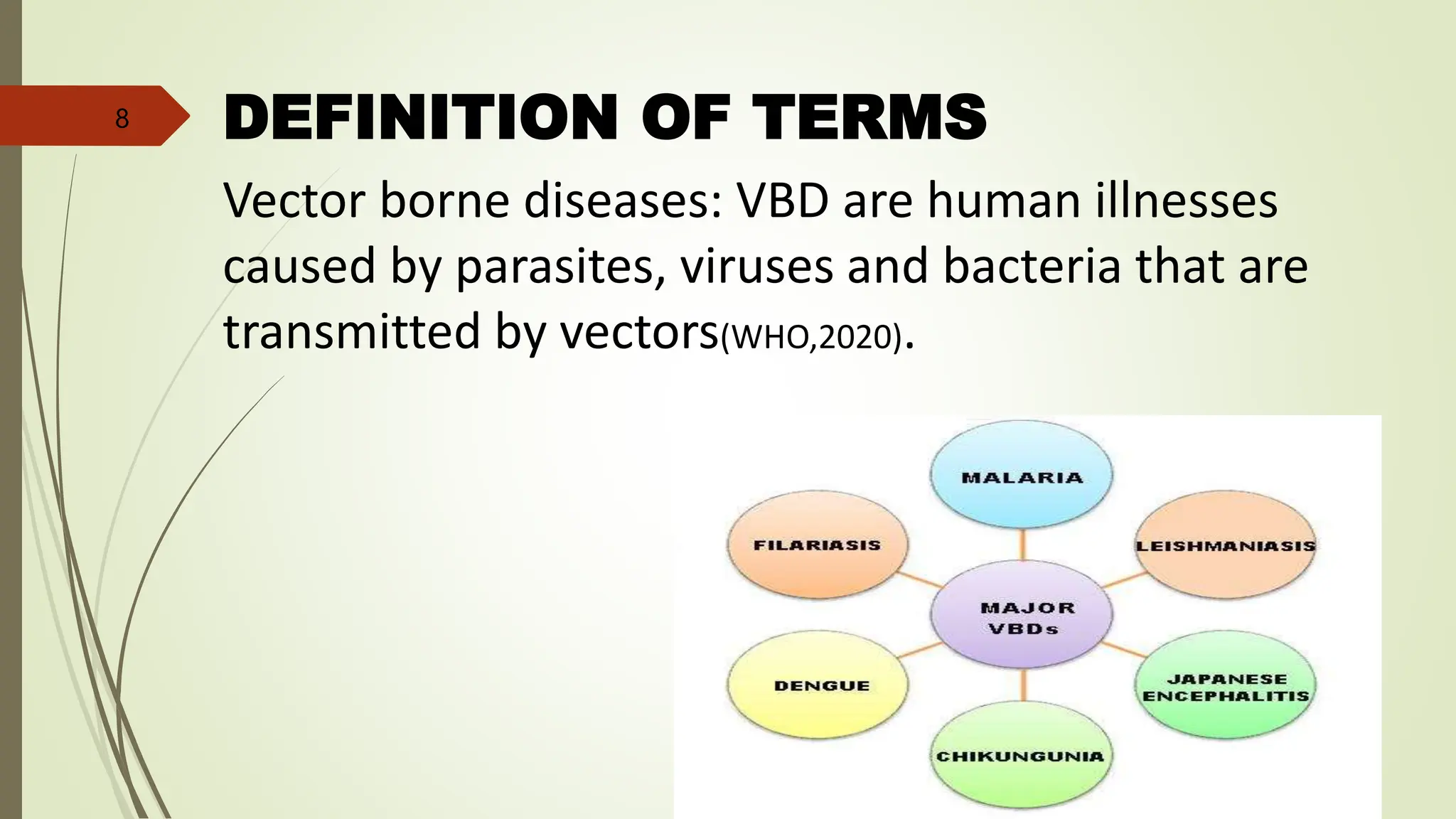
Vector borne diseases: VBD are human illnesses
caused by parasites, viruses and bacteria that are
transmitted by vectors(WHO,2020).
8
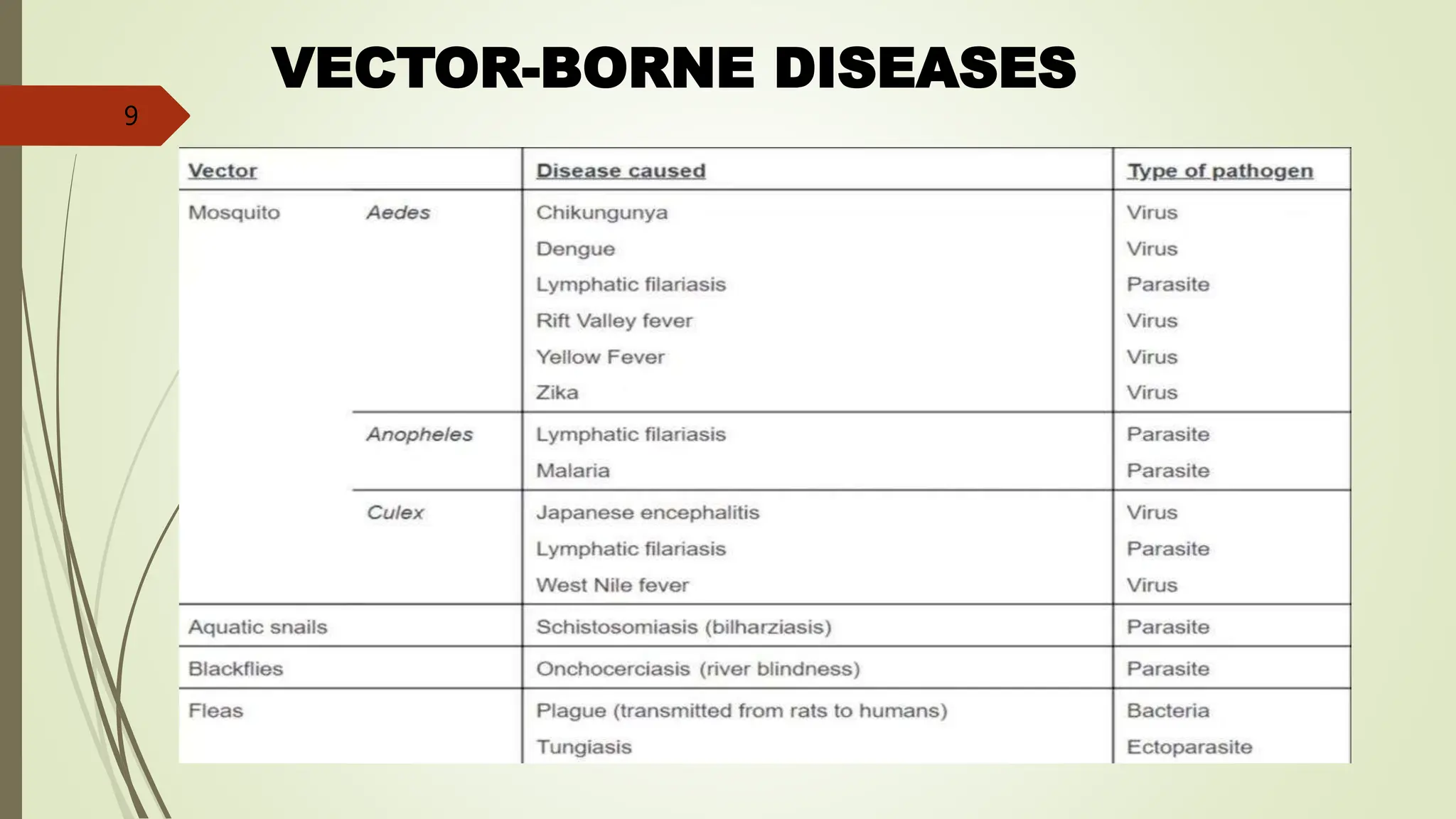
VECTOR-BORNE DISEASES
9
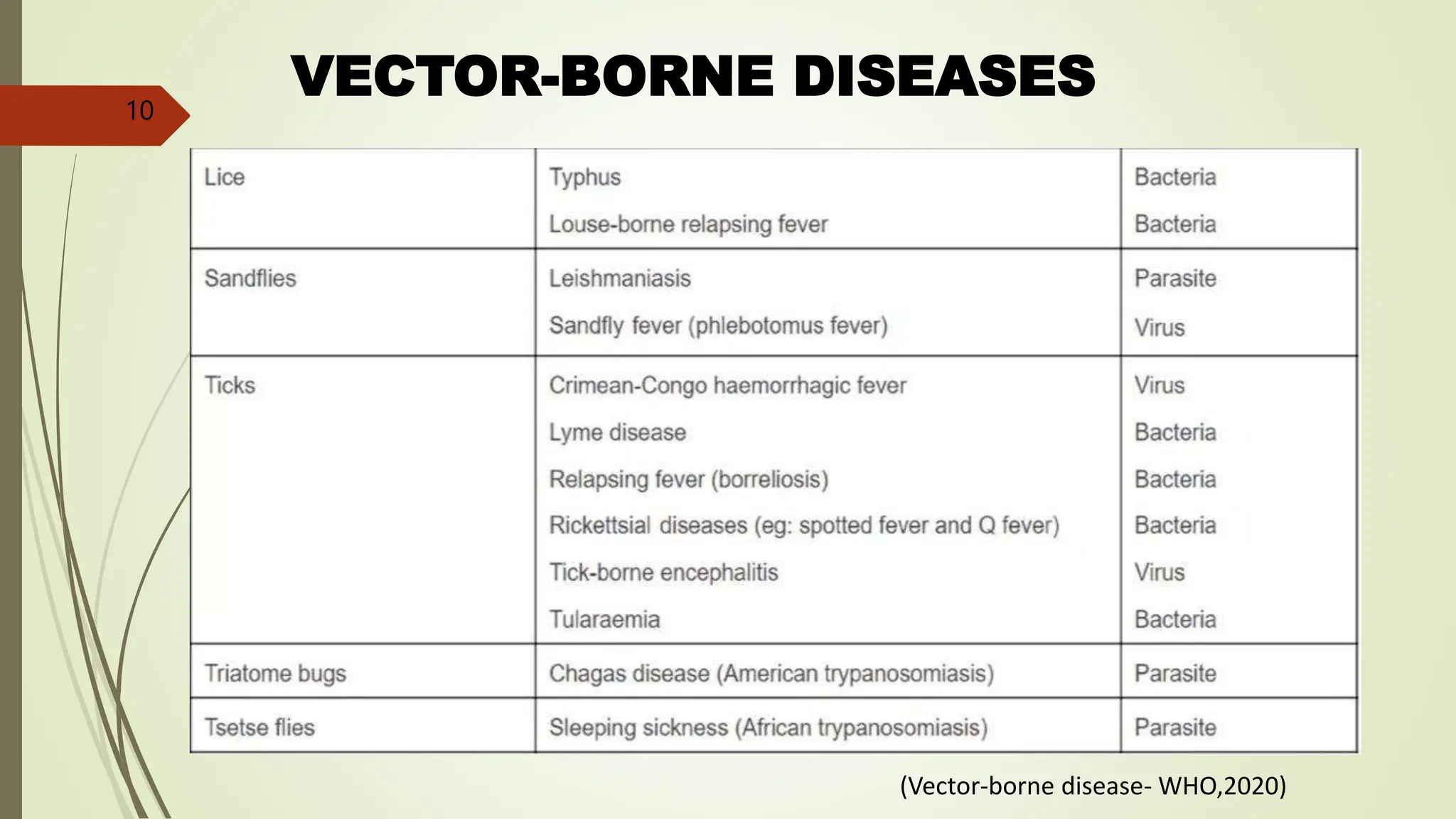
VECTOR-BORNE DISEASES
(Vector-borne disease- WHO,2020)
10
MODE OF TRANSMISSION
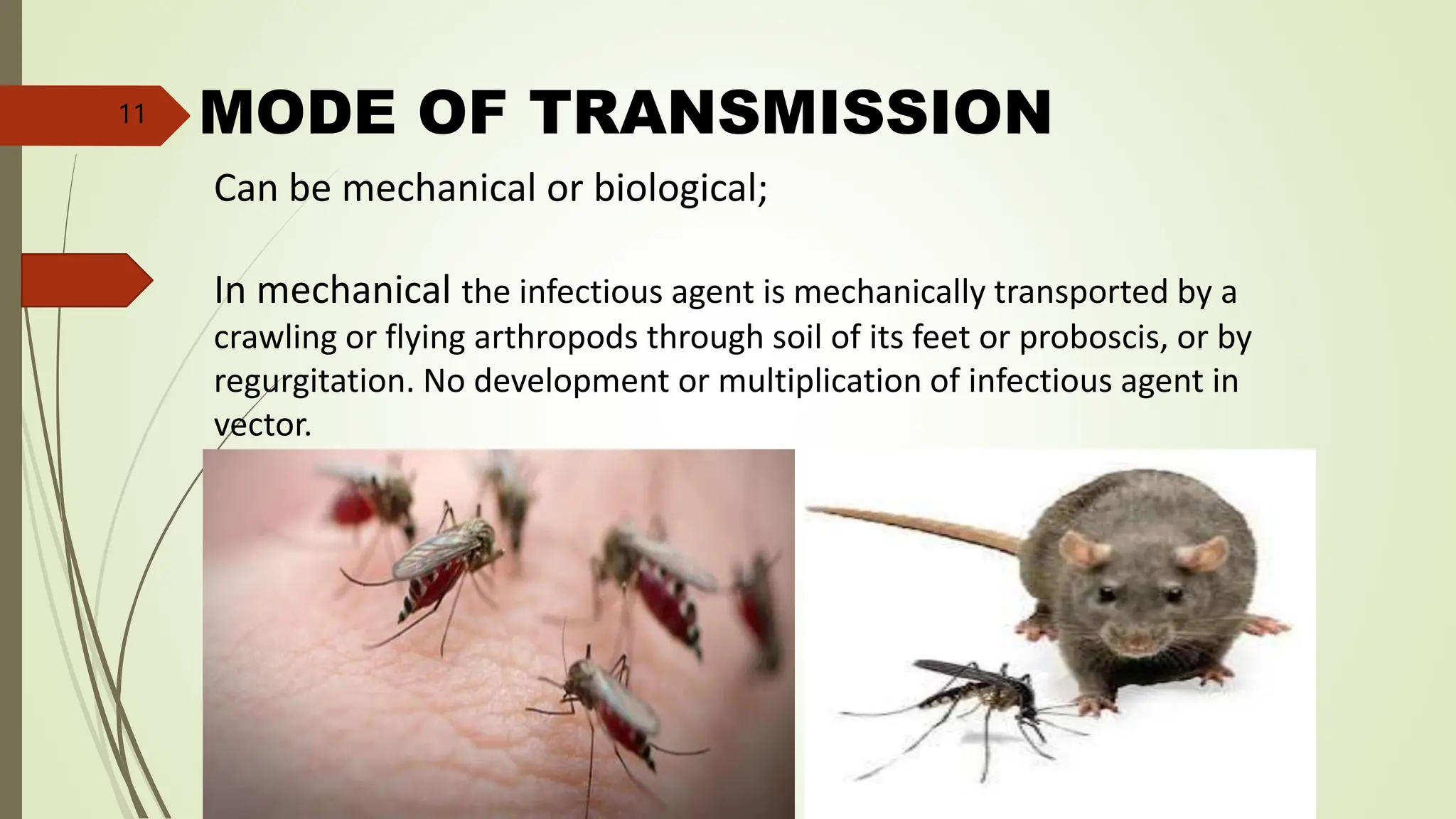
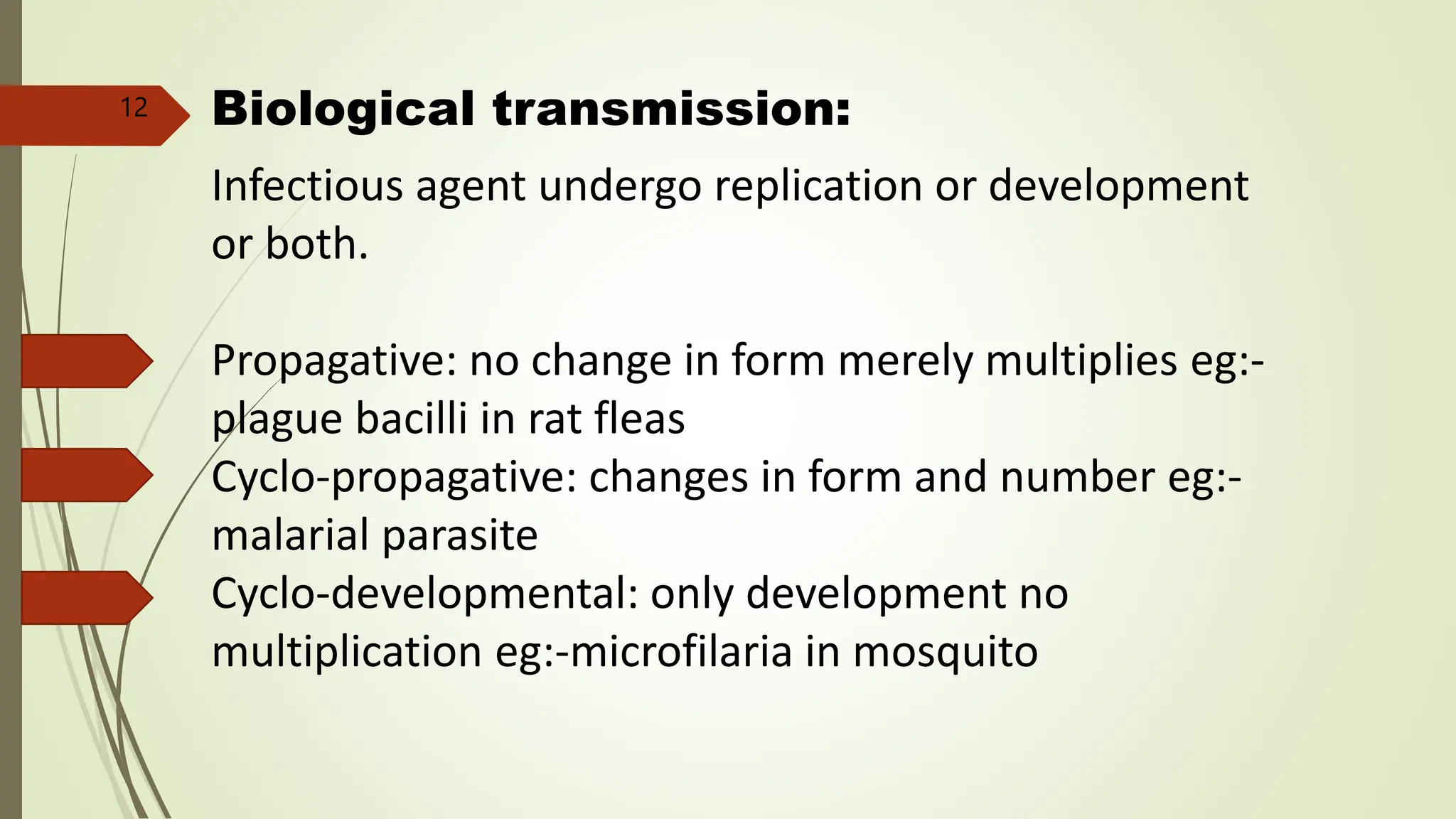
Can be mechanical or biological;
In mechanical the infectious agent is mechanically transported by a
crawling or flying arthropods through soil of its feet or proboscis, or by
regurgitation. No development or multiplication of infectious agent in
vector.
11
Biological transmission:
Infectious agent undergo replication or development
or both.
Propagative: no change in form merely multiplies eg:-
plague bacilli in rat fleas
Cyclo-propagative: changes in form and number eg:-
malarial parasite
Cyclo-developmental: only development no
multiplication eg:-microfilaria in mosquito
12
Some vectors can move considerable distances which may
affect the transmission ranges of vector-borne diseases.
vectors can be introduced to new geographic areas for
example by:
Travel of humans and international trade.
Animal of movement for instance of livestock.
Migratory birds.
Changing agricultural practices.
Or the wind. (Vector-borne diseases- WHO)
13
BRIEF HISTORY OF VECTOR CONTROL
Before the Second World War, vector control was conducted
predominantly by environmental control of the proliferation of
mosquitoes.
The measures were often based on information about the distinct
preferences of different vector species for breeding habitats; hence,
knowledge about disease vectors was used to direct environmental
measures to preferred breeding sites.
There is evidence that environmental management had a clear impact
on disease (Keiser 2005) however, elimination of disease was never on
the agenda.
14
BRIEF HISTORY OF VECTOR CONTROL
The advent of DDT and other organochlorine pesticides during the
1940s changed this situation.
Spraying the indoor surfaces of houses and shelters drastically
reduced the numbers of mosquitoes and other insects.
More importantly, spraying reduced the average longevity of
mosquitoes to below the age at which they become infectious,
substantially reducing the transmission of malaria and several
other vector-borne diseases.
(MacDonald,1956 )
15
BRIEF HISTORY OF VECTOR CONTROL
Increased resistance of vectors to insecticides, however, resulted
in failure to elimination of other vector borne diseases.
The focus of vector control on insecticides meant that
environmental management and other alternative methods were
underexploited or even forgotten.
Insecticides other than DDT were developed, the most recent
class being the pyrethroids, developed in the 1980s, which are
currently the predominant insecticides used for vector control.
(Handbook of IM- WHO, 2012)
16
500million infections with about 274 million clinical cases annually worldwide (WHO,2022)
High-risked groups are children < 5 years, pregnant women, HIV infected persons and non-
immune visitors. A child dies every 30 sec in Sub-Saharan Africa as a result of malaria
Important cause of mortality and morbidity in Africa
140 million Nigerians are at risk of having malaria
50% of pop likely to have an episode of malaria a year
Malaria accounts for >60% of hospital visitations
No suitable vaccine is available at this time
The Current Malaria Situation
17
PRINCIPLES OF VECTOR CONTROL
Control based on fundamental understanding of
etiology, bionomics and behavior of vector.
Proper training and supervision of pest control staff for
effective control.
Consideration to biological effectiveness and use of
susceptible chemicals
Cost of insecticides should be properly evaluated
18
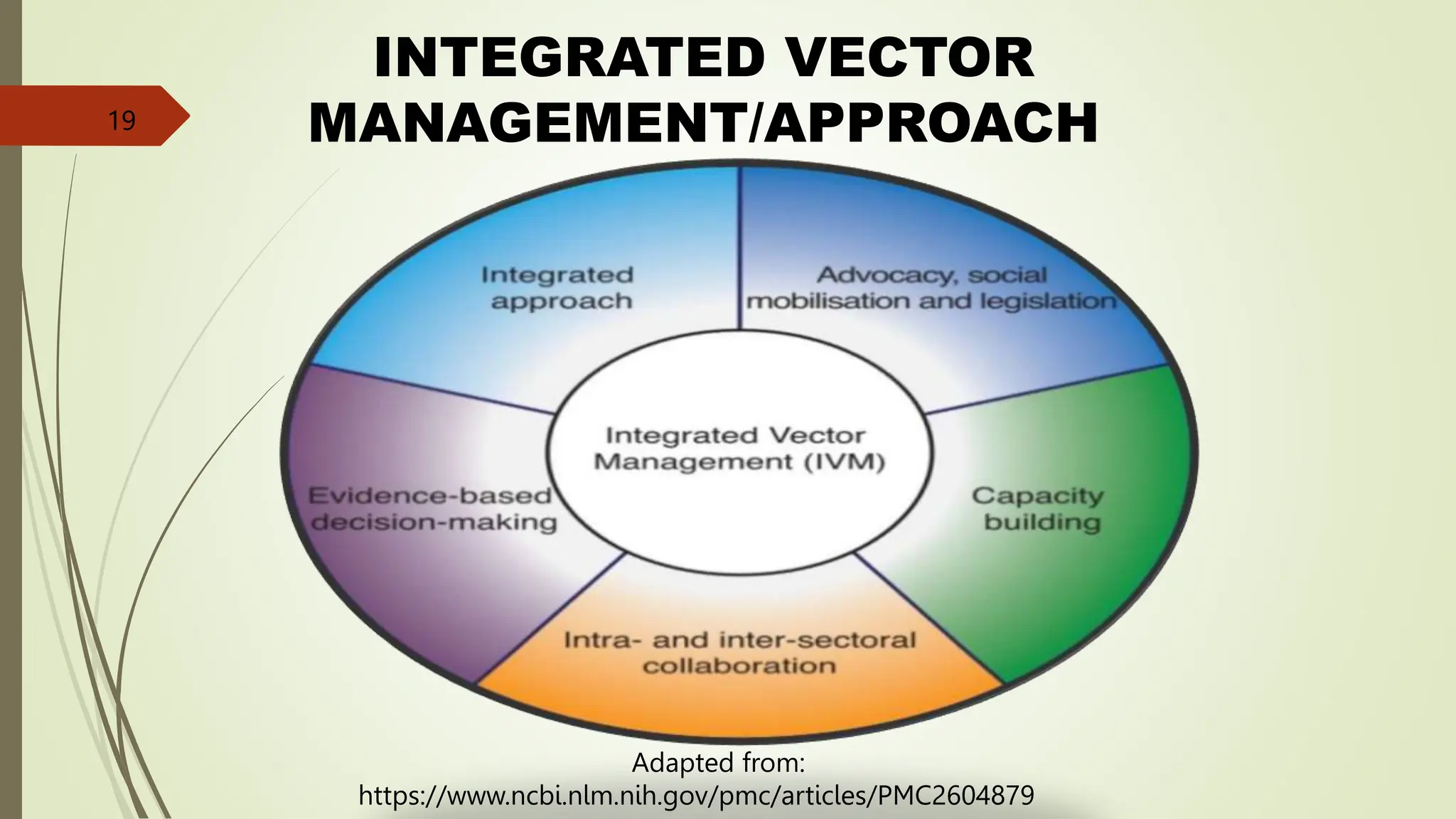
INTEGRATED VECTOR
MANAGEMENT/APPROACH
Adapted from:
https://www.ncbi.nlm.nih.gov/pmc/articles/PMC2604879
19
These elements should be supported by legislation
and regulation.
IVM is a step towards an integrated disease
management approach that incorporates all
components of disease control Including vector
control, prevention, treatment and human
vulnerability
The key elements of integrated vector
management strategy are shown in the pie
chart above.
20
INTEGRATED APPROACH
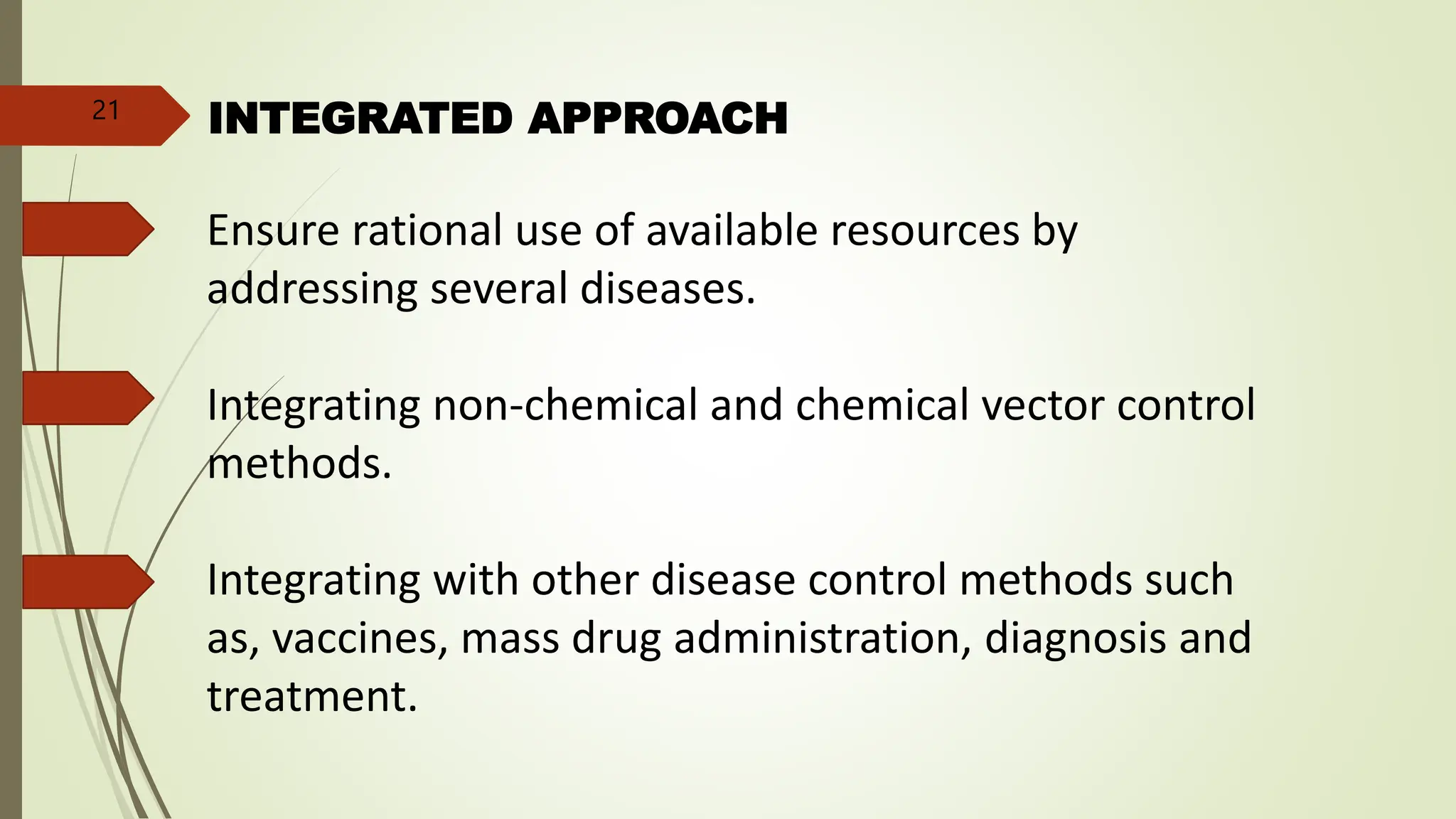
Ensure rational use of available resources by
addressing several diseases.
Integrating non-chemical and chemical vector control
methods.
Integrating with other disease control methods such
as, vaccines, mass drug administration, diagnosis and
treatment.
21
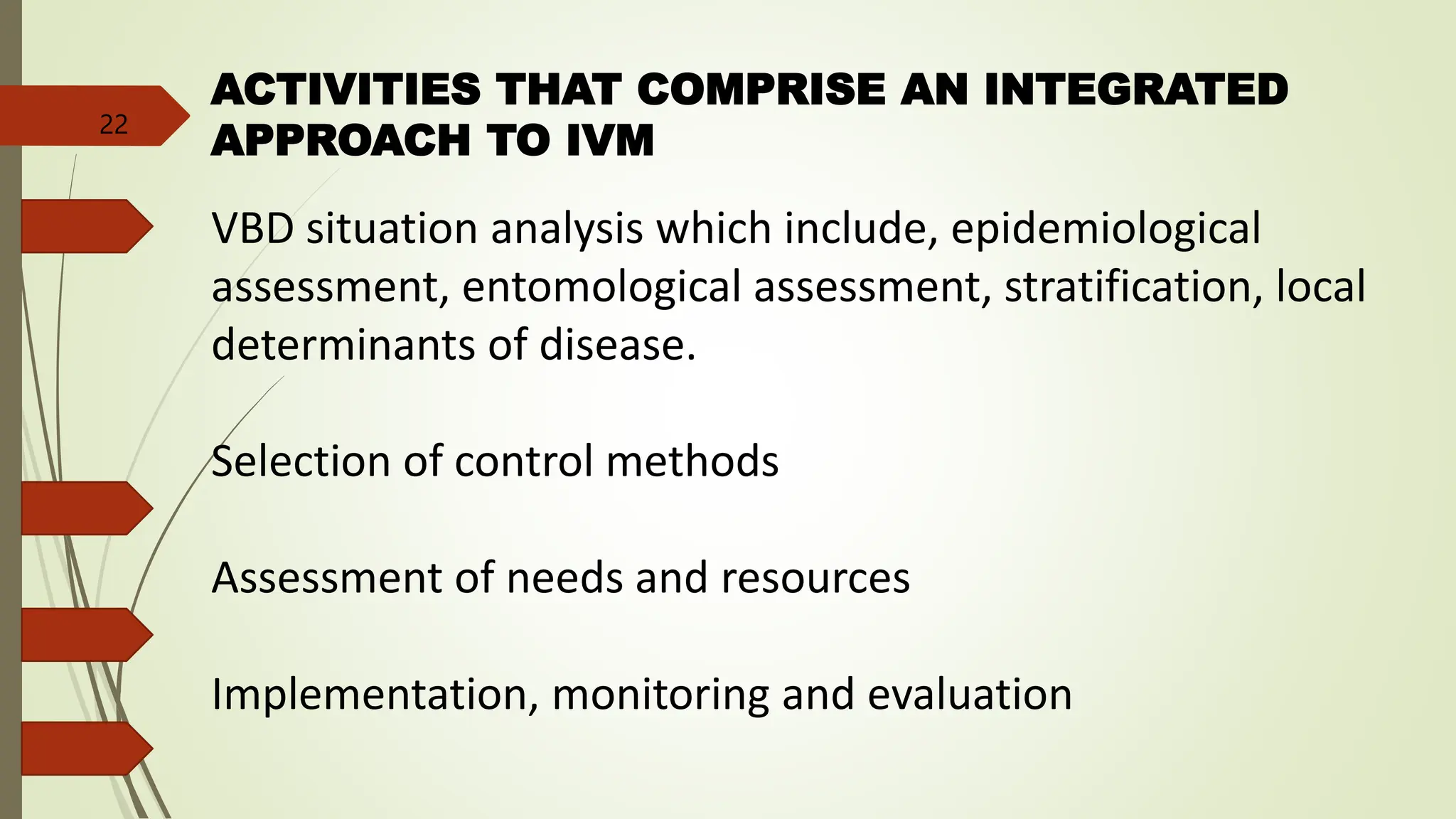
ACTIVITIES THAT COMPRISE AN INTEGRATED
APPROACH TO IVM
VBD situation analysis which include, epidemiological
assessment, entomological assessment, stratification, local
determinants of disease.
Selection of control methods
Assessment of needs and resources
Implementation, monitoring and evaluation
22
SITUATION ANALYSIS OF VECTOR BORNE
DISEASES
Before implementing IVM joint assessment
should first be conducted.
Of epidemiological and entomological
information.
Of the local determinants of most prevalent
vector borne diseases.
23
KEY ELEMENTS TO INCLUDE IN SITUATION
ANALYSIS
Large scale analysis (National, state or provincial level)
Local level analysis ( blocks and districts)
Stratification which involves classifying areas according to
disease present, current incidence, abundance and
distribution of vectors
Assess natural environmental features and land use
24
EVIDENCE BASED DECISION MAKING
Adaptation of strategies.
Intervention to local ecology, epidemiology and
resources.
Guided by operational research.
Subject to routine monitoring and evaluation
25
INTERSECTORAL AND INTRASECTORAL
COLLABORATION
Collaborative endeavor between health sector and other
sectors such as ministry of agriculture, education, housing, local
governments, community groups and non-governmental
organizations.
Application of principle of subsidiarity in planning decision
making.
Strengthening channels of communication among policy
makers, vector borne disease program managers and other IVM
partners.
26
ADVOCACY, LEGISLATION AND SOCIAL
MOBILIZATION
Promotion and embedding of IVM principles in
designing policies in all relevant agencies,
organizations and civil society.
Establishment or strengthening of regulatory and
legislative controls for public health.
Empowerment of communities
27
CAPACITY BUILDING
IVM relies on skills and capacity of personnel at
different levels.
Should be accompanied continuing of education to
improve and maintain knowledge and skills of
personnel at national, departmental and local levels.
It entails significant financial investment in training of
staff linked to the program
28
SELECTION CRITERIA FOR VECTOR CONTROL
MANAGEMENT
According to the World Health Organization (WHO), the selection
criteria for vector control management are based on the
following principles;
Integrated vector management (IVM)
Global vector control response (GVCR)
Evidence-based decision making
Community engagement and empowerment
29
Integrated vector management (IVM): This is a
rational decision-making process that optimizes the
use of resources for vector control, taking into
account the local context, the epidemiology of the
disease, the ecology of the vector, and the
availability and effectiveness of the interventions.
SELECTION CRITERIA FOR VECTOR CONTROL
MANAGEMENT
30
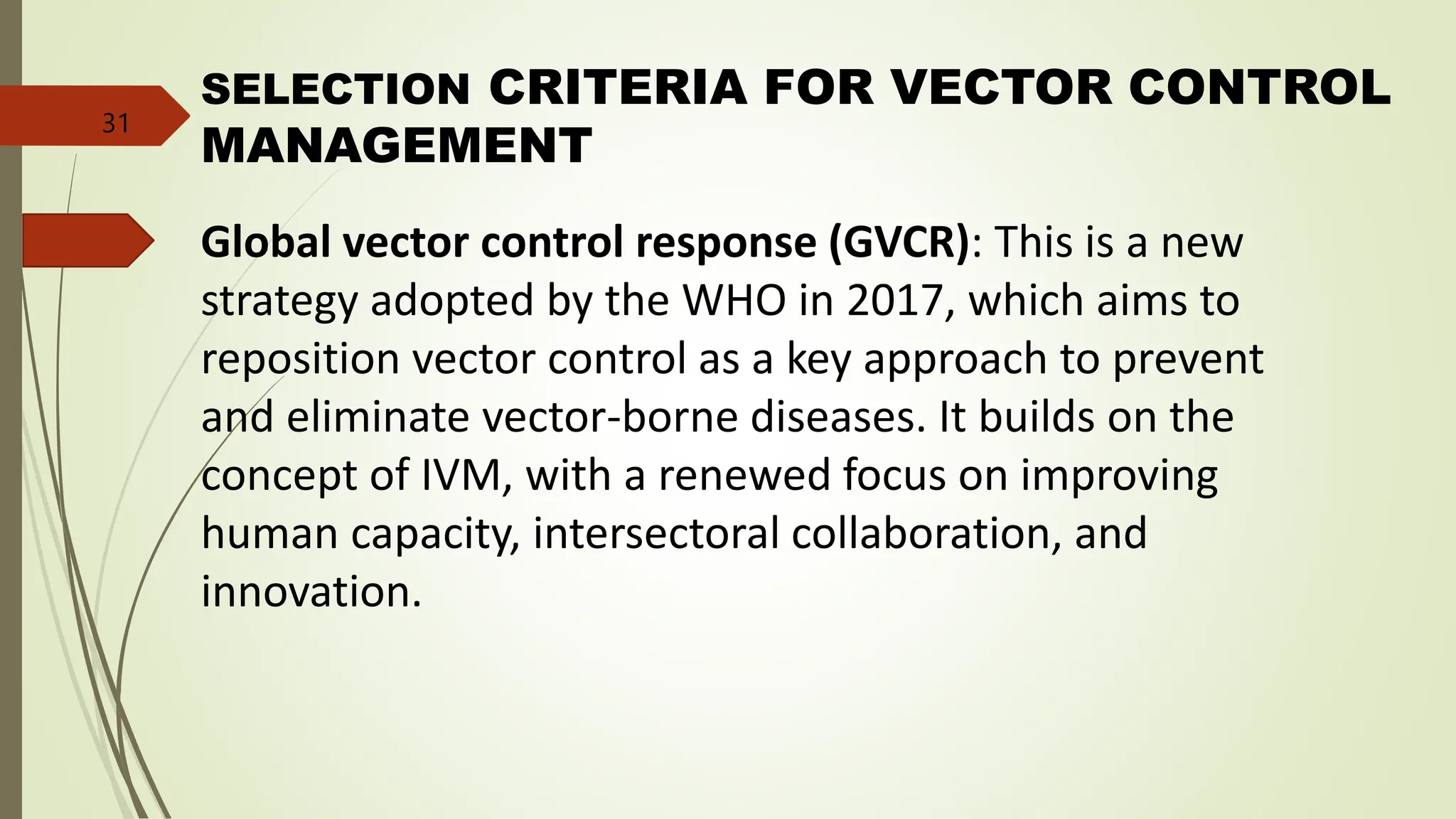
Global vector control response (GVCR): This is a new
strategy adopted by the WHO in 2017, which aims to
reposition vector control as a key approach to prevent
and eliminate vector-borne diseases. It builds on the
concept of IVM, with a renewed focus on improving
human capacity, intersectoral collaboration, and
innovation.
SELECTION CRITERIA FOR VECTOR CONTROL
MANAGEMENT
31
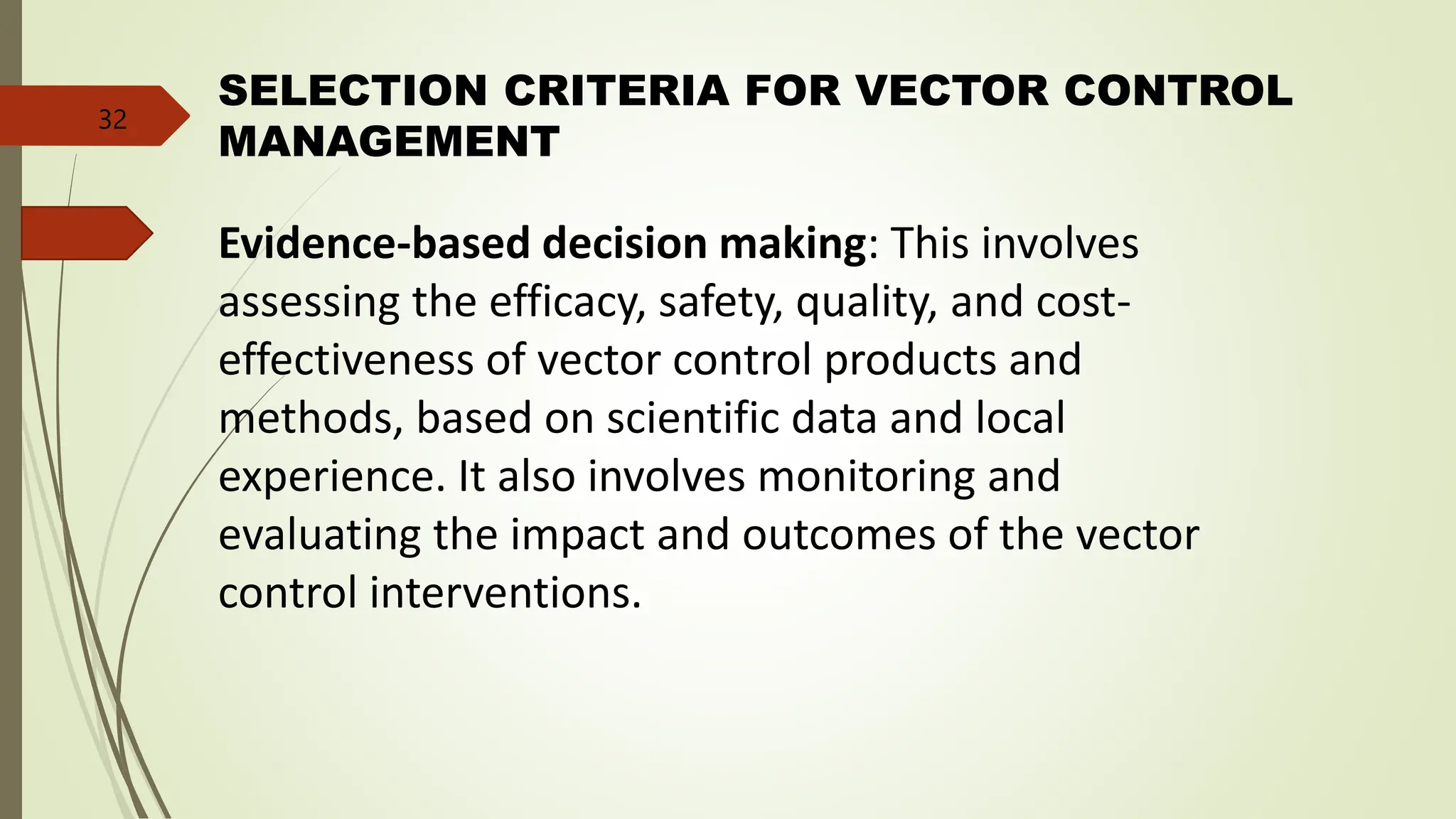
Evidence-based decision making: This involves
assessing the efficacy, safety, quality, and cost-
effectiveness of vector control products and
methods, based on scientific data and local
experience. It also involves monitoring and
evaluating the impact and outcomes of the vector
control interventions.
SELECTION CRITERIA FOR VECTOR CONTROL
MANAGEMENT
32
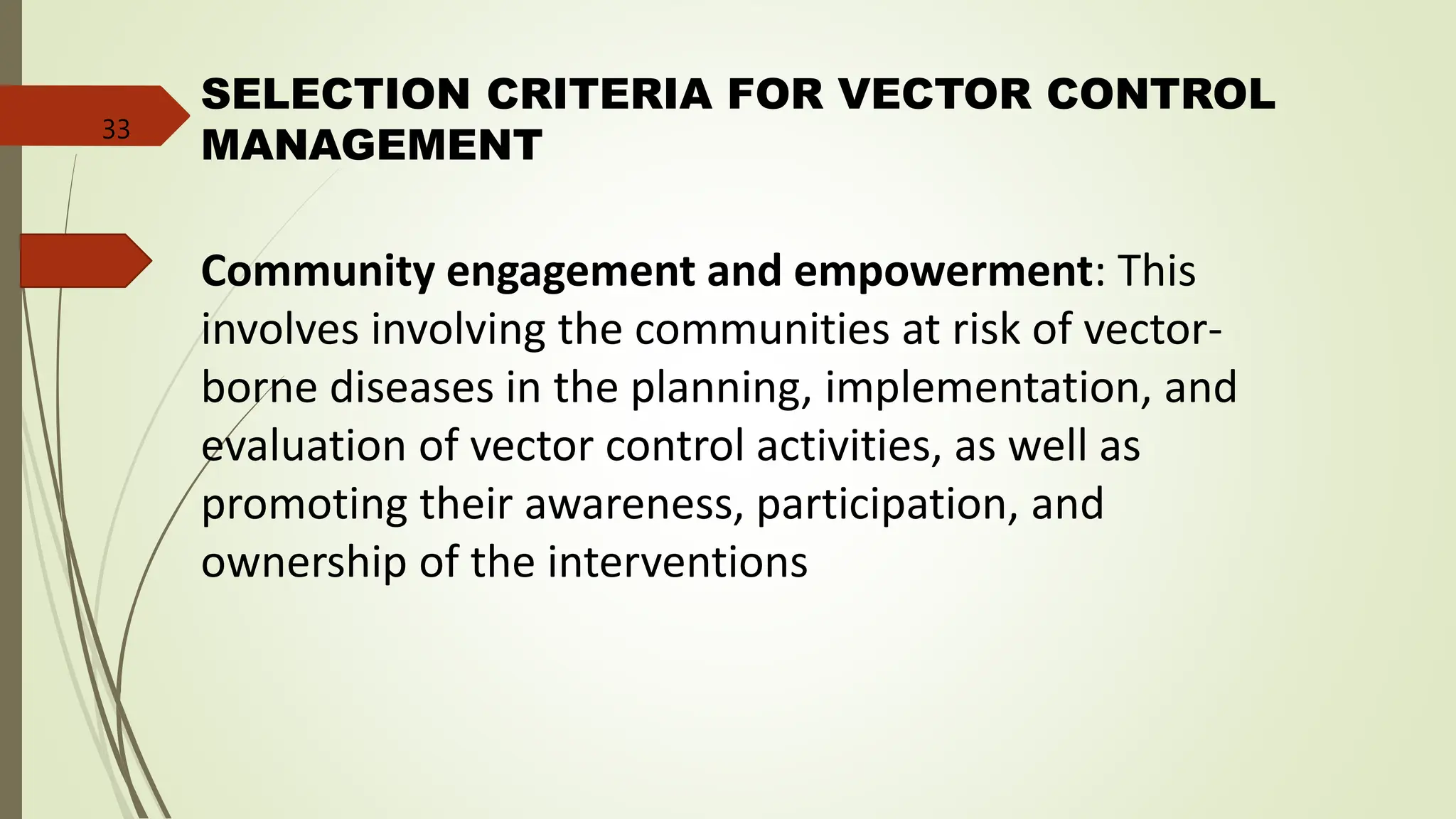
Community engagement and empowerment: This
involves involving the communities at risk of vector-
borne diseases in the planning, implementation, and
evaluation of vector control activities, as well as
promoting their awareness, participation, and
ownership of the interventions
SELECTION CRITERIA FOR VECTOR CONTROL
MANAGEMENT
33
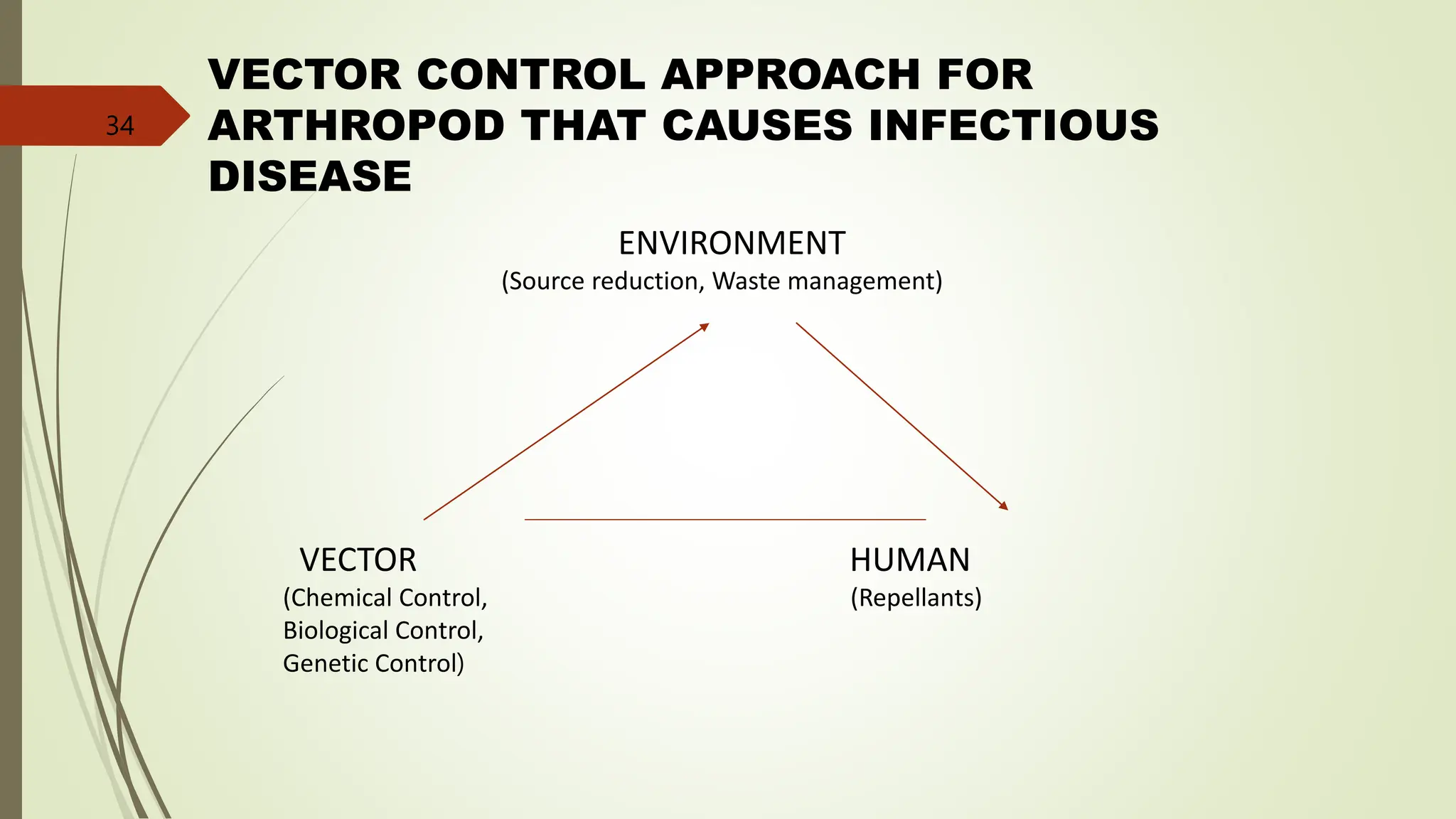
VECTOR CONTROL APPROACH FOR
ARTHROPOD THAT CAUSES INFECTIOUS
DISEASE
ENVIRONMENT
(Source reduction, Waste management)
VECTOR HUMAN
(Chemical Control, (Repellants)
Biological Control,
Genetic Control)
34
VECTOR CONTROL APPROACH;
Habitat control
Reducing contact
Chemical control
Biological control
35
HABITAT AND ENVIRONMENTAL CONTROLS:
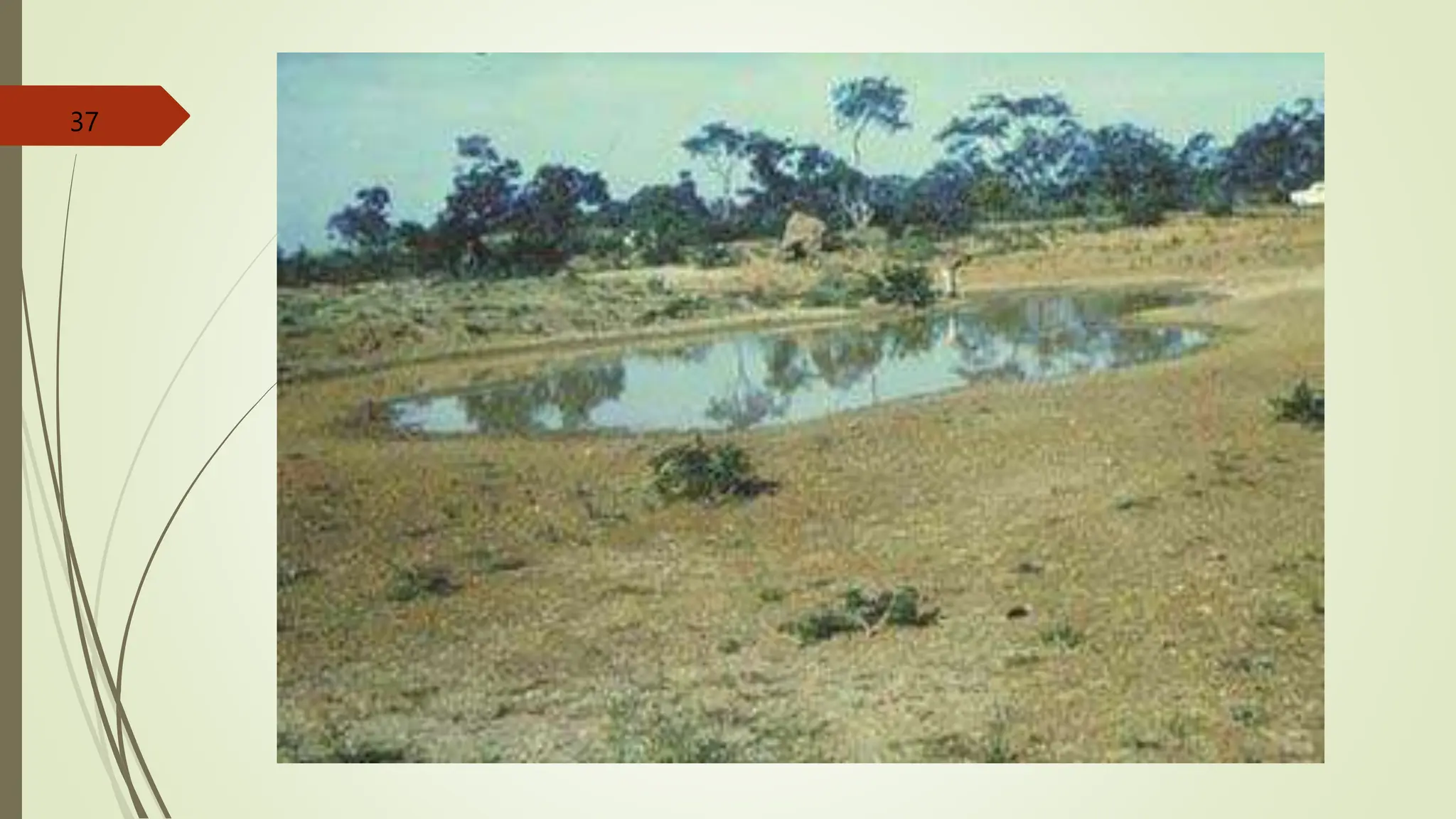
Removing or reducing areas where vectors can easily breed can
help limit their growth though the following ways;
a. stagnant water removal.
b. destruction of old tires and cans which serve as
mosquito breeding environments.
c. good management of used water can reduce areas of excessive
vector incidence.
d. reducing the prevalence of open defecation.
e. improving the designs and maintenance of pit
latrines.
36
37
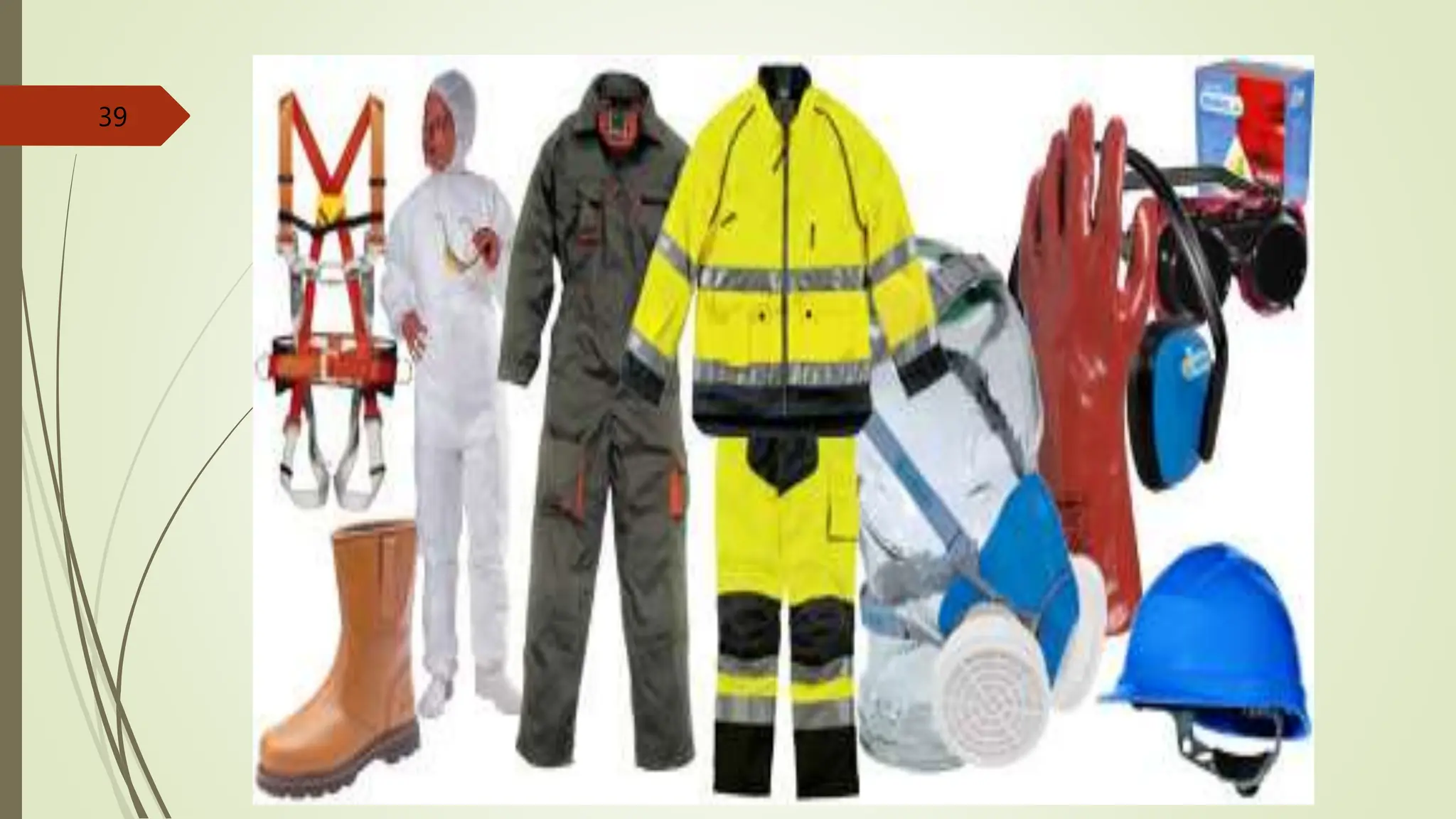
REDUCING CONTACT:
Limiting exposure to insects that are vectors via the
use of bed nets, window screens in homes. Also
protective clothing can help reduce the likelihood of
contact. To be effective this requires education and
promotion of methods among the population to
raise the awareness of vector threats.
38
39
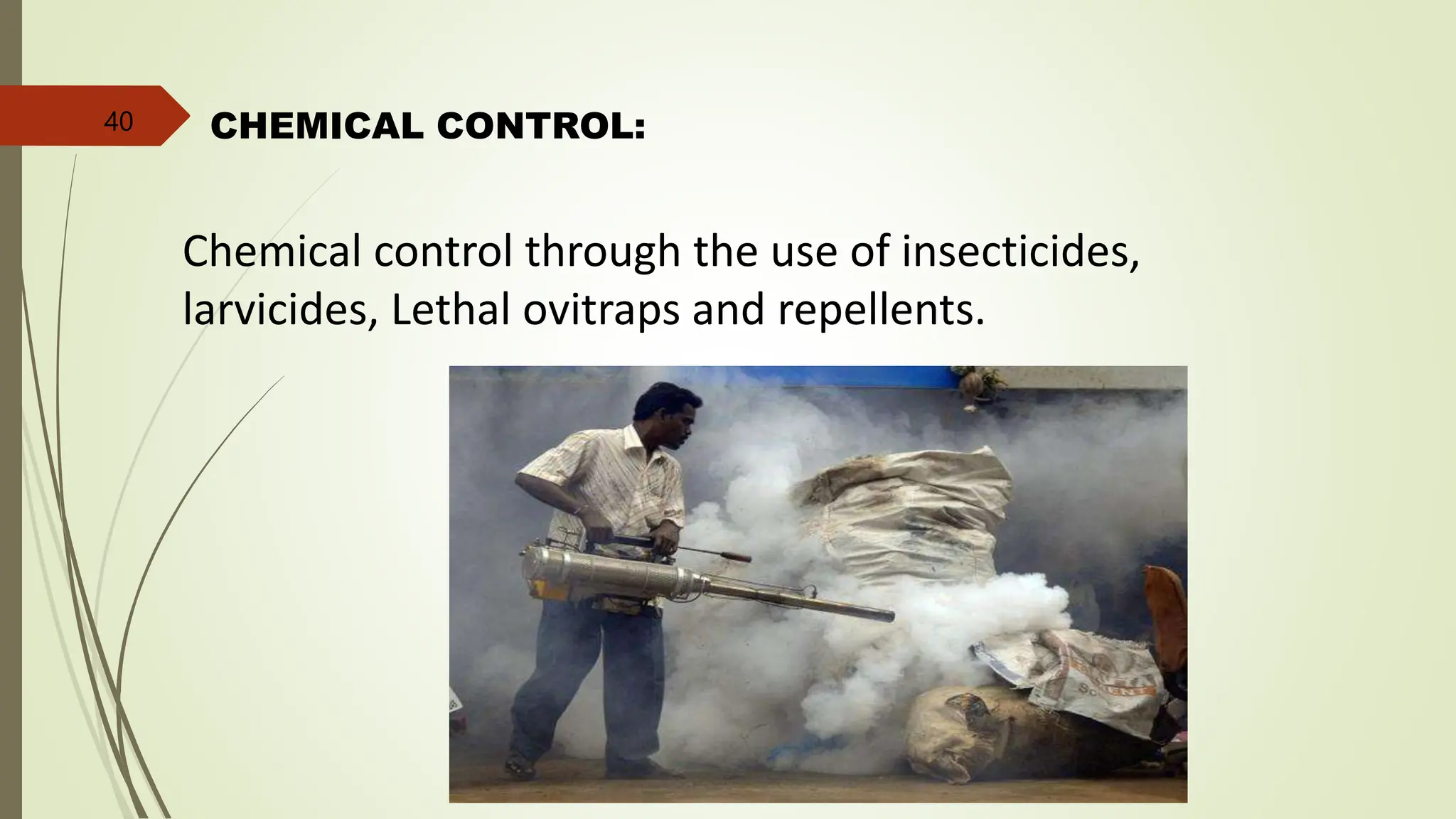
CHEMICAL CONTROL:
Chemical control through the use of insecticides,
larvicides, Lethal ovitraps and repellents.
40
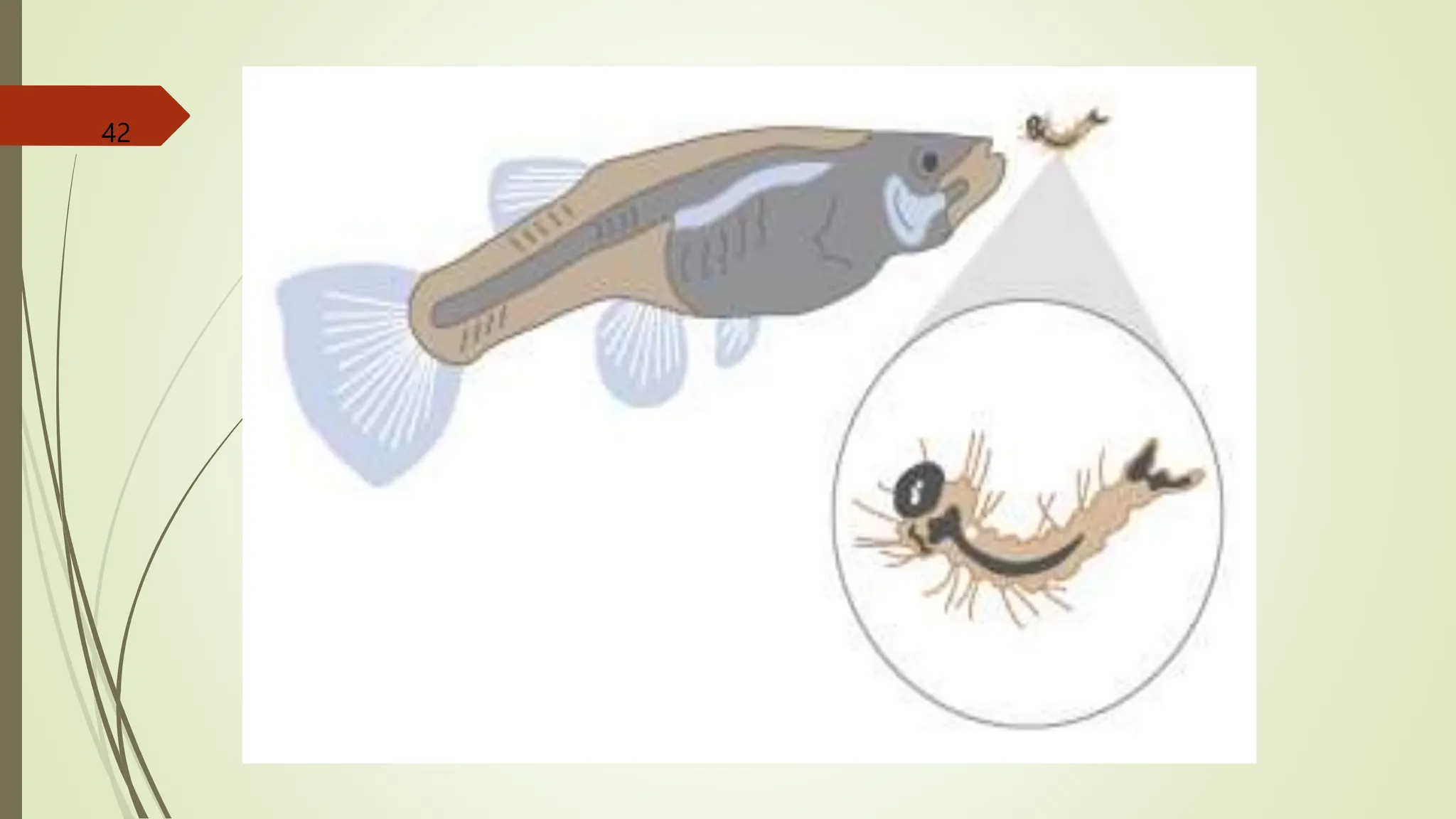
BIOLOGICAL CONTROL:
The use of natural vector predators, such as bacterial
toxins or botanical compounds, can help control vector
populations. Using fish that eat mosquito larvae, the
use of cat fish to eat up mosquito larvae in ponds can
eradicate the mosquito population, or reducing
breeding rates by introducing sterilized male tsetse flies
have been shown to control vector populations and
reduce infection risks.
41
42
Elements for the successful
implementation of IVM
Advocacy, social mobilization, regulatory control for public health
and empowerment of communities.
Collaboration within the health sector and with other sectors
through the optimal use of resources, planning, monitoring and
decision-making.
Integration of non-chemical and chemical vector control
methods, and integration with other disease control measures.
43
Evidence-based decision making guided by operational
research and entomological and epidemiological surveillance
and evaluation.
Development of adequate human resources, training and
career structures at national and local level to promote
capacity building and manage IVM programs.
Elements for the successful
implementation of IVM
44
CONCLUSION
IVM is a vital and effective strategy to prevent and control these
diseases, which account for more than 17% of all infectious
diseases and cause more than 700 000 deaths annually. However,
vector control management faces many challenges, such as the
emergence of insecticide resistance, the lack of adequate
resources and capacity, the complexity of vector ecology and
behaviour, and the need for intersectoral collaboration and
community participation.
45
CONCLUSION
Therefore, vector control management requires a
comprehensive and integrated approach, based on
evidence, innovation, and empowerment, to achieve
the global targets set for vector-borne disease
control.
46
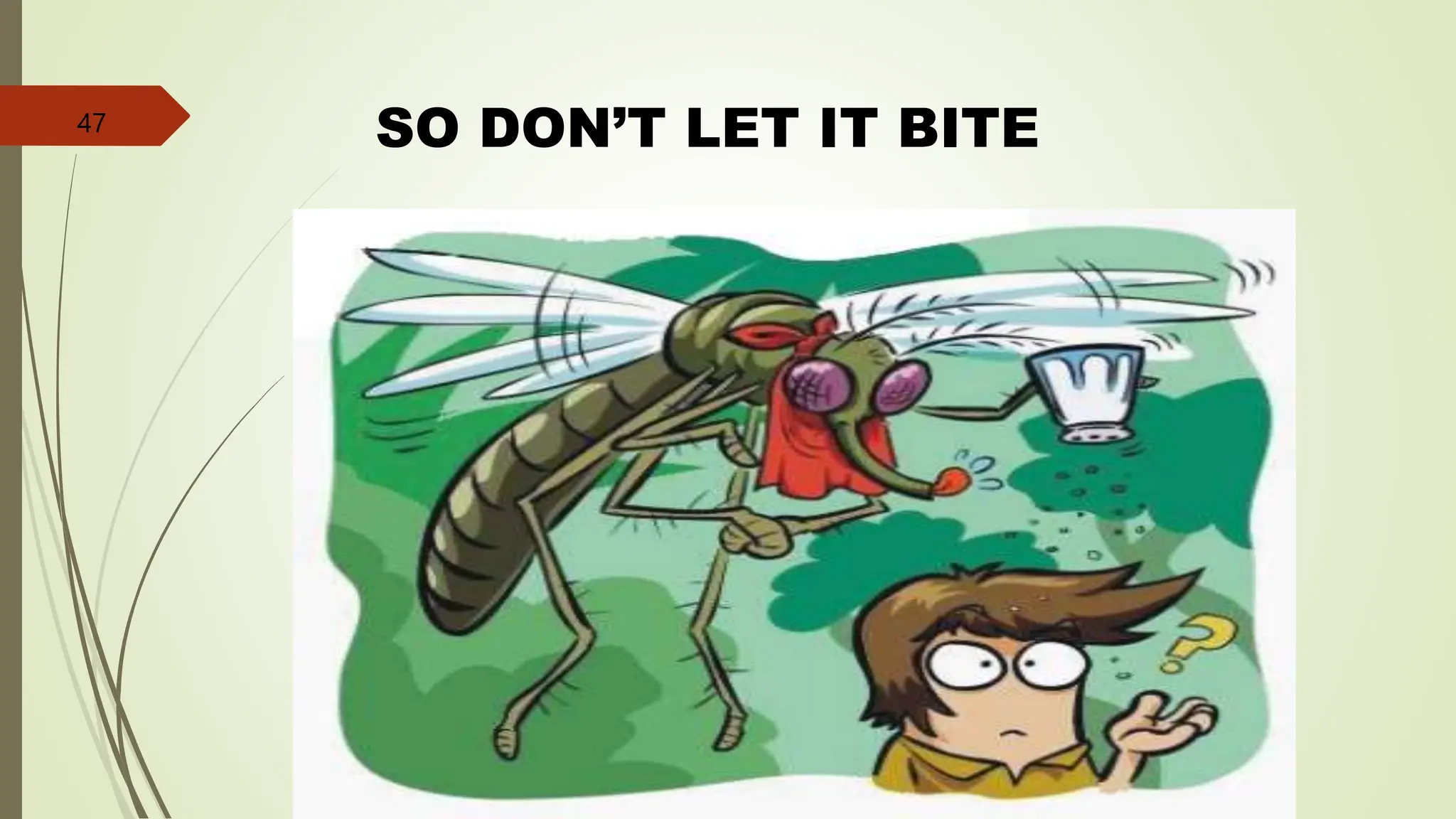
SO DON’T LET IT BITE
47
REFERENCE
World Health Organization, 2012. Handbook for integrated vector management. Geneva:
WHO.
World Health Organization, 2017. Vector-borne diseases.
World Health Organization, 2020. Vector-borne diseases.
World Health Organization. (2022). World Malaria Report 2023. Retrieved from
https://www.who.int/teams/global-malaria-programme/reports/world-malaria-report-2023
Keiser J et al.(2005), reducing the burden of malaria in different eco epidermiological setting
with environmental management.
48
ACKNOWLEDGEMENT
This seminar work was made possible by the collaboration and contribution of miss
blessing ogbobaro, miss blessing odongharo, mr abdulafiz odumosu and mr Joshua odiachi
through their teamwork, creativity, and professionalism. we would like to express our
sincere appreciation to the department of community medicine who have supported us in
completing this seminar work on integrated vector management.
I am also grateful to the World Health Organization for providing me with the handbook for
integrated vector management, which was the main reference for my work. I would like to
acknowledge the authors and contributors of this handbook for their comprehensive and
practical information on the topic. I would also like to thank the other sources I used for my
work, which are listed in the bibliography.
49

INTEGRATED VECTOR MANAGEMENT ………...pptx

  • 1.
    INTEGRATED VECTOR MANAGEMENT 1 DEPARTMENT OFCOMMUNITY MEDICINE BLESSING OBOGBARO (18/020283) BLESSING ODONGHARO (17/019669) ABDULAFIZ ODUMOSU (18/020469) JOSHUA ODIACHI (18/020831)
  • 2.
    AIM IntroductionAbbreviation Definition of terms Modeof transmission Why control vectors? Principles of vector control Integrated vector control management/approach Selection criteria for vector control management Vector control approach for arthropod that causes infectious disease Elements for the successful implementation of ivm Conclusion Reference Acknowledgement OUTLINE 2
  • 3.
    AIM To improve theefficiency, cost-effectiveness, ecological soundness and sustainability of vector control interventions, while reducing the risks of vector-borne diseases 3
  • 4.
    INTRODUCTION Vector control isany method to limit insects or other arthropods which transmits disease pathogens. Integrated vector control can be used for surveillance and control for elimination of vector borne disease and can help reduce the development of insecticide resistance. 4
  • 5.
    ABBREVIATION IVM: INTEGRATED VECTORMANAGEMENT VBD: VECTOR BORNE DISEASE WHO: WHORLD HEALTH ORGANIZATION DDT: DICHLORODIPHENYLTRICHLOROETHANE 5
  • 6.
    DEFINITIONS OF TERMS Accordingto World Health Organisation(WHO), Integrated vector management(IVM) is a rational decision-making process to optimize the use of resource for managing vector population in a way that reduces or interrupts the transmission of disease (WHO, 2012). 6
  • 7.
    DEFINITION OF TERMS VECTOR:An arthropod or any small living organisms that can transmit infectious pathogens to susceptible individual(WHO,2017). 7
  • 8.
    DEFINITION OF TERMS Vectorborne diseases: VBD are human illnesses caused by parasites, viruses and bacteria that are transmitted by vectors(WHO,2020). 8
  • 9.
  • 10.
  • 11.
    MODE OF TRANSMISSION Canbe mechanical or biological; In mechanical the infectious agent is mechanically transported by a crawling or flying arthropods through soil of its feet or proboscis, or by regurgitation. No development or multiplication of infectious agent in vector. 11
  • 12.
    Biological transmission: Infectious agentundergo replication or development or both. Propagative: no change in form merely multiplies eg:- plague bacilli in rat fleas Cyclo-propagative: changes in form and number eg:- malarial parasite Cyclo-developmental: only development no multiplication eg:-microfilaria in mosquito 12
  • 13.
    Some vectors canmove considerable distances which may affect the transmission ranges of vector-borne diseases. vectors can be introduced to new geographic areas for example by: Travel of humans and international trade. Animal of movement for instance of livestock. Migratory birds. Changing agricultural practices. Or the wind. (Vector-borne diseases- WHO) 13
  • 14.
    BRIEF HISTORY OFVECTOR CONTROL Before the Second World War, vector control was conducted predominantly by environmental control of the proliferation of mosquitoes. The measures were often based on information about the distinct preferences of different vector species for breeding habitats; hence, knowledge about disease vectors was used to direct environmental measures to preferred breeding sites. There is evidence that environmental management had a clear impact on disease (Keiser 2005) however, elimination of disease was never on the agenda. 14
  • 15.
    BRIEF HISTORY OFVECTOR CONTROL The advent of DDT and other organochlorine pesticides during the 1940s changed this situation. Spraying the indoor surfaces of houses and shelters drastically reduced the numbers of mosquitoes and other insects. More importantly, spraying reduced the average longevity of mosquitoes to below the age at which they become infectious, substantially reducing the transmission of malaria and several other vector-borne diseases. (MacDonald,1956 ) 15
  • 16.
    BRIEF HISTORY OFVECTOR CONTROL Increased resistance of vectors to insecticides, however, resulted in failure to elimination of other vector borne diseases. The focus of vector control on insecticides meant that environmental management and other alternative methods were underexploited or even forgotten. Insecticides other than DDT were developed, the most recent class being the pyrethroids, developed in the 1980s, which are currently the predominant insecticides used for vector control. (Handbook of IM- WHO, 2012) 16
  • 17.
    500million infections withabout 274 million clinical cases annually worldwide (WHO,2022) High-risked groups are children < 5 years, pregnant women, HIV infected persons and non- immune visitors. A child dies every 30 sec in Sub-Saharan Africa as a result of malaria Important cause of mortality and morbidity in Africa 140 million Nigerians are at risk of having malaria 50% of pop likely to have an episode of malaria a year Malaria accounts for >60% of hospital visitations No suitable vaccine is available at this time The Current Malaria Situation 17
  • 18.
    PRINCIPLES OF VECTORCONTROL Control based on fundamental understanding of etiology, bionomics and behavior of vector. Proper training and supervision of pest control staff for effective control. Consideration to biological effectiveness and use of susceptible chemicals Cost of insecticides should be properly evaluated 18
  • 19.
  • 20.
    These elements shouldbe supported by legislation and regulation. IVM is a step towards an integrated disease management approach that incorporates all components of disease control Including vector control, prevention, treatment and human vulnerability The key elements of integrated vector management strategy are shown in the pie chart above. 20
  • 21.
    INTEGRATED APPROACH Ensure rationaluse of available resources by addressing several diseases. Integrating non-chemical and chemical vector control methods. Integrating with other disease control methods such as, vaccines, mass drug administration, diagnosis and treatment. 21
  • 22.
    ACTIVITIES THAT COMPRISEAN INTEGRATED APPROACH TO IVM VBD situation analysis which include, epidemiological assessment, entomological assessment, stratification, local determinants of disease. Selection of control methods Assessment of needs and resources Implementation, monitoring and evaluation 22
  • 23.
    SITUATION ANALYSIS OFVECTOR BORNE DISEASES Before implementing IVM joint assessment should first be conducted. Of epidemiological and entomological information. Of the local determinants of most prevalent vector borne diseases. 23
  • 24.
    KEY ELEMENTS TOINCLUDE IN SITUATION ANALYSIS Large scale analysis (National, state or provincial level) Local level analysis ( blocks and districts) Stratification which involves classifying areas according to disease present, current incidence, abundance and distribution of vectors Assess natural environmental features and land use 24
  • 25.
    EVIDENCE BASED DECISIONMAKING Adaptation of strategies. Intervention to local ecology, epidemiology and resources. Guided by operational research. Subject to routine monitoring and evaluation 25
  • 26.
    INTERSECTORAL AND INTRASECTORAL COLLABORATION Collaborativeendeavor between health sector and other sectors such as ministry of agriculture, education, housing, local governments, community groups and non-governmental organizations. Application of principle of subsidiarity in planning decision making. Strengthening channels of communication among policy makers, vector borne disease program managers and other IVM partners. 26
  • 27.
    ADVOCACY, LEGISLATION ANDSOCIAL MOBILIZATION Promotion and embedding of IVM principles in designing policies in all relevant agencies, organizations and civil society. Establishment or strengthening of regulatory and legislative controls for public health. Empowerment of communities 27
  • 28.
    CAPACITY BUILDING IVM relieson skills and capacity of personnel at different levels. Should be accompanied continuing of education to improve and maintain knowledge and skills of personnel at national, departmental and local levels. It entails significant financial investment in training of staff linked to the program 28
  • 29.
    SELECTION CRITERIA FORVECTOR CONTROL MANAGEMENT According to the World Health Organization (WHO), the selection criteria for vector control management are based on the following principles; Integrated vector management (IVM) Global vector control response (GVCR) Evidence-based decision making Community engagement and empowerment 29
  • 30.
    Integrated vector management(IVM): This is a rational decision-making process that optimizes the use of resources for vector control, taking into account the local context, the epidemiology of the disease, the ecology of the vector, and the availability and effectiveness of the interventions. SELECTION CRITERIA FOR VECTOR CONTROL MANAGEMENT 30
  • 31.
    Global vector controlresponse (GVCR): This is a new strategy adopted by the WHO in 2017, which aims to reposition vector control as a key approach to prevent and eliminate vector-borne diseases. It builds on the concept of IVM, with a renewed focus on improving human capacity, intersectoral collaboration, and innovation. SELECTION CRITERIA FOR VECTOR CONTROL MANAGEMENT 31
  • 32.
    Evidence-based decision making:This involves assessing the efficacy, safety, quality, and cost- effectiveness of vector control products and methods, based on scientific data and local experience. It also involves monitoring and evaluating the impact and outcomes of the vector control interventions. SELECTION CRITERIA FOR VECTOR CONTROL MANAGEMENT 32
  • 33.
    Community engagement andempowerment: This involves involving the communities at risk of vector- borne diseases in the planning, implementation, and evaluation of vector control activities, as well as promoting their awareness, participation, and ownership of the interventions SELECTION CRITERIA FOR VECTOR CONTROL MANAGEMENT 33
  • 34.
    VECTOR CONTROL APPROACHFOR ARTHROPOD THAT CAUSES INFECTIOUS DISEASE ENVIRONMENT (Source reduction, Waste management) VECTOR HUMAN (Chemical Control, (Repellants) Biological Control, Genetic Control) 34
  • 35.
    VECTOR CONTROL APPROACH; Habitatcontrol Reducing contact Chemical control Biological control 35
  • 36.
    HABITAT AND ENVIRONMENTALCONTROLS: Removing or reducing areas where vectors can easily breed can help limit their growth though the following ways; a. stagnant water removal. b. destruction of old tires and cans which serve as mosquito breeding environments. c. good management of used water can reduce areas of excessive vector incidence. d. reducing the prevalence of open defecation. e. improving the designs and maintenance of pit latrines. 36
  • 37.
  • 38.
    REDUCING CONTACT: Limiting exposureto insects that are vectors via the use of bed nets, window screens in homes. Also protective clothing can help reduce the likelihood of contact. To be effective this requires education and promotion of methods among the population to raise the awareness of vector threats. 38
  • 39.
  • 40.
    CHEMICAL CONTROL: Chemical controlthrough the use of insecticides, larvicides, Lethal ovitraps and repellents. 40
  • 41.
    BIOLOGICAL CONTROL: The useof natural vector predators, such as bacterial toxins or botanical compounds, can help control vector populations. Using fish that eat mosquito larvae, the use of cat fish to eat up mosquito larvae in ponds can eradicate the mosquito population, or reducing breeding rates by introducing sterilized male tsetse flies have been shown to control vector populations and reduce infection risks. 41
  • 42.
  • 43.
    Elements for thesuccessful implementation of IVM Advocacy, social mobilization, regulatory control for public health and empowerment of communities. Collaboration within the health sector and with other sectors through the optimal use of resources, planning, monitoring and decision-making. Integration of non-chemical and chemical vector control methods, and integration with other disease control measures. 43
  • 44.
    Evidence-based decision makingguided by operational research and entomological and epidemiological surveillance and evaluation. Development of adequate human resources, training and career structures at national and local level to promote capacity building and manage IVM programs. Elements for the successful implementation of IVM 44
  • 45.
    CONCLUSION IVM is avital and effective strategy to prevent and control these diseases, which account for more than 17% of all infectious diseases and cause more than 700 000 deaths annually. However, vector control management faces many challenges, such as the emergence of insecticide resistance, the lack of adequate resources and capacity, the complexity of vector ecology and behaviour, and the need for intersectoral collaboration and community participation. 45
  • 46.
    CONCLUSION Therefore, vector controlmanagement requires a comprehensive and integrated approach, based on evidence, innovation, and empowerment, to achieve the global targets set for vector-borne disease control. 46
  • 47.
    SO DON’T LETIT BITE 47
  • 48.
    REFERENCE World Health Organization,2012. Handbook for integrated vector management. Geneva: WHO. World Health Organization, 2017. Vector-borne diseases. World Health Organization, 2020. Vector-borne diseases. World Health Organization. (2022). World Malaria Report 2023. Retrieved from https://www.who.int/teams/global-malaria-programme/reports/world-malaria-report-2023 Keiser J et al.(2005), reducing the burden of malaria in different eco epidermiological setting with environmental management. 48
  • 49.
    ACKNOWLEDGEMENT This seminar workwas made possible by the collaboration and contribution of miss blessing ogbobaro, miss blessing odongharo, mr abdulafiz odumosu and mr Joshua odiachi through their teamwork, creativity, and professionalism. we would like to express our sincere appreciation to the department of community medicine who have supported us in completing this seminar work on integrated vector management. I am also grateful to the World Health Organization for providing me with the handbook for integrated vector management, which was the main reference for my work. I would like to acknowledge the authors and contributors of this handbook for their comprehensive and practical information on the topic. I would also like to thank the other sources I used for my work, which are listed in the bibliography. 49