Ethical & Professional Issues In
Epidemiology
Presented By:
Student Of GM, BED & BPH
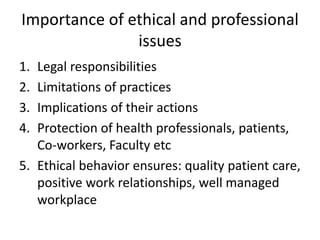
Importance of ethical and professional
issues
1. Legal responsibilities
2. Limitations of practices
3. Implications of their actions
4. Protection of health professionals, patients,
Co-workers, Faculty etc
5. Ethical behavior ensures: quality patient care,
positive work relationships, well managed
workplace
Outbreaks and emergencies
- Ethical concerns associated with the planning,
preparedness and response to future pandemics
are important to consider, ensuring that
response efforts are not hindered in the event of
a pandemic
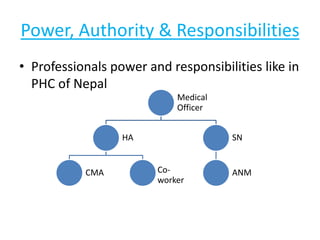
Power, Authority & Responsibilities
• Professionals power and responsibilities like in
PHC of Nepal
Medical
Officer
HA
CMA Co-
worker
SN
ANM
Research and Experimental ethics
- Research ethics govern the standards of
conduct for scientific researchers.
- It is important to adhere to ethical principles
in order to protect the dignity, rights and
welfare of research participants.
Human organ and tissue
transplantation
- Transplantation of human organs and tissues,
which saves many lives and restores essential
functions for many otherwise untreatable
patients, both in developing and developed
countries, has been a topic for ethical issues and
health care policy-making for more than thirty
years.
- These issues include the source and manner of
organ procurement, as well as the allocation of
organs within health systems
Bio-banking
- The collection, storage and dissemination of
samples and specimen comes with a set of
difficult issues regarding governance and ethical
oversight
Health Systems and Implementation
Research
The planning and conduct of Health Systems and
Implementation Research raise several distinct
ethical issues, such as acceptable standards of
care especially in control groups, ancillary care
responsibilities , and community engagement.
Immunization
Immunization raises a host of challenging ethical
questions that researchers, governments,
funders, pharmaceutical companies, and
communities must confront
Abortion
- The pregnancy must be under 12 weeks of
gestation (Female should be above 16 years of
age there should not require the permission of
her husband).
- In case of rape or incent, the pregnancy must
be under 18 weeks of gestation
End of life/ Euthanasia
• The act of ending the life of an individual in a
patients manner
• Individual is usually suffering from a terminal
illness
Privacy of patients
- Disease history
- Protect patient information's
Tuberculosis care and control
Ethical issues include questions about the
equitable distribution of resources, protection of
vulnerable groups, respect for patient choice of
treatment options and solidarity between
communities during outbreaks.
Big data and artificial intelligence
- Big data, machine learning, and artificial
intelligence (AI) promise great benefit to the
practice of medicine and to the health of
populations.
- At the same time, escalating use of Big Data
and AI poses many ethical challenges
regarding governance, quality, safety,
standards, privacy and data ownership and
control.
Ethical & professional issues in epidemiology

Ethical & professional issues in epidemiology

  • 1.
    Ethical & ProfessionalIssues In Epidemiology Presented By: Student Of GM, BED & BPH
  • 2.
    Importance of ethicaland professional issues 1. Legal responsibilities 2. Limitations of practices 3. Implications of their actions 4. Protection of health professionals, patients, Co-workers, Faculty etc 5. Ethical behavior ensures: quality patient care, positive work relationships, well managed workplace
  • 3.
    Outbreaks and emergencies -Ethical concerns associated with the planning, preparedness and response to future pandemics are important to consider, ensuring that response efforts are not hindered in the event of a pandemic
  • 4.
    Power, Authority &Responsibilities • Professionals power and responsibilities like in PHC of Nepal Medical Officer HA CMA Co- worker SN ANM
  • 5.
    Research and Experimentalethics - Research ethics govern the standards of conduct for scientific researchers. - It is important to adhere to ethical principles in order to protect the dignity, rights and welfare of research participants.
  • 6.
    Human organ andtissue transplantation - Transplantation of human organs and tissues, which saves many lives and restores essential functions for many otherwise untreatable patients, both in developing and developed countries, has been a topic for ethical issues and health care policy-making for more than thirty years. - These issues include the source and manner of organ procurement, as well as the allocation of organs within health systems
  • 7.
    Bio-banking - The collection,storage and dissemination of samples and specimen comes with a set of difficult issues regarding governance and ethical oversight
  • 8.
    Health Systems andImplementation Research The planning and conduct of Health Systems and Implementation Research raise several distinct ethical issues, such as acceptable standards of care especially in control groups, ancillary care responsibilities , and community engagement.
  • 9.
    Immunization Immunization raises ahost of challenging ethical questions that researchers, governments, funders, pharmaceutical companies, and communities must confront
  • 10.
    Abortion - The pregnancymust be under 12 weeks of gestation (Female should be above 16 years of age there should not require the permission of her husband). - In case of rape or incent, the pregnancy must be under 18 weeks of gestation
  • 11.
    End of life/Euthanasia • The act of ending the life of an individual in a patients manner • Individual is usually suffering from a terminal illness
  • 12.
    Privacy of patients -Disease history - Protect patient information's
  • 13.
    Tuberculosis care andcontrol Ethical issues include questions about the equitable distribution of resources, protection of vulnerable groups, respect for patient choice of treatment options and solidarity between communities during outbreaks.
  • 14.
    Big data andartificial intelligence - Big data, machine learning, and artificial intelligence (AI) promise great benefit to the practice of medicine and to the health of populations. - At the same time, escalating use of Big Data and AI poses many ethical challenges regarding governance, quality, safety, standards, privacy and data ownership and control.