Devotion: Larson Nooh
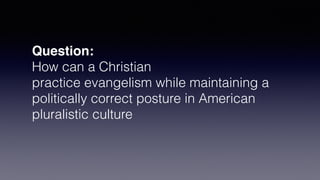
Question:
How can a Christian
practice evangelism while maintaining a
politically correct posture in American
pluralistic culture
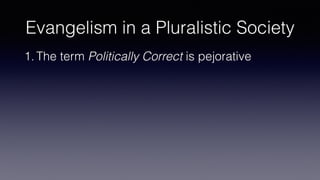
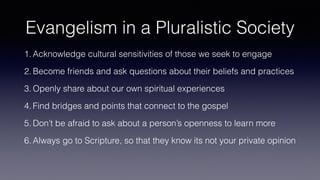
Evangelism in a Pluralistic Society
1. The term Politically Correct is pejorative
Political Correctness
1. Pejorative term implying sti
fl
ed speech
2. Used in Nazi Germany and Soviet Union
3. Criticized by Alan Bloom in The Closing of the
American Mind (1987).
4. Weaponized by critics in 1990s
Civil Discourse
Instead of thinking politically correct
Think about Civil Discourse and Cultural
Sensitivities
Civil Discourse
Seek sensitivities in the language we use. But that
sensitivity should not sti
fl
e our ability to freely
share our personal beliefs
Evangelism in a Pluralistic Society
1. Acknowledge cultural sensitivities of those we
seek to engage
Evangelism in a Pluralistic Society
1. Acknowledge cultural sensitivities of those we
seek to engage
2. Become friends and ask questions about their
beliefs and practices
Evangelism in a Pluralistic Society
1. Acknowledge cultural sensitivities of those we
seek to engage
2. Become friends and ask questions about their
beliefs and practices
3. Openly share about our own spiritual
experiences
Evangelism in a Pluralistic Society
1. Acknowledge cultural sensitivities of those we
seek to engage
2. Become friends and ask questions about their
beliefs and practices
3. Openly share about our own spiritual experiences
4. Find bridges and points that connect to the gospel
Evangelism in a Pluralistic Society
1. Acknowledge cultural sensitivities of those we seek to engage
2. Become friends and ask questions about their beliefs and
practices
3. Openly share about our own spiritual experiences
4. Find bridges and points that connect to the gospel
5. Don’t be afraid to ask about a person’s openness to learn
more
Evangelism in a Pluralistic Society
1. Acknowledge cultural sensitivities of those we seek to engage
2. Become friends and ask questions about their beliefs and practices
3. Openly share about our own spiritual experiences
4. Find bridges and points that connect to the gospel
5. Don’t be afraid to ask about a person’s openness to learn more
6. Always go to Scripture, so that they know its not your private opinion
Civil Discourse means
respectful discussion
Civil Discourse does not mean
having no religious beliefs
Most non-Western cultures respect
deep personal convictions
(Especially Muslims!)
Evangelical Approach
to Studying Religion
Evangelical Approach
Civil Discourse
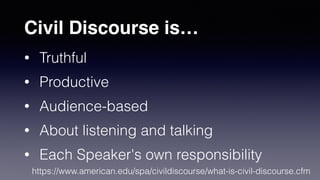
• Truthful
• Productive
• Audience-based
• About listening and talking
• Each Speaker's own responsibility
Civil Discourse is…
https://www.american.edu/spa/civildiscourse/what-is-civil-discourse.cfm
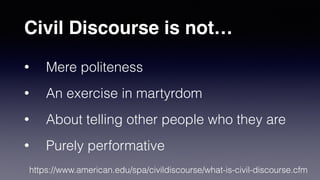
• Mere politeness
• An exercise in martyrdom
• About telling other people who they are
• Purely performative
Civil Discourse is not…
https://www.american.edu/spa/civildiscourse/what-is-civil-discourse.cfm
Evangelical Civil Discourse
1. Truthful — Maintaining Christian truth claims
Evangelical Civil Discourse
1. Truthful — Maintaining Christian truth claims
2. Listening — Seeking to learn another’s beliefs
Evangelical Civil Discourse
1. Truthful — Maintaining Christian truth claims
2. Listening — Seeking to learn another’s beliefs
3. Talking — Willing to share Christian perspective
4. Each Speaker — Taking another’s view based on
what they say, not inferring from what they don’t say
General Revelation
Evangelical Approach
1. Acknowledge holding religious truth claims
2. Acknowledge there is wisdom in other religions
3. Acknowledge discourse is valuable
Evangelical Approach
1. Acknowledge holding religious truth claims
2. Acknowledge there is wisdom in other religions
3. Acknowledge discourse is valuable
4. Maintain the need to share the gospel
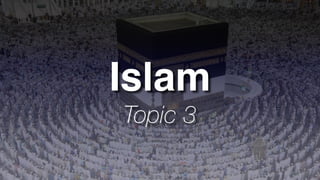
Islam
Topic 3
Demographics
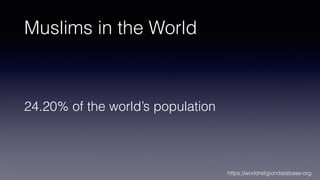
Muslims in the World
24.20% of the world’s population
https://worldreligiondatabase-org
Muslims in the World
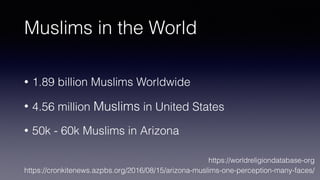
• 1.89 billion Muslims Worldwide
• 4.56 million Muslims in United States
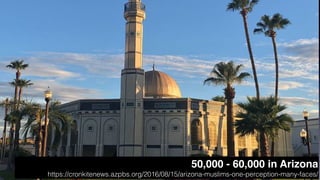
• 50k - 60k Muslims in Arizona
https://worldreligiondatabase-org
https://cronkitenews.azpbs.org/2016/08/15/arizona-muslims-one-perception-many-faces/
50,000 - 60,000 in Arizona
https://cronkitenews.azpbs.org/2016/08/15/arizona-muslims-one-perception-many-faces/
Muslims in the World
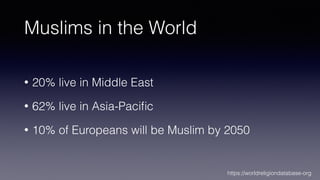
• 20% live in Middle East
• 62% live in Asia-Paci
fi
c
• 10% of Europeans will be Muslim by 2050
https://worldreligiondatabase-org
Lipka, Michael. (9 Aug 2017). Muslims and Islam: Key Findings. Pew Research Center.
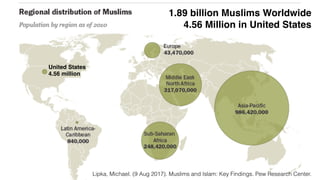
1.89 billion Muslims Worldwide
4.56 Million in United States
4.56 million
United States
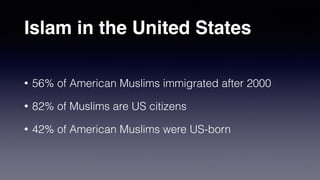
Islam in the United States
• 56% of American Muslims immigrated after 2000
• 82% of Muslims are US citizens
• 42% of American Muslims were US-born
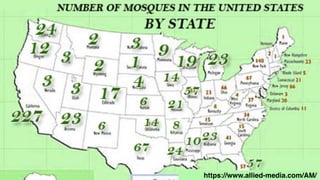
https://www.allied-media.com/AM/
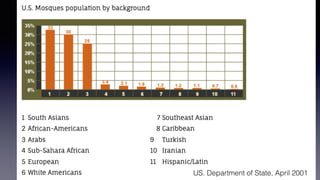
US. Department of State, April 2001
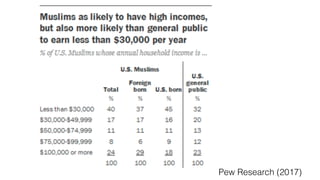
Pew Research (2017)
What can you say about the Muslim
community in the United States?
What can you say about the Muslim
community in the United States?
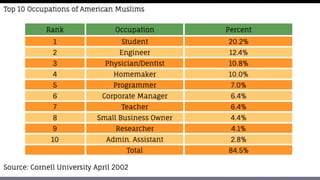
• Not a community of immigrants anymore
• Values learning and well educated
• Upwardly mobile and hard working
History of Islam
Backstory
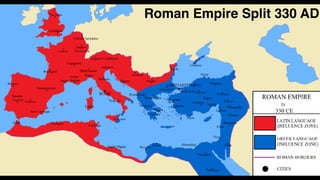
Roman Empire Split 330 AD
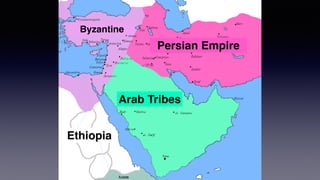
Arab Tribes
Persian Empire
Byzantine
Ethiopia
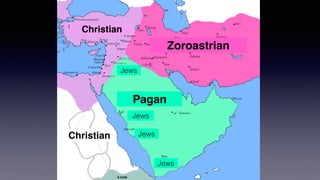
Pagan
Zoroastrian
Christian
Christian Jews
Jews
Jews
Jews
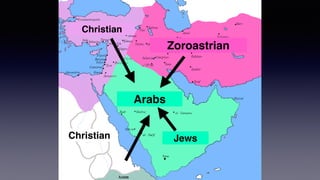
Arabs
Zoroastrian
Christian
Christian Jews
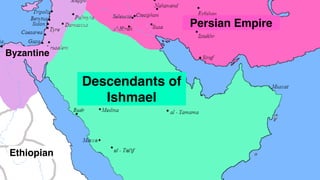
Islam grew out of a conversation
between three religions
Descendants of
Ishmael
Persian Empire
Byzantine
Ethiopian
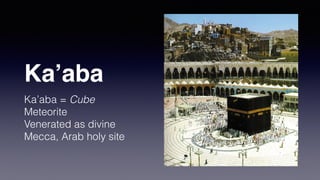
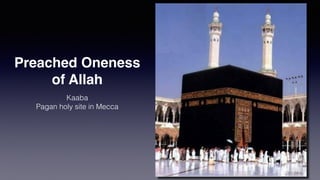
Ka’aba
Ka’aba = Cube
Meteorite
Venerated as divine
Mecca, Arab holy site
Birth of Islam
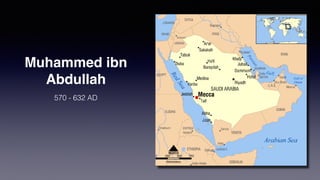
Muhammed ibn
Abdullah
570 - 632 AD
Muhammed’s Upbringing
• 570 AD Born in Mecca
• Hashemite Arab Tribe
• Family possibly Zoroastrians
Muhammed’s Upbringing
• Father (Abdullah) died before he was born
• Mother (Amina) died when he was a child
• Uncle (Abu Talib) raised him
• 595 Married (Khadija) who was 30 years older
Muhammed’s Life
• Two Sons who died
• Four daughters who became heirs
• Became a camel driver
• Watering camels for pilgrims to Ka’aba
Muhammed’s Revelation
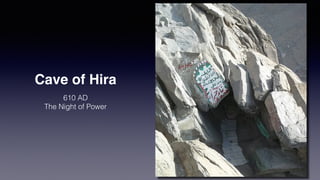
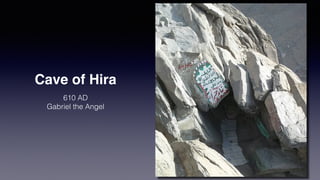
• Prayed and meditated in Cave of Hira
• 610 AD Received revelation from Angel Gabriel
• Laylat al-Qadr (Night of Power)
• Angel said “Recite!”
• But Muhammed was illiterate
Cave of Hira
610 AD
The Night of Power
Cave of Hira
610 AD
Gabriel the Angel
Preached Oneness
of Allah
Kaaba
Pagan holy site in Mecca
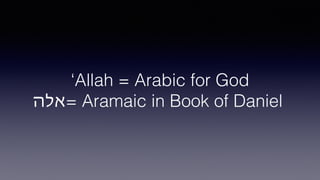
‘Allah = Arabic for God
‫=אלה‬ Aramaic in Book of Daniel
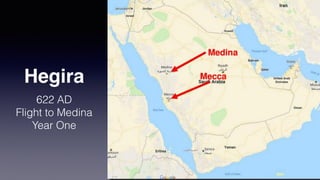
Hegira
622 AD
Flight to Medina
Year One
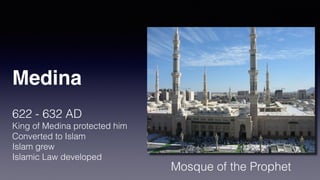
Medina
622 - 632 AD
King of Medina protected him
Converted to Islam
Islam grew
Islamic Law developed
Mosque of the Prophet
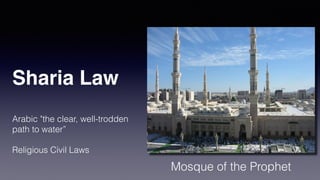
Sharia Law
Arabic "the clear, well-trodden
path to water”
Religious Civil Laws
Mosque of the Prophet
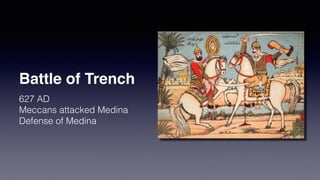
Battle of Trench
627 AD
Meccans attacked Medina
Defense of Medina
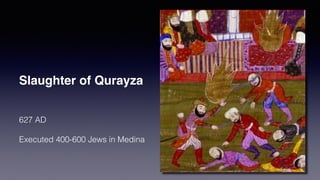
Slaughter of Qurayza
627 AD
Executed 400-600 Jews in Medina
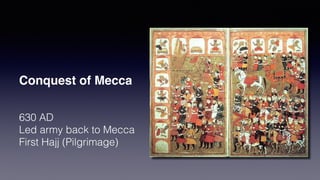
Conquest of Mecca
630 AD
Led army back to Mecca
First Hajj (Pilgrimage)
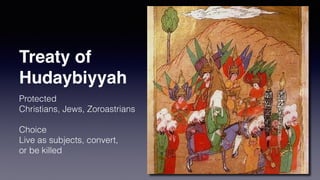
Treaty of
Hudaybiyyah
Protected
Christians, Jews, Zoroastrians
Choice
Live as subjects, convert,
or be killed
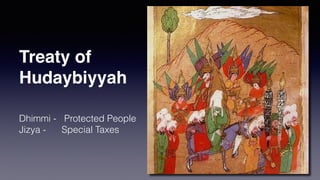
Treaty of
Hudaybiyyah
Dhimmi - Protected People
Jizya - Special Taxes
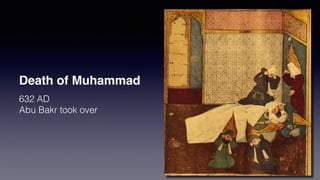
Death of Muhammad
632 AD
Abu Bakr took over
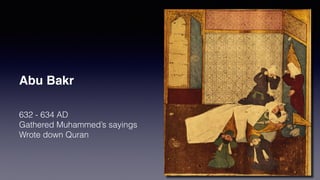
Abu Bakr
632 - 634 AD
Gathered Muhammed’s sayings
Wrote down Quran
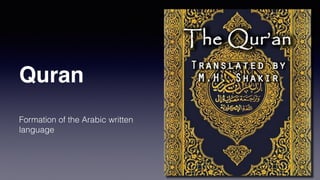
Quran
Formation of the Arabic written
language
Spread of Islam
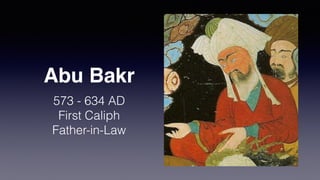
Abu Bakr
573 - 634 AD
First Caliph
Father-in-Law
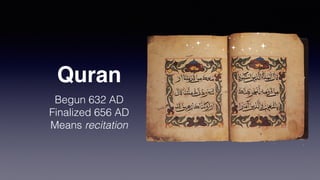
Quran
Begun 632 AD
Finalized 656 AD
Means recitation
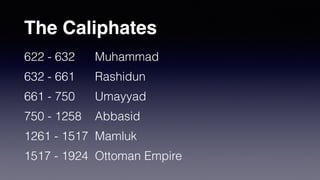
The Caliphates
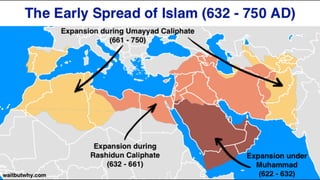
622 - 632 Muhammad
632 - 661 Rashidun
661 - 750 Umayyad
750 - 1258 Abbasid
1261 - 1517 Mamluk
1517 - 1924 Ottoman Empire
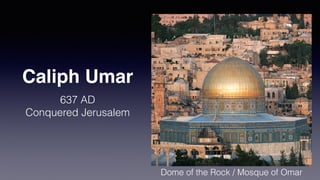
Caliph Umar
637 AD
Conquered Jerusalem
Dome of the Rock / Mosque of Omar
Pact of Omar (644 AD)
• Protects Dhimmis (non-Muslims)
• Prohibits rebuilding churches/synagogues
• Churches/Synagogues lower than mosques
• Dhimmis must pay Jizya
• Prohibits evangelism
• Prohibits public religious celebrations
Pact of Omar (644 AD)
• Prohibits public displays of crosses
• Prohibits loud sounds (ex. Call to worship)
• Prohibits stopping a conversion to Islam
• Prohibits imitating Muslims
• Requires Dhimmis rise in presence of Muslim
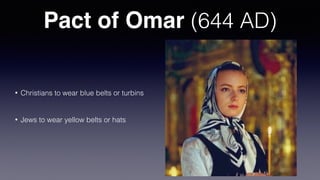
Pact of Omar (644 AD)
• Christians to wear blue belts or turbins
• Jews to wear yellow belts or hats
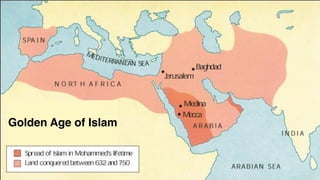
Golden Age of Islam
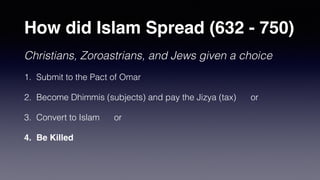
How did Islam Spread (632 - 750)
Christians, Zoroastrians, and Jews given a choice
1. Submit to the Pact of Omar
2. Become Dhimmis (subjects) and pay the Jizya (tax) or
3. Convert to Islam or
4. Be Killed
How do we talk about the
spread of Islam?
Islam’s Contributions
To Civilization
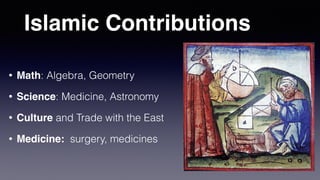
Islamic Contributions
• Math: Algebra, Geometry
• Science: Medicine, Astronomy
• Culture and Trade with the East
• Medicine: surgery, medicines
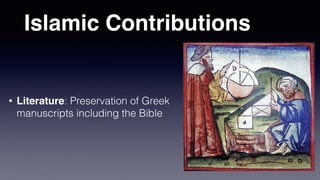
Islamic Contributions
• Literature: Preservation of Greek
manuscripts including the Bible
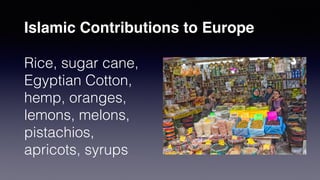
Islamic Contributions to Europe
Rice, sugar cane,
Egyptian Cotton,
hemp, oranges,
lemons, melons,
pistachios,
apricots, syrups
Coffee!
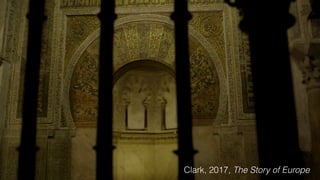
Clark, 2017, The Story of Europe
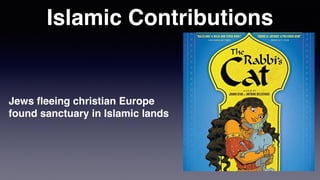
Islamic Contributions
Jews
fl
eeing christian Europe
found sanctuary in Islamic lands
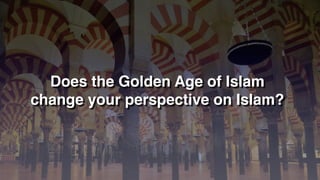
Does the Golden Age of Islam
change your perspective on Islam?
How did the Islamic world decline?
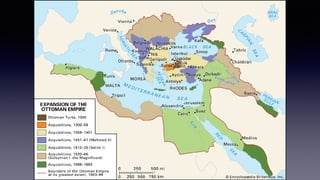
Ottoman Empire
The Last Great Islamic Empire
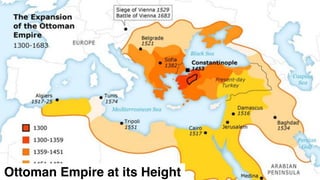
Ottoman Empire at its Height
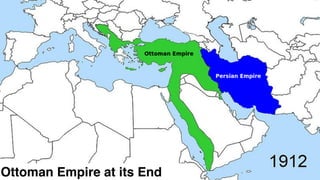
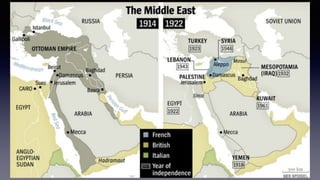
Ottoman Empire at its End
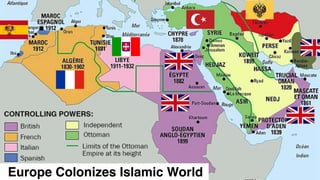
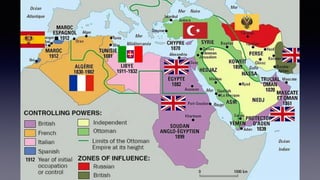
Europe Colonizes Islamic World
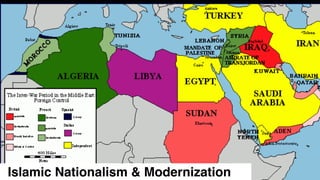
Islamic Nationalism & Modernization
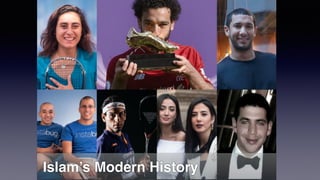
Islam’s Modern History
Rise of Modern Arab Nationalism
• Modernization in Islamic Countries
• Rise of Nationalism and Arab Moderates
• Rise of Oppressive Leadership
• Pushback from Religious Muslims
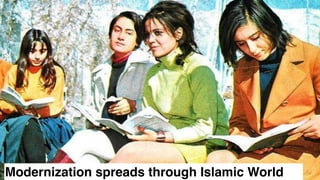
Modernization spreads through Islamic World
Modernization of the Islamic World
• Women’s rights
• Modern
fi
lm and TV
• Popular Music
• Democratic Institutions
• Popular Dress and culture
Political Polarization in Islamic World
• Cold War forces political alliances
• Alliances with the Soviet Union or
• Alliances with American Allies
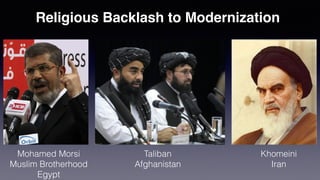
Mohamed Morsi
Muslim Brotherhood
Egypt
Taliban
Afghanistan
Khomeini
Iran
Religious Backlash to Modernization
Rise of Islamic Extremism
• Reaction to Modernization
• Reaction to Western culture
• Reaction to Secular Civil Government
• Reaction to perceived Western & Russian Military Alliances which
are seen as efforts to colonize and control
The Shia - Sunni Schism
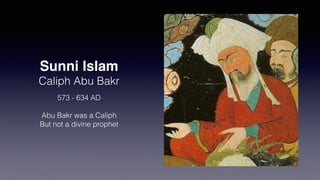
Sunni Islam
Caliph Abu Bakr
573 - 634 AD
Abu Bakr was a Caliph
But not a divine prophet
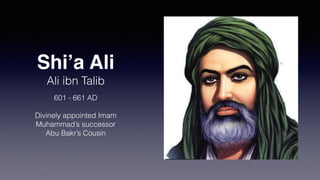
Shi’a Ali
Ali ibn Talib
601 - 661 AD
Divinely appointed Imam
Muhammad’s successor
Abu Bakr’s Cousin
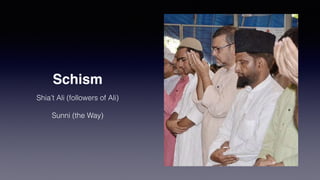
Schism
Shia’t Ali (followers of Ali)
Sunni (the Way)
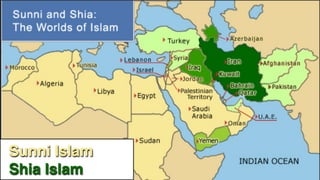
Sunni Islam
Shia Islam
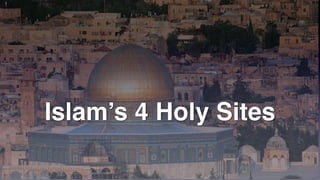
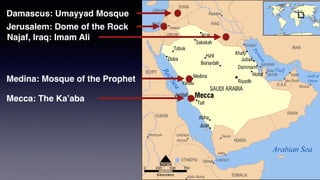
Islam’s 4 Holy Sites
Jerusalem: Dome of the Rock
Medina: Mosque of the Prophet
Mecca: The Ka’aba
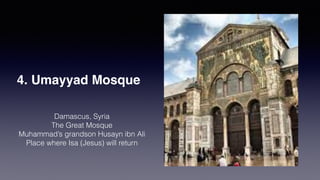
Damascus: Umayyad Mosque
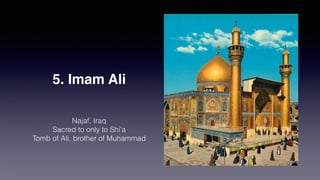
Najaf, Iraq: Imam Ali
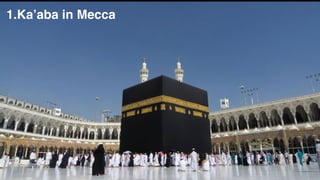
1.Ka’aba in Mecca
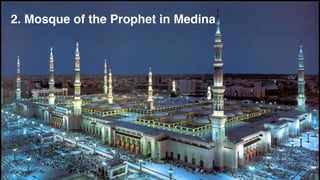
2. Mosque of the Prophet in Medina
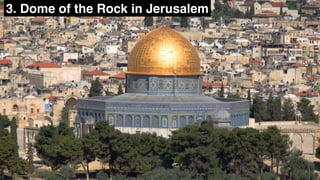
3. Dome of the Rock in Jerusalem
4. Umayyad Mosque
Damascus, Syria
The Great Mosque
Muhammad’s grandson Husayn ibn Ali
Place where Isa (Jesus) will return
5. Imam Ali
Najaf, Iraq
Sacred to only to Shi’a
Tomb of Ali, brother of Muhammad
Beliefs
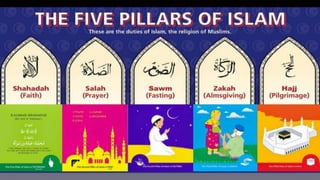
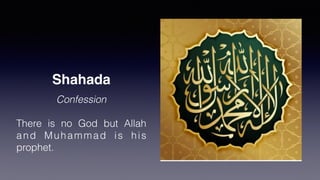
Shahada
Confession
There is no God but Allah
and Muhammad is his
prophet.
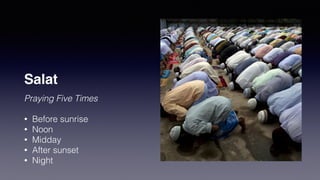
Salat
Praying Five Times
• Before sunrise
• Noon
• Midday
• After sunset
• Night
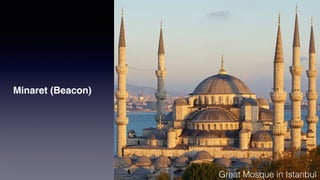
Great Mosque in Istanbul
Minaret (Beacon)
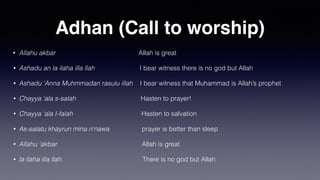
Adhan (Call to worship)
• Allahu akbar Allah is great
• Ashadu an la ilaha illa llah I bear witness there is no god but Allah
• Ashadu ‘Anna Muhmmadan rasulu illah I bear witness that Muhammad is Allah’s prophet
• Chayya ‘ala s-salah Hasten to prayer!
• Chayya ‘ala I-falah Hasten to salvation
• As-salatu khayrun mina n’nawa prayer is better than sleep
• Allahu ‘akbar Allah is great
• la ilaha illa llah. There is no god but Allah
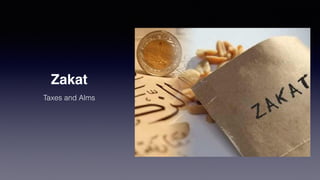
Zakat
Taxes and Alms
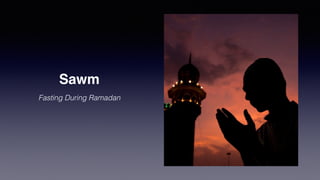
Sawm
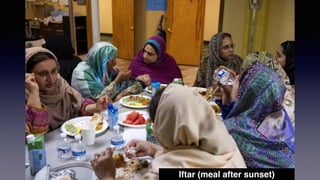
Fasting During Ramadan
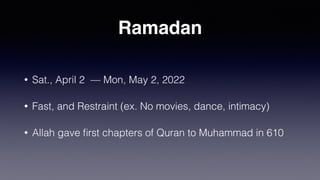
Ramadan
• Sat., April 2 — Mon, May 2, 2022
• Fast, and Restraint (ex. No movies, dance, intimacy)
• Allah gave
fi
rst chapters of Quran to Muhammad in 610
Iftar (meal after sunset)
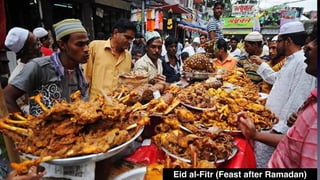
Eid al-Fitr (Feast after Ramadan)
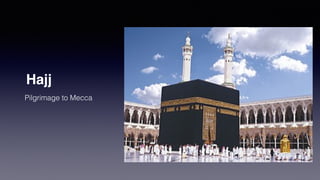
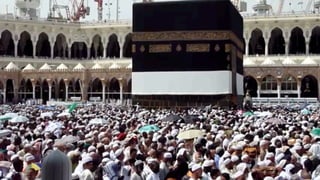
Hajj
Pilgrimage to Mecca
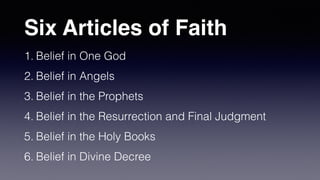
Six Articles of Faith
1. Belief in One God
2. Belief in Angels
3. Belief in the Prophets
4. Belief in the Resurrection and Final Judgment
5. Belief in the Holy Books
6. Belief in Divine Decree
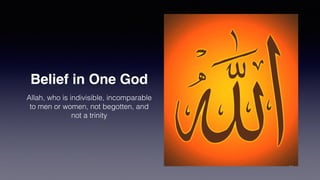
Belief in One God
Allah, who is indivisible, incomparable
to men or women, not begotten, and
not a trinity
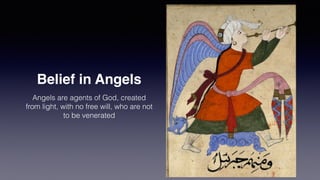
Belief in Angels
Angels are agents of God, created
from light, with no free will, who are not
to be venerated
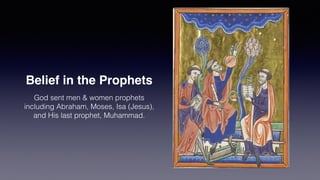
Belief in the Prophets
God sent men & women prophets
including Abraham, Moses, Isa (Jesus),
and His last prophet, Muhammad.
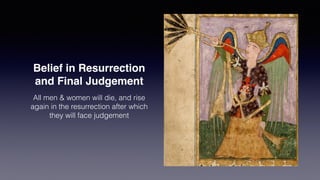
Belief in Resurrection
and Final Judgement
All men & women will die, and rise
again in the resurrection after which
they will face judgement
End Times
• Signs of the End times: Immorality, crime, callousness
• Coming of the Mahdi (Guided One)
• Unite Muslims
• Isa will return & rule
• Satan will be killed
• Resurrection of the Dead
• Day of Judgement
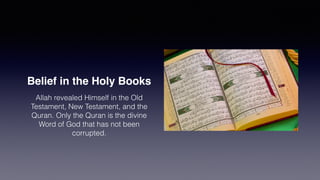
Belief in the Holy Books
Allah revealed Himself in the Old
Testament, New Testament, and the
Quran. Only the Quran is the divine
Word of God that has not been
corrupted.
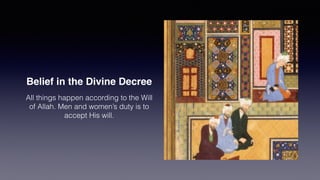
Belief in the Divine Decree
All things happen according to the Will
of Allah. Men and women’s duty is to
accept His will.
Beliefs of Islam
• One God who is indivisible and cannot be a man
• God’s prophets: Abraham, Moses, Isa (Jesus), Muhammad
• Old & New Testament, Quran, Hadith
• Paradise, Hell, and temporal place before judgement
• Satan, good and bad angels (Jinn)
• Judged by our deeds on earth
Beliefs of Islam
• Quran is the divine Word of Allah (given to Muhammad)
• Hadith: the oral traditions of Muhammad
• Shi’a believe divine authority of the Imam
• Will of Allah determines all that we do
Beliefs of Islam
• Jihad (struggle)
• Judgement Day
Sacred Story
1. God called Abraham,
fi
rst monotheist
2. Ishmael, not Isaac, was Abraham’s Heir
3. Ishmael traveled to Mecca where Abraham built the Ka’aba
4. God sent prophets, all rejected
5. Gabriel appeared to Muhammad,
fi
nal prophet
6. Resurrection at the end of time and
fi
nal battle
7. Final judgement of the world
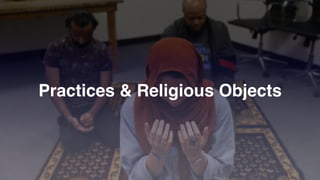
Practices & Religious Objects
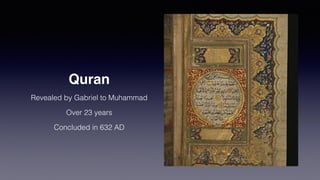
Quran
Revealed by Gabriel to Muhammad
Over 23 years
Concluded in 632 AD
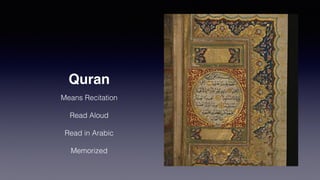
Quran
Means Recitation
Read Aloud
Read in Arabic
Memorized
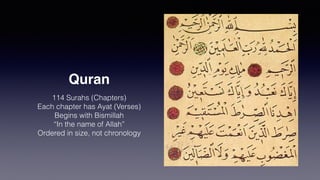
Quran
114 Surahs (Chapters)
Each chapter has Ayat (Verses)
Begins with Bismillah
“In the name of Allah”
Ordered in size, not chronology
1. In the Name of Allah the Entirely Merciful, the Especially Merciful.
2. [All] praise is [due] to Allah, Lord of the worlds -
3. The Entirely Merciful, the Especially Merciful,
4. Sovereign of the Day of Recompense.
5. It is You we worship and You we ask for help
6. Guide us to the straight path-
7. The path of those upon whom You have bestowed favor, not of those
who have evoked [Your] anger or of those who are astray.
Quran 1:1–7
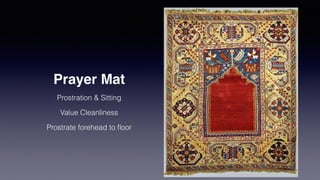
Prayer Mat
Prostration & Sitting
Value Cleanliness
Prostrate forehead to
fl
oor
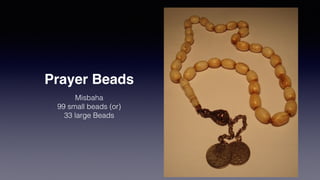
Prayer Beads
Misbaha
99 small beads (or)
33 large Beads
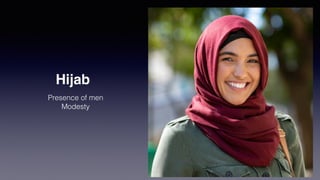
Hijab
Presence of men
Modesty
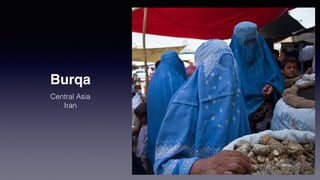
Burqa
Central Asia
Iran
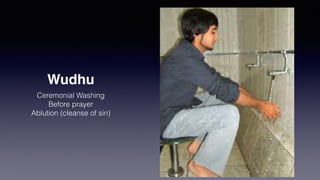
Wudhu
Ceremonial Washing
Before prayer
Ablution (cleanse of sin)
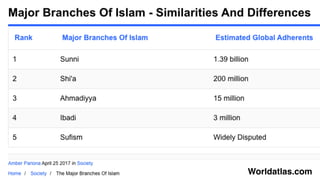
Branches
Worldatlas.com
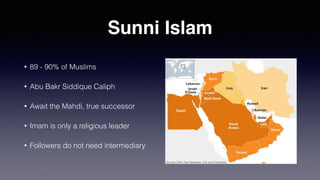
Sunni Islam
• 89 - 90% of Muslims
• Abu Bakr Siddique Caliph
• Await the Mahdi, true successor
• Imam is only a religious leader
• Followers do not need intermediary
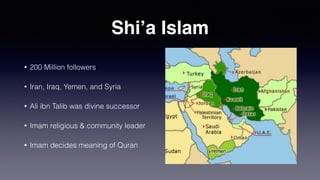
Shi’a Islam
• 200 Million followers
• Iran, Iraq, Yemen, and Syria
• Ali ibn Talib was divine successor
• Imam religious & community leader
• Imam decides meaning of Quran
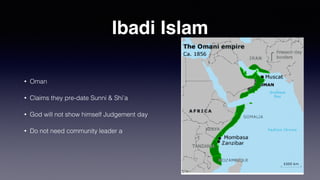
Ibadi Islam
• Oman
• Claims they pre-date Sunni & Shi’a
• God will not show himself Judgement day
• Do not need community leader a
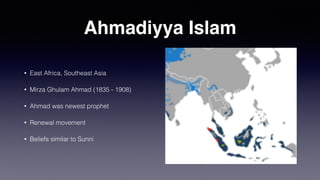
Ahmadiyya Islam
• East Africa, Southeast Asia
• Mirza Ghulam Ahmad (1835 - 1908)
• Ahmad was newest prophet
• Renewal movement
• Beliefs similar to Sunni
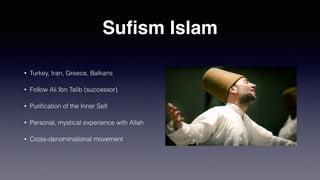
Su
fi
sm Islam
• Turkey, Iran, Greece, Balkans
• Follow Ali Ibn Talib (successor)
• Puri
fi
cation of the Inner Self
• Personal, mystical experience with Allah
• Cross-denominational movement
Cultural Values
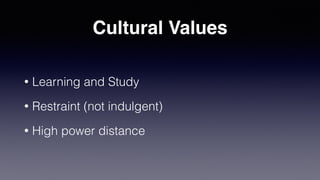
Cultural Values
• Learning and Study
• Restraint (not indulgent)
• High power distance
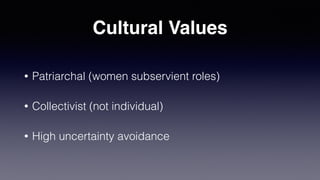
Cultural Values
• Patriarchal (women subservient roles)
• Collectivist (not individual)
• High uncertainty avoidance
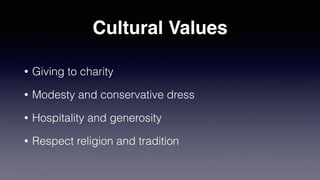
Cultural Values
• Giving to charity
• Modesty and conservative dress
• Hospitality and generosity
• Respect religion and tradition
Sensitivities
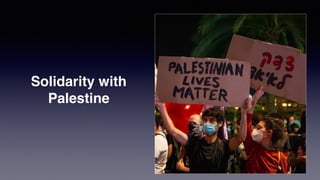
• Israel and their occupation of the territories
• Palestinians and autonomy
• Dietary restrictions
• Social interaction of men with women
• Modest dress (especially women)
Sensitivities
• Movies, music, celebration (ex. Alcohol)
• Depicting Muhammed
• Criticizing Muhammed
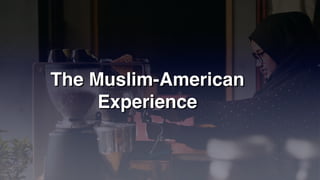
The Muslim-American
Experience
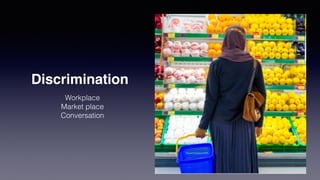
Discrimination
Workplace
Market place
Conversation
Solidarity with
Palestine
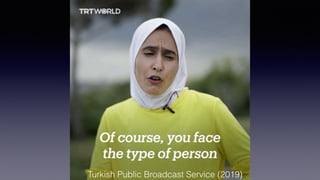
Turkish Public Broadcast Service (2019)
What are ways we
can be sensitive?
What are ways we
can explain the
gospel?

INT-244 Topic 3 Islam