Insomnia
MUHAMMAD KAMRAN
ROLL NO 88
Content
 Definition
 Type
 Causes
 Symptoms
 Diagnosis
 Treatment
Definition
 Insomnia is a type of sleep disorder.
 Individuals with insomnia find it difficult to fall asleep, stay asleep, or both.
 It may also result in waking earlier than desired.
 The sleep is often reported to be of chronically poor quality, light and
unrefreshing.
Types
 Chronic insomnia:- Chronic insomnia is defined to occur at least 3 nights
per week for at least 3 months.
 Types
 It may last for years or even decades.
 Short-term insomnia (or acute insomnia) lasts less than 3 months with an
unspecified frequency.
Subtypes
 Psychophysiological insomnia: heightened arousal with excessive worry
and focus on sleep.
 Idiopathic insomnia: longstanding and genetically based, often
beginning in infancy or childhood.
 Paradoxical insomnia: sleep state misperception resulting mistaken belief
that sleep has not occurred.
 Inadequate sleep hygiene: habits that disturb sleep including naps
caffeine intake, a variable sleep schedule, and using the bedroom for
non-sleep activities.
Subtypes
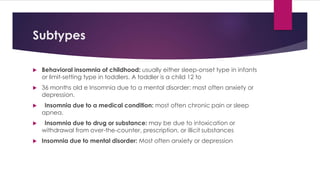
 Behavioral insomnia of childhood: usually either sleep-onset type in infants
or limit-setting type in toddlers. A toddler is a child 12 to
 36 months old e Insomnia due to a mental disorder: most often anxiety or
depression.
 Insomnia due to a medical condition: most often chronic pain or sleep
apnea.
 Insomnia due to drug or substance: may be due to intoxication or
withdrawal from over-the-counter, prescription, or illicit substances
 Insomnia due to mental disorder: Most often anxiety or depression
Types
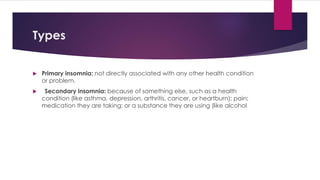
 Primary insomnia: not directly associated with any other health condition
or problem.
 Secondary insomnia: because of something else, such as a health
condition (like asthma, depression, arthritis, cancer, or heartburn); pain;
medication they are taking; or a substance they are using (like alcohol
Causes of insomnia
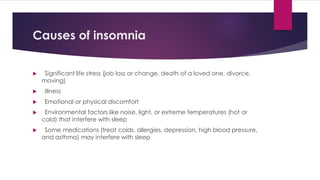
 Significant life stress (job loss or change, death of a loved one, divorce,
moving)
 Illness
 Emotional or physical discomfort
 Environmental factors like noise, light, or extreme temperatures (hot or
cold) that interfere with sleep
 Some medications (treat colds, allergies, depression, high blood pressure,
and asthma) may interfere with sleep
Causes of insomnia
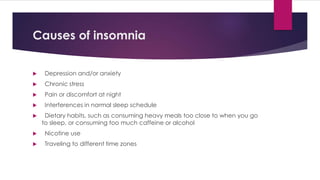
 Depression and/or anxiety
 Chronic stress
 Pain or discomfort at night
 Interferences in normal sleep schedule
 Dietary habits, such as consuming heavy meals too close to when you go
to sleep, or consuming too much caffeine or alcohol
 Nicotine use
 Traveling to different time zones
Symptoms of insomnia
 Waking too early in the morning
 unrefreshing sleep
 trouble falling or staying asleep
 Fatigue or daytime sleepiness
 Poor attention or concentration
 Impaired performance resulting in problems with work or social life and
Symptoms of insomnia
 Increased risk for errors or accidents
 Reduced energy or motivation
 Behavioral problems (i.e., hyperactivity, impulsiveness, aggression)
 Mood problems, including anxiety or depression or irritability
 Increased suicide risk
 Headache and chronic pain complaints
Diagnosing insomnia
 There is no definitive test for insomnia
 Sleep log: A sleep log is a simple diary that keeps track of details about
your sleep.
 In a sleep log, you’ll record details like your bedtime, wake up time, how
sleepy you feel at various times during the day, and more.
 A sleep log can also help your doctor figure out what might be causing
insomnia.
 Sleep inventory: A sleep inventory is an extensive questionnaire that
gathers information about your personal health, medical history, and sleep
patterns.
Diagnosing insomnia
 Blood tests: Your doctor may perform certain blood tests to rule out medical
conditions such as thyroid problems, which can disrupt sleep in some people.
 Sleep study: Your doctor may suggest that you do an overnight sleep study, or
polysomnography, to gather information about your nighttime sleep.
 In this exam, you sleep overnight in a lab set up with a comfortable bed.
 During the exam you will be connected to an EEG, which monitors the stages
of your sleep.
 A sleep study also measures things like oxygen levels, body movements, and
heart and breathing patterns.
 A sleep study is a non-invasive test.
Treatment Or management
 Non-Medical (Cognitive & Behavioral) Treatments for
 Insomnia
 There are psychological and behavioral techniques that can be helpful for
treating insomnia.
 Relaxation training, stimulus control,sleep restriction. And cognitive
behavioral therapy are some examples.
 Some of these techniques can be self-taught, while for others it’s better to
enlist the help of a therapist or sleep specialist.
Treatment or management
 Relaxation training, or progressive muscle relaxation, teaches the person to
systematically tense and relax muscles in different areas of the body.
 This helps to calm the body and induce sleep.
 Other relaxation techniques that help many people sleep involve
breathing exercises, mindfulness, meditation techniques, and guided
imagery. Many people listen to audio recordings to guide them in learning
these techniques.
Treatment or management
 Stimulus control helps to build an association between the bedroom and
sleep by limiting the type of activities allowed in the bedroom.
 •An example of stimulus control is going to bed only when you are sleepy,
and getting out of bed if you’ve been awake for 20 minutes or more.
 This helps to break an unhealthy association between the bedroom and
wakefulness.
Treatment or management
 Cognitive behavioral therapy (CBT) includes behavioral changes (such as
keeping a regular bedtime and wake up time, getting out of bed after
being awake for 20 minutes or so, and eliminating afternoon naps) but it
adds a cognitive or “thinking” component.
 There is a good amount of research supporting the use of CBT for
insomnia.
 For example, in one study, patients with insomnia attended one CBT
session via the internet per week for 6 weeks. After the treatment, these
people had improved sleep quality.
Treatment or management
 Avoiding caffeinated beverages near bedtime
 Avoiding exercise near bedtime
 Minimizing time spent on your bed when you’re not specifically intending
to sleep, such as watching TV or surfing the web on your phone
 Don’t eat a heavy meal late in the day
 Make your bedroom comfortable. Be sure that it is dark, quiet, and not
too warm or too cold.
Treatment or management
 Major classes of pr
 escription insomnia medications include
 Benzodiazepine hypnotics,
 Non-benzodiazepine hypnotics

Presentation citizenship.pdf

  • 1.
  • 2.
    Content  Definition  Type Causes  Symptoms  Diagnosis  Treatment
  • 3.
    Definition  Insomnia isa type of sleep disorder.  Individuals with insomnia find it difficult to fall asleep, stay asleep, or both.  It may also result in waking earlier than desired.  The sleep is often reported to be of chronically poor quality, light and unrefreshing.
  • 4.
    Types  Chronic insomnia:-Chronic insomnia is defined to occur at least 3 nights per week for at least 3 months.  Types  It may last for years or even decades.  Short-term insomnia (or acute insomnia) lasts less than 3 months with an unspecified frequency.
  • 5.
    Subtypes  Psychophysiological insomnia:heightened arousal with excessive worry and focus on sleep.  Idiopathic insomnia: longstanding and genetically based, often beginning in infancy or childhood.  Paradoxical insomnia: sleep state misperception resulting mistaken belief that sleep has not occurred.  Inadequate sleep hygiene: habits that disturb sleep including naps caffeine intake, a variable sleep schedule, and using the bedroom for non-sleep activities.
  • 6.
    Subtypes  Behavioral insomniaof childhood: usually either sleep-onset type in infants or limit-setting type in toddlers. A toddler is a child 12 to  36 months old e Insomnia due to a mental disorder: most often anxiety or depression.  Insomnia due to a medical condition: most often chronic pain or sleep apnea.  Insomnia due to drug or substance: may be due to intoxication or withdrawal from over-the-counter, prescription, or illicit substances  Insomnia due to mental disorder: Most often anxiety or depression
  • 7.
    Types  Primary insomnia:not directly associated with any other health condition or problem.  Secondary insomnia: because of something else, such as a health condition (like asthma, depression, arthritis, cancer, or heartburn); pain; medication they are taking; or a substance they are using (like alcohol
  • 8.
    Causes of insomnia Significant life stress (job loss or change, death of a loved one, divorce, moving)  Illness  Emotional or physical discomfort  Environmental factors like noise, light, or extreme temperatures (hot or cold) that interfere with sleep  Some medications (treat colds, allergies, depression, high blood pressure, and asthma) may interfere with sleep
  • 9.
    Causes of insomnia Depression and/or anxiety  Chronic stress  Pain or discomfort at night  Interferences in normal sleep schedule  Dietary habits, such as consuming heavy meals too close to when you go to sleep, or consuming too much caffeine or alcohol  Nicotine use  Traveling to different time zones
  • 10.
    Symptoms of insomnia Waking too early in the morning  unrefreshing sleep  trouble falling or staying asleep  Fatigue or daytime sleepiness  Poor attention or concentration  Impaired performance resulting in problems with work or social life and
  • 11.
    Symptoms of insomnia Increased risk for errors or accidents  Reduced energy or motivation  Behavioral problems (i.e., hyperactivity, impulsiveness, aggression)  Mood problems, including anxiety or depression or irritability  Increased suicide risk  Headache and chronic pain complaints
  • 12.
    Diagnosing insomnia  Thereis no definitive test for insomnia  Sleep log: A sleep log is a simple diary that keeps track of details about your sleep.  In a sleep log, you’ll record details like your bedtime, wake up time, how sleepy you feel at various times during the day, and more.  A sleep log can also help your doctor figure out what might be causing insomnia.  Sleep inventory: A sleep inventory is an extensive questionnaire that gathers information about your personal health, medical history, and sleep patterns.
  • 13.
    Diagnosing insomnia  Bloodtests: Your doctor may perform certain blood tests to rule out medical conditions such as thyroid problems, which can disrupt sleep in some people.  Sleep study: Your doctor may suggest that you do an overnight sleep study, or polysomnography, to gather information about your nighttime sleep.  In this exam, you sleep overnight in a lab set up with a comfortable bed.  During the exam you will be connected to an EEG, which monitors the stages of your sleep.  A sleep study also measures things like oxygen levels, body movements, and heart and breathing patterns.  A sleep study is a non-invasive test.
  • 14.
    Treatment Or management Non-Medical (Cognitive & Behavioral) Treatments for  Insomnia  There are psychological and behavioral techniques that can be helpful for treating insomnia.  Relaxation training, stimulus control,sleep restriction. And cognitive behavioral therapy are some examples.  Some of these techniques can be self-taught, while for others it’s better to enlist the help of a therapist or sleep specialist.
  • 15.
    Treatment or management Relaxation training, or progressive muscle relaxation, teaches the person to systematically tense and relax muscles in different areas of the body.  This helps to calm the body and induce sleep.  Other relaxation techniques that help many people sleep involve breathing exercises, mindfulness, meditation techniques, and guided imagery. Many people listen to audio recordings to guide them in learning these techniques.
  • 16.
    Treatment or management Stimulus control helps to build an association between the bedroom and sleep by limiting the type of activities allowed in the bedroom.  •An example of stimulus control is going to bed only when you are sleepy, and getting out of bed if you’ve been awake for 20 minutes or more.  This helps to break an unhealthy association between the bedroom and wakefulness.
  • 17.
    Treatment or management Cognitive behavioral therapy (CBT) includes behavioral changes (such as keeping a regular bedtime and wake up time, getting out of bed after being awake for 20 minutes or so, and eliminating afternoon naps) but it adds a cognitive or “thinking” component.  There is a good amount of research supporting the use of CBT for insomnia.  For example, in one study, patients with insomnia attended one CBT session via the internet per week for 6 weeks. After the treatment, these people had improved sleep quality.
  • 18.
    Treatment or management Avoiding caffeinated beverages near bedtime  Avoiding exercise near bedtime  Minimizing time spent on your bed when you’re not specifically intending to sleep, such as watching TV or surfing the web on your phone  Don’t eat a heavy meal late in the day  Make your bedroom comfortable. Be sure that it is dark, quiet, and not too warm or too cold.
  • 19.
    Treatment or management Major classes of pr  escription insomnia medications include  Benzodiazepine hypnotics,  Non-benzodiazepine hypnotics