Insomnia Psychology
Maya Al Halabi2134100401
Raghad Nagshbandi213410401
Sarah Al Marzouqi213410072
Shahad Al Shahrani213410663
Shath Alwan
Insomnia:
• Insomnia is a sleep disorder that is
characterized by difficulty falling
and/or staying asleep.
• People with insomnia have one or
more of the following symptoms:
• Difficulty falling asleep.
• Waking up often during the night
and having trouble going back
to sleep.
• Waking up too early in the morning.
• Feeling tired upon waking.
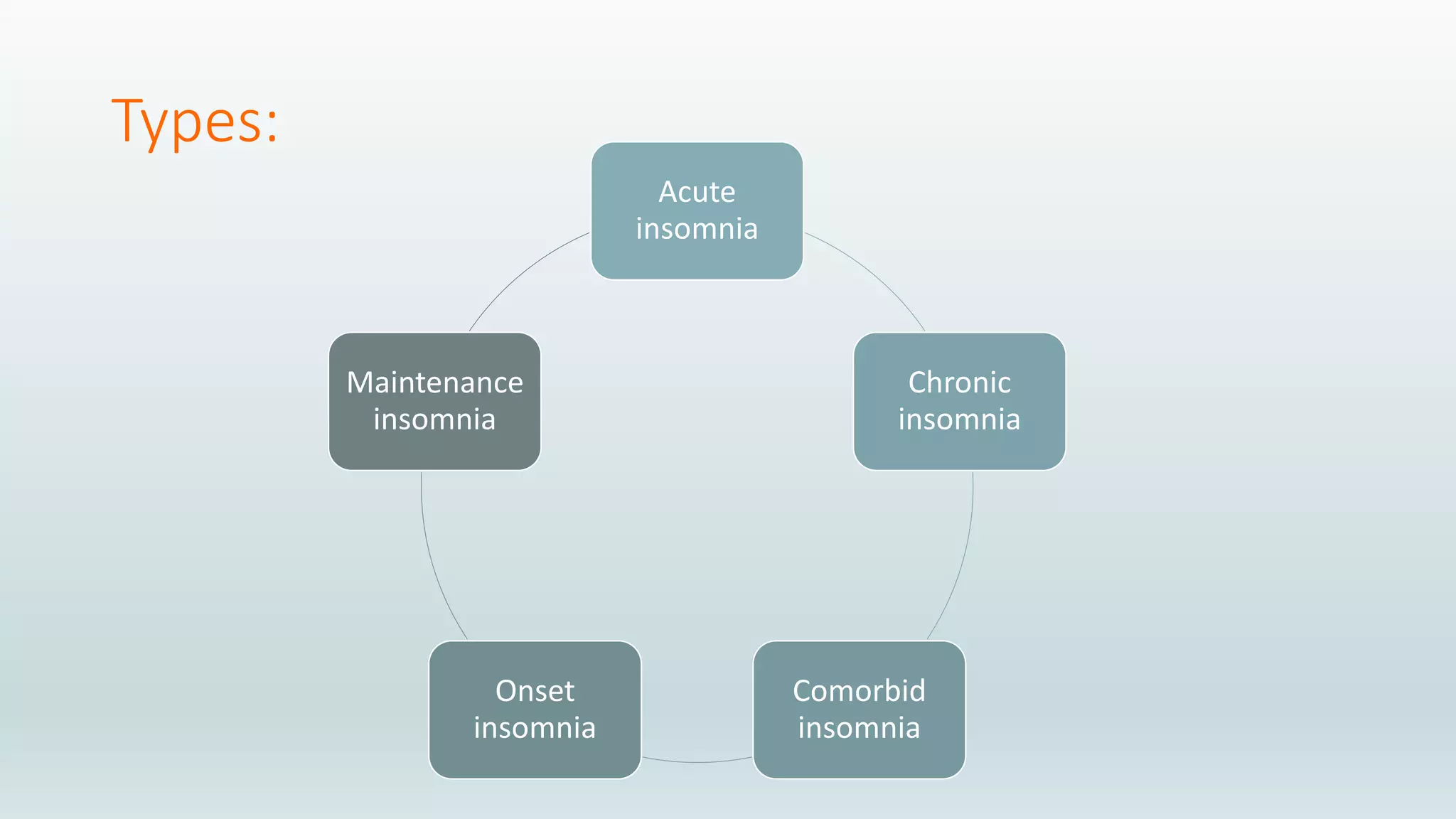
Acute
insomnia
Chronic
insomnia
Comorbid
insomnia
Onset
insomnia
Maintenance
insomnia
Types:
Acute insomnia:
• A brief episode of difficulty
sleeping. Acute insomnia is
usually caused by a life event,
such as a stressful change in a
person's job, receiving bad
news, or travel. Often acute
insomnia resolves without any
treatment.
Chronic insomnia:
• A long-term pattern of difficulty
sleeping. Insomnia is usually
considered chronic if a person has
trouble falling asleep or staying asleep
at least three nights per week for
three months or longer. Some people
with chronic insomnia have a long-
standing history of difficulty
sleeping. Chronic insomnia has many
causes.
Onset insomnia:
Difficulty falling asleep at the beginning of the
night.
Comorbid insomnia:
• Insomnia that occurs with another
condition. Psychiatric symptoms — such
as anxiety and depression — are known
to be associated with changes in sleep.
Certain medical conditions can either
cause insomnia or make a person
uncomfortable at night (as in the case of
arthritis or back pain, which may make it
hard to sleep.
Maintenance insomnia:
• The inability to stay asleep. People with
maintenance insomnia wake up during
the night and have difficulty returning to
sleep.
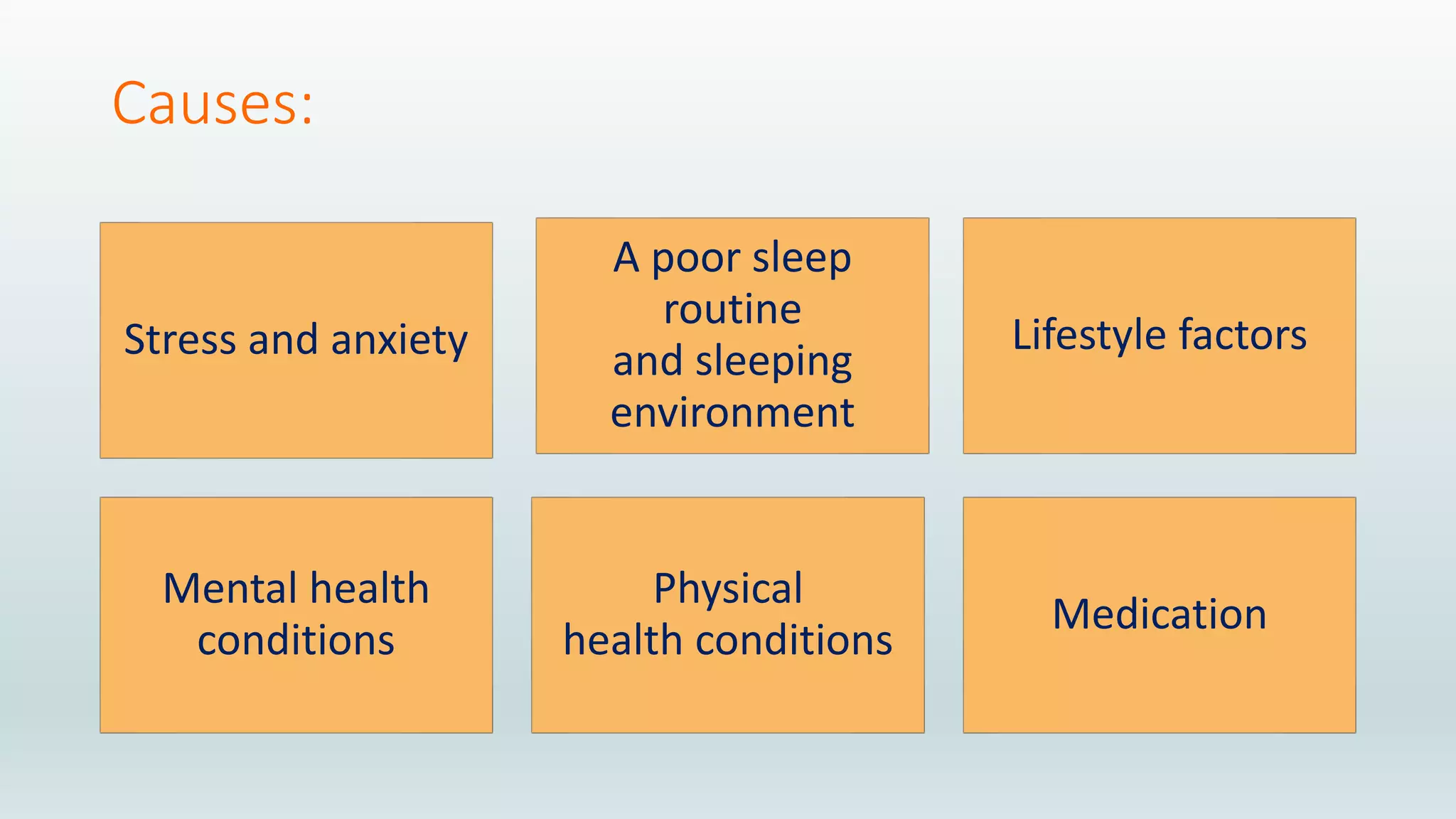
Causes:
Stress and anxiety
A poor sleep
routine
and sleeping
environment
Lifestyle factors
Mental health
conditions
Physical
health conditions
Medication
1. Stress and anxiety
• Some people develop insomnia after a stressful event, such as a
bereavement, problems at work or financial difficulties.
• The problem can continue long after the event has passed because
they start to associate going to bed with being awake. This develops
into an anxiety about sleep itself.
• Having more general worries, for example about work, family or health,
are also likely to keep you awake at night. These can cause your mind
to start racing while you lie in bed, which can be made worse by also
worrying about not being able to sleep.
2. A poor sleep routine and sleeping environment
• You may struggle to get a good night's sleep if you go to bed at inconsistent times, nap during the
day, or don't 'wind down' before going to bed.
• A poor sleeping environment can also contribute to insomnia, for instance an uncomfortable
bed, or a bedroom that's too bright, noisy, hot or cold.
3. Lifestyle factors
• Drinking alcohol before going to bed, and taking certain recreational drugs can affect your
sleep, as can stimulants such as nicotine (found in cigarettes) and caffeine (found in tea,
coffee and energy drinks). These should be avoided in the evenings.
• Changes to your sleeping patterns can also contribute to insomnia, for example because
of shiftwork or changing time zone after a long-haul flight (jet lag).
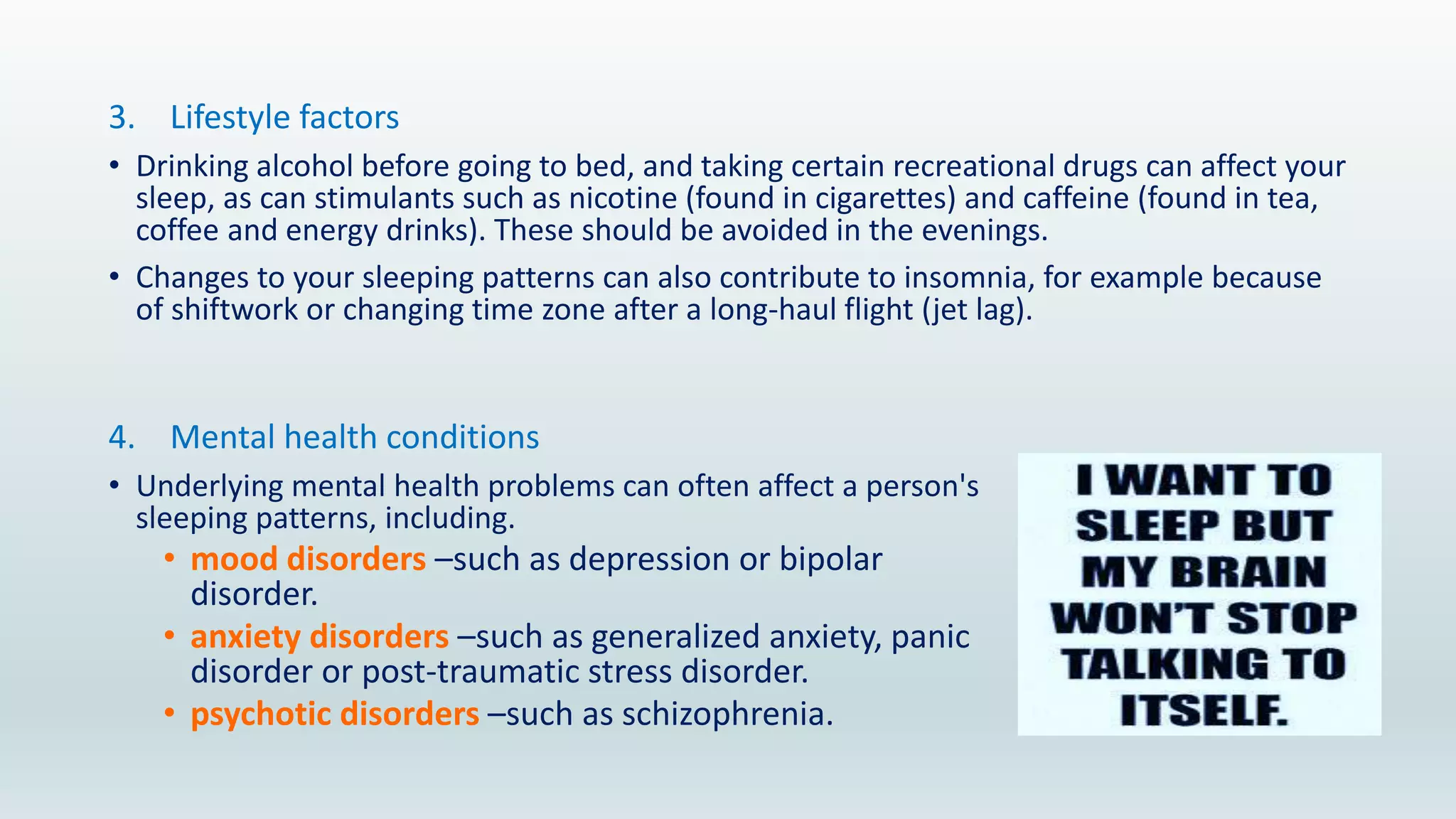
4. Mental health conditions
• Underlying mental health problems can often affect a person's
sleeping patterns, including.
• mood disorders –such as depression or bipolar
disorder.
• anxiety disorders –such as generalized anxiety, panic
disorder or post-traumatic stress disorder.
• psychotic disorders –such as schizophrenia.
5. Physical health conditions
• Insomnia can also be caused by underlying physical conditions, including:
• heart conditions – such as angina or heart failure.
• respiratory conditions –such as chronic obstructive pulmonary disease (COPD) or asthma.
• neurological conditions –such as Alzheimer's disease or Parkinson's disease.
• hormonal problems – such as an overactive thyroid.
• joint or muscle problems – such as arthritis.
• problems with the genital or urinary organs –such as urinary incontinence or an enlarged
prostate.
• sleep disorders – such as such as snoring and sleep apnea, restless legs
syndrome, narcolepsy, night terrors and sleepwalking.
• long-term pain
6. Medication:
• Some prescriptions or over-the-counter medications can cause insomnia as a side effect.
These include:
• certain antidepressants.
• epilepsy medicines.
• medicines for high blood pressure –such as beta-blockers.
• steroid medication.
• non-steroidal anti-inflammatory drugs (NSAIDs).
• stimulant medicines used to treat attention deficit hyperactivity disorder (ADHD) or
narcolepsy.
• some medicines used to treat asthma –such as salbutamol, salmeterol and theophylline.
Effects:
• Sleep is as important to your health as a healthy diet and regular exercise.
Whatever your reason for sleep loss, insomnia can affect you both mentally and
physically. People with insomnia report a lower quality of life compared with
people who are sleeping well.
• Complications of insomnia may include:
• Lower performance on the job or at school.
• Slowed reaction time while driving and higher risk of accidents.
• Psychiatric problems, such as depression or an anxiety disorder.
• Overweight or obesity.
• Irritability.
• Increased risk and severity of long-term diseases or conditions, such as high blood
pressure, heart disease and diabetes.
• Substance abuse.
Treatment:
• Acute insomnia may not require treatment. Mild insomnia often can be prevented or
cured by practicing good sleep habits (see below).
• If your insomnia makes it hard for you to function during the day because you are sleepy
and tired, your health care provider may prescribe sleeping pills for a limited time.
• Rapid onset, short-acting drugs can help you avoid effects such as drowsiness the
following day. Avoid using over-the-counter sleeping pills for insomnia, because they may
have undesired side effects and tend to lose their effectiveness over time.
• The following video will explain different ways to improve your sleeping if you’re suffering
from acute insomnia : https://youtu.be/e2UbhUXUX3s
Recourses:
• https://sleepfoundation.org/insomnia/content/what-are-different-
types-insomnia
• http://www.webmd.com/sleep-disorders/guide/insomnia-symptoms-
and-causes#2
We wish you sweet dreams for the night, we wish you have a
pleasant sight, Just stay relaxed as you close your eyes, as all
the stress will suffice, sleep well this night, wish you a good
night and sleep tight!
Thank you 

Insomnia

  • 1.
    Insomnia Psychology Maya AlHalabi2134100401 Raghad Nagshbandi213410401 Sarah Al Marzouqi213410072 Shahad Al Shahrani213410663 Shath Alwan
  • 2.
    Insomnia: • Insomnia isa sleep disorder that is characterized by difficulty falling and/or staying asleep. • People with insomnia have one or more of the following symptoms: • Difficulty falling asleep. • Waking up often during the night and having trouble going back to sleep. • Waking up too early in the morning. • Feeling tired upon waking.
  • 3.
  • 4.
    Acute insomnia: • Abrief episode of difficulty sleeping. Acute insomnia is usually caused by a life event, such as a stressful change in a person's job, receiving bad news, or travel. Often acute insomnia resolves without any treatment. Chronic insomnia: • A long-term pattern of difficulty sleeping. Insomnia is usually considered chronic if a person has trouble falling asleep or staying asleep at least three nights per week for three months or longer. Some people with chronic insomnia have a long- standing history of difficulty sleeping. Chronic insomnia has many causes.
  • 5.
    Onset insomnia: Difficulty fallingasleep at the beginning of the night. Comorbid insomnia: • Insomnia that occurs with another condition. Psychiatric symptoms — such as anxiety and depression — are known to be associated with changes in sleep. Certain medical conditions can either cause insomnia or make a person uncomfortable at night (as in the case of arthritis or back pain, which may make it hard to sleep. Maintenance insomnia: • The inability to stay asleep. People with maintenance insomnia wake up during the night and have difficulty returning to sleep.
  • 6.
    Causes: Stress and anxiety Apoor sleep routine and sleeping environment Lifestyle factors Mental health conditions Physical health conditions Medication
  • 7.
    1. Stress andanxiety • Some people develop insomnia after a stressful event, such as a bereavement, problems at work or financial difficulties. • The problem can continue long after the event has passed because they start to associate going to bed with being awake. This develops into an anxiety about sleep itself. • Having more general worries, for example about work, family or health, are also likely to keep you awake at night. These can cause your mind to start racing while you lie in bed, which can be made worse by also worrying about not being able to sleep. 2. A poor sleep routine and sleeping environment • You may struggle to get a good night's sleep if you go to bed at inconsistent times, nap during the day, or don't 'wind down' before going to bed. • A poor sleeping environment can also contribute to insomnia, for instance an uncomfortable bed, or a bedroom that's too bright, noisy, hot or cold.
  • 8.
    3. Lifestyle factors •Drinking alcohol before going to bed, and taking certain recreational drugs can affect your sleep, as can stimulants such as nicotine (found in cigarettes) and caffeine (found in tea, coffee and energy drinks). These should be avoided in the evenings. • Changes to your sleeping patterns can also contribute to insomnia, for example because of shiftwork or changing time zone after a long-haul flight (jet lag). 4. Mental health conditions • Underlying mental health problems can often affect a person's sleeping patterns, including. • mood disorders –such as depression or bipolar disorder. • anxiety disorders –such as generalized anxiety, panic disorder or post-traumatic stress disorder. • psychotic disorders –such as schizophrenia.
  • 9.
    5. Physical healthconditions • Insomnia can also be caused by underlying physical conditions, including: • heart conditions – such as angina or heart failure. • respiratory conditions –such as chronic obstructive pulmonary disease (COPD) or asthma. • neurological conditions –such as Alzheimer's disease or Parkinson's disease. • hormonal problems – such as an overactive thyroid. • joint or muscle problems – such as arthritis. • problems with the genital or urinary organs –such as urinary incontinence or an enlarged prostate. • sleep disorders – such as such as snoring and sleep apnea, restless legs syndrome, narcolepsy, night terrors and sleepwalking. • long-term pain
  • 10.
    6. Medication: • Someprescriptions or over-the-counter medications can cause insomnia as a side effect. These include: • certain antidepressants. • epilepsy medicines. • medicines for high blood pressure –such as beta-blockers. • steroid medication. • non-steroidal anti-inflammatory drugs (NSAIDs). • stimulant medicines used to treat attention deficit hyperactivity disorder (ADHD) or narcolepsy. • some medicines used to treat asthma –such as salbutamol, salmeterol and theophylline.
  • 11.
    Effects: • Sleep isas important to your health as a healthy diet and regular exercise. Whatever your reason for sleep loss, insomnia can affect you both mentally and physically. People with insomnia report a lower quality of life compared with people who are sleeping well. • Complications of insomnia may include: • Lower performance on the job or at school. • Slowed reaction time while driving and higher risk of accidents. • Psychiatric problems, such as depression or an anxiety disorder. • Overweight or obesity. • Irritability. • Increased risk and severity of long-term diseases or conditions, such as high blood pressure, heart disease and diabetes. • Substance abuse.
  • 12.
    Treatment: • Acute insomniamay not require treatment. Mild insomnia often can be prevented or cured by practicing good sleep habits (see below). • If your insomnia makes it hard for you to function during the day because you are sleepy and tired, your health care provider may prescribe sleeping pills for a limited time. • Rapid onset, short-acting drugs can help you avoid effects such as drowsiness the following day. Avoid using over-the-counter sleeping pills for insomnia, because they may have undesired side effects and tend to lose their effectiveness over time. • The following video will explain different ways to improve your sleeping if you’re suffering from acute insomnia : https://youtu.be/e2UbhUXUX3s
  • 13.
  • 14.
    We wish yousweet dreams for the night, we wish you have a pleasant sight, Just stay relaxed as you close your eyes, as all the stress will suffice, sleep well this night, wish you a good night and sleep tight! Thank you 