Insects as Bioindicator of
Environmental Pollution
What is Environment?
 The term environment comes from the
French word “environ” and means everything
that surround us.
 The totality of the surrounding conditions
for comfortable living of organism.
 Environment is the area in which we live.
What is Environmental Pollution?
 Pollution is the introduction of contaminants into
natural environment that cause adverse change in
environment. Few types of pollution are following:
I. Water Pollution
II. Air Pollution
III. Soil Pollution
IV. Noise Pollution
V. Thermal Pollution
What are Bioindicators?
 Bioindicators are species that can be used to monitor the
health of an environment or ecosystem.
 Such organisms can be monitored for changes
(morphological, physiological, or behavioral) that may
indicate a problem within their ecosystem.
 Bio indicators can tell us about the cumulative effects of
different pollutants in the ecosystem.
 E.g. Caddisfly (order Trichoptera) used as an indicator
of water quality.
Characteristics of Good Bioindicator
 Abundance, wide distribution
 Simple procedure of identification and sampling
 High tolerance for the pollutants analyzed
 Quick response towards the change in their
environment
 Taxonomically well documented and stable
 Easy and cheap to survey
Bio-indicator Groups of Insects
1. Dragonflies and
damselflie
2. Mayflies
3. Caddisflies
4. Bugs
5. Stoneflies
6. Midges
7. Honey bees
8. Beetles
9. Collembolans
10.Lepidopterans
11.Ants
12.Syrphidfly
Dragonflies and Damselflies
 Dragonflies and damselflies (known collectively
as the “Odonata”) are an important group in
biological water quality monitoring, as they are
particularly sensitive to pollution.
Mayflies
 Mayflies (Ephemeroptera) larvae are recognized worldwide for
their sensitivity to oxygen depletion in running waters, and are
therefore commonly used as bioindicators in many monitoring
programs.
 Mayflies inhabiting fresh waters like lakes and ponds.
Caddisflies
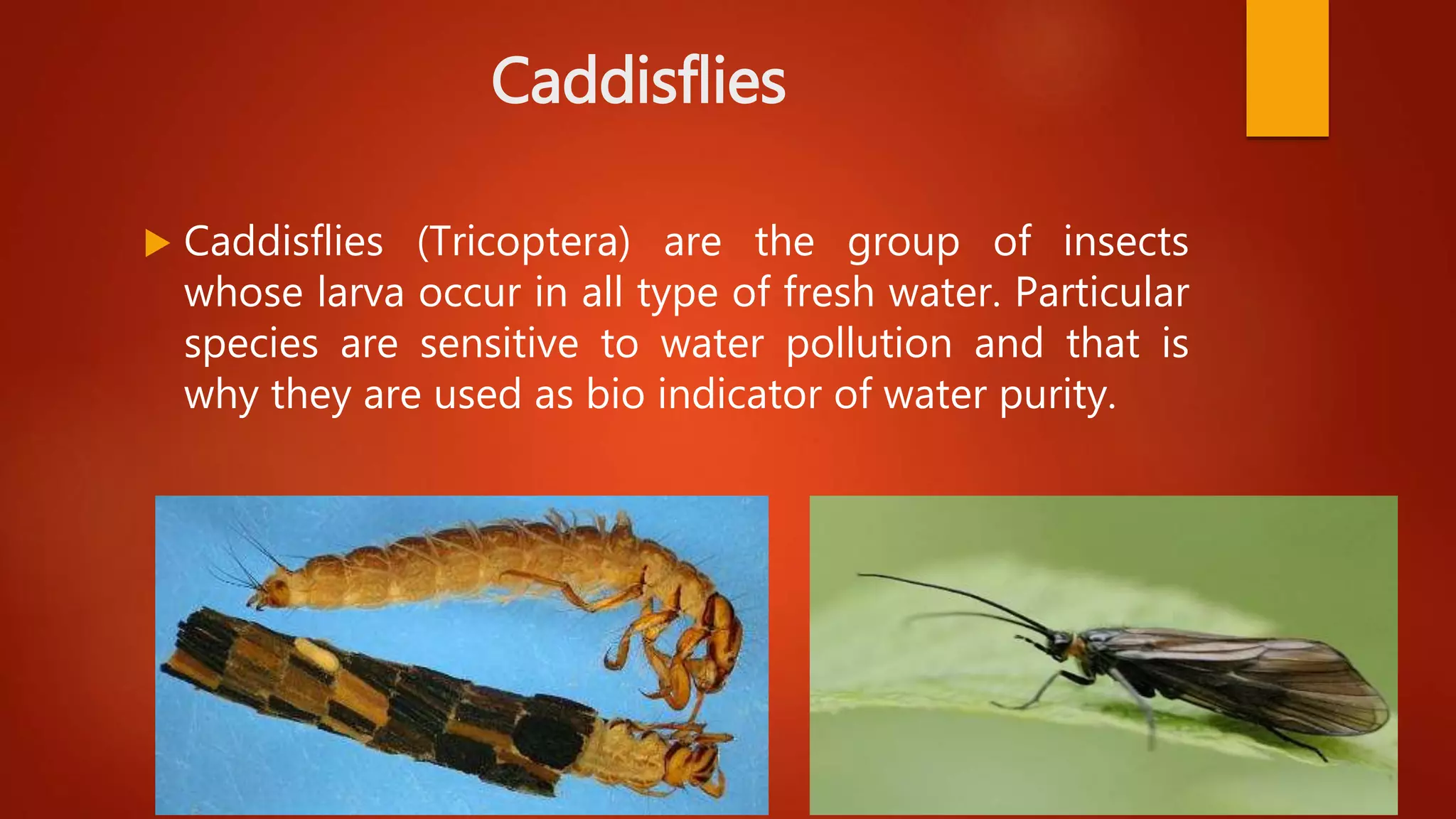
 Caddisflies (Tricoptera) are the group of insects
whose larva occur in all type of fresh water. Particular
species are sensitive to water pollution and that is
why they are used as bio indicator of water purity.
Stoneflies
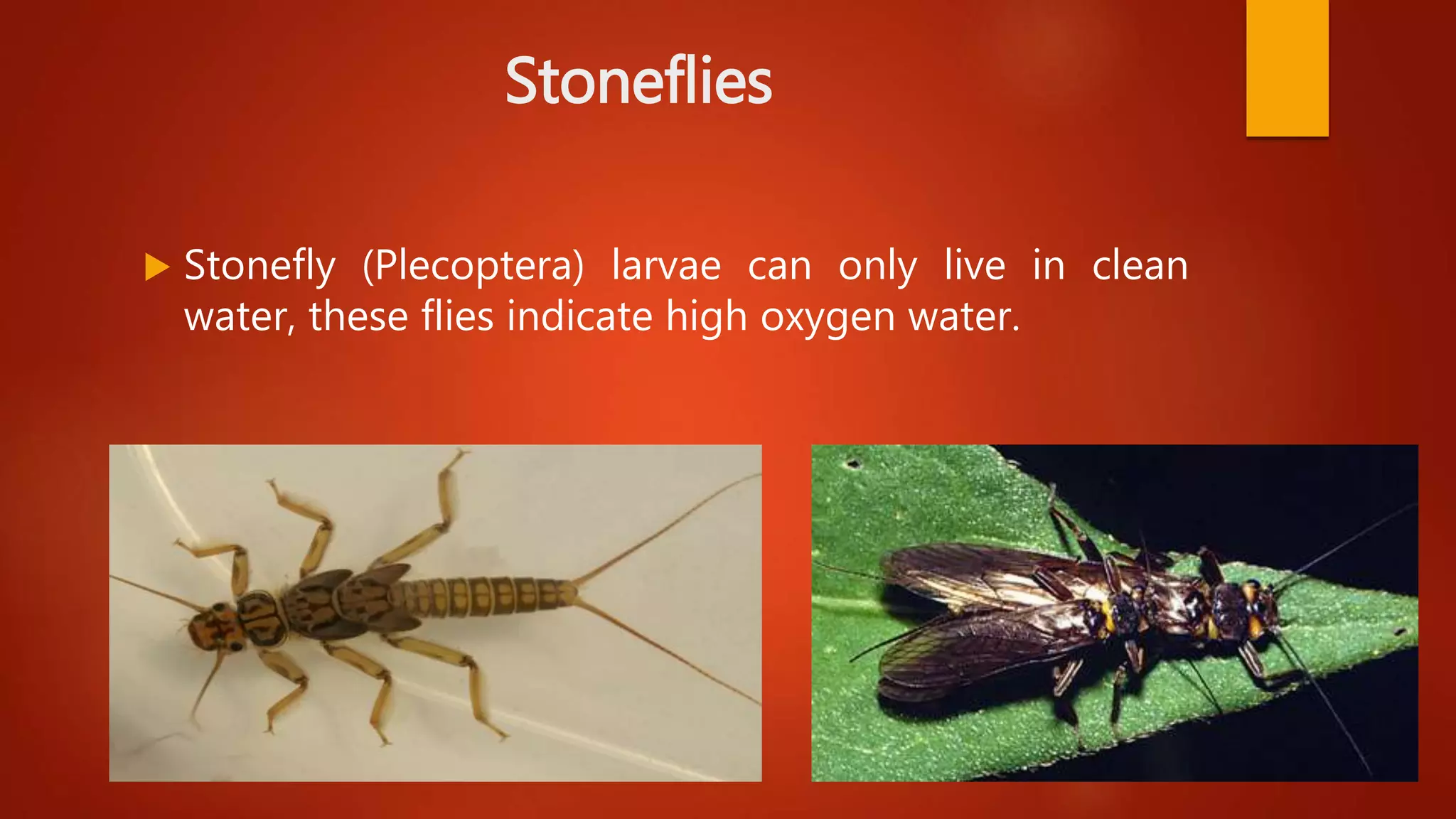
 Stonefly (Plecoptera) larvae can only live in clean
water, these flies indicate high oxygen water.
Bugs
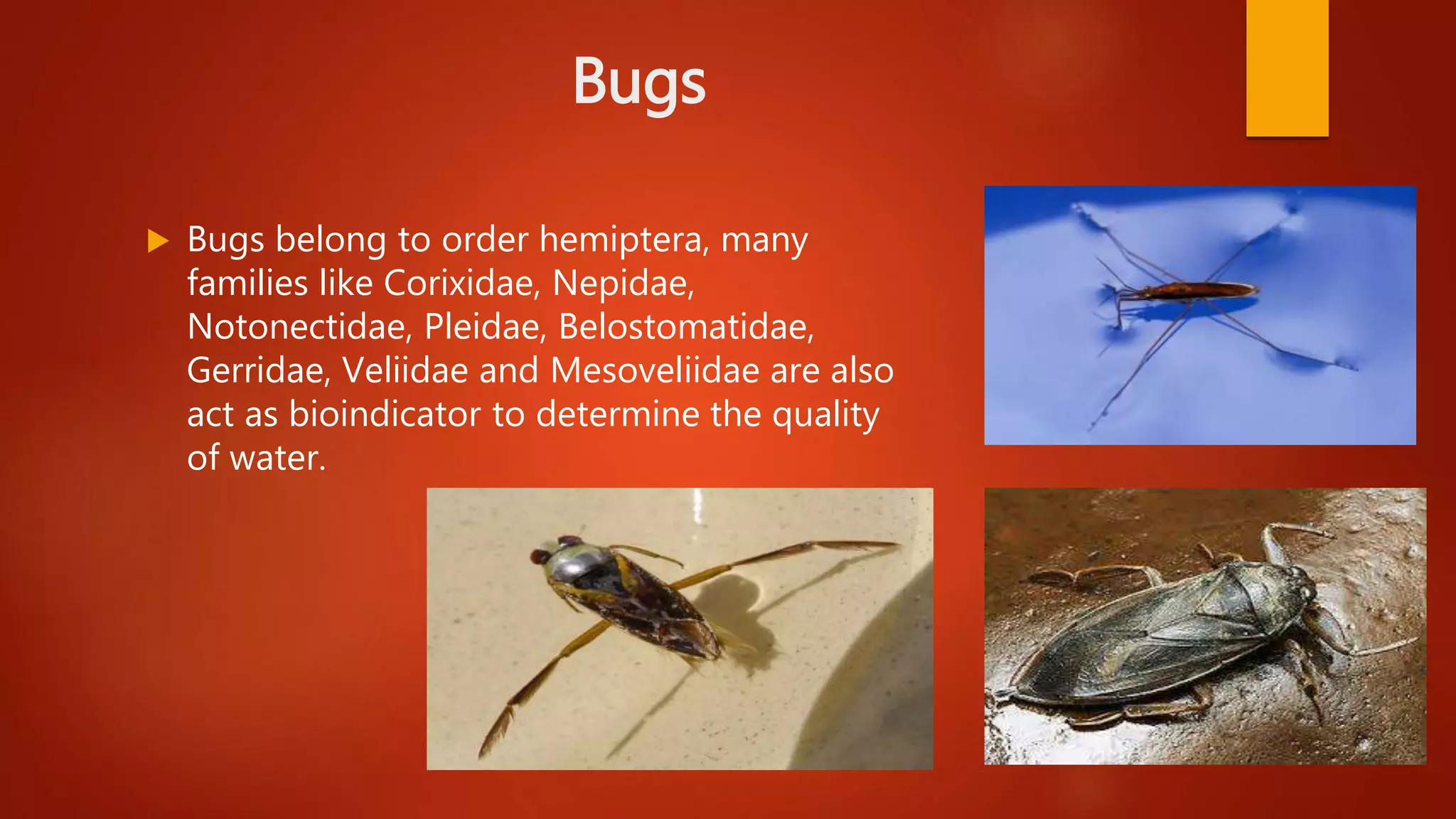
 Bugs belong to order hemiptera, many
families like Corixidae, Nepidae,
Notonectidae, Pleidae, Belostomatidae,
Gerridae, Veliidae and Mesoveliidae are also
act as bioindicator to determine the quality
of water.
Midges
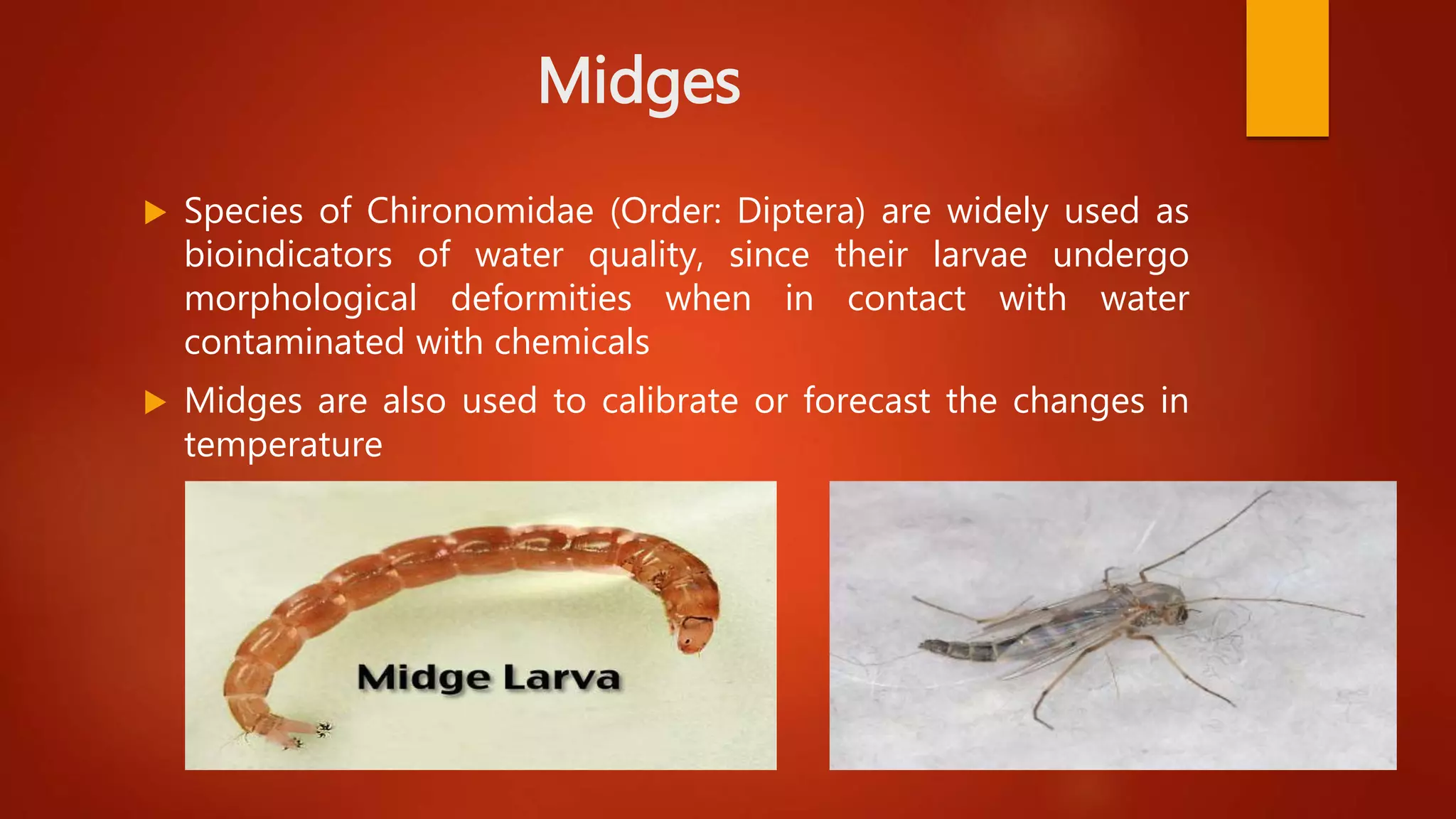
 Species of Chironomidae (Order: Diptera) are widely used as
bioindicators of water quality, since their larvae undergo
morphological deformities when in contact with water
contaminated with chemicals
 Midges are also used to calibrate or forecast the changes in
temperature
Honey bees
 The honey bees (Hymenoptera) act as bio indicator of
environment in two ways as it signals via high
mortality rates the presence of toxic molecules or via
residues in honey, pollen and larvae the presence of
heavy metals.
Beetles
 Beetles (Coleoptera) belong to family Carabidae are
important predators.
 They also participate in biological control and biological
monitoring of pollution from oil, Sulphur, Carbon dioxide
and insecticides.
 Beetles from family Scarabeaidae have high potential as
environmental indicator in forest area or agricultural
crops.
Collembolans
 Collembolan are primitive insects that have influence on soil
fertility by microbial activity stimulation.
 They are very sensitive to change in soil caused by pollutant
such as heavy metals, pesticides and soil acidification in
agricultural crops.
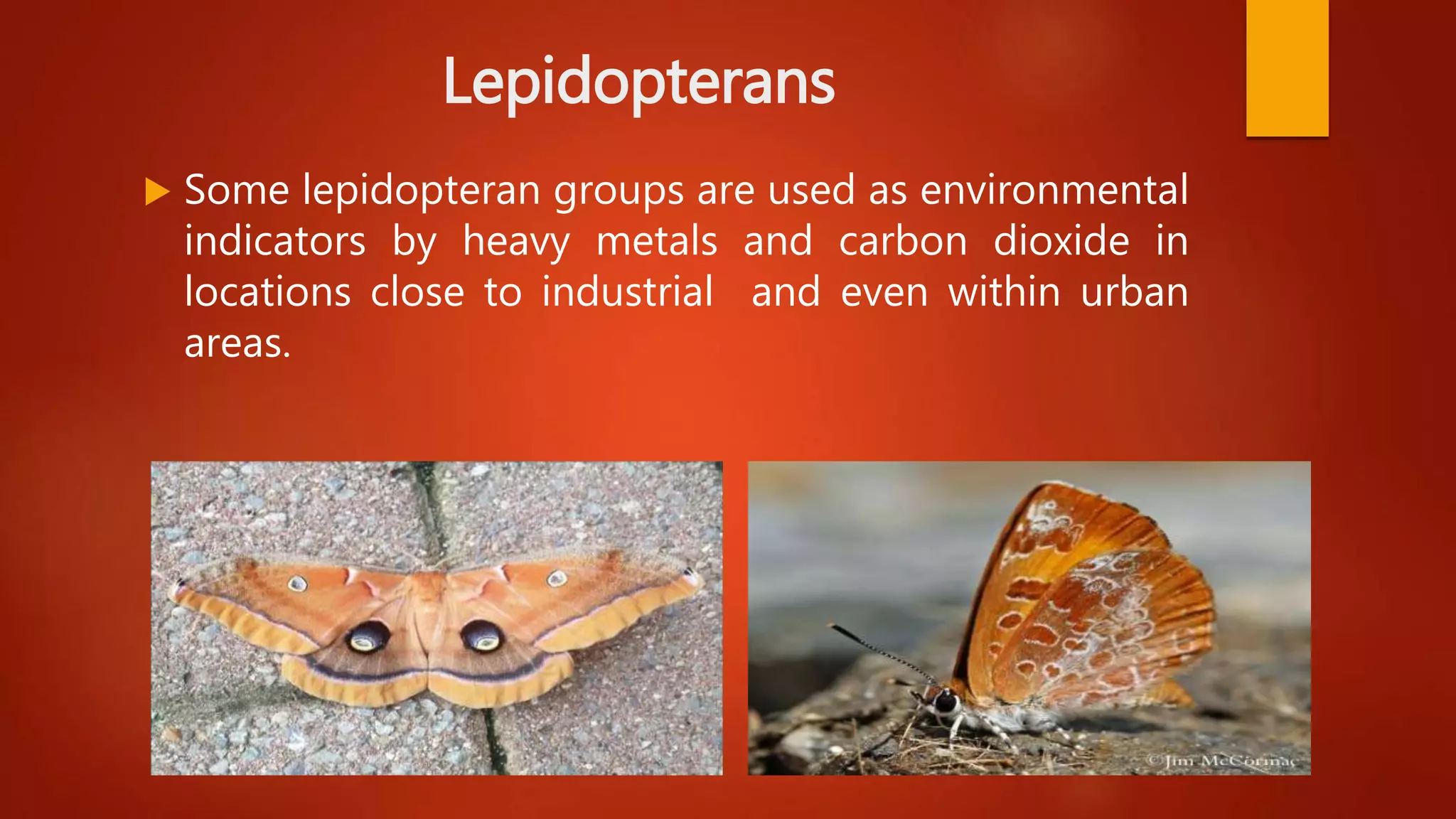
Lepidopterans
 Some lepidopteran groups are used as environmental
indicators by heavy metals and carbon dioxide in
locations close to industrial and even within urban
areas.
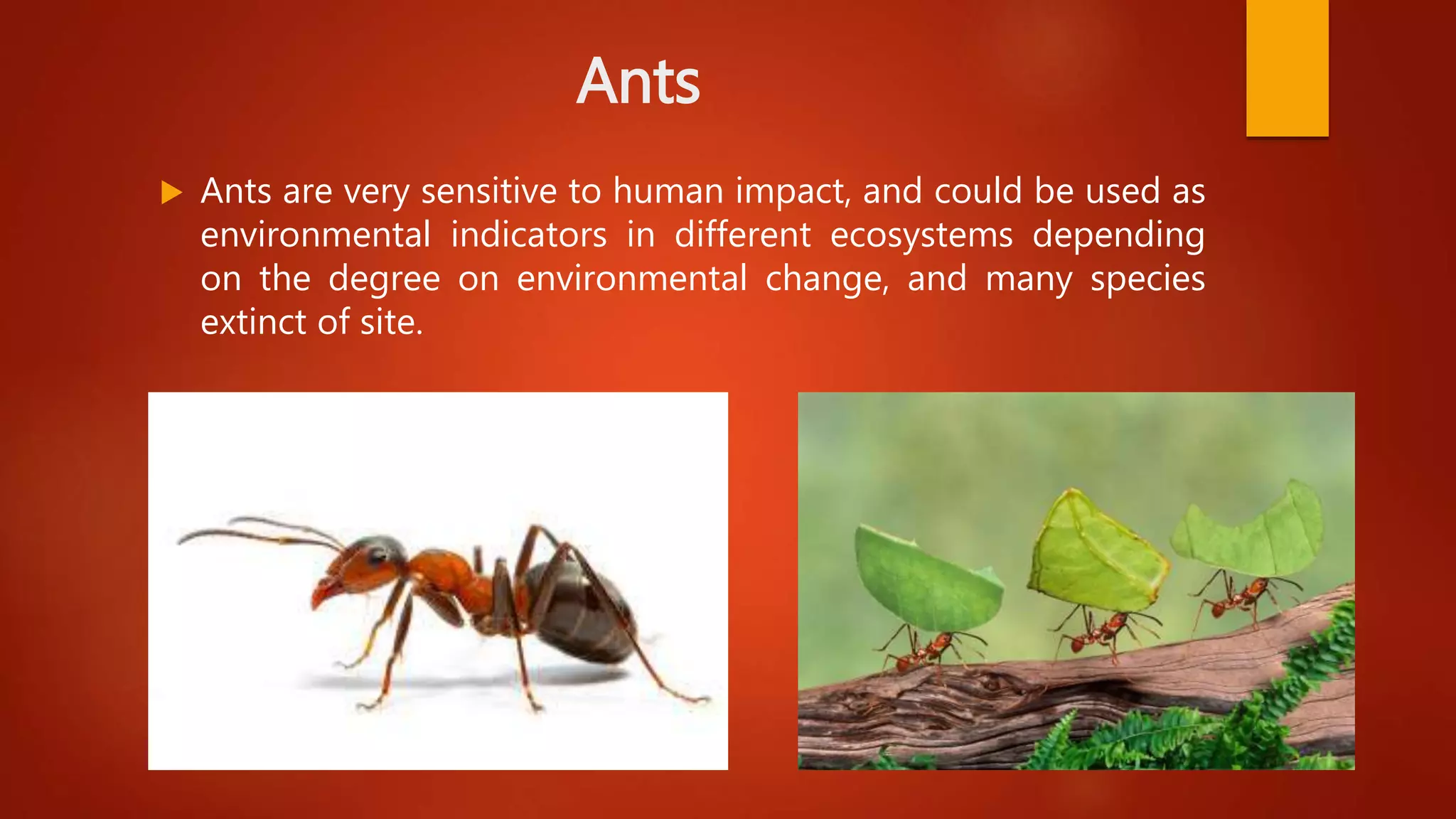
Ants
 Ants are very sensitive to human impact, and could be used as
environmental indicators in different ecosystems depending
on the degree on environmental change, and many species
extinct of site.
Syrphidfly
 These flies belong to family syrphidae, one of the largest
family of Diptera has wide distribution and well known
taxonomy and its larvae require different environmental
conditions, which make these flies good bio indicator.
Insects as bioindicator of environmental pollution

Insects as bioindicator of environmental pollution

  • 1.
    Insects as Bioindicatorof Environmental Pollution
  • 2.
    What is Environment? The term environment comes from the French word “environ” and means everything that surround us.  The totality of the surrounding conditions for comfortable living of organism.  Environment is the area in which we live.
  • 3.
    What is EnvironmentalPollution?  Pollution is the introduction of contaminants into natural environment that cause adverse change in environment. Few types of pollution are following: I. Water Pollution II. Air Pollution III. Soil Pollution IV. Noise Pollution V. Thermal Pollution
  • 4.
    What are Bioindicators? Bioindicators are species that can be used to monitor the health of an environment or ecosystem.  Such organisms can be monitored for changes (morphological, physiological, or behavioral) that may indicate a problem within their ecosystem.  Bio indicators can tell us about the cumulative effects of different pollutants in the ecosystem.  E.g. Caddisfly (order Trichoptera) used as an indicator of water quality.
  • 5.
    Characteristics of GoodBioindicator  Abundance, wide distribution  Simple procedure of identification and sampling  High tolerance for the pollutants analyzed  Quick response towards the change in their environment  Taxonomically well documented and stable  Easy and cheap to survey
  • 6.
    Bio-indicator Groups ofInsects 1. Dragonflies and damselflie 2. Mayflies 3. Caddisflies 4. Bugs 5. Stoneflies 6. Midges 7. Honey bees 8. Beetles 9. Collembolans 10.Lepidopterans 11.Ants 12.Syrphidfly
  • 7.
    Dragonflies and Damselflies Dragonflies and damselflies (known collectively as the “Odonata”) are an important group in biological water quality monitoring, as they are particularly sensitive to pollution.
  • 8.
    Mayflies  Mayflies (Ephemeroptera)larvae are recognized worldwide for their sensitivity to oxygen depletion in running waters, and are therefore commonly used as bioindicators in many monitoring programs.  Mayflies inhabiting fresh waters like lakes and ponds.
  • 9.
    Caddisflies  Caddisflies (Tricoptera)are the group of insects whose larva occur in all type of fresh water. Particular species are sensitive to water pollution and that is why they are used as bio indicator of water purity.
  • 10.
    Stoneflies  Stonefly (Plecoptera)larvae can only live in clean water, these flies indicate high oxygen water.
  • 11.
    Bugs  Bugs belongto order hemiptera, many families like Corixidae, Nepidae, Notonectidae, Pleidae, Belostomatidae, Gerridae, Veliidae and Mesoveliidae are also act as bioindicator to determine the quality of water.
  • 12.
    Midges  Species ofChironomidae (Order: Diptera) are widely used as bioindicators of water quality, since their larvae undergo morphological deformities when in contact with water contaminated with chemicals  Midges are also used to calibrate or forecast the changes in temperature
  • 13.
    Honey bees  Thehoney bees (Hymenoptera) act as bio indicator of environment in two ways as it signals via high mortality rates the presence of toxic molecules or via residues in honey, pollen and larvae the presence of heavy metals.
  • 14.
    Beetles  Beetles (Coleoptera)belong to family Carabidae are important predators.  They also participate in biological control and biological monitoring of pollution from oil, Sulphur, Carbon dioxide and insecticides.  Beetles from family Scarabeaidae have high potential as environmental indicator in forest area or agricultural crops.
  • 15.
    Collembolans  Collembolan areprimitive insects that have influence on soil fertility by microbial activity stimulation.  They are very sensitive to change in soil caused by pollutant such as heavy metals, pesticides and soil acidification in agricultural crops.
  • 16.
    Lepidopterans  Some lepidopterangroups are used as environmental indicators by heavy metals and carbon dioxide in locations close to industrial and even within urban areas.
  • 17.
    Ants  Ants arevery sensitive to human impact, and could be used as environmental indicators in different ecosystems depending on the degree on environmental change, and many species extinct of site.
  • 18.
    Syrphidfly  These fliesbelong to family syrphidae, one of the largest family of Diptera has wide distribution and well known taxonomy and its larvae require different environmental conditions, which make these flies good bio indicator.