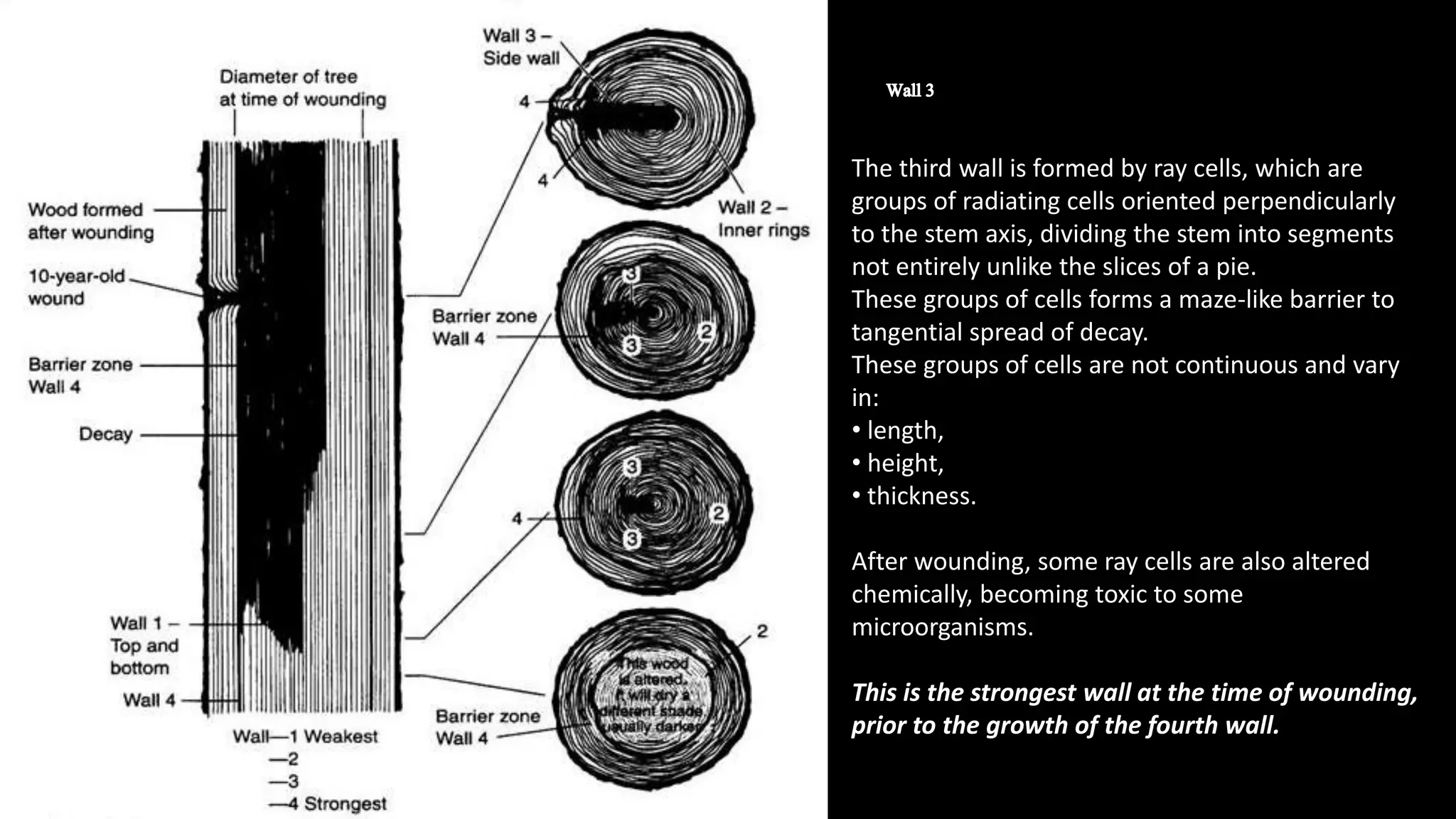
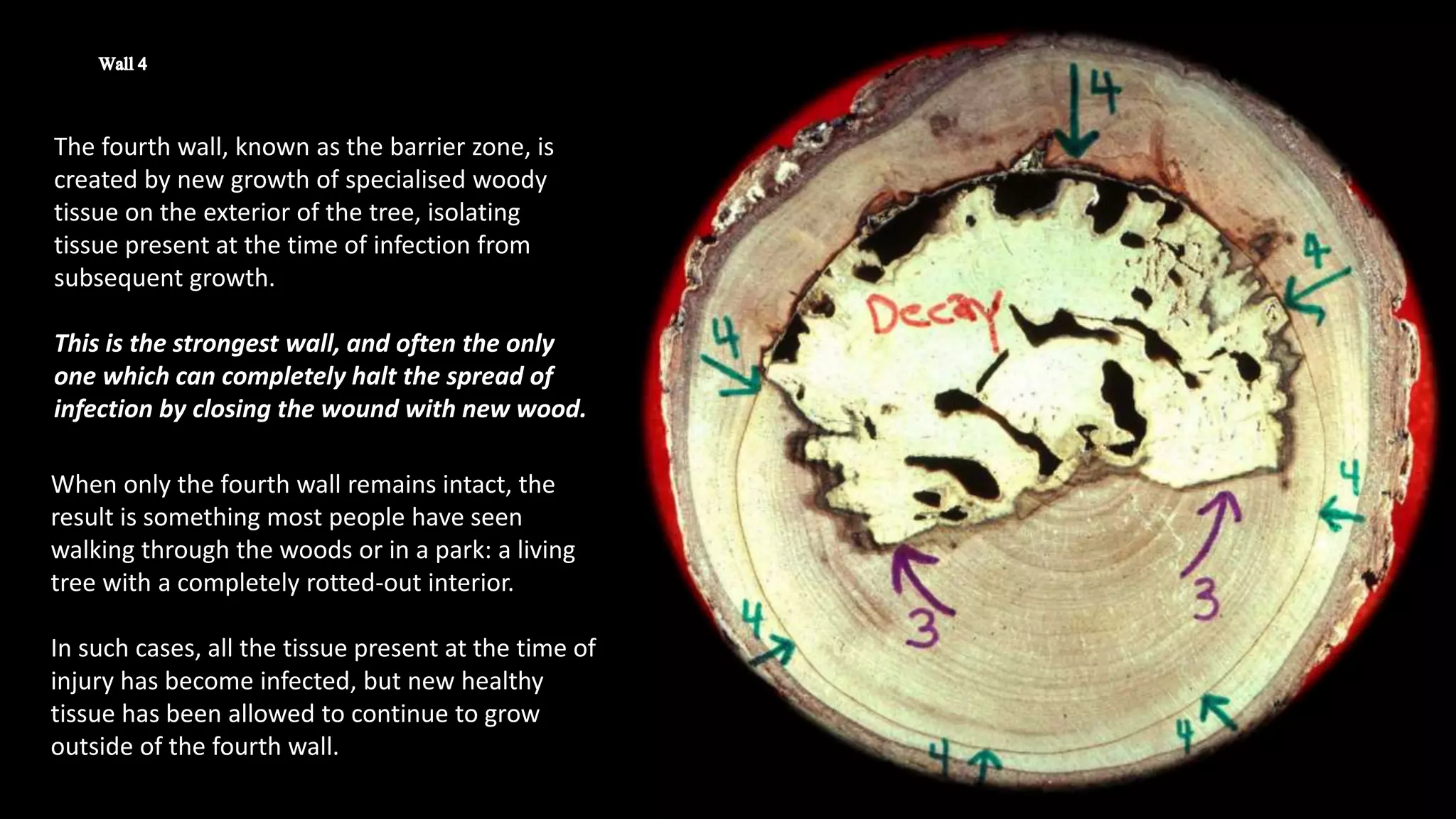
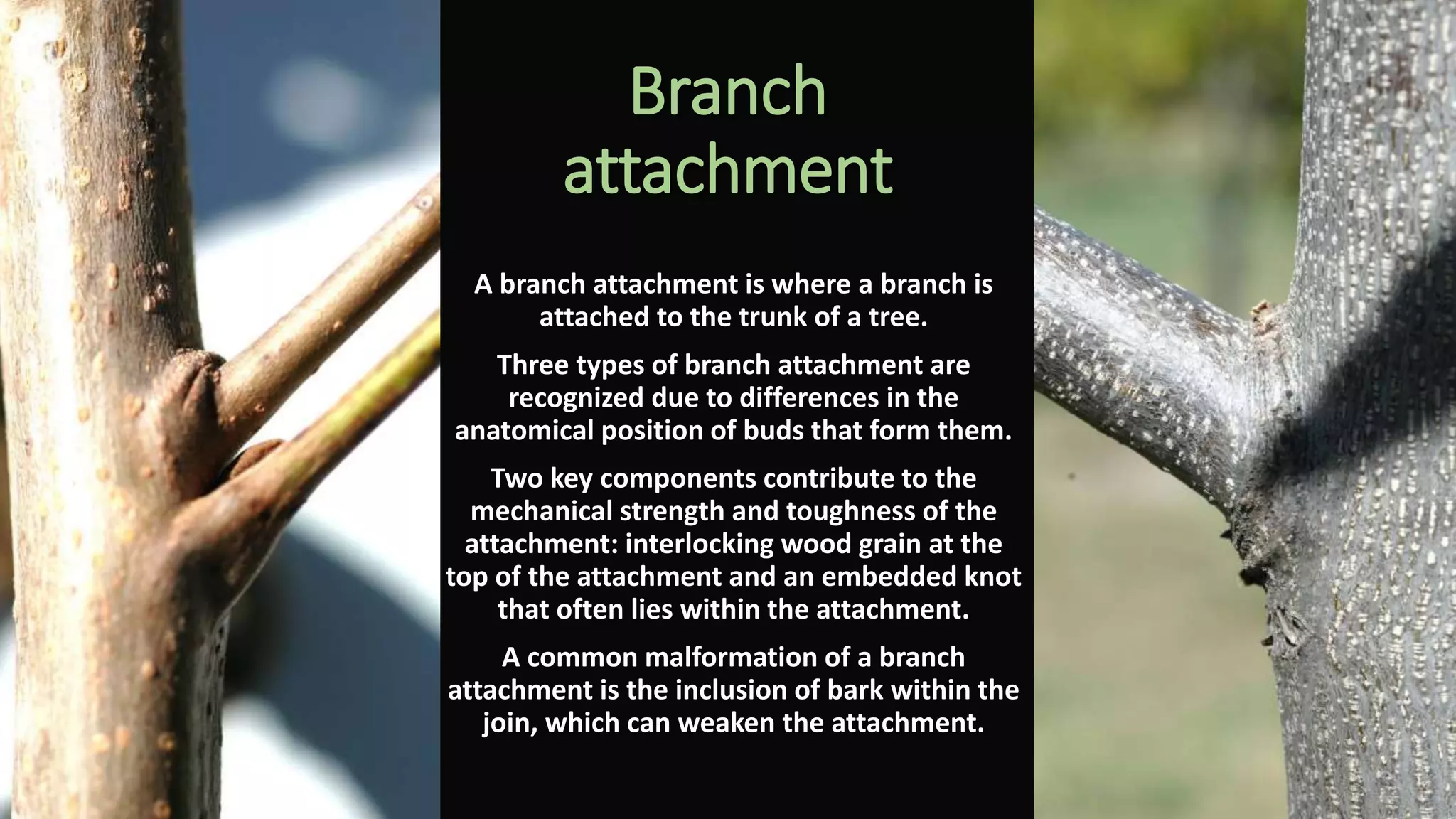
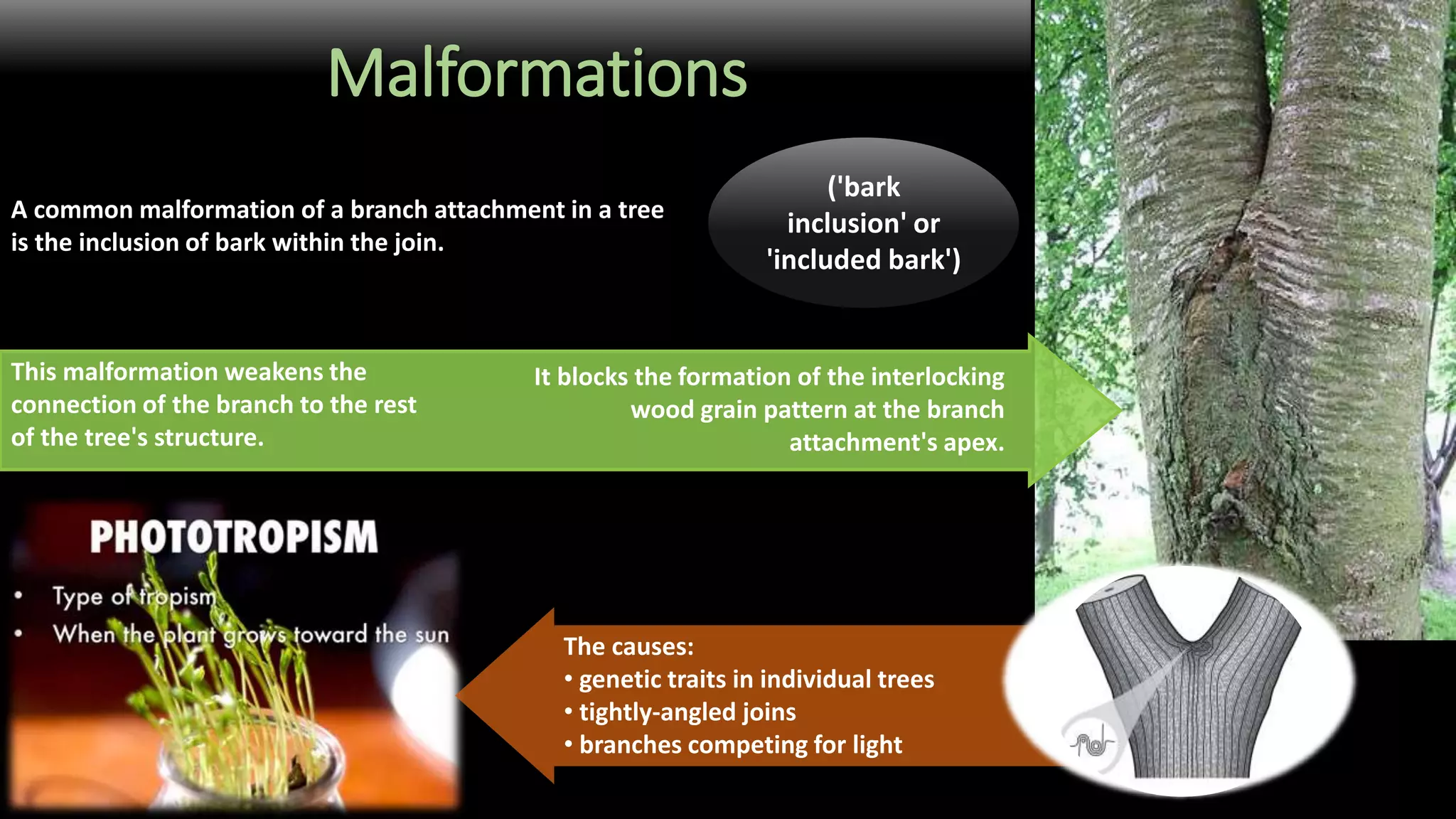
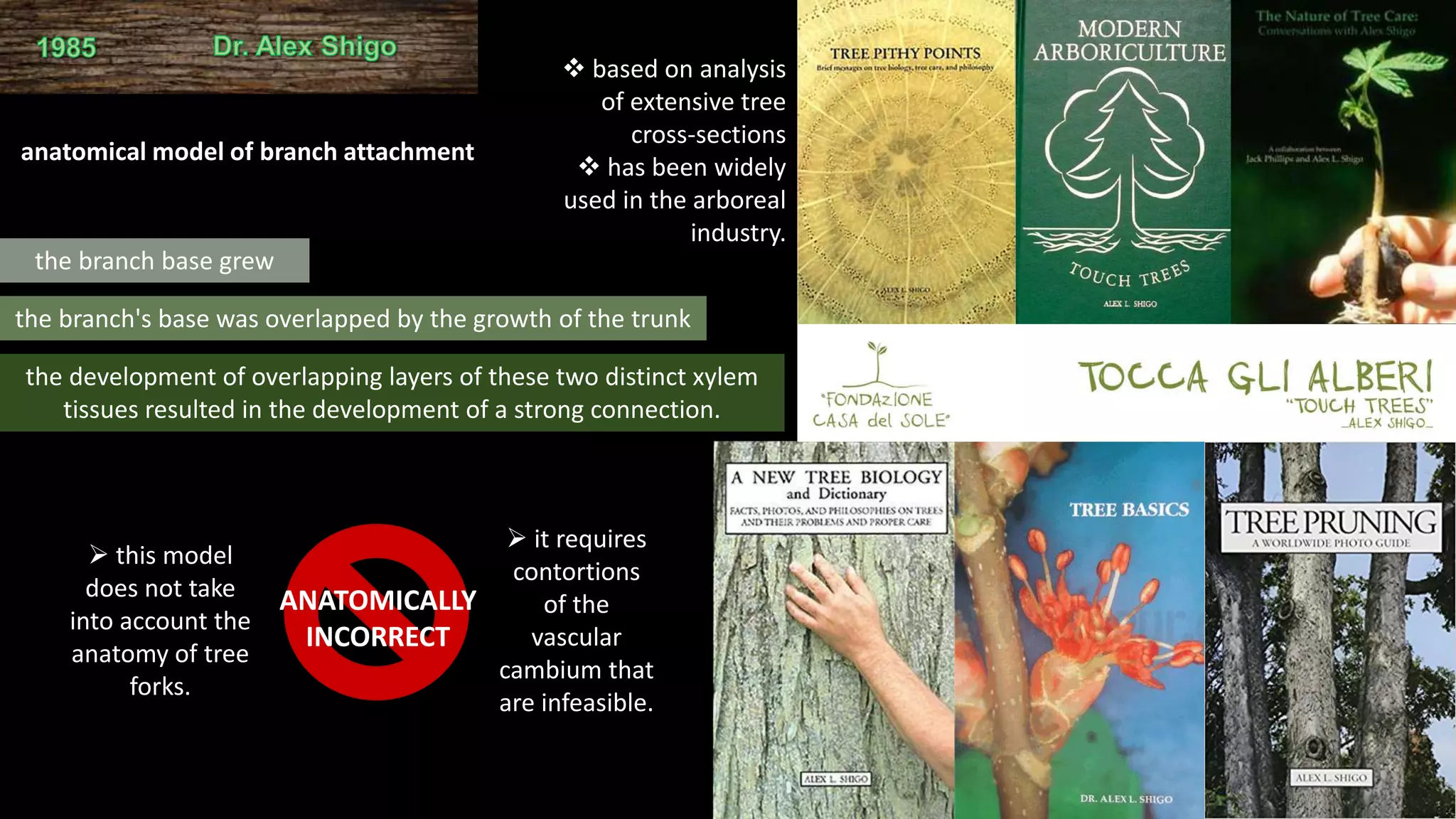
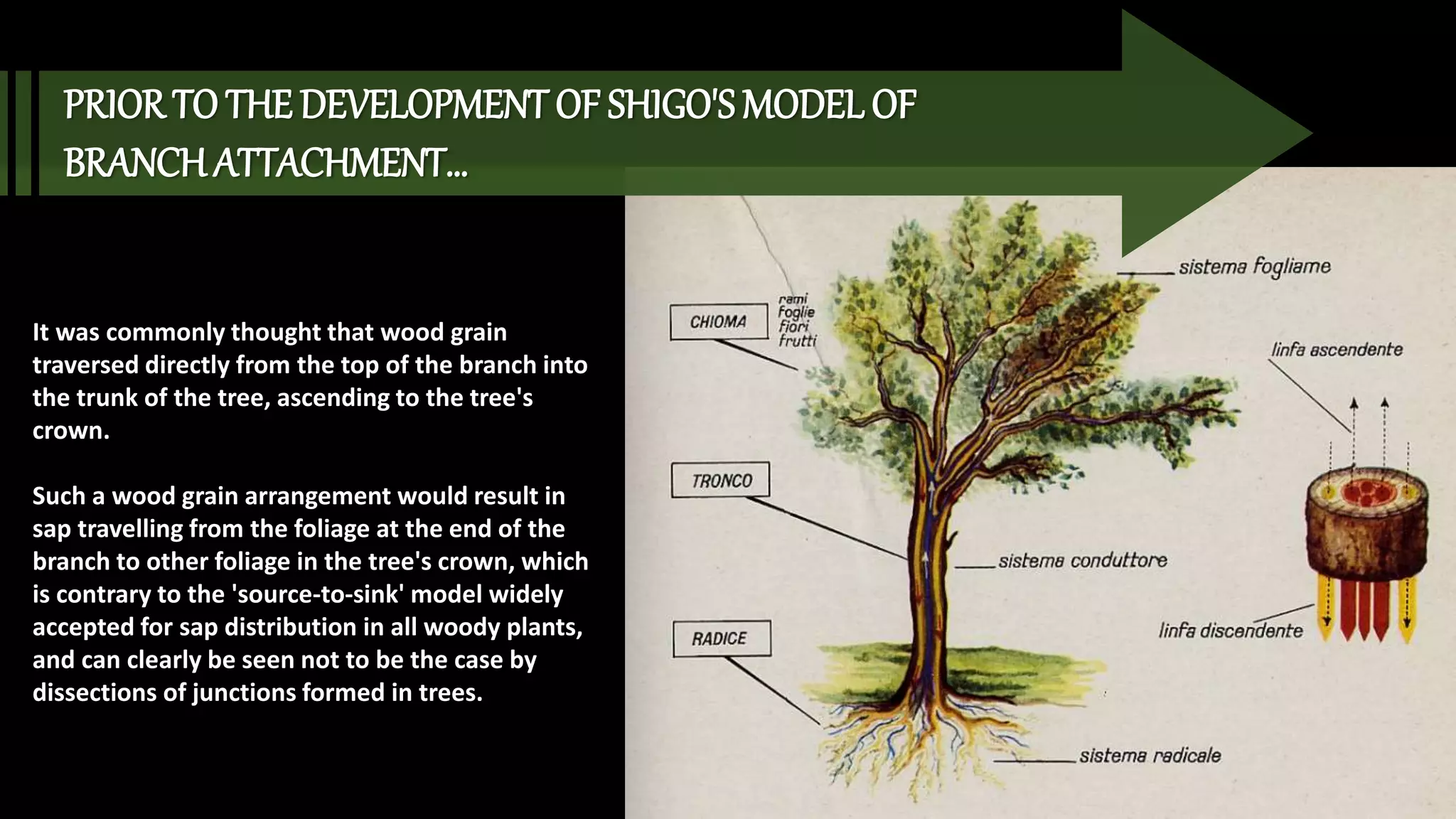
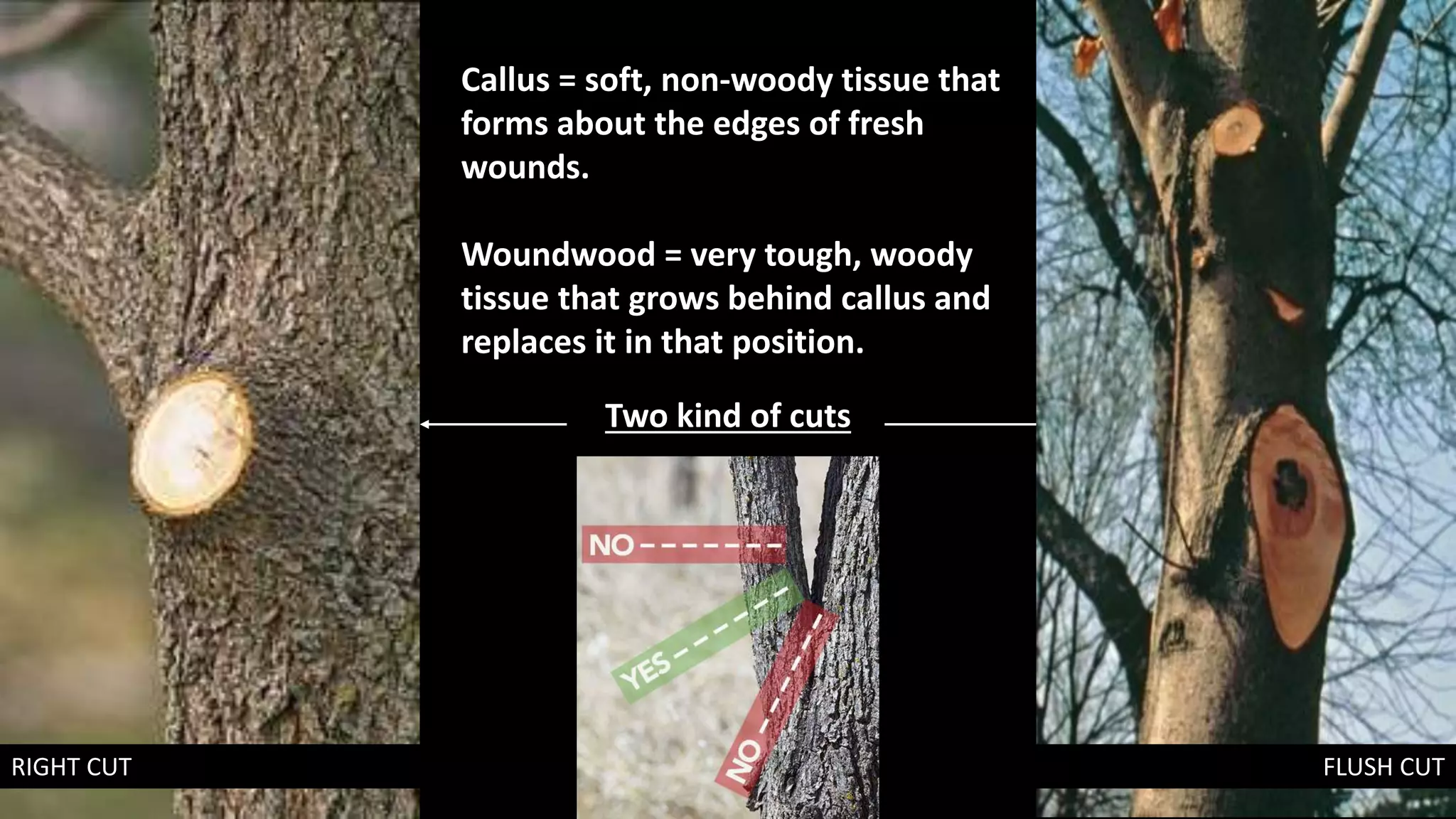
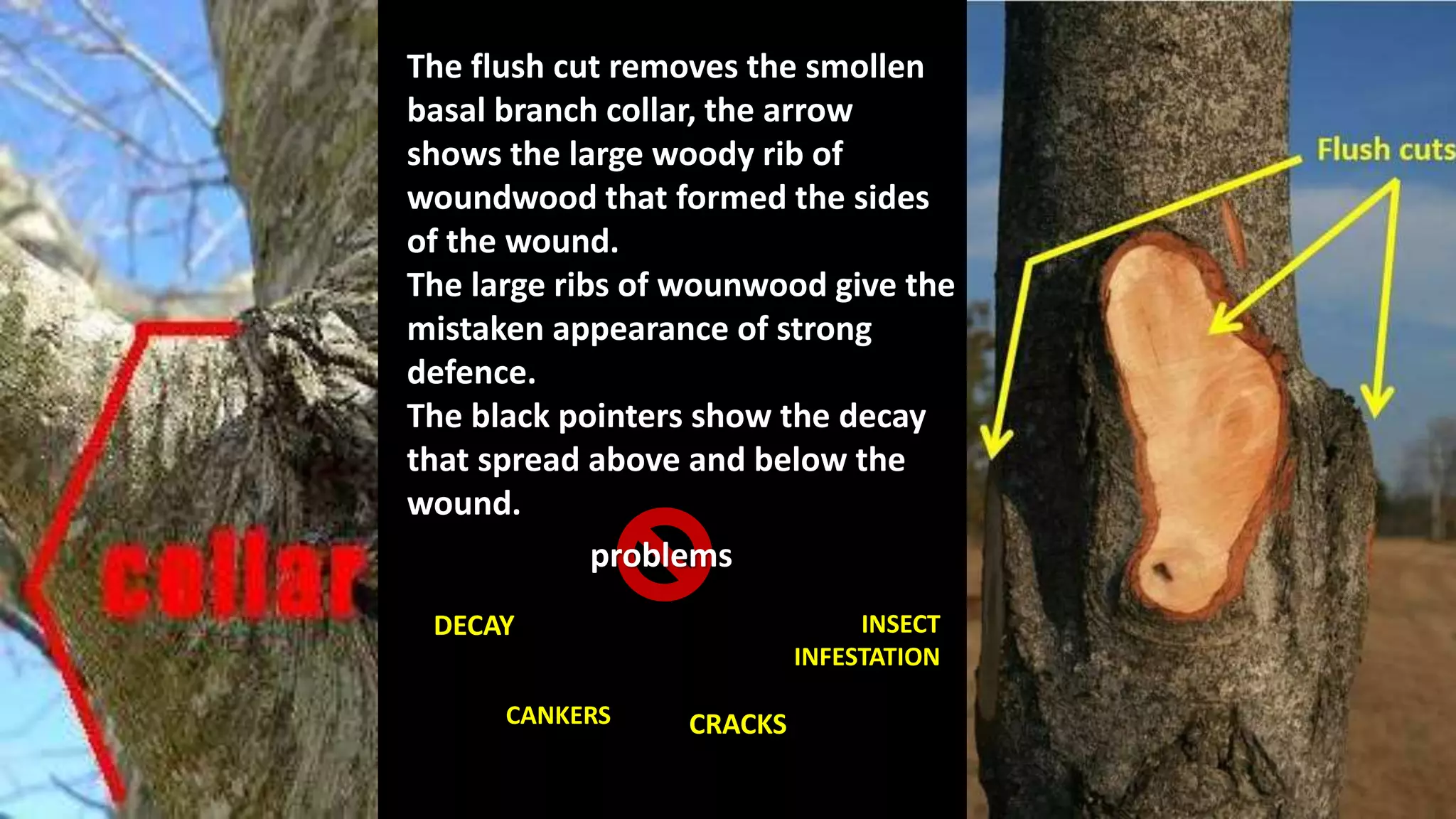
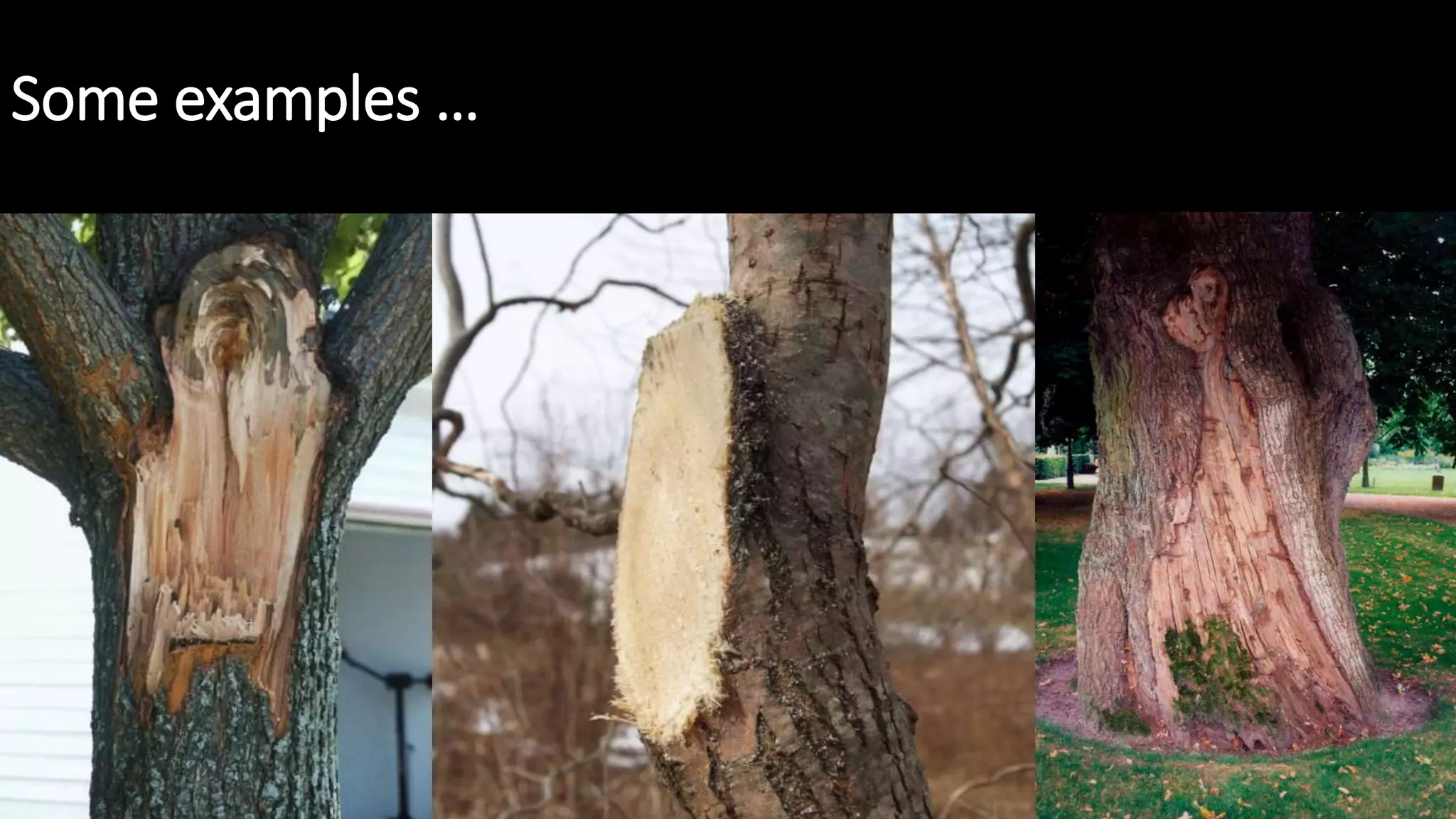
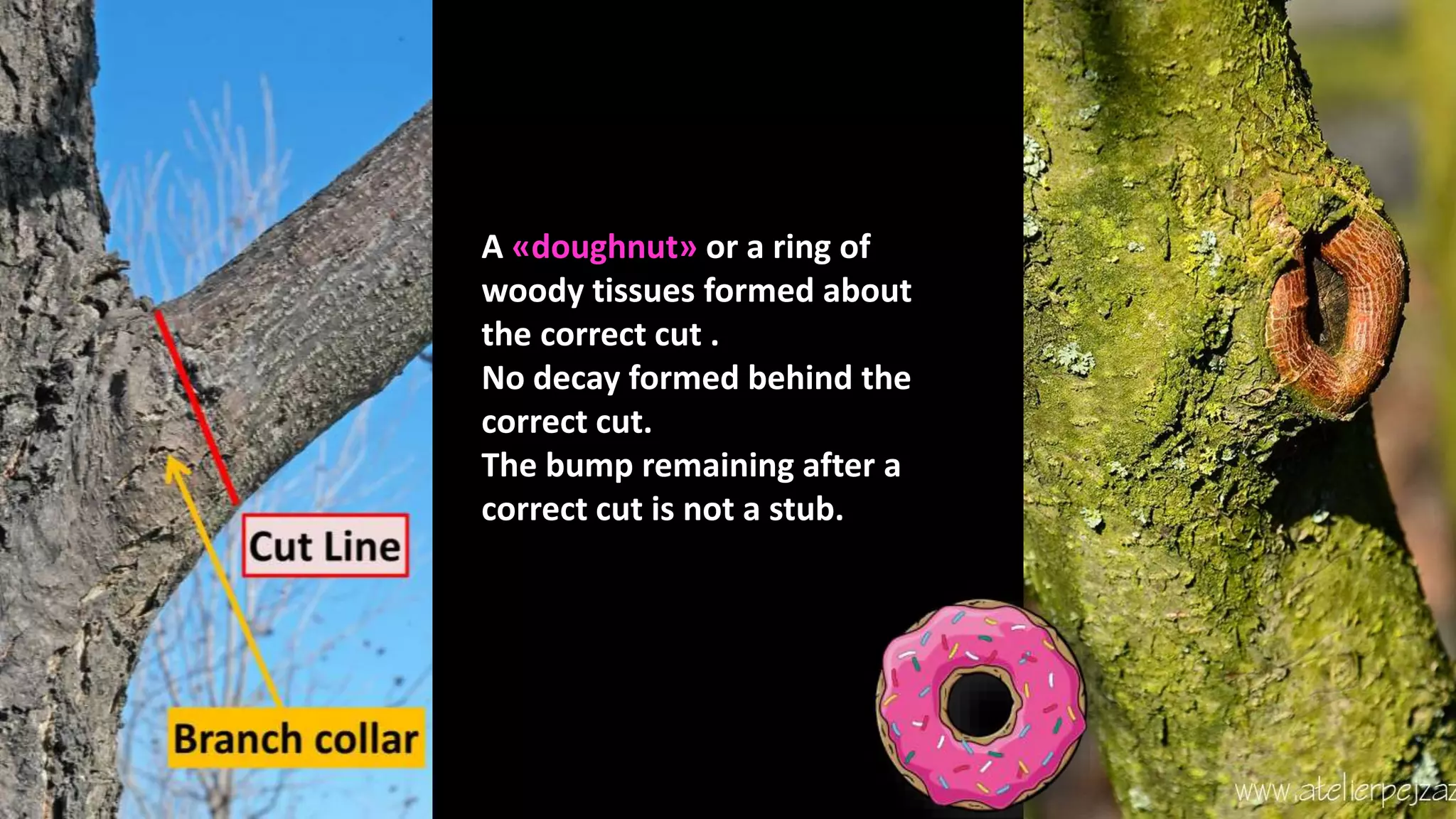
When a tree is wounded, it undergoes compartmentalization to slow the spread of disease and decay. It forms three defensive walls - the first plugs conductive tissue, the second is formed by thick-walled cells interior and exterior to the wound, and the third is formed by radiating ray cells that divide the stem. Over time, a fourth wall of specialized woody tissue outside the wound isolates infected from new healthy tissue. Branch attachments were traditionally thought to have wood grain traversing directly from branch to trunk, but research showed this is incorrect and branch attachments develop through overlapping wood tissues forming a strong connection. Flush cuts remove protective branch collars while correct cuts preserve woundwood formation and defenses against decay.