What is Infrastructure ?
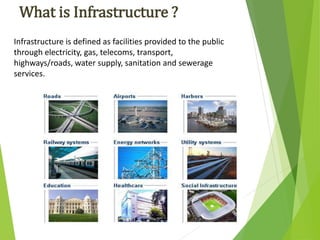
Infrastructure is defined as facilities provided to the public
through electricity, gas, telecoms, transport,
highways/roads, water supply, sanitation and sewerage
services.
 Without Infrastructure development no country can
develop & make the citizens to have peaceful & easy life.
 Infrastructure development has a key role to play in both
economic growth and poverty reduction.
 There are lot of advantages and disadvantages due to the
infrastructure development.
Impacts due to Infrastructure
Development
Advantages (Sector wise)
 Development in the transportation
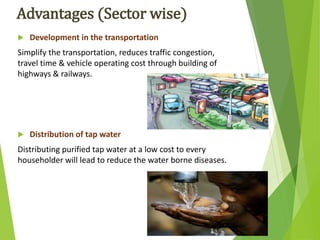
Simplify the transportation, reduces traffic congestion,
travel time & vehicle operating cost through building of
highways & railways.
 Distribution of tap water
Distributing purified tap water at a low cost to every
householder will lead to reduce the water borne diseases.
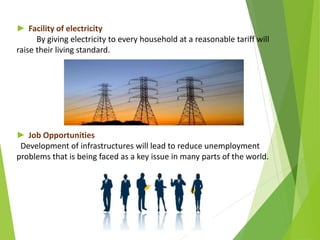
► Facility of electricity
By giving electricity to every household at a reasonable tariff will
raise their living standard.
► Job Opportunities
Development of infrastructures will lead to reduce unemployment
problems that is being faced as a key issue in many parts of the world.
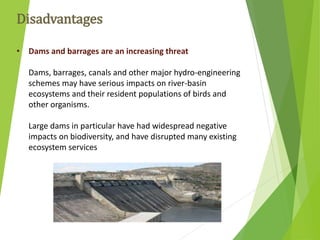
► Sewerage Systems
By developing a pollution free sewerage system will
lead to reduce the disease & keep the environment
friendly & clean.
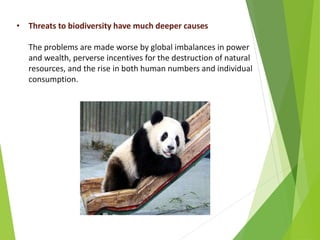
► Express ways
By constructing express ways linking main towns &
provinces will reduce the travel time
• Dams and barrages are an increasing threat
Dams, barrages, canals and other major hydro-engineering
schemes may have serious impacts on river-basin
ecosystems and their resident populations of birds and
other organisms.
Large dams in particular have had widespread negative
impacts on biodiversity, and have disrupted many existing
ecosystem services
Disadvantages
• Threats to biodiversity have much deeper causes
The problems are made worse by global imbalances in power
and wealth, perverse incentives for the destruction of natural
resources, and the rise in both human numbers and individual
consumption.
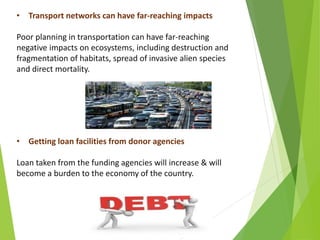
• Transport networks can have far-reaching impacts
Poor planning in transportation can have far-reaching
negative impacts on ecosystems, including destruction and
fragmentation of habitats, spread of invasive alien species
and direct mortality.
• Getting loan facilities from donor agencies
Loan taken from the funding agencies will increase & will
become a burden to the economy of the country.
• Artificial structures kill millions of birds each year
Artificial structures of all kinds, electric pylons and wind
farms, pose a direct threat to migration birds. Huge numbers
of birds are killed or injured by collision with these
structures
After the War/ Current
Situation
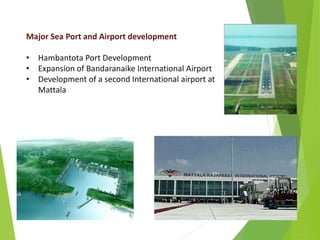
Rehabilitation in road & water sectors.
 Construction of Highways
 Building bridges & subways
 Tap water supplying to most of the island
 Electricity supply
 Developments made in urban areas
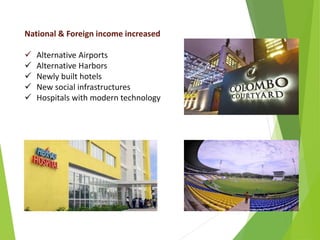
Major Sea Port and Airport development
• Hambantota Port Development
• Expansion of Bandaranaike International Airport
• Development of a second International airport at
Mattala
National & Foreign income increased
 Alternative Airports
 Alternative Harbors
 Newly built hotels
 New social infrastructures
 Hospitals with modern technology
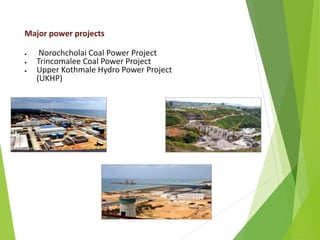
Major power projects
 Norochcholai Coal Power Project
 Trincomalee Coal Power Project
 Upper Kothmale Hydro Power Project
(UKHP)
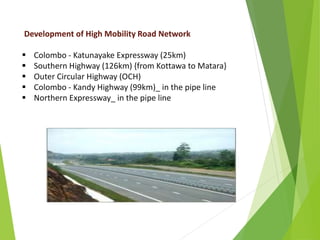
Development of High Mobility Road Network
 Colombo - Katunayake Expressway (25km)
 Southern Highway (126km) {from Kottawa to Matara}
 Outer Circular Highway (OCH)
 Colombo - Kandy Highway (99km)_ in the pipe line
 Northern Expressway_ in the pipe line
Thank you

Infrastructure

  • 2.
    What is Infrastructure? Infrastructure is defined as facilities provided to the public through electricity, gas, telecoms, transport, highways/roads, water supply, sanitation and sewerage services.
  • 3.
     Without Infrastructuredevelopment no country can develop & make the citizens to have peaceful & easy life.  Infrastructure development has a key role to play in both economic growth and poverty reduction.  There are lot of advantages and disadvantages due to the infrastructure development. Impacts due to Infrastructure Development
  • 4.
    Advantages (Sector wise) Development in the transportation Simplify the transportation, reduces traffic congestion, travel time & vehicle operating cost through building of highways & railways.  Distribution of tap water Distributing purified tap water at a low cost to every householder will lead to reduce the water borne diseases.
  • 5.
    ► Facility ofelectricity By giving electricity to every household at a reasonable tariff will raise their living standard. ► Job Opportunities Development of infrastructures will lead to reduce unemployment problems that is being faced as a key issue in many parts of the world.
  • 6.
    ► Sewerage Systems Bydeveloping a pollution free sewerage system will lead to reduce the disease & keep the environment friendly & clean. ► Express ways By constructing express ways linking main towns & provinces will reduce the travel time
  • 7.
    • Dams andbarrages are an increasing threat Dams, barrages, canals and other major hydro-engineering schemes may have serious impacts on river-basin ecosystems and their resident populations of birds and other organisms. Large dams in particular have had widespread negative impacts on biodiversity, and have disrupted many existing ecosystem services Disadvantages
  • 8.
    • Threats tobiodiversity have much deeper causes The problems are made worse by global imbalances in power and wealth, perverse incentives for the destruction of natural resources, and the rise in both human numbers and individual consumption.
  • 9.
    • Transport networkscan have far-reaching impacts Poor planning in transportation can have far-reaching negative impacts on ecosystems, including destruction and fragmentation of habitats, spread of invasive alien species and direct mortality. • Getting loan facilities from donor agencies Loan taken from the funding agencies will increase & will become a burden to the economy of the country.
  • 10.
    • Artificial structureskill millions of birds each year Artificial structures of all kinds, electric pylons and wind farms, pose a direct threat to migration birds. Huge numbers of birds are killed or injured by collision with these structures
  • 11.
    After the War/Current Situation Rehabilitation in road & water sectors.  Construction of Highways  Building bridges & subways  Tap water supplying to most of the island  Electricity supply  Developments made in urban areas
  • 12.
    Major Sea Portand Airport development • Hambantota Port Development • Expansion of Bandaranaike International Airport • Development of a second International airport at Mattala
  • 13.
    National & Foreignincome increased  Alternative Airports  Alternative Harbors  Newly built hotels  New social infrastructures  Hospitals with modern technology
  • 14.
    Major power projects Norochcholai Coal Power Project  Trincomalee Coal Power Project  Upper Kothmale Hydro Power Project (UKHP)
  • 15.
    Development of HighMobility Road Network  Colombo - Katunayake Expressway (25km)  Southern Highway (126km) {from Kottawa to Matara}  Outer Circular Highway (OCH)  Colombo - Kandy Highway (99km)_ in the pipe line  Northern Expressway_ in the pipe line
  • 16.