




Jeff Fried
CTO, BA Insight
SPSCT
October 2015
Information Strategy
with O365 in Mind
2
This session will show you how to craft
an effective information strategy and
steer your path to the cloud
Focused on Search and
SharePoint since 2004
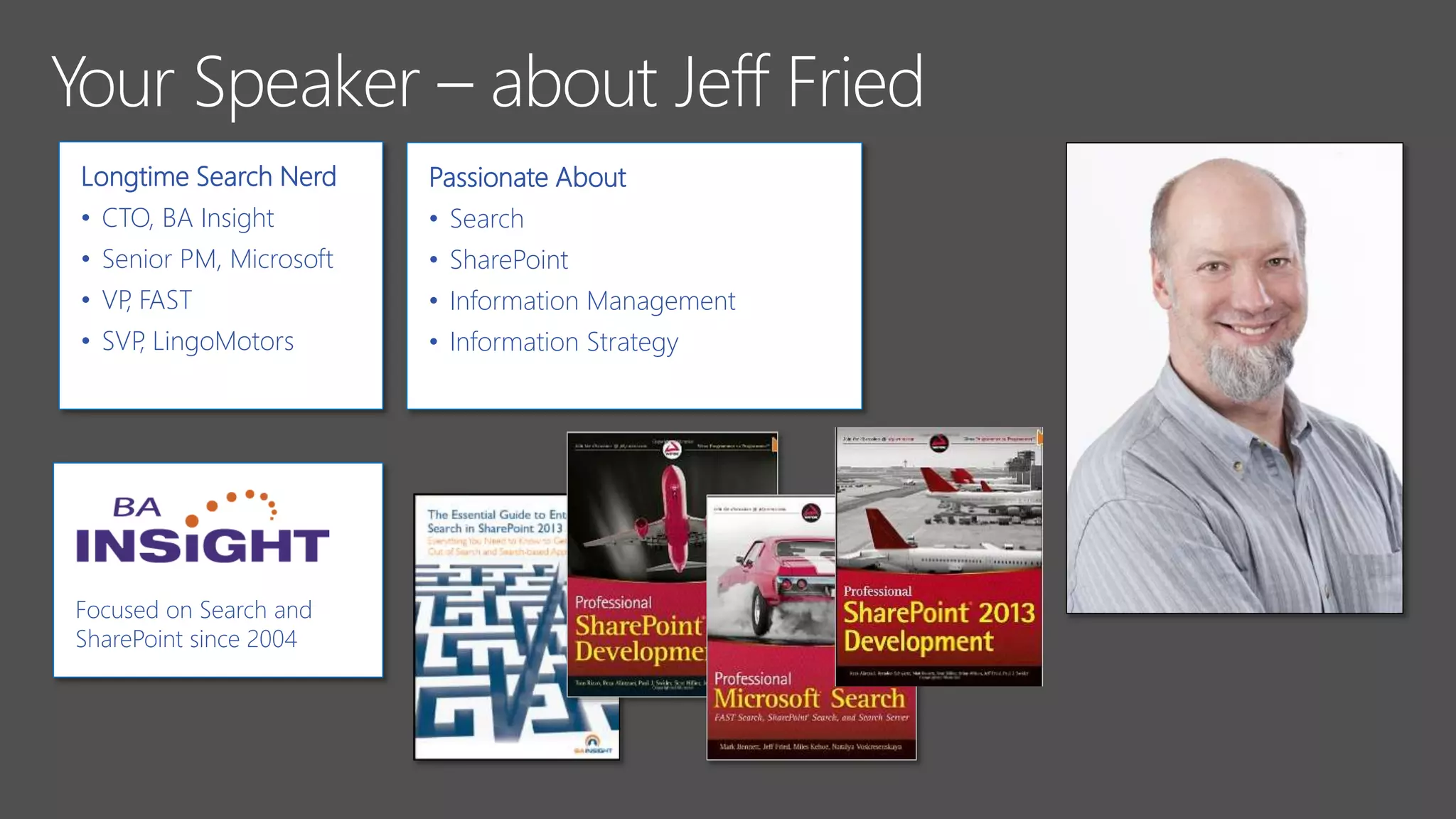
Longtime Search Nerd
• CTO, BA Insight
• Senior PM, Microsoft
• VP, FAST
• SVP, LingoMotors
Passionate About
• Search
• SharePoint
• Information Management
• Information Strategy
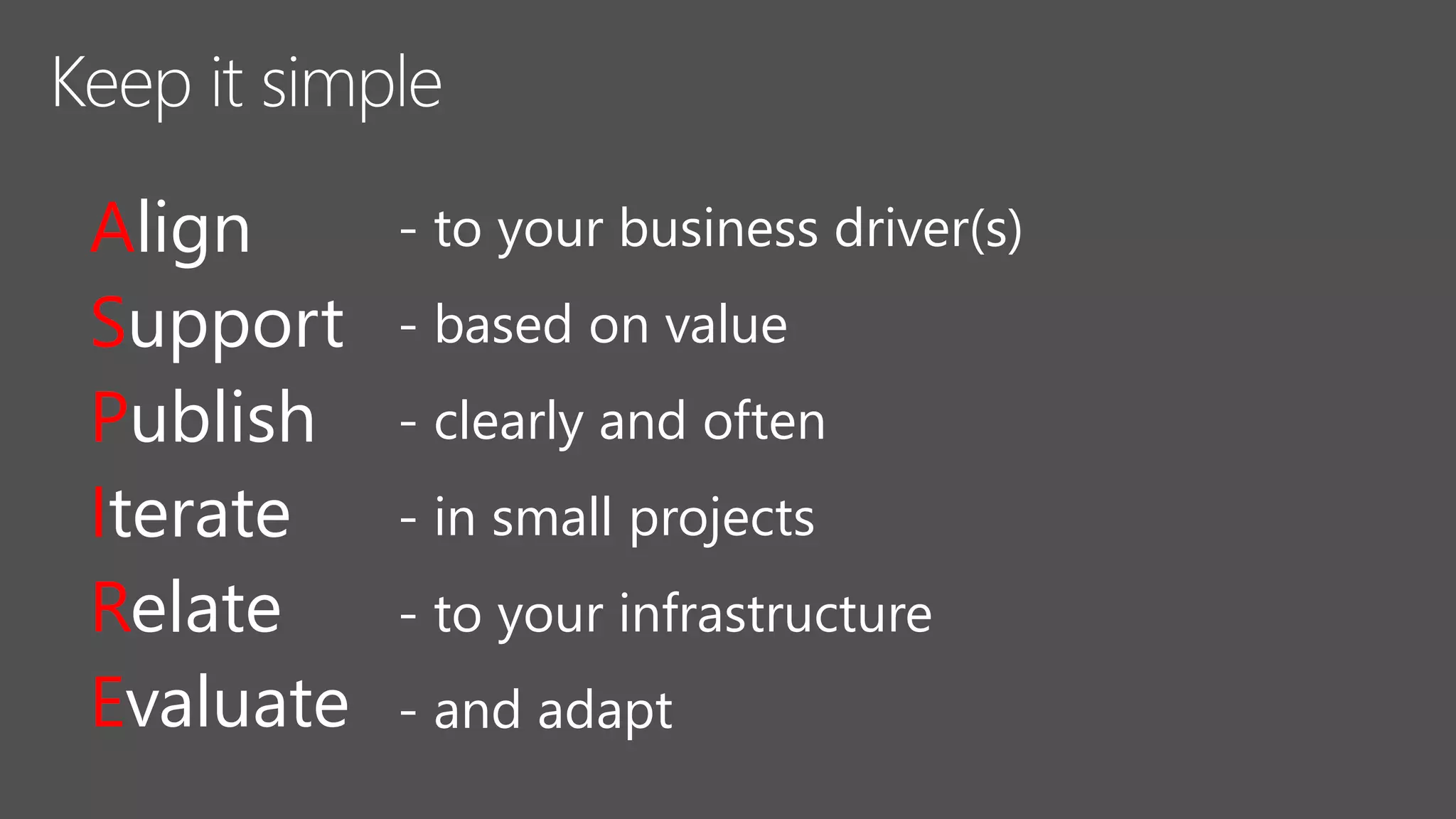
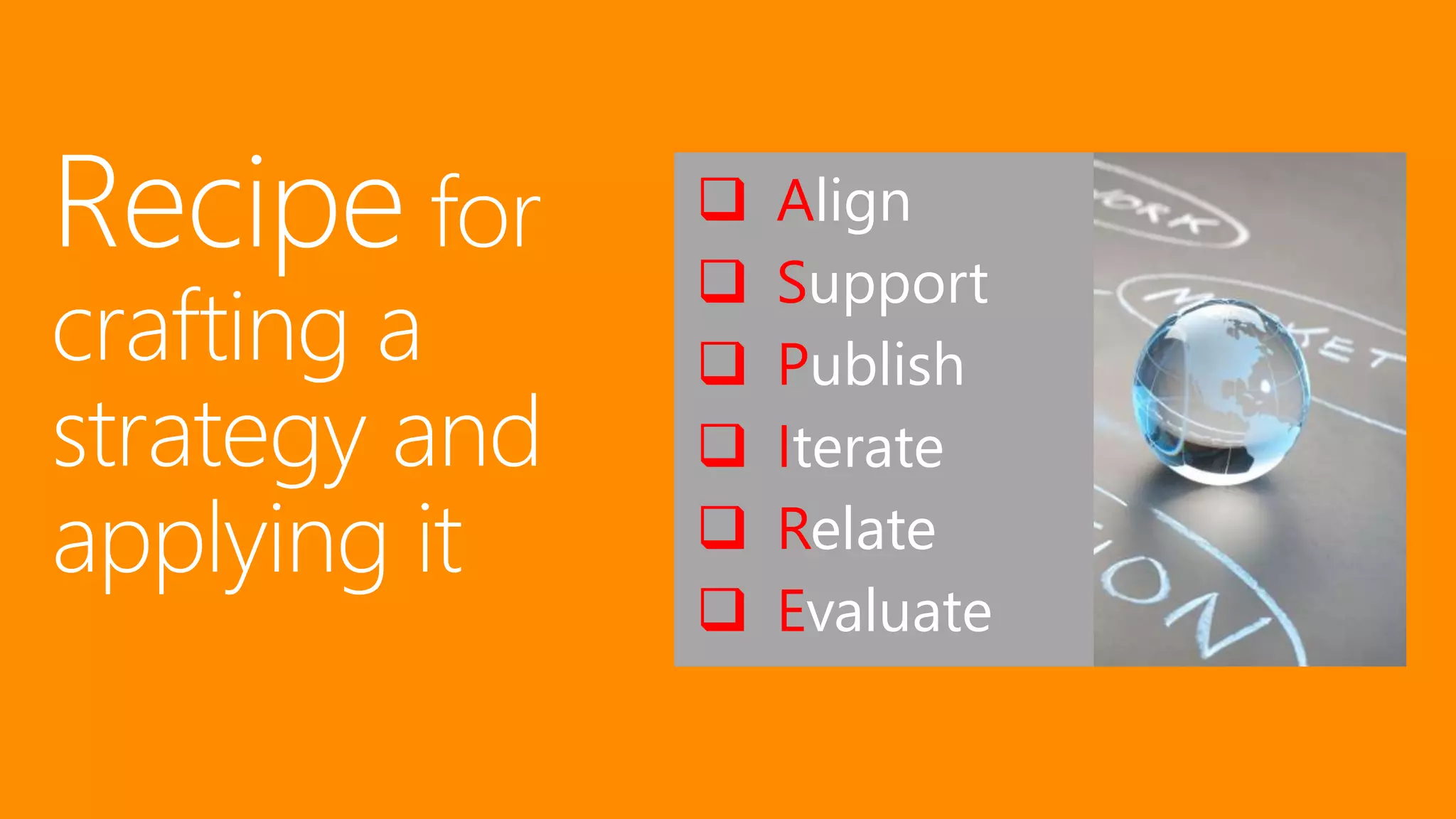
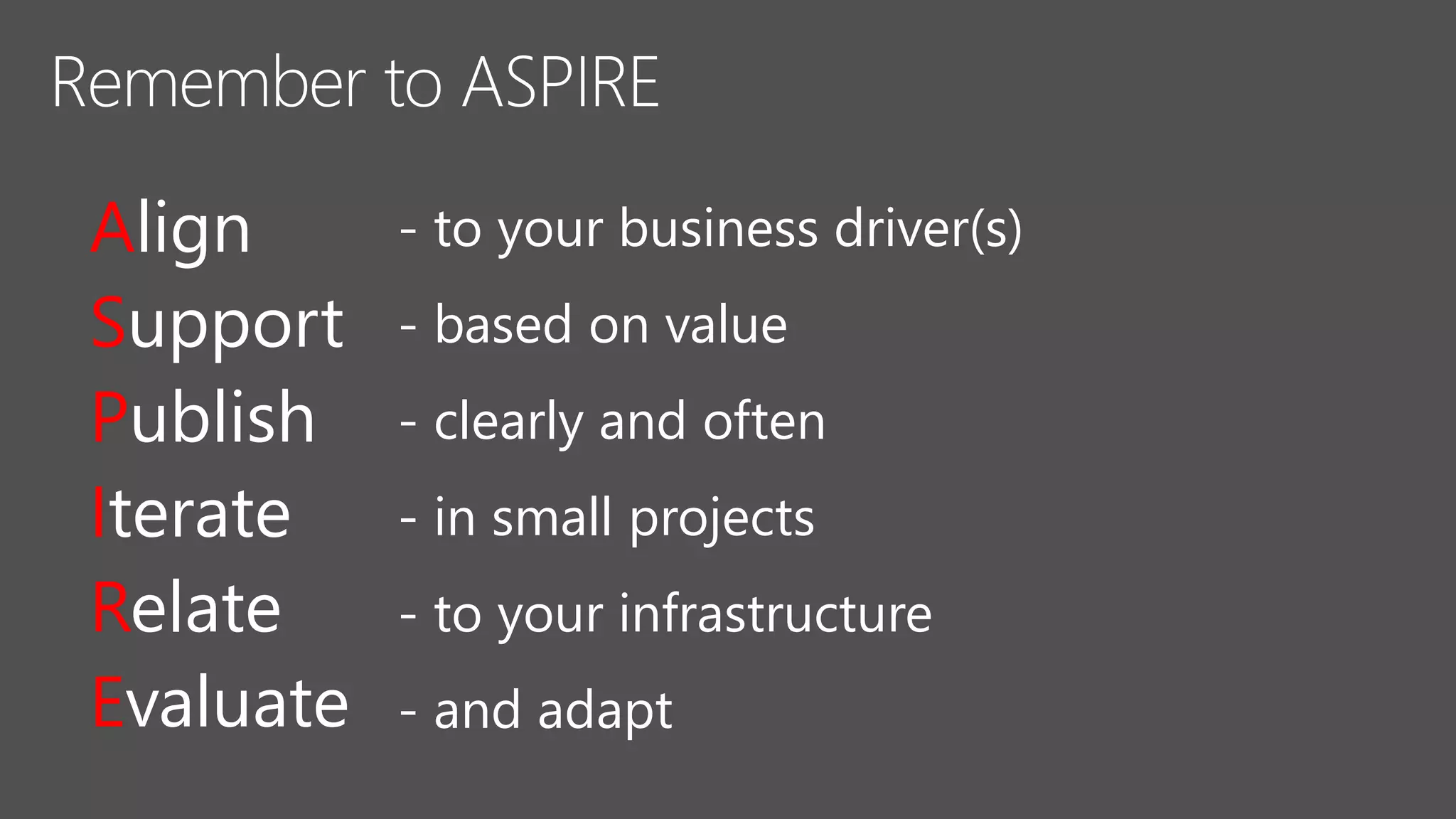
Align
Support
Publish
Iterate
Relate
Evaluate
- to your business driver(s)
- based on value
- clearly and often
- in small projects
- to your infrastructure
- and adapt
A
S
P
I
R
E
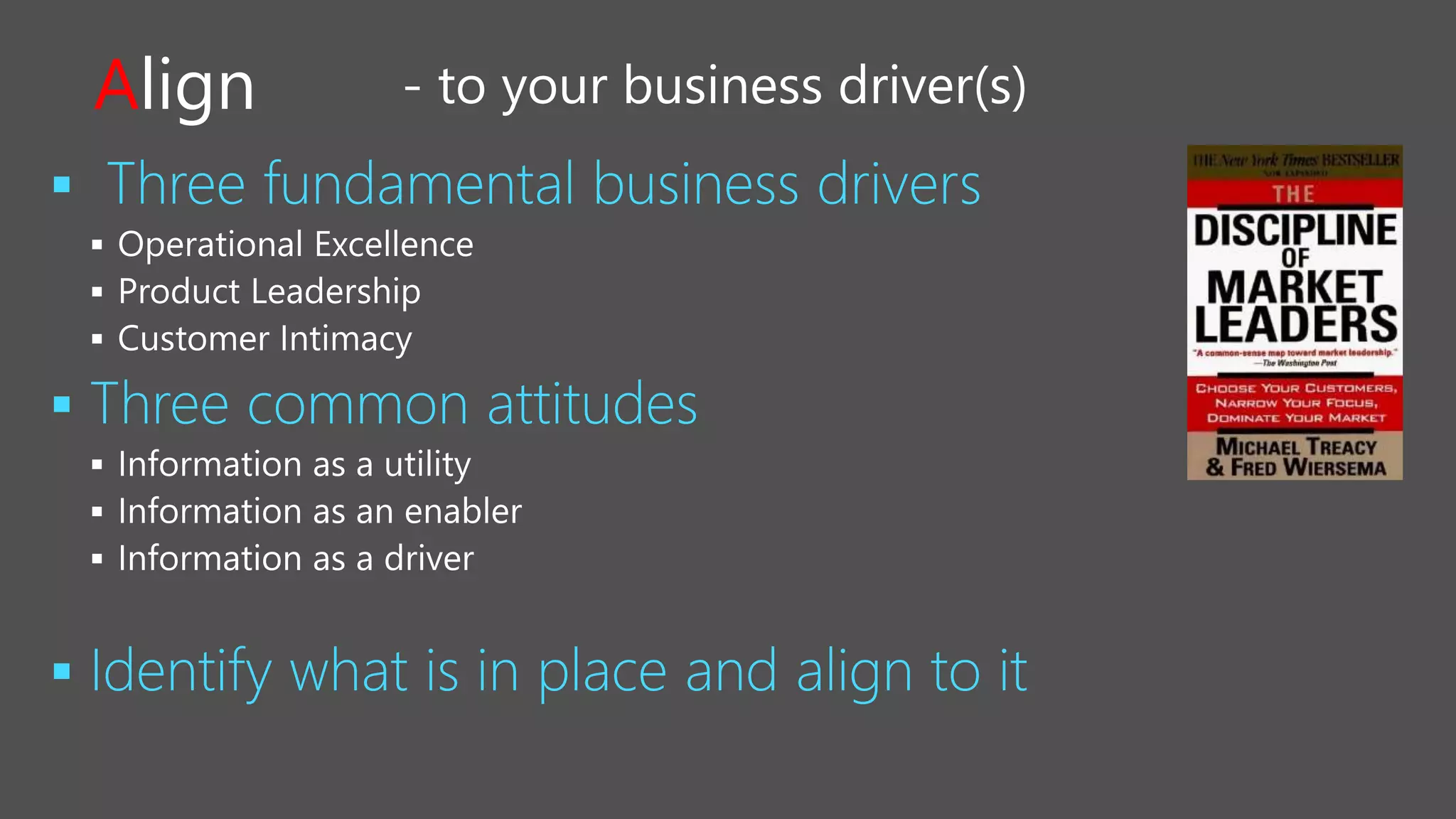
Align - to your business driver(s)





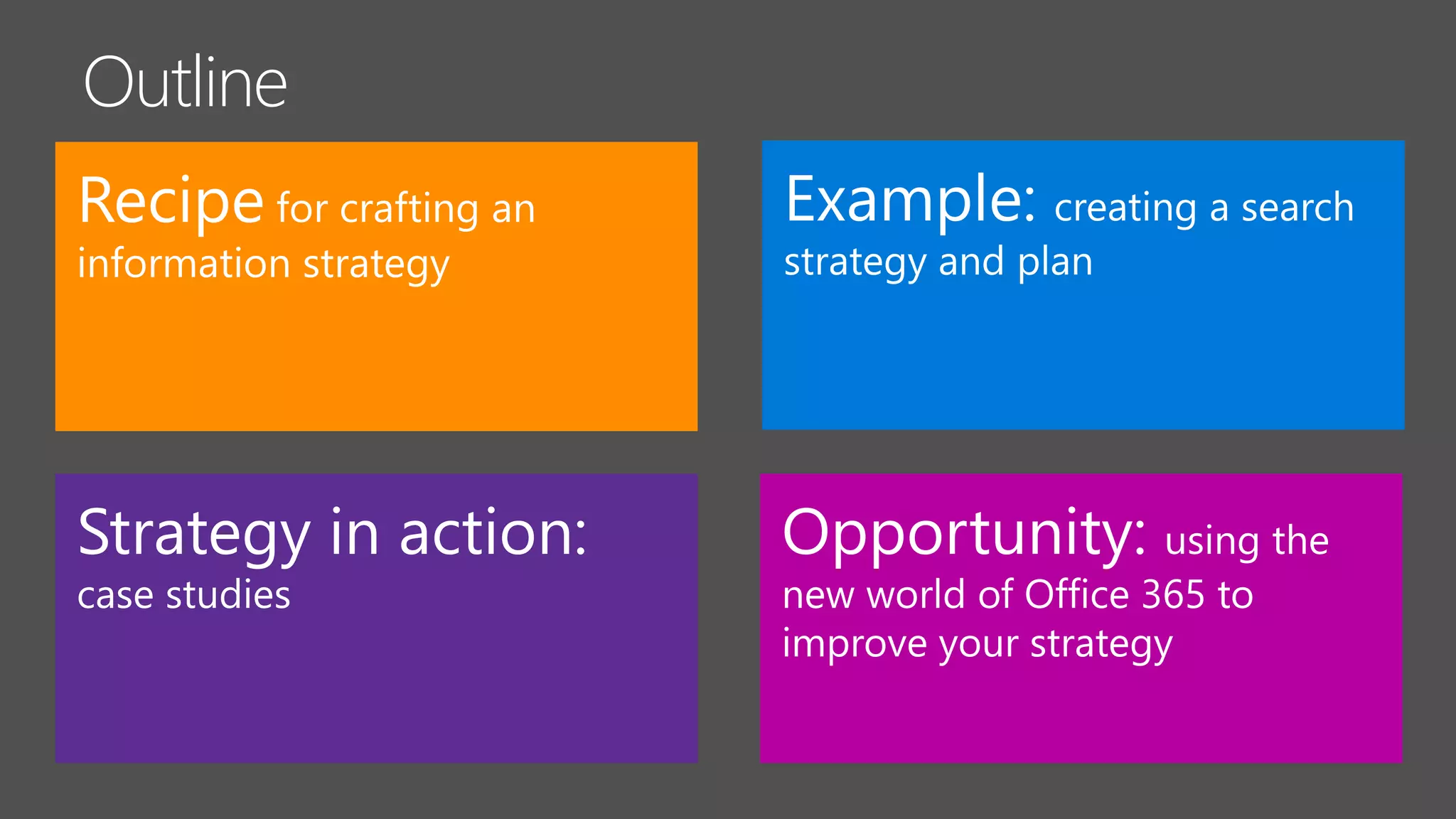
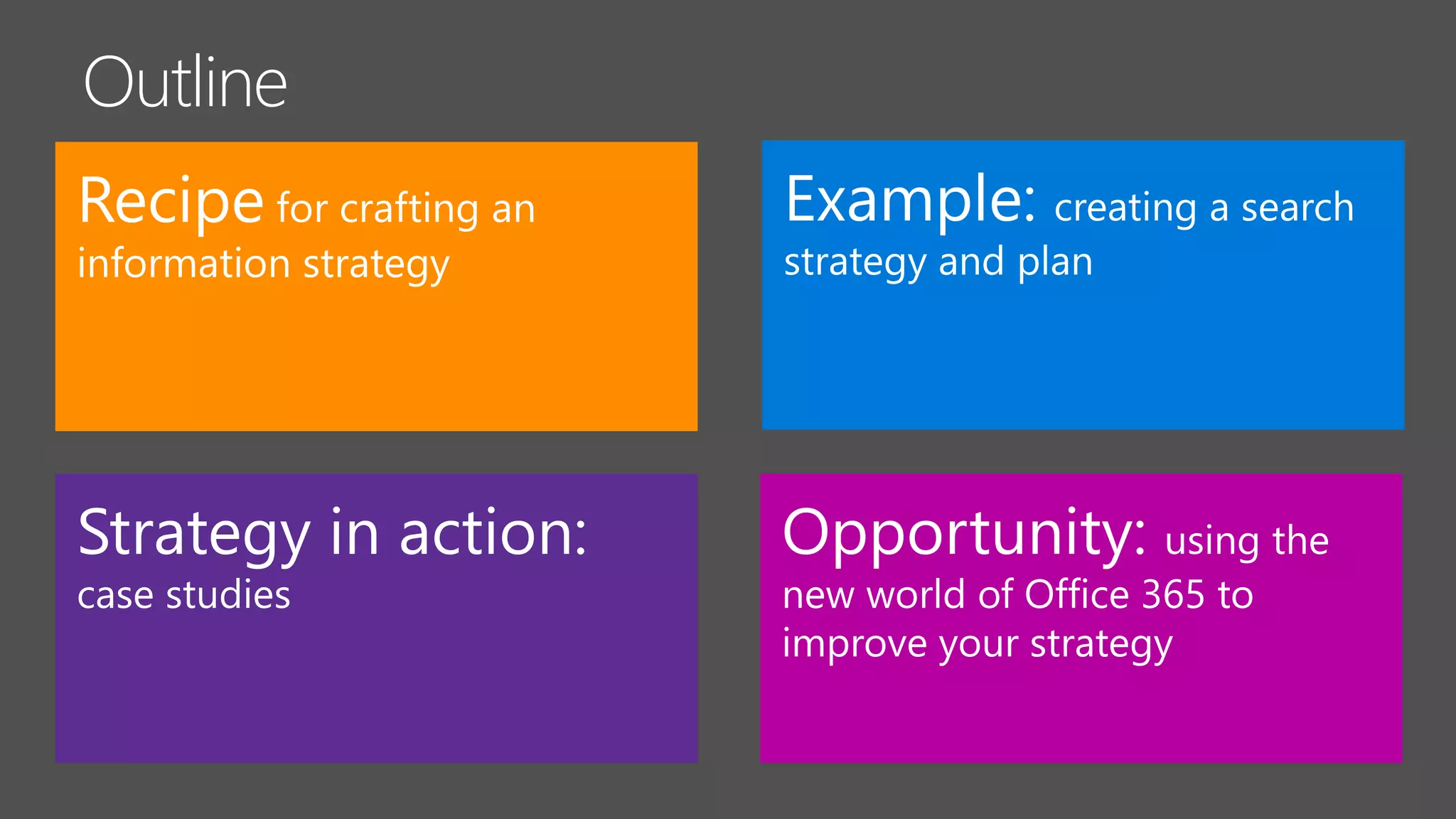
Outline








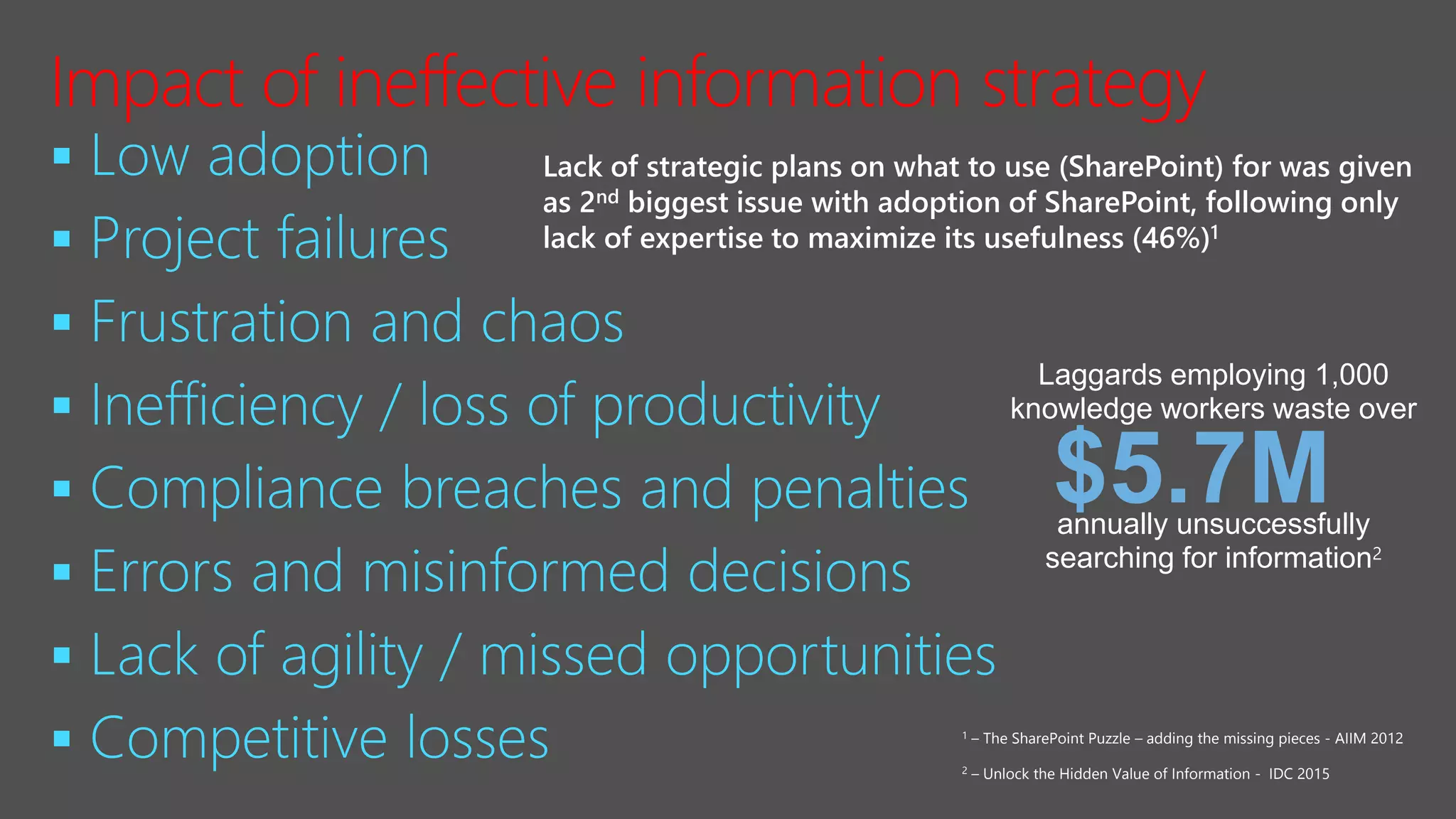
Impact of ineffective information strategy
Lack of strategic plans on what to use (SharePoint) for was given
as 2nd biggest issue with adoption of SharePoint, following only
lack of expertise to maximize its usefulness (46%)1
1 – The SharePoint Puzzle – adding the missing pieces - AIIM 2012
Laggards employing 1,000
knowledge workers waste over
annually unsuccessfully
searching for information2
$5.7M
2 – Unlock the Hidden Value of Information - IDC 2015







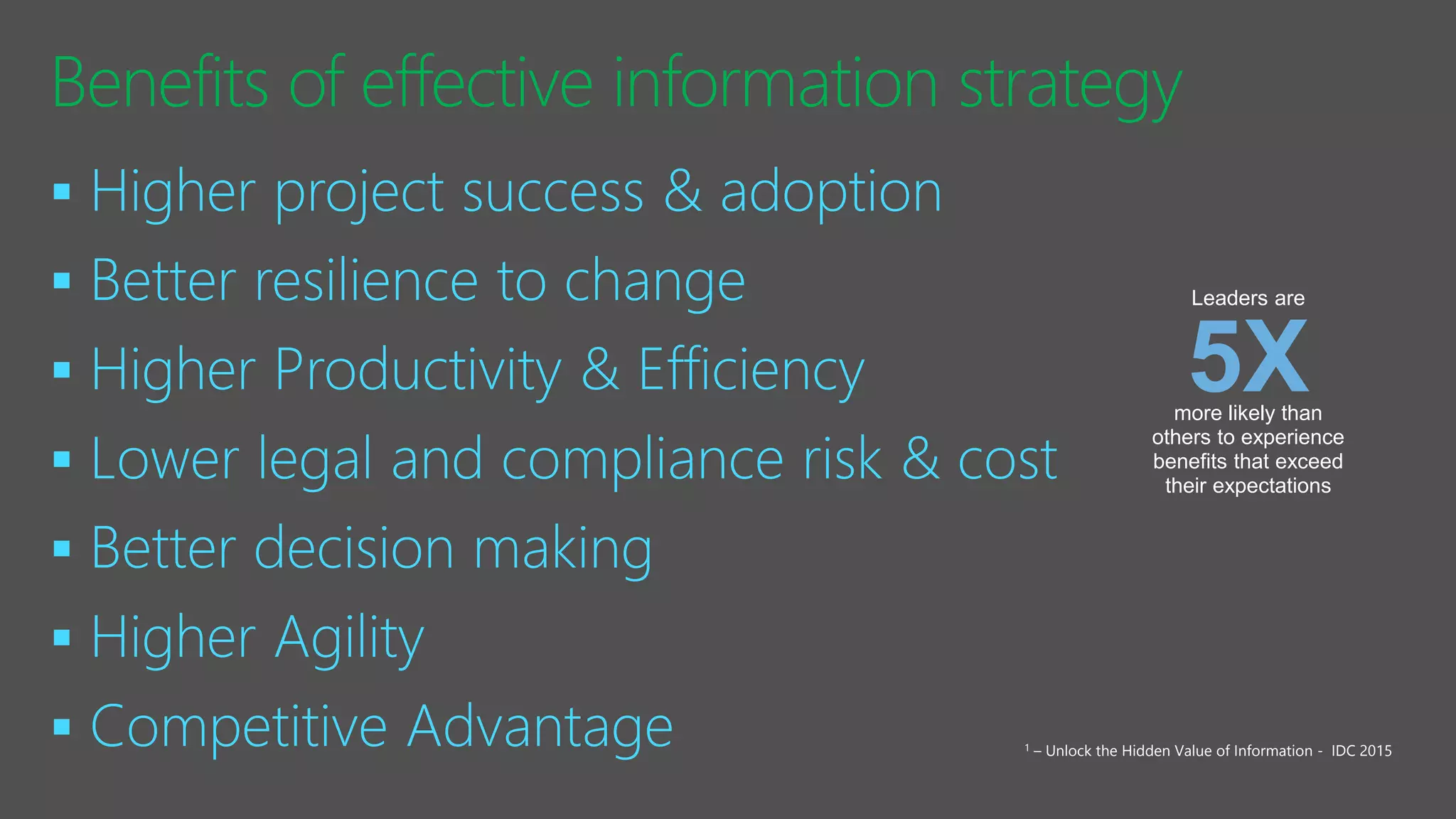
Benefits of effective information strategy
1 – Unlock the Hidden Value of Information - IDC 2015
Leaders are
more likely than
others to experience
benefits that exceed
their expectations
5X
I’m in IT. Will the business listen to me?
Our data is all over the place!
How can I quantify the value?
Will a strategy really stop the chaos?
Moving to the cloud is overwhelming!
I can’t change the culture by myself
How will I fit this in? I have a day job you know…






 Align
 Support
 Publish
 Iterate
 Relate
 Evaluate
Align - to your business driver(s)

















Support - based on value


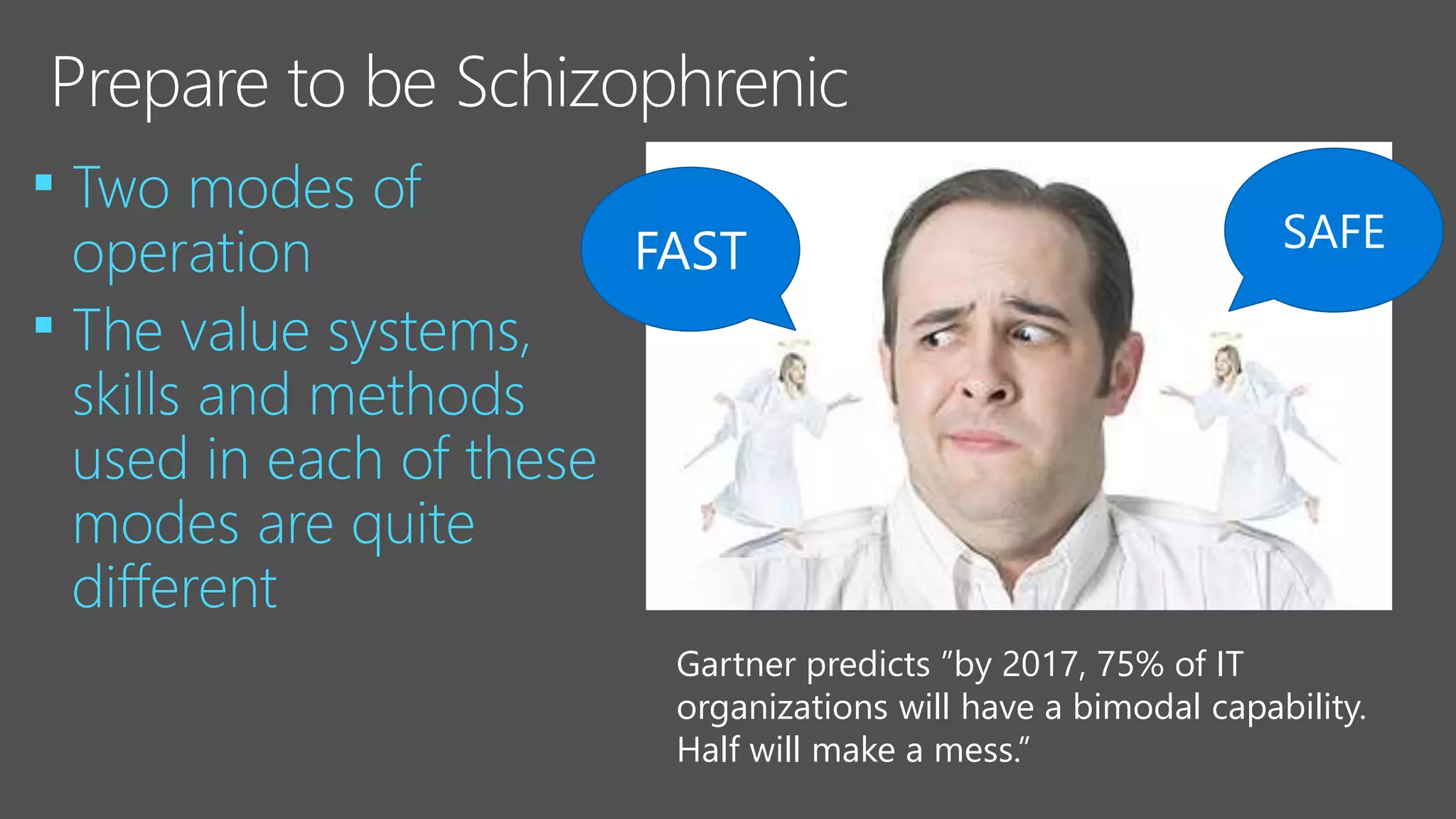
Gartner predicts ”by 2017, 75% of IT
organizations will have a bimodal capability.
Half will make a mess.”
FAST SAFE




Publish - clearly and often
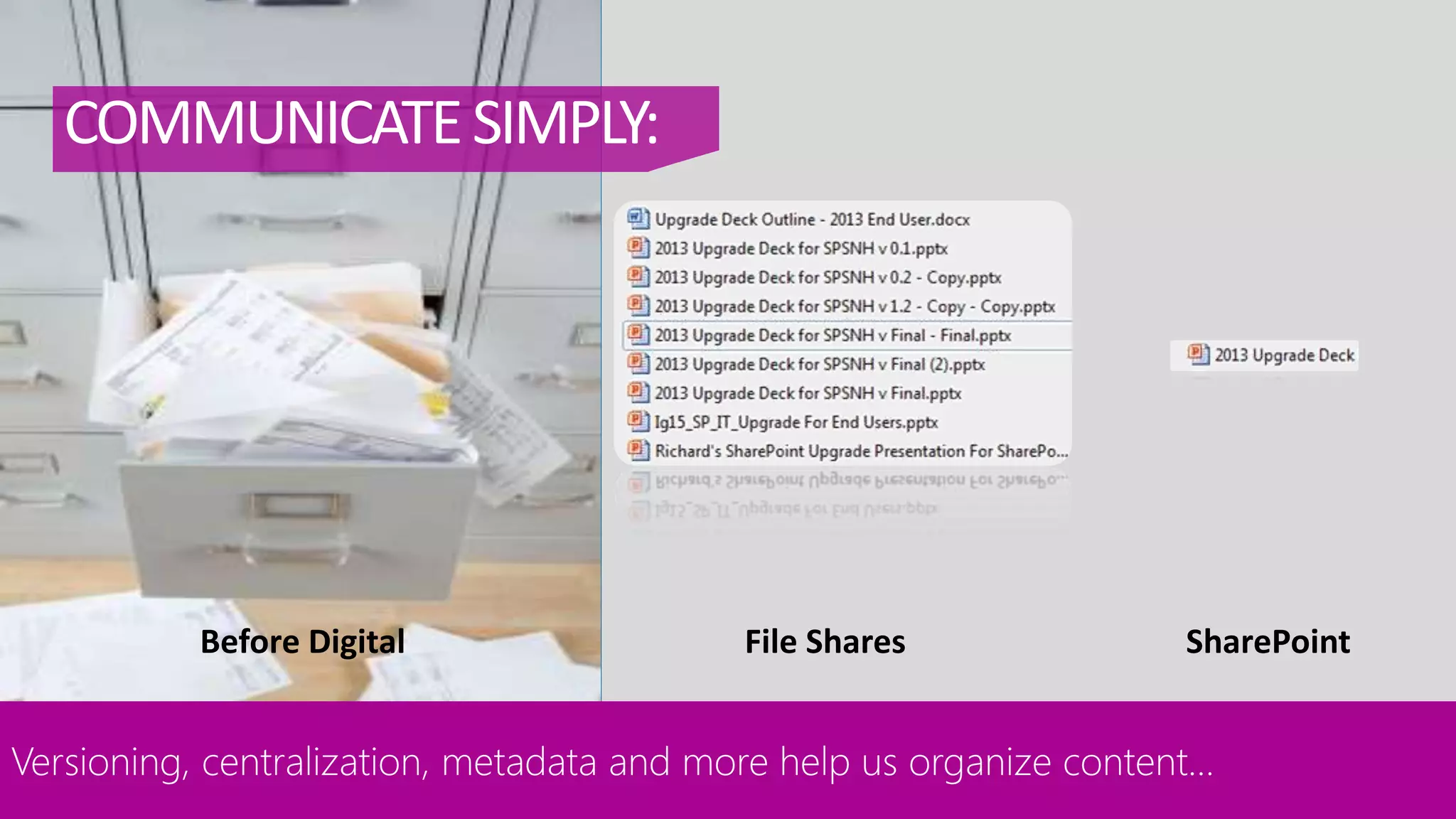
Before Digital File Shares SharePoint
COMMUNICATESIMPLY:
Versioning, centralization, metadata and more help us organize content…




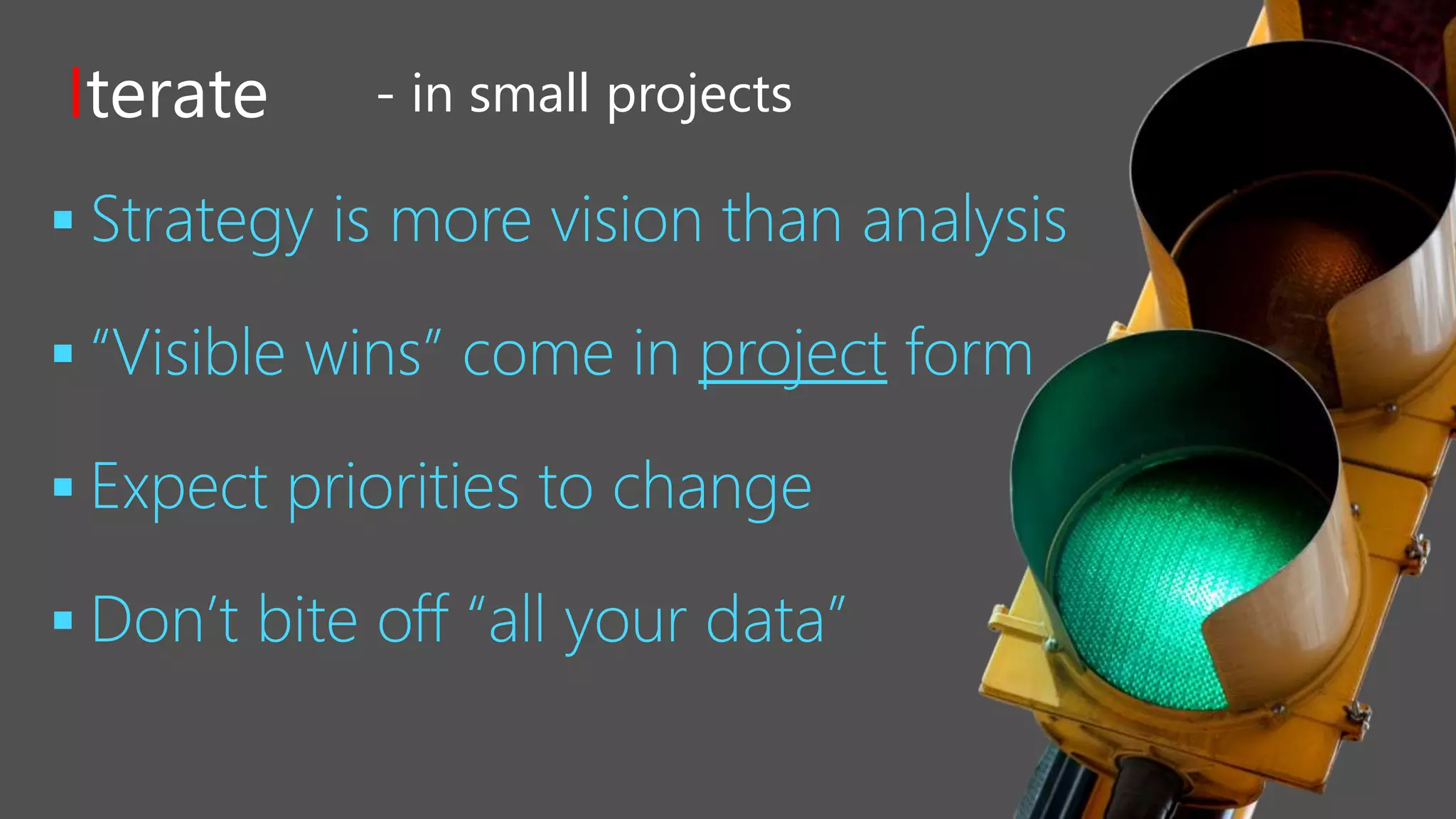
Iterate - in small projects
Do a Content Inventory



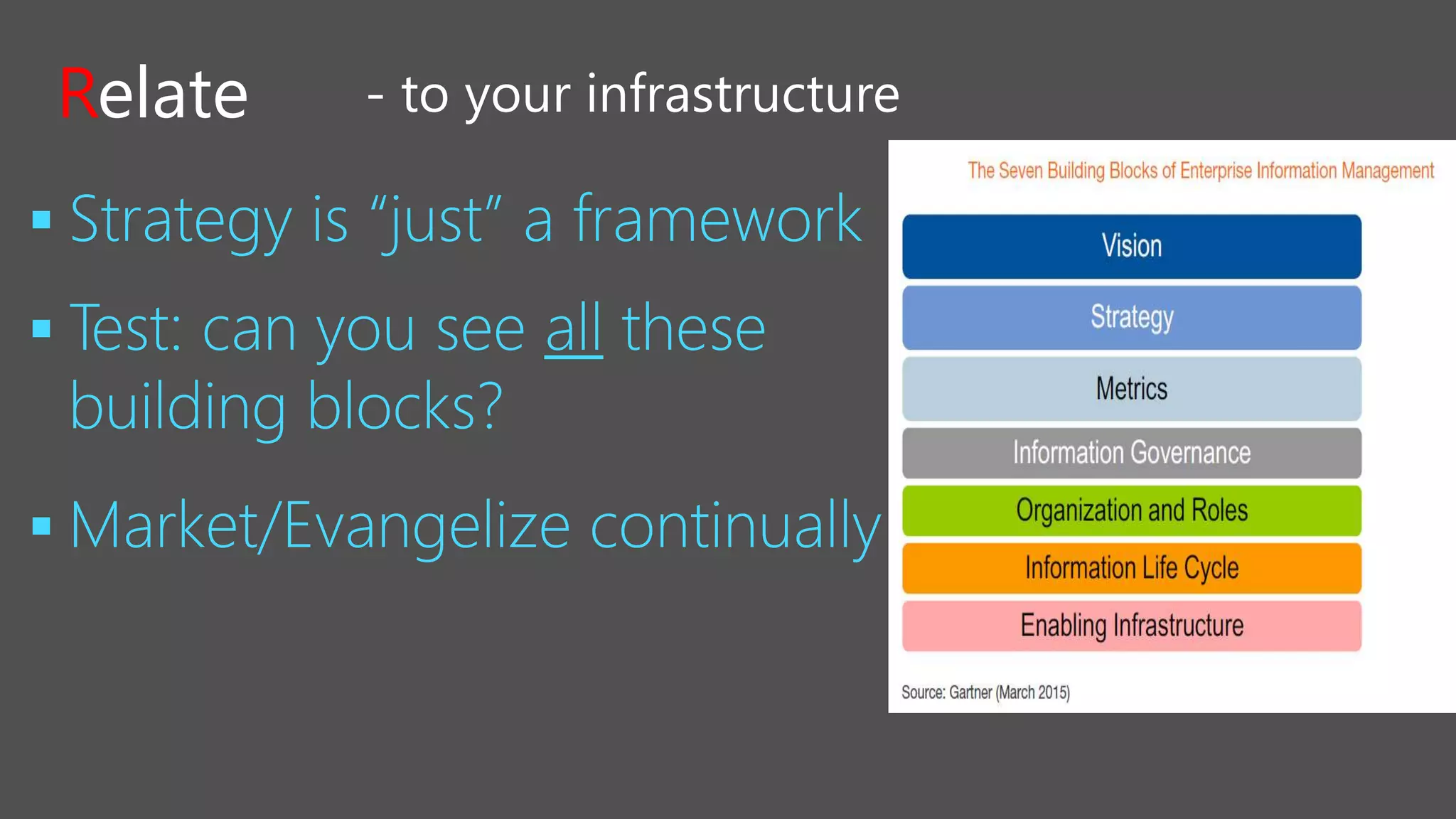
Relate - to your infrastructure



Evaluate - and adapt
 Align
 Support
 Publish
 Iterate
 Relate
 Evaluate
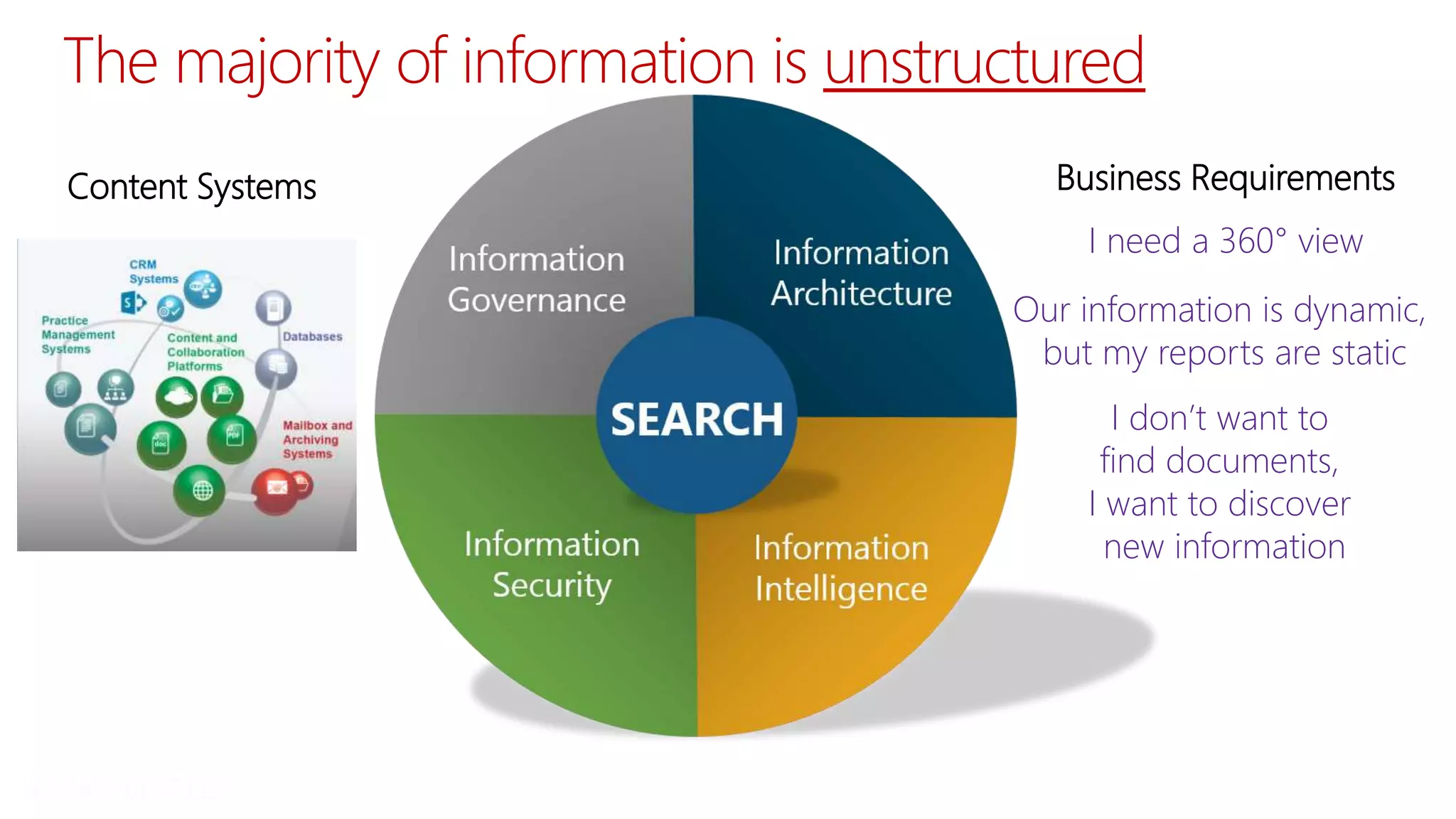
I need a 360° view
Our information is dynamic,
but my reports are static
I don’t want to
find documents,
I want to discover
new information
Business RequirementsContent Systems
A Recipe for Improving your Search
Connect to Authoritative Sources
Develop a list, prioritize, and iterate
MetaTag and Classify Content
Use metadata for governance, findability, and workflow
User Experience
Understand and focus on users
Effective Strategy and Plan
Incorporate your business drivers
Example: the Challenge
Users searching for content couldn’t connect the dots, were
missing the context and only found incomplete content sets
No document
found
Incomplete
document sets
Inconsistent filing &
metadata
Consolidate
into 2 Cloud + 3 on-premises repositories
Connect
to create a unified view
Standardize
with metadata
BA Insight Software Portfolio
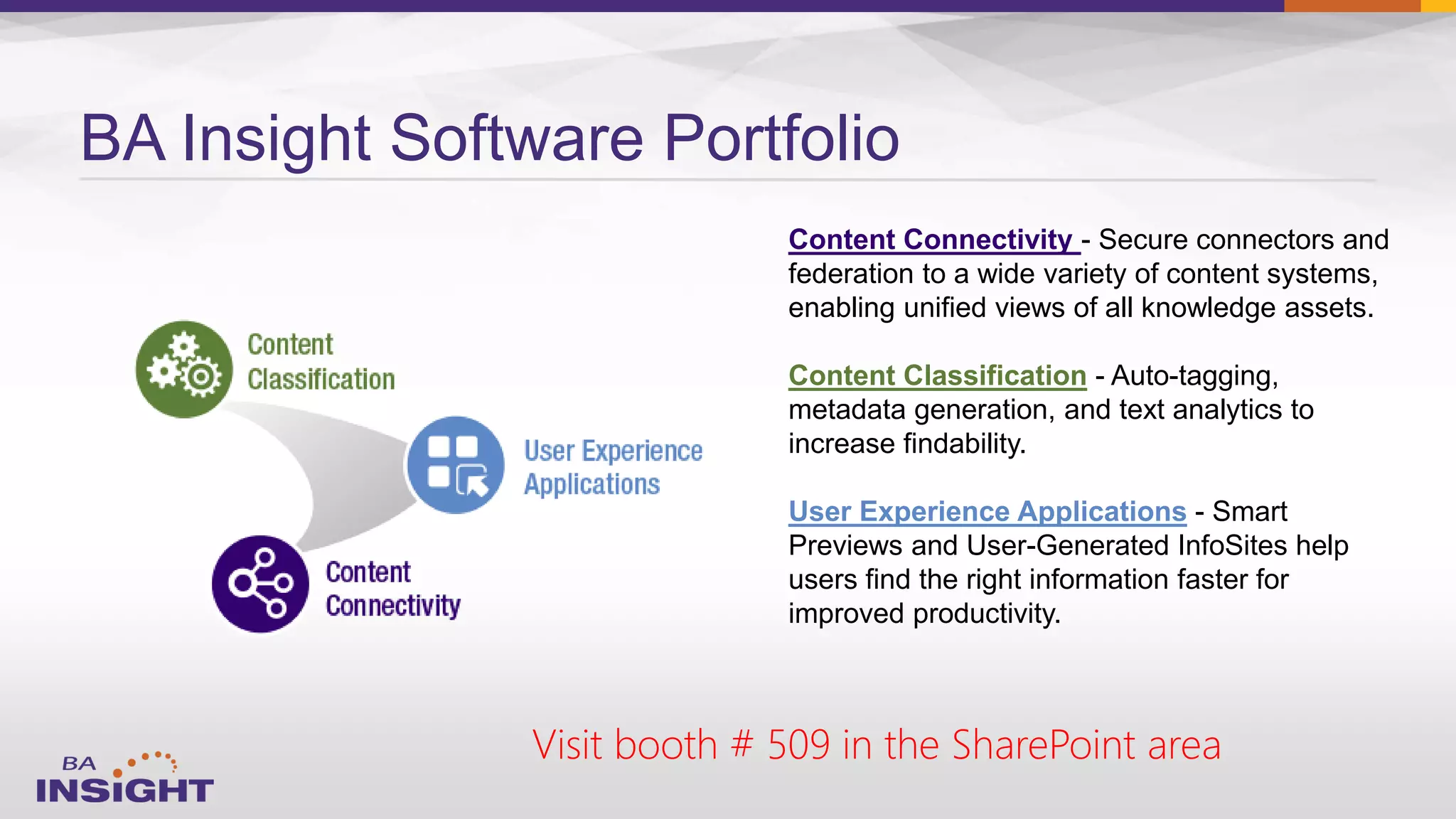
Content Connectivity - Secure connectors and
federation to a wide variety of content systems,
enabling unified views of all knowledge assets.
Content Classification - Auto-tagging,
metadata generation, and text analytics to
increase findability.
User Experience Applications - Smart
Previews and User-Generated InfoSites help
users find the right information faster for
improved productivity.
Visit booth # 509 in the SharePoint area
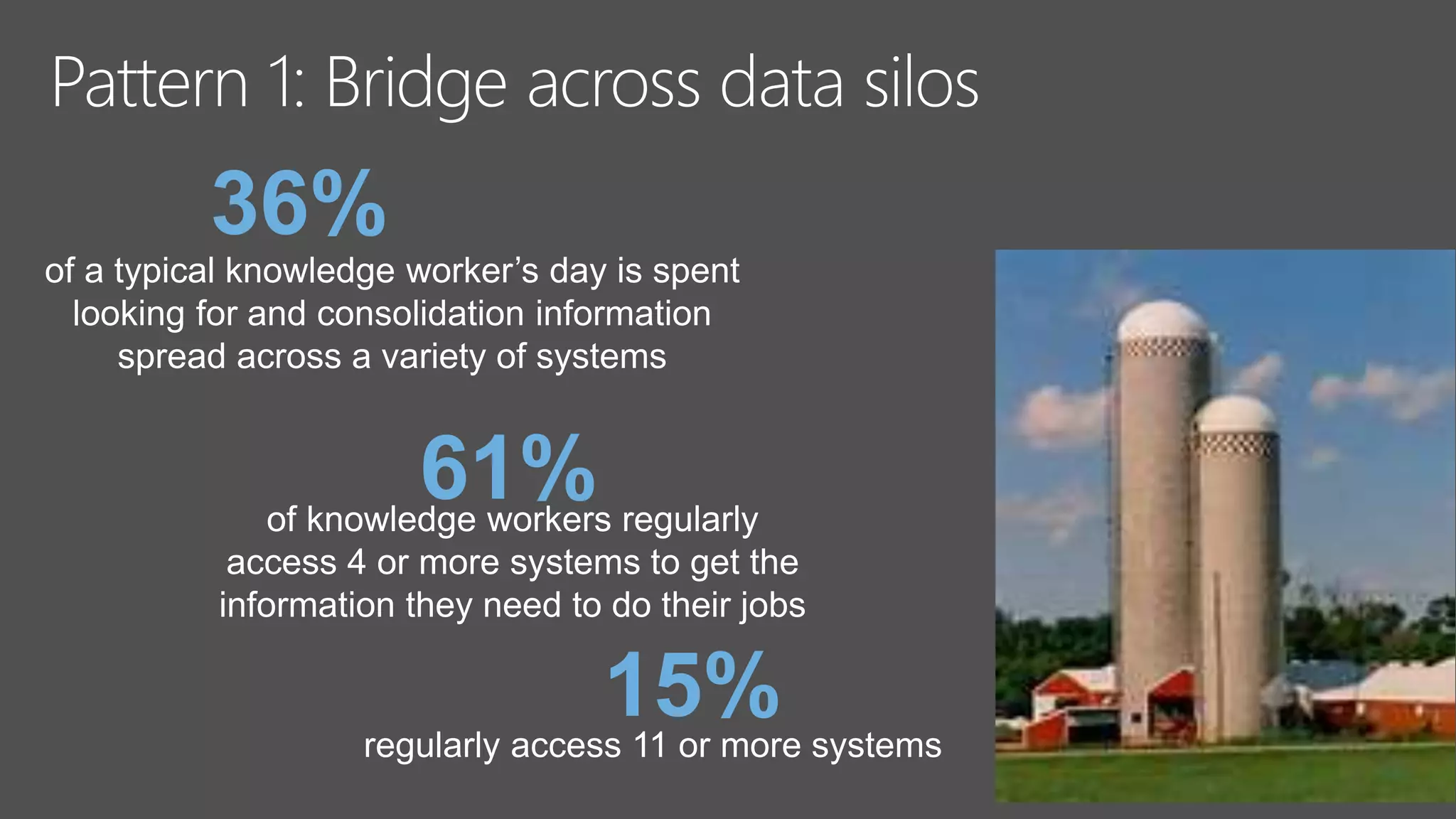
of knowledge workers regularly
access 4 or more systems to get the
information they need to do their jobs
61%
regularly access 11 or more systems
of a typical knowledge worker’s day is spent
looking for and consolidation information
spread across a variety of systems
36%
15%



http://youtu.be/NKMJe8NfLrQ
36
Information Management Strategy
 Gartner

 Information Management

 Mike2.0

 AIIM


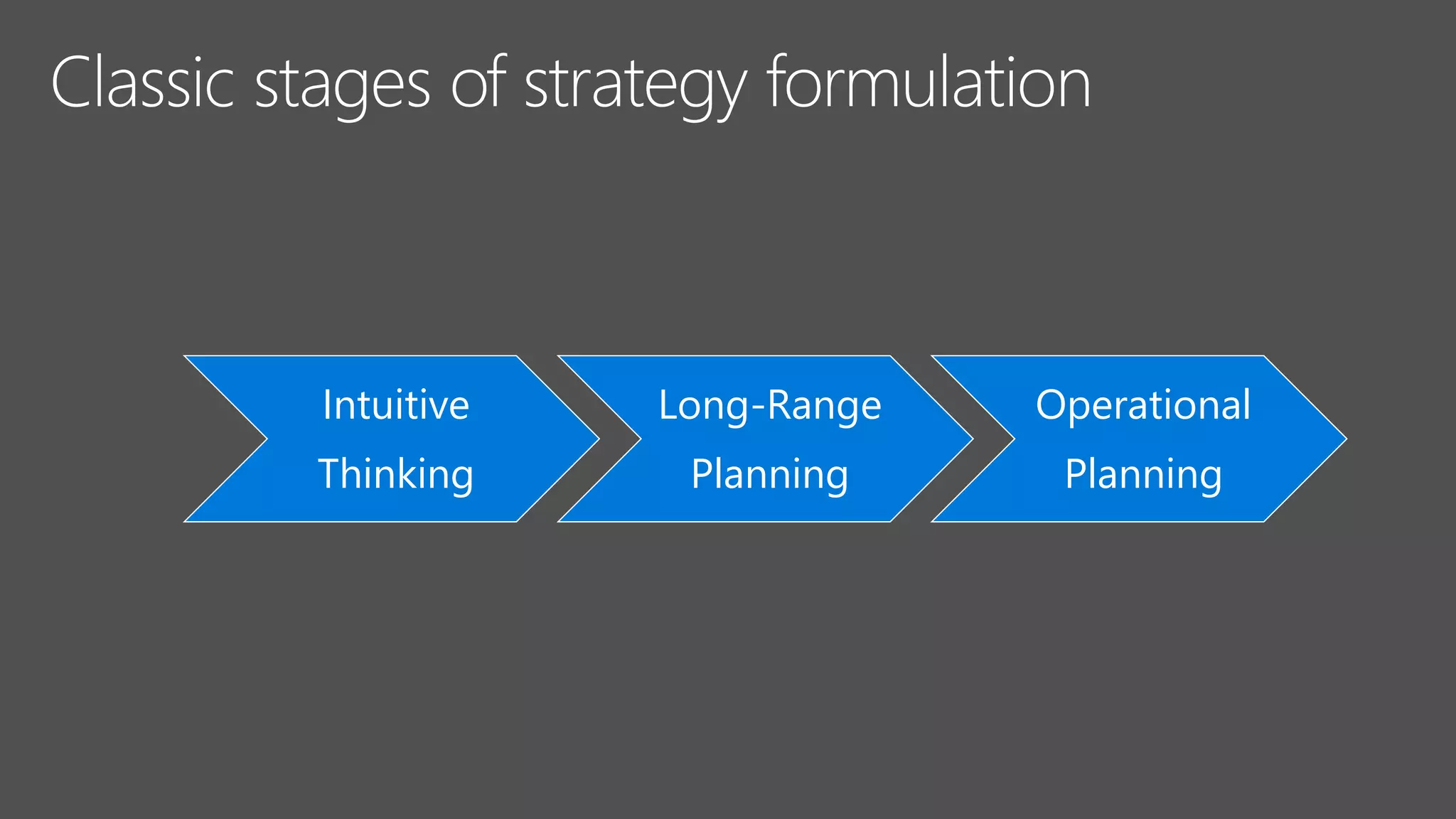
Intuitive
Thinking
Long-Range
Planning
Operational
Planning
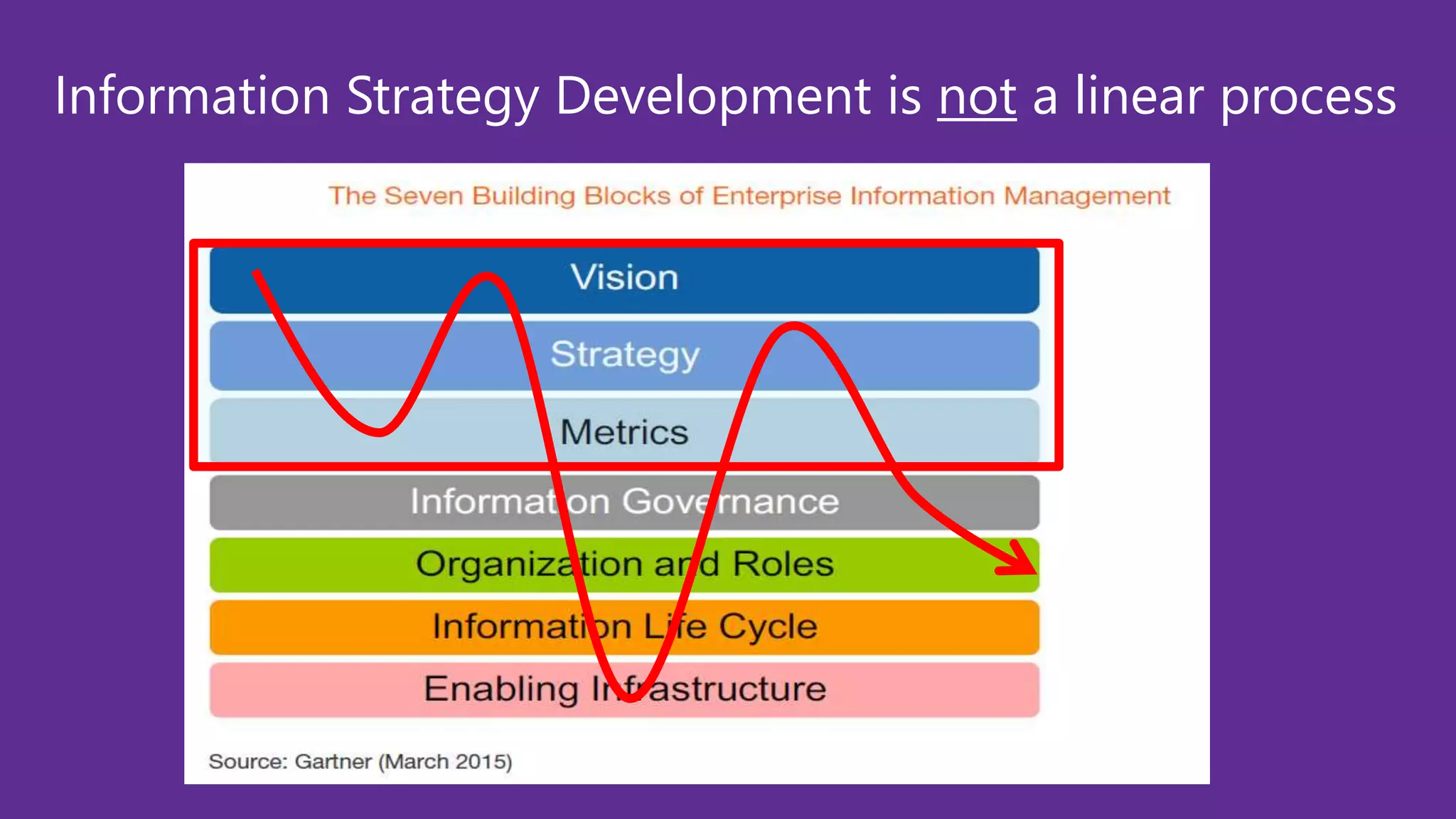
Information Strategy Development is not a linear process



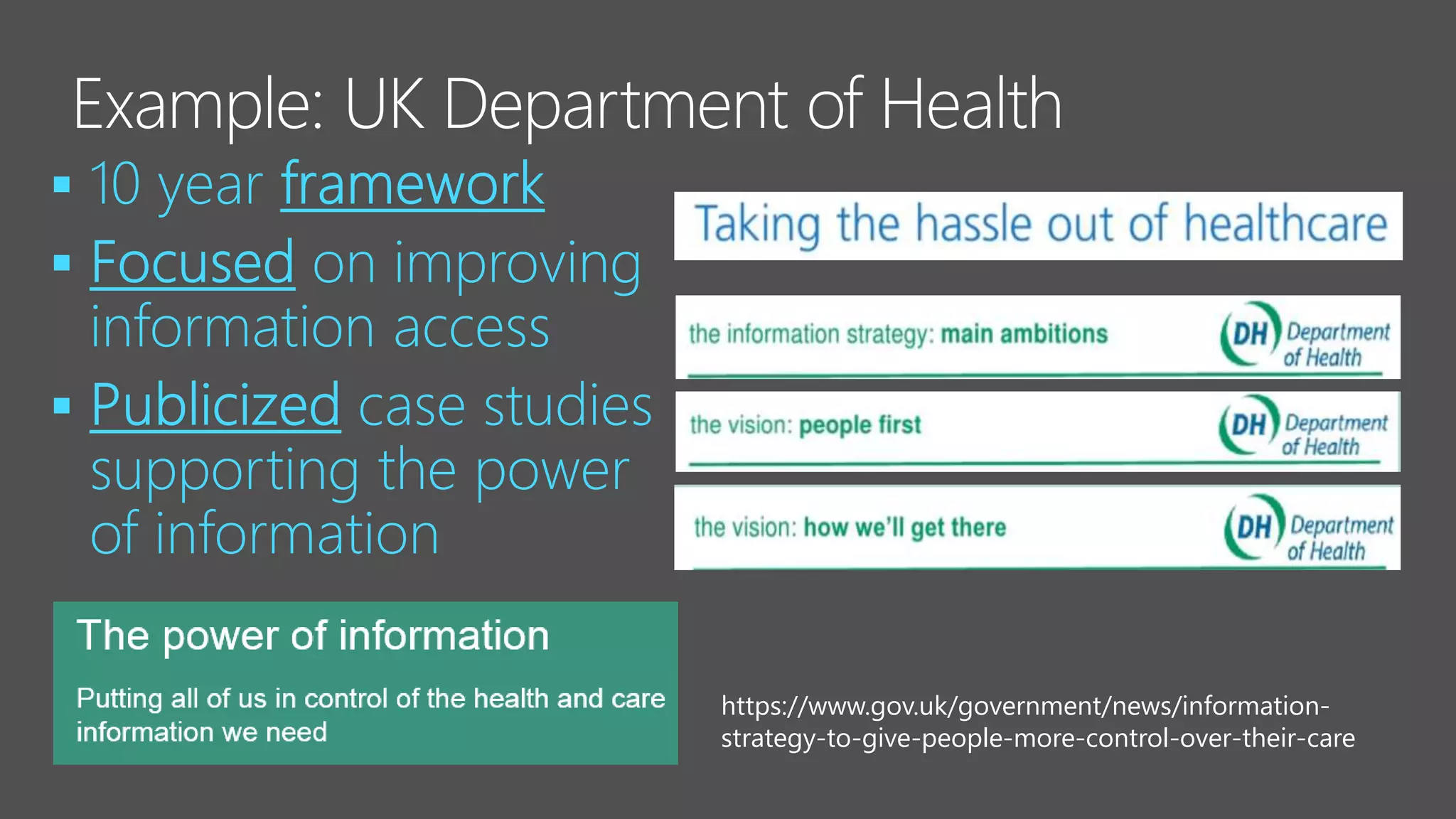
https://www.gov.uk/government/news/information-
strategy-to-give-people-more-control-over-their-care



Courtesy of Gartner
 Align
 Support
 Publish
 Iterate
 Relate
 Evaluate
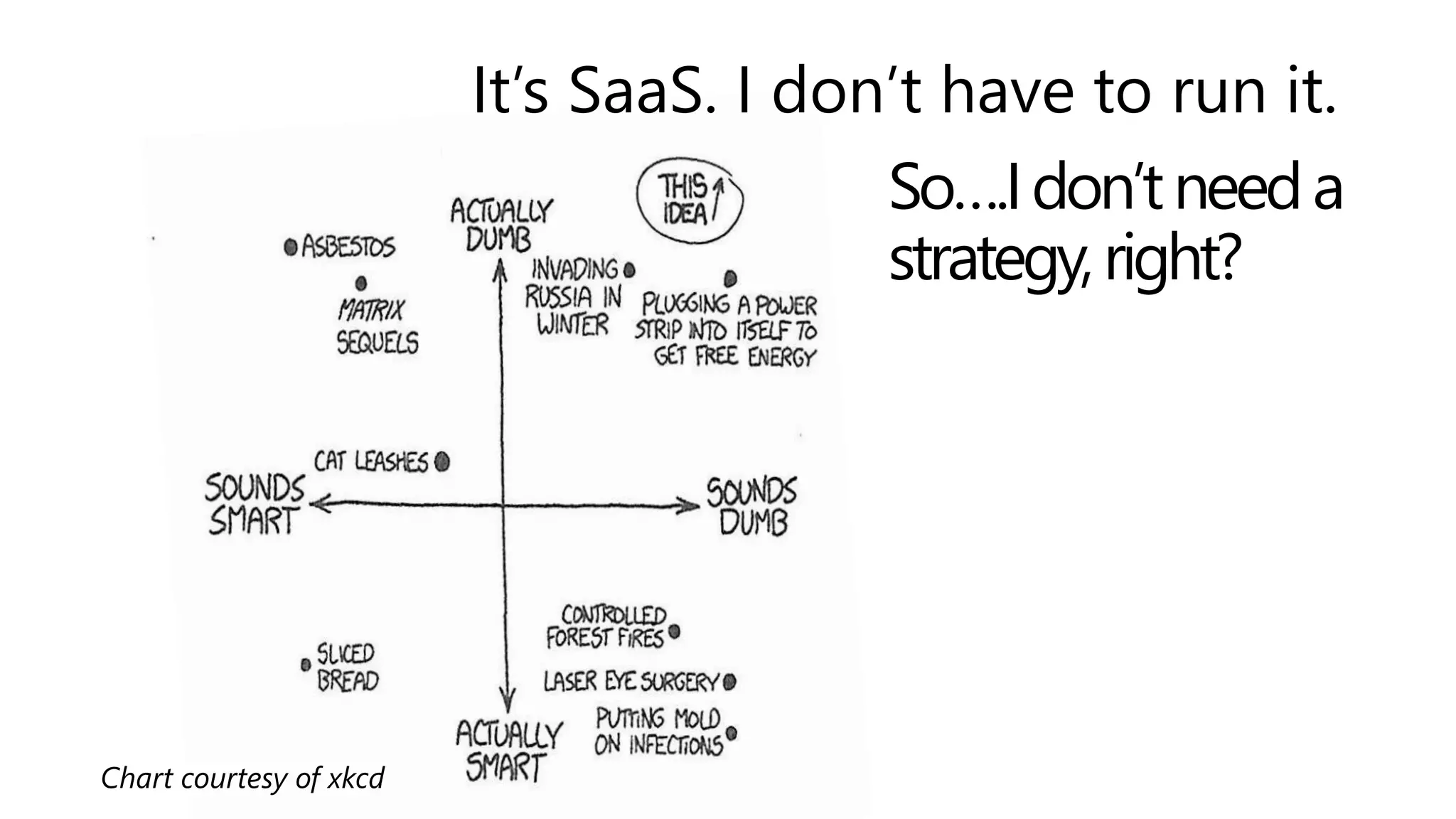
So….Idon’tneeda
strategy,right?
It’s SaaS. I don’t have to run it.
Chart courtesy of xkcd
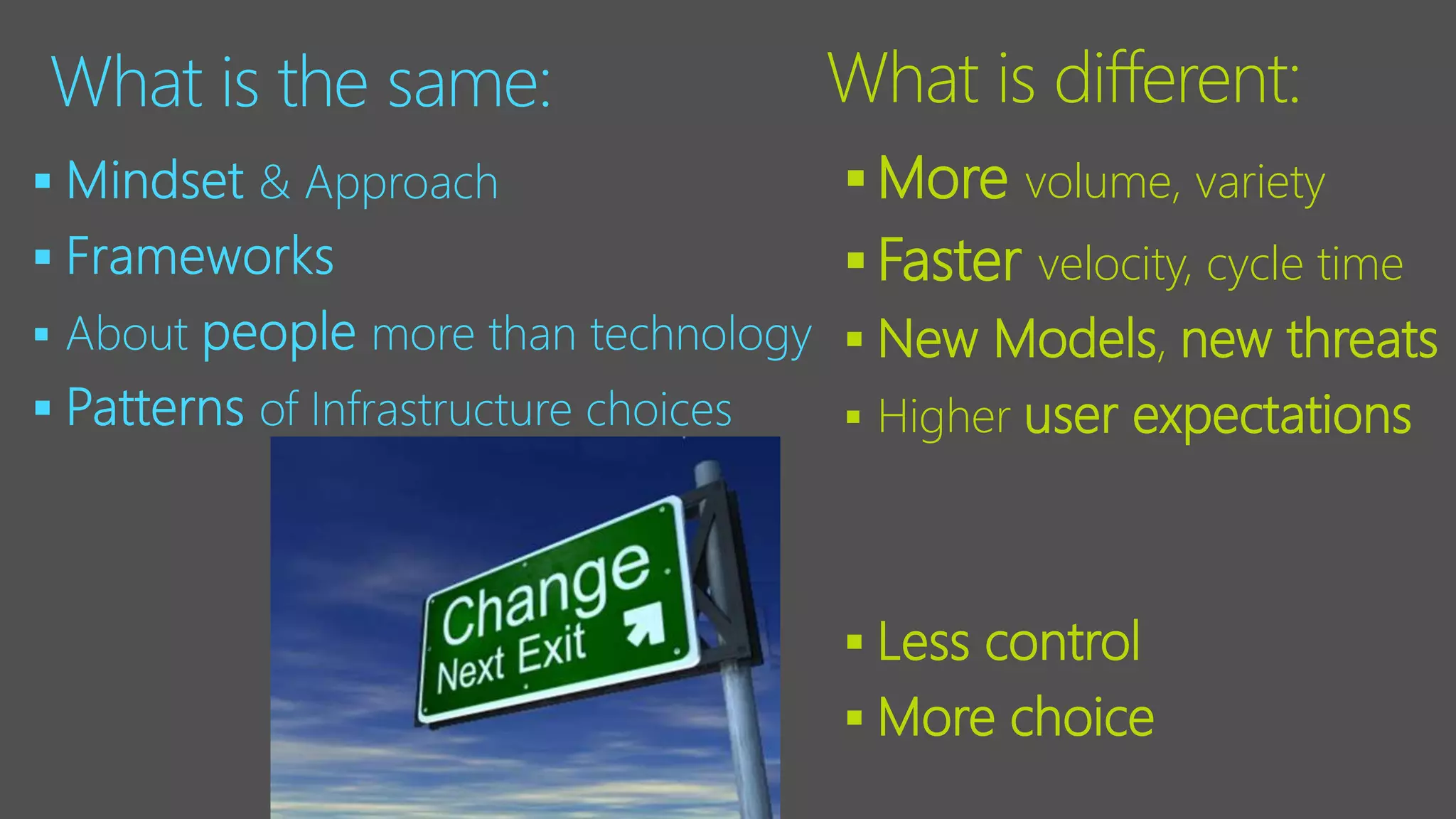
What is the same:




 More volume, variety
 Faster velocity, cycle time
 New Models, new threats
 Higher user expectations
 Less control
 More choice
What is different:
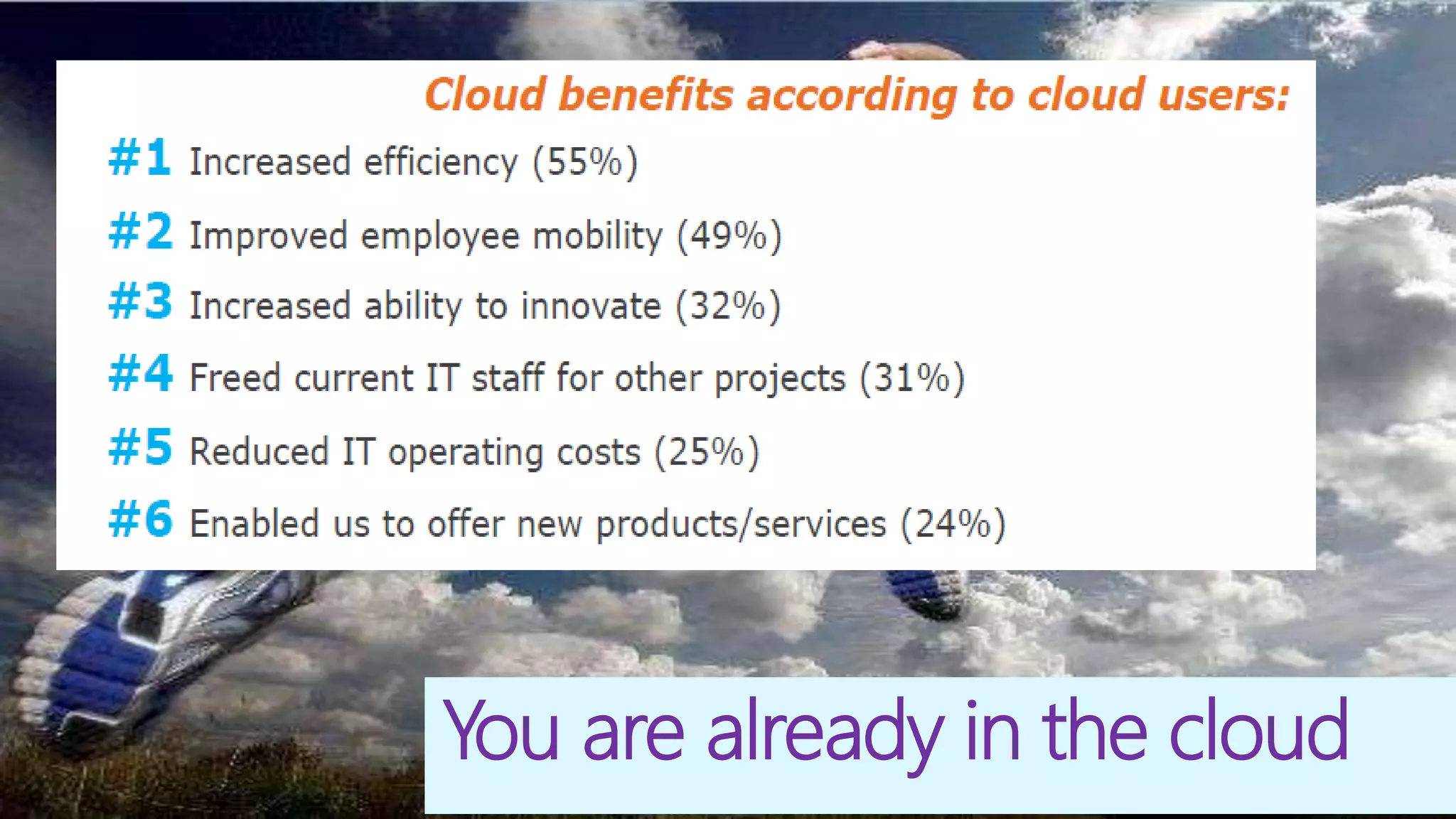
You are already in the cloud
 More business stakeholders bypassing IT and directly
pursuing cloud services, without consideration to governance
 More options for working with unstructured content
 New business demands coming at short notice - information
management infrastructure has to be more flexible
 Availability of cloud-based management tools
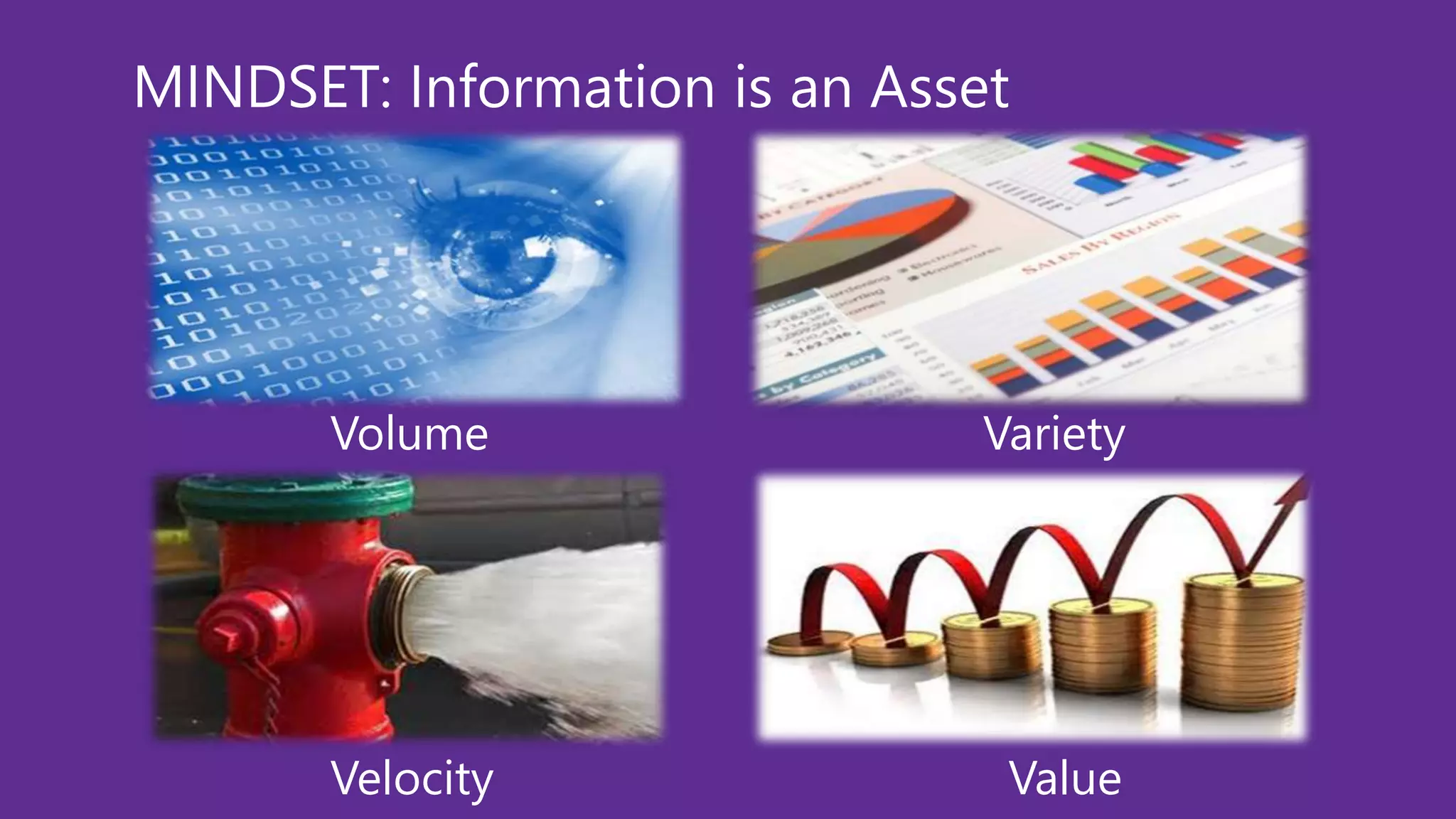
MINDSET: Information is an Asset
Volume Variety
Velocity Value
DelvePowerBI Yammer
Next-Gen Portals Office Graph API … more, faster
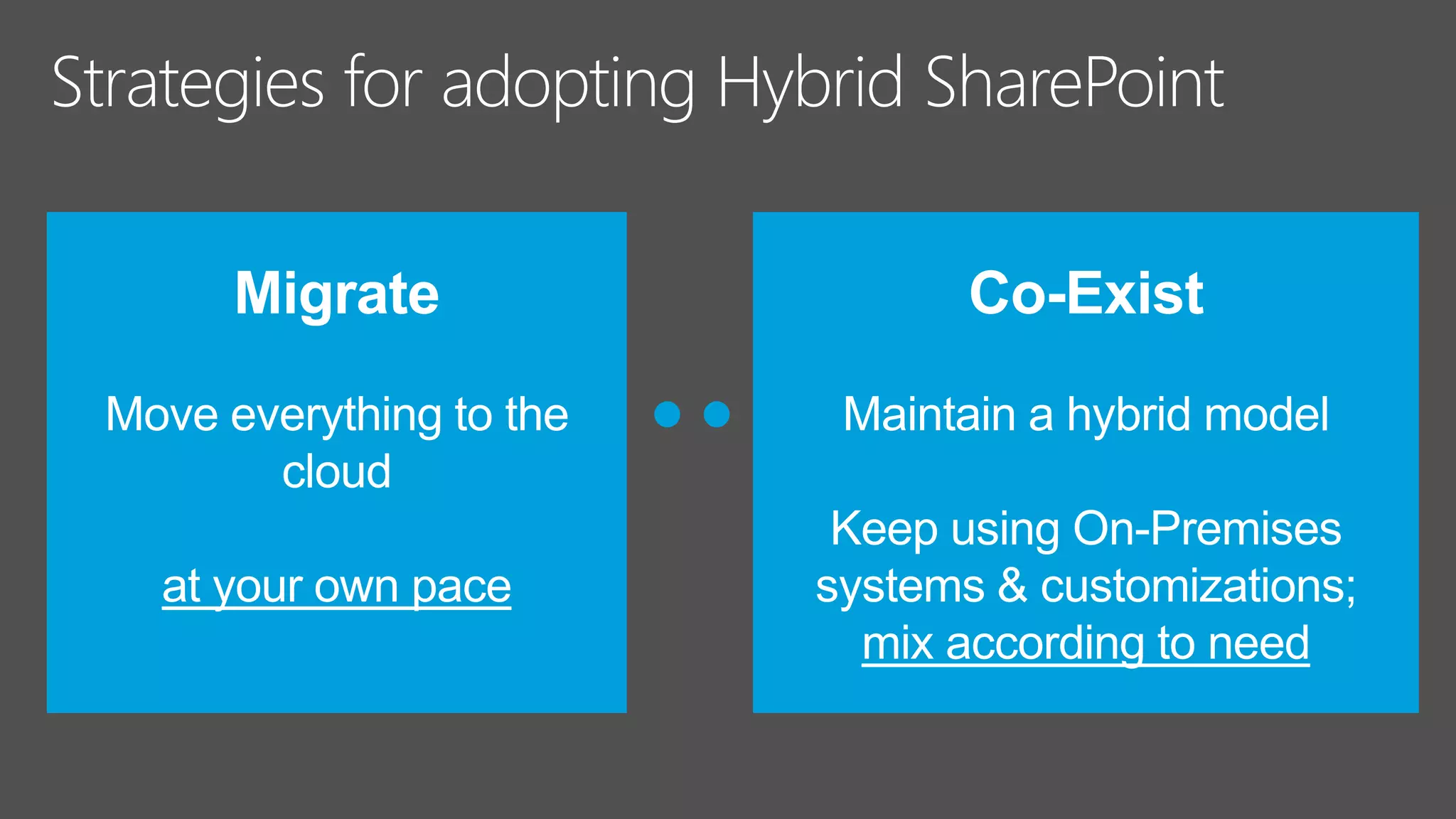
Migrate
Move everything to the
cloud
at your own pace
Co-Exist
Maintain a hybrid model
Keep using On-Premises
systems & customizations;
mix according to need
KCTCS (background)
ON ANY
DEVICE…
By 2015 at least 60% of information workers will interact with content applications
via a mobile device - Gartner
Outline
Courtesy of Eric Riz






Use IGNITE to spark
your strategy discussion
in “the new world”
Align
Support
Publish
Iterate
Relate
Evaluate
- to your business driver(s)
- based on value
- clearly and often
- in small projects
- to your infrastructure
- and adapt
Jeff.Fried@BAinsight.com
www.BAinsight.com

Information Strategy with O365 in Mind

Editor's Notes

  • #3 Most organizations fail to manage their information and can’t keep up with the new world of the cloud because they haven’t started with a strategy. {Poll}: How many believe you have an information strategy? Good one? One you use? Why? Discussed a lot with several of my colleagues and friends, including Jan Rivkin, who leads the Harvard Business School’s strategy unit. Biggest impediments are lack of understanding and fear.
  • #4 My goal is to help you a bit with both of those. We are going to have a special focus on the cloud and Office 365 because it is very active in many organizations and as you’ll see, there’s both a necessity and an opportunity to improve the state of your information strategy.
  • #5 I am not a strategy consultant. I am a search nerd. I started helping people with search strategy because it was often the missing ingredient; lack of an effective strategy just got in the way, and I saw the aftermath in the form of failed projects, confused people, and information chaos. It’s hard to get people who are in that place to success without helping them with their search strategy. That’s often generalized to information management strategy. Turns out this was kind of coming home, since my father was a business professor and taught long-range planning at the US Military Academy at West Point. When he was alive, we’d joke about the books I’d coauthored on search and the books he’d coauthored on strategy – how they were like peanut butter and chocolate.
  • #6 At Harvard Business School, there is a semester long course about information strategy and a textbook with 21 cases. (not a book I recommend, actually). But even professors like my father and my friend Jan are acutely aware of the difference between theory and practice and the need to have a focused, real-world strategy. This means: keep it simple…I’ll use a simple little rubric for this session that includes the things you see here. General Norman Schwartzkopf (who as it turned out took an executive class from my father) famously said that a strategy that can’t be executed was not a strategy. Complex endeavors need a framework to keep them on course. But it shouldn’t be a complex framework. The truth of the matter is that you always know the right thing to do. The hard part is doing it.
  • #7 Operational Excellence - Fedex, IKEA, Wal-Mart, Chevron – key is to be able to operate more crisply and efficiently than competitors. Cost leadership means high-volume, transaction oriented operations and a premium on benchmarking, measuring KPIs, total quality management, etc. Product Leadership – Fidelity, BMW, Pfizer, Apple – creativity, problem solving, teamwork are recognized as important, expensive talent means mastering collaboration, knowledge management, etc. Customer Intimacy – Lexus, Virgin Atlantic, Amazon - focus on personalization of services and customization of products. Not necessary the cheapest or the most innovative offering, but tuned to the individual customer. Tend to be decentralized organizationally, aligned through information functions and prize applications like customer 360.
  • #8 Not trying to do everything in 75 minutes, but this should help you with understanding and with fear.
  • #9 If you don’t have an effective strategy, bad things happen.
  • #10 If you do: good things
  • #11 Who in the room is in IT? This can be an opportunity personally to have more impact and visibility.
  • #13 These are real concerns, but in some ways they are people Creating a barrier
  • #14 Do you need to have a cultural revolution? Utility: information available to everyone for any purpose. Example: Bose making product and customer information as widely available as possible. Enabler: information tailored for a particular goal, such as pharma research. The product is not information but the value of the information is related to the value of the product. Driver: information firm, or information as part of the product, such as a wealth management portal with customized market information.
  • #16 Talked about these a bit ago. I didn’t make these up: Michael Treacy & Fred Wiersema published this book almost exactly 10 years ago, has stood the test of time
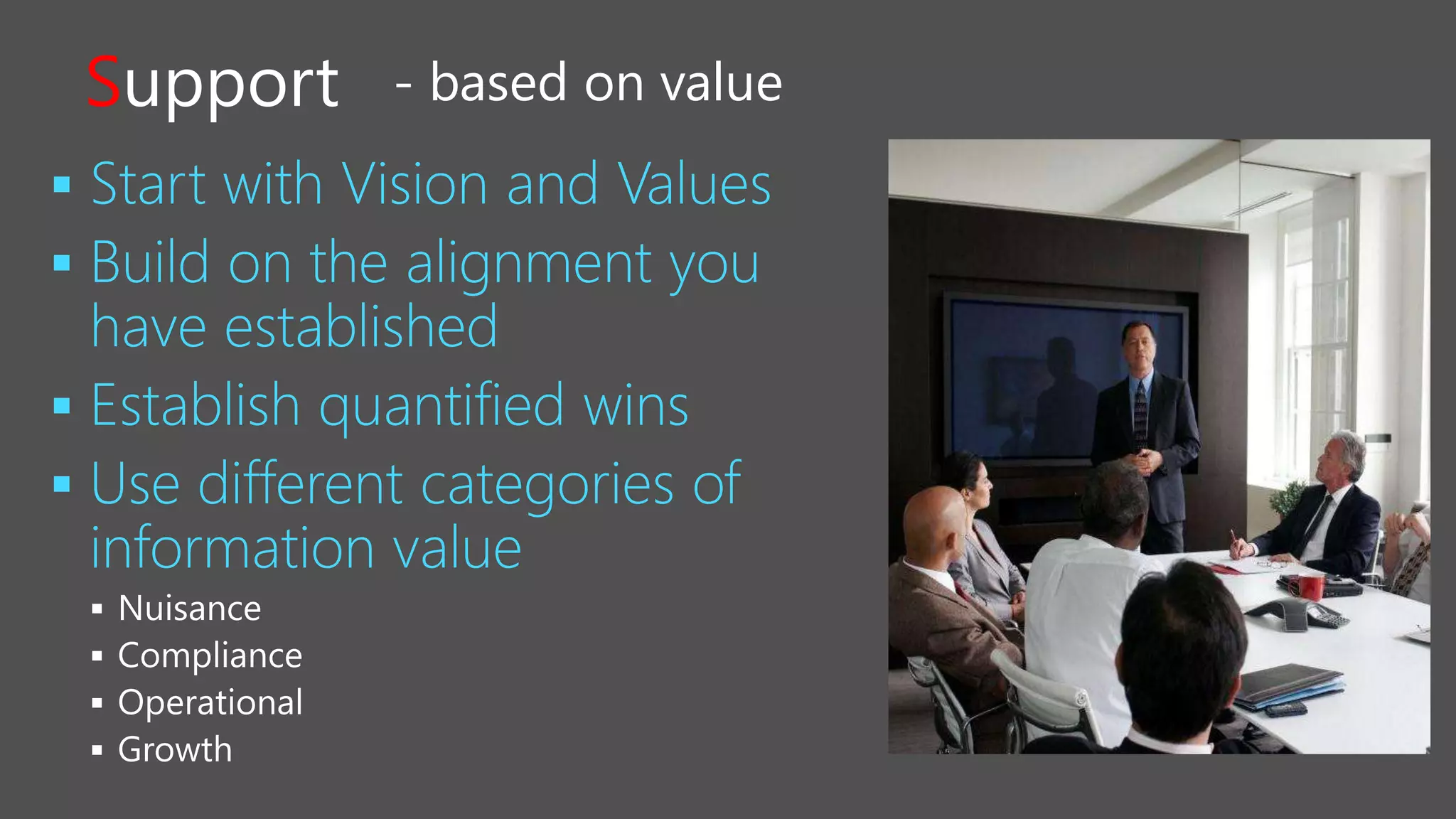
  • #17 Executive-level buy-in is crucial Start with vision and values Establish quantified wins; “We just saved $1M in legal costs” Build on the alignment you have established Add “New Business” and “Risk Management” to the vocabulary Different categories of information value Nuisance Compliance – mandated to keep Operational Growth
  • #18 SAFE: support the delivery of safe, accurate and predictable systems – operational, familiar to IT FAST: deliver faster results, more freedom of choice and more insightful interactions, growth, where business may be going around IT Very hard to do both
  • #19 Start with the business imperative Describe strategy as projects, not policies BAD example: “The risks relating to information resources will be identified, with appropriate levels of management applied”. GOOD example: “A content inventory project will be done next, detailing what exists today and rating the value, opportunity, and risk of each source” Use patterns Look at Growth & Operational categories for opportunity, compliance for risk Value of Content can be related to what the content is about: employee, product, customer, financial, asset, ….. Use sub-strategies Functional or Vertical strategies make for clarity and manageable projects
  • #20 Converting from paper to digital, if not already done, is an obvious target. If done already, can use it as a visible success story
  • #21 Strategy is more about vision than analysis Avoid the ‘complete analysis of strategic options’ trap…. Can’t predict, but can anticipate surprises “Visible wins” come in project form Common ‘early wins’: Content Inventory, portal supporting new initiative, ‘surgical’ information quality project, search-driven application, paper conversion Expect priorities to change In a tight economy, process efficiency and automation tend to get priority Innovation, Customer Loyalty, or innovation can take the front seat in growth situations
  • #23 Strategy is a framework Governance should relate to strategy Projects may focus on enabling infrastructure, life cycle, metrics Market/Evangelize continually Use “Relate” as a reminder to connect the dots Relate Infrastructure to Strategy Cloud infrastructure is strategic
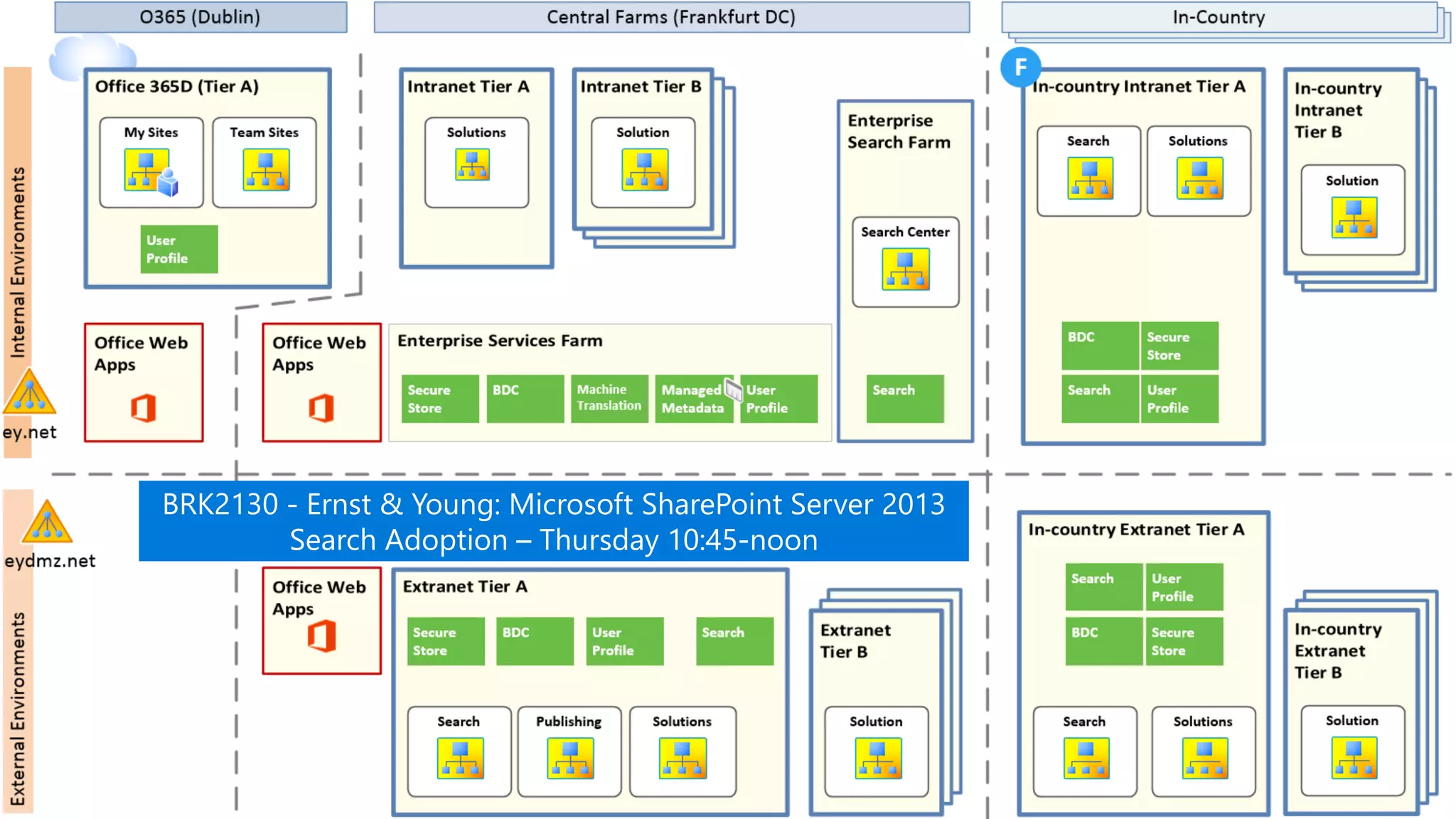
  • #24 Notes O365 80% of workload Central Internal Provides services to other environments (yellow arrows) Extranet In general, parallel architecture to Central In-country Deployed based on need Internal and extranet options
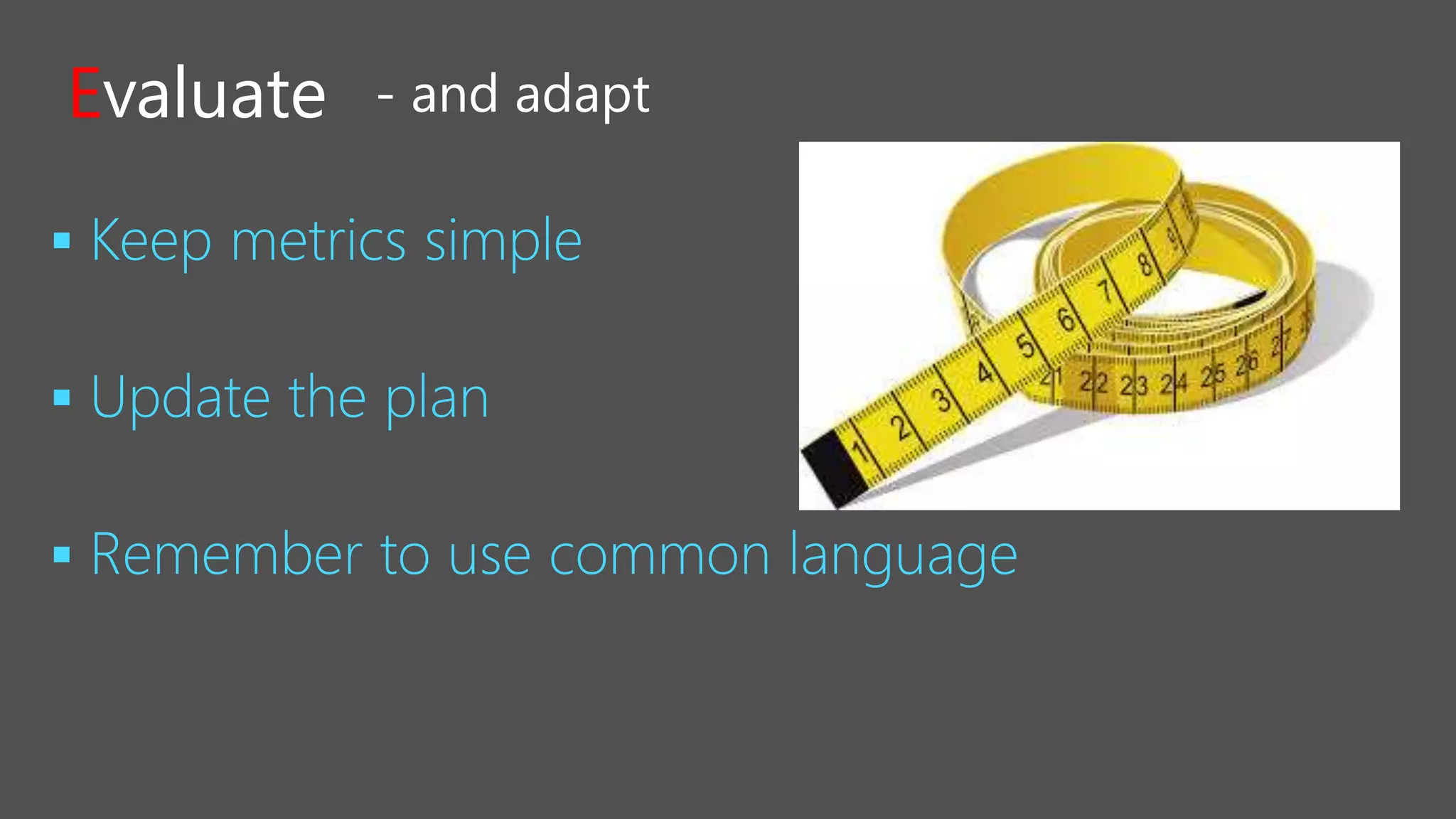
  • #25 Keep metrics simple Information quality is more measurable than you may think – for example # of copies on average or % with no metadata Governance programs will define a handful of key metrics; use them Update the plan Project priorities will change over time Use updates to reinforce the strategy Remember to use common language
  • #26 Align: to your business driver(s) Support: based on ROI + expanded capabilities Publish: clearly and often Iterate: in small projects Relate: to your infrastructure Evaluate: and adapt
  • #27 Classic illustration of the idea – as information grows it actually decreases in value unless you have effective information management and search
  • #28 Search is key to information strategy But is a subset Many parallels across structure and unstructured…. Master data management and metadata management Data Strategy & Information Architecture
  • #30 Iterate
  • #32 Going from 19 systems to 5 Connectors to creat unified indiex Standardized metadata using autoclassification
  • #37 Begin with the end in mind
  • #39 Jan – business folks – comfy with intuitive thinking My father – military folks – got long range planning (perhaps that was his lense) IT – operational and scientific mindset – intuitive seems airy/fairy, long range planning is analysis paralysis
  • #40 Non-linear – can’t analyze everything Much more about vision and communication than analysis anyway
  • #41 Great examples in case studies of substrategies and publishing often Physicians – more effective with good information Patient information access Public health and flu information 12,000 people moved to private cloud in 10 months
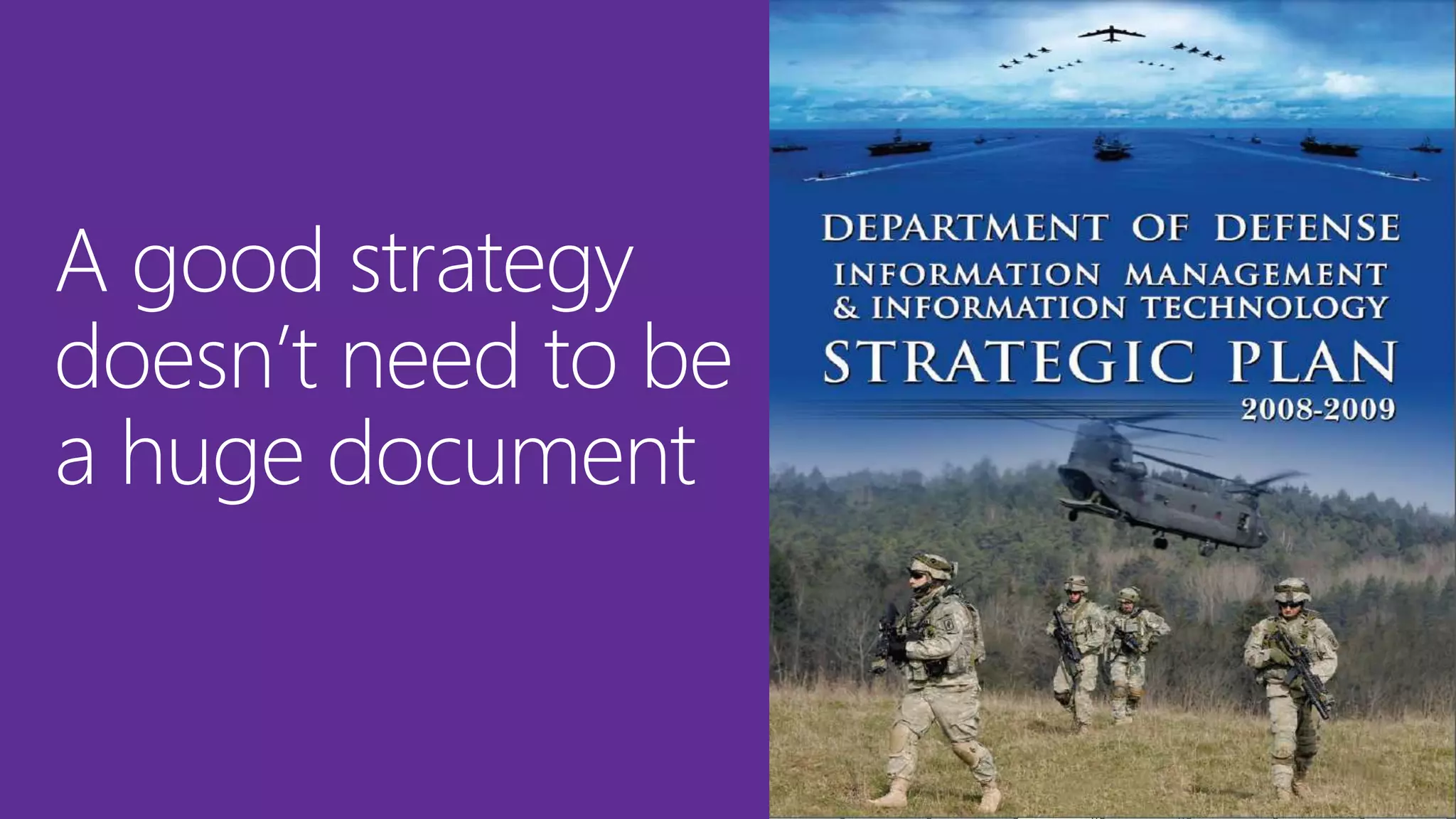
  • #42 454 pages – well planned, well written completely inappropriate for most organizations Source of fear and analysis paralysis
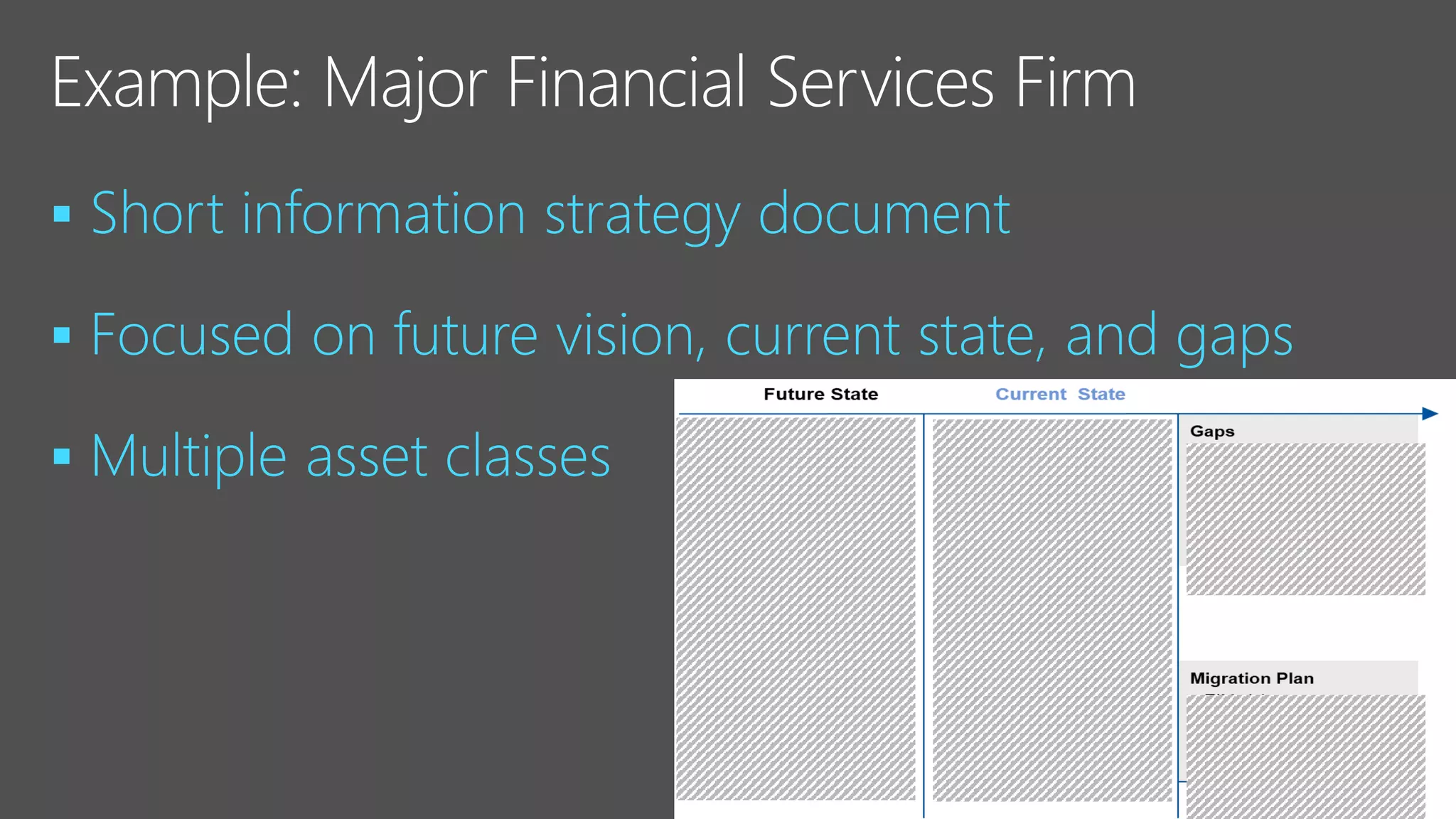
  • #43 Can’t use name but great example - 20 slide powerpoint kept to the idea of strategy as approach to move from here to where you want to be Natural to look at information asset classes the way they look at financial asset classes used nuisance, compliance, operation, growth categories Office 365 gives them multiple opportunities, ID’d 20 projects and started 3: Content audit Customer information personalized extranet (wealth management) Search application for wire fraud investigations
  • #44 Pattern From gartner information strategy cookbook
  • #45 Examples hit all of these
  • #48 What is the same: Still need to establish: Value of information Tie to business strategy and initiatives Cultural fit Still more people than technology Roles & Individuals Executive buy-in and backing Organizational change management Still same infrastructure questions What systems do you need to run your business What should be consolidated/migrated/dropped What is different: More & Faster Volume, Variety, Velocity of Information Cycle Time/Agility of Business Spectrum of collaboration tools/styles New Models Can outsource/leverage - {Sa, Ia, Pa}aS Business networks & Internet models New types of security threat Higher User expectations Mobility “Consumerization of IT”
  • #49 Tata Communications research came out in March including finding that 83 percent of executives report benefits they did not expect to see. This recent research out of Tata Communications (march 2015) has found that 85 percent say cloud had “lived up to industry hype.”  For example, 25 percent say they unexpectedly experienced improved communications within their organizations. Another 22 percent report increased revenues they did not anticipate, and 22 percent say they experienced greater customer satisfaction — again, not part of the original plan. It’s also notable that 21 percent say cloud has actually delivered improved security.
  • #51 CFO got flowers…from Salesforce saying “congratulations for passing 500 seats”. He said “I didn’t know we had Salesforce”. Gartner report: I can get access to you, reach out to me. “throw your room key under my door”
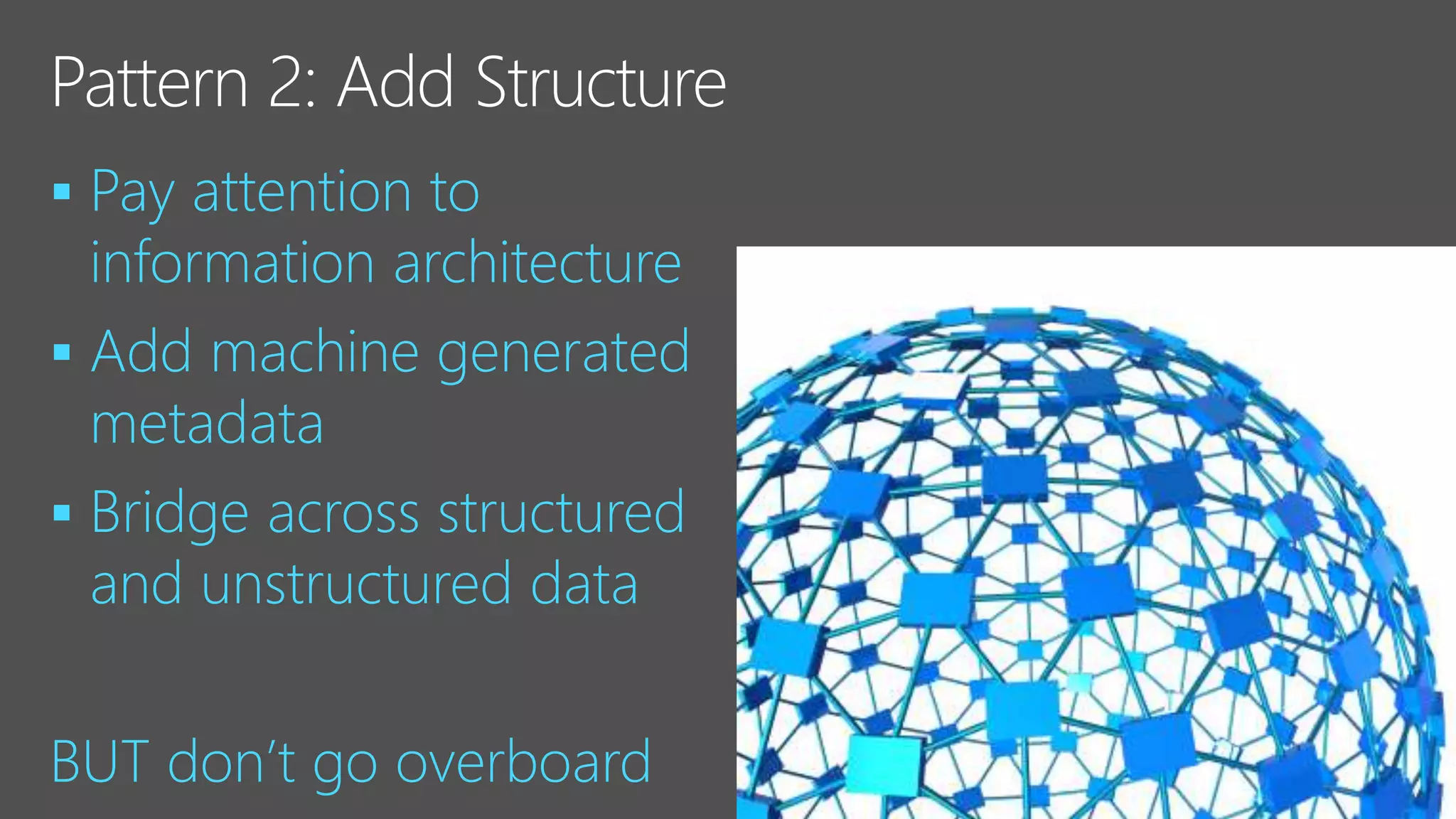
  • #52 Big data topical, which is an opportunity for you to reinforce the “v”s. In some organizations, there is a new role of Chief data officer, or talk of Infonomics Reinforce this in your vision statements more organizations reaching the conclusion that the information should be managed as one of the main assets of the company contributes both to identify opportunities and to reduce business risks. Volume: BIG DATA (Petabytes are the new Gigabyte) 8,000 Exabyte's by 2015 Source: IDC Velocity: Creation, Consumption Every two days now we create as much information as we did from the dawn of civilization up until 2003 Eric Schmidt (Former CEO of Google) Variety: Data stored in Silos 90% of data by 2015 will be unstructured Source: IDC Value: Competitive Differentiator 1 in 3 business leaders don’t trust the information they use to make decisions Source: IBM
  • #55 Matt Varney from KCTCS 41 campuses, over 100,000 students Allowed them to do something they could not of otherwise.
  • #56 Reference to second screen – Ask how many are using it Apps for everyone?
  • #57 It’s a tsunami, you can’t stop it, but you can surf it.