What is this buzz word “SharePoint”November 19th2009Tim CermakSenior Portfolio AdvisorAdvisicon, Inc.Tim.cermak@advisicon.com
Who am I?Tim Cermak, PMPSenior Portfolio Advisor, Advisicon(Volunteer: Director of Virtual Campuses for PMI College of Scheduling, Gantthead.com SME)WhatEnterprise Project Management Technology Applications
Strategic Planning & Enterprise Portfolio ManagementWhyResults are measurable and people and processes are better in a projectized environmentHowKnowledge Transfer
Scheduling: “Scheduling Done Right Makes Management Simple”
Competency development  is critical
Integrating Carbon and Silicon
Optimization
Right balance of ingredients
Streamline creativity
Sustainability
Culture, Methodology and TechnologyAgendaSituation and DemandLook Back – Look AheadOnly Knowledge and Ideas Need Apply HereProject & Portfolio Management ProcessesOpen Forum (ALL)
Is Technology the Answer... ?Can You Fly This Airplane ....A fool with a tool ...... is still a fool !
Getting Things Done Through PeopleManual vs. Knowledge Workers Manual workers obviously work primarily with their hands, bodies and muscles; they create physical (hardware) products, operate machines and use physical tools.
 Knowledge workers primarily use their minds rather than their hands; they create non-physical (software) products, such as ideas, data, information, reports, designs, plans; their product comes out of their mouths or through a pen.Russell D. Archibald:  PLANNING, SCHEDULING AND CONTROLLING THE EFFORTS OF KNOWLEDGE WORKERSOur attempts to plan and schedule the efforts of knowledge workers frequently are not very successful.  We have all heard the painful reaction of our fellow knowledge workers:"You can't schedule creativity:""I don't have time to plan - I have to get some work done!""Too much paperwork''"Good idea for all the others, but not for me; I'm different""You don't understand our problems".Russell D. Archibald:  PLANNING, SCHEDULING AND CONTROLLING THE EFFORTS OF KNOWLEDGE WORKERSToo much emphasis is placed on instant response to any question, however tangential it may be.Memo:  Ford Motor CompanySubordinates at every level usually are eager to impress and please their superiors and in doing so may go well beyond levels of response and service required for effective operationsMemo:  Ford Motor Company
Executives Agree - Time to embrace innovationExecutives now firmly believe that innovation is central to a company's strategy and performance, but getting it right is as hard as ever, according to a recent McKinsey Global Survey. Some 70 % of corporate leaders say innovation is among their top three priorities for driving growth. Improve business performance
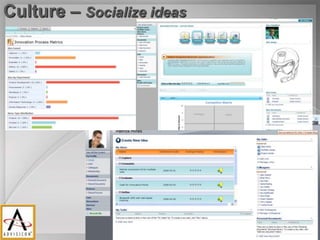
Create a culture of innovation
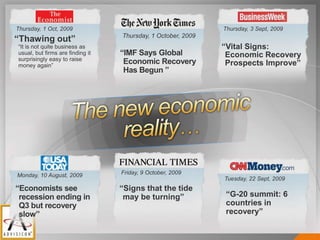
Invest in innovationDo we need innovation? Let’s consider the Big 3…
More, More MORE! –Can we innovate and use less?"These challenging times present IT leaders with an opportunity to make technology work harder and smarter to get the job done," Nancy Gofus, Verizon's senior vice president of global business products, said in a statementMIT Sloan Prof. Erik Brynjolfsson, director of the Center for eBusiness at MIT Sloan.According to Brynjolfsson, business has often had a long learning curve on how to fully utilize new technologies. “A century ago, an exciting new technology called electricity was just being introduced,” he said. “But by itself, electricity did nothing for productivity. It took decades for firms to figure out how to redesign their factories and processes to deliver a productivity payoff.” “But today, managers cannot afford to wait decades to harness the potential for greater productivity from much faster, exponential improvements in information technology. The companies that succeed will be the ones that understand the importance of combining the digital organization with digital technologies.”
Intranet 2.0 -- Enterprise Collaberation According to Forrester’s Enterprise and SMB Software Survey, Q3 2007, nearly 65% of organizations in North American and Europe will invest in team collaboration software in 2008. Consumer and user-centered technologies are experiencing "grass-roots" adoption in enterprises where they are empowering information workers, giving them more control over content creation, sharing and dissemination. Wikis, blogs, podcasts and instant messaging have become staples in many enterprises, especially as marketing tools or as means of communicating with customers, prospects, employees and partners. Wikis and blogs enable content creation, but can users manage content with them?Magic Quadrant for Enterprise Content Management  23 September 2008…all this content creation and sharing typically happens outside any formal content management strategy. Organizations should take advantage of evolving, richer user interfaces and tools for content creation, consumption and multichannel outputMagic Quadrant for Enterprise Content Management  23 September 2008
What is this ‘SharePoint’ stuff?By the end of 2007, 75% of all U.S. businesses will have at least tried out Microsoft SharePoint 2007. Bill Gates, delivering a keynote address Monday in Seattle at the company's Office SharePoint Conference 2008. SharePoint is "based on a vision of letting workers share information in a better way.” InformationWeek March 3, 2008 SharePoint can provide 80% of some businesses' needs straight out of the box with no customization.
Back to Basics to Integrate & StreamlineCulture, Methodology and TechnologyWhat’s the Secret Sauce?
Looking Back -- Shaped by illustrations Cave writing:  Abstract thought and the Genus Homo
 Air Writing: Abstract thought and the Program Manager?Looking Back -- Shaped by tools 1600’s:  Binary Code
 Mid 20th Century: The UNIVAC
 Late 20th Century: Personal PC
 Look Ahead:  Thin AirLooking Back -- Shaped by a vision and collaboration ~5000 BC Strategy planning:  Sun Tzu.
 ~2000 BC Resource planning: The Pyramids.
 20th Century: Interdependencies and charts (Gantt Charts).
 Look Ahead:  Global Resource pool.PROJECT MANAGEMENTEvolution of CollaborationResourceManagementFinancialManagementBusiness Process & FormsBusiness IntelligenceCOLLABORATIONPortfolio ManagementEnterprise Content ManagementCollaborationSearchCollaborativeWorkspacesPortalProgram ManagementReporting
Strike the Right Balance in Varying EconomiesSuccessful Companies will lay the Foundation for GrowthDrive GrowthEnhance EfficiencyReduce Costs

Sp Dynamics V1 Nov2009

  • 1.
    What is thisbuzz word “SharePoint”November 19th2009Tim CermakSenior Portfolio AdvisorAdvisicon, Inc.Tim.cermak@advisicon.com
  • 2.
    Who am I?TimCermak, PMPSenior Portfolio Advisor, Advisicon(Volunteer: Director of Virtual Campuses for PMI College of Scheduling, Gantthead.com SME)WhatEnterprise Project Management Technology Applications
  • 3.
    Strategic Planning &Enterprise Portfolio ManagementWhyResults are measurable and people and processes are better in a projectized environmentHowKnowledge Transfer
  • 4.
    Scheduling: “Scheduling DoneRight Makes Management Simple”
  • 5.
  • 6.
  • 7.
  • 8.
    Right balance ofingredients
  • 9.
  • 10.
  • 11.
    Culture, Methodology andTechnologyAgendaSituation and DemandLook Back – Look AheadOnly Knowledge and Ideas Need Apply HereProject & Portfolio Management ProcessesOpen Forum (ALL)
  • 12.
    Is Technology theAnswer... ?Can You Fly This Airplane ....A fool with a tool ...... is still a fool !
  • 13.
    Getting Things DoneThrough PeopleManual vs. Knowledge Workers Manual workers obviously work primarily with their hands, bodies and muscles; they create physical (hardware) products, operate machines and use physical tools.
  • 14.
    Knowledge workersprimarily use their minds rather than their hands; they create non-physical (software) products, such as ideas, data, information, reports, designs, plans; their product comes out of their mouths or through a pen.Russell D. Archibald: PLANNING, SCHEDULING AND CONTROLLING THE EFFORTS OF KNOWLEDGE WORKERSOur attempts to plan and schedule the efforts of knowledge workers frequently are not very successful. We have all heard the painful reaction of our fellow knowledge workers:"You can't schedule creativity:""I don't have time to plan - I have to get some work done!""Too much paperwork''"Good idea for all the others, but not for me; I'm different""You don't understand our problems".Russell D. Archibald: PLANNING, SCHEDULING AND CONTROLLING THE EFFORTS OF KNOWLEDGE WORKERSToo much emphasis is placed on instant response to any question, however tangential it may be.Memo: Ford Motor CompanySubordinates at every level usually are eager to impress and please their superiors and in doing so may go well beyond levels of response and service required for effective operationsMemo: Ford Motor Company
  • 15.
    Executives Agree -Time to embrace innovationExecutives now firmly believe that innovation is central to a company's strategy and performance, but getting it right is as hard as ever, according to a recent McKinsey Global Survey. Some 70 % of corporate leaders say innovation is among their top three priorities for driving growth. Improve business performance
  • 16.
    Create a cultureof innovation
  • 17.
    Invest in innovationDowe need innovation? Let’s consider the Big 3…
  • 18.
    More, More MORE!–Can we innovate and use less?"These challenging times present IT leaders with an opportunity to make technology work harder and smarter to get the job done," Nancy Gofus, Verizon's senior vice president of global business products, said in a statementMIT Sloan Prof. Erik Brynjolfsson, director of the Center for eBusiness at MIT Sloan.According to Brynjolfsson, business has often had a long learning curve on how to fully utilize new technologies. “A century ago, an exciting new technology called electricity was just being introduced,” he said. “But by itself, electricity did nothing for productivity. It took decades for firms to figure out how to redesign their factories and processes to deliver a productivity payoff.” “But today, managers cannot afford to wait decades to harness the potential for greater productivity from much faster, exponential improvements in information technology. The companies that succeed will be the ones that understand the importance of combining the digital organization with digital technologies.”
  • 19.
    Intranet 2.0 --Enterprise Collaberation According to Forrester’s Enterprise and SMB Software Survey, Q3 2007, nearly 65% of organizations in North American and Europe will invest in team collaboration software in 2008. Consumer and user-centered technologies are experiencing "grass-roots" adoption in enterprises where they are empowering information workers, giving them more control over content creation, sharing and dissemination. Wikis, blogs, podcasts and instant messaging have become staples in many enterprises, especially as marketing tools or as means of communicating with customers, prospects, employees and partners. Wikis and blogs enable content creation, but can users manage content with them?Magic Quadrant for Enterprise Content Management 23 September 2008…all this content creation and sharing typically happens outside any formal content management strategy. Organizations should take advantage of evolving, richer user interfaces and tools for content creation, consumption and multichannel outputMagic Quadrant for Enterprise Content Management 23 September 2008
  • 20.
    What is this‘SharePoint’ stuff?By the end of 2007, 75% of all U.S. businesses will have at least tried out Microsoft SharePoint 2007. Bill Gates, delivering a keynote address Monday in Seattle at the company's Office SharePoint Conference 2008. SharePoint is "based on a vision of letting workers share information in a better way.” InformationWeek March 3, 2008 SharePoint can provide 80% of some businesses' needs straight out of the box with no customization.
  • 21.
    Back to Basicsto Integrate & StreamlineCulture, Methodology and TechnologyWhat’s the Secret Sauce?
  • 22.
    Looking Back --Shaped by illustrations Cave writing: Abstract thought and the Genus Homo
  • 23.
    Air Writing:Abstract thought and the Program Manager?Looking Back -- Shaped by tools 1600’s: Binary Code
  • 24.
    Mid 20thCentury: The UNIVAC
  • 25.
    Late 20thCentury: Personal PC
  • 26.
    Look Ahead: Thin AirLooking Back -- Shaped by a vision and collaboration ~5000 BC Strategy planning: Sun Tzu.
  • 27.
    ~2000 BCResource planning: The Pyramids.
  • 28.
    20th Century:Interdependencies and charts (Gantt Charts).
  • 29.
    Look Ahead: Global Resource pool.PROJECT MANAGEMENTEvolution of CollaborationResourceManagementFinancialManagementBusiness Process & FormsBusiness IntelligenceCOLLABORATIONPortfolio ManagementEnterprise Content ManagementCollaborationSearchCollaborativeWorkspacesPortalProgram ManagementReporting
  • 30.
    Strike the RightBalance in Varying EconomiesSuccessful Companies will lay the Foundation for GrowthDrive GrowthEnhance EfficiencyReduce Costs

Editor's Notes

  • #6 PLANNING, SCHEDULING AND CONTROLLINGTHE EFFORTS OF KNOWLEDGE WORKERSRussell D. ArchibaldSeminar inAdvanced Project Management ConceptsCo-Sponsored byThe School of Industrial & Systems EngineeringGeorgia Institute of TechnologyandThe Project Management InstituteOctober 9-10, 1969Atlanta, Georgia**********************************One common characteristic of projects is that they utilize many different types of human skills. Inthinking about these skills, we can make one key differentiation, between manual workers or skills, andknowledge workers or skills:Granted, manual workers use knowledge in their work, and in many cases are more intelligent thanknowledge workers. I wish to use the above differentiation (for which I am indebted to Peter Drucker, asa matter of fact, for pointing out this fundamental difference in his book, “The Effective Executive”), forour discussion purposes, and hope that there is no derogatory inference in the definitions set forth.In most projects, we find that a much higher proportion of knowledge workers are involvedduring the earlier phases of the project, while in the final phases there may be a higher proportion ofmanual workers (if indeed the project uses any manual workers). The conceptualization, design,procurement, construction, commissioning, start-up and initial operation of a process plant is typical ofmany projects which use both types of workers. There will be no manual workers at the beginning, butseveral hundred during the construction phase. Knowledge workers will be involved throughout.IV. A RECOMMENDED APPROACHStudy the FunctionIn developing the new view which is needed, the first step would be to study the function ofplanning and scheduling the efforts of knowledge workers, with the following purposes:• To recognize the true nature of this function• To identify its primary characteristics• To identify the underlying human problemsDescribe the FunctionBased on the studies performed, describe this function and its basic characteristics in such a waythat all concerned will more fully understand its nature.Differentiate This Function From Manual Work Planning and SchedulingA prime objective of the study and description would be to differentiate it from manual workplanning and scheduling, so that an improved approach may be developed.Recognize and Promote the Professional Nature of This FunctionAs a result of the differentiation and separation from manual work planning and scheduling, wewill be able to recognize and effectively promote the professional nature of this function.*************************************************Ford Memo to Executive Vice Presidents, Vice Presidents and Division General Managers: Dated August 2, 1974: signed Lee A. Iacocca & Henry Ford II
  • #7 Improve business performanceEnhance alignment with business strategyDefine and prioritize business driversAlign selected portfolio with business strategyCreate a culture of innovationIncentivize employeesCreate an IMO officeDefine an innovation management processSelect supporting technologiesInvest in innovationInvest in many ideas in order to identify one disruptive productTake more risks!