Information Governance Denise Wood
Why should we care about Data Quality? Critical business asset that: Fuels decision making Supports collaboration Underpins innovation Why should I care….its an IT issue
How far have we come? Not a new issue 2001 Kennedy Report of the inquiry into child deaths and Bristol Royal Infirmary raised concerns over the role data quality played in the tragedy  Since then the audit commission has undertaken regular reviews of data quality in the UK NHS. The last review published in March 2009 found that across health providers accuracy of the minimum data set varies by up to 53%. Impact on Funding and Patients
Effects of Poor Data Quality in Health Symptoms include: Low confidence in relying on the data Impaired decision making Increase risk of adverse events Additional cost to resolve Lost funding/revenue
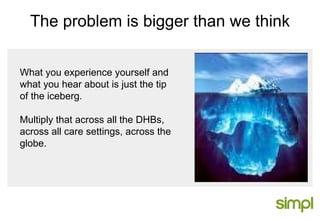
The problem is bigger than we think What you experience yourself and what you hear about is just the tip of the iceberg. Multiply that across all the DHBs, across all care settings, across the globe.
Toolkit In two parts Checklist review Data Quality Audit Benefits Simple to administer Provides clarity Assists in tactical planning Proactive vs Reactive
It covers more than IT People Whether staff are adequately inducted Ongoing training needs Policies and Procedures around confidentiality and disclosure
It covers more than IT Management Operational Governance Senior Executive Sponsorship Board level review Accountability Compliance is monitored
It covers more than IT Processes Creation Filing Retrieving Transmitting Security Deletion Validation
It covers more than IT Systems Controlled access Compliance with standards Security Policies for creation, retrieving and deletion of electronic records Completeness and Validity
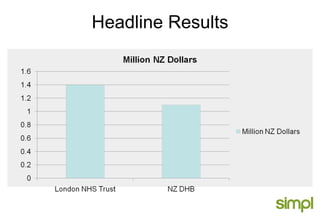
Headline Results
Lessons Learned Corporate Leadership is vital but only part of the solution. Data Quality is the responsibility of everyone within the organisation: one of the biggest factors is a lack of understanding among front line staff of the reasons for and the benefits of the information they are collecting. Information collected is too often seen as irrelevant to patient care and focussed on the needs of the centre rather than supporting frontline services. More proactive…..less reactive
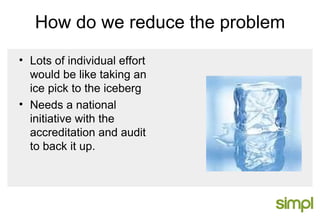
How do we reduce the problem Lots of individual effort would be like taking an ice pick to the iceberg Needs a national initiative with the accreditation and audit to back it up.

Information Governance

  • 1.
  • 2.
    Why should wecare about Data Quality? Critical business asset that: Fuels decision making Supports collaboration Underpins innovation Why should I care….its an IT issue
  • 3.
    How far havewe come? Not a new issue 2001 Kennedy Report of the inquiry into child deaths and Bristol Royal Infirmary raised concerns over the role data quality played in the tragedy Since then the audit commission has undertaken regular reviews of data quality in the UK NHS. The last review published in March 2009 found that across health providers accuracy of the minimum data set varies by up to 53%. Impact on Funding and Patients
  • 4.
    Effects of PoorData Quality in Health Symptoms include: Low confidence in relying on the data Impaired decision making Increase risk of adverse events Additional cost to resolve Lost funding/revenue
  • 5.
    The problem isbigger than we think What you experience yourself and what you hear about is just the tip of the iceberg. Multiply that across all the DHBs, across all care settings, across the globe.
  • 6.
    Toolkit In twoparts Checklist review Data Quality Audit Benefits Simple to administer Provides clarity Assists in tactical planning Proactive vs Reactive
  • 7.
    It covers morethan IT People Whether staff are adequately inducted Ongoing training needs Policies and Procedures around confidentiality and disclosure
  • 8.
    It covers morethan IT Management Operational Governance Senior Executive Sponsorship Board level review Accountability Compliance is monitored
  • 9.
    It covers morethan IT Processes Creation Filing Retrieving Transmitting Security Deletion Validation
  • 10.
    It covers morethan IT Systems Controlled access Compliance with standards Security Policies for creation, retrieving and deletion of electronic records Completeness and Validity
  • 11.
  • 12.
    Lessons Learned CorporateLeadership is vital but only part of the solution. Data Quality is the responsibility of everyone within the organisation: one of the biggest factors is a lack of understanding among front line staff of the reasons for and the benefits of the information they are collecting. Information collected is too often seen as irrelevant to patient care and focussed on the needs of the centre rather than supporting frontline services. More proactive…..less reactive
  • 13.
    How do wereduce the problem Lots of individual effort would be like taking an ice pick to the iceberg Needs a national initiative with the accreditation and audit to back it up.