Downloaded 17 times


The document discusses how artificial intelligence (AI) can address healthcare data security challenges and enhance patient trust, particularly through a case study from Johns Hopkins, which implemented a privacy analytics model. The findings demonstrate that AI can significantly reduce data breach response times and false-positive rates, leading to improved workflows and greater collaboration between privacy and security teams. Ultimately, the effective use of AI in managing privacy analytics can restore patient trust and transform healthcare data security practices.
Explores how AI can enhance healthcare data security, citing a case study from Johns Hopkins. Discusses common threats and the importance of privacy analytics.
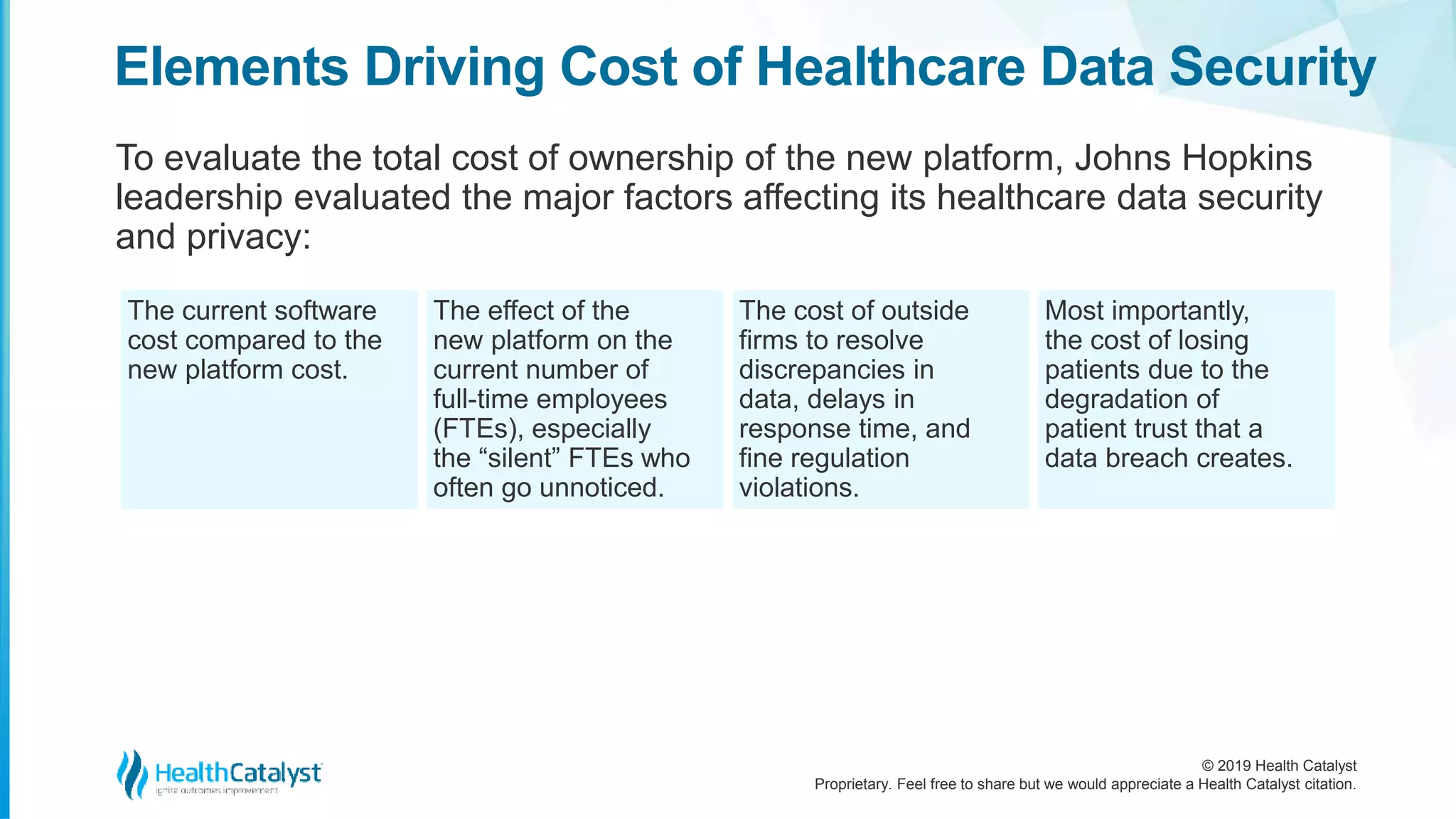
Highlights the critical role of patient trust in healthcare and its erosion due to increasing data breaches, emphasizing the detrimental impact on patient care.
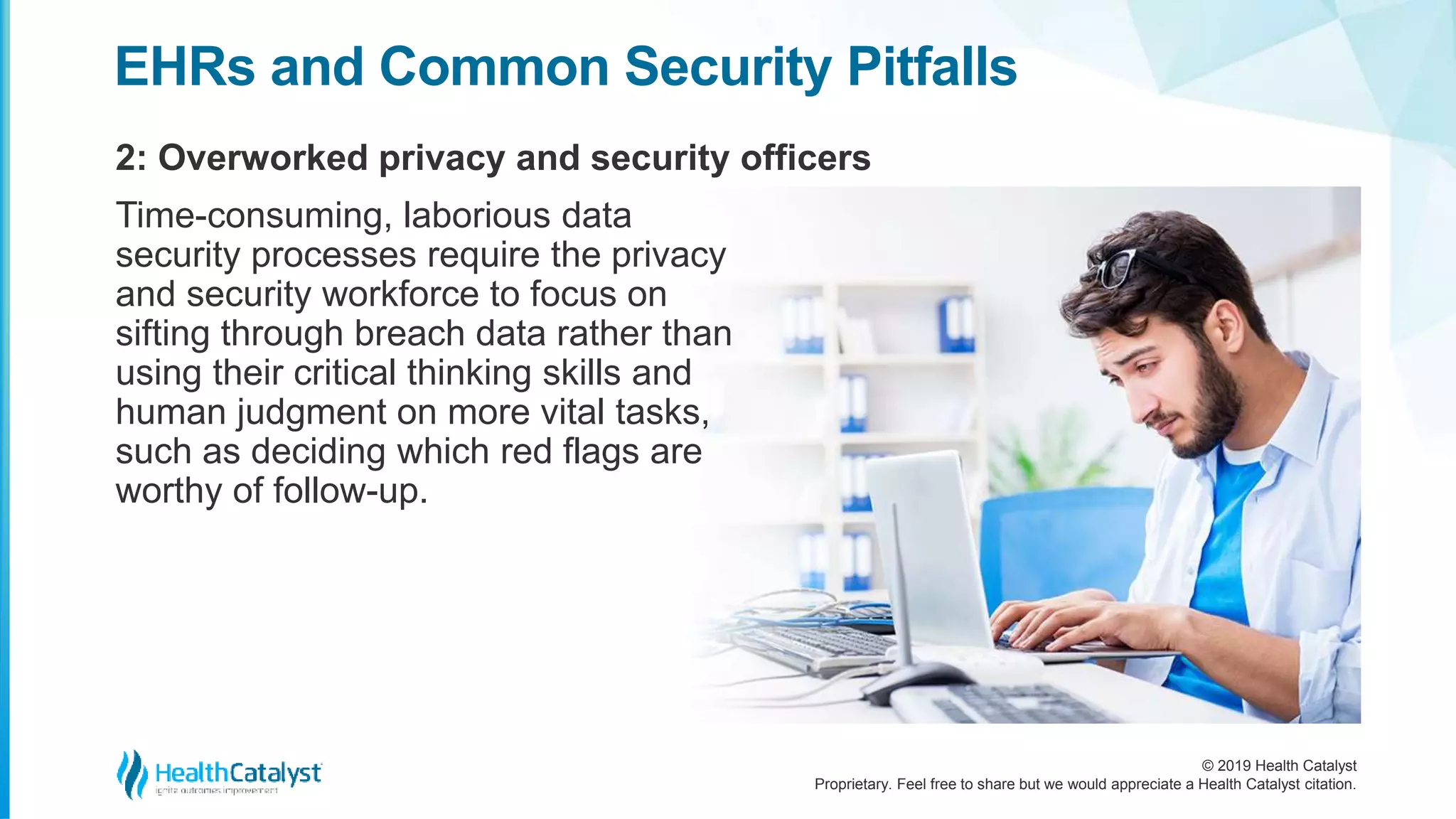
Details how most data breaches arise from employees rather than external hackers, and outlines common security pitfalls related to EHR systems.
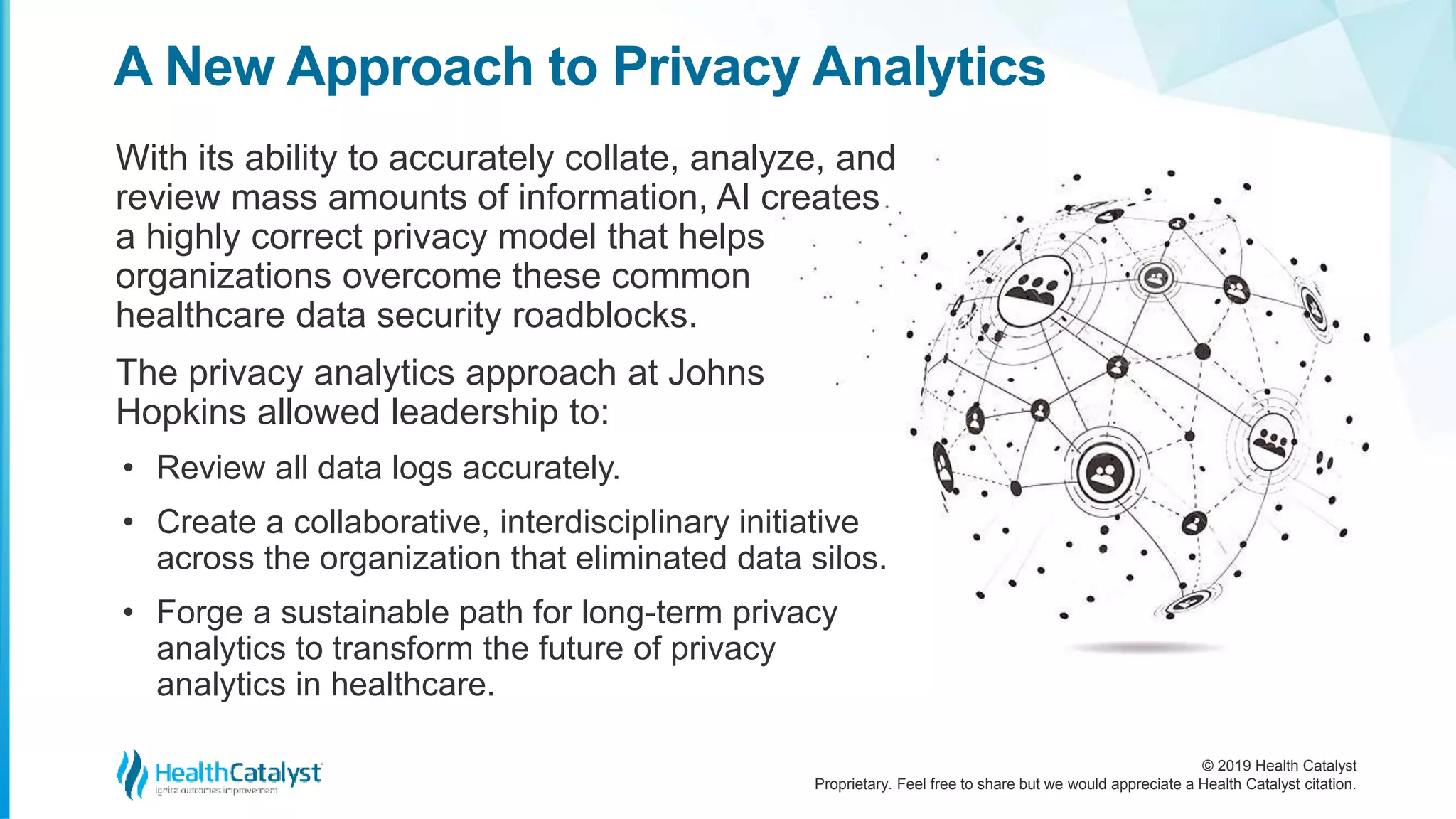
Describes Johns Hopkins' new privacy analytics model that improved security efficiency, reduced false positives, and streamlined investigations.
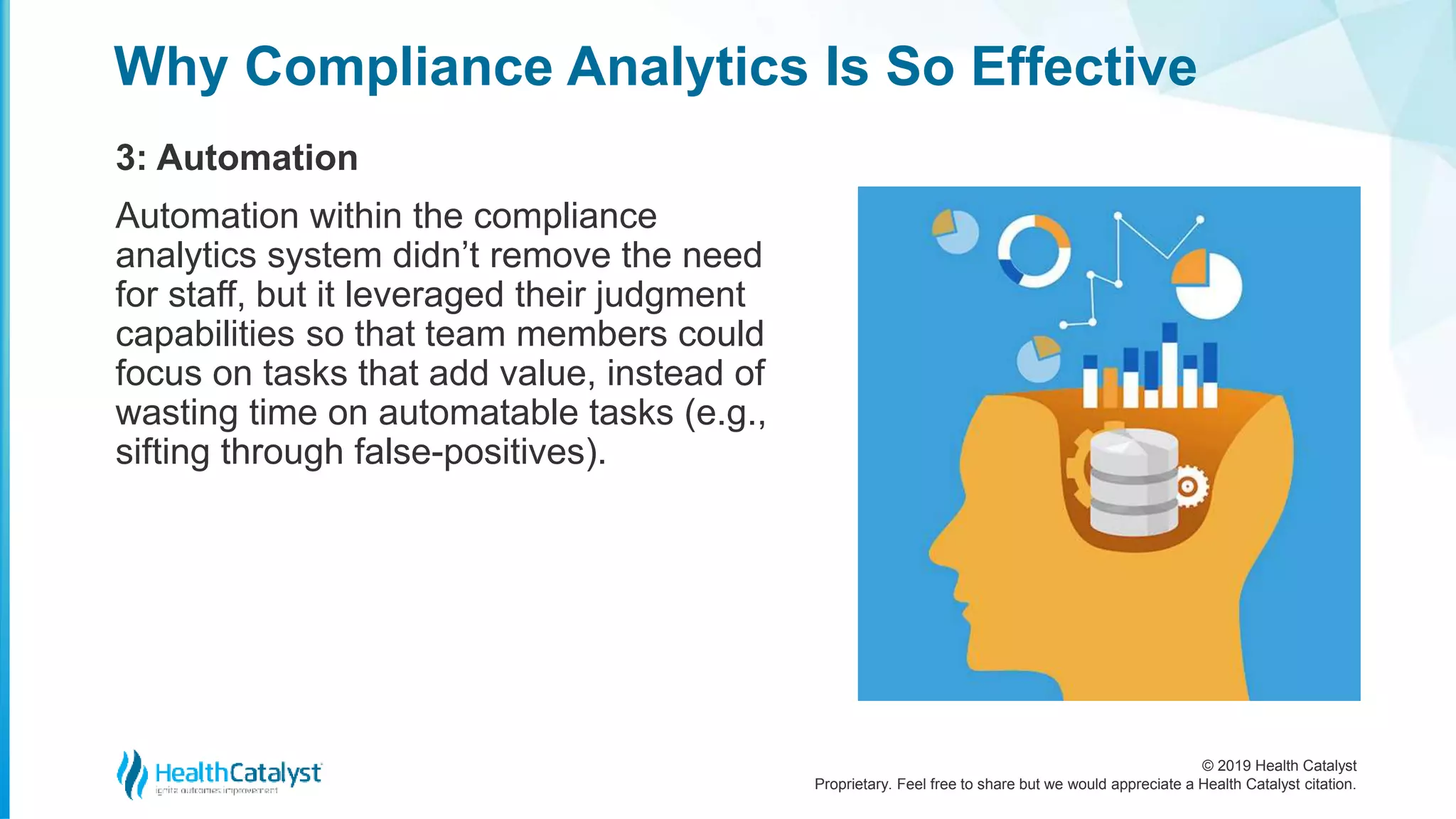
Examines how compliance analytics enhances workflow through scale, complexity handling, and automation, improving security management processes.
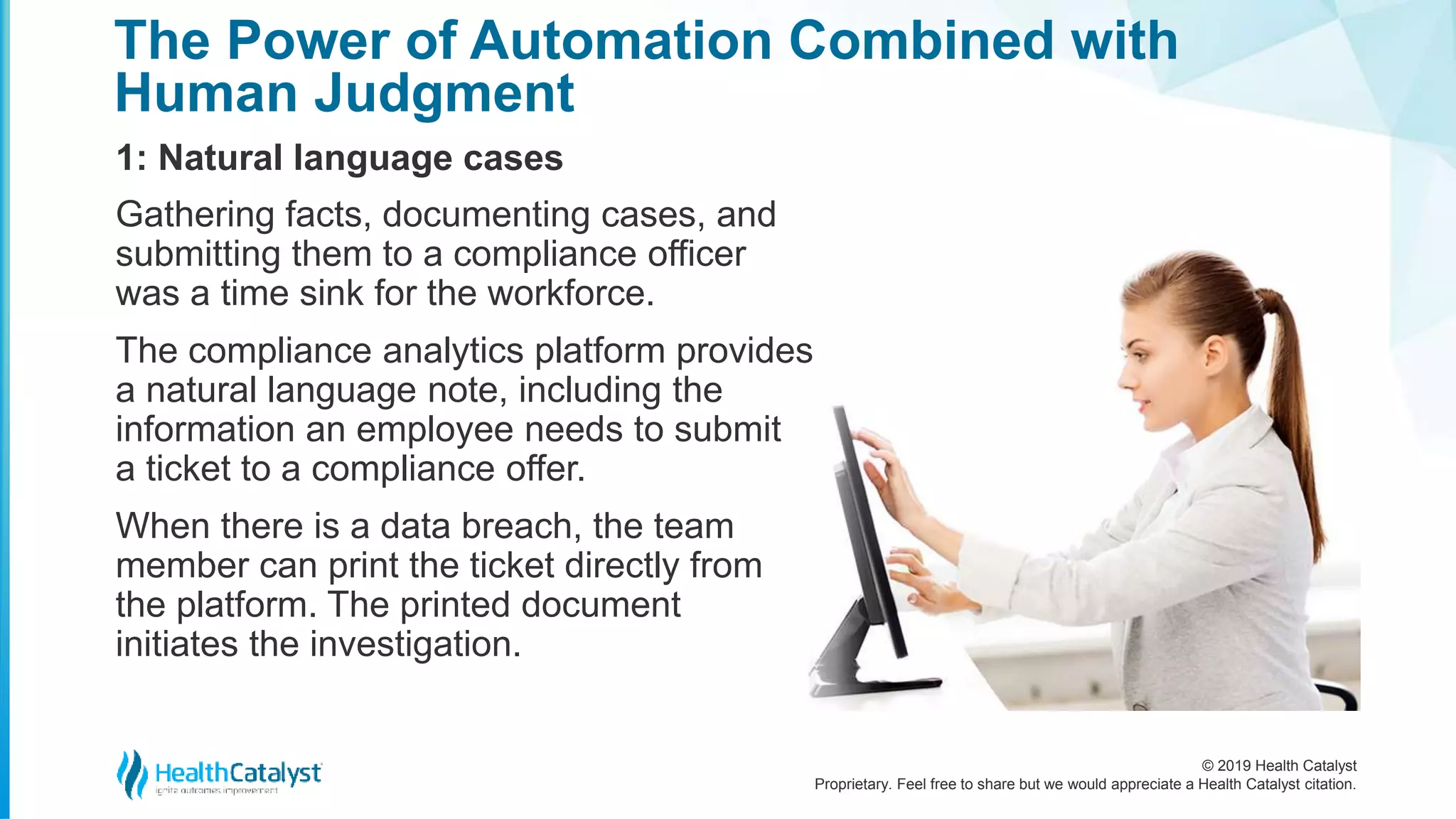
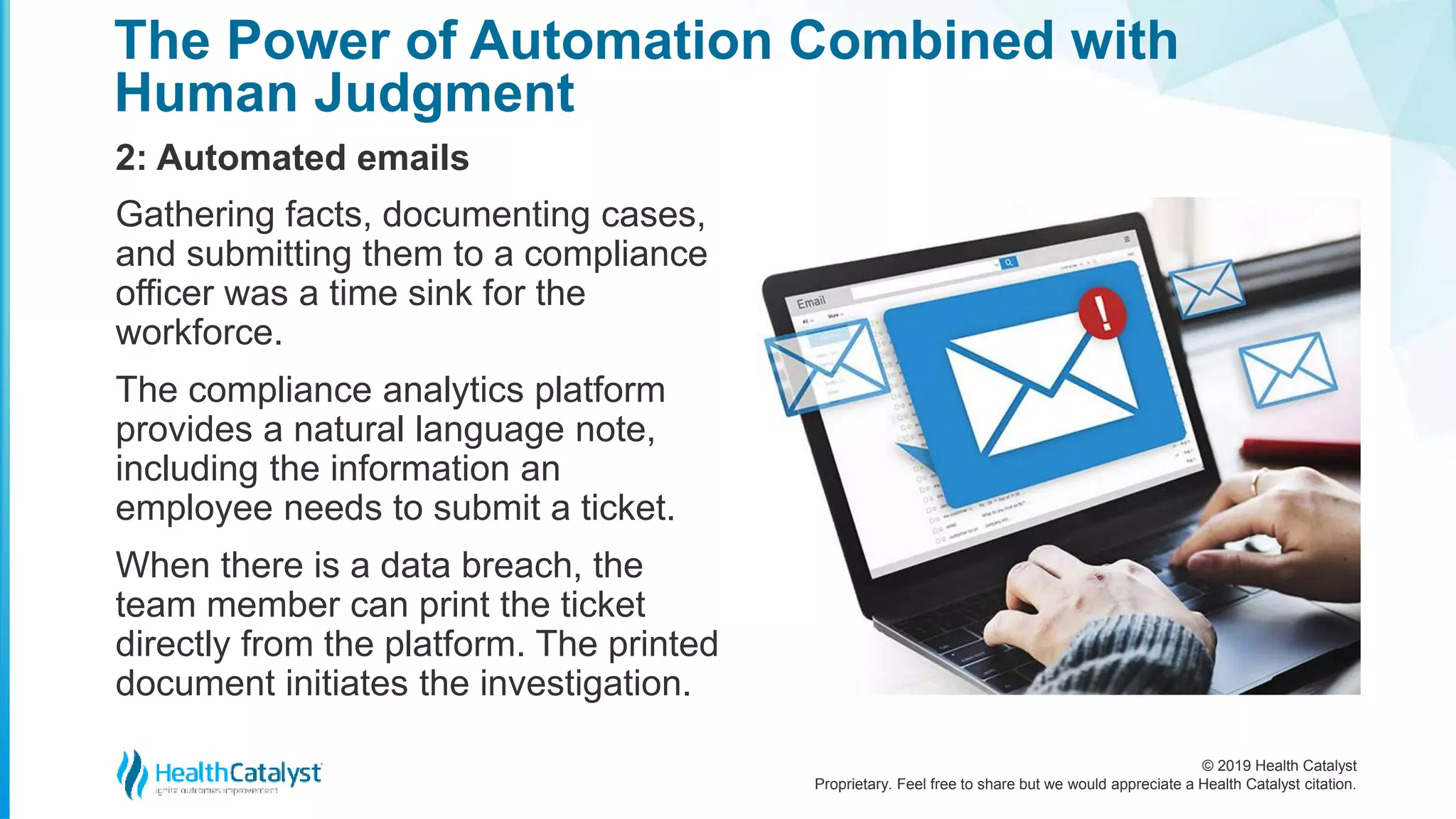
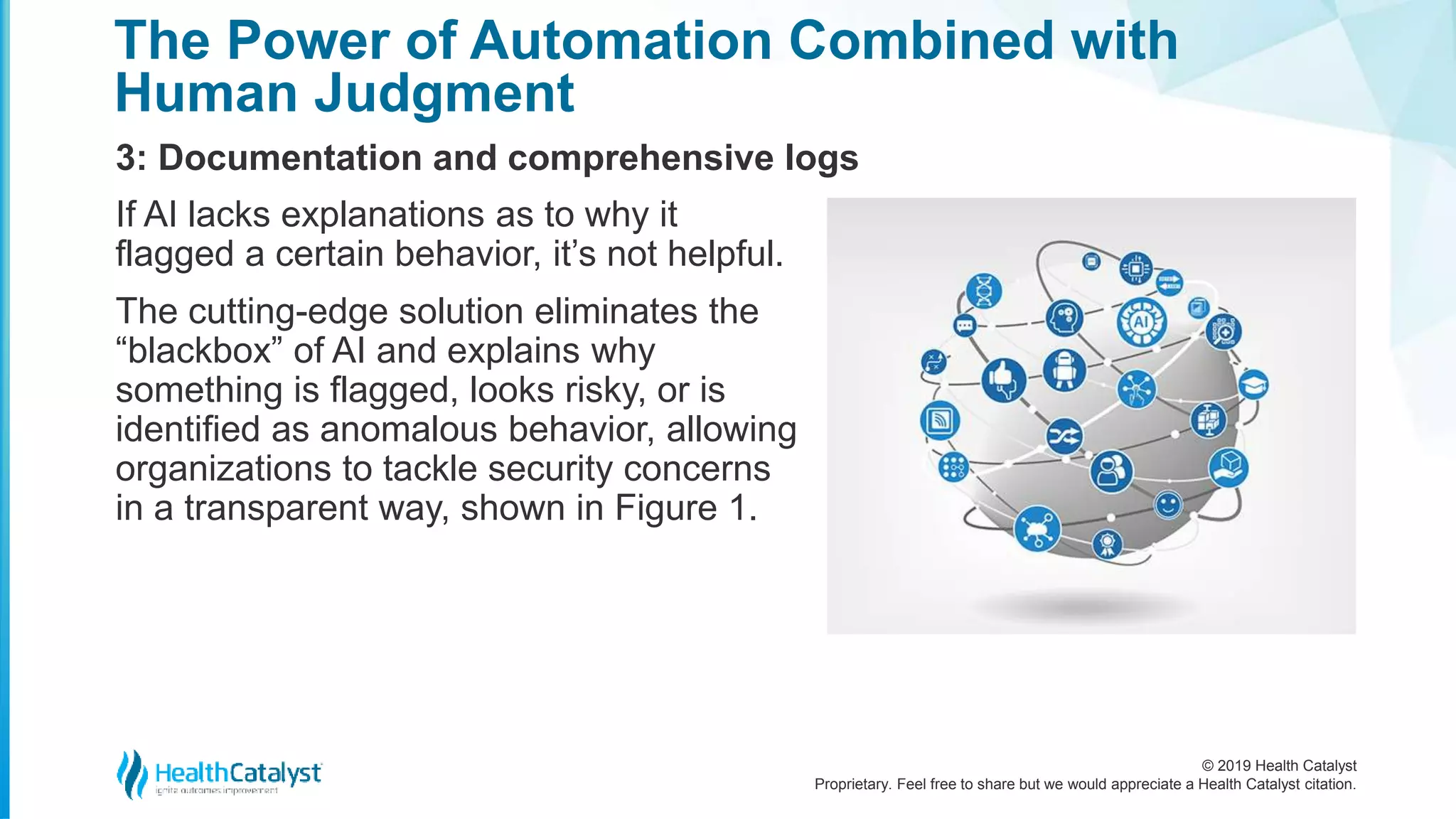
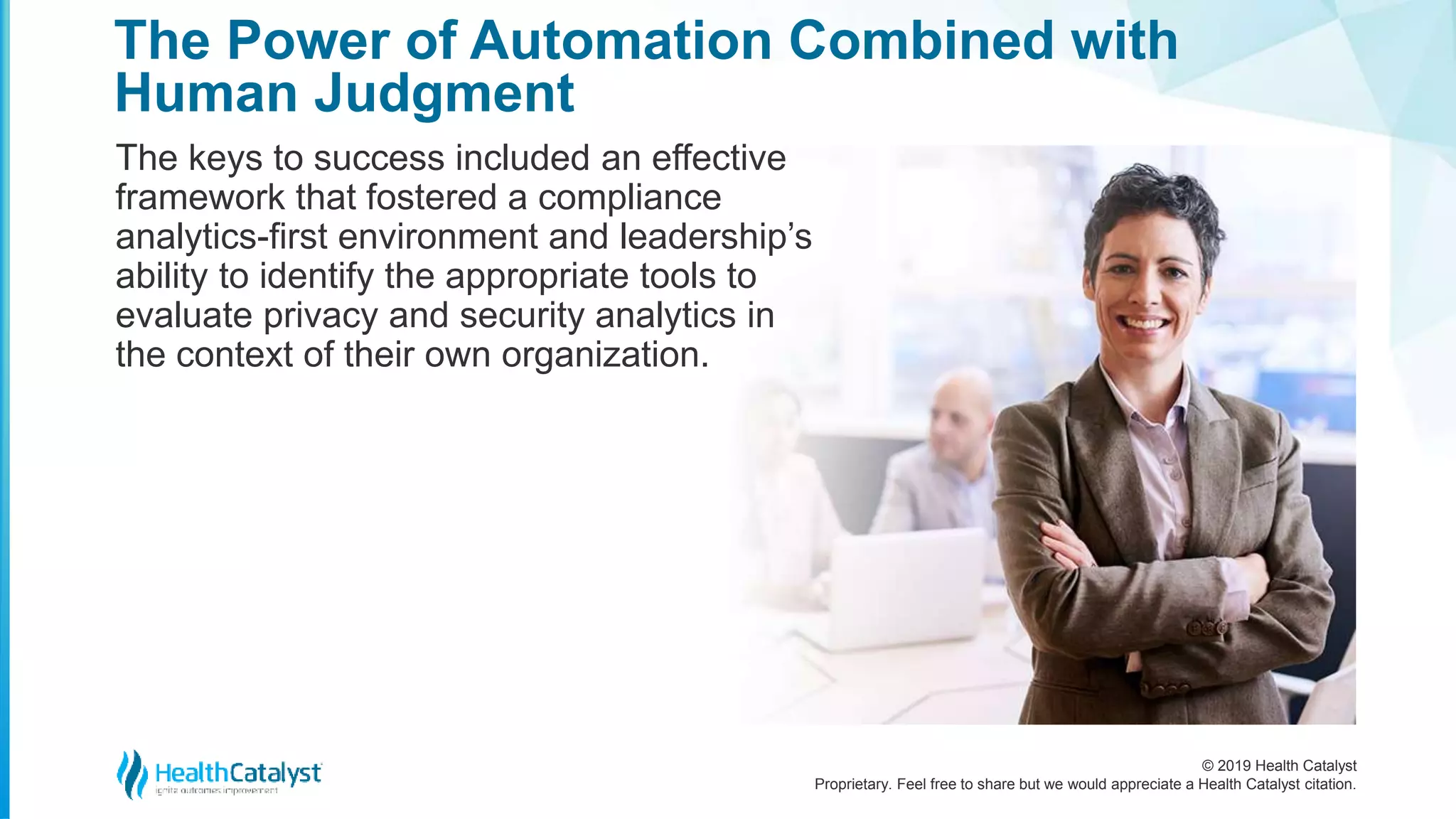
Discusses the synergy between automation and critical human judgment in healthcare security, leading to better decision-making and efficiency.
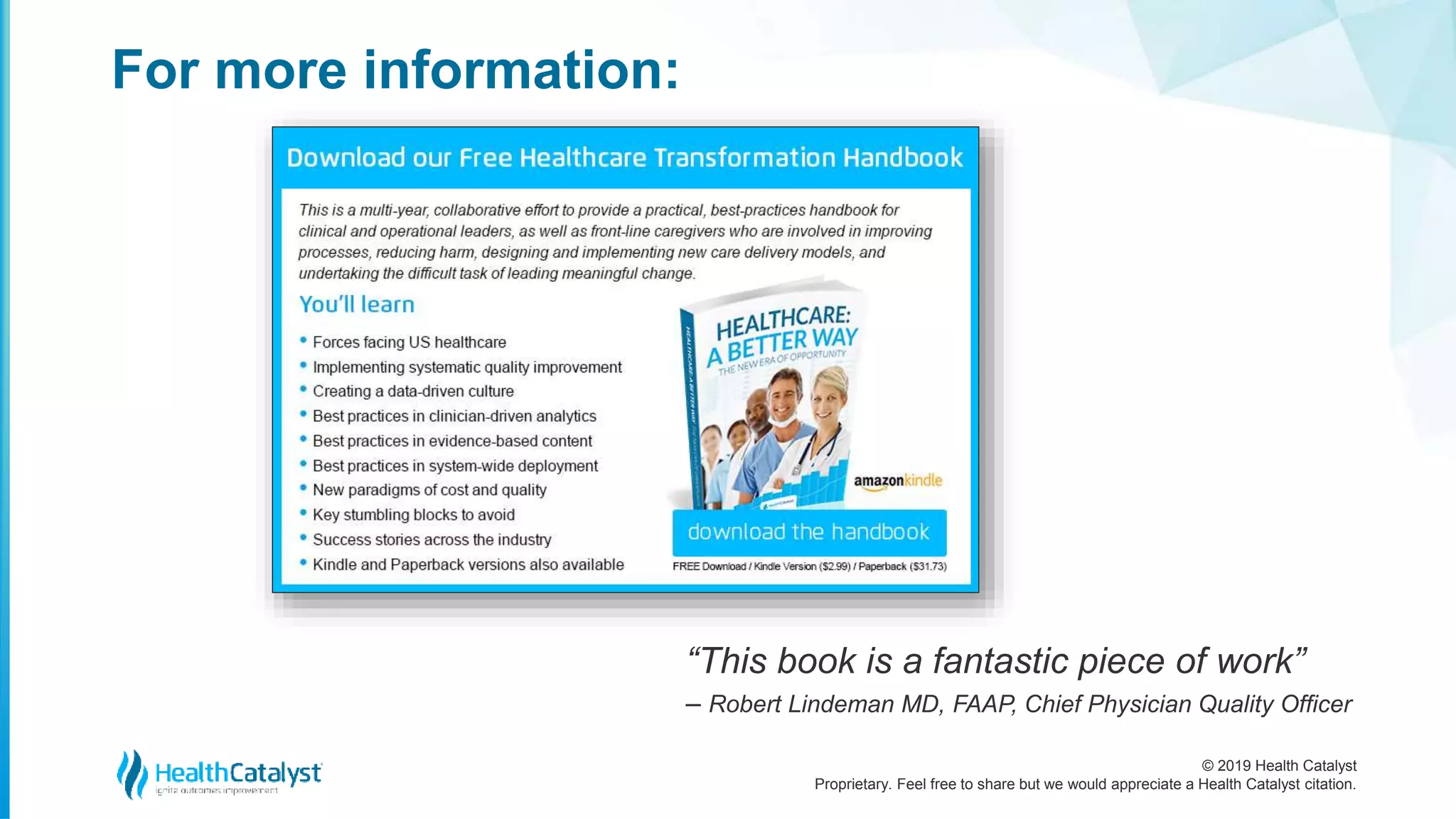
Provides additional resources on AI’s role in healthcare, emphasizing Health Catalyst's mission and contributions to improving clinical outcomes.


![Ensuring Patient Confidentiality[1]](https://cdn.slidesharecdn.com/ss_thumbnails/confidentiality1-141016222217-conversion-gate02-thumbnail.jpg?width=640&height=640&fit=bounds)


