 Influenza itself can cause serious illness in
people and can even cause death
 Every flu season is different than the last
 Flu season usually occurs around October
through March (late as May)
 3,000-49,000 people die from flu-associated
deaths
 80-90% of those deaths occur in ages 65
and older
 Causes antibodies approximately two weeks
after vaccination
 Seasonal flu vaccine protects against three
flu viruses: influenza A (H1N1), influenza A
(H3N2), and influenza B
 A quadrivalent vaccine is available that
protects against an additional influenza B
virus
 Everyone 6 months of age and older
 Anyone at high risk of complications from
getting the flu
 People with chronic underlying medical
conditions such as:
› Chronic lung disease, asthma, neurological
conditions, weakened immune systems, kidney
and heart disease, etc.
 People with an egg allergy
 Children younger than 6 months of age
 Anyone who has or with a history of Guillain-
Barre Syndrome
› Consult with a healthcare provider on which type
of vaccine you should receive as well
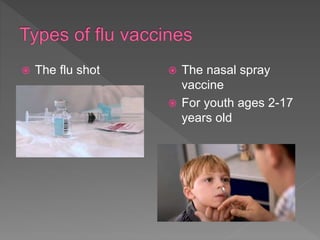
 The flu shot  The nasal spray
vaccine
 For youth ages 2-17
years old
 Protects you from getting the flu
 Protects you as well as those around you
who are more susceptible to serious flu
illness
 May make your illness much milder if you
were to get the flu
 Has decreased flu-associated
hospitalizations in pediatrics and older adults
in past years (various studies)
 Centers for Disease Control and Prevention
(CDC)
 http://avalonlibrary.org/wp-
content/uploads/2014/09/flu-shot-cartoon.jpg

Influenza vaccine

  • 2.
     Influenza itselfcan cause serious illness in people and can even cause death  Every flu season is different than the last  Flu season usually occurs around October through March (late as May)  3,000-49,000 people die from flu-associated deaths  80-90% of those deaths occur in ages 65 and older
  • 4.
     Causes antibodiesapproximately two weeks after vaccination  Seasonal flu vaccine protects against three flu viruses: influenza A (H1N1), influenza A (H3N2), and influenza B  A quadrivalent vaccine is available that protects against an additional influenza B virus
  • 5.
     Everyone 6months of age and older  Anyone at high risk of complications from getting the flu  People with chronic underlying medical conditions such as: › Chronic lung disease, asthma, neurological conditions, weakened immune systems, kidney and heart disease, etc.
  • 6.
     People withan egg allergy  Children younger than 6 months of age  Anyone who has or with a history of Guillain- Barre Syndrome › Consult with a healthcare provider on which type of vaccine you should receive as well
  • 7.
     The flushot  The nasal spray vaccine  For youth ages 2-17 years old
  • 8.
     Protects youfrom getting the flu  Protects you as well as those around you who are more susceptible to serious flu illness  May make your illness much milder if you were to get the flu  Has decreased flu-associated hospitalizations in pediatrics and older adults in past years (various studies)
  • 10.
     Centers forDisease Control and Prevention (CDC)  http://avalonlibrary.org/wp- content/uploads/2014/09/flu-shot-cartoon.jpg