CONTROL AND PREVENTION OF
INFLUENZA
Influenza is a contagious respiratory
illness caused by influenza virus.
Worldwide seasonal influenza kills
2,50,000 -5,00,000 people each year.
 antigenic shift & drift properties of
influenza virus are responsible for
emergence of new viral pathogens &
normal flu seasons.
 ANTIGENIC SHIFT :two or
more different strains of virus
combine to form a new
subtype,with a mixture of
surface antigens of the two or
more original strains.
 ANTIGENIC DRIFT : small
mutations in hemagglutinin
& neuraminidase genes that
make protein unrecognizable
to pre-existing host
immunity.This leads to
continous process of genetic
& antigenic changes among
flu strains.
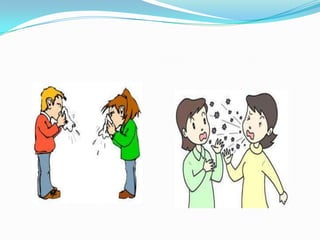
 Influenza transmission is by 3 ways :
1. Direct transmission into the mucous
membrane of a person .
2. Airborne route – that is via droplets
.(0.5-5 microm diameter)
3. Contaminated surfaces, handles
etc…
CONTROL OF INFLUENZA
INFECTION CONTROL
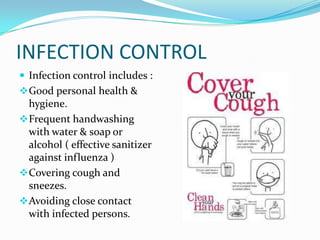
 Infection control includes :
Good personal health &
hygiene.
Frequent handwashing
with water & soap or
alcohol ( effective sanitizer
against influenza )
Covering cough and
sneezes.
Avoiding close contact
with infected persons.
ANTIVIRAL DRUGS
 Lessens symptoms.
 Prevents flu related complications like pneumonia,
bronchitis, sinus infections,ear infections.
 Two antiviral drugs:
a. Oseltamivir( brand name- tamiflu) : form of
pills/tablets
b. Zanemivir (brand name – relenza) : form of inhaled
powder.
Given for a duration of 5 days.
PREVENTION OF INFLUENZA
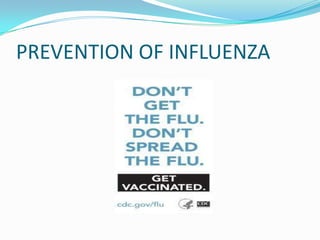
 Influenza vaccines based on concept of herd immunity. .ie,
80% population should be immune to a disease.
 There are two flu seasons annually , corresponding to
occurrence of winter in opposite months in northern &
southern hemisphere.
 Annual reformulation of flu vaccine : each yr 3 influenza
strains(trivalent) that will be most common during
upcoming season are incorporated. This is based on
research by WHO s “Global influenza surveillance
network”.
 Upcoming seasonal flu vaccines contain H1N1, H3N2 and
influenza B strains.
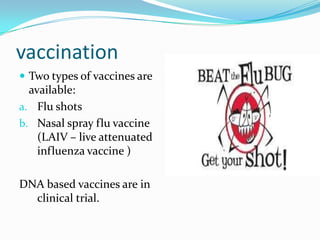
vaccination
 Two types of vaccines are
available:
a. Flu shots
b. Nasal spray flu vaccine
(LAIV – live attenuated
influenza vaccine )
DNA based vaccines are in
clinical trial.
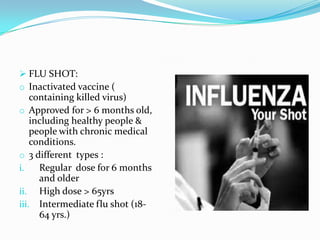
 FLU SHOT:
o Inactivated vaccine (
containing killed virus)
o Approved for > 6 months old,
including healthy people &
people with chronic medical
conditions.
o 3 different types :
i. Regular dose for 6 months
and older
ii. High dose > 65yrs
iii. Intermediate flu shot (18-
64 yrs.)
 NASAL SPRAY FLU VACCINES :
Live weakened flu viruses.
LAIV
Healthy people ( 2-49 yrs)
 People at high risk of
developing flu related
complications are
potential candidates of
influenza vaccine.
1. Children < 5yrs ;
especially < 2 yrs
2. Older people >65 yrs.
3. Pregnant women
4. Medical conditions like
 Asthma, heart disease
 Blood disorders like sickle cell anaemia
 Liver disorders , kidney disorders
 Endocrine disorders like diabetes mellitus.
 Metabolic disorders ( inherited metabolic disorders or
mitochondrial isorders)
 Immunocompromised states – HIV/AIDS; prolonged
steroid therapy; malignancies.
 Morbidly obese (BMI > 40)
 Long term aspirin therapy.
Side effects of vaccine
 INJECTIONS:
Mild soreness,redness and swelling at the injection site.
Fever
Aches
Guillian barre syndrome (rare)
• NASAL SPRAY :
 Nasal congestion, running nose
 Cough, wheezing
 Fever
 Headache, myalgia
 Allergic reaction
 Abdominal pain ( more so in children )
 CONTRAINDICATIONS :
I. Severe reaction to influenza vaccination in <6
months.
II. Severe allergy to chicken eggs that is used to grow
the virus strains.
III. Moderate to severe illness with fever.
IV. History of Guillian barre syndrome.
WHO RECOMMENDATIONS
 Get yourself & your
family members (> 6
months of age )
vaccinated against
current strains of
influenza.
 Keep distance from
people with symptoms
of influenza like illness,
coughing & sneezing
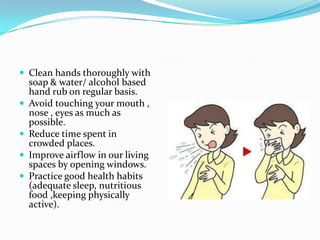
 Clean hands thoroughly with
soap & water/ alcohol based
hand rub on regular basis.
 Avoid touching your mouth ,
nose , eyes as much as
possible.
 Reduce time spent in
crowded places.
 Improve airflow in our living
spaces by opening windows.
 Practice good health habits
(adequate sleep, nutritious
food ,keeping physically
active).
CDC RECOMMENDATIONS
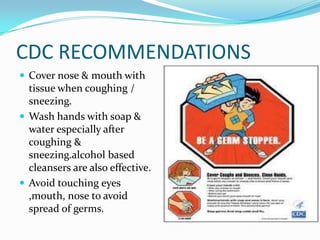
 Cover nose & mouth with
tissue when coughing /
sneezing.
 Wash hands with soap &
water especially after
coughing &
sneezing.alcohol based
cleansers are also effective.
 Avoid touching eyes
,mouth, nose to avoid
spread of germs.
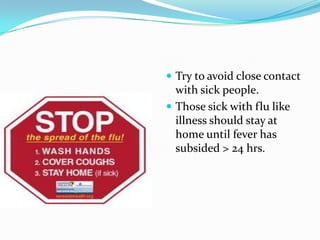
 Try to avoid close contact
with sick people.
 Those sick with flu like
illness should stay at
home until fever has
subsided > 24 hrs.
Control and prevention_of_influenza

Control and prevention_of_influenza

  • 1.
  • 2.
    Influenza is acontagious respiratory illness caused by influenza virus. Worldwide seasonal influenza kills 2,50,000 -5,00,000 people each year.  antigenic shift & drift properties of influenza virus are responsible for emergence of new viral pathogens & normal flu seasons.
  • 3.
     ANTIGENIC SHIFT:two or more different strains of virus combine to form a new subtype,with a mixture of surface antigens of the two or more original strains.  ANTIGENIC DRIFT : small mutations in hemagglutinin & neuraminidase genes that make protein unrecognizable to pre-existing host immunity.This leads to continous process of genetic & antigenic changes among flu strains.
  • 4.
     Influenza transmissionis by 3 ways : 1. Direct transmission into the mucous membrane of a person . 2. Airborne route – that is via droplets .(0.5-5 microm diameter) 3. Contaminated surfaces, handles etc…
  • 6.
  • 7.
    INFECTION CONTROL  Infectioncontrol includes : Good personal health & hygiene. Frequent handwashing with water & soap or alcohol ( effective sanitizer against influenza ) Covering cough and sneezes. Avoiding close contact with infected persons.
  • 8.
    ANTIVIRAL DRUGS  Lessenssymptoms.  Prevents flu related complications like pneumonia, bronchitis, sinus infections,ear infections.  Two antiviral drugs: a. Oseltamivir( brand name- tamiflu) : form of pills/tablets b. Zanemivir (brand name – relenza) : form of inhaled powder. Given for a duration of 5 days.
  • 9.
  • 10.
     Influenza vaccinesbased on concept of herd immunity. .ie, 80% population should be immune to a disease.  There are two flu seasons annually , corresponding to occurrence of winter in opposite months in northern & southern hemisphere.  Annual reformulation of flu vaccine : each yr 3 influenza strains(trivalent) that will be most common during upcoming season are incorporated. This is based on research by WHO s “Global influenza surveillance network”.  Upcoming seasonal flu vaccines contain H1N1, H3N2 and influenza B strains.
  • 11.
    vaccination  Two typesof vaccines are available: a. Flu shots b. Nasal spray flu vaccine (LAIV – live attenuated influenza vaccine ) DNA based vaccines are in clinical trial.
  • 12.
     FLU SHOT: oInactivated vaccine ( containing killed virus) o Approved for > 6 months old, including healthy people & people with chronic medical conditions. o 3 different types : i. Regular dose for 6 months and older ii. High dose > 65yrs iii. Intermediate flu shot (18- 64 yrs.)
  • 13.
     NASAL SPRAYFLU VACCINES : Live weakened flu viruses. LAIV Healthy people ( 2-49 yrs)
  • 14.
     People athigh risk of developing flu related complications are potential candidates of influenza vaccine. 1. Children < 5yrs ; especially < 2 yrs 2. Older people >65 yrs. 3. Pregnant women
  • 15.
    4. Medical conditionslike  Asthma, heart disease  Blood disorders like sickle cell anaemia  Liver disorders , kidney disorders  Endocrine disorders like diabetes mellitus.  Metabolic disorders ( inherited metabolic disorders or mitochondrial isorders)  Immunocompromised states – HIV/AIDS; prolonged steroid therapy; malignancies.  Morbidly obese (BMI > 40)  Long term aspirin therapy.
  • 16.
    Side effects ofvaccine  INJECTIONS: Mild soreness,redness and swelling at the injection site. Fever Aches Guillian barre syndrome (rare) • NASAL SPRAY :  Nasal congestion, running nose  Cough, wheezing  Fever  Headache, myalgia  Allergic reaction  Abdominal pain ( more so in children )
  • 17.
     CONTRAINDICATIONS : I.Severe reaction to influenza vaccination in <6 months. II. Severe allergy to chicken eggs that is used to grow the virus strains. III. Moderate to severe illness with fever. IV. History of Guillian barre syndrome.
  • 18.
    WHO RECOMMENDATIONS  Getyourself & your family members (> 6 months of age ) vaccinated against current strains of influenza.  Keep distance from people with symptoms of influenza like illness, coughing & sneezing
  • 19.
     Clean handsthoroughly with soap & water/ alcohol based hand rub on regular basis.  Avoid touching your mouth , nose , eyes as much as possible.  Reduce time spent in crowded places.  Improve airflow in our living spaces by opening windows.  Practice good health habits (adequate sleep, nutritious food ,keeping physically active).
  • 20.
    CDC RECOMMENDATIONS  Covernose & mouth with tissue when coughing / sneezing.  Wash hands with soap & water especially after coughing & sneezing.alcohol based cleansers are also effective.  Avoid touching eyes ,mouth, nose to avoid spread of germs.
  • 21.
     Try toavoid close contact with sick people.  Those sick with flu like illness should stay at home until fever has subsided > 24 hrs.