








INFECTION CONTROL IN DIALYSIS UNIT:
WHY AND HOW?
Mostafa Abdel_Salam Mohamed, MD
MUH
“You can’t tell where you’re
going unless you know where
you’ve been.” unknown
NOW
• Between 1995 and 2013, hospitalization rates
for infection rose 42%, and the rate of
hospitalization for vascular access infections in
HD patients more than doubled.
U.S. Renal Data System 2013
• Infection is reported as the second most
common cause of death in HD patients after
cardiovascular disease
U.S. Renal Data System 2013
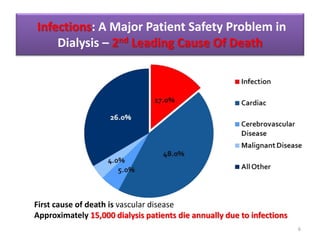
Infections: A Major Patient Safety Problem in
Dialysis – 2nd Leading Cause Of Death
6
First cause of death is vascular disease
Approximately 15,000 dialysis patients die annually due to infections
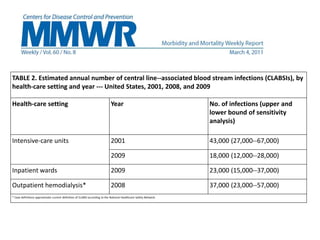
TABLE 2. Estimated annual number of central line--associated blood stream infections (CLABSIs), by
health-care setting and year --- United States, 2001, 2008, and 2009
Health-care setting Year No. of infections (upper and
lower bound of sensitivity
analysis)
Intensive-care units 2001 43,000 (27,000--67,000)
2009 18,000 (12,000--28,000)
Inpatient wards 2009 23,000 (15,000--37,000)
Outpatient hemodialysis* 2008 37,000 (23,000--57,000)
* Case definitions approximate current definition of CLABSI according to the National Healthcare Safety Network.
HISTORY
• "Body secretions of a host
organism (e.g., human
being) are contaminated by

tainted foreign organisms
that are not visible by
naked eye before the
infection."
980-1037
1632-1723
seven centuries after Ibn
Sina, the Dutch scientist
Anton van Leeuwenhoek
(also referred to as the
"Father of Microbiology")

observed microorganisms
under a microscope
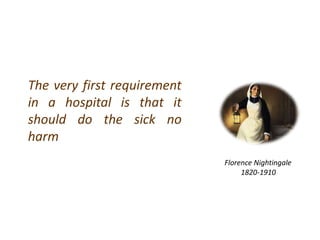
Florence Nightingale
1820-1910
The very first requirement
in a hospital is that it
should do the sick no
harm
WHY
HAEMODIALYSIS
PATIENTS?
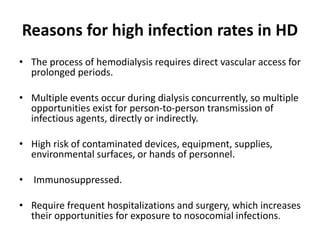
Reasons for high infection rates in HD
• The process of hemodialysis requires direct vascular access for
prolonged periods.
• Multiple events occur during dialysis concurrently, so multiple
opportunities exist for person-to-person transmission of
infectious agents, directly or indirectly.
• High risk of contaminated devices, equipment, supplies,
environmental surfaces, or hands of personnel.
• Immunosuppressed.
• Require frequent hospitalizations and surgery, which increases
their opportunities for exposure to nosocomial infections.
• Transmission
• Blood-borne viruses are transmitted through
infected body fluids; transmission occurs by
inoculation, via sharps, broken skin or through
contact with mucous membranes. The risk of
transmission of BBVs following a single
percutaneous exposure is estimated to be:
– • HBV 1 in 3
– • HCV 1 in 30
– • HIV 1 in 300
Organisms remain viable on surfaces for prolonged periods
• Hepatitis B >1 week
• Influenza 1-2 days
• MRSA 7 days to 7 months
• VRE 5 days to 4 months
• C. difficile spore 5 months
16
Healthcare workers touch as many as 7 surfaces
after touching a contaminated one!
McLaughlin AC, Walsh F. Am J Infect Control 39(6):456-463, 2011
Kramer A, Schwebke I, Kampf G. BMC Infect Dis 6:130, 2006
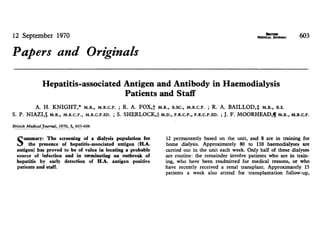
THE BEGINING
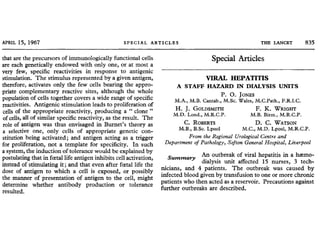
Hepatitis outbreaks in
haemodialysis unit patients
and staff were reported in
the late 1960s. In 1972
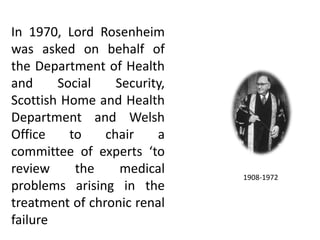
1908-1972
In 1970, Lord Rosenheim
was asked on behalf of
the Department of Health
and Social Security,
Scottish Home and Health
Department and Welsh
Office to chair a
committee of experts ‘to
review the medical
problems arising in the
treatment of chronic renal
failure
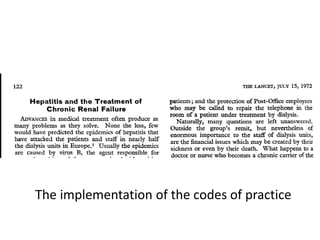
The implementation of the codes of practice
• The Rosenheim report in the UK established
guidelines which included routine tests for
hepatitis B surface antigen and isolation
facilities for dialysing patients with hepatitis B
virus which resulted in a dramatic fall in cases
of hepatitis.
• However, since these guidelines were
introduced, other blood-borne viruses,
notably HCV and HIV have been discovered,
and failures of infection control practices still
lead to outbreaks of HBV in haemodialysis
units.
• The prevalence of HCV in dialysis patients
varies considerably throughout the world,
with reported prevalence ranging from 3·9%
to 71%. The number of blood transfusions and
the length of time on dialysis have consistently
been associated with HCV prevalence.
Similar guidelines were
issued by CDC in the USA
in 1977
HOW?
CDC Collaborative – Core
Interventions
1. Surveillance and feedback: Conduct monthly
surveillance for BSIs and other dialysis events. Calculate your
facility rates and compare to rates in other facilities. Actively
share results with front line staff.
2. Hand hygiene observations: Perform direct
observations of hand hygiene monthly and share results
with clinical staff.
3. Catheter/Access care observations: Perform
observations of vascular access care and catheter accessing
quarterly. Assess staff adherence to aseptic technique when
connecting and disconnecting catheters and during dressing
changes. Share results with clinical staff.
CDC Collaborative - Core
Interventions
4. Chlorhexidine for skin antisepsis: Use an
alcohol-based chlorhexidine (>0.5%) solution as
the first line skin antiseptic agent for central line
insertion and during dressing changes.
5. Catheter hub disinfection: “Scrub the hubs!” with
an appropriate antiseptic after cap is removed
and before accessing. Perform every time catheter
is accessed or disconnected.
6. Antimicrobial ointment: Apply antibiotic ointment
or povidone-iodine ointment to catheter exit sites
during each dressing change.
CDC Collaborative - Core
Interventions
7. Staff education and competency: Training on
infection control topics, including access care and aseptic
technique. Competency evaluation for skills such as
catheter care and accessing every 6 months.
8. Patient education/engagement.
9. Catheter reduction efforts.
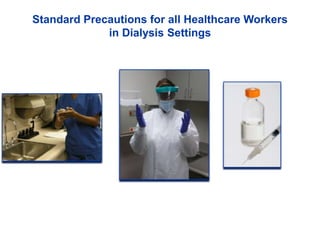
Standard Precautions for all Healthcare Workers
in Dialysis Settings
An APIC Guide
• The Association for Professionals in Infection
Control and Epidemiology (APIC) is the leading
professional association for infection
preventionists (IPs) with more than 15,000
members.
• 1. Centers for Disease Control and Prevention
(CDC). Recommendations for Control of Hepatitis
B in Dialysis Centers. Atlanta, GA: Author, 1997.
• 2. CDC. Recommendations for preventing
transmission of infections among chronic
hemodialysis patients. MMWR 2001;50(RR05):1–
43.
• 3. Centers for Medicare and Medicaid Services
(CMS). 2008 Conditions for Coverage
Basic Measures—Category I Level
Evidence Supports These Measures
1. Environmental and equipment cleaning/disinfection
• Use U.S. Environmental Protection Agency (EPA)-
registered hospital disinfectants labeled tuberculocidal
or with specific label claims for HIV or HBV in
accordance with label instructions to decontaminate
spills of blood and other body fluids.
• Use standard cleaning and disinfection
protocols and EPA-registered hospital
disinfectants for confirmed or suspected
antibiotic-resistant Gram-positive cocci (e.g.,
MRSA, vancomycin intermediate–resistant S.
aureus, or vancomycin-resistant Enterococcus
[VRE]).
• Using friction, clean and disinfect high-touch
surfaces in patient-care areas (e.g., HD chairs,
HD machines, tables, carts, bedside
commodes).
• When contact precautions are indicated for
patient care, use disposable patient-care items
(e.g., blood pressurecuffs) whenever possible
to minimize cross-contamination with
multiple-resistant microorganisms.
• Items taken into a patient station should be
disposed of after use, dedicated for use on a
single patient, or cleaned and disinfected
before being taken to a common clean area or
used on another patient.
• Non disposable items that cannot be
comprehensively cleaned and disinfected
(e.g., adhesive tape, cloth covered blood
pressure cuffs) should be dedicated for use on
a single patient.
• External pressure transducer filters/protectors
should be changed after each patient
treatment. Items taken into an individual HD
patient station should be disposed of after
use, dedicated for use on a single patient, or
cleaned and disinfected before being taken to
a common clean area or used on another
patient.
• External venous and arterial pressure
transducer filters/protectors should be
changed after each patient treatment and
should not be reused. Internal transducer
filters do not need to be changed routinely
between patients.
• The internal HD machine dialysate pathway
should be subjected to heat disinfection at the
end of each treatment day.
• In the event of a blood leak, disinfection of the
internal HD machine pathway must be
performed prior to on a successive patient
Plus Measures—Level of Evidence Supporting
These Measures is Less Than Category I Level
1. Environmental and equipment
cleaning/disinfection
• Because no EPA-registered products are
specific for inactivating C. difficile spores, use
hypochlorite-based products for disinfection
of environmental surfaces in those patient-
care areas where surveillance and
epidemiology indicate ongoing transmission of
C. difficile.
• Use microfiber cloths and mops if possible
(more effective cleaning products than regular
cotton cleaning cloths).
Basic Measures—Category I Level
Evidence Supports These Measures
2. Hand hygiene
• To improve hand hygiene adherence among
personnel who work in areas in which high
workloads and high intensity of patient care are
anticipated, make an alcoholbased hand rub
available at the entrance to the patient's room or
at the bedside, in other convenient locations, and
in individual pocket-sized containers to be carried
by healthcare workers (HCWs).
• Perform hand hygiene before and after contact
with patient or patient environment.
At least 15 seconds
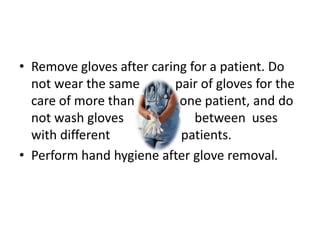
• Remove gloves after caring for a patient. Do
not wear the same pair of gloves for the
care of more than one patient, and do
not wash gloves between uses
with different patients.
• Perform hand hygiene after glove removal.
• If hands are not visibly soiled, use an alcohol-
based hand rub for routinely cleaning hands
instead of soap and water.
• Do not wear artificial fingernails or extenders
when having direct contact with patients
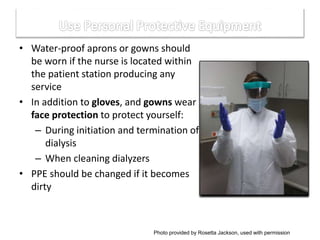
• Water-proof aprons or gowns should
be worn if the nurse is located within
the patient station producing any
service
• In addition to gloves, and gowns wear
face protection to protect yourself:
– During initiation and termination of
dialysis
– When cleaning dialyzers
• PPE should be changed if it becomes
dirty
Photo provided by Rosetta Jackson, used with permission
Basic Measures—Category I Level
Evidence Supports These Measures
3. Immunizations and tuberculosis (TB)
screening
• Vaccine status of all patients should be
assessed at the start of dialysis. Eligible HD
patients should be immunized against HBV,
tetanus, pneumococcal disease, and influenza.
• CDC recommends one-time baseline screening
of HD patients for TB (plus anytime an
exposure is suspected).
• Employees in HD settings must receive
immunization for measles, mumps, rubella,
pertussis, diphtheria, tetanus, MMR (measles,
mumps, rubella), be offered HBV and
influenza immunization, and be screened for
TB per local regulations (usually annual).
Basic Measures—Category I Level
Evidence Supports These Measures
4. Medication/injection safety:
• Single-dose vials should be dedicated to one
patient only and should not be re-entered.
• Parenteral medications should be prepared in
a designated clean area away from patient
treatment stations.
• Do not use medication carts to transport
medications to patient stations.
• Scrub the hub of intravenous (IV) tubing and
medication vials prior to accessing.
• Use aseptic technique when preparing
/handling parenteral medications/fluid.
• Never use infusion supplies such as needles,
syringes, flush solutions, administration sets,
or IV fluids on more than one patient.
Plus Measures—Level of Evidence Supporting These
Measures is Less Than Category I Level
4. Medication/injection safety:
• Avoid use of multidose vials
Basic Measures—Category I Level
Evidence Supports These Measures
5. Pre- and postsurgical infection prevention
• Presurgical hair removal should be performed
with clippers instead of a razor.
Plus Measures—Level of Evidence Supporting These
Measures is Less Than Category I Level
5. Pre- and postsurgical infection prevention
• Antiseptic impregnated postoperative
dressings for fistulas/grafts
• Active surveillance testing for MRSA and
decolonization should be performed as
indicated (e.g., preoperatively).
• Preoperative antiseptic bathing/showering
Basic Measures—Category I Level
Evidence Supports These Measures
6. Standard/transmission based precautions
• Respiratory etiquette should be employed
routinely.
• Standard Precautions should be practiced
routinely.
• Patient identified with a suspected airborne
disease should be masked immediately and
geographically separated from other patients,
preferably in a single room.
• HBV isolation should be employed routinely on all
patients known to be HBsAg positive.
Plus Measures—Level of Evidence Supporting These
Measures is Less Than Category I Level
6. Standard/transmission based precautions
• Contact precautions in HD facilities should be
employed in the event of known or suspected
MDRO (Multi-drug resistant organisms).
Basic Measures—Category I Level
Evidence Supports These Measures
7. Vascular Access:
• Support transition from temporary (e.g., CVC)
to permanent (e.g., arteriovenous fistula or
graft vascular access whenever possible.
• Full barrier precautions and skin antisepsis
with chlorhexidine alcohol prep prior to
insertion of HD CVC.
Plus Measures—Level of Evidence Supporting These
Measures is Less Than Category I Level
7. Vascular access
• Routine use of chlorhexidine impregnated bathing cloths.
• Application of chlorhexidine impregnated insertion site
dressing for HD central catheters.
• Prophylactic use of antimicrobial catheter locking solution.
• Soak the hub of HD catheters in povidone-iodine solution
or wrap with gauze saturated with povidone-iodine solution
for 5 minutes prior to removing the cap.
• Application of povidone-iodine or triple antibiotic ointment
for HD catheter exit site dressings after dialysis session.
Basic Measures—Category I Level
Evidence Supports These Measures
8. Water treatment
• Adhere to current Association for Advancement
of Medical Instrumentation (AAMI) standards for
quality assurance performance of devices and
equipment used to treat, store, and distribute
water in HD centers and for the preparation of
concentrates and dialysate.
• Conduct microbiological testing specific to water
in dialysis settings.
• Disinfect water distribution systems in dialysis
settings on a regular schedule.
Plus Measures—Level of Evidence Supporting These
Measures is Less Than Category I Level
8. Water treatment
• Ultrapure dialysate
Chapter 3: Preventing HCV Transmission
• Guideline 3.1: Hemodialysis units should ensure
implementation of, and adherence to, strict
infection-control procedures designed to prevent
transmission of blood-borne pathogens, including
HCV. (Strong)
• Isolation of HCV-infected patients is not
recommended as an alternative to strict
infection-control procedures for preventing
transmission of blood-borne pathogens. (Weak)
Chapter 3: Preventing HCV Transmission
• The use of dedicated dialysis machines for HCV
infected patients is not recommended.
(Moderate)
• Where dialyzer reuse is unavoidable, it is
suggested that the dialyzers of HCV-infected
patients can be reused provided there is
implementation of, and adherence to, strict
infection-control procedures. (Weak)
Unresolved issues in HCV
• Debate continues on whether transmission of
HCV in HD units may be affected by:
– Routine testing for anti-HCV antibodies,
– Patient isolation,
– Use of dedicated machines,
– Ban on dialyzer reuse.
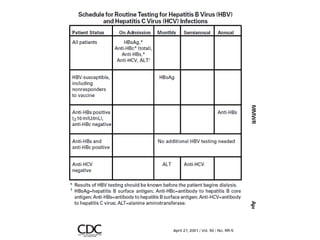
Prevention of Hepatitis B in HD unit
• Segregation is the key:
– Dedicated rooms
– Dedicated machines and equipment.
– Separate staff
• Universal contact precautions
• Staff members caring for HBsAg+ pts should not care
for HBV-susceptible pts at the same time
• Ban from dialyzer reuse programs i.e. Only single use
dialyzers.
Prevention of Hepatitis B in HD unit
• Ensure full compliance of Hepatitis B vaccinations
• Make sure your unit has an updated standard
protocol for care of all HBV patients.
• Regular screening of HBsAg status in non-immune
individuals
• Antiviral treatment of HBV-infection may also
reduce the risk of other hemodialysis patients in
the same center.
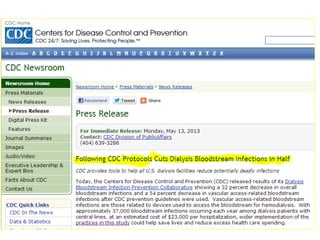
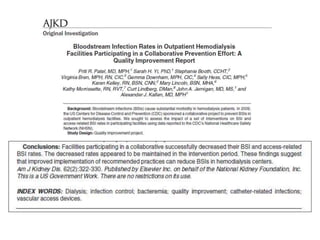
CDC effort was very effective in
reducing BSIs.
• A 32% reduction in BSIs and 54% reduction in
access related BSIs.
• Sustained through the end of evaluation
period.
• Simple and cost effective interventions.
• This initiative helped define that it is achievable
to improve and prevent Blood stream
infections in dialysis patients through focused
efforts.
Education, Training and Staffing
JUST THAT!
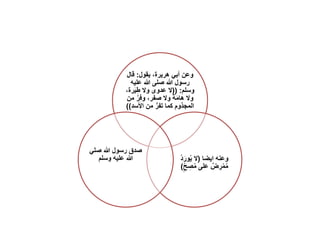
‫يقول‬ ،‫هريرة‬ ‫أبي‬ ‫وعن‬:‫قال‬
‫عليه‬ ‫هللا‬ ‫صلى‬ ‫هللا‬ ‫رسول‬
‫وسلم‬(( :‫ي‬ِ‫ط‬ ‫وال‬ ‫عدوى‬ ‫ال‬،‫رة‬
‫ر‬ِ‫ف‬‫و‬ ،‫صفر‬ ‫وال‬ ‫ة‬‫هام‬ ‫وال‬‫من‬
‫األس‬ ‫من‬ ُّ‫تفر‬ ‫كما‬ ‫المجذوم‬‫د‬))
‫ايضا‬ ‫وعنه‬(‫ور‬ُ‫ي‬ ‫ال‬ُ‫د‬
ِ‫ص‬ُ‫م‬ ‫على‬ ٌ‫ض‬ ِ‫ر‬ْ‫م‬ُ‫م‬‫ح‬)
‫صلي‬ ‫هللا‬ ‫رسول‬ ‫صدق‬
‫وسلم‬ ‫عليه‬ ‫هللا‬
Infection control why and how

Infection control why and how

  • 1.
    INFECTION CONTROL INDIALYSIS UNIT: WHY AND HOW? Mostafa Abdel_Salam Mohamed, MD MUH
  • 2.
    “You can’t tellwhere you’re going unless you know where you’ve been.” unknown
  • 3.
  • 4.
    • Between 1995and 2013, hospitalization rates for infection rose 42%, and the rate of hospitalization for vascular access infections in HD patients more than doubled. U.S. Renal Data System 2013
  • 5.
    • Infection isreported as the second most common cause of death in HD patients after cardiovascular disease U.S. Renal Data System 2013
  • 6.
    Infections: A MajorPatient Safety Problem in Dialysis – 2nd Leading Cause Of Death 6 First cause of death is vascular disease Approximately 15,000 dialysis patients die annually due to infections
  • 7.
    TABLE 2. Estimatedannual number of central line--associated blood stream infections (CLABSIs), by health-care setting and year --- United States, 2001, 2008, and 2009 Health-care setting Year No. of infections (upper and lower bound of sensitivity analysis) Intensive-care units 2001 43,000 (27,000--67,000) 2009 18,000 (12,000--28,000) Inpatient wards 2009 23,000 (15,000--37,000) Outpatient hemodialysis* 2008 37,000 (23,000--57,000) * Case definitions approximate current definition of CLABSI according to the National Healthcare Safety Network.
  • 8.
  • 9.
    • "Body secretionsof a host organism (e.g., human being) are contaminated by tainted foreign organisms that are not visible by naked eye before the infection." 980-1037
  • 10.
    1632-1723 seven centuries afterIbn Sina, the Dutch scientist Anton van Leeuwenhoek (also referred to as the "Father of Microbiology") observed microorganisms under a microscope
  • 11.
    Florence Nightingale 1820-1910 The veryfirst requirement in a hospital is that it should do the sick no harm
  • 13.
  • 14.
    Reasons for highinfection rates in HD • The process of hemodialysis requires direct vascular access for prolonged periods. • Multiple events occur during dialysis concurrently, so multiple opportunities exist for person-to-person transmission of infectious agents, directly or indirectly. • High risk of contaminated devices, equipment, supplies, environmental surfaces, or hands of personnel. • Immunosuppressed. • Require frequent hospitalizations and surgery, which increases their opportunities for exposure to nosocomial infections.
  • 15.
    • Transmission • Blood-borneviruses are transmitted through infected body fluids; transmission occurs by inoculation, via sharps, broken skin or through contact with mucous membranes. The risk of transmission of BBVs following a single percutaneous exposure is estimated to be: – • HBV 1 in 3 – • HCV 1 in 30 – • HIV 1 in 300
  • 16.
    Organisms remain viableon surfaces for prolonged periods • Hepatitis B >1 week • Influenza 1-2 days • MRSA 7 days to 7 months • VRE 5 days to 4 months • C. difficile spore 5 months 16 Healthcare workers touch as many as 7 surfaces after touching a contaminated one! McLaughlin AC, Walsh F. Am J Infect Control 39(6):456-463, 2011 Kramer A, Schwebke I, Kampf G. BMC Infect Dis 6:130, 2006
  • 17.
  • 18.
    Hepatitis outbreaks in haemodialysisunit patients and staff were reported in the late 1960s. In 1972
  • 21.
    1908-1972 In 1970, LordRosenheim was asked on behalf of the Department of Health and Social Security, Scottish Home and Health Department and Welsh Office to chair a committee of experts ‘to review the medical problems arising in the treatment of chronic renal failure
  • 22.
    The implementation ofthe codes of practice
  • 23.
    • The Rosenheimreport in the UK established guidelines which included routine tests for hepatitis B surface antigen and isolation facilities for dialysing patients with hepatitis B virus which resulted in a dramatic fall in cases of hepatitis.
  • 24.
    • However, sincethese guidelines were introduced, other blood-borne viruses, notably HCV and HIV have been discovered, and failures of infection control practices still lead to outbreaks of HBV in haemodialysis units.
  • 25.
    • The prevalenceof HCV in dialysis patients varies considerably throughout the world, with reported prevalence ranging from 3·9% to 71%. The number of blood transfusions and the length of time on dialysis have consistently been associated with HCV prevalence.
  • 26.
    Similar guidelines were issuedby CDC in the USA in 1977
  • 27.
  • 28.
    CDC Collaborative –Core Interventions 1. Surveillance and feedback: Conduct monthly surveillance for BSIs and other dialysis events. Calculate your facility rates and compare to rates in other facilities. Actively share results with front line staff. 2. Hand hygiene observations: Perform direct observations of hand hygiene monthly and share results with clinical staff. 3. Catheter/Access care observations: Perform observations of vascular access care and catheter accessing quarterly. Assess staff adherence to aseptic technique when connecting and disconnecting catheters and during dressing changes. Share results with clinical staff.
  • 29.
    CDC Collaborative -Core Interventions 4. Chlorhexidine for skin antisepsis: Use an alcohol-based chlorhexidine (>0.5%) solution as the first line skin antiseptic agent for central line insertion and during dressing changes. 5. Catheter hub disinfection: “Scrub the hubs!” with an appropriate antiseptic after cap is removed and before accessing. Perform every time catheter is accessed or disconnected. 6. Antimicrobial ointment: Apply antibiotic ointment or povidone-iodine ointment to catheter exit sites during each dressing change.
  • 30.
    CDC Collaborative -Core Interventions 7. Staff education and competency: Training on infection control topics, including access care and aseptic technique. Competency evaluation for skills such as catheter care and accessing every 6 months. 8. Patient education/engagement. 9. Catheter reduction efforts.
  • 31.
    Standard Precautions forall Healthcare Workers in Dialysis Settings
  • 32.
    An APIC Guide •The Association for Professionals in Infection Control and Epidemiology (APIC) is the leading professional association for infection preventionists (IPs) with more than 15,000 members.
  • 33.
    • 1. Centersfor Disease Control and Prevention (CDC). Recommendations for Control of Hepatitis B in Dialysis Centers. Atlanta, GA: Author, 1997. • 2. CDC. Recommendations for preventing transmission of infections among chronic hemodialysis patients. MMWR 2001;50(RR05):1– 43. • 3. Centers for Medicare and Medicaid Services (CMS). 2008 Conditions for Coverage
  • 34.
    Basic Measures—Category ILevel Evidence Supports These Measures 1. Environmental and equipment cleaning/disinfection • Use U.S. Environmental Protection Agency (EPA)- registered hospital disinfectants labeled tuberculocidal or with specific label claims for HIV or HBV in accordance with label instructions to decontaminate spills of blood and other body fluids.
  • 35.
    • Use standardcleaning and disinfection protocols and EPA-registered hospital disinfectants for confirmed or suspected antibiotic-resistant Gram-positive cocci (e.g., MRSA, vancomycin intermediate–resistant S. aureus, or vancomycin-resistant Enterococcus [VRE]).
  • 36.
    • Using friction,clean and disinfect high-touch surfaces in patient-care areas (e.g., HD chairs, HD machines, tables, carts, bedside commodes).
  • 37.
    • When contactprecautions are indicated for patient care, use disposable patient-care items (e.g., blood pressurecuffs) whenever possible to minimize cross-contamination with multiple-resistant microorganisms.
  • 38.
    • Items takeninto a patient station should be disposed of after use, dedicated for use on a single patient, or cleaned and disinfected before being taken to a common clean area or used on another patient.
  • 39.
    • Non disposableitems that cannot be comprehensively cleaned and disinfected (e.g., adhesive tape, cloth covered blood pressure cuffs) should be dedicated for use on a single patient.
  • 40.
    • External pressuretransducer filters/protectors should be changed after each patient treatment. Items taken into an individual HD patient station should be disposed of after use, dedicated for use on a single patient, or cleaned and disinfected before being taken to a common clean area or used on another patient.
  • 41.
    • External venousand arterial pressure transducer filters/protectors should be changed after each patient treatment and should not be reused. Internal transducer filters do not need to be changed routinely between patients.
  • 42.
    • The internalHD machine dialysate pathway should be subjected to heat disinfection at the end of each treatment day. • In the event of a blood leak, disinfection of the internal HD machine pathway must be performed prior to on a successive patient
  • 43.
    Plus Measures—Level ofEvidence Supporting These Measures is Less Than Category I Level 1. Environmental and equipment cleaning/disinfection • Because no EPA-registered products are specific for inactivating C. difficile spores, use hypochlorite-based products for disinfection of environmental surfaces in those patient- care areas where surveillance and epidemiology indicate ongoing transmission of C. difficile.
  • 44.
    • Use microfibercloths and mops if possible (more effective cleaning products than regular cotton cleaning cloths).
  • 45.
    Basic Measures—Category ILevel Evidence Supports These Measures 2. Hand hygiene • To improve hand hygiene adherence among personnel who work in areas in which high workloads and high intensity of patient care are anticipated, make an alcoholbased hand rub available at the entrance to the patient's room or at the bedside, in other convenient locations, and in individual pocket-sized containers to be carried by healthcare workers (HCWs). • Perform hand hygiene before and after contact with patient or patient environment.
  • 46.
    At least 15seconds
  • 47.
    • Remove glovesafter caring for a patient. Do not wear the same pair of gloves for the care of more than one patient, and do not wash gloves between uses with different patients. • Perform hand hygiene after glove removal.
  • 48.
    • If handsare not visibly soiled, use an alcohol- based hand rub for routinely cleaning hands instead of soap and water. • Do not wear artificial fingernails or extenders when having direct contact with patients
  • 49.
    • Water-proof apronsor gowns should be worn if the nurse is located within the patient station producing any service • In addition to gloves, and gowns wear face protection to protect yourself: – During initiation and termination of dialysis – When cleaning dialyzers • PPE should be changed if it becomes dirty Photo provided by Rosetta Jackson, used with permission
  • 50.
    Basic Measures—Category ILevel Evidence Supports These Measures 3. Immunizations and tuberculosis (TB) screening • Vaccine status of all patients should be assessed at the start of dialysis. Eligible HD patients should be immunized against HBV, tetanus, pneumococcal disease, and influenza. • CDC recommends one-time baseline screening of HD patients for TB (plus anytime an exposure is suspected).
  • 51.
    • Employees inHD settings must receive immunization for measles, mumps, rubella, pertussis, diphtheria, tetanus, MMR (measles, mumps, rubella), be offered HBV and influenza immunization, and be screened for TB per local regulations (usually annual).
  • 52.
    Basic Measures—Category ILevel Evidence Supports These Measures 4. Medication/injection safety: • Single-dose vials should be dedicated to one patient only and should not be re-entered. • Parenteral medications should be prepared in a designated clean area away from patient treatment stations. • Do not use medication carts to transport medications to patient stations.
  • 53.
    • Scrub thehub of intravenous (IV) tubing and medication vials prior to accessing. • Use aseptic technique when preparing /handling parenteral medications/fluid. • Never use infusion supplies such as needles, syringes, flush solutions, administration sets, or IV fluids on more than one patient.
  • 54.
    Plus Measures—Level ofEvidence Supporting These Measures is Less Than Category I Level 4. Medication/injection safety: • Avoid use of multidose vials
  • 56.
    Basic Measures—Category ILevel Evidence Supports These Measures 5. Pre- and postsurgical infection prevention • Presurgical hair removal should be performed with clippers instead of a razor.
  • 57.
    Plus Measures—Level ofEvidence Supporting These Measures is Less Than Category I Level 5. Pre- and postsurgical infection prevention • Antiseptic impregnated postoperative dressings for fistulas/grafts • Active surveillance testing for MRSA and decolonization should be performed as indicated (e.g., preoperatively). • Preoperative antiseptic bathing/showering
  • 58.
    Basic Measures—Category ILevel Evidence Supports These Measures 6. Standard/transmission based precautions • Respiratory etiquette should be employed routinely. • Standard Precautions should be practiced routinely. • Patient identified with a suspected airborne disease should be masked immediately and geographically separated from other patients, preferably in a single room. • HBV isolation should be employed routinely on all patients known to be HBsAg positive.
  • 59.
    Plus Measures—Level ofEvidence Supporting These Measures is Less Than Category I Level 6. Standard/transmission based precautions • Contact precautions in HD facilities should be employed in the event of known or suspected MDRO (Multi-drug resistant organisms).
  • 60.
    Basic Measures—Category ILevel Evidence Supports These Measures 7. Vascular Access: • Support transition from temporary (e.g., CVC) to permanent (e.g., arteriovenous fistula or graft vascular access whenever possible. • Full barrier precautions and skin antisepsis with chlorhexidine alcohol prep prior to insertion of HD CVC.
  • 61.
    Plus Measures—Level ofEvidence Supporting These Measures is Less Than Category I Level 7. Vascular access • Routine use of chlorhexidine impregnated bathing cloths. • Application of chlorhexidine impregnated insertion site dressing for HD central catheters. • Prophylactic use of antimicrobial catheter locking solution. • Soak the hub of HD catheters in povidone-iodine solution or wrap with gauze saturated with povidone-iodine solution for 5 minutes prior to removing the cap. • Application of povidone-iodine or triple antibiotic ointment for HD catheter exit site dressings after dialysis session.
  • 62.
    Basic Measures—Category ILevel Evidence Supports These Measures 8. Water treatment • Adhere to current Association for Advancement of Medical Instrumentation (AAMI) standards for quality assurance performance of devices and equipment used to treat, store, and distribute water in HD centers and for the preparation of concentrates and dialysate. • Conduct microbiological testing specific to water in dialysis settings. • Disinfect water distribution systems in dialysis settings on a regular schedule.
  • 63.
    Plus Measures—Level ofEvidence Supporting These Measures is Less Than Category I Level 8. Water treatment • Ultrapure dialysate
  • 64.
    Chapter 3: PreventingHCV Transmission • Guideline 3.1: Hemodialysis units should ensure implementation of, and adherence to, strict infection-control procedures designed to prevent transmission of blood-borne pathogens, including HCV. (Strong) • Isolation of HCV-infected patients is not recommended as an alternative to strict infection-control procedures for preventing transmission of blood-borne pathogens. (Weak)
  • 65.
    Chapter 3: PreventingHCV Transmission • The use of dedicated dialysis machines for HCV infected patients is not recommended. (Moderate) • Where dialyzer reuse is unavoidable, it is suggested that the dialyzers of HCV-infected patients can be reused provided there is implementation of, and adherence to, strict infection-control procedures. (Weak)
  • 66.
    Unresolved issues inHCV • Debate continues on whether transmission of HCV in HD units may be affected by: – Routine testing for anti-HCV antibodies, – Patient isolation, – Use of dedicated machines, – Ban on dialyzer reuse.
  • 67.
    Prevention of HepatitisB in HD unit • Segregation is the key: – Dedicated rooms – Dedicated machines and equipment. – Separate staff • Universal contact precautions • Staff members caring for HBsAg+ pts should not care for HBV-susceptible pts at the same time • Ban from dialyzer reuse programs i.e. Only single use dialyzers.
  • 68.
    Prevention of HepatitisB in HD unit • Ensure full compliance of Hepatitis B vaccinations • Make sure your unit has an updated standard protocol for care of all HBV patients. • Regular screening of HBsAg status in non-immune individuals • Antiviral treatment of HBV-infection may also reduce the risk of other hemodialysis patients in the same center.
  • 71.
    CDC effort wasvery effective in reducing BSIs. • A 32% reduction in BSIs and 54% reduction in access related BSIs. • Sustained through the end of evaluation period. • Simple and cost effective interventions. • This initiative helped define that it is achievable to improve and prevent Blood stream infections in dialysis patients through focused efforts.
  • 73.
  • 74.
  • 75.
    ‫يقول‬ ،‫هريرة‬ ‫أبي‬‫وعن‬:‫قال‬ ‫عليه‬ ‫هللا‬ ‫صلى‬ ‫هللا‬ ‫رسول‬ ‫وسلم‬(( :‫ي‬ِ‫ط‬ ‫وال‬ ‫عدوى‬ ‫ال‬،‫رة‬ ‫ر‬ِ‫ف‬‫و‬ ،‫صفر‬ ‫وال‬ ‫ة‬‫هام‬ ‫وال‬‫من‬ ‫األس‬ ‫من‬ ُّ‫تفر‬ ‫كما‬ ‫المجذوم‬‫د‬)) ‫ايضا‬ ‫وعنه‬(‫ور‬ُ‫ي‬ ‫ال‬ُ‫د‬ ِ‫ص‬ُ‫م‬ ‫على‬ ٌ‫ض‬ ِ‫ر‬ْ‫م‬ُ‫م‬‫ح‬) ‫صلي‬ ‫هللا‬ ‫رسول‬ ‫صدق‬ ‫وسلم‬ ‫عليه‬ ‫هللا‬

Editor's Notes

  • #7 Infection is the second leading cause of death for dialysis patients. Second only to cardiac disease The 2nd leading cause of death in the ESRD patient is infection. Approximately 15% of all patient deaths are infection related, and 57% of these are due to vascular access infections. For patients with vascular catheters the risk for bacteremia is 7 times higher. By focusing on infection and infection prevention we can make an impact on morbidity and mortality in this patient population Associated with the high infection rate is the increased MRSA rate. Our patients are 100 times more likely to be infected with MRSA.
  • #31 Povidone-iodine (preferably with alcohol) or 70% alcohol are alternatives for patients with chlorhexidine intolerance. ** If closed needleless connector device is used, disinfect device per manufacturer’s instructions. *** See information on selecting an antimicrobial ointment for hemodialysis catheter exit sites on CDC’s Dialysis Safety website (http://www.cdc.gov/dialysis/prevention-tools/core-interventions.html#sites). Use of chlorhexidine-impregnated sponge dressing might be an alternative.
  • #50 Similarly, while personal protective equipment is a concept of Standard Precautions, it is also a concept of dialysis-specific infection control recommendations. You should wear gloves, gowns, and face protection such as a face shield or goggles and a face mask to protect yourself when performing procedures during which blood splashes might occur. This includes during initiation and termination of dialysis, when cleaning dial yzers, and when spinning blood samples. Personal protective equipment should be changed if it becomes soiled with blood, body fluids, secretions, or excretions.
  • #68 Failure to segregate and use dedicated hemodialysis machines for HBsAg positive patients is associated with an increased incidence of HBV infection, and machine segregation is now standard practice. On the other hand, the United States national surveillance in 1997 showed no difference in the incidence of HBV infection between centers that practiced segregation of dialysis rooms and those that did not [15,38]. Dialyzer reuse was also not associated with a higher risk of HBV infection both in patients and in staff. Nevertheless, the Centers for Disease Control (CDC) recommended that dialyzers from HBsAg-positive patients be excluded from reuse programs [36].