Infection control
The nature of infection
• Micro-organisms - bacteria, fungi, viruses,
protozoa and worms
• Most are harmless [non-pathogenic]
• Pathogenic organisms can cause infection
• Infection exists when pathogenic organisms
enter the body, reproduce and cause disease
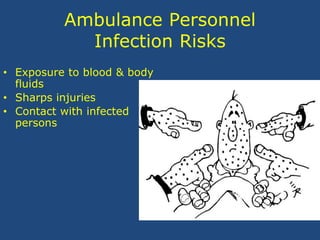
Ambulance Personnel
Infection Risks
• Exposure to blood & body
fluids
• Sharps injuries
• Contact with infected
persons
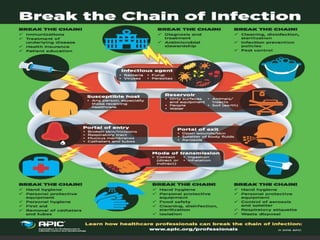
The Chain of Infection
Suscepti
ble
Host
Causativ
e
Organis
m
Reservoir
/
Source
Mode of
Exit
Means of
Transmiss
ion
Mode of
Entry
The individual
Lack of Immunity
Immune-compromised
• Bacteria
• Viruses
• Fungi
• Parasites
• People
• Equipment
• Environment
In secretions & excretions
• Airborne
• Contact
• Inhalation
• Ingestion
• Inoculation
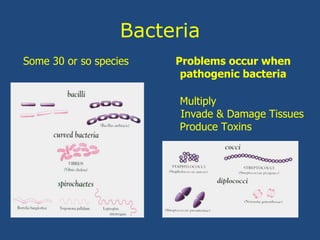
Bacteria
Some 30 or so species Problems occur when
pathogenic bacteria
Multiply
Invade & Damage Tissues
Produce Toxins
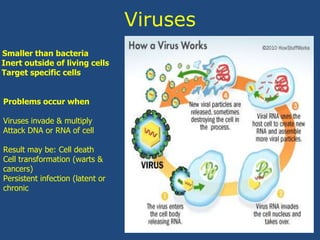
Viruses
Smaller than bacteria
Inert outside of living cells
Target specific cells
Problems occur when
Viruses invade & multiply
Attack DNA or RNA of cell
Result may be: Cell death
Cell transformation (warts &
cancers)
Persistent infection (latent or
chronic
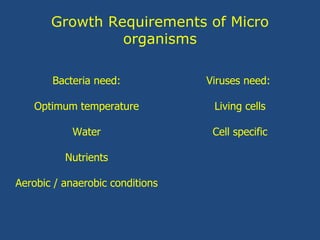
Growth Requirements of Micro
organisms
Bacteria need:
Optimum temperature
Water
Nutrients
Aerobic / anaerobic conditions
Viruses need:
Living cells
Cell specific
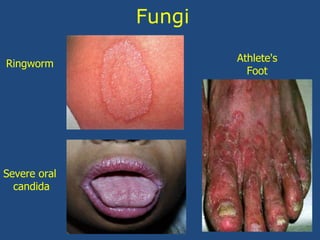
Fungi
Severe oral
candida
Ringworm
Athlete's
Foot
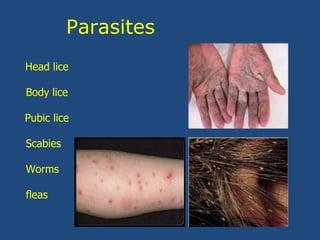
Parasites
Head lice
Body lice
Pubic lice
Scabies
Worms
fleas
Host Characteristics for Risk of
Infection
Age
Immune Status
Physical well being
Psychological well being
Underlying or chronic disease
Hygiene
Other infection
Medical Intervention
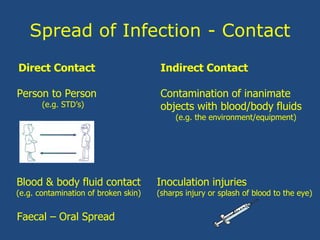
Spread of Infection - Contact
Direct Contact
Person to Person
(e.g. STD’s)
Indirect Contact
Contamination of inanimate
objects with blood/body fluids
(e.g. the environment/equipment)
Blood & body fluid contact
(e.g. contamination of broken skin)
Faecal – Oral Spread
Inoculation injuries
(sharps injury or splash of blood to the eye)
Contemporary issues for healthcare
• Prevalence of healthcare acquired infection
• Protection of healthcare workers
• Antibiotic resistance
• Prion diseases
Antibiotic resistance
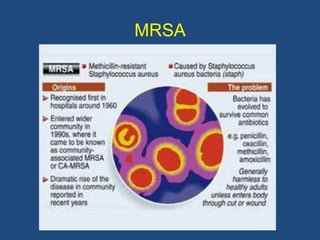
MRSA
Healthcare acquired infection
• Incidence of 10%
• 5,000 deaths per year - direct result of HAI
• 15,000 deaths per year linked to HAI
• Delayed discharge from hospital
• Expensive to treat [£3,500 extra] per patient
• Cost to NHS - £1 billion per year
• Effective hand washing is the most effective
preventative measure
• Dirty environments and re-use of disposable
equipment also blamed
• Numbers are reducing
Hospital acquired infection
• Infection which was neither present nor
incubating at the time of admission
• Includes infection which only becomes
apparent after discharge from hospital but
which was acquired during hospitalisation
(RCN, 1995)
• Also called nosocomial infection
Prion diseases
C-difficile
• Spore producing bacteria
• Usually in relation to use of antibiotics
which wipe out naturally occurring flora
• Can cause severe diarrhoea – inflammation
of colon with release of toxins
• Handwashing with soap & water removes
spores
• Bleach solution for equipment
• Alcohol hand rub not effective
• Use wipes and hand gel
Other concerns
• SARS
• Pandemic flu
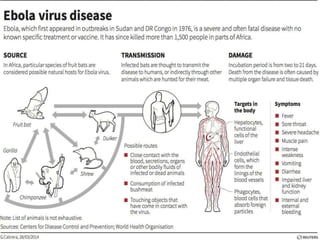
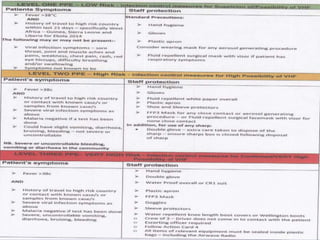
• Ebola (Viral
haemorrhagic
fevers) –
• keep a watch for
future advice on
stations/ hubs re
current concerns &
risks
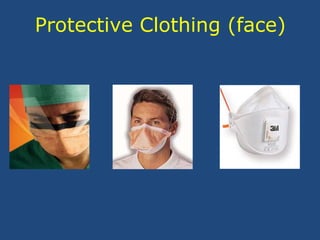
• Use face mask and
goggles or surgical
mask with visor
• Assess risk
Hand Hygiene
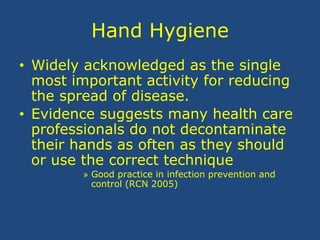
• Widely acknowledged as the single
most important activity for reducing
the spread of disease.
• Evidence suggests many health care
professionals do not decontaminate
their hands as often as they should
or use the correct technique
Âť Good practice in infection prevention and
control (RCN 2005)
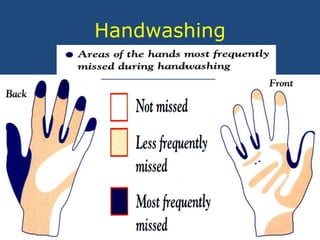
Handwashing
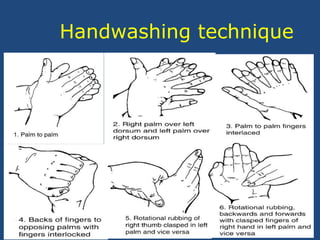
Handwashing technique
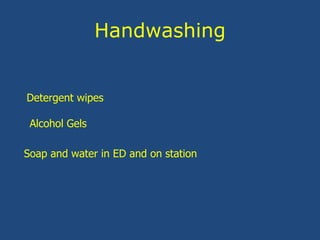
Handwashing
Detergent wipes
Alcohol Gels
Soap and water in ED and on station
Hand Preparation
• Keep nails short, clean and polish
free
• Avoid wearing jewellery especially
rings with stones or ridges.
• Artificial nails must not be worn
• Any cuts or abrasions need covering
with waterproof dressing
• Remove watch and roll up sleeves
before washing hands and wrists
• Use soap and hot water when
available
Universal infection control precautions
• Devised in US in the 1980’s in response to
growing threat from HIV and hepatitis B
• Not confined to HIV and hepatitis B
• Treat ALL patients as a potential bio-hazard
• Adopt universal routine safe infection control
practices to protect patients, self and
colleagues from infection
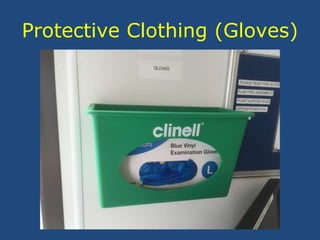
Protective Clothing (Gloves)
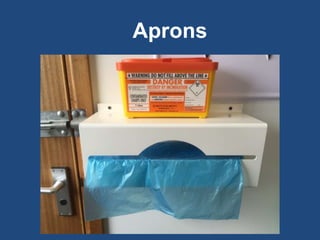
Aprons
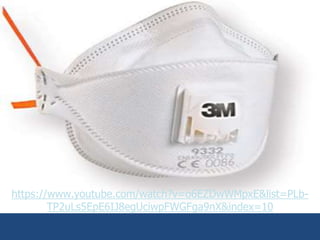
Protective Clothing (face)
https://www.youtube.com/watch?v=o6EZDwWMpxE&list=PLb-
TP2uLs5EpE6IJ8egUciwpFWGFga9nX&index=10
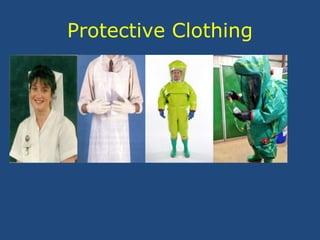
Protective Clothing
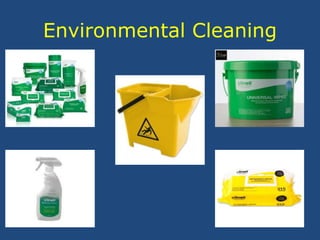
Environmental Cleaning
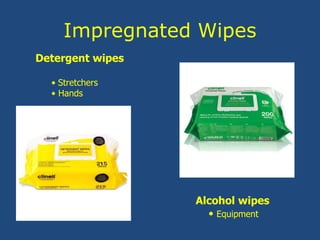
Impregnated Wipes
Detergent wipes
• Stretchers
• Hands
Alcohol wipes
• Equipment
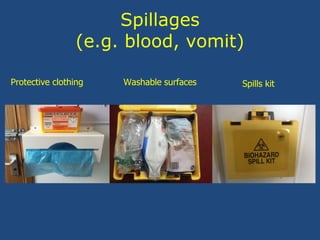
Spillages
(e.g. blood, vomit)
Protective clothing Washable surfaces Spills kit
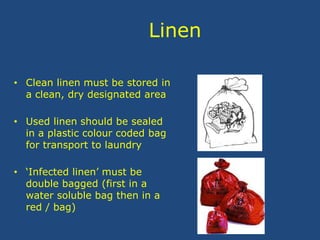
Linen
• Clean linen must be stored in
a clean, dry designated area
• Used linen should be sealed
in a plastic colour coded bag
for transport to laundry
• ‘Infected linen’ must be
double bagged (first in a
water soluble bag then in a
red / bag)
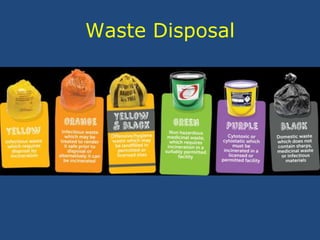
Waste Disposal
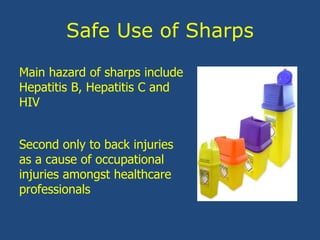
Safe Use of Sharps
Main hazard of sharps include
Hepatitis B, Hepatitis C and
HIV
Second only to back injuries
as a cause of occupational
injuries amongst healthcare
professionals
Safe Handling & disposal
• Sharps are not passed from hand to hand
• Handling is kept to a minimum
• Syringes or needles are not dismantled by hand
and are disposed of as a single unit
• Needles are never re-sheathed
• Sharp containers are not filled more than two
thirds
• Sharps are disposed of at point of use
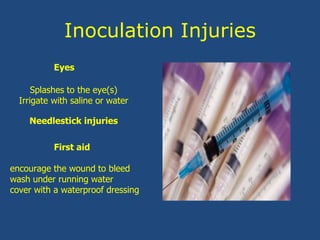
Inoculation Injuries
First aid
encourage the wound to bleed
wash under running water
cover with a waterproof dressing
Splashes to the eye(s)
Irrigate with saline or water
Needlestick injuries
Eyes
Further advice
Report incident to designated person
- do you know who this is?
Complete accident book / form
- details of source patient, if known
Seek medical advice
-even if you know your immune status
-May need to go to ED
And finally ……
• http://www.youtube.com/watch?v=z
xlQn7KaCNU

Infection control

  • 1.
  • 2.
    The nature ofinfection • Micro-organisms - bacteria, fungi, viruses, protozoa and worms • Most are harmless [non-pathogenic] • Pathogenic organisms can cause infection • Infection exists when pathogenic organisms enter the body, reproduce and cause disease
  • 3.
    Ambulance Personnel Infection Risks •Exposure to blood & body fluids • Sharps injuries • Contact with infected persons
  • 4.
    The Chain ofInfection Suscepti ble Host Causativ e Organis m Reservoir / Source Mode of Exit Means of Transmiss ion Mode of Entry The individual Lack of Immunity Immune-compromised • Bacteria • Viruses • Fungi • Parasites • People • Equipment • Environment In secretions & excretions • Airborne • Contact • Inhalation • Ingestion • Inoculation
  • 6.
    Bacteria Some 30 orso species Problems occur when pathogenic bacteria Multiply Invade & Damage Tissues Produce Toxins
  • 7.
    Viruses Smaller than bacteria Inertoutside of living cells Target specific cells Problems occur when Viruses invade & multiply Attack DNA or RNA of cell Result may be: Cell death Cell transformation (warts & cancers) Persistent infection (latent or chronic
  • 8.
    Growth Requirements ofMicro organisms Bacteria need: Optimum temperature Water Nutrients Aerobic / anaerobic conditions Viruses need: Living cells Cell specific
  • 9.
  • 10.
    Parasites Head lice Body lice Pubiclice Scabies Worms fleas
  • 11.
    Host Characteristics forRisk of Infection Age Immune Status Physical well being Psychological well being Underlying or chronic disease Hygiene Other infection Medical Intervention
  • 12.
    Spread of Infection- Contact Direct Contact Person to Person (e.g. STD’s) Indirect Contact Contamination of inanimate objects with blood/body fluids (e.g. the environment/equipment) Blood & body fluid contact (e.g. contamination of broken skin) Faecal – Oral Spread Inoculation injuries (sharps injury or splash of blood to the eye)
  • 13.
    Contemporary issues forhealthcare • Prevalence of healthcare acquired infection • Protection of healthcare workers • Antibiotic resistance • Prion diseases
  • 14.
  • 15.
  • 16.
    Healthcare acquired infection •Incidence of 10% • 5,000 deaths per year - direct result of HAI • 15,000 deaths per year linked to HAI • Delayed discharge from hospital • Expensive to treat [£3,500 extra] per patient • Cost to NHS - £1 billion per year • Effective hand washing is the most effective preventative measure • Dirty environments and re-use of disposable equipment also blamed • Numbers are reducing
  • 17.
    Hospital acquired infection •Infection which was neither present nor incubating at the time of admission • Includes infection which only becomes apparent after discharge from hospital but which was acquired during hospitalisation (RCN, 1995) • Also called nosocomial infection
  • 18.
  • 19.
    C-difficile • Spore producingbacteria • Usually in relation to use of antibiotics which wipe out naturally occurring flora • Can cause severe diarrhoea – inflammation of colon with release of toxins • Handwashing with soap & water removes spores • Bleach solution for equipment • Alcohol hand rub not effective • Use wipes and hand gel
  • 20.
    Other concerns • SARS •Pandemic flu • Ebola (Viral haemorrhagic fevers) – • keep a watch for future advice on stations/ hubs re current concerns & risks • Use face mask and goggles or surgical mask with visor • Assess risk
  • 24.
    Hand Hygiene • Widelyacknowledged as the single most important activity for reducing the spread of disease. • Evidence suggests many health care professionals do not decontaminate their hands as often as they should or use the correct technique » Good practice in infection prevention and control (RCN 2005)
  • 25.
  • 26.
  • 27.
    Handwashing Detergent wipes Alcohol Gels Soapand water in ED and on station
  • 28.
    Hand Preparation • Keepnails short, clean and polish free • Avoid wearing jewellery especially rings with stones or ridges. • Artificial nails must not be worn • Any cuts or abrasions need covering with waterproof dressing • Remove watch and roll up sleeves before washing hands and wrists • Use soap and hot water when available
  • 29.
    Universal infection controlprecautions • Devised in US in the 1980’s in response to growing threat from HIV and hepatitis B • Not confined to HIV and hepatitis B • Treat ALL patients as a potential bio-hazard • Adopt universal routine safe infection control practices to protect patients, self and colleagues from infection
  • 30.
  • 31.
  • 32.
  • 33.
  • 34.
  • 35.
  • 36.
    Impregnated Wipes Detergent wipes •Stretchers • Hands Alcohol wipes • Equipment
  • 37.
    Spillages (e.g. blood, vomit) Protectiveclothing Washable surfaces Spills kit
  • 38.
    Linen • Clean linenmust be stored in a clean, dry designated area • Used linen should be sealed in a plastic colour coded bag for transport to laundry • ‘Infected linen’ must be double bagged (first in a water soluble bag then in a red / bag)
  • 39.
  • 40.
    Safe Use ofSharps Main hazard of sharps include Hepatitis B, Hepatitis C and HIV Second only to back injuries as a cause of occupational injuries amongst healthcare professionals
  • 41.
    Safe Handling &disposal • Sharps are not passed from hand to hand • Handling is kept to a minimum • Syringes or needles are not dismantled by hand and are disposed of as a single unit • Needles are never re-sheathed • Sharp containers are not filled more than two thirds • Sharps are disposed of at point of use
  • 42.
    Inoculation Injuries First aid encouragethe wound to bleed wash under running water cover with a waterproof dressing Splashes to the eye(s) Irrigate with saline or water Needlestick injuries Eyes
  • 43.
    Further advice Report incidentto designated person - do you know who this is? Complete accident book / form - details of source patient, if known Seek medical advice -even if you know your immune status -May need to go to ED
  • 44.
    And finally …… •http://www.youtube.com/watch?v=z xlQn7KaCNU