GETTING BETTER
AT WHAT WE DO
Passion – Vision - Practice
LEARNING TOGETHER
In this module, we will. . .
1. Reconsider the place we hold in the lives of students.
2. Reconnect with the reasons we are educators.
3. Examine the importance of passion, vision, and detail in
school leadership.
4. Consider how schools strive to get better.
OUR PASSION
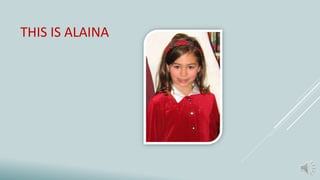
THIS IS ALAINA
A STUDENT YOU KNOW
GETTING BETTER AT WHAT WE DO
REFLECTION & DISCUSSION
1. Why did you become an educator?
Remember when you made the decision? Why?
2. Who inspired you to become an educator?
3. What legacy do you want to leave when your
career is over?
Click to restart after activity
OUR VISION
VISION AND BELIEFS
 Do you believe that. . .
• the people closest to the students can direct the
improvement of their schools?
• those people bring to the table a wealth of experience,
talent, and ingenuity?
• a school improves by strengthening professional practice?
• the work of school improvement is best accomplished by
teams?
 Then you’re in the right place! Great vision!
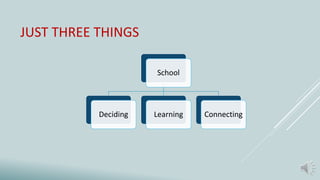
JUST THREE THINGS
School
Deciding Learning Connecting
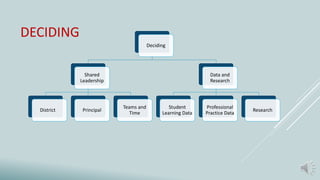
DECIDING
Deciding
Shared
Leadership
District Principal
Teams and
Time
Data and
Research
Student
Learning Data
Professional
Practice Data
Research
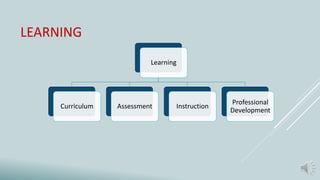
LEARNING
Learning
Curriculum Assessment Instruction
Professional
Development
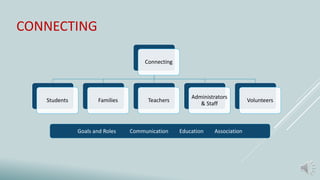
CONNECTING
Connecting
Students Families Teachers
Administrators
& Staff
Volunteers
Goals and Roles Communication Education Association
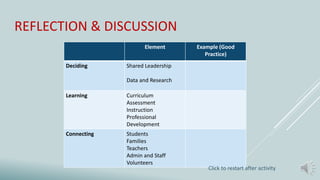
REFLECTION & DISCUSSION
Element Example (Good
Practice)
Deciding Shared Leadership
Data and Research
Learning Curriculum
Assessment
Instruction
Professional
Development
Connecting Students
Families
Teachers
Admin and Staff
Volunteers
Click to restart after activity
OUR PRACTICE
MORE THAN VISION
"Many leaders pride themselves on setting high-level direction: I'll set
the vision and stay out of the details. It's true that a compelling vision is
critical. But it's not enough. Big-picture, hands-off leadership isn't likely
to work in a change situation, because the hardest part of change—the
paralyzing part—is precisely in the details." (p.53)
Heath, C. & Heath, D. (2010). Switch: How to change things when
change is hard. New York, NY: Broadway Books
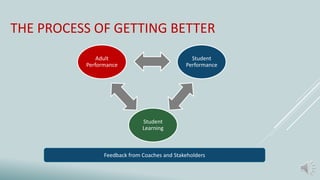
THE PROCESS OF GETTING BETTER
Feedback from Coaches and Stakeholders
Student
Performance
Student
Learning
Adult
Performance
REFLECTION & DISCUSSION
Putting Faces on the Process
 Who do you turn to for help in getting better at what you
do—your professional practice?
 How does that person help?
Click to restart after activity
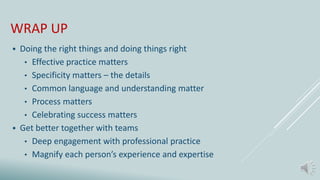
WRAP UP
 Doing the right things and doing things right
• Effective practice matters
• Specificity matters – the details
• Common language and understanding matter
• Process matters
• Celebrating success matters
 Get better together with teams
• Deep engagement with professional practice
• Magnify each person’s experience and expertise
WHAT WE LEARNED TOGETHER
1. Did we reconsider the place we hold in the lives of students?
2. Did we reconnect with the reasons we are educators?
3. Did we examine the importance of passion, vision, and detail in
school leadership?
4. Did we consider how schools strive to get better?

Indistar® Training Modules: Getting Better At What We Do

  • 1.
    GETTING BETTER AT WHATWE DO Passion – Vision - Practice
  • 2.
    LEARNING TOGETHER In thismodule, we will. . . 1. Reconsider the place we hold in the lives of students. 2. Reconnect with the reasons we are educators. 3. Examine the importance of passion, vision, and detail in school leadership. 4. Consider how schools strive to get better.
  • 3.
  • 4.
  • 6.
  • 7.
  • 8.
    REFLECTION & DISCUSSION 1.Why did you become an educator? Remember when you made the decision? Why? 2. Who inspired you to become an educator? 3. What legacy do you want to leave when your career is over? Click to restart after activity
  • 9.
  • 10.
    VISION AND BELIEFS Do you believe that. . . • the people closest to the students can direct the improvement of their schools? • those people bring to the table a wealth of experience, talent, and ingenuity? • a school improves by strengthening professional practice? • the work of school improvement is best accomplished by teams?  Then you’re in the right place! Great vision!
  • 11.
  • 12.
    DECIDING Deciding Shared Leadership District Principal Teams and Time Dataand Research Student Learning Data Professional Practice Data Research
  • 13.
  • 14.
    CONNECTING Connecting Students Families Teachers Administrators &Staff Volunteers Goals and Roles Communication Education Association
  • 15.
    REFLECTION & DISCUSSION ElementExample (Good Practice) Deciding Shared Leadership Data and Research Learning Curriculum Assessment Instruction Professional Development Connecting Students Families Teachers Admin and Staff Volunteers Click to restart after activity
  • 16.
  • 17.
    MORE THAN VISION "Manyleaders pride themselves on setting high-level direction: I'll set the vision and stay out of the details. It's true that a compelling vision is critical. But it's not enough. Big-picture, hands-off leadership isn't likely to work in a change situation, because the hardest part of change—the paralyzing part—is precisely in the details." (p.53) Heath, C. & Heath, D. (2010). Switch: How to change things when change is hard. New York, NY: Broadway Books
  • 18.
    THE PROCESS OFGETTING BETTER Feedback from Coaches and Stakeholders Student Performance Student Learning Adult Performance
  • 19.
    REFLECTION & DISCUSSION PuttingFaces on the Process  Who do you turn to for help in getting better at what you do—your professional practice?  How does that person help? Click to restart after activity
  • 20.
    WRAP UP  Doingthe right things and doing things right • Effective practice matters • Specificity matters – the details • Common language and understanding matter • Process matters • Celebrating success matters  Get better together with teams • Deep engagement with professional practice • Magnify each person’s experience and expertise
  • 21.
    WHAT WE LEARNEDTOGETHER 1. Did we reconsider the place we hold in the lives of students? 2. Did we reconnect with the reasons we are educators? 3. Did we examine the importance of passion, vision, and detail in school leadership? 4. Did we consider how schools strive to get better?

Editor's Notes

  • #2 Welcome to Getting Better at What We Do.
  • #3 In this module, we will: Reconsider the place we hold in the lives of students. Reconnect with the reasons we are educators. Examine the importance of passion, vision, and detail in school leadership. Consider how schools strive to get better.
  • #4 All educators are passionate about their work. Why is that?
  • #5 Meet Alaina. Alaina has a big brother, a big sister, and a little brother. Her dog is named Junebug and her kitty is named Abby. Alaina loves her new doll, which she named Alexis. Alaina is in first grade.
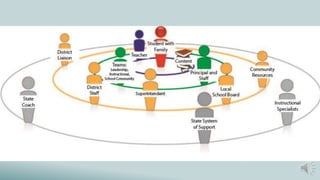
  • #6 A lot of people will support Alaina as she progresses through the grades in school. Her parents. Her schoolmates. Her teachers. Teams of teachers in her school. The principal. People in her community. The district staff and superintendent. The school board. People in the state education department. They are all part of a great support system for Alaina. They all do what they do because they have a passion for helping children succeed.
  • #7 Think of a student you know well. A student in your school or district. A student in a school you work with. Picture this student in your mind. Where are you in this student’s system of support? What is within your reach that would contribute to this student’s success? (At this point stop, and ask all participants to take a sticky note of the student in their mind on a sticky note)
  • #8 As educators, whatever our role, we contribute to students’ success by getting better at what we do. Improving our own professional practice. At some point in our lives, we all made the decision to do work that would benefit children. That is who we are. That is what we do. That is our passion. We always strive to do it better.
  • #9  Pick a partner near you. Or form a triad of three of you. Take turns telling your story by answering each of these three questions in turn: Why did you become an educator? Remember when you made the decision? Why? Who inspired you to become an educator? What legacy do you want to leave when your career is over? We will take 7 minutes for this discussion and then share a few stories with the whole group. [Ask for volunteers to tell a story they heard from a partner that impressed them. Allow about 3 minutes for this.] Click the slide to restart after the activity.
  • #10 Vision is important for educators. Vision is how we see the big picture. Our vision is a projection of our passion. Our vision is rooted in our beliefs.
  • #11 Do you believe that . . . the people closest to the students can direct the improvement of their schools? those people bring to the table a wealth of experience, talent, and ingenuity? a school improves by strengthening professional practice? the work of school improvement is best accomplished by teams? Then you’re in the right place! Great vision!
  • #12 In our vision of how a successful school operates, we see three core dimensions: Deciding, Learning, and Connecting. This is the vision of a school from 30,000 feet. The long view.
  • #13 Deciding. Deciding defines leadership, how decisions are made and by whom. Deciding includes how a school is organized to make decisions—the organizational structure and the teams. Deciding is how leadership is shared. Deciding includes the processes by which the school examines student performance and professional practice. Deciding is making choices to elevate professional practice – what adults do—that contributes to students’ success.
  • #14 Learning: Learning is the school’s chief enterprise. Everyone is both a teacher and a learner. The learning dimension includes the standards-based curriculum, assessment, instructional planning, classroom culture, and instructional delivery, as well as professional development and training.
  • #15 Connecting: Connecting is the dimension that describes the relationships among people intimately associated with the school—students, their families, teachers, administrators, school staff, and volunteers. What binds these people together? Their common interest in the students served by the school. When the school functions as a community, the people associate with one another and share common values about the education of children. Community, culture, climate are aspects of Connecting, people’s relationships with one another, their common values, their means of communicating and associating with one another. Goals and Roles. Communication. Education. Association.
  • #16 Let’s consider our vision of a school’s three core dimensions—Deciding, Learning, and Connecting. What does each of these look like in a very successful school? What is the ideal? We will work in groups, and each group will discuss one of the three core dimensions and jot down a few Elements and Examples that would describe what this dimension looks like in a very successful school. What are the elements of Deciding, and what is an example of very effective practice in Deciding. In Learning? In Connecting? Elements and Examples of Good Practice. A few of each. We will take 7 minutes for this activity and then report out a few elements and examples. [Divide into groups of 3 or 4 each, with at least 3 groups total. Assign one-third of the groups to discuss Deciding, another third to discuss Learning, and another third to discuss Connecting. 7 minutes to discuss and jot down Elements and Examples of Exemplary Practice. Then 3 minutes to report out a few elements and examples from each dimension.] Click slide to restart after activity.
  • #17 Each of us has a passion for what we do, and we have a vision of what school should be like for every student. Passion and vision are important.
  • #18 Yes, passion and vision are important, but they are not enough. The Heath brothers, in their book Switch, say it this way: "Many leaders pride themselves on setting high-level direction: I'll set the vision and stay out of the details. It's true that a compelling vision is critical. But it's not enough. Big-picture, hands-off leadership isn't likely to work in a change situation, because the hardest part of change—the paralyzing part—is precisely in the details." In a school, there are lots of details, and each one is important. The most important details are people’s professional practices, because that is what directly impacts student learning.
  • #19 In the process of getting better, which is often called school improvement, the adults in the school continuously elevate the quality of what they do—their professional practice. The details. When adults get better at what they do, students get better at what they do, and the result is improved learning. The people in the school often have help—from the district, from coaches, from the state. And they get feedback on how they are doing from these same people as well as from the students, their parents, and others in the community.
  • #20 Think of someone you turn to for help in getting better at what you do – your professional practice. How does that person help? We will take 4 minutes for you to share your thoughts with a partner. Then we will report out a few examples. [Take 4 minutes for them to share their thoughts with a partner. Then take another 3 minutes for sharing with the whole group. Click slide to restart after activity.
  • #21 We all begin with a passion for what we do that is rooted in our desire to help kids succeed. We have a vision of what a very successful school looks like, and we want that vision to be a reality for every school. For a school to get better, every adult in the school is always getting better at what they do -- their professional practice. We get better best when we work as a team. As a team we dig deep into what constitutes effective practice. We help each other get better.
  • #22 Thank you very much for your thoughts today on passion, vision, and practice. Thank you for learning together. [Ask the participants to please complete the What We Learned Together form. Collect the form.]