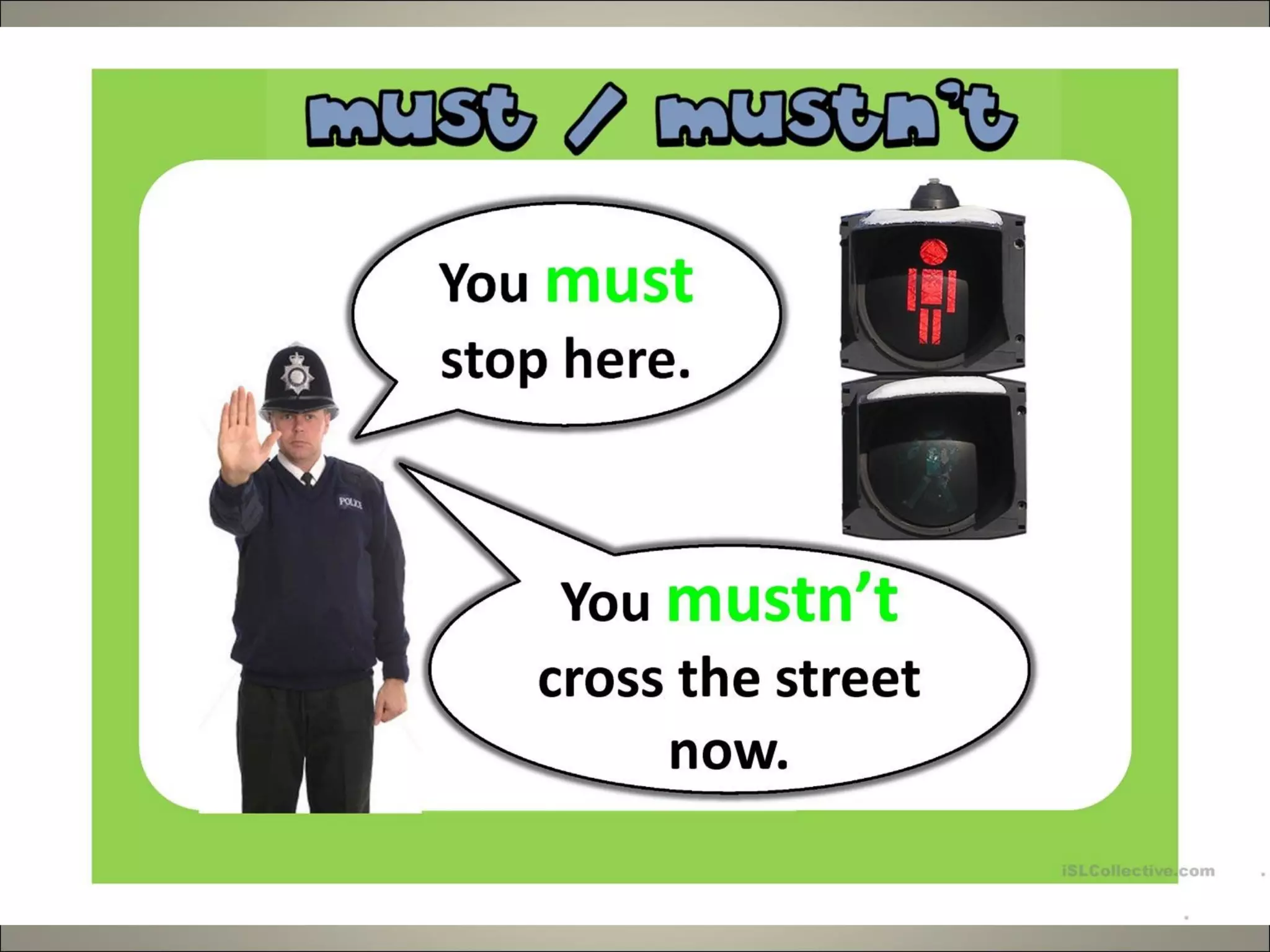
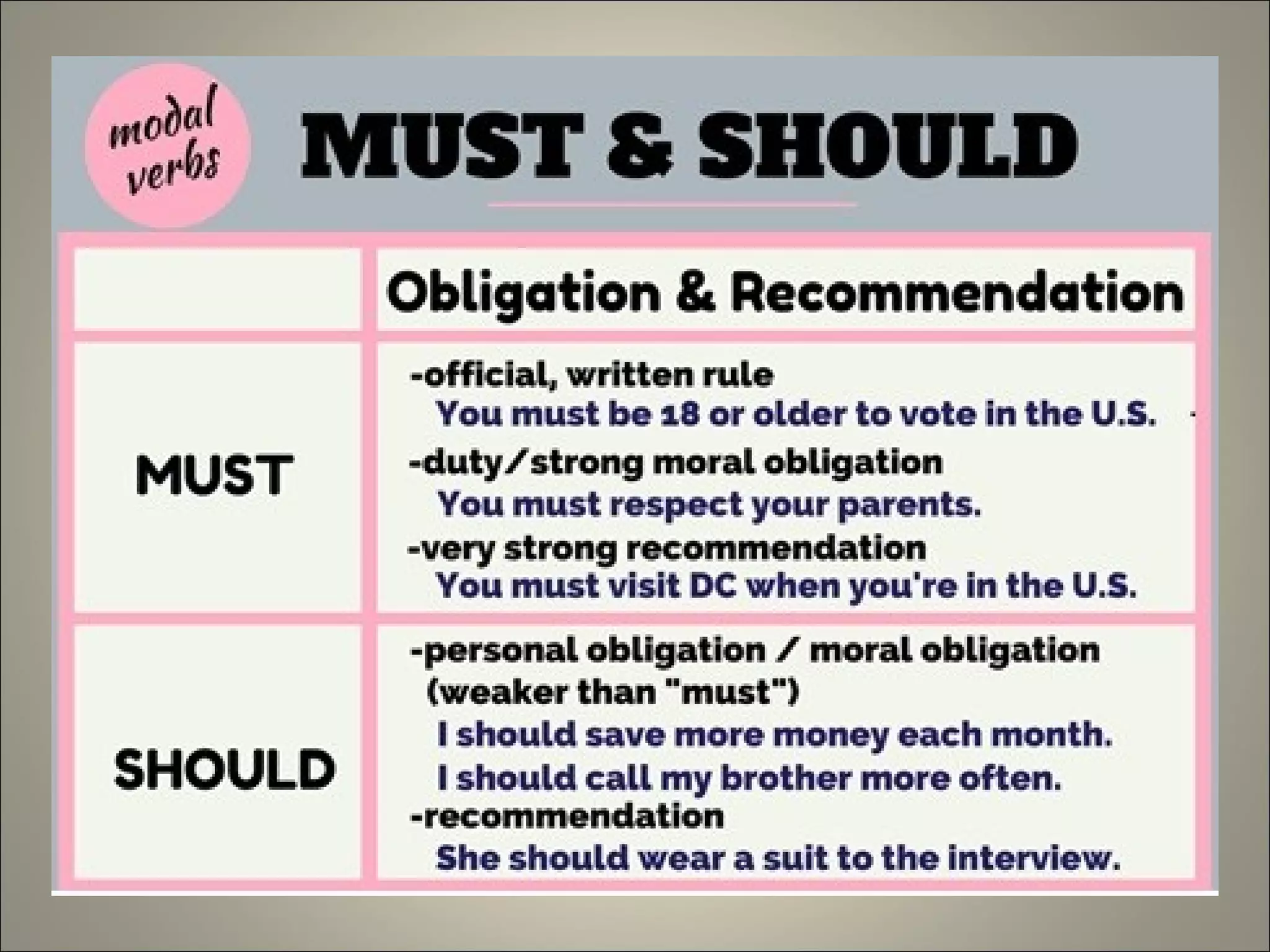
The document discusses using "should" and "shouldn't" to give advice and ask for advice. It provides examples of using "should" and "shouldn't" affirmatively, negatively, and as questions to talk about common activities like jogging, studying, using a calculator, taking a taxi, smoking, wearing a helmet, and more. It then shifts to discussing using "must" and "mustn't" to express obligations, prohibitions, and things that are required or forbidden. Examples are given like following the speed limit, texting in class, paying bills, getting haircuts, eating, watching movies, and more.