

•Bhavin
•Darshan
•Amogh
•Neelakandan
•Amit
•Parminder
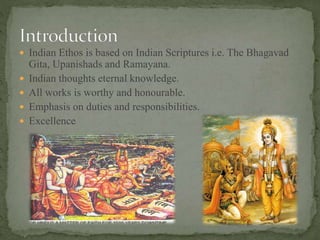
 Indian Ethos is based on Indian Scriptures i.e. The Bhagavad
Gita, Upanishads and Ramayana.
 Indian thoughts eternal knowledge.
 All works is worthy and honourable.
 Emphasis on duties and responsibilities.
 Excellence
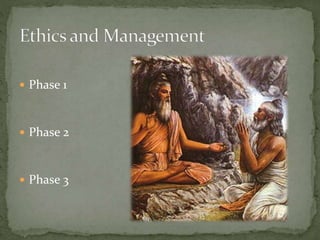
 Phase 1
 Phase 2
 Phase 3
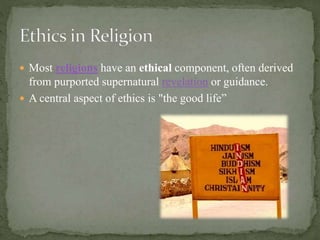
 Most religions have an ethical component, often derived
from purported supernatural revelation or guidance.
 A central aspect of ethics is "the good life”
 1. The Basic Principles:
a) Tat Tvam Asi: You are That (Supreme) - Everybody
can make himself a Genius.
b) Aham Brahmasmi: I have immense potential. I can
make the impossible possible.
 2. Why Work?
Atmano Mokshaya Jagat Hitaaya Ca:
- For my personal growth
- For the Welfare of the World
 3. What is work?
a. Yagnayacharatah karma: Work is to be done with the
spirit of Yagna (Teamwork, Selflessness).
b. Parasparam Bhavayantah: Nurture each other (Win-win
approach).
 4. How to work?
Seva + Tyag:
Serve others. Give your best for the good of others (CSR)
 5. Spirit of Work:
Yogah Karmasu Kaushalam: Dexterity & Excellence in
action is Yoga.
The Resources:
 a) Sukshma or the subtle subjective, intangible factors are
equally important than sthula or gross, concrete, objective,
tangible factors.
 b) Karma-Kshetra is Dharma-Kshetra-implies that one
should treat the workplace as sacred and keep it clean and
bring in orderliness and cleanliness.
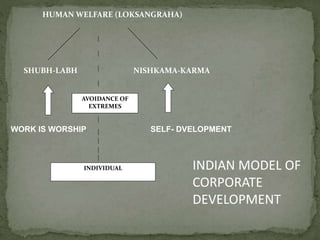
AVOIDANCE OF
EXTREMES
INDIVIDUAL
HUMAN WELFARE (LOKSANGRAHA)
SHUBH-LABH NISHKAMA-KARMA
WORK IS WORSHIP SELF- DVELOPMENT
INDIAN MODEL OF
CORPORATE
DEVELOPMENT
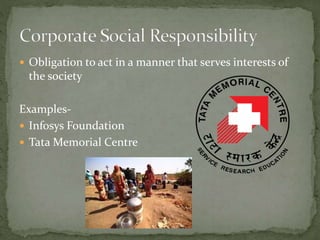
 Obligation to act in a manner that serves interests of
the society
Examples-
 Infosys Foundation
 Tata Memorial Centre
 What is Spirituality
 Indian ethos and spirituality
- Upanishads
- Gita
 Relevance of workplace spirituality in today’s context
 Spirituality and organizational behavior and organizational
performance
 “Ethics creates the Energy, which creates Excellence, which
builds the Economy without disturbing the Ecology”.
 Wipro
 Birla group
 Each and every situation can be met with effectively if
one takes time to reflect over it. Reflection with a
tranquil mind helps in drawing out solutions from
within.
 It leads to a more coherent and complete
understanding.
 People are now realizing that Morals are more
important than money, materials, marketing and
management.
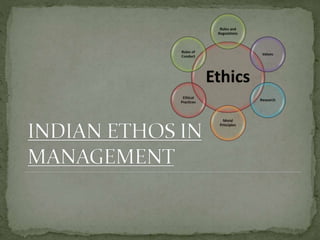
Indian ethos in management

Indian ethos in management

  • 1.
  • 3.
     Indian Ethosis based on Indian Scriptures i.e. The Bhagavad Gita, Upanishads and Ramayana.  Indian thoughts eternal knowledge.  All works is worthy and honourable.  Emphasis on duties and responsibilities.  Excellence
  • 4.
     Phase 1 Phase 2  Phase 3
  • 5.
     Most religionshave an ethical component, often derived from purported supernatural revelation or guidance.  A central aspect of ethics is "the good life”
  • 6.
     1. TheBasic Principles: a) Tat Tvam Asi: You are That (Supreme) - Everybody can make himself a Genius. b) Aham Brahmasmi: I have immense potential. I can make the impossible possible.  2. Why Work? Atmano Mokshaya Jagat Hitaaya Ca: - For my personal growth - For the Welfare of the World
  • 7.
     3. Whatis work? a. Yagnayacharatah karma: Work is to be done with the spirit of Yagna (Teamwork, Selflessness). b. Parasparam Bhavayantah: Nurture each other (Win-win approach).  4. How to work? Seva + Tyag: Serve others. Give your best for the good of others (CSR)  5. Spirit of Work: Yogah Karmasu Kaushalam: Dexterity & Excellence in action is Yoga.
  • 8.
    The Resources:  a)Sukshma or the subtle subjective, intangible factors are equally important than sthula or gross, concrete, objective, tangible factors.  b) Karma-Kshetra is Dharma-Kshetra-implies that one should treat the workplace as sacred and keep it clean and bring in orderliness and cleanliness.
  • 9.
    AVOIDANCE OF EXTREMES INDIVIDUAL HUMAN WELFARE(LOKSANGRAHA) SHUBH-LABH NISHKAMA-KARMA WORK IS WORSHIP SELF- DVELOPMENT INDIAN MODEL OF CORPORATE DEVELOPMENT
  • 10.
     Obligation toact in a manner that serves interests of the society Examples-  Infosys Foundation  Tata Memorial Centre
  • 11.
     What isSpirituality  Indian ethos and spirituality - Upanishads - Gita  Relevance of workplace spirituality in today’s context  Spirituality and organizational behavior and organizational performance
  • 12.
     “Ethics createsthe Energy, which creates Excellence, which builds the Economy without disturbing the Ecology”.  Wipro  Birla group
  • 13.
     Each andevery situation can be met with effectively if one takes time to reflect over it. Reflection with a tranquil mind helps in drawing out solutions from within.  It leads to a more coherent and complete understanding.  People are now realizing that Morals are more important than money, materials, marketing and management.