IMPORTANCE OF BRAINSTORMING
 OBJECTIVES:
 By the end of the session ,the participants will be able
to :
 describe the importance of Brainstorming
 analyze various forms of brainstorming
 use the brainstorming technique
effectively
IMPORTANCE OF BRAINSTORMING
WARM UP(GROUP TASK)the sentence
Complete the following sentence with all possible
answers
 Ms sara wants to leave the job……………
 Time : 2 mins
 The most unusual ideas: 20 marks bonus
 The more the ideas are generated,
 the more the marks will be.1 mark
 per idea
Importance of Brainstorming
 TASK 2:
 QUESTIONARE
 THINK,PAIR,SHARE
IMPORTANCE OF BRAINSTORMING
 Origin: Osborn’s method
group thinking for an advertising company in session
1939
 4 Rules of Osborn’s method:
 1..Focus on quality
 2.Withhold criticism
 3.Welcome unusual ideas
 4.Combine and improve ideas
IMPORTANCE OF BRAINSTORMING
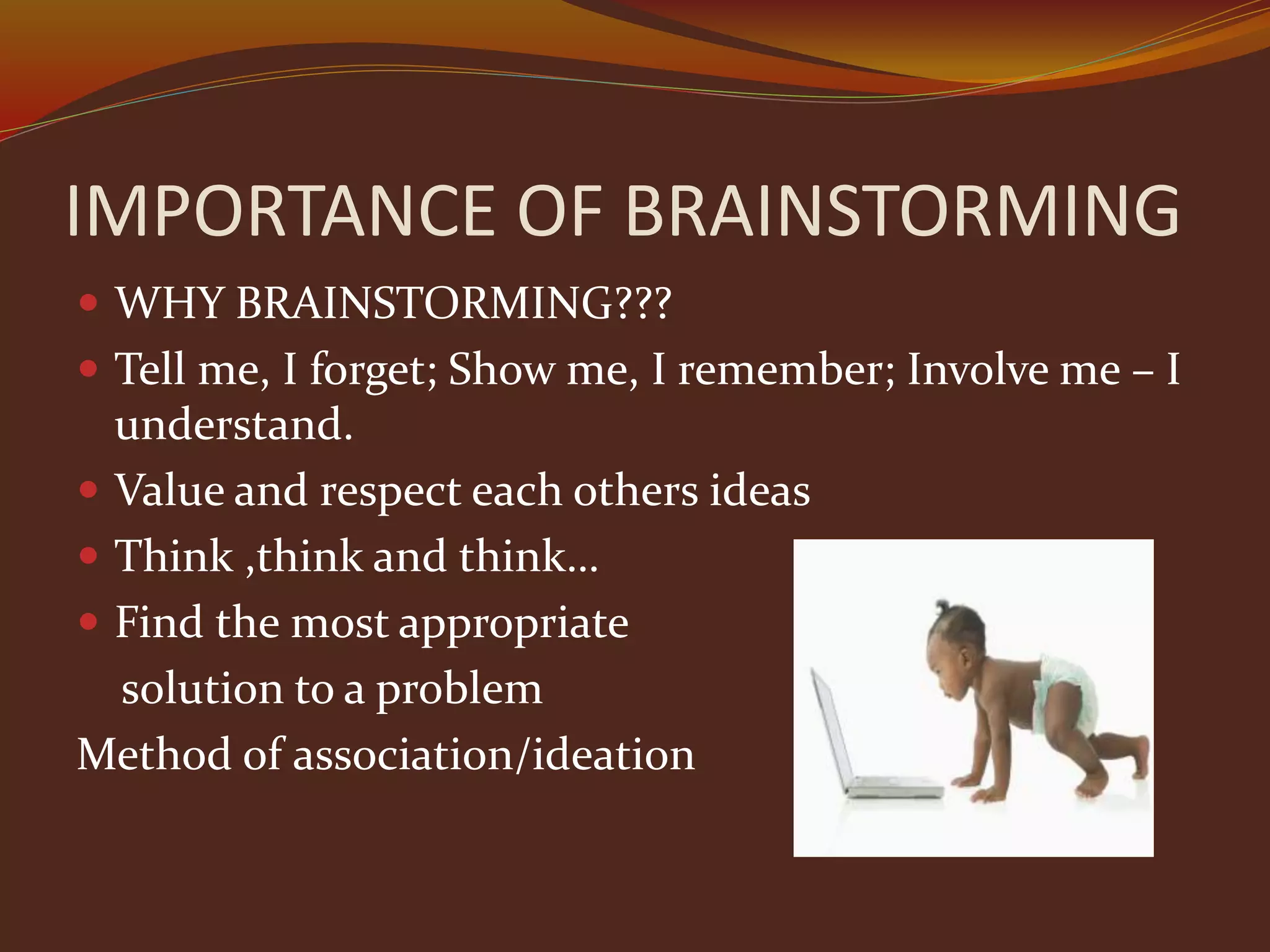
 WHY BRAINSTORMING???
 Tell me, I forget; Show me, I remember; Involve me – I
understand.
 Value and respect each others ideas
 Think ,think and think…
 Find the most appropriate
solution to a problem
Method of association/ideation
IMPORTANCE OF BRAINSTORMING
 WAYS TO ADOPT:
 GRAPHIC ORGANISER
TEXT WITH IMAGES
 PICTURES
 COMPLEXED DIAGRAMS
 VISUAL RECORDINGS
 AUDIO NOTES
 FISH BONE CHARTS
 UP LOAD VIDEOS
 SIMPLE MIND MAPPING/WEB
IMPORTANCE OF BRAINSTORMING
TYPES OF BRAINSTORMING
TYPES STRUCTURED/
ONE AT A TIME
METHOD
UNSTRUCTURD/
OPEN DOOR
SILENT/WRITE
IT DOWN
ONE IDEA FROM
EACH PERSON IN
SEQUENCE
PARTICIPANTS
SIMPLY
CONTRIBUTE
IDEAS AS THEY
COME TO MIND
PARTICIPANTS
WRITE IDEAS
INDIVIDUALLY
ON STICKY BACK
NOTES/SLIPS OF
PAPERS
IMPORTANCE OF BRAINSTORMING
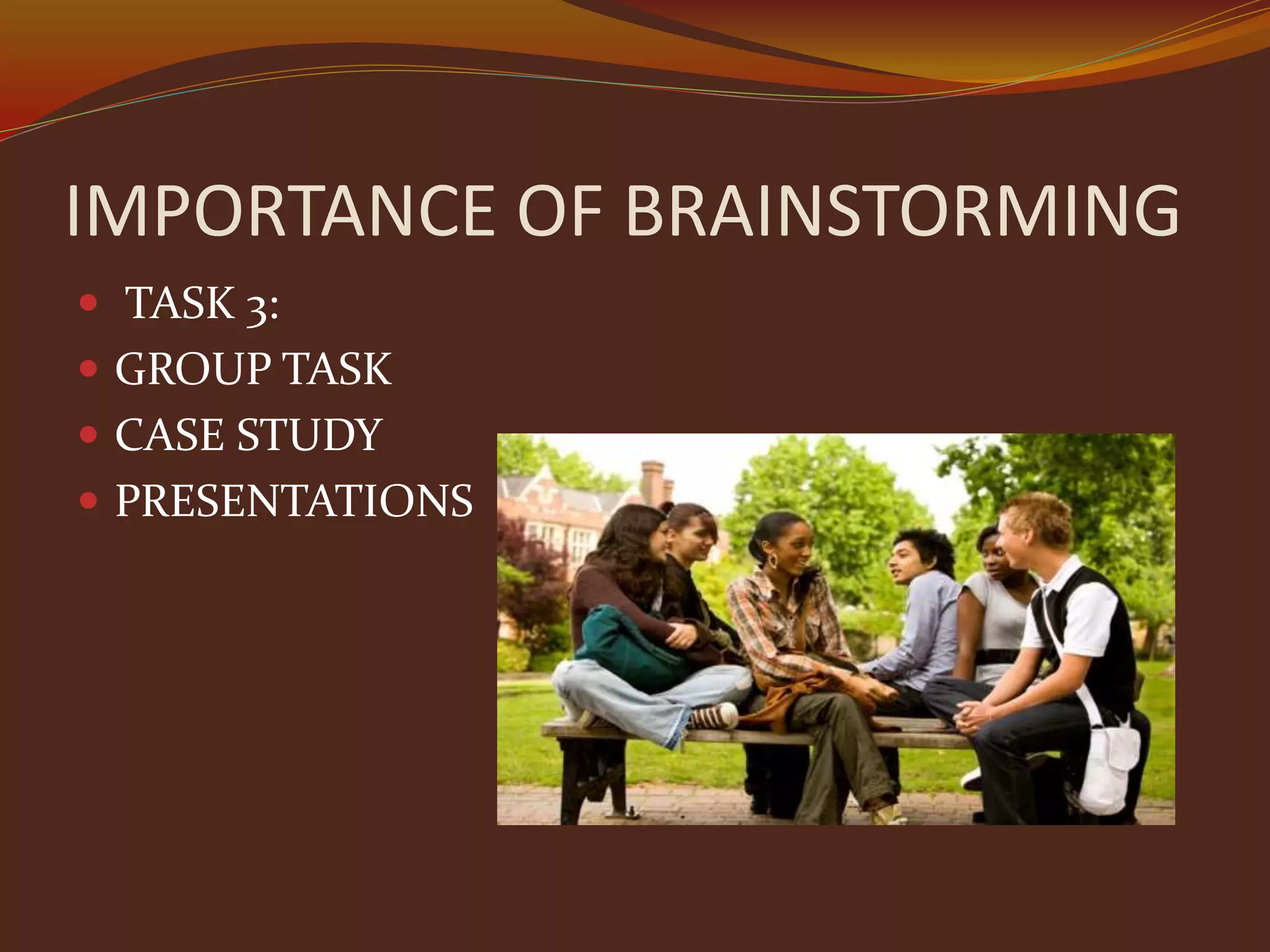
 TASK 3:
 GROUP TASK
 CASE STUDY
 PRESENTATIONS
IMPORTANCE OF BRAINSTORMING
Points to remember for effective brainstorming:
 Focus brainstorming on a specific goal
 Show all ideas to all the participants
 No discussion during brainstorming
 No criticizing and evaluating of others ideas
 Build on the ideas of other members /piggy backing
 Set and keep time limit
 It can be in the beginning ,middle or end
 Have fun and keep the session relaxed
EVALUATION
 Objectives are achieved or not
 Evaluation forms
 Measuring abilities before and after training(Comparisons)
 Integrating it with Blooms Taxonomy of learning domains
 Follow up report 1 Class observations
 Follow up report 2 feed back
 Follow up report 3 surveys
 Monitoring system
 Peer observations
 Did the trainees like and enjoy the training?
 Did they consider the training relevant?
 Was it a good use of their time?
 Did they like the venue, the style, timing,
domestics, etc?

Did the trainees learn what intended to be
taught?
 Did the trainee experience what was intended
for them to experience?
 What is the extent of advancement or change
in the trainees after the training, in the
direction or area that was intended?
relevant skills and knowledge used
• Did the trainees put their learning into
effect when back on the job?
• Were the relevant skills and knowledge
used
• Was there noticeable and measurable
change in the activity and performance of
the trainees when back in their roles?
• Was the change in behaviour and new
level of knowledge sustained?
• Would the trainee be able to transfer
their learning to another person?
• Is the trainee aware of their change in
behaviour, knowledge, skill level?
THANK
YOU

Importance of brainstormin

  • 2.
    IMPORTANCE OF BRAINSTORMING OBJECTIVES:  By the end of the session ,the participants will be able to :  describe the importance of Brainstorming  analyze various forms of brainstorming  use the brainstorming technique effectively
  • 3.
    IMPORTANCE OF BRAINSTORMING WARMUP(GROUP TASK)the sentence Complete the following sentence with all possible answers  Ms sara wants to leave the job……………  Time : 2 mins  The most unusual ideas: 20 marks bonus  The more the ideas are generated,  the more the marks will be.1 mark  per idea
  • 4.
    Importance of Brainstorming TASK 2:  QUESTIONARE  THINK,PAIR,SHARE
  • 5.
    IMPORTANCE OF BRAINSTORMING Origin: Osborn’s method group thinking for an advertising company in session 1939  4 Rules of Osborn’s method:  1..Focus on quality  2.Withhold criticism  3.Welcome unusual ideas  4.Combine and improve ideas
  • 6.
    IMPORTANCE OF BRAINSTORMING WHY BRAINSTORMING???  Tell me, I forget; Show me, I remember; Involve me – I understand.  Value and respect each others ideas  Think ,think and think…  Find the most appropriate solution to a problem Method of association/ideation
  • 7.
    IMPORTANCE OF BRAINSTORMING WAYS TO ADOPT:  GRAPHIC ORGANISER TEXT WITH IMAGES  PICTURES  COMPLEXED DIAGRAMS  VISUAL RECORDINGS  AUDIO NOTES  FISH BONE CHARTS  UP LOAD VIDEOS  SIMPLE MIND MAPPING/WEB
  • 8.
  • 9.
    TYPES OF BRAINSTORMING TYPESSTRUCTURED/ ONE AT A TIME METHOD UNSTRUCTURD/ OPEN DOOR SILENT/WRITE IT DOWN ONE IDEA FROM EACH PERSON IN SEQUENCE PARTICIPANTS SIMPLY CONTRIBUTE IDEAS AS THEY COME TO MIND PARTICIPANTS WRITE IDEAS INDIVIDUALLY ON STICKY BACK NOTES/SLIPS OF PAPERS
  • 10.
    IMPORTANCE OF BRAINSTORMING TASK 3:  GROUP TASK  CASE STUDY  PRESENTATIONS
  • 11.
    IMPORTANCE OF BRAINSTORMING Pointsto remember for effective brainstorming:  Focus brainstorming on a specific goal  Show all ideas to all the participants  No discussion during brainstorming  No criticizing and evaluating of others ideas  Build on the ideas of other members /piggy backing  Set and keep time limit  It can be in the beginning ,middle or end  Have fun and keep the session relaxed
  • 12.
    EVALUATION  Objectives areachieved or not  Evaluation forms  Measuring abilities before and after training(Comparisons)  Integrating it with Blooms Taxonomy of learning domains  Follow up report 1 Class observations  Follow up report 2 feed back  Follow up report 3 surveys  Monitoring system  Peer observations
  • 13.
     Did thetrainees like and enjoy the training?  Did they consider the training relevant?  Was it a good use of their time?  Did they like the venue, the style, timing, domestics, etc?  Did the trainees learn what intended to be taught?  Did the trainee experience what was intended for them to experience?  What is the extent of advancement or change in the trainees after the training, in the direction or area that was intended? relevant skills and knowledge used
  • 14.
    • Did thetrainees put their learning into effect when back on the job? • Were the relevant skills and knowledge used • Was there noticeable and measurable change in the activity and performance of the trainees when back in their roles? • Was the change in behaviour and new level of knowledge sustained? • Would the trainee be able to transfer their learning to another person? • Is the trainee aware of their change in behaviour, knowledge, skill level?
  • 15.