Film and New Technology
As with any business, the film industry relies on
 technological advances to facilitate production
      and distribution of the product. Digital
       technologies and the convergence of
   communication and information technologies
promise to play important roles in marketing and
exhibition. Digital technology is literally changing
  films themselves, as well as circumstances of
                 their consumption
The Numbers in a nutshell
Early film exhibitors created beautiful movie places for audiences to watch
movies in high style

Now a days exhibitors have embraced the old and new technologies from
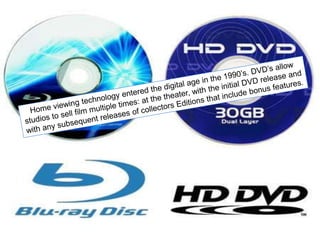
3D and IMAX to DVD and blu-ray, to cable TV and streaming.

Until the advent of TV in the 50’s and VHS in the 70’s the cinema was the
only place you could watch a Hollywood film

In 1946 the average American film goers saw 29 films a year – in 2007 that
had dropped to 8

Studios have learned how to diversify and capitalize on each new
development by selling network broadcast rights to their films and
repackaging them for DVD and Blu-ray.

In 2009 DVD market accounted for 65% of the major film companies
revenues

Theatrical release accounted for 35%
Blu-Ray

Officially designated as the successor to the DVD

Blu-ray uses a blue-violet rather than a red laser to record data (hence
the name)

The blue laser shorter wavelength offers more precise focus allowing the
data to be packed more tightly and can hold up to 6 times more than a
DVD.

Blu-ray has better sound and visual quality than the DVD but also offers
greater interactivity.

In 2007 ‘Cars’ allowed viewers to play a game called ‘car finder’ where
players spot various makes and models of cars which appear
throughout the movie

In 2009 Universal announced that upcoming releases will be able to
use the iPhone as a remote and keyboard and update facebook and
twitter through their blue-ray players.
For and Against DVD
Good points for DVD & Blu Ray   Bad points for DVD & Blu Ray
• Sales go up                   • Viewers think of DVD as
• More scope to sell a film       collectable items in
  multiple times                  connection to celebrated
• Can re-sell collectable         personalities
  items                         • Force directors to
• DVDs hold hours of data         compromise
• Better interactivity          • The film ‘experience’ is
                                  being compromised
• Greater quality at home
• Greater home experience
Film and digital technology

Digital technologies
have transformed the
film business, from
production to
distribution to exhibition


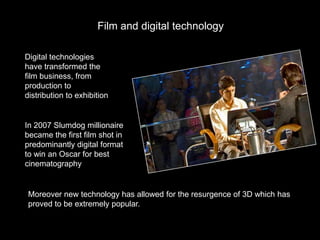
In 2007 Slumdog millionaire
became the first film shot in
predominantly digital format
to win an Oscar for best
cinematography


 Moreover new technology has allowed for the resurgence of 3D which has
 proved to be extremely popular.
In terms of Home exhibition DVD players and Television are no longer the only
hardware to view films. Personal computers provide an array of viewing
experiences . Beyond playing DVD computers grant access to trailers and full
length films on the web

Initially the internet was used as a marketing tool for films but its role in film
culture continues to evolve.

The Blair Witch Project was one of the first films to capitalize on the Internet
The quality of new technologies are allowing web users to download full
length films as digital files making the quality just as good as in the cinema

Film corporations have responded to the treat of digital piracy by raising
technological barriers against duplication and by pursuing legal action
against unauthorised downloading

Piracy is one of the reasons behind shorter periods between theatrical
release and DVD sales.

The digital era has transformed many aspects of film culture. Hollywood
had one of the most profitable years ever in 2009, but the tension
surrounding theatrical release verses Blu-ray and DVD, not to mention live
streaming will remain.
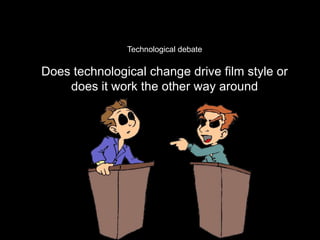
Technological debate

Does technological change drive film style or
    does it work the other way around
Technology

Technology

  • 2.
    Film and NewTechnology As with any business, the film industry relies on technological advances to facilitate production and distribution of the product. Digital technologies and the convergence of communication and information technologies promise to play important roles in marketing and exhibition. Digital technology is literally changing films themselves, as well as circumstances of their consumption
  • 3.
    The Numbers ina nutshell Early film exhibitors created beautiful movie places for audiences to watch movies in high style Now a days exhibitors have embraced the old and new technologies from 3D and IMAX to DVD and blu-ray, to cable TV and streaming. Until the advent of TV in the 50’s and VHS in the 70’s the cinema was the only place you could watch a Hollywood film In 1946 the average American film goers saw 29 films a year – in 2007 that had dropped to 8 Studios have learned how to diversify and capitalize on each new development by selling network broadcast rights to their films and repackaging them for DVD and Blu-ray. In 2009 DVD market accounted for 65% of the major film companies revenues Theatrical release accounted for 35%
  • 5.
    Blu-Ray Officially designated asthe successor to the DVD Blu-ray uses a blue-violet rather than a red laser to record data (hence the name) The blue laser shorter wavelength offers more precise focus allowing the data to be packed more tightly and can hold up to 6 times more than a DVD. Blu-ray has better sound and visual quality than the DVD but also offers greater interactivity. In 2007 ‘Cars’ allowed viewers to play a game called ‘car finder’ where players spot various makes and models of cars which appear throughout the movie In 2009 Universal announced that upcoming releases will be able to use the iPhone as a remote and keyboard and update facebook and twitter through their blue-ray players.
  • 6.
    For and AgainstDVD Good points for DVD & Blu Ray Bad points for DVD & Blu Ray • Sales go up • Viewers think of DVD as • More scope to sell a film collectable items in multiple times connection to celebrated • Can re-sell collectable personalities items • Force directors to • DVDs hold hours of data compromise • Better interactivity • The film ‘experience’ is being compromised • Greater quality at home • Greater home experience
  • 7.
    Film and digitaltechnology Digital technologies have transformed the film business, from production to distribution to exhibition In 2007 Slumdog millionaire became the first film shot in predominantly digital format to win an Oscar for best cinematography Moreover new technology has allowed for the resurgence of 3D which has proved to be extremely popular.
  • 8.
    In terms ofHome exhibition DVD players and Television are no longer the only hardware to view films. Personal computers provide an array of viewing experiences . Beyond playing DVD computers grant access to trailers and full length films on the web Initially the internet was used as a marketing tool for films but its role in film culture continues to evolve. The Blair Witch Project was one of the first films to capitalize on the Internet
  • 10.
    The quality ofnew technologies are allowing web users to download full length films as digital files making the quality just as good as in the cinema Film corporations have responded to the treat of digital piracy by raising technological barriers against duplication and by pursuing legal action against unauthorised downloading Piracy is one of the reasons behind shorter periods between theatrical release and DVD sales. The digital era has transformed many aspects of film culture. Hollywood had one of the most profitable years ever in 2009, but the tension surrounding theatrical release verses Blu-ray and DVD, not to mention live streaming will remain.
  • 11.
    Technological debate Does technologicalchange drive film style or does it work the other way around

Editor's Notes

  • #13 Warner Bros.'sThe Jazz Singer, presents the movie's first spoken words: "Wait a minute, wait a minute, you ain't heard nothin' yet." The Vitaphone method that the studio uses involves recording sound on discs.