The Impact of
Home–School–Community
Collaboration on Student’s
Achievement
2
“Alone we can do so little;
together we can do so
much”
Helen Keller―
3
Home- school- community collaboration
occurs when groups or agencies come together to
establish an educative community. Everyone in the
community is accountable for the quality of
education.
05/19/15
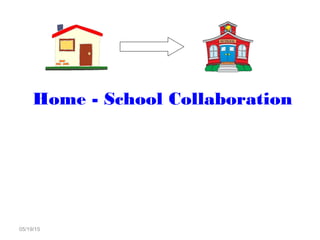
- The active participation of parents in their
children's education is the most significant
motivating factor in the development of
behavioural, intellectual and personal skills in
the young.
Home - School Collaboration
05/19/15
- it show positive results on higher academic achievement, behaviors
and attitudes of students, reduced incidence of vandalism, and
other destructive behaviors, higher aspirations and credits
earned, more positive mental health, reduce the school
dropout rate, prevent teen pregnancies and births, and
increase the number of youth who go on to a job or college.
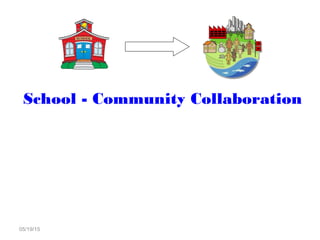
School - Community Collaboration
6
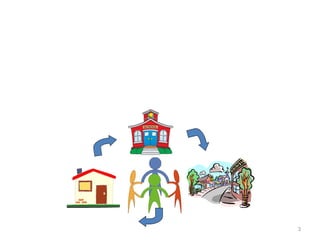
It is through effective home - school
collaboration and school community
relations that the unity between the home,
the school , and the community may be
achieved. The goal of the synergy is to
achieve optimal interrelationship which is
very important in order to create a holistic
learning environment for the students.
7
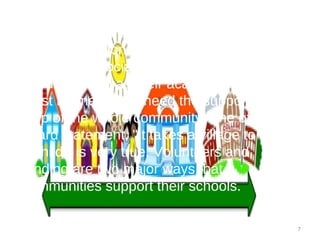
Schools do not exist in isolation and they
cannot go it alone. To keep students in
school their social, economic, and family
needs, as well as their academic needs
must be met. They need the support and
help of the whole community. The often
heard statement, "It takes a village to raise
a child," is very true. Volunteers and
funding are two major ways that
communities support their schools.
8
Collaborative Relationship
are partnership that are
essential to ensure maximum
opportunities for high quality
outcomes for all school age
children both during the
school day and their time in
school age care setting.
9
Characteristics of Collaborative
Relationship
•Flexibility
•Compromise
•Trust
10
•Respect
•Sharing
•Acceptance of other
ideas and working
style
11
Roadblocks and Barriers to
Collaboration within School
Culture
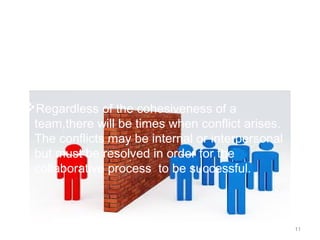
Regardless of the cohesiveness of a
team,there will be times when conflict arises.
The conflicts may be internal or interpersonal
but must be resolved in order for the
collaborative process to be successful.
12
Four Categories of
Barriers
Professional
 Pragmatic
Attitudinal
Conceptual
13
- involve ideas that have
formed overmany years
within individual team
members,such as
perception of their
teaching roles within a
school
Conceptual and
Attitudinal Barriers
14
- usually concerned with
logistics, such as
scheduling orthe
amount of time that is
available to spend on a
project.
Pragmatic Barriers
15
- can develop our
differences in
educational philosophies
orin knowledge orskills
level of team members.
Professional Barriers
16
• teacher Isolation and
Individuality
Factors that also interfere
with Collaboration
• space restrictions
• lack of funding

Impact of home-school-community collaboration

  • 1.
  • 2.
    2 “Alone we cando so little; together we can do so much” Helen Keller―
  • 3.
    3 Home- school- communitycollaboration occurs when groups or agencies come together to establish an educative community. Everyone in the community is accountable for the quality of education.
  • 4.
    05/19/15 - The activeparticipation of parents in their children's education is the most significant motivating factor in the development of behavioural, intellectual and personal skills in the young. Home - School Collaboration
  • 5.
    05/19/15 - it showpositive results on higher academic achievement, behaviors and attitudes of students, reduced incidence of vandalism, and other destructive behaviors, higher aspirations and credits earned, more positive mental health, reduce the school dropout rate, prevent teen pregnancies and births, and increase the number of youth who go on to a job or college. School - Community Collaboration
  • 6.
    6 It is througheffective home - school collaboration and school community relations that the unity between the home, the school , and the community may be achieved. The goal of the synergy is to achieve optimal interrelationship which is very important in order to create a holistic learning environment for the students.
  • 7.
    7 Schools do notexist in isolation and they cannot go it alone. To keep students in school their social, economic, and family needs, as well as their academic needs must be met. They need the support and help of the whole community. The often heard statement, "It takes a village to raise a child," is very true. Volunteers and funding are two major ways that communities support their schools.
  • 8.
    8 Collaborative Relationship are partnershipthat are essential to ensure maximum opportunities for high quality outcomes for all school age children both during the school day and their time in school age care setting.
  • 9.
  • 10.
  • 11.
    11 Roadblocks and Barriersto Collaboration within School Culture Regardless of the cohesiveness of a team,there will be times when conflict arises. The conflicts may be internal or interpersonal but must be resolved in order for the collaborative process to be successful.
  • 12.
    12 Four Categories of Barriers Professional Pragmatic Attitudinal Conceptual
  • 13.
    13 - involve ideasthat have formed overmany years within individual team members,such as perception of their teaching roles within a school Conceptual and Attitudinal Barriers
  • 14.
    14 - usually concernedwith logistics, such as scheduling orthe amount of time that is available to spend on a project. Pragmatic Barriers
  • 15.
    15 - can developour differences in educational philosophies orin knowledge orskills level of team members. Professional Barriers
  • 16.
    16 • teacher Isolationand Individuality Factors that also interfere with Collaboration • space restrictions • lack of funding