International Monetary Fund (IMF)
                &
           World Bank


      Presented By: Yogesh Chinchole
                    Harander Kumar
                    Pawan Kumar
                    KhushalYadav
IMF- International Monetary Fund
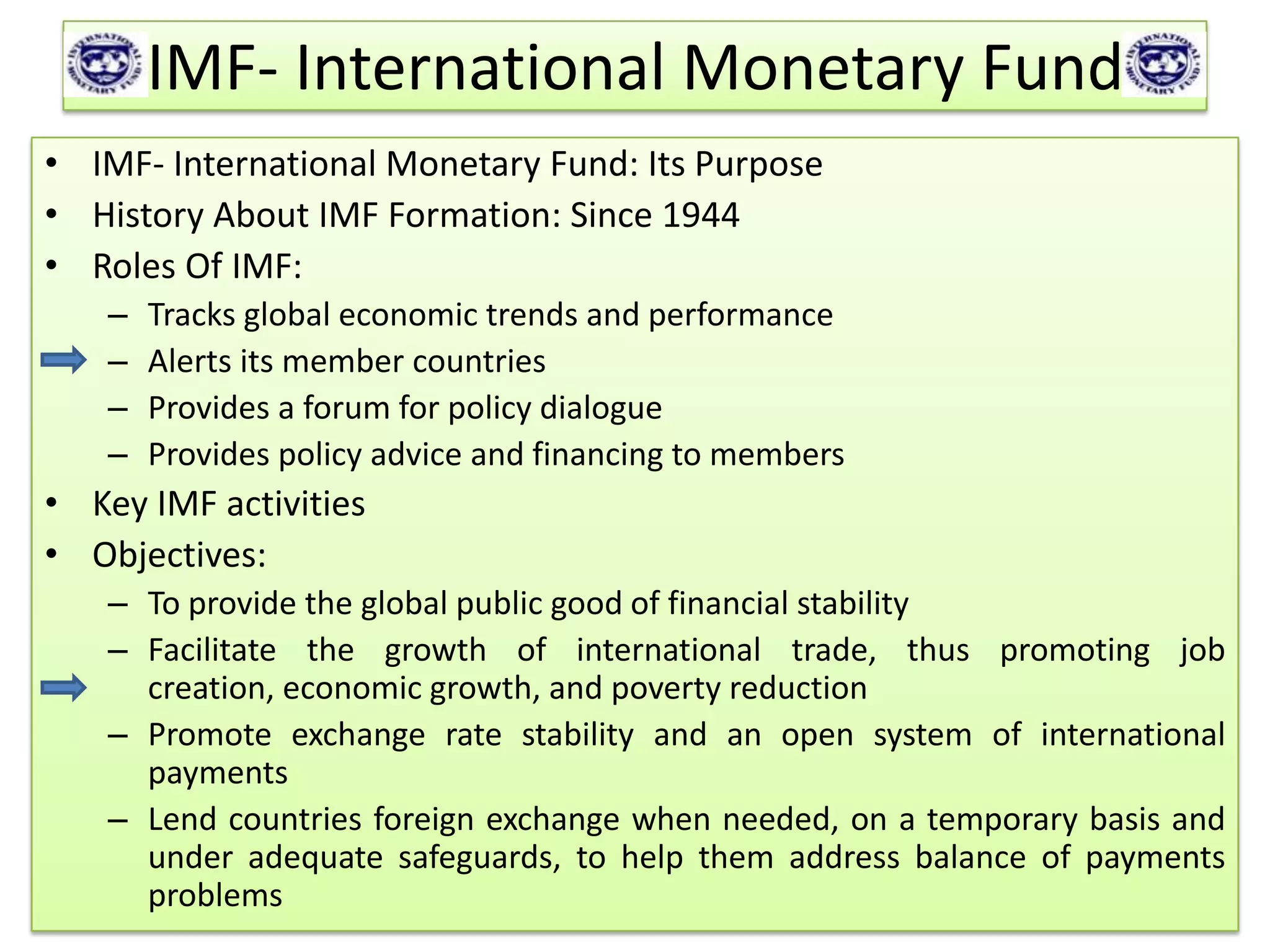
• IMF- International Monetary Fund: Its Purpose
• History About IMF Formation: Since 1944
• Roles Of IMF:
   –   Tracks global economic trends and performance
   –   Alerts its member countries
   –   Provides a forum for policy dialogue
   –   Provides policy advice and financing to members
• Key IMF activities
• Objectives:
   – To provide the global public good of financial stability
   – Facilitate the growth of international trade, thus promoting job
     creation, economic growth, and poverty reduction
   – Promote exchange rate stability and an open system of international
     payments
   – Lend countries foreign exchange when needed, on a temporary basis and
     under adequate safeguards, to help them address balance of payments
     problems
IMF- International Monetary Fund
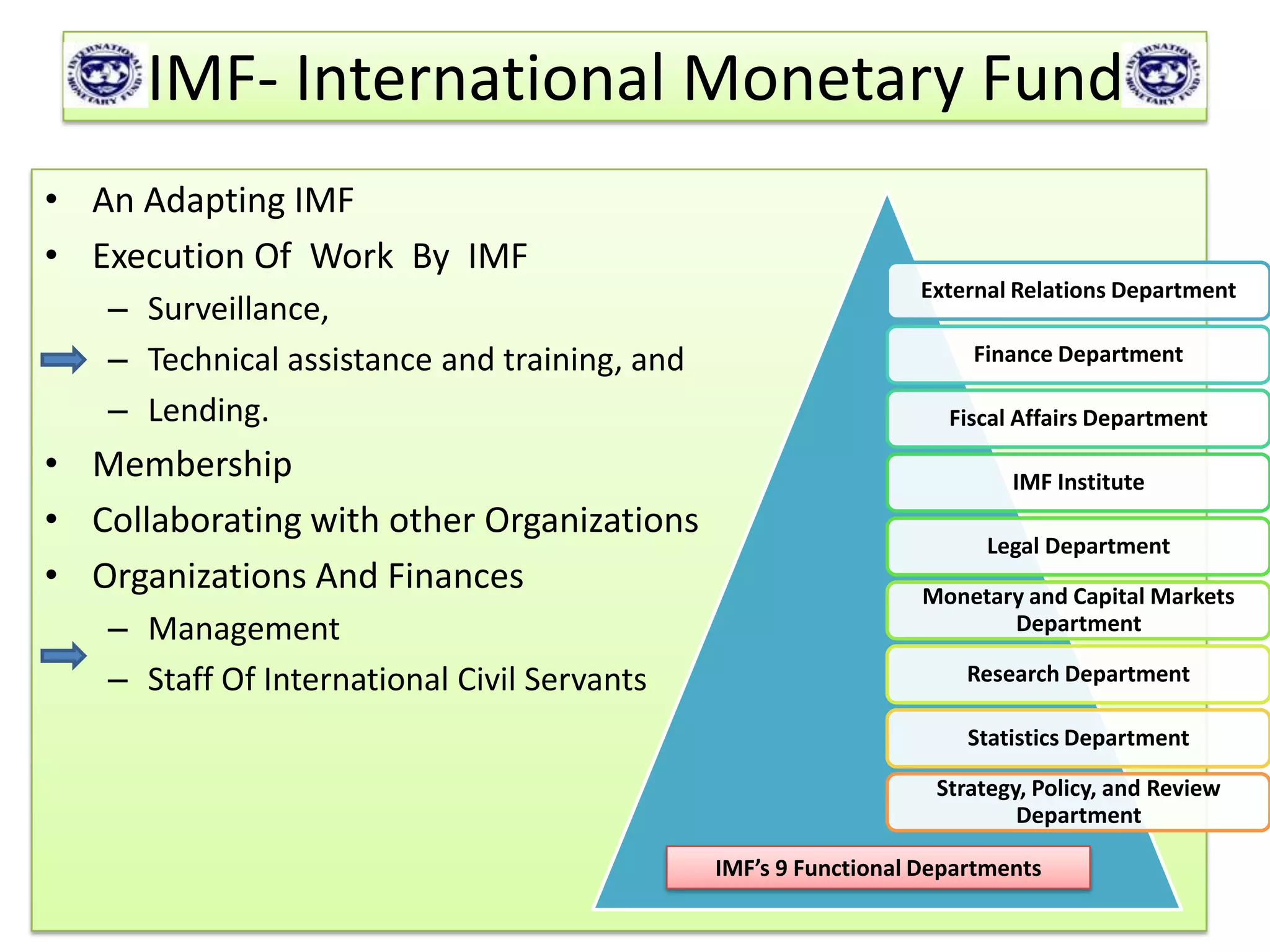
• An Adapting IMF
• Execution Of Work By IMF
                                                                External Relations Department
   – Surveillance,
   – Technical assistance and training, and                          Finance Department

   – Lending.                                                      Fiscal Affairs Department

• Membership                                                             IMF Institute
• Collaborating with other Organizations
                                                                      Legal Department
• Organizations And Finances                                     Monetary and Capital Markets
   – Management                                                         Department

   – Staff Of International Civil Servants                           Research Department

                                                                     Statistics Department

                                                                  Strategy, Policy, and Review
                                                                          Department

                                              IMF’s 9 Functional Departments
IMF- International Monetary Fund
• QUOTAS
   – Quota reviews
   – Recent reforms
   – The Special Drawing Right (SDR)
• GOLD Holdings
   – Gold and the international monetary system
   – Use of Gold in the IMF
• Borrowing Agreements
• Governance
   –   Board of Governors
   –   Ministerial Committees
   –   The Executive Board
   –   Governance Reform
• Country Representation
• Accountability
• Ethics Office And Code Of Conduct
World Bank

• World bank
   – The World Bank is an international financial institution that
     provides loans to developing countries for capital programs. The World
     Bank's official goal is the reduction of poverty.


• World Bank History

• Objectives of World bank
World Bank

Functions/Key Roles of World Bank:

•   Granting reconstruction & development loans
•   Providing loans to governments & private concerns
•   Promoting foreign investment
•   Providing technical, economic and monetary advice
•   Encouraging industrial development
World bank group consists of five closely associated institutions:
•    International Bank of Reconstruction and development (IBRD)
•    International Development Association(IDA)
•    International Finance Corporation(IFC)
•    Multilateral Investment Guarantee Agency(MIGA)
•   International Centre for Settlement of Investment Disputes
    World bank is basically consist of two of these IBRD & IDA .
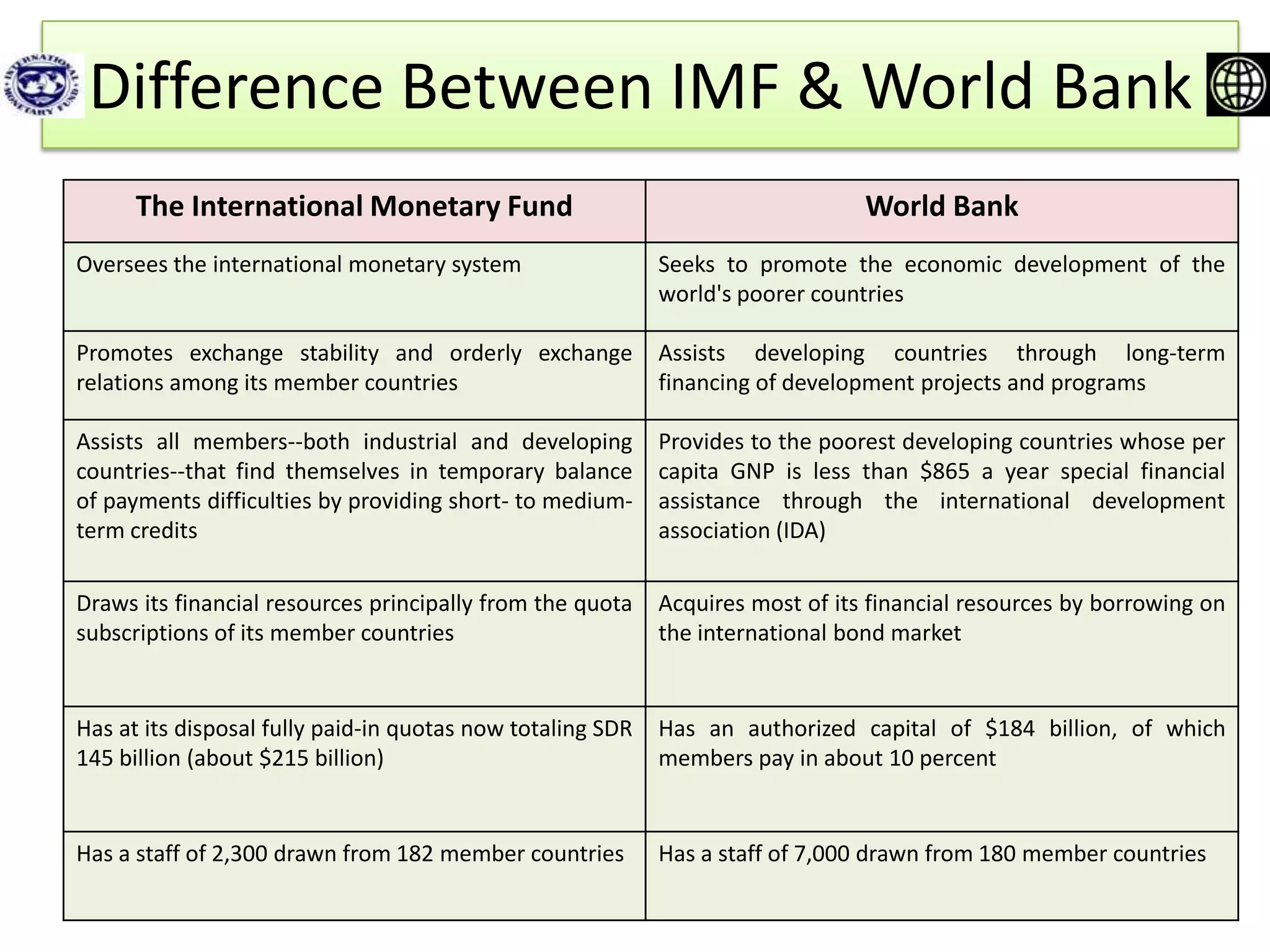
Difference Between IMF & World Bank
      The International Monetary Fund                                           World Bank
Oversees the international monetary system                  Seeks to promote the economic development of the
                                                            world's poorer countries

Promotes exchange stability and orderly exchange            Assists developing countries through long-term
relations among its member countries                        financing of development projects and programs

Assists all members--both industrial and developing         Provides to the poorest developing countries whose per
countries--that find themselves in temporary balance        capita GNP is less than $865 a year special financial
of payments difficulties by providing short- to medium-     assistance through the international development
term credits                                                association (IDA)

Draws its financial resources principally from the quota    Acquires most of its financial resources by borrowing on
subscriptions of its member countries                       the international bond market


Has at its disposal fully paid-in quotas now totaling SDR   Has an authorized capital of $184 billion, of which
145 billion (about $215 billion)                            members pay in about 10 percent


Has a staff of 2,300 drawn from 182 member countries        Has a staff of 7,000 drawn from 180 member countries
• Thank you……….

Imf & world bank

  • 1.
    International Monetary Fund(IMF) & World Bank Presented By: Yogesh Chinchole Harander Kumar Pawan Kumar KhushalYadav
  • 2.
    IMF- International MonetaryFund • IMF- International Monetary Fund: Its Purpose • History About IMF Formation: Since 1944 • Roles Of IMF: – Tracks global economic trends and performance – Alerts its member countries – Provides a forum for policy dialogue – Provides policy advice and financing to members • Key IMF activities • Objectives: – To provide the global public good of financial stability – Facilitate the growth of international trade, thus promoting job creation, economic growth, and poverty reduction – Promote exchange rate stability and an open system of international payments – Lend countries foreign exchange when needed, on a temporary basis and under adequate safeguards, to help them address balance of payments problems
  • 3.
    IMF- International MonetaryFund • An Adapting IMF • Execution Of Work By IMF External Relations Department – Surveillance, – Technical assistance and training, and Finance Department – Lending. Fiscal Affairs Department • Membership IMF Institute • Collaborating with other Organizations Legal Department • Organizations And Finances Monetary and Capital Markets – Management Department – Staff Of International Civil Servants Research Department Statistics Department Strategy, Policy, and Review Department IMF’s 9 Functional Departments
  • 4.
    IMF- International MonetaryFund • QUOTAS – Quota reviews – Recent reforms – The Special Drawing Right (SDR) • GOLD Holdings – Gold and the international monetary system – Use of Gold in the IMF • Borrowing Agreements • Governance – Board of Governors – Ministerial Committees – The Executive Board – Governance Reform • Country Representation • Accountability • Ethics Office And Code Of Conduct
  • 5.
    World Bank • Worldbank – The World Bank is an international financial institution that provides loans to developing countries for capital programs. The World Bank's official goal is the reduction of poverty. • World Bank History • Objectives of World bank
  • 6.
    World Bank Functions/Key Rolesof World Bank: • Granting reconstruction & development loans • Providing loans to governments & private concerns • Promoting foreign investment • Providing technical, economic and monetary advice • Encouraging industrial development World bank group consists of five closely associated institutions: • International Bank of Reconstruction and development (IBRD) • International Development Association(IDA) • International Finance Corporation(IFC) • Multilateral Investment Guarantee Agency(MIGA) • International Centre for Settlement of Investment Disputes World bank is basically consist of two of these IBRD & IDA .
  • 7.
    Difference Between IMF& World Bank The International Monetary Fund World Bank Oversees the international monetary system Seeks to promote the economic development of the world's poorer countries Promotes exchange stability and orderly exchange Assists developing countries through long-term relations among its member countries financing of development projects and programs Assists all members--both industrial and developing Provides to the poorest developing countries whose per countries--that find themselves in temporary balance capita GNP is less than $865 a year special financial of payments difficulties by providing short- to medium- assistance through the international development term credits association (IDA) Draws its financial resources principally from the quota Acquires most of its financial resources by borrowing on subscriptions of its member countries the international bond market Has at its disposal fully paid-in quotas now totaling SDR Has an authorized capital of $184 billion, of which 145 billion (about $215 billion) members pay in about 10 percent Has a staff of 2,300 drawn from 182 member countries Has a staff of 7,000 drawn from 180 member countries
  • 8.