z
Imaginative Writing
vs.
Technical Writing
OBJECTIVES:
At the end of the lesson, students will learn
the
• Definition of imaginative and technical
writing;
• Difference of imaginative and technical
writing;
• Value of a WOMAN.
IMAGINATIVE
WRITING• Expresses the writer’s thoughts and feelings in creative,
unique and poetic way.
Examples: Poetry, Short Stories, Novels and Creative-
nonfiction like travel writing, nature writing, sports
writing, autobiography, memoir, interviews, comics,
playscripts and hypertexts.
• Purpose is to entertain and educate
• Its contain is imaginative, metaphoric and symbolic.
• Its language is informal, artistic and figurative
• Vocabulary is written for general audience
• Tone (mood, attitude, feelings, emotions) is subjective
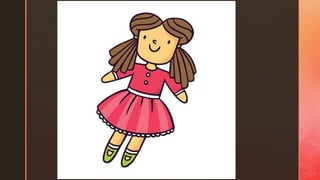
•MAN or WOMAN?
On the board, write a list of
what a man/woman can do.
TECHNICAL
WRITING
• Form of technical communication/documentation is
SciTech or applied sciences that helps people understand
a product service.
Examples: User manuals for cellphones, computers,
summary of experiments for journals, marketing
communications, training manuals and promotional
brochures.
• Purpose is to inform and to trigger the person into
action to purchase a product/service.
• Instruct, persuade but never entertain.
• Content is factual and straightforward.
• Formal, standard or academic language.
• Uses specialized vocabulary
• Organized in sequential/systematic pattern
• Requires advanced knowledge in specific fields
• The tone is objective
• Its audience is specific which evoke intellectual
response from the audience.
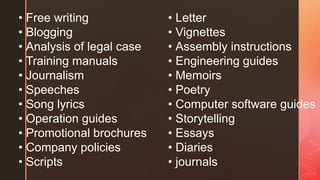
• Free writing
• Blogging
• Analysis of legal case
• Training manuals
• Journalism
• Speeches
• Song lyrics
• Operation guides
• Promotional brochures
• Company policies
• Scripts
• Letter
• Vignettes
• Assembly instructions
• Engineering guides
• Memoirs
• Poetry
• Computer software guides
• Storytelling
• Essays
• Diaries
• journals
reference:
Ie for ec: creative writing

Imaginative vs. Technical Writing

  • 1.
  • 2.
    OBJECTIVES: At the endof the lesson, students will learn the • Definition of imaginative and technical writing; • Difference of imaginative and technical writing; • Value of a WOMAN.
  • 3.
    IMAGINATIVE WRITING• Expresses thewriter’s thoughts and feelings in creative, unique and poetic way. Examples: Poetry, Short Stories, Novels and Creative- nonfiction like travel writing, nature writing, sports writing, autobiography, memoir, interviews, comics, playscripts and hypertexts. • Purpose is to entertain and educate • Its contain is imaginative, metaphoric and symbolic. • Its language is informal, artistic and figurative • Vocabulary is written for general audience • Tone (mood, attitude, feelings, emotions) is subjective
  • 4.
  • 9.
    On the board,write a list of what a man/woman can do.
  • 10.
    TECHNICAL WRITING • Form oftechnical communication/documentation is SciTech or applied sciences that helps people understand a product service. Examples: User manuals for cellphones, computers, summary of experiments for journals, marketing communications, training manuals and promotional brochures. • Purpose is to inform and to trigger the person into action to purchase a product/service. • Instruct, persuade but never entertain. • Content is factual and straightforward. • Formal, standard or academic language.
  • 11.
    • Uses specializedvocabulary • Organized in sequential/systematic pattern • Requires advanced knowledge in specific fields • The tone is objective • Its audience is specific which evoke intellectual response from the audience.
  • 12.
    • Free writing •Blogging • Analysis of legal case • Training manuals • Journalism • Speeches • Song lyrics • Operation guides • Promotional brochures • Company policies • Scripts • Letter • Vignettes • Assembly instructions • Engineering guides • Memoirs • Poetry • Computer software guides • Storytelling • Essays • Diaries • journals
  • 13.
    reference: Ie for ec:creative writing